India
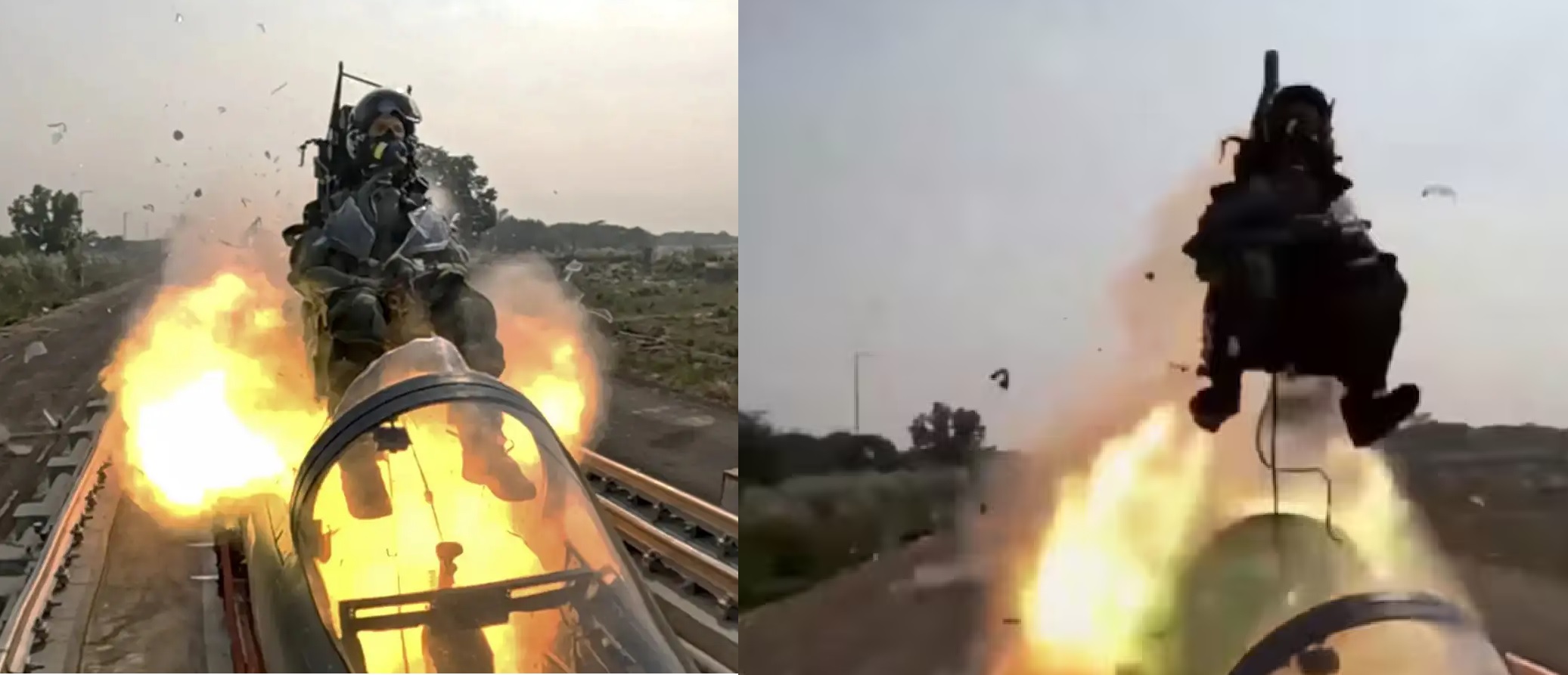
In a landmark achievement for India’s defence-engineering ambitions, the DRDO has successfully carried out a high-speed rocket-sled trial of a fighter-aircraft escape system at 800 km/h. The test was conducted at the Rail Track Rocket Sled (RTRS) facility of the Terminal Ballistics Research Laboratory (TBRL) in Chandigarh. The success signals a major step toward reducing India’s dependence on foreign ejection-seat systems — most notably built by legacy players such as Martin-Baker — and bolsters India’s credentials in indigenous safety-system development for future combat aircraft. What happened in the test and why it matters During the trial, engineers used a rocket-propelled sled to accelerate a test rig to a precisely controlled speed of 800 km/h. The test validated three critical elements of a modern fighter-jet escape system: canopy severance, correct ejection sequencing, and full aircrew recovery via parachute descent, as simulated by an instrumented anthropomorphic test dummy. Ground- and sled-based instrumentation recorded the loads, accelerations, and mechanical stresses that a real pilot would endure — data that will feed into final qualification, safety certification, and refinement of the system for real-world deployment. According to the defence ministry, the success of this trial puts India in an “elite club of nations” that possess advanced, in-house capability to test and validate fighter-jet escape systems under high-speed conditions. Why this is special for India The achievement holds importance on multiple fronts. First, it marks a concrete stride toward self-reliance in a critical — and life-saving — technology area. Historically, many of India’s combat aircraft have relied on foreign vendors for ejection seats and escape systems — notably the British company Martin-Baker. Second, by mastering this technology indigenously, India gains the freedom to develop customized escape systems tailored to its own future combat-jet designs, improving strategic autonomy and reducing long-term costs. This also enhances export potential for Indian-built fighter aircraft. Third, this milestone reinforces the broader push under indigenous defence-manufacturing frameworks to reduce dependence on foreign suppliers across weapons, avionics, and safety systems. Where India stands on the global map of escape-system capability Globally, only a handful of nations possess the capability to design, manufacture, and fully test advanced ejection seats and fighter escape systems. For decades, Martin-Baker of the United Kingdom has been the dominant leader in this field, alongside major developers such as Collins Aerospace in the United States, NPP Zvezda in Russia, and specialized aerospace groups in China. In reality, only five countries have developed complete, indigenous ejection-seat systems: the United Kingdom, the United States, Russia, China, and now India, which enters this elite group with its successful high-speed rocket-sled trials and expanding domestic capability. With the latest test validating critical escape-system functions, India effectively joins this exclusive global cohort, proving that it now possesses the engineering depth, advanced testing infrastructure, and technological maturity required to stand alongside the world’s established leaders. What’s Next While the 800 km/h rocket-sled success is a major milestone, experts caution it is only one step before the system can be certified for operational use. Data collected on canopy break patterns, ejection timing, g-forces, and parachute deployment will guide upcoming refinements. Further trials — including zero-zero ejections, high-altitude simulations, and potentially full-scale live ejections — will be conducted before integration into real aircraft. Nevertheless, the road has begun. Officials from the Ministry of Defence, IAF, ADA, and HAL have welcomed the test as a “significant milestone” for India’s indigenous aerospace development. What this could mean for future Indian jets — and exports For upcoming indigenous combat aircraft, having an in-house escape system reduces reliance on foreign vendors and sidesteps export restrictions. It also allows customization for Indian pilots and mission requirements. As India seeks to export aircraft to friendly nations, offering a domestically developed ejection system could become a major selling point, strengthening India’s defence-export profile. A leap toward self-reliance in pilot safety The DRDO’s successful rocket-sled test at 800 km/h marks a turning point for India. By mastering critical escape-system technologies — canopy separation, ejection sequencing, and aircrew recovery — India moves closer to reducing dependence on foreign suppliers like Martin-Baker. This achievement proves India can design and validate complex aerospace safety systems to global standards. As more tests follow, the path toward self-reliance and aerospace export capability grows stronger.
Read More → Posted on 2025-12-02 17:38:59
India
India’s state-run refiners – Indian Oil Corporation (IOC) and Bharat Petroleum Corporation Ltd (BPCL) – have resumed buying non-sanctioned Russian crude for January 2026 delivery, taking advantage of widening discounts even as U.S. sanctions squeeze Moscow’s major oil companies and banking channels. According to industry sources, IOC and BPCL have secured several January cargoes from new, non-sanctioned trading entities at about $5 per barrel below Dated Brent, compared with a discount of roughly $3 per barrel a month earlier. The step-up in discounts, combined with ample availability of non-sanctioned barrels, has made Russian crude attractive again despite growing geopolitical risk. At the same time, India’s overall Russian oil intake is expected to remain capped at under 600,000 barrels per day, roughly one-third of the volumes it was regularly importing earlier this year. That reflects a cautious recalibration rather than a full return to the earlier dependence on Russian crude. India’s shift after U.S. sanctions on Rosneft and Lukoil The latest move comes in the wake of new U.S. sanctions imposed in October 2025 on Russian oil giants Rosneft and Lukoil – companies that previously supplied a large share of India’s Russian imports. In response, Indian refiners sharply reviewed and cut their purchases, fearing that any direct linkage to sanctioned entities could trigger financial penalties or disrupt shipping, insurance and payments. Before these sanctions, India had become the biggest buyer of seaborne Russian crude, importing around 1.7 million barrels per day in the first nine months of 2025, mostly on the back of deep discounts after the Ukraine war. As Washington tied part of its 50% tariffs on Indian exports explicitly to India’s continued purchases of Russian oil, New Delhi faced growing pressure to scale down direct exposure to sanctioned Russian firms as part of broader trade negotiations with the United States. IOC leads the way via non-sanctioned entities IOC, India’s largest refiner, has been the first to test a new path: buying Russian crude only from non-sanctioned entities. At the end of October, IOC quietly bought five cargoes of Russian oil for December arrival from such intermediaries, after earlier cancelling seven or eight cargoes that were linked to subsidiaries of sanctioned companies. The new January deals deepen that strategy. IOC has continued to pick up non-sanctioned Russian barrels for December and January, while BPCL – which had stayed away from Russian oil in recent weeks – has now secured January cargoes too, signaling a limited but coordinated state-sector comeback to Russian crude. Other refiners remain more cautious. Mangalore Refinery and Petrochemicals (MRPL) and HPCL-Mittal Energy are still avoiding Russian crude altogether, while Reliance Industries has said Russian oil processed after 20 November 2025 will be directed to the domestic market only, not exports – a move widely read as an effort to minimize sanctions exposure. Nayara Energy, part-owned by Rosneft, continues to focus heavily on Russian feedstock. How the discounts and payments work The latest Russian barrels have been booked at about $5 per barrel below Dated Brent, a wider discount than last month and a crucial cushion for Indian refiners facing volatile global prices and higher export tariffs into the U.S. After factoring in freight, Russia is estimated to net roughly $40–$45 per barrel on these sales, well below pre-war levels but still enough to keep flows going. Payments are being structured through UAE dirhams and U.S. dollars, using banking channels that are comfortable clearing transactions involving non-sanctioned sellers and vessels that pass India’s tightened compliance checks. For Indian refiners, the combination of discounted crude and manageable compliance risk helps protect refining margins and, indirectly, domestic fuel prices. For Russia, the arrangement preserves a key outlet for its crude, though at the cost of steep price discounts and more complex logistics. Ports, insurance scrutiny and the “shadow fleet” Even with non-sanctioned sellers, operational risk has risen. At the end of November, a cargo of Russian ESPO crude destined for IOC on the tanker Tiger 6 was delayed off Paradip port because Indian authorities had to verify insurance documents from Russian insurer Soglasie, which is outside the traditional International Group of P&I Clubs but is on India’s approved list. The delay highlighted New Delhi’s stricter checks on older “shadow fleet” tankers and non-standard insurers, introduced earlier this year to prevent forged documents and reduce environmental and sanctions-related risk. These rules now apply equally to non-sanctioned Russian cargoes, adding another layer of caution to every deal. Balancing Washington, Moscow and energy security The Trump administration has repeatedly criticized India’s Russian oil purchases and tied part of the broader U.S.–India trade negotiation to how quickly New Delhi winds down its dependence on Moscow. Russian crude remains a “pain point” in talks, even as Washington sees India as a key strategic partner in the Indo-Pacific. From Moscow’s side, the Kremlin insists that the recent decline in India’s Russian oil imports is “temporary”, and has signalled that Russia will work to keep India as a top customer by offering discounts, flexible payment options and alternative shipping and insurance arrangements. Caught between these pressures, New Delhi is trying to strike a middle path: Comply with the letter of U.S. sanctions by avoiding direct deals with blacklisted companies, Keep Russian barrels in the mix via non-sanctioned intermediaries to safeguard energy security and price stability, and Gradually diversify back towards Middle Eastern suppliers like Saudi Arabia as sanctions tighten and discounts shrink. What this means going forward For now, India’s decision to pick up non-sanctioned Russian oil for January at wider discounts signals a pragmatic, limited comeback rather than a full reversal of earlier cuts. Indian consumers benefit from cheaper crude that helps contain pump prices and inflation. Russia retains a vital outlet for its oil, but at lower netbacks and under more complex, risk-laden trade structures. The U.S. and its allies face a more complicated enforcement landscape, where the focus shifts from headline bans on certain companies to the murky world of intermediaries, shipping and insurance. How long this delicate balance holds will depend on future U.S. sanctions decisions, the depth of Russian discounts, and India’s success in diversifying supplies without sacrificing its core priority: secure, affordable energy for a fast-growing economy.
Read More → Posted on 2025-12-02 13:22:35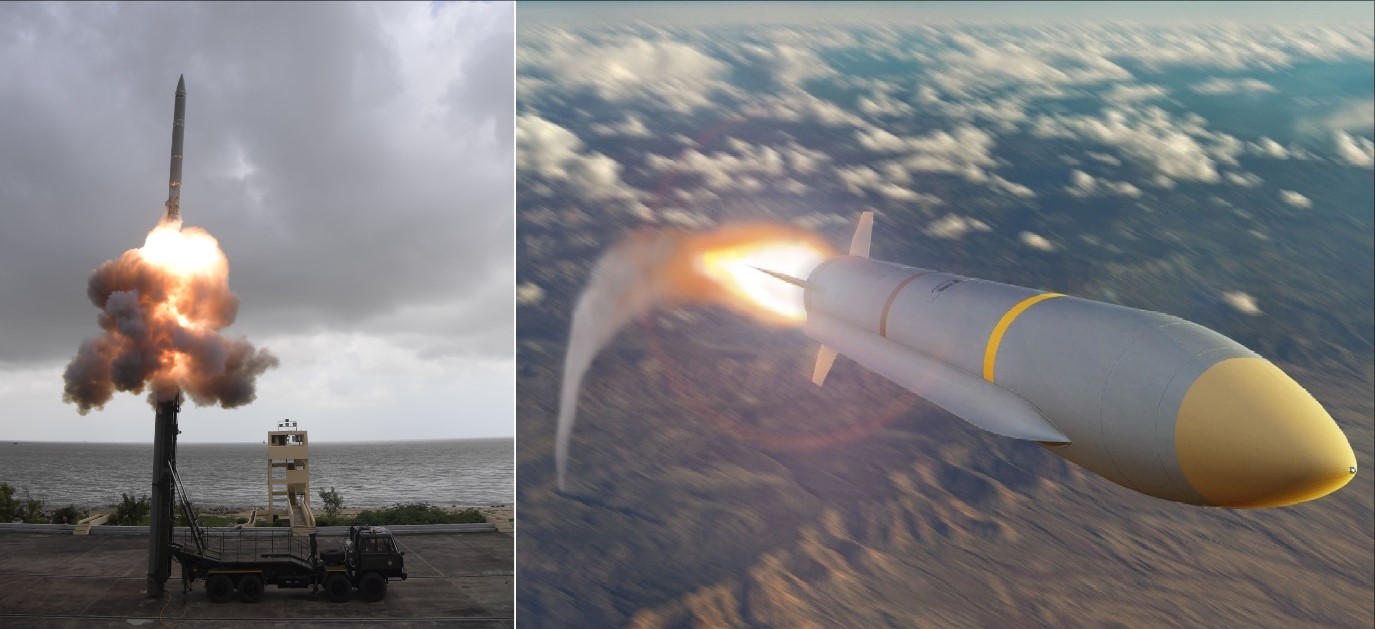
India
India is preparing for a major technological jump in its missile arsenal as the Defence Research and Development Organisation (DRDO) accelerates work on AI-powered guidance systems designed to deliver sub-5-metre Circular Error Probable (CEP). Officials familiar with the programme describe it as one of the most ambitious upgrades in Indian missile guidance history—shifting from pre-programmed flight paths to real-time, self-optimising trajectories powered by artificial intelligence. The new guidance systems, still under development, are expected to significantly strengthen India’s precision-strike capabilities across land, air, and naval platforms. From Fixed Guidance to Adaptive Intelligence For decades, Indian and global missiles have relied on a conventional architecture built around Inertial Navigation Systems (INS), GPS/NavIC corrections, and terminal seekers such as radar or infrared sensors. These systems use fixed guidance laws—mainly Proportional Navigation—that are highly reliable but fundamentally predictable. These classical systems already give India strong precision. Weapons like the Smart Anti-Airfield Weapon (SAAW) and the manoeuvrable Pralay missile achieve impressive accuracy thanks to improved INS packages and terminal seekers. But they still operate within predefined boundaries, offering limited flexibility once the missile is in flight. DRDO’s upcoming AI guidance suite aims to break out of this fixed framework and introduce missiles that can “think” during flight, adapting continuously to battlefield conditions. What AI Guidance Brings to the Missile Battlefield DRDO’s new guidance architecture brings several transformative technologies together: AI-enabled radar seekers capable of identifying targets with far higher precision, rejecting decoys, and adapting to jamming attempts. Imaging Infrared (IIR) seekers with neural-network processing, allowing the missile to recognise shapes, movement patterns, and heat signatures. Onboard AI processors (“edge computing”) that evaluate hundreds of trajectory options per second, selecting the most accurate path on the fly. Terrain-matching, visual navigation, and advanced sensor fusion that allow guidance without GPS or external support. Together, these elements allow the missile to run real-time trajectory optimisation, constantly refining its flight path until the final seconds. This ability is key to achieving sub-5-metre CEP even against moving, evasive, or well-defended targets. How AI Achieves Sub-5-Metre CEP DRDO engineers explain that AI-enabled guidance pushes missile accuracy into the sub-5-metre range by transforming how the weapon interprets its environment, manages its sensors, and adjusts its flight path. Instead of relying on every sensor equally, the onboard AI constantly evaluates which inputs are most reliable at any given moment. If GPS or NavIC signals are jammed, the missile automatically shifts its dependence to terrain matching, optical imagery, radar cues, and inertial data, ensuring high precision even under intense electronic warfare conditions. Another major factor is real-time trajectory re-planning. Conventional missiles follow a predetermined path with only limited corrections, but an AI-guided weapon continuously recalculates the most accurate and efficient route to the target. This allows it to compensate for atmospheric changes, evasive movements by the target, and unexpected threats that appear mid-flight. Accuracy improves even further during the final approach. As the missile closes in, AI-assisted terminal seekers analyse visual, infrared, or radar signatures to identify the most vulnerable or vital point of impact—whether it is a runway intersection, a ship’s bridge, a radar face, or an ammunition bay. This intelligent aim-point selection ensures that the weapon hits not just the target, but the part of the target that will cause maximum effect. Finally, AI-based computer vision and terrain-referenced navigation give the missile the ability to remain highly accurate even when satellite guidance is denied. By comparing real-time sensor inputs with stored terrain or target imagery, the system can pinpoint its own position and maintain a precise trajectory despite GPS jamming or spoofing. Together, these innovations enable DRDO’s next-generation missiles to consistently achieve single-digit-metre accuracy, marking a significant leap in India’s precision-strike capability. AI vs Traditional Guidance: What Changes The differences between current and next-gen guidance systems are profound: Traditional Guidance AI-Powered Guidance Fixed navigation laws applied throughout flight Adaptive algorithms that change mid-flight Heavy dependence on GPS/NavIC Visual, radar, and terrain cues reduce GPS dependence Predictable reaction to threats Instant response to jamming, evasive manoeuvres Limited mid-course corrections Continuous optimisation until impact Best for static pre-defined targets Equally effective against moving or defended targets In short, AI transforms the missile from a guided projectile into an autonomous decision-maker. How DRDO Plans to Integrate the New System Multiple DRDO programmes already show a shift toward intelligent guidance: Astra air-to-air missiles now feature advanced indigenous RF seekers with higher processing capability. Pralay uses trajectory-shaping algorithms that will eventually merge with AI-based optimisation. Glide bombs and precision munitions are being prepared to host AI-enabled imaging seekers. New radar technologies, including monopulse and AI-assisted RF seekers, are being readied for long-range cruise and anti-ship missiles. The larger objective is to create a unified AI guidance module that can be scaled across platforms—from short-range tactical missiles to long-range precision strike systems. What It Means for India’s Future Combat Power If DRDO successfully operationalises these systems, the Indian military will gain: Higher lethality per strike, cutting the number of missiles needed per mission Better survivability for aircraft and launchers due to longer stand-off ranges Stronger resistance to electronic warfare, jamming, and spoofing Sharper effectiveness against mobile, time-sensitive, and defended targets Swarm coordination, allowing multiple missiles to share information and strike intelligently The move aligns India with global trends, where advanced militaries are transitioning to AI-optimised, GPS-independent missile guidance as electronic warfare grows more intense. Towards the Era of Intelligent Missiles The AI-powered guidance systems DRDO is developing represent a generational shift in Indian missile technology. By enabling missiles to analyse, adapt, and optimise in real time, India is positioning its next wave of precision-strike weapons to operate effectively in the most contested battlefields of the future. If the current development trajectory holds, the coming decade could see Indian missiles evolve from highly accurate weapons to smart, autonomous strike systems that redefine precision warfare for the subcontinent.
Read More → Posted on 2025-11-30 17:00:06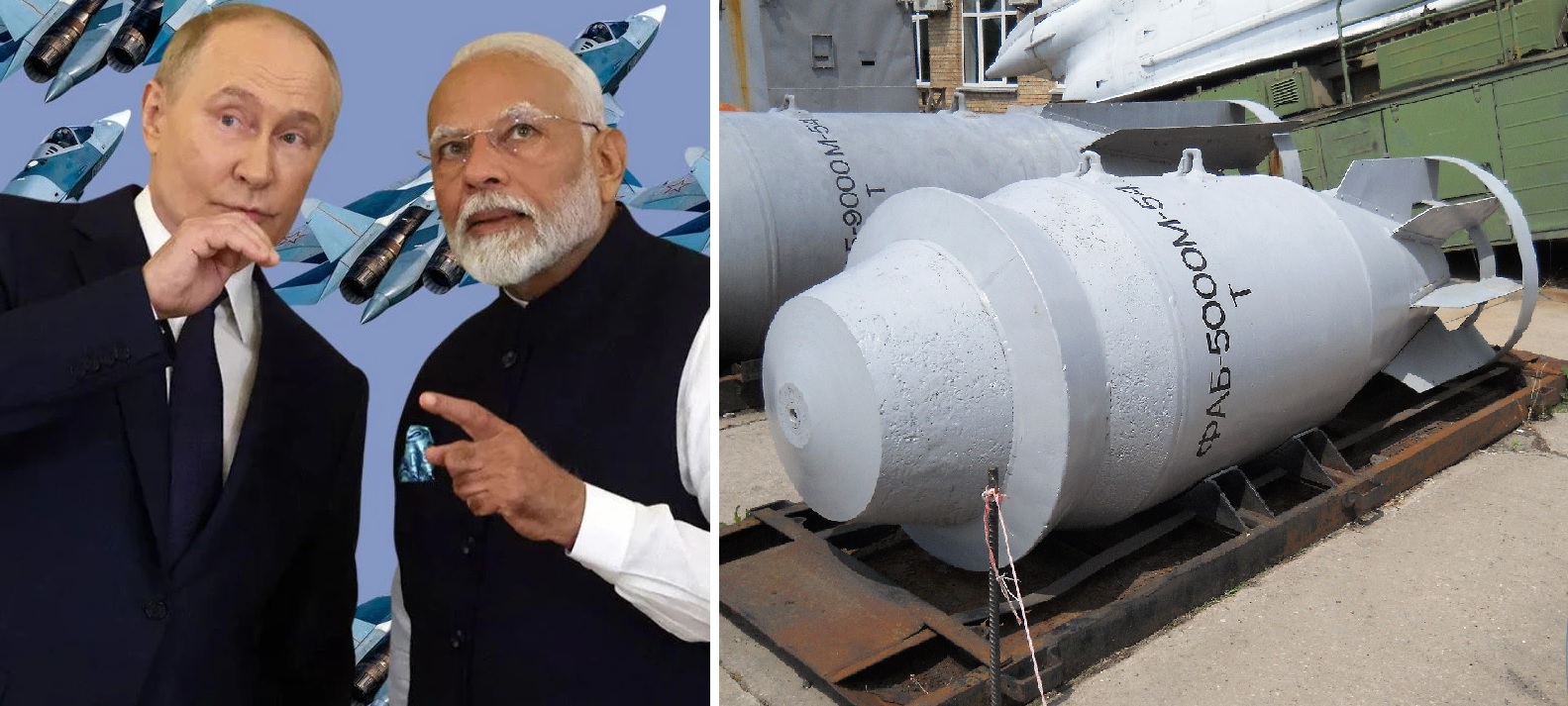
India
As New Delhi prepares to host Russian President Vladimir Putin for the 23rd India–Russia Annual Summit on 4–5 December 2025, reports on social media claim that Moscow has offered India a package of ultra-heavy aerial bombs – the FAB-1500, FAB-3000 and FAB-5000 – as part of a wider defence pitch. There is no official confirmation yet from either government. But the very idea of these weapons entering the Indian toolbox has drawn attention, because these are not ordinary bombs – they are among the heaviest conventional air-dropped munitions in Russia’s inventory, now being adapted into precision glide bombs and used extensively in Ukraine. This article explains what these FAB bombs are, how they differ from “normal” bombs, and what such an offer could mean for India. What Does “FAB” Mean? In Russian nomenclature, FAB stands for “fugasnaya aviatsionnaya bomba” – literally a high-explosive aerial bomb. These are general-purpose blast bombs designed to destroy infrastructure, military facilities, and troop concentrations through a combination of massive explosion, shockwave and fragmentation. Traditionally, FAB bombs were unguided “iron bombs” in calibres like 250 kg and 500 kg, dropped from relatively short distances. Since 2023–24, however, Russia has been fitting them with UMPK (Unified Planning and Correction Module) glide-and-guidance kits – adding pop-out wings and satellite/inertial guidance to turn them into low-cost precision glide bombs with stand-off ranges of tens of kilometres. The FAB-1500, FAB-3000 and FAB-5000 are simply much bigger members of this same family. FAB-1500: The ‘Workhorse’ Heavy Glide Bomb The FAB-1500 M-54 is a 1,500 kg-class high-explosive bomb originally designed in the 1950s to shatter industrial plants, port facilities and hardened military targets. Key characteristics (M-54 variants): Total weight: about 1,550–1,600 kg Explosive filler: roughly 675–725 kg of high explosive Dimensions: length ~2.76 m, diameter ~630 mm Employment envelope: release from up to 16,000 m altitude and speeds up to 1,200 km/h With UMPK glide kit: estimated stand-off range 50–70 km, possibly more with improved kits In Ukraine, FAB-1500 glide bombs have been used to pulverise fortified positions and urban strongpoints, creating craters up to 10–15 m across and an effective lethal radius of several hundred metres. If offered to India with UMPK-style kits, FAB-1500 would give the Indian Air Force (IAF) a heavy precision strike option against bunkers, airbases, bridges and logistics hubs – roughly analogous in effect to very large guided bombs or small tactical cruise-missile strikes, but at a lower cost per shot. FAB-3000: A Three-Ton ‘Fat Bomb’ The FAB-3000 is a 3-tonne high-explosive demolition bomb, sometimes called a “fat bomb” due to its squat, wide body. It originated in Soviet designs of the 1940s–50s and has been brought back into large-scale production by Russia in recent years. Typical characteristics for modern FAB-3000 variants: Total weight: around 3,000–3,300 kg Explosive filler: roughly 1,400 kg of TNT-class explosive Role: demolition of fortified structures, bridges, ports and large industrial targets With UMPK glide kit: stand-off release from strike aircraft such as the Su-34, captured on Russian MoD footage in Ukraine The destructive effect is enormous: a single FAB-3000 can flatten multi-storey buildings or heavily damage large facilities, with a blast radius far beyond standard 500 kg bombs. Analysts describe it as a “strategic-level” conventional weapon, sitting just below tactical nuclear weapons and the very largest conventional bombs in terms of sheer blast power. For India, access to FAB-3000 (especially with glide kits) would imply that only a few weapons would be needed to cripple a major high-value target – but would also demand specialised integration, flight-safety analysis and doctrine, since only the heaviest aircraft could safely carry such loads. FAB-5000: A Five-Ton Demolition Giant The FAB-5000 is one of the largest conventional aerial bombs ever fielded by the Soviet Union/Russia. In its World War II configuration (FAB-5000NG) it weighed about 5,400 kg with a 3,200 kg explosive charge in a relatively thin steel casing, optimised for colossal blast effect. Test and combat reports from the 1940s describe FAB-5000 bombs creating craters up to 20 m in diameter and 9 m deep, tearing up hundreds of trees or wrecking large sections of railway yards and industrial zones. More recently, a modernised FAB-5000M-54 version has been described as a high-explosive bomb intended to destroy large military-industrial facilities and factory buildings when dropped from altitudes up to 16,000 m at speeds up to 1,200 km/h. Mounting such a bomb requires very heavy bombers or specially adapted aircraft; historically it was carried by aircraft like the Pe-8, and any modern use would likely be limited and highly specialised. If Russia has indeed floated FAB-5000s to India, it would represent an offer of niche, extreme-destruction capability – something more symbolic and strategic than routine battlefield munition. How Are These Different From ‘Normal’ Bombs? Compared to the 250–1,000 kg-class general-purpose bombs commonly used by most air forces — including India’s own HSLD series and Gaurav glide bombs — Russia’s FAB-1500, FAB-3000 and FAB-5000 stand in an entirely different category. Their differences are defined by size, destructive capability, delivery method, and operational demands, making them far more powerful than conventional munitions. 1. Sheer Size and Explosive Power A standard 500 kg bomb usually carries around 200 kg of explosive.In contrast: The FAB-1500 packs three to four times that explosive mass. The FAB-3000 contains nearly 1.4 tonnes of explosive — about seven times a typical 500 kg bomb. The FAB-5000 carries over 3 tonnes of explosive, more than fifteen times the yield of a standard weapon. This enormous payload produces far bigger craters, shockwaves and damage radii, meaning a single bomb can achieve what would normally require an entire strike package of smaller munitions. 2. Intended Target Set While normal bombs are used against runways, parked aircraft, depots, and isolated military structures, the FAB family is designed for strategic demolition. These heavy bombs can: Collapse deep bunkers and underground positions Destroy large bridges, ports, refineries, rail yards and factories Level entire strongpoints or urban blocks in a single attack In effect, they operate as the sledgehammers of conventional air warfare. 3. Glide Kits and Stand-Off Strike Ability When equipped with Russia’s UMPK glide kit, these large bombs start to behave like low-cost cruise missiles. The kit provides: Pop-out wings enabling 40–80 km glide ranges Satellite + inertial guidance improving accuracy dramatically The ability for aircraft to release the bombs well outside enemy air-defence zones This contrasts sharply with standard unguided bombs, which must be dropped close to the target, exposing aircraft to far greater risk. 4. Aircraft and Infrastructure Requirements These bombs are simply too heavy for most fighter aircraft: FAB-1500 can be carried by heavy strike aircraft like the Su-34 or a structurally reinforced platform. FAB-3000 and FAB-5000 usually require large bombers or specialised hardpoints, along with dedicated ground-handling equipment. For the Indian Air Force, such weapons would likely be limited to specific aircraft (e.g., modified Su-30MKI) and require upgraded base infrastructure for safe storage, transport and loading. 5. Political and Humanitarian Considerations Because of their massive blast radius, the FAB-3000 and FAB-5000 involve serious collateral-damage risks, especially near populated areas. Their employment carries significant political and diplomatic implications, and militaries typically reserve them for high-value, isolated, clearly defined strategic targets. Why Might Russia Offer These To India? Russia’s reported offer of FAB-series heavy bombs to India appears to align with a broader strategic trend in Moscow’s defence outreach. After gaining extensive operational experience with glide-bomb warfare in Ukraine, Russia is now looking to monetise its UMPK-equipped munitions by showcasing them to foreign partners. Ahead of President Vladimir Putin’s visit to New Delhi, Moscow has also been pitching Su-57 “fifth-generation” fighter technologies and other advanced systems, signalling a renewed willingness to share high-end capabilities to keep India anchored as a long-term strategic defence partner. For India, such an offer brings a mix of potential advantages and serious dilemmas. A limited stock of extremely heavy, high-precision bombs could strengthen deterrence by giving the Indian Air Force the ability to threaten hardened or high-value targets belonging to Pakistan or China. The FAB-1500, if equipped with glide kits, could also serve as a cost-effective standoff weapon, offering a cheaper alternative to cruise missiles while using existing aircraft platforms. At the same time, India must weigh doctrinal and operational considerations. The country is already developing its own family of precision-guided weapons, including the 1,000-kg-class Gaurav glide bomb, and importing massive FAB-3000 or FAB-5000 munitions would require careful evaluation against operational needs and indigenisation priorities. There is also a significant reputational and diplomatic risk: the larger FAB bombs have become associated with urban devastation in Ukraine, and acquiring such “city-buster” weapons could attract unwanted international scrutiny or raise concerns about India’s strategic messaging. Where Things Stand At this stage, the claim that Russia has offered FAB-1500, FAB-3000 and FAB-5000 bombs to India appears to be based on social-media reports citing unnamed “sources”, not on formal government announcements. What is clear, however, is: FAB-series heavy bombs have become a key element of Russian strike tactics in Ukraine, especially in their glide-bomb form. Russia is actively advertising these capabilities abroad. India, already operating Russian platforms like the Su-30MKI, is an obvious potential customer for any such munitions package. Whether New Delhi chooses to actually acquire these “monster bombs” will depend on a mix of technical feasibility, cost, doctrine, and diplomacy – questions that are likely to surface, publicly or behind closed doors, when President Putin lands in India in early December.
Read More → Posted on 2025-11-29 17:13:32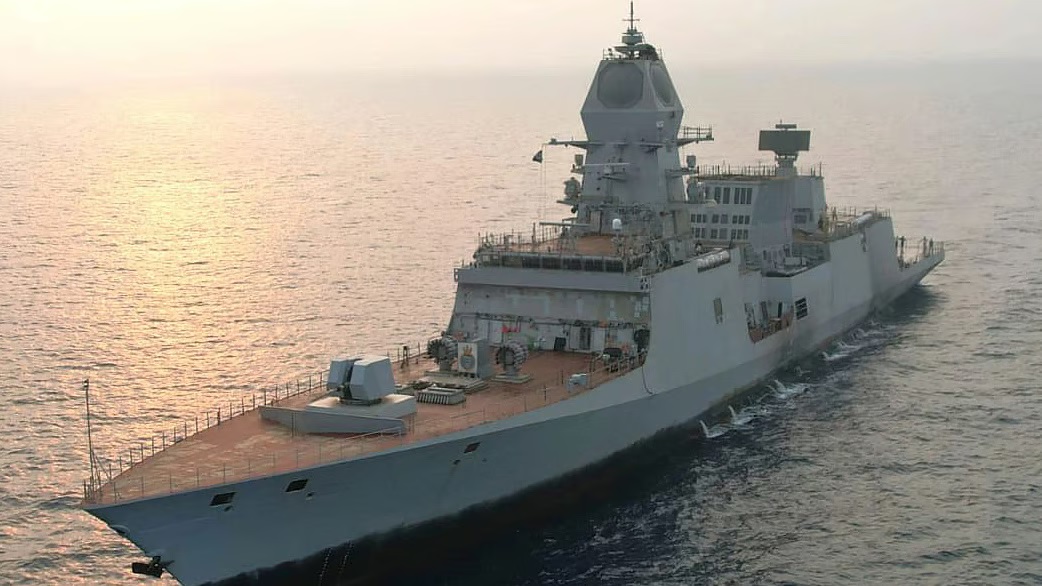
India
On 28 November 2025, The Indian Navy’s Nilgiri-class frigate programme reached another major milestone today as Mazagon Dock Shipbuilders Ltd. (MDL) handed over INS Taragiri, the third stealth frigate built by the Mumbai shipyard under Project 17A. The delivery marks a decisive step in India’s push to expand and modernise its surface combatant fleet with indigenously designed and constructed warships. The moment Taragiri’s commissioning pennant was hoisted on MDL’s quayside, the Navy’s seven-ship Nilgiri-class plan moved firmly into its final phase. Designed by the Warship Design Bureau and built jointly by MDL and Garden Reach Shipbuilders & Engineers (GRSE), the class represents India’s most advanced generation of multi-role frigates, combining stealth shaping, next-generation weapons, and a high degree of automation. A Programme of Seven: Four at MDL, Three at GRSE Project 17A, approved in 2015 as the follow-on to the Shivalik-class frigates, set out to deliver seven next-generation stealth frigates for the Indian Navy. Under this plan, Mazagon Dock Shipbuilders Ltd. (MDL) is constructing four ships — Nilgiri, Udaygiri, Taragiri, and Mahendragiri — while Garden Reach Shipbuilders & Engineers (GRSE) in Kolkata is building the remaining three — Himgiri, Dunagiri, and Vindhyagiri. With a total value of around ₹45,000 crore, Project 17A ranks among India’s most ambitious indigenous warship programmes. MDL’s share stands at more than ₹21,000 crore, and GRSE received its largest-ever surface-combatant order worth over ₹19,000 crore. Dividing the construction between the two shipyards not only eased the industrial load but also allowed faster build times, supported parallel production, and strengthened India’s growing expertise in modular shipbuilding. Taragiri: A Modern Stealth Frigate INS Taragiri carries the legacy of the earlier Leander-class frigate of the same name, but in form and capability, it is a completely new platform. Built with high-strength indigenous DMR 249A steel, Taragiri features sharp angular surfaces and reduced acoustic and infrared signatures, representing the Navy’s latest thinking in surface combatant stealth technology. With a displacement of around 6,700 tonnes, a 149-metre hull, and accommodation for more than 220 personnel, the ship is configured for long deployments across the Indian Ocean Region. Its propulsion system is a CODAG configuration, combining two GE LM2500+ gas turbines with diesel engines to allow sprint speeds of up to 28–32 knots and extended endurance for blue-water missions. This makes the ship suited for escort duties, carrier battle group operations, and independent missions in distant waters. On the combat side, the ship fields a formidable mix of offensive and defensive systems. The Barak-8 long-range surface-to-air missile system, housed in a 32-cell VLS, forms its primary air-defence shield. For sea-strike roles, the ship is armed with eight BrahMos supersonic cruise missiles, giving it powerful anti-ship and land-attack capability. Anti-submarine warfare is handled by twin 324 mm torpedo tubes, RBU-6000 rocket launchers, and the Maareech torpedo defence suite. The ship’s sensors include the MF-STAR S-band AESA radar and a long-range air-surveillance system, along with the DRDO’s Shakti electronic warfare suite. A large flight deck and hangar allow Taragiri to operate a multi-role helicopter, adding another dimension to its anti-submarine, surveillance, and targeting capabilities. Building the Fleet: The Nilgiri-Class Timeline With INS Taragiri now delivered, the Nilgiri-class programme is steadily shifting from construction to fleet integration. The class is moving through its final stages, with four ships already in the Navy’s hands and the remaining three progressing through trials and outfitting. Based on current records and official projections, the induction timeline of all seven frigates unfolds as follows. At MDL, the lead ship INS Nilgiri became the first of the class to enter service. Laid down in December 2017 and launched in 2019, she was commissioned in January 2025 and now serves with the Eastern Naval Command. She was followed by INS Udaygiri, which entered the water in 2022 and was delivered in mid-2025 before being commissioned in August that year. With today’s handover of INS Taragiri, MDL’s third frigate moves into her pre-commissioning phase, with formal induction expected by the end of 2025. The final MDL-built ship, INS Mahendragiri, launched in September 2023 and is currently in the fitting-out stage, with commissioning anticipated around the first quarter of 2026. Meanwhile in Kolkata, GRSE has already delivered its first ship, INS Himgiri, which was commissioned alongside Udaygiri in August 2025. The second GRSE-built frigate, INS Dunagiri, launched in 2022 and is preparing for trials, with induction expected in early 2026. The last ship of the class, INS Vindhyagiri, launched in August 2023, remains in advanced outfitting and is projected to join the fleet by the third quarter of 2026. By the time Mahendragiri, Dunagiri, and Vindhyagiri complete their trials and enter service through 2026, the Indian Navy will field a full seven-ship Nilgiri-class squadron. Equipped with BrahMos, Barak-8 missiles, and cutting-edge sensors, the class will significantly expand India’s maritime reach, strengthen deterrence, and enhance the Navy’s ability to dominate key sea lanes across the Indian Ocean Region. A Major Step for Indigenous Warship Construction The Project 17A programme is widely seen as a technological and industrial leap for India. Both shipyards have used modular construction techniques, new outfitting infrastructure, and a supply chain of hundreds of Indian MSMEs to deliver the ships. For MDL, Taragiri’s handover adds to an enviable track record of producing frontline warships including destroyers, submarines, and frigates. For GRSE, the P17A order has boosted its capacity to handle large combatants, ensuring readiness for future naval projects. With Taragiri now joining the Navy’s modernisation drive, the Nilgiri-class is rapidly taking shape as the backbone of India’s next-generation surface fleet. Once all seven ships are in service, they will significantly strengthen the Navy’s ability to project power, defend sea lanes, and operate seamlessly across the Indian Ocean Region — an increasingly critical theatre for India’s maritime interests.
Read More → Posted on 2025-11-28 18:07:30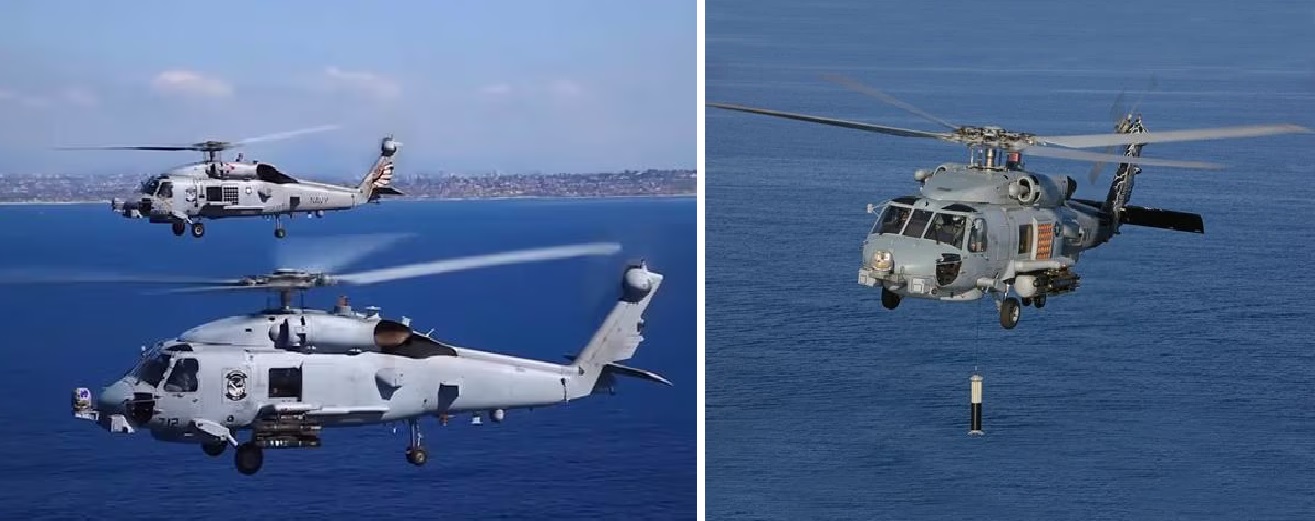
India
The Ministry of Defence (MoD) has signed Letters of Offer and Acceptance (LOA) with the United States, finalising a ₹7,995-crore ($895 million) multi-year support package for the Indian Navy’s MH-60R Seahawk multi-role helicopters. Concluded under the Foreign Military Sales (FMS) framework, the agreement secures spares, repairs, technical services, and logistics support for India’s most advanced anti-submarine helicopter fleet. A Comprehensive Five-Year Support Package Under the LOA, the U.S. government will supply Follow-on Support (FOS) and Follow-on Supply Support (FSS) for a period of five years. The package covers a full maintenance ecosystem—spares, rotables, ground support equipment, diagnostic tools, technical documentation, training modules, and U.S. Navy-certified assistance teams. It will also enable the creation of intermediate-level repair and periodic inspection facilities in India, allowing a larger proportion of servicing to be carried out domestically rather than routed to U.S. depots. Officials noted that, as the MH-60R fleet is entering its full operational deployment phase, a structured sustainment programme is essential to avoid the chronic availability problems that plagued older naval helicopter types. How the FMS Process Reached This Stage India’s MH-60R programme has unfolded in several steps: In 2020, India signed a $2.6-billion FMS contract for 24 MH-60Rs, including weapons, simulators, and initial support. In 2024, the U.S. State Department cleared a $1.17-billion follow-on support and equipment roadmap for India’s Romeo fleet. The newly signed ₹7,995-crore LOA formalises a significant chunk of that approved support, locking in supply chains for the next half-decade. The financial outflow will occur annually across five years, with the bulk going to U.S. contractors such as Lockheed Martin/Sikorsky while a rising share flows to Indian PSUs and MSMEs as domestic MRO capability strengthens. The MH-60R in Indian Navy Service The MH-60R Seahawk, widely regarded as the world's most capable Anti-Submarine Warfare (ASW) helicopter, is progressively entering frontline Indian Navy units. Deliveries began in 2021, and India is expected to receive all 24 helicopters by 2026. The Navy commissioned INAS 334—its first MH-60R squadron—at INS Garuda, Kochi, integrating the platform with major warships including INS Vikrant and Visakhapatnam-class destroyers. The helicopter replaces ageing fleets of Sea King Mk 42B/42C and Ka-28 helicopters that have struggled with obsolescence and spares shortages. Capabilities and Specifications The MH-60R’s capability set represents a generational leap for India’s ship-borne aviation arm. Key specifications include: Speed & Range: Up to 267–330 km/h, with a mission range between 450–830 km depending on payload. Sensors: Advanced dipping sonar, sonobuoys, multi-mode maritime radar, EO/IR turret, and electronic support measures—allowing detection of submarines and surface threats in cluttered littoral environments. Weapons: Mk-54 torpedoes, AGM-114 Hellfire missiles, precision rockets, and machine guns. Crew & Payload: Operated by 3–4 crew, with a payload capacity around 3,000 kg for weapons, equipment, or rescue loads. These systems together form a core of India’s expanding network-centric ASW capability, essential amid rising Chinese naval activity in the Indian Ocean. Operational Impact and What India Gains By securing long-term spares, technical services, and logistics support, the Indian Navy ensures high availability of its most modern helicopter fleet. The agreement strengthens India’s ability to deploy fully mission-ready helicopters aboard warships during extended patrols across the Arabian Sea, Bay of Bengal, and the wider Indian Ocean Region (IOR). The package also supports India’s goal of expanding domestic MRO capacity, lowering lifecycle costs, and reducing dependence on overseas repair depots. Strengthening India’s Maritime Posture in the Indo-Pacific As China’s naval presence expands in the Indo-Pacific, the MH-60R forms a central pillar of India’s maritime surveillance and ASW grid. With the new sustainment package, India ensures its frontline warships remain equipped with fully functional, advanced airborne ASW capability throughout deployments. The deal further deepens India–U.S. defence cooperation, reinforcing shared interests in maintaining stability across the Indo-Pacific. A Strategic Investment for Long-Term Readiness The support package goes beyond logistics—it is a long-term readiness guarantee for a platform critical to India’s naval strategy. With assured spares, trained personnel, and in-country repair capacity, the Indian Navy is better prepared to maintain persistent ASW coverage and respond rapidly to emerging threats. India’s MH-60R investment now stands not just as an acquisition of capability but as a commitment to keep that capability combat-ready for decades ahead.
Read More → Posted on 2025-11-28 13:38:43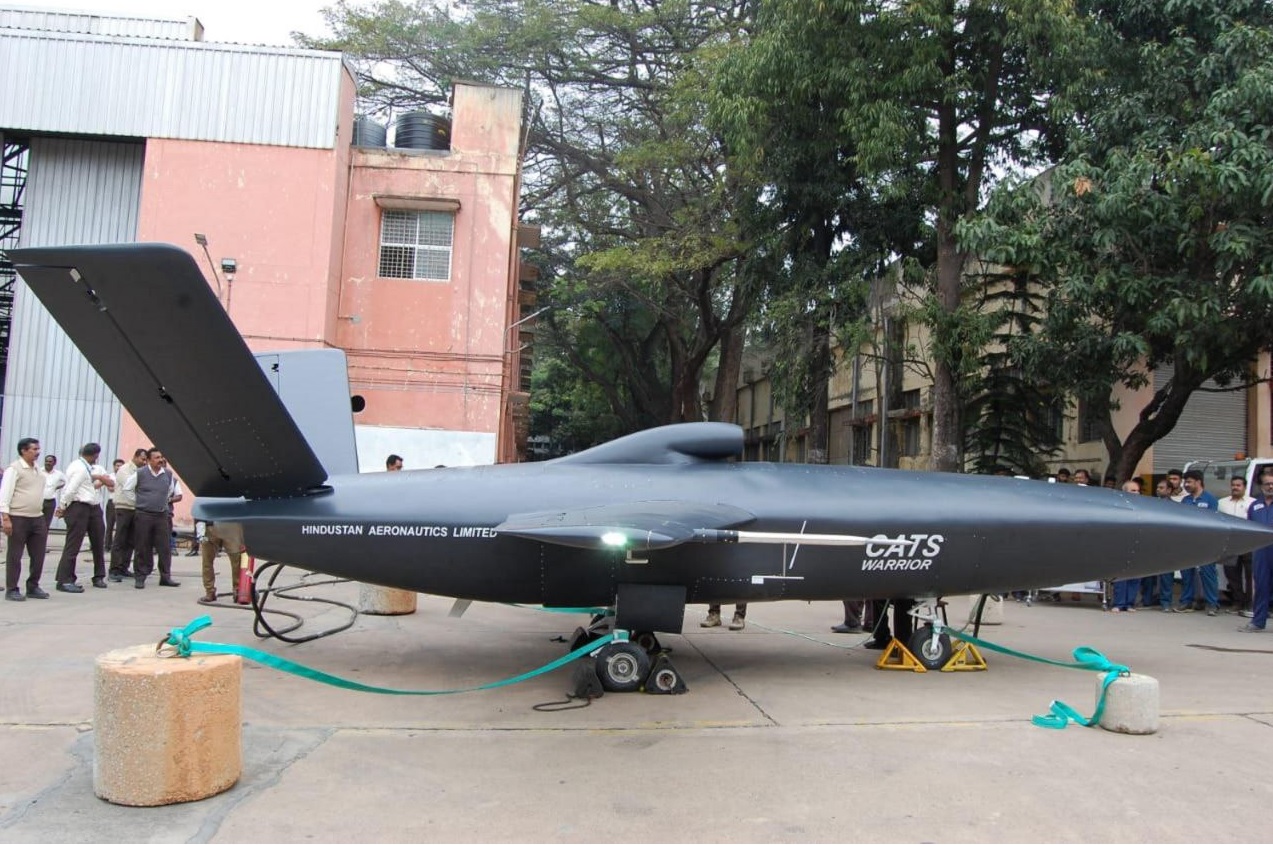
India
BENGALURU — Hindustan Aeronautics Limited (HAL) has confirmed that the CATS Warrior unmanned combat aerial vehicle (UCAV) will now take to the skies for its first flight in 2027, slipping past the earlier target of 2026. The update came directly from HAL Chairman & Managing Director D.K. Sunil during an interview at the ANI National Security Summit on November 28, 2025. Original Timeline and Shift When HAL unveiled the Combat Air Teaming System (CATS) project, the 2-ton CATS Warrior was expected to complete its first flight by 2026. Ground tests aligned with that plan — its PTAE-7–derived engines had already completed test runs in 2024, and a full-scale engine ground test was conducted in early 2025. However, HAL now acknowledges that additional time is required for flight-control software refinement, aerodynamic adjustments, weapons integration, and system validation, pushing the maiden flight to 2027. D.K. Sunil stated, “We are building the UCAV ‘CATS Warrior’. It will be ready by next year, and we expect it to fly by 2027.” What’s Causing the Delay? According to HAL officials and programme insiders, several bottlenecks contributed to the schedule slip: Integration challenges involving avionics, data links and autonomous teaming architecture Power and endurance limitations of the temporary PTAE-W engines used in the demonstrator Awaiting progress on the HTFE-25 turbofan, which will power future heavy variants Expanded system testing after lessons learned from the Ukraine war regarding survivability, EW resilience and GPS-denied operations Engineers say the project remains on schedule structurally, but advanced manned-unmanned teaming (MUM-T) systems require additional test time. CATS Warrior II: Heavier, More Capable Variant HAL has also confirmed long-term plans for a 5-ton class ‘CATS Warrior II’, which is expected to fly between 2028 and 2031. This version will be powered by the indigenous HTFE-25 turbofan, providing: Increased payload capacity from 650 kg to 1,200 kg Longer endurance Higher-speed ingress and strike options More sophisticated EW and sensor packages The estimated cost per unit of the Warrior II is around USD 16 million. Strategic Significance for India Despite the delay, the CATS Warrior remains central to India’s shift toward advanced unmanned warfare. Once operational, it will position India alongside major global powers—such as the United States, Australia, China, and the United Kingdom—who are already developing loyal-wingman combat drones. The Warrior is designed to work seamlessly with India’s current and future manned fighter fleet, including the Tejas Mk1A, Su-30MKI, TEDBF, AMCA, and eventually even sixth-generation platforms. By linking these aircraft through an AI-driven combat network, the CATS Warrior will not merely support missions—it will expand the Indian Air Force’s tactical possibilities, enabling coordinated strikes, distributed sensing, and high-risk operations without exposing pilots to danger. Additional HAL Projects: Maritime Helicopter Programme During the ANI summit, D.K. Sunil also announced progress on HAL’s Utility Helicopter Maritime (UHM) programme. He said, “We are also working on the UHM — the deck-based utility helicopter. It will start flying this year, and delivery will take place in two years.” The UHM is intended for naval missions including offshore patrol, anti-submarine support, maritime rescue and shipborne logistics. A Crucial Phase Ahead HAL insists the programme remains on track despite the one-year slip. The 2027 first flight will be a defining milestone for India’s entry into combat-ready autonomous aircraft. If CATS Warrior meets its design goals, it could become one of India’s most important force-multipliers — a lesson reinforced by the battlefield realities of Ukraine, where unmanned systems have repeatedly altered the course of operations. For now, HAL is focusing on closing the technological gaps and ensuring the UCAV is ready for its long-awaited flight test in 2027.
Read More → Posted on 2025-11-28 10:55:57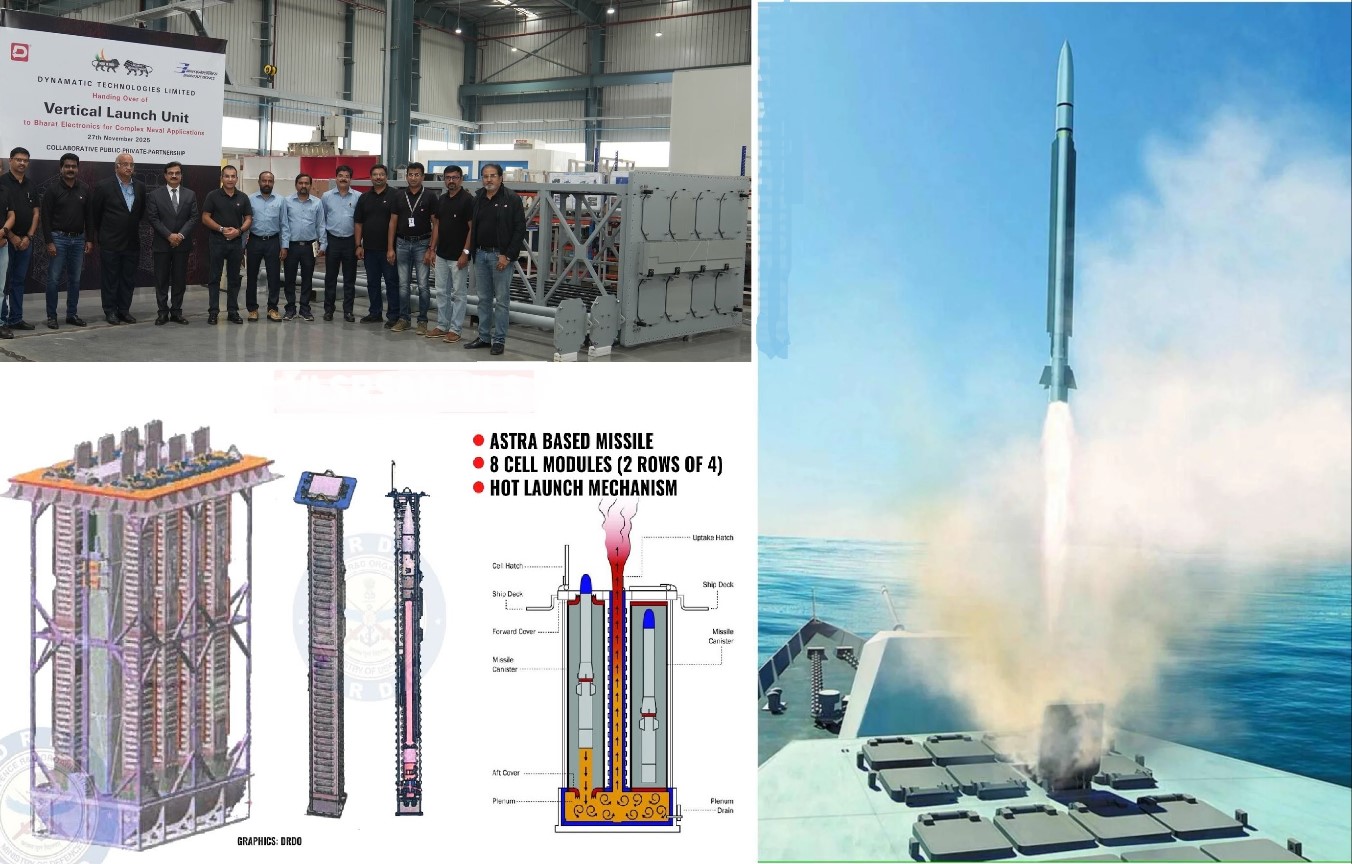
India
New Delhi / Bengaluru, 27 November 2025 — In a significant boost to India’s indigenous defence manufacturing and naval strike-capabilities, Dynamatic Technologies Ltd (DTL) has officially handed over the Vertical Launch Unit (VLU) to Bharat Electronics Ltd (BEL) on 27 November 2025. The hand-over marks a key milestone in the public–private partnership driving the Indian Navy’s next-generation air-defence systems. BEL, responsible for major sub-systems, electronics, canisters, and launcher-related work, will now integrate the VLU into the Navy’s Vertical Launch – Short Range Surface-to-Air Missile (VL-SRSAM) system. Dynamatic Technologies played a crucial role in building the launcher structures, the mechanical foundation that enables vertical missile launches from warships. The VL-SRSAM, developed by DRDO, is expected to replace older short-range defence systems aboard frontline Indian Navy ships. It is designed to counter sea-skimming missiles, fighter aircraft, UAVs, helicopters, and other close-range aerial threats. VL-SRSAM Specifications (DRDO) Weight: ~170 kg Length: ~3.93 m Diameter: 178 mm Range: Up to ~80 km (upgraded from earlier ~40 km) Propulsion: Solid-fuel rocket motor, smokeless exhaust Guidance: Mid-course inertial navigation + Active radar seeker terminal homing Control: Thrust vector control + cruciform wings Launch Type: Cold-launch vertical launch system (VLS) Threat Envelope: 360-degree coverage against low-flying, high-speed, sea-skimming threats During a major test on 26 March 2025 at the Integrated Test Range, Chandipur, the VL-SRSAM successfully intercepted a high-speed, low-altitude target, validating its agility, reaction speed, and precision. The test also confirmed full functionality of its indigenous RF seeker, multi-function radar, and weapon control system. The Indian Navy plans to induct the VL-SRSAM across destroyers, frigates, corvettes, and potentially aircraft carriers, replacing ageing systems. Full integration is targeted around 2030, marking a major leap for India’s self-reliance in naval air defence. This VLU hand-over signifies a strengthening of India’s defence industrial ecosystem, where PSUs like BEL and private firms like DTL collaborate on complex, high-precision naval systems. It also highlights the Navy’s urgent need for modern anti-missile shields, especially as maritime environments grow more contested globally. With the VLU now transferred to BEL, the project enters its most critical phase — system integration and shipboard deployment, bringing India one step closer to fielding a fully indigenous ship-based missile shield.
Read More → Posted on 2025-11-28 10:34:34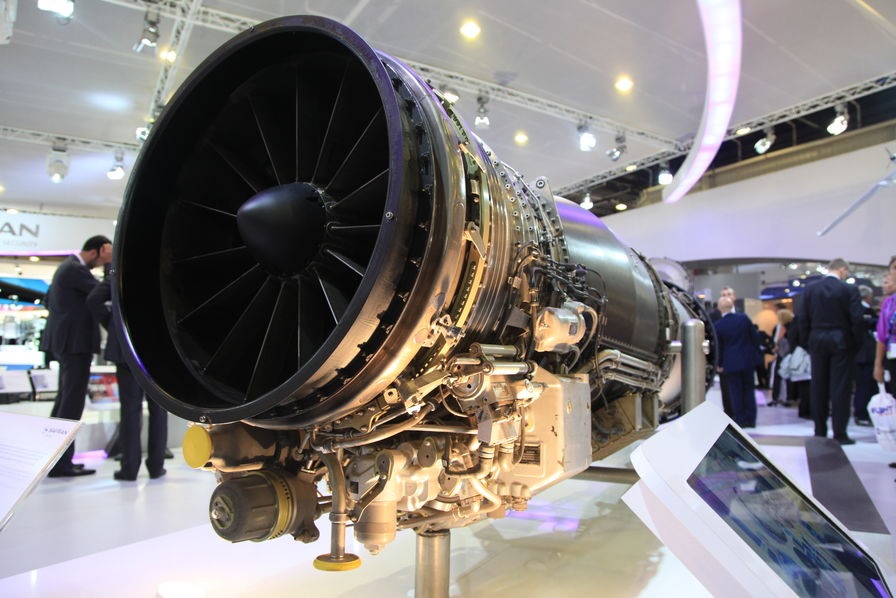
Safran to Provide Full Tech Transfer and Shared IPR for 120–140 kN AMCA Engine in $7bn Joint Venture
India
France and India are moving forward with detailed discussions on a major joint venture between Safran and DRDO to co-develop a 120–140 kN jet engine for the Advanced Medium Combat Aircraft (AMCA). Safran has indicated that it is prepared to provide full technology transfer, including the hot section, a capability that India has been seeking to develop for many years. The proposed partnership, valued at about $7 billion, also includes shared intellectual property rights for future upgrades and potential exports. The hot section—covering high-pressure turbines, advanced combustor systems, and heat-resistant materials—is the most complex part of a fighter engine. Safran’s readiness to transfer this technology would allow India to gain the capabilities required for independent design and manufacturing of high-performance propulsion systems. Officials familiar with the talks say the joint venture will follow a structure similar to the BrahMos model, with both sides sharing responsibilities in design, manufacturing, testing, and long-term development. DRDO’s Gas Turbine Research Establishment (GTRE) is expected to work closely with Safran to absorb technologies related to turbine-blade casting, thermal-management systems, ceramic coatings, and overall engine integration. The new powerplant is intended for the AMCA Mk-2 variant, which requires higher thrust to meet its stealth and performance goals. A 120–140 kN engine would support supercruise capability and provide the power needed for internal weapons carriage and next-generation avionics. If the agreement is cleared in time, prototype testing could begin toward the end of the decade. In addition to the AMCA engine proposal, Safran has also expressed readiness to set up an M88 engine assembly line in India, pending approval from the French government. The M88, which powers the Rafale fighter jets operated by the Indian Air Force and Navy, would benefit from local assembly, repair, and overhaul capability, helping reduce turnaround times and improving India’s self-reliance in maintenance. The discussions are consistent with India’s broader push to strengthen its domestic aerospace ecosystem, following earlier engine initiatives such as the Kaveri program. France’s offer highlights growing defence cooperation between the two countries, which already collaborate in aircraft, helicopters, missiles, and space technologies. Final approval from the French government is still awaited, but officials on both sides indicate steady progress. If cleared, the Safran-DRDO joint venture would provide India with long-term access to advanced fighter engine technology, supporting future programs including unmanned combat aircraft, next-generation fighters, and high-altitude platforms.
Read More → Posted on 2025-11-27 17:21:54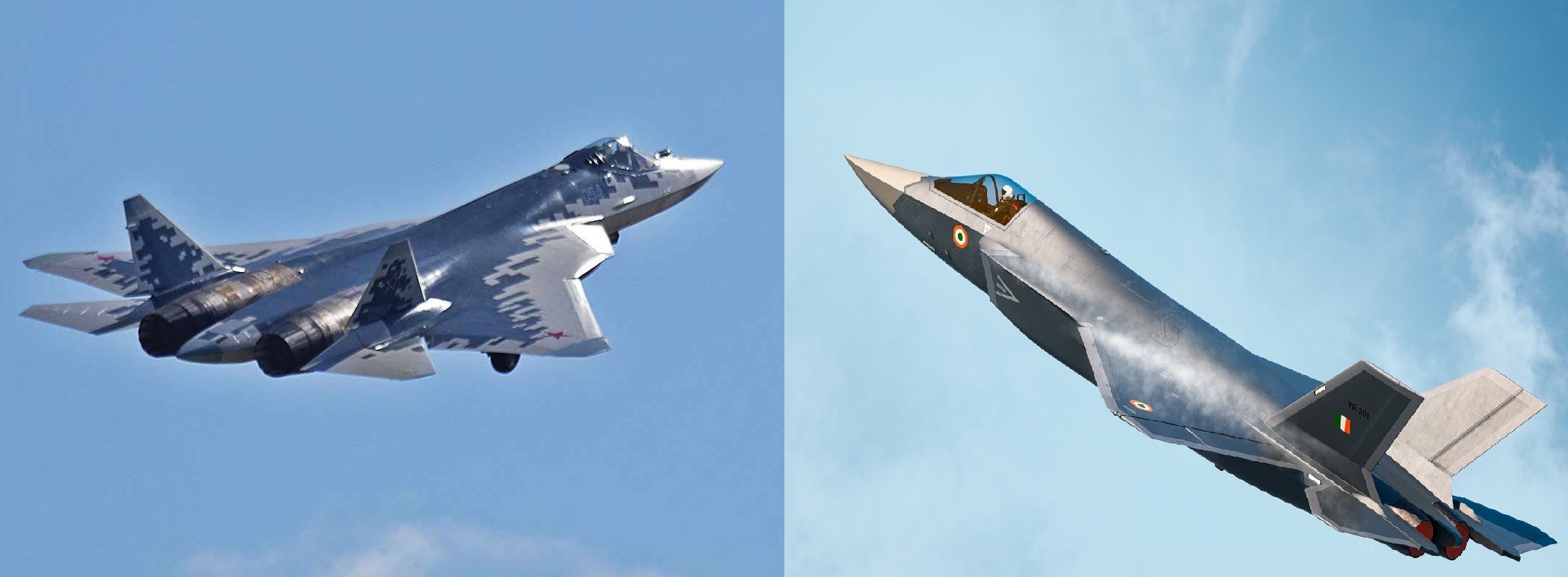
India
Russia’s renewed offer to grant India 100 percent Transfer of Technology (TOT) for the Su-57 fifth-generation fighter has generated considerable attention, but behind the headline lies a more complex reality. According to sources familiar with the discussions, Moscow’s proposal is not simply an act of goodwill. Instead, it is tied to a far larger expectation: that India commit to acquiring 120 to 140 Su-57s, a number far beyond the Indian Air Force’s actual requirement. The offer also includes a plan to jointly develop a two-seat variant of the Su-57—something Russia has long wanted but lacks sufficient funding for. The dual-seat design would require restructuring of the airframe and avionics package, effectively creating a new sub-variant. Russia hopes that India’s participation could revive the aircraft line and fund long-delayed upgrades. For India, however, the picture looks very different. India Needs Only a Stop-Gap Fleet The Indian Air Force currently sees a limited requirement of 40 to 60 fifth-generation fighters to fill the capability gap until the indigenous Advanced Medium Combat Aircraft (AMCA) enters serial production. This need has become more urgent in recent years as China has deployed its J-20 stealth fighters closer to the Indian border, with some intelligence assessments warning that Beijing may eventually supply a variant of its fifth-generation platforms to Pakistan. Even with these regional pressures, a large order of more than a hundred Su-57s would strain defence budgets and heavily overlap with India’s long-term planning. Senior officials point out that the Su-57 proposal, as presented, is designed to push India toward a scale of commitment that would effectively bind the IAF to the Russian platform for decades. Such a move would inevitably divert funds, manpower, and design bandwidth away from AMCA, weakening India’s ability to field a truly indigenous fifth-generation system at a time when strategic autonomy is becoming more critical than ever. The Two-Seat Variant: A Silent Red Line A major reason India walked away from the earlier FGFA (Fifth Generation Fighter Aircraft) collaboration was Russia’s insistence on creating a two-seat Su-57 derivative. India viewed this as a structural complication that would slow down development, increase costs, and provide little strategic value. More importantly, New Delhi realised that the two-seat design—if pursued jointly—would pull Indian engineers, funding, and production lines toward a Russian project, delaying India’s own stealth fighter roadmap. The AMCA program had already defined a future twin-seat version (the AMCA Mk1B), and the Su-57 twin-seat concept would risk encroaching directly into the same developmental space. This, officials say, was the primary reason India exited the Su-57 program, a factor often overshadowed by public debates on radar visibility, engines, or sensor fusion. Russia’s Strategic Motive: Keeping India Dependent The new “100% TOT” offer must be read against this backdrop. While it appears to grant India autonomy, defence analysts note that Russia has historically been reluctant to part with its deepest stealth technologies—especially in areas such as low-observable materials, sensor-fusion algorithms, and engine cores. Meanwhile, Russia’s own Su-57 production remains slow. For Moscow, an Indian order of 120+ aircraft would fund its production line, stabilise exports, and lock India back into a long-term dependency cycle. In other words, the “full TOT” claim is seen by experts as conditional, partial, and strategically calculated, not absolute. A Large Su-57 Purchase Could Harm AMCA Indian defence planners warn that accepting Russia’s scale and conditions would have direct consequences: It would consume major capital allocations for the next decade. AMCA’s production ecosystem would be starved of resources. DRDO and ADA teams would be redirected toward Su-57 customisation. Indigenous stealth technology development would slow significantly. India, which is trying to streamline its diverse fighter fleet, would also be forced to integrate a large foreign platform at a time when it is trying to consolidate logistics around Tejas, Tejas Mk2, Rafale, and AMCA. A Clearer Path Forward India remains open to limited fifth-generation imports as a bridge, but only in small quantities. Whether the eventual choice is a modest batch of Su-57s or Western platforms, the decision will revolve around one principle: no acquisition should undermine AMCA. Russia’s latest offer may be ambitious, but Indian officials see it more as a strategic manoeuvre than a genuine invitation to technology freedom. New Delhi has grown cautious of proposals that appear generous yet carry long-term dependencies beneath the surface. For now, India’s focus is firmly set on building its own fifth-generation capability, and any foreign partnership—whether Russian or Western—will be evaluated only if it strengthens, rather than delays, the AMCA program that forms the backbone of India’s future airpower.
Read More → Posted on 2025-11-26 17:52:27
India
n a major boost to India’s internal security and border protection architecture, Indrajaal Drone Defence has launched the country’s first Anti-Drone Patrol Vehicle (ADPV) — a fully mobile, AI-enabled counter-drone platform capable of detecting, tracking, and neutralising hostile drones while on the move. The system, showcased as the Indrajaal Ranger, marks a technological leap in India’s response to the rapidly growing menace of drone-based smuggling, reconnaissance, and terrorist operations. A Patrol Vehicle That Fights in Motion Unlike traditional counter-UAS systems that operate from fixed locations, the ADPV is built on a rugged all-terrain 4×4 vehicle and is engineered for high-mobility missions along vulnerable borders, urban corridors, and critical infrastructure zones. According to Indrajaal: Drone detection range: up to 10 km Neutralisation range: up to 4 km Response time: real-time tracking and engagement even while the vehicle is moving Coverage: 360-degree situational awareness through AI-driven autonomous monitoring The ADPV integrates electro-optical sensors, RF-capture arrays, radar modules, and autonomous decision-support algorithms to identify drone types, assess threat levels, and initiate countermeasures almost instantly. Built to Counter Drone-Led Smuggling and Terror Operations The urgency for such a system was reinforced by multiple recent incidents that exposed how drones have become a preferred smuggling tool for cross-border networks: ISI-backed drone routes have been used to drop weapons, drugs, IEDs, and cash deep inside Indian territory. The Border Security Force (BSF) has neutralised over 255 Pakistani drones in 2025 alone, highlighting a massive spike in drone-based trafficking attempts. Urban centers including Delhi, Mumbai, and Chandigarh have reported cartel-driven drone drops, indicating smuggling networks have extended their operations beyond border states. Indrajaal notes that India’s ₹3-lakh-crore drug trafficking ecosystem is increasingly dependent on drones, making counter-drone mobility essential. The Indrajaal Ranger: What’s Inside the Machine While full specifications remain classified, sources indicate the Ranger includes: AI-enabled autonomous threat evaluation platform Multi-layered sensor fusion suite for radar, RF, EO/IR detection Electronic warfare-based soft-kill options Hard-kill interceptors for situations where disabling via jamming is not sufficient Encrypted communication and battlefield networking 360° continuous surveillance dome High-output power systems to support EW operations on the move Indrajaal’s proprietary “Wide Area Drone Defence System (WADDS)” software forms the backbone of the Ranger, enabling scalable response protocols across varied terrains and threat densities. Why This Matters Now India is facing an unprecedented rise in drone-based incidents, with infiltrations along the Pakistan border increasing by more than 400 percent over the past three years. Cartel networks now rely heavily on drones to conduct rapid, low-risk deliveries of heroin and synthetic drugs into Indian territory. At the same time, security agencies have recently intercepted IED-laden drones in Punjab and Kashmir, revealing a deepening link between drone technology and terrorist operations. Critical infrastructure — airports, refineries, and military bases — is also experiencing heightened hostile surveillance, highlighting the growing sophistication of drone-enabled reconnaissance. Traditional fixed counter-drone systems are no longer adequate to tackle these evolving threats, as adversaries continually alter flight paths, timings, and payload tactics. This dynamic environment demands mobile counter-drone solutions that can respond instantly to unpredictable drone routes. The Anti-Drone Patrol Vehicle (ADPV) addresses this challenge by providing a fast-moving, frontline defence shield capable of detecting, tracking, and neutralising hostile drones in real time, even while in motion. India’s Counter-Drone Warfare The deployment of the ADPV marks a decisive shift in India’s approach to drone defence, signalling the country’s move toward integrated, indigenous, and autonomous security solutions rather than reliance on imported systems. With its advanced mobility and AI-enabled capability, the Indrajaal Ranger is expected to strengthen national security across multiple operational environments. Security experts believe the vehicle will become vital for safeguarding border regions such as Punjab, Rajasthan, and Jammu, where cross-border drone activity has surged. It is also poised to enhance the safety of major metropolitan cities by countering criminal drone operations within urban spaces. Beyond this, the ADPV is expected to play a significant role in securing VIP events, critical infrastructure, and sensitive defence corridors, where rapid and precise threat response is essential. It will also support police forces, CAPFs, and military units during high-risk deployments requiring immediate counter-drone action. The Indrajaal Ranger is now expected to undergo evaluation by major central agencies, including the BSF, CRPF, NSG, and several state police forces, marking the beginning of a new era in India’s fight against aerial threats. “Every Drone Intercepted is a Life Protected” At the launch event, officials emphasised that the system is designed to save lives, not just intercept drones. With India facing an unprecedented wave of drone-enabled smuggling, terror infiltration, and espionage, the ADPV offers a crucial real-time defence layer. Indrajaal’s innovation may soon become a standard tool across India’s borders and cities — marking a decisive step toward modern, AI-driven homeland security.
Read More → Posted on 2025-11-26 15:04:13
India
Rolls-Royce Moves To Build Arjun Tank And Future Combat Vehicle Engines In India Rolls-Royce is moving to anchor a major chunk of India’s future armoured and naval propulsion inside the country. The company has partnered with two defence public sector undertakings (DPSUs) and is awaiting final Ministry of Defence (MoD) clearances to begin local manufacturing of engines for the Arjun main battle tank (MBT), as well as engines for light tanks, the Future Infantry Combat Vehicle (FICV), Future Ready Combat Vehicle (FRCV) and heavy military vehicles (HMVs). At the same time, the company is advancing its plans to localise high-end mtu Series 4000 naval engines, tightening its long-term bet on India as a hub for land and sea propulsion. Arjun MBT: From Imported Heart To “Made In India” Powerpack Since its induction, the Arjun MBT has relied on the MTU MB838 Ka-501 engine, a 1,400 hp, 10-cylinder turbocharged diesel supplied by MTU, a subsidiary of Rolls-Royce Power Systems in Germany. India’s push for an upgraded Arjun Mk1A and persistent concerns over engine availability and spares have made propulsion one of the programme’s main bottlenecks. Reports this year highlighted engine shortages as a factor delaying Mk1A deliveries and forcing greater local support for the German powerpack. Against this backdrop, Rolls-Royce has now offered to localise the MB838 engine in India, with one DPSU partner specifically aligned to the Arjun programme. According to defence industry reporting, the proposal covers production of complete engines as well as critical components and spares, reducing dependence on overseas supply chains and aligning with the government’s ‘Make in India’ and ‘Atmanirbhar Bharat’ objectives. Once MoD approvals are in place, the Arjun’s powerpack could shift from being a vulnerable import to a locally manufactured system, with scope for upgrades, overhauls and lifecycle support being handled by Indian industry under Rolls-Royce supervision and technology transfer. S/Series 199 Family: Common Engine For Light Tank, FICV, FRCV And HMVs In parallel, Rolls-Royce Power Systems is offering India its latest mtu Series 199 family – described in Indian discussions as the “S199” engine family – for a broad band of future armoured platforms, including light tanks, the FICV, FRCV and heavy military trucks and support vehicles. Indian reports say the S199 family covers power outputs from roughly 450 hp up to 1,500 hp, with multiple cylinder configurations to suit different vehicle classes. That matches Rolls-Royce’s own roadmap for the mtu Series 199: Existing and in-development variants from 6-cylinder through 8-, 10- and 12-cylinder engines. Power outputs spanning roughly 260 kW to 1,300+ kW (about 350–1,750 hp), allowing the same engine family to power light armoured vehicles, medium tracked platforms and even heavy main battle tanks. Globally, the Series 199 already powers or is slated for vehicles such as the Boxer 8×8, ASCOD 2, M10 Booker and upgraded Leopard 1 fleets, giving India access to a combat-proven, NATO-standard propulsion family with strong logistics backing. For India, adopting a common 199/S199 family for light tanks, FICV, FRCV and selected HMVs would mean: Fewer engine types to support across the Army’s future armoured fleet. Shared spares and tooling, improving readiness and reducing inventory costs. An easier path to joint upgrades, hybridisation and future power-density improvements that Rolls-Royce is already pursuing for the 199 line. One of the two DPSU partners identified in Indian defence circles is expected to host local production of the Series/S199 engines, with Rolls-Royce promising high levels of localisation and progressive transfer of know-how. Naval Side: Localising mtu Series 4000 Engines In India On the maritime front, Rolls-Royce has been steadily deepening its footprint in India for several years. In 2023–24, the company and Garden Reach Shipbuilders & Engineers (GRSE) signed a licence production agreement to manufacture mtu Series 4000 “governmental” marine engines at GRSE’s Diesel Engine Plant in Ranchi. The Series 4000 engines, part of the mtu brand under Rolls-Royce Power Systems, cover a power band of roughly 746–4,300 kW and are used on fast patrol vessels, interceptor boats, fast attack craft and larger naval platforms. They are prized for high power-to-weight ratio, compact packaging and robust mechanical/thermal stability – attributes that directly appeal to navies seeking more punch in limited hull volumes. This naval localisation drive sits alongside earlier cooperation with Goa Shipyard Limited for assembly of mtu Series 8000 engines in India, and a separate venture that has moved production of mtu Series 1600 engines and gensets from Germany to Indian facilities. Taken together, the Series 1600, 4000 and 8000 efforts have already positioned India as a production and support base for mtu naval engines across multiple power classes. Rolls-Royce’s latest land-systems proposal essentially extends that template ashore, creating a combined land-and-sea propulsion ecosystem on Indian soil. Strategic Impact: Cutting Dependence, Creating A Propulsion Hub If the MoD signs off on the full package, India would gain: A locally produced replacement and sustainment path for the MB838 Arjun engine, easing long-running worries about German supply and sanctions sensitivity. Access to a modern, scalable engine family (Series/S199) that can be standardised across future tracked and wheeled combat vehicles, from light tanks to heavy support platforms. Deeper localisation of Series 4000 naval engines, knitting together Indian shipyards, DPSUs and private industry in a common propulsion supply chain for the Navy and Coast Guard. For Rolls-Royce, the move reinforces India’s role as a strategic industrial base, not just a customer. For New Delhi, it fits a broader pattern: German-origin and mtu-family engines that once came almost entirely from abroad are steadily being shifted into Indian factories, supported by Indian suppliers, and maintained by Indian technicians. The final shape of the Arjun and S199 deals will depend on MoD negotiations over localisation depth, intellectual property, pricing and export rights. But the direction of travel is clear. In both armoured vehicles and warships, India is trying to bring the “heart” of its combat platforms—the engine—under its own industrial control, and Rolls-Royce is positioning itself as one of the key partners in that transformation.
Read More → Posted on 2025-11-25 16:01:33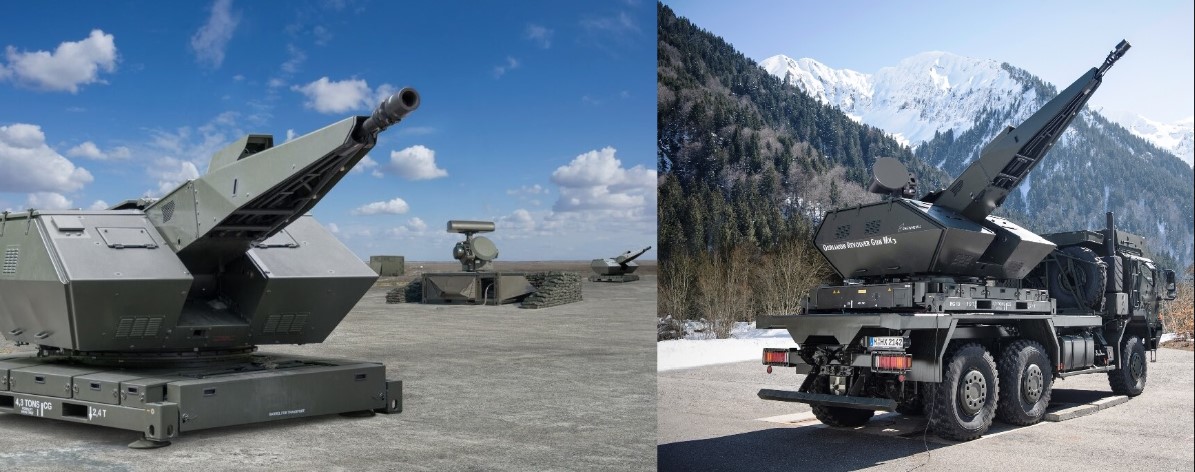
India
The Indian Army has begun a detailed evaluation of Germany’s Sky Shield next-generation short-range air defence (SHORAD) system, looking to plug a critical gap against drone swarms, cruise missiles, helicopters and low-flying fighter aircraft around high-value military and strategic assets. The system – essentially the Oerlikon Skyshield / Skynex family from Rheinmetall – combines a high-rate 35 mm gun, AHEAD programmable ammunition, a 50 km-class radar, and the Skymaster battle management system (BMS), with the added possibility of integration into India’s existing Akash-NG and QRSAM surface-to-air missile network. Indian industry sources indicate that talks are centred on a minimum 60% indigenization level, with Tata Advanced Systems and BEML emerging as potential prime manufacturing partners for local assembly, integration and life-cycle support. If concluded, the deal would give India a proven, cannon-based anti-drone shield while keeping most of the value chain within the country under Make in India. What Exactly Is ‘Sky Shield’? The system the Army is looking at is part of Rheinmetall’s Skyshield / Skynex family – a modular, lightweight SHORAD system originally developed by Oerlikon Contraves (now Rheinmetall Air Defence). Skyshield was conceived as the successor to the older Skyguard system, with roles ranging from classic anti-aircraft defence to counter-rocket, artillery and mortar (C-RAM) missions. At its core, a typical Skyshield / Skynex fire unit combines: 35 mm Revolver Gun (Mk2 / Mk3) firing up to 1,000 rounds per minute X-TAR3D X-band tactical acquisition radar, with instrumented ranges of 25, 35 or 50 km depending on configuration A command node running Oerlikon Skymaster BMS (also known as CN-1 in Skynex batteries), which fuses sensor data and assigns targets Optional add-ons such as missile launchers, additional radars, or even high-energy lasers in the latest Skynex architecture India’s “Sky Shield Next-Gen SHORAD” references this ecosystem: the gun-based Skyshield 35/1000 effectors controlled and networked through the newer Skynex/Skymaster architecture, giving a flexible, plug-and-play air-defence layer around airbases, ammunition depots, command posts and critical infrastructure. How the System Works: From Detection to Kill The concept is straightforward: use relatively cheap gun rounds with smart fuzes to kill expensive or numerous aerial threats before they reach the target. Detection and trackingA 3D X-TAR3D radar scans airspace out to roughly 50 km, detecting and tracking low-flying fighters, helicopters, drones, loitering munitions and incoming cruise missiles. The radar feeds a local air picture into the Skymaster BMS, which can also ingest feeds from other radars and sensors in the wider integrated air defence network. Battle management and engagement decisionWithin Skymaster, operators (or automated algorithms) prioritise threats, assign them to individual guns or missile launchers, and coordinate engagements to avoid overlap. The system is designed to handle saturation and swarm attacks, a key concern for India given the proliferation of small, cheap drones in the region. Gun and AHEAD ammunition effectorsThe Oerlikon 35 mm Revolver Gun Mk3 is an unmanned, remotely operated gun mount. It combines a 35 mm revolver cannon, its own tracking radar and electro-optical sensor unit, and a fire-control computer on a single platform. The gun can fire 1,000 rounds per minute, has 252 ready-to-fire rounds, and supports a rapid single-shot mode when precise, low-volume fire is needed. The real killer is the AHEAD programmable air-burst ammunition. Each round is programmed in flight to burst just ahead of the target, releasing a cloud of dense sub-projectiles that create a lethal wall. This is particularly effective against small drones, cruise missiles and guided munitions, where a direct hit is difficult but fragment density is decisive. Ultra-short reaction timeIn the classic Skyshield 35/1000 configuration, reaction time from detection to firing can be under 4.5 seconds, allowing the system to defeat fast, low-flying threats and even perform a C-RAM role against rockets and artillery shells. In Indian service, the system could sit as an inner gun layer underneath Akash-NG and QRSAM, which provide medium-range missile protection against aircraft and larger missiles. QRSAM has already undergone user evaluation trials with the Army as an indigenous quick-reaction system. Configuration: How Many Parts, What Does a Battery Look Like? While configurations can be customised, a typical Skynex / Skyshield-based battery – and likely what India is evaluating – would include: One Skymaster-equipped command node (CN-1): the brain of the system, hosting the battle management software and controlling multiple effectors and sensors. One primary 3D X-TAR3D acquisition radar, with 25–50 km range modes depending on mission. Four 35 mm Revolver Gun Mk3 mounts, each with its own tracking radar and EO/IR sensors, typically mounted on 6×6 trucks or trailers, providing the actual firepower and forming the effector layer. Communication links to higher-level air defence command and any outer-layer missile systems (such as Akash-NG and QRSAM) that India may wish to pair. Optional effectors like missile launchers (e.g., SkyKnight) or high-energy lasers, which the architecture is already designed to host for future growth. In India’s case, much of this hardware could be locally produced or assembled: guns and turrets under licence, locally fabricated chassis from BEML, indigenous communication and C2 interfaces, and possibly Indian-made radars if the Army chooses to mix and match. How Many Countries Operate Skyshield / Skynex Today? Although the Indian evaluation is new, the Skyshield / Skynex family is already in use with several countries, giving the system a meaningful operational pedigree: Indonesia operates Skyshield gun systems, having first acquired four units and then ordering eleven more in a follow-on batch. South Africa uses Skyshield fire control units and AHEAD ammunition to modernise its legacy twin-gun SHORAD systems. Qatar quietly procured the Skynex architecture, with at least eight Revolver Gun Mk3s and one X-TAR3D radar shown in Qatari Ministry of Defence footage. Ukraine has received two Skynex systems from Germany, which have been used in combat to protect against drones and other air threats during the ongoing war. Italy became the first NATO country to formally order Skynex with the 35 mm Mk3 cannon in January 2025. Romania has also opted for Skynex as its C-RAM / SHORAD architecture, pairing it with its existing GDF-009 twin guns. Counting these, the Skyshield / Skynex family is fielded or on order in at least six named countries – Indonesia, South Africa, Qatar, Ukraine, Italy and Romania – plus at least one undisclosed European customer for additional Skynex batteries. India would therefore be joining a small but growing club of operators using Rheinmetall’s cannon-based SHORAD systems, with the advantage of drawing lessons from combat usage in Ukraine and network-centric deployments in Qatar and Italy. Indigenization, Tata/BEML and the Make in India Angle The requirement for 60% or more indigenization is central to the Army’s evaluation. Under the emerging proposal, Tata Advanced Systems could become lead integrator for the guns, turrets, and command systems, while BEML – already a major producer of military trucks and chassis – is a natural fit for vehicle platforms and mechanical integration. Local partners could also contribute Indian-made: Command and control software linkages to existing IACCS and Army air-defence networks Electronics, power systems and shelters Maintenance, repair and overhaul (MRO) facilities for the guns, sensors and radars If structured correctly, the project would not just give the Army a new SHORAD layer, but also build up domestic expertise in programmable ammunition, fire-control, and radar-gun integration – all crucial technologies as India moves toward indigenous gun-based C-RAM and anti-drone systems. Why It Matters for India The evaluation of the Sky Shield / Skyshield–Skynex system comes at a time when regional adversaries are rapidly fielding drones, loitering munitions and precision rockets, making mass, cheap aerial threats the new norm. Missile systems like Akash-NG and QRSAM are effective, but expensive to use against large numbers of small drones. By employing relatively low-cost 35 mm AHEAD rounds guided by an advanced radar and BMS, the Indian Army could economically defeat swarms while preserving missiles for high-value targets. With proven users in six countries and ongoing combat validation in Ukraine, the German system offers India a fast-track route to credible, layered, point air defence – provided the indigenization and integration pieces fall into place.
Read More → Posted on 2025-11-25 11:54:58
India
On 20 November 2025, at the Milipol Paris exhibition in Paris, India’s defence and aerospace company SMPP Limited (via its subsidiary SMPP Ammunition) formally entered into a teaming agreement with European land-systems leader KNDS (based in Amsterdam) to jointly offer the 155 mm precision-guided artillery ammunition family branded KATANA to the Indian armed forces. What the agreement covers Under the agreement, SMPP Ammunition and KNDS will work together to market, manufacture and supply the KATANA family of ammunition to the Indian Army — addressing its requirement for advanced 155 mm precision-guided rounds. The KATANA portfolio includes three variants: Ballistic Range (BR) — standard base precision guided capability. Extended Range (ER) — offering greater reach and standoff. High Precision (HP) — equipped with a semi-active laser seeker (future variant) for metric-level precision, along with a hybrid guidance system combining GNSS plus IMU to maintain accuracy across different terrains and operational conditions. The agreement emphasises “full-calibre” capability and addresses threats including armoured targets with decametric accuracy and fire-and-forget capability, improving effectiveness in urban and complex terrain. Strategic context and significance For SMPP, this marks a major step in its ammunition business. The company, founded in 1985 and headquartered in New Delhi, has built a profile in personnel protection, platform armouring, medium & large calibre ammunition and unmanned aerial systems. The teaming with KNDS allows SMPP to enter next-generation precision ammunition in collaboration with a European system integrator. For the Indian Army, the deal comes at a time when there is an acute requirement for modern 155 mm artillery systems and precision-guided ammunition, aligned with regional threat dynamics. The “Make in India” localisation push ensures improved supply-chain security, technology transfer and long-term indigenous capability development. KNDS (a merger of Germany’s Krauss-Maffei Wegmann and France’s Nexter Systems) brings strong artillery-ammunition credentials and gains access to India’s growing defence market. What comes next The partners will move into phases of design adaptation, localisation of manufacturing, certification, trials, and qualification to Indian Army standards. Production scale-up depends on procurement approval and budget decisions. The collaboration also opens opportunities for future exports of India-manufactured precision artillery rounds, subject to regulatory clearances. The High-Precision laser seeker variant will be a future capability upgrade. Broader implications The agreement strengthens India’s shift toward precision-guided munitions and deeper industrial collaboration with European defence majors. For the artillery domain, precision-guided 155 mm rounds like KATANA® offer major advantages: higher hit probability, reduced collateral damage, superior effectiveness in contested environments. The teaming agreement between SMPP Ammunition and KNDS for the KATANA 155 mm precision-guided artillery ammunition is a strategic milestone in India’s artillery modernisation and defence-industrial expansion. If fully realised, it may significantly enhance India’s domestic capability to produce and deploy advanced precision artillery ammunition, strengthening both national security and industrial depth.
Read More → Posted on 2025-11-24 18:00:24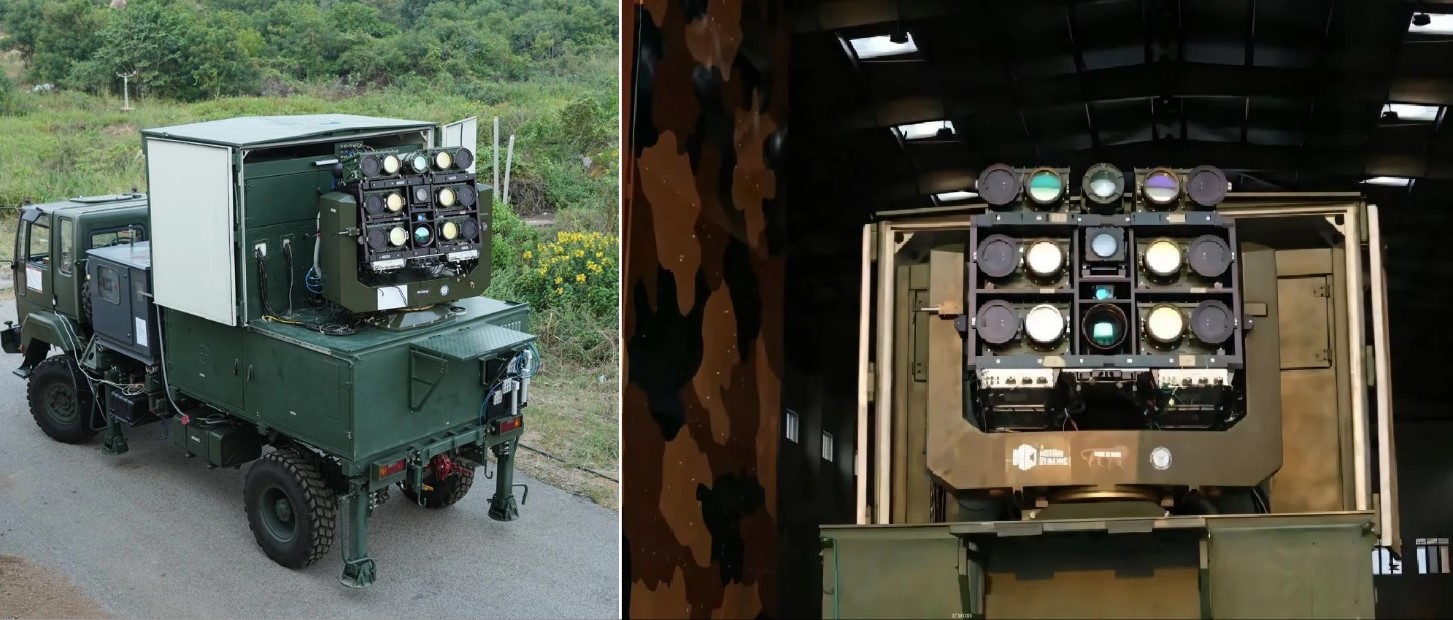
India
The Defence Research and Development Organisation (DRDO) has issued an Expression of Interest (EoI) to transfer the technology of its 30 kW Laser Directed Energy Weapon (DEW) system to Indian industry. The offer, released by DRDO’s Centre for High Energy Systems and Sciences (CHESS), includes three licences for qualified vendors. The 30 kW laser system is developed as a counter-drone platform that brings together drone-detection radar, RF sensors and EO-IR tracking equipment. It uses a high-energy laser to disable drones at a range of three to four kilometres. The system is mounted on a mobile platform and is intended for use around military bases and other sensitive areas where drone activity is a concern. The DEW has completed several field trials over the past year, showing the ability to track and neutralise different types of drones. It has been developed under DRDO’s MK-2(A) laser programme and uses a modular design in which multiple laser modules are combined to produce the 30 kW output. Offering the system for technology transfer is aimed at involving private industry in production and building domestic capability in high-energy laser systems, power electronics, optics and precision tracking. DRDO expects this step to support future manufacturing and reduce dependence on imports in this category of defence technology. The EoI invites companies to submit proposals showing their technical capacity and readiness to absorb the technology. After evaluation, DRDO will select three companies to receive licences and begin preparations for production. Initial manufacturing arrangements are expected within the next 12 to 18 months. Officials familiar with the programme indicate that DRDO is also working on higher-power laser systems in development, but the 30 kW system is the first being offered for wider industrial production. With this move, the 30 kW laser DEW becomes one of the first high-energy laser systems in India to be opened for industry participation and future large-scale deployment.
Read More → Posted on 2025-11-24 12:53:27Search
Top Trending in 24 Hours
-
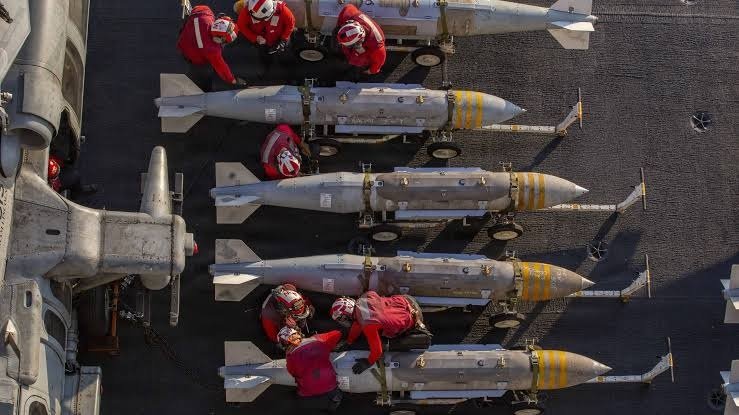 Pentagon Inspector General Report Finds Iran War Caused U.S. Ammunition Shortfalls and Industrial Bottlenecks
-
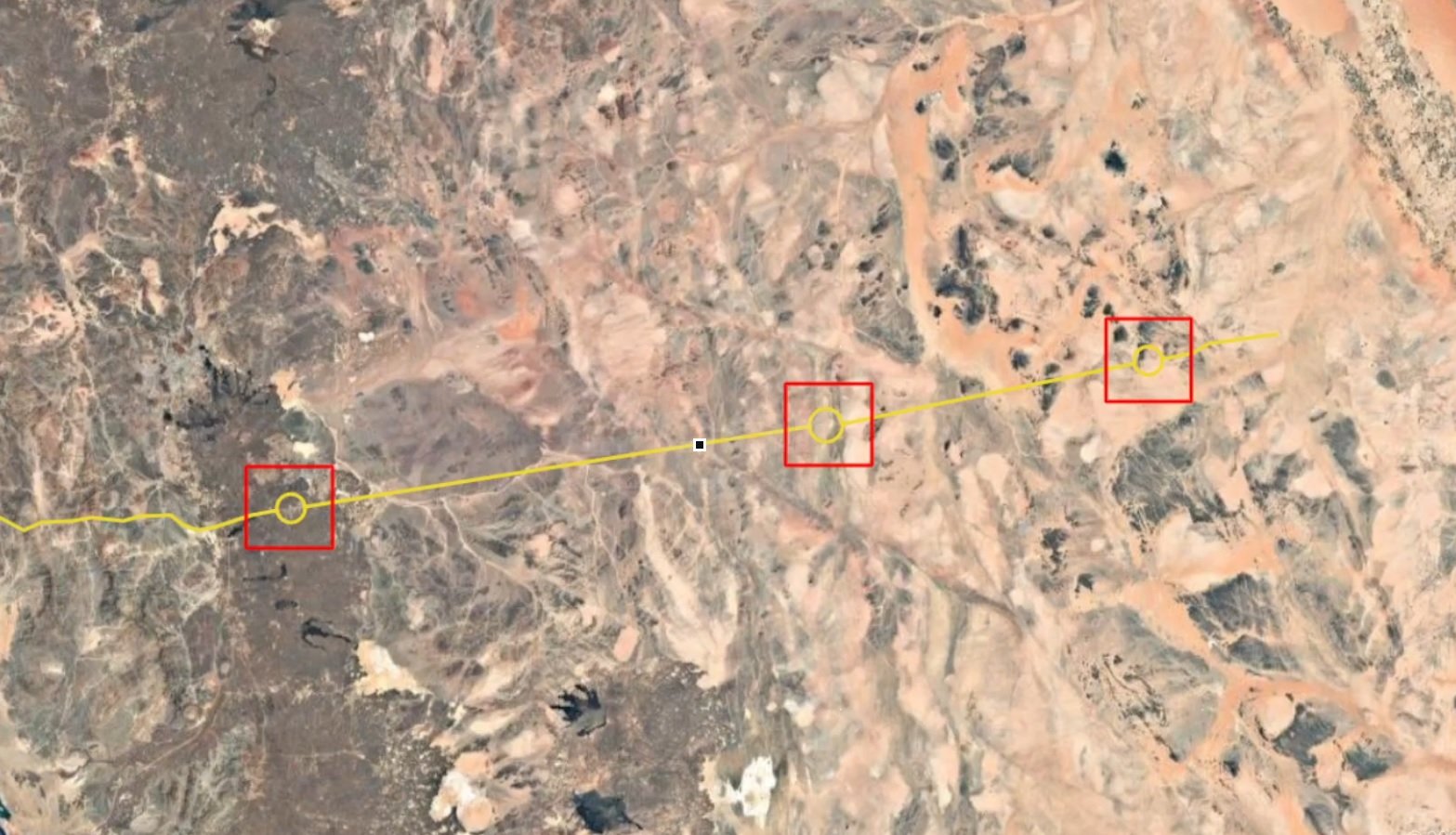 Satellite Imagery Shows Extensive Damage to Saudi Arabia’s East-West Oil Pipeline, Indicating More Than a Single Strike
-
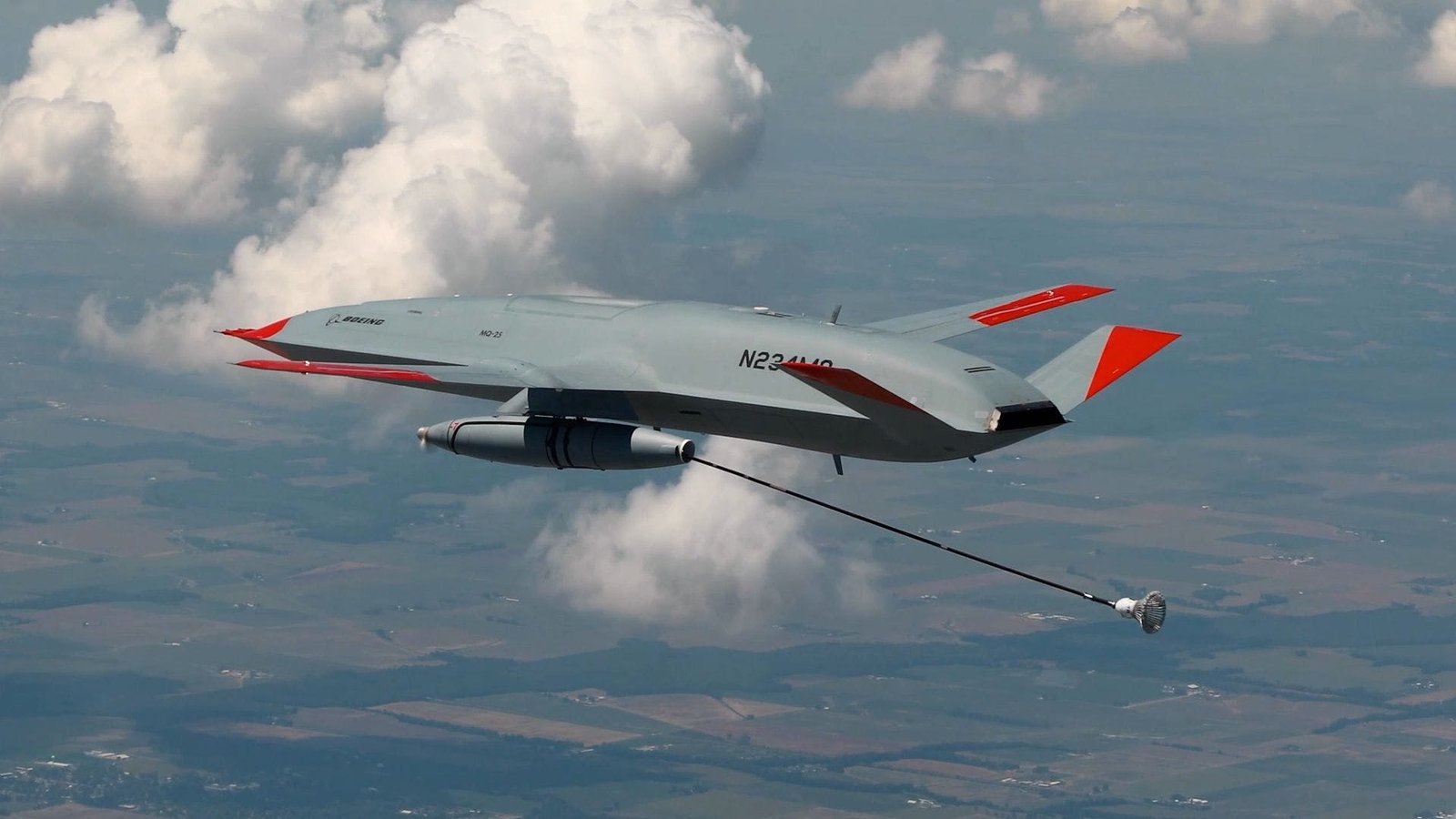 U.S. Navy Awards Boeing $562 Million Contract for First Production MQ-25A Stingray Tanker Drones
-
 Pentagon and Honeywell Complete Four-Hour Pacific Flight Using Quantum Magnetic Navigation Without GPS
-
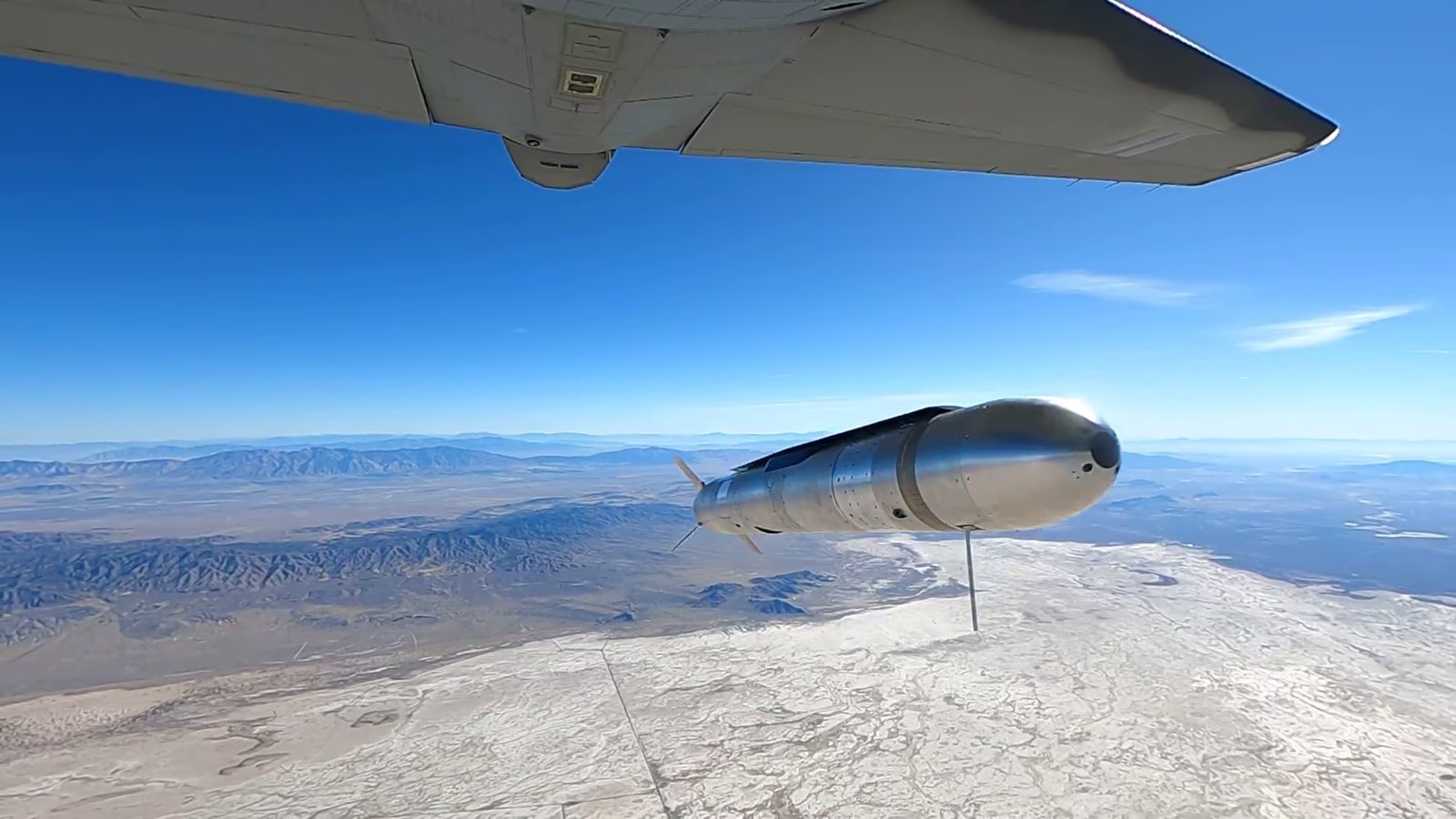 U.S. Air Force Special Operations Command Clears AGM-190A Havoc Spear for Wider Service After Combat Evaluation in Africa
-
 U.S. Confirms Deployment of On-Orbit Space Control Weapons for First Time
-
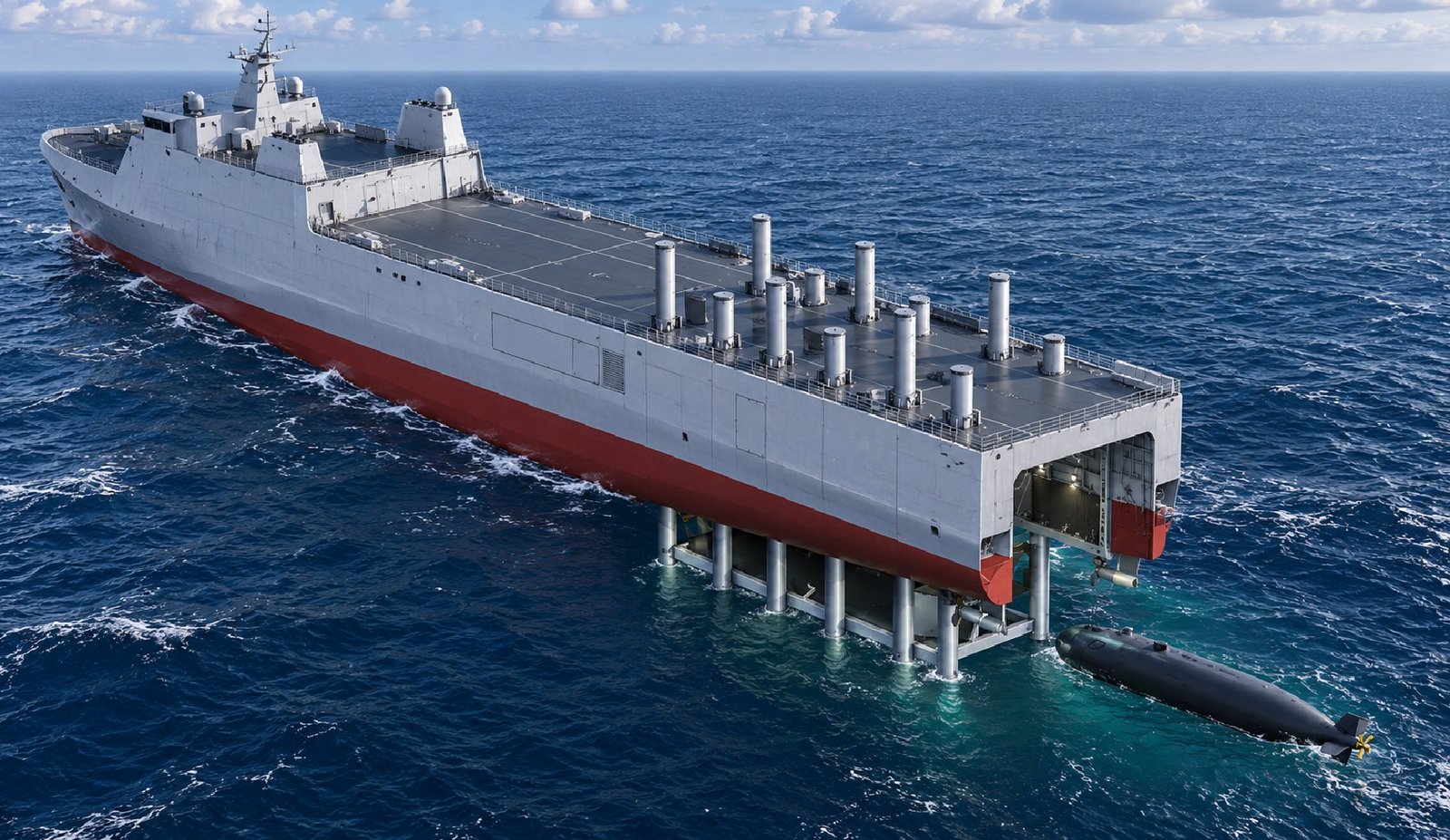 China Builds New Shanghai Vessel to Serve as Mothership for Large Uncrewed Submarines
-
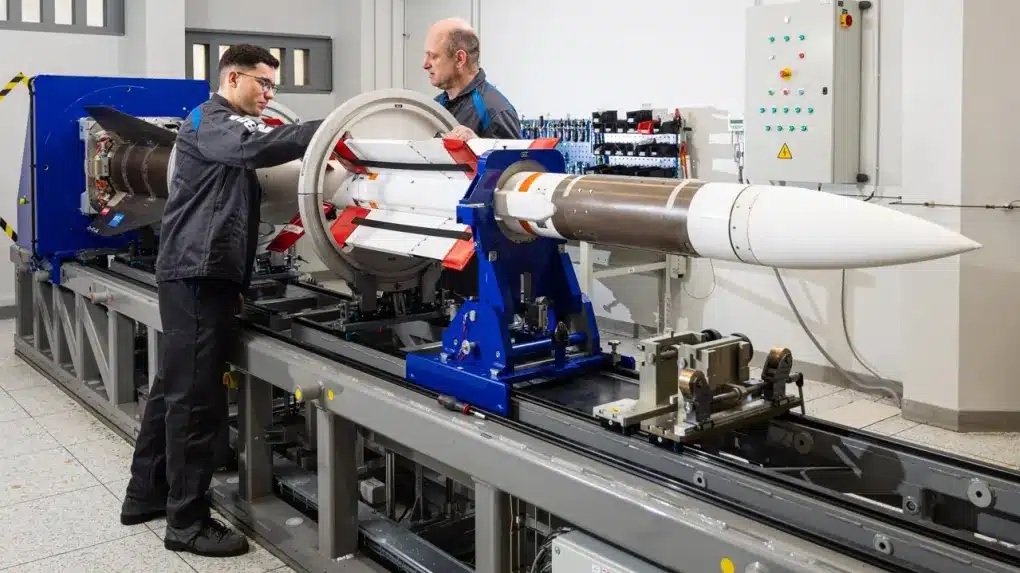 MBDA to Build New Missile Production Plant Near Orleans to Expand Missile Production
Top Trending in 4 Days
-
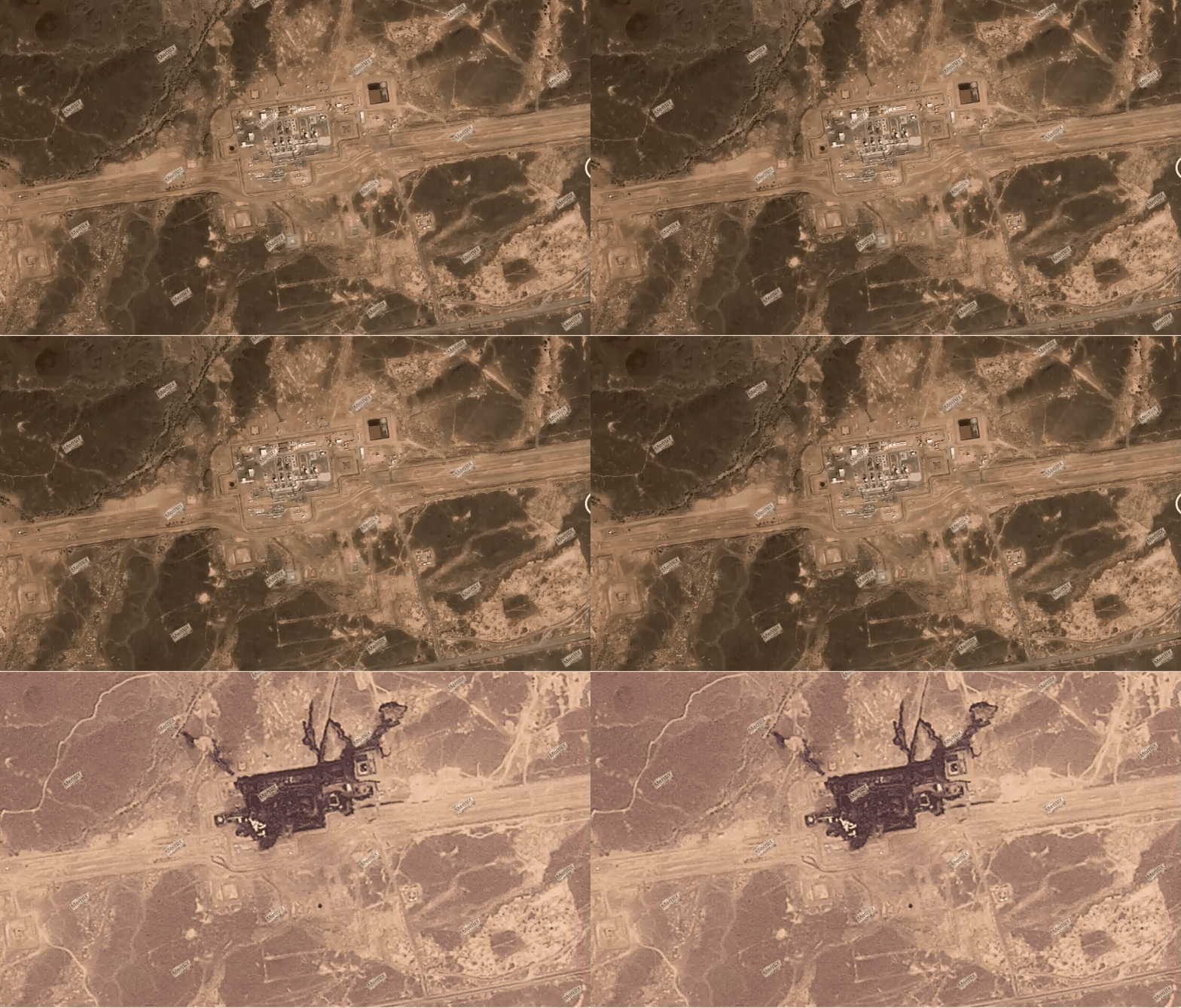 Satellite Imagery Shows Heavy Damage to Saudi East–West Oil Pipeline Pumping Stations
-
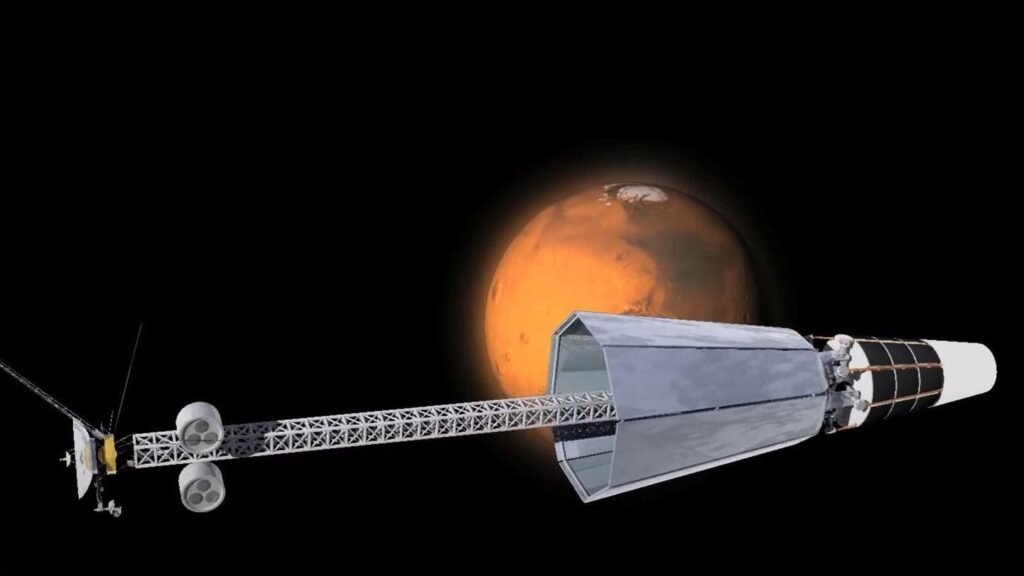 U.S. Air Force Awards Antares $161 Million to Develop Nuclear Reactor for Spacecraft
-
 Pentagon Awards BlueHalo Up to $99.8 Million Contract for Orbital Battlespace R&D Program
-
 Ukrainian Drones Strike Russian UAV Manufacturer and Chemical Plants in Taganrog and Tolyatti
-
 U.S. Officials Link Chinese Satellite Imagery to Iranian Strike That Killed Three American Soldiers in Jordan
-
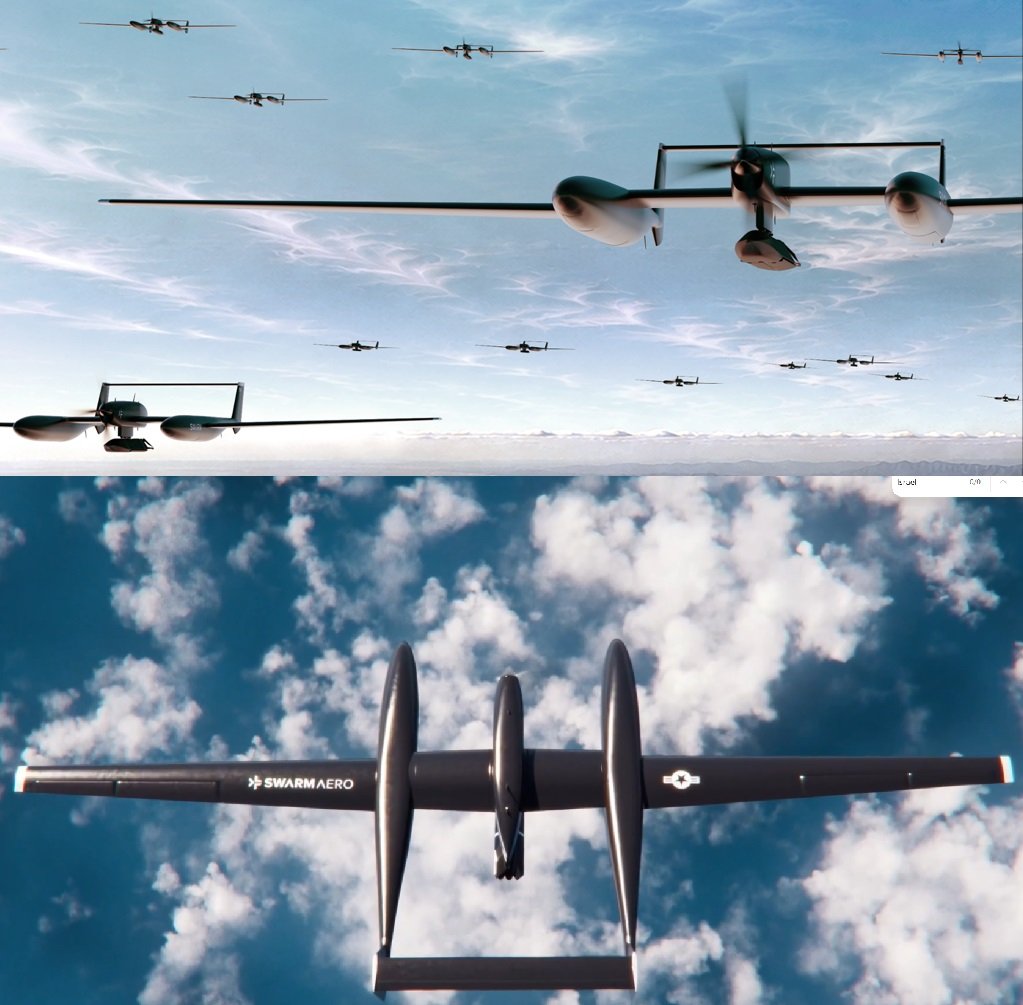 U.S. Firm Swarm Aero Unveils Gamera Group 5 UAS With 9,000-Nautical-Mile Range and Heavy Strike Payload
-
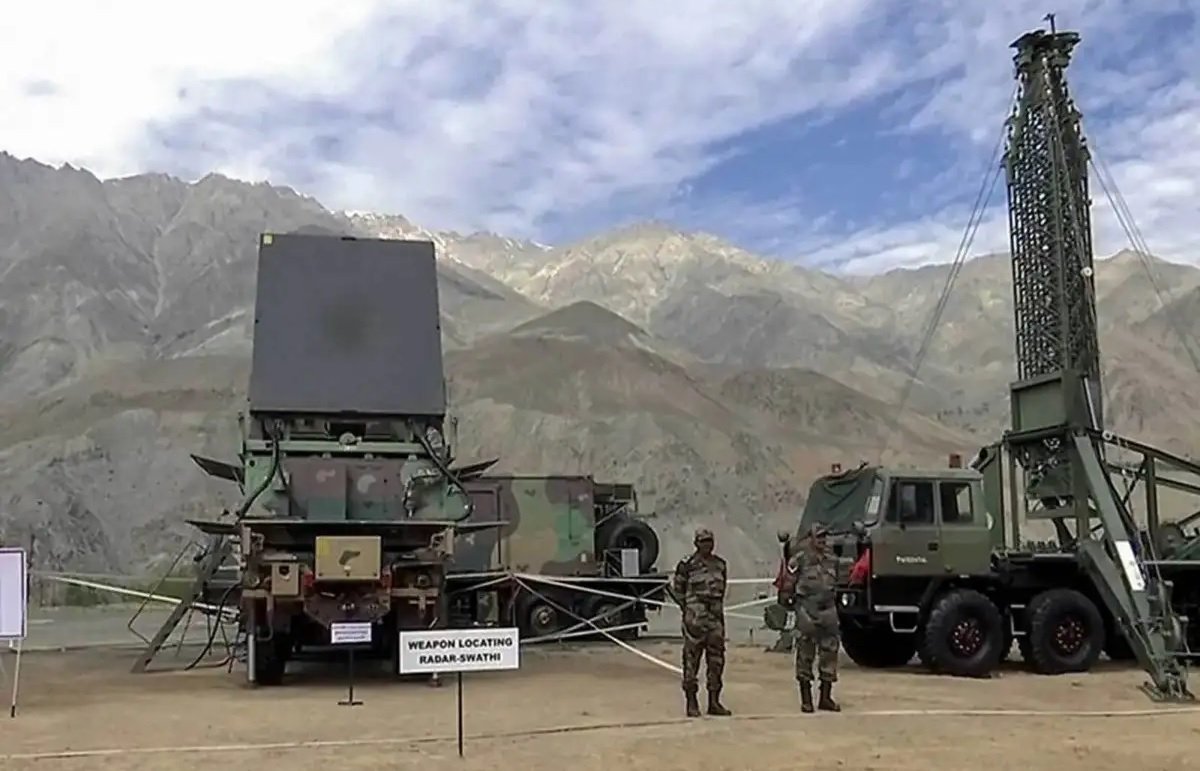 DRDO Demonstrates Indigenous 3.5×3 mm GaN Chip Delivering 30 Watts for Next-Generation Radars and Electronic Warfare
-
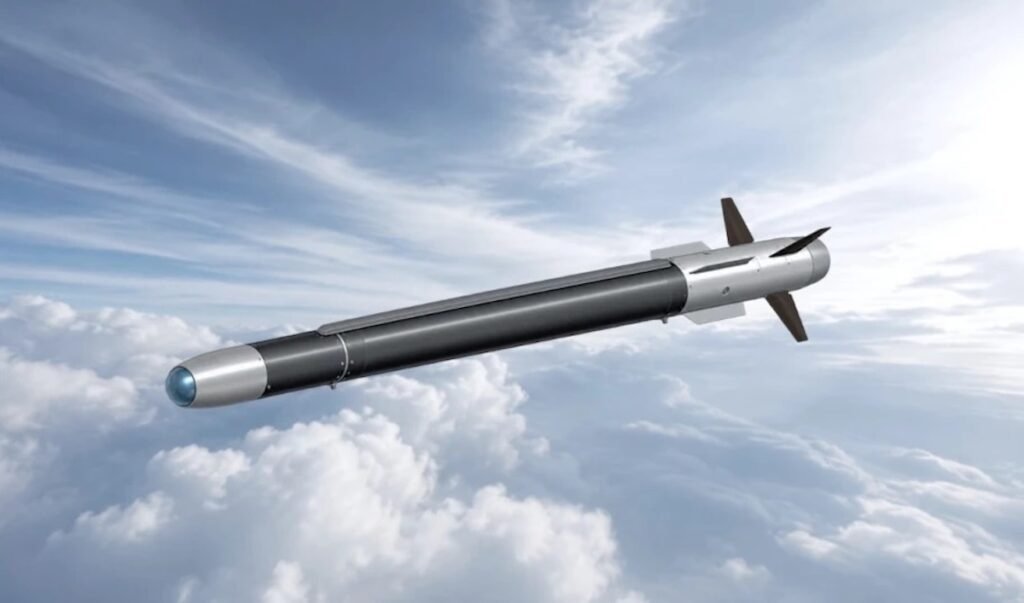 MBDA and Poland’s WITU Advance Low-Cost Supersonic Interceptor Against Swarm Attacks, Seeker Trials Successfully Completed