India
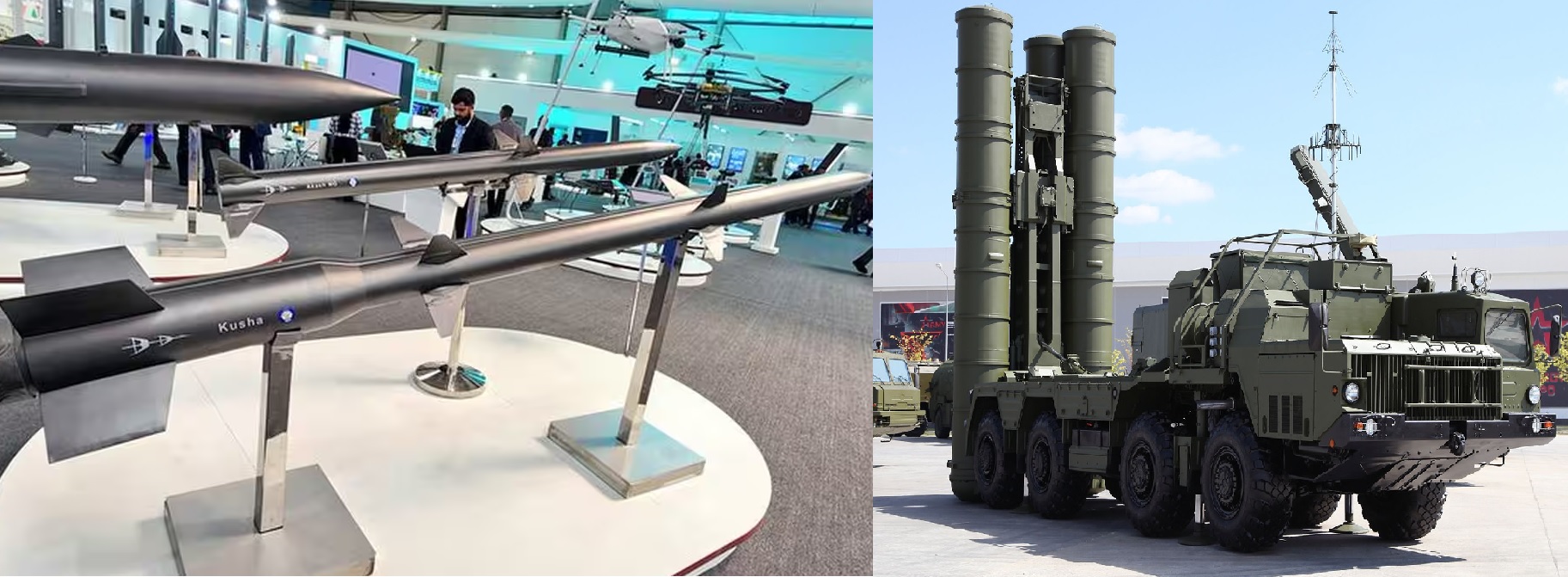
India’s Project Kusha, a key next-generation air and missile defense system under the Defence Research and Development Organisation (DRDO), is moving forward with the development of an advanced radar and control architecture. As revealed during a recent interaction involving industry partners, the system will comprise three main radar types and two classes of control and communication centers, creating a unified and layered sensor network capable of tracking threats across long distances. According to technical inputs from sources close to the program, Project Kusha will feature the following radar systems: LRBMR (Long-Range Ballistic Missile Radar) – a surveillance radar designed for early warning and long-range target detection. The LRBMR is expected to have a detection range of around 500–600 km, enabling it to identify ballistic or cruise missile threats well before they enter engagement zones. Operating in the L-band or S-band frequency, this radar will serve as the first layer of the system’s situational awareness network. MFCR (Multifunction Fire Control Radar) – the core of the engagement phase, the MFCR is a high-precision radar with tracking and fire-control capabilities. It is believed to have a range of approximately 250–350 km, depending on the target’s radar cross-section. Similar in concept to those used in the S-400 or the Israeli Arrow system, the MFCR will handle target illumination, guidance updates, and intercept coordination for multiple missiles simultaneously. Mast-Mounted Radar – a mobile, elevated radar designed for tactical flexibility. Mounted on telescopic masts or high mobility vehicles, it provides low-altitude and terrain-following detection of threats such as drones, cruise missiles, and helicopters. The radar’s effective range is expected to be 80–120 km, offering coverage in complex terrain and battlefield environments where long-range sensors may face limitations. Supporting these radar systems will be two types of control and communication centers forming the command backbone of Project Kusha. The first will serve as a primary command-and-control center, integrating radar data, threat prioritization, and interceptor coordination. The second, a mobile relay and communication center, will ensure secure data flow between launchers, sensors, and supporting platforms — essential for a real-time defensive network. Manoj Jain, speaking on behalf of a company involved in radar subsystem development, confirmed that the radar-related prototypes are being developed jointly with LRDE (Electronics and Radar Development Establishment), DRDO’s radar-focused lab. The Defence Research and Development Laboratory (DRDL) continues to lead overall integration and missile development, including propulsion and interceptor testing. Project Kusha is envisioned as India’s long-range multi-layered air defense system, capable of engaging both air-breathing threats and ballistic missiles. It will likely fill the operational space between the indigenous Medium Range Surface-to-Air Missile (MRSAM) and longer-range imported systems like the S-400 Triumf. When operational, the radar suite will provide 360-degree surveillance, high-altitude tracking, and real-time engagement management, all within a fully networked digital command structure. Prototype work on the radar and control systems is currently underway, with integration trials expected in the next testing phase. Industry reports suggest that DRDO aims to achieve full prototype readiness by 2026–2027, following which live tracking and missile-guided trials will commence. Project Kusha’s radar complex will be among the most sophisticated ever developed in India, combining long-range detection, multi-function tracking, and battlefield adaptability. Beyond its immediate defense value, the program will strengthen India’s radar technology base and support future programs like the Ballistic Missile Defence (BMD) Phase-II and hypersonic interception projects. With an integrated radar range extending from over 100 km at the tactical level to nearly 800 km for strategic surveillance, Project Kusha is shaping up to become a central pillar of India’s next-generation air defense shield — one that combines indigenous research, industrial collaboration, and strategic foresight.
Read More → Posted on 2025-11-06 12:47:35
India
India has invited Russia to review Hindustan Aeronautics Limited’s (HAL) facilities in Nashik for possible production of the Su-57E stealth fighter aircraft. The invitation marks a continuation of the long-standing defense cooperation between the two countries and comes ahead of Russian President Vladimir Putin’s upcoming visit to India. According to the Russian delegation’s assessment, HAL currently has around 50 percent of the required infrastructure to start limited local production of the aircraft, with further upgrades and investment needed to achieve full capacity. The joint assessment covered HAL’s key facilities in Nashik, Koraput, and Kasaragod. The Nashik plant, which presently assembles Su-30MKI fighters, was found suitable for adaptation to the Su-57E production line with moderate modifications. The Koraput division, responsible for engine production, and Kasaragod, which handles avionics and testing, were also reviewed. The Russian team noted that HAL’s existing facilities are technically sound and could be upgraded with relatively minimal disruption to current operations. Preliminary findings suggest that about 30 to 35 percent of the existing equipment at HAL can be reused, while the remainder would need modern digital manufacturing tools and machinery designed for stealth aircraft. HAL’s internal estimate puts the required investment for modernization and new infrastructure between ₹8,000 and ₹10,000 crore (around USD 1 billion). The upgrades would include new composite fabrication lines, radar-absorbent material (RAM) coating facilities, and testing infrastructure suitable for low-observable aircraft. HAL is preparing a detailed report for submission to the Ministry of Defence (MoD), outlining its current capacity, the necessary improvements, and the estimated costs. The report will also include plans for workforce training and R&D coordination. Once approved, the proposal could move toward a formal partnership framework during the upcoming India-Russia summit. For India, the potential Su-57E production would be a step toward expanding its domestic aerospace manufacturing capabilities. Local assembly would reduce dependency on imports, while creating opportunities for Indian suppliers in precision engineering, composites, and avionics production. The project would likely involve a wide network of Indian companies and could support skill development in advanced aircraft technologies. The Su-57E collaboration is also expected to support India’s ongoing Advanced Medium Combat Aircraft (AMCA) program by giving engineers and technicians practical experience in working with stealth structures, composite airframes, and integrated sensor systems. Both aircraft programs aim to strengthen India’s aerospace industry, though AMCA focuses on a fully indigenous design for future requirements. The Russian assessment has also reaffirmed that India’s industrial base, especially at HAL, has matured enough to take on complex aerospace projects with international collaboration. If the proposal is approved, Nashik could handle both Su-30MKI and Su-57E production lines with phased modernization. This development highlights a practical step in India’s effort to advance its fighter aircraft manufacturing capacity while maintaining strategic cooperation with Russia. The focus remains on industrial readiness, technology transfer, and gradual integration of local expertise rather than rapid expansion. The outcome of the ongoing reviews and the upcoming bilateral discussions will determine how soon the project can move from evaluation to implementation.
Read More → Posted on 2025-11-06 12:33:52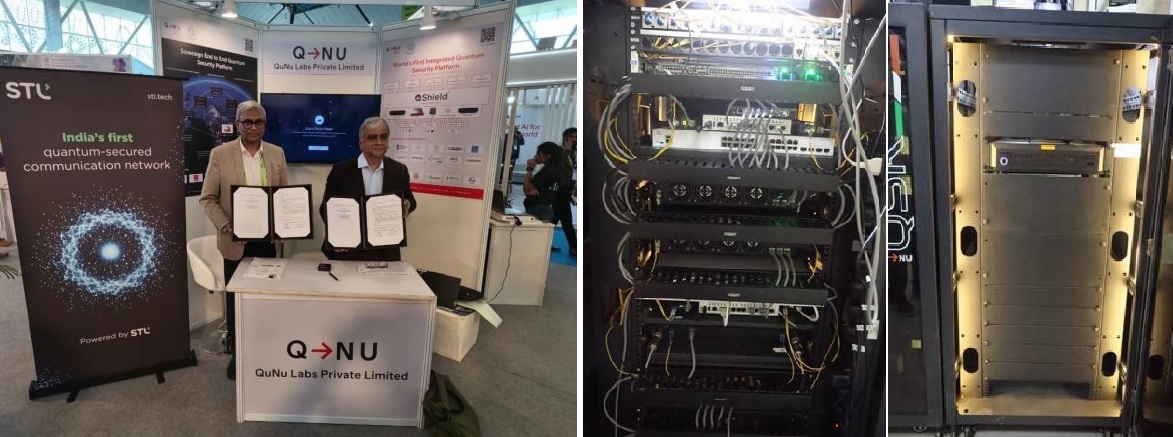
India
Bengaluru-based quantum technology firm QNu Labs has achieved a major milestone in India’s cybersecurity and defense communication efforts. In collaboration with the Indian Army, the company has successfully demonstrated the country’s first extensive Quantum Key Distribution (QKD) network, reportedly spanning over 500 kilometers. This marks a turning point in India’s transition toward quantum-secure communications — a technology expected to redefine the future of encryption and digital defense. Building India’s Quantum-Safe Backbone Founded in 2016 and incubated at IIT Madras, QNu Labs has emerged as India’s foremost developer of indigenous quantum cryptography and secure communication technologies. The company’s core mission is to protect data privacy in the emerging quantum era, where classical encryption could soon be vulnerable to decryption by advanced quantum computers. QNu Labs’ innovation stack includes products such as “Armos”, a Quantum Key Distribution (QKD) system; “Tropos”, a Quantum Random Number Generator (QRNG); and “QShield”, an integrated platform combining QKD with post-quantum cryptography (PQC). Together, these systems create unbreakable cryptographic foundations — even against future quantum computer-based cyberattacks. In recent years, QNu Labs has received support from India’s National Quantum Mission (NQM) and defense innovation programs like iDEX, with an emphasis on developing fully indigenous solutions that reduce reliance on foreign technology. Demonstration of a 500 km Quantum-Secure Network According to defense officials and industry sources, QNu Labs and the Indian Army recently demonstrated an end-to-end QKD network spanning more than 500 km, connecting multiple nodes across optical fiber infrastructure. The network enables real-time key exchange using quantum physics principles, ensuring that any attempt to intercept communication would instantly be detected due to quantum state disturbance. While earlier demonstrations between 2022 and 2024 had achieved 150–200 km secure links, this extended deployment represents India’s largest and most advanced quantum communication experiment to date. The system operates on a trusted-node architecture, linking quantum devices over long distances through intermediary nodes — each performing independent key generation and verification. It forms the basis for what defense planners envision as India’s national quantum communication grid, connecting command posts, radar stations, and data centers via tamper-proof optical links. How Quantum Key Distribution Works Unlike classical encryption systems that depend on mathematical algorithms, QKD secures communication using the laws of quantum mechanics. Encryption keys are transmitted as quantum particles — typically single photons — whose states cannot be measured or copied without altering them. If an adversary attempts to intercept or measure the photons, the system immediately detects an anomaly in the quantum state, alerting both ends of potential eavesdropping. This property, known as the quantum no-cloning theorem, makes QKD the only form of key exchange proven to be “unconditionally secure” under the laws of physics. However, implementing QKD across long distances is technically challenging. Photon loss, signal noise, and fiber attenuation limit range, typically to under 200 km per link. Achieving reliable transmission across 500 km indicates that QNu Labs has advanced its optical and node-switching systems to world-class levels, comparable to recent achievements by China’s and Europe’s quantum networks. Strategic Importance for Indian Defense For the Indian Army, this demonstration is more than a technological milestone — it’s a strategic capability. Quantum-secure communication ensures that even if adversaries intercept military data, decryption becomes physically impossible. As India modernizes its defense communication infrastructure, quantum encryption can protect sensitive networks such as: Command and control systems between headquarters and forward units. Satellite communication uplinks and radar data channels. Inter-service coordination among Army, Navy, and Air Force networks. The 500 km demonstration serves as a foundation for an envisioned nationwide quantum communication grid, eventually linking major military installations, space centers, and intelligence hubs. Officials familiar with the trials said the QKD system was tested over existing fiber routes under field conditions, confirming stable performance under environmental stress, signal interference, and long-distance loss. QNu Labs: India’s Quantum Vanguard QNu Labs’ success also underscores India’s growing self-reliance in critical quantum technologies. By producing both hardware and software domestically, it eliminates dependence on foreign cryptographic components — a major vulnerability in military systems. The company’s technologies have already been integrated into government and enterprise pilot networks, with plans to expand across sectors such as banking, defense, and national infrastructure. Future development will likely focus on satellite-based QKD, allowing secure links between continents and naval assets — a capability already demonstrated by China’s “Micius” satellite. QNu Labs is also working with research partners to develop quantum repeaters that can extend secure transmission beyond 1,000 km, a key step toward building India’s Quantum Internet. A Quantum Leap for India The demonstration of India’s first extensive QKD network — reportedly over 500 km — marks the beginning of a new era in national cybersecurity. It not only highlights India’s progress in quantum science but also reflects a shift in defense priorities toward future-proof communication. In an age where cyber warfare is as critical as kinetic conflict, the ability to exchange information without the risk of interception offers a decisive strategic advantage. With QNu Labs leading this technological frontier, India is positioning itself among the few nations — alongside China, the United States, and members of the European Union — with operational quantum communication infrastructure. As the country accelerates its National Quantum Mission, the next phase could see secure satellite-fiber hybrid networks, linking command centers, space assets, and defense systems under one quantum-protected umbrella.
Read More → Posted on 2025-11-05 17:18:37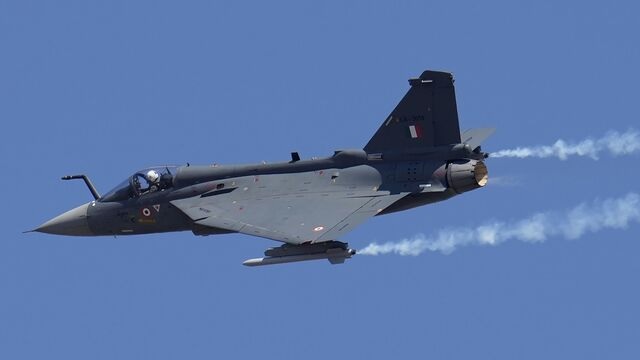
India
India’s Defence Research and Development Organisation (DRDO) has entered an advanced stage of testing for its next-generation Swayam Raksha Kavach (SRK) electronic warfare (EW) suite — a critical upgrade designed to significantly enhance the survivability and self-protection capabilities of the HAL Tejas Mk-1A light combat aircraft. The system, whose name translates to “Self-Protection Shield,” represents a new milestone in India’s growing self-reliance in airborne electronic warfare technologies. From D-29 to SRK: Evolution of India’s Airborne EW Capability The SRK suite builds upon the legacy of DRDO’s earlier D-29 EW suite, which was originally developed for the Indian Air Force’s MiG-29 fleet over a decade ago. While the D-29 provided basic radar warning and jamming capabilities, the new SRK suite incorporates modernized hardware, advanced digital signal processing, and a fully integrated architecture tailored for the Tejas Mk-1A’s avionics and mission systems. According to DRDO officials, the development of the SRK system began in 2021, led by the Combat Aircraft Systems Development and Integration Centre (CASDIC). Initial ground integration tests have now transitioned into flight trials aboard a Tejas Mk-1A test aircraft. The system includes a radar warning receiver (RWR) seamlessly integrated into the airframe and an external jammer pod mounted on a dedicated hardpoint. This dual-configuration enables both passive and active defense modes, detecting and countering hostile radar emissions in real time. Enhanced Capabilities and Design Features The Swayam Raksha Kavach is designed to deliver multi-threat protection, capable of handling modern radar-guided air-to-air and surface-to-air missile threats. It employs wideband detection, real-time emitter classification, and adaptive jamming waveforms — a leap forward from the D-29’s analog-based processing. DRDO sources indicate that SRK’s modular design will allow future upgrades through software-defined enhancements, supporting emerging radar threats without major hardware changes. The system also leverages indigenous digital receiver technology, improved power management for jamming transmitters, and a lighter structure to minimize drag and preserve aircraft performance. Flight-Testing and Deployment Timeline Flight trials for the SRK suite began in late 2024 and are expected to continue through mid-2026, focusing on verifying system performance across multiple threat environments. Once trials are completed, the Tejas Mk-1A fleet — currently under large-scale production by Hindustan Aeronautics Limited (HAL) — will begin receiving the SRK package by end of 2026, as part of its progressive induction into the Indian Air Force. The IAF has ordered 83 Tejas Mk-1A aircraft, featuring upgraded radar, improved electronic warfare capability, and enhanced maintainability. The SRK EW suite will serve as a central element of the Mk-1A’s self-protection system, complementing its AESA radar and networked combat avionics. Inside the Swayam Raksha Kavach: Architecture and Components A schematic released by DRDO (as seen in the Electronic Warfare Suite for Fighter Aircraft – Tejas display during the Samanvay summit) provides a detailed insight into the layout and technology of the SRK system. The SRK suite consists of both internal and external components: Radar Warning Receiver (RWR): Detects and identifies hostile radar emissions. Digital Front-End Assemblies (DFEA): Positioned at multiple locations on the aircraft to ensure 360° coverage. Unified Receiver Exciter Processor (UREP): Acts as the system’s “brain,” handling radar signal analysis, emitter classification, and coordination of countermeasures. Transmitters and Antennas: Multiple Tx (transmitting) and Rx (receiving) antennas are distributed along the airframe for comprehensive coverage. External Jammer Pod: Provides high-power jamming against radar-guided threats using Digital Radio Frequency Memory (DRFM) technology. Internally, the EW suite’s architecture includes a Scanning Receiver and Exciter, a High Power Output Interface (HPOI) Receiver, and a DRFM Receiver and Exciter. The DRFM module allows the system to capture radar signals, modify them, and retransmit them to deceive or saturate enemy radar systems. Together, these components form an integrated Radar Warning and Jammer (RWJ) system that enables both passive detection and active counteraction against radar-based threats. Technology Transfer and Industrial Collaboration During the Samanvay 2025 industry summit held in Bangalore on 29–30 October 2025, DRDO formally transferred several technologies to its industry partners, reinforcing its strategy of joint development and production. Among these transfers was the improved D-29 EW suite technology, handed over to Bharat Electronics Limited (BEL) for large-scale production and further optimization. BEL will also serve as a key industrial partner for the production and integration of SRK, leveraging its expertise in airborne EW systems and radar technologies. This collaboration aligns with India’s “Atmanirbhar Bharat” initiative, aimed at fostering indigenous defense manufacturing and reducing dependency on foreign suppliers. Strategic Implications The induction of the SRK suite represents a critical step toward modernizing India’s electronic warfare ecosystem. With increasing regional threats from advanced radar and missile systems, the ability to detect, identify, and counter enemy emitters in complex electronic environments has become essential for mission survivability. Moreover, the modular nature of the SRK makes it adaptable not only for the Tejas Mk-1A but also for potential integration with future Indian platforms, such as the Tejas Mk-2, Advanced Medium Combat Aircraft (AMCA), and even unmanned combat aerial systems (UCAVs) under development.
Read More → Posted on 2025-11-04 15:02:02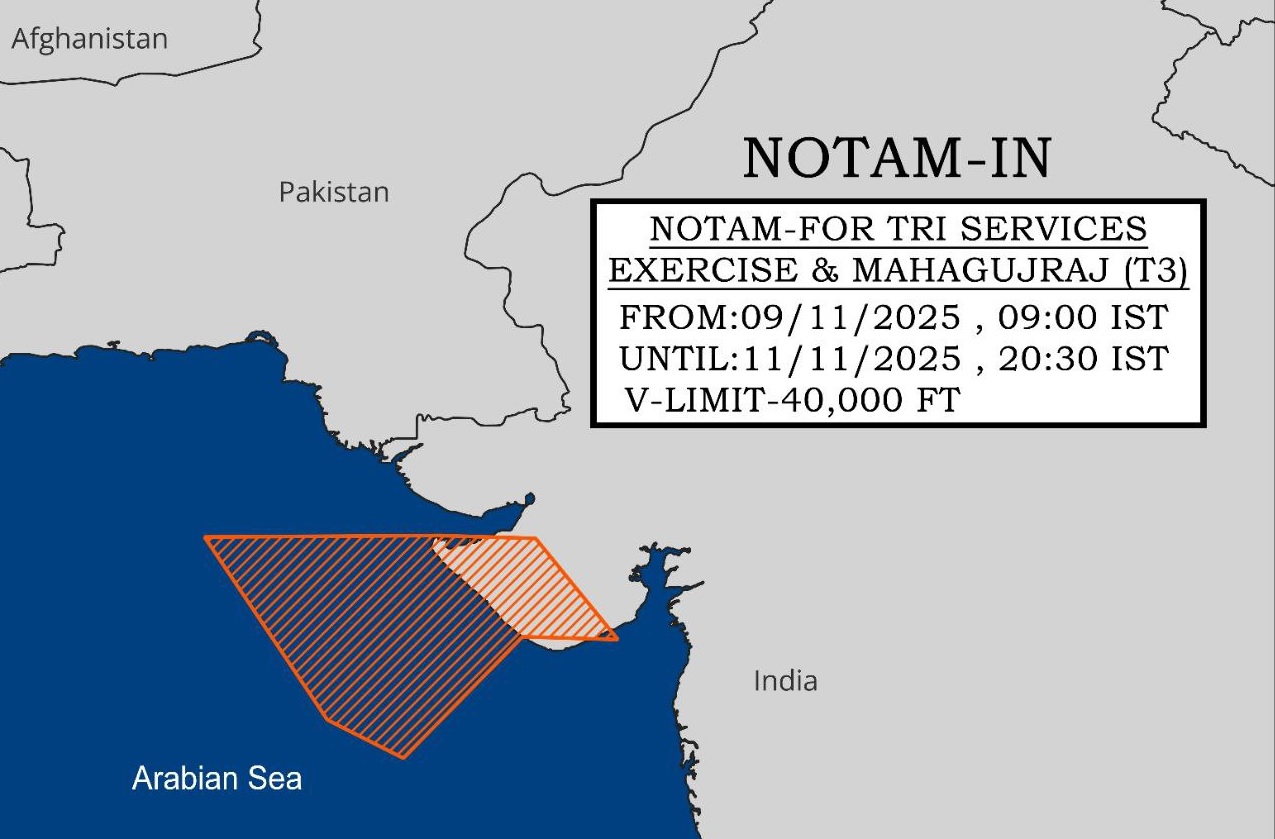
India Issues NOTAM for Tri-Services Exercise ‘Mahagujraj’ Near Pakistan Border from 9 to 11 November
India
India has issued a Notice to Airmen (NOTAM) restricting airspace over parts of Gujarat near the Pakistan border, specifically around the Sir Creek region, for a tri-services exercise named “Mahagujraj.” The NOTAM will remain active from 9 to 11 November 2025, between 09:00 and 20:30 IST, with restrictions applying up to 40,000 feet. This exercise represents a coordinated effort involving the Army, Navy, and Air Force under a unified operational framework. The restricted zone extends across coastal and border areas of Gujarat, indicating the participation of air, land, and maritime units during the exercise period. According to defence sources, Exercise Mahagujraj will include multi-domain operations to test coordination between the three services in air defence, naval movements, and ground support activities. The area near Sir Creek has been selected to focus on coastal security and joint response capabilities in a region that requires close surveillance and regular readiness drills. Sir Creek, a 96-kilometre-long estuary that marks part of the boundary between India and Pakistan, remains an area of sensitive maritime interest. Conducting a tri-services exercise in this zone supports India’s coastal and border preparedness along the western seaboard, particularly in light of increasing maritime security challenges in the Arabian Sea. The Indian Navy is expected to operate under the Western Naval Command, deploying P-8I patrol aircraft, Kolkata-class destroyers, submarines, and coastal surveillance units from Porbandar and Okha. The Indian Air Force will likely conduct missions using Su-30MKI, Jaguar, and Tejas aircraft from airbases in Jamnagar and Naliya, focusing on aerial coordination and precision targeting. Ground forces from the Southern and South Western Commands will work alongside naval and air units for coastal defence and amphibious training, supported by Army Aviation and Special Forces. The exercise may also include limited live-fire practice and air insertion drills to improve coordination and timing between different service branches. Officials said that Exercise Mahagujraj is part of ongoing efforts to strengthen joint operations capability, combining intelligence, communication, and operational planning across services. Coordination will be managed through integrated command systems under the Integrated Defence Staff (IDS) framework. The exercise comes amid continued efforts to improve surveillance and response mechanisms along the Gujarat coastline, where drone activity and radar monitoring have increased in recent months. Such exercises help maintain operational readiness and ensure effective coordination among the three branches of the armed forces. Exercise Mahagujraj will conclude on 11 November with an integrated review by senior officers, evaluating coordination, communication, and overall performance. The event forms part of India’s gradual move toward a joint theatre command structure, aimed at enhancing efficiency in future operations.
Read More → Posted on 2025-11-03 17:08:38
India
In a significant step toward advancing India’s naval aviation capabilities, Hindustan Aeronautics Limited (HAL) has committed to funding 30% of the design and development costs of the Deck-Based Multi Role Helicopter (DBMRH) project from its own internal resources. The remaining 70% of funding will be provided by the Government of India (GoI), pending final approval from the Cabinet Committee on Security (CCS) for full-scale execution. This strategic investment underscores HAL’s confidence in the DBMRH program, a next-generation maritime helicopter designed to operate from Indian Navy and Coast Guard ships, including destroyers, frigates, and aircraft carriers. A Major Step Toward Self-Reliance in Naval Aviation The DBMRH is being developed as an indigenous alternative to foreign naval helicopters such as the MH-60R Seahawk. The project aims to meet the Navy’s long-standing requirement for a multi-role helicopter capable of anti-submarine warfare (ASW), anti-surface warfare (ASuW), search and rescue (SAR), electronic intelligence (ELINT), and utility transport roles. According to HAL, the helicopter will feature foldable main rotor blades and tail — a critical design aspect that allows compact storage aboard naval vessels. As depicted in the folded configuration diagram, the DBMRH measures approximately 5 meters in width, 5.1 meters in height, and 5.1 meters in folded length, allowing efficient hangar storage aboard Indian Navy ships. Timeline and Development Progress The DBMRH program has been under preliminary design review by HAL’s Rotary Wing Research and Design Centre (RWRDC) in Bengaluru. The current phase involves the Detailed Design Phase (DDP), with full-scale development expected to begin after CCS approval, which is anticipated by mid-2026. 2023–2024: Completion of conceptual and preliminary design studies. 2025: Prototype tooling and system integration setup at HAL’s Helicopter Division. 2026: Expected CCS clearance and rollout of the first prototype. 2027–2028: Ground runs and maiden flight testing phase. 2029 onward: Full flight test campaign and certification leading to production readiness in the early 2030s. The program is expected to generate a major industrial ecosystem involving private sector partners for avionics, composites, landing gear, and naval mission systems integration. Technical and Operational Highlights The DBMRH is expected to weigh around 13 tonnes and feature twin engines derived from proven maritime turboshaft platforms. Its mission suite will likely include: Advanced sonar systems and torpedo launch capability for ASW. Anti-ship missile integration for offensive maritime roles. 360° AESA radar, electronic warfare suite, and data-link connectivity with naval command networks. Foldable tail boom and main rotor mechanism to minimize shipboard footprint, as highlighted in the schematic image. The helicopter’s modular design will allow multiple configurations — from combat and reconnaissance to logistics and humanitarian support — giving it flexibility akin to its Western counterparts. Strategic Importance for India The DBMRH is envisioned as the indigenous successor to the aging Seaking Mk.42B/C fleet and will complement imported MH-60R Seahawks. By ensuring that nearly 70% of the project’s investment comes from the government, with HAL contributing the remainder, the project reflects a co-development model aligning with the Atmanirbhar Bharat initiative in defense manufacturing. If executed on schedule, the DBMRH could become a cornerstone of India’s naval helicopter fleet by the early 2030s — offering self-reliance, strategic autonomy, and export potential to friendly nations seeking multi-role shipborne helicopters. In essence, HAL’s decision to invest its own resources into the DBMRH underscores its long-term confidence in the platform’s success and market potential. With CCS approval expected soon, the project marks another step toward India’s vision of a fully indigenous, blue-water capable naval aviation ecosystem.
Read More → Posted on 2025-11-03 14:12:55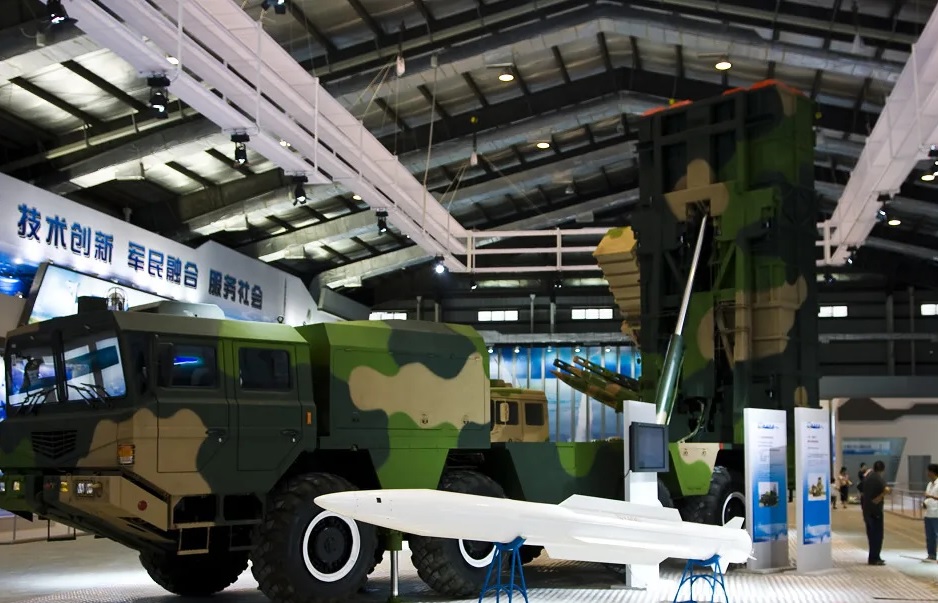
India
Bangladesh’s latest arms acquisitions are reshaping the military balance in South Asia. Reports indicate that the Bangladesh Army has placed an order with China for SY-400 short-range ballistic missiles, while simultaneously operationalizing the Turkish-origin TRG-300 Kaplan multiple launch rocket systems (MLRS). Both developments carry significant strategic weight — particularly for India — given their range, precision, and proximity to the Siliguri Corridor, the country’s most vulnerable land link to its northeastern states. SY-400: A Modern Chinese Precision Strike System The SY-400 (also known as the DF-12A) is a Chinese-developed short-range ballistic missile system designed for rapid, precision strikes against high-value targets. Built by the China Aerospace Science and Industry Corporation (CASIC), it combines the mobility of a truck-mounted launcher with a sophisticated guidance package that allows for high accuracy (CEP of less than 30 meters). Each SY-400 launcher vehicle typically carries eight canisterized missiles, each with a range of up to 400 kilometers depending on the payload and configuration. The system can fire either guided rockets or solid-fueled ballistic missiles, offering flexibility for different mission profiles — from striking logistics hubs to neutralizing radar installations or airfields. Key specifications include: Range: 150–400 km Warhead weight: 150–200 kg (HE, fragmentation, or cluster) Guidance: Inertial + Beidou satellite correction Launcher: 8×8 wheeled TEL (Transporter Erector Launcher) Accuracy (CEP): ≤30 meters For Bangladesh, the SY-400 represents a quantum leap in standoff strike capability — effectively its first long-range precision-guided ballistic missile system. Such an acquisition expands Dhaka’s deterrence envelope well beyond traditional artillery range, signaling a shift toward area denial and regional counterbalance. TRG-300 Kaplan: A Turkish Precision Rocket System Complementing the SY-400 order, Bangladesh has also deployed the TRG-300 Kaplan MLRS — a system developed by Turkey’s Roketsan and reportedly operational within select artillery regiments. The Kaplan is a surface-launched precision rocket comparable in design to the Chinese CM-400AKG air-launched missile, with which it shares similar aerodynamic and guidance principles. Each TRG-300 launcher carries four guided rockets with a range of 120 kilometers, capable of delivering HE or fragmentation warheads. The system’s precision is aided by INS/GPS guidance, allowing Bangladesh to accurately engage targets deep within neighboring territory if required. Specifications of TRG-300 Kaplan: Caliber: 300 mm Range: 30–120 km (Kaplan version) Warhead: 105 kg high-explosive or fragmentation Guidance: INS + GPS Accuracy (CEP): ≤10 meters Launcher platform: 6×6 truck-mounted system Operational deployment of the Kaplan provides Bangladesh with a mobile, rapid-response strike option, suitable for both conventional deterrence and battlefield precision roles. The Siliguri Corridor: India’s Narrow Lifeline The Siliguri Corridor, often termed India’s “Chicken’s Neck,” is a 22-kilometre-wide stretch of land that connects mainland India to the northeastern states — Arunachal Pradesh, Assam, Meghalaya, Manipur, Mizoram, Nagaland, and Tripura. This corridor is not merely a geographic bottleneck; it is a strategic artery, vital for military logistics, transport, and economic connectivity. At its nearest point, the corridor lies just 80 kilometers from Bangladeshi territory. This proximity means that Bangladesh’s TRG-300 units can now cover the entire corridor with precision fire. Should Dhaka induct the SY-400 into active service, the strike envelope could extend well beyond the Siliguri region, potentially reaching Indian airbases, depots, and infrastructure deep inside North Bengal and Assam. Strategic Implications for India While India and Bangladesh maintain generally stable diplomatic relations, the deployment of precision-strike systems within range of the Siliguri Corridor introduces new strategic variables into India’s defense planning. Increased Vulnerability of Key Infrastructure:With a range of 120–400 km, both the TRG-300 and SY-400 could theoretically target Bagdogra Airbase, Hasimara (home to India’s Rafale fighters), and logistical nodes supporting the eastern sector of the Indian Armed Forces. Shift in Regional Deterrence Dynamics:Bangladesh’s missile modernization, supported by China and Turkey, subtly aligns with Beijing’s broader influence-building in South Asia. The presence of Chinese-origin systems near India’s sensitive corridor could complicate strategic signaling and crisis management. Pressure on India’s Northeast Logistics:The corridor’s strategic significance means any potential threat — even theoretical — forces India to consider enhancing air defense and counter-strike capabilities in West Bengal and Assam. Emerging Multi-Directional Challenge:Combined with Chinese pressure along the Line of Actual Control (LAC) and growing Pakistani missile inventories, Bangladesh’s acquisitions add another potential vector of concern to India’s security matrix. Bangladesh’s decision to procure SY-400 ballistic missiles and field the TRG-300 Kaplan rocket systems signals a major step in its force modernization program. While Dhaka may frame these acquisitions as defensive, their operational range and accuracy place India’s Siliguri Corridor — and several critical assets beyond it — within potential strike distance. For New Delhi, this development underscores the need to strengthen integrated air defense networks, deploy counter-rocket and missile systems, and enhance surveillance along its eastern frontier. The missile race in South Asia may not yet be overt, but the strategic balance around the Siliguri Corridor is quietly evolving — one precision system at a time.
Read More → Posted on 2025-11-02 15:28:24
India
In a landmark move that could redefine India’s scientific and technological landscape, Prime Minister Narendra Modi is set to launch the ₹1 lakh crore Research, Development and Innovation (RDI) Fund on November 3 at the Emerging Science, Technology and Innovation Conference (ESTIC-25) in New Delhi. The initiative marks a turning point in India’s journey from a knowledge consumer to a knowledge creator, positioning research and innovation as central pillars of national growth. For the first time in India’s history, such a massive, long-term fund has been allocated exclusively for research, deep technology, and innovation-driven enterprises. The fund will be administered under the Department of Science and Technology (DST) — an institution that, in 2013, had a modest annual budget of merely ₹3,000 crore. Now, with this historic upgrade, the DST is set to become the country’s primary engine for scientific transformation, driving collaboration between academia, industry, and startups. A Vision to Power India’s Innovation Decade The RDI Fund aligns with the government’s broader vision of making India a global innovation hub by 2047, coinciding with the nation’s centenary of independence. Officials have indicated that the fund will focus on strategic sectors such as quantum technologies, space exploration, artificial intelligence, renewable energy, biotechnology, and advanced materials. It will also strengthen research infrastructure through the creation of “National R&D Clusters” — hubs that integrate universities, private industries, and government laboratories to accelerate innovation from concept to commercialization. A portion of the fund is expected to be routed through a “National Innovation Bond Mechanism,” encouraging private sector participation and long-term investment in high-risk, high-reward research. Empowering Scientists, Startups, and Students One of the most transformative aspects of the RDI Fund is its inclusive design. It will not only finance large-scale institutional projects but also support young innovators, researchers, and tech entrepreneurs through dedicated grants and seed funding programs. The government plans to establish a National Research Fellowship Grid that will offer merit-based scholarships for PhD candidates and postdoctoral researchers working on frontier technologies. The fund will also integrate with initiatives like Startup India and Atal Innovation Mission, bridging the gap between research and entrepreneurship. This move is expected to energize India’s deep-tech startup ecosystem, enabling domestic solutions in defense, space, healthcare, and green technologies. India’s R&D Transformation: From Modest Beginnings to Global Ambition India’s R&D investment has historically hovered around 0.7% of GDP, significantly lower than global leaders like the U.S. (3.4%), China (2.4%), and South Korea (4.9%). The launch of the RDI Fund represents a bold effort to bridge this gap and place India among the top five nations in global innovation rankings within the next decade. In 2013, the DST’s ₹3,000 crore budget primarily sustained academic research grants and basic science programs. A decade later, the scale of investment — now over 30 times greater — reflects a clear strategic shift: from incremental progress to disruptive advancement. The government’s approach under PM Modi has been consistent — from Digital India and Make in India to Semicon India and Anusandhan National Research Foundation (NRF) — all designed to integrate research with national development and industrial self-reliance. The unveiling of the ₹1 lakh crore RDI Fund at ESTIC-25 is not just a budgetary announcement but a declaration of India’s intent — to lead in scientific discovery, to innovate for the world, and to make knowledge creation a cornerstone of economic growth. As India steps into this new era of science-driven policy and innovation-led economy, the RDI Fund could become the foundation of a self-sustaining research ecosystem that empowers the next generation of scientists, engineers, and innovators to think beyond boundaries..
Read More → Posted on 2025-11-01 14:42:11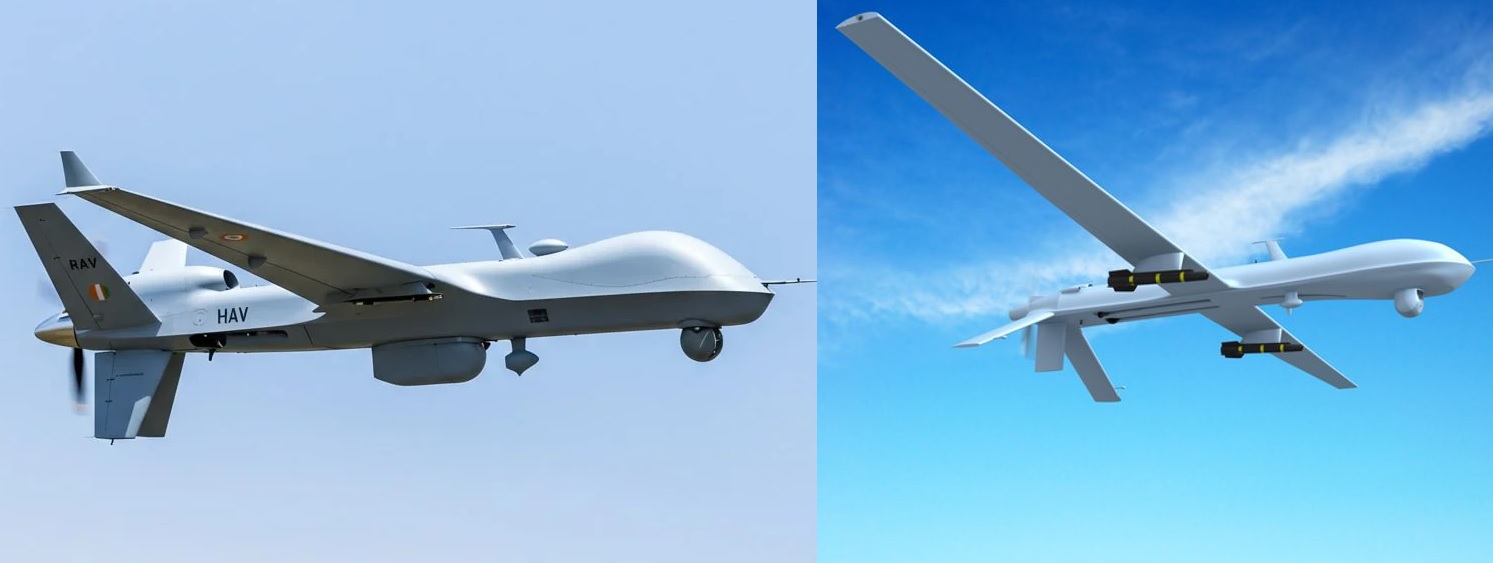
India
Larsen & Toubro (L&T) on Friday announced a landmark collaboration with U.S.-based General Atomics Aeronautical Systems Inc. (GA-ASI) to manufacture Medium Altitude Long Endurance (MALE) Remotely Piloted Aircraft Systems (RPAS) for the Indian Armed Forces. The partnership is being hailed as a major stride in India’s push toward self-reliance in defence manufacturing and a milestone in Indo-U.S. defence cooperation. Under this agreement, L&T and GA-ASI will jointly manufacture MALE-class unmanned aircraft systems in India. The deal combines L&T’s engineering and system integration expertise with GA-ASI’s globally proven RPAS technology, known for its millions of flight hours in intelligence, surveillance, reconnaissance, and strike missions. The collaboration will enable the production of GA-ASI’s MQ-series RPAS, a family of combat-proven drones already operational with multiple nations. According to reports, this partnership is strategically aligned with the Indian Ministry of Defence’s upcoming programme to procure 87 MALE RPAS, a ₹20,000–30,000 crore project that aims to equip the Army, Navy, and Air Force with advanced indigenous drones. L&T is expected to act as the prime bidder, while GA-ASI will serve as the technology partner, providing design and system expertise to ensure the platforms meet operational standards required by the Indian Armed Forces. The Ministry of Defence has already issued the Acceptance of Necessity (AoN) for the 87-drone programme, clearing the path for formal tenders. The upcoming Request for Proposal (RFP) is expected to prioritise Indian firms capable of ensuring over 60% indigenous content—precisely where L&T’s industrial strength lies. “This partnership offers India a unique opportunity to manufacture state-of-the-art unmanned platforms indigenously,” said S.N. Subrahmanyan, Chairman and Managing Director of L&T. “We are proud to join hands with GA-ASI, a recognised world leader in this domain, and are confident that this alliance will significantly enhance India’s defence capabilities and advance self-reliance in aerospace technologies.” Echoing that sentiment, Dr. Vivek Lall, Chief Executive of General Atomics Global Corporation, said the partnership “exemplifies GA-ASI’s commitment to supporting India’s vision for self-reliance and indigenous manufacturing.” He added that combining GA-ASI’s proven RPAS technology with L&T’s robust production base will deliver cutting-edge systems to strengthen the Indian armed forces and build a sustainable aerospace ecosystem in the country. The deal represents more than a commercial partnership; it is a strategic alignment of industrial and defence interests. L&T, already a key contributor to India’s defence ecosystem, has worked with the Defence Research and Development Organisation (DRDO) and various armed forces on systems across land, sea, and air domains. Its manufacturing portfolio includes weapon delivery systems, radar and surveillance platforms, aerospace components, and naval vessels, including frontline warships and submarines. The company’s foray into unmanned systems marks an expansion of its footprint into the high-growth field of aerial robotics. For GA-ASI, the collaboration reflects its growing footprint in India. The American firm has been increasingly involved in partnerships to support India’s drone ecosystem, notably for the MQ-9B HALE drone programme, where Hindustan Aeronautics Limited (HAL) will provide maintenance and overhaul support for engines. The new L&T partnership adds the crucial manufacturing component, moving production from assembly to full integration in India. Industry observers view this development as perfectly timed. India’s 87 MALE RPAS programme seeks to create dual production lines among two Indian manufacturers to ensure scale, competition, and export capability. L&T’s strong infrastructure, backed by GA-ASI’s technical pedigree, gives it a competitive advantage as the Ministry finalises participants for the next stage of procurement. The partnership also reflects India’s growing emphasis on building a globally competitive aerospace base. With the armed forces requiring drones capable of 30+ hours endurance, 35,000 feet altitude, and precision strike capabilities, the L&T-GA-ASI combination appears well-suited to meet both operational and indigenous production requirements. On the market front, investor sentiment responded positively to the announcement. L&T’s share price traded at ₹4,017.00 (+29.20) per scrip as of 10:19 a.m. on October 31, 2025, reflecting optimism about the company’s expanding defence and aerospace portfolio. Beyond market performance, however, the partnership underscores India’s larger ambition—to replace dependency with domestic capability. As global supply chains tighten and defence technology becomes increasingly strategic, initiatives like this are not just industrial moves but geopolitical statements. If the collaboration successfully transitions from pact to production, it could mark the birth of India’s indigenous MALE drone industry, bridging the technology gap between surveillance platforms and strike-capable UAVs. It positions India to not only equip its armed forces but also emerge as a credible exporter of advanced unmanned systems in the coming decade.
Read More → Posted on 2025-10-31 11:22:55
India
In a landmark move underscoring the deepening strategic ties between India and the United States, both nations on Friday signed a 10-year Defence Framework Agreement, marking one of the most significant milestones in their bilateral relationship. The agreement was announced by U.S. Defence Secretary Pete Hegseth, who stated that the defence partnership with India has “never been stronger.” The signing took place in Kuala Lumpur, where Hegseth met with India’s Defence Minister Rajnath Singh. The framework, described as a cornerstone for regional stability and deterrence, aims to enhance coordination, intelligence sharing, joint training, and advanced technological cooperation between the two militaries. A Framework for Stability in the Indo-Pacific According to Hegseth, the new framework will serve as a foundation for long-term strategic collaboration, improving interoperability and ensuring that the two countries can respond effectively to emerging security challenges. He emphasized that trade tensions or policy differences “do not affect the defence and strategic trust” between the nations. For India, this agreement cements its role as a key strategic partner of the U.S. in the Indo-Pacific, particularly as Washington seeks to balance the growing assertiveness of China. For the United States, it provides a reliable democratic ally with one of the region’s largest militaries and a rapidly modernizing defence sector. Defence Minister Rajnath Singh called the signing a “new chapter” in India-U.S. relations, expressing confidence that under Hegseth’s leadership, bilateral ties would “further strengthen and deepen.” India’s Strategic Gains: Technology, Interoperability, and Security For India, this 10-year defence framework brings several tangible benefits.First, it ensures long-term technology sharing and cooperation on advanced defence systems — from next-generation fighter aircraft components to joint research in artificial intelligence, cyber warfare, and unmanned systems. The U.S. has already shown openness to co-developing and co-producing certain technologies under its Defense Technology and Trade Initiative (DTTI), and this new agreement could fast-track such projects. Second, the framework will likely expand joint military exercises, including the high-profile Yudh Abhyas and Malabar naval drills, enhancing India’s interoperability with American and allied forces. This interoperability becomes crucial in ensuring coordinated responses during regional crises or humanitarian operations. Third, India gains access to logistics and intelligence networks that enhance its maritime situational awareness — a critical advantage in the Indian Ocean Region (IOR), where Chinese naval activity has steadily increased. By linking with U.S. naval assets and regional allies like Japan and Australia, India strengthens its strategic deterrence posture without entering into formal alliances. Finally, the long-term framework aligns with India’s goal of defence self-reliance (Atmanirbhar Bharat). By encouraging U.S. defence firms to collaborate with Indian industry, the deal could accelerate the domestic production of high-end systems, such as jet engines, surveillance drones, and secure communication systems. U.S. Strategic Gains: A Trusted Democratic Partner and Regional Counterbalance For Washington, the 10-year framework reinforces India’s position as a pillar of its Indo-Pacific strategy. Amid growing challenges from China in the South China Sea and tensions over Taiwan, the U.S. views India as an independent but aligned power capable of stabilizing the region without direct American military involvement. By deepening defence ties, the U.S. gains: Expanded access to the Indian Ocean, which is critical for maintaining open sea lanes between the Middle East and East Asia. A reliable defence partner whose growing capabilities contribute to burden-sharing in maintaining security across Asia. A boost to its defence exports and co-development initiatives, opening India’s large market to American technology and investment. Furthermore, the agreement complements U.S. diplomatic efforts under frameworks like the Quad (India, U.S., Japan, Australia), which collectively aim to ensure a free and open Indo-Pacific. Diplomatic Momentum and Broader Engagement The Kuala Lumpur meeting followed a series of high-level engagements between Indian and American leaders. Just days earlier, External Affairs Minister S. Jaishankar met U.S. Secretary of State Marco Rubio, reaffirming the commitment to strengthen cooperation across strategic, economic, and technological fronts. These meetings highlight a multi-layered relationship — one that extends beyond defence into areas of trade, investment, and global governance. At the same time, Union Minister Piyush Goyal’s remarks about India’s cautious approach to trade negotiations underscore New Delhi’s strategy of balancing engagement with self-reliance. While India seeks a fair trade agreement, it remains firm on protecting its domestic sectors, a stance that complements its independent but cooperative foreign policy. Commerce Secretary Rajesh Agrawal’s statement that negotiations are “progressing well” suggests that both sides are working toward a comprehensive bilateral trade agreement — possibly to be finalized soon. A Strategic Future Built on Trust and Shared Interests This 10-year defence framework symbolizes more than just a policy document — it represents trust, continuity, and shared strategic vision between two major democracies. It lays the groundwork for joint innovation, supply chain resilience, and collective regional security. As geopolitical shifts continue to reshape the Indo-Pacific, the India-U.S. partnership stands as a pillar of stability and deterrence. For India, it means enhanced defence capability, greater technological depth, and stronger global standing. For the United States, it secures a steadfast partner at the heart of Asia’s emerging power balance. In the words of Defence Minister Rajnath Singh, this framework indeed marks “a new chapter” — one that could define the next decade of India-U.S. strategic cooperation, from the battlefield to the boardroom.
Read More → Posted on 2025-10-31 11:15:17
India
In a clear signal of defensive preparation amid persistent cross-border tensions, the Uri sector in Baramulla district has seen the completion of 40 individual bunkers for civilians in forward villages, with a further 162 bunkers slated for completion “within the next four weeks,” announced the Jammu & Kashmir Government in a written reply to the Legislative Assembly. The total sanctioned number of bunkers and overhead protection trenches stands at 202 in the border-village belt of Uri. The reply, tabled by Minister for Rural Development and Panchayati Raj Javaid Ahmad Dar, noted that while the construction oversight falls under the Home Department, the sanctioning of the 202 bunkers was carried out via the District Development Commissioner (DDC) Baramulla. Each bunker or protection trench is estimated to cost about ₹ 0.55 lakh, funded in convergence mode: approximately ₹ 0.51 lakh via the State Disaster Response Fund (SDRF) and ₹ 0.04 lakh under the Mahatma Gandhi National Rural Employment Guarantee Act (MGNREGA) for the labour component. Residents of villages in the Uri sector have long demanded individual bunkers amid repeated ceasefire violations and cross-Line of Control (LoC) shelling, which in previous years has resulted in both civilian casualties and infrastructure damage. In May 2025, the Chief Minister acknowledged that “bunkers are back in focus” for border zones such as Uri, Tangdhar, Rajouri, and Poonch, as the lull of peace gave way to renewed firing. The completion of the first 40 bunkers and the promise of 162 more in a short timeline reflect both the urgency of civilian protection and the logistical challenge of building in terrain where access, weather, and security all complicate execution. While no new proposals for additional bunkers in currently uncovered villages have been tabled yet, the existing programme underscores the government’s message: in this border region, when bunkers rise, it means the border is watching. As the winter season approaches and forward villages brace for the dual threat of shelling and harsh weather, the infrastructure boost may help residents regain a sense of security and resilience. Yet for security analysts, the move also offers a telling indicator: defensive investment is often the mirror image of adversarial pressure — and in Uri’s case, the rise of concrete bunkers signals both humanitarian concern and strategic vigilance.
Read More → Posted on 2025-10-30 17:49:08
India
In a significant step forward for its defence technology architecture, India has officially launched Project PRAGYASHAKTI — an ambitious programme to build a common integration framework for all major Electronic Warfare (EW) systems across the Indian Armed Forces. The initiative aims to bridge platforms of varying origins — from the United States, Russia, France, and the United Kingdom to home-grown Indian systems — and ensure seamless communication, data-sharing, and coordinated action among them. A Diverse Fleet, One Challenge One of the major drivers behind this move is the operational diversity faced by the Indian Air Force (IAF), which operates one of the world’s most varied fleets — from legacy Soviet-era jets to modern Western fighters and indigenous aircraft. This wide spectrum of EW suites, sensors, and jammers poses a major interoperability challenge. By developing a unified software architecture, PRAGYASHAKTI seeks to enable real-time decision-making, mission planning, and cross-platform coordination across all three services — the Army, Navy, and Air Force. Core Objectives and Architecture At the heart of Project PRAGYASHAKTI lies the creation of an Integrated Electronic Warfare Software (IEWS) Framework, featuring eight specialized software modules — known as Computer Software Configuration Items (CSCIs) — each handling a specific operational or analytical function. These modules are grouped into four categories: Control Entities: System-Level Control Centre (SLCC) and Block-Level Control Centre (BLCC) Communication Entities: Reconnaissance & Direction Finding System (RDFS) and Jammer Station (JS) Radar Entities: Radar Entity (RSEC) Specialist Entities: Cellular, UAV, and Satellite Interceptors This structured architecture ensures efficient data management, standardized communication, and synchronized responses between diverse EW components. Scope, Technology & Implementation The PRAGYASHAKTI project unfolds in two major phases — Development and Implementation. During the Development Phase, engineers will design and build eight unique software entities supporting radar, jammer, and interceptor operations. These will serve as the building blocks of the integrated framework. In the Implementation Phase, the system will establish common operational standards across all entities — defining generic entity types, standardized user interfaces, and unified message formats. It will also integrate Artificial Intelligence (AI) and Machine Learning (ML) for predictive analysis, automated reporting, and threat pattern recognition. Additional technological enablers include: A shared EW database for all sensor types OASIS MQTT 5.0 protocol for advanced message exchange Generic Device Interface Layer for easier hardware integration AI-assisted data correlation and dynamic report generation The timeline for development is well-defined: an SRS document in 3 months, Build 1 testing in 15 months, and Build 2 finalisation in 25 months. Why It Matters in Modern Conflict In future battlefield scenarios, especially those involving electronic jamming, drone incursions, or precision-guided weapon threats, interoperability will be crucial. Imagine a situation along the northern borders, where an enemy employs GPS spoofing and radio frequency denial. With PRAGYASHAKTI, India’s airborne, naval, and ground-based EW assets can operate as one — detecting hostile signals, sharing data in milliseconds, and executing coordinated countermeasures without manual intervention. This approach transforms Electronic Warfare from an isolated, reactive process into a networked and proactive defence shield — ensuring faster reaction times, reduced redundancy, and enhanced survivability. How Project PRAGYASHAKTI Works Project PRAGYASHAKTI is designed to unify India’s Electronic Warfare (EW) systems across the Army, Navy, and Air Force under a single software framework. It enables radars, jammers, interceptors, and communication systems from different origins to share data and act as one coordinated network. The process begins with data collection from multiple EW sensors mounted on aircraft, ships, and ground stations. These systems detect enemy radar emissions, communication signals, and electronic activity. Because India operates platforms from Russia, the United States, France, and indigenous sources, the information comes in varied formats. PRAGYASHAKTI standardizes this data through a Generic Device Interface Layer, allowing all systems to communicate in a common digital language. Once gathered, the system builds an Electromagnetic Order of Battle (EOB) — a real-time map of all signals in the operational area. Artificial Intelligence (AI) and Machine Learning (ML) tools analyse this data, identifying threats, classifying unknown signals, and predicting hostile actions such as GPS jamming or radar tracking. The framework then issues coordinated instructions to all connected assets. If an enemy radar lock is detected, the system directs nearby jammers to disrupt the signal or shifts communication frequencies to maintain secure links. This ensures synchronized, interference-free operations among different service branches. PRAGYASHAKTI’s distributed architecture ensures resilience. Even if the central command is disrupted, local nodes continue functioning using predefined response protocols. All mission data is logged to update threat libraries and refine AI algorithms for future engagements. Global Parallels — Nations Using Similar Frameworks India is not alone in pursuing such an integrated EW ecosystem. Several advanced military powers already operate comparable frameworks designed for multi-domain electronic warfare coordination. United States – JEMSO (Joint Electromagnetic Spectrum Operations) : The U.S. integrates EW and cyber operations under JEMSO, creating a unified command structure for controlling the electromagnetic spectrum across all services. NATO – Standardized EW Integration : NATO has implemented STANAG-based EW interoperability standards, ensuring all allied members’ systems can share EW data and operate seamlessly in joint missions. United Kingdom – STICS Framework : The UK’s Strategic Information and Communications System (STICS) merges EW, C4ISR, and cyber elements for quick, modular integration and real-time coordination. China – PLASSF (Strategic Support Force) : China’s PLASSF centralizes electronic, cyber, and space warfare, creating a powerful joint structure capable of controlling the information domain in real time. Russia – REB (Radio-Electronic Combat) Network : Russia has built centralized EW networks linking ground and air assets through mobile REB systems like Krasukha and Borisoglebsk-2, capable of large-scale electromagnetic disruption. Israel – Unified EW and Cyber Systems : Israel blends its C4I, cyber, and EW capabilities into a single architecture, enabling rapid signal detection, jamming, and countermeasure deployment during high-intensity conflicts. Strategic Impact By launching Project PRAGYASHAKTI, India is taking a bold step toward digital self-reliance in defense warfare. The framework will make future EW systems AI-driven, interoperable, and modular, ensuring that each radar, jammer, or sensor adds strength to a nationally integrated defense network. In the coming years, this project could serve as the foundation for joint-spectrum operations, allowing India to fight in an environment where data, signals, and speed define victory more than physical firepower. Project PRAGYASHAKTI is not just another modernization effort — it represents India’s transition toward a future where data, AI, and electromagnetic dominance form the true front line of warfare.
Read More → Posted on 2025-10-30 16:19:20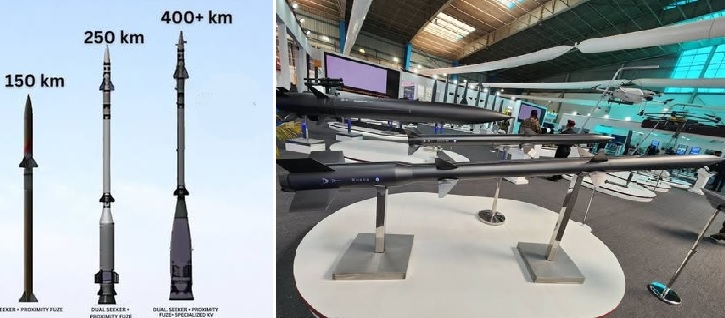
India
India’s quest for strategic autonomy in missile defence is advancing toward a crucial milestone. The Defence Research and Development Organisation (DRDO) is preparing to test the first interceptor under Project Kusha, a long-range, multi-layered air defence system that aims to protect the nation against modern aerial, ballistic, and hypersonic threats. The initial test of the Kusha M1 interceptor, expected around 2025 End, will take place from the Dhamra range in Odisha, according to reports. A Vision Beyond Imported Systems Project Kusha stands as India’s most ambitious initiative to develop a homegrown alternative to the Russian S-400. Designed as a Long-Range Surface-to-Air Missile (LRSAM) and Ballistic Missile Defence (BMD) network, it seeks to provide a three-tier interceptor shield capable of engaging threats from low-altitude drones and aircraft to high-speed ballistic and hypersonic weapons. The project evolved from DRDO’s earlier Advanced Air Defence (AAD) and Prithvi Defence Vehicle (PDV) systems and is being advanced under India’s Mission Sudarshan Chakra, a broader program to establish an integrated national air defence architecture. Its foundation lies in one principle — self-reliance in strategic defence technology. All subsystems, from propulsion to radar and guidance, are being indigenously developed by DRDO’s cluster of research centres including DRDL, RCI, ASL, and LRDE. The Kusha M1: The First Shield The Kusha M1 interceptor is designed as the endo-atmospheric component of the system, capable of engaging hostile aircraft, drones, and short-range ballistic missiles within a radius of around 150 km. Though exact performance details remain classified, reports describe it as a high-speed interceptor powered by a solid-propellant motor and equipped with an active radar seeker for terminal guidance. The M1 will operate alongside DRDO’s Long Range Tracking Radar (LRTR) and Multi-Function Fire Control Radar (MFCR), enabling real-time threat detection, target tracking, and command coordination. Its upcoming test from Dhamra, Odisha, will validate the missile’s target acquisition, discrimination, and interception capabilities. The Kusha M2 and M3: Expanding the Defence Envelope The Kusha M2 and Kusha M3 interceptors will extend India’s defensive reach into the exo-atmospheric and near-space domains: Kusha M2, with an expected range of around 250 km, is designed to intercept medium-range ballistic missiles and advanced aerial threats at higher altitudes. Kusha M3, still in the design phase, is projected to cover up to 350–400 km, providing interception capability against long-range ballistic and potential hypersonic glide vehicles (HGVs). Together, the M1–M3 series will provide multi-layered defence, ensuring overlapping coverage and multiple engagement opportunities against any incoming threat. Advanced Radar and AI Integration A key component of Project Kusha’s architecture is its S-band Long Range Battle Management Radar, capable of scanning a 500–600 km radius (310–370 miles). This radar can detect and track ballistic missiles, cruise missiles, and precision-guided munitions, offering early warning and engagement support across a vast battlespace. To optimize engagement decisions and response timing, the system will feature an AI-enabled decision support framework. This digital command layer will process real-time radar data, assess threat profiles, and coordinate interceptor launches with precision, reducing human reaction time and increasing system resilience against saturation attacks. In Phase-2 of Project Kusha, DRDO plans to develop interceptors with anti-hypersonic capabilities and ranges exceeding 400 km (250 miles). This phase will focus on neutralizing next-generation hypersonic glide vehicles and maneuvering warheads that challenge current missile defence systems worldwide. Timeline of Development Phase Milestone Estimated Year Concept Initiation Indigenous LRSAM/BMD design launched post-PDV Mk-II success 2019–2020 Prototype Development Propulsion and seeker testing for M1 2021–2023 System Integration Integration with radar and C2 architecture 2024 First Flight Test (M1) Planned from Dhamra, Odisha 2025–2026 Extended Range Testing (M2/M3) Progressive rollout and validation 2027–2029 Phase-2 Expansion Anti-hypersonic interceptors (>400 km range) Post-2030 The project’s total cost is reported at around ₹21,700 crore, with funding distributed across radar development, missile propulsion, and command system integration. Strategic Significance Once operational, Project Kusha will establish India’s first fully indigenous, multi-tier missile defence network, capable of countering a spectrum of modern threats—from ballistic missiles to stealth aircraft and hypersonic vehicles. It will complement existing systems such as the S-400 Triumf, Akash-NG, and MR-SAM, forming a resilient, layered shield over strategic regions and key infrastructure. The combination of AI-driven command systems, long-range radars, and indigenous interceptors represents a new era in Indian defence — one where real-time response, speed, and autonomy converge. Every aspect of Project Kusha showcases India’s evolution from a technology importer to a technology creator. Built by DRDO’s network of scientists, the project is more than a weapon system — it is a symbol of sovereignty and a declaration that India’s skies will be defended by Indian innovation.
Read More → Posted on 2025-10-30 14:33:39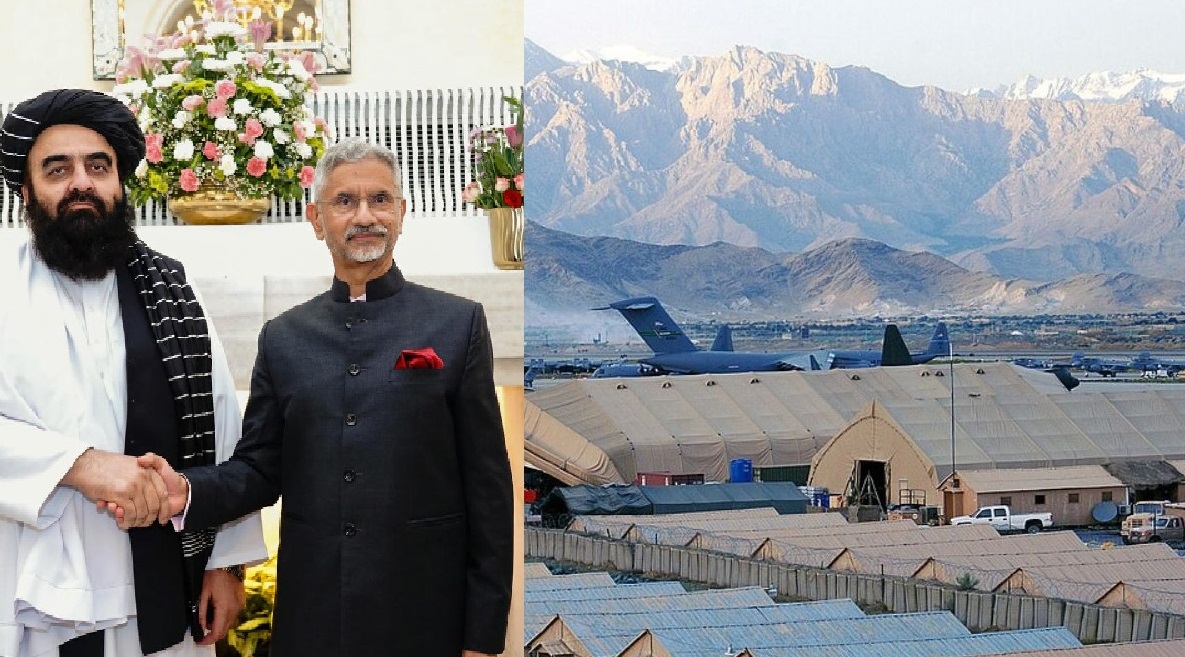
India
In a development that could redefine South Asia’s strategic balance, reports suggest that Afghanistan has offered India operational access to the historic Bagram Airbase — the country’s largest military installation — in exchange for India vacating its base in Tajikistan. While no official confirmation has been issued by either New Delhi or Kabul, the news comes amid increasing tension between Afghanistan and Pakistan, with sources indicating that Afghanistan has granted India airspace access while considering restrictions on Pakistani flight routes. If true, this marks a significant realignment, driven by Afghanistan’s growing concerns over Pakistan’s air power and its search for a trusted security partner. For India, the shift from Ayni Airbase in Tajikistan to Bagram in Afghanistan would bring its forward operations much closer to Pakistan’s western flank — a move with profound military and political implications. The Strategic Weight of Bagram Airbase Located about 60 kilometers north of Kabul, Bagram Airbase has been the centerpiece of foreign military operations in Afghanistan’s modern history. Originally built by the Soviet Union in the 1950s and massively expanded by the United States post-2001, it became the nerve center of NATO operations. The base once housed thousands of troops, massive hangars, advanced radar and surveillance systems, and one of Central Asia’s longest runways. When U.S. forces withdrew in 2021, they left behind billions of dollars worth of equipment and an infrastructure capable of supporting large-scale air operations. From Bagram, the U.S. directed counterterrorism missions deep into Afghanistan and Pakistan, highlighting its immense geostrategic value. The airbase sits at a natural elevation that allows aerial dominance over Kabul and oversight of western Pakistan, giving any new operator a strong surveillance and response advantage. The Reported Deal: Bagram for Tajikistan According to emerging reports, Afghanistan’s offer to India is linked to India vacating its presence at the Ayni Airbase in Tajikistan — a facility India helped modernize in the early 2000s. The Ayni base, located near Dushanbe, was India’s first operational foothold in Central Asia, aimed at maintaining regional reach and supporting potential operations around Afghanistan. However, Russian influence over Tajikistan and the base’s limited independence have constrained India’s operational freedom there. If India relinquishes Ayni in favor of Bagram, it would mark a shift from a Russia-dependent base in Central Asia to a directly controlled air hub in Afghanistan, much closer to the main zone of strategic concern — Pakistan. This exchange, if implemented, would allow Afghanistan to gain India’s protection and advanced air defense systems, while India gains a more strategically relevant position for regional monitoring and defense cooperation. Why Afghanistan Might Offer Bagram to India The primary motivation stems from security fears. Relations between Kabul and Islamabad have deteriorated sharply, with repeated accusations of Pakistani airstrikes and drone incursions into Afghan territory. The Afghan leadership fears a direct air attack on Kabul in the event of open conflict or political escalation. Lacking credible air defense networks, fighter aircraft, or modern surveillance infrastructure, Afghanistan finds itself exposed. Partnering with India — a nation that has provided humanitarian aid, infrastructure development, and training for Afghan forces for over two decades — appears to be the most viable security solution. By offering Bagram to India, Afghanistan could gain access to Indian radar technology, surface-to-air defense systems, and early-warning networks. These would not only protect Kabul and the central region but also deter potential Pakistani incursions. The presence of Indian personnel and systems would serve as a security guarantee for the Afghan leadership, which sees India as a neutral and trustworthy ally. India’s Strategic Calculus For India, the reported offer aligns with its long-term interests in regional security and strategic depth. Bagram provides several advantages over Ayni (Tajikistan): proximity to Pakistan’s borders, logistical access through friendly Afghan channels, and a central position in the heart of South Asia. Operating from Bagram would allow India to: Establish real-time surveillance over western Pakistan and the border regions. Deploy air defense systems that extend radar coverage across Kabul and parts of the Afghan frontier. Enhance regional power projection through quick-response capability. Strengthen Afghanistan’s defense architecture, ensuring Indian influence remains vital in Kabul’s security structure. The move would also support India’s broader strategic agenda of countering Chinese-Pakistani coordination in the region, particularly under the China-Pakistan Economic Corridor (CPEC) framework. The Pakistan Factor Any Indian military presence west of Pakistan’s borders would be seen as a serious provocation by Islamabad. Historically, Pakistan has viewed Bagram as a base of operations used against its interests — first by the Soviets, then by the Americans. If India were to assume control or partial operation of Bagram, Pakistan’s western flank would become exposed to monitoring and potential counter-operations. In response, Pakistan might strengthen its air defenses, conduct military drills near the Durand Line, or expand intelligence coordination with China to neutralize Indian surveillance advantages. The recent Pakistan–Afghanistan truce talks in Istanbul reportedly ended in failure, with Pakistan issuing warnings over Kabul’s growing closeness to India — further indicating a deepening divide. Challenges and Unconfirmed Status Despite the strategic appeal, the reported Bagram-for-Tajikistan exchange remains unverified. The Taliban-led Afghan government has publicly stated its opposition to any foreign military presence on Afghan soil, while India has officially joined other regional powers — including Russia and China — in opposing foreign military bases in Afghanistan. Furthermore, the logistical realities are daunting. Operating from Afghanistan would require secure supply chains, over-flight permissions, and political agreements with neighboring states — conditions that are currently not in place. Until formal confirmation or satellite evidence emerges, this reported arrangement remains within the realm of strategic speculation. Bagram’s Continuing Symbolism Even as speculation swirls, Bagram Airbase remains a symbol of power projection in Central and South Asia. Its vast facilities, long runways, and pre-installed infrastructure make it a valuable asset for any future operator. The base once served as the command center for U.S. operations across the region, and even today, its possession would provide unmatched intelligence and air mobility advantages. When the U.S. military withdrew, it left behind not just weapons and aircraft shelters but a strategic blueprint — one that any successor power could easily adapt for regional dominance. If the reports of Afghanistan offering Bagram Airbase to India in exchange for vacating the Tajikistan base prove true, it would mark one of the most significant geopolitical shifts since the U.S. withdrawal from Afghanistan. For Kabul, the arrangement offers a chance to secure its skies and protect its leadership from potential Pakistani air threats. For India, it presents an opportunity to establish a forward military presence with direct strategic access to Pakistan’s western front. However, with no official confirmation and both nations maintaining diplomatic silence, the development remains speculative but geopolitically plausible. What is certain is that Bagram continues to dominate the regional imagination — a vast, battle-tested fortress whose control could once again reshape the power balance of South Asia.
Read More → Posted on 2025-10-29 17:32:41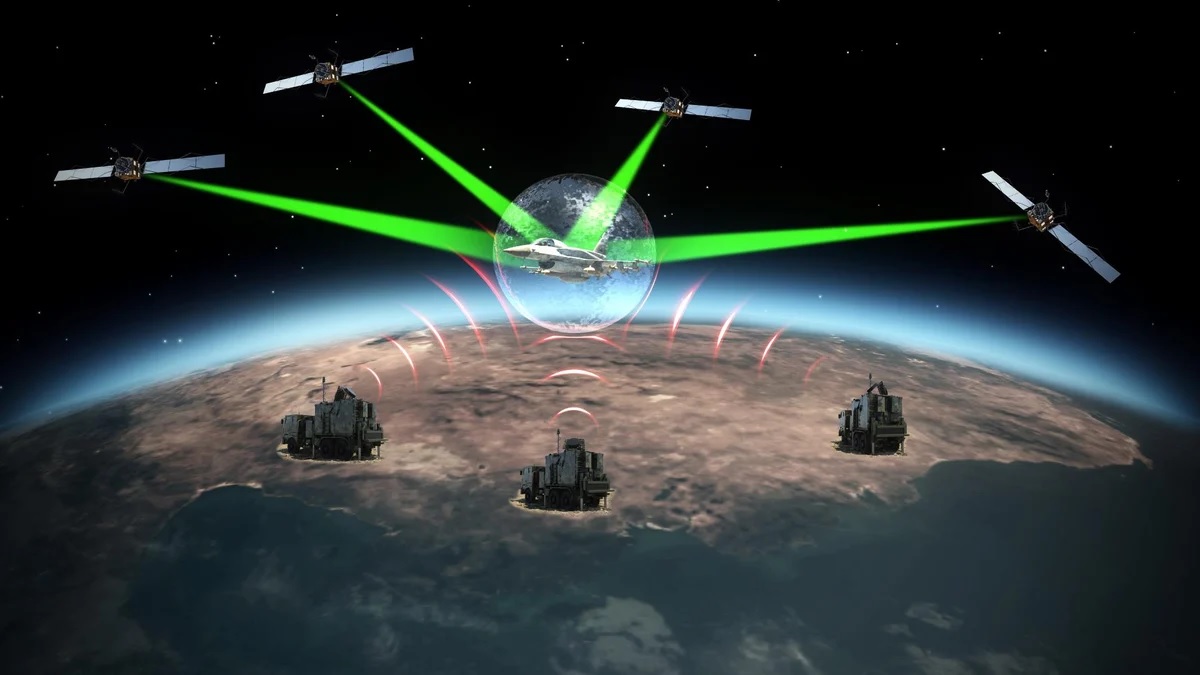
India
Hindustan Aeronautics Limited (HAL) has invited Indian industry partners to participate in the design and development of a next-generation Anti-Jamming, Anti-Spoofing Global Navigation Satellite System (GNSS) for fixed-wing military aircraft. The Expression of Interest (EoI) seeks domestic firms capable of delivering a reliable, multi-band navigation system that can withstand intense electronic warfare environments, ensuring uninterrupted accuracy even under jamming or spoofing attacks. Securing Navigation in a Contested Electromagnetic Battlefield In modern warfare, aircraft navigation, weapon guidance, and timing systems rely heavily on satellite-based GNSS signals from constellations such as GPS, GLONASS, BeiDou, and India’s NavIC. These signals, however, are vulnerable to interference. Enemy forces can deploy jammers to block signals or use spoofers to transmit counterfeit data, tricking aircraft systems into false positioning. HAL’s EoI aims to neutralize these threats through an advanced GNSS system that combines hardware resilience and intelligent signal processing to ensure pilots and autonomous systems retain true positional awareness, even under hostile conditions. Core Features and Capabilities of the Planned System The proposed system will feature multi-constellation and multi-frequency operation, capable of accessing GPS, GLONASS, BeiDou, and NavIC signals simultaneously. This enhances redundancy and reduces single-source dependency. Technically, HAL’s requirement includes: Anti-jamming antennas using Controlled Reception Pattern Arrays (CRPA) or digital beamforming to suppress interference. Signal authentication and spoof detection algorithms to filter out malicious transmissions. Tight integration with Inertial Navigation Systems (INS) to maintain navigation accuracy when GNSS is compromised. Jam detection and geolocation functions, giving aircraft crews and command centers real-time awareness of enemy electronic activity. These features are intended to be modular, allowing integration into both existing HAL platforms like the Tejas fighter, Hawk-i trainer, Dornier-228, and future aircraft under development. Importance of Anti-Jamming GNSS in Modern Warfare In a high-intensity conflict, the ability to resist electronic attacks directly determines mission survivability. When aircraft lose GNSS, they risk navigational errors, weapon misfires, or operational disorientation. A hardened GNSS ensures continuity in all phases of combat—navigation, targeting, and return-to-base. The benefits include: Operational Continuity: Aircraft remain mission-capable even in GNSS-denied zones. Precision in Weapon Delivery: Smart munitions guided by GNSS retain accuracy under attack. Enhanced Situational Awareness: Real-time jam detection allows pilots and command centers to adapt tactics. Strategic Superiority: Forces equipped with EW-resistant navigation systems can operate confidently in contested electronic environments. In essence, anti-jamming GNSS technology turns the electromagnetic spectrum from a weakness into a strategic advantage. Indian Firms Already Working on Related Technologies Several Indian entities are well-positioned to respond to HAL’s call, leveraging their existing expertise in electronic warfare and navigation systems. Bharat Electronics Limited (BEL) has already developed and fielded advanced Electronic Warfare and Counter-Drone Systems, such as the D4 system. BEL’s extensive experience in radar, RF signal processing, and avionics integration makes it a leading contender to develop the GNSS protection suite. Electronics Corporation of India Limited (ECIL) has been developing dual-frequency GNSS receivers with anti-jamming and anti-spoofing detection capabilities, technologies that align with HAL’s objectives. Defence Research and Development Organisation (DRDO), particularly through its Defence Avionics Research Establishment (DARE), has contributed to India’s electronic warfare and avionics innovation. DARE’s previous work in integrating inertial and GNSS systems can serve as a foundation for the upcoming project. In addition, startups working under the iDEX (Innovations for Defence Excellence) program could collaborate on software-defined GNSS receivers and advanced signal authentication modules, complementing public sector capabilities. Challenges on the Road to Indigenous Development Developing an advanced anti-jamming GNSS system involves complex design trade-offs. Controlled Reception Pattern Antennas are expensive and require precise calibration. The processing hardware must withstand high dynamic flight conditions while remaining lightweight and power-efficient. Another challenge lies in testing and certification, as the system must be validated under real-world electromagnetic interference conditions. Despite these hurdles, the strategic payoff — a secure, self-reliant PNT capability — makes this project critical to India’s aerospace modernization. Strengthening India’s Defence Autonomy HAL’s initiative aligns perfectly with India’s broader vision of Atmanirbhar Bharat (self-reliant India) in defence technology. An indigenous anti-jamming GNSS will reduce reliance on imported navigation solutions and ensure operational security against foreign-controlled signal networks. Once realized, such systems can be deployed not only in manned aircraft but also across UAVs, cruise missiles, and precision-guided munitions, enhancing the robustness of India’s entire combat ecosystem.
Read More → Posted on 2025-10-29 14:36:14Search
Top Trending in 24 Hours
-
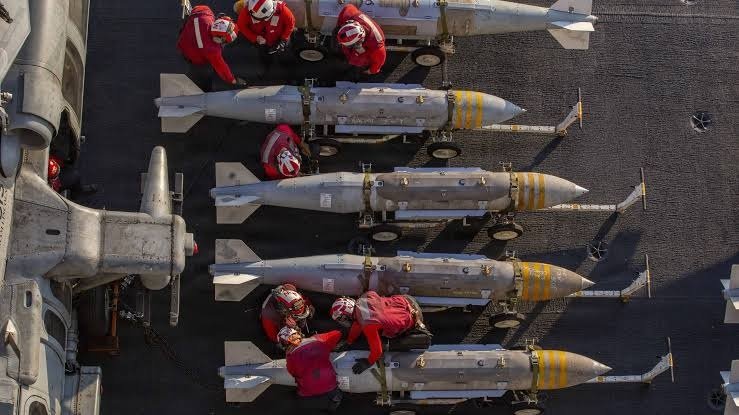 Pentagon Inspector General Report Finds Iran War Caused U.S. Ammunition Shortfalls and Industrial Bottlenecks
-
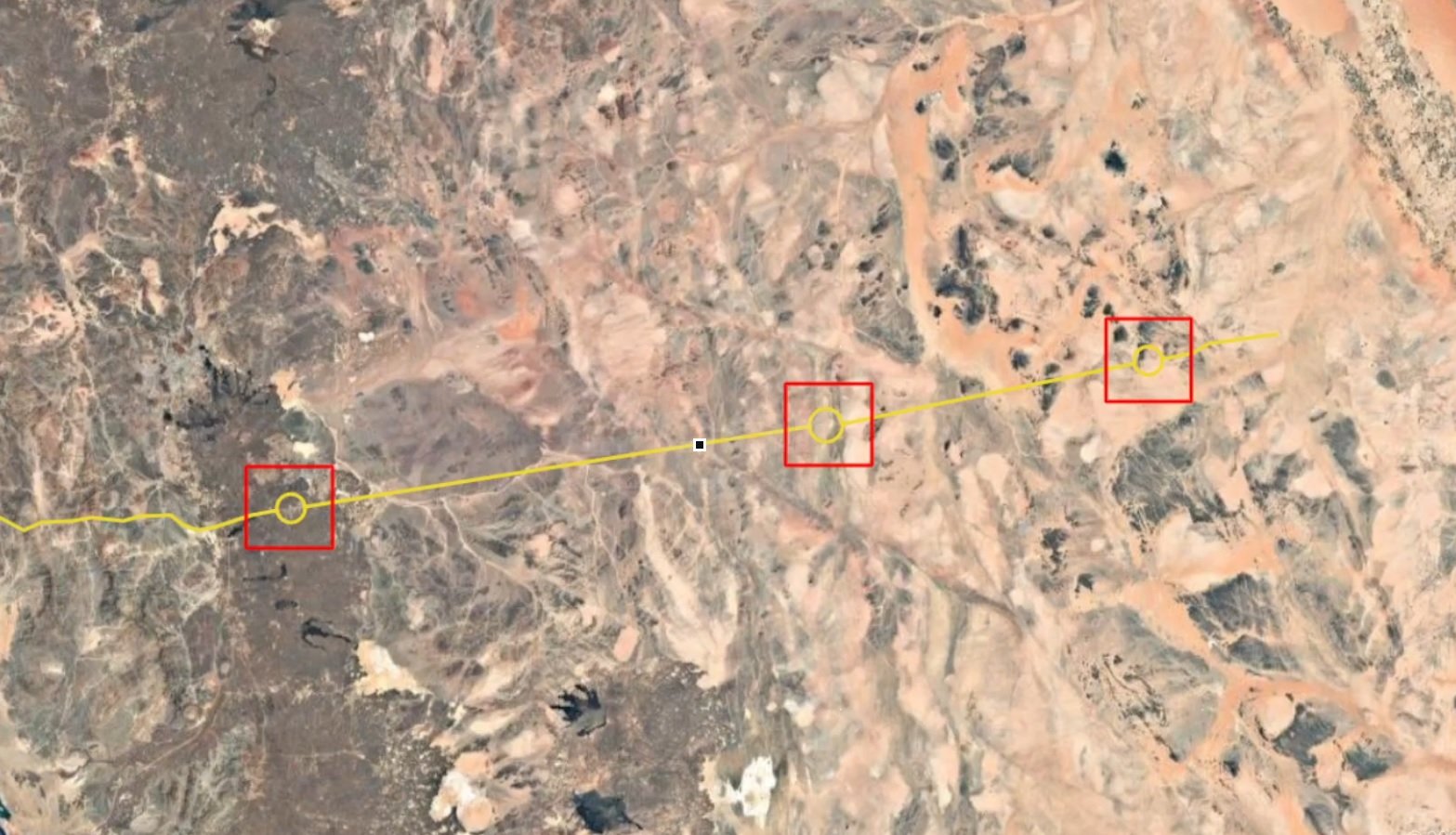 Satellite Imagery Shows Extensive Damage to Saudi Arabia’s East-West Oil Pipeline, Indicating More Than a Single Strike
-
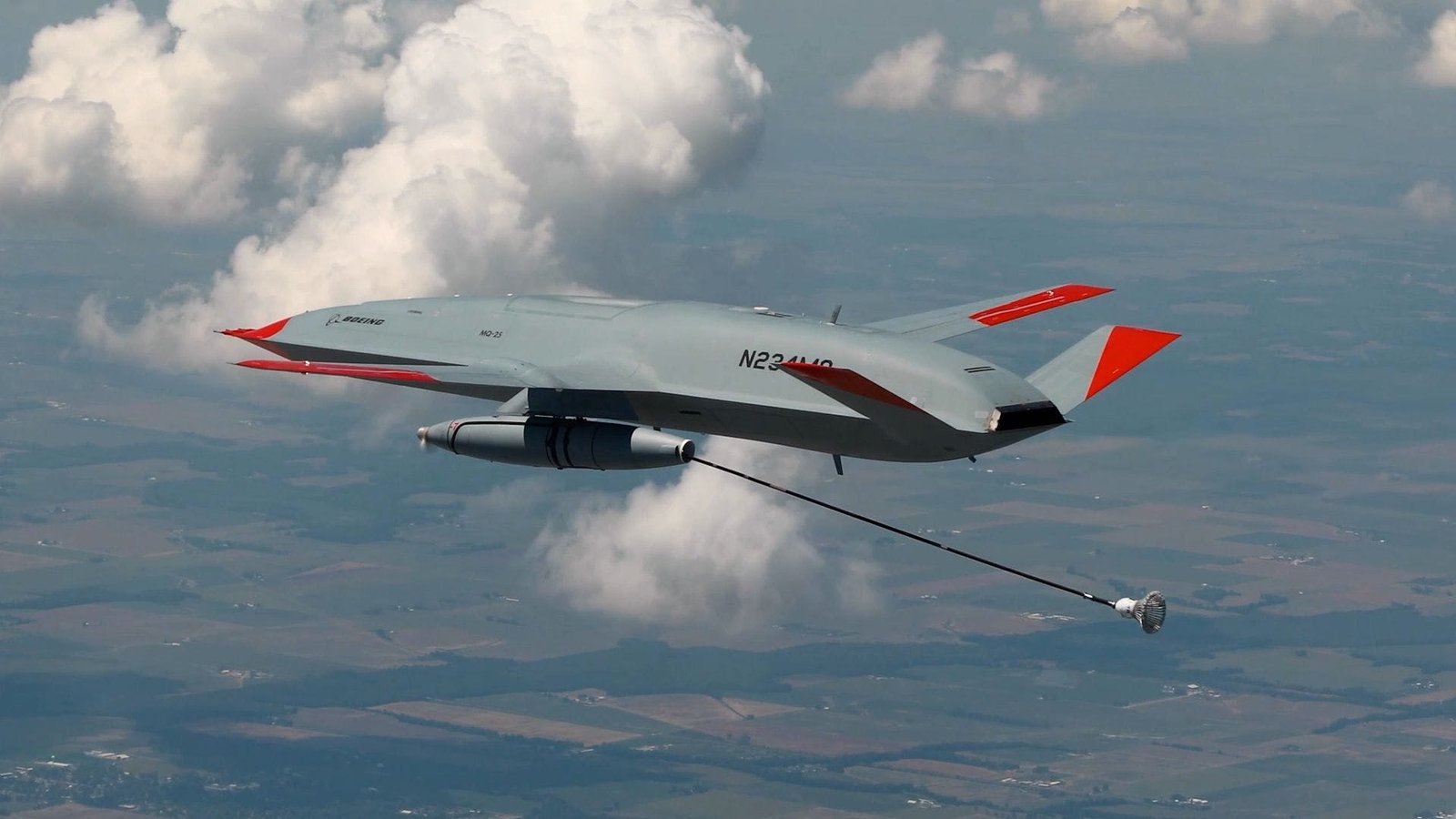 U.S. Navy Awards Boeing $562 Million Contract for First Production MQ-25A Stingray Tanker Drones
-
 Pentagon and Honeywell Complete Four-Hour Pacific Flight Using Quantum Magnetic Navigation Without GPS
-
 U.S. Air Force Special Operations Command Clears AGM-190A Havoc Spear for Wider Service After Combat Evaluation in Africa
-
 U.S. Confirms Deployment of On-Orbit Space Control Weapons for First Time
-
 China Builds New Shanghai Vessel to Serve as Mothership for Large Uncrewed Submarines
-
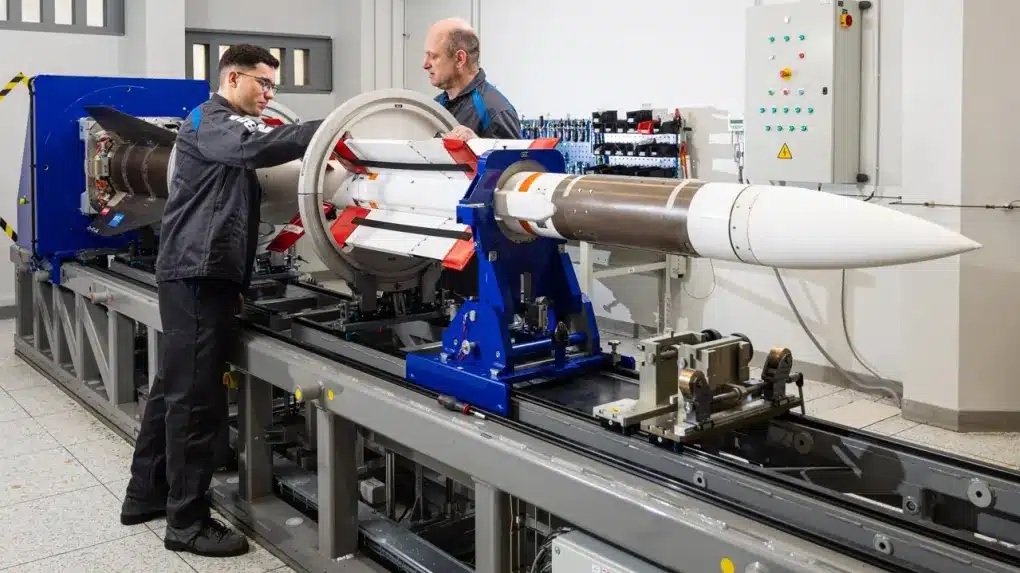 MBDA to Build New Missile Production Plant Near Orleans to Expand Missile Production
Top Trending in 4 Days
-
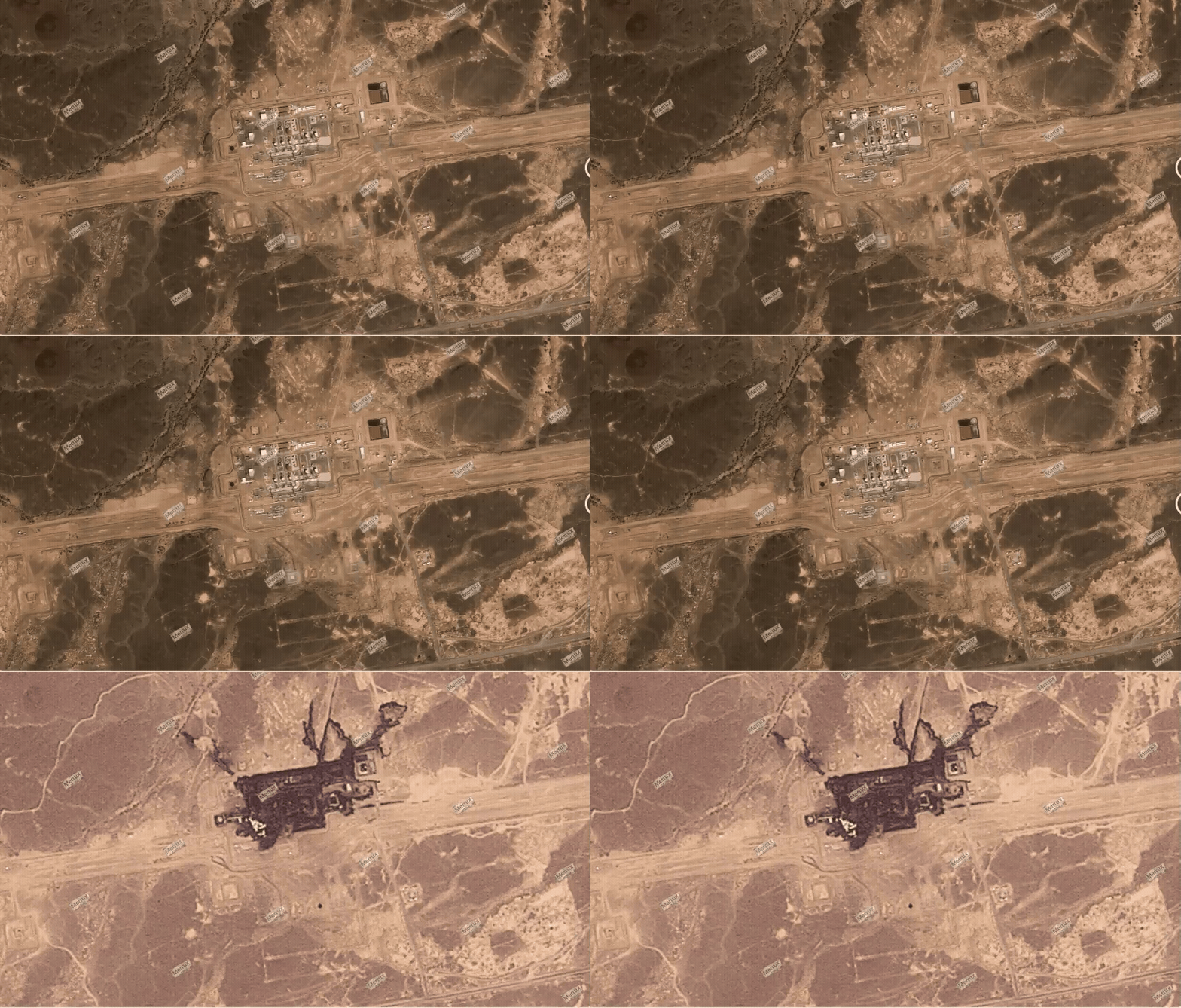 Satellite Imagery Shows Heavy Damage to Saudi East–West Oil Pipeline Pumping Stations
-
 U.S. Air Force Awards Antares $161 Million to Develop Nuclear Reactor for Spacecraft
-
 Pentagon Awards BlueHalo Up to $99.8 Million Contract for Orbital Battlespace R&D Program
-
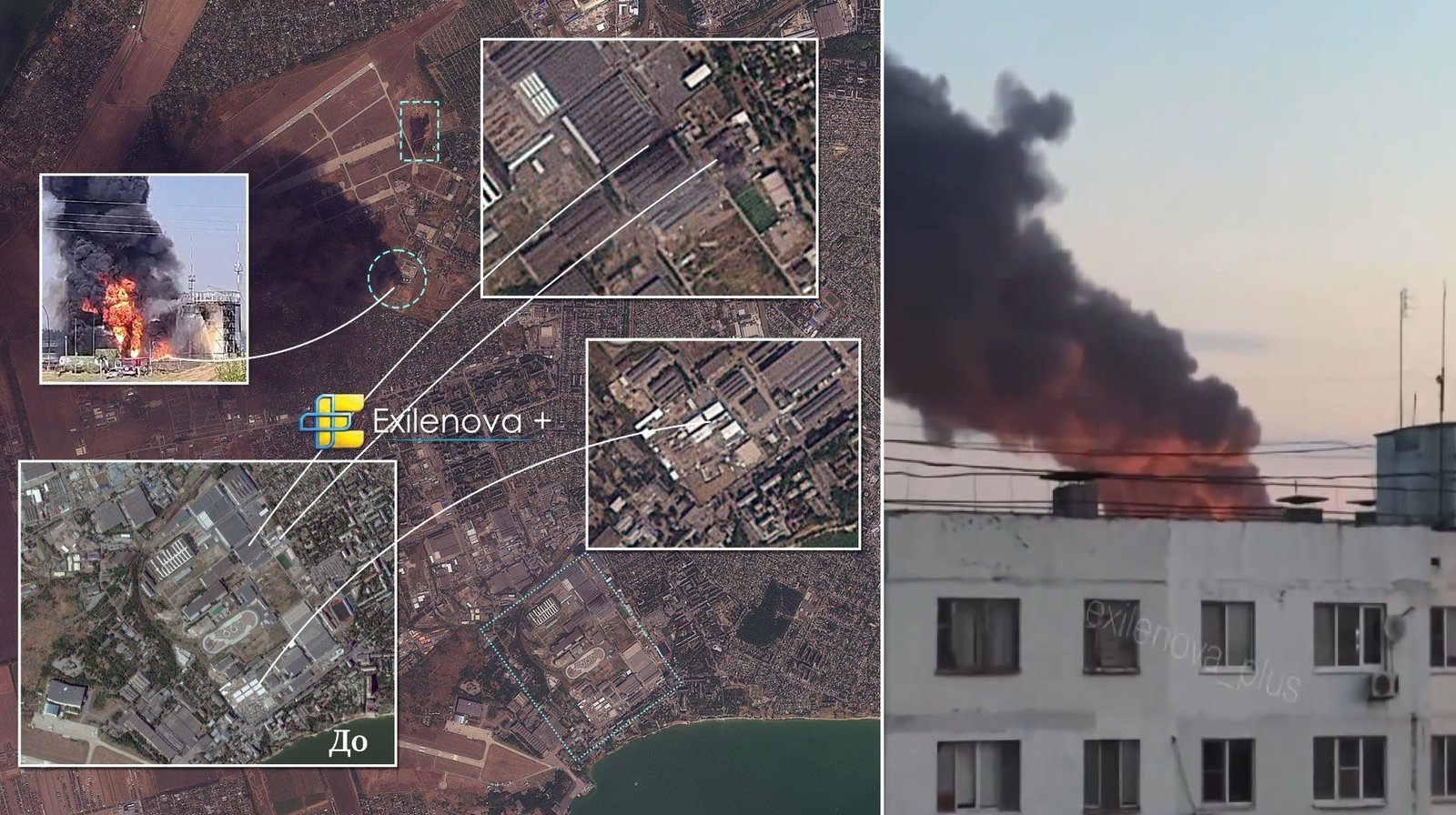 Ukrainian Drones Strike Russian UAV Manufacturer and Chemical Plants in Taganrog and Tolyatti
-
 U.S. Officials Link Chinese Satellite Imagery to Iranian Strike That Killed Three American Soldiers in Jordan
-
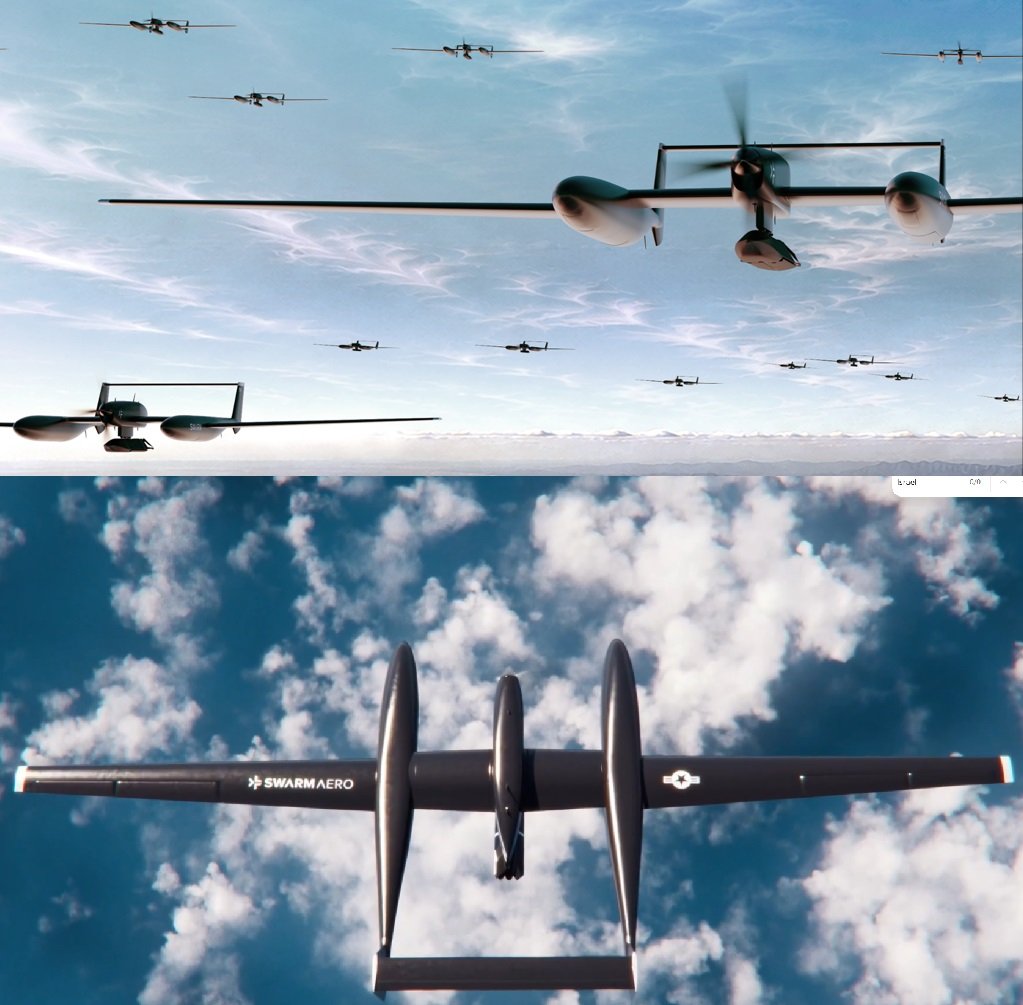 U.S. Firm Swarm Aero Unveils Gamera Group 5 UAS With 9,000-Nautical-Mile Range and Heavy Strike Payload
-
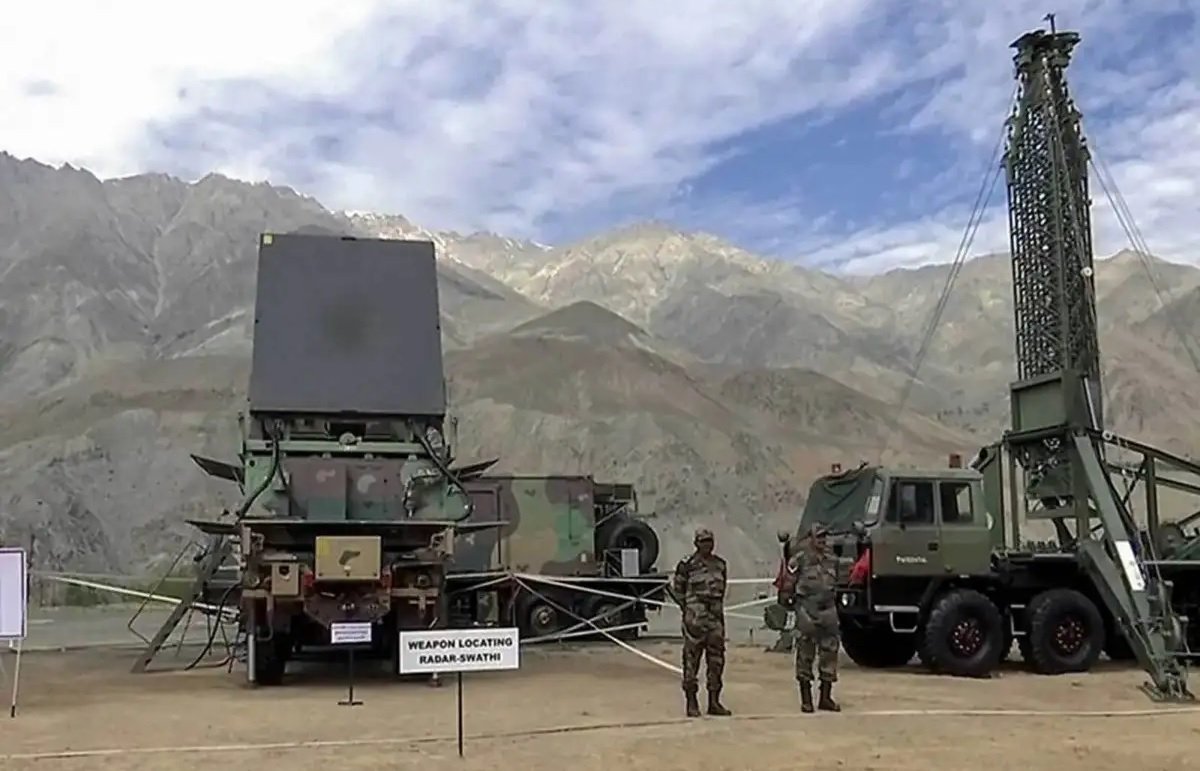 DRDO Demonstrates Indigenous 3.5×3 mm GaN Chip Delivering 30 Watts for Next-Generation Radars and Electronic Warfare
-
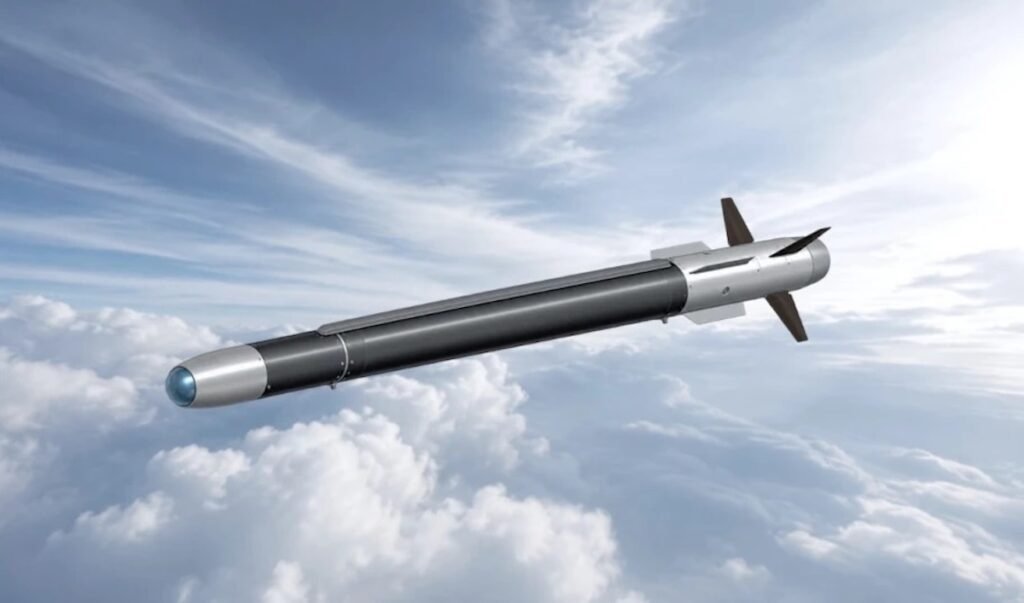 MBDA and Poland’s WITU Advance Low-Cost Supersonic Interceptor Against Swarm Attacks, Seeker Trials Successfully Completed