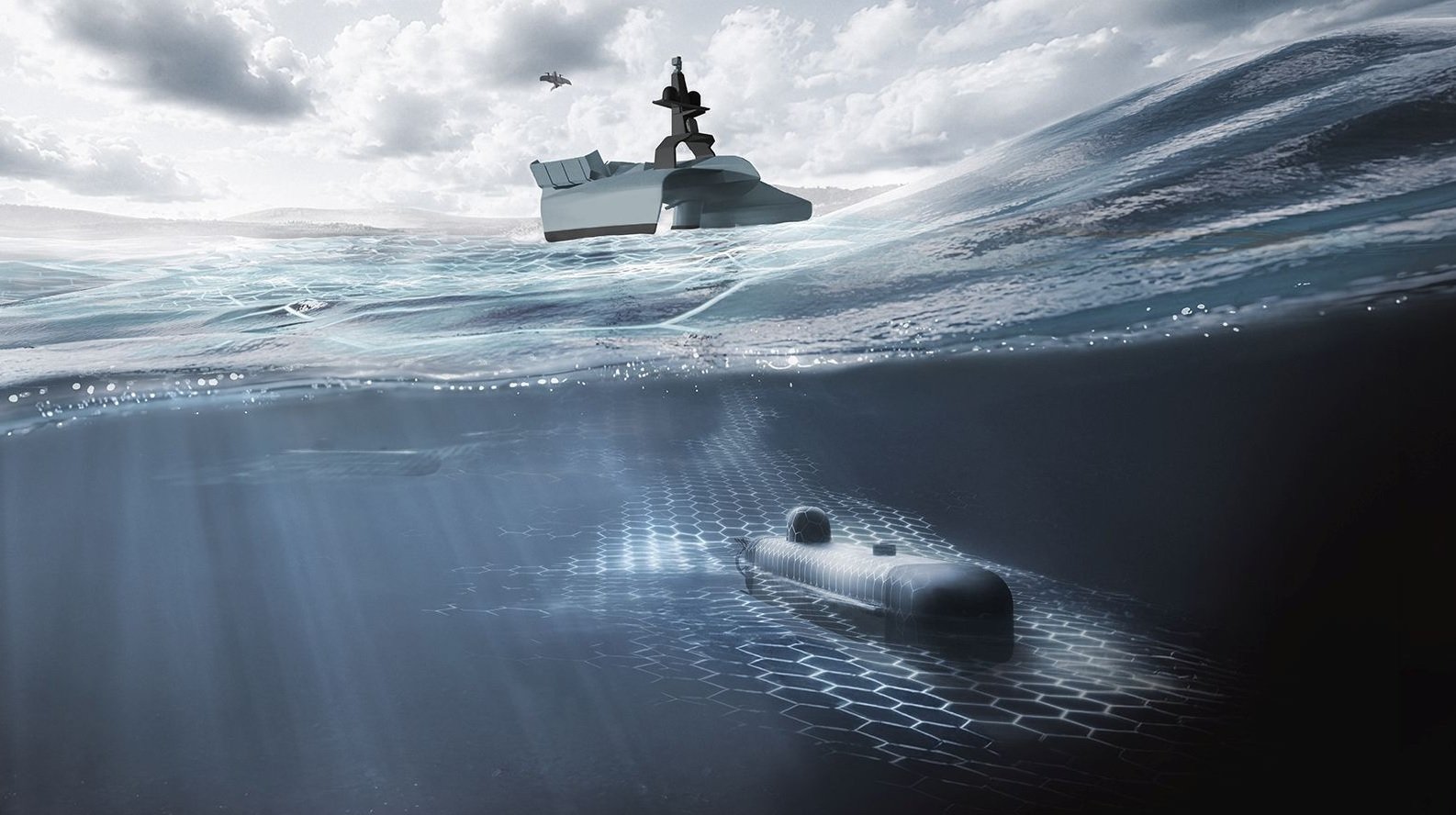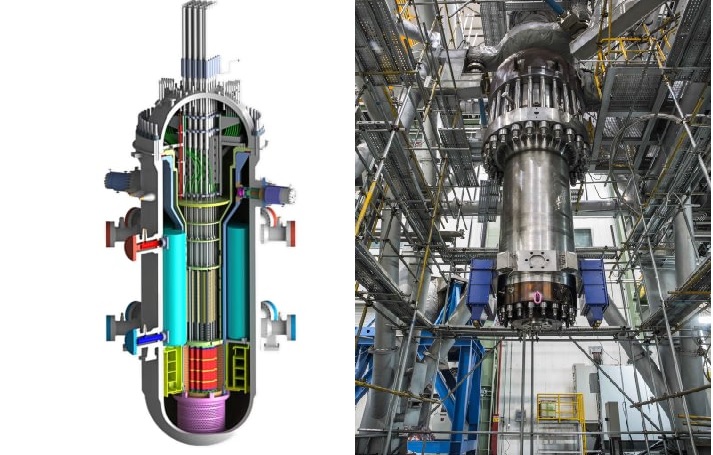
India is advancing a groundbreaking initiative to develop compact 200 MW nuclear reactors, designed not only for land-based industrial power generation but also for deployment on large commercial ships, marking a major milestone in the country’s nuclear and maritime innovation journey.
According to a senior official familiar with the project, scientists at the Bhabha Atomic Research Centre (BARC) are currently developing two types of Bharat Small Modular Reactors (BSMRs) — one rated at 55 MW and another at 200 MW. These reactors are designed to provide flexible, clean, and reliable energy to energy-intensive sectors, such as steel, cement, and chemical industries, as well as to merchant navy and cargo vessels.
“Nuclear power is generated by causing nuclear fission to create heat that leads to electricity production. You can put the reactor wherever you want, even on a ship,” said a senior official, highlighting the modular and mobile design philosophy behind the new reactors.
Compact, Safe, and Versatile: The Bharat Small Modular Reactor (BSMR)
The BSMR design represents the next phase in India’s civil nuclear program, emphasizing compactness, enhanced safety, and modular construction. Unlike traditional large-scale reactors that require extensive infrastructure and long build times, these modular units can be factory-built and transported to the deployment site, significantly reducing cost and construction timelines.
BARC officials note that the BSMRs feature passive safety systems, self-contained coolant loops, and fail-safe shutdown mechanisms, making them capable of operating safely even in the event of external disruptions. The design ensures that the reactors can be deployed in remote industrial zones, islands, or aboard large ocean-going vessels, offering strategic flexibility.
The potential for maritime deployment is particularly significant. While India already operates 83 MW reactors on its Arihant-class nuclear submarines, the new 200 MW units could power merchant ships, icebreakers, or special-purpose naval support vessels, enabling months of operation without refueling.
Expanding India’s Nuclear Energy Footprint
Currently, India operates 24 nuclear reactors across seven power stations, generating around 8.8 GW of electricity. However, under Prime Minister Narendra Modi’s Vision 2047, the government aims to scale this capacity to 100 GW — a tenfold increase — by mid-century.
To achieve this, the government is pursuing a multi-pronged approach:
-
Introducing Small Modular Reactors (SMRs) for decentralized and industrial power generation.
-
Encouraging private sector participation in nuclear power through legislative reforms.
-
Diversifying fuel sources, including exploring thorium-based fuel cycles, where India holds one of the world’s largest reserves.
Legal and Policy Framework: Opening the Nuclear Sector
To facilitate this transformation, the government plans to amend the Atomic Energy Act (AEA), 1962, to allow private players to participate in both construction and operation of nuclear power plants. This marks a major policy shift from the current state-monopoly model under the Nuclear Power Corporation of India Limited (NPCIL).
The proposed amendments also include provisions for:
-
Allowing private operators to source nuclear fuel from foreign suppliers under international safeguards.
-
Introducing a take-back clause for spent fuel, where supplier countries will retrieve used material to prevent proliferation risks.
-
Revising the Civil Liability for Nuclear Damage Act (CLND) to limit supplier liability, encouraging greater participation from foreign technology partners.
Officials indicate that these legal changes are in the final stages of inter-ministerial consultations before being introduced in Parliament.
Strategic and Economic Significance
The development of compact nuclear reactors aligns with India’s twin goals of energy security and strategic autonomy. As global energy demand rises, modular reactors can supply consistent, carbon-free power to industries and transport sectors that are otherwise dependent on fossil fuels.
For the maritime sector, nuclear propulsion offers a transformative capability — enabling long-range commercial shipping with zero emissions, drastically reducing operational costs and dependence on marine fuel.
Strategically, the BSMR program also strengthens India’s expertise in miniaturized nuclear propulsion, a technology crucial for next-generation submarines, unmanned undersea vehicles, and future aircraft carriers — though officials have avoided confirming any direct military applications.
India’s move to develop 55 MW and 200 MW compact nuclear reactors represents a technological leap that bridges the gap between civilian energy needs and strategic capability. With the Bharat Small Modular Reactor (BSMR) program, India joins a select group of nations — including the United States, Russia, and China — pursuing modular nuclear power for both industrial and maritime applications.
If successfully implemented, these reactors could revolutionize India’s energy architecture, turning nuclear power from a centralized utility into a flexible, mobile, and exportable solution — powering both factories and fleets in the decades to come.
——— End of Article ———