
India
New Delhi / Goa: India is set to significantly strengthen its maritime environmental protection and coastal security architecture with the commissioning of Samudra Pratap, the first indigenously designed and built Pollution Control Vessel (PCV) of the Indian Coast Guard. The vessel will be formally inducted into service on January 5, 2026, with Defence Minister Rajnath Singh presiding over the ceremony at Goa Shipyard Limited (GSL), officials confirmed on Sunday. Delivered to the Coast Guard in December 2025, Samudra Pratap is the largest and most advanced pollution control vessel ever operated by the ICG. The ship represents a major milestone for Aatmanirbhar Bharat, featuring over 60 per cent indigenous content, a figure expected to rise further as domestic systems mature. Built for Speed, Endurance and Scale Measuring 114.5 metres in length and displacing 4,200 tonnes, Samudra Pratap has been engineered for sustained operations across India’s vast maritime domain. The vessel can achieve speeds of more than 22 knots and boasts an operational endurance of 6,000 nautical miles, enabling long-range deployment deep into the Exclusive Economic Zone (EEZ) and beyond coastal waters. Its size and endurance allow the ship to remain on station for extended periods during environmental emergencies, oil spill containment missions, or maritime safety operations, a capability India has historically lacked at scale. How Samudra Pratap Controls Marine Pollution At the core of Samudra Pratap’s mission is marine pollution response and mitigation. The vessel is equipped with advanced oil spill response systems capable of detecting, containing, and recovering hydrocarbons from the sea surface. Its oil fingerprinting machine allows authorities to scientifically identify the source of oil spills, a critical tool for enforcing international pollution laws and holding polluters accountable. The ship carries gyro-stabilised stand-off active chemical detectors, enabling real-time identification of hazardous chemicals from a safe distance. This capability is particularly crucial during industrial accidents, tanker mishaps, or chemical discharges along busy shipping lanes. In addition, Samudra Pratap can deploy specialised booms and recovery equipment to isolate oil slicks, prevent shoreline contamination, and support coordinated clean-up operations alongside other national agencies. Firefighting, Law Enforcement and Search & Rescue Beyond pollution control, Samudra Pratap is designed as a multi-role maritime asset. The vessel features a high-capacity external firefighting system, allowing it to combat fires aboard ships, offshore installations, or port infrastructure. This system significantly enhances India’s ability to respond to maritime disasters involving fuel or hazardous cargo. For maritime law enforcement and security, the vessel is armed with a 30mm CRN-91 gun and two 12.7mm stabilised remote-controlled guns, all integrated with modern fire control systems. These provide precision engagement capability while ensuring crew safety during high-risk operations. The ship also supports search and rescue (SAR) missions, carrying sea boats and pollution response (PR) boats with dedicated davits, enabling rapid deployment during emergencies involving distressed vessels or environmental incidents. Advanced Indigenous Technology Suite Samudra Pratap incorporates a range of indigenously developed systems, including an Integrated Bridge System, Integrated Platform Management System, and Automated Power Management System. The inclusion of a shaft generator improves fuel efficiency and reduces emissions during cruising operations, aligning operational capability with environmental responsibility. These systems allow centralized monitoring of propulsion, power, navigation, and safety functions, reducing crew workload and improving operational reliability during complex missions. Strategic Significance The commissioning of Samudra Pratap marks a decisive upgrade in India’s maritime pollution response capabilities at a time of rising commercial traffic, offshore energy activity, and environmental risk in the Indian Ocean Region. Officials said the vessel will play a critical role in enforcing marine pollution control regulations, safeguarding sea lanes, and reinforcing India’s commitment to international maritime environmental standards. As the first of two Pollution Control Vessels planned for the Indian Coast Guard, Samudra Pratap sets a new benchmark for indigenous shipbuilding and underscores India’s growing ability to design and deploy complex, mission-critical maritime platforms at home.
Read More → Posted on 2026-01-04 13:07:35
India
Noida | India : Precision Electronics Ltd (PEL), a Noida-based defence and electronics manufacturer, has secured a ₹2.73 crore government contract for the supply of telescopic masts, tripods and associated accessories, reinforcing its position in India’s growing tactical infrastructure and defence manufacturing ecosystem. The order, awarded by a domestic government entity operating in the defence and aerospace domain, will be executed within the current financial year, according to company disclosures. While the end-user has not been officially named due to confidentiality clauses, the nature of the equipment indicates deployment across surveillance, communication and field-level tactical operations. Strengthening India’s Tactical Infrastructure Telescopic masts and tripods are critical battlefield enablers, supporting radars, electro-optical sensors, communication antennas, surveillance payloads and electronic warfare systems. These systems allow rapid deployment, mobility and operational flexibility across diverse terrains, from high-altitude regions to desert and coastal environments. PEL’s contract covers design-compliant manufacturing, testing and delivery of these systems, tailored to the technical specifications laid down by the government customer. Industry sources note that such equipment is increasingly being procured domestically as part of India’s drive to reduce dependence on imports in mission-critical defence hardware. Company Background and Capabilities Precision Electronics Ltd is an established Indian OEM specialising in telescopic masts, tripods, pedestals and power-electronics solutions, catering to the defence, aerospace, homeland security, telecom and industrial sectors. The company operates dedicated manufacturing facilities and is known for its ruggedised, field-deployable infrastructure systems used by multiple government and strategic agencies. The newly awarded order aligns with PEL’s core tactical infrastructure portfolio and reflects continued demand for indigenously developed support systems under the broader Make in India and Atmanirbhar Bharat initiatives. Market Response and Business Impact Following the disclosure of the contract, PEL’s shares witnessed a sharp upward movement, reflecting positive investor sentiment around defence-linked order inflows. While the ₹2.73 crore contract is modest in absolute value, analysts view it as strategically significant, as repeat government orders often lead to larger follow-on contracts and long-term supplier relationships. The order is expected to contribute to revenue visibility for the ongoing fiscal year while strengthening the company’s credentials in the defence procurement ecosystem. Outlook With India accelerating domestic defence procurement and expanding surveillance and communication infrastructure across its borders, demand for portable masts and tripod-based systems is expected to remain strong. For Precision Electronics, the latest contract underscores its growing role as a reliable domestic supplier of tactical infrastructure, positioning the company for additional opportunities in forthcoming defence and security tenders. As execution progresses over the coming months, further disclosures on delivery milestones and potential repeat orders will be closely tracked by industry observers and investors alike.
Read More → Posted on 2026-01-03 16:10:10
India
New Delhi: In a major step towards accelerating India’s indigenous stealth combat drone capability, the Aeronautical Development Establishment (ADE), a key laboratory under the Defence Research and Development Organisation (DRDO), has released a new Expression of Interest (EoI) for the selection of additional Development cum Production Partners (DcPPs) for the Remotely Piloted Strike Aircraft (RPSA) programme. The EoI formally invites Indian industry to participate in one of the country’s most strategically important aerospace projects, covering the entire lifecycle of the RPSA, from design engineering to manufacturing and testing, signalling DRDO’s intent to deepen private-sector involvement in next-generation combat systems. Full Lifecycle Responsibility for Industry As per the EoI issued by Aeronautical Development Establishment, the selected DcPPs will be entrusted with Engineering, Manufacturing, Assembly, Integration, Testing and Evaluation (EMI-T&E) of the RPSA platform. This represents a comprehensive responsibility structure, placing Indian vendors at the core of development, productionisation and long-term sustainment of the system. Defence officials note that the DcPP model goes well beyond build-to-print manufacturing, requiring partners to demonstrate advanced design competence, systems integration capability and quality assurance maturity consistent with cutting-edge military aviation standards. About the RPSA Programme The Remotely Piloted Strike Aircraft (RPSA) is India’s flagship stealth Unmanned Combat Aerial Vehicle (UCAV) programme. Conceived as a deep-strike, survivable and autonomous combat platform, the RPSA is designed to operate in highly contested airspace, carrying precision-guided munitions within an internal weapons bay to maintain a low radar signature. The programme is widely seen as a foundational element of India’s future manned–unmanned teaming (MUM-T) doctrine and is expected to complement frontline fighter fleets by undertaking high-risk strike and suppression missions without endangering pilots. Why DRDO Is Expanding the DcPP Base The decision to select additional DcPPs reflects the growing technical complexity and scale of the RPSA programme. Stealth UCAV development demands expertise in composite aerostructures, autonomous flight control systems, secure datalinks, propulsion integration and low-observable design, areas where DRDO is increasingly leveraging specialised industrial capabilities. By onboarding more qualified partners, DRDO aims to reduce programme risk, enable parallel development streams and shorten timelines between prototype validation and operational deployment. Eligibility and Industrial Opportunity The EoI is restricted to Indian vendors, including private defence companies, public sector units and industry-led consortia with proven experience in aerospace engineering, advanced manufacturing and defence certification processes. Industry analysts describe the RPSA DcPP opportunity as a rare entry point into the global stealth UCAV domain, offering participating companies long-term visibility in high-value defence production and potential downstream export prospects as demand for combat drones rises worldwide. Strategic Significance For India’s armed forces, the RPSA represents a critical force multiplier, enhancing deterrence and operational flexibility. For the domestic defence ecosystem, the latest DRDO EoI marks a clear shift towards industry-led execution of complex combat platforms, reinforcing the broader objectives of self-reliance, technological sovereignty and defence industrial depth. With the issuance of this EoI, DRDO has effectively opened the door for Indian industry to play a decisive role in shaping the future of India’s unmanned combat aviation.
Read More → Posted on 2026-01-03 15:56:06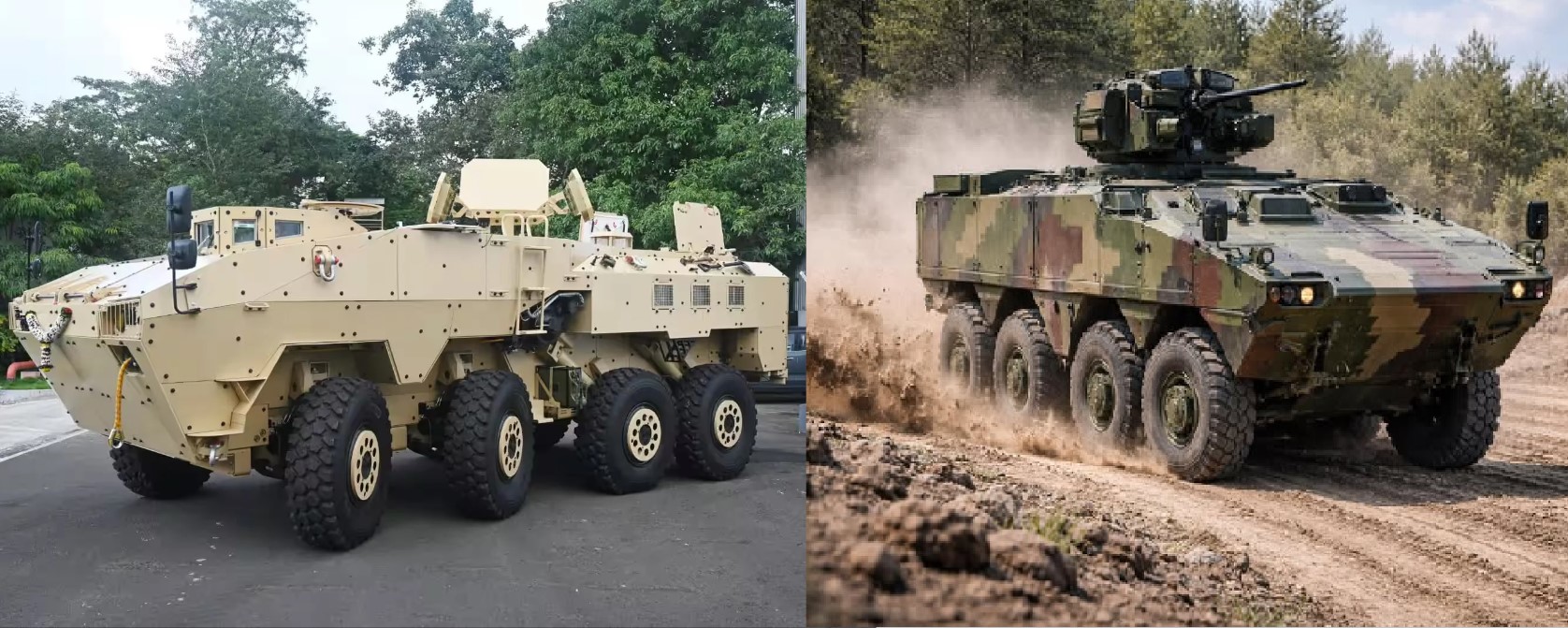
India
Athens — The Greek Army has formally initiated an evaluation of India’s Wheeled Armoured Platform (WhAP) 8×8 armored infantry fighting vehicle, signaling a notable shift in Athens’ approach to future armored force modernization. The move follows high-level engagements between the Hellenic Army General Staff and India’s Tata Advanced Systems, and marks the first known instance of a NATO country assessing the Indian-developed WhAP for potential frontline service. According to defense officials familiar with the process, the evaluation phase was triggered after a December 12, 2025 meeting in Athens, where senior Greek military planners and Tata Advanced Systems executives discussed the temporary deployment of the vehicle to Greece for operational trials. While no formal procurement request has yet been issued, the assessment is widely viewed as a critical step toward expanding Greece’s options for modern wheeled armored platforms amid evolving regional security pressures. Strategic Context Behind the Move Greece’s decision comes as the Hellenic Army seeks to gradually replace and supplement an aging fleet of legacy armored vehicles, many of which struggle to meet contemporary standards of mobility, protection, and digital integration. With operational responsibilities spanning mainland Greece, island formations in the Aegean Sea, and riverine environments such as the Evros region, Athens has placed renewed emphasis on high-mobility, amphibious-capable wheeled platforms that can deploy rapidly and operate across mixed terrain. In this context, the WhAP 8×8 has emerged as a platform aligned with Greece’s evolving operational requirements, particularly its ability to combine road speed, off-road endurance, and unassisted amphibious performance within a single modular design. An Indigenous Indian Platform with Global Ambitions The WhAP 8×8 is jointly developed by Defence Research and Development Organisation (DRDO) and Tata Advanced Systems, representing India’s first fully indigenous amphibious wheeled infantry fighting vehicle. The program originated under India’s long-running Future Infantry Combat Vehicle (FICV) initiative, launched in the late 2000s to reduce dependence on imported armored vehicles and establish a scalable, multi-role combat platform for future battlefields. Designed around a modular architecture, the WhAP integrates STANAG Level 4 ballistic protection, scalable add-on armor, and a monocoque hull optimized for survivability. The platform can be configured with a remote weapon station or a manned 30 mm turret, depending on mission requirements, and supports additional battlefield systems such as modern sensors and battlefield management interfaces. Mobility, Firepower, and Amphibious Capability At the core of the WhAP’s performance envelope is a 600 horsepower Cummins ISXe diesel engine, coupled with an automatic transmission. This powertrain enables the vehicle to achieve road speeds of up to 100 km/h, while maintaining sustained off-road mobility across rough terrain. The vehicle accommodates a three-member crew and up to eight fully equipped infantry soldiers, with an internal layout designed for rapid embarkation and dismount under combat conditions. A defining feature of the platform — and a key factor in Greek interest — is its fully amphibious capability. The WhAP employs twin water-jet propulsion systems, allowing it to conduct unassisted water crossings without external preparation, a capability particularly relevant for operations across Greece’s island chains and river crossings. Production Status and Maturity Although the WhAP has successfully completed extensive developmental and user trials in India, it has not yet entered full-rate mass production. As of early 2026, Tata Advanced Systems has completed a limited pre-series production run, with approximately 12 to 18 vehicles delivered for Indian Army evaluation and extended trials. Broader procurement under India’s FICV roadmap has been delayed due to evolving operational requirements and structural reforms within India’s defense acquisition framework. Despite these delays, the WhAP remains the most mature indigenous wheeled armored IFV in India’s defense industrial pipeline, positioning it as a viable option not only for domestic forces but also for international partners exploring alternatives to traditional Western platforms. Potential Implications for Greece–India Defense Cooperation Greek defense analysts note that the WhAP evaluation could open the door to deeper defense-industrial cooperation between Athens and New Delhi. Beyond outright procurement, discussions may eventually extend to licensed production, localized assembly, or technology transfer, aligning with Greece’s broader objective of revitalizing its domestic defense manufacturing base. For India, Greece’s decision to test the WhAP represents a strategic milestone, offering validation of its indigenous armored vehicle programs within a NATO operational framework. The outcome of the Hellenic Army’s trials is expected to be closely watched by both European defense planners and emerging defense exporters. As evaluations progress in the coming months, the WhAP 8×8’s performance under Greek operational conditions may well determine whether this Indian-designed platform transitions from a promising export candidate to a tangible component of NATO-aligned armored forces.
Read More → Posted on 2026-01-02 15:01:35
India
NIBE Ltd has revived and operationalised a major supply contract with the Indian Army, under the Ministry of Defence (MoD), for the manufacturing and supply of Ground Equipment, Accessories, ESP and Ammunition for the Universal Rocket Launcher System.The total contract value stands at ₹292.69 crore, inclusive of all taxes and duties, marking a significant addition to India’s ongoing rocket artillery modernisation drive. Key Capabilities Of The Universal Rocket Launcher System The Universal Rocket Launcher System supported under this contract is designed as a modular, multi-role platform capable of integrating multiple rocket types without extensive reconfiguration. According to available disclosures, the system supports long-range rocket variants with strike ranges of up to 150 km and 300 km, substantially enhancing the Indian Army’s deep-strike and area-denial capabilities. This flexibility allows the Army to deploy different classes of rockets from a common launcher, improving logistics efficiency, operational responsiveness, and battlefield adaptability across diverse terrain profiles. Scope Of Supply Under The ₹292.69-Crore Contract Under the revived agreement, NIBE Ltd will manufacture and deliver: Ground Equipment essential for launcher deployment, handling, and sustainment Accessories required for operational readiness and system integration ESP (Electronic Support / Electronic Systems Package) aligned with modern rocket-artillery requirements Ammunition-related support equipment for the Universal Rocket Launcher System The supplies are intended to ensure full operational availability of the launcher system across training, deployment, and combat scenarios. Execution Timeline And Performance Guarantees The contract is expected to be executed in phased tranches over a 12-month period, indicating a structured delivery schedule rather than a single bulk supply. As per standard defence procurement norms, the company is also required to submit a performance-cum-warranty bank guarantee amounting to 10% of the total contract value, to be furnished within 30 days of contract finalisation. Strategic Importance For Indian Army Artillery The revival of this contract aligns with the Indian Army’s shift toward longer-range, precision-enabled rocket artillery systems. With 150 km and 300 km class rockets, universal launcher architectures are increasingly viewed as force multipliers, enabling commanders to strike high-value targets deep inside adversary territory while reducing launcher vulnerability through rapid shoot-and-scoot tactics. The emphasis on indigenous manufacturing and domestic suppliers also supports the broader Atmanirbhar Bharat initiative, reducing reliance on imported support systems while strengthening local defence production capabilities. Boost To NIBE’s Defence Manufacturing Portfolio For NIBE Ltd, the ₹292.69-crore Indian Army order reinforces its growing footprint in rocket launcher support systems and associated defence equipment. The contract adds long-term visibility to the company’s defence order book and positions it as a key contributor to India’s next-generation rocket artillery ecosystem. As the Indian Army continues to expand its long-range firepower, such revived and execution-ready contracts underline the accelerating momentum behind modern, modular and domestically supported artillery systems.
Read More → Posted on 2026-01-02 13:32:45
India
New Delhi : India has approved the acquisition of around 1,000 SPICE-1000 precision guidance kits from Israel as part of a sweeping $8.7 billion (approximately ₹79,000 crore) defence procurement package aimed at strengthening the combat capabilities of the armed forces. The decision was taken by the Defence Acquisition Council (DAC), chaired by Defence Minister Rajnath Singh, which granted Acceptance of Necessity (AoN) for a wide range of critical military equipment for the Army, Navy and Air Force. The package spans air-launched weapons, sensors, communications systems and other force-multipliers, with the SPICE-1000 approval marking a significant boost to India’s deep-strike precision warfare capability. Transforming ‘Dumb’ Dombs into Smart Standoff Weapons The SPICE-1000—short for Smart, Precise Impact, Cost-Effective—is a precision guidance kit developed by Israeli defence firm Rafael Advanced Defense Systems. The kit converts standard 1,000-lb (≈450-kg) unguided bombs into long-range, all-weather, standoff glide weapons. Once released from a combat aircraft, the SPICE-1000 can strike targets at distances exceeding 100 kilometres, depending on launch altitude and flight profile. This standoff range allows Indian Air Force aircraft to engage high-value targets without entering heavily defended airspace, significantly reducing risk to pilots and platforms. Jam-resistant, Autonomous Precision A defining feature of the SPICE system is its multi-mode guidance architecture. The weapon combines inertial navigation and satellite guidance with an electro-optical scene-matching seeker, enabling it to autonomously recognise and lock onto targets in the terminal phase. This design ensures high accuracy even in GPS-denied or electronically jammed environments, a growing concern in modern warfare. Once launched, the weapon is fire-and-forget, requiring no further guidance from the aircraft. Mission planning data, including target imagery, can be uploaded prior to sortie, allowing flexible and precise engagement of fixed, hardened or high-value targets. Combat-proven Lineage for the Indian Air Force India is already familiar with the SPICE family. The Indian Air Force first used SPICE precision weapons during the Balakot airstrike in February 2019, when Mirage-2000 fighter jets employed the larger SPICE-2000 variant against terrorist infrastructure across the border. The operation established the system’s credibility in real combat conditions. The approval of the SPICE-1000 represents a logical expansion of this capability, offering similar accuracy with greater flexibility across a wider range of aircraft and mission profiles. Procurement Pathway And Strategic Context The DAC’s clearance is an approval-stage decision, not a final contract. The acquisition will now move into subsequent phases, including commercial negotiations and contract signing. The projected quantity—approximately 1,000 kits—suggests intent to build substantial war-reserve stocks rather than a limited niche capability. Strategically, the decision reinforces India’s emphasis on stand-off precision strike, particularly in scenarios involving dense air-defence networks and electronic warfare threats. It also highlights the continuing depth of India–Israel defence cooperation, with Israel remaining one of India’s most important suppliers of advanced air-launched munitions and sensor technologies. A Sharper Edge for India’s Air Power With this approval, India moves closer to fielding a larger inventory of long-range, jam-resistant precision weapons capable of striking deep and accurately while keeping pilots out of harm’s way. As contracts are finalised and deliveries follow, the SPICE-1000 is set to become a key element of the Indian Air Force’s evolving strike doctrine in the years ahead.
Read More → Posted on 2026-01-02 13:08:23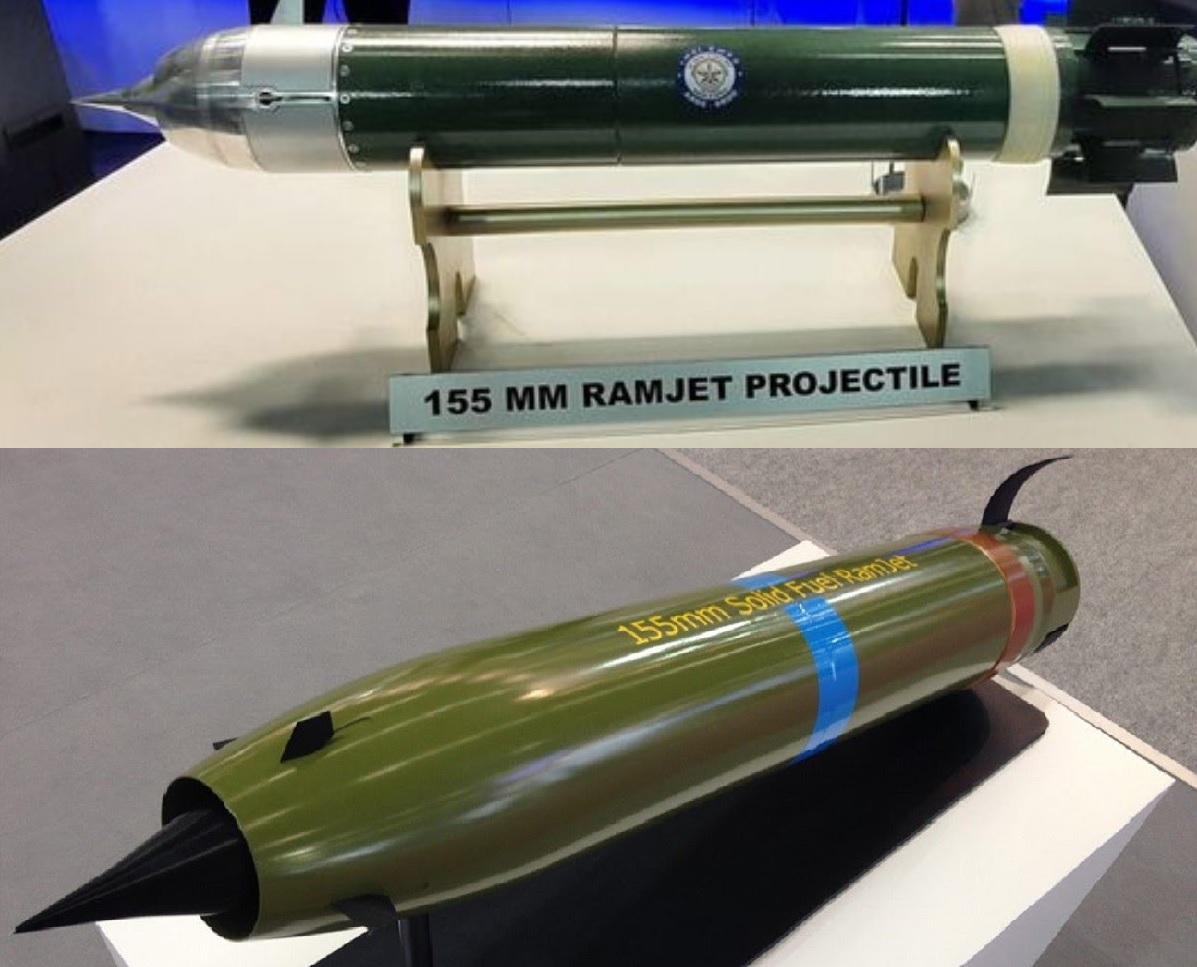
India
New Delhi : The Indian Army is on the cusp of a global breakthrough in artillery technology, with ramjet-powered 155 mm artillery shells emerging from developmental trials that could soon see India become the first military in the world to induct this advanced munition into service. The initiative underscores India’s drive for defence self-reliance and modernisation amid evolving security challenges. A Leap in Artillery Capability The ramjet-powered 155 mm shells, developed in collaboration with Indian Institute of Technology Madras (IIT Madras) under the aegis of the Army Technology Board, represent a significant enhancement over conventional artillery ammunition. Unlike standard shells that follow a purely ballistic path after muzzle exit, ramjet artillery continues to produce thrust during flight, enabling it to travel much farther while maintaining speed and impact lethality. In ramjet propulsion, the shell is fired from a gun to supersonic speeds (around Mach 2). Once moving at this velocity, ambient air is compressed through an inlet and mixed with onboard fuel, generating continuous thrust without the need for compressors or turbines — a technique traditionally used in missiles but now being adapted to gun-launched rounds. Successful Trials and Continued Refinement Developmental firing tests have been carried out at the Pokhran Field Firing Ranges in Rajasthan, where the ramjet-assisted shells demonstrated promising performance. While these initial tests have been successful, officials confirm that the system remains in the development and optimisation phase, with key technical challenges such as combustion stability, air intake efficiency and maintaining sustained thrust under extreme gun-launch conditions still being refined before user trials and formal induction. The design philosophy behind the shell emphasises retrofittability: the ramjet propulsion unit can be added to existing 155 mm shells, allowing integration with the Army’s current artillery catalogue without requiring a new calibre or dedicated platform. This makes it compatible with a range of guns such as the M777 ultra-light howitzer, Dhanush, ATAGS and the K9 Vajra-T systems already in service. Expected Performance and Variants While exact figures are still under validation, initial operational versions are expected to achieve ranges of approximately 60–80 km, a significant improvement over conventional 155 mm rounds. Future variants with advanced optimisation could exceed 100 km, giving Indian artillery a deep-strike capability previously associated only with rocket and missile systems. Strategic Significance in Modern Warfare Artillery remains a core component of battlefield firepower, with the 155 mm calibre serving as the backbone of medium artillery in modern armies. The induction of ramjet-powered shells will dramatically extend the reach of tube artillery, enabling longer-range strikes deep into adversary territory, quicker response times and enhanced counter-battery effectiveness. This is particularly relevant in the context of India’s strategic environment, where extended range and rapid precision fires are critical along contested frontiers with Pakistan and China. In contrast to rockets and guided missiles, these shells can be launched from standard field guns, offering speed of deployment, logistical simplicity and interoperability with existing assets. Combined with other modernisation efforts — including precision guidance kits and improved fire-control systems — ramjet artillery could reshape artillery tactics and doctrine in the decades ahead. Indigenous Innovation and Global Impact The project aligns with the Indian government’s Atmanirbharta (self-reliance) initiative, highlighting collaboration between academic institutions and the armed forces to push the boundaries of indigenous defence technology. If inducted, India will join a select group of nations globally developing extended-range artillery but stand alone in operationalising ramjet propulsion in 155 mm ammunition. Defense analysts suggest that the successful deployment of such rounds could redefine global artillery capabilities, influencing how major armies conceptualise medium-calibre firepower and challenging traditional distinctions between tube artillery and rocket/missile systems. As the Indian Army continues to refine this technology, the world watches a new chapter in artillery evolution — one that could see India at its forefront.
Read More → Posted on 2026-01-02 12:17:47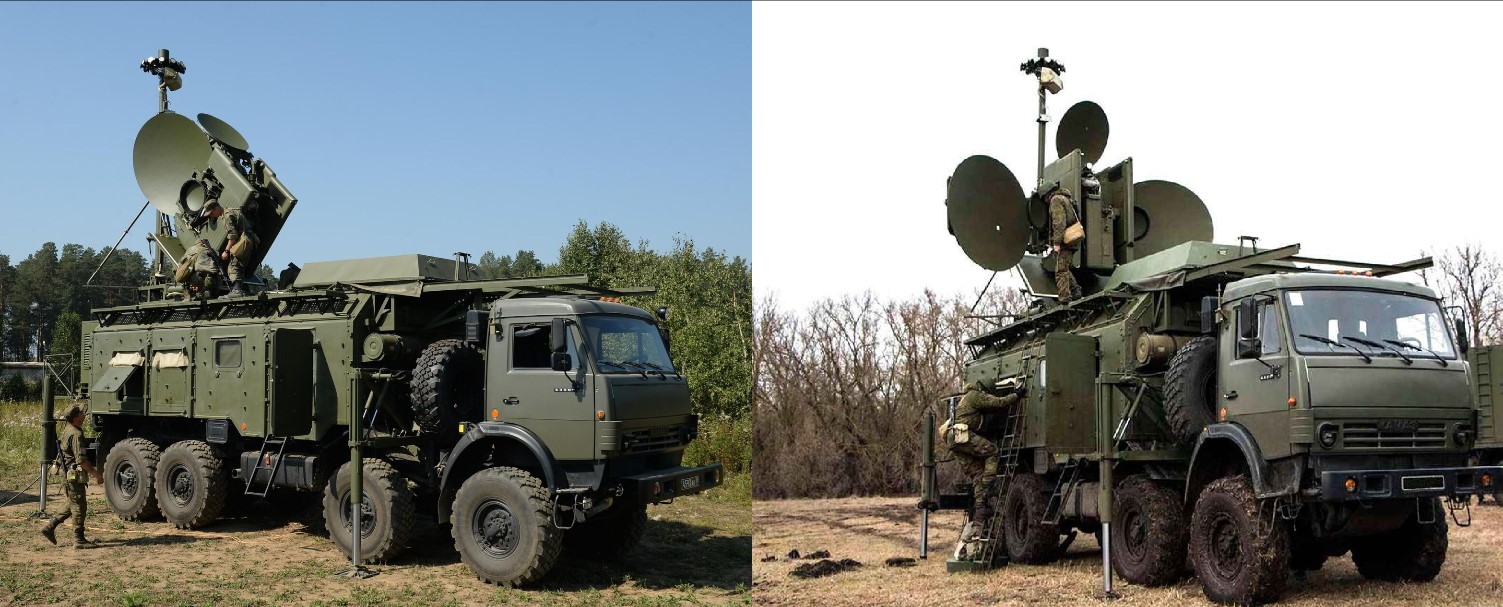
India
New Delhi/Moscow : Russia has offered India the 1L269 Krasukha-2 ground-based electronic warfare (EW) system, according to multiple Indian defence-media reports, in a proposal that would add a non-kinetic layer to India’s air-defence and counter-air toolkit by targeting the airborne radars that enable modern air operations. At the heart of the pitch is a capability aimed at blinding enemy Airborne Warning and Control Systems (AWACS) by jamming S-band radars—the frequency range commonly associated with wide-area airborne surveillance radars. Open-source references describe Krasukha-2 as an S-band jammer designed to suppress such radars at ranges of up to 250 km, potentially forcing high-value airborne sensors to operate farther away from contested airspace and reducing the quality of the air picture available to enemy commanders. A 250-km EW “Deny Zone,” Built for Mobility The Krasukha-2 is presented as a highly mobile EW asset rather than a fixed site. Technical descriptions available in open sources indicate an operating band of roughly 2.86–3.54 GHz (S-band) and a stated deployment time of about 20 minutes, supporting a “move, emit, relocate” employment model meant to complicate enemy targeting. That mobility is central to the system’s appeal for air-defence protection missions. By shifting positions and limiting exposure time, a jammer can reduce its vulnerability to counter-fires and anti-radiation weapons—while still contributing to the air-defence battle by degrading the enemy’s ability to detect, track, and cue fighters or standoff munitions. “Soft-Kill” Logic: Saving Interceptors by Confusing the Kill Chain Russian and independent open-source writeups describe Krasukha-2 as a “soft-kill” tool that can mislead radar-guided threats rather than physically destroying them. The concept is to disrupt or distort the radar picture used for detection and engagement, including creating false cues and confusing tracking—effects that can translate into phantom targets and misidentification at the cockpit and command-post level when conditions allow. In Indian discussions around the reported offer, this has been framed as a way to protect high-value assets—such as long-range surface-to-air missile sites—by electronically complicating the enemy’s reconnaissance and strike process, potentially reducing the number of expensive interceptors required in some scenarios. How It Could Fit Around S-400 Sites While open sources do not confirm any India-specific integration plan, the reported offer has been widely linked in Indian coverage to the idea of shielding strategic air-defence nodes—particularly S-400 batteries—by creating an electronic “shadow” that makes it harder for hostile platforms to build and maintain accurate tracks. This is consistent with how EW is commonly used in layered defence architectures: missiles, guns, deception, dispersion, and jamming working together rather than relying on interceptors alone When Was Krasukha-2 Inducted Into Russian Military Service? Open-source references broadly place Krasukha-2’s induction in the early 2010s, though different sources describe the timeline in slightly different ways. An IEEE Spectrum survey of Russian EW systems lists Krasukha-2 as first fielded in 2011, while other open references describe the Krasukha family as being in Russian service from 2014 onward—a difference that may reflect how “first fielded,” “accepted into service,” and “series deployment” are reported across sources and variants. Export Interest Has Been Signaled Before Russia’s state-linked defence-industry messaging has previously highlighted foreign interest in the Krasukha line. A 2015 report by TASS quoted a senior KRET executive saying there were foreign buyers interested in Krasukha-2 and Krasukha-4, underscoring that the system has been marketed internationally for years even as details remain tightly controlled. What Happens Next As of December 31, 2025, the reported proposal appears to be at the “offer” stage in Indian media coverage rather than an announced procurement, with no public contract value, quantity, or delivery timeline disclosed. Even so, the reported Krasukha-2 pitch highlights where the air-defence competition is heading: beyond missiles and radars alone, toward the electromagnetic spectrum as a battlefield where jamming, deception, and rapid mobility can shape outcomes—especially against the high-end sensors like AWACS that orchestrate long-range air power
Read More → Posted on 2025-12-31 14:50:19
India
New Delhi | Visakhapatnam : State-owned Bharat Dynamics Limited (BDL) has been selected as the L-1 (lowest bidder) for a Defence Research and Development Organisation (DRDO) project led by the Naval Science and Technological Laboratory (NSTL), Visakhapatnam, aimed at designing and developing an Aquatic-Aerial System—a hybrid platform that can operate both as an unmanned aerial vehicle (UAV) and an unmanned underwater vehicle (UUV). According to bid-related disclosures circulating in the defence ecosystem, BDL cleared the technical evaluation alongside AquaAirX (Aquaarix) Autonomous Systems, after which BDL emerged as L-1 with a winning bid of INR 69,15,272. A UAV-cum-UUV with “Seamless Transition” The Aquatic-Aerial System is being positioned as an unmanned platform with the unique ability to transition between flying in air and operating underwater, enabling mission profiles that could combine rapid aerial repositioning with covert underwater activity—an increasingly sought-after capability for modern maritime and coastal operations. Open tender documents linked to the NSTL procurement describe the requirement as the “Design, Development and supply of Aquatic-Aerial System” under a GeM Contract, indicating the programme is being executed through India’s government e-marketplace procurement route. Key Contract Terms: 14-Month Delivery and Milestone Payments The commercial terms specify a delivery period of 14 months from the date of the GeM Contract/Order, suggesting the first full system could be ready within just over a year of contract activation, subject to development and acceptance trials. Payments are structured across four milestones, with 20% released after completion of early phases, followed by 30%, 30%, and a final 20% after the concluding phase and acceptance—highlighting that the programme is being monitored through phased progress gates rather than a single end-stage payout. NSTL to Provide High-Value Sensors as “Free Cost Material” A notable element of the NSTL commercial package is that the lab is set to provide crucial payloads as Free Cost Material (FCM) for integration during development. The listed items include an Imaging SONAR-FLS (Forward Looking Sonar), Side Scan SONAR, a Doppler Velocity Logger (DVL), and an Acoustic Modem, with the document indicating an aggregate FCM value of Rs. 90,00,000. This approach signals NSTL’s intent to ensure the prototype is validated with serious underwater navigation and sensing hardware, while pushing the industry partner to focus on vehicle design, integration, controls, and the multi-medium transition challenge. Warranty, Downtime Cap, and Performance Security The contract package also builds in sustainment obligations. It specifies a 12-month warranty from final acceptance, with a maximum downtime cap of 15 days during the warranty window, and one additional year of product support after warranty expiry. For performance security, the seller is required to furnish an ePBG (bank guarantee) of 5% of the contract value, valid until 60 days beyond completion of contractual obligations including warranty—standard practice for sensitive defence deliveries. Why BDL and NSTL Pairing Matters NSTL is DRDO’s key naval lab for underwater systems and associated technologies, while BDL has an established production footprint across missiles and underwater weapons. BDL’s own corporate profile notes that it manufactures underwater weapons developed with DRDO support, including systems originating from NSTL—making the pairing operationally familiar for both sides. The selection also comes as India accelerates efforts around autonomy in the maritime domain, where DRDO’s NSTL has been active in multiple underwater technology streams in parallel, reflecting a broader push toward indigenous unmanned systems for surveillance and security. What Comes Next With BDL now positioned to collaborate with NSTL/DRDO on the design and development cycle, the next milestones will likely revolve around platform architecture finalisation, systems integration with NSTL-supplied sensors, and controlled demonstrations of the most difficult requirement: reliable air-to-water and water-to-air transition while maintaining command, control, and mission continuity.
Read More → Posted on 2025-12-31 13:48:05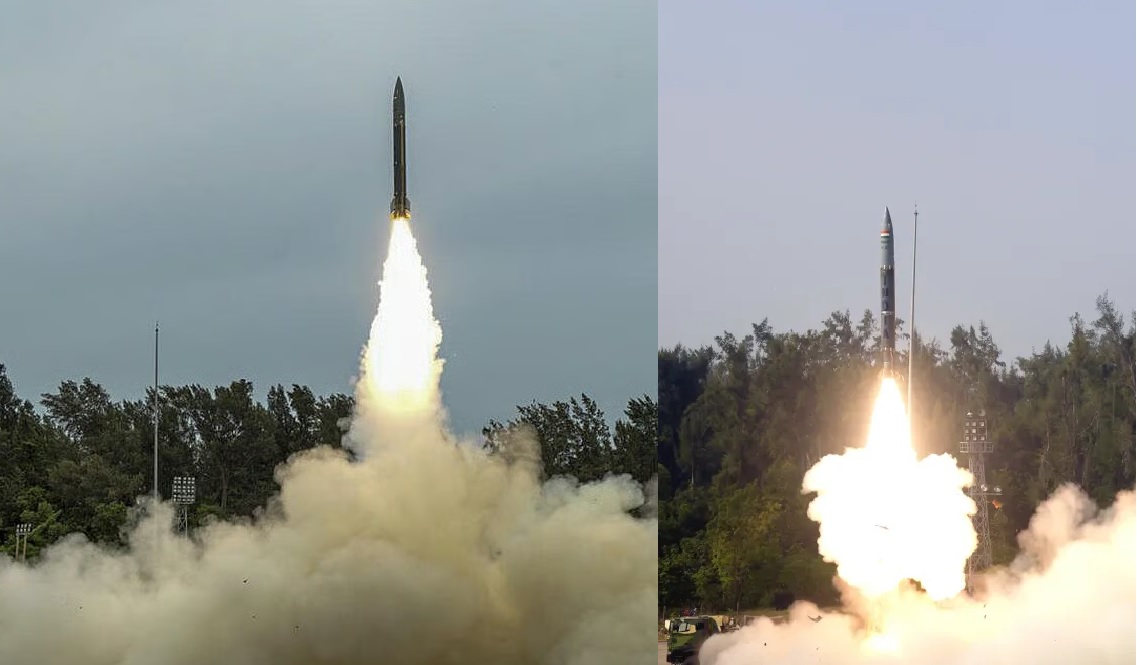
India
Chandipur (Odisha): India on Tuesday successfully carried out a salvo launch of two Pralay surface-to-surface missiles in quick succession from the same launcher at the Integrated Test Range (ITR), Chandipur, underscoring the growing maturity of the country’s conventional strike missile capabilities. The test was conducted by the Defence Research and Development Organisation (DRDO) as part of User Evaluation Trials, a critical phase preceding operational induction. According to officials, both missiles were launched in rapid sequence from a road-mobile, canisterised launcher and precisely followed their intended trajectories, successfully meeting all mission objectives. The salvo firing validated not only the missile’s performance but also the reliability of the launcher, command systems and launch crew procedures under realistic operational conditions. Designed for Rapid Conventional Strike The Pralay missile is an indigenously developed, solid-propellant, quasi-ballistic missile with a range between 150 km and 500 km. It has been specifically designed for rapid conventional deep-strike missions, enabling Indian forces to neutralise critical enemy assets without crossing the nuclear threshold. Pralay’s quasi-ballistic trajectory and high manoeuvrability make it difficult to intercept, while its circular error probable (CEP) of less than 10 metres places it among the most accurate missiles in its class. The system is capable of engaging time-sensitive and high-value targets, including enemy air bases, command and control centres, logistics hubs and missile infrastructure, particularly across India’s northern and western fronts. Advanced Guidance and Flexible Warhead Options The missile employs state-of-the-art guidance and navigation systems, combining inertial navigation with advanced correction mechanisms to maintain precision throughout its flight. Designed with operational flexibility in mind, Pralay can carry multiple types of conventional warheads, allowing it to be tailored for different target sets such as hardened structures, area targets or infrastructure nodes. Its road-mobile and canisterised configuration significantly enhances survivability, enabling quick deployment, shoot-and-scoot operations and ease of transportation across varied terrain. A Truly Indigenous Programme The Pralay missile has been developed by Research Centre Imarat (RCI), Hyderabad, in collaboration with several DRDO laboratories, including the Defence Research and Development Laboratory, Advanced Systems Laboratory, Armament Research and Development Establishment, High Energy Materials Research Laboratory, Defence Metallurgical Research Laboratory, Terminal Ballistics Research Laboratory, Research & Development Establishment (Engineers), and the Integrated Test Range. The missile’s development-cum-production partners, Bharat Dynamics Limited (BDL) and Bharat Electronics Limited (BEL), integrated the weapon system for the present trials. Representatives from the Indian Army and the Indian Air Force, along with senior DRDO scientists and industry partners, witnessed the tests. Leadership Reactions and Induction Outlook Rajnath Singh, Raksha Mantri, congratulated DRDO, the Indian Army, the Indian Air Force, defence public sector undertakings and industry partners on the successful launches, stating that the salvo firing in quick succession establishes the reliability and operational readiness of the Pralay missile system. Secretary, Department of Defence R&D and Chairman DRDO, Samir V Kamat, described the achievement as a clear indicator of imminent induction, noting that the successful user evaluation trials demonstrate the system’s readiness for deployment with the armed forces. The 2025 User Trials Track Pralay’s user evaluation campaign has included two consecutive flight-tests earlier in July 2025 from Dr APJ Abdul Kalam Island, aimed at validating minimum and maximum range performance, with the Ministry stating the missiles achieved “pin-point accuracy” and all subsystems performed as expected. The December 31, 2025 event builds on that track by demonstrating rapid-fire operational handling from a single launcher—an important step for field deployment concepts. Strategic Significance With the successful salvo launch from a single launcher, Pralay strengthens India’s conventional deterrence posture, filling a critical capability gap between long-range artillery and strategic missile systems. As induction draws closer, the missile is expected to become a key pillar of India’s precision strike arsenal, providing commanders with a fast, accurate and survivable option for battlefield and theatre-level operations.
Read More → Posted on 2025-12-31 13:15:51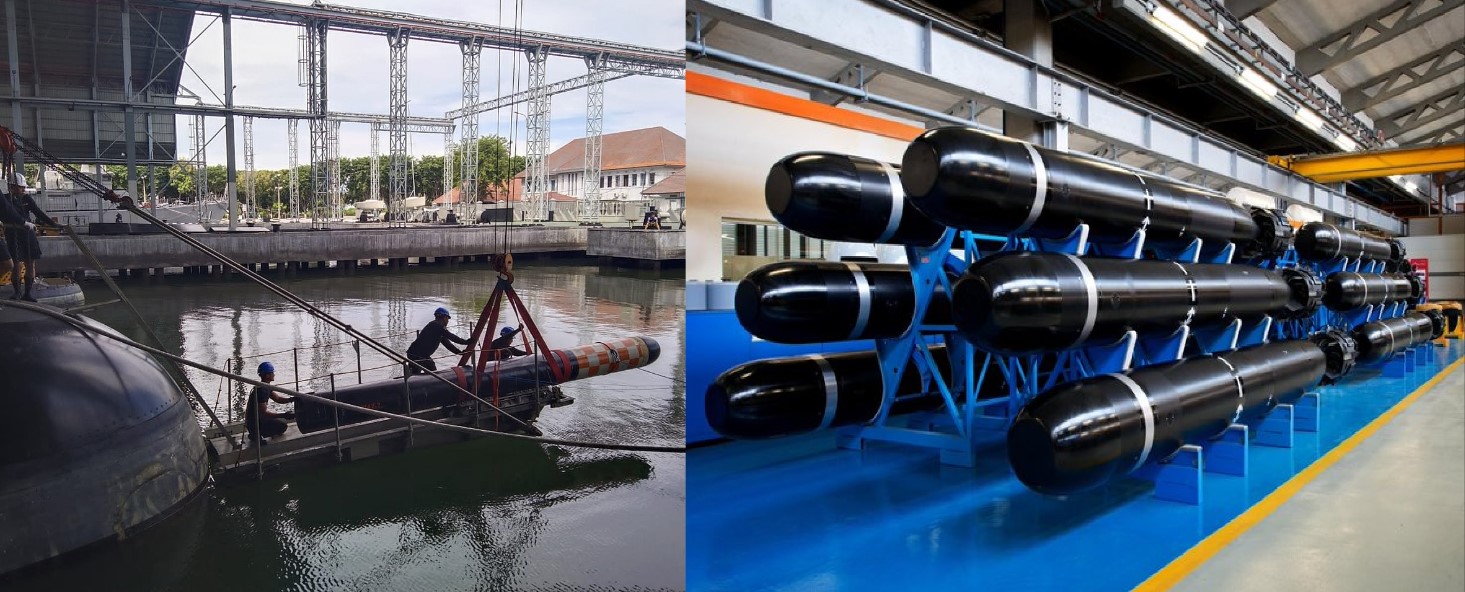
India
New Delhi : India’s Ministry of Defence (MoD) on Tuesday signed a ₹1,896 crore (approximately $210 million) contract with WASS Submarine Systems S.R.L., Italy, for the procurement and integration of 48 Heavy Weight Torpedoes (HWTs) for the Indian Navy’s Kalvari-class (Project-75 / P-75) submarines, a move aimed at significantly sharpening the underwater combat punch of the Navy’s frontline conventional submarine force. The agreement was inked at South Block, New Delhi, in the presence of Defence Secretary Rajesh Kumar Singh, with the MoD stating that the acquisition will enhance the combat capability of the Navy’s six Kalvari-class submarines. What the Contract Covers According to the government release, the contract includes the procurement and full integration of 48 heavyweight torpedoes, along with associated equipment, for the Kalvari-class submarines—India’s Scorpène-derivative diesel-electric attack boats built at Mazagon Dock Shipbuilders Limited (MDL) in partnership with France’s Naval Group. The scope of the deal encompasses weapon integration with onboard combat systems, ensuring compatibility with the submarines’ fire-control, sensor and combat management architecture, thereby enabling full operational employment of the torpedoes. The MoD has placed the agreement within its broader capital procurement momentum for FY 2025–26, stating that it has signed capital acquisition contracts worth ₹1,82,492 crore for Armed Forces modernisation so far in the current financial year. Delivery Timeline: April 2028 to Early 2030 The MoD has outlined a clearly defined delivery schedule, with torpedo deliveries set to commence from April 2028 and conclude by early 2030. The induction will be carried out in a phased manner, aligned with submarine availability for installation, harbour trials, sea trials and final acceptance. This timeline is intended to allow smooth integration, crew familiarisation and operational validation across the entire Kalvari-class fleet. Why It Matters for Project-75 The Kalvari-class submarines—INS Kalvari, INS Khanderi, INS Karanj, INS Vela, INS Vagir and INS Vagsheer—represent the Indian Navy’s most modern conventional submarine line currently in service. These boats are tasked with sea-denial operations, anti-surface warfare (ASuW), anti-submarine warfare (ASW), intelligence gathering and surveillance in the Indian Ocean Region. Heavyweight torpedoes constitute a submarine’s primary close-in and beyond-visual-range kill weapon against both enemy surface combatants and submarines. The MoD’s decision therefore directly strengthens the Navy’s underwater lethality and deterrence, even as India continues to pursue long-term indigenous solutions and future upgrades for the class. About WASS and the Likely Torpedo Family WASS Submarine Systems is a specialised Italian firm focused on underwater weapons, torpedoes and countermeasure systems. The company is now controlled by Fincantieri, following the acquisition of the underwater armaments and systems business line from Leonardo and its consolidation into the WASS entity. While the MoD has described the acquisition generically as Heavy Weight Torpedoes, the widely reported contender for the Kalvari-class requirement has been the Black Shark heavyweight torpedo family. Publicly available material describes BLACK SHARK as a 21-inch (533-mm) heavyweight torpedo, featuring wire-guidance and acoustic self-homing. According to earlier media reports, the torpedo is assessed to offer a range of around 50 km, a top speed of about 50 knots, and a high-explosive warhead weighing roughly 350 kg, making it suitable for long-range, high-lethality submarine engagements. A Long-Running Gap-Closure Effort India’s effort to equip its Scorpène/Kalvari-class submarines with modern heavyweight torpedoes has been closely tracked for several years. During this period, the Indian Navy explored multiple pathways, including imports, interim arrangements, upgrades and indigenous integration, to maintain operational readiness. The latest contract is positioned as a critical gap-closure and combat capability enhancement for the fully operational six-boat Kalvari-class, ensuring that the submarines mature into full-spectrum, mission-ready underwater combat platforms over the coming decade.
Read More → Posted on 2025-12-30 17:14:21
India
New Delhi: In a significant boost to India’s indigenous small-arms capability and the Atmanirbhar Bharat defence manufacturing push, Bharat Forge Limited on Tuesday announced that the Ministry of Defence has awarded the company a ₹1,661.9 crore contract for the supply of 255,128 Close Quarter Battle (CQB) Carbines to the Indian Army. The contract, one of the largest domestic orders for infantry small arms in recent years, is scheduled to be executed over a five-year period, marking a decisive shift away from imports toward Indigenously Designed, Developed and Manufactured (IDDM) weapon systems. A Fully Indigenous Carbine for Modern Battlefields The 5.56×45 mm CQB Carbine has been jointly developed by the Armament Research & Development Establishment (ARDE)—a key laboratory under the Defence Research and Development Organisation (DRDO)—in partnership with Bharat Forge. Manufacturing will be undertaken by Bharat Forge and its wholly owned defence subsidiary, Kalyani Strategic Systems Limited (KSSL). Designed specifically to address the Indian Army’s operational requirements in urban warfare, counter-insurgency and counter-terrorism operations, the CQB Carbine fills a long-standing capability gap where standard assault rifles are often unwieldy due to their length and weight. Why the CQB Carbine Matters Modern combat scenarios increasingly demand weapons that offer high lethality, rapid handling and superior manoeuvrability in confined spaces such as buildings, narrow streets and dense terrain. The CQB Carbine’s compact form factor allows soldiers to react faster during room interventions, building clearances and close-range engagements, while still retaining adequate firepower. According to DRDO, the weapon weighs approximately 3.3 kilograms, has an effective firing range of up to 200 metres, and is chambered for the NATO-standard 5.56×45 mm calibre. Importantly, it is capable of firing both NATO-standard ammunition and INSAS rounds, providing critical logistical flexibility for frontline units. Industry–DRDO Synergy Highlighted Speaking earlier about the programme, Prateek Kishore, Scientist and Director General of Armament & Combat Engineering Systems (ACE) at DRDO, described the CQB Carbine as a model example of successful collaboration between India’s defence R&D ecosystem and private industry. “This weapon has been designed by DRDO’s ARDE, Pune, and is being manufactured by Bharat Forge,” Kishore had said. “It represents full synergy between the development agency and the manufacturing partner, which has directly contributed to the successful realisation of this system. It is an extremely proud moment not just for DRDO, but for the country as a whole.” Kishore added that the carbine is a highly potent weapon for infantry soldiers, noting that its ability to accommodate multiple ammunition types places it in a distinct operational category among contemporary small arms. Aligned with Atmanirbhar Bharat In an official statement, Bharat Forge underlined that the contract aligns closely with the government’s strategic objective of building a self-reliant defence industrial base. “Aligned with the Atmanirbhar Bharat mission, we—BFL and our defence subsidiary Kalyani Strategic Systems Limited—remain dedicated to equipping the Indian Armed Forces with ‘Made in India’ advanced defence equipment and platforms,” the company said. Strengthening Infantry Firepower Once inducted at scale, the 255,128 CQB Carbines are expected to significantly enhance the close-combat effectiveness of Indian Army infantry units, particularly those deployed in urban centres, counter-terror grids and high-risk internal security environments. The deal also reinforces confidence in India’s private defence manufacturers and signals a broader transformation in procurement policy—where large-volume, frontline weapons are increasingly sourced from domestic industry, reducing dependence on foreign suppliers while strengthening national security and industrial resilience.
Read More → Posted on 2025-12-30 16:03:04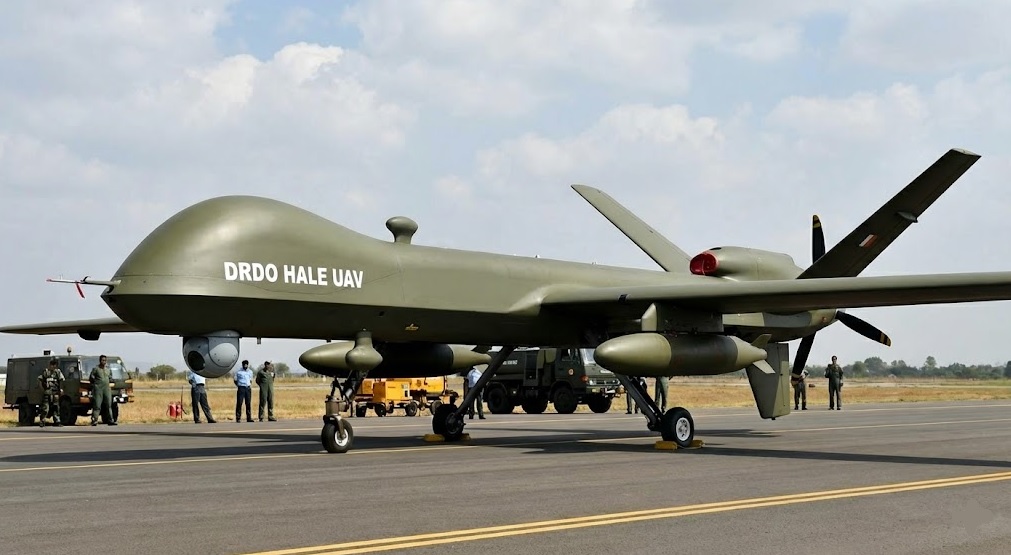
India
New Delhi: India has taken a significant step towards building a sovereign, high-end unmanned aerial capability with the Aeronautical Development Establishment (ADE) under the Defence Research and Development Organisation (DRDO) issuing an Expression of Interest (EoI) to identify an Indian Development-cum-Production Partner (DcPP) for its High Altitude Long Endurance – Remotely Piloted Aircraft System (HALE-RPAS) programme. The EoI formally invites Indian vendors and consortia to participate in the development and subsequent production of what is envisaged as a 6-ton class unmanned aerial vehicle, marking one of the most ambitious indigenous UAV programmes ever undertaken by India. The tender, identified as ADE/MMD/EOI-03/HALE-RPAS/25-26, was issued on December 24, 2025, with a bid submission deadline of January 28, 2026. A pre-bid meeting is scheduled for January 9, 2026, and the opening of bids is planned for January 29, 2026, at ADE, New Thippasandra Post, Bengaluru – 560075. The HALE-RPAS is designed as a long-endurance ISTAR platform—Intelligence, Surveillance, Target Acquisition and Reconnaissance—with an integrated strike capability, enabling both persistent monitoring and precision engagement roles. The programme specifies a maximum all-up weight of approximately 6 tonnes, placing the aircraft in the strategic HALE category. According to the technical outline released with the EoI, the UAV will feature a single turboprop engine mounted in a pusher configuration, a layout chosen to maximise aerodynamic efficiency, reduce sensor interference, and enhance endurance. The aircraft will have an approximate wingspan of 25 metres, optimised for high-aspect-ratio lift required for extended high-altitude operations. The airframe is planned to be predominantly composite, enabling reduced structural weight, improved fatigue life, and enhanced mission adaptability. The platform will incorporate advanced avionics, autonomous flight management systems, secure line-of-sight and beyond-line-of-sight data links, and full integration with a modern ground control system designed for sustained, multi-mission operations. Operationally, the HALE-RPAS is being designed for missions at around 40,000 feet altitude, enabling wide-area surveillance, persistent target tracking, and improved survivability. The payload architecture is expected to support electro-optical and infrared sensors, synthetic aperture radar, maritime surveillance radar, electronic intelligence suites, and air-to-ground precision weapons, giving the platform a true multi-role ISTAR-plus-strike capability. The programme roadmap clearly defines the Design and Development (D&D) phase, under which five flying aircraft and two complete ground systems will be developed. This phase will include ground testing, flight trials, sensor and weapon integration, and mission system validation. Airworthiness and quality assurance will be conducted under the oversight of Centre for Military Airworthiness and Certification (CEMILAC) and Directorate General of Aeronautical Quality Assurance (DGAQA), ensuring the HALE-RPAS meets Indian military aviation standards across structure, propulsion, avionics, and weapon systems. Upon successful completion of development, testing, and certification, the programme explicitly envisages procurement through the Development-cum-Production Partner (DcPP) route, allowing the selected Indian industry partner to transition the platform into series production, lifecycle support, and future upgrades. The issuance of the EoI comes at a time when India is simultaneously inducting imported HALE systems for immediate operational needs, while pushing indigenous development to ensure long-term strategic autonomy. In this context, the ADE-led HALE-RPAS programme is intended to establish domestic capability in large UAV design, high-altitude aerodynamics, turboprop propulsion integration, autonomous mission systems, and certification of complex unmanned aircraft. For Indian industry, the project represents a once-in-a-generation opportunity to participate in the complete lifecycle of a strategic-class unmanned aircraft, from development and flight testing to production and sustainment. For the armed forces, the HALE-RPAS promises a persistent, high-altitude surveillance and strike platform capable of operating across land and maritime domains, significantly strengthening India’s situational awareness and deterrence posture. With the EoI now issued and timelines clearly defined, the HALE-RPAS programme has moved from concept into a structured industrial phase, setting the foundation for India’s first indigenous 6-ton, 40,000-ft-class HALE unmanned combat-capable aerial system.
Read More → Posted on 2025-12-30 13:44:09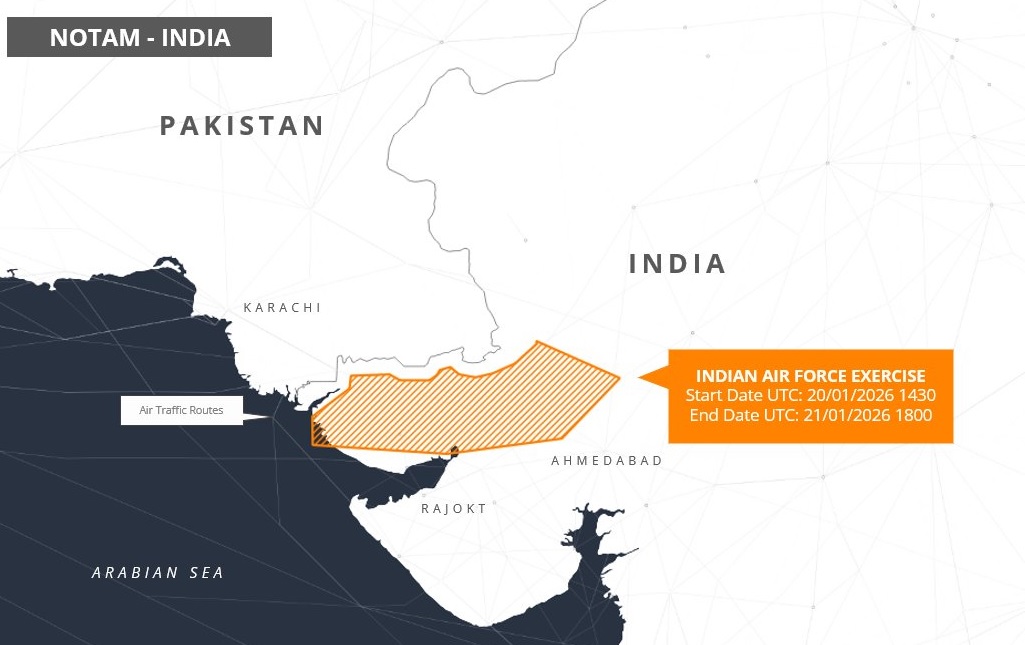
India
New Delhi : India has issued a Notice to Airmen (NOTAM) reserving a designated block of airspace for an upcoming Indian Air Force (IAF) exercise near the southern sector of the India–Pakistan border, according to aviation notifications circulated to civil air operators. The NOTAM will be in effect from 20 January to 21 January 2026, with the restricted airspace active from 14:30 UTC on 20 January until 18:00 UTC on 21 January. The notified zone covers parts of Gujarat and extends westward over the Arabian Sea, an area that lies close to established international and domestic civilian air traffic routes. The reserved airspace is located opposite Pakistan and includes regions south of Ahmedabad and near Rajkot, highlighting the strategic sensitivity of the exercise area. Aviation authorities are expected to reroute civilian flights during the NOTAM window to maintain safety while military flying operations are underway. No official details have been released regarding the scale or specific objectives of the exercise. However, airspace reservations of this size are typically associated with planned Indian Air Force training activities, which may involve fighter aircraft, support platforms, and coordinated air operations in both inland and coastal sectors. Such NOTAMs are a routine aviation safety measure and form part of standard international practice whenever military exercises are conducted in shared airspace. They are issued well in advance to ensure coordination with civil aviation authorities and airlines and do not, by themselves, indicate any escalation. The NOTAM is scheduled to expire on 21 January 2026, after which the reserved airspace will be reopened for normal civilian air traffic operations.
Read More → Posted on 2025-12-30 13:23:20
India
Chandipur (Odisha), December 29: India achieved a significant milestone in its artillery modernisation programme with the successful maiden flight test of the 120-kilometre Pinaka Long Range Guided Rocket (LRGR-120) on Monday. The test was conducted at the Integrated Test Range (ITR) in Chandipur town of Balasore district, Odisha, marking a decisive step forward in enhancing the Indian Army’s long-range precision strike capability. The LRGR-120 was flight-tested to its maximum range of 120 km, during which it executed all planned in-flight manoeuvres and hit the designated target with high accuracy, officials said. All range tracking instruments deployed along the trajectory successfully monitored the rocket throughout the flight, validating the performance of its guidance, navigation and control systems. Extended Range Without Launcher Modification A key highlight of the test is that the new 120-km guided rockets can be fired from existing Pinaka launchers, which are currently configured for rockets with ranges of around 40 km and over 75 km. This allows the Indian Army to significantly extend its strike reach without altering current launcher infrastructure, enabling faster induction and cost-effective upgrades across Pinaka regiments. The Pinaka LRGR-120 is designed to provide long-range, high-precision firepower against high-value targets, strengthening India’s conventional deterrence and battlefield dominance. The system is seen as a critical addition to India’s artillery arsenal under the Aatmanirbhar Bharat initiative. Indigenous Development Effort The Pinaka Multiple Launch Rocket System (MLRS) is an indigenously developed artillery system of the Defence Research and Development Organisation (DRDO), known for its rapid deployment and high-volume fire capability. The LRGR-120 rocket has been designed by the Armament Research and Development Establishment (ARDE) in association with the High Energy Materials Research Laboratory (HEMRL), with support from the Defence Research and Development Laboratory (DRDL) and the Research Centre Imarat (RCI). The flight trial was coordinated by ITR along with the Proof and Experimental Establishment (PXE). The rocket was launched from an in-service Pinaka launcher, demonstrating the system’s versatility and its ability to fire multiple variants of different ranges from the same platform. Army Reinforces Pinaka Regiments The Indian Army is simultaneously working to strengthen its existing Pinaka regiments, including the procurement of area-denial munitions to enhance operational flexibility. The induction of long-range guided rockets is expected to significantly improve precision strike, counter-battery operations and deep-fire capability in future conflicts. Defence Minister Hails Achievement Defence Minister Rajnath Singh congratulated DRDO and all stakeholders involved in the programme, stating that the successful development of long-range guided rockets would substantially enhance the combat capabilities of the Armed Forces. He described the achievement as a “game-changer” for India’s artillery modernisation. The trial was witnessed by Dr Samir V Kamat, Secretary, Department of Defence R&D and Chairman, DRDO, who commended the teams for meeting all mission objectives. Export Potential and Global Interest Pinaka has also emerged as a successful defence export platform. The system has already been inducted by Armenia, while several European countries, including France, have shown interest in acquiring the rocket artillery system. The successful test of the 120-km guided variant is expected to further boost its international prospects. Rs 79,000 Crore Defence Procurements Approved The LRGR-120 test coincided with a major policy decision in New Delhi. Earlier on Monday, the Defence Acquisition Council (DAC), chaired by Rajnath Singh, approved Acceptance of Necessity for defence procurements worth about ₹79,000 crore for the Army, Navy and Air Force. For the Army, approvals included Long Range Guided Rocket Ammunition for the Pinaka system, Loiter Munition Systems, Low Level Light Weight Radars and the upgraded Integrated Drone Detection and Interdiction System Mk-II. The Navy and Air Force also received clearances for a range of platforms and systems aimed at enhancing surveillance, precision strike and operational readiness. With the successful maiden test of the Pinaka LRGR-120, India has reinforced its push towards indigenous, long-range and precision-guided artillery systems, signalling a new phase in the modernisation of its conventional firepower.
Read More → Posted on 2025-12-29 15:36:08Search
Top Trending in 24 Hours
-
 Pentagon Inspector General Report Finds Iran War Caused U.S. Ammunition Shortfalls and Industrial Bottlenecks
-
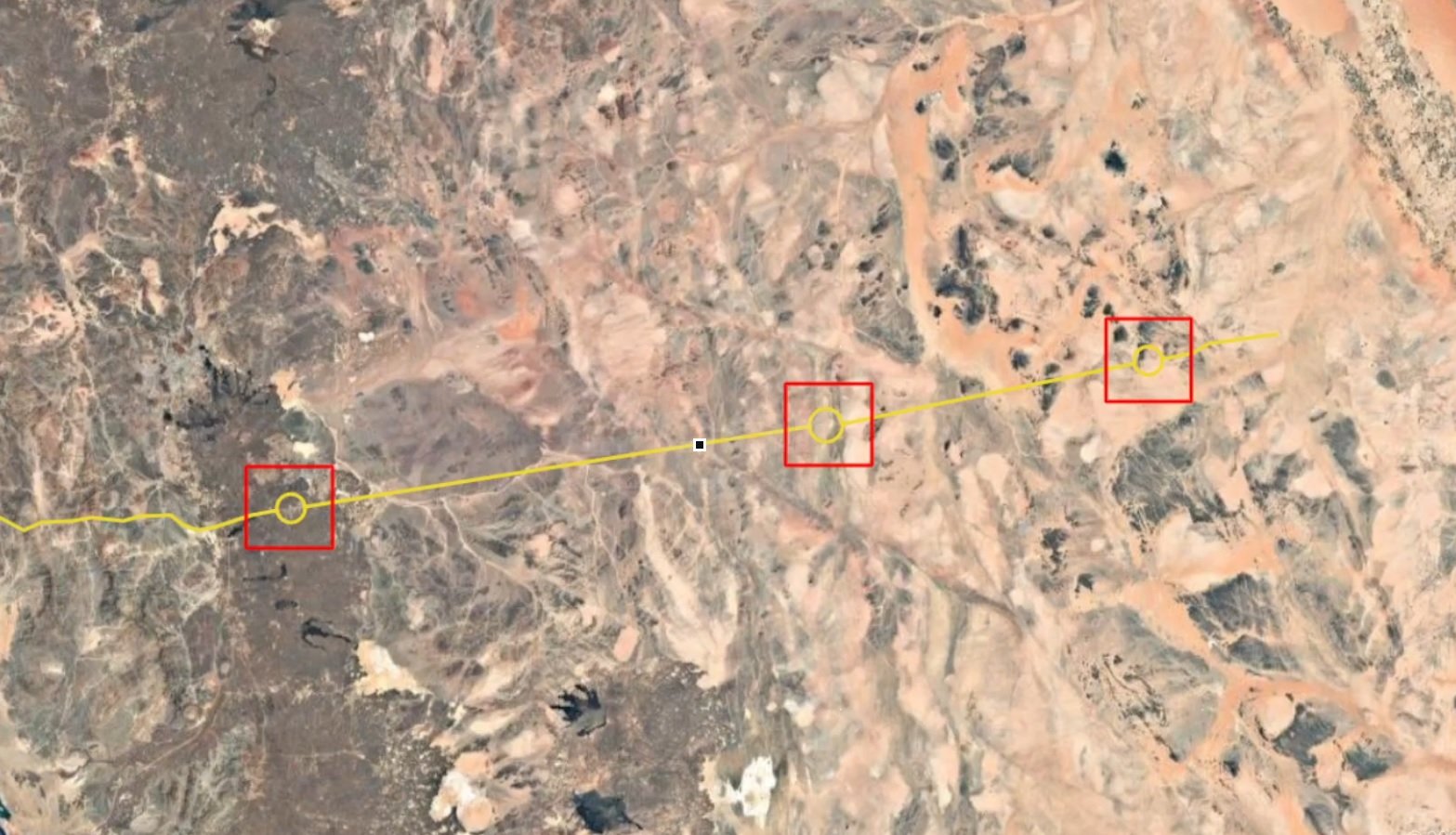 Satellite Imagery Shows Extensive Damage to Saudi Arabia’s East-West Oil Pipeline, Indicating More Than a Single Strike
-
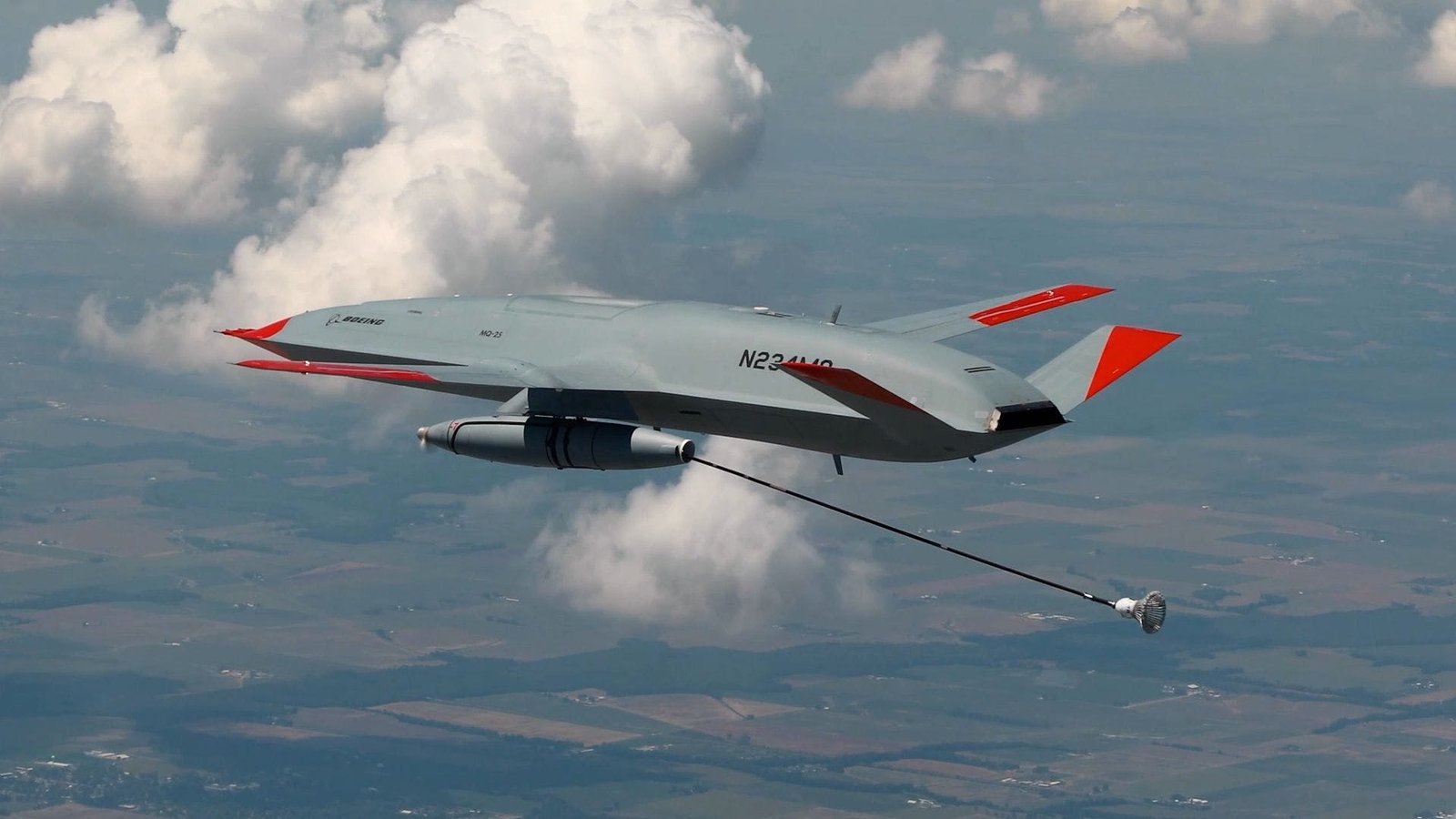 U.S. Navy Awards Boeing $562 Million Contract for First Production MQ-25A Stingray Tanker Drones
-
 Pentagon and Honeywell Complete Four-Hour Pacific Flight Using Quantum Magnetic Navigation Without GPS
-
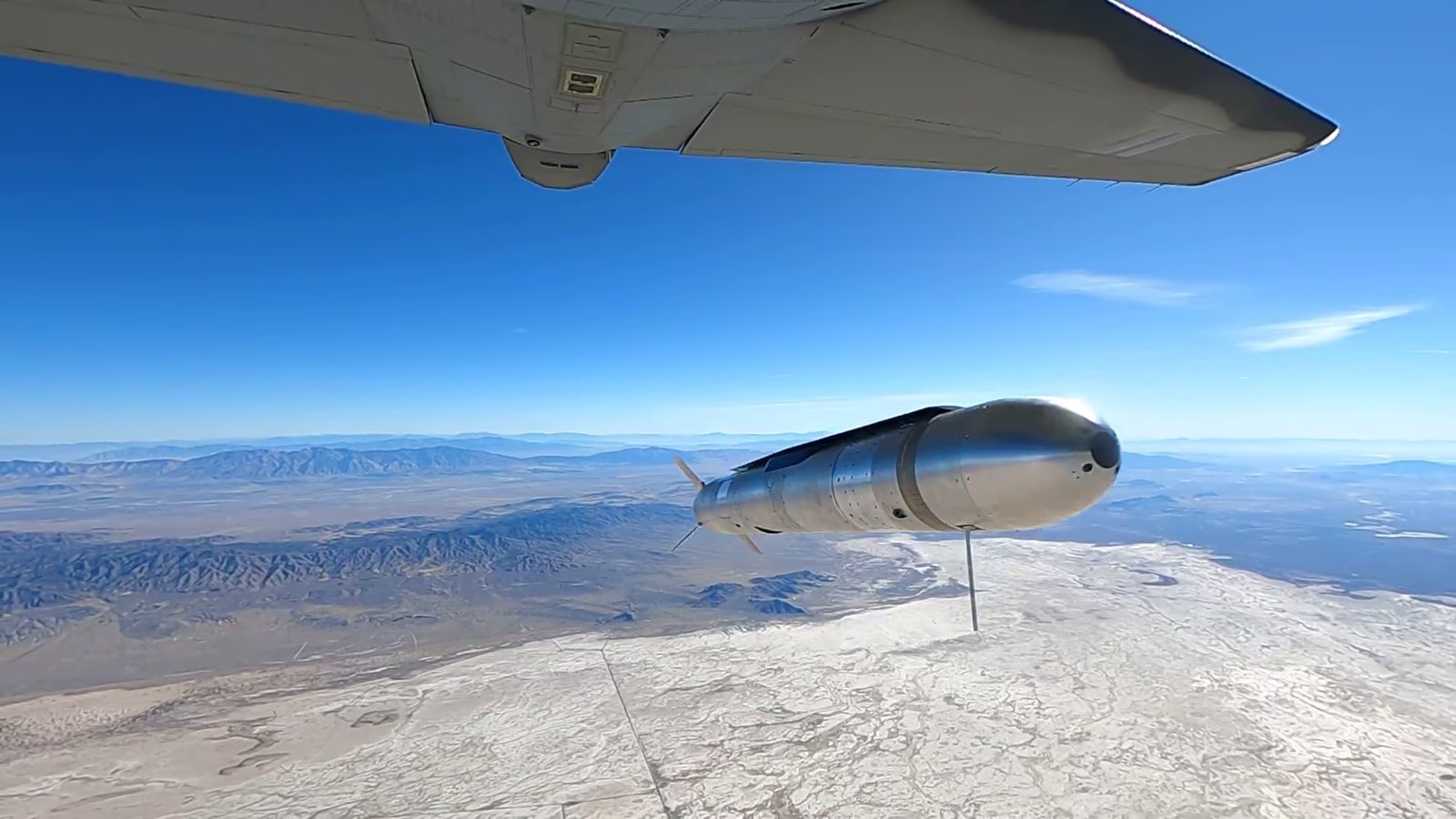 U.S. Air Force Special Operations Command Clears AGM-190A Havoc Spear for Wider Service After Combat Evaluation in Africa
-
 U.S. Confirms Deployment of On-Orbit Space Control Weapons for First Time
-
 China Builds New Shanghai Vessel to Serve as Mothership for Large Uncrewed Submarines
-
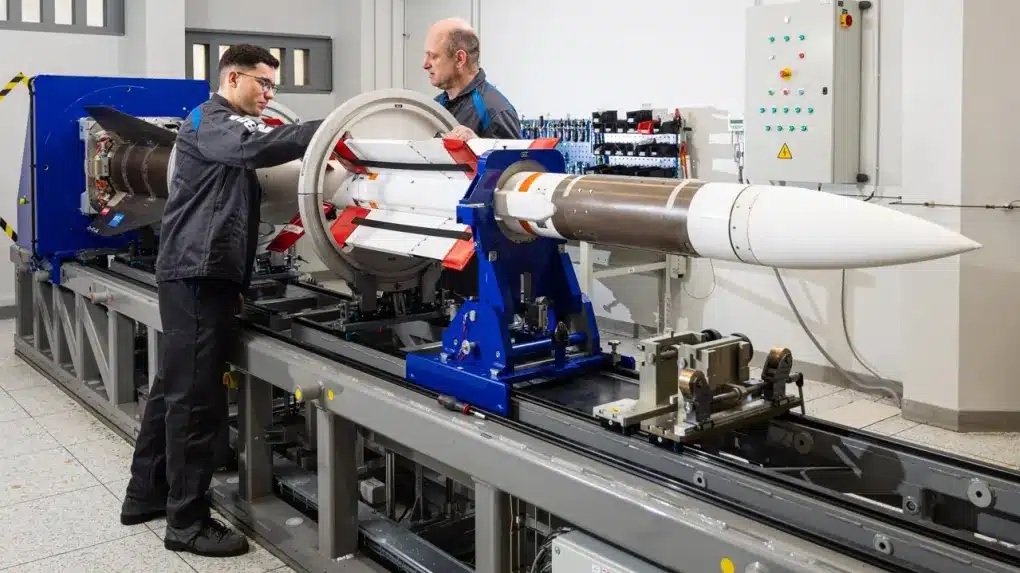 MBDA to Build New Missile Production Plant Near Orleans to Expand Missile Production
Top Trending in 4 Days
-
 Satellite Imagery Shows Heavy Damage to Saudi East–West Oil Pipeline Pumping Stations
-
 U.S. Air Force Awards Antares $161 Million to Develop Nuclear Reactor for Spacecraft
-
 Pentagon Awards BlueHalo Up to $99.8 Million Contract for Orbital Battlespace R&D Program
-
 Ukrainian Drones Strike Russian UAV Manufacturer and Chemical Plants in Taganrog and Tolyatti
-
 U.S. Officials Link Chinese Satellite Imagery to Iranian Strike That Killed Three American Soldiers in Jordan
-
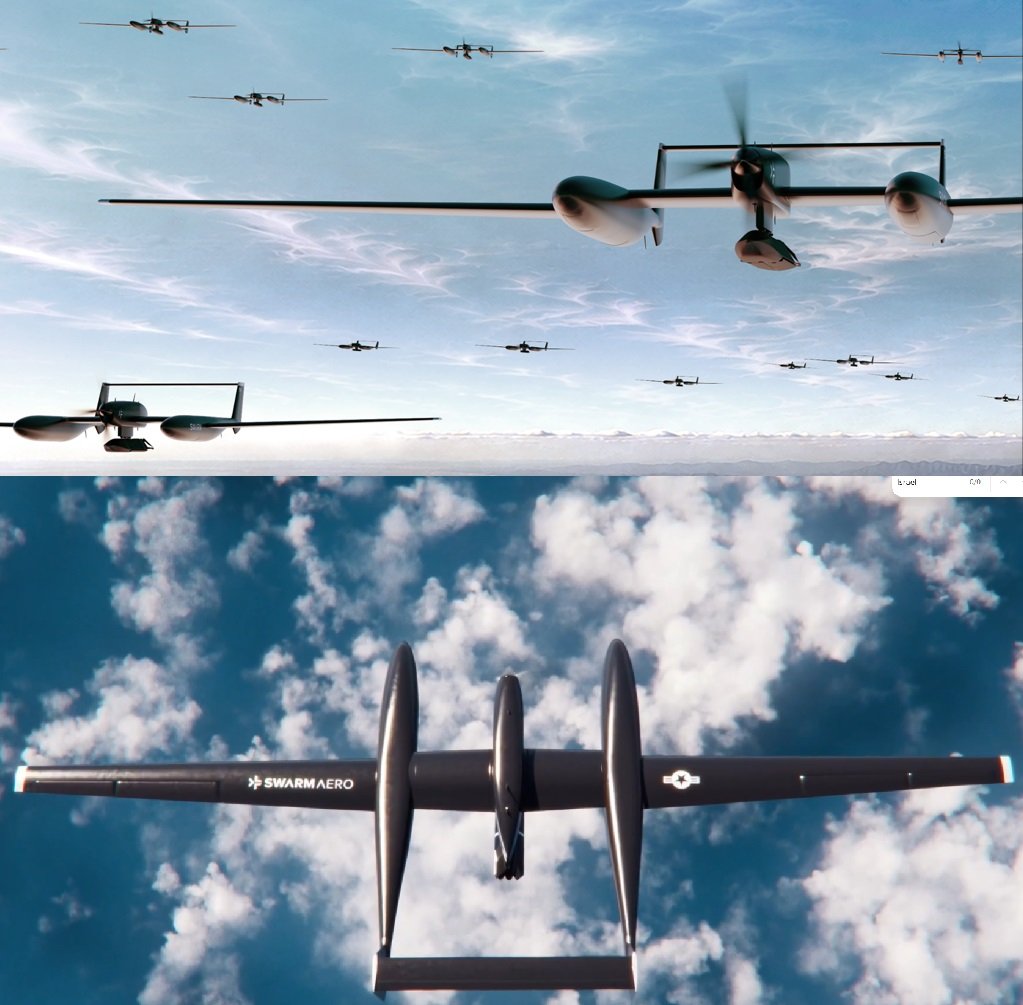 U.S. Firm Swarm Aero Unveils Gamera Group 5 UAS With 9,000-Nautical-Mile Range and Heavy Strike Payload
-
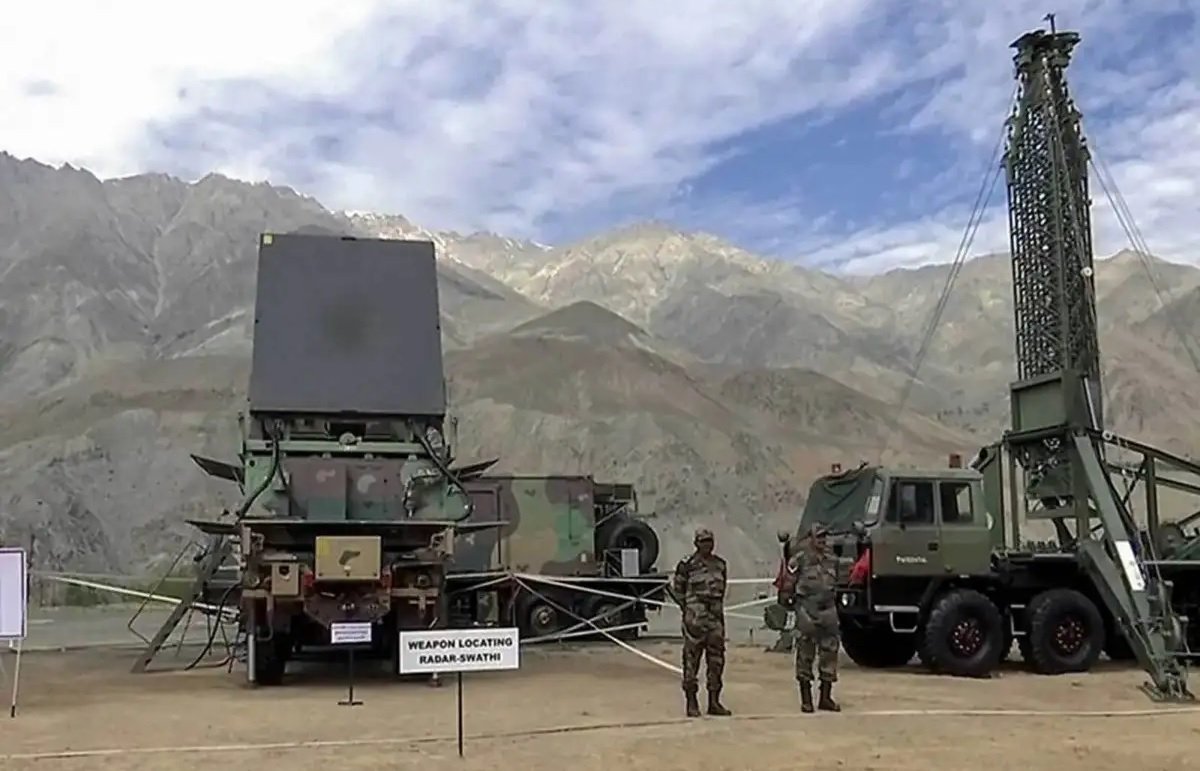 DRDO Demonstrates Indigenous 3.5×3 mm GaN Chip Delivering 30 Watts for Next-Generation Radars and Electronic Warfare
-
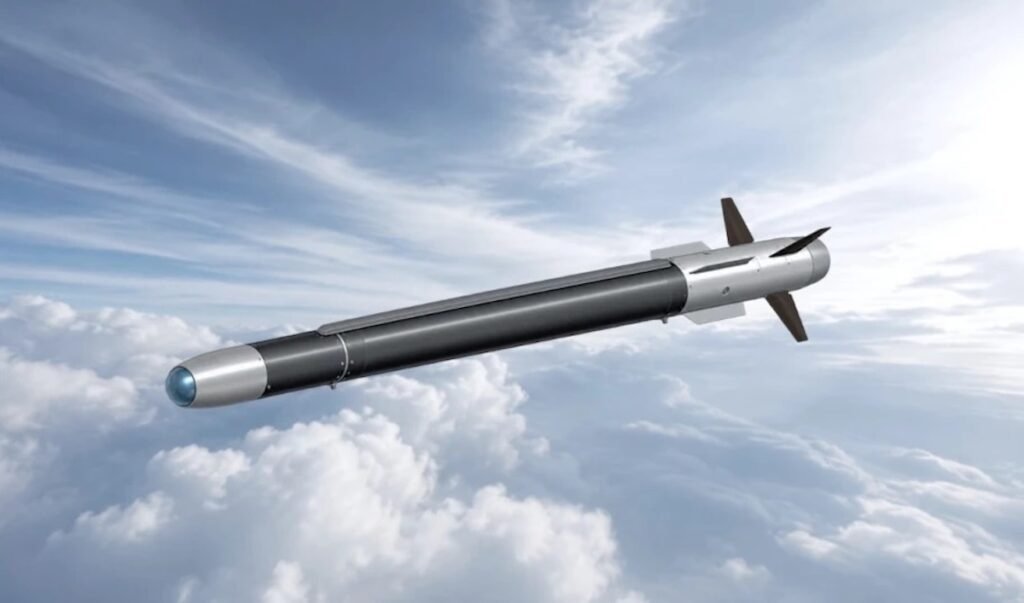 MBDA and Poland’s WITU Advance Low-Cost Supersonic Interceptor Against Swarm Attacks, Seeker Trials Successfully Completed