
World
ABU DHABI — May 15, 2026 : Emirati state-owned defence conglomerate EDGE Group has released operational test footage of its SHADOW 25 jet-powered loitering munition in a newly demonstrated canister-launched configuration, highlighting the platform’s role as a rapid-response precision strike system designed for use in electronically contested environments. Developed by EDGE subsidiary ADASI, the SHADOW 25 is a medium-class one-way attack drone intended to conduct long-range precision strikes against fixed and hardened above-ground targets while maintaining a reduced logistical footprint and rapid deployment capability. Platform Specifications and Operational Performance According to company specifications and published datasheets, the SHADOW 25 carries a 25-kilogram warhead and has a baseline operational range of 250 kilometres, while some EDGE documentation lists a maximum range of up to 295 kilometres depending on mission profile and launch configuration. The system provides one hour of endurance, allowing it to loiter over a designated target area prior to terminal engagement. Cruise speed is listed at approximately 400 kilometres per hour, although EDGE Group materials indicate operational speeds can reach up to 450 kilometres per hour. The aircraft has a length of 2.25 metres, a wingspan of 2.15 metres and a maximum take-off weight ranging from 90 to 103 kilograms depending on the selected launch configuration. The platform can operate at altitudes of up to 20,000 feet and supports a datalink range of 100 kilometres. Canister Launch Configuration The newly released footage confirmed the operational use of the SHADOW 25’s sealed canister-launch architecture, designed to reduce deployment time and simplify field operations. Stored directly inside its launch canister, the munition can be launched using a rocket-assisted booster without requiring extensive assembly, dedicated launch rails or complex pre-flight preparation procedures. EDGE Group stated that the system can move “from standby to airborne in seconds,” enabling rapid strike response during time-sensitive missions. The canisterized configuration is intended to support expeditionary and mobile strike operations by minimizing logistical requirements and reducing the infrastructure needed for deployment. In addition to the canister launch method, ADASI states that the SHADOW 25 can also be deployed using a pneumatic launcher, providing operational flexibility based on available infrastructure and mission requirements. Guidance and Electronic Warfare Resilience The SHADOW 25 incorporates a multi-mode navigation and targeting system intended to maintain effectiveness in environments affected by electronic warfare, satellite navigation interference and GPS spoofing. The platform combines Global Navigation Satellite System (GNSS) navigation with visual navigation and optical guidance systems. According to company information, the onboard video navigation capability enables the munition to identify, track and confirm targets using camera imagery during terminal engagement phases, ensuring strike accuracy even if satellite navigation signals are degraded or denied. The system has been developed with operational conditions in electronically contested environments in mind, including regions where GPS jamming and signal disruption have become increasingly common. Domestic Production and Sovereign Capability EDGE Group was established in 2019 through the consolidation of more than 25 Emirati defence and technology entities and has since expanded across autonomous systems, precision-guided munitions, electronic warfare and advanced defence technologies. The SHADOW 25 forms part of the company’s broader SHADOW family of loitering munitions, which also includes the larger SHADOW 50 system. In February 2023, the United Arab Emirates awarded a contract valued at approximately $330 million for the acquisition of SHADOW 25 and SHADOW 50 systems for the country’s armed forces. The programme reflects the UAE’s broader strategy to expand sovereign defence manufacturing capabilities and reduce dependence on foreign suppliers for advanced strike systems. By producing the SHADOW 25 domestically, the UAE retains control over the platform’s supply chain, operational parameters and deployment doctrine while avoiding foreign export licensing and re-export restrictions associated with imported loitering munitions. The SHADOW 25 is positioned among a growing class of jet-powered loitering munitions that have gained increased international attention following recent operational use of autonomous strike systems in regional and international conflicts.
Read More → Posted on 2026-05-15 15:17:53
World
KHASAN, Russia / TUMANGANG, North Korea — May 15, 2026 : North Korea and Russia have completed the structural linking of a new automobile bridge across the Tumen River, a major cross-border infrastructure project designed to strengthen trade, transportation and logistics cooperation between the two countries. Officials from both governments stated that the bridge is scheduled to open for traffic on June 19, 2026. The project, known as the Khasan–Tumangang Bridge, marks the first direct road connection between Russia and North Korea. It supplements the existing Korea–Russia Friendship Bridge, a rail-only crossing located several hundred metres to the west. Bridge Connection Completed A ceremony marking the joining of the bridge spans was held on April 21, 2026, following more than a year of construction work. The project began in March–April 2025 after an agreement reached during a June 2024 summit between Russian President Vladimir Putin and North Korean leader Kim Jong-un in Pyongyang. Recent satellite imagery and construction updates show that the bridge structure has nearly been completed. The road deck has been installed over recent months, while temporary earth embankments placed in the Tumen River during construction are being removed as final works continue. Technical Specifications The bridge is located approximately 415 metres east of the existing railway crossing between Khasan in Russia and Tumangang in North Korea. The structure measures 1,005 metres in total length, including 581 metres on the North Korean side and 424 metres on the Russian side. The bridge features a two-lane roadway with a seven-metre-wide deck intended to support commercial and passenger traffic. According to official project data, construction required approximately 5,000 tons of metal structures and more than 9,000 cubic metres of concrete. Transport authorities estimate the crossing will be capable of handling up to 300 vehicles and approximately 2,850 people per day once fully operational. Border Infrastructure Development Both countries have simultaneously expanded border infrastructure to support the expected increase in cross-border movement. Russia is modernising the Khasan border checkpoint and constructing a 2.4-kilometre bypass road that will connect the bridge directly to the regional highway network in the Russian Far East. On the North Korean side, authorities have been developing a new border and customs complex covering roughly five square kilometres. The site includes customs buildings, warehouses, parking areas and a vehicle maintenance facility expected to function as a truck transfer hub. New structures have also appeared near both ends of the bridge and are expected to serve customs and border control operations. Road Connectivity and Construction Progress Although the bridge structure has been linked, some connecting road infrastructure on the North Korean side remains under development. Construction assessments previously indicated that direct road links between the new customs facilities and North Korea’s broader domestic road network were still limited. However, finishing works have continued steadily ahead of the planned opening date. Economic and Strategic Importance The new crossing is intended to improve logistics and expand trade, tourism and humanitarian exchanges between Russia and North Korea. Until now, cross-border transport has largely depended on the existing railway link, where freight transfers have been affected by differences in railway gauge systems. Russia uses broad-gauge railways, while North Korea operates standard-gauge lines. The new road bridge is expected to reduce reliance on rail transfers and simplify cargo transportation between the two countries. Officials in both Moscow and Pyongyang have described the project as an important element of expanding bilateral economic cooperation and transport connectivity. Regional Attention The development has also attracted attention from neighbouring countries due to the strategic location of the lower Tumen River near the borders of North Korea, Russia and China. In late May 2026, Chinese diplomats and regional officials reportedly inspected customs facilities in the nearby tri-border region. China has continued to monitor developments affecting regional transport access and maritime connectivity toward the East Sea, also known internationally as the Sea of Japan.
Read More → Posted on 2026-05-15 14:50:05
World
ABU DHABI, — May 15, 2026 : The United Arab Emirates is accelerating construction of a major crude oil pipeline project linking Abu Dhabi’s onshore oil fields to the Port of Fujairah, as the country moves to strengthen export routes outside the Strait of Hormuz and expand national production capacity by 2027. The project, known as the West-East Pipeline expansion, is being fast-tracked under directives issued by Abu Dhabi Crown Prince Sheikh Khaled bin Mohamed bin Zayed to the Abu Dhabi National Oil Company (ADNOC). The new pipeline will run from the Habshan oil fields in Abu Dhabi to Fujairah on the Gulf of Oman, creating additional export capacity that bypasses the Strait of Hormuz. The UAE currently operates the Abu Dhabi Crude Oil Pipeline (ADCOP), also known as the Habshan–Fujairah pipeline, which was commissioned in 2012. The pipeline stretches approximately 360 to 406 kilometres and currently transports between 1.5 million and 1.8 million barrels of crude oil per day. During the ongoing regional conflict, the route has remained one of the UAE’s most important export channels as shipping traffic through the Strait of Hormuz faced major disruption. Upon completion of the new pipeline in 2027, the UAE’s combined transport capacity to Fujairah is expected to increase to approximately 3.3 million barrels per day. When combined with Fujairah’s storage terminals and loading infrastructure, total export capability from the port could reach nearly 4 million barrels per day. Fujairah has become a major international energy hub due to its strategic position on the Gulf of Oman outside the Strait of Hormuz. The emirate is currently regarded as the world’s third-largest storage hub for crude oil and refined petroleum products. UAE officials view the pipeline expansion as a critical component of the country’s long-term strategy to maintain reliable exports during periods of regional instability. The infrastructure expansion follows a major shift in the UAE’s energy policy after the country formally exited the Organization of the Petroleum Exporting Countries (OPEC) and the wider OPEC+ alliance on May 1, 2026. UAE officials said the decision followed a comprehensive review of national energy priorities and was intended to provide greater flexibility in production planning and export operations. Minister of Energy and Infrastructure Suhail Mohamed Al Mazrouei recently confirmed that the UAE is pursuing a target of increasing national crude production capacity to 5 million barrels per day by 2027. Officials stated that the Fujairah expansion will support higher output levels and help address growing global demand amid continuing wartime supply disruptions. The accelerated construction effort also reflects rising security concerns across the Gulf region. The Strait of Hormuz, through which approximately one-fifth of global oil supplies normally transit, has experienced severe disruption following Iranian military actions linked to the broader regional conflict earlier this year. While the underground pipeline system itself has not been directly targeted, associated energy infrastructure has sustained damage from Iranian missile and drone attacks. Facilities affected include sections of the Habshan natural gas processing complex and oil storage infrastructure near the Port of Fujairah. The disruption to Gulf shipping routes has contributed to higher global energy prices and fuel supply pressures in multiple countries. Market analysts said the UAE’s expanding bypass infrastructure could play an increasingly important role in improving supply resilience and reducing the impact of future disruptions in the Strait of Hormuz.
Read More → Posted on 2026-05-15 14:40:19
World
PATUXENT RIVER, Md. — May 15, 2026 : The U.S. Navy is preparing to extend sustainment and technical support for the VAMPIRE counter-drone systems currently operated by the Ukrainian Navy, according to a presolicitation notice issued on May 14, 2026, by the Naval Air Warfare Center Aircraft Division (NAWCAD). The notice outlines a planned sole-source contract modification with Sierra Nevada Corporation for repairs, maintenance, sustainment materials, and technical assistance supporting systems deployed in Eastern Europe under NATO coordination. The action is intended to maintain operational readiness of VAMPIRE systems used by Ukrainian naval forces in active combat conditions. VAMPIRE System Developed for Rapid Deployment The VAMPIRE system, short for Vehicle-Agnostic Modular Palletized ISR Rocket Equipment, was developed by L3Harris Technologies and supplied to Ukraine as part of a U.S. military assistance package announced in July 2022. In January 2023, the U.S. Department of Defense awarded a contract valued at approximately $40 million covering 14 systems, with deliveries completed by the end of 2023. The platform combines a four-shot launcher with a WESCAM MX-10 RSTA targeting sensor capable of high-definition multi-spectral surveillance and laser designation. The system fires 70mm Advanced Precision Kill Weapon System (APKWS) laser-guided rockets originally designed for aircraft operations and later adapted for ground-launch counter-drone missions. In Ukrainian service, the APKWS rockets have been fitted with proximity fuzes intended to improve effectiveness against unmanned aerial vehicles (UAVs). The system provides a mobile kinetic intercept capability designed to counter Russian drone and missile attacks targeting coastal infrastructure, naval facilities, and operational positions. A defining feature of the VAMPIRE platform is its modular vehicle-agnostic configuration. The launcher package includes an independent power supply and can be mounted on commercial pickup trucks or flatbed vehicles in approximately two hours. This design has enabled Ukrainian forces to field the systems rapidly without relying on dedicated military vehicles or lengthy operator training requirements. Operational Role Within Ukrainian Naval Defense The Ukrainian Navy employs the VAMPIRE systems as part of a layered close-in air defense network protecting dispersed maritime and coastal assets. The systems are used to defend port infrastructure, naval facilities, and semi-fixed defensive positions that cannot always be covered by larger fixed air defense batteries. The platform’s mobility and relatively simple logistics allow Ukrainian forces to reposition the systems quickly across wide operational areas while maintaining protection against persistent Russian long-range strike threats. The use of commercially adaptable vehicles also reduces dependence on specialized support infrastructure. Sierra Nevada Corporation to Continue Sustainment Support Under the planned contract modification, Sierra Nevada Corporation will provide engineers, maintenance technicians, field service representatives (FSRs), and remote reach-back technical support for deployed systems. Sustainment activities will take place both within the continental United States and at forward operating locations supporting Ukrainian naval operations. The company previously received a contract worth nearly $15 million in September 2025 to provide counter-UAS maintenance and sustainment services for the Ukrainian Navy. SNC is also known for developing the Battery Revolving Adaptive Weapons Launcher (BRAWLR). According to the NAWCAD notice, the Navy justified the sole-source action on the basis that SNC is the only responsible source capable of meeting the requirement within the “critical fleet timeline.” The notice cited the company’s secure facility access and detailed familiarity with the deployed system configurations as key factors supporting the decision. Accelerated Acquisition Timeline The presolicitation notice was issued for informational purposes and does not invite competitive proposals. The response deadline is scheduled for May 29, 2026, with an inactive date of June 13, 2026, indicating that the Navy intends to complete the contract modification on an accelerated schedule. The timeline reflects the operational demands associated with sustaining military equipment in active combat environments, where spare parts consumption, maintenance requirements, and field repair demands increase significantly compared to peacetime operations. The sustainment effort highlights the broader U.S. approach to supporting Ukraine’s military capabilities through contractor-backed logistics, maintenance, and technical assistance programs designed to maintain long-term operational readiness of supplied defense systems.
Read More → Posted on 2026-05-15 14:31:57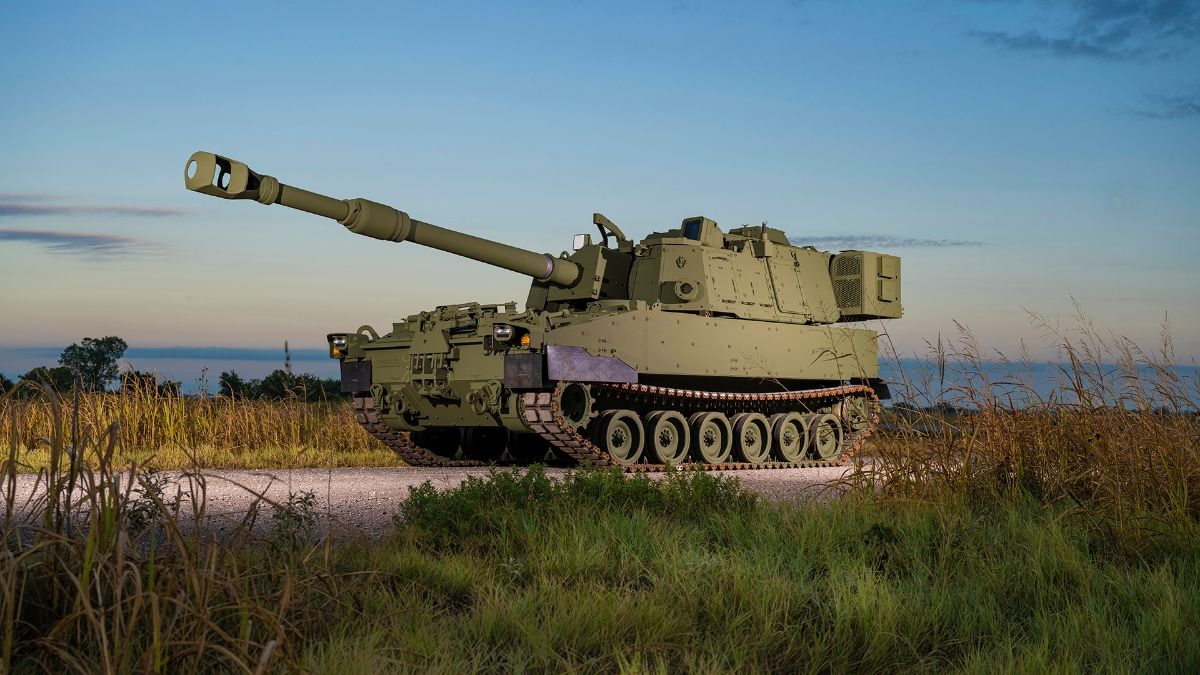
World
DETROIT ARSENAL, Michigan — May 15, 2026 : BAE Systems Land and Armaments has received a $535.6 million fixed-price-incentive contract from the U.S. Army for the production of self-propelled howitzer systems, tracked support vehicles, and total package fielding kits, according to a Department of Defense announcement released on May 14, 2026. The contract was awarded through Army Contracting Command at Detroit Arsenal, Michigan, and is scheduled to continue through December 31, 2029. The award supports continued production and sustainment of the Army’s tracked artillery fleet assigned to armored brigade combat teams. Although the Department of Defense did not specifically identify the vehicle variant in the contract notice, the award aligns with ongoing procurement of the M109A7 Paladin Integrated Management self-propelled howitzer and the M992A3 Carrier Ammunition Tracked vehicle. BAE Systems remains the Army’s sole domestic producer of the Paladin family of vehicles, with primary manufacturing operations located in York, Pennsylvania. The latest award follows a separate $473 million contract issued in January 2026 for 40 Paladin sets. Unlike a standard vehicle procurement contract, the May 2026 award includes broader fielding support packages intended to transition the systems into operational service. The package includes spare parts, specialized tools, technical manuals, training equipment, and other sustainment materials required for unit deployment and long-term operational readiness. M109A7 Modernization and Technical Specifications The M109A7 represents the latest modernization of the Army’s long-serving Paladin artillery platform. While retaining the 155 mm, 39-caliber M284/M284A2 cannon mounted on the M182A1 gun mount, the system integrates a redesigned chassis using common components from the Bradley Fighting Vehicle family, including the engine, transmission, and track systems. The self-propelled howitzer weighs approximately 84,000 pounds (38,101 kilograms) and operates with a four-person crew consisting of a commander, driver, gunner, and loader. The vehicle is powered by a 675-horsepower V903 engine and carries a 145-gallon fuel capacity. According to Army specifications, the M109A7 can achieve road speeds of approximately 38 miles per hour and has an operational range of about 186 miles. Mobility capabilities allow the vehicle to climb 60 percent longitudinal slopes, traverse 40 percent side slopes, cross trenches up to 72 inches wide, and ford water obstacles up to 42 inches deep. These mobility characteristics allow artillery units to maneuver alongside tanks and mechanized infantry during high-tempo combat operations while maintaining protected fire support capability. Firepower and Battlefield Role The M109A7 is designed to provide mobile long-range fire support under modern battlefield conditions. Standard 155 mm high-explosive projectiles allow engagement of targets at ranges between 22 and 24 kilometers, depending on ammunition type and propellant configuration. Rocket-assisted projectiles extend the range to approximately 30 kilometers. The system is also compatible with precision-guided munitions such as Excalibur, enabling accurate strikes against point targets while reducing collateral damage and ammunition expenditure. Modern battlefield conditions, including persistent unmanned aerial vehicle surveillance, counter-battery radar detection, and electronic warfare threats, have increased the importance of rapid displacement after firing missions. The M109A7 uses digital fire-control systems and onboard navigation equipment to conduct “shoot-and-scoot” operations, allowing crews to receive fire missions digitally, fire multiple rounds, and relocate before enemy targeting cycles can respond. M992A3 Ammunition Carrier Support Supporting the howitzer is the M992A3 Carrier Ammunition Tracked vehicle, which typically operates as part of a two-vehicle Paladin set. The armored ammunition carrier uses a related tracked chassis and can transport up to 98 artillery rounds or approximately 12,000 pounds of ammunition and supplies, depending on configuration. The vehicle enables artillery batteries to conduct resupply operations closer to frontline positions while reducing reliance on unarmored logistics vehicles operating in contested environments. This capability is considered increasingly important in conflicts involving drone surveillance and long-range precision fires. Strategic and Budgetary Context Continued procurement of the M109A7 follows the Army’s decision to terminate the Extended Range Cannon Artillery (ERCA) program, which had aimed to integrate a 58-caliber cannon onto the Paladin chassis to achieve significantly greater firing ranges. The ERCA effort was ended after testing revealed excessive barrel wear and technical limitations. While the Army evaluates future domestic and foreign artillery platforms under its Mobile Tactical Cannon requirement, the M109A7 continues to provide armored brigades with a fielded and operationally proven 155 mm artillery capability compatible with existing ammunition stocks, training systems, and maintenance infrastructure. The contract also reflects continued congressional support for the defense industrial base. The Army’s fiscal year 2026 budget request originally sought $250.2 million for 10 Paladin Integrated Management sets. Subsequent congressional appropriations increased available funding, with House appropriators identifying approximately $715 million for the program and the Senate FY2026 Defense Appropriations bill including an additional $464.8 million increase for Paladin Integrated Management procurement. Army procurement plans continue to target a total acquisition objective of 689 Paladin Integrated Management weapon systems, with estimated program costs exceeding $7.6 billion. Production of the vehicles and support systems at BAE Systems facilities in Pennsylvania, Oklahoma, and Alabama also sustains skilled labor, tracked vehicle manufacturing capacity, turret integration work, and artillery sustainment infrastructure while the Army develops future long-range cannon artillery systems.
Read More → Posted on 2026-05-15 14:21:49
World
LONDON — May 15, 2026 : The UK Ministry of Defence (MoD) has selected Anduril UK to proceed to the next development phase of Project NYX, the British Army’s programme to develop autonomous collaborative platforms designed to operate alongside the Army’s AH-64E Apache attack helicopters. Project NYX is part of the Land Autonomous Collaborative Platform initiative and aims to deliver autonomous “loyal wingman” systems capable of supporting crewed rotary-wing operations in contested environments by 2030. The programme is intended to expand combat mass, improve survivability and increase operational reach for British Army aviation forces. The MoD said the programme addresses a growing operational requirement for additional strike and reconnaissance capability alongside the Apache fleet. While the AH-64E Apache remains the Army’s primary attack helicopter platform, British and NATO operational planning increasingly requires additional airborne systems capable of penetrating advanced enemy air defence networks and conducting missions across wider operational areas. Under the programme’s operational concept, autonomous aircraft will support Apache helicopters during reconnaissance, target acquisition and strike missions. The systems are being designed around a “command rather than control” model, allowing Apache crews to assign mission-level objectives while the uncrewed platforms independently manage navigation, threat responses and swarm coordination through collaborative mission autonomy software. The British Army views the programme as part of its broader aviation modernisation strategy and its ambition to triple lethality by 2030. Project NYX also supports the Army’s future “20-40-40” aviation force structure, comprising 20 percent crewed aircraft, 40 percent reusable autonomous systems and 40 percent consumable platforms. Anduril UK Development Effort Anduril UK said it is leveraging experience gained from the YFQ-44A semi-autonomous fighter aircraft programme developed for the United States Air Force. According to the company, the YFQ-44A advanced from an initial clean-sheet design to first flight within 556 days. The company has invested tens of millions of pounds in internal research and development for Project NYX and has already conducted test flights using a full-scale surrogate aircraft. Flight trials have focused on progressively expanding the platform’s flight envelope ahead of further development stages. The proposed aircraft incorporates hybrid-electric propulsion technology derived from developments in the commercial electric vertical take-off and landing (eVTOL) sector. According to the consortium, the platform is designed to deliver the speed, endurance and range necessary for long-distance self-deployment and operations alongside Apache helicopters in contested environments. The aircraft’s payload capacity reportedly exceeds the Ministry of Defence’s baseline requirement of 250 kilograms, allowing greater mission flexibility and support for multiple payload configurations. The system is also being developed with an open and modular architecture intended to integrate sovereign and third-party sensors, weapons and mission systems as operational requirements evolve. Industrial Team and UK Supply Chain Anduril UK is leading a broader industrial consortium involving several British and international partners. GKN Aerospace is responsible for structural design, airframe manufacturing and electrical integration activities, drawing on its manufacturing operations and workforce on the Isle of Wight. Archer Aviation is contributing vertical take-off and landing aircraft design expertise along with proprietary hybrid powertrain technology. The company has also established a new engineering hub in Bristol to support programme activities and expand its UK workforce. Other industry partners involved in the programme include Isembard, Atom Performance Technologies, Flarebright, ISS Aerospace and Rowden Technologies. The consortium stated that additional UK-based suppliers and technology firms may join the programme as development progresses. Since launching operations in the United Kingdom in 2019, Anduril UK has expanded to more than 100 engineers, designers and specialists and operates a dedicated test facility in North Wales. According to the consortium, the broader programme supply chain currently supports approximately 50,000 jobs across British engineering, manufacturing and development sectors. Programme Timeline The current selection follows a pre-qualification phase and a January 2026 competition in which seven companies were invited to submit proposals for the Apache autonomous wingman requirement. Alongside Anduril UK, BAE Systems, Tekever and Thales UK have also advanced to the present stage of Project NYX. The four selected companies will share £10 million in funding during the current development phase. The Ministry of Defence is expected to select up to two teams later in 2026 to continue into prototype development, with the programme targeting an initial operational capability by 2030 for the British Army.
Read More → Posted on 2026-05-15 14:09:49
World
SAN DIEGO — May 15, 2026 : BAE Systems and Vantor announced a strategic partnership on May 15 to integrate advanced intelligence and targeting capabilities for unmanned aerial systems (UAS) operating in contested electronic warfare environments where GPS signals and onboard sensors may be degraded or denied. The collaboration combines Vantor’s Raptor vision-based software suite with the BAE Systems Geospatial eXploitation Products (GXP) software ecosystem. According to the companies, the integrated capability is intended to preserve intelligence continuity and maintain precision targeting performance during operations affected by GPS jamming, spoofing, or degraded telemetry. Growing Challenges in Electronic Warfare Environments The partnership addresses operational problems increasingly observed in modern conflict zones, particularly the widespread use of inexpensive drones equipped with lower-quality onboard sensors and inertial navigation systems. At the same time, electronic warfare systems capable of disrupting or manipulating satellite navigation signals have become more common on contemporary battlefields. Under these conditions, drone operators and intelligence analysts may continue receiving high-quality full-motion video feeds while losing confidence in the geographic metadata attached to those feeds. The companies described this issue as “targeting paralysis,” a situation in which detailed imagery remains available but lacks sufficiently accurate coordinates for precision targeting or intelligence exploitation. According to the companies, inaccurate metadata drift in tactical drone video feeds can significantly reduce operational tempo and undermine targeting confidence even when imagery quality itself remains unaffected. Integration of Vision-Based Navigation and Geospatial Intelligence To address telemetry inaccuracies, the integrated solution uses Vantor’s Raptor Sync software as an alternative positioning and navigation capability that does not depend on GPS signals. Raptor Sync georegisters live drone video feeds against Vantor’s three-dimensional terrain database in real time. Instead of relying on external navigation signals, the system references terrain models and satellite-derived geospatial intelligence to determine the drone’s position and orientation. The companies stated that this approach enables autonomous systems and intelligence analysts to continue operating effectively in environments where GPS access is denied or compromised. The integration also supports interoperability across multiple sensor types and downstream intelligence fusion within the GXP ecosystem. According to the companies, the system demonstrated absolute coordinate accuracy of less than three metres during operational testing. Tactical Workflow and Metadata Correction The integrated workflow begins at the tactical edge, where corrected Key-Length-Value (KLV) metadata generated by the Raptor software is inserted directly into drone video feeds before the information enters the GXP exploitation environment. This process overrides inaccurate telemetry data and ensures that analysts receive corrected geographic information during real-time intelligence and targeting operations. By correcting metadata prior to exploitation, operators can derive weapon-quality coordinates from drone video feeds even when onboard inertial sensors lack high absolute accuracy. The companies stated that the capability is intended to preserve operational tempo and maintain targeting effectiveness during contested operations where traditional GPS-reliant systems may become unreliable. Capabilities of the Raptor Software Suite Vantor stated that the broader Raptor software suite was specifically developed to reduce dependence on GPS-based navigation systems for unmanned platforms. The software operates using a drone’s native camera system combined with Vantor’s three-dimensional terrain data, which the company stated currently covers more than 100 million square kilometres with an approximate accuracy of three metres. The suite includes several mission-focused applications: Raptor Guide — provides aerial positioning with less than seven metres absolute accuracy. Raptor Sync — performs real-time video georegistration and telemetry correction. Raptor Ace — enables laptop-based coordinate extraction for tactical operators and intelligence analysts. According to the companies, the software operates on commodity hardware and standard camera systems without requiring specialized onboard equipment. The system is also designed to function during night operations, at low altitudes, and in dense urban terrain where satellite navigation signals may be obstructed or jammed. Executive Statements Kurt de Venecia, Senior Director of Product Development at BAE Systems GXP, stated that the partnership focuses on maintaining targeting confidence in degraded operational environments. “In contested environments, the sensor’s imagery and video collections are only half the battle; the accuracy of the data it produces is what determines mission success,” de Venecia stated. “By including Raptor directly into our GXP intelligence workflows, we are providing analysts with the ability to maintain absolute targeting confidence, even when the platform’s systems or inertial sensors lack high absolute accuracy.” Paul Millhouse, Senior Director of Raptor Products at Vantor, stated that the integration is intended to strengthen workflow resilience for intelligence analysts and drone operators. “Analysts cannot afford to lose confidence in where a target actually is,” Millhouse stated. “By using Raptor to correct video before it enters the GXP Ecosystem, we’re enhancing the performance of existing and new drone fleets. The result is a more resilient workflow for extracting accurate ground coordinates and maintaining operational tempo.” Company Backgrounds BAE Systems stated that its GXP software ecosystem supports the discovery, exploitation, analysis, and dissemination of mission-critical geospatial intelligence for military operations, national security agencies, emergency response organizations, and commercial users worldwide. Vantor, headquartered in Westminster, Colorado, provides unified spatial intelligence by combining satellite imagery from its own constellation with real-time sensor feeds collected from air, ground, and space-based platforms. The company stated that its platform creates an artificial intelligence-ready digital representation of Earth used for predictive analysis, autonomous navigation, intelligence production, and automated mission workflows. The company was previously known as Maxar Intelligence before rebranding as Vantor in October 2025. Planned Demonstration The companies announced that the integrated targeting and intelligence capabilities will be demonstrated during the GXP360° Professional Exchange & Workshop scheduled to take place in San Diego, California, from May 18 to May 20, 2026.
Read More → Posted on 2026-05-15 13:55:57
World
BEIJING — May 14, 2026 : The United States and China on 14 May released a detailed joint readout outlining agreements reached during a summit between U.S. President Donald Trump and Chinese President Xi Jinping in Beijing, covering bilateral trade, energy security, counter-narcotics cooperation and regional stability in the Middle East. The document, published following talks at the Great Hall of the People, lists nine specific commitments jointly endorsed by both governments. The agreements focus heavily on maintaining stability in the Strait of Hormuz after the severe disruption to global oil markets earlier in 2026 triggered by the conflict involving Iran. According to the official readout, the United States and China agreed that American companies will receive expanded access to Chinese markets, while China will increase investment into the United States. Beijing also committed to intensifying efforts to crack down on fentanyl precursor chemicals and illicit flows entering the American market. China further agreed to increase purchases of American agricultural products and buy additional U.S. crude oil as part of efforts to diversify its energy imports and reduce dependence on oil flows linked to the Strait of Hormuz. Nine Commitments Released by Washington and Beijing The joint document lists the following commitments agreed during the summit: U.S. companies will receive expanded access to Chinese markets. China will increase investment into the United States. China will intensify efforts to crack down on fentanyl precursor chemicals and flows into America. China will purchase more American agricultural products. Both sides committed in writing that the Strait of Hormuz must remain open. China explicitly stated its opposition to the militarization of the Strait of Hormuz. China opposed any party charging tolls for passage through the Strait of Hormuz. China will purchase more American oil to reduce dependence on the Hormuz route. Both governments agreed that Iran cannot possess nuclear weapons. The White House described the Hormuz-related provisions as a direct response to the crisis that emerged earlier this year following U.S. and Israeli strikes on Iran in February 2026. The military escalation led to what officials described as the largest oil supply disruption in modern history after Iran effectively blocked commercial shipping traffic through the strategic waterway. The disruption pushed Brent crude prices to approximately $113 per barrel and triggered sharp volatility across global energy markets. China, one of Iran’s largest oil customers, has now publicly aligned itself with measures intended to prevent future prolonged disruptions in the strait. Focus on Strait of Hormuz and Energy Security A major portion of the agreement centers on maritime security and uninterrupted energy flows through the Gulf region. Both Washington and Beijing formally committed in writing that the Strait of Hormuz must remain open for international shipping. China additionally stated its opposition to the militarization of the waterway and opposed any entity imposing tolls or transit fees on vessels passing through the strait. The language is viewed as a diplomatic signal that Beijing considers long-term disruption of the route contrary to its own economic and energy-security interests. The Strait of Hormuz remains one of the world’s most strategically important maritime corridors, carrying a significant share of global crude oil and liquefied natural gas shipments. Any disruption in the waterway has immediate consequences for international energy prices and shipping markets. China’s commitment to purchase more American crude oil is also intended to diversify its long-term energy supply sources. Analysts said the move reflects Beijing’s effort to reduce exposure to instability in Gulf shipping routes while maintaining stable energy imports. Trade and Economic Components The agreement also contains several trade and investment measures aimed at stabilising bilateral economic relations between the world’s two largest economies. Expanded access for American companies to Chinese markets could support sectors including manufacturing, finance, agriculture and energy exports. China’s commitment to increase investment into the United States is expected to support selected industrial and commercial sectors, though no detailed breakdown of investment categories was released. The renewed commitment by Beijing to purchase additional American agricultural products is likely to benefit U.S. farmers and agricultural exporters. However, the agreement does not specify purchase volumes, monetary targets or implementation deadlines. The fentanyl-related commitments address a long-standing issue in U.S.-China relations. Washington has repeatedly accused Chinese suppliers and trafficking networks of contributing to the flow of fentanyl precursor materials into North America. Beijing has previously stated that it supports stronger law-enforcement coordination on narcotics control while opposing unilateral sanctions linked to the issue. No Enforcement Mechanism or Purchase Targets Despite the broad scope of the announcement, the agreement does not establish a new oversight mechanism, enforcement board or formal compliance structure. The published readout contains no quantitative purchase targets for agricultural goods, crude oil imports or investment flows. Analysts noted similarities to the 2020 Phase One trade agreement between Washington and Beijing, under which China pledged increased purchases of American products but later fell short of several numerical goals. Under the new framework, implementation will likely depend on continued bilateral coordination through diplomatic, trade and energy channels rather than legally binding enforcement measures. Officials from both governments indicated that the summit’s immediate priority was stabilising global energy markets and establishing coordinated positions regarding the Strait of Hormuz and regional security concerns involving Iran. Broader Strategic Implications Energy market observers said the Hormuz-related commitments could help reduce short-term volatility in oil prices by signaling that both the United States and China oppose future blockades or restrictions affecting the waterway. Brent crude prices have retreated from their February 2026 peak, though markets remain sensitive to developments involving Iran, Gulf shipping routes and regional military activity. The agreement does not alter existing U.S. sanctions on Iran and does not represent a broader restructuring of U.S.-China relations. Officials characterised the summit outcome as a targeted framework focused on immediate shared concerns involving energy security, economic stability and regional tensions rather than a comprehensive strategic reset. Additional implementation details are expected to emerge in the coming weeks through follow-up meetings between diplomatic, trade and energy officials from both countries.
Read More → Posted on 2026-05-14 17:24:48
India
PUTTAPARTHI, ANDHRA PRADESH — May 14, 2026 : Union Defence Minister Rajnath Singh and Andhra Pradesh Chief Minister N. Chandrababu Naidu will preside over the foundation stone laying and grounding ceremonies for multiple aerospace and defence projects across Andhra Pradesh on May 15, 2026, in a major push to expand India’s indigenous defence manufacturing and aerospace infrastructure under the Aatmanirbhar Bharat initiative. The primary event will take place at Puttaparthi in Sri Sathya Sai District, where the foundation stone will be laid for the Aircraft Integration and Flight Testing Centre of the Aeronautical Development Agency under the Defence Research and Development Organisation. The facility will support aircraft integration, systems validation, testing and certification activities for the Advanced Medium Combat Aircraft (AMCA) programme, India’s fifth-generation stealth fighter project. The AMCA testing and integration complex is planned with an estimated investment of ₹15,803 crore and will cover approximately 650 acres. The Andhra Pradesh government has allocated around 150 acres adjacent to the Puttaparthi airport runway for the core facility, along with an additional 200 acres for satellite offices, residential infrastructure and support services. The state government will also facilitate the extension of the Puttaparthi runway to 10,000 feet, alongside the construction of a new Air Traffic Control tower, advanced navigation systems and weather monitoring infrastructure. The facility is expected to conduct aircraft assembly, systems integration, validation and flight certification for the AMCA programme, which aims to manufacture around 140 fifth-generation stealth fighters. The first prototype is expected between late 2026 and early 2027. The centre is also intended to support future indigenous combat aircraft and unmanned aerial systems programmes. The project is projected to generate approximately 7,500 direct highly-skilled jobs. During the visit, Rajnath Singh will also lay the foundation stone for a new Naval Systems Manufacturing Facility of Bharat Dynamics Limited at T. Sirasapalli village in Anakapalli district. The Andhra Pradesh government has allocated around 160 acres for the project. The facility will manufacture advanced underwater weapon systems, including heavy-weight and light-weight torpedoes, along with integrated naval combat systems to support the operational requirements of the Indian Armed Forces. Grounding ceremonies will also be conducted for multiple private-sector defence manufacturing projects in Madakasira, Sri Sathya Sai District. Agneyastra Energetics Limited, a subsidiary of Kalyani Strategic Systems Limited, will begin work on its Defence Energetics Facility after acquiring approximately 949.65 acres from the Andhra Pradesh Industrial Infrastructure Corporation. The project will include high explosives manufacturing, ammunition filling and gun propellant production facilities, with provisions for future expansion into energetics for rockets, missile systems, space launch vehicles and advanced defence applications. HFCL Limited will also commence construction of its Ammunition & Electric Fuzes Plant at Madakasira. The company has been allotted 1,000 acres in two phases, including 329 acres in Phase I and 671 acres in Phase II. Supported by an estimated investment of ₹230 crore, the facility will manufacture artillery ammunition shells, TNT filling systems, Multi-Mode Hand Grenades developed in collaboration with DRDO, and electronic fuzes including point detonating, time and proximity variants. The plant is designed to produce around 40 lakh units annually, with completion targeted for December 2027. Expansion-related grounding ceremonies will also be held for Premier Explosives Limited as part of the state’s broader defence manufacturing expansion plans. In Kurnool, the Andhra Pradesh government will formally initiate projects linked to the proposed Drone City initiative, aimed at developing a dedicated hub for unmanned aerial systems, avionics and drone-related manufacturing. Participating companies include Drogo Drones Private Limited, Dronelab Technologies Pvt Ltd, HC Robotics Pvt Ltd, SenseImage Technologies Private Limited, Aerpace Industries, JDK Fly Drone World Pvt Ltd and Latrics. Several Memorandums of Understanding (MoUs) between the Andhra Pradesh government and private aerospace and defence companies are also expected to be signed during the event under the state’s Aerospace and Defence Policy 2025–30. The projects across Puttaparthi, Madakasira, Anakapalli and Kurnool are intended to establish an integrated aerospace and defence manufacturing corridor in southern India, connecting emerging production centres with the established aerospace and defence research ecosystem in Bengaluru.
Read More → Posted on 2026-05-14 17:11:55
World
JERUSALEM — May 14, 2026 : The Israel Ministry of Defense (IMOD) has signed a contract worth more than $34 million (over 100 million shekels) with Elbit Systems subsidiary Cyclone to develop extended-range capabilities for the Israeli Air Force’s F-35I Adir fighter jets through the integration of external fuel tanks. The agreement was brokered by the IMOD’s Defense Procurement Directorate (DPD) as part of Israel’s broader long-term military modernization and force buildup strategy. Cyclone, a wholly owned subsidiary of Elbit Systems specializing in aerostructures and airborne structural components, will adapt an existing external fuel tank design originally developed for Israel’s F-16 fighter fleet to meet the operational and technical requirements of the F-35I platform. According to Israeli defense officials, the project is intended to significantly extend the operational range of the F-35I fleet, reduce reliance on aerial refueling aircraft, and provide greater flexibility during long-range missions. The standard F-35 platform has an operational range of approximately 1,200 miles (2,220 kilometers), and the Israeli Air Force has increasingly focused on range-extension capabilities amid evolving regional security requirements. The development marks the first known effort to integrate external fuel tanks onto an F-35 aircraft. While the addition of external tanks increases fuel capacity and mission endurance, it also alters the aircraft’s radar signature and low-observable characteristics. Defense officials and industry analysts note that the trade-off is considered operationally manageable, particularly because external tanks can be jettisoned before the aircraft enters heavily contested airspace during combat missions. The aircraft and fuel tank system will undergo extensive testing to evaluate aerodynamic performance, structural loads, and compatibility with onboard electronic and mission systems. Previous Israeli studies had examined both conformal fuel tanks and detachable external tanks as potential methods to extend the F-35I’s combat radius while preserving stealth performance where possible. Cyclone has previously supplied external fuel tanks and structural components for multiple fighter aircraft programs, including the F-16, F-15, and F/A-18. The company will conduct development and integration work at its facilities in Israel. Israeli officials said the contract forms part of a wider strategic defense initiative led by Defense Minister Israel Katz and IMOD Director General Maj. Gen. (Res.) Amir Baram. The strategy is aimed at strengthening Israel’s military readiness and maintaining the country’s aerial and strategic superiority during what defense planners describe as an increasingly complex regional security environment. The operational requirement for expanded strike range has been shaped by recent regional conflicts and operational experience gathered from missions conducted in areas with advanced and layered air defense systems, including those linked to Iran and Syria. Israel currently operates 50 F-35I aircraft across two operational squadrons, making it the largest F-35 operator outside the United States. The F-35I Adir incorporates Israeli-developed electronic warfare systems, communications equipment, computing architecture, and weapons integration capabilities integrated into the American-made stealth fighter platform. Earlier this month, the Israeli government announced plans to negotiate an expansion of the F-35I fleet to 100 aircraft, alongside parallel growth of the F-15IA fleet. The procurement plans are part of a broader defense spending initiative expected to increase Israel’s military budget by hundreds of billions of shekels over the coming decade. Neither the Israel Ministry of Defense nor Elbit Systems disclosed a production or delivery timeline for the external fuel tank program.
Read More → Posted on 2026-05-14 16:48:59
World
SAN DIEGO — May 14, 2026 : General Dynamics NASSCO has received $856 million in U.S. Navy funding for the construction of T-AO 217, the latest vessel in the John Lewis-class fleet replenishment oiler programme. The funding, announced on May 13, 2026, supports the Navy’s continuing effort to modernise its replenishment fleet and strengthen long-range naval logistics capabilities. The allocation forms part of an eight-ship block-buy contract awarded to NASSCO in September 2024 covering vessels T-AO 214 through T-AO 221. T-AO 217 will be built at the company’s San Diego shipyard, where multiple vessels in the class are already under construction. The John Lewis-class oilers are designed to support the Military Sealift Command by providing fuel, dry cargo and aviation logistics support to deployed naval forces. The ships enable carrier strike groups, amphibious ready groups and surface combatants to remain at sea for extended periods without returning to port, improving operational endurance and fleet sustainment during long-range deployments. The class is gradually replacing the ageing Henry J. Kaiser-class replenishment oiler vessels that have been in service since the 1980s. Compared with the earlier ships, the new oilers incorporate double-hull construction, upgraded automation systems, modernised cargo handling equipment and reduced crew requirements intended to improve efficiency and lower operating costs. Each John Lewis-class vessel measures approximately 742 feet (226 metres) in length with a beam of 106.5 feet and a full-load displacement of around 49,850 tons. Powered by two Fairbanks-Morse medium-speed diesel engines, the ships can reach speeds of up to 20 knots while carrying approximately 162,000 barrels of fuel alongside dry cargo and aviation support supplies. The vessels are equipped for connected underway replenishment operations through multiple fueling stations and cargo transfer rigs. The class also features an enlarged helicopter flight deck to support vertical replenishment missions during deployed operations. In addition to logistics capabilities, the ships incorporate defensive systems including the AN/SLQ-25A Nixie torpedo countermeasure system and crew-served defensive weapons operated by embarked Navy security teams. The design also reserves space, electrical capacity and weight allowances for potential future installation of close-in defensive systems such as Phalanx CIWS or SeaRAM. According to the Department of the Navy, the multi-ship procurement approach used for the programme is expected to save approximately $491 million compared with annual procurement methods. Multi-ship contracts are also intended to maintain stable production activity within the U.S. shipbuilding industrial base and preserve skilled labour at key naval shipyards. NASSCO is currently under contract to construct 17 of the Navy’s planned 20 John Lewis-class oilers. The company has delivered five vessels to date, while five additional ships remain under construction at the San Diego facility. The programme began with an initial 2016 contract covering the first six ships and was later expanded in 2022 to include T-AO 211 through T-AO 213 before the 2024 block-buy agreement covering T-AO 214 through T-AO 221. Dave Carver, president of General Dynamics NASSCO, stated that the John Lewis-class programme represents the company’s longest-running Navy production series. He said the funding for T-AO 217 helps maintain workforce stability, sustain production continuity and reduce the risk of future layoffs as construction progresses on the remaining vessels in the programme. The continued production of the John Lewis-class fleet supports the U.S. Navy’s long-term maritime logistics strategy, particularly for sustained operations across contested maritime regions where access to fixed port infrastructure may be limited during future conflicts.
Read More → Posted on 2026-05-14 16:06:17
World
WASHINGTON / NEW YORK — May 14, 2026 : The United States has approved a new round of artificial intelligence semiconductor sales to Chinese technology companies, marking a significant easing of export restrictions that had limited China’s access to advanced U.S.-made chips for several years. According to reports citing industry insiders, the U.S. Department of Commerce has authorised approximately 10 major Chinese companies to purchase NVIDIA H200 artificial intelligence processors under a controlled licensing framework. The approved firms reportedly include Alibaba, Tencent, ByteDance and JD.com. The move comes amid reports that Washington is preparing to further ease or remove several remaining semiconductor trade restrictions affecting exports to China. Under the current licensing arrangements, each approved Chinese customer is permitted to purchase up to 75,000 NVIDIA H200 chips. The processors can be supplied directly by NVIDIA or through authorised hardware and distribution partners, including Lenovo and Foxconn. The approvals build on policy adjustments first announced in December 2025 by U.S. President Donald Trump. At the time, Trump stated that exports of NVIDIA’s H200 processors would be allowed under a regulated framework that included a 25 percent fee on such sales. The U.S. Department of Commerce formally implemented the policy in January 2026, allowing case-by-case licensing for the H200 and similar processors produced by companies such as AMD. Under the export framework, NVIDIA must certify that sufficient chip supplies remain available for the U.S. domestic market before shipments are approved. Chinese buyers are also required to demonstrate adequate security procedures and provide assurances that the processors will not be used for military or surveillance purposes. In addition, exports to China are capped at no more than 50 percent of the volume sold within the United States, while shipments remain subject to third-party technical verification. The revised policy applies specifically to H200-class processors and other compliant AI chips designed to remain within U.S. export performance thresholds. More advanced semiconductors, including certain Blackwell-series processors, continue to face stricter export controls and licensing requirements. The policy shift coincides with ongoing diplomatic engagements between Washington and Beijing. NVIDIA Chief Executive Officer Jensen Huang recently joined a U.S. delegation accompanying President Trump to Beijing for meetings with Chinese President Xi Jinping aimed at discussing trade and technology cooperation. Before U.S. export controls were imposed, China accounted for approximately 20 to 25 percent of NVIDIA’s total revenue, making it one of the company’s largest international markets after the United States. Since the restrictions were introduced, NVIDIA has reported near-zero AI chip revenue from China in several recent quarters. Following reports of the approvals and potential additional easing measures, NVIDIA shares rose sharply in trading. Investors viewed the development as a possible pathway for the company to recover part of the revenue lost due to sanctions and regain market share in China’s expanding AI infrastructure sector. Industry analysts estimate that renewed access to Chinese customers could restore several billion dollars in annual revenue for NVIDIA if demand materialises within existing licensing and volume limits. The company has developed export-compliant processors, including the H20 and H200, specifically to meet U.S. regulatory thresholds while continuing sales to overseas markets. The easing of restrictions also reflects broader changes in the global semiconductor market. During the sanctions period, China accelerated efforts to expand domestic semiconductor production and reduce reliance on foreign suppliers. Chinese manufacturers supported by state-backed industrial policies have increased their share of the domestic AI server market, with local suppliers now estimated to hold roughly 41 percent of the sector. Supporters of the revised export policy argue that controlled semiconductor exports help maintain U.S. technological leadership while supporting domestic chipmakers and generating additional government revenue through licensing fees. Critics, including lawmakers from both major U.S. political parties, have continued to raise concerns that advanced AI processors could indirectly support Chinese military or strategic technological development despite end-use restrictions and verification measures. The latest measures do not represent a complete removal of all semiconductor export controls. Advanced AI accelerators exceeding defined performance thresholds remain restricted, and U.S. authorities continue to maintain oversight mechanisms intended to prevent diversion or unauthorised use of exported hardware. As of 14 May 2026, NVIDIA had not issued an official public statement regarding the latest approvals or reports of a broader rollback of semiconductor trade restrictions.
Read More → Posted on 2026-05-14 15:46:33
India
MUMBAI — May 14, 2026 : Indian defence and engineering company Larsen & Toubro (L&T) has entered into a strategic collaboration with France-based maritime technology firm Exail to provide an advanced Unmanned Mine Counter-Measure (MCM) Suite for the Indian Navy’s upcoming Mine Counter Measure Vessel (MCMV) programme. The partnership will support the Indian Navy’s planned procurement of 12 Mine Counter Measure Vessels intended to replace ageing minesweepers and strengthen the navy’s mine warfare capabilities. Under the arrangement, L&T will act as the prime contractor and offer the unmanned MCM suite to shipyards participating in the MCMV construction programme, while Exail will serve as the technology partner supplying its mine warfare and unmanned maritime systems currently deployed by several navies worldwide. According to the companies, the unmanned suite will integrate autonomous and remotely operated systems capable of detecting, classifying, identifying and neutralising naval mines through stand-off operations. The systems are designed to reduce operational risks to crews and manned vessels during mine clearance missions. The package is expected to include unmanned surface vessels (USVs), autonomous underwater vehicles (AUVs), and remotely operated vehicles (ROVs), forming a multi-layered mine countermeasure capability for the Indian Navy. The systems will operate alongside advanced sonar-equipped MCMVs being planned under the programme. L&T will be responsible for assembly, integration, testing and lifecycle support of the systems in India as part of the collaboration. The partnership also includes localisation efforts aligned with the Government of India’s “Make in India” and “Aatmanirbhar Bharat” initiatives aimed at increasing indigenous defence manufacturing and domestic industrial participation in major military procurement programmes. The Indian Navy’s MCMV programme received Acceptance of Necessity (AoN) approval from the Defence Acquisition Council in July 2025 with an estimated project value of approximately ₹44,000 crore. The vessels are expected to feature non-magnetic hulls and advanced mine-hunting sonars to improve survivability and operational effectiveness in contested maritime environments. Initial vessel deliveries are projected between 2030 and 2037. India currently operates legacy minesweeping platforms and has an overall long-term requirement for up to 24 Mine Counter Measure Vessels to secure key coastal approaches, ports and strategic maritime routes. The induction of unmanned mine warfare systems is intended to address capability gaps while modernising the navy’s underwater threat response infrastructure. Arun Ramchandani, Senior Vice President and Head of Precision Engineering & Systems at L&T, stated that the collaboration combines L&T’s defence engineering and maritime integration capabilities with Exail’s operational expertise in unmanned mine warfare technologies. Jérôme Bendell, CEO of Exail’s Maritime Systems Business Line, said the partnership reflects a broader objective of supporting long-term sovereign unmanned maritime system development in India, including potential local production of next-generation naval drones and autonomous maritime platforms.
Read More → Posted on 2026-05-14 15:37:19
World
BOSTON — May 14, 2026 :The U.S. Army has selected the Rogue 1 loitering munition system developed by Teledyne FLIR Defense for the Low Altitude Stalking and Strike Ordnance (LASSO) programme, the company announced on 13 May 2026. Under the agreement, Teledyne FLIR Defense will deliver up to 130 Rogue 1 systems and related components to the Army for testing and evaluation beginning in summer 2027. The contract carries a two-year performance period and supports the Army’s ongoing effort to equip Infantry Brigade Combat Teams with man-portable precision strike systems capable of operating beyond line of sight. The LASSO programme is intended to provide dismounted infantry units with a ground-launched uncrewed aerial system carrying a lethal payload for long-range precision strikes against armoured vehicles, soft-skinned targets and enemy personnel while minimising collateral damage in complex operational environments. Man-Portable Precision Strike System Rogue 1 is a vertical takeoff and landing loitering munition designed for rapid deployment without requiring a dedicated launcher or vehicle transport. The complete system weighs approximately 10 pounds (4.5 kilograms) and is carried in a single launch tube, enabling operation by a single soldier. The electric-powered platform has an endurance of more than 30 minutes, burst speeds exceeding 70 mph (113 km/h) and an operational range of over 12 miles (20 kilometres). The system was developed for use in communication- and GPS-denied environments and incorporates hardened encrypted datalinks, image-matching navigation technology and alternative visual and thermal navigation modes. The drone is equipped with electro-optical sensors and FLIR Boson 640+ thermal imaging cameras for day and night reconnaissance missions. According to the company, the gimballed payload integrates the targeting sensors directly with the warhead system to improve strike accuracy against moving and stationary targets. Modular Payloads and Recoverable Design Rogue 1 supports multiple mission-specific payloads, including an Explosively Formed Penetrator warhead for engaging heavily armoured vehicles, a directional blast-fragmentation payload for soft targets and inert payloads for training operations. A notable feature of the platform is its recoverability. The munition incorporates a mechanical interrupt fuzing system that allows operators to safely disengage and recover the drone if a mission is aborted or operational conditions change. The warhead can be defused in flight, allowing the system to be reused in future missions. Integration With Black Hornet Nano-Drone Dr. JihFen Lei, president of Teledyne FLIR Defense and senior vice president of Teledyne’s Defense and Aerospace Group, stated that Rogue 1 was developed to meet the Army’s requirements for precision and autonomous strike capability. Lei added that the system can be integrated with the company’s Black Hornet nano-drone in a combined reconnaissance and strike configuration. In this arrangement, the miniature reconnaissance drone identifies and tracks targets before Rogue 1 is launched to conduct the attack. Expanding U.S. Military Adoption The Army’s LASSO selection represents the third major U.S. military adoption of the Rogue 1 platform since its launch in spring 2024. The loitering munition has already been fielded by U.S. Special Operations Command under the Ground Organic Precision Strike Systems programme and by the U.S. Marine Corps through the Organic Precision Fires-Light programme. The contract further expands Teledyne Technologies Incorporated presence in the defence unmanned systems sector amid growing demand for portable precision strike capabilities across U.S. military modernisation programmes.
Read More → Posted on 2026-05-14 15:22:35
World
KYIV — May 14, 2026 : Ukrainian interceptor drone crews operating the STING platform destroyed more than 300 Russian aerial targets during a single day-and-night combat period on May 13–14, 2026, according to Ukrainian drone manufacturer Wild Hornets. The interceptions were recorded during what Ukrainian military officials described as the largest Russian drone assault since the start of the full-scale war. Wild Hornets announced on May 14 that three STING interceptor units accounted for more than 200 confirmed aerial kills during the operation. According to the company, one crew alone achieved 120 interceptions in a single operational cycle, breaking the single-crew interception record twice within the same combat period. The manufacturer added that additional after-action reports from crews were still being processed and that the final number of destroyed targets could rise further. The engagements took place during a sustained Russian aerial campaign lasting approximately 36 hours. Ukraine’s Air Force reported that Russian forces launched a total of 1,567 strike drones against Ukrainian territory, including Shahed, Gerbera, Italmas and Parody decoy variants. The attack package also included 56 missiles, among them Kh-101 cruise missiles, ballistic missiles and Kinzhal aeroballistic missiles. According to Ukrainian military data, air defence forces intercepted 1,362 drones and 41 missiles during the assault. Ukrainian defences relied on a layered network that combined aviation assets, surface-to-air missile systems, electronic warfare units, mobile fire groups and specialized interceptor drones. Wild Hornets stated that the operational results highlighted the growing importance of drone-on-drone interception within Ukraine’s air defence architecture. The company noted that interceptor drones provide a lower-cost and sustainable alternative to using expensive surface-to-air missile systems against large-scale drone attacks. The STING interceptor was developed by the Wild Hornets volunteer group specifically to counter Iranian-designed Shahed strike drones, which Russia regularly employs in mass attacks against Ukrainian cities and infrastructure. The platform uses a bullet-shaped aerodynamic design optimized for high-speed aerial interception missions. According to the manufacturer, the STING exceeds speeds of 340 kilometres per hour and can operate at altitudes of up to three kilometres. The interceptor has an engagement range of approximately 25 kilometres and reportedly achieves a combat hit rate of between 80 and 90 percent in operational use. Unit cost estimates range from approximately $2,100 to $2,500 per drone. A key element of the system is its integration with the Hornet Vision Ctrl control network. The relay-based digital architecture provides high-definition video transmission and low-latency remote control over extended distances. Wild Hornets stated that recent serial deployment of the system allows operators to control interceptor drones from distances of up to 2,000 kilometres away from combat zones. Earlier in April 2026, a pilot from the Ukrainian BULAVA unit identified as Roman “Hulk” reportedly used the Hornet Vision Ctrl system to destroy two Shahed drones while operating from a control point located 500 kilometres away. Alongside STING operations, Ukrainian unmanned air defence units also reported additional developments involving the P1-SUN interceptor system. During the same reporting period, Ukrainian crews successfully destroyed Russian Gerbera drones equipped with onboard FPV drones for the first time. The operation involved personnel from the 58th Separate Motorized Infantry Brigade and the 302nd Anti-Aircraft Missile Regiment, with five aerial targets neutralized in a single day. The expanded use of systems such as STING and P1-SUN reflects Ukraine’s increasing reliance on specialized remotely operated interceptor platforms designed to counter high-volume aerial threats while reducing risks to air defence personnel and limiting expenditure on conventional missile interceptors.
Read More → Posted on 2026-05-14 14:39:40
World
KYIV, Ukraine — May 14, 2026 : Ukrainian defence technology company Fire Point has unveiled additional details regarding “Project Freya,” a proposed pan-European integrated air and missile defence system designed to counter ballistic missile threats through a combination of Ukrainian interceptor technology and NATO-compatible European radar and command infrastructure. The project was outlined by Fire Point co-owner and chief designer Denys Shtilerman, who described the system as an open-architecture network capable of integrating with existing European air defence assets while offering a lower-cost alternative to current Western missile defence systems. FP-7.x Interceptor Forms Core of Freya System At the centre of the project is the FP-7.x interceptor missile, developed from Fire Point’s earlier FP-7 tactical ballistic missile program. The original FP-7 was designed as a short-range surface-to-surface missile with a strike range of approximately 200–300 kilometres, carrying a 150-kilogram warhead and achieving a reported circular error probable of 14 metres. According to Fire Point, the missile has now been adapted into an interceptor platform capable of engaging incoming ballistic threats. The company stated that the FP-7.x is constructed primarily from advanced carbon-fibre composite materials, reducing both radar visibility and manufacturing costs. Fire Point estimates the interceptor’s cost per engagement at under $1 million, substantially below the cost of comparable Western interceptor systems such as the Patriot PAC-3. The interceptor underwent a successful test in February 2026. Specifications released by the company show the FP-7.x measures 7.25 metres in length, with an outer diameter of 1.15 metres and a fuselage diameter of 0.53 metres. The missile uses a domestically produced solid-fuel motor and is launched through a hot-launch system from a lightweight mobile launcher developed by Fire Point. During flight, the interceptor can reportedly achieve speeds between 1,500 and 2,000 metres per second. Fire Point compared this to the Russian Iskander-M ballistic missile, which reaches approximately 2,100 metres per second during the final stage of its active trajectory. The company also stated that portions of the interceptor draw from technologies associated with the Soviet-era 48N6 missile used in S-300 and S-400 air defence systems, while incorporating redesigned electronics, simplified structures, and modern composite materials. Guidance System and European Radar Integration For terminal guidance, the FP-7.x is equipped with an Image Infra-Red (IIR) homing system. Fire Point additionally confirmed that, following an agreement signed in April 2026, the interceptor will also integrate semi-active seeker heads manufactured by German defence company Diehl Defence. The Freya system is designed to operate with multiple European radar platforms. Proposed early warning radar options include the Swedish SAAB Giraffe 8A and Giraffe 4A systems, France’s Thales Ground Master 400, and Germany’s Hensoldt TRML-4D. For target illumination and fire-control guidance, Fire Point plans to integrate either Denmark’s Weibel GFTR-2100/48 radar or Italy’s Leonardo KRONOS Land radar system. The command-and-control component of the project is based on the Kongsberg Fire Distribution Center developed by Norway’s Kongsberg. The centre incorporates Network Access Nodes modules and open-architecture software allowing integration of custom Ukrainian and European defence components. Link 16 Integration and NATO-Compatible Network A central element of the Freya project is integration with NATO’s Link 16 tactical data exchange protocol. Ukraine formally secured access to the network on 29 May 2025 through a licence agreement for NATO’s non-commercial CRC System Interface software. According to Fire Point, the Link 16 network enables real-time exchange of tactical information between land, air, and maritime forces while supporting secure communication and automated operational control. Within the Freya system, Link 16 provides radar connectivity through the ASTERIX protocol and supports a full-duplex communication channel for real-time course correction of the FP-7.x interceptor during flight operations. The system is also capable of transmitting weapons targeting data, equipment telemetry, voice communications, and battlefield coordination information between connected units. Ukraine’s operational-tactical situational awareness system “Delta” has already been integrated into the Link 16 network, enabling interoperability with NATO-compatible tactical communication infrastructure currently operating inside Ukraine. European Cooperation and Industrial Expansion Fire Point, founded in Kyiv in 2022, has expanded rapidly during the war and was recently valued by international investors at more than $2.5 billion. The company is currently cooperating with European missile manufacturer MBDA on further missile development linked to the Freya project. Ukraine and Germany have also agreed to deepen cooperation on ballistic missile interceptor production and accelerate programs focused on integration with European radar and digital communications systems. Additional international support has come from Norway, which allocated funding last year for the procurement of surface-to-air missiles intended for Ukrainian air defence systems operating from Soviet-era launch platforms. To support long-term missile production, Fire Point plans to establish a solid rocket fuel manufacturing facility in Denmark. The proposed plant will supply fuel for the FP-7.x interceptor and other Ukrainian missile systems. The Danish government previously approved temporary suspension of more than 20 laws and regulatory procedures to accelerate construction timelines for the facility and expand defence industrial production capacity. Project Freya represents one of the largest Ukrainian-led attempts to integrate domestic missile interceptor technology with a broader European missile defence architecture, combining Ukrainian missile production with NATO-compatible radar, communications, and comma
Read More → Posted on 2026-05-14 14:28:58
India
NEW DELHI — May 14, 2026 : The Indian Air Force (IAF) has finalised the Request for Proposal (RFP) for the acquisition of 114 Multi-Role Fighter Aircraft (MRFA), marking a significant milestone in India’s largest ongoing fighter aircraft procurement programme. The development comes ahead of Prime Minister Narendra Modi’s scheduled visit to France later in June 2026 and indicates growing alignment toward the selection of the Rafale fighter aircraft manufactured by Dassault Aviation. According to defence officials, the structure of the RFP and earlier decisions taken by the Defence Acquisition Council (DAC) suggest that the programme is now moving beyond a conventional multi-vendor competition and evolving into a strategic government-to-government framework centred on the Rafale platform, which is already operational with the IAF. Procurement Structure Under the procurement plan, the 114 aircraft will be acquired through a two-part structure designed to address immediate operational requirements while expanding India’s domestic aerospace manufacturing sector. The RFP provides for 22 aircraft to be delivered in fly-away condition directly from France, including trainer variants. The remaining 92 aircraft will be manufactured in India through a technology transfer arrangement under the “Make in India” initiative. Defence officials stated that the inclusion of 22 ready-built aircraft reflects the IAF’s assessment of current operational requirements and consideration of global production and supply-chain constraints at Dassault Aviation’s Mérignac production facility. Local Manufacturing and Technology Transfer A central component of the programme is the phased localisation of manufacturing activities within India. The RFP reportedly mandates a 50 to 60 percent localisation target for the India-built aircraft. To meet these requirements, Dassault Aviation is expected to significantly expand its industrial ecosystem in India through partnerships with Indian private-sector firms and Micro, Small and Medium Enterprises (MSMEs). The programme is expected to include local assembly infrastructure, component manufacturing, supply-chain integration, and transfer of advanced aerospace manufacturing technologies. Potential Indian industrial partners under consideration include Tata Advanced Systems Limited, Mahindra, and the Adani Group. Manufacturing operations are expected to be executed through a joint venture model, with final assembly lines under consideration at locations including Nagpur and Hyderabad. Programme Timeline The Defence Acquisition Council approved the 114-aircraft MRFA programme in February 2026. Defence sources indicated that the approval framework was closely aligned with the Rafale platform, effectively positioning the aircraft as the preferred solution for the IAF’s medium-weight fighter requirement. The RFP is expected to be formally issued to Dassault Aviation in the coming months. Following commercial and technical negotiations, the programme will proceed for approval by the Cabinet Committee on Security before final contract signature. If the agreement is finalised by the end of 2026, delivery of the first batch of fly-away aircraft is projected between 2029 and 2030. Deliveries of the India-manufactured aircraft would begin in later phases as domestic production facilities achieve operational capability. Strategic Significance The programme is expected to deepen defence-industrial cooperation between India and France while expanding long-term aerospace manufacturing capabilities within India. The procurement structure indicates a broader level of coordination between New Delhi and Paris extending beyond a standard defence acquisition arrangement. The new aircraft will operate alongside the IAF’s existing fleet of 36 Rafale fighter jets currently in service. The programme also includes provisions linked to upgrading the current fleet to the Rafale F4 configuration. The overall acquisition is estimated to be valued at approximately ₹3.25 lakh crore, making it one of India’s largest defence aviation programmes. India is also expected to become the first country outside France to manufacture the Rafale fighter aircraft domestically. The procurement remains critical for the Indian Air Force as it continues efforts to restore its fighter squadron strength, which remains below the sanctioned requirement of 42 squadrons.
Read More → Posted on 2026-05-14 14:17:11
World
KYIV — May 14, 2026 : Ukraine has introduced a new package of sanctions aimed at companies supporting the supply chains of Russia’s missile manufacturing sector, focusing on firms that provide equipment, raw materials, electronics, and technical services used in the production of advanced missile systems, including the Iskander ballistic missile and S-400 air defence system. The measures were enacted through decrees signed by Ukrainian President Volodymyr Zelensky following decisions by Ukraine’s National Security and Defence Council. According to Presidential Commissioner for Sanctions Policy Vladyslav Vlasiuk, the sanctions are intended to disrupt the operational networks that sustain Russian missile production rather than targeting the primary manufacturers alone, many of which are already under extensive international restrictions. Vlasiuk stated that the sanctions package focuses on companies whose products and services are essential for the final assembly and continued production of Russian missile systems. He added that Ukraine plans to share the collected information with international partners in an effort to coordinate additional restrictive measures. The sanctions primarily target suppliers connected to three major Russian defence facilities: the JSC Moscow Machine-Building Plant Avangard, which manufactures missiles for the S-300 and S-400 air defence systems; the Federal State Enterprise Perm Powder Plant, responsible for producing gunpowder and solid rocket fuel; and the JSC Votkinsk Machine-Building Plant, the manufacturer of Iskander short-range ballistic missiles. Among the entities sanctioned is Unitest-Rentgen LLC, which supplied inspection and quality-control equipment used in missile component production at the Avangard plant. Ukrainian authorities also stated that the company previously cooperated with the Moscow Institute of Thermal Technology, the developer of Russia’s Topol-M, Yars, and Bulava strategic missile systems. Ukraine also imposed restrictions on A2 Group LLC, identified as a supplier of raw materials used in the production of gunpowder and rocket fuel for the Perm Powder Plant. Officials said these materials are critical for ammunition manufacturing and missile propulsion systems. Additional sanctions were introduced against RT-Komplektatsiya, a subsidiary of the sanctioned Russian state defence corporation Rostec, and Spetstekhnologiya. Ukrainian authorities accused both firms of assisting the Russian defence-industrial sector in circumventing existing international sanctions through the import of restricted electronics and specialised industrial equipment. The sanctions package also includes Inforion, an information technology company accused of developing secure data management and software systems for Russian law enforcement and state security agencies. Ukrainian officials said the latest measures reflect a broader strategy aimed at weakening Russia’s domestic defence manufacturing capability by targeting secondary suppliers and logistical support networks that enable missile production to continue despite existing international sanctions.
Read More → Posted on 2026-05-14 14:06:33
World
HELSINKI — May 14, 2026 : German electronic warfare technology company Aaronia AG will publicly unveil its new AARTOS DF2 direction-finding system during the AOC Europe 2026 electronic warfare symposium in Helsinki from May 19 to 21. The company will participate as a Gold Sponsor at Booth 4F21, where it plans to showcase its latest counter-unmanned aerial systems (C-UAS), spectrum monitoring, and electromagnetic situational awareness technologies. Organized by the Association of Old Crows, AOC Europe is one of the leading electronic warfare conferences in Europe, bringing together military officials, government agencies, defense industry companies, and academic specialists. The 2026 event is being held under the theme “Re-Arming Europe for Electromagnetic Spectrum Superiority,” reflecting the growing European focus on electronic warfare and counter-drone capabilities following the widespread battlefield use of Shahed-series drones and FPV attack drones in Ukraine. SPECTRAN V6 Mobile to Serve as Core Demonstration Platform Aaronia’s exhibition will center around the SPECTRAN V6 Mobile portable real-time spectrum analyzer, which serves as the hardware foundation for the company’s AARTOS drone detection and electronic warfare systems. The portable analyzer covers a frequency range from 9 kilohertz to 140 gigahertz, providing a 490 megahertz real-time bandwidth and a 3 terahertz-per-second sweep speed. These specifications are designed to allow operators to detect short-duration or transient radio-frequency emissions, including drone control links, radar activity, and jamming signals that may be missed by conventional spectrum analyzers. The system operates on Windows 11 and is powered by an AMD Ryzen 7 Core 8845HS processor with an AMD Radeon 780M GPU. The platform includes 64 gigabytes of DDR5 RAM and an integrated 2-terabyte M.2 NVMe storage drive, with additional expansion available through extra M.2 slots. Connectivity features include USB Power Delivery ports, HDMI output, dual 2.5-gigabit Ethernet interfaces, and an SD card reader, all protected by weather-resistant covers intended for field operations. The unit also incorporates a 15-inch display with 1,500 nits brightness for outdoor visibility and a hot-swappable battery system capable of delivering up to 4.5 hours of continuous runtime. The standard package includes the OmniLOG 30800 omnidirectional broadband antenna, designed for isotropic measurements between 300 megahertz and 8 gigahertz without requiring manual antenna alignment. RTSA-Suite PRO Enables Multi-Sensor Networking The SPECTRAN V6 platform is operated through Aaronia’s RTSA-Suite PRO software, which supports networking multiple spectrum analyzers into distributed sensor architectures. According to the company, the software provides automatic pulse classification, real-time demodulation and decoding, 3D map visualization, RF propagation analysis, and Smart Buffering for extended full I/Q recording. The software can also integrate terrain data and building models to improve signal visualization and geolocation performance. Aaronia stated that networking multiple SPECTRAN V6 systems allows coverage areas and detection sensitivity to scale according to the number of deployed sensors rather than being limited to a single platform. AARTOS DF2 Expands Direction-Finding Capabilities The newly introduced AARTOS DF2 forms part of the wider AARTOS DDS product family, which ranges from the X2 to X9 variants and supports integrated drone detection, RF classification, tracking, and geolocation. The AARTOS direction-finding lineup also includes the DF4 and DF9 systems, ranging from handheld operator units to networked multi-sensor configurations intended for large-area monitoring and electronic surveillance missions. The systems utilize Aaronia’s latest IsoLOG DF antenna series, supporting real-time angle-of-arrival direction finding up to 18 gigahertz, while a future extension to 40 gigahertz is currently under development. For higher-frequency applications, the company’s PowerLOG horn antenna series extends monitoring capability up to 70 gigahertz, supporting the detection of advanced radar and communications systems operating in millimeter-wave frequency bands. Integrated RF Detection and Optical Verification For lower-frequency signal localization, the AARTOS systems combine Power of Arrival (POA) and Time Difference of Arrival (TDOA) algorithms. According to Aaronia, this enables automatic three-dimensional triangulation of transmitters, real-time flight-path recording, and simultaneous localization of multiple emitters, including GPS position and altitude data. The systems also integrate camera platforms capable of automatically tracking detected aerial objects and providing optical verification of drones and payloads. Aaronia stated that the integrated RF detection, geolocation, and optical verification architecture is intended to support military and security operators operating in complex electromagnetic environments where drone control links, radar emissions, and electronic attack signals must be identified and localized in real time. The company added that the systems are designed for both mobile and stationary deployments, supporting operational requirements for counter-UAS, electronic warfare, and electromagnetic spectrum monitoring missions.
Read More → Posted on 2026-05-14 13:55:41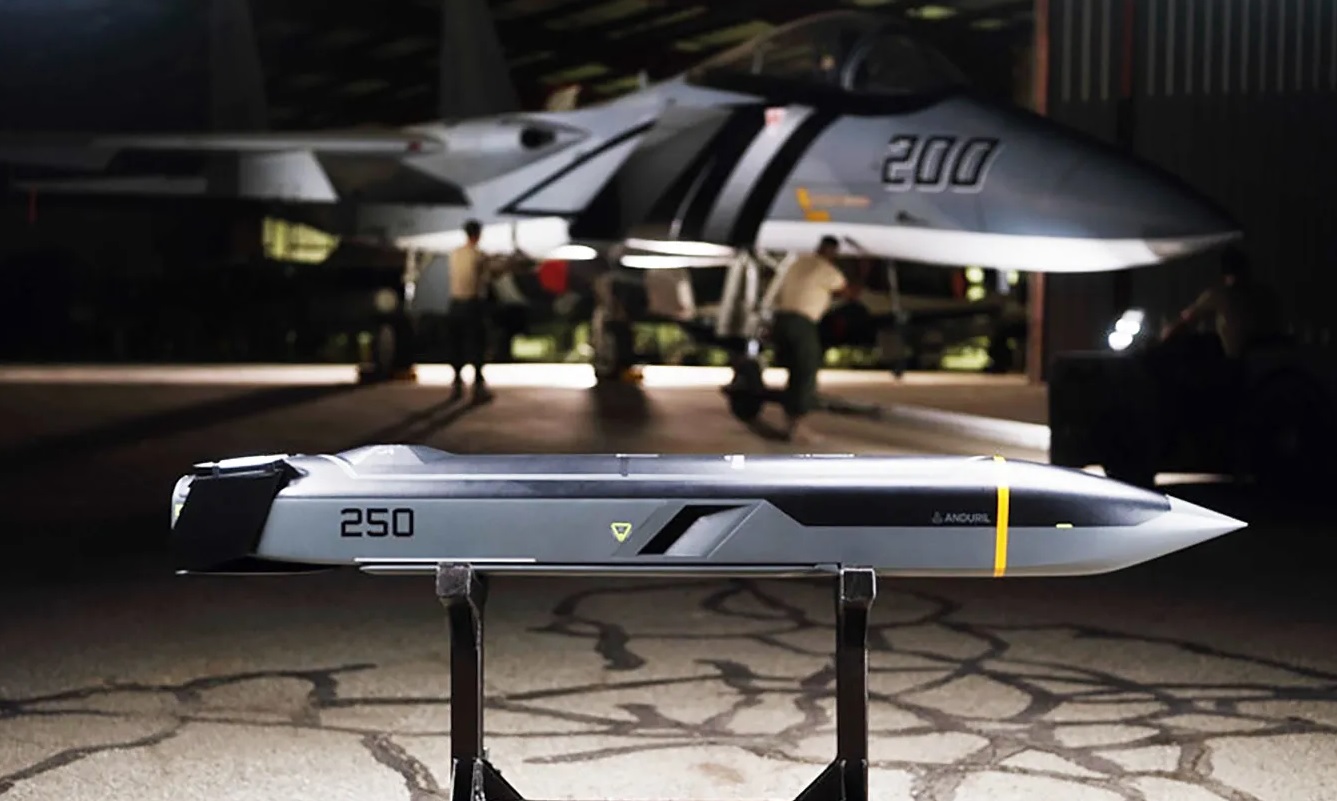
World
WASHINGTON — May 14, 2026 : Anduril Industries and the United States Department of War have signed a framework agreement to scale production of the Barracuda-500M (SLB-500M) surface-launched cruise missile system for the U.S. Army under the broader Ground-Launched Low-Cost Containerized Munition programme. The agreement, announced on May 13, 2026, was concluded with the Office of the Undersecretary of War for Research and Engineering (OSW(R&E)) and provides for the production and delivery of at least 3,000 Barracuda-500M systems over a three-year period to the Army’s Program Acquisition Executive FIRES (PAE FIRES). The contract establishes annual production targets of no fewer than 1,000 complete missile systems, with first deliveries scheduled for the first half of 2027. As part of the programme, Anduril will also provide associated containerised launch systems, beginning with an initial delivery of more than 60 launchers in 2027. The company stated that production quantities could increase further depending on future Department of War requirements. Long-Range Precision Strike System The Barracuda-500M is a subsonic, turbojet-powered stand-off strike missile designed for operations against both land and maritime targets. The weapon carries a 100-pound high-explosive payload and has a range exceeding 500 nautical miles (approximately 575 miles). According to technical specifications released by the company, the missile is capable of performing 5G+ evasive manoeuvres to reduce interception risk and can remain airborne in a loitering configuration for up to 120 minutes before target engagement. The system is also designed with a modular architecture that allows integration of different onboard sensors and mission packages. The missile can integrate with Anduril’s Lattice for Mission Autonomy software, enabling autonomous and collaborative operations between multiple systems in contested operational environments. The open-system architecture also allows operators to use existing military fire-control systems to select targets and initiate launches without requiring dedicated infrastructure. Containerised Launch Architecture The surface-launched variant is housed inside a standard 20-foot ISO shipping container, with each launcher capable of carrying up to 16 complete missile systems. The launch units are designed as self-contained systems requiring no additional fixed infrastructure, allowing rapid deployment in dispersed or austere operational environments. The company also stated that the missile can be deployed independently of the containerised launcher configuration to support different operational requirements and mission profiles. High-Volume Manufacturing Model Anduril stated that the Barracuda family was engineered from the outset for scalable, high-volume production. Approximately 70 percent of the missile’s components are commercially available commodity parts, while the remaining systems are sourced through open-architecture supply arrangements involving multiple vendors to reduce supply-chain risks. According to the company, assembly of a single missile requires approximately 30 hours and can be completed using ten common hand tools, an approach intended to simplify production expansion during sustained procurement periods. To support immediate manufacturing requirements, Anduril invested more than $40 million into a dedicated 115,000-square-foot production facility in Southern California, where production of Barracuda variants is already underway. Future full-rate production of the Barracuda-500M and related systems is expected to transition to Arsenal-1, Anduril’s planned 5-million-square-foot manufacturing facility near Columbus, Ohio. The nearly $1 billion facility is designed to support flexible large-scale weapons manufacturing with production lines capable of shifting rapidly between systems based on operational demand. Expansion of Rocket Motor Production The company has also expanded its domestic solid rocket motor manufacturing capacity to support Barracuda booster production. Anduril invested $75 million in private funding alongside $58 million in Defense Production Act Title III funding to expand a rocket motor production facility in Mississippi. Following the expansion, the company stated it has become the third U.S. supplier of solid rocket motors, strengthening domestic supply capacity for precision-guided weapon programmes. Anduril expects overall production capacity for the Barracuda-500 family to reach the high single-digit thousands of systems annually by the end of the current year as the programme advances toward full-rate production.
Read More → Posted on 2026-05-14 13:48:35Search
Top Trending in 24 Hours
-
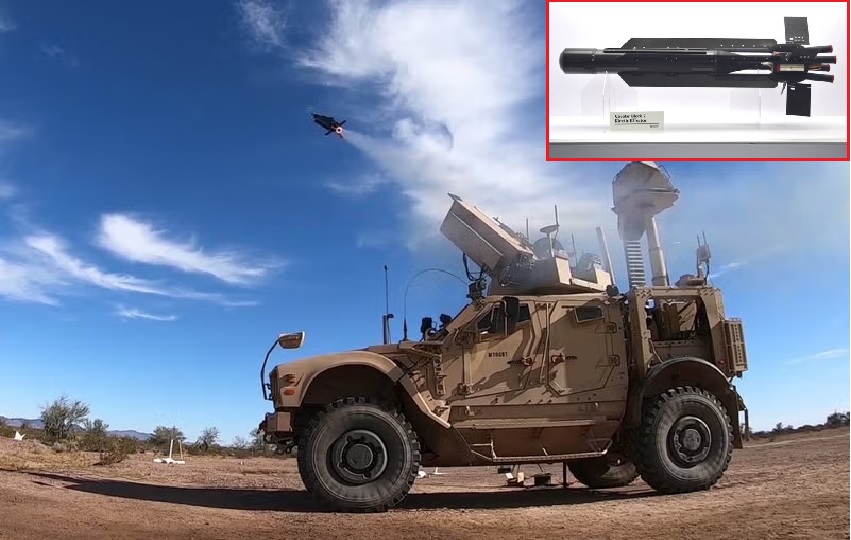 Raytheon Ramps Up Coyote Counter-Drone Missile Production After U.S. Army Reports 600 Successful Combat Intercepts During Iran Conflict
-
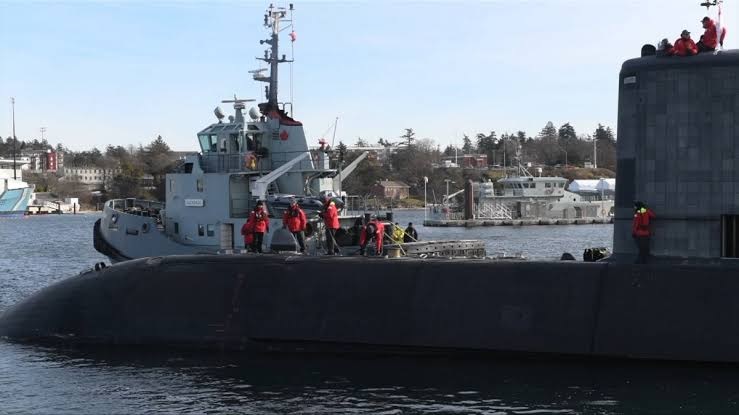 Canada Awards Babcock $1.1 Billion Six-Year Contract Extension to Support Victoria-Class Submarine Fleet
-
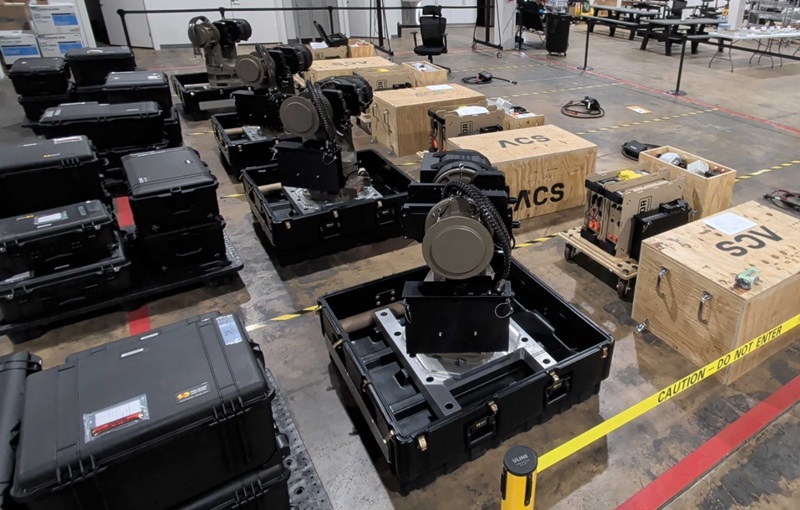 U.S. Marine Corps Selects AI-Powered Bullfrog Weapon Station for L-MADIS Counter-Drone Platform
-
 U.S. Navy Awards Raytheon $1.8 Billion Contract Extension for SPY-6 Radar Systems
-
 Lockheed Martin Launches $9 Billion U.S. Munitions Expansion to Boost THAAD, PAC-3 and PrSM Production
Top Trending in 4 Days
-
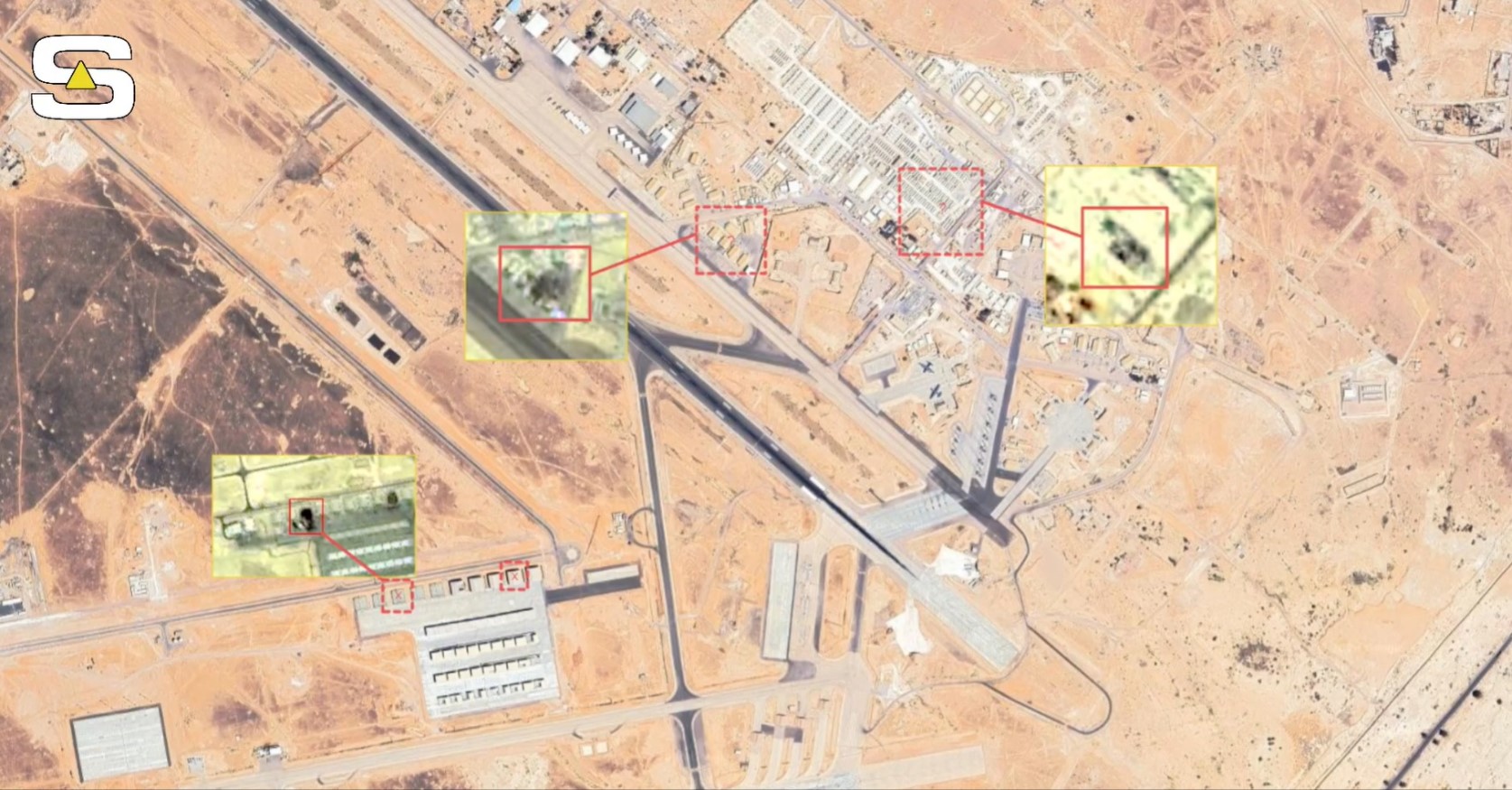 New Satellite Imagery Reveals Extensive Damage at Jordan's Muwaffaq al-Salti Air Base After Iranian Missile Strike
-
 Anduril Unveils Thunder Autonomous Attack Rotorcraft Built with Archer Aviation to Support Apache Helicopters
-
 U.S. Space Force Awards Slingshot Aerospace $69.2 Million Contract to Develop AI Space Training Platform
-
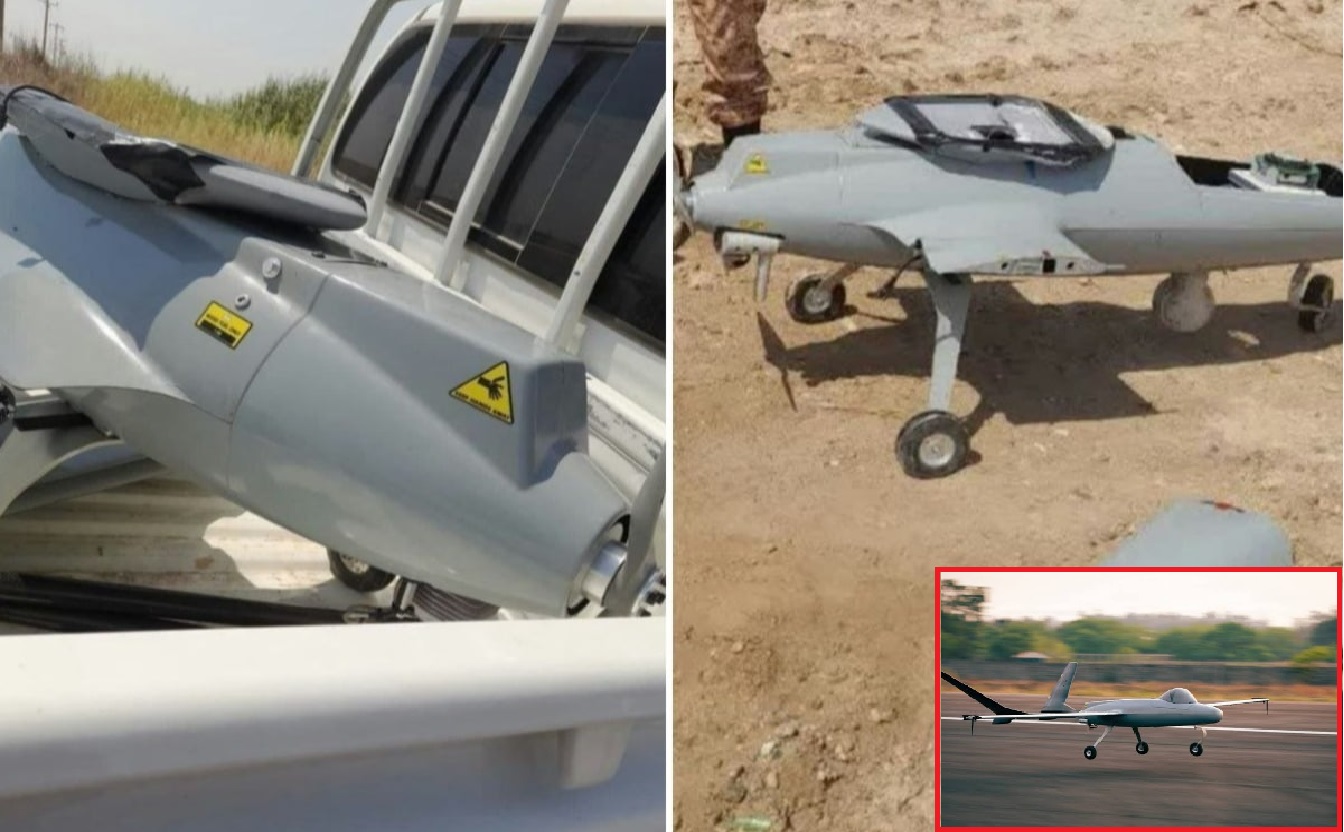 Iran Claims It Shot Down U.S.-Operated Polish-Built Tiguar-M Drone, Releases Images
-
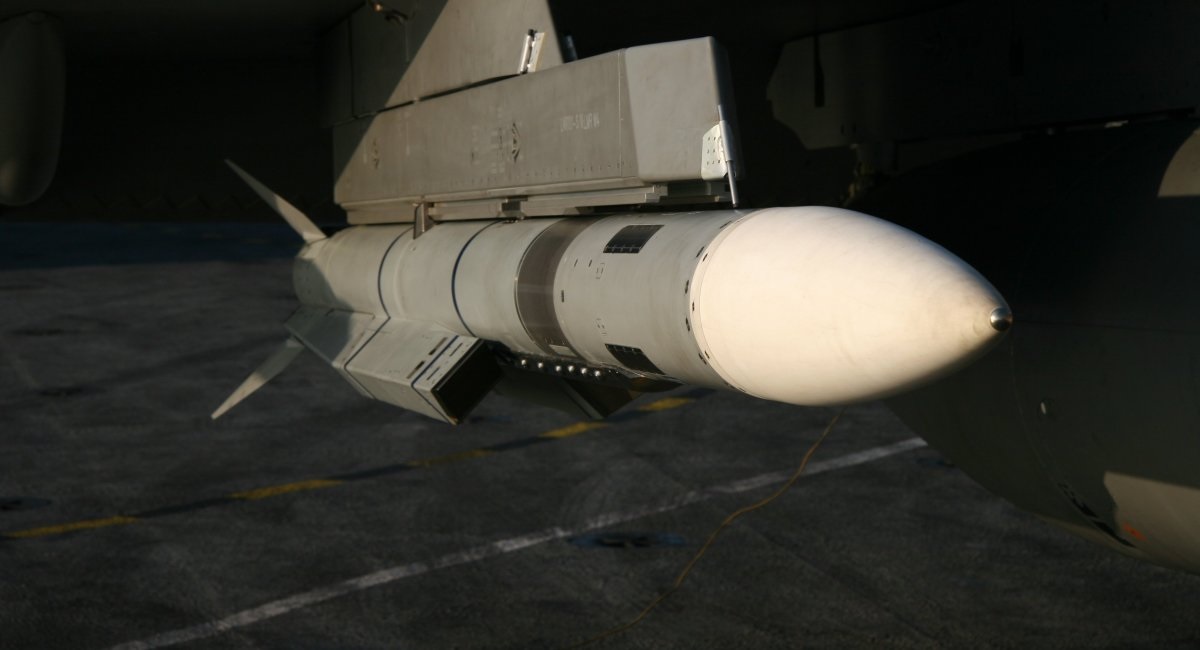 UK Cancels Meteor Missile Mid-Life Upgrade, Prioritizes Next-Generation FASE Air-to-Air Missile Programme
-
 NASA, Draper Cancels CP-12 Lunar Lander Mission After Development Delays Push Mission Beyond 2030
-
 Satellite Images Confirm Russian Tu-95MS Bomber Destroyed After Ukrainian Drone Strike on Engels-2 Air Base
-
 U.S. Navy's Zumwalt Destroyer Hypersonic Missile Upgrade Program Delayed by Two Years as Costs Top $2 Billion: GAO Reports
