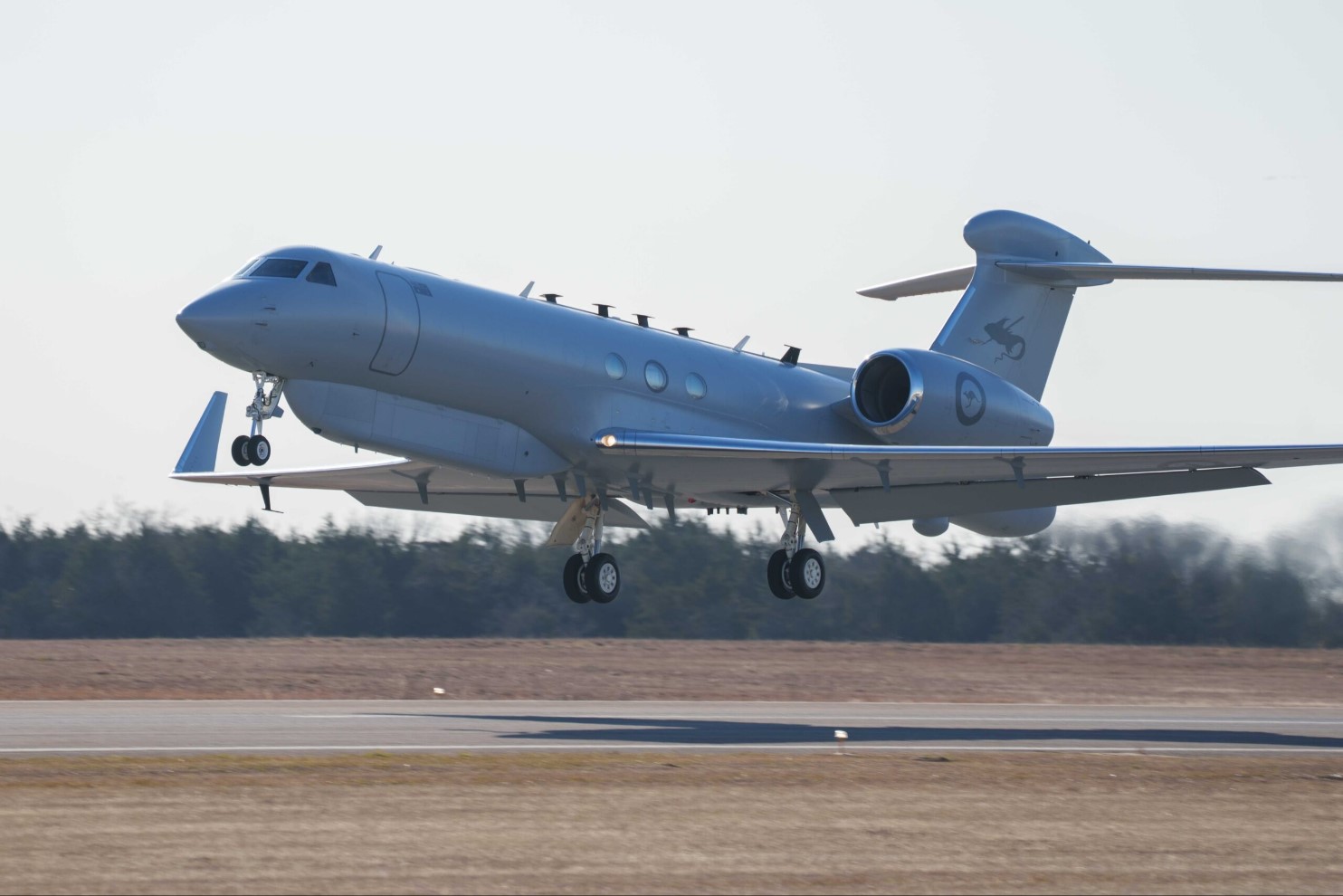
ADELAIDE, — June 13, 2026 : The Royal Australian Air Force (RAAF) has received its third MC-55A Peregrine intelligence, surveillance, reconnaissance, and electronic warfare (ISREW) aircraft, further advancing Australia's efforts to expand its airborne intelligence and electronic warfare capabilities. The aircraft arrived at RAAF Base Edinburgh in South Australia, where the entire fleet will be based and operated by No. 10 Squadron.
The delivery follows the arrival of the first MC-55A in January 2026 and the second aircraft in March 2026. A fourth and final aircraft is expected to join the fleet later this year. The program is progressing toward achieving full operational capability by 2028.
Dedicated Intelligence and Electronic Warfare Platform
The MC-55A Peregrine is Australia's first dedicated airborne intelligence, surveillance, reconnaissance, and electronic warfare platform. Developed from the Gulfstream G550 business jet, the aircraft has been extensively modified by U.S.-based defence contractor L3Harris Technologies with advanced mission systems designed to support intelligence collection, electronic warfare operations, long-range targeting, and mission planning.
The acquisition is being carried out under Project AIR 555 Phase 1, through which the Australian Government approved approximately A$2.4 billion for the purchase of four aircraft. The platform is intended to replace and expand capabilities previously provided by the RAAF's AP-3C Orion electronic warfare variants.
Advanced Multi-Intelligence Capabilities
The MC-55A is equipped to conduct signals intelligence (SIGINT), electronic intelligence (ELINT), communications intelligence (COMINT), and broader multi-intelligence collection missions. Its systems are designed to collect, process, and distribute information across multiple domains, supporting commanders with real-time situational awareness and operational planning.
The aircraft is expected to play a key role in monitoring Australia's strategic maritime approaches and supporting regional deployments throughout the Indo-Pacific. Its ability to operate as a persistent intelligence-gathering platform enables the Australian Defence Force (ADF) to conduct surveillance and electronic warfare missions in complex operational environments.
Aircraft Specifications
Based on the Gulfstream G550 airframe, the MC-55A combines long-range performance with high-altitude operational capability.
Key specifications include:
- Length: Approximately 29.4 metres
- Wingspan: 28.48 metres
- Maximum Takeoff Weight: Around 42,700 kilograms
- Engines: Two Rolls-Royce BR710 C4-11 turbofan engines
- Range: Up to 7,685 kilometres
- Service Ceiling: 45,000 feet
- Cruise Performance: High-speed long-range operations
These characteristics allow the aircraft to conduct extended surveillance and intelligence missions over large distances while maintaining operational flexibility.
Integration with Australia's Defence Network
The Peregrine will become a central component of Australia's broader intelligence and surveillance architecture. The aircraft is expected to operate alongside other ADF platforms, including the Boeing P-8A Poseidon maritime patrol aircraft and the Northrop Grumman MQ-4C Triton unmanned aircraft system.
By integrating data collected from multiple platforms, the MC-55A will strengthen Australia's ability to monitor activities across the Indo-Pacific region and improve intelligence-sharing capabilities with allied partners.
No. 10 Squadron Transition
No. 10 Squadron, which has a longstanding history as a signals intelligence unit within the RAAF, is currently transitioning to the new fleet. The arrival of the third aircraft marks another important step in building the squadron's operational capability and preparing personnel for future intelligence and electronic warfare missions.
To support the fleet, L3Harris has established an in-country field service team responsible for maintenance support and future upgrades. The U.S. Air Force acts as the contracting agency under a Foreign Military Sales (FMS) arrangement, while initial testing and training activities have been conducted in the United States.
Strengthening Allied Interoperability
The MC-55A Peregrine fleet is expected to enhance interoperability with key defence partners, including the United States and the United Kingdom. The aircraft's advanced intelligence and communications systems will support joint operations, coalition missions, and information-sharing activities across allied networks.
With the third aircraft now delivered and the final airframe scheduled to arrive later in 2026, Australia continues to build a modern airborne intelligence capability designed to support future defence operations and evolving regional security requirements.
——— End of Article ———