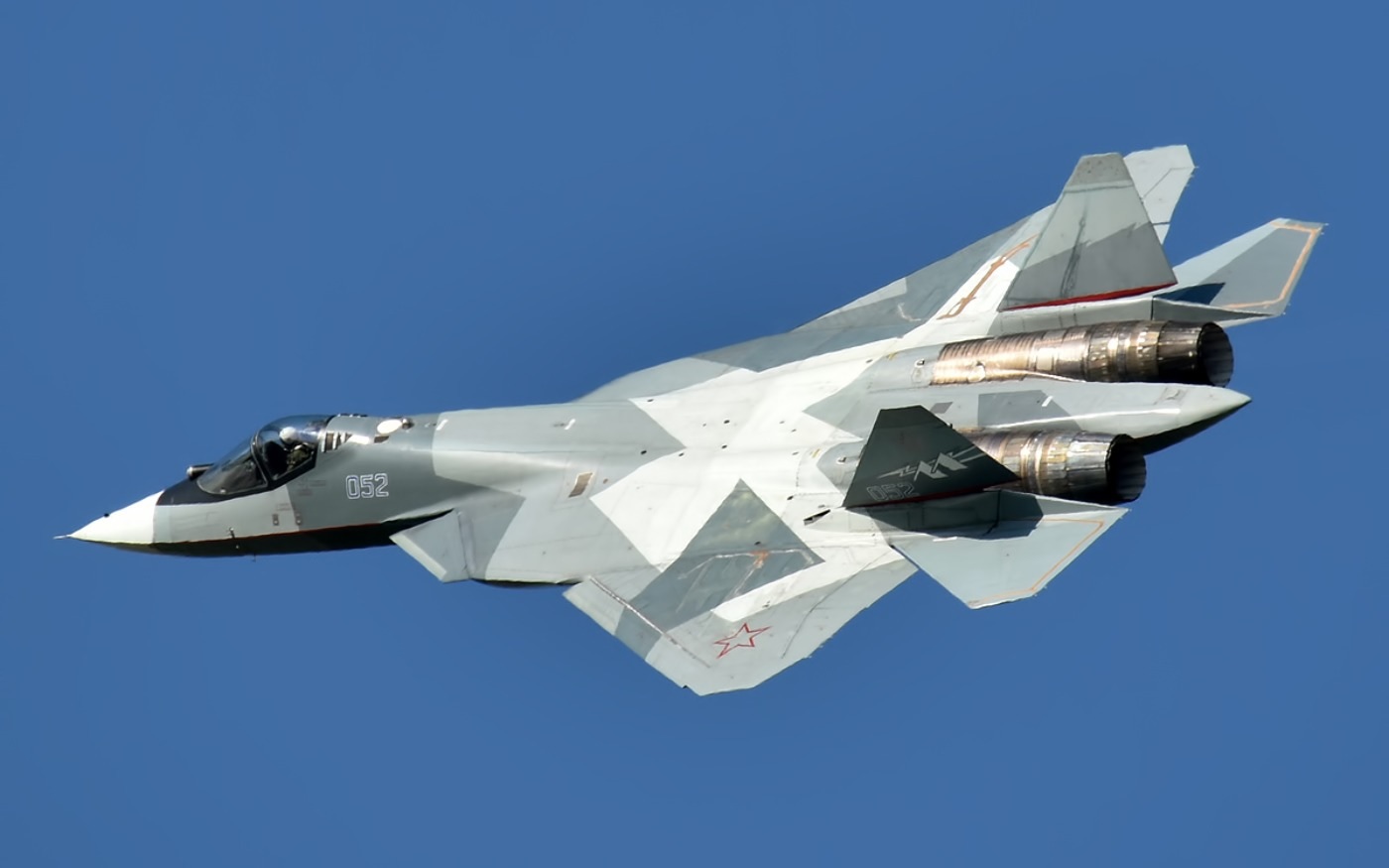
MOSCOW, — June 13, 2026 : A public debate has emerged among Russian military analysts and defense commentators over the operational performance and technical maturity of Russia’s Su-57 fifth-generation fighter aircraft following recent remarks by Russian President Vladimir Putin, who described the aircraft as the most capable fighter in the world.
Speaking at the St. Petersburg International Economic Forum (SPIEF) 2026, Putin reaffirmed his confidence in the Su-57 program, highlighting the aircraft’s effectiveness and stating that Russia remains prepared to supply the fighter to India. His comments renewed comparisons between the Su-57 and the U.S.-built F-35, triggering discussion within Russia’s defense community over the aircraft’s combat record and overall capabilities.
Questions Over Combat Performance
Among the most prominent critics was Russian defense commentator Maksim Kalashnikov, who challenged claims that the Su-57 outperforms the F-35. Kalashnikov pointed to the fighter’s limited visible role in the Ukraine conflict and questioned why it has not demonstrated a larger operational presence if it is indeed superior to its American counterpart.
He contrasted the situation with the Israeli Air Force’s use of F-35 aircraft during operations against Iranian targets, arguing that the U.S.-made fighter has been employed in missions against air defense systems and other strategic objectives. According to Kalashnikov, battlefield results provide a more meaningful measure of military capability than official statements.
His comments reflect a broader discussion within Russia regarding the extent to which the Su-57 has been employed in frontline operations and whether its combat record supports claims of global superiority.
Debate Extends to Technical Maturity
Beyond operational concerns, several Russian analysts have questioned whether the Su-57 has fully achieved the standards commonly associated with fifth-generation fighter aircraft. Critics argue that challenges remain in areas such as stealth characteristics, avionics integration, and engine development.
Particular attention has been placed on the aircraft’s planned cooperation with the S-70 Okhotnik unmanned combat aerial vehicle. The Okhotnik has been designed to operate alongside the Su-57 as a "loyal wingman," extending the fighter’s sensor coverage, reconnaissance capability, and strike reach while reducing risk to the crewed aircraft.
However, the integration process has faced delays and logistical challenges. Defense reports published in early 2026 suggested that Russia may temporarily pair the S-70 with the two-seat Su-30SM fighter because the Su-57 currently lacks a dedicated two-seat variant capable of managing advanced drone-control functions during complex missions.
Fleet Size Shapes Operational Reality
Supporters of the Su-57 argue that comparisons with the F-35 often fail to account for the significant difference in fleet size between the two aircraft programs.
Current estimates indicate that approximately 50 to 60 Su-57 fighters are in active service, while more than 1,000 F-35 aircraft have been delivered worldwide. When full-scale hostilities began in Ukraine, fewer than six Su-57s were believed to be operational, naturally limiting the aircraft’s early contribution to combat operations.
As production has increased, the Su-57 has reportedly taken on a broader range of missions. Western, Russian, and Ukrainian assessments indicate that the fighter has been used for air-to-air operations, suppression of enemy air defenses, intelligence support missions, and precision strike tasks.
Ukrainian monitoring groups have also reported multiple launches of Kh-59 and Kh-69 cruise missiles from Su-57 aircraft during operations conducted in 2026. Military analysts note that the frequency of such missions has increased as additional aircraft have entered service with the Russian Aerospace Forces.
F-35 Operations Offer Different Comparison
Analysts defending the Su-57 also argue that the F-35’s operational record should be viewed within the context of its intended role. While the aircraft has participated in combat operations across multiple theaters, many of its missions have focused on intelligence, surveillance, reconnaissance, and battlefield management rather than direct strike operations.
Israeli military officials have previously described the F-35 as a key platform for gathering intelligence and providing targeting information to other aircraft. According to an Israeli Air Force officer speaking under the pseudonym Lieutenant Colonel I., F-35 aircraft often operate ahead of strike formations to identify threats, collect data, and create a comprehensive battlefield picture before follow-on attacks are carried out.
Some analysts further note that the F-35’s full range of air-to-ground capabilities will continue to expand as future Block 4 software and weapons upgrades are introduced over the coming years.
Maintenance and Cost Considerations
Operational costs remain another major point of discussion in comparisons between the two fighters.
The Su-57 was designed with an emphasis on maintaining operating and maintenance costs closer to those of Russia’s fourth-generation fighters, including the Su-30 and Su-35. Supporters argue that lower maintenance requirements can contribute to higher aircraft availability and sustained operational tempo.
By contrast, the F-35 program has faced ongoing scrutiny over sustainment costs and maintenance demands. Critics of the program argue that these factors have affected readiness rates and flight-hour generation within some operator air forces, particularly as countries seek to replace aging fighter fleets.
Program Development Continues
The Su-57 program continues to undergo modernization as new aircraft are delivered to the Russian Aerospace Forces. Recent production batches reportedly include improvements to avionics, weapons integration, and onboard systems based on operational experience gained during recent deployments.
Russia is also continuing development of the S-70 Okhotnik, which remains a key component of future plans to expand the Su-57’s capabilities through manned-unmanned teaming operations.
At the same time, production rates for the fighter have increased compared with earlier years, reflecting Moscow’s efforts to expand the fleet and strengthen its next-generation combat aviation capabilities.
Ongoing Debate Over Fifth-Generation Fighters
The discussion surrounding the Su-57 highlights the broader debate over how modern fighter aircraft should be assessed. While the F-35 is widely recognized for its sensor fusion, networking capabilities, and ability to operate within integrated military systems, the Su-57 is frequently praised for its speed, maneuverability, range, missile payload, and lower operating costs.
The debate also gained attention following Aero India 2025, where both aircraft were showcased to potential customers. Russian officials have continued to promote the Su-57 as a major export platform, particularly for India, a point that President Putin again emphasized during his remarks at SPIEF 2026.
As more operational data becomes available from Ukraine and other theaters, analysts are expected to continue evaluating the strengths and limitations of both aircraft. While opinions remain divided, the Su-57’s combat performance, fleet expansion, and future integration with unmanned systems are likely to remain central topics in discussions about the future of air combat.
——— End of Article ———