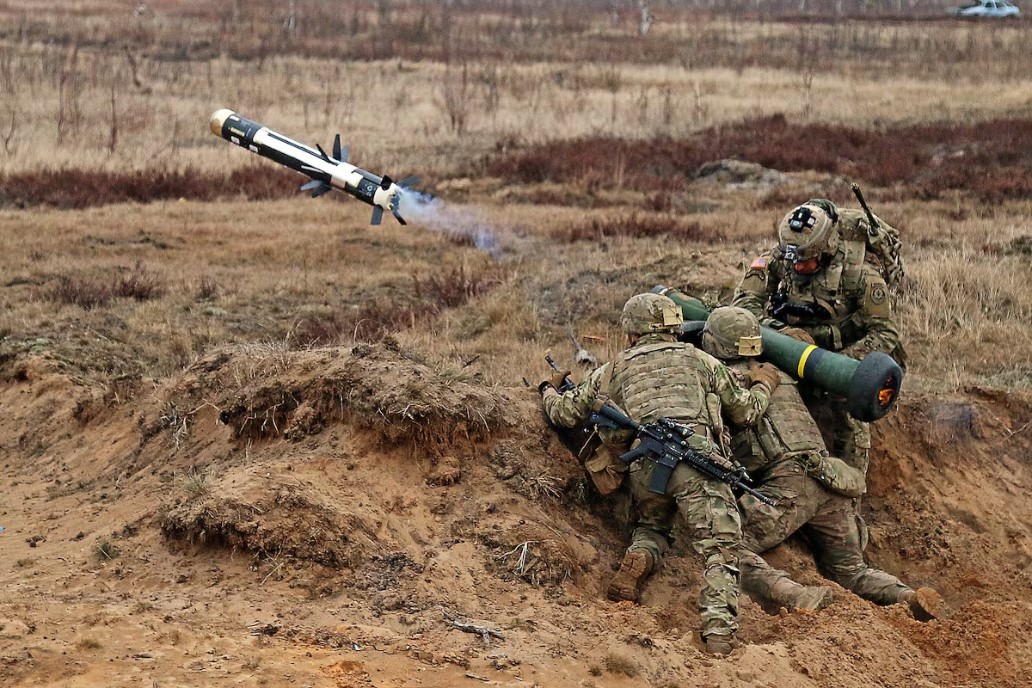
Washington, — June 16, 2026 : The U.S. Army has initiated a major procurement planning effort for the Javelin Weapon System, issuing a sources sought notice to defense manufacturers to assess industry capabilities for supporting production and sustainment of the missile system over the next decade.
The notice, released by the U.S. Army Contracting Command on June 15, 2026, seeks information from companies that may be able to contribute to Javelin-related manufacturing, support services, and supply chain operations during fiscal years 2027 through 2036. The initiative reflects the Army’s intention to continue procuring the shoulder-fired anti-tank missile system in significant quantities while strengthening the industrial base that supports its production.
Demand Driven by Stockpile Replenishment
The Army’s long-term planning effort comes amid increased demand for Javelin missiles following extensive transfers to Ukraine since Russia’s full-scale invasion in 2022. The weapon has been widely used by Ukrainian forces against armored vehicles and has become one of the most recognized anti-armor systems employed during the conflict.
The large number of missiles supplied to Ukraine has reduced U.S. stockpiles, creating a requirement for accelerated replenishment. Before the war, annual production averaged approximately 2,100 missiles. In response to growing demand, the Javelin Joint Venture (JJV), a partnership between Lockheed Martin and Raytheon, has expanded manufacturing capacity and is targeting production of 3,960 missiles per year by late 2026.
To support higher output levels, production facilities in Troy, Alabama, and Ocala, Florida, have undergone modernization efforts. These upgrades include the use of advanced manufacturing technologies, AI-driven forecasting tools, and an expanded supplier network consisting of nearly 100 component-level suppliers.
Focus on Supply Chain Support
The Army's notice is not intended to replace the Javelin Joint Venture, which has produced the missile system since it entered service in 1996. The joint venture retains ownership of the intellectual property and technical data package associated with the weapon.
The Army acknowledged in the notice that it does not possess a complete technical data package for the system and identified the joint venture as the original developer. Instead of seeking an alternative prime contractor, the Army is conducting market research to determine how additional companies can contribute to the broader production ecosystem while operating within existing intellectual property limitations.
Areas of interest identified by the Army include:
- Manufacturing missile subassemblies
- Producing Command Launch Units (CLU)
- Supplying vehicle adapters
- Providing training devices and simulators
- Delivering spare batteries and replacement components
- Offering engineering and technical support services
The information gathered will help the Army evaluate opportunities to increase production capacity and improve supply chain resilience without infringing on proprietary technologies.
Javelin Remains a Key Anti-Armor Weapon
The Javelin is a medium-range, shoulder-fired anti-tank guided missile designed for operation by a single soldier. The system is known for its fire-and-forget capability, allowing operators to launch the missile and immediately seek cover or reposition without continuing to guide the weapon.
The missile uses an imaging infrared seeker that locks onto a target’s heat signature before launch and autonomously tracks the target throughout flight.
Key Characteristics of the Javelin Weapon System
| Feature | Details |
|---|---|
| Maximum Range | Exceeds 4,500 meters |
| Guidance | Fire-and-forget with imaging infrared seeker |
| Warhead | Tandem-charge high-explosive anti-tank warhead |
| Attack Modes | Top-attack and direct-fire |
| Armor Defeat Capability | Designed to penetrate reactive and conventional armor |
The top-attack mode enables the missile to strike the thinner upper armor of armored vehicles, while the direct-fire mode can be used against fortified positions and other targets.
Lightweight Launch Unit Enters Service
Recent modernization efforts have also focused on the Command Launch Unit. In May 2026, the Javelin Joint Venture delivered the first Lightweight Command Launch Units (LWCLU) to the U.S. Army.
Supported by a $22 million factory modernization investment by Raytheon, the LWCLU reduces system weight while improving day and night target engagement capabilities. The upgraded launch unit is compatible with all previous, current, and future Javelin missile variants.
Industry Responses Due June 30
Defense manufacturers interested in supporting future Javelin production are required to submit white papers to the Army by June 30, 2026. The submissions must outline technical capabilities, relevant experience, and proposed approaches for executing work associated with the system over the ten-year period.
The sources sought notice represents an early stage of acquisition planning and does not constitute a formal contract solicitation. However, it provides a clear indication that the Army expects continued demand for the Javelin Weapon System and is taking steps to ensure sufficient production capacity and supply chain support through the next decade.
——— End of Article ———