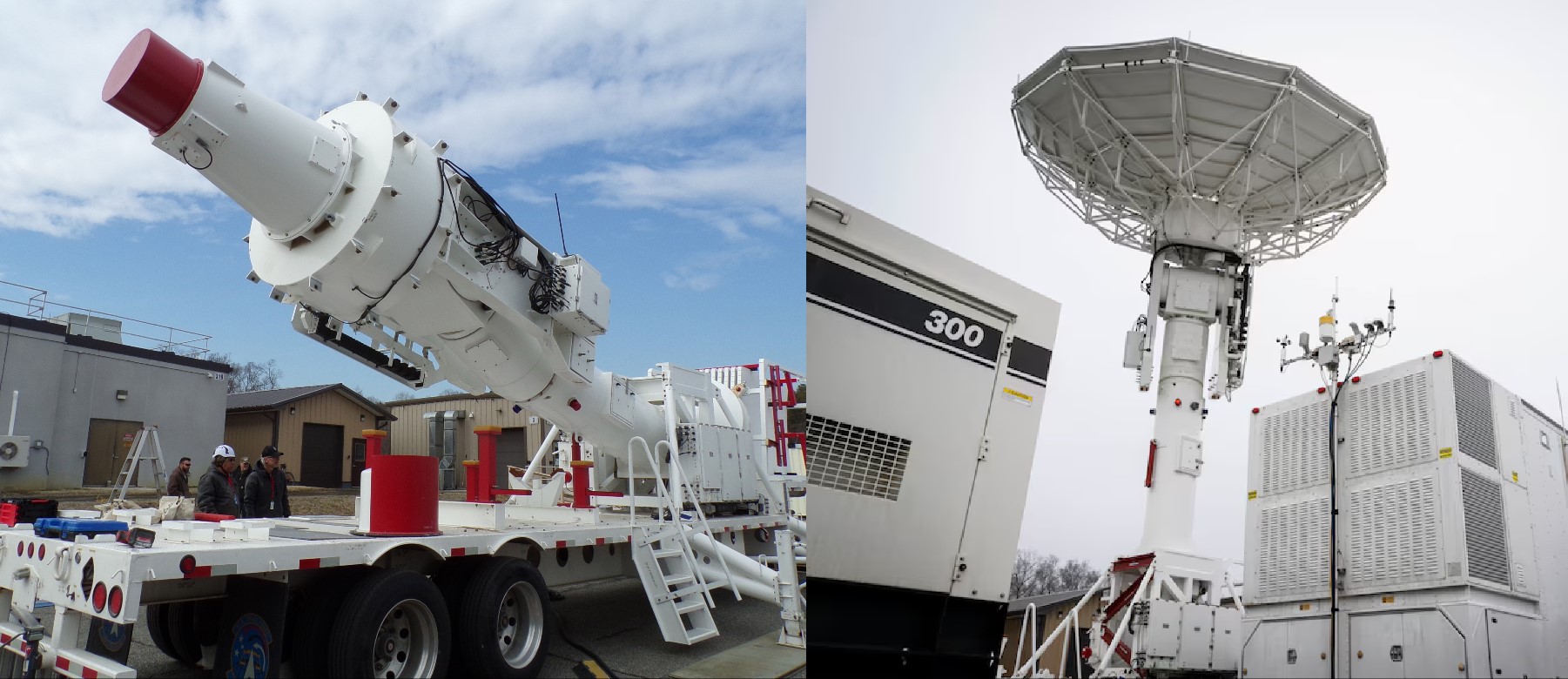
WASHINGTON, — June 16, 2026 : The U.S. Naval Research Laboratory (NRL) has received a transportable satellite tracking antenna system from the U.S. Space Force’s Space Systems Command (SSC) System Delta 81 (SYD 81), strengthening joint military capabilities for satellite testing, communications, and operational support.
The transfer, officially announced on June 10 and later republished by the Department of Defense on June 12, was completed during the first quarter of 2026. The antenna has been integrated into NRL’s Blossom Point Tracking Facility in Welcome, Maryland, where it will support satellite tracking, telemetry, and command operations for emerging space technologies and future mission requirements.
The system was deployed through a joint effort involving NRL personnel and L3Harris engineers. Following its arrival from an integration facility in Colorado Springs, the antenna was assembled, calibrated, and made operational within four days.
Enhanced Space Testing and Operational Support
The addition of the transportable antenna expands Blossom Point’s ability to conduct multi-band communications testing and interoperability assessments across different satellite platforms and frequency bands used by various military services. The system also supports long-duration performance monitoring of satellites and the evaluation of advanced space technologies under operationally relevant conditions.
Unlike fixed ground infrastructure, the antenna’s transportable design allows it to be relocated when mission requirements, environmental conditions, or orbital geometries demand alternative deployment locations. This flexibility provides additional support for testing, training, and operational activities across multiple mission areas.
Military officials said the capability will help improve collaboration between service branches by providing a shared platform for evaluating satellite communications and space-based systems.
Growing Importance of Space Operations
The transfer comes as space continues to play an increasingly important role in military operations. Modern armed forces rely heavily on satellites for communications, navigation, positioning, intelligence gathering, surveillance, and precision targeting.
As the space domain becomes more congested and contested, military organizations are placing greater emphasis on ensuring the resilience and effectiveness of satellite networks. Ground-based facilities responsible for commanding, monitoring, and maintaining satellites are considered critical components of that effort.
The new antenna will support testing and validation of systems designed to operate in environments where communications may face interference or other operational challenges.
Role of System Delta 81
System Delta 81, which transferred the antenna to NRL, was activated under Space Systems Command in September 2025. The unit is responsible for developing and fielding realistic test and training capabilities for U.S. Space Force operations.
The decision to place the antenna at Blossom Point reflects ongoing Department of Defense efforts to strengthen joint testing infrastructure and improve cooperation between military services. By making the capability available at a shared research and operational facility, the military can support a broader range of experiments, exercises, and technology demonstrations.
Historic Facility Receives New Capability
Located along the Potomac River in Charles County, Maryland, the Blossom Point Tracking Facility has served as a satellite communications and research site since 1956. Originally established to support the Vanguard satellite program, it is among the nation's earliest satellite command and control facilities.
The site provides a low-radio-frequency-interference environment that is well suited for sensitive satellite communications and space research activities. Blossom Point currently supports satellite command and control, communications experimentation, and orbital research involving low, medium, and high Earth orbit systems.
Its existing infrastructure, experienced workforce, and longstanding relationships with military and government space organizations enabled rapid integration of the newly transferred antenna system.
Future Applications Under Evaluation
NRL is currently assessing future experiments, training exercises, and operational missions that could benefit from the transportable antenna. Officials are also evaluating potential deployment locations to maximize the system’s effectiveness and mission utility.
As the corporate laboratory for the U.S. Navy and Marine Corps, NRL continues to play a central role in developing technologies that support military operations. The addition of the transportable satellite tracking antenna further expands the laboratory’s capabilities in satellite communications, space surveillance, and advanced research.
The collaboration between NRL and the Space Force highlights continued efforts to enhance joint space operations and strengthen the infrastructure needed to support U.S. military activities in an increasingly important operational domain.
——— End of Article ———