
India
In a significant boost to India’s defence manufacturing ecosystem, MSA Global Technology & Engineering Pvt Ltd has become India’s first company to successfully manufacture fully metallic rocket launcher barrels for the Grad BM-21 system within the country. The achievement marks a major step in the Indian Army’s ongoing push for complete indigenisation of critical artillery subsystems. The milestone follows the successful firing of 15 live rockets by the Indian Army, using indigenously manufactured barrels supplied by MSA Global. After meeting all performance, safety, and consistency parameters, the Army has formally issued the Firing Trial Certificate (Phase-1), validating the barrel design for operational progression. From Imports to Indigenous Precision Until now, the BM-21 Grad’s launcher barrels — a critical pressure-bearing component — were either imported or sourced with limited domestic value addition. With this breakthrough, the entire barrel assembly is now designed, manufactured, and qualified in India, sharply reducing dependence on foreign suppliers while improving long-term sustainment and lifecycle control. The newly developed barrels are all-metal, high-strength, precision-machined units capable of withstanding repeated high-pressure rocket launches while maintaining tight tolerances for accuracy and safety. According to officials familiar with the trials, all 15 rockets fired during Phase-1 performed within stipulated dispersion and structural integrity limits, confirming the barrels’ operational reliability. Phase-2 Trials to Validate Salvo Firing Capability Following the Phase-1 clearance, the programme will now advance to Phase-2 firing trials, a more demanding test designed to simulate real battlefield conditions. In this phase, five additional indigenous barrels will be integrated, enabling a six-barrel salvo firing configuration using identical, fully indigenous barrels. Phase-2 will assess simultaneous firing stresses, thermal endurance, vibration loads, and structural fatigue, ensuring that the barrels can handle rapid, multi-rocket launches without degradation. Successful completion would effectively clear the system for wider induction and serial production. Seven-Year Indigenous Development Effort The indigenous BM-21 barrel programme has been under development since 2018, reflecting a long-term and methodical approach rather than a rushed replacement. MSA Global worked in close technical collaboration with the Indian Institute of Science (IISc), leveraging advanced materials research, metallurgical modelling, and stress-analysis simulations. Testing and validation were conducted in partnership with NABL-accredited laboratories, ensuring compliance with nationally recognised quality and safety standards. The development cycle included material selection, forging and machining optimisation, internal surface treatment, pressure testing, and live-fire evaluation, bringing the system in line with global military benchmarks. Strategic Impact for Indian Rocket Artillery The BM-21 Grad remains a key component of India’s rocket artillery inventory, valued for its 122-mm rockets, high-volume firepower, and battlefield flexibility. Indigenous barrel manufacturing not only strengthens operational readiness but also enables faster repairs, upgrades, and future modifications, particularly important during prolonged deployments or high-intensity conflict. Defence analysts note that this success creates a domestic industrial foundation for next-generation rocket systems, including improved accuracy variants and extended-range rockets. It also positions Indian industry to support exports, spares production, and technology upgrades for legacy systems operated by friendly nations. A Concrete Step Toward Full Indigenisation With Phase-1 trials completed and Phase-2 underway, the BM-21 Grad barrel programme stands as a practical demonstration of India’s maturing defence manufacturing capabilities. More importantly, it shows that complex, safety-critical artillery components — once considered difficult to localise — can now be designed, built, tested, and fielded entirely within India. As the Indian Army continues to modernise its artillery forces, the successful indigenisation of BM-21 Grad barrels represents not just a technical achievement, but a strategic shift toward self-reliance in firepower systems.
Read More → Posted on 2025-12-28 14:46:07
World
China has entered a new phase of advanced aviation development after a 6-ton-class tiltrotor aircraft, the Lanying R6000, successfully completed its maiden flight on Sunday in Sichuan Province, marking a global first in its weight category. The aircraft was independently developed by United Aircraft, the company confirmed in a release shared with Global Times. The Lanying R6000 is currently the largest tiltrotor aircraft ever to complete a first flight in China, underscoring the country’s rapid ascent in one of aviation’s most complex and strategically significant technologies. A Dual-Mode Aircraft Redefining Distance Designed to bridge the gap between helicopters and fixed-wing aircraft, the R6000 seamlessly transitions between vertical take-off and landing (VTOL) and high-speed horizontal flight. This allows it to combine precise hovering and vertical access with long-range, high-speed cruise performance, enabling point-to-point connectivity across urban centers, offshore routes, and mountainous terrain. According to United Aircraft, the platform is intended to support cross-regional “door-to-door” air transport networks, sharply reducing travel time while expanding access to areas traditionally underserved by conventional aviation. Breaking a Long-Standing Technological Barrier “The emergence of the R6000 shows that China has reached the forefront of global tiltrotor aviation, breaking a long-standing technological monopoly,” said Zhao Fengming, project manager of the program. A key milestone is the aircraft’s powerplant. The R6000 is powered by the AES100 turboshaft engine, which has been independently developed by AERO Engine Corporation of China, marking another step toward full domestic control over critical aviation technologies. Advanced Rotor Architecture and Safer Operations Unlike traditional tiltrotors that rotate the entire engine nacelle, the Lanying R6000 adopts an advanced tilting rotor shaft design. This configuration delivers major breakthroughs in flight control and power transmission, while also addressing operational safety challenges. By avoiding exposure to high-temperature exhaust airflow during take-off and landing, the design reduces risks to ground personnel and prevents thermal damage to maritime platforms without heat-resistant coatings. This feature is expected to significantly expand shipborne and offshore operations, including take-offs and landings on ordinary sea platforms. Performance Figures That Redefine the Class In fixed-wing flight mode, the R6000 achieves a cruising speed of 550 km/h, approximately twice that of conventional helicopters. It carries a maximum commercial payload of 2,000 kilograms, far exceeding helicopters of similar weight. The aircraft’s maximum range reaches 4,000 kilometers, around four times greater than traditional helicopters, while its service ceiling stands at 7,620 meters, nearly double the typical helicopter operating altitude. To support operations in confined environments, the R6000 incorporates wing tandem-folding and rotor blade retraction technologies, reducing its parking footprint and overcoming deployment limitations associated with fixed-wing aircraft. Independent Systems and Aviation-Grade Safety United Aircraft emphasized that the maiden flight reflects a series of fully independent breakthroughs in core tiltrotor technologies. The R6000 is equipped with an intelligent tilt and flight-control system with complete intellectual property rights, designed to maintain stability and safety throughout all phases of flight. Its transmission system meets the most stringent aviation safety standards, while the use of high-performance composite rotor blades balances power, efficiency, and noise reduction, laying the groundwork for future large-scale commercial and government use. Role in China’s Expanding Low-Altitude Economy The successful flight comes as China accelerates the development of its low-altitude economy, a sector increasingly visible in daily life. Xinhua News Agency has reported that drones are already being used for food delivery, logistics, and urban services, while helicopter tourism is reshaping high-end travel experiences. Beyond air commuting, the Lanying R6000 is expected to play a critical role in medical evacuation, firefighting, police patrols, and large-scale disaster relief, enabling rapid and precise deployment of personnel and supplies. The aircraft also opens new possibilities for high-end private travel and aerial sightseeing tourism. A Market Measured in Trillions According to forecasts from the Civil Aviation Administration of China, China’s low-altitude economy is projected to reach 1.5 trillion yuan by 2025 and could exceed 3.5 trillion yuan by 2035. Below the 1,000-meter altitude band, growth opportunities are described as “boundless.” With the Lanying R6000’s maiden flight, China has not only demonstrated technical maturity in tiltrotor aviation but has also signaled its intent to shape the future of regional air mobility, emergency response, and next-generation transport systems on a global scale. If you want, I can tighten the tone further for a Western defence or aviation outlet, or add comparative context with platforms like the V-22 Osprey for international readers.
Read More → Posted on 2025-12-28 14:38:23
World
Japan has officially begun mass production of its upgraded Type 03 Chu-SAM Kai medium-range air defense system, marking a major transition from development to large-scale operational deployment. The move was confirmed in an annual defense investment document released on December 26, 2025 by the Japanese Ministry of Defense, underscoring Tokyo’s determination to reinforce its integrated air and missile defense architecture amid intensifying regional missile activity. The start of production signals that the Type 03 Kai has cleared critical testing, evaluation, and validation milestones. Japanese defense officials characterize the system as a core mid-layer interceptor, specifically optimized to counter ballistic missiles, maneuvering re-entry vehicles, and emerging hypersonic glide threats that challenge traditional air defense systems. Evolution from Type 03 to Type 03 Kai The original Type 03 Chu-SAM entered service with the Japan Ground Self-Defense Force (JGSDF) in 2003, replacing the aging Type 81 Tan-SAM. Developed and manufactured by Mitsubishi Electric, the baseline system introduced active radar-homing missiles, truck-mounted vertical launchers, and a phased-array fire-control radar capable of engaging multiple targets simultaneously. Designed from the outset as a mobile and networked system, the Type 03 was integrated into Japan’s multi-layered air defense strategy, operating alongside U.S.-supplied Patriot PAC-3 systems for higher-altitude interception and indigenous short-range defenses for point protection. The Kai (improved) variant represents a substantial technological leap, rather than a routine upgrade. According to officials, improvements focus on enhanced sensor fusion, advanced guidance algorithms, and greater effectiveness against high-speed, maneuvering targets operating in contested electromagnetic environments. Budget Allocation and Production Funding Japan’s draft Fiscal Year 2026 defense budget, approved by the Cabinet on December 26, 2025, formally includes ¥5.1 billion (approximately USD 32.6 million) for the initial production tranche of the Type 03 Chu-SAM Kai. This allocation marks the system’s first dedicated procurement funding line, aligning with Japan’s record defense spending framework driven by accelerating regional security challenges. Defense planners indicate that early production units will be used for frontline deployment, operator training, and doctrinal refinement, ensuring smooth integration into Japan’s expanding command, control, and early-warning network. Missile and System Specifications While the Japanese Ministry of Defense has withheld certain classified parameters, available data and defense-industry disclosures outline the system’s core capabilities. The Type 03 Chu-SAM Kai interceptor is assessed to have a maximum engagement range of approximately 50 kilometers and an intercept altitude of up to 25 kilometers, firmly positioning it in the medium-range air defense category. The missile employs active radar homing with mid-course guidance updates, allowing autonomous terminal engagement while remaining fully networked with external early-warning sensors. The upgraded radar is believed to incorporate an advanced AESA (Active Electronically Scanned Array), improving detection of low-observable targets, tracking of high-velocity threats, and resilience against electronic warfare and jamming. Launchers remain truck-mounted with vertical launch capability, preserving 360-degree coverage, rapid shoot-and-scoot mobility, and high survivability in dynamic combat environments. Each battery is designed to operate as part of a distributed, network-centric formation, receiving targeting data from ground-based radars, airborne sensors, and national-level command nodes. Strategic Significance Defense analysts view the start of mass production as a strategic inflection point in Japan’s homeland defense modernization. With regional actors expanding their ballistic missile inventories and accelerating hypersonic weapons development, Tokyo’s investment in an indigenous, high-performance medium-range interceptor reflects both operational necessity and a drive for defense-industrial self-reliance. Once fully fielded, the Type 03 Chu-SAM Kai is expected to rank among the most capable medium-range air defense systems in the Asia-Pacific region, significantly enhancing Japan’s ability to detect, track, and intercept next-generation aerial threats and reinforcing the credibility of its multi-layered national missile defense shield.
Read More → Posted on 2025-12-28 14:28:46
World
Japan has reached a major milestone in its maritime defence transformation with the launch of the twelfth and final Mogami-class stealth frigate, formally closing one of the most ambitious surface-combatant programs in the history of the Japan Maritime Self‑Defense Force (JMSDF). The final vessel, JS Yoshii (FFM-12), was launched on December 22, 2025, at Mitsubishi Heavy Industries’ Nagasaki Shipyard, marking the completion of a 12-ship program valued at approximately ¥550 billion (about USD 3.7–4.0 billion). The frigate is scheduled to enter active service in FY 2026, following outfitting, sea trials, and combat-system integration. Program Origins and Order Details The Mogami-class frigate program originated under Japan’s 30FFM (Fast, Flexible, Multi-Mission) initiative, aimed at replacing ageing destroyer escorts and mine-countermeasure vessels while reducing crew burden through automation. The initial procurement contract for the first batch of Mogami-class frigates was approved in FY 2018, with construction formally commencing in 2019. Subsequent batches were authorised through Japan’s Medium-Term Defense Programs (MTDPs), with final funding approval secured by FY 2021, completing orders for all 12 hulls. Key program figures include: Total ships ordered: 12 Estimated total budget: ~¥550 billion Average unit cost: ¥45–46 billion per ship Prime contractor: Mitsubishi Heavy Industries (MHI) Construction period: 2019–2025 Planned full operational fleet: By March 2027 The accelerated build schedule allowed Japan to launch multiple hulls annually, an unusually rapid pace for complex surface combatants. A New Era of Surface Warfare The Mogami class, also designated under Japan’s “30FFM” (Fast, Flexible, and Future-Ready Multi-Mission Frigate) project, represents a leap forward in autonomous operation, modular mission capability, and survivability. With a standard displacement of approximately 3,900 tons and a full load displacement near 5,500 tons, these vessels blend stealth features with modern sensors and weapons to ensure dominance in littoral and open-ocean environments. Key specifications for the class include: Length: ~132.5 m; Beam: ~16.3 m; Draft: ~9 m Propulsion: CODAG (Combined Diesel And Gas) with one Rolls-Royce MT30 gas turbine and two MAN diesel engines Speed: Over 30 knots Crew: ~90 personnel Sensors & Combat Systems: Advanced AESA radar, integrated electro-optical/IR systems, mine-hunting sonar, and a modern combat management suite Armament: 1 Mk-45 naval gun, 8 Type 17 anti-ship missiles, 16 Mk-41 Vertical Launch System (VLS), 1 SeaRAM, 2 Triple lightweight torpedo launchers, and 2 Remote weapon stations Aviation Facilities: Capability to operate an SH-60L Seahawk helicopter and unmanned systems for expanded mission sets. These capabilities position the Mogami class as highly networked, automated platforms capable of a broad spectrum of missions — from anti-surface and anti-submarine warfare to air defense, mine countermeasures, and maritime surveillance. From First Keel to Final Hull The JMSDF’s Mogami-class program has progressed at an ambitious pace since its inception, with two hulls typically under construction each year once the program accelerated under Japan’s Medium-Term Defense Program. Eight of the vessels were already in active service by 2025, with all 12 expected to be commissioned by March 2027. Timeline of the class’s launches and induction dates so far: Ship Name Pennant Laid Down Launch Date Induction/Commissioned JS Mogami FFM-1 29 Oct 2019 3 Mar 2021 28 Apr 2022 JS Kumano FFM-2 Date N/A Nov 2019 (reported) Mar 2022 JS Noshiro FFM-3 Date N/A 22 Jun 2021 Dec 2022 JS Mikuma FFM-4 Date N/A Date N/A Mar 2023 JS Yahagi FFM-5 Date N/A Date N/A May 2024 JS Agano FFM-6 Date N/A Date N/A Jun 2024 JS Niyodo FFM-7 Date N/A Date N/A 21 May 2025 JS Yūbetsu FFM-8 30 Aug 2022 14 Nov 2023 19 Jun 2025 Tatsuta FFM-11 Date N/A 2 Jul 2025 Scheduled Nagara FFM-10 6 Jul 2023 19 Dec 2024 Mar 2026 (est.) Yoshii FFM-12 3 Jul 2024 22 Dec 2025 FY2026 (est.) (Note: Some lay-down dates and induction dates are publicly available only for select vessels; others follow planned schedules under the JMSDF shipbuilding program.) Strategic Significance and Regional Impact The completion of the Mogami fleet represents more than just a procurement milestone for Japan. In an era marked by intensifying maritime competition — particularly in the East China Sea and wider Indo-Pacific — these stealth frigates provide Tokyo with flexible, survivable assets to safeguard sea lines of communication and counter a range of threats, from submarine incursions to missile engagements. The progressively automated systems aboard Mogami vessels also help address JMSDF manpower constraints linked to broader demographic trends in Japan, allowing smaller crews to maximize operational effectiveness. International interest in the Mogami design has also surged. In 2025, Australia selected an upgraded Mogami variant as its preferred option for future general-purpose frigates — a landmark defense export for Japan following decades of post-war restrictions on arms exports. This deal highlights the vessel’s performance, modularity, and adaptability to varied strategic requirements. Looking Ahead With the launch of JS Yoshii, Japan formally closes the Mogami-class construction chapter — but operationally, the story is just beginning. As the final ships enter service in 2026, the JMSDF will field one of the most modern frigate fleets in the Indo-Pacific, reshaping regional maritime balance for decades to come.
Read More → Posted on 2025-12-28 14:16:19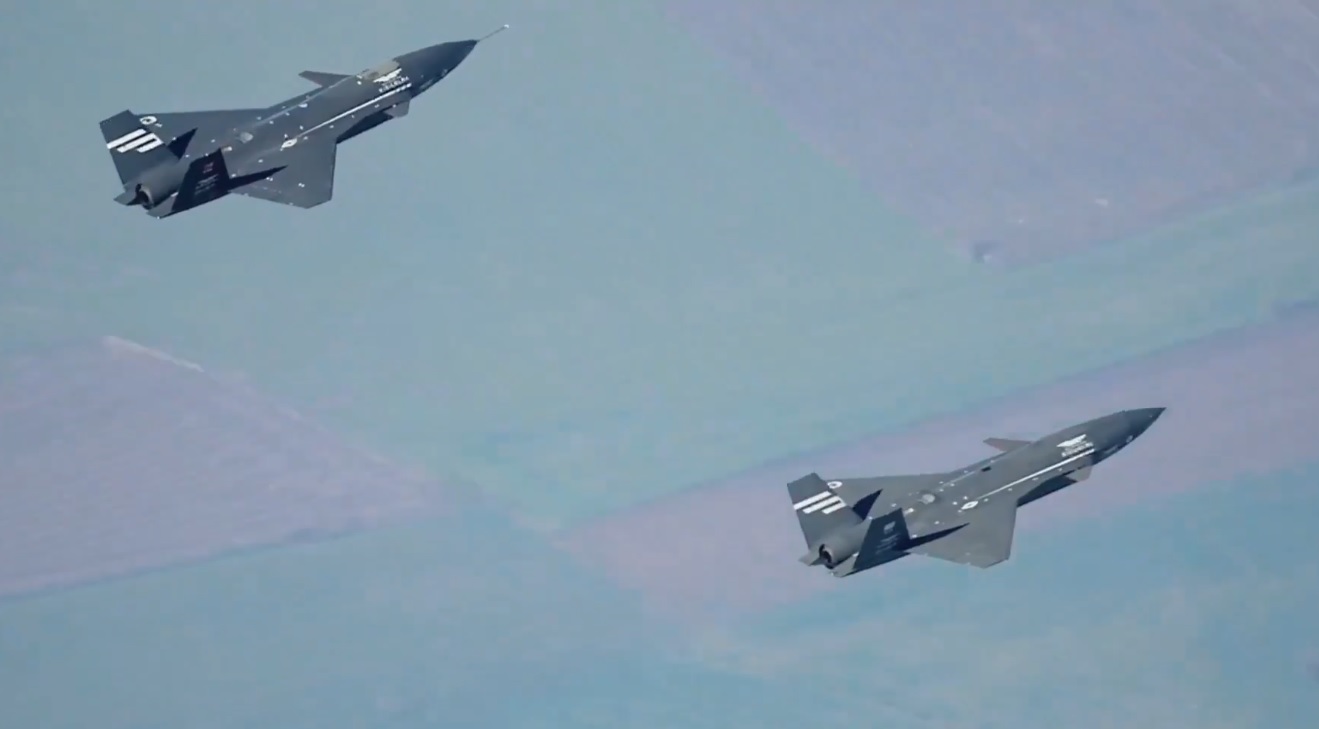
World
Turkey has reached a historic milestone in military aviation after two KIZILELMA unmanned fighter jets successfully carried out the world’s first fully autonomous close formation flight using artificial intelligence alone, without pilots or remote human control. The breakthrough was announced by Baykar on December 28, 2025, marking a decisive step toward a future of AI-driven air combat. According to Baykar, the two jet-powered aircraft flew in tight, coordinated formation, continuously adjusting position, speed, and altitude in real time through onboard AI algorithms, advanced sensors, and encrypted data sharing. At no point was human input required, distinguishing the flight from existing remotely piloted or semi-autonomous drone operations. Defense experts describe the achievement as a turning point that elevates Turkey into a select group of nations shaping the next era of aerial warfare. A Global First in Autonomous Combat Aviation The aircraft involved were Bayraktar KIZILELMA platforms—armed, combat-capable unmanned fighter jets, not experimental drones. Close formation flying is among the most demanding tasks in military aviation, traditionally requiring years of pilot training and constant human judgment. Successfully executing such maneuvers using AI alone demonstrates a level of autonomy not yet publicly shown by any other defense manufacturer worldwide. Analysts note that no Western or Eastern aerospace firm has confirmed or released evidence of two fully autonomous, jet-powered unmanned fighters performing close formation flight without pilot oversight. The demonstration therefore sets a new global benchmark for autonomous decision-making in high-risk aerial environments. What Makes KIZILELMA a Game-Changer KIZILELMA is designed as a low-observable, high-performance unmanned fighter aircraft, capable of operating from short-runway aircraft carriers as well as land bases. The platform integrates advanced radar, sensor fusion, and AI-enabled mission systems, allowing it to conduct air-to-air and strike missions in contested environments. Baykar has indicated that future variants are expected to achieve supersonic performance, further expanding its combat role. The ability of two KIZILELMA jets to fly autonomously in formation is a critical step toward swarm warfare, cooperative dogfighting, and manned–unmanned teaming, where multiple aircraft operate as a single, adaptive combat network. Ahead of Major Powers The announcement places Turkey visibly ahead in public demonstrations of autonomous fighter capabilities. While the United States continues to develop programs such as Skyborg and the Navy’s Collaborative Combat Aircraft, and China’s loyal wingman projects remain largely classified, none have yet confirmed an AI-only formation flight between armed unmanned fighter jets. Baykar’s demonstration suggests that Turkey’s indigenous AI and autonomy technologies have moved beyond theory and controlled testing into operationally relevant performance. Path to Service and Future Tests As of late 2025, the KIZILELMA program is in its advanced flight-test phase, with serial production expected to begin in 2026. The aircraft is projected to enter service with the Turkish Air Force and Turkish Navy within the next 12 to 18 months. Baykar has also confirmed plans for further demonstrations in 2026, including beyond-visual-range combat simulations, swarm coordination, and joint operations with manned fighter aircraft. Redefining the Future of Dogfighting Military strategists say the successful AI-only formation flight challenges long-standing assumptions about the role of human pilots in air combat. With artificial intelligence now capable of executing precision maneuvers once reserved for elite aviators, the balance of air power is increasingly shifting toward algorithms, autonomy, and data dominance. The KIZILELMA formation flight signals more than a technological success—it marks the arrival of a new chapter in warfare, where the future of dogfighting is not just unmanned, but autonomous.
Read More → Posted on 2025-12-28 13:58:40
World
On December 23, the U.S. Department of Defense announced the signing of a new long-term framework agreement with Lockheed Martin, securing the future of the C-130J Super Hercules programme through at least July 2035. The agreement provides the legal and contractual foundation for continued procurement, upgrades, and engineering work on one of the world’s most widely used military transport aircraft. The framework contract carries a maximum potential value of $10 billion and is structured to support both U.S. requirements and international export orders executed under the Foreign Military Sales (FMS) mechanism. At the time of signing, the Department of Defense confirmed that no immediate funding was obligated, underscoring the agreement’s role as a procurement enabler rather than an instant purchase order. Export Customers Already Identified According to U.S. defense officials, the initial group of export customers covered under the new framework includes Egypt, Australia, New Zealand, France, the Philippines, Norway, and the Federal Republic of Germany. These nations already operate or have selected variants of the C-130J, and the agreement simplifies future aircraft orders, system upgrades, and long-term sustainment support. By extending the programme’s ordering window well into the next decade, the framework ensures production continuity and supply-chain stability for both U.S. and allied operators, particularly as airlift demand grows amid heightened global security requirements and humanitarian response missions. Beyond New Aircraft: Engineering and System Integration The agreement is not limited to the manufacture of new airframes. It also covers development and engineering activities, modernization work, and the integration of new onboard systems, enabling the C-130J fleet to evolve with emerging mission requirements. This includes avionics upgrades, mission-specific equipment, and enhancements related to survivability, connectivity, and interoperability with allied forces. Such provisions are increasingly important as operators seek to extend the aircraft’s service life while incorporating next-generation sensors, communications, and electronic warfare capabilities. Building on a $15 Billion Predecessor Contract The newly announced framework follows an earlier multi-year agreement signed in July 2020, which remains in force through July 2030 and carries a maximum value of $15 billion. Together, the two contracts provide Lockheed Martin with a continuous contractual bridge from 2020 to 2035, allowing customers to place orders without renegotiating core terms for each procurement cycle. This long-term approach reflects sustained confidence by the U.S. government and partner nations in the C-130J platform as a cornerstone of tactical airlift and multi-mission operations. Global Fleet and Operational Record To date, more than 560 C-130J aircraft have been delivered worldwide. Collectively, the fleet has accumulated over three million flight hours, demonstrating high utilization across combat, logistics, disaster relief, and special mission profiles. The aircraft has been ordered by 25 countries, in addition to one civilian operator conducting missions on behalf of U.S. government agencies. Multiple Variants for Expanding Missions Alongside the standard transport version, Lockheed Martin offers a family of specialised C-130J configurations. These variants support intelligence gathering, electronic warfare, special operations forces insertion and resupply, search and rescue, and airborne command roles, reinforcing the aircraft’s reputation as one of the most adaptable platforms in military aviation. Strategic Signal By extending the C-130J Super Hercules programme to 2035, the United States has sent a clear signal to allies and industry alike: the iconic airlifter will remain a central pillar of global tactical airlift for decades to come, backed by assured production capacity, upgrade pathways, and long-term sustainment under a single, scalable contractual framework.
Read More → Posted on 2025-12-27 17:00:44
World
On 23 December, the United States Department of War announced the signing of a major new cruise missile production contract with RTX, reinforcing America’s long-range precision strike capabilities amid rising global security demands. Under the agreement, RTX will manufacture and deliver 350 Tomahawk Block V cruise missiles, along with associated support equipment, in a deal valued at $785.2 million. The contract is fully funded at the time of signature, enabling immediate execution without phased budget releases. Deliveries Scheduled Through 2028 According to official details, missile deliveries will be completed by the end of 2028. The Tomahawk Block V missiles produced under this contract will be supplied to multiple U.S. military branches, including the United States Navy, United States Marine Corps, and the United States Army. In addition to domestic users, the contract includes foreign deliveries valued at approximately $500 million, executed through the Foreign Military Sales (FMS) program. While two foreign customers remain undisclosed, the FMS portion underscores sustained allied demand for U.S. long-range strike weapons. Expanding Global Tomahawk Operators To date, Tomahawk missiles acquired via the FMS framework have been purchased by Australia, Netherlands, Japan, and the United Kingdom. Operational testing among allies has accelerated. In December 2024, Australia successfully conducted Tomahawk test launches from the HMAS Brisbane. This was followed in March 2025 by a launch from the Dutch frigate HNLMS De Ruyter. Meanwhile, preparations are ongoing for Japan’s first Tomahawk firing, planned from the destroyer JS Chokai, which is currently undergoing modifications in San Diego. Production Surge and New Launch Platforms RTX confirmed that it is gradually expanding Tomahawk production capacity in response to increased operational requirements and growing export demand. Once operated exclusively by the U.S. Navy and the Royal Navy, the Tomahawk missile system has now been integrated with mobile, land-based launchers for both the U.S. Army and Marine Corps, significantly broadening its deployment options. This shift marks a doctrinal evolution, allowing Tomahawk missiles to be fired not only from surface ships and submarines, but also from ground-based platforms, enhancing flexibility in contested environments. Block V: Longer Reach, Greater Survivability The Tomahawk Block V variant represents the most advanced iteration of the missile family. It features extended service life, modernized navigation systems, improved resilience against electronic warfare, and, in the Block Va configuration, a maritime strike capability designed to engage moving naval targets at long range. With a combat-proven range exceeding 1,600 kilometers, the missile remains a cornerstone of U.S. and allied deep-strike and deterrence strategies. Allied Interest Continues to Grow Eased U.S. export criteria and heightened regional security concerns have fueled broader interest among NATO and Indo-Pacific partners. Canada and Norway have both been cited as potential future Tomahawk customers, signaling that the missile’s international footprint may continue to expand beyond its current operator base. Strategic Signal The December contract reflects Washington’s prioritization of precision strike capabilities, sustained industrial readiness, and deeper interoperability with allies. With 350 additional Tomahawk Block V missiles entering the pipeline and deliveries extending to 2028, the agreement strengthens both U.S. deterrence posture and allied long-range strike capacity in an increasingly contested global security environment. If you want, I can adapt this for a defense magazine layout, tighten it for web news, or localize it for Indian or Indo-Pacific strategic coverage.
Read More → Posted on 2025-12-27 16:56:48
World
A Pentagon inspector general report has found that the U.S. Department of Defense failed to properly track billions of dollars’ worth of American weapons sent to Israel following the October 7, 2023 attack by Hamas, exposing major weaknesses in U.S. arms oversight during wartime. The report concludes that the Pentagon’s monitoring systems broke down as Washington rapidly expanded military assistance to Israel after the outbreak of the Gaza war. In total, the United States provided $13.4 billion in military aid after the attack, but investigators found that a large portion of those weapons transfers were not properly documented or verified under existing end-use monitoring rules. Sharp Decline in Weapons Tracking According to the inspector general, by November 2024, Pentagon records covered only 44 percent of weapons transfers subject to enhanced monitoring requirements. This marked a steep decline from 69 percent compliance recorded before the Gaza conflict, signaling what the report described as a significant erosion of oversight during the war. Enhanced monitoring is intended to ensure that sensitive U.S. weapons are used only for approved purposes and do not fall into unauthorized hands. The watchdog warned that the reduced tracking rate undermines confidence in the Pentagon’s ability to safeguard advanced U.S. military technology during high-tempo operations. Millions of Munitions Unaccounted For The report identified 42 separate weapons deliveries that were not fully tracked or entered into Pentagon systems. These shipments accounted for more than four million individual munitions, creating major gaps in official records at a time when arms transfers to Israel were accelerating. Investigators said they found no direct evidence that U.S. weapons were diverted or misused. However, the report stressed that incomplete documentation itself represents a serious security risk, particularly in an active conflict zone. Staffing Shortages and Combat Conditions Cited The Pentagon attributed the oversight failures to staffing shortages, compressed delivery timelines, and the difficulty of conducting inspections amid ongoing combat operations. Monitoring personnel were often unable to physically verify deliveries or complete required paperwork as emergency authorities were used to speed up shipments. Despite these challenges, the inspector general warned that operational pressure does not eliminate legal and security obligations. The report noted that poor oversight increases the risk that U.S.-origin defense articles could be lost, misused, or compromised. Command-Level Oversight Criticized The watchdog cited shortcomings by U.S. Central Command and the Defense Security Cooperation Agency, both of which are responsible for supervising U.S. arms transfers in the Middle East. The report found that existing oversight mechanisms were insufficient to ensure compliance during the surge in deliveries. Under U.S. law, recipient nations must provide end-use assurances, while the Pentagon is responsible for verification and enforcement. The report warned that weak compliance during crises could set a troubling precedent for future conflicts. Political and Strategic Implications The findings come amid growing congressional scrutiny of U.S. military support to Israel, particularly the use of emergency transfer authorities that reduce normal oversight and transparency. Lawmakers have increasingly questioned whether accelerated arms deliveries weaken accountability. In response, the Pentagon said it is reviewing recommendations to increase staffing levels, improve digital tracking systems, and clarify lines of responsibility during emergency transfers. The inspector general cautioned that without reforms, similar oversight failures could recur. As the United States continues to supply allies during active wars, the report underscores a persistent challenge in U.S. defense policy: balancing speed and strategic support with accountability, control, and the protection of sensitive military technology.
Read More → Posted on 2025-12-27 16:51:46
World
On 19 December 2025, The Brazilian Air Force (FAB) has intercepted an unauthorized aircraft entering Brazilian airspace from Venezuela, reinforcing stepped-up surveillance and control efforts over the Amazon amid a rising number of illegal cross-border flights. Interception in a Sensitive Air Defense Zone The incident occurred inside Air Defense Identification Zone ZIDA 41, a strategically critical sector covering large portions of northern Brazil, including the Yanomami Indigenous Territory. Authorities have identified the area as a hotspot for irregular air movements linked to illicit activities. Radar systems flagged a Cessna 182P operating without a filed flight plan, registration, or transponder identification. The aircraft was classified as an irregular track after failing to comply with standard airspace entry requirements. Air Defense Response and Forced Landing The operation was coordinated by the Space Operations Command (COMAE) under the Brazilian Air Defense System (SISDABRA) framework. In line with Decree No. 5,144, COMAE activated Airspace Control Measures (MPEA) and dispatched Embraer A-29 Super Tucano aircraft to intercept the intruder. An Embraer E-99 provided airborne command-and-control support, enabling real-time coordination. Following standard interception procedures, the Cessna was compelled to make a forced landing on an improvised runway south of Amajari, in the state of Roraima. Ground Assessment and Ongoing Investigation Upon arrival at the site, Brazilian forces found the aircraft abandoned and structurally damaged, with the pilot having fled the area. The FAB deployed an H-60 Black Hawk to carry out Ground Control Measures (MCS) and secure the location while coordinating with other public security agencies. Authorities are continuing investigations into the aircraft’s origin, mission profile, and possible links to cross-border criminal networks operating in the Amazon region. Pattern of Irregular Flights in 2025 The December interception is the latest in a series of similar incidents recorded throughout 2025. In November, another unauthorized aircraft from Venezuela was intercepted in the same ZIDA 41 sector by A-29 Super Tucano units. Earlier, in September, a twin-engine aircraft crashed into the Balbina Dam after failing to comply with interception directives, highlighting the risks posed by non-cooperative flights. Broader Role of the A-29 Super Tucano Beyond Amazon air policing, the A-29 Super Tucano has played a central role in national-level security operations. In July, the aircraft were deployed during the BRICS Summit in Rio de Janeiro, intercepting three aircraft that violated restricted airspace. In November, A-29 units supported air defense during the Belém Leaders’ Summit, operating alongside F-5M fighter jets, E-99 surveillance aircraft, and KC-390 Millennium transport and refueling platforms. Strengthening Amazon Airspace Security Brazilian defense officials emphasize that operations such as Operation ZIDA 41 are critical to safeguarding sovereignty over the country’s vast northern airspace. By integrating early detection, rapid interception, and interagency coordination, the FAB aims to curb illegal air traffic that threatens both territorial integrity and environmental security across the Amazon.
Read More → Posted on 2025-12-27 16:30:09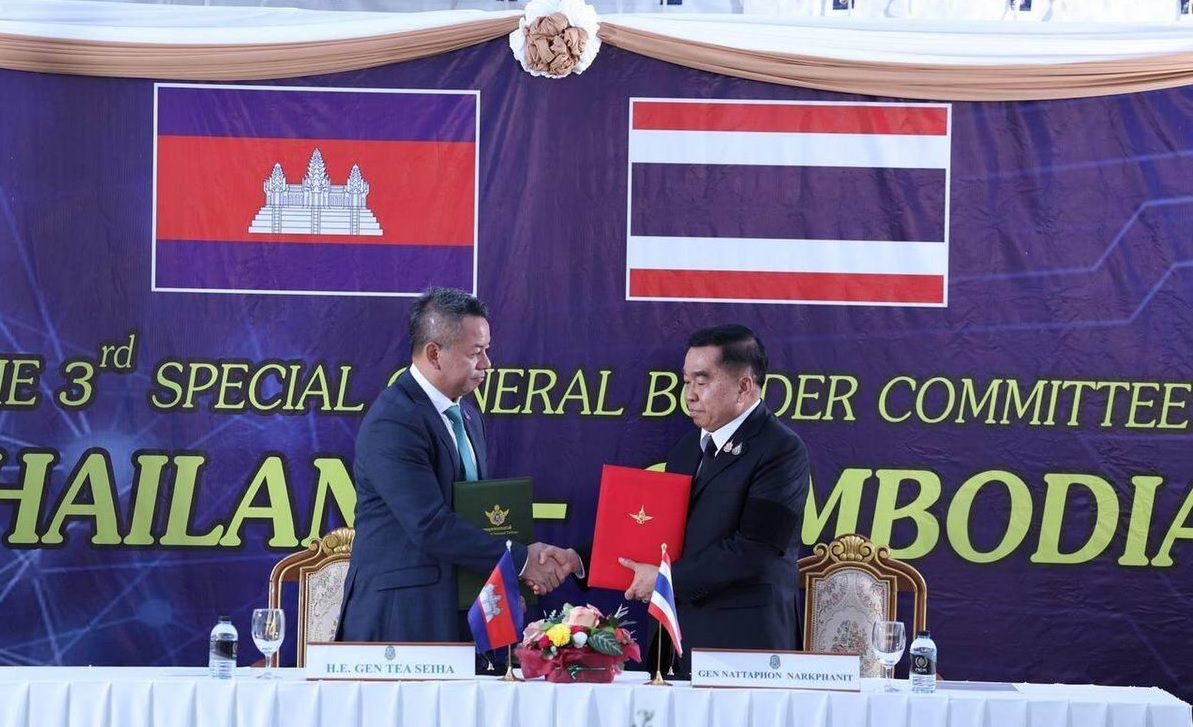
World
Thailand and Cambodia have signed a ceasefire agreement aimed at halting intense fighting along their disputed border, committing both sides to freeze troop positions, enable the return of displaced civilians, and undertake confidence-building measures to stabilise the situation, according to official statements released on Saturday. Cambodia’s defence ministry confirmed the ceasefire, while a joint statement said both governments agreed to “maintain current troop deployments without further movement” in sensitive border areas. The agreement also provides for the safe return of civilians forced to flee their homes during recent clashes. A key provision of the deal states that Thailand will return 18 Cambodian soldiers currently in its custody if the ceasefire holds for 72 hours, a step described by officials as an initial confidence test of the truce. Ceasefire After Weeks of Deadly Clashes The agreement comes after weeks of renewed fighting that has raised regional alarm and triggered international diplomatic engagement. The latest round of violence is part of a decades-old border dispute, rooted in colonial-era demarcation and competing territorial claims near ancient temple complexes. According to official counts cited by AFP, the renewed clashes this month killed more than 40 people and displaced close to one million civilians, creating one of the most serious humanitarian crises between the two neighbours in years. Fighting intensified on December 8–9, after a July ceasefire collapsed. During this phase, Thailand carried out air and artillery strikes, while Cambodia responded with rocket fire. The exchanges continued even as peace talks were under way, with Phnom Penh accusing Bangkok of launching fresh air strikes during negotiations, an allegation Thailand rejected, saying its actions were defensive and necessary for security. What The Ceasefire Covers — And What It Does Not Under the terms reported by Reuters, the immediate focus of the ceasefire is on preventing further escalation by locking military units into their current positions and reducing the humanitarian fallout of the fighting. The return of displaced civilians is intended to reverse mass movements triggered by shelling, air operations and artillery duels, while the conditional release of detained soldiers is designed to signal restraint on both sides. However, neither government has publicly detailed monitoring mechanisms, third-party verification arrangements, or timelines beyond the initial 72-hour confidence period, leaving questions about how violations would be addressed if fighting resumes. Where The Clashes Are Concentrated The violence has been concentrated along disputed stretches of the Thailand–Cambodia border, particularly near the Dangrek mountain range, which runs along northeast Thailand and northern Cambodia. The region contains several ancient Khmer temples, and its strategic high ground has long been contested. These areas have seen heavy troop deployments, artillery exchanges, and air operations during the latest escalation, raising fears of a wider conflict if restraint fails. A Dispute Shaped By History And International Rulings The border dispute dates back to the early 20th century, when boundaries were drawn during French colonial rule in Cambodia. Thailand has long argued that some colonial-era maps inaccurately defined the frontier. A central flashpoint remains the Preah Vihear Temple. In 1962, the International Court of Justice ruled that the temple itself belongs to Cambodia. A 2013 clarification reaffirmed Cambodian sovereignty over areas immediately surrounding the site but did not fully resolve broader border claims, leaving room for recurring disputes. Symbolism, Statues And Rising Political Tension Tensions have also been inflamed by symbolic actions. Thailand recently defended the demolition of a Lord Vishnu statue in the disputed An Ses area of Cambodia’s Preah Vihear province, calling it a security measure. Cambodia countered that the site lies within its territory. Videos verified by AFP showed the statue—built in 2014 and located roughly 100 metres from the frontier—being removed using heavy machinery. The incident drew regional criticism and added to diplomatic friction amid ongoing clashes. International Pressure And Fragile Calm The violence has drawn attention from global and regional actors. The United States has backed diplomatic efforts to restore calm, while members of ASEAN have urged both sides to return to dialogue. During the December escalation, US President Donald Trump said he had spoken to leaders in Bangkok and Phnom Penh, claiming they had agreed to halt fighting—though clashes were later reported, underscoring the fragility of earlier commitments. Thailand’s caretaker Prime Minister Anutin Charnvirakul said military operations would continue until threats to Thai territory and civilians cease, accusing Cambodian forces of violating previous understandings. Cambodian Prime Minister Hun Manet has reiterated Phnom Penh’s support for a ceasefire and dialogue, while accusing Thailand of escalating military action. A Cautious Pause, Not a Settlement While the ceasefire offers a temporary pause in hostilities, analysts say it falls short of a political settlement of the underlying dispute. With no detailed monitoring framework and deep-rooted historical grievances unresolved, the coming 72-hour period is seen as a critical test of whether the truce can hold—or whether the border could once again slide back into violence.
Read More → Posted on 2025-12-27 15:52:29
World
Israel has formally recognised Somaliland as an independent and sovereign state, becoming the first country to extend official recognition to the self-declared republic since it broke away from Somalia in 1991, a step that immediately triggered sharp pushback from Mogadishu and major regional bodies in Africa. The announcement came on December 26, 2025, alongside a declaration of mutual recognition and plans to establish full diplomatic relations. Israeli leaders framed the move as a strategic and diplomatic breakthrough, describing cooperation across sectors including technology, health, agriculture and the wider economy, while Somaliland’s leadership presented it as the most significant international validation of its three-decade push for statehood. Behind the diplomacy, analysts and regional observers say security calculations are central. Somaliland sits along the Gulf of Aden, near the Bab el-Mandeb chokepoint that links the Red Sea to the wider Indian Ocean trade routes—an area increasingly shaped by Houthi-linked attacks and maritime insecurity. Commentaries in Israeli strategic circles have argued that Somaliland could provide Israel with proximity for surveillance and operations tied to Red Sea threats, including monitoring Houthi activity. A Potential Military Base Deal, and What Is Confirmed So Far Reports circulating since the recognition suggest Somaliland may allow Israel access to territory for a military or intelligence facility aimed at monitoring threats in and around the Red Sea, including Houthi activity. However, public reporting to date points mainly to strategic intent and discussion—rather than a signed basing agreement—with multiple outlets and analysts describing the base idea as a potential next step rather than a formally announced deal. One factor adding weight to these claims is that Somaliland’s port city of Berbera has already been linked to outside military logistics: the UAE has used facilities there, and the location is frequently cited in security analysis as a natural platform for Red Sea and Gulf of Aden operations. Somalia’s federal government condemned Israel’s recognition as a violation of its sovereignty and said it would challenge the move through diplomatic, political and legal avenues, while African regional bodies warned that unilateral recognition risks destabilising the Horn of Africa. Somaliland’s Long Road: From British Protectorate to Self-Declared Republic Somaliland’s claim to statehood is grounded in a distinct colonial and political history that predates the modern Somali state. The territory was administered as the British Somaliland Protectorate and attained independence on 26 June 1960, briefly emerging as the State of Somaliland. During this short period of sovereignty, it received formal international recognition from 33 countries, including the United Kingdom, United States, China, France, Egypt, Ethiopia, Israel, and the Soviet Union. Just five days later, on 1 July 1960, Somaliland voluntarily united with the former Italian-administered south to form the Somali Republic, a political union driven by pan-Somali nationalism but one that soon proved fragile. Over the following decades, discontent grew in the north over political marginalisation and unequal power-sharing. These grievances intensified during the authoritarian rule of Mohamed Siad Barre, culminating in an armed insurgency led by the Somali National Movement. As Somalia descended into civil war and state collapse, Somaliland’s elders and political leaders declared the 1960 union void and proclaimed renewed independence on 18 May 1991. Since that declaration, Somaliland has functioned as a de facto state, establishing its own governing institutions in Hargeisa, maintaining separate security forces, issuing its own currency, and largely avoiding the prolonged instability that plagued southern Somalia. In 2001, it held a constitutional referendum endorsing independence and a multiparty political system, reinforcing internal legitimacy even as external recognition remained elusive. Despite more than three decades of relative stability and repeated elections, the international community has generally treated Somaliland’s 1991 declaration as a new secession, rather than a legal continuation of its briefly recognised 1960 statehood. As a result, the earlier recognition by 33 countries has not automatically carried over into the present, leaving Somaliland internationally unrecognised—until Israel’s recent move reopened the debate over its long-contested status. How Many Countries Recognise Somaliland Now? As of December 27, 2025, Israel is the only UN member state publicly reported to have formally recognised Somaliland as an independent sovereign state—meaning the current count of official recognitions is 1. Somaliland’s leaders often point out that the territory received recognition in 1960 during its brief existence as the State of Somaliland, which some historical sources say was recognised by 33 countries at the time—before the union with Somalia. That earlier diplomatic episode is frequently cited by Somaliland advocates, but it is separate from today’s modern recognition question following the 1991 declaration. Why Most of the World Still Has Not Recognised Somaliland Somaliland has built a reputation for relative stability compared with much of Somalia, but international recognition has remained blocked by a set of overlapping legal and political realities. A central barrier is the African Union’s longstanding preference for preserving colonial-era borders—often described as a fear that changing borders could open the door to wider secessionist claims across the continent. In reaction to Israel’s decision, the AU and other African regional bodies reiterated support for Somalia’s territorial integrity, warning recognition could set a destabilising precedent. Another obstacle is the international system’s default posture toward Somalia’s sovereignty at the United Nations. Even countries that engage Somaliland pragmatically—through trade, security cooperation, aid delivery, or liaison offices—have typically avoided formal recognition in order to preserve relations with Somalia’s federal government and to avoid being seen as endorsing unilateral secession. Regional geopolitics also matters. Somaliland’s strategic coastline makes recognition consequential for neighbours and external powers, potentially altering maritime security calculations in a corridor already strained by conflict in Yemen and contested influence in the Red Sea arena. Those sensitivities help explain why key regional actors—including Somalia’s allies—have reacted strongly to Israel’s move. What Happens Next: Diplomacy, Backlash, and Red Sea Stakes Israel and Somaliland have signalled a push toward deeper ties, including diplomatic representation and economic cooperation, and Somaliland has linked the opening to broader Middle East diplomacy, including engagement around the Abraham Accords framework. But the immediate response from Somalia and African regional institutions suggests the recognition could harden lines in the Horn of Africa, especially if reports of a future Israeli security footprint in Somaliland move from speculation to implementation. For Somaliland, Israel’s step breaks a 34-year wall of diplomatic non-recognition since 1991; for Somalia and the AU, it raises a direct challenge to the principle that Somalia’s borders should remain intact. If you want, I can also write a tight follow-up “explainer” in the same news style focused only on the Red Sea/Houthi security angle and what a Berbera-linked base would practically change for shipping and regional deterrence—without adding any opinion.
Read More → Posted on 2025-12-27 15:43:00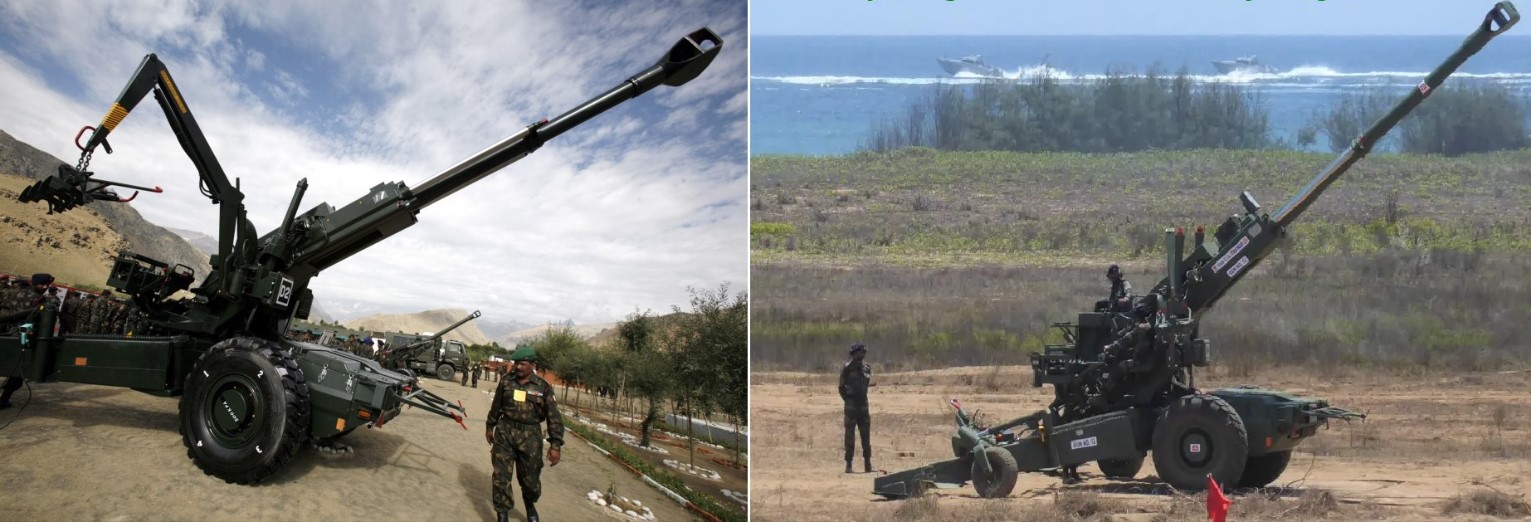
India
The Indian Army has successfully restored a 155mm/45-calibre Sharang artillery gun to full mission readiness, following a comprehensive overhaul carried out by the 506 Army Base Workshop under the Corps of Electronics and Mechanical Engineers (EME). The development highlights the Army’s growing focus on indigenous sustainment, repair capability, and life-cycle management of critical combat systems alongside ongoing artillery modernisation. Officials familiar with the activity stated that the restoration involved detailed inspection, repair, and recalibration of major mechanical, hydraulic, and recoil systems, along with checks on the carriage, trail mechanisms, and firing safety assemblies. After completing mandatory workshop trials and safety clearances, the gun was formally declared fit for operational deployment, reaffirming its readiness for frontline artillery units. Why the Sharang Matters The 155mm Sharang is an indigenously upgraded artillery system derived from the legacy 130mm M-46. The upgrade converts the gun to the NATO-standard 155mm calibre, enabling the Indian Army to standardise ammunition, enhance lethality, and significantly improve battlefield reach while optimising existing assets. Following the upgrade, the Sharang achieves an effective firing range of 39 kilometres, compared to roughly 27 kilometres for the original M-46 configuration. This increase in range strengthens the Army’s counter-battery capability and allows deeper engagement of enemy targets without relocating gun positions. History of the Sharang Programme India inducted the 130mm M-46 artillery gun in large numbers starting in the late 1960s, where it served as a backbone of Indian artillery for decades. As global artillery standards shifted toward the 155mm calibre, the Indian Army initiated multiple efforts to modernise its existing gun fleet rather than replace it outright. This led to Project Sharang, an indigenous up-gunning initiative driven by India’s ordnance and defence manufacturing ecosystem. In October 2018, the Ministry of Defence approved the upgrade of 300 M-46 guns to the 155mm/45-calibre Sharang configuration, with deliveries planned over a four-year period. The first upgraded guns began entering service around 2020, following extensive proof-firing trials at the Long Proof Range near Jabalpur. The name “Sharang” symbolises long-range precision, drawing from Indian mythology. Role of 506 Army Base Workshop The latest restoration underscores the importance of 506 Army Base Workshop, a major EME sustainment facility located in Jabalpur, one of India’s historic artillery and ordnance hubs. The workshop is responsible for deep overhauls, major repairs, and life-extension programmes for complex weapon systems across the Army. By restoring the Sharang gun entirely within Army infrastructure, the workshop demonstrated its ability to rapidly return high-value artillery systems to service without dependence on external manufacturers. This capability reduces downtime, improves fleet availability, and enhances operational preparedness. Operational Significance As the Indian Army balances new artillery inductions with upgraded legacy systems, the ability to sustain and restore guns has become a critical element of combat readiness. The successful return of a 155mm Sharang to full mission readiness reflects a broader shift toward self-reliance, technical depth, and institutional capability within the Army’s maintenance ecosystem. With 300 Sharang guns planned to form a substantial part of India’s towed artillery strength, the performance of Army Base Workshops like 506 ABW will directly influence the availability, reliability, and combat effectiveness of India’s artillery arm in future contingencies.
Read More → Posted on 2025-12-27 15:08:17
World
China has reached a decisive milestone in its fifth-generation combat aviation program, with the first J-20A stealth fighters powered by the indigenous WS-15 turbofan engines officially rolling off the production line. The development marks the start of true mass production for the aircraft in its intended final configuration and closes a long-standing capability gap that has followed the program since its induction. The arrival of the WS-15 represents the culmination of more than a decade of effort to overcome China’s most difficult aerospace challenge: the development of a high-thrust, reliable, fifth-generation-class jet engine. With propulsion now indigenised, Beijing signals growing confidence in the maturity of its domestic military aviation industry. A Major Turning Point For China’s Fifth-Generation Fighter The J-20A is the People’s Liberation Army Air Force’s primary fifth-generation stealth fighter, designed for air dominance, long-range interception, and network-centric operations. While the aircraft’s stealth shaping, sensors, and weapons integration matured rapidly, its engine program lagged behind, forcing reliance on interim solutions. The WS-15 is intended to unlock the fighter’s full design potential by delivering higher thrust, improved thrust-to-weight ratio, and sustained supercruise capability—allowing the aircraft to fly at supersonic speeds without using afterburners. This transition marks the moment when the J-20 moves from an operationally capable platform to a fully realised fifth-generation system. Which Engines Powered The J-20A Before The WS-15 Before the WS-15 entered production, China employed a two-stage interim engine strategy to keep the J-20 program on schedule. Early production and initial operational aircraft were powered by Russian-origin AL-31 series turbofan engines. These engines enabled the J-20 to enter service but were never intended as a permanent solution, offering limited growth potential and tying the program to foreign supply chains. China later transitioned to the indigenous WS-10 family, particularly the WS-10C variant, as an interim domestic replacement. The WS-10C improved reliability, availability, and independence, but it still fell short of the performance needed to fully support supercruise and long-range high-altitude operations expected of a fifth-generation fighter. The WS-15 has now replaced both the AL-31 and WS-10 variants, completing the aircraft’s propulsion evolution. Why The WS-15 Changes Everything The WS-15 is widely associated with a thrust class of around 180 kilonewtons, placing it in the same performance bracket as engines used by other fifth-generation fighters. The higher thrust output provides: Improved acceleration and climb performance Enhanced high-altitude and long-range efficiency Greater payload and power-generation margins Better support for future avionics and electronic warfare upgrades For China, the engine’s entry into mass production is also a strategic-industrial breakthrough. Advanced jet engines have historically been one of the last domains dominated by a small number of aerospace powers. Fielding the WS-15 in frontline service suggests that this gap is rapidly narrowing. Implications For The J-20 Fleet And Regional Air Power With the J-20 fleet now numbering in the hundreds, the move to a fully indigenous, high-performance engine standard improves operational sustainability, sortie rates, and long-term upgrade flexibility. It also reduces logistical risk in a high-intensity conflict scenario by eliminating dependence on foreign propulsion systems. More broadly, the rollout of WS-15–powered J-20A fighters represents a qualitative leap in the People’s Liberation Army Air Force’s combat capability. The fighter is no longer constrained by interim propulsion compromises and can now operate closer to its original performance envelope. The Bottom Line The rollout of the first WS-15–powered J-20A stealth fighters marks the most important step yet in the aircraft’s evolution. After years of incremental progress, China’s flagship stealth fighter has finally entered full-configuration production, with propulsion matching ambition. In practical terms, the engine that once symbolised the J-20’s biggest limitation has now become a key indicator of China’s growing aerospace maturity—and a signal that its fifth-generation airpower has entered a new phase.
Read More → Posted on 2025-12-27 14:54:02
World
Switzerland cannot defend itself against a full-scale military attack and must boost military spending faster as security risks rise from Russia, the head of the Swiss armed forces has warned, arguing that neutrality is only credible if it is backed by real combat capability. In an interview published on Saturday, December 27, 2025, Swiss Armed Forces chief Thomas Süssli said the military is prepared for cyber attacks and for sabotage-style strikes by “non-state actors” on critical infrastructure, but still faces “major equipment gaps” that would cripple mobilisation in a national emergency. “What we cannot do is defend against threats from a distance or even a full-scale attack on our country,” Süssli said, adding: “It’s burdensome to know that in a real emergency, only a third of all soldiers would be fully equipped.” Süssli is stepping down at the end of 2025. The Core Problem: Manpower Exists, But Equipment And Stocks Do Not Switzerland fields a large militia-based force on paper, but Süssli’s comments spotlight a mismatch between assigned personnel and available kit. As of March 1, 2025, Switzerland had 146,718 service members assigned to formations, according to Swiss reporting on official figures—an indicator of how many people the army can theoretically call on. Süssli’s warning is that mobilisation at scale would run into hard limits: not enough personal equipment, not enough munitions, and not enough key platform availability to arm and sustain units quickly. Swiss Military Strength Snapshot: Army, Air Force, And The Reality Of “No Navy” Army: Large Militia, Limited Heavy Force Depth Switzerland’s land forces remain built around territorial defence and rapid mobilisation, but heavy equipment is finite. A Swiss government-linked step toward selling stored tanks in 2023 reported the Swiss military had 134 Leopard 2 main battle tanks in service, with an additional 96 in storage at the time. Those numbers help illustrate why Süssli is focused on readiness timelines: even where platforms exist, the ability to field them at scale depends on trained crews, spares, ammunition, and logistics, all of which are constrained by funding and procurement pace. Air Force: Fighters Today, F-35A Transition Under Cost Pressure Switzerland’s air defence currently relies primarily on F/A-18 Hornets. A compiled inventory list for 2025 indicates 25 F/A-18C and 5 F/A-18D aircraft in service. It also lists 15 F-5E Tiger II still in the 2025 inventory, though these are largely a legacy fleet with limited modern air-defence utility. Switzerland’s longer-term plan is to replace ageing jets with Lockheed Martin F-35A aircraft, originally approved as 36 jets within a CHF 6 billion budget envelope. But in December 2025, Switzerland said it would reduce the order to the maximum number it can buy within that same CHF 6 billion cap after being told costs would be higher than expected. That cost squeeze matters because Süssli is warning about threats now, while Switzerland is still in an extended transition period where current fighters and ground-based systems must remain viable. Navy: No Submarines, No Attack Ships — Only Armed Patrol Boats On Lakes Switzerland is landlocked and does not have an ocean-going navy, meaning it has no submarines and no attack ships such as destroyers, frigates, or corvettes. Switzerland instead operates armed patrol boats on border lakes for security and training tasks. This distinction is important because Süssli’s warning is about territorial defence against a modern state threat—something Switzerland would have to meet primarily through land forces, air defence, and resilience of infrastructure, not maritime power. Money: Defence Ambitions Collide With Federal Budget Limits Where Swiss Federal Spending Stands Switzerland’s fiscal debate is intense because defence increases are competing with other politically protected spending. The federal government said total federal expenditure (ordinary plus extraordinary) was CHF 84.3 billion in 2024, including CHF 1.4 billion in extraordinary spending linked to people from Ukraine seeking protection. For 2026, Switzerland’s Federal Finance Administration budgeted total expenditure of CHF 90.8 billion, including CHF 0.6 billion again flagged for Ukraine-related protection costs. Separate Swiss parliamentary reporting described expenditure as “around CHF 90 billion” in the final 2026 budget package. Defence Line Items: Security Spending Rises, But The Readiness Horizon Stays Long In the federal budget framing, security is a major category. The Federal Finance Administration lists Security expenditure at CHF 7,770 million and notes that more than 80% of that security spending is attributable to military national defence, which is set to rise by CHF 243 million (+3.8%) in 2026, mainly due to higher armaments spending. Even with that growth, Switzerland’s political target remains comparatively modest. Switzerland has pledged to raise defence spending to about 1% of GDP by around 2032, up from roughly 0.7% now, according to the reporting on Süssli’s interview. However, the Federal Finance Administration’s own medium-term trend assessment suggests that, at the pace embedded in current plans, armed forces spending might reach 1% of GDP by 2035—later than the political ambition. Süssli warned that, at the current pace, full readiness would only come by about 2050, calling that “too long given the threat.” Neutrality Isn’t A Forcefield, Süssli Says Süssli argued that Swiss public and political attitudes have not shifted enough despite the war in Ukraine and Russian efforts to destabilise Europe, blaming Switzerland’s distance from the conflict, the lack of recent wartime experience, and what he called a false belief that neutrality alone guarantees safety. Neutrality, he said, “only has value if it can be defended with weapons,” warning that history shows neutral states can still be drawn into war when unarmed. What Happens Next Switzerland is already moving to modernise artillery and ground systems while trying to push through the expensive and politically contentious F-35A transition. But the combination of procurement overruns, pressure on the wider federal budget, and a readiness timeline that stretches into the 2040s–2050 period is sharpening the question Süssli put at the centre of the debate: whether Switzerland is willing to pay—quickly enough—for the kind of deterrence its neutrality depends on.
Read More → Posted on 2025-12-27 14:38:14
World
Taiwan has taken a significant but understated step in modernizing its littoral strike capabilities, with the Marine Corps conducting a live at-sea firing of the domestically developed Jingfeng-1 (Chin Feng I) loitering munition off Zuoying Harbor in southern Taiwan. According to information published by the Liberty Times Military Channel, the firing took place on December 24, 2025, following a formal firing notice issued a day earlier, and marks the first confirmed operational use of the Jingfeng-1 from a manned naval platform. The weapon was launched from an M96 fast attack craft, a platform already optimized for coastal interception and rapid maneuvering. The drone was supplied by National Chung‑Shan Institute of Science and Technology, Taiwan’s primary indigenous defense R&D body, with military sources confirming that the Navy has placed a small initial production order, portions of which have already been delivered to Marine units. From Shore to Sea: A Shift in Taiwan’s Drone Posture While Taiwan has previously tested loitering munitions from land sites, the Zuoying firing signals a doctrinal shift—moving attack drones into the littoral and near-sea battlespace, where any future cross-strait conflict would likely be decided. Operating loitering munitions from fast boats allows the Marines to extend strike reach beyond fixed coastal positions, complicating adversary targeting and enabling rapid, distributed attacks. The test also places the Marine Corps alongside the Army, which on December 18, 2025, conducted its first live-fire exercise of the Altius‑600M near the Zhuoshui River, an event personally inspected by Defense Minister Gu Lixiong. Together, the two exercises underline Taiwan’s accelerating embrace of loitering munitions as a core battlefield tool. Jingfeng-1: One Weapon, Multiple Platforms Developed by NCSIST, the Jingfeng-1 exemplifies what Taiwanese defense planners describe as “one missile, multiple uses.” The loitering munition has been designed from the outset for cross-domain flexibility, allowing it to be deployed by infantry, vehicles, unmanned vessels, aerial platforms, and now manned fast attack craft. Prior to the Marine Corps firing, NCSIST had already demonstrated the system in August 2025, during a live-fire exercise showcasing unmanned aerial vehicle and unmanned surface vessel joint operations. In that test, the Kuai‑Chi unmanned surface craft launched Jingfeng-1 units in a coordinated strike concept that won the backing of the Navy and directly led to procurement. Reported Specifications and Capabilities While NCSIST has not released full classified performance data, defense and military sources describe the Jingfeng-1 as a short- to medium-range loitering munition optimized for coastal and expeditionary combat. The system is understood to feature an electric propulsion system, enabling a low acoustic and thermal signature, and a man-portable form factor that allows carriage by a single soldier. Operationally, the Jingfeng-1 is believed to have an endurance measured in tens of minutes, sufficient for target search, loitering, and terminal attack, with a strike radius suitable for battalion-level engagements. It carries a high-explosive warhead, with NCSIST previously disclosing work on energetic fragmentation designs incorporating CL-20-based explosives, significantly increasing lethality against lightly armored vehicles, small ships, and fortified positions. Guidance is assessed to combine electro-optical sensors with real-time data links, allowing operators to abort, retask, or manually guide the munition onto targets of opportunity—an essential feature in cluttered littoral environments. Why the M96 Matters The choice of the M96 as the launch platform is strategically telling. Fast, agile, and already integrated into Marine Corps coastal defense missions, the M96 enables shoot-and-scoot drone operations at sea, reducing vulnerability to counter-fire while extending surveillance and strike coverage. By pairing fast boats with loitering munitions, Taiwan effectively creates mobile drone magazines that can disperse, strike, and relocate rapidly—an approach well suited to asymmetric maritime warfare in the Taiwan Strait. A Quiet Signal with Strategic Weight Although unannounced in official statements, the December 24 firing represents the first operational allocation of domestically produced attack drones to Taiwan’s Marine Corps, and the first known live-fire launch from a manned naval craft. Military sources indicate that this batch is only the beginning, with additional production and platform integrations under evaluation. In strategic terms, the message is clear: Taiwan is no longer limiting loitering munitions to static land defenses. By pushing systems like Jingfeng-1 into the littorals, Taipei is layering its coastal defense with mobile, networked, and expendable strike assets—a move that significantly raises the complexity and cost of any hostile amphibious operation. Quiet in execution, the Zuoying test nonetheless marks a notable evolution in Taiwan’s approach to modern maritime warfare.
Read More → Posted on 2025-12-27 14:04:50
World
Germany has taken a decisive step in reshaping its land warfare capabilities with a major contract for the RCH 155 wheeled self-propelled howitzer, positioning Rheinmetall as a central industrial partner in the programme. The order was placed by the German Armed Forces with Artec GmbH, underlining Berlin’s long-term commitment to highly mobile, automated artillery systems. Contract Scope and Value Artec GmbH received the contract on 19 December 2025 for the first 84 RCH 155 systems, issued under a framework agreement with Germany’s Federal Office of Equipment, Information Technology and In-Service Support (BAAINBw). The framework allows for the acquisition of up to 500 howitzers, making it one of the largest artillery procurement programmes in Europe.The initial order is valued at approximately €1.2 billion and includes training equipment, service support, and comprehensive logistical packages, ensuring rapid operational integration. Rheinmetall’s Industrial Role Under the agreement, Rheinmetall will deliver key electrical and electronic systems, mission software, and the complete 155mm weapon systems for the RCH 155. These contributions form the technological backbone of the platform. Rheinmetall’s deliveries are scheduled to begin in 2027 and conclude in 2029, directly supporting the phased introduction of the new howitzer into Bundeswehr service. Platform and System Architecture Artec GmbH—jointly owned by KNDS Germany and Rheinmetall Landsysteme—is responsible for the Boxer vehicle family, which serves as the base platform for the RCH 155. The system integrates a fully automated, remotely controlled 155mm artillery gun module onto the Boxer, combining heavy firepower with high mobility and protection. Operational Capabilities The RCH 155 is designed for fully automated operation, significantly reducing crew workload and exposure. Thanks to advanced automation, the system can be operated by a crew of just two soldiers. It is capable of firing on the move, a key survivability feature in modern high-intensity conflict, and can engage targets at distances of up to 40 kilometres. These capabilities reflect a shift toward digitally networked, highly responsive artillery forces. International Momentum Germany’s decision builds on existing international interest. Ukraine is the first operational user of the RCH 155, having ordered 54 systems from KNDS Germany in three batches, with Rheinmetall supplying the same core electrical, software, and weapon systems.The United Kingdom has also announced its intention to procure the RCH 155, following a bilateral defence cooperation agreement between Berlin and London revealed in April 2024, highlighting the system’s growing appeal within NATO. Strategic Significance With a confirmed €1.2 billion opening order, a potential ceiling of 500 systems, and deliveries extending to 2029, the RCH 155 programme places Rheinmetall at the heart of Europe’s artillery renewal. The project underscores Germany’s focus on automation, mobility, and long-range precision, signalling a broader transformation in how European armies plan to fight and survive on future battlefields.
Read More → Posted on 2025-12-27 13:44:42
World
In December 2025, Japan delivered one of its clearest military signals in years in response to expanding Chinese naval activity near its southwestern approaches. At Tsuiki Air Base in Fukuoka Prefecture, the Japan Air Self-Defense Force (JASDF) was observed deploying an unusually large number of F-2 multirole fighters, each armed with a full complement of anti-ship missiles, a configuration rarely seen outside of crisis-driven scenarios. On 9 December 2025, at least 16 JASDF F-2 aircraft conducted training flights from Tsuiki, with every jet carrying four ASM-2 (Type 93) air-to-ship guided missiles mounted under the main wings. This meant a combined loadout of 64 anti-ship missiles airborne at a single base—an exceptional concentration by JASDF standards and widely interpreted as a deliberate deterrent signal. Unprecedented F-2 Missile Configuration The F-2, jointly developed by Japan and the United States and operated exclusively by Japan, is optimized for maritime strike missions. The ASM-2 missile, indigenously developed by Japan, has an operational range exceeding 140 kilometers and employs an imaging infrared (IIR) seeker equipped with infrared counter-countermeasures (IRCCM) and advanced target discrimination features, allowing it to engage complex naval targets in cluttered maritime environments. At Tsuiki Air Base, two frontline units—the 6th and 8th Tactical Fighter Squadrons—are permanently stationed. Each squadron fields 20 aircraft, comprising 18 single-seat F-2A fighters and 2 dual-seat F-2B trainers, giving the base a total strength of 40 F-2s. Observing nearly half of this force flying simultaneously with maximum anti-ship armament marked a highly atypical operational posture. Chinese Carrier Liaoning Near Kyushu The timing of the deployment closely tracked the movements of the People’s Liberation Army Navy aircraft carrier Liaoning, whose presence in waters near Japan raised alarm in Tokyo. After transiting the Miyako Strait between Okinawa Main Island and Miyako Island on 6 December 2025, Liaoning entered the western Pacific Ocean. Rather than continuing southward, the carrier abruptly altered course to the northeast, operating in waters south of Okinawa before advancing further toward Kyushu on 7 December. During these operations, J-15 carrier-borne fighters launched from Liaoning reportedly illuminated JASDF F-15 interceptors with fire-control radar, an act widely viewed as escalatory and contributing to heightened tensions between the Chinese military and Japan’s Self-Defense Forces. Broader Pattern of PLAN Carrier Expansion Japanese defense planners view Liaoning’s December deployment as part of a sustained and accelerating expansion of Chinese aircraft carrier operations in the Pacific. In June 2025, China deployed two aircraft carriers simultaneously—Liaoning and Shandong—into the Pacific Ocean, where they conducted exercises reportedly simulating confrontation with a U.S. Navy carrier strike group. Looking ahead, the anticipated full operational entry of China’s third aircraft carrier, Fujian, could enable the continuous presence of Chinese carrier strike groups across the East China Sea and the Pacific, a scenario that Japan’s Ministry of Defense has identified as a major strategic shift. Japan Reinforces Its Pacific Defense Posture In response, Japan is rapidly moving beyond its long-standing focus on the Southwestern Islands and the East China Sea, accelerating efforts to close what officials describe as a “Pacific defense gap.” One key initiative involves Kita-Daito Island, located southwest of Okinawa Main Island, where Japan plans to deploy a mobile air-surveillance radar system capable of monitoring air and maritime activity across wider Pacific approaches. Japan’s FY2026 defense budget request allocates approximately ¥16 billion (about US$102 million) for infrastructure and facilities supporting this radar deployment, underscoring the urgency attached to enhanced early-warning coverage. Izumo-Class and the F-35B Factor Maritime aviation remains another central pillar of Japan’s response. The Japan Maritime Self-Defense Force (JMSDF) is continuing modifications to its two Izumo-class destroyers, transforming them into vessels capable of operating F-35B short takeoff and vertical landing (STOVL) fighters. Originally initiated around 2018 as a counter to long-range Chinese H-6K bombers transiting the Bashi Channel into the Pacific, the Izumo-class conversion has since taken on a more explicit role as a counter-carrier capability aimed at the PLAN. With Iwo Jima currently the only Pacific island offering a runway suitable for JASDF fighters, the Izumo-class provides Japan with a mobile sea-based aviation option in otherwise under-covered areas. Toward a Dedicated Pacific Defense Strategy Institutionally, Japan is also adapting. The FY2026 defense budget request includes the establishment of a Pacific Defense Concept Office within the Ministry of Defense, tasked with conducting cross-service assessments of the force posture required to defend Japan’s Pacific approaches. Future challenges remain substantial. Unlike the East China Sea, the Pacific lacks a dense island chain suitable for fixed radar installations, complicating persistent surveillance. In this context, Japanese defense officials see the expansion of the E-2D airborne early warning aircraft fleet—already proven within JASDF service and capable of short-runway operations—as a highly viable solution. A Clear Strategic Message The massed deployment of F-2 fighters armed with 64 ASM-2 anti-ship missiles was more than an exercise. It represented a visible, calculated message that Japan retains the capability—and the resolve—to contest hostile naval activity near its territory. As Chinese carrier operations push deeper into the Pacific, such demonstrations suggest that Japan’s defensive posture is entering a new, more assertive phase shaped by rapidly evolving regional realities.
Read More → Posted on 2025-12-27 08:51:50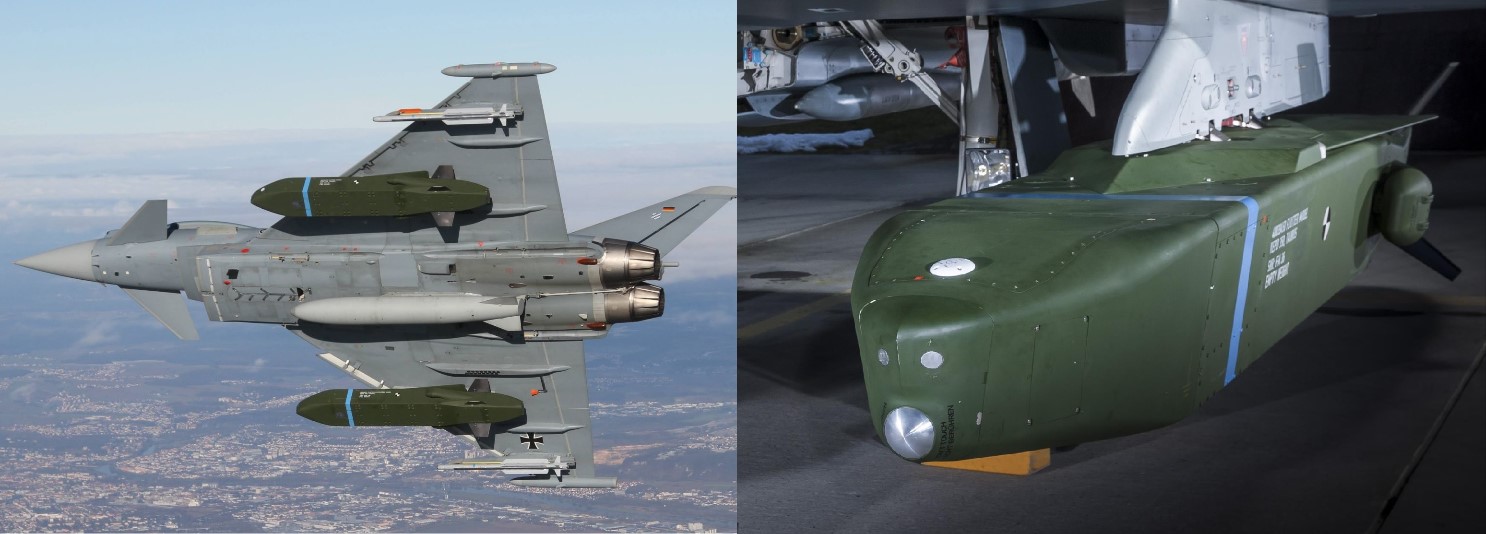
World
Germany and Sweden have formally concluded an agreement to jointly produce the upgraded Taurus NEO long-range cruise missile, marking a decisive step in Europe’s drive to modernize deep-strike capabilities and reinforce strategic autonomy in precision weapons. The accord builds on decades of bilateral cooperation in missile technology and centers on the next-generation evolution of the combat-proven Taurus KEPD 350 family. The new Taurus NEO (New Enhancement & Optimization) variant is designed to counter modern, layered air-defense systems while delivering significantly improved lethality against hardened and deeply buried targets. A Leap in Long-Range Strike Capability The Taurus NEO program introduces a comprehensive package of upgrades over earlier variants. At its core is an enhanced multi-mode guidance architecture, combining advanced inertial navigation with satellite-aided correction and high-resolution terrain reference navigation. This allows the missile to fly complex, low-altitude profiles with extreme precision, even in GPS-denied or heavily jammed environments. Survivability has been a central design focus. The missile incorporates improved electronic counter-countermeasures (ECCM), refined low-observable shaping, and upgraded onboard processing to dynamically adapt its flight path in response to threats. Together, these measures are intended to increase penetration probability against modern integrated air-defense systems deployed by peer adversaries. Enhanced Penetration and Warhead Performance A defining feature of the Taurus line—its ability to neutralize hardened targets—has been further strengthened. The Taurus NEO retains the dual-stage penetrating warhead concept, optimized to breach reinforced concrete, underground command bunkers, aircraft shelters, and critical infrastructure. The upgraded fuzing system allows programmable detonation timing, enabling the weapon to explode precisely after penetrating multiple layers of protection. Defense sources familiar with the program indicate that improvements in target discrimination and impact-angle control significantly raise effectiveness against deeply buried facilities, a capability increasingly prioritized in European defense planning. Key Technical Specifications (Reported / Program Targets) While final configuration details remain classified, the Taurus NEO is expected to broadly align with the following performance parameters: Type: Air-launched long-range cruise missile Range: Over 500 km (class) Guidance: INS + satellite navigation, terrain reference navigation, autonomous terminal guidance Flight Profile: Low-altitude, terrain-hugging with adaptive routing Warhead: Advanced dual-stage bunker-penetrating warhead Accuracy: High-precision, sub-meter class CEP (reported) Survivability: Low observable design, advanced ECCM, adaptive mission planning MBDA at the Center of European Integration The program is led by MBDA, underscoring the growing role of pan-European defense primes in delivering sovereign capabilities. Industrial participation is expected to be split across German and Swedish facilities, strengthening supply-chain resilience and ensuring long-term supportability within Europe. Officials from both governments emphasized that the arrangement is not merely an upgrade program but a strategic industrial initiative, aimed at reducing long-term reliance on non-European strike systems while preserving freedom of action for European air forces. Strategic Implications for Europe The joint Taurus NEO production agreement arrives amid a broader reassessment of Europe’s deterrence posture. Long-range, air-launched precision strike is increasingly viewed as a critical pillar of conventional deterrence—capable of holding high-value targets at risk without escalation to other domains. By pooling resources and aligning requirements, Germany and Sweden are positioning Taurus NEO as a cornerstone of continent-wide, interoperable strike capability, potentially opening the door for future adoption by additional European air forces. Outlook With production preparations now formally underway, the Taurus NEO program represents one of the most significant upgrades to Europe’s deep-strike arsenal in recent years. As testing and integration progress, the missile is expected to play a central role in shaping Europe’s next generation of long-range precision warfare—more autonomous, more resilient, and decisively European.
Read More → Posted on 2025-12-27 08:37:37
World
A major overnight Russian air attack struck Kyiv’s residential districts on Saturday, with drones and missiles hitting multiple sites and igniting fires in high-rise apartment buildings as emergency crews worked for hours under continuing air-raid alerts. Ukrainian officials said at least 11 people were injured, including two children, as strikes were reported at seven locations across the capital. Kyiv authorities said an 18-story apartment building in the Dnipro district and a 24-story building in the Darnytsia district were struck, triggering large blazes, while other fires and damage were recorded in Obolonskyi and Holosiivskyi districts. In the surrounding Kyiv region, officials reported damage to industrial and residential structures and ongoing rescue work, including efforts to free at least one person trapped under rubble in the Vyshhorod area. Explosions Over the Capital as Air Defenses Engage Reuters witnesses in Kyiv reported explosions as Ukrainian air defenses engaged incoming threats, with the Ukrainian military warning that missiles were being deployed while drones targeted the capital and other regions. The strike continued into the morning, with an air-raid alert still in effect around 8:00 a.m. local time and Kyiv officials reporting at least eight wounded at that point in the day. Ukrainian social media channels also circulated footage purporting to show a Shahed-type drone hitting a residential tower. Such videos have not been independently verified by major wire services in their initial reporting of Saturday’s attack. Missiles and Drones Used in a Combined Strike Ukrainian reporting around the attack described a combined wave involving multiple weapon types, including ballistic and cruise missiles alongside drones — a pattern echoed by Reuters’ description of Kyiv coming under attack by cruise and ballistic missiles with drones also targeting the capital. The assault formed part of a broader escalation of strikes in recent days that has repeatedly hit homes and essential services during winter conditions, with Ukrainian officials and international observers warning of sustained pressure on civilian areas and critical infrastructure. Power Disruptions Reported; Energy Sites Again in the Crosshairs Saturday’s strikes again raised concerns over energy resilience. Reuters noted that Ukrainian authorities had reported fresh attacks on energy infrastructure in the run-up to the weekend, amid a broader pattern of repeated strikes on the power system. While Ukrainian accounts circulated online named specific facilities, those exact site-by-site claims were not confirmed in the initial wire-service reports available on Saturday. Peace Deal Track: Zelensky–Trump Meeting, 20-Point Draft “90%” Ready The strikes came as Kyiv and Washington prepared for high-level talks aimed at shaping a possible settlement framework. Ukrainian President Volodymyr Zelenskyy is expected to meet U.S. President Donald Trump in Florida on Sunday, with both sides describing the meeting as central to unlocking the next phase of negotiations. According to Reuters, Zelenskyy has said a 20-point draft peace plan driven by the U.S. is “90% complete,” with a separate security guarantee agreement between Ukraine and the U.S. described as almost ready. Trump, for his part, has publicly asserted that no deal is final without his approval. Core Sticking Points: Territory, Zaporizhzhia Nuclear Plant, and a Proposed Economic Zone Reuters reported that the most difficult questions remain territorial control and the future status of the Zaporizhzhia nuclear power station, Europe’s largest, seized by Russia early in the war. Ukraine’s position is to halt fighting along current lines, while Moscow demands withdrawal from additional areas in Donetsk it has not fully occupied. One U.S. compromise under discussion would link territorial arrangements in Donetsk to the creation of a free economic zone, though Reuters said details were still being worked out. Ceasefire and Referendum Option Reuters also cited reporting that Zelenskyy has floated the idea of putting the plan to a national referendum — but only if Russia agrees to a 60-day ceasefire to allow Ukraine time to prepare and conduct the vote. The Immediate Reality: Diplomacy Advances as Air Raids Continue Saturday’s attack underlined the central tension of the current moment: diplomacy accelerating even as the war’s aerial campaign continues to hit major cities. Russian strikes have also created cross-border ripples; Reuters reported temporary airport disruptions in southeastern Poland during the wider wave of attacks, highlighting the regional risk posed by large-scale barrages near NATO airspace. As rescue crews continued work in Kyiv’s damaged districts, officials warned residents to remain alert for further waves, even as negotiators moved toward what both Kyiv and Washington describe as a potentially decisive weekend in the effort to shape a ceasefire-and-guarantees framework.
Read More → Posted on 2025-12-27 08:30:32
World
The U.S. Navy has unveiled a $448 million investment in a new AI-driven Shipbuilding Operating System (Ship OS), marking one of the most ambitious digital modernisation efforts ever undertaken across the American maritime industrial base. The announcement was made during the first Department of the Navy Rapid Capabilities Office Industry Day by John Phelan, alongside Alex Karp, chief executive of Palantir, which will provide the core software platform. The initiative is designed to accelerate the adoption of artificial intelligence and autonomous decision-support tools across U.S. shipyards, suppliers and naval programme offices, as the Navy races to expand fleet capacity amid rising global maritime competition. A Digital Backbone for Naval Shipyards At the heart of the programme, Ship OS is intended to function as a single digital backbone for shipbuilding, integrating vast volumes of fragmented data that currently sit across enterprise resource planning systems, legacy databases and operational shop-floor tools. By unifying these data streams, the Navy aims to replace manual, siloed planning processes with real-time, AI-assisted production management. According to Phelan, the investment “provides the resources our shipbuilders, shipyards and suppliers need to modernize their operations and succeed in meeting our nation’s defense requirements.” He said Ship OS would enable industry partners to “do business smarter,” while building the industrial capacity required for future naval operations. The system will apply machine learning models to predict bottlenecks, optimise work sequencing, manage material flows and flag schedule risks before they cascade into costly delays. Navy officials say this approach mirrors digital transformations already seen in advanced aerospace and automotive manufacturing, but at a scale tailored to the complexity of warship construction. Early Results Show Dramatic Efficiency Gains Pilot deployments have already demonstrated the potential impact of AI-driven shipbuilding. At General Dynamics Electric Boat, which builds nuclear-powered submarines, schedule planning that previously required 160 hours of manual effort was reduced to less than 10 minutes using AI-assisted modelling and automated data ingestion. At Portsmouth Naval Shipyard, material review cycles that once took weeks were cut to under one hour, allowing maintenance and refit work to proceed with far greater predictability. Navy officials said these time savings translate directly into higher throughput, improved workforce utilisation and reduced programme risk. Focus on Submarines, With Broader Expansion Planned The initial $448 million tranche will concentrate on the Submarine Industrial Base, reflecting the strategic priority of expanding and sustaining the U.S. undersea fleet. The programme is being managed under the Maritime Industrial Base initiative, in cooperation with Naval Sea Systems Command, which oversees ship design, construction and lifecycle support. Any expansion of Ship OS into surface combatant and auxiliary ship programmes will be guided by lessons learned from early submarine-focused deployments. Officials indicated that phased scaling is intended to minimise disruption while ensuring measurable returns on investment. How AI Is Reshaping Shipbuilding Output By embedding AI directly into production planning and execution, Ship OS enables shipyards to move from reactive problem-solving to proactive decision-making. Predictive analytics can anticipate labour shortages, supplier delays or engineering conflicts weeks in advance, allowing managers to rebalance workloads and resources before schedules slip. Autonomous optimisation tools also help synchronise thousands of interdependent tasks across design, fabrication, assembly and testing. The Navy believes this will lead to shorter build times, lower unit costs and higher annual output, while improving resilience against supply-chain shocks. Strategic Implications for the U.S. Navy The Navy said Ship OS is expected to generate measurable cost savings over time by reducing delays, improving schedule reliability and increasing productivity across the maritime industrial base. Beyond efficiency, officials emphasised the strategic importance of strengthening domestic shipbuilding capacity at a time when naval power is increasingly central to deterrence. “This is about building the industrial capability our Navy and nation require,” Phelan said, framing the initiative as both a technological and strategic investment. If successful, Ship OS could redefine how the United States designs and builds warships in the AI era, setting a new benchmark for digital naval manufacturing.
Read More → Posted on 2025-12-27 08:13:36Search
Top Trending in 24 Hours
-
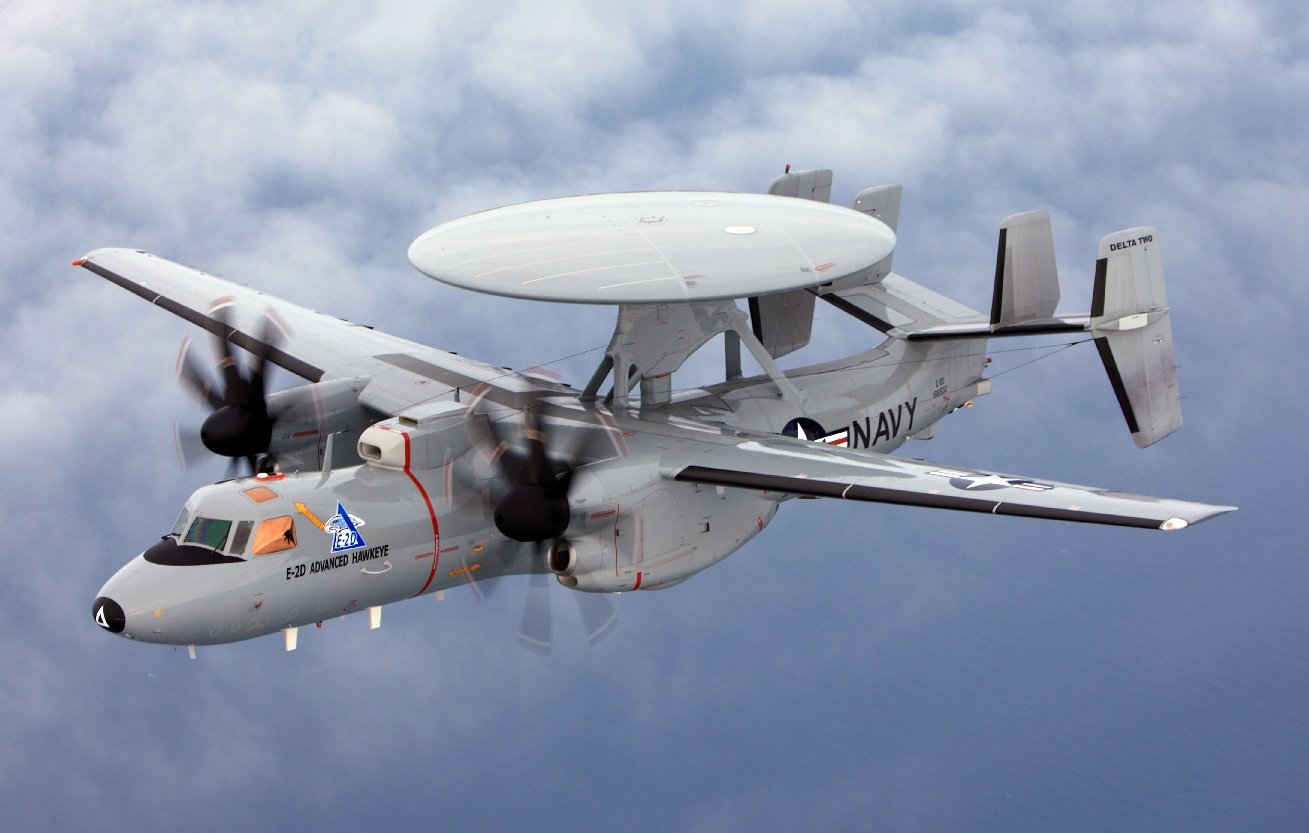 U.S. Navy Awards Northrop Grumman $1.2 Billion Deal for Three New E-2D Advanced Hawkeyes
-
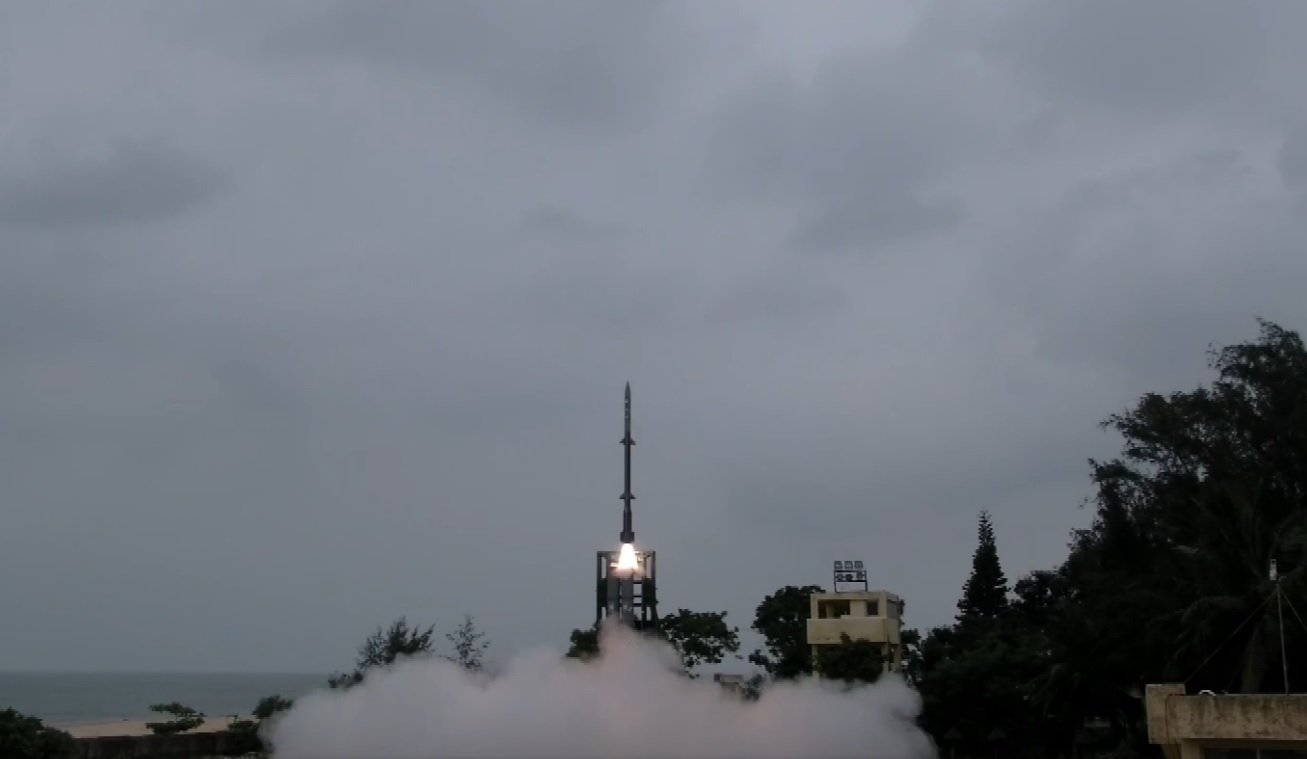 DRDO Successfully Conducts Maiden Flight Test of 150-km-Range Kusha M1 Air Defence Missile
-
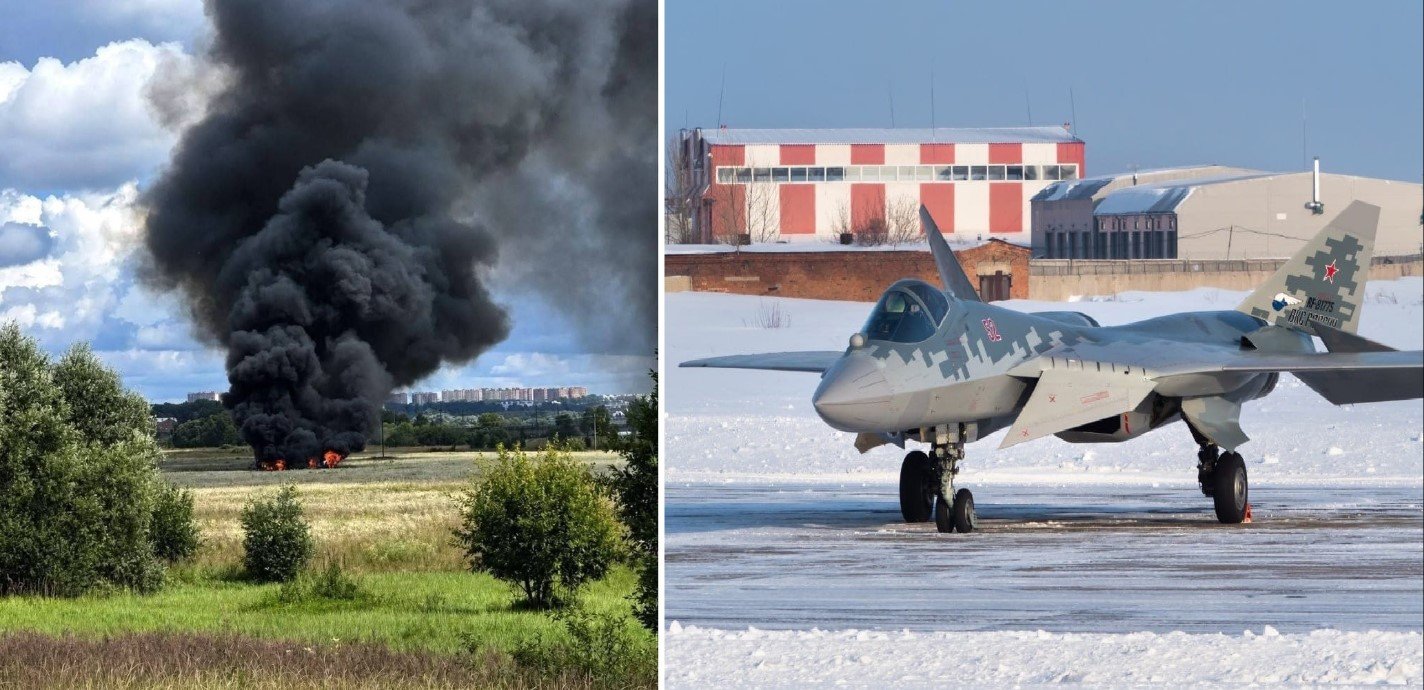 Russian Su-57 Stealth Fighter Crashes During Training Flight Near Moscow, Pilot Ejects Safely
-
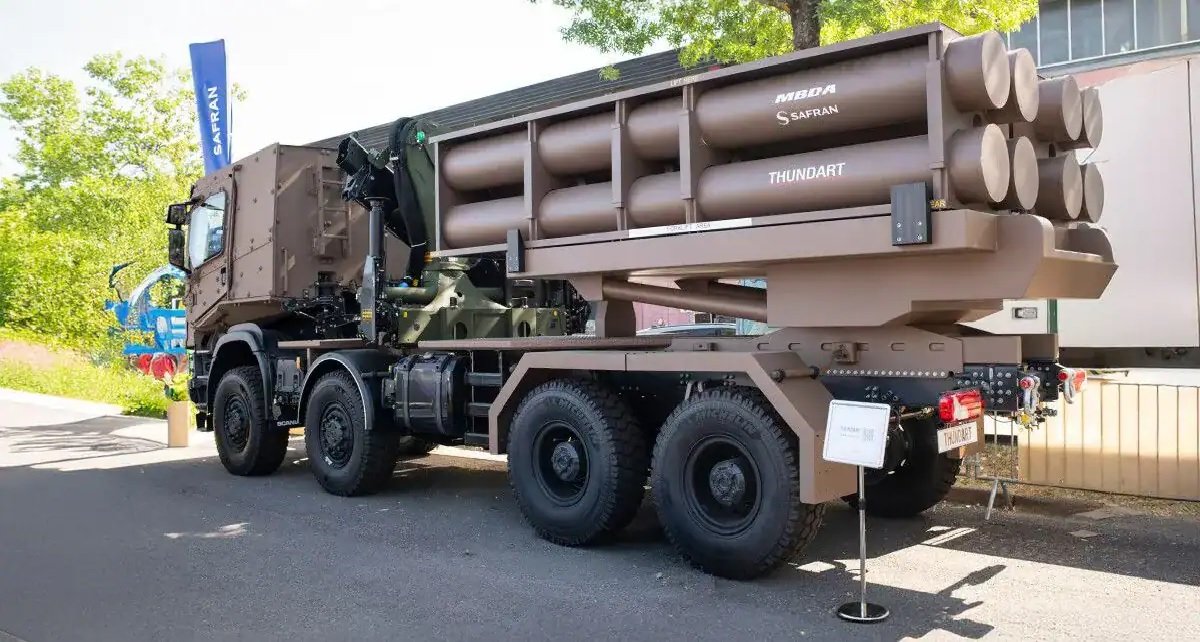 France's THUNDART Long-Range Rocket System May Undergo Prototype Combat Testing in Ukraine
-
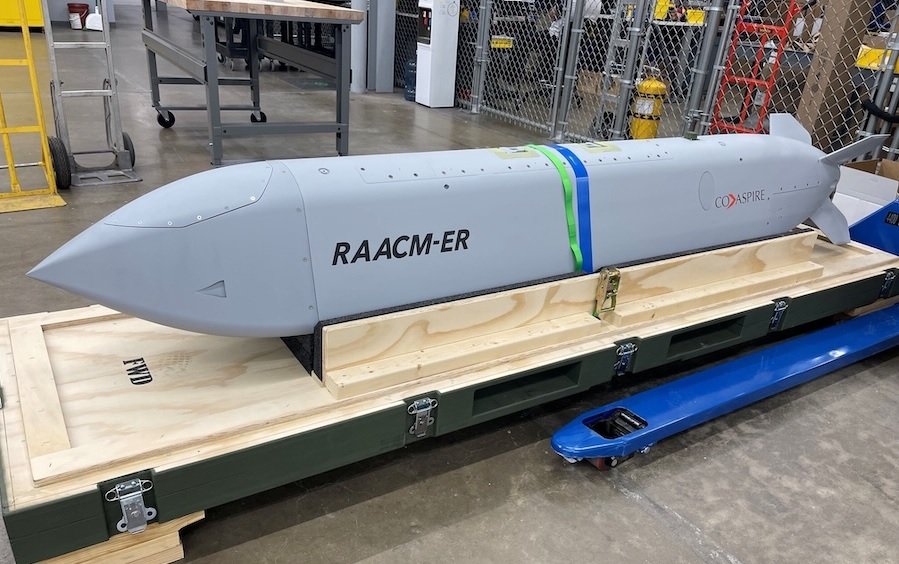 U.S. Navy Selects CoAspire to Build Ground-Launched CHAOS Cruise Missile Under $70 Million Program
-
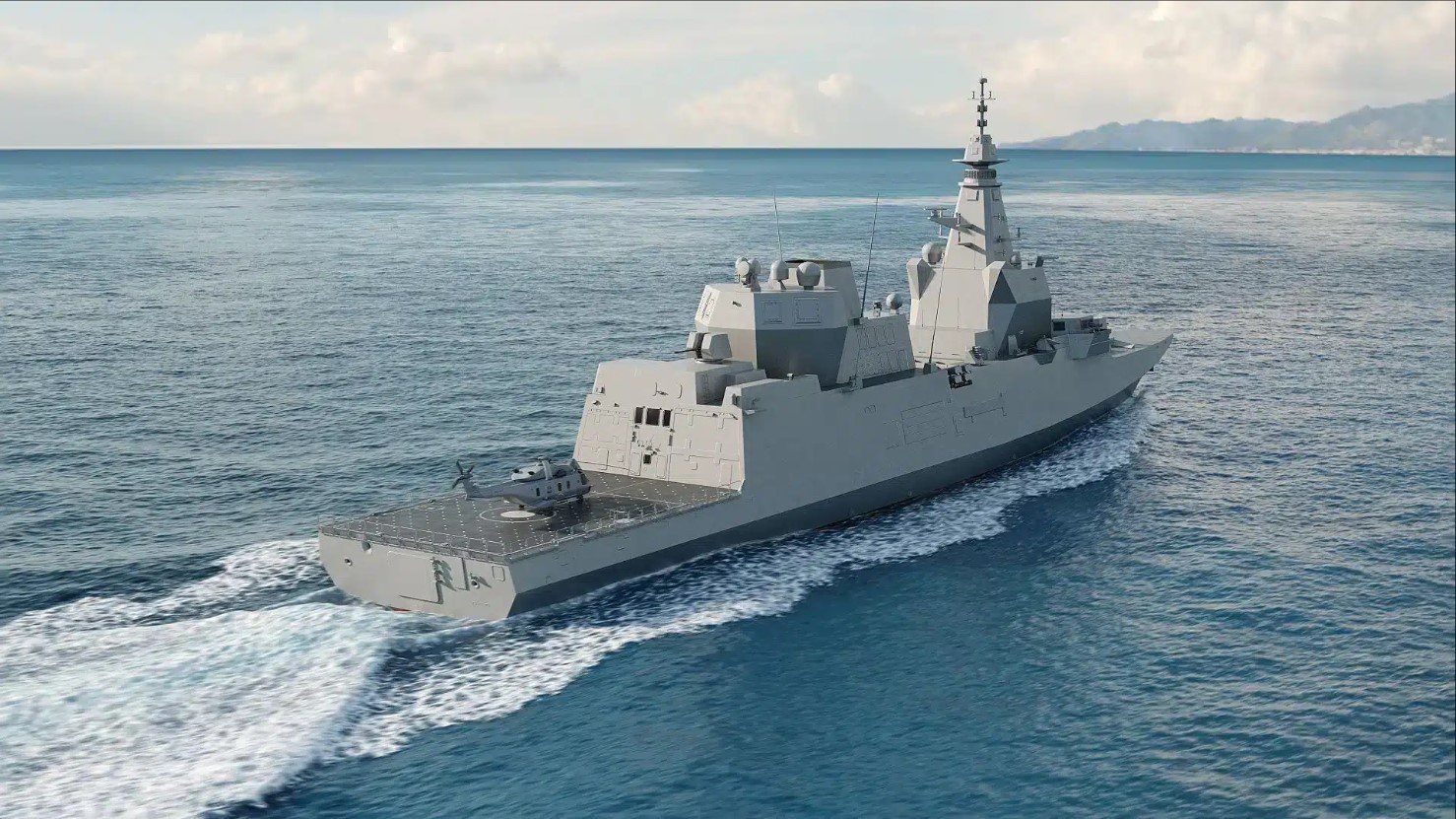 Portugal Orders Three FREMM EVO Frigates from Italy in €3.9 Billion Naval Deal
-
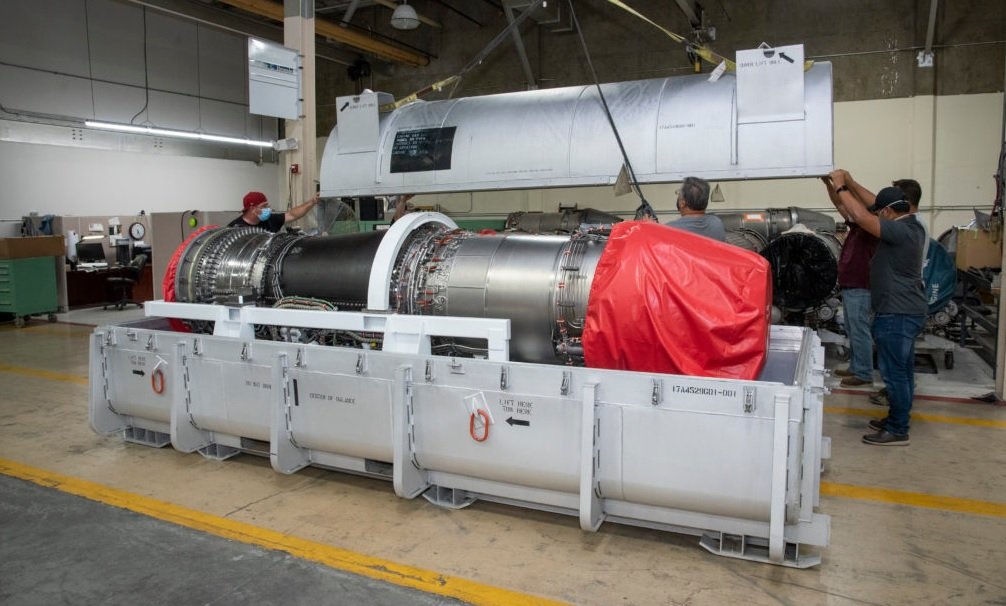 GE Aerospace and Magellan Aerospace Corporation Sign Strategic MoU for F414 Engine Sustainment in Canada
-
 Destinus Unveils Vorexon Interceptor Concept to Defend Critical Sites from Artillery Threats
Top Trending in 4 Days
-
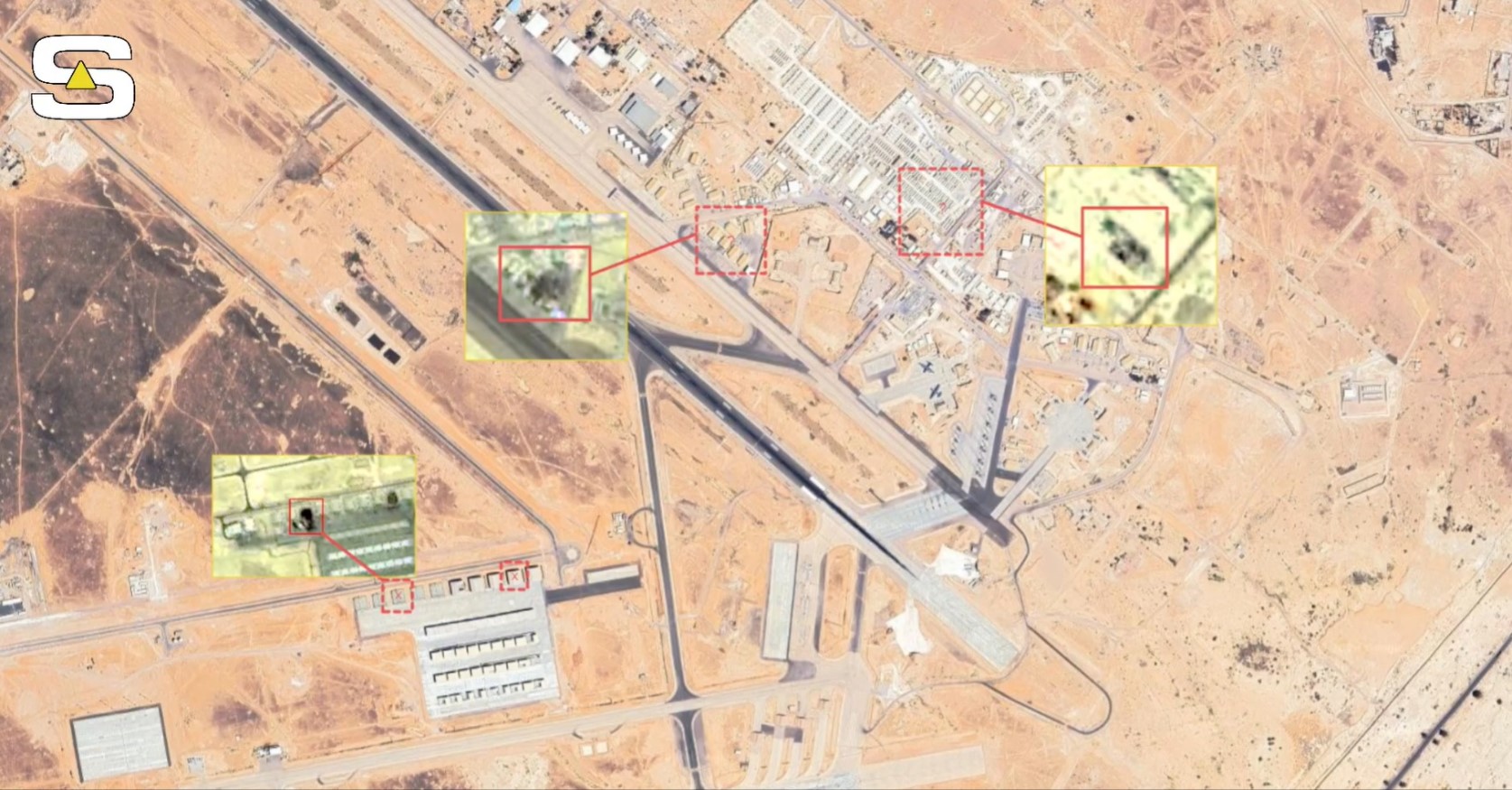 New Satellite Imagery Reveals Extensive Damage at Jordan's Muwaffaq al-Salti Air Base After Iranian Missile Strike
-
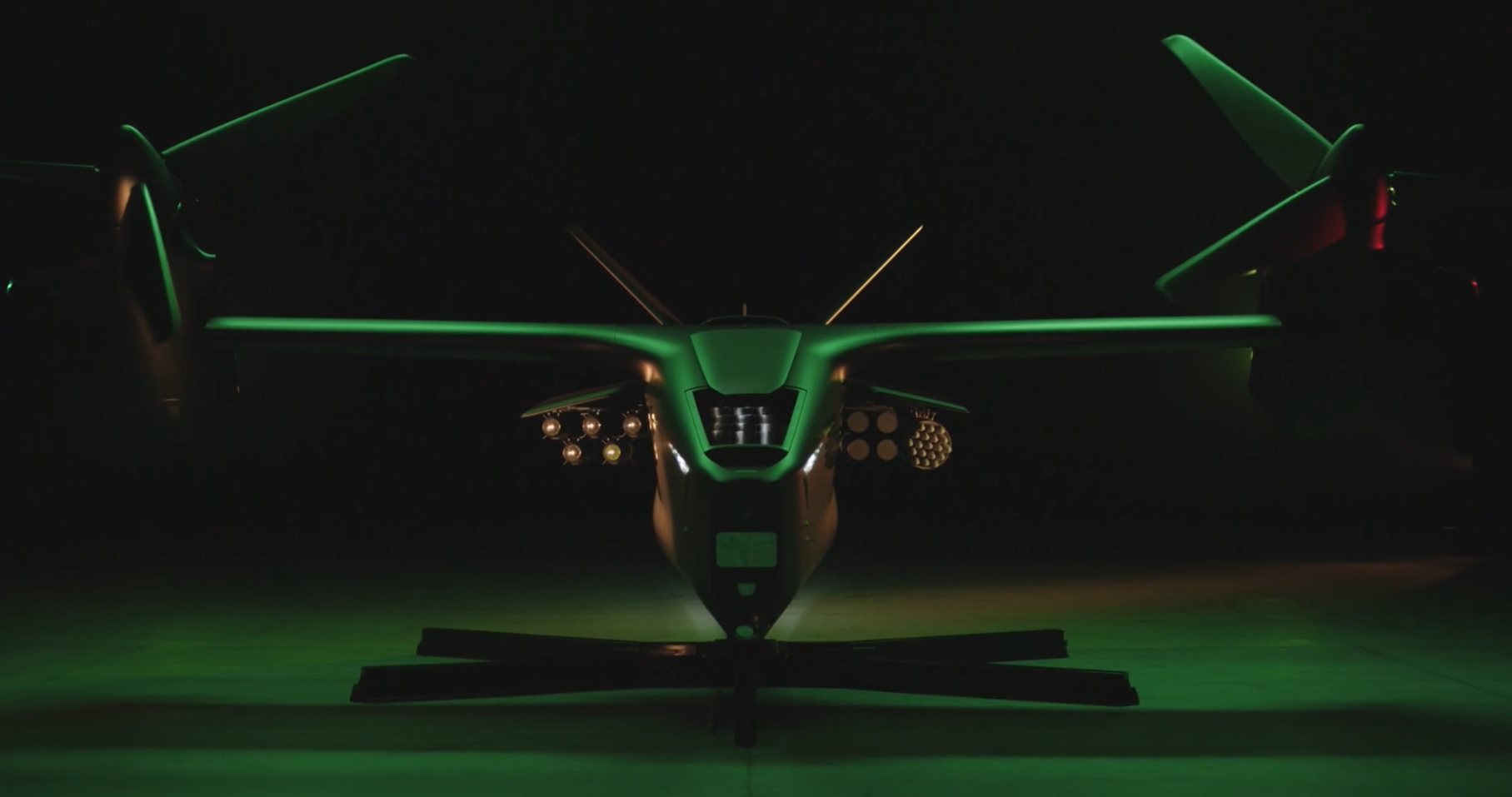 Anduril Unveils Thunder Autonomous Attack Rotorcraft Built with Archer Aviation to Support Apache Helicopters
-
 U.S. Marine Corps Selects AI-Powered Bullfrog Weapon Station for L-MADIS Counter-Drone Platform
-
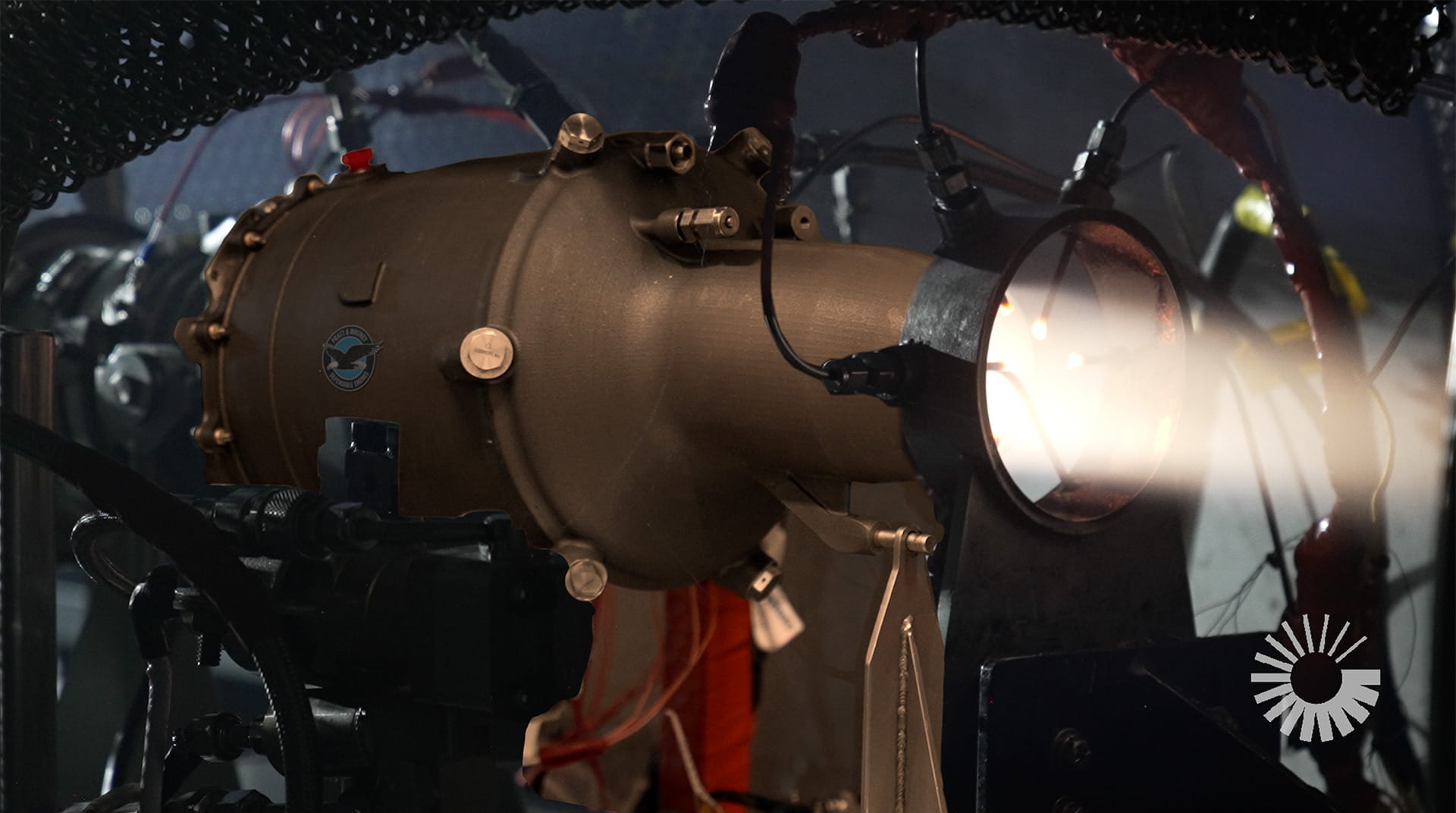 Pratt & Whitney Completes Testing of 3D-Printed TJ150 Engine for Military Applications
-
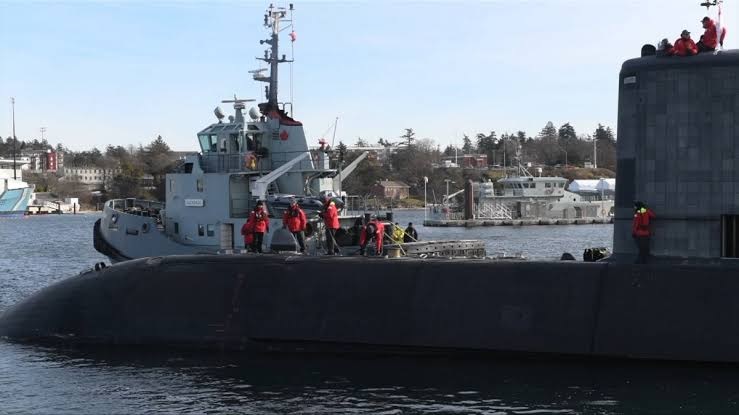 Canada Awards Babcock $1.1 Billion Six-Year Contract Extension to Support Victoria-Class Submarine Fleet
-
 Lockheed Martin Unveils MORFIUS X-Rotor High-Power Microwave System That Can Neutralize 50+ Drones in One Flight
-
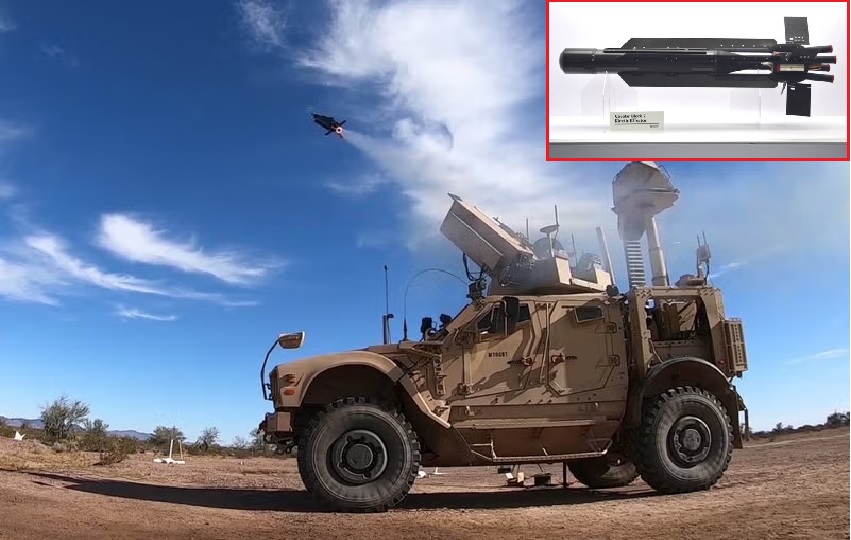 Raytheon Ramps Up Coyote Counter-Drone Missile Production After U.S. Army Reports 600 Successful Combat Intercepts During Iran Conflict
-
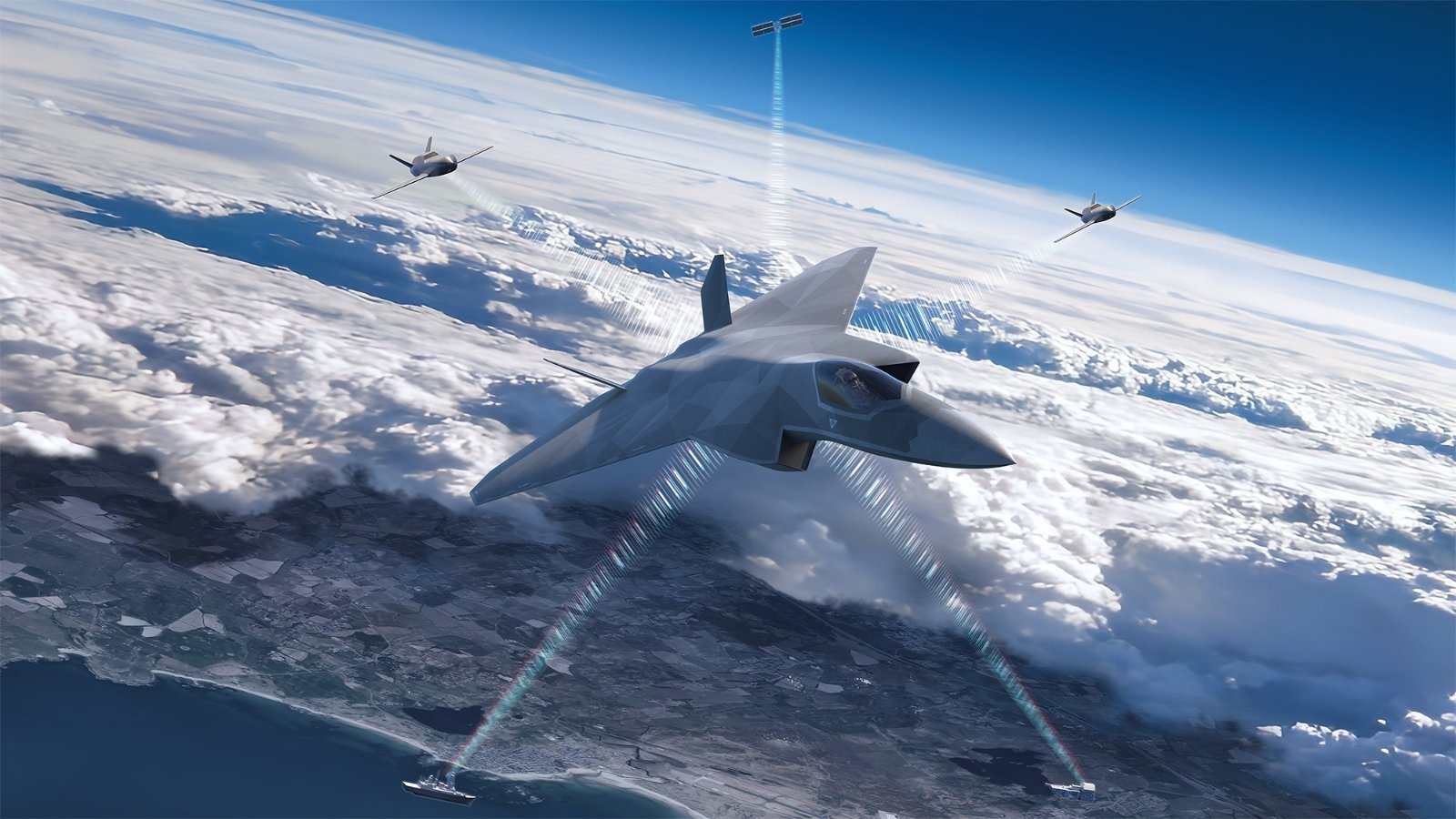 UK Awards BAE Systems £708 Million Contract Extension to Advance GCAP Sixth-Generation Combat Air Technologies
