MANILA, Philippines — April 17, 2026 : Japan has deployed a large military contingent to the Philippines for the upcoming Balikatan 2026 joint exercises, marking the first time Japanese combat units will participate as active operational forces in the drills. The development reflects a significant shift in regional defense cooperation and follows the implementation of the Reciprocal Access Agreement (RAA) between Tokyo and Manila in September 2025.
The annual exercise is scheduled to take place from April 20 to May 8, 2026, and is expected to involve more than 17,000 personnel from seven countries: the Philippines, the United States, Australia, Japan, Canada, France, and New Zealand. Additional nations will attend as observers. The 2026 iteration is described by officials as the largest Balikatan exercise conducted to date.
Japanese Deployment and Assets
The Japan Self-Defense Forces (JSDF) have contributed approximately 1,400 personnel, making Japan the third-largest participant after the United States and the Philippines.
The deployment includes a combination of naval, air, and ground assets:
-
Naval platforms: Helicopter carrier JS Ise (DDH-182), landing ship JS Shimokita, and destroyer JS Ikazuchi
-
Aircraft: C-130H Hercules transport aircraft and US-2 amphibious search-and-rescue aircraft
-
Ground systems: Type 88 surface-to-ship missile systems
The JS Ise, a 19,000-ton helicopter carrier, is among the largest vessels in Japan’s fleet and forms part of the Japan Maritime Self-Defense Force Indo-Pacific Deployment 2026.
Operational Scope of Participation
Unlike previous Balikatan exercises, where Japanese participation was limited to observation or humanitarian assistance and disaster relief operations, the 2026 drills will involve full operational engagement by JSDF units.
Key training activities include:
-
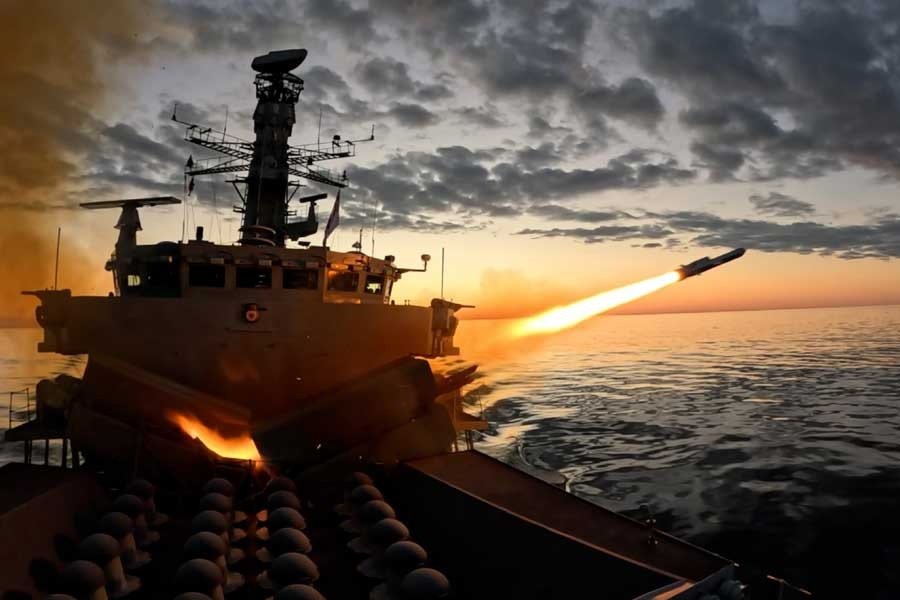
Maritime strike operations: The Type 88 surface-to-ship missile system, with an operational range of approximately 100 kilometers, will be used in live-fire exercises for the first time during Balikatan
-
Field training and combined maneuvers: Joint ground and amphibious operations
-
Command post exercises: Coordination and planning simulations among participating forces
-
Integrated air and missile defense drills
-
Cyber defense and infrastructure protection exercises
-
Logistics and support operations, including airfield repair and joint medical missions
The maritime strike phase of the exercise is expected to be observed by Japanese Defense Minister Shinjiro Koizumi.
Strategic and Legal Framework
Japan’s expanded participation follows the entry into force of the Reciprocal Access Agreement (RAA) in September 2025, which facilitates the movement and deployment of military personnel and equipment between Japan and the Philippines. Prior to this agreement, Japan’s involvement in Balikatan was limited in scope and did not include combat-capable units.
The agreement aligns with existing Philippine defense arrangements with the United States and Australia and supports broader multilateral cooperation in the Indo-Pacific region.
Regional Security Context
Japan’s decision to deploy combat units to the Philippines for the first time is closely linked to evolving security conditions in the region, particularly the increasing presence and activity of China in the South China Sea.
China has continued to expand its naval capabilities and military infrastructure, including the development of artificial islands, deployment of advanced missile systems, and increased frequency of maritime patrols. These developments have raised concerns among regional countries regarding freedom of navigation and territorial disputes.
Japanese defense planners assess that the pace of China’s military modernization, especially in naval and missile forces, requires a corresponding increase in Japan’s operational readiness and external defense cooperation. The deployment to Balikatan is viewed as part of Japan’s broader effort to strengthen its deterrence posture and enhance interoperability with partner nations.
Officials in Tokyo have also indicated that delaying such measures could reduce Japan’s ability to respond effectively to future security challenges in the region. As a result, Japan has gradually expanded its defense role beyond its immediate territory while remaining within its constitutional framework.
Exercise Objectives
Balikatan remains a joint exercise primarily hosted by the Philippines and the United States, aimed at improving interoperability, coordination, and readiness among allied and partner forces.
According to statements from Philippine and U.S. officials, the 2026 drills are designed to:
-
Strengthen collective defense capabilities
-
Enhance coordination in multi-domain operations
-
Maintain regional stability
-
Ensure a security environment that discourages unilateral changes to the status quo
Training activities will be conducted across multiple locations in the Philippines, including areas facing the South China Sea and the Luzon Strait, both of which are considered strategically important maritime zones.
Official Statements and Transparency
Details of Japan’s participation are based on official announcements from the Japanese Ministry of Defense, as well as statements from Philippine and U.S. authorities. No additional operational specifics beyond the declared assets and exercise scope have been publicly disclosed.
The inclusion of Japan as an active combat participant represents a notable development in Indo-Pacific defense cooperation and signals a shift toward more integrated, multilateral military engagements in the region.
——— End of Article ———