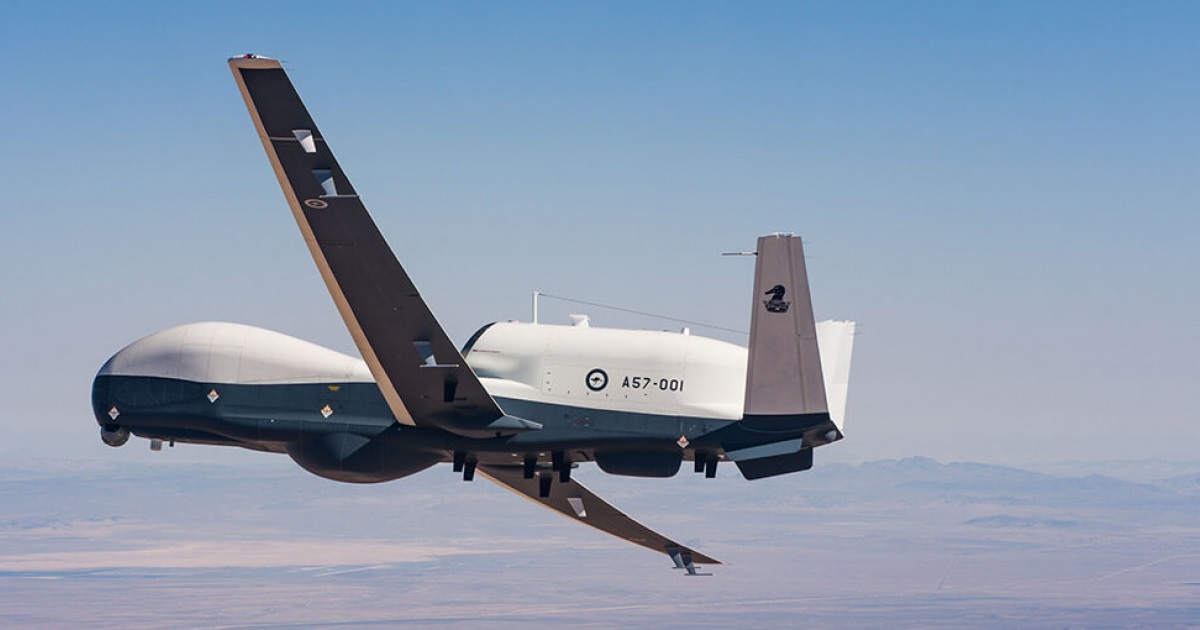
JACKSONVILLE, Florida — April 17, 2026 : A United States Navy MQ-4C Triton unmanned surveillance aircraft conducted a reconnaissance mission lasting more than 12 hours off the coast of Cuba, according to flight tracking data and open-source reporting.
The aircraft, operating under the callsign BLKCAT6 and registered as 169806, departed from Naval Air Station Jacksonville in Florida and flew a structured surveillance route over the Gulf of America and the northern Caribbean Sea. The mission included repeated flight patterns near key locations, including Havana, Guantanamo Bay, and areas near Pinar del Río, as well as segments along Cuba’s southern coastline.
Tracking data indicates the aircraft maintained a consistent high-altitude profile at approximately 49,000 to 49,100 feet, with a ground speed near 290 knots throughout the mission. The route consisted of multiple loops and back-and-forth tracks, a pattern consistent with sustained monitoring rather than transit. The drone also operated near critical maritime corridors, including the Windward Passage and the Yucatán Channel, where commercial and strategic shipping activity is concentrated.
The MQ-4C Triton, developed by Northrop Grumman, is a high-altitude, long-endurance unmanned aircraft designed for maritime intelligence, surveillance, and reconnaissance operations. The platform is equipped with a 360-degree radar system and an array of onboard sensors capable of scanning large areas of ocean and coastline. With an endurance exceeding 24 hours and an estimated unit cost of approximately $240 million, the aircraft is intended to provide continuous coverage over designated areas without the need for frequent returns to base or crew rotation.
During the mission, the Triton maintained persistent observation over waters surrounding Cuba, conducting multiple passes near Havana and the Guantanamo Bay region. The repeated orbit patterns indicate the aircraft was tasked with continuous surveillance of these zones, enabling the collection of data on maritime movements, coastal activity, and electronic signals over an extended period.
The flight took place amid increased policy focus by the United States on Cuba. On April 15, 2026, USA Today reported that military planning for a potential Pentagon-led operation involving Cuba is being developed, citing two sources familiar with the matter. In response, the Pentagon stated that it routinely prepares for a range of contingencies and remains ready to execute presidential directives if required, without providing details on specific plans.
Surveillance missions of this type support operational planning by providing updated intelligence on regional activity. High-altitude, long-duration coverage allows analysts to monitor patterns over time rather than relying on isolated observations. This includes tracking maritime commercial traffic, monitoring fuel shipments, and observing electronic infrastructure activity in areas near Havana and surrounding coastal zones.
The U.S. Navy has not issued a public statement regarding this specific flight. All details of the operation are based on available flight tracking data and open-source intelligence reporting.
——— End of Article ———