STOCKHOLM, — April 17, 2026 : Sweden is preparing for a contingency in which Russia could conduct a limited operation to occupy an island in the Baltic Sea as a means of testing NATO’s political cohesion and response mechanisms, according to recent statements by the country’s top military leadership.
Lieutenant General Michael Claesson, Chief of Defence and Supreme Commander of the Swedish Armed Forces, outlined the assessment in an interview published on April 16, 2026. He stated that Russia could initiate a limited naval or amphibious action “at any time,” potentially with little or no warning, including within a very short timeframe.
According to Claesson, such an operation would likely be designed not for territorial expansion but to assess the unity and decision-making speed of the NATO alliance. He indicated that the Kremlin could seek to exploit perceived divisions among member states, particularly in light of recent public remarks by U.S. President Donald Trump regarding the level of American commitment to European defense.
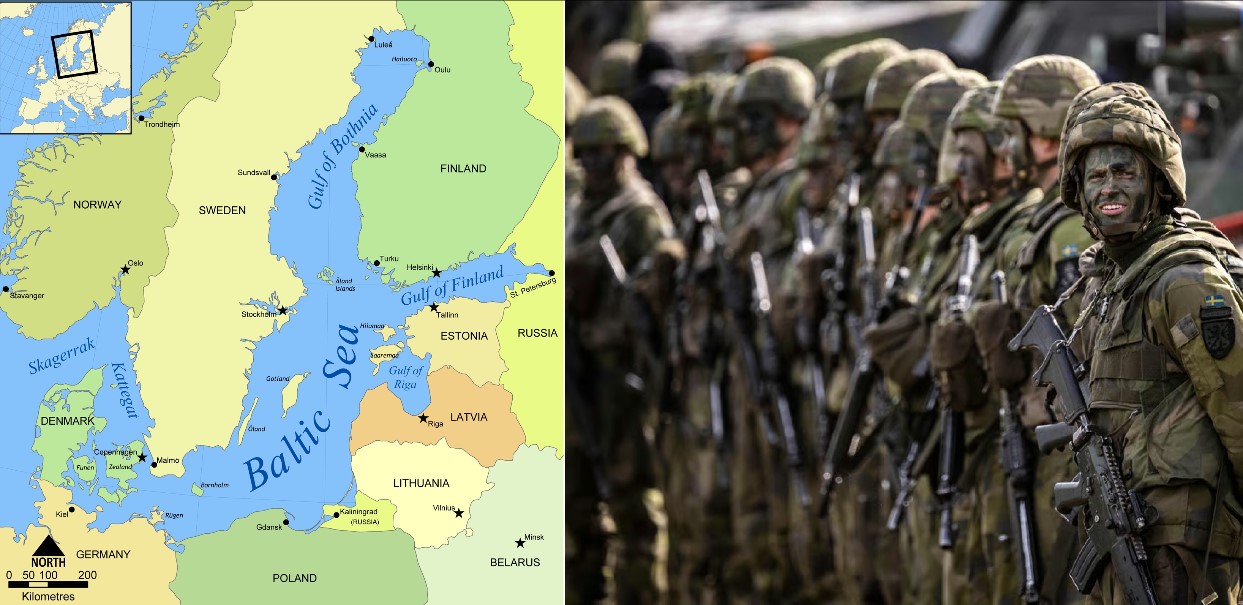
Claesson emphasized that the Baltic Sea’s geography presents a unique vulnerability. “We have in the order of 400,000 islands in the Baltic Sea, so it’s just a matter of Russia choosing,” he said. He added that many of these islands are lightly defended or uninhabited, making them potential targets for a limited and symbolic operation. “I believe that you can occupy almost any of them. This does not necessarily have to be a large-scale operation — rather a symbolic step to see what the political reaction will be.”
Swedish defense planners assess that such an incursion would likely be a controlled, short-duration maritime or airborne action aimed at creating a political dilemma rather than triggering immediate large-scale conflict. The objective, according to Claesson, would be to observe NATO’s reaction under Article 5 obligations without escalating into full-scale war.
These concerns align with findings from a joint report released in September 2025 by the Swedish Armed Forces and the Swedish Civil Defence and Resilience Agency. The report outlined scenarios involving surprise amphibious or airborne assaults targeting Swedish territory, including strategically significant locations such as Gotland, the country’s largest island in the Baltic Sea. The assessment concluded that Russia already possesses the capability to conduct limited military operations in Sweden’s immediate vicinity and could expand to more extensive operations within a five-year timeframe.
Gotland has been identified as a critical strategic asset due to its central position in the Baltic Sea, as well as its airfield and port infrastructure. Control of the island would provide significant operational advantages in terms of surveillance, air defense, and sea lane control across the region.
However, recent Swedish assessments suggest that Russia may avoid heavily defended or strategically prominent targets such as Gotland, Denmark’s Bornholm, or Estonia’s Hiiumaa and Saaremaa. Instead, it may focus on smaller, less fortified islands to achieve a political effect while minimizing the risk of immediate military escalation.
Swedish military intelligence assessments further indicate that Russia continues to expand its operational capabilities in the Baltic region. The Swedish Military Intelligence and Security Service (MUST) has reported ongoing increases in Russian naval activity, as well as improvements in the ability to rapidly deploy forces in the vicinity of Sweden and neighboring NATO states.
Officials have also pointed to the potential for a shift in Russian military posture following developments in the war in Ukraine. Swedish defense authorities assess that a reduction in operational commitments elsewhere could enable Moscow to redeploy forces toward Northern Europe and the Baltic Sea.
Recent incidents in the region have contributed to heightened concern. In late February 2026, a Russian unmanned aerial vehicle approached the French nuclear-powered aircraft carrier Charles de Gaulle while it was docked in Malmö during joint exercises. The drone was intercepted and neutralized by Swedish forces, and the incident was later confirmed by Sweden’s Ministry of Defence.
In addition to conventional military activity, Sweden and its partners have reported ongoing hybrid operations in the Baltic Sea region. These include interference with GPS and navigation systems, suspected sabotage of undersea energy and communication infrastructure, and the use of civilian or commercial vessels for intelligence-gathering purposes, often described as part of a “shadow fleet.”
Analysts within the Swedish defense establishment assess that a limited island seizure would fit within this broader pattern of gray-zone tactics. Such actions are designed to remain below the threshold of formal armed conflict while still exerting pressure on NATO members and testing alliance responses.
The scenario described by Swedish officials highlights several strategic considerations. A limited incursion targeting a low-value or uninhabited island could complicate NATO’s decision-making process, particularly if member states differ on whether the situation warrants a collective military response. It could also be used to evaluate the alliance’s ability to coordinate without strong leadership from the United States.
Sweden formally joined NATO in March 2024, becoming the alliance’s 32nd member. Its geographic position at the entrance to the Baltic Sea, combined with close proximity to Finland and the Baltic states, places it in a central role in regional defense planning.
In response to evolving security conditions, the Swedish Armed Forces have increased readiness levels in recent years. Measures include enhanced maritime and aerial surveillance, reinforcement of military units on Gotland, and expanded participation in joint exercises with NATO allies.
Claesson underscored the importance of maintaining a visible and credible deterrence posture. “We should be on the alert and deter Russia from such adventures through our presence in interesting areas in the north and, of course, in the Baltic Sea,” he said.
Swedish officials have clarified that there is no specific intelligence indicating an imminent Russian operation. However, they describe the scenario as plausible and stress the need for preparedness at both the national and alliance levels.
The warning comes amid ongoing discussions within NATO regarding burden-sharing, deterrence, and alliance cohesion, particularly in the context of evolving geopolitical dynamics and differing political signals among member states.
——— End of Article ———