World
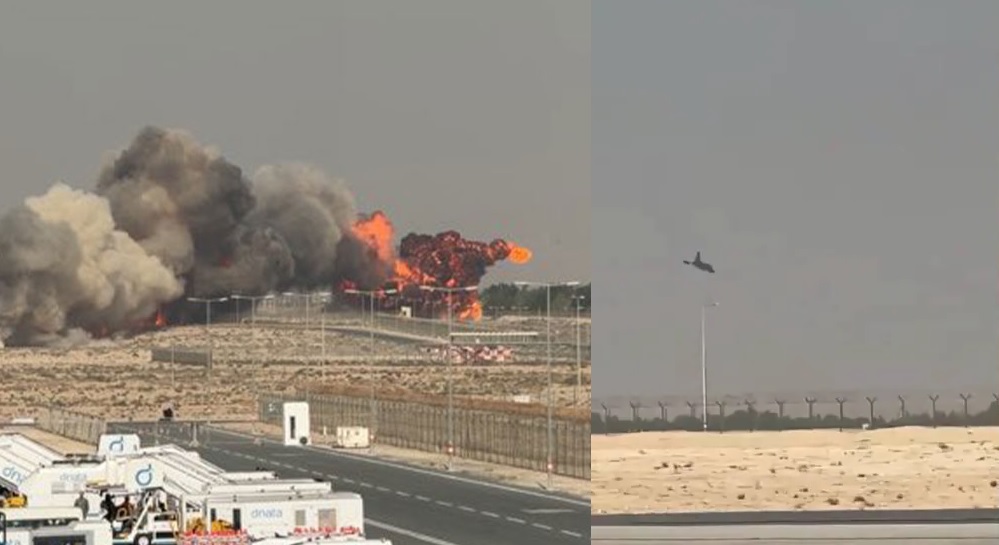
A HAL Tejas fighter jet of the Indian Air Force (IAF) crashed on Friday afternoon during an aerial display at the Dubai Air Show 2025, killing the pilot and sending shockwaves through the international aviation community. The aircraft went down at around 2:10 p.m. local time while performing a demonstration manoeuvre. Witnesses reported that the jet suddenly lost control before plunging toward the ground. Thick black smoke rose from the crash site as stunned spectators — including families, women, and children — watched in disbelief. IAF Confirms Fatality, Orders Inquiry Shortly after the incident, the Indian Air Force issued an official statement confirming the pilot’s death. “An IAF Tejas aircraft met with an accident during an aerial display at Dubai Air Show, today. The pilot sustained fatal injuries in the accident. IAF deeply regrets the loss of life and stands firmly with the bereaved family. A court of inquiry is being constituted to ascertain the cause,” the statement said. The identity of the pilot has not yet been officially released. Possible Cause: What Is Known So Far While authorities have not confirmed the cause, early indications suggest the possibility of loss of control during a high-G manoeuvre, or a sudden technical failure mid-flight.A court of inquiry will analyse flight data, pilot inputs, aircraft systems, and weather conditions to determine what went wrong. Air-show demonstration flights are known to push aircraft to extreme performance limits, and even minor deviations can lead to catastrophic outcomes. Incident Comes After False Claims of “Oil Leakage” Went Viral The crash took place just a day after the Indian government refuted a wave of online claims alleging that the Tejas Mk1 suffered an oil leak during the Dubai Air Show. The Press Information Bureau (PIB) Fact Check unit clarified that the viral videos showed routine aircraft drainage: The fluid seen was condensed water from the Environmental Control System (ECS) And moisture release from the On-Board Oxygen Generating System (OBOGS) These are standard procedures in humid climates like Dubai No malfunction had occurred Officials called the claims misleading, saying propaganda accounts attempted to portray the Tejas as unreliable. Tejas at the Dubai Air Show The Tejas Mk1 has been a major part of India’s effort to showcase indigenous defence capabilities at global platforms. Its participation in Dubai was meant to highlight India’s aerospace manufacturing progress and strengthen export prospects. Today’s tragedy, however, has cast a dark shadow over the event and raised fresh questions about safety during high-risk aerial performances. Air Show Impact and Global Reaction Organisers temporarily halted flying displays following the crash. No injuries were reported among the spectators. International aviation communities and global air forces expressed condolences and solidarity with the IAF. Safety investigators from the UAE are expected to cooperate with Indian teams. What Happens Next Going forward, everything now hinges on the findings of the IAF’s court of inquiry. The investigation will likely focus on whether the crash resulted from pilot error, a technical or mechanical failure, or perhaps a combination of different operational factors coming together at the wrong moment. What the investigators ultimately conclude could have a significant impact. Their report may shape how India approaches aerial demonstrations in the future, especially at high-profile international events. It could also influence how the Tejas is marketed abroad, potentially affecting export negotiations already underway. In addition, the outcome may prompt HAL to review or refine certain aspects of the aircraft’s certification and safety procedures, depending on what the inquiry uncovers.
Read More → Posted on 2025-11-21 11:55:20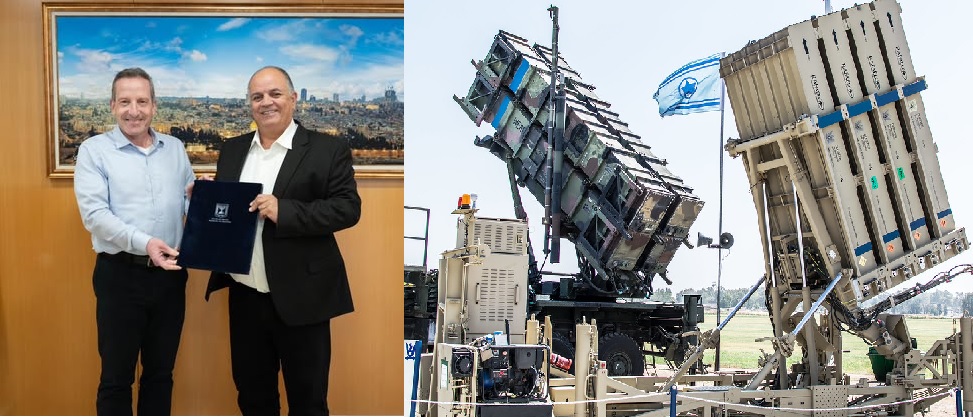
World
Israel’s Ministry of Defense has signed a major multi-billion-dollar contract with Rafael Advanced Defense Systems to increase production of Iron Dome interceptors, securing fresh stockpiles for the Israel Defense Forces (IDF) amid ongoing regional threats. Officials described the agreement as the result of “comprehensive negotiations” involving both Israeli and U.S. defense authorities. Deal Backed by U.S. Aid Package The new order is funded through the $8.7 billion U.S. aid package approved by Congress in April 2024, which includes $5.2 billion specifically earmarked for boosting Israel’s air-defense layers—Iron Dome, David’s Sling, and the Laser Defense System currently in final testing. This funding ensures that Rafael can maintain continuous, high-volume production of Tamir interceptors, the missiles fired by Iron Dome batteries to stop rockets, drones, and other short-range threats. Signing Ceremony Signals Strategic Priority The procurement order was signed by Maj. Gen. (Res.) Amir Baram, Director General of the Israel Ministry of Defense, during a ceremony chaired by Defense Minister Israel Katz. Senior U.S. and Israeli officials attended, including: Brig. Gen. (Res.) Dr. Daniel Gold, Head of DDR&D Maj. Gen. Aaron Drake, U.S. Defense Attaché Brig. Gen. (Res.) Nir Halamish, Rafael’s Executive VP for Marketing Shlomo Toaff, Senior VP and Head of Air Defense Systems at Rafael Other top IMOD, legal, and financial representatives Defense officials from both countries participated in the negotiations—particularly teams from the Israel Missile Defense Organization (IMDO) and the U.S. Missile Defense Agency (MDA). What the Deal Means In simple terms, this contract ensures that: Israel’s Iron Dome system will have a much larger supply of interceptors—crucial for defending against large-scale rocket barrages. Production will run continuously, preventing shortages during emergencies. The U.S.–Israel defense partnership deepens, especially in missile-defense technology and manufacturing. Israel strengthens its multi-layered air-defense network, preparing for both current and future threats. Why It Matters Now The Iron Dome has been one of Israel’s most reliable defense tools since its first deployment in 2011. It has intercepted tens of thousands of rockets, missiles, and UAVs—often with success rates over 90%, depending on the conflict. During recent wars, Israel faced unprecedented barrages of rockets and explosive drones, highlighting the need for greater interceptor stockpiles. Large-scale conflicts can consume thousands of interceptors in days, placing significant stress on production. This new deal ensures that Israel can replenish and expand its reserves, preventing vulnerabilities during prolonged fighting. Role of Industry and International Cooperation Rafael Advanced Defense Systems remains the prime contractor, working with: ELTA Systems (IAI) – radar and detection technologies mPrest – command and control software The U.S. MDA – co-production and joint development of components Part of Iron Dome’s interceptor production takes place in the United States, enabling faster manufacturing and ensuring American industry benefits from the partnership. Strengthening the Multi-Layered Shield The finalized agreement fits into Israel’s broader strategy to maintain a multi-layered air defense network, which includes: Iron Dome – short to medium-range rockets and drones David’s Sling – medium to long-range missiles Arrow-2 and Arrow-3 – long-range ballistic missiles Laser Defense System (Iron Beam) – a high-energy laser nearing operational readiness This network is designed so that no single threat can overwhelm Israel’s defenses. A Strategic Signal By sealing this contract now, Israel is sending a message of long-term preparedness. With regional tensions involving Gaza, Lebanon, Syria, and Iran, ensuring sustained interceptor production becomes not just a military necessity but a strategic reassurance for the Israeli public and its allies. The new multi-billion-dollar Iron Dome production deal marks one of the most significant defense investments Israel has made in recent years. Backed by U.S. funding and developed through intense bilateral cooperation, the agreement guarantees that Israel’s most relied-upon air-defense system remains fully supplied, fully active, and ready for any future challenge.
Read More → Posted on 2025-11-21 11:45:00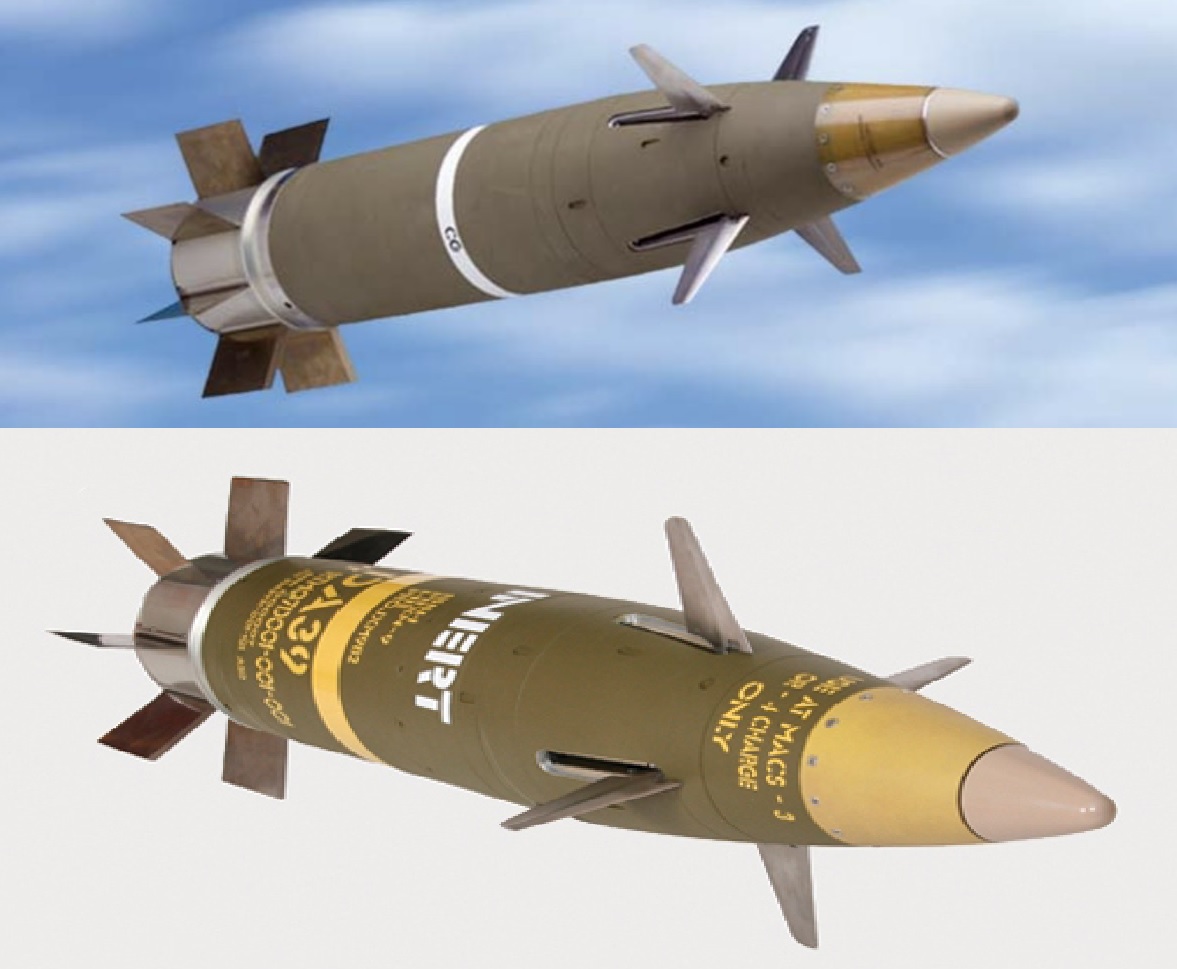
World
The U.S. State Department has granted a formal determination under its foreign military sales (FMS) programme approving a possible sale to India of up to 216 units of the M982A1 Excalibur 155 mm GPS/INS-guided artillery projectiles along with related equipment, services and support for an estimated cost of USD 47.1 million. Although earlier press reports reference a broader package (including anti-tank missiles) valued at around USD 93 million, this particular notification covers only the Excalibur portion — “the description and dollar value are for the highest estimated quantity and dollar value based on initial requirements. Actual dollar value will be lower depending on final requirements, budget authority, and signed sales agreement(s), if and when concluded.” Package Details The approved sale comprises: Up to 216 M982A1 Excalibur tactical projectiles Ancillary items and accessories Portable Electronic Fire Control Systems (PEFCS) with an Improved Platform Integration Kit (iPIK) Primers and propellant charges U.S. Government technical assistance, technical data, and repair-and-return services Other related logistics and programme support Additional publicly-reported details indicate the unit cost of the Excalibur round is roughly USD 90,000, and the prime contractor is Raytheon Missiles & Defense. What Makes Excalibur Different? The M982/M982A1 Excalibur represents a major leap in artillery technology compared with conventional 155 mm shells. Key differentiators include: GPS + INS Guidance: Provides far superior accuracy. Accuracy: Excalibur’s CEP is around 4 metres, compared to tens or hundreds of metres for conventional shells. Extended Range: Uses folding glide fins to reach 40–57 km or more depending on the firing platform. First-round hit & reduced collateral damage: Fewer rounds needed, higher precision. In short, while a standard artillery shell may need multiple rounds to destroy a target, Excalibur is designed to hit a point target with a single shot. India’s Use and Role in Indian Artillery India has already taken steps to integrate the Excalibur into its artillery forces. In December 2019, the Indian Army test-fired M982 Excalibur rounds from an M777 towed 155 mm howitzer at the Pokhran firing range in Rajasthan. Earlier reports indicated that India had procured an initial batch of approximately 600 rounds of the M982 in 2019 — around 500 with 20 metre accuracy and around 100 rounds with 2 metre accuracy. The Indian Army’s artillery inventory of 155 mm calibre includes multiple gun systems (such as the M777 ultra-light howitzer, the K9 Vajra-T, and Dhanush among others) and the Excalibur is compatible with all those systems. Thus, the current approved sale represents an extension or replenishment of those existing precision capabilities. Strategic Implications The approval of this FMS case carries both operational and diplomatic significance. Operationally, the acquisition of additional guided artillery rounds enhances India’s ability to engage high-value or time-sensitive targets with fewer rounds, fewer exposures, and reduced collateral damage — an important capability in complex terrain and along contested borders. Diplomatically, it signals deepening defence cooperation between the United States and India. By approving this transaction, the U.S. emphasises India’s status as a major defence partner and lends support to its regional security role. The fact that the package bundles precision munitions, electronic fire-control systems and sustained support underscores long-term cooperation rather than a one-off sale. Next Steps & Considerations Key points going forward: The sale is “possible,” not final — India must submit its final requirements. Actual quantity and cost may be lower. Integrating PEFCS with iPIK will be essential for full capability. India must manage sustainment, training, and logistics. Excalibur’s high cost means it will be used for high-value targets, not routine artillery missions. India already operates Excalibur, so training and integration challenges are minimal. This potential USD 47.1 million FMS case for up to 216 M982A1 Excalibur precision rounds marks another step forward in India’s artillery modernisation and in U.S.–India strategic defence cooperation. With its GPS/INS guidance, glide-fin range extension, and near-pinpoint accuracy, Excalibur significantly enhances India’s capacity to conduct precision strikes. As both nations move toward finalising the agreement, the deal stands to strengthen India’s deterrent capabilities while reinforcing the broader strategic partnership between New Delhi and Washington.
Read More → Posted on 2025-11-21 04:35:50
World
The Johannesburg summit of the Group of Twenty (G20), scheduled for November 22–23 and hosted by South Africa, is set to proceed with a conspicuous absence: the United States will not participate in the official talks, according to a statement by the White House press secretary. Press Secretary Karoline Leavitt stated explicitly that “The United States is not participating in official talks at the G20 in South Africa.” She also rebuked criticism from South African President Cyril Ramaphosa, saying: “I saw the South African president running his mouth a little bit against the United States … and that language is not appreciated by the president or his team.” By contrast, Ramaphosa has argued that the United States — as the world’s largest economy — should be present. He claimed to have received late-notice communication suggesting a possible “change of mind” from Washington. “We have received notice from the United States … about participating in one shape, form or other in the summit,” he told reporters. Why the United States is sitting out The Trump administration’s decision appears rooted in a confluence of diplomatic and ideological grievances with South Africa. President Donald Trump announced his government would not attend the Johannesburg summit, citing alleged human-rights abuses in South Africa — specifically claims that white Afrikaner farmers are being “killed and slaughtered” and their land illegally confiscated. A White House official said Washington is sending only a chargé d’affaires to attend the formal handover ceremony of G20 presidency from South Africa to the U.S., but will “not take part in any talks.” According to Ramaphosa, the U.S. embassy in Pretoria had earlier communicated that “South Africa’s G20 priorities run counter to the U.S. policy views and we cannot support consensus on any documents negotiated under your presidency.” The U.S. appears to object to the Johannesburg summit’s emphasis on climate change, debt relief, and Global South resource-sharing — agenda items Washington regards as misaligned with its policy priorities. The U.S.’ importance to the G20 and implications of non-participation The United States holds a uniquely central role in the Group of Twenty. As one of the founding members and the world’s largest economy, Washington’s absence from leader-level discussions significantly weakens the forum’s claim to universality and effectiveness. By not participating in the official talks, the U.S. reduces the legitimacy of any joint communique or shared decision emerging from Johannesburg. South African officials have expressed concern that the absence of the U.S. could undermine consensus and even result in a summit without a final, meaningful declaration. In his remarks, Ramaphosa suggested he would be “handing over to an empty chair” when the presidency transfers to the U.S. next year. Strategically, the U.S. non-participation comes at a time when many developing countries look to G20 forums to address climate impact, debt relief and sustainable development — areas in which the U.S. plays a major role. Its absence may shift momentum toward alternative blocs or reinforce perceptions of U.S. retreat from global economic leadership. What President Ramaphosa said At a joint press conference with European Commission President Ursula von der Leyen and European Council President António Costa, President Ramaphosa asserted that South Africa had received a message from the U.S. signalling a change of position. “The United States is a member of the G20 … so they have the right to be here,” he said. He characterised the communication as coming “at the 11th hour” and suggested his government was assessing the “practicalities” of U.S. participation. Ramaphosa also emphasised South Africa’s insistence on a joint declaration despite U.S. objections. He described the broader agenda of the summit — under South Africa’s presidency — as including “solidarity, equality and sustainability.” Has the U.S. ever stayed away from a G20 summit before? In the history of G20 leaders’ summits, it is extremely rare for the United States to opt out of participating. There is no known prior instance where the U.S. refused to send any representative to participate in the main leaders’ talks of a G20 summit. While some U.S. officials have skipped ministerial or working-group sessions — for example Secretary of State Marco Rubio declined to attend a foreign ministers’ meeting earlier in 2025 citing “anti-Americanism” — the present case involves absence from the summit’s core deliberative forum, making it unprecedented. Is any other country adopting similar language or boycott? Yes — several nations are also sending delegations rather than heads of state, or skipping altogether. Chinese President Xi Jinping and Russian President Vladimir Putin are not attending and will send lower-level representation. Argentine President Javier Milei has also signalled alignment with the U.S. approach in this instance. While their motivations differ, the cumulative effect is a Johannesburg summit where multiple major economies are absent at the top-leader level. What this means going forward The United States’ decision to eschew official talks in Johannesburg opens several questions: How meaningful will the summit’s outcomes be with one of its most influential members abstaining? Will South Africa’s role as G20 president be compromised by the U.S. absence? Will this push countries to question the effectiveness of the G20 format? What will this mean for U.S.–South Africa relations, which now face a new diplomatic strain? For South Africa, the message is symbolic: the host seeks to assert the voice of the Global South, but the U.S. non-participation raises doubts about whether the platform is truly inclusive. As the summit convenes, all eyes will be on whether the U.S. will change course at the last moment and engage beyond the ceremonial hand-over. The exchange between Washington and Pretoria — including the White House’s admonishment of Ramaphosa’s remarks — signals a more tense diplomatic dynamic than is typical for G20 host-country interactions.
Read More → Posted on 2025-11-21 04:14:26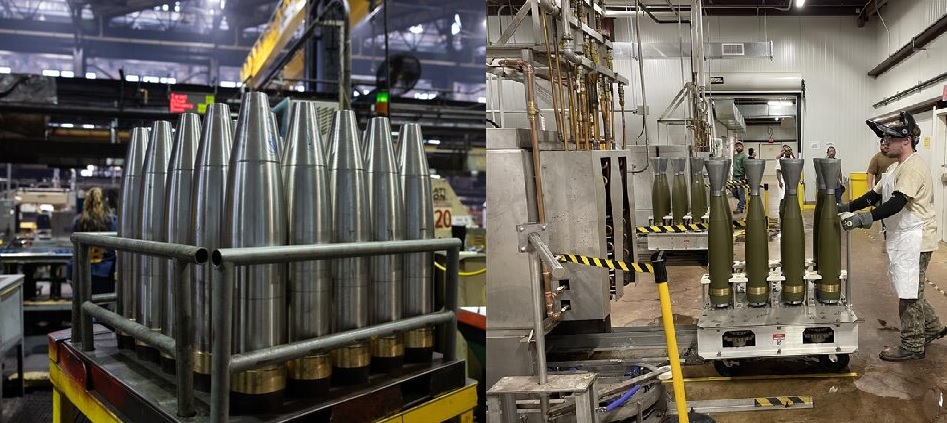
World
Belarus has quietly emerged as a major ammunition-casing manufacturer for Russia, after establishing large-scale production lines with direct Chinese assistance. According to reports cited by Deutsche Welle, China supplied the Belarusian government with specialized machinery capable of producing casings for 152-mm artillery shells and 122-mm GRAD rockets, enabling an annual output of nearly half a million units at a single enterprise. Investigators say the new Belarusian facility produces around 240,000 artillery-shell casings and 240,000 MLRS rocket bodies each year. These are not complete munitions but metallic blanks, which are then exported to Russia. Russian factories later fill them with explosives, install fuses, and complete the final assembly — a division of labor that significantly accelerates Moscow’s ammunition production cycle. Chinese engineers reportedly helped set up the machinery and remain involved in overseeing operations on-site. The expansion of Belarus’s defense-industrial capacity comes at a critical time for Russia, whose artillery-dependent war effort in Ukraine has strained its domestic ammunition industry. By absorbing the labor-intensive metal-forming phase of production, Belarus enables Russian factories to focus on explosive filling and rapid assembly, effectively removing one of Moscow’s major bottlenecks. Analysts note that this arrangement helps Russia maintain high-volume artillery fire, a central component of its battlefield strategy. Belarus’s growing role extends beyond the 152-mm and 122-mm lines. Sources familiar with the sector indicate that Minsk is also expanding production of 82-mm and 120-mm mortar shell bodies, tank-ammunition casings, additional MLRS components, and propellant-related metal housings. Once fully scaled, Belarus could surpass 700,000 ammunition-component blanks per year, making it one of the largest indirect contributors to Russia’s wartime supply chain. The Chinese role in the process has raised political concerns in Europe and the United States. Although Beijing denies supplying lethal aid to Russia, Western intelligence agencies say China has exported machine tools, metal-forming systems, industrial furnaces, and inspection robots — all critical for ammunition production — to Belarusian plants supporting Russia. China’s deployment of engineers has intensified scrutiny, with officials arguing that this assistance effectively constitutes indirect military support for Moscow. For Belarus, participation in Russia’s ammunition supply chain strengthens its strategic importance to the Kremlin but risks greater international isolation and future sanctions. For Russia, the arrangement ensures a steady supply of essential components while relieving pressure on its own sanctions-affected factories. For Western nations, the development poses a fresh challenge to efforts aimed at restricting Russia’s capacity to sustain its war in Ukraine. With Russia continuing high-intensity operations, the new Belarusian production lines provide Moscow with a critical industrial cushion — one that could shape the tempo and duration of the conflict in the months and years to come.
Read More → Posted on 2025-11-20 18:13:23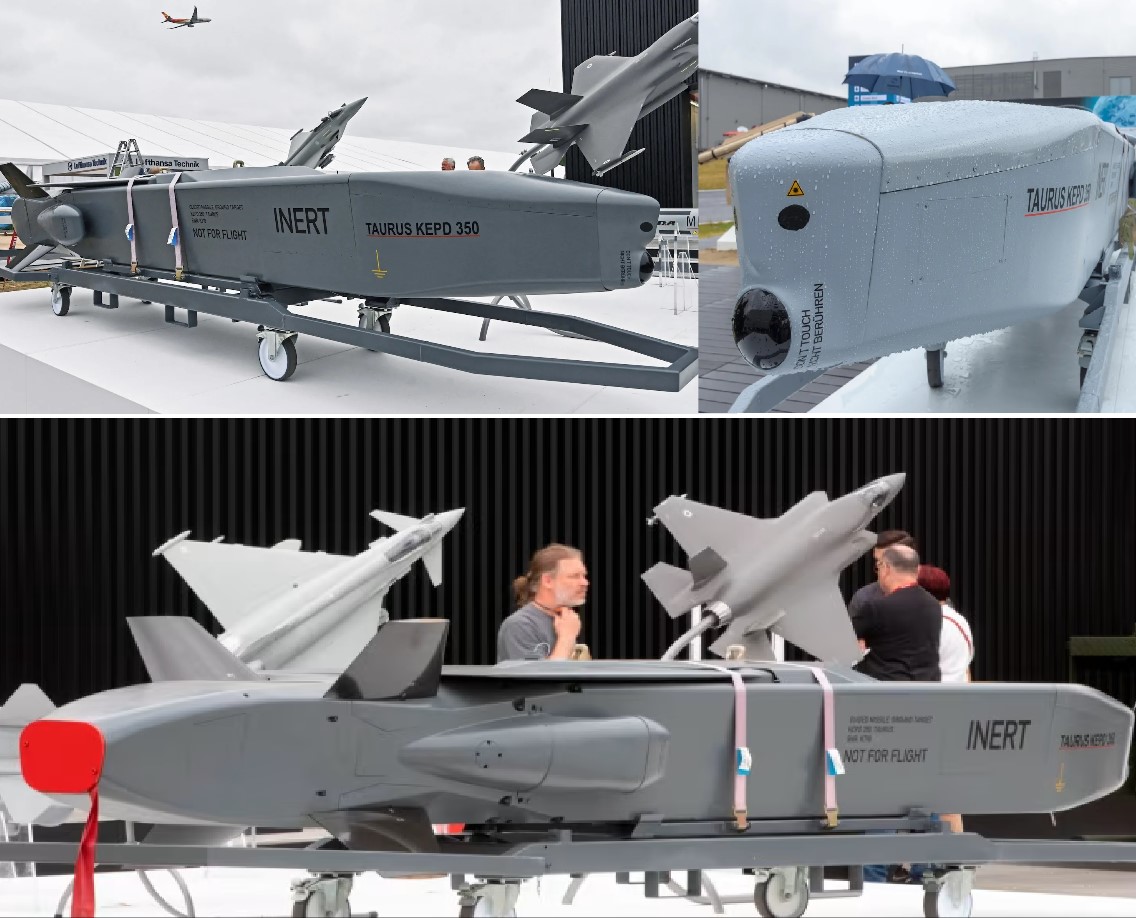
World
In one of the most significant shifts in German military policy since the start of the Ukraine war, the German government has confirmed that preparations have begun to supply Taurus KEPD-350 long-range cruise missiles to Ukraine. The announcement came from Chancellor Friedrich Merz, who said that months-long technical consultations between German and Ukrainian military experts are now “nearing completion.” While Merz made clear that Ukraine will be equipped with the system, he declined to reveal how many missiles will be supplied or when deliveries will begin. German officials say the details have been deliberately classified as part of a broader strategy to prevent Russia from accurately assessing Ukraine’s future strike capability. A Deliberate Air of Secrecy Berlin’s unusually tight information control marks a notable shift from earlier phases of the war, when Germany was more transparent about major arms transfers. Government advisers say that keeping delivery numbers and timelines secret is intended to complicate Russian intelligence assessments. “The aim is to narrow Russia’s ability to predict Ukraine’s operational reach,” a senior German official familiar with the consultations said. This approach mirrors policies adopted by the United States and the United Kingdom regarding the transfer of long-range systems earlier in the war. What the Taurus Missile Brings to the Battlefield The Taurus KEPD-350 is one of Europe’s most advanced air-launched cruise missiles — a precision, deep-strike weapon designed to defeat hardened targets at long distances. Key Specifications: Range: Over 500 km, allowing strikes deep behind enemy lines Warhead: ~480 kg MEPHISTO penetrator warhead capable of destroying bunkers and fortified structures Guidance: Multi-mode navigation — INS, GPS, terrain-reference navigation, and image-based terminal guidance Speed: Subsonic (Mach 0.6–0.95) Weight: Approx. 1,400 kg Length: ~5 meters Unlike simpler long-range weapons, the Taurus is built specifically for deep, precise, and low-detectability strikes, giving Ukraine a capability similar to — and in some aspects more advanced than — the British Storm Shadow or French SCALP missiles already in use. Why the Taurus Matters So Much for Ukraine For Ukraine, receiving the Taurus missile would be nothing short of a transformative leap in its ability to conduct deep-strike operations. With its extended range, Kyiv would finally gain the capability to hit vital Russian infrastructure far beyond the front lines — from logistics hubs and command centers to supply corridors stretching deep into occupied territories, including Crimea. Targets that once seemed unreachable would suddenly fall within striking distance. What makes Taurus especially valuable is its ability to demolish fortified and underground structures. Its powerful tandem penetrator warhead is designed for exactly the kinds of hardened Russian bunkers and command posts that Ukraine has long struggled to neutralize with its existing arsenal. This makes it a uniquely potent tool for undermining Moscow’s most protected military assets. Survivability is another key factor. Taurus flies extremely low, hugging the terrain to stay hidden from radar — a serious challenge for Russian air-defense systems already stretched across vast front lines. Its low-observable profile gives Ukraine a weapon that can slip past layered defenses and strike with precision where it hurts most. And unlike many systems that depend heavily on GPS, Taurus uses advanced multi-layered navigation that remains accurate even in areas saturated with Russian electronic warfare. For Ukraine, which constantly faces GPS jamming, this independence from satellite guidance is a crucial advantage. Military analysts believe that if Ukraine successfully integrates the Taurus into its operations, it could reshape the strategic landscape entirely. Russia would be forced to pull back key assets, reinforce air defenses over wide territories, and reassess the safety of positions it once considered untouchable. In essence, Taurus could give Kyiv the ability to expand the battlefield in ways that dramatically alter Moscow’s calculations. A Policy Reversal in Berlin Germany resisted supplying Taurus missiles throughout 2023–2024 due to fears of escalation and concerns over how Ukraine might use the weapon. The debate became one of the most contentious defence issues in German domestic politics, with critics accusing Berlin of hesitation that limited Ukraine’s battlefield potential. Under Chancellor Merz, Germany has taken a more assertive stance, lifting previous reservations and stressing that Ukraine must receive the capabilities needed to defend its territory. Officials say that earlier concerns about direct German personnel involvement — particularly regarding missile programming and targeting — have now been resolved through technical solutions. Next Steps and Remaining Challenges While Germany has confirmed the start of preparations, several key questions remain: What aircraft will Ukraine use to launch the Taurus? How many missiles will ultimately be delivered? How quickly can Ukrainian crews be trained? Despite these uncertainties, the political signal is clear: Germany is moving toward providing Ukraine with one of the most advanced strike systems in Europe. Germany’s confirmation that preparations are underway to deliver Taurus cruise missiles marks a major upgrade in Ukraine’s long-range strike capabilities — and a significant shift in Berlin’s role within the Western coalition supporting Kyiv. With a range exceeding 500 kilometers, a powerful bunker-busting warhead, and world-class navigation systems, the Taurus stands to become one of the most consequential weapons Ukraine may field in the coming months. The secrecy surrounding the delivery underscores both the sensitivity and the potential impact of this decision — one that could reshape the battlefield far beyond the front lines.
Read More → Posted on 2025-11-20 17:52:32
World
China is quietly constructing one of the most extraordinary maritime structures ever attempted: a mobile, nuclear-blast-resistant floating artificial island, a 78,000-tonne semi-submersible platform capable of surviving super-typhoons, operating for months without resupply, and hosting nearly 240 people in the middle of the ocean. Behind its official label as a “deep-sea research facility,” international analysts see something far more consequential — a new kind of mobile sea base that could change the future of maritime power. A Research Platform That Looks a Lot Like a War Asset The project, officially named the Deep-Sea All-Weather Resident Floating Research Facility, was approved as a major national science infrastructure in China’s 14th Five-Year Plan. Its builders describe it as the world’s first self-sustaining, mobile artificial island, one that can operate continuously for 120 days while cruising at 15 knots. Its displacement rivals the PLA Navy’s newest aircraft carrier Fujian, and its dimensions — 138 meters long, 85 meters wide, with a 45-meter-high main deck — put it in the class of large naval vessels rather than research barges. Yet what truly sets it apart is something no science facility has ever needed before: nuclear blast protection. Why Would a Scientific Platform Need to Survive a Nuclear Explosion? A paper published on November 4 in the Chinese Journal of Ship Research, led by Professor Yang Deqing of Shanghai Jiao Tong University, reveals the surprising answer. The platform’s superstructure houses the rooms that keep the island alive: emergency power, navigation controls, and long-distance communications. If those fail, the entire platform — and its 238 residents — would be adrift. Yang’s team wrote that these core compartments needed to survive “the worst-case scenario,” including a nuclear shockwave. The design team therefore turned to a military nuclear-blast standard, GJB 1060.1-1991 — an unusual reference for a civilian science project. A Metamaterial “Sandwich” That Turns a Nuclear Shock Into a Gentle Push Traditional nuclear-resistant armour requires steel plates so thick they would cripple the platform’s buoyancy and internal space. Yang’s team instead created a metamaterial sandwich bulkhead — a three-dimensional lattice of corrugated metal tubes with a “negative Poisson’s ratio.” In simple terms, when this material is hit by a shockwave, it contracts inward and absorbs the blast instead of snapping outward like normal metal. Under nuclear-level overpressure, computer simulations showed: 58% less deformation 14% lower peak stress No permanent structural damage A protective bulkhead just 60 mm thick — slimmer than a smartphone The researchers call this effect “quasi-static conversion” — transforming a violent, instantaneous nuclear shock into a slow, steady squeeze. In tests, this metamaterial armor outperformed much heavier steel plates while weighing slightly less, solving a decades-old engineering problem: how to survive a nuclear blast without sinking your own ship. A Mobile Island Built for Tempestuous Seas — and Even More Tempestuous Politics What China has engineered here is not just a piece of scientific hardware; it is a floating statement of intent. Its semi-submersible twin-hull design gives it the poise of a fortress at sea, steady even in sea state 7, when waves tower 6 to 9 meters high. Engineers even claim it can ride out Category-17 typhoons — storms so violent that most ships would flee long before they arrive. But its real power lies not in what it can endure, but in where it can go. Unlike the concrete islands Beijing built in the South China Sea — which draw diplomatic fire every time they expand — this platform leaves no permanent footprint. It can quietly appear in a disputed region, linger for months thanks to its four-month endurance, and vanish just as easily when the political weather turns foul. It is, at its core, a strategic ghost: not quite a warship, not quite a territorial claim, but undeniably capable of serving as both when needed. Its mobility gives China a way to maintain presence without planting a flag, and its endurance allows it to wait out political storms just as it waits out typhoons on the open sea. Official Science Mission — and the Unmistakable Strategic Shadow Behind It Beijing insists the platform is destined for peaceful, scientific pursuits. On paper, it is a dream for oceanographers: a drifting laboratory for deep-sea environmental monitoring, long-duration climate research, seabed mineral exploration, and extensive testing of autonomous underwater vehicles. It fits neatly into China’s narrative of expanding its “blue economy”, a future built on underwater robotics, sustainable energy, and new discoveries in the deep. Yet even the most generous observers acknowledge there is more at play here. When a structure can withstand a nuclear shockwave, shelter hundreds of personnel, stay operational for 120 days, and carry enough equipment to function as a surveillance outpost or a floating command centre, it becomes something far larger than a research platform. In the eyes of many defence analysts, this isn’t just a lab — it’s a mobile forward operating base, wrapped in the language of science.And because it flies a civilian banner, it operates in a legal grey zone that warships cannot occupy. This dual identity — peaceful in appearance, powerful in capability — is exactly what makes China’s floating island so strategically unsettling. It is a vessel designed for discovery, yes, but also for deterrence, presence, and persistence in waters where Beijing’s ambitions run deepest. A Strategic Tool for Contested Seas The platform could appear in disputed zones like the South China Sea, offering China constant presence without the diplomatic fallout of building permanent islands. It could also support long-duration mapping, intelligence gathering, or logistics for unmanned fleets — capabilities that are increasingly central to modern naval strategy. Some analysts warn it could become a mobile intelligence hub, a deep-sea mining outpost, or even a dispersed command center hardened against nuclear or EMP attacks. Its endurance — even greater than some nuclear-powered carriers — makes it ideal for remote ocean basins far from the Chinese mainland. A Race Against Time — and Rival Powers Project leader Lin Zhongqin said China is “racing to complete construction” by 2028, pushing shipyards, designers, and material scientists to work in parallel. The platform emerges just as the U.S. resumes its own nuclear weapons testing, ending a 33-year moratorium and adding urgency to China’s nuclear-resistant engineering efforts. Globally, the development may accelerate the maritime power race, inspiring: U.S. interest in mobile forward operating bases, regional concerns among Southeast Asian nations, and scientific debate over the militarization of ocean research. Conclusion: The Birth of a New Class of Sea Power China’s nuclear-resistant floating artificial island is more than a science project. It marks the arrival of a new maritime concept: a mobile fortress-laboratory hybrid, able to survive nuclear shockwaves, ride out super-storms, and sustain long-term missions deep in contested waters. If launched as planned in 2028, it could redefine ocean research, reshape regional power dynamics, and signal the beginning of a future where floating megastructures — not just warships — become instruments of global influence.
Read More → Posted on 2025-11-20 17:29:05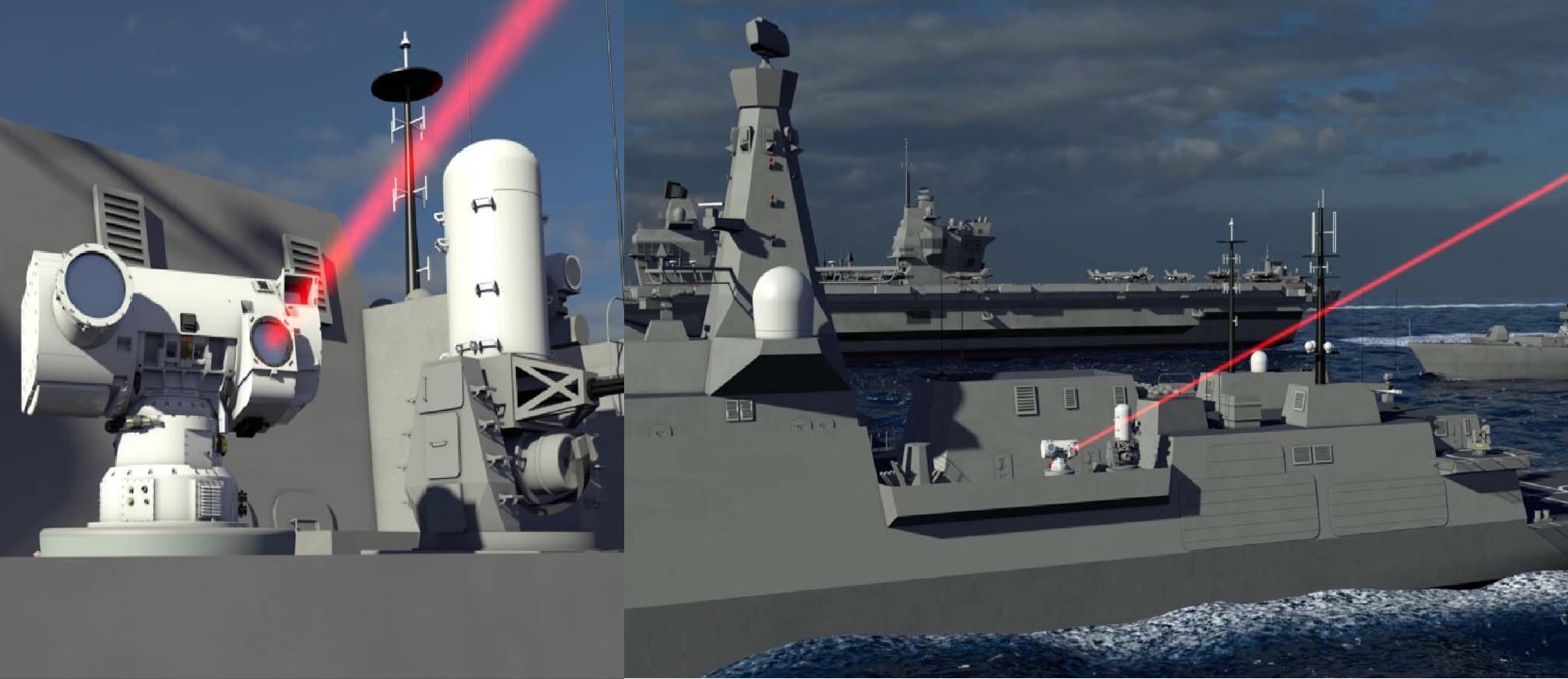
World
The United Kingdom has taken a major step toward deploying laser weapons at sea, confirming that its DragonFire high-energy laser system successfully destroyed high-speed drones during trials at the Hebrides range and will now enter full production. The announcement, made by the Ministry of Defence, marks Britain's transition from experimental directed-energy technology to front-line naval capability. The decision comes amid a dramatic rise in drone attacks worldwide — from the Middle East to the Black Sea — and growing concern that traditional missile-based air defence systems are too costly to sustain against mass, low-cost threats. For the Royal Navy, the DragonFire system represents a new defensive tool that can counter drones and missiles at just a few pounds per shot, a fraction of the cost of firing conventional interceptors. From Trials to Deployment: A Breakthrough Moment During the latest test campaign at the MoD’s Hebrides range, DragonFire proved it could track and destroy fast-moving aerial targets, including drones travelling at speeds up to 650 km/h. Engineers described the performance as the most advanced British laser intercept yet, with the beam demonstrating precision equivalent to “hitting a £1 coin from a kilometre away.” Following those results, the MoD awarded a £316 million production contract to MBDA UK, supported by Leonardo UK and QinetiQ. The funding will deliver ship-fitted DragonFire systems starting in 2027, initially planned for Royal Navy destroyers. What DragonFire Can Do: Specifications and Capabilities Although many details remain classified, open-source information and MoD releases outline the system’s key features: Power Class: Approximately 50 kW, with scalable architecture for higher power in future variants. Technology: British-developed coherent beam-combining, merging multiple laser beams into one powerful, stable output. Engagement Type: Line-of-sight weapon engaging drones, missiles, UAV swarms, and potentially small surface targets. Speed: Engagement at the speed of light, providing near-instant response to incoming threats. Cost per shot: Estimated at £10 or less, compared to hundreds of thousands for a modern missile. Accuracy: MoD claims precision equal to a “£1 coin at 1 km.” Sensors: Integrated radar cueing with advanced electro-optical and infrared tracking. These specifications place DragonFire among the most advanced operational laser systems developed by any Western nation. How the Royal Navy Will Benefit For the Royal Navy, DragonFire is expected to transform close-in defence: Cost-effective defence against drone swarms: Recent conflicts have shown how inexpensive drones can overwhelm expensive missile systems. A laser’s low cost per shot gives ships a new way to deal with mass attacks. Infinite magazine — powered, not stored: Laser weapons don’t run out of ammunition; they rely on the ship’s power. This gives commanders sustained defensive capability during prolonged engagements. Protection for scarce missile stockpiles: Saving interceptors like Sea Ceptor or Aster 30 for advanced threats strengthens the fleet’s overall resilience. A new layer in multi-tier naval air defence: DragonFire is not a replacement for missiles but an additional shield — one specifically designed for low-cost, fast, low-altitude threats. The Royal Navy aims to install the system on Type 45 destroyers first, with future plans pointing toward integration on Type 26 and next-generation vessels. Are Other Navies Using Laser Weapons? Several navies have experimented with laser systems, including the U.S. Navy, Israeli Navy, and reportedly China. However, very few have moved into full production and deployment planning. The UK’s DragonFire contract is widely viewed as one of the first major commitments to install high-energy lasers on combat ships as an official capability, not an experiment. This makes the Royal Navy one of the earliest adopters of operational maritime laser defence. Is This the First Order for MBDA UK? Yes. This is the first large-scale production order for MBDA’s DragonFire system, following nearly a decade of joint research with QinetiQ and Leonardo. The contract is expected to sustain 600 high-skill jobs across the country and accelerate the UK’s domestic directed-energy technology base. Work on More Powerful Variants Already Underway Industry officials say DragonFire has been designed with a modular, upgrade-friendly architecture, making it far easier to scale up in the coming years. They note that work is already underway on more powerful 100 kW-class versions, along with better cooling systems and enhanced tracking technology capable of engaging faster, longer-range missile threats. Engineers are also exploring land-based and airborne variants, which would expand the weapon’s role beyond the Royal Navy. In the long term, they believe that higher-power DragonFire models could eventually take on cruise missiles and even supersonic targets — missions that today’s laser weapons are only beginning to approach. A Turning Point in Naval Defence The UK’s decision to move DragonFire into production marks a significant shift in Western naval strategy. With global drone warfare escalating and missile stocks stretched thin, London’s bet on directed-energy weapons is seen as both practical and forward-looking. By 2027, Royal Navy ships could become among the world’s first to sail with a combat-ready, ship-mounted laser — a development that promises to reshape naval defence for the next generation. As drone warfare evolves, the DragonFire system positions Britain at the forefront of an emerging class of weapons that could eventually become as common at sea as missiles are today.
Read More → Posted on 2025-11-20 16:21:59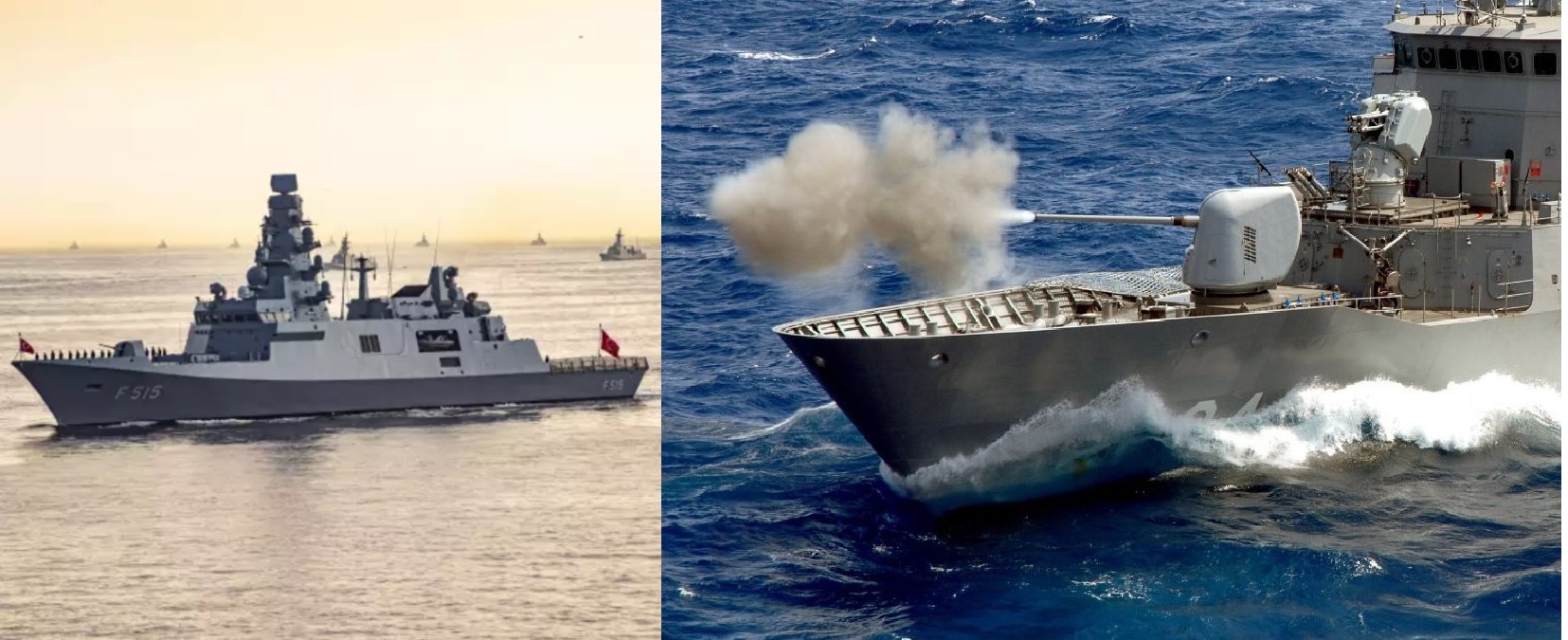
World
Turkey’s defence industry has achieved a significant milestone with the successful production and testing of a new 127 mm/54-calibre naval gun barrel by MKE. The barrel was installed aboard the frigate TCG FATİH (F-242) and, following integration with ship-board systems, completed its first live firing. According to MKE, this marks the first time an entirely domestic 127 mm naval gun barrel has been fired from a Turkish warship. Integrating the System: Trials and Testing The installation process aboard the TCG Fatih involved mechanical fit-up of the barrel within the mount, synchronization of fire-control interfaces, and alignment with the ship’s sensors and magazine systems. The first trial firings successfully demonstrated structural integrity, expected recoil behaviour and compatibility with the ship’s fire-control system. MKE described the event as a “key step” toward qualification and serial production. Capabilities of the 127 mm/54 Naval Gun Barrel The 127 mm calibre (5-inch) barrel in a 54-calibre length measures roughly 6.85 metres, enabling high muzzle velocity and extended range. As part of the Denizhan national naval gun project, the system is intended for surface-fire support and anti-surface warfare. Domestic production strengthens Turkey’s supply-chain independence, reducing reliance on foreign suppliers. The system is expected to support modular ammunition, including extended-range or guided rounds. What Turkey Was Using Before Before this development, the Turkish Navy relied heavily on imported naval gun systems or older domestic variants. The most common modern standard worldwide in this calibre has been the U.S. Navy’s 5-inch/54 Mk 45 naval gun, a system long used on NATO warships. Turkey had already progressed with the MKE 76 mm/62-calibre national naval gun, but the new 127 mm system marks a major step upward in firepower and range. Strategic Significance Enhanced Fire Support: The 127 mm gun gives Turkish warships a powerful tool for long-range naval gunfire support. Industrial Sovereignty: Locally developed large-calibre naval weapons strengthen national defence-industrial capability. Fleet Modernisation: Integration on TCG Fatih suggests future deployment on advanced vessels such as the TF-2000 air-defence destroyer. Export Potential: A fully indigenous naval gun may open new international markets for Turkish defence exports. What to Expect MKE and the Turkish Navy will proceed with qualification firings, wider fleet integration, and operational testing. The data collected aboard TCG Fatih will guide final refinements ahead of serial manufacturing. MKE’s long-term vision targets full nationalisation of all major naval-gun components, including precision ammunition. With the firing of the 127 mm/54-calibre naval gun barrel aboard TCG Fatih, Turkey has underlined its ambition to field home-grown heavy naval artillery. This milestone not only demonstrates technical capability but reflects Ankara’s broader strategy of self-reliance in defence manufacturing. As development continues, the Turkish Navy is set to gain a more powerful, domestically built naval gun, enhancing its firepower, operational flexibility and strategic reach at sea.
Read More → Posted on 2025-11-20 16:03:22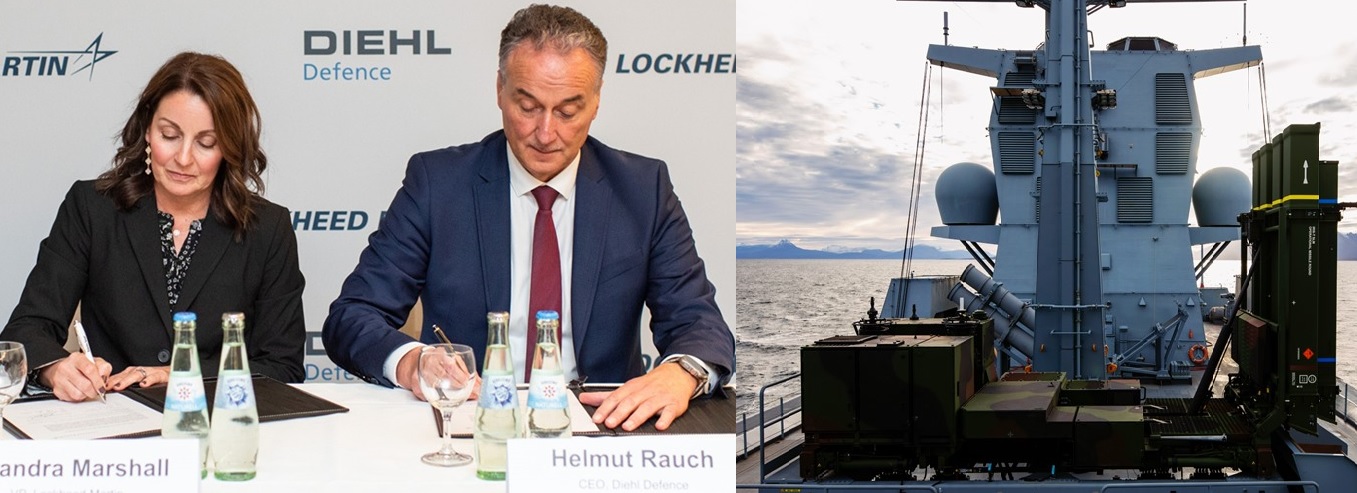
World
At the 2025 Berlin Security Conference, a major step toward expanding Europe’s air-defence capabilities was announced as Diehl Defence CEO Helmut Rauch and Lockheed Martin Vice President Chandra Marshall signed a Memorandum of Understanding (MoU). The agreement, unveiled at the conference venue, sets the stage for a detailed feasibility study on integrating the IRIS-T family of guided missiles into the Aegis Weapon System and the widely used MK41 vertical launch system (VLS). The MoU follows a Letter of Intent (LoI) signed the previous day, signaling growing transatlantic cooperation on integrated air and missile defence (IAMD) technologies. A New Phase of Missile Integration According to both companies, the first stage of the cooperation will focus on integrating the IRIS-T SLM, the medium-range variant already in service with several European forces. Looking ahead, the partners intend to explore integration of HYDEF, a next-generation hypersonic interceptor under development with support from the European Defence Fund (EDF). Rauch told journalists after the signing that integration of the IRIS-T SLM into Aegis and MK41 could be achieved within ten months, drawing from experience already gained during trials of IRIS-T SLM on Germany’s Type 125 frigates. He confirmed Diehl is prepared to proceed immediately once a customer places an order. Other missile variants — including the IRIS-T SLS (short-range) and the future IRIS-T SLX (extended-range) — may also be evaluated if navies express interest. F127 Frigates Seen as Key Candidate One platform expected to benefit from the integration is the German Navy’s future F127 air-defense frigate, which will become Germany’s first warship equipped with the Aegis Combat System. The F127 will feature the MK41 VLS and Raytheon’s SPY-6 radar, forming part of a U.S. Navy Program of Record. Rauch downplayed concerns about compatibility, stating that both IRIS-T SLM and the developing HYDEF interceptor should integrate smoothly, requiring little more than software adjustments. The missile’s IR seeker, he noted, requires no redesign. He also confirmed that several other European navies have shown interest in adopting IRIS-T SLM for their surface fleets, though he stopped short of naming specific countries. No Technical Obstacles Expected Both Diehl and Lockheed Martin stressed that no significant technical barriers are expected in integrating IRIS-T into Aegis. Initial computer-based integration simulations have already been conducted, with positive results. Their decades of cooperation — especially in missile systems such as Patriot and earlier IRIS-T programs — provide a strong industrial foundation. Chandra Marshall underscored that Aegis’ open-architecture design enables it to interface with both U.S. and non-U.S. effectors and sensors. She noted that the integration process would likely rely on Lockheed Martin’s SPY-7 radar and existing infrastructure, with a smaller, containerized Aegis test system shipped to Germany for live integration and validation. The outcomes would then be applied to larger Aegis installations worldwide. Integration Into the MK70 Launcher Also Planned In addition to naval MK41 integration, the MoU also includes exploratory work on fitting IRIS-T missiles to the MK70 launcher, a containerized version of the MK41 for land-based or shipboard use. The MK70 is designed to fire not only air-defence missiles but also larger munitions such as the surface-launched Tomahawk. This opens the possibility for smaller ships — including corvettes and offshore patrol vessels without built-in VLS — to deploy modern air-defence missiles like the IRIS-T SLM. Advancing Europe’s Air-Defence Architecture The agreement aligns with Europe’s broader push to modernize air and missile defence in response to evolving threats such as drones, loitering munitions, ballistic missiles, and hypersonic systems. Integration with Aegis — widely deployed by the U.S., Japan, South Korea, Spain, Norway, and soon Germany — could significantly expand the export potential of the IRIS-T SLM across NATO fleets. The IRIS-T SLM has already proven itself in combat, particularly in Ukraine, where it has been credited with high success rates against cruise missiles and UAVs. Statements From Both Companies Rauch highlighted the strategic importance of the collaboration, saying: “By combining their expertise and capabilities, Diehl Defence and Lockheed Martin can enable navies worldwide to benefit from the best possible air-defense systems for their surface combat ships.” Marshall echoed this view, describing the MoU as part of a broader shift toward scalable, next-generation IAMD capabilities: “This collaboration is further proof of the scalability and increased capacity of our programs, bringing 21st-century security to the world.” The MoU also comes shortly after both companies signed an agreement to strengthen cooperation on the global supply chain for Patriot missile components — another signal of deepening partnership in high-end defence systems. The Diehl–Lockheed Martin MoU marks a significant step forward in transatlantic defence integration. If fully implemented, the project could place the IRIS-T missile family alongside major U.S. and allied naval combat systems, giving European fleets more flexible and modern air-defence options. With the F127 frigates as a likely launch point — and several European navies watching closely — the integration effort could shape the future of NATO maritime air defence for years to come.
Read More → Posted on 2025-11-20 15:49:46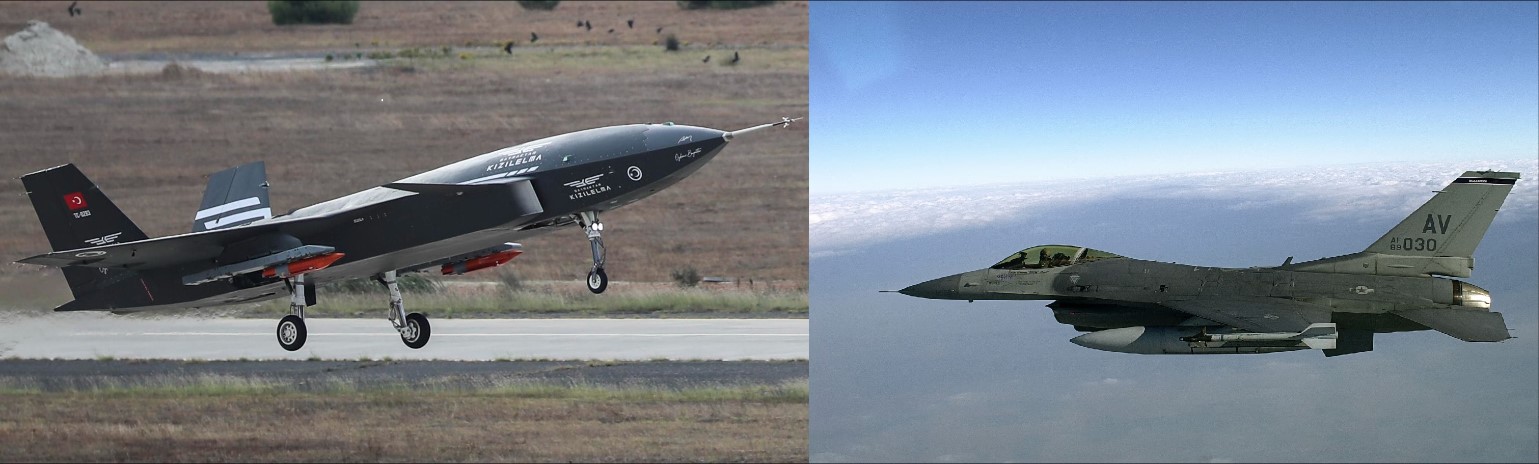
World
In a breakthrough that marks a new chapter in unmanned air combat, Turkey’s next-generation stealth fighter drone Bayraktar Kızılelma has successfully locked onto a Turkish Air Force F-16 and achieved a simulated direct hit during a high-fidelity test mission. Conducted over Çorlu, the test is being hailed by Turkish defence officials as one of the most important milestones in the country’s aerospace history — and a decisive indication that unmanned platforms are moving into roles once reserved exclusively for manned fighters. The test showcased not just the maturing air-combat capability of the Kızılelma, but also the advancement of Turkey’s fully indigenous defence ecosystem. With locally produced AESA radar, a home-grown air-to-air missile, and multi-aircraft formation flight, the mission validated several critical technologies at once. A Fully Realistic Air-Combat Scenario The mission, lasting 1 hour and 45 minutes, recreated an operational air-combat environment. Two Turkish Air Force F-16s participated in the test: One flew in close formation with Kızılelma to evaluate joint flight performance The second served as the simulated adversary At an altitude of 15,000 feet, Kızılelma used the ASELSAN-developed MURAD AESA radar to detect the target F-16 from approximately 48 kilometers. After locking onto the aircraft, the UCAV initiated its fire-control sequence and simulated the launch of Turkey’s Gökdoğan air-to-air missile. Engineers confirmed that the missile interface, radar data handover, and engagement logic executed flawlessly, resulting in a virtual direct hit. This success brought Kızılelma’s cumulative flight time to over 55 hours, steadily advancing its progression toward operational readiness. Indigenous Technologies at the Core of the Milestone MURAD AESA Radar The centrepiece of the achievement was the integration of ASELSAN’s MURAD 100-A Active Electronically Scanned Array (AESA) radar — Turkey’s most advanced airborne sensor to date. Designed originally for modern fighter aircraft, the radar brings fighter-class detection performance to an unmanned platform. Technical Specifications: Frequency band: X-band AESA Detection range: Reported to exceed 100+ km against fighter-sized targets Tracking capability: Simultaneous tracking of 100+ targets Beam steering: Electronic scanning with rapid beam agility Modes: Air-to-air, air-to-ground, SAR (Synthetic Aperture Radar), GMTI (Ground Moving Target Indicator), terrain tracking Target identification: High-resolution classification via advanced signal processing ECCM: Electronic counter-countermeasures built for contested environments In the test, the radar demonstrated its long-range performance by detecting the F-16 at ~48 km, locking onto the target, and transferring the guidance data for engagement. Its ability to support a beyond-visual-range (BVR) engagement places Turkey among a small group of nations that operate unmanned combat aircraft equipped with fully indigenous AESA radar systems. Gökdoğan Missile Integration While no live missile was fired, the test validated Kızılelma’s full compatibility with Gökdoğan, Turkey’s new-generation beyond-visual-range air-to-air missile developed by TÜBİTAK SAGE. This integration allows the UCAV to execute advanced aerial engagements independently using a national weapons suite. Missile Specifications: Type: BVR air-to-air missile Range: Estimated 65–80 km class Guidance: Active radar seeker + inertial navigation midcourse guidance Seeker type: Indigenous active RF seeker with home-on-jam capability Control system: High-agility aerodynamic control surfaces Warhead: High-explosive fragmentation Role: Interception of fighter aircraft, UAVs, and cruise missiles During the mission, the UCAV executed the complete firing sequence — Radar lock Advanced target-tracking algorithm Missile kinematic envelope calculation Fire-control logic validation This simulation marks the final prerequisite before Kızılelma proceeds to its first live air-to-air missile test, bringing Turkey closer to fielding the world’s first operational unmanned stealth platform capable of autonomous BVR combat. Kızılelma: Turkey’s Leap Into Unmanned Fighter Aviation The Bayraktar Kızılelma, developed by Baykar under the ambitious MIUS program, represents Turkey’s bold entry into the era of unmanned fighter aviation. Conceived as a stealthy, jet-powered combat aircraft, Kızılelma is built to take on roles traditionally reserved for manned fighters. From the outset, it has been shaped around the idea that a UCAV should not merely support operations — it should be capable of leading them. Kızılelma is envisioned to perform air-superiority missions, fly carrier operations from the TCG Anadolu, and execute high-maneuverability engagements that push the limits of autonomous flight. Its projected mission spectrum also includes deep-strike roles, electronic warfare tasks, and coordinated operations alongside manned fighters. Its design reflects this ambition. The aircraft features a low radar-cross-section stealth profile, a canard-delta aerodynamic structure, and an internal weapons bay built for reduced signature and high survivability. Engineered for the future, it is carrier-compatible, supports short takeoff operations, and relies on sophisticated sensor fusion and autonomous flight systems for complex mission autonomy. Kızılelma is being developed in multiple variants — the initial subsonic Kızılelma-A, followed by planned supersonic B and twin-engine C versions, signaling a long-term roadmap toward progressively more advanced unmanned fighter capabilities. Adding to its growing sophistication, Turkey has integrated the Toygun electro-optical targeting system, which complements the aircraft’s AESA radar and enhances its ability to identify, track, and engage targets with high precision. Together, these features place Kızılelma at the forefront of Turkey’s ambition to redefine what a UCAV can achieve — not just as a support platform, but as a fully capable unmanned fighter in its own right. Significance for Turkish Defence and Air Power Defence analysts view this test as a decisive step forward for Turkey’s air-combat strategy. With global air forces increasingly exploring unmanned wingmen concepts, Turkey is positioning Kızılelma as the core of a future fleet in which unmanned jets fly alongside manned fighters like the KAAN and F-16. The simulated F-16 kill demonstrates: Turkey’s readiness to shift toward AI-supported air combat A new operational model where UCAVs carry out high-risk missions Significant potential for export markets seeking high-end unmanned combat systems This achievement also projects Turkey as one of the first nations — along with the U.S. and China — to demonstrate a stealth-capable UCAV performing air-to-air engagement tasks. What Comes Next Following the successful lock-on test, the programme will advance to: Live air-to-air missile firing trials High-G maneuver validation Carrier-deck integration tests aboard TCG Anadolu Supersonic variant flight trials Transition toward serial production Baykar officials have indicated that rapid development continues, with mass production expected once testing phases are completed. Turkey’s Kızılelma UCAV has crossed a monumental threshold, proving that a stealth unmanned fighter equipped with fully indigenous radar and missile technology can detect, track, and engage a manned fighter jet. The simulated direct hit on an F-16 is more than a technological success — it is a strategic signal that Turkey is emerging as a leading force in the next generation of autonomous air combat. With live-fire tests and expanded capabilities on the horizon, Kızılelma is now positioned at the forefront of a global shift toward unmanned, high-performance fighter aviation.
Read More → Posted on 2025-11-20 13:56:41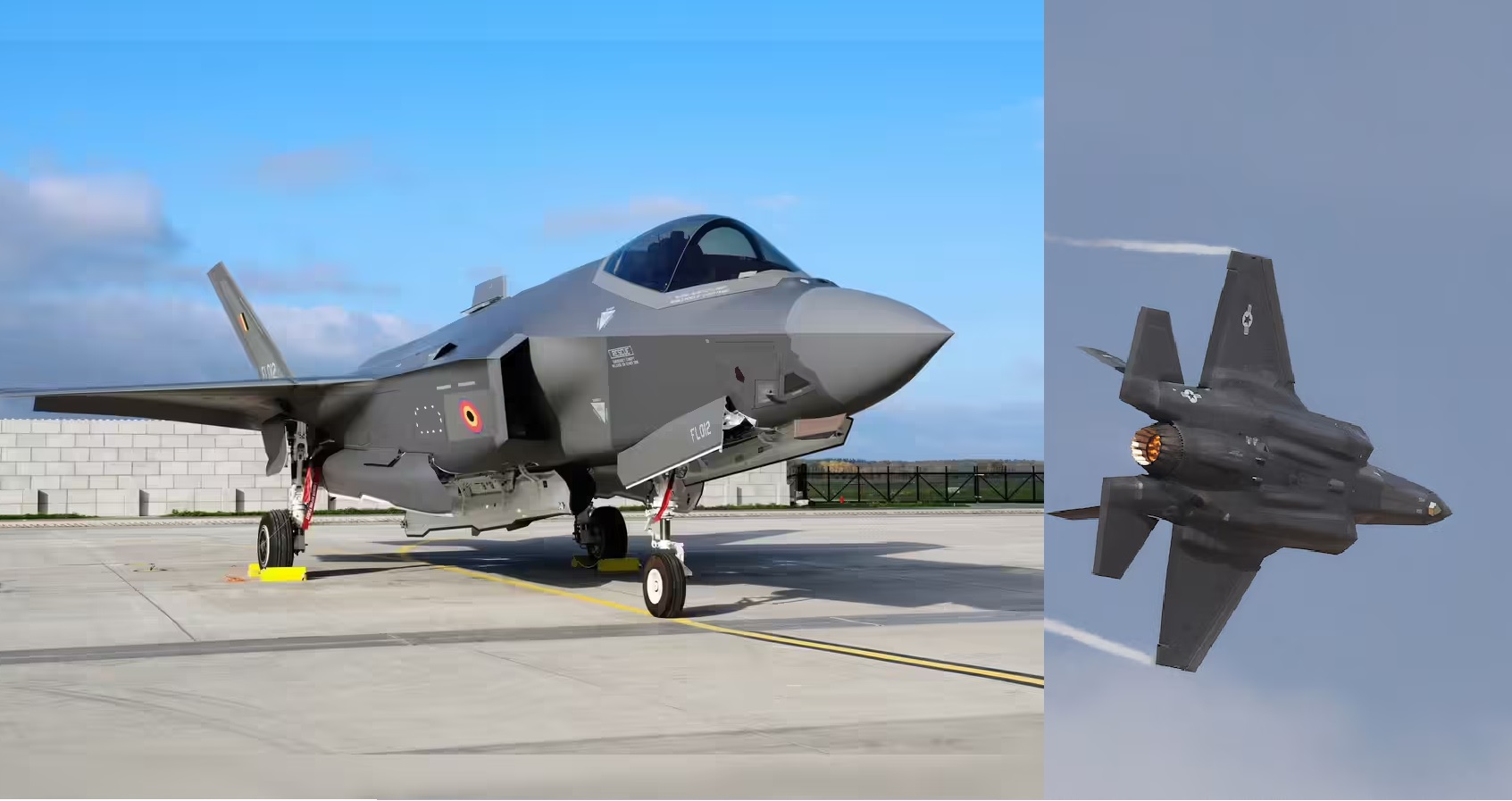
World
The United States has agreed in principle to sell F-35 stealth fighter jets to Saudi Arabia, but with major restrictions designed to preserve Israel’s legally protected Qualitative Military Edge (QME) in the Middle East. The decision marks a significant step in U.S.–Saudi defense ties, even as Israel strongly opposes the move despite being the region’s only current F-35 operator. The administration confirmed that Saudi Arabia will receive a reduced-capability version of the aircraft, lacking several of the advanced technologies, weapons, and electronic-warfare systems supplied to Israel. A “Less Advanced” F-35 for Saudi Arabia According to U.S. officials familiar with the review process, the F-35s intended for Saudi Arabia will be substantially downgraded to ensure they do not match or surpass the Israeli Air Force’s F-35I “Adir” jets. Key omissions include: • No advanced Israeli electronic-warfare suiteIsrael’s F-35I carries a custom-built EW system integrated directly into the aircraft—technology not available to any other operator. • No access to the AIM-260 JATMThe U.S. Air Force’s next-generation air-to-air missile, the AIM-260, which outranges current AMRAAM missiles, will not be included in the Saudi package. • Limited software accessThe most sensitive mission software, data-fusion tools, and sovereign-level coding interfaces reserved for Israel will remain off-limits. • Reduced weapons compatibilitySaudi aircraft will not be cleared for several classified U.S. or Israeli weapons integrated into the Adir variant. • No bespoke Israeli enhancementsIsrael’s F-35Is feature locally integrated weapons, communications systems, and mission pods. None of these will be available to Riyadh. Officials stress that while Saudi pilots will operate a fifth-generation fighter, it will be a standard export configuration with added U.S. restrictions — not the tailor-made platform Israel uses. Israel Opposes the Deal Despite Safeguards Israel — the first country outside the U.S. to receive the F-35 — has had the aircraft in active service for eight years, and now operates multiple squadrons. Its defense establishment remains concerned that any sale, even a downgraded one, could dilute its technological advantage. Israeli officials argue that: Saudi Arabia’s acquisition of a stealth platform could complicate Israel’s air dominance Technology leakage risks remain Regional alignments can shift rapidly Israel’s security cabinet and air force have both filed formal objections, but Washington has reiterated that U.S. law requires Israel to maintain superiority — and that requirement is guiding every decision in the Saudi deal. Why the U.S. Is Moving Forward For Washington, the sale is part of a broader geopolitical strategy. Saudi Arabia has pushed for the F-35 for years, and the aircraft was seen as a pivotal bargaining chip in U.S. efforts to encourage Saudi–Israeli normalization and deepen Riyadh’s role in U.S.-led regional security frameworks. American officials describe the sale as a “cornerstone of long-term strategic cooperation” with Saudi Arabia, aimed at countering Iran, strengthening air-defense integration, and binding Riyadh more closely to U.S. security structures. Regional Impact If completed, the sale would represent a historic shift:Saudi Arabia would become the second country in the Middle East to operate a fifth-generation aircraft — even if in restricted form. This move could: Boost Saudi Arabia’s airpower Increase pressure on Iran Tighten U.S.–Saudi military ties Introduce new debate over future weapons balance in the Gulf At the same time, the restrictions on the jets ensure Israel retains: More advanced sensors Deeper software access Superior electronic warfare capabilities Exclusive access to top-tier U.S. and Israeli weaponry What Happens Next The deal must still pass a congressional review. Lawmakers have historically required assurances that Israel’s QME is protected before approving any high-end arms sale in the Middle East. While the sale is not finalized, the political momentum in Washington suggests it is increasingly likely — provided downgraded configurations remain firmly in place. The U.S. decision to sell F-35s to Saudi Arabia marks a major milestone in regional defense politics. But by stripping out advanced weapons, stealth-enhancing electronics, and cutting-edge Israeli technology, Washington is ensuring that Israel’s qualitative military edge — enshrined in U.S. law — remains intact. Even so, the deal continues to generate tension, with Israel urging caution and Washington balancing strategic interests in one of the world’s most complex security landscapes.
Read More → Posted on 2025-11-20 13:23:41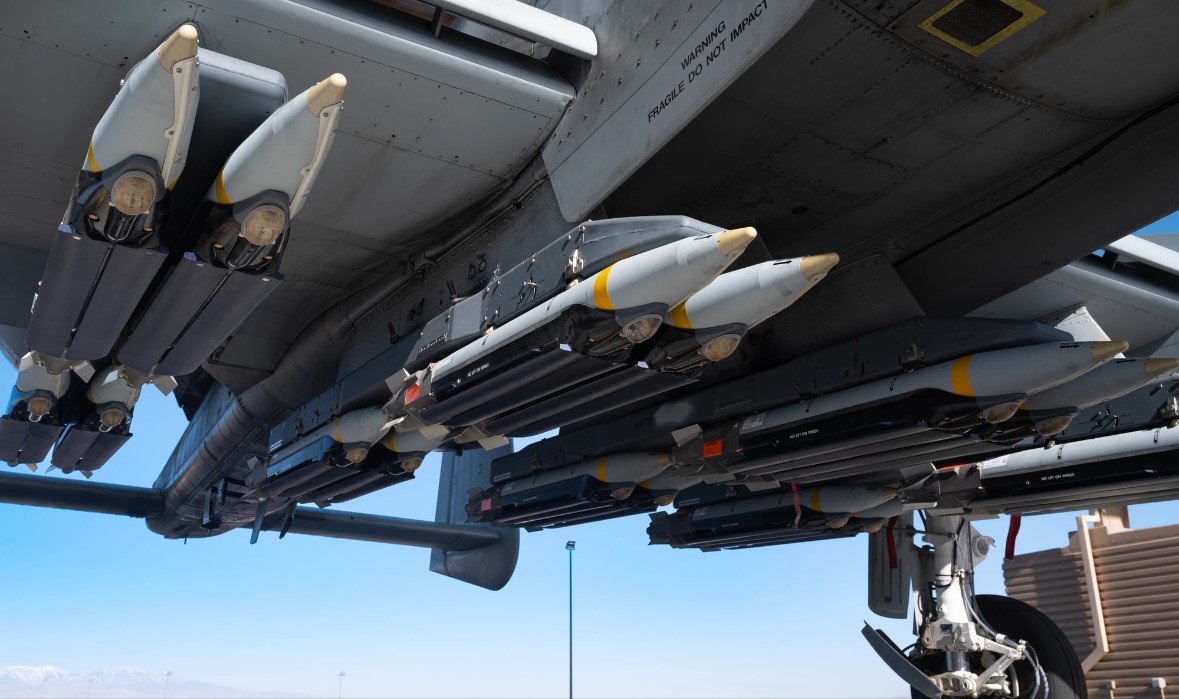
U.S. Approves $82 Million Precision-Weapons Sale to Japan as Tokyo Deepens Stand-Off Strike Strategy
World
The United States has approved an $82 million Foreign Military Sale (FMS) that will supply Japan with a fresh stock of precision air-launched munitions, a move that reflects Tokyo’s accelerating shift toward stand-off strike capability in an increasingly volatile Indo-Pacific region. The announcement came from the Defense Security Cooperation Agency (DSCA), which notified Congress that the State Department had cleared a package including Small Diameter Bombs (SDBs), JDAM tail kits, and general-purpose bombs for the Japan Air Self-Defense Force (JASDF). U.S. officials framed the sale as part of Washington’s commitment to strengthening a key regional ally regarded as central to maintaining stability. A Response to Tokyo’s New Defense Reality Japan had formally requested the weapons earlier this year, seeking to expand the strike potential of its frontline fighters — including the F-15J, F-35A, and the coming F-X sixth-generation platform. That request came as Tokyo reoriented its defense policy, adopting for the first time a doctrine that authorizes long-range counter-strike missions against enemy missile sites and command hubs. The DSCA noted that the variety of munitions included in the package is meant to give Japan both depth and flexibility. The mix supports different mission sets: deep-strike, hardened-target attacks, and precision engagements in contested airspace. Inside the Package: What Japan Is Getting The approved sale delivers a broad suite of air-launched weapons and support systems: GBU-39 Small Diameter Bombs (SDB-I) Joint Direct Attack Munition (JDAM) guidance tail kits Mk-82 and Mk-84 general-purpose bombs Fuzes, containers, and mission planning equipment Training tools, test gear, and manuals Maintenance support, spares, and contractor assistance U.S. defence officials said the package is structured not just as a one-time shipment but as a sustainment-ready system, enabling Japan to integrate, operate, and maintain the weapons over the long term. Weapon Specifications: Precision for a New Era Small Diameter Bomb (SDB-I) Range: ~110 km Warhead: 113-kg focused-penetration explosive Guidance: GPS/INS Role: High-precision strikes with minimal collateral damage. JDAM Tail Kits Convert unguided bombs into GPS-guided precision weapons Accuracy: 5–10 meters Effective across all weather and combat conditions. Mk-82 / Mk-84 General-Purpose Bombs 500-lb and 2,000-lb class Serve as the backbone of U.S. and allied strike capability Compatible with JDAM kits for precision missions. Together, these weapons dramatically expand Japan’s ability to conduct long-range precision strikes, a capability increasingly critical given North Korean missile launches and China’s expanding military footprint. Who Will Deliver the Weapons The DSCA identified several major U.S. defense contractors: Boeing Defense, Space & Security — SDB production Lockheed Martin and Raytheon — JDAM integration and support General Dynamics Ordnance and Tactical Systems — Mk-series bombs These companies will coordinate with Japan’s Ministry of Defense to deliver the munitions and provide training, software updates, and sustainment support. Regional Context: Why Japan Is Expanding Its Strike Arsenal Japan’s order reflects a broader transformation of its military posture. Under its revised National Security Strategy, Tokyo is investing heavily in systems that allow it to conduct stand-off and counter-strike missions. This includes future plans to field U.S. Tomahawk cruise missiles, expand indigenous missile development, and upgrade fighter fleets. As China intensifies pressure around Taiwan and the East China Sea, and North Korea continues rapid missile testing, Japanese officials argue that traditional “shield-only” defense is no longer sufficient. A credible ability to hit back at long range has become essential to Japan’s deterrence strategy. Washington agrees. In its notice, the DSCA emphasized that strengthening Japan’s precision-strike capabilities “supports the security of a major allied nation” and contributes to overall Indo-Pacific stability. Congress will now review the sale, though approval is expected given strong bipartisan support for tighter U.S.–Japan defense cooperation. Once formalized, deliveries will begin through U.S. contractors, followed by integration and training across JASDF squadrons.
Read More → Posted on 2025-11-20 13:00:38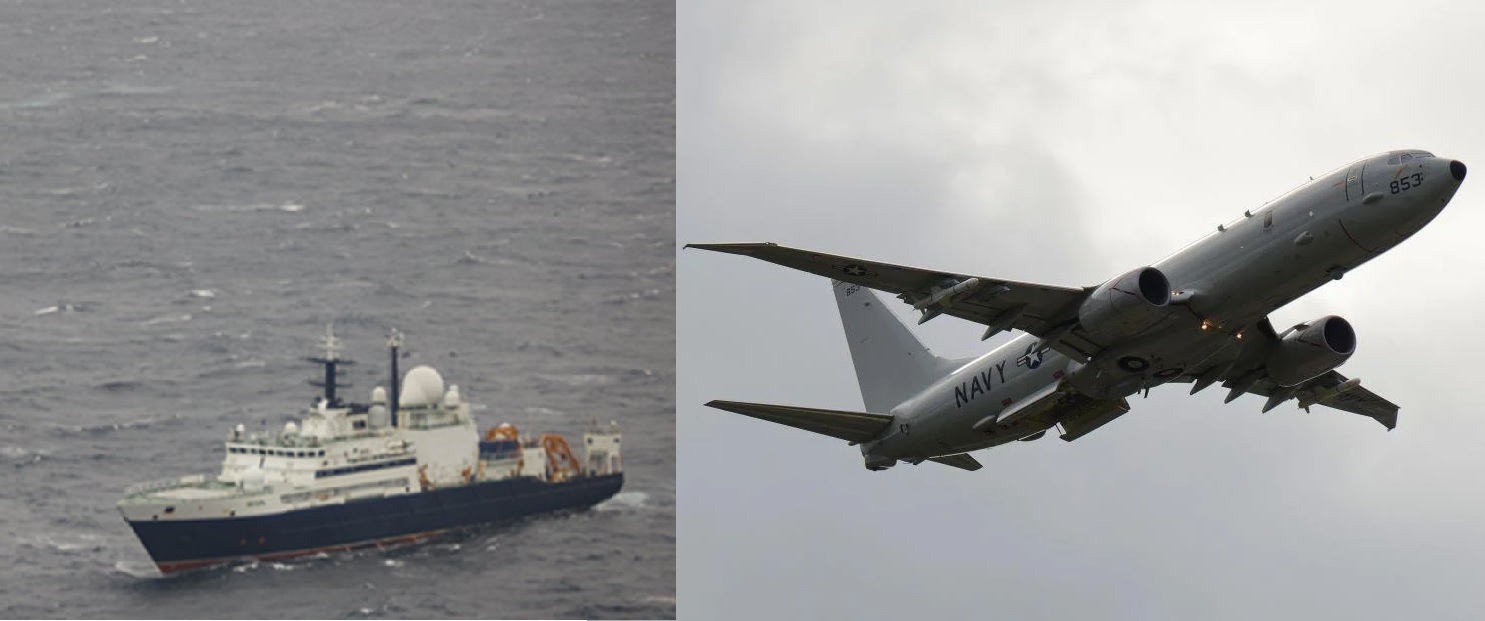
World
The British government has confirmed that a Russian spy vessel operating near UK waters north of Scotland used low-powered lasers against a Royal Navy maritime patrol aircraft, in what officials describe as a dangerous and deliberate act of harassment. UK Defence Secretary John Healey revealed the incident in Parliament, stating that British forces tracking the Russian research vessel Yantar were “targeted with lasers” while conducting routine surveillance. The Ministry of Defence later published its findings on X, confirming that the vessel had spent “considerable time in or near British territorial waters” close to the northern tip of the British Isles. Laser Incident Sparks Security Concerns According to the MoD’s report, crew members aboard the Yantar directed low-powered lasers at a Royal Navy P-8 Poseidon Maritime Patrol Aircraft. The aircraft had been deployed to monitor the vessel’s movements after intelligence suggested it was operating near sensitive undersea infrastructure. While the laser was not strong enough to permanently damage sensors or injure the crew, officials emphasised that any laser targeting of aircraft is considered hostile interference. The MoD condemned the action as “unacceptable, irresponsible, and escalatory.” Russian Vessel Suspected of Mapping Undersea Cables The Yantar’s presence has alarmed security officials because the vessel is widely believed to conduct seabed mapping and surveillance activities for Russia’s military intelligence services. Of particular concern is its proximity to undersea telecommunications cables — critical infrastructure that carries vast amounts of internet traffic, financial transactions, and global communications. The MoD confirmed that Yantar's return represents the second Russian spy-ship incursion into UK waters this year, raising fears of a broader campaign targeting NATO undersea networks. To counter the threat, the Royal Navy deployed the Type 23 frigate HMS Somerset (F82) to shadow the vessel continuously. Officials say Yantar’s activities suggest an effort to create detailed maps of undersea cable routes, which could allow Russian forces to tap or sabotage them during future conflicts. Yantar: A ‘Research Vessel’ With Intelligence Capabilities Though officially listed as a “research vessel,” the Yantar is the lead ship of Russia’s Project 22010 class — a fleet widely understood to perform intelligence operations. Over the past decade, Yantar has been tracked conducting suspicious activities across the Atlantic, North Sea, and Barents Sea, often near NATO infrastructure or communication cables. The ship is equipped with: Multiple radomes for signals intelligence A suite of deep-sea sensors Remotely Operated Vehicles (ROVs) capable of reaching and manipulating objects on the seabed Advanced surveillance equipment for subsea mapping Its home port is Severomorsk, headquarters of Russia’s Northern Fleet, from where it routinely sails south into waters around Europe. The MoD released an official photo of HMS Somerset shadowing Yantar during a separate incursion early in 2025 — part of what UK officials call “persistent Russian probing” of European undersea infrastructure. Part of a Wider Russian Espionage Campaign Western intelligence agencies believe the Yantar’s activities are not isolated. Instead, they form part of a multi-layered Russian spying campaign across Europe and the North Atlantic. Recent incidents include: Suspicious drones spotted near military bases and energy facilities in multiple NATO countries Shadow-fleet vessels — commercial ships operating with their transponders turned off — loitering near undersea cables The Eagle S tanker, seized by Finnish authorities in 2024, suspected of involvement in a Baltic Sea cable-cutting incident Multiple surveillance breaches targeting airfields, ports, and energy terminals across Northern Europe In September, Germany deployed the frigate Sachsen (F220) to Denmark to help monitor potential incursions, after reports that shadow-fleet ships may have deployed drones to observe NATO infrastructure. British officials say Russia is likely attempting to build a comprehensive picture of NATO’s critical undersea networks — knowledge that could be exploited in a crisis. UK Response and International Alarm The British government has vowed to strengthen surveillance of its northern maritime approaches and improve protection of seabed communications infrastructure. John Healey told MPs that the UK would “not tolerate any attempt to intimidate or disable our forces,” and pledged closer coordination with NATO partners. Security analysts warn that undersea cables have become a strategic vulnerability, carrying over 95% of global data. Disruptions could cripple financial markets, military communications, and civilian networks. NATO has already announced the expansion of its Seabed Infrastructure Protection initiative, with several allied navies adjusting deployments to monitor Russian movements more closely. The laser incident involving the Yantar highlights intensifying tensions between Russia and NATO at sea. As Moscow steps up its surveillance of undersea networks, the UK and its allies are responding with heightened vigilance — turning the waters north of Scotland into a new centre of strategic competition.
Read More → Posted on 2025-11-20 11:54:01
World
A sweeping and highly controversial diplomatic effort is unfolding behind closed doors as U.S. President Donald Trump and Russian President Vladimir Putin work on a secret 28-point peace plan to end the war in Ukraine — a plan that, according to multiple reports, is built largely on Russian conditions. First revealed by Axios and further supported by reporting from the Financial Times and Reuters, the emerging proposal would mark the most dramatic shift yet in U.S. policy toward the conflict, and one that has already alarmed Ukraine and unsettled America’s European allies. Recognition of Russian-Controlled Territories at the Center of the Draft Plan Sources briefed on the negotiations say the draft plan includes a cornerstone concession:U.S. and European recognition of Crimea and much of Donbas as legitimate Russian territory. Such recognition has been a core Russian demand since its 2014 annexation of Crimea and its 2022–25 campaign in eastern Ukraine. For years, Washington firmly rejected any discussion of legitimizing the annexations. Now, the Trump administration appears willing to consider it as part of a broader settlement framework. Deep Cuts to Ukraine’s Military Capabilities Another major element of the plan reportedly demands that Ukraine: Reduce its armed forces by 50%. Remove all long-range missiles and ensure no foreign missile systems are stationed on Ukrainian soil. Prohibit NATO combat aircraft and foreign military bases within Ukraine. These measures would dramatically reshape Ukraine’s defence posture, leaving it with limited ability to deter a future Russian offensive. According to European officials cited in Reuters, the plan mirrors elements of a Gaza-inspired ceasefire model built on phased demilitarization and external monitoring. Cultural and Political Concessions: Language and the Church Moscow is also pushing for cultural and political guarantees: Russian to be declared an official state language in Ukraine. The Russian Orthodox Church to be granted formal status and freedom of operation. Both conditions strike at the core of Ukraine’s national identity and sovereignty, making them among the most politically explosive components of the emerging deal. Though U.S. officials have not confirmed these points, Financial Times reporting describes them as part of Russia’s demands communicated during talks. Negotiations Held Quietly, Away From European Allies The talks, according to Axios, have taken place largely without Europe’s direct involvement. U.S. envoy Steve Witkoff reportedly met Russian sovereign-wealth fund chief Kirill Dmitriev in Miami in October, where work on the document accelerated. European leaders have expressed concern that Washington and Moscow are negotiating “behind Europe’s back,” sidelining nations that have provided billions in aid and borne the brunt of the war’s fallout. A French official told Le Monde that Europe “cannot accept a plan imposed on Ukraine,” warning that a deal dominated by Russian preferences risks abandoning core European security principles. Ukraine Responds With Alarm and Rejection Kyiv has reacted sharply to the reported conditions, warning that the emerging peace plan would amount to a historic setback for the country. Ukrainian officials argue that the proposal would legitimize Russia’s territorial conquests in Crimea and Donbas while simultaneously dismantling Ukraine’s military strength through forced reductions and strict limits on defense capabilities. They warn that accepting such terms would compromise Ukraine’s sovereignty at its core, effectively reducing the nation to a subordinate geopolitical position under Moscow’s influence. President Volodymyr Zelensky’s office has insisted that Ukraine will not accept any agreement recognizing Russian annexations or restricting the country’s sovereign right to defend itself. Ukrainian analysts further contend that embracing the plan would encourage future Russian aggression and undermine decades of international law designed to deter territorial expansion by force. Trump’s Objective: End the War Quickly According to U.S. sources quoted by Reuters, President Trump sees the conflict as “a senseless war draining global stability” and believes a direct deal with Putin is necessary for rapid de-escalation. The 28-point plan reportedly aims to: Establish a long-term ceasefire Define a new European security architecture Reset U.S.–Russia relations Clarify Ukraine’s future military posture Yet the secrecy surrounding the negotiations has raised questions about transparency, alliance unity, and the degree of Ukrainian participation. What Happens Next? The Trump administration is expected to present a formal version of the plan to Kyiv in the coming weeks. Analysts believe Ukraine may refuse the terms outright, leaving Washington and Moscow to decide how to proceed. European diplomats worry that if the U.S. pressures Ukraine to accept the deal, it could fracture NATO unity and lead to political turmoil across multiple capitals. For now, the world waits to see whether this behind-the-scenes diplomacy results in a breakthrough — or a geopolitical crisis of its own.
Read More → Posted on 2025-11-20 10:31:40Search
Top Trending in 24 Hours
-
 F-35 Fleet Readiness Falls to 25% Amid Parts Shortages and Software Delays: GAO Report
-
 U.S. Approves $1.98 Billion Sale of Anduril AI-Powered Counter-Drone Systems to Kuwait
-
 U.S Navy Orders 50 Blackbeard Hypersonic Missiles in New $23.4 Million Contract
-
 Russia Launches 1,400 Jet-Powered Drones in 2026 as Strike Tactics Evolve to Challenge Ukraine's Air Defenses
-
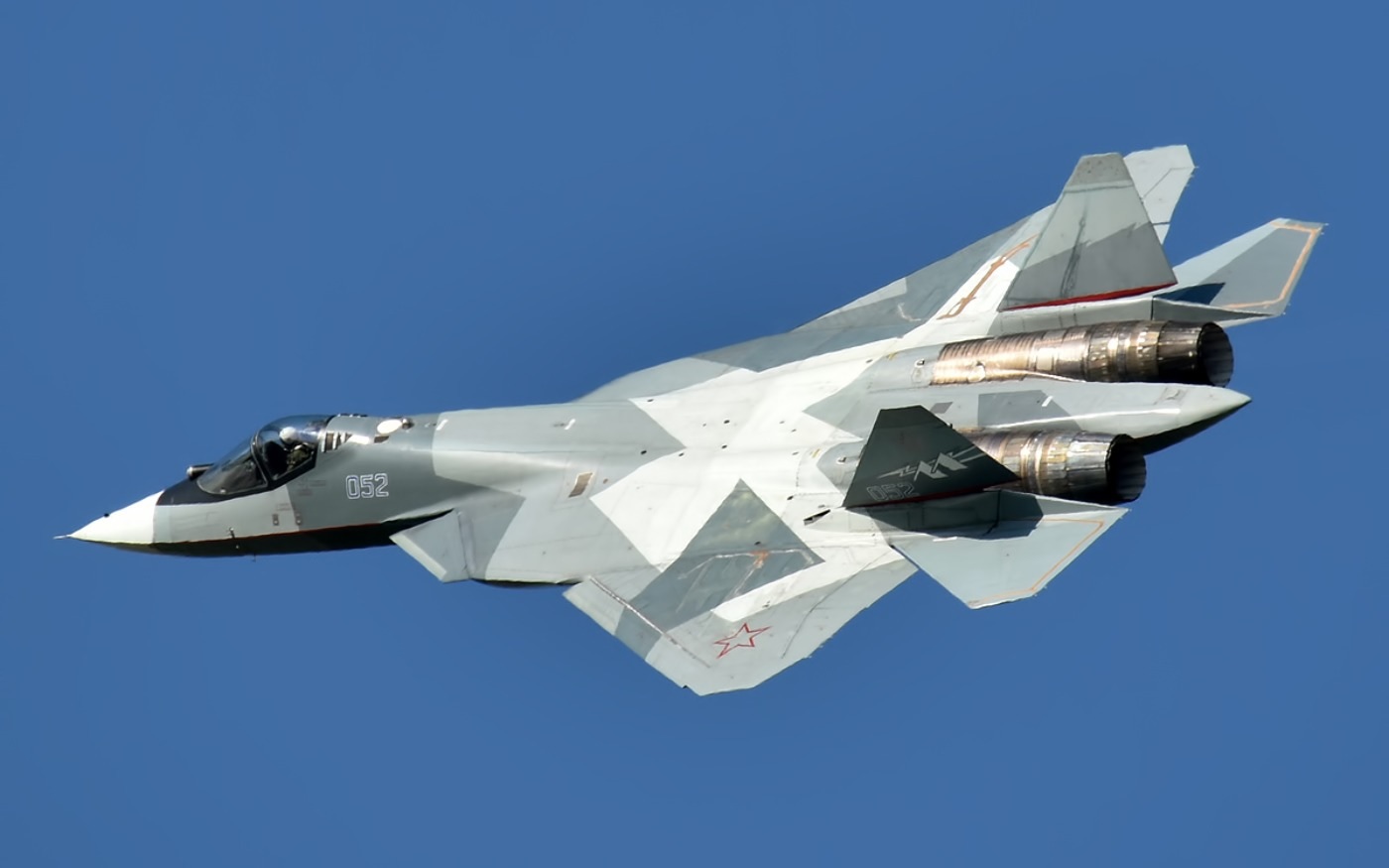 Russian Analysts Debate Su-57 Capabilities After Putin Calls Fighter Superior to F-35
-
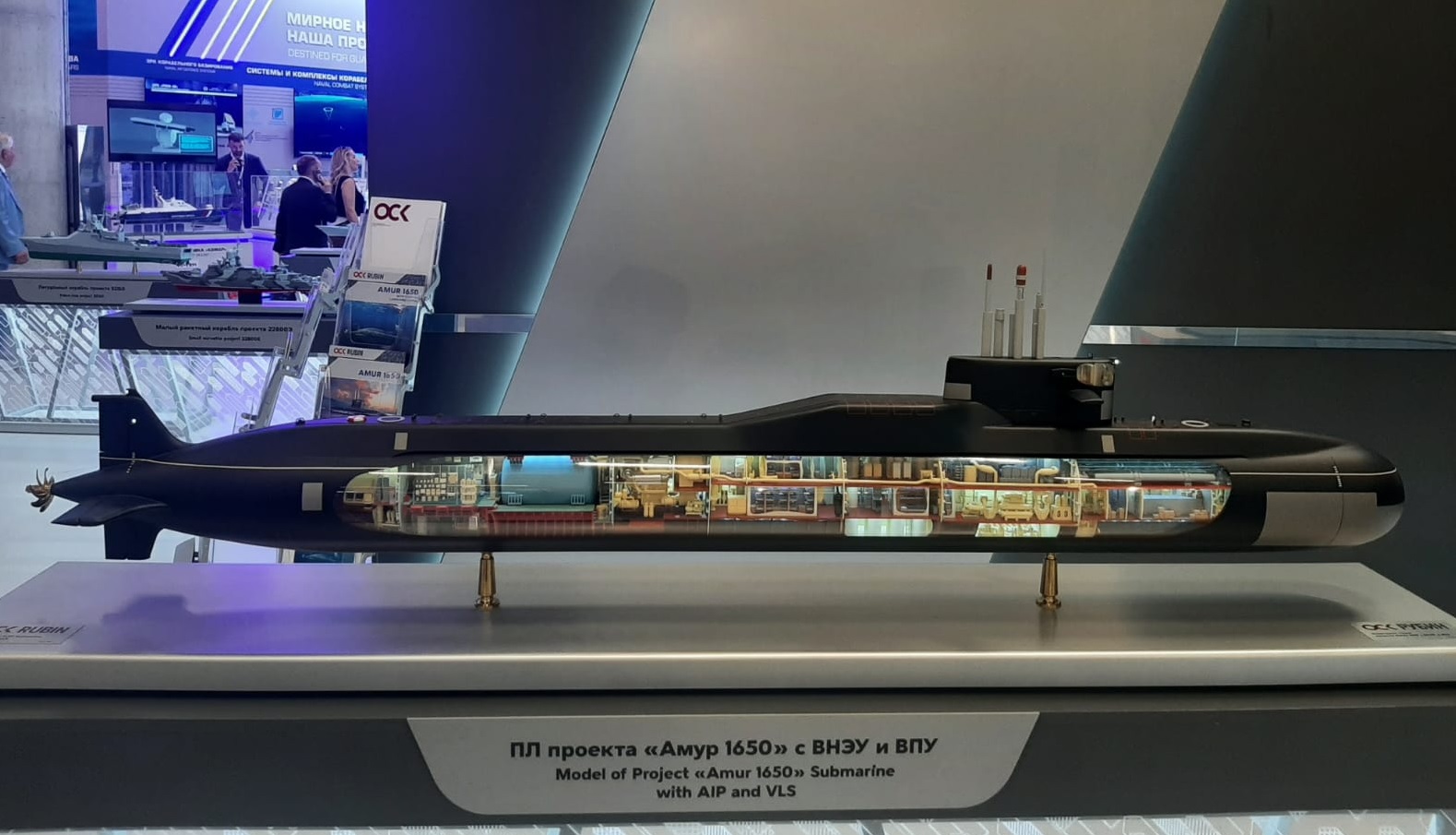 Russia Unveils Amur-1650 AIP Submarine Equipped with BrahMos Vertical Launch System at Fleet-2026
-
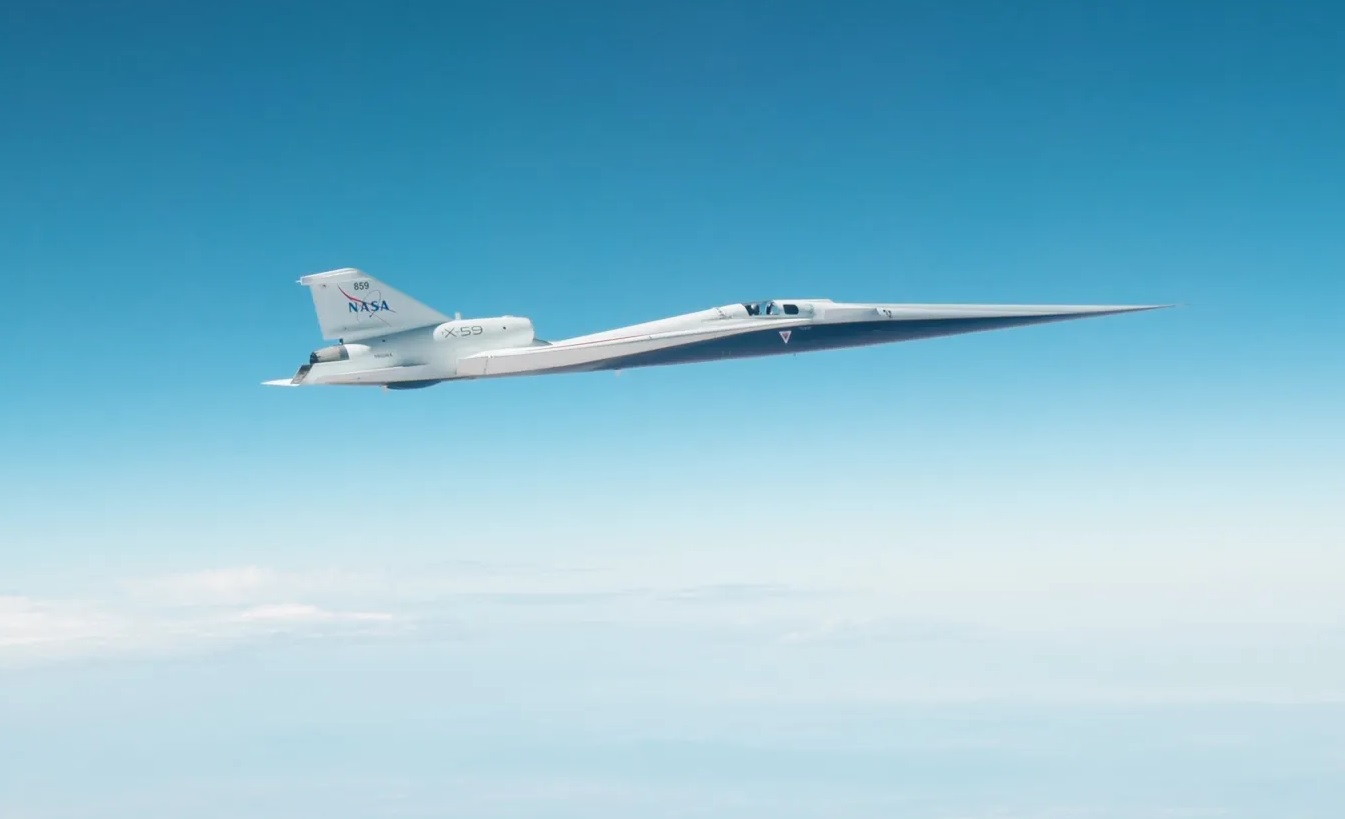 NASA X-59 Achieves Planned Mission Conditions with Mach 1.4 Flight at 55,000 Feet
-
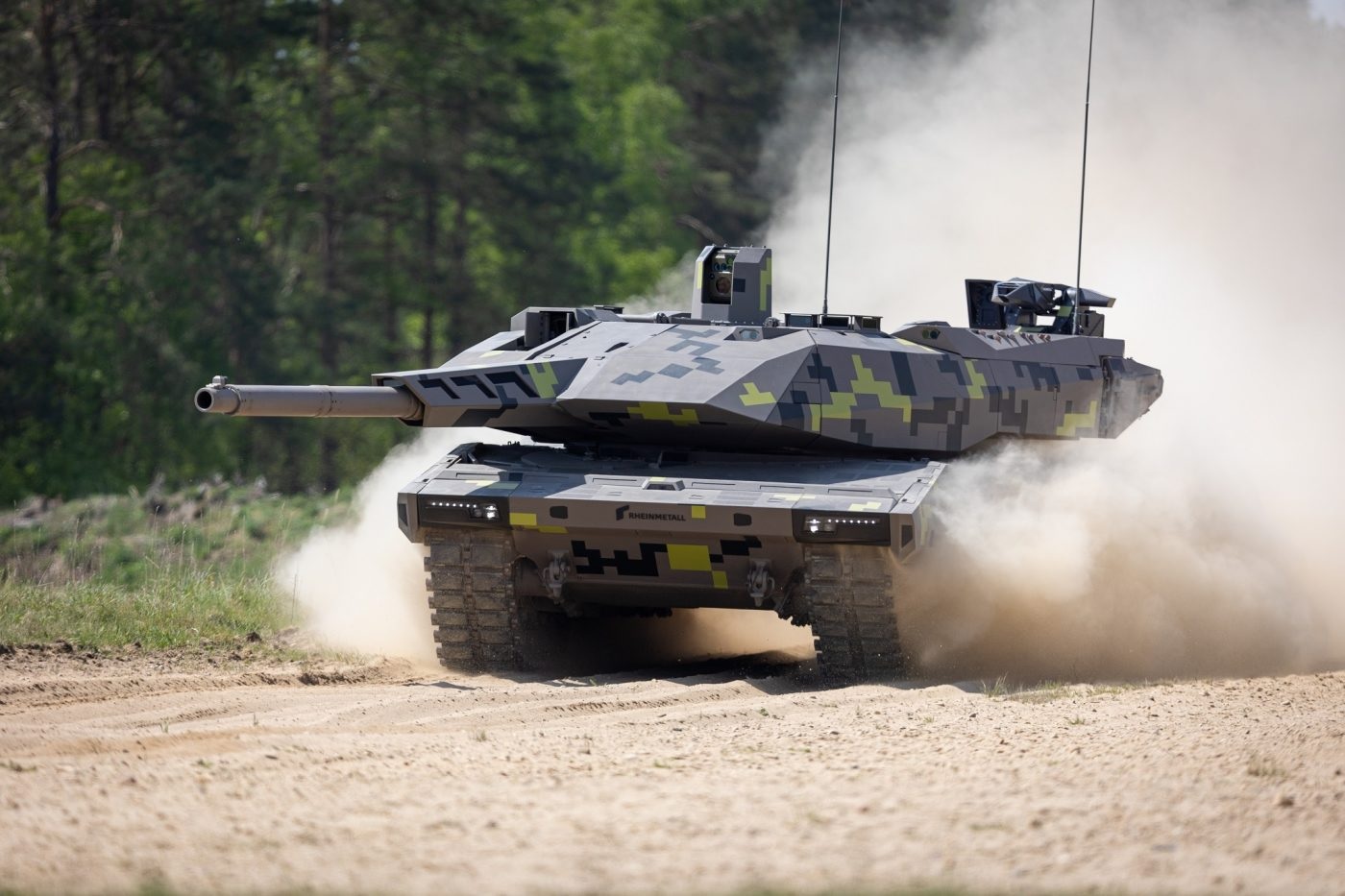 France Considers Reduced Role or Exit from Franco-German MGCS Tank Project
Top Trending in 4 Days
-
 Iranian Media Leaks 14-Point U.S.-Iran Peace Framework Amid Ongoing Negotiations
-
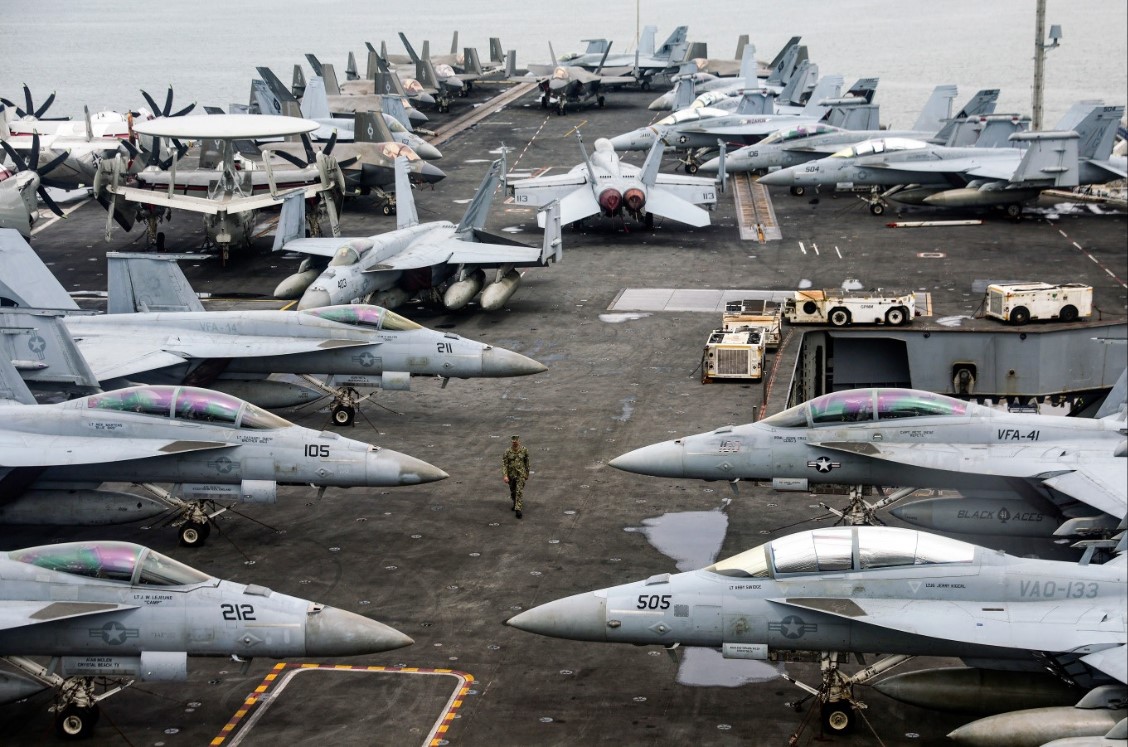 US Plans Significant Reduction of Fighter Jets and Warships for NATO Operations in Europe
-
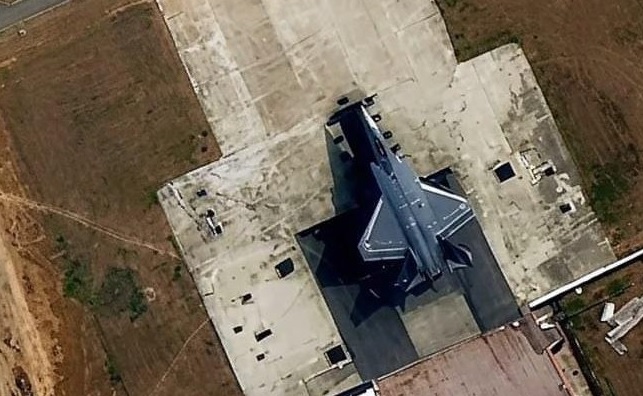 AMCA Airframe Spotted at DRDO’s ORANGE Facility for Radar Cross-Section Testing
-
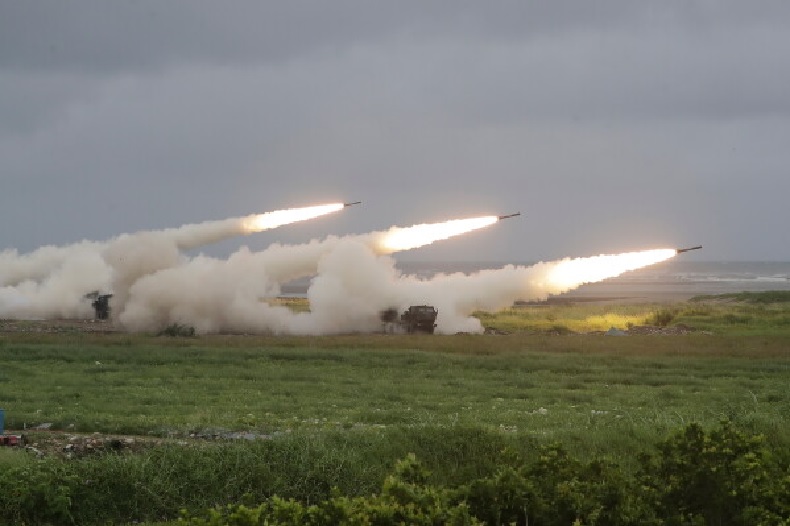 Taiwan Conducts First Live-Fire of HIMARS Rockets From West Coast During Invasion Defense Drill
-
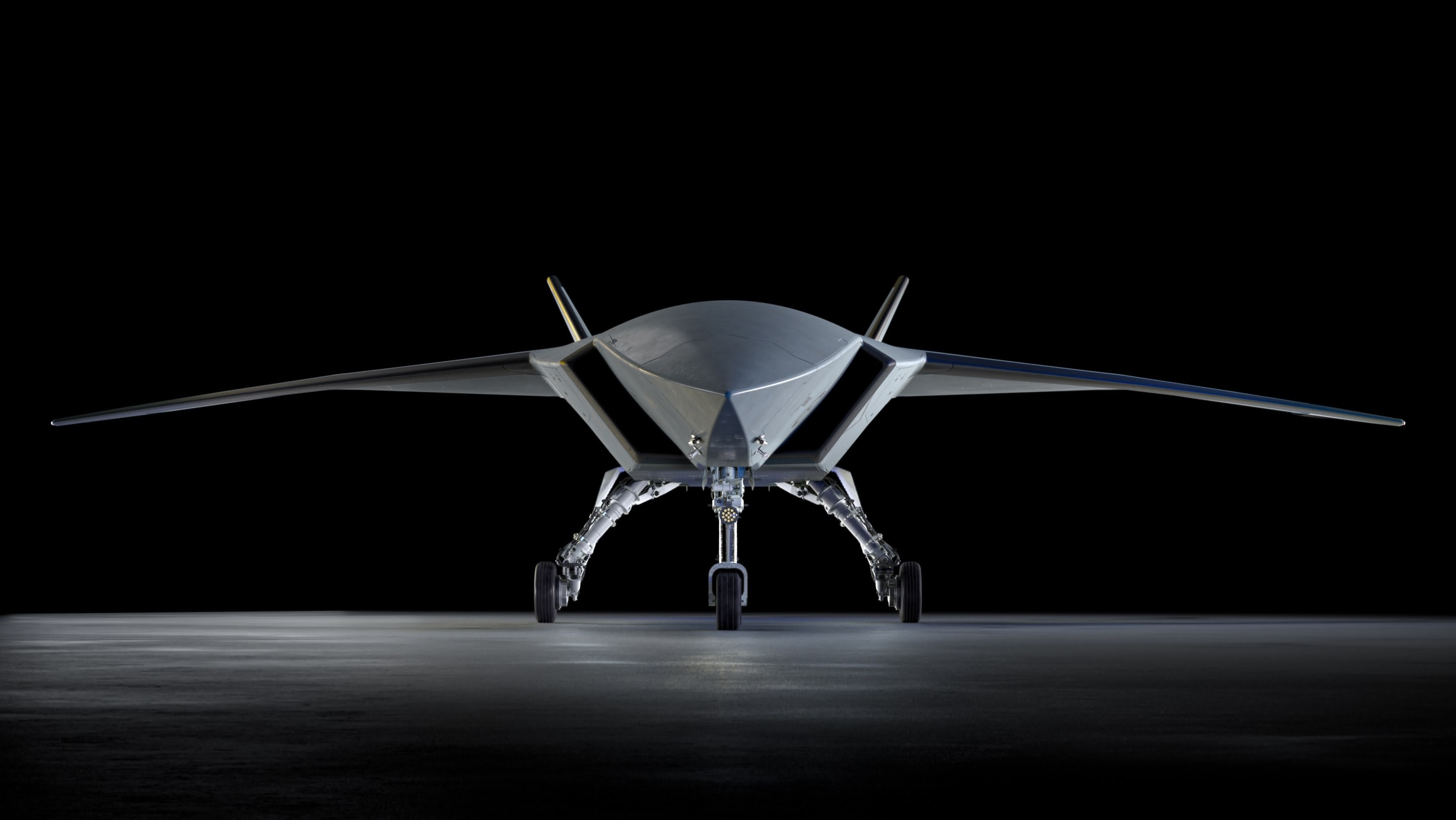 Boeing Introduces New MQ-28 Ghost Bat Upgrades with Increased Range, Payload and Weapons Capacity at ILA Berlin 2026
-
 Diehl Defence Unveils IRIS-T Armed Cobra 600 Air Defense Drone at ILA Berlin 2026
-
 Russian Defense Firm ZALA Unveils KAMA Unmanned Surface Vessel Family at FLOT-2026 Naval Exhibition
-
 U.S Aircraft Carrier USS Theodore Roosevelt Departs San Diego for Major RIMPAC 2026 Naval Exercise