World
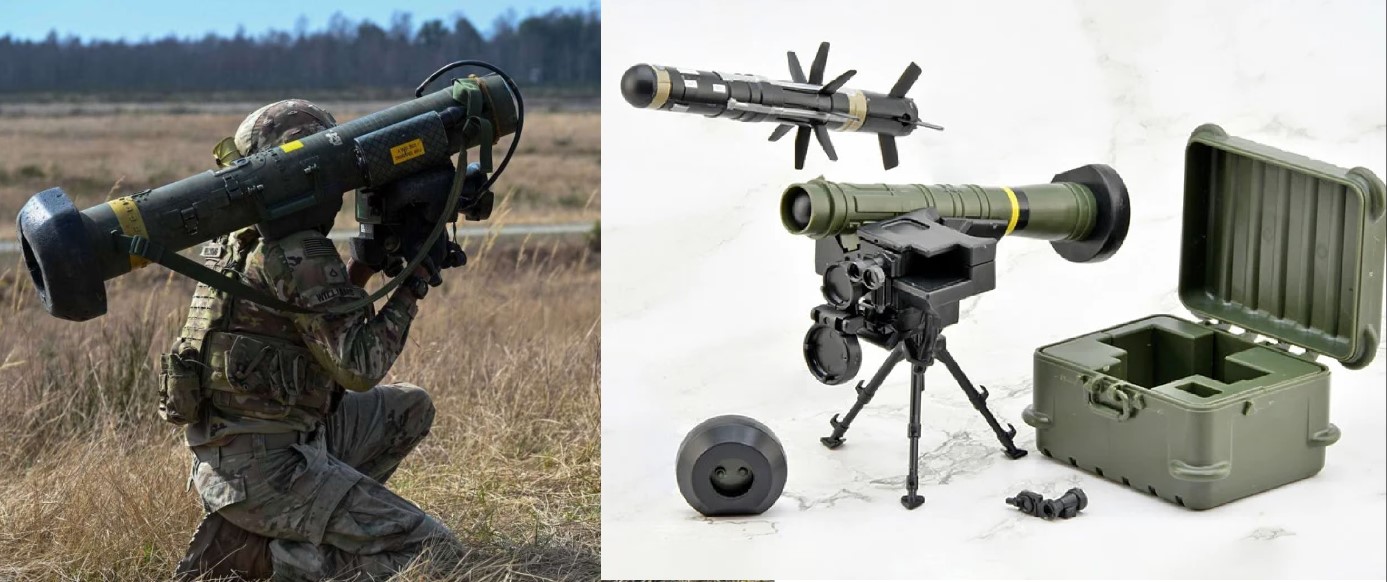
In a move that underscores the deepening strategic partnership between New Delhi and Washington, the U.S. State Department has approved a $45.7 million Foreign Military Sale of FGM-148 Javelin anti-tank missile systems to India. The decision, formally certified by the Defense Security Cooperation Agency (DSCA), was communicated to Congress as part of routine legislative notification. The announcement comes at a time when India continues to strengthen its infantry firepower along sensitive borders, and the United States expands security ties with key Indo-Pacific partners. A Package Designed for the Battlefield and Beyond According to the DSCA notice, India has requested 100 Javelin missile rounds, a fly-to-buy missile, and 25 Lightweight Command Launch Units (LWCLU) — the updated launch system that enhances night-fighting capabilities and target acquisition. But the sale extends far beyond missiles and launchers. The package includes simulation trainers, maintenance equipment, technical manuals, spare parts, coolant units, and full lifecycle support, ensuring India receives a complete operational ecosystem rather than isolated weapon components. U.S. officials emphasized that the support framework includes both government and contractor assistance, from logistics and engineering to ongoing program management. For India, this means frontline units will receive not only the weapon but also the training modules, classroom systems, and command-launch interface familiarization needed for swift deployment. What is fly-to-buy? In defense procurement, fly-to-buy means: The customer can test and evaluate the weapon in real conditions before committing to a full purchase. It is like a trial purchase, used to check performance, reliability, and suitability. If the missile meets expectations, the buyer can then place a larger order. Inside the Javelin: What Makes It One of the World’s Most Feared Anti-Tank Weapons The FGM-148 Javelin has become synonymous with modern anti-armor warfare. Compact enough to be carried by two soldiers yet powerful enough to strike through the upper armour of a main battle tank, its performance in multiple conflicts has made it one of the most respected systems in the world. Engineers describe it as a fire-and-forget missile, powered by an infrared imaging seeker that tracks its target autonomously after launch. It uses a tandem high-explosive anti-tank warhead, designed to break through explosive reactive armor before penetrating the main hull. The missile can strike targets at distances typically between 2.5 and 4 kilometres, depending on variant, and offers two distinct modes: Top-attack, where it arcs upwards to hit the target where armour is weakest Direct-attack, optimized for bunkers, fortifications, and light vehicles Its Lightweight CLU gives operators high-resolution thermal imaging, allowing precise engagements during day, night, or adverse weather. For Indian troops deployed in rugged mountain terrain, where mobility and survivability are critical, the Javelin’s portability and autonomous guidance offer a significant advantage over older wire-guided systems. A Strategic Boost for India’s Infantry The decision arrives at a time when India is placing increasing emphasis on modernizing its man-portable anti-tank capabilities. While indigenous systems are progressing, the Javelin provides an immediate, combat-proven solution for units operating in high-threat environments. Defence analysts in New Delhi note that the missile’s precision and performance are particularly relevant to the Ladakh and Arunachal sectors, where armored deployments by regional adversaries remain a concern. The system’s ability to perform in extreme climates adds to its value for India’s high-altitude formations. Washington’s Message: Strengthening Indo-Pacific Security U.S. officials have framed the approval as part of a broader effort to reinforce the Indo-Pacific security architecture. The DSCA statement noted that the sale supports U.S. national security objectives by assisting “a major defence partner” and enabling India to better respond to “current and future threats.” The agency also clarified that the sale would not alter the regional military balance, a standard assurance accompanying such approvals. The Road Ahead With the State Department’s approval delivered, Congress will now review the proposed sale. While this step is procedural, bipartisan support for deepening defence ties with India makes final clearance highly likely. Once approved, production and delivery will proceed through the Javelin Joint Venture — a partnership between Raytheon and Lockheed Martin. Deliveries, along with phased training and support programs, are expected to begin within the next two to three years. The $45.7 million Javelin missile package marks another significant milestone in the expanding U.S.–India defense partnership. Combining advanced weaponry, training systems, and long-term sustainment support, the deal strengthens India’s frontline infantry and provides a powerful deterrent against armored threats. At a geopolitical moment when Indo-Pacific security is in sharp focus, the agreement reflects a shared commitment to stability, capability, and preparedness.
Read More → Posted on 2025-11-20 10:18:58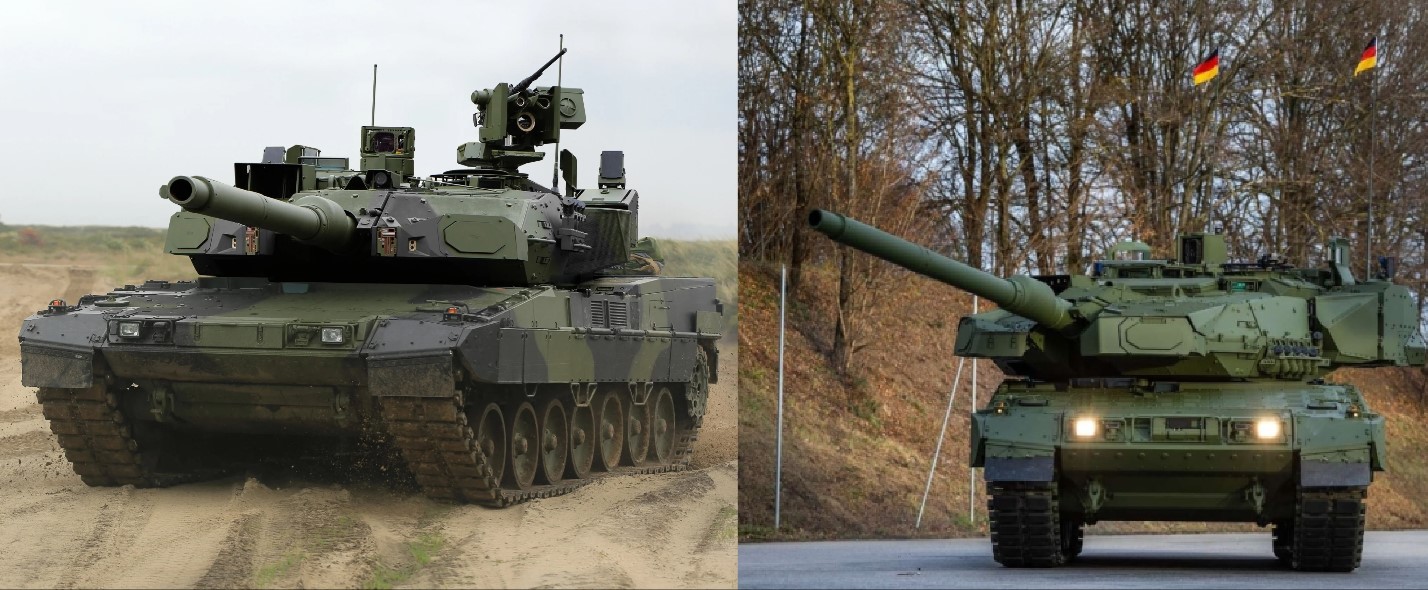
World
Munich, Germany: In a landmark moment for German defense modernization, KNDS Deutschland has officially presented the Leopard 2A8, the first main battle tank built entirely from scratch for the Bundeswehr in more than three decades. The unveiling took place at KNDS facilities in Germany, marking a decisive step in rebuilding the country’s heavy-armour capabilities amid rising security challenges in Europe. For years, Germany relied on upgraded versions of older Leopard 2 hulls. The 2A8 changes that. Officials described it as the “most advanced Leopard ever built”, representing the first true new-production tank for the Bundeswehr since the Cold War. The rollout comes as Berlin accelerates defence spending and modernisation following the war in Ukraine. Military planners say modern tanks must now be optimised for drone warfare, top-attack threats, long-range sensors, and digital battlefield integration — areas where the 2A8 is specifically designed to excel. Key Specifications of the Leopard 2A8 The new variant introduces major improvements in protection, firepower, and digital systems: Crew: 4 (commander, gunner, loader, driver) Armament: 120mm Rheinmetall L/55A1 smoothbore gun Compatible with new programmable ammunition Weight: ~70 tonnes Engine: 12-cylinder MTU diesel, approx. 1,500 hp Mobility: Expected top speed around 68–72 km/h; range approx. 500 km Protection: New modular armour packages Reinforced turret roof Integrated Active Protection System (APS) against missiles and drones Digital Systems: Fully digital fire-control suite 360° situational-awareness sensors New auxiliary power unit for silent watch mode Military engineers emphasise that the tank’s digital architecture allows future upgrades far more easily than earlier Leopard models. Why the Leopard 2A8 Is Special The Leopard 2A8 is being hailed as a generational leap for several reasons: 1. First New-Build Tank for Germany Since the 1990sIt represents the restart of Germany’s heavy-tank production line rather than refurbishment of old platforms. 2. Built for Modern High-Intensity WarfareEnhanced armour, anti-drone defences and new active protection give it survivability against threats revealed in Ukraine. 3. Designed for Network-Centric CombatThe 2A8 integrates seamlessly with drones, command networks and digital targeting systems, improving joint operations. 4. Strong Industrial and Export SignalThe Netherlands has already ordered the A8, and other NATO partners are evaluating it — strengthening Europe’s combined armoured capability. Orders and Delivery Timeline The German Ministry of Defence has signed a contract for 18 Leopard 2A8 tanks, with an option for over 100 more under a long-term framework agreement. Deliveries are expected to begin in 2025, with full fielding likely to continue toward 2030. Strategic Impact for the Bundeswehr The arrival of the Leopard 2A8 is expected to transform Germany’s armoured formations. It significantly boosts the Bundeswehr’s deterrent power, supports Germany’s role in NATO’s eastern-flank readiness, and restores national capability to produce frontline main battle tanks at scale. Defence analysts note that the 2A8, combined with Germany’s push for future tank programs such as MGCS (Main Ground Combat System), signals a long-term shift toward rebuilding Europe’s armoured strength. The Leopard 2A8 presentation marks a historic milestone for German defence. With cutting-edge protection, advanced digital systems and a fully renewed production base behind it, the 2A8 positions itself as one of the most modern tanks in the world — and a powerful symbol of Germany’s renewed commitment to high-end military capability.
Read More → Posted on 2025-11-20 10:08:45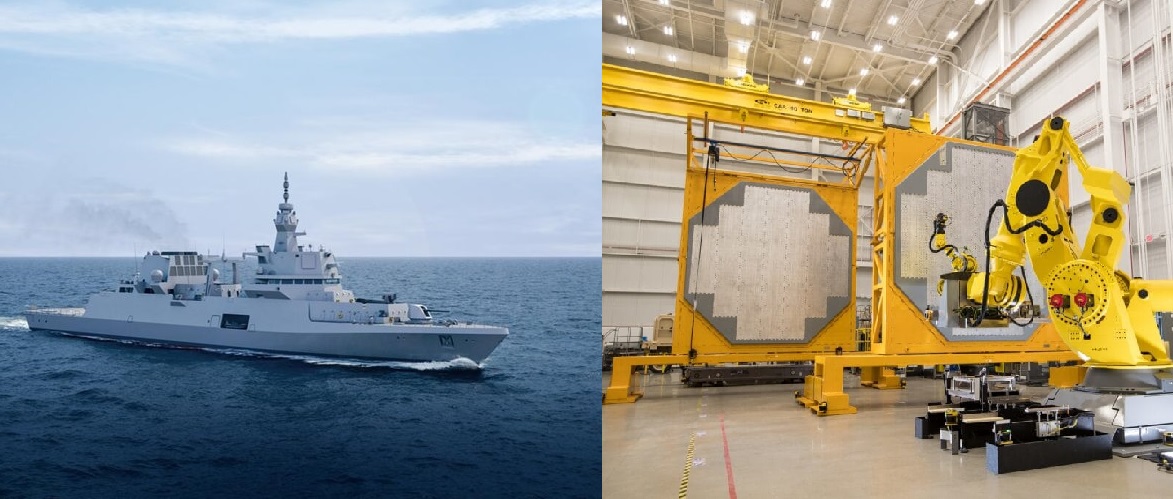
World
In a significant step for international defense cooperation, Raytheon has confirmed that Japanese-made components will be integrated into the AN/SPY-6 radar systems selected for the German Navy’s upcoming F127-class air-defense frigates. The confirmation marks the first time Japanese defense firms will contribute to a major global naval radar program, signaling a major shift in Japan’s traditionally domestic-focused defense industry. The SPY-6 radar, developed for the U.S. Navy, is currently the most advanced shipborne air- and missile-defense radar in production. Built using modular 60-cm Radar Modular Assemblies, the system can be scaled to fit a wide range of warships—from Arleigh Burke–class destroyers to aircraft carriers. The U.S. Navy plans to install SPY-6 variants on more than 60 ships over the next decade. Germany’s F127 Frigates Choose a Proven System Germany selected SPY-6 in October 2025 for its next-generation F127 frigates, an eight-ship program designed to serve as Europe’s most capable air-defense surface combatants. Speaking to Naval News, Barbara Borgonovi, President of Naval Power at Raytheon, described five key reasons behind Germany’s choice: The radar is the U.S. Navy’s program of record, ensuring high interoperability. It offers a low-risk integration path due to its mature production line. Two U.S. ships with SPY-6 have already been commissioned, with production ahead of schedule. The radar is built from the ground up for maritime conditions, not adapted from land-based systems. Raytheon provides an extensive training infrastructure, allowing crews to master the system quickly. Germany aims to deploy the F127-class in the early 2030s, replacing the Sachsen-class frigates and strengthening NATO’s northern air-defense capabilities. Japanese Companies Join a Global Radar Program Raytheon’s announcement sheds new light on agreements signed in 2024 with two major Japanese manufacturers—Mitsubishi Electric (MELCO) and Sampa Kogyo. Both companies, long experienced in advanced radar electronics, will begin producing power-supply units and related subsystems for SPY-6 starting in 2026. Until now, Japanese officials had only confirmed that the components would support U.S. Navy systems. But Raytheon’s Vice President for Naval System & Sustainment, Jennifer Gauthier, revealed that their work will extend to global customers as well. “Sampa and MELCO will be producing components for SPY-6 in the United States, as well as the global fleet. Germany is the first case.” The move represents a major step for Japan. For decades, its defense industry manufactured almost exclusively for the Japan Self-Defense Forces, limiting growth and profit potential. Participation in SPY-6 opens the door to long-term production, new facilities, and international defense exports—areas Japan has rarely entered. A Capability Leap for the German Navy The SPY-6 radar offers the F127 frigates a dramatic enhancement in detection and tracking capability. The system can: Detect aircraft and missiles at far greater ranges than previous European radars Track hundreds of targets simultaneously Provide integrated defense against cruise missiles, ballistic missiles, drones, and hypersonic threats Maintain stable performance in severe sea conditions Scale and upgrade through modular RMAs for decades to come Analysts say the radar will allow Germany to assume a stronger air-defense role within the NATO maritime force structure. A Growing Strategic Link Across the Pacific and Atlantic The integration of Japanese components into a U.S.-designed radar for German warships marks a rare three-way defense collaboration connecting Tokyo, Washington, and Berlin. The development comes as Japan expands its defense spending and seeks greater cooperation with both NATO and the U.S. in response to rising security challenges in the Indo-Pacific. With SPY-6 production now shifting into a global phase, Japanese firms are positioned to support future customers as more navies look to acquire the radar.
Read More → Posted on 2025-11-19 17:23:00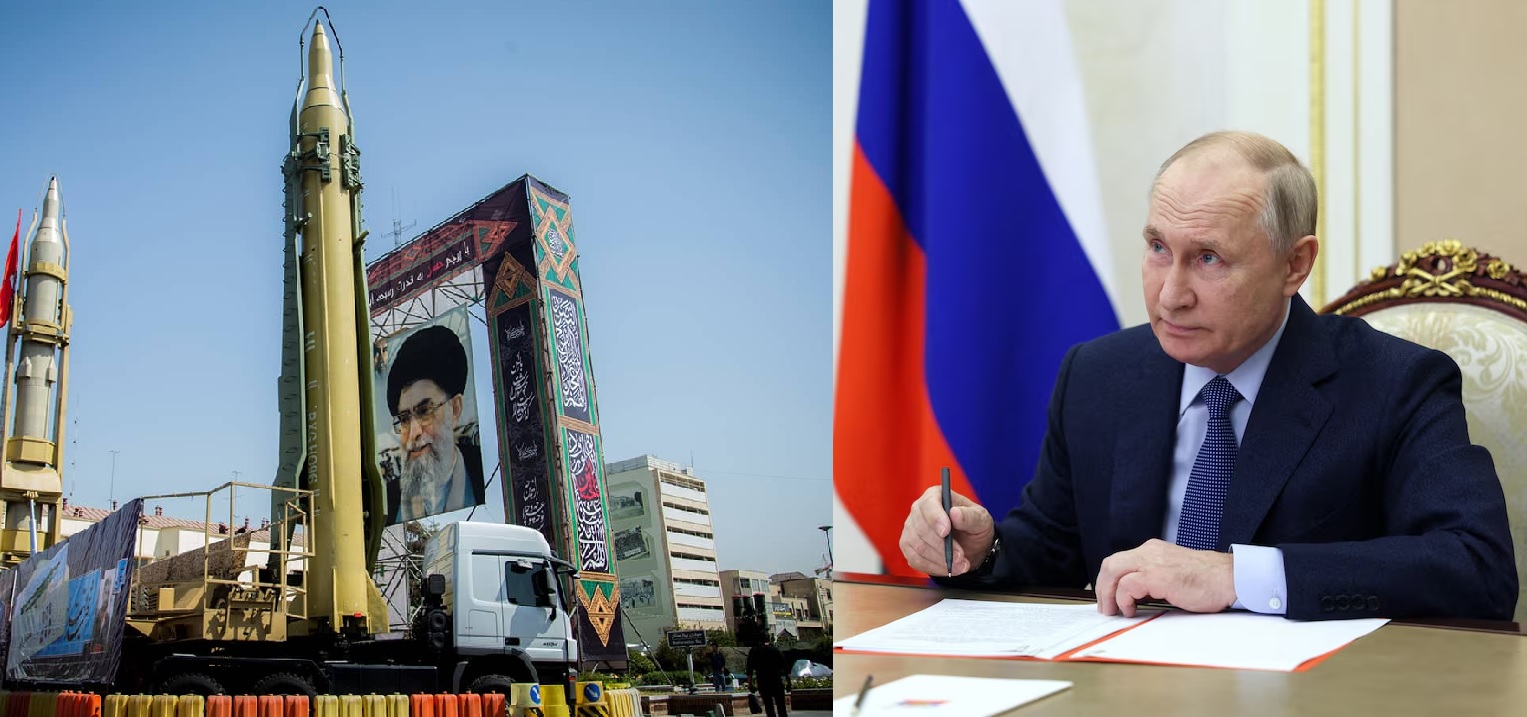
World
New revelations suggest that Russia is quietly assisting Iran in acquiring technology that could allow Tehran to design nuclear weapons without ever conducting a nuclear test, a method that would enable the Islamic Republic to advance toward nuclear-arms capability while avoiding the most visible red line in the global non-proliferation system. According to reporting by the Financial Times, a group of Iranian scientists linked to state-run defence institutions travelled to Russia in late 2024 to pursue advanced laser-based diagnostic and simulation technology — tools that experts say can validate nuclear-warhead designs without the need for a live explosive test. A Secret Visit With Suspicious Goals The visit took place between 7 and 11 November 2024 and was organised through DamavandTec, a company identified by U.S. intelligence as a front for Iran’s military research network. The delegation reportedly included physicists and engineers from several Iranian universities long tied to the country’s defence ministry, including Malek Ashtar University of Technology, Shahid Beheshti University, and Islamic Azad University of Kashan. In St. Petersburg, the Iranians met with Laser Systems, a Russian firm under U.S. sanctions for dual-use military laser research. The discussions were followed by a second meeting in February 2025, when Russian specialist Andrey Savin travelled to Tehran for continued technical consultations. Western officials say the purpose of the meetings goes far beyond civilian research. Analysts interviewed by the Financial Times believe the Iranian delegation was specifically seeking high-precision laser diagnostics and advanced modelling capabilities that could help replicate the effects of a nuclear detonation in laboratory conditions — a vital component of modern warhead development. How Lasers Replace a Nuclear Test Traditional nuclear-weapons programmes rely on test explosions to confirm that a warhead’s design, implosion symmetry, and triggering mechanisms will function correctly. But since global treaty pressure has made real nuclear tests politically explosive, countries have been exploring alternative methods for years. High-energy lasers, supercomputing models, and ultrafast imaging allow scientists to simulate the internal physics of a nuclear core, test key components, and validate miniaturised designs — all without producing a radioactive test blast. The U.S., China, Russia and France use similar technologies to maintain their arsenals under test-ban norms. If Iran acquires such capability, experts warn that it could finalise a viable nuclear weapon without giving the world the unmistakable warning of a real test. This would dramatically reduce the time needed for Tehran to move from nuclear threshold status to operational nuclear arms. A Shift in Russia’s Position Russia has long insisted that it opposes a nuclear-armed Iran. Yet the FT report suggests that the meetings were approved at senior levels in both Moscow and Tehran, reflecting a deeper strategic alignment forged since Russia’s invasion of Ukraine and Iran’s supply of drones to the Russian military. For the Kremlin, tightening nuclear-related cooperation with Iran serves multiple goals: pressuring Western powers, expanding influence in the Middle East, and cementing a strategic partnership with a key sanctions-resistant ally. Moscow has not publicly responded to the allegations, while Iran continues to insist that all of its nuclear activity is for peaceful purposes. The documented involvement of sanctioned institutions, however, has raised significant alarm in Western capitals. Growing Regional and Global Alarm Intelligence agencies in the United States, Europe, and the Middle East are re-evaluating Iran’s nuclear trajectory in light of these disclosures. With access to advanced Russian technology, Tehran could potentially shorten its “breakout” window — the time required to produce a nuclear weapon — and do so under far less international scrutiny. Regional powers such as Israel, Saudi Arabia and the United Arab Emirates are expected to intensify security cooperation and pursue additional missile-defence and counter-proliferation measures. Diplomatically, the revelations may also trigger calls for new sanctions on Iranian defence-linked institutions and stricter monitoring from the International Atomic Energy Agency. The development also places further strain on the already fragile JCPOA framework, which has steadily eroded since the U.S. withdrawal in 2018 and Tehran’s subsequent expansion of uranium enrichment. A New Phase in Iran’s Nuclear Path The idea that Iran could approach nuclear-weapons capability without conducting a test represents a profound shift in how analysts assess the risks. For decades, the absence of a nuclear test has been viewed as a final proof that Iran had not crossed the threshold. But the Russian-Iranian cooperation described by the FT reflects a modern proliferation model — one where simulation replaces explosions, and where strategic partnerships can quietly accelerate the world’s most dangerous technologies. If confirmed, the Russia-Iran laser-technology partnership may mark the most consequential change in Iran’s nuclear capabilities in over a decade, setting the stage for a new and far more unpredictable chapter in Middle Eastern security.
Read More → Posted on 2025-11-19 17:14:37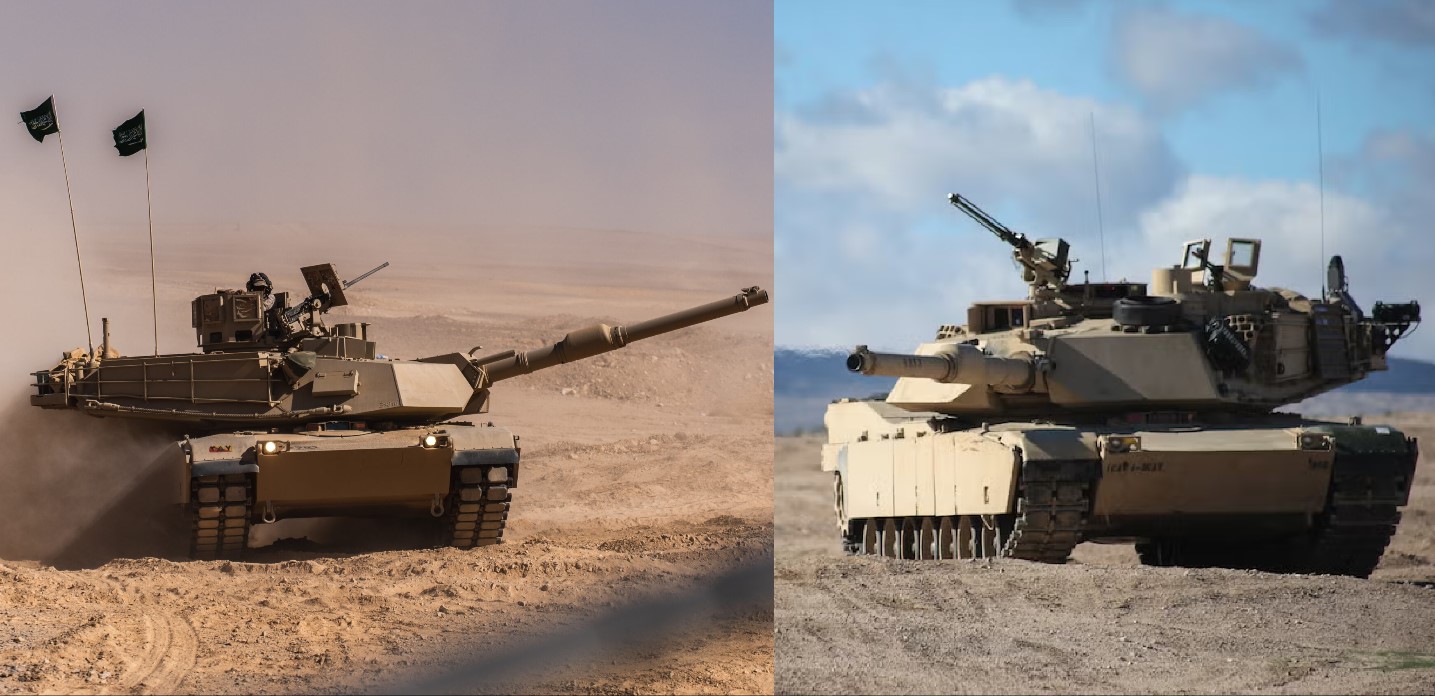
World
On 18 November 2025 the United States and Saudi Arabia have entered one of the most consequential phases of their modern partnership after President Donald J. Trump and Crown Prince Mohammed bin Salman formally concluded a sweeping Strategic Defense Agreement, anchored by Riyadh’s decision to purchase nearly 300 American-made M1 Abrams main battle tanks. The White House confirmed the agreement late Tuesday, presenting it as both a reinforcement of U.S. leadership in the Middle East and a cornerstone of Saudi Arabia’s military modernization. The deal, which also incorporates civil nuclear cooperation, artificial intelligence partnerships and critical minerals access, is framed as the most far-reaching bilateral defense framework between the two countries in years. A High-Stakes Pact With Economic and Strategic Weight According to senior U.S. officials, the SDA elevates Saudi Arabia to Major Non-NATO Ally status and is tied to Riyadh’s plan to push nearly $1 trillion in investments into the U.S. economy. The administration described the package as a “strategic anchor” ensuring long-term military, economic and technological cooperation. For Washington, the tank sale represents a multi-billion-dollar program that will sustain production at the Lima Army Tank Plant—the only remaining facility manufacturing the Abrams. For Saudi Arabia, it signals a renewed commitment to American defense technology after years of exploring alternative suppliers. The Abrams Deal: Nearly 300 Tanks to Reshape Saudi Ground Power While official documents mention nearly 300 U.S. tanks, defense analysts expect the order to be based on an export variant of the M1A2 SEP series, similar to the SEPv3 configuration now entering American service. Key Specifications of the M1A2 Abrams Expected for Saudi Arabia 120 mm M256 smoothbore gun Advanced thermal sights and hunter-killer capability Composite armor with blow-off panels 1,500 hp AGT1500 turbine engine Road speeds above 65 km/h Digital systems ready for future Active Protection Systems Export units are typically priced between $23 and $25 million, placing the tank segment of the deal in the $6.5–7.5 billion range before training and sustainment. Saudi Arabia already operates more than 575 M1A2S tanks. The new batch will push the fleet close to 900 Abrams, making the kingdom one of the world’s largest operators of the platform. Building a Heavier, Modernized Saudi Army The addition of nearly 300 new tanks gives the Royal Saudi Land Forces the ability to stand up at least one new heavy armored division or reinforce several armored brigades. The expanded fleet is expected to phase out aging M60A3 Patton tanks, which suffered significant losses during the Yemen conflict. Saudi officials say the enlarged Abrams fleet will: Strengthen border operations near Yemen Secure oil and infrastructure corridors Improve deterrence against Iran Standardize logistics and training on a single modern heavy platform The move also prepares Saudi forces for closer U.S.-led coalition integration. Yemen, Ukraine and Gaza: Lessons Driving Saudi Modernization Saudi Arabia’s shift toward more advanced armor is rooted in battlefield lessons. In Yemen, Houthi fighters used Iranian-supplied anti-tank missiles and armed drones to damage or destroy several Saudi M1A2S tanks. For Saudi commanders, the message was clear: modern survivability depends on active protection, electronic warfare, and integrated air defense rather than armor alone. Recent wars in Ukraine and Gaza have reinforced the same point. Although the Abrams does not fire ATGMs like Russia’s T-90M, it offers superior crew protection, ammunition isolation, and upgrade potential. Reasserting the U.S. Footprint in the Middle East The tank deal arrives at a moment when Saudi Arabia has been reassessing its security partnerships, including limited overtures to China. The 2025 SDA is designed to anchor Riyadh firmly back inside the American defense ecosystem. The White House said the agreement “cements the United States as the kingdom’s primary security partner,” while Saudi officials described it as a necessary recalibration for a region facing drone threats, proxy warfare, and strategic uncertainty. A New Defense Architecture Takes Shape With the SDA completed, both nations are preparing for expanded joint training, integrated defense planning, and closer industrial cooperation. The nearly 300 M1 Abrams tanks will serve as the visible backbone of this next phase—symbolizing a partnership rebuilt on heavy armor, shared strategy, and long-term geopolitical alignment. The steel at the center of the deal is only part of the story. The strategic realignment it represents is far larger, and far more enduring.
Read More → Posted on 2025-11-19 17:06:08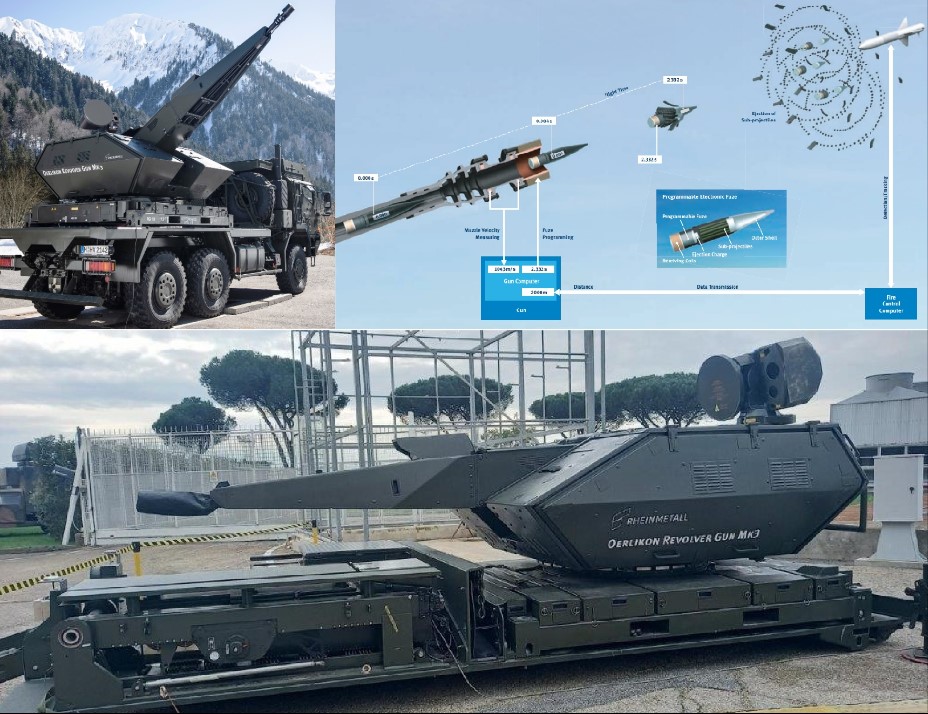
World
Ukraine has now received all four promised Skynex air-defence systems from Germany, completing a delivery that began as an urgent wartime procurement nearly three years ago. With drone and loitering-munition attacks intensifying across the front and deep inside Ukrainian cities, the arrival of the full Skynex package marks one of the most significant additions to the country’s short-range air-defence network since the war began. A Deal Born From Crisis The story of Skynex in Ukraine began in December 2022, when Germany signed the first contract with Rheinmetall for two Skynex batteries, financed through Berlin’s special defence fund. That initial agreement, valued at around €182 million, was meant to give Ukraine a precise, cost-effective system capable of shooting down Shahed-type drones—cheap, abundant, and increasingly used to exhaust expensive missile stocks. As the drone war escalated, Germany quietly placed a follow-on order in early 2024 for two additional systems, bringing the total promised to four. Deliveries began in stages throughout 2024 and 2025. Now, in late 2025, Rheinmetall confirms that all four systems are fully delivered and operational on Ukrainian soil. Why Skynex Matters to Ukraine Over the past two years, Ukraine’s power infrastructure, ammunition depots, bridges and rail hubs have endured constant strikes from Shahed drones, Lancet loitering munitions, and low-flying cruise missiles. While Ukraine relies heavily on Patriots, IRIS-T, and NASAMS for long-range interception, these systems are simply too expensive and too scarce to waste on slow, low-cost drones. Skynex fills that gap. It is a system built around 35mm cannon fire, using programmable AHEAD air-burst ammunition that releases hundreds of tungsten pellets in the path of an incoming drone. Each shot costs a fraction of a missile, yet can destroy even small, hard-to-track UAVs. This makes Skynex ideal for defending power plants, military logistics hubs, airfields, and other high-value targets. How Skynex Works – System Specifications Each Skynex air-defense battery delivered to Ukraine includes: • 35mm Oerlikon Revolver Gun Mk3 Mounted on Rheinmetall HX 8×8 trucks Rate of fire: Up to 1,000 rounds/minute Effective range: Up to 4 km Gun elevates to engage fast, low-altitude targets • AHEAD Programmable Ammunition Each round releases tungsten sub-projectiles Creates a “cloud” that shreds drones or missile components Much cheaper than using IR-guided or radar-guided missiles • X-TAR3D Radar and Skymaster Battle-Management System 3D air-surveillance radar Tracks drones, rockets, and aircraft at long distances Integrates with other NATO-standard sensors Can command multiple guns simultaneously • Fully Modular Architecture Ukraine can later add: More guns Missile launchers Different radars Electo-optical tracking units Its open architecture also means Ukraine can attach additional radars, fire-control units, or even integrate older Soviet-era sensors. A New Layer in Ukraine’s Defence Web Kyiv has not disclosed exact deployment locations, but military officials hint that Skynex systems are already positioned around strategic energy facilities and logistical corridors—precisely the targets Russia has tried to cripple ahead of winter. For Ukraine, every Skynex battery helps reduce reliance on high-cost interceptor missiles. For Germany, the successful delivery signals a maturing defence-industrial partnership with Ukraine—one that Berlin expects will last long after the war. What Comes Next Despite the positive news, Ukrainian officials openly acknowledge that four systems are far from enough for a country of Ukraine’s size. Demand for short-range drone-defence technology has skyrocketed, and Kyiv continues to lobby Europe for more Skynex units or similar systems. For now, the completion of the delivery marks a rare moment of certainty in a chaotic war: a promised capability, delivered in full, and already working to protect Ukraine’s cities and soldiers. If you want, I can now write a follow-up article comparing Skynex vs. Gepard vs. IRIS-T in Ukraine’s air-defence ecosystem.
Read More → Posted on 2025-11-19 16:54:50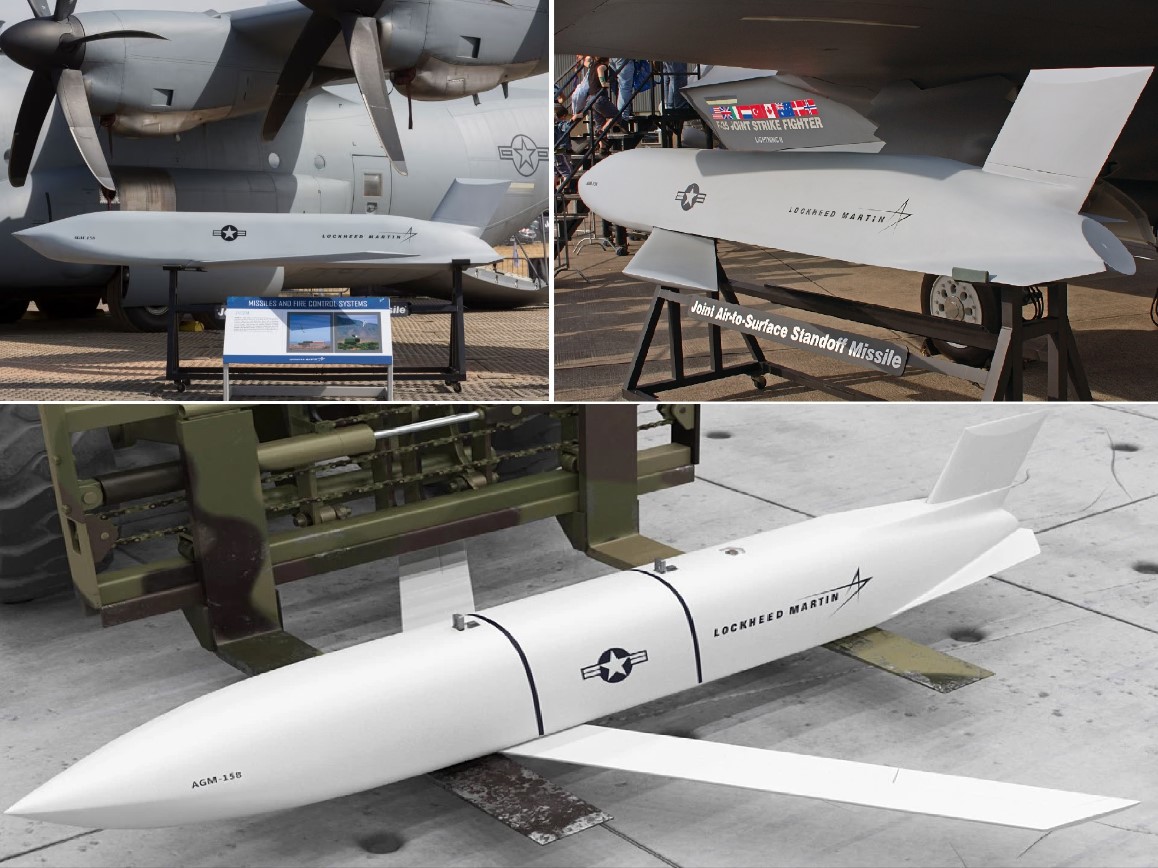
World
Lockheed Martin is accelerating work on the AGM-158 XR (eXtreme Range), the newest and most ambitious variant of the Joint Air-to-Surface Standoff Missile (JASSM) family, with the first prototype test flight targeted for Q4 2026. The move marks a significant step toward fielding one of the longest-range precision strike weapons ever developed for the United States Air Force. A New Milestone for Stand-Off Strike Weapons According to Tim Cahill, Executive Vice President of Missiles and Fire Control at Lockheed Martin, assembly of the initial AGM-158 XR prototype is well underway.“We’re putting that prototype together,” Cahill confirmed, adding that the US Air Force (USAF) is offering strong support through scheduled range access, technical assistance, and evaluation planning. The XR variant is designed to drastically expand the JASSM’s reach, continuing the evolution of a missile family already known for deep-strike capabilities. While official specifications remain classified, defence sources indicate the AGM-158 XR could exceed 1,000 km in range, potentially far more, positioning it for operations against heavily defended targets in contested airspace. Why the XR Variant Matters The Pentagon’s growing focus on high-end conflict scenarios—particularly in the Indo-Pacific—has elevated demand for weapons capable of striking from outside advanced anti-access/area-denial (A2/AD) systems. China’s integrated air defences and long-range surface-to-air missiles have accelerated USAF interest in deep-strike options. The XR will build upon the proven JASSM-ER and JASSM-X variants but incorporate: A larger, more efficient propulsion system Increased fuel capacity Reduced radar cross-section shaping Upgraded guidance and navigation resilient against GPS jamming Higher survivability in dense air defence environments These enhancements allow bombers and fighters—including the B-21, B-52J, F-35, and F-15EX—to engage targets far beyond the reach of legacy cruise missiles. Prototype Phase and Testing Timeline Lockheed Martin is expected to complete the airframe’s structural integration in early 2026, followed by subsystem testing, captive-carry flights, and software integration.The first live-fire test is scheduled for late 2026, with additional weapon qualification trials anticipated through 2027. If successful, the USAF could consider initial low-rate production by 2028, aligning with broader modernization plans for long-range strike platforms. Growing Demand Amid Global Tensions As geopolitical tensions heighten—from the Western Pacific to Eastern Europe—advanced standoff munitions are seeing rapid investment. The JASSM line already has more than a dozen international customers, and several allies have expressed early interest in the XR’s extended reach. Military analysts note that the AGM-158 XR could become a central pillar of the United States’ future strike doctrine, balancing survivability, range, and precision in a weapon designed for the most challenging theatres. AGM-158 XR – Expected Specifications (Unclassified/Estimated) Range: 1,000–1,600 km (extreme-range class) Length: ~4.5 m Warhead: 450 kg WDU-42/B penetrator/blast-fragmentation warhead Propulsion: Advanced turbojet engine with expanded fuel capacity Guidance: GPS/INS with jam-resistant enhancements Imaging IR seeker for terminal guidance Navigation Upgrades: Anti-jam, hardened electronics, enhanced target recognition Speed: Subsonic (high survivability cruise profile) Stealth: Low radar cross-section composite body Shrouded engine inlet Launch Platforms: B-21, B-52J, F-35A, F-15EX, and future long-range strike aircraft Role: Deep-strike against hardened, high-value, high-threat targets (Specifications compiled from open-source defence estimates; official values remain classified.) The upcoming 2026 test marks a major milestone not just for Lockheed Martin but for the USAF’s long-range strike modernization. If the AGM-158 XR meets its projected performance, it could redefine stand-off warfare and strengthen deterrence against adversaries deploying increasingly advanced air defence networks. The world’s attention will be on the XR’s first flight—one that may shape the next generation of precision strike capabilities.
Read More → Posted on 2025-11-19 16:38:24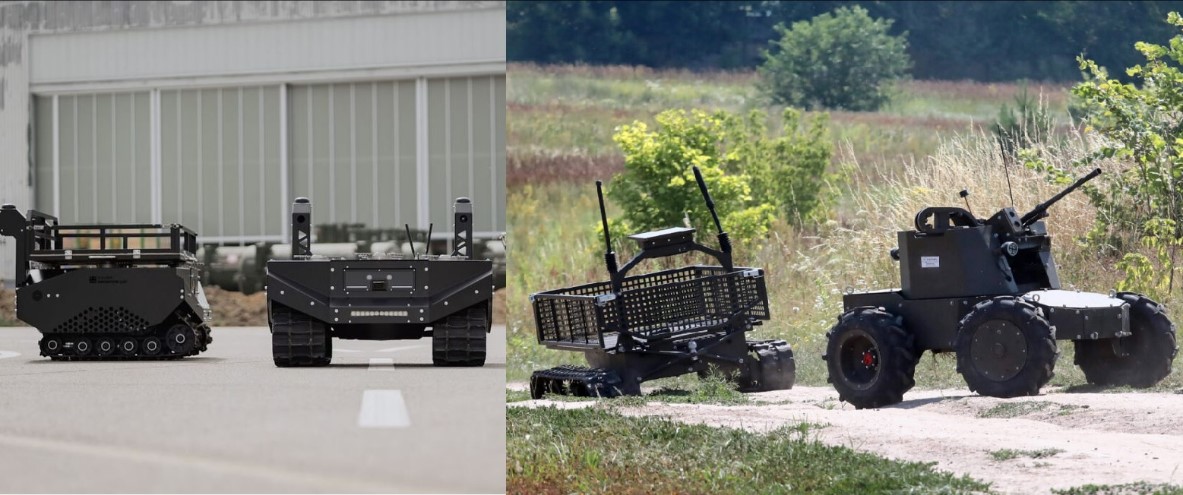
World
ARX Robotics has secured a major new order to expand Ukraine’s fleet of Gereon unmanned ground vehicles (UGVs), marking one of the most significant investments yet in robotic systems on the Ukrainian battlefield. The contract will create a connected fleet of several hundred robots, supported by local production at the company’s facility inside Ukraine. According to ARX Robotics, the new delivery will substantially increase Ukraine’s ability to conduct automated logistics, reconnaissance, route clearance and multi-robot operations. The expansion also deepens the industrial partnership between European manufacturers and Ukraine’s growing defense-technology sector. Connected Robots for Multi-Domain Missions The upgrade centers on the ARX Robotics Framework powered by Mithra OS, an AI-driven operating system designed to link sensors, autonomous functions and open interfaces across all Gereon units. The system enables coordinated missions across multiple military domains by allowing robots to share data, manage tasks and respond to battlefield changes more quickly. Commanders can integrate the UGVs with legacy platforms and existing battlefield networks, creating a more unified digital operating environment. The connected fleet will be able to conduct a wide range of tasks, including: Forward reconnaissance in contested zones Autonomous resupply missions Casualty evacuation Route and mine clearance Support for weaponized payloads Ukrainian forces have already deployed earlier versions of the Gereon robots, and officials say the new order will significantly scale the impact of robotics on frontline operations. Industrial Cooperation Between Europe and Ukraine A key part of the agreement includes local production inside Ukraine, with domestic suppliers expanding capacity to meet growing demand. ARX Robotics described this as essential for faster delivery and long-term sustainment of the fleet. “This major order is an important vote of trust and a clear mandate to scale,” said Marc Wietfeld, Co-Founder and CEO of ARX Robotics.“By expanding the connected Gereon fleet, we are strengthening a key capability in Ukraine and laying the foundation for a robust, locally anchored supply chain.” Igor Kornilov, CEO of ARX Ukraine, said that the combination of German technology and Ukrainian manufacturing will accelerate fielding with the armed forces. “Manufacturing at our Ukrainian plant and working with local partners will accelerate deployment and ensure sustainment in service,” Kornilov noted.“We are building capacity and capability in Ukraine that will deliver value beyond this order.” The company emphasized that the cooperation will help Ukraine advance its technical know-how while making its defense production base more resilient. Gereon UGVs and Mithra OS: A Growing European Standard ARX Robotics produces the Gereon RCS series of unmanned ground vehicles, which have been adopted by several European armed forces. The robots are known for their modular design, enabling rapid reconfiguration for different mission types. The company’s Mithra OS serves as a unifying layer connecting not only autonomous systems but also legacy equipment, allowing militaries to integrate modern robotics into older platforms without replacing entire fleets. In Ukraine, the systems have already supported battlefield digitalization, soldier protection, and increased automation—areas where Kyiv has aggressively invested since the start of the full-scale invasion. Strengthening Europe’s Robotic Defense Capabilities The new contract aligns with a broader trend of European militaries accelerating investment in autonomous systems for logistics, reconnaissance and protection roles. With Ukraine serving as a real-time test environment, the country’s adoption of networked robots is viewed as a valuable proving ground for future European defense technologies. Defense analysts say the Gereon fleet expansion reinforces Europe’s push toward strategic autonomy in robotics and AI-enabled warfare. Production is expected to ramp up immediately, with the first units from the new order scheduled for field deployment within months. As the fleet grows, Ukraine will move closer to operating one of the largest coordinated UGV networks in active conflict, combining European engineering with locally developed resilience. Officials say the deal marks a pivotal moment for Ukraine’s military modernization and Europe’s expanding role in next-generation battlefield robotics.
Read More → Posted on 2025-11-19 16:26:39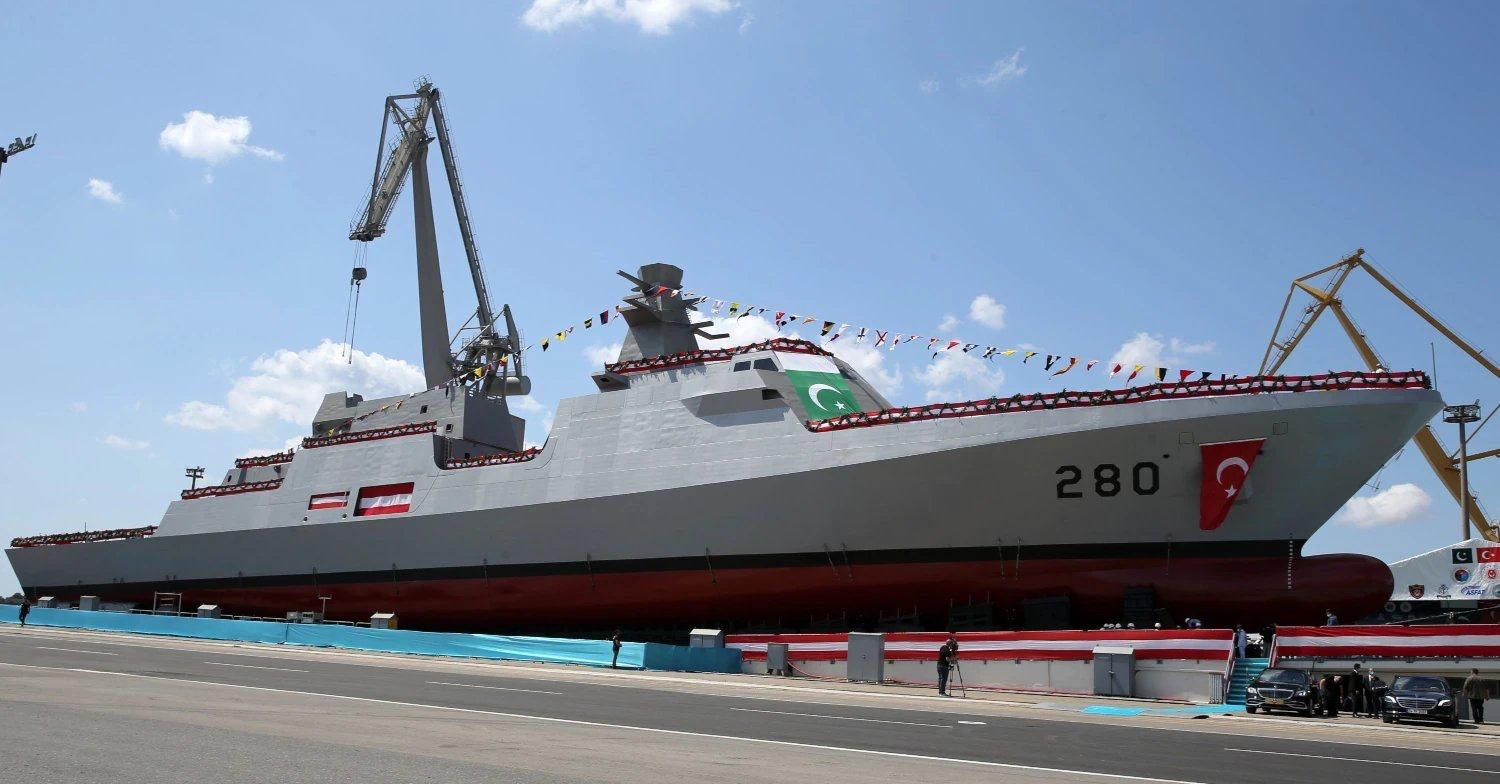
World
Pakistan’s new warship, PNS Khaibar, has successfully completed important live-fire trials, marking a major step before it officially joins the Pakistan Navy. The announcement came from the Turkish defense company HAVELSAN, which has played a key role in building and integrating the ship’s combat systems. Sharp Accuracy in Weapon Tests During the trials, Khaibar fired its 76 mm main gun at land targets and hit them with high accuracy. The ship’s Aselsan STOP 25 mm remote-controlled gun also repeated the same precise performance. These tests were mainly done to check how well the ship’s advanced combat system, ADVENT, can control weapons and sensors together. HAVELSAN and Turkey’s state-owned shipbuilder ASFAT supervised the trials. What Makes PNS Khaibar Different PNS Khaibar is the second ship of the Babur-class—a larger and more powerful version of Türkiye’s Ada-class corvette. Unlike older ships that were mainly built for anti-submarine missions, Khaibar is designed to handle multiple types of missions at sea. Key features include: Harbah land-attack and anti-ship missiles Albatros NG air-defense missiles with a 12-cell launcher Gokdeniz close-in weapon system (CIWS) Leonardo 76/62 Super Rapid main gun Two STOP 25 mm guns 324 mm torpedo launchers The ship is around 108 meters long, weighs about 3,000 tons, and can reach speeds of over 26 knots. It can also carry a 10-ton anti-submarine helicopter. Advanced Radar and Sensors Khaibar is equipped with powerful sensors that help it detect ships, aircraft and submarines from long distances. These include: SMART-S Mk2 3D radar Piri infrared search-and-track system SeaEye-AHTAPOT electro-optical sensors Yakamos sonar HIZIR torpedo defense system Together, these systems allow the ship to monitor the sea and air around it up to almost 250 km. ADVENT Combat System: The Brain of the Ship The ADVENT combat management system is one of the ship’s biggest upgrades. It connects all radars, weapons, sensors and communication systems so they work together as one networked unit. This system can: Share data with other ships Track multiple threats at the same time Guide weapons more accurately Connect with NATO and Pakistan Navy communication links The supporting FLEETSTAR system helps distribute data quickly and safely across the ship. For Pakistan, this means its navy will operate a second digital combat network—separate from the Chinese systems used on its Tughril-class ships and upcoming Hangor-class submarines. A Program Designed for Technology Transfer The PN MILGEM program began in 2018 with an agreement between Pakistan and Türkiye to build four ships, including two made at Karachi Shipyard. The deal includes technology transfer, giving Pakistan the rights to modify and develop future ships such as the planned Jinnah-class frigates. This helps Pakistan learn ship design, weapon integration and combat-system management—skills it has been trying to develop for years. Why This Matters in the Region Khaibar’s arrival comes at a time of growing rivalry in the Indian Ocean. The Indian Navy is expanding rapidly, operating aircraft carriers, new destroyers and advanced submarines. Pakistan, on the other hand, is trying to modernize its smaller fleet while also protecting Chinese-supported sea routes linked to the China–Pakistan Economic Corridor (CPEC). Analysts say the Babur-class corvettes give Pakistan a modern, missile-armed, network-enabled surface force — but they do not change the overall balance, which still heavily favors India. A New Addition to Pakistan’s Naval Power With its trials complete, PNS Khaibar is now close to joining the Pakistan Navy. The ship represents a major upgrade — combining advanced sensors, modern missiles, digital combat systems and long-range awareness in a compact design. For Pakistan, Khaibar is a sign of its growing partnership with Türkiye and a step toward modernizing its navy for the challenges of the future.
Read More → Posted on 2025-11-19 16:20:05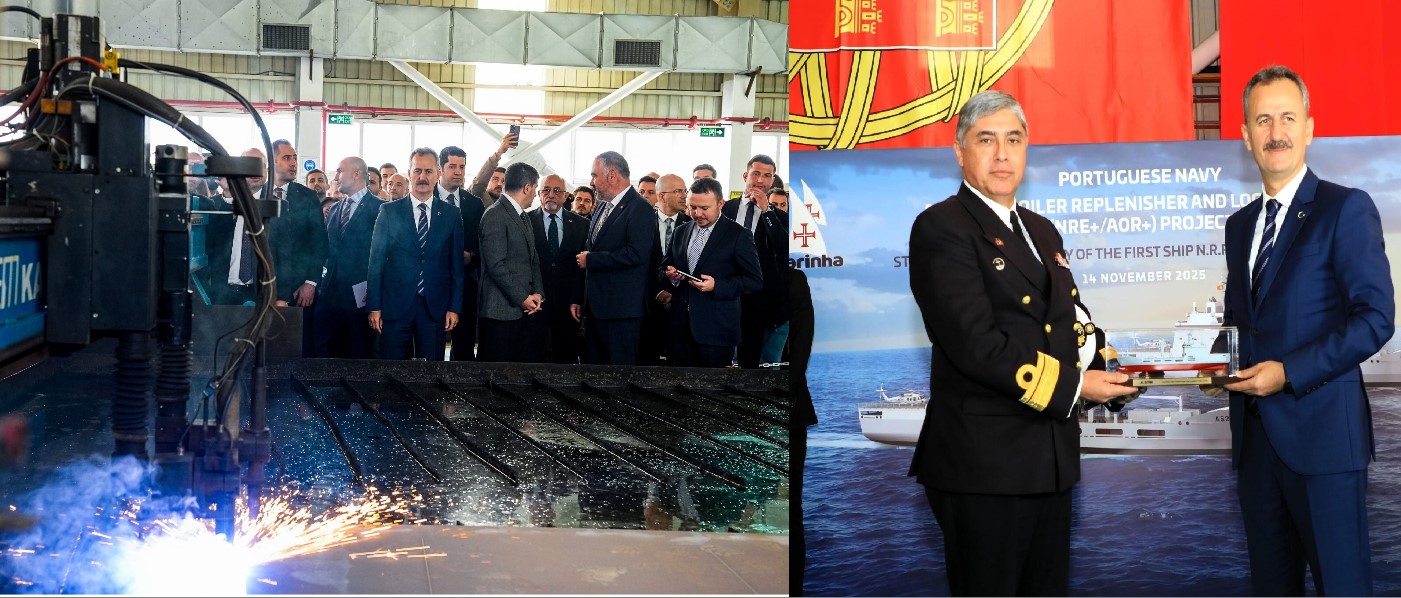
World
Turkey has formally begun steel cutting for two naval support vessels ordered by Portugal, marking the first military ship export from Ankara to a European Union and NATO member-state. The step follows a contract signed in Lisbon in December 2024 and represents growing technical and industrial cooperation between the two countries. Long-Range Auxiliary Vessels for Portugal The two ships under construction are Auxiliary Oiler and Logistics Vessels, designed to operate across long distances and support a wide range of naval missions. Key features of the vessels include: 14,000 nautical mile range at an economical speed of 14 knots Capability for replenishment at sea, logistics support, and amphibious operations Facilities for medical assistance, search and rescue, and humanitarian relief Capacity to carry up to 20 light armored vehicles A flight deck and hangar suitable for helicopters and unmanned aerial vehicles Once completed, the vessels will significantly improve Portugal’s ability to sustain naval operations in the Atlantic and participate in extended NATO missions. Turkish Industry Participation and Delivery Timeline Around 30 Turkish companies are contributing to the project, with STM serving as the prime contractor. The company has confirmed the delivery schedule: First vessel: in 36 months Second vessel: in 44 months This places deliveries between 2027 and 2028, depending on shipyard progress. The project reflects Turkey’s rising presence in the international shipbuilding and defense markets, particularly in logistical and support vessel categories. Part of Turkey’s Expanding Defense Export Portfolio The Portugal program adds to a series of recent export successes for Turkey’s defense industry. Turkish Aerospace Industries has delivered Anka-S armed drones to Qatar and Azerbaijan, enhancing both countries’ surveillance and operational capabilities. STM previously exported MILGEM Ada-class corvettes to Pakistan under a long-term cooperation framework. Roketsan continues to supply precision-guided munitions and short-range missile systems to Morocco. These exports illustrate Turkey’s effort to broaden its defense partnerships and supply advanced systems to a wider range of international customers. Strengthening Ties Within NATO For Portugal, the new vessels support its long-term naval modernization goals and strengthen its ability to participate in NATO maritime operations. For Turkey, the contract marks a useful opening into European defense procurement and highlights compatibility between Turkish naval engineering and NATO operational standards. With steel cutting now underway, both countries enter a practical phase of cooperation that is expected to continue over the next several years as the ships progress through construction and testing.
Read More → Posted on 2025-11-19 14:38:39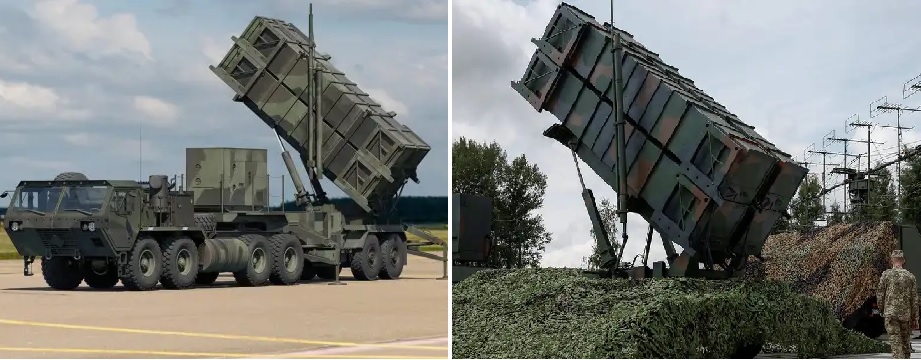
World
The United States has approved a major sustainment and upgrade package for Ukraine’s PATRIOT air defense system, marking Washington’s latest effort to reinforce Kyiv’s defenses as Russia intensifies long-range missile and drone strikes. According to the U.S. State Department, the proposed Foreign Military Sale (FMS)—valued at an estimated $105 million—includes critical sustainment, spare parts, maintenance, and the upgrade of older M901 launchers to the more advanced M903 configuration. The deal is still awaiting final approval from Congress, but officials say the package is expected to move quickly due to urgent Ukrainian operational needs. A Boost to Ukraine’s Most Capable Air Defense Shield The PATRIOT system has become one of the most valuable assets in Ukraine’s layered air defense network, credited with shooting down Russian Iskander-M, Kinzhal hypersonic missiles, and long-range cruise weapons. However, constant use in high-intensity operations has strained the system, creating an acute need for sustainment support. The State Department said the package will “improve Ukraine’s capability to defend against current and future aerial threats and ensure the long-term readiness of its Patriot batteries.” Key Components of the Approved Sale Upgrade of M901 launchers to M903 — enabling compatibility with newer PAC-3 CRI and future advanced interceptors. Spare parts, repair tools, and maintenance support for continuous 24/7 operations. Technical and logistics assistance to keep the missiles and radar units mission-ready. Training and support equipment for Ukrainian operators and maintainers. The M903 launcher upgrade is particularly significant. Unlike the older M901, the M903 supports multiple missile canisters, improved electronics, and faster reload capability—allowing Ukraine to respond more effectively to massed Russian missile and drone salvos. Comes at a Critical Time in the War Russia has recently increased the frequency of its Shahed drone barrages, ballistic missile attacks, and precision strikes aimed at Ukrainian cities, power stations, and air bases. With winter approaching, Ukrainian officials have warned of a coming campaign targeting energy infrastructure, similar to Moscow’s earlier winter offensives. Ukrainian air defense units have reported that Patriot systems are operating at extremely high tempo, often intercepting multiple threats per night. “This sustainment is not just an upgrade—it’s survival,” one Ukrainian official told Western media. “Patriot is the backbone of our air defense over major cities.” Washington Signals Long-Term Support While the sale does not include new missile interceptors, U.S. officials emphasize that upgrading and maintaining existing Patriot batteries is as strategically important as delivering new weapons. Pentagon advisors continue to work with Ukrainian crews on optimizing radar coverage and improving shoot-down efficiency. The U.S. government also reiterated that the sale “does not alter the balance of power in the region,” framing it instead as a defensive necessity to protect civilians and critical infrastructure. European partners, including Germany and the Netherlands, have already supplied Patriot components and interceptors. The U.S. sustainment package fills key logistical gaps that Kyiv has been requesting for months. Defense analysts say the move underscores Washington’s commitment to sustaining Ukraine’s air defense resilience for years—not just months. “Ukraine’s fight is increasingly an air war,” said one security expert. “Keeping Patriot systems fully operational is essential to stopping Russia’s long-range strikes and preserving Ukraine’s ability to resist.” With Congress expected to review the notification shortly, Ukraine may soon receive the upgraded launchers and sustainment equipment—potentially strengthening its air shield ahead of the harsh winter season and any new Russian aerial offensive.
Read More → Posted on 2025-11-19 12:36:47
World
Oval Office meeting between former U.S. President Donald J. Trump and Saudi Crown Prince Mohammed bin Salman has ignited both economic enthusiasm and political controversy, after the Saudi leader agreed on the spot to expand planned Saudi investments in the United States from $600 billion to nearly $1 trillion. The dramatic pledge, made during a live press availability, was quickly overshadowed by Trump’s startling comments appearing to downplay the 2018 assassination of American-Saudi journalist Jamal Khashoggi, prompting sharp criticism from human-rights groups and political opponents. A Public Display of “The Art of the Deal” The meeting began as a standard diplomatic engagement showcasing U.S.–Saudi economic cooperation. But it took a dramatic turn when Trump pressed the Crown Prince directly: TRUMP: “You're saying to me now the $600 billion will be $1 trillion?”MBS: “Definitely!” The Crown Prince elaborated that the expanded investment would target technology, artificial intelligence, advanced manufacturing, energy, and next-generation materials, saying it would create “a lot of investment opportunities” inside the United States. Saudi Arabia’s Public Investment Fund (PIF) has already poured tens of billions into U.S. tech, sports, defense, and infrastructure ventures. A jump to $1 trillion would represent one of the largest sovereign investment commitments in U.S. history. Economic Significance Analysts note that such an investment could reshape segments of the U.S. economy: Major boosts to AI development, quantum research, and high-tech manufacturing. Expanded joint ventures in defense, aerospace, and critical minerals. Potential political leverage for Saudi Arabia in Washington policymaking. A dramatic rise in Saudi-funded American jobs, especially in tech hubs. Trump immediately framed the exchange as “the Art of the Deal in action,” calling it proof of his ability to negotiate with global leaders. But the Celebration Was Short-Lived During the same media session, Trump shocked many observers when he appeared to minimize the Saudi regime’s murder of Jamal Khashoggi, the Washington Post columnist killed and dismembered inside the Saudi consulate in Istanbul in October 2018. Despite the CIA, under Trump’s own presidency, concluding that Crown Prince Mohammed bin Salman personally ordered the operation, Trump made remarks suggesting Khashoggi was a “controversial figure” whom “a lot of people didn’t like.” Civil liberties organizations immediately condemned the comments as dangerous and irresponsible. Human Rights Groups Respond Amnesty International called Trump’s remarks “a disgraceful justification of a brutal murder.”Reporters Without Borders warned that normalizing such attacks on journalists could have “global consequences for press freedom.” Democratic lawmakers accused Trump of “siding with authoritarian killers over American journalism.” Saudi Reaction and International Implications Saudi officials did not publicly comment on Trump’s statements about Khashoggi, but Riyadh welcomed the focus on economic cooperation, presenting the investment pledge as part of Vision 2030 — the kingdom’s long-term economic transformation plan. Internationally, the news has produced a mixed reaction: European leaders expressed concern over Trump’s rhetoric on the Khashoggi case. Investors reacted positively to the potential flood of Saudi capital. Middle East analysts warned that Trump’s comments may further embolden Saudi Arabia’s regional posture. Political Fallout in the U.S. While Trump and the Crown Prince celebrated their economic announcement, critics argue that economic gains cannot overshadow human-rights considerations. Political analysts say the incident may become a flashpoint in the 2026 political landscape, raising questions about: Trump’s willingness to confront authoritarian abuses The role of foreign investment in U.S. national security Washington’s long-term strategy in the Middle East For now, however, Trump has doubled down, calling the meeting “a historic success” and claiming that no other leader could have secured such a deal. The Oval Office meeting delivered a monumental economic promise — nearly $1 trillion in Saudi investment — but Trump’s remarks about the murder of Jamal Khashoggi have triggered widespread backlash, once again placing the former president at the center of an intense geopolitical and moral debate. The coming weeks will determine whether the economic triumph overshadows the political controversy, or whether Trump’s comments become yet another defining controversy in U.S.–Saudi relations.
Read More → Posted on 2025-11-19 12:22:14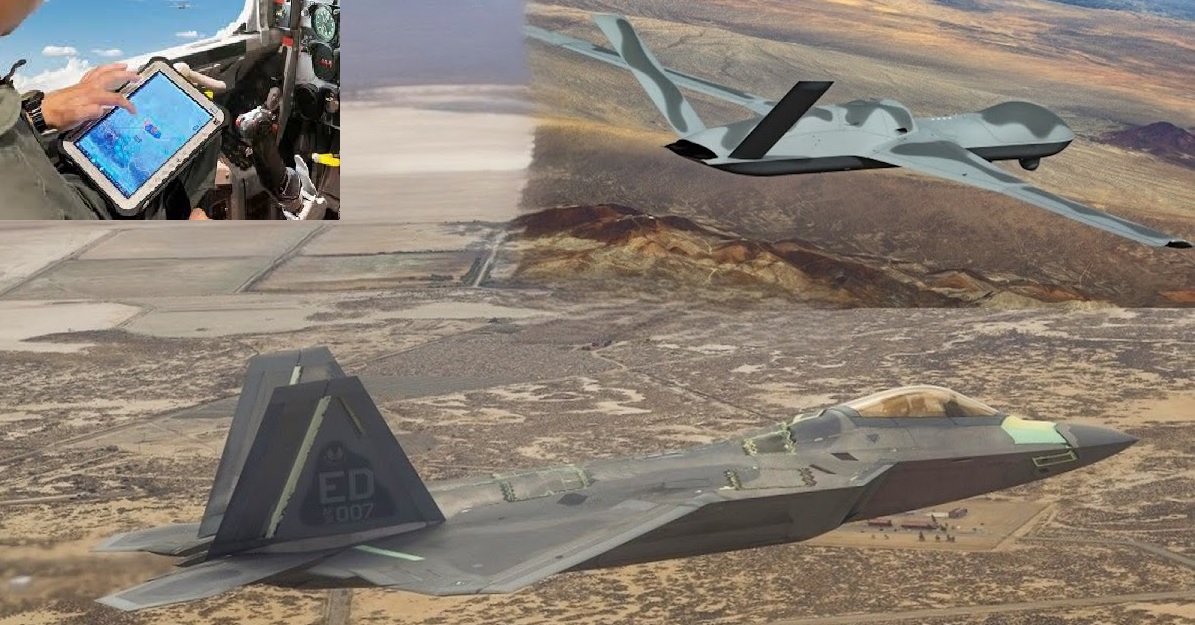
World
In a landmark step toward the future of air combat, a U.S. Air Force F-22 Raptor pilot has, for the first time, directly controlled a General Atomics MQ-20 Avenger stealth drone from inside the fighter’s cockpit during an operational flight. The breakthrough demonstration, confirmed Monday by General Atomics, Lockheed Martin, and L3Harris, marks a pivotal advance in America’s push toward crewed-uncrewed teaming. First-of-Its-Kind Test on the Nevada Range The test took place over the Nevada Test and Training Range, where an F-22 pilot used a ruggedized tablet inside the cockpit to issue real-time commands to the MQ-20.The interface—powered by open-architecture software from Lockheed Martin and secure datalinks developed by L3Harris—allowed the pilot to control the drone’s flight paths, sensor tasks, and mission functions without relying on ground operators. General Atomics described the event as “a significant step toward operational autonomy,” demonstrating that frontline stealth fighters can command loyal wingman drones during high-threat missions. How It Worked: A Cockpit Tablet as a Drone Command Center Instead of complex new cockpit hardware, the test relied on a plug-and-play tablet interface that connected to the F-22’s mission systems.According to engineers familiar with the system: The pilot could assign the MQ-20 surveillance routes Redirect the drone toward simulated targets Task its onboard sensors for reconnaissance Maintain secure bidirectional communication through encrypted datalinks This lightweight approach is designed to allow older fighters such as the F-22 and F-16 to integrate drone control rapidly, without extensive redesigns. Boost for the Air Force’s CCA Program The demonstration is a major component of the Air Force’s emerging Collaborative Combat Aircraft (CCA) initiative, which aims to field autonomous “loyal wingman” drones capable of: scouting ahead of crewed aircraft carrying additional weapons providing electronic warfare support acting as decoys or jammers absorbing risk during early strikes The MQ-20 Avenger, with its jet engine, internal weapons bay, and low-observable design, is widely expected to be a frontrunner among platforms considered for CCA experiments. Air Force leadership has repeatedly emphasized that fifth-generation jets like the F-22 and F-35 will increasingly operate alongside AI-enabled drones to break through contested air defenses. Industry Collaboration Accelerates Progress General Atomics said the test validates years of investment in open mission systems, allowing different defense companies to integrate components without proprietary roadblocks.Lockheed Martin engineers added that these modular designs will help the Air Force scale future drone-fighter teaming much faster than previous modernization programs. L3Harris, responsible for the datalink, noted that the demonstration proved secure communications even in conditions simulating electronic warfare—a crucial requirement for operations against near-peer adversaries such as China or Russia. A Glimpse Into Future Air Warfare Defense analysts say this test marks the “beginning of a new era” in U.S. airpower, where a single pilot may eventually direct multiple AI-driven drones in complex missions.Future fighters like the Next Generation Air Dominance (NGAD) will likely be built around the concept of leading drone teams, using them to overwhelm enemy defenses and extend the reach of U.S. forces. With Monday’s milestone, the Air Force has taken one step closer to that vision—where human pilots retain strategic control, and autonomous systems execute the dangerous tasks that would otherwise put lives and expensive aircraft at risk.
Read More → Posted on 2025-11-19 12:04:52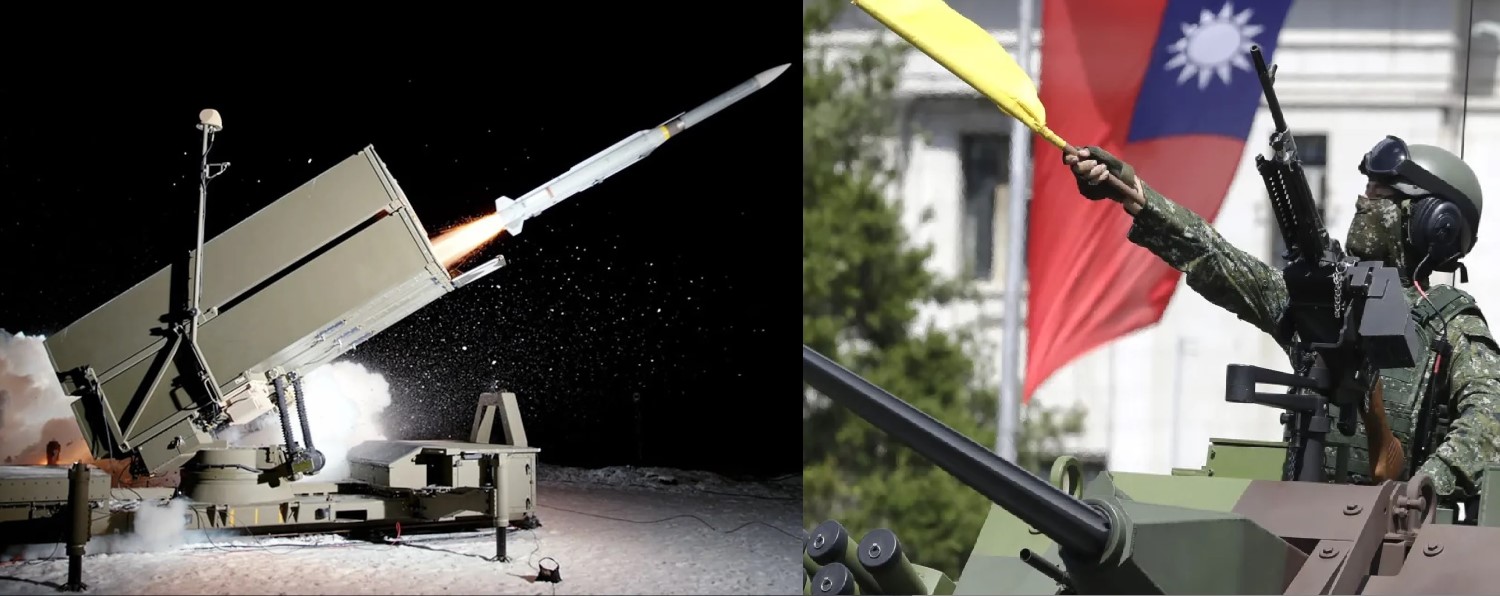
World
In a move underscoring Washington’s accelerating efforts to harden Taiwan’s air-defense shield, the U.S. Department of Defense has awarded Raytheon a firm-fixed-price contract valued at $698,948,760 for the production of NASAMS (National Advanced Surface-to-Air Missile System) fire units destined for the island. The award, issued on 17 November 2025 through the U.S. Army Contracting Command at Redstone Arsenal, forms a central pillar of a broad Foreign Military Sales (FMS) package aimed at bolstering Taipei’s layered air-defense network. The contract, scheduled for completion by 28 February 2031, will see all work conducted at Raytheon’s facilities in Tewksbury, Massachusetts, reflecting a long-term industrial commitment aligned with the United States’ evolving Indo-Pacific security strategy. For Taiwan, the delivery timeline highlights not an emergency purchase, but a multi-year strategic build-out of air-defense forces designed to withstand the early phases of a high-intensity conflict. A Contract with Strategic Weight The Pentagon’s announcement comes against the backdrop of increasing Chinese military pressure around Taiwan, including record numbers of PLA aircraft breaching the island’s air-defense identification zone and expanding use of drones, cruise missiles, and long-range precision fires in regional exercises. Washington’s decision signals a clear message: Taiwan’s ability to defend its critical infrastructure — especially airports, command nodes, fuel depots, radar stations, and military bases — remains a U.S. strategic priority despite diplomatic backlash from Beijing. The $698.9 million contract forms a major component of a previously approved $1.16 billion FMS package cleared in October 2024, which covers three NASAMS systems, associated AMRAAM-ER missiles, training, logistics, and integration support. The newly awarded portion focuses specifically on NASAMS fire units, radars, command-and-control nodes, and support equipment, while the missile procurement will be executed under separate contracts. NASAMS: A Proven, Evolving Air Defense System Developed jointly by Kongsberg Defence & Aerospace of Norway and Raytheon, NASAMS has grown into one of the world’s most widely adopted medium-range air-defense systems. Originally fielded by Norway in the 1990s, NASAMS has since been integrated into the air-defense architecture of more than a dozen nations — including the United States, where it protects the airspace over Washington, D.C. At its core, the system uses the AIM-120 AMRAAM, a radar-guided missile employed by numerous Western fighter jets. This commonality simplifies logistics, allows shared stockpiles, and ensures rapid replenishment in wartime. NASAMS configurations typically include: AN/MPQ-64 Sentinel 3D radar Networked Fire Distribution Center (FDC) Electro-optical and infrared sensors Multiple canister launchers, dispersed for survivability Successive upgrades — NASAMS 2 and NASAMS 3 — introduced Link 16 tactical data link, integration of AIM-9X and AMRAAM-ER, and improved sensor fusion. AMRAAM-ER, in particular, extends engagement ranges beyond 50 km, enhancing defense against cruise missiles, drones, and aircraft. The system’s performance in Ukraine has significantly boosted its global reputation. According to NATO and Ukrainian officials, NASAMS has achieved high interception rates against Russian Kh-101, Kalibr, and other cruise missile threats, demonstrating reliability under real wartime conditions. Why NASAMS Matters for Taiwan Taiwan’s air-defense ecosystem is already dense, anchored by the Patriot PAC-3, indigenous Sky Bow II/III, mobile Avenger/Stinger, and a growing fleet of anti-drone systems. But each asset plays a specific role — and NASAMS fills a crucial gap. 1. The Medium-Range Layer Taiwan Needed Patriot excels at high-altitude and ballistic missile interception. NASAMS, by contrast, is optimized for medium-range engagements, countering: cruise missiles flying low to evade radar, swarm drone attacks, stand-off munitions, and conventional aircraft conducting saturation strikes. Its distributed launcher architecture, which can be spread over 20+ kilometers, increases survivability against PLA pre-emptive missile barrages. 2. Unmatched Interoperability Because Taiwan’s fighter jets already use AMRAAM, the island gains immediate logistical efficiency: shared missile stockpiles across air and ground forces, simplified maintenance chains, faster rearmament during high-intensity conflict. This interoperability also allows Taiwan to integrate with U.S. and NATO networked systems, ensuring smoother cooperation in crisis scenarios. 3. A Complication for PLA War Planning With NASAMS joining Taiwan’s defensive grid, China’s People’s Liberation Army must account for: more dispersed targets, more layers of interception, more survivable radar nodes, and more hardened C2 networks. This increases the number of critical points China must suppress or destroy in the opening minutes of a conflict — raising the operational cost and uncertainty for Beijing. A Long-Term U.S.–Taiwan Security Partnership The NASAMS deal offers more than firepower; it reflects a deepening long-term defense partnership between Washington and Taipei. The six-year production and integration timeline signals that U.S. support is not episodic but structural, tied into defense-industrial planning that will stretch into the next decade. It strengthens Raytheon’s U.S. manufacturing base, ensures continuity of skilled labor, and integrates Taiwan into a growing global NASAMS community, including Finland, Spain, Lithuania, Australia, Qatar, Hungary, and Ukraine. This shared network will allow Taiwan to participate in future cooperative upgrades, data-exchange frameworks, training programs, and joint threat assessments. A Clear Signal Amid Rising Geopolitical Tensions For potential adversaries, the message is unambiguous:Taiwan’s airspace is becoming more layered, more redundant, and significantly harder to penetrate. The NASAMS acquisition strengthens the island’s defenses not just technically, but symbolically. It underscores the United States’ commitment to supporting Taiwan’s resilience while reinforcing a global coalition of nations adopting the same proven system. As China accelerates military pressure, cyber operations, and airspace incursions, the new NASAMS contract stands as a strategic reminder that Taiwan’s defenses — and Washington’s resolve — are only becoming stronger.
Read More → Posted on 2025-11-18 17:28:52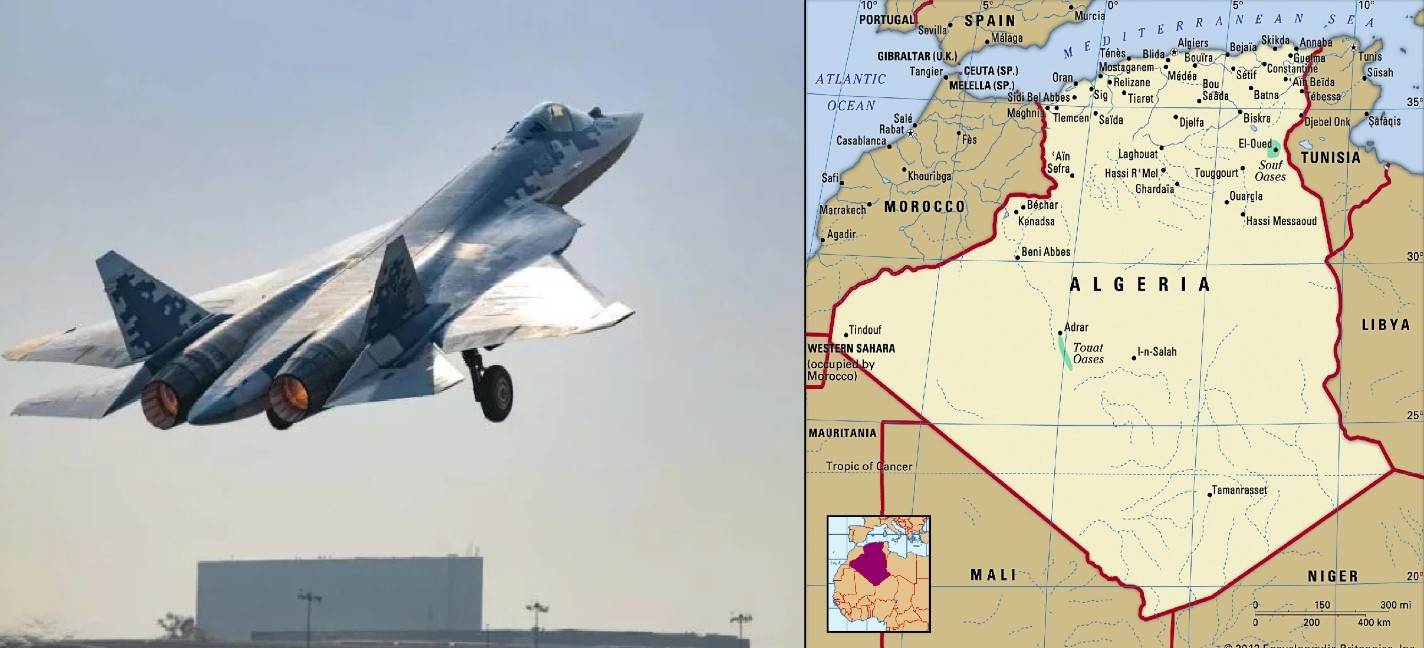
World
Russia has quietly crossed a major milestone in its combat aviation exports, delivering the first Su-57E fifth-generation fighters to a foreign customer. Officially, Moscow will not say who bought them. But leaked Russian documents, earlier Algerian statements, and years of speculation all point in one direction: Algeria. First Su-57E Export Delivery Confirmed On 18 November 2025, at the Dubai Airshow 2025, United Aircraft Corporation (UAC) CEO Vadim Badekha confirmed that two Su-57E fighters had been handed over to an unnamed international customer and are now on combat duty. He added that the buyer is “satisfied” with the aircraft’s performance, calling the deliveries a sign that Russia’s fifth-generation fighter is ready for the export market. The Su-57E is the export version of Russia’s Su-57 “Felon”, designed to combine stealth, supercruise, advanced sensors, and a wide mix of air-to-air and air-to-surface weapons. While export jets are usually delivered with downgraded electronics or software, Russian media suggest the Su-57E remains close in capability to domestic models, especially in radar and long-range missile employment. Moscow has framed the export as proof of “technological sovereignty”—a sign that, despite sanctions and wartime pressure on its defense industry, Russia can still mass-produce and sell high-end combat aircraft abroad. Black Mirror Leak: Rostec Papers Point to Algeria In early October 2025, hacker collective Black Mirror released a trove of more than 300 internal files allegedly taken from Russian defense conglomerate Rostec. The documents, reported by several investigative outlets, appear to detail export pricing, delivery schedules and customer codes for Russian aircraft. One of those customers is listed under the code “012”, widely assessed to be Algeria. According to the leaked tables, this customer is scheduled to receive: 12 Su-57E fighters 14 Su-34E fighter-bombers with deliveries planned between 2024 and 2026. While the authenticity of every line in the leak cannot be independently verified, multiple defense outlets and analysts have judged the data credible and consistent with known Algerian procurement patterns and earlier rumors of a Su-57/Su-34 package aimed at replacing older Soviet-era strike aircraft. Algeria Already Claimed “First Su-57 Export Customer” Status Long before the Dubai announcement, Algerian state media had already declared that the country would be the first foreign operator of the Su-57E. In February 2025, Algerian outlets and international defense monitors reported that: Algeria had signed a contract for Su-57E fighters. Algerian pilots were training in Russia to operate the new jets. Deliveries were expected to start in 2025. Open-source defense databases and background notes on the Su-57 program also list Algeria as having ordered 14 Su-57E as part of a wider deal that includes Su-34 and Su-35 fighters, with initial deliveries slated for 2025–2026. This means that, even though UAC refuses to name the launch customer, the leaked Rostec files, Algerian announcements, and Western reporting all converge on Algeria as the most likely recipient of the first two Su-57E jets delivered in November 2025. What the Su-57E Brings to Algeria If Algeria is indeed the buyer, the Su-57E will sit at the top of its airpower pyramid as the country’s first fifth-generation-class fighter. Key capabilities the Su-57E is expected to add include: Low observability: reduced radar cross-section and shaping to make detection harder at long range. Advanced sensors: an AESA radar, IRST (infrared search and track), and electronic warfare suite for detection and jamming. Supercruise: sustained supersonic flight without afterburner, improving persistence and missile reach. Long-range weapons: ability to carry beyond-visual-range air-to-air missiles and stand-off air-to-surface weapons, including internally in its weapons bays. For Algeria, these features would allow deep-strike missions, air superiority, and stand-off deterrence far beyond what its current fourth-generation fleet can achieve. Algeria’s Current Air Force Fleet: From Flankers to Felons Even before the Su-57E, the Algerian Air Force (AAF) was already one of Africa’s most capable air arms, built largely around Russian-origin combat aircraft. According to recent open-source data and updated inventories, Algeria’s front-line fleet includes: Su-30MKA multirole fighters – around 60+ aircraft in service, with additional units on order; the backbone of Algeria’s air superiority and strike capability. MiG-29 variants – roughly 30–40 aircraft across upgraded MiG-29 versions, used as multirole and air-defense fighters. Su-24MK2 strike aircraft – around 30+ modernized Su-24 bombers, upgraded to the MK2 standard for precision strike. Su-35 – a newer generation of multirole fighters, with an initial batch already delivered in 2025 and more airframes on order, providing extended range and advanced radar. Su-34E – 14 aircraft on order, visible in the same leaked Rostec documents as part of Algeria’s package with Su-57E, likely aimed at relieving or replacing Su-24s in the long-range strike role. Su-57E – 12 aircraft on order according to the leaked papers, with at least two believed to have been delivered under the first export batch. Beyond its fighters, the AAF also fields a sizable support and training fleet, including Yak-130 and L-39 trainers, Mi-26 heavy-lift helicopters, Mi-28NE attack helicopters, and a growing fleet of Chinese-made UCAVs such as Wing Loong II, CH-3/CH-4, and WJ-700. These platforms give Algeria a mix of manned and unmanned strike options and robust pilot training capacity. Taken together, Algeria is evolving from a force centered on legacy Soviet fighters into one that combines 4.5-generation aircraft (Su-30MKA, Su-35) and fifth-generation capabilities (Su-57E), supported by modern strike bombers (Su-34E) and drones. Why Algeria Wants the Su-57E Algeria’s decision to pursue the Su-57E is shaped by strategic needs, long-standing defence partnerships, and practical modernization requirements. At the regional level, Algeria aims to maintain a qualitative edge over neighbouring air forces in North Africa and the Sahel. The introduction of a fifth-generation aircraft strengthens its position and enhances its overall deterrence capability. Algeria has also relied on Russian systems for decades, from training and maintenance networks to weapons integration. Adding the Su-57E and Su-34E to its inventory fits naturally into its existing structure. This continuity reduces logistical challenges, simplifies pilot conversion, and allows Algeria to build on the platforms and technologies it already operates. There is also a clear modernization need. Older aircraft such as the MiG-29 and Su-24MK2 are reaching their limits. The Su-34E offers an updated strike capability, and the Su-57E provides a long-term solution for air-superiority, deep-strike, and electronic-warfare roles that older aircraft can no longer fulfil effectively. Finally, Algeria’s options for purchasing Western fighters such as the Rafale or Eurofighter Typhoon are constrained by political considerations and export restrictions. Russia continues to be a reliable supplier for Algeria, making the Su-57E a practical and politically manageable choice. Strategic Impact for Russia and the Wider Market For Russia, exporting the Su-57E serves several purposes. It demonstrates that the Russian aerospace industry can still deliver fifth-generation technology despite sanctions and the pressures of ongoing military commitments. It also creates a new revenue stream for a defence sector facing higher production demands and fixed domestic pricing. The presence of the Su-57E on the export market places Russia in a position to offer an alternative to fighters such as the F-35 and J-20 in countries where Western or Chinese options may be limited. For Algeria, continued deliveries would create a tiered fighter force built around the Su-30MKA, Su-35, Su-34E, and Su-57E, supported by a growing fleet of UCAVs such as the CH-4 and Wing Loong II. This structure provides a balance of air-superiority, strike, and surveillance capabilities under a unified system based largely on Russian and Chinese equipment. As a result, Algeria would operate one of the most capable air forces in Africa and become one of the few countries outside NATO, Russia, and China to field a fifth-generation fighter, marking a significant step in its long-term defence modernization.
Read More → Posted on 2025-11-18 15:50:06Search
Top Trending in 24 Hours
-
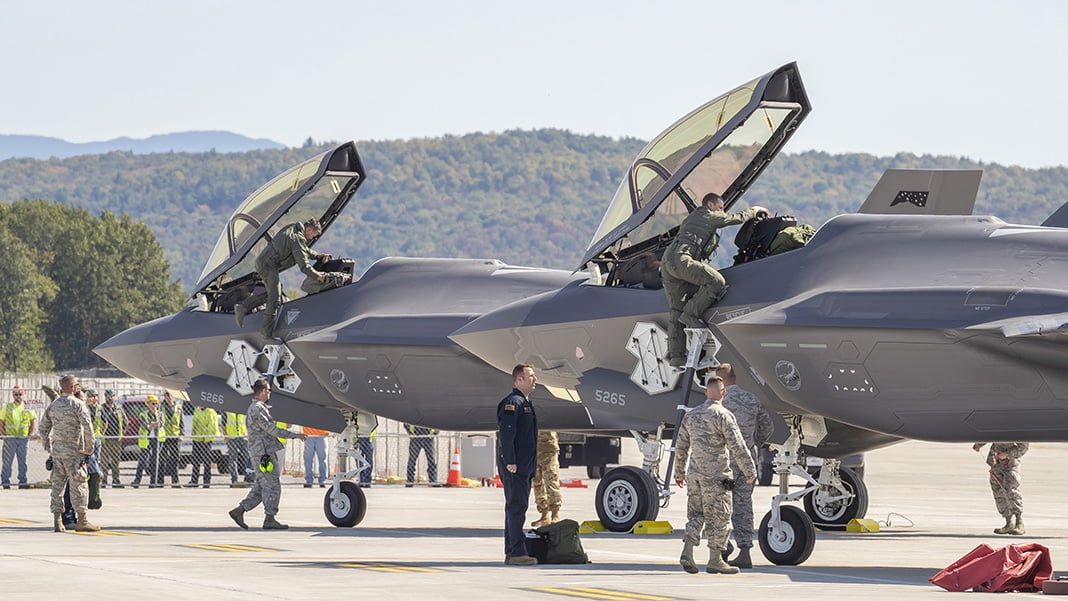 F-35 Fleet Readiness Falls to 25% Amid Parts Shortages and Software Delays: GAO Report
-
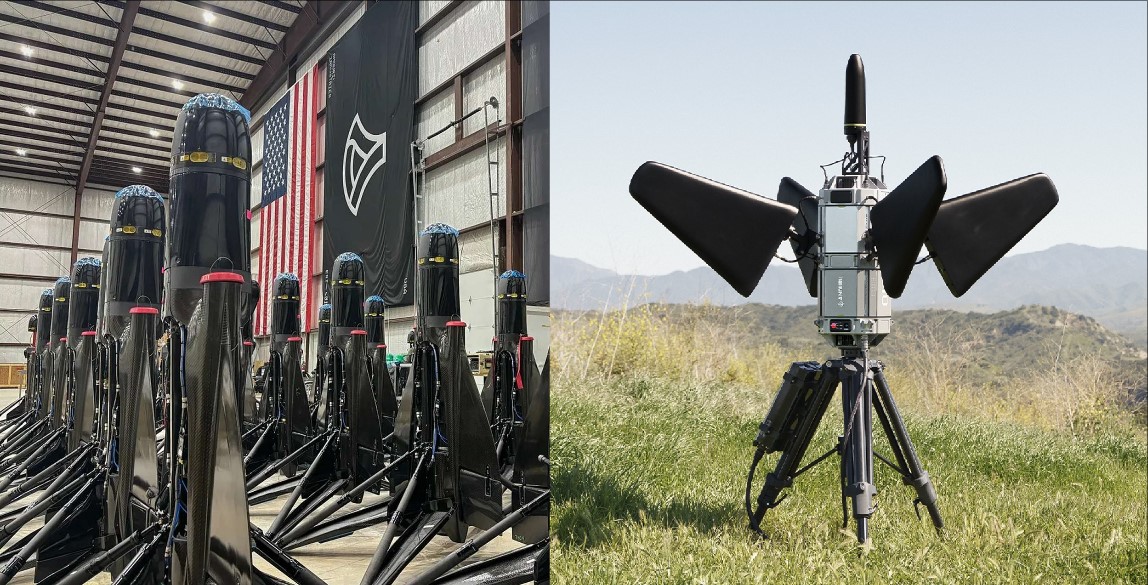 U.S. Approves $1.98 Billion Sale of Anduril AI-Powered Counter-Drone Systems to Kuwait
-
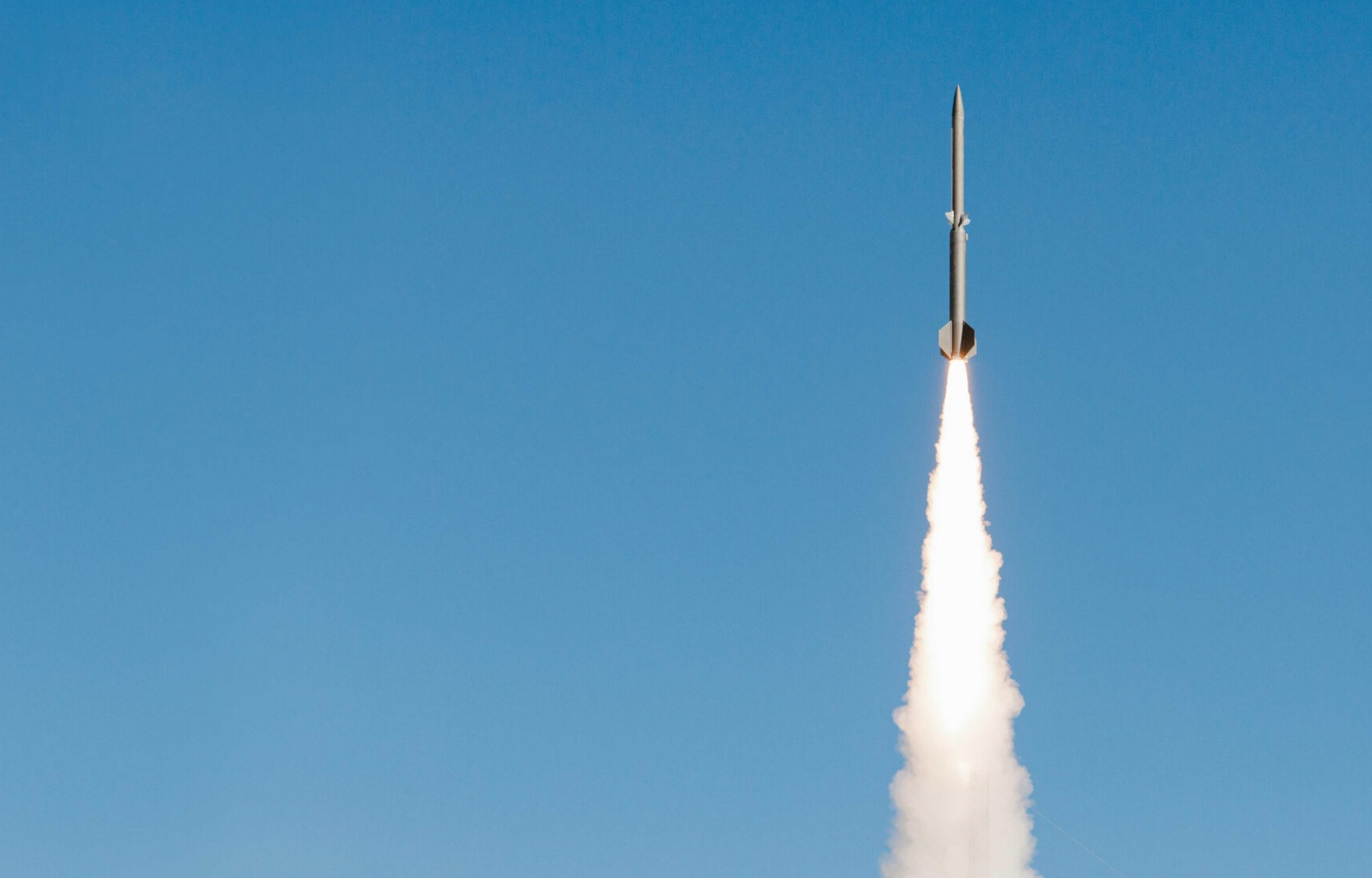 U.S Navy Orders 50 Blackbeard Hypersonic Missiles in New $23.4 Million Contract
-
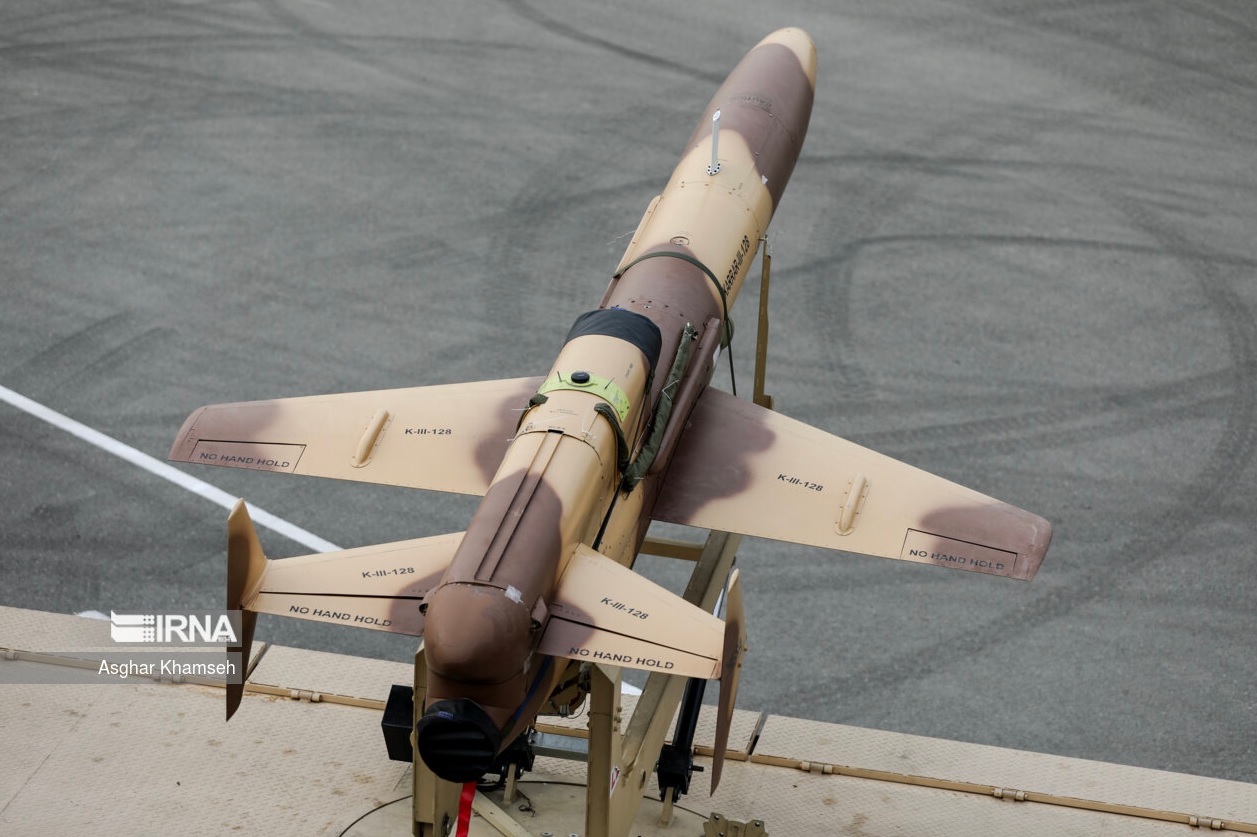 Russia Launches 1,400 Jet-Powered Drones in 2026 as Strike Tactics Evolve to Challenge Ukraine's Air Defenses
-
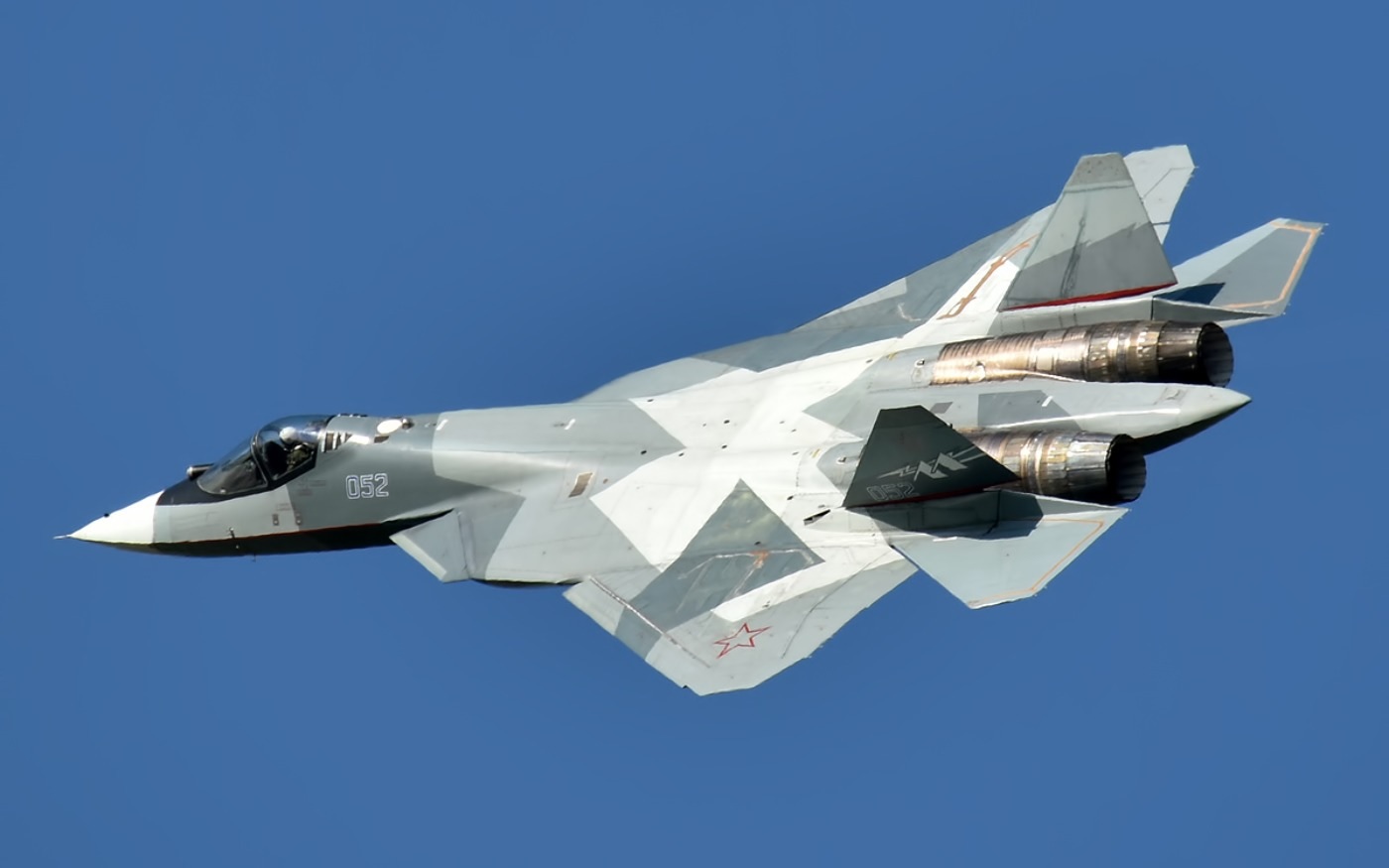 Russian Analysts Debate Su-57 Capabilities After Putin Calls Fighter Superior to F-35
-
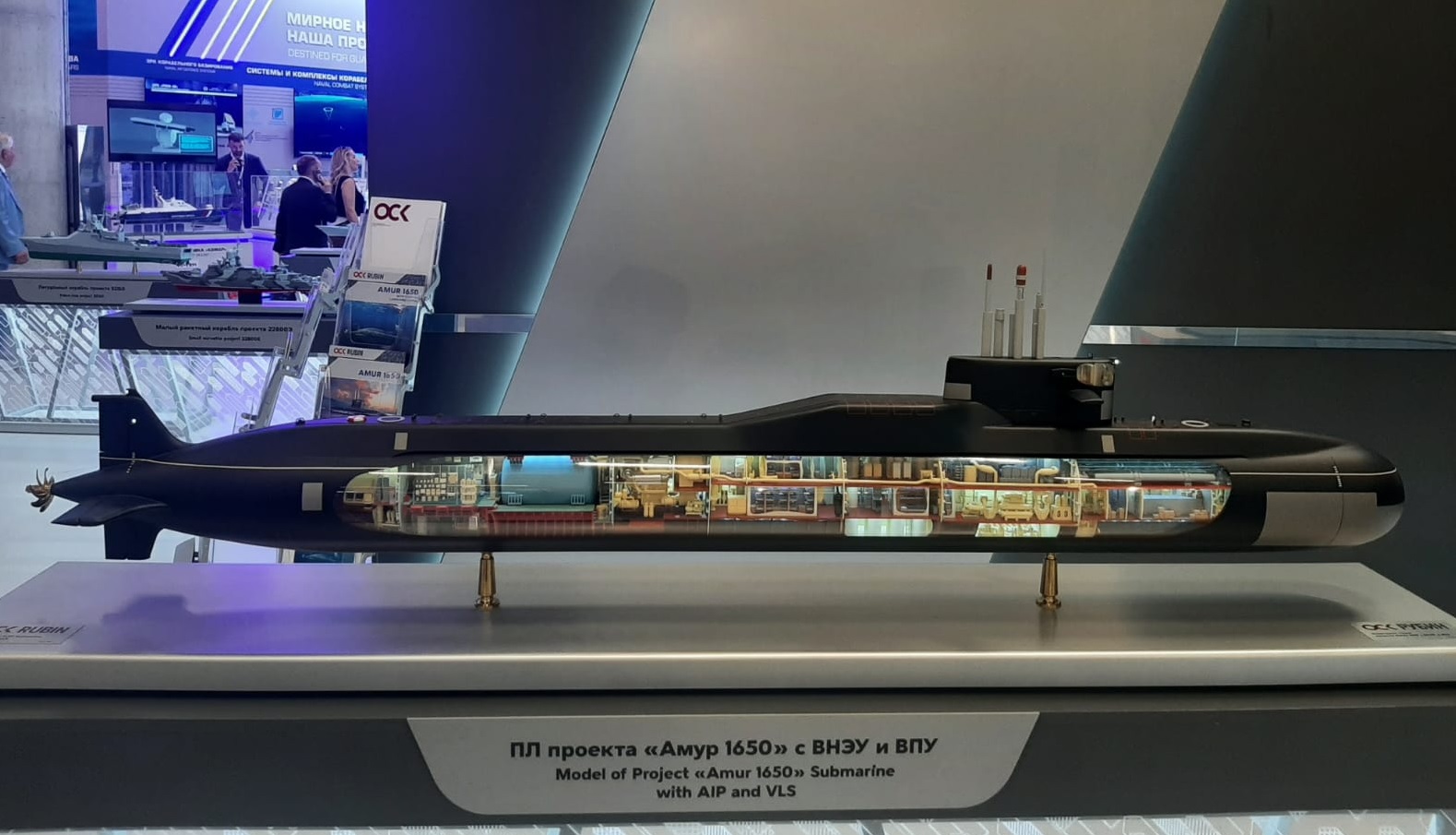 Russia Unveils Amur-1650 AIP Submarine Equipped with BrahMos Vertical Launch System at Fleet-2026
-
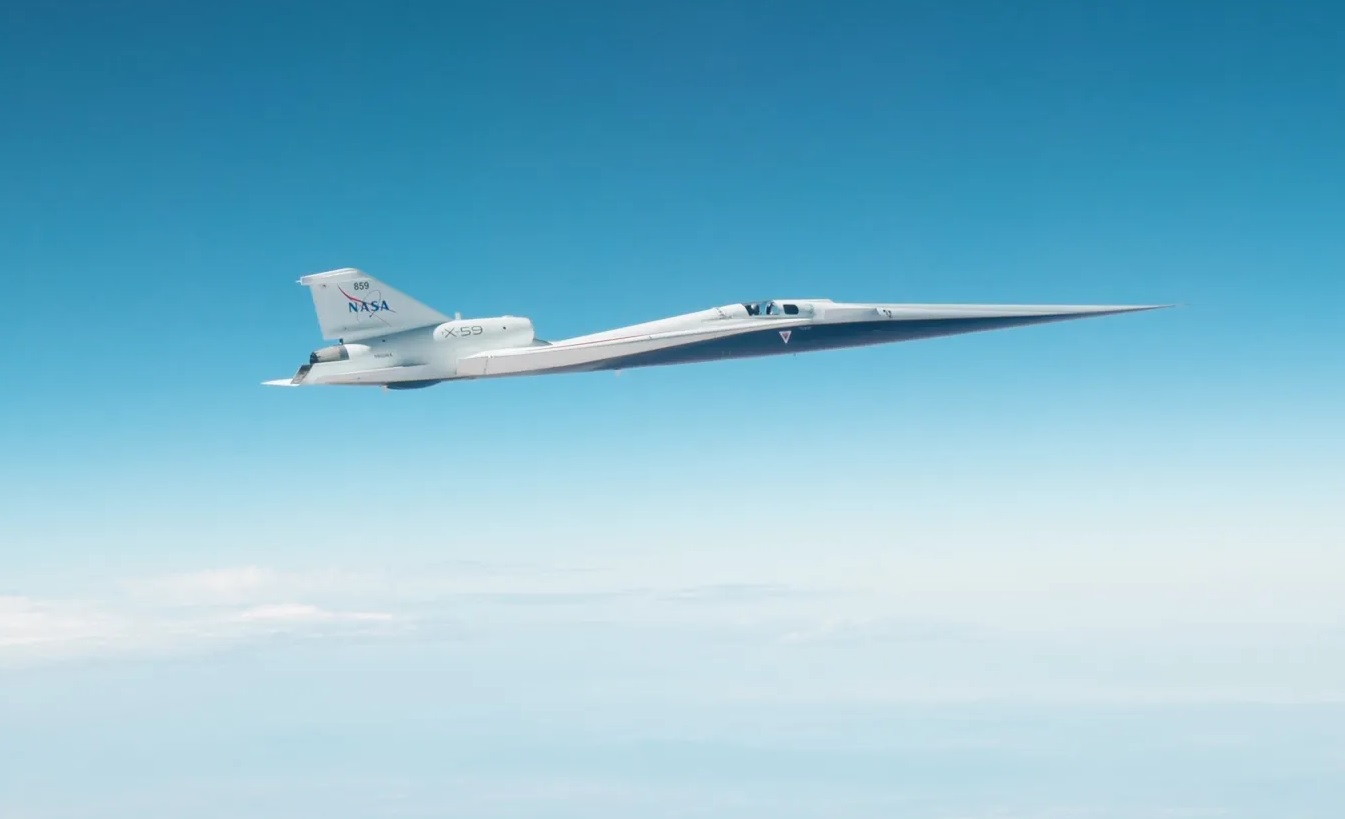 NASA X-59 Achieves Planned Mission Conditions with Mach 1.4 Flight at 55,000 Feet
-
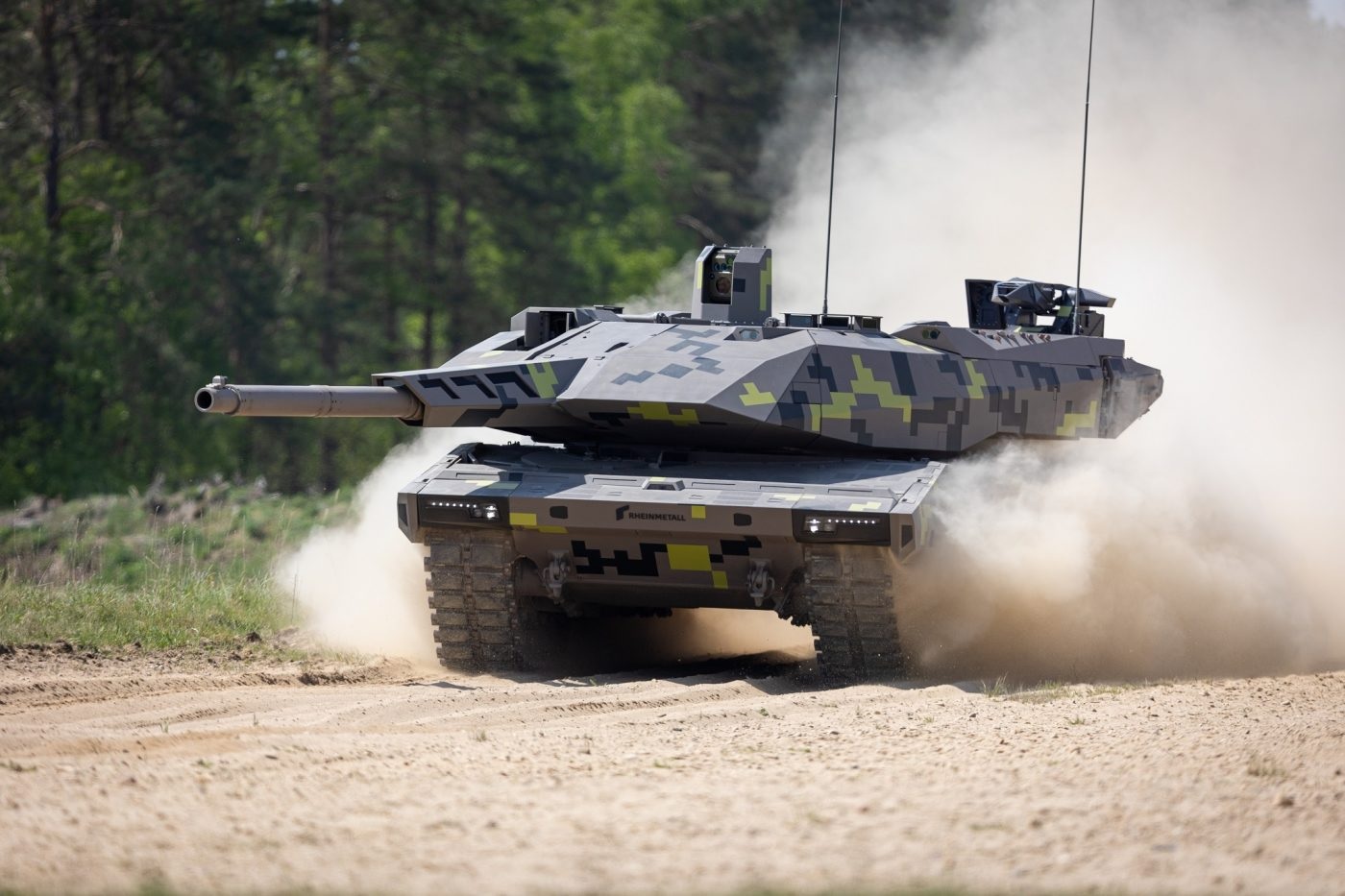 France Considers Reduced Role or Exit from Franco-German MGCS Tank Project
Top Trending in 4 Days
-
 Iranian Media Leaks 14-Point U.S.-Iran Peace Framework Amid Ongoing Negotiations
-
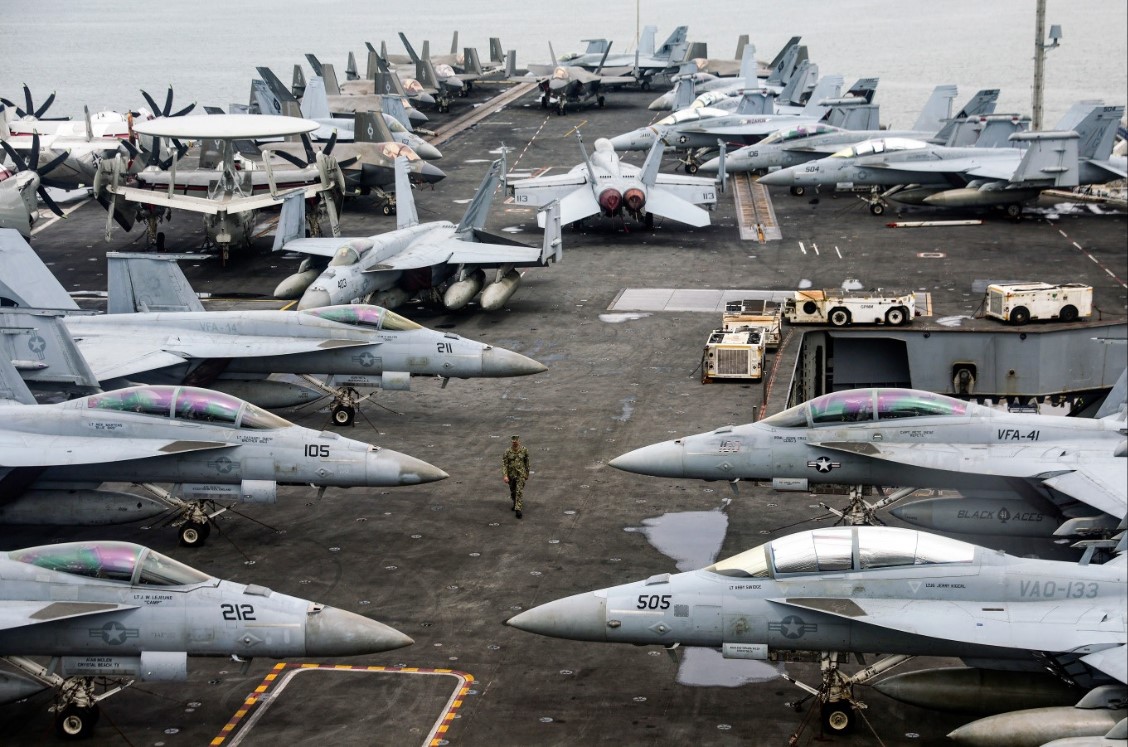 US Plans Significant Reduction of Fighter Jets and Warships for NATO Operations in Europe
-
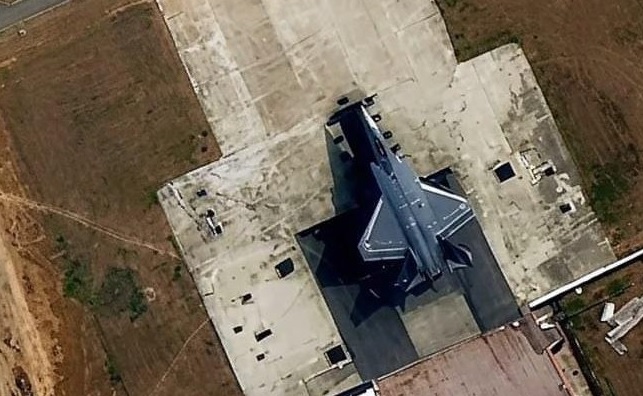 AMCA Airframe Spotted at DRDO’s ORANGE Facility for Radar Cross-Section Testing
-
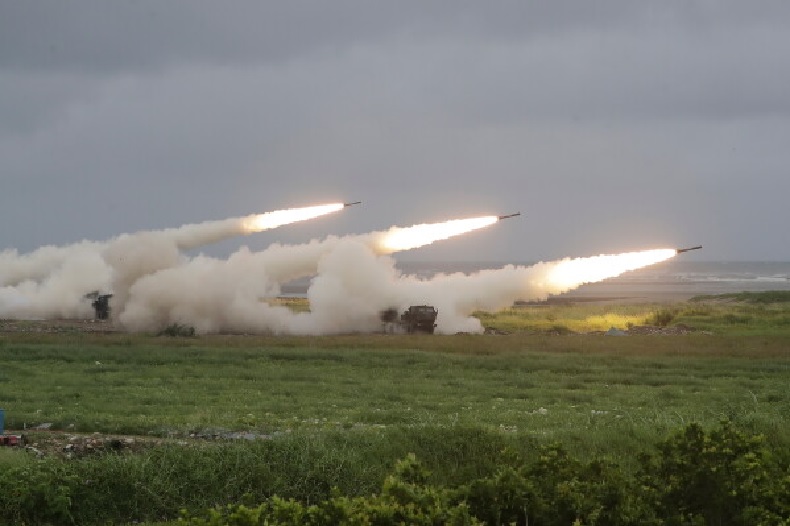 Taiwan Conducts First Live-Fire of HIMARS Rockets From West Coast During Invasion Defense Drill
-
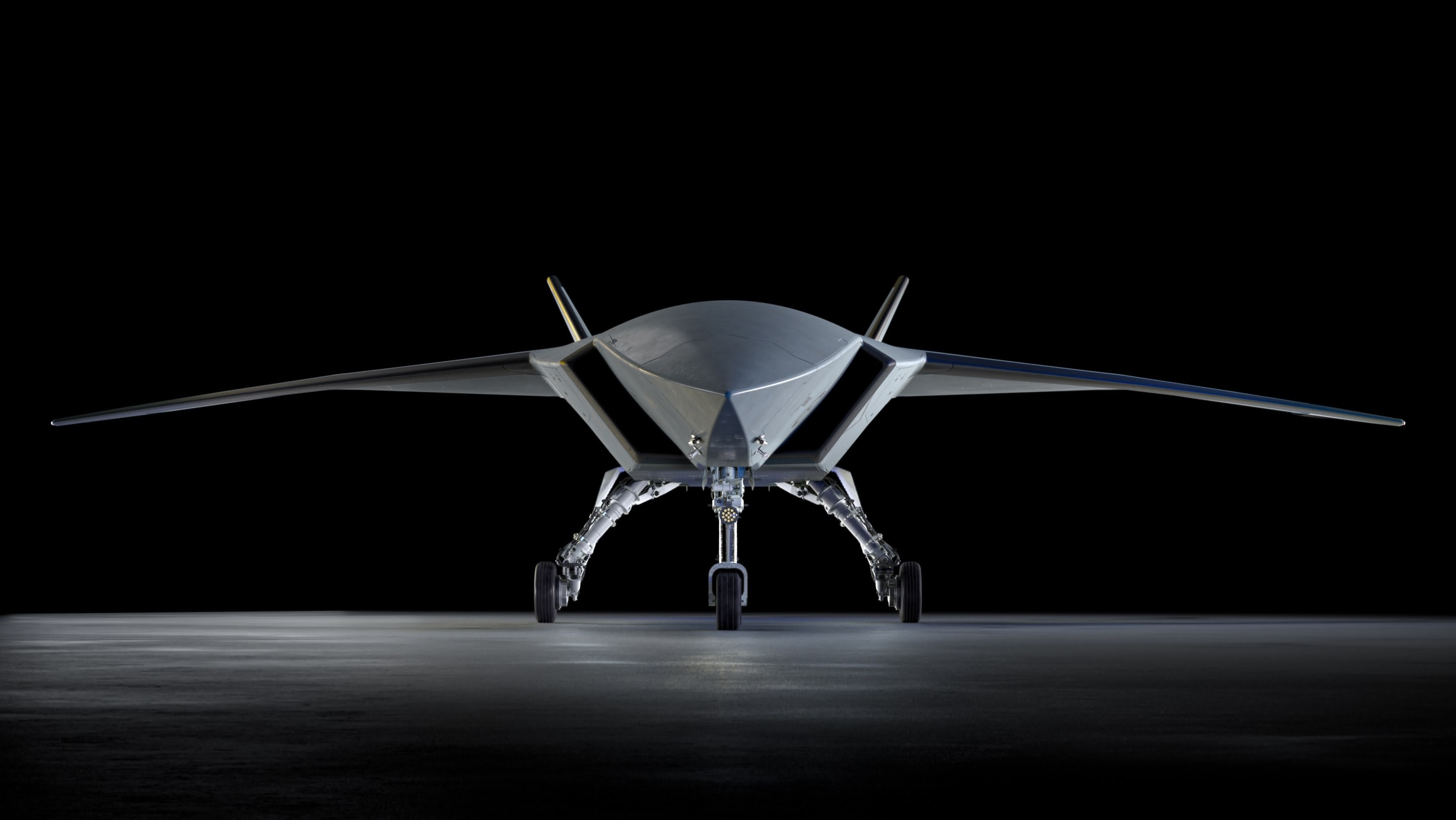 Boeing Introduces New MQ-28 Ghost Bat Upgrades with Increased Range, Payload and Weapons Capacity at ILA Berlin 2026
-
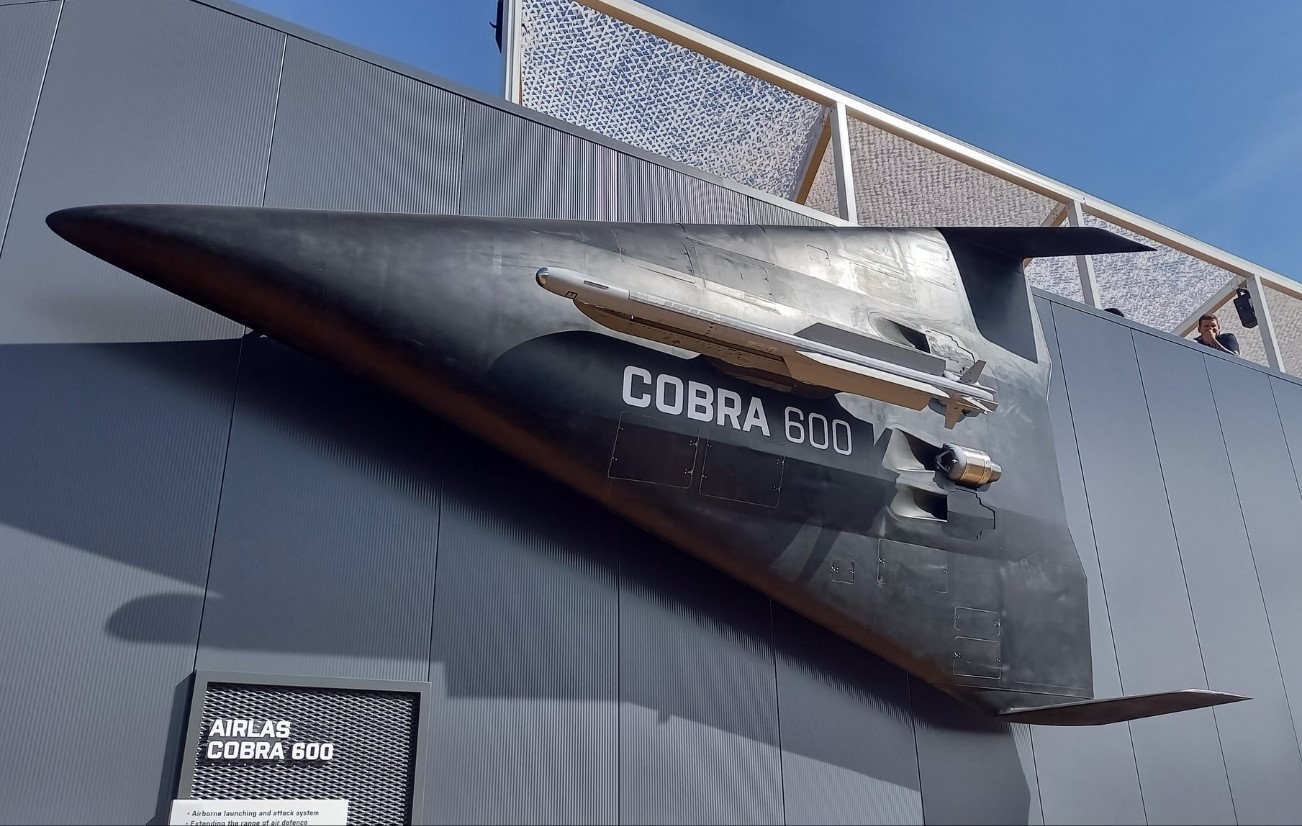 Diehl Defence Unveils IRIS-T Armed Cobra 600 Air Defense Drone at ILA Berlin 2026
-
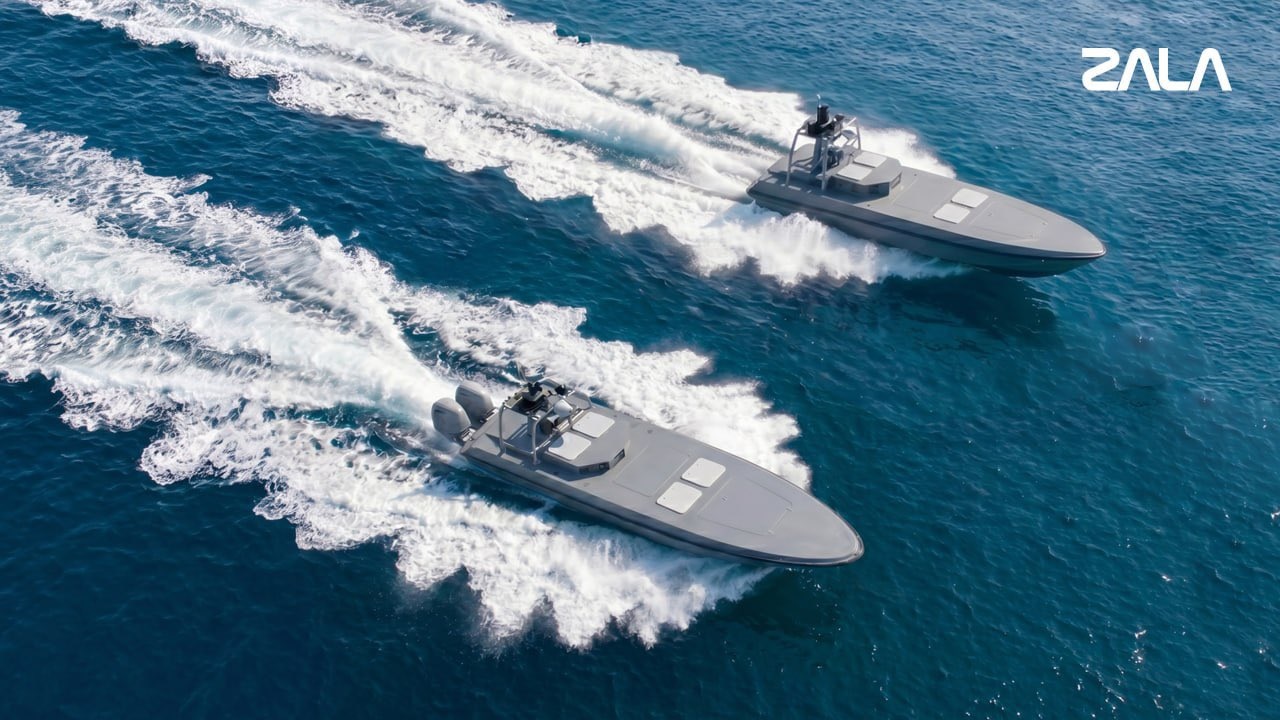 Russian Defense Firm ZALA Unveils KAMA Unmanned Surface Vessel Family at FLOT-2026 Naval Exhibition
-
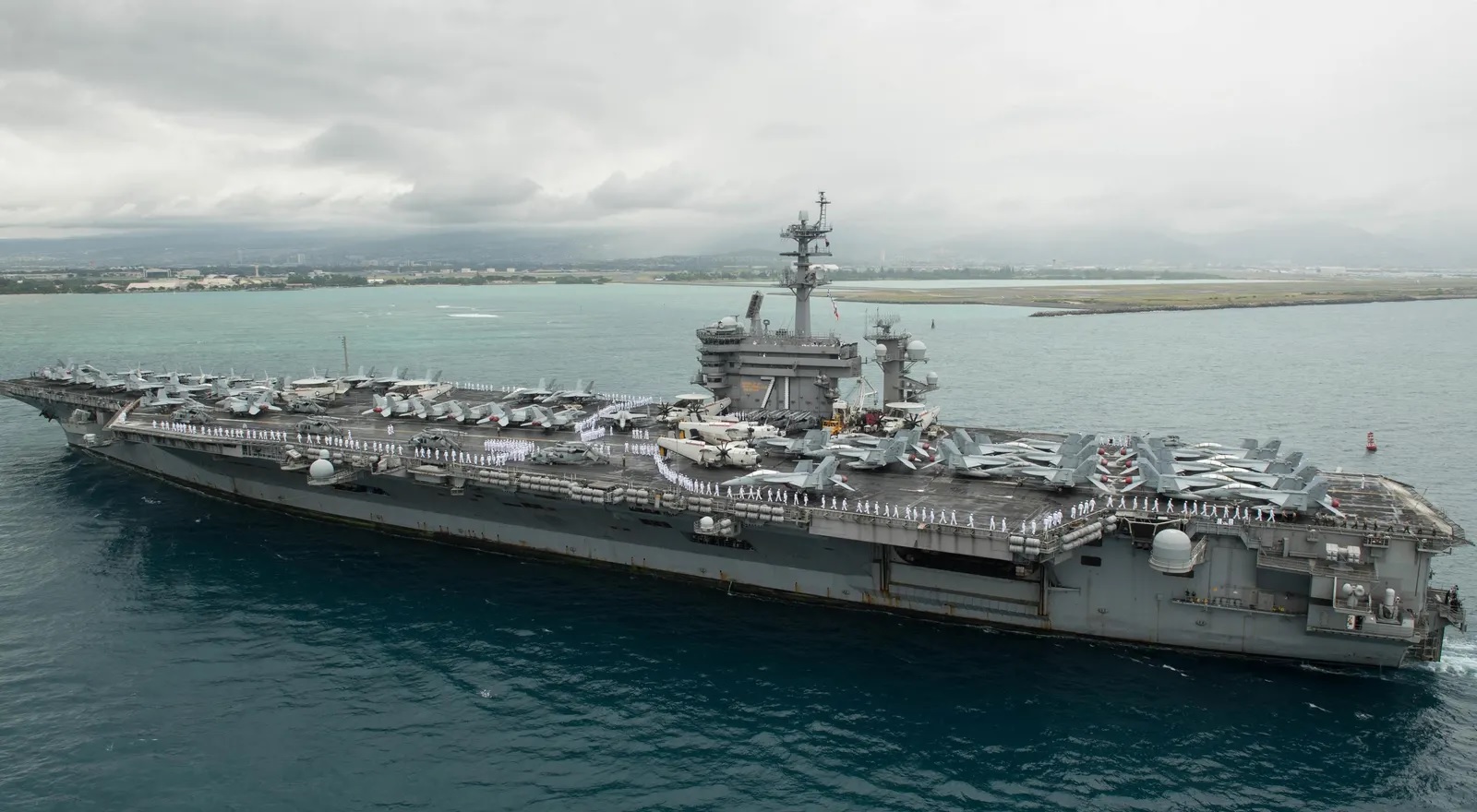 U.S Aircraft Carrier USS Theodore Roosevelt Departs San Diego for Major RIMPAC 2026 Naval Exercise