World
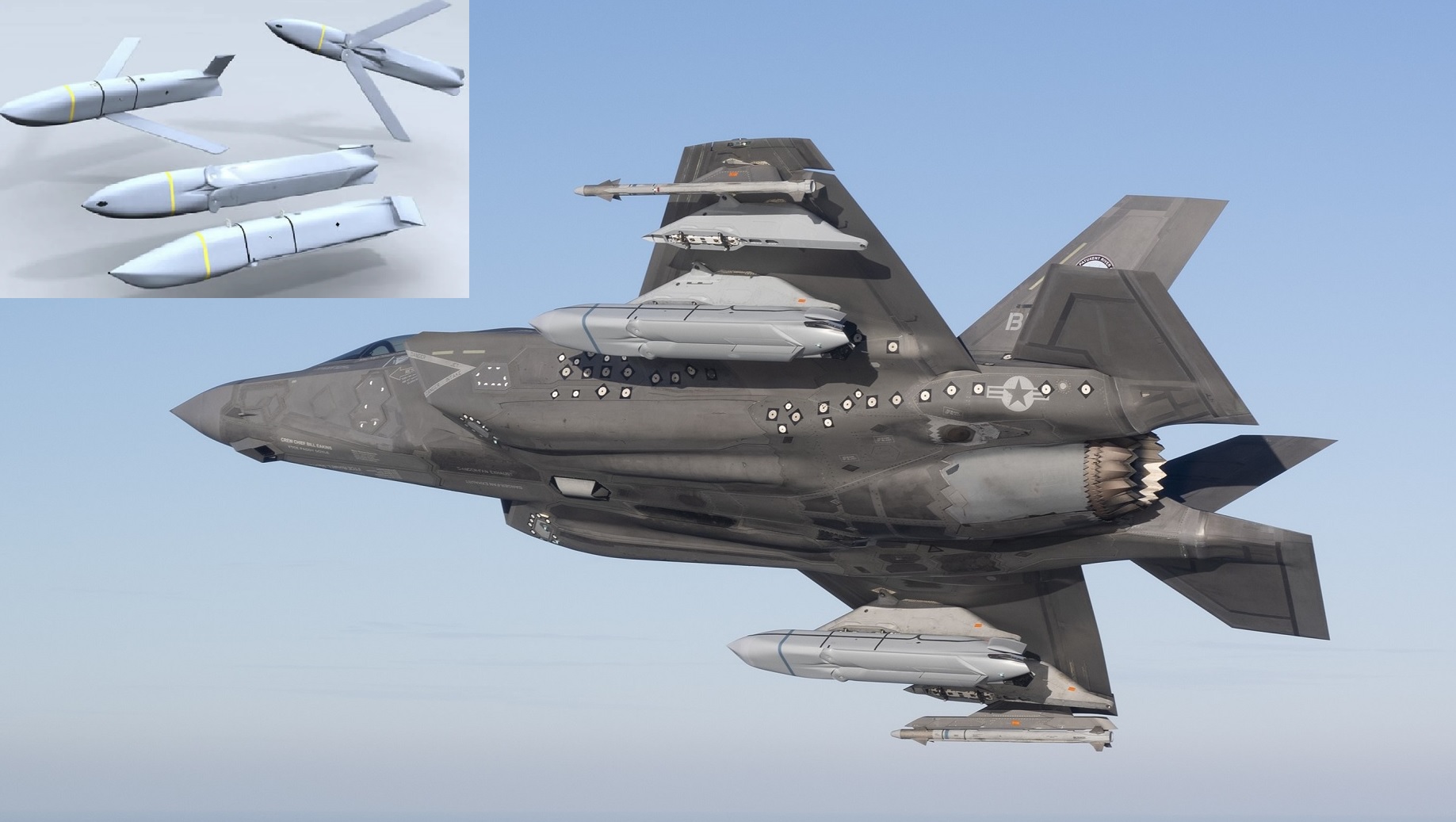
The United States has approved a major precision-strike weapons package for Italy, opening the door for Rome to acquire up to 100 long-range Joint Air-to-Surface Standoff Missiles – Extended Range (JASSM-ER) under the Foreign Military Sales (FMS) program. In a notification sent to the U.S. Congress on 5 December 2025, the State Department cleared a possible sale valued at an estimated 301 million dollars. The package covers one hundred AGM-158B/B-2 JASSM-ER missiles, along with associated equipment, training, and logistics support. What Italy Is Buying According to the Defense Security Cooperation Agency (DSCA), Italy has formally requested 100 AGM-158B/B-2 JASSM-ER missiles. The proposed deal is not limited to the weapons themselves. It also includes classified test equipment and containers, encryption devices such as KGV-135A units, spare and repair parts, support and test equipment, technical documentation, training, and U.S. government and contractor technical assistance for integration and sustainment. The 301 million dollar price tag represents the upper ceiling for the package. As is standard in FMS cases, the final value is expected to be lower and will depend on detailed negotiations, configuration choices, and the eventual contract signed between Washington and Rome. A New Deep-Strike Option for Italian F-35s Italian defence sources and specialist outlets indicate that the JASSM-ER missiles are intended primarily for the Italian Air Force’s F-35 fleet, and potentially other combat aircraft in the future. Italy operates both the F-35A and the F-35B, giving it the option to project JASSM-ER from land bases as well as potentially from the aircraft carrier Cavour and the future LHD Trieste. Once fielded, JASSM-ER will significantly extend Italy’s ability to strike high-value, heavily defended targets from outside enemy air-defence envelopes. This capability would complement existing Italian precision-strike assets and help replace the deep-attack role historically performed by Tornado strike aircraft, which are being phased out in favour of fifth-generation platforms. What Is JASSM-ER? The AGM-158 JASSM family is a series of low-observable, air-launched cruise missiles developed by Lockheed Martin for the U.S. Air Force. The extended-range variant, AGM-158B JASSM-ER, entered service in the mid-2010s and has since become one of the key long-range conventional strike weapons in the U.S. inventory. JASSM-ER features a stealthy airframe with reduced radar cross-section, a 1,000 lb penetrating warhead (WDU-42/B), and a guidance package combining inertial navigation, GPS, and an imaging infrared seeker for high accuracy in the terminal phase. The extended-range model uses a more efficient turbofan engine and additional fuel, giving it a reported range well beyond 900 kilometres. The latest AGM-158B-2 production variant introduces structural and electronic upgrades, including a reworked wing, improved electronics and software, and enhanced GPS protection, raising the unit cost in U.S. budgeting to roughly 1.6 million dollars per missile. Strengthening NATO’s Southern Flank In its justification, the DSCA states that the proposed sale will improve Italy’s capability to meet current and future threats by providing a modern, long-range stand-off strike option and by enhancing interoperability with U.S. and NATO air forces. Italy would join a growing group of European operators of the JASSM-ER family, including Poland, the Netherlands, Germany and Japan, all of which have sought the missile to bolster deterrence and extended-range strike capabilities as the security environment in Europe and the Indo-Pacific has deteriorated in recent years. For Washington, the sale is framed as supporting U.S. foreign policy and national security by strengthening a key NATO ally on the Alliance’s southern flank. For Rome, it fits into a broader effort to modernize its air force with fifth-generation aircraft and long-range weapons, ensuring that Italian forces can contribute credibly to coalition operations and independent national missions. Congressional Review and Contracting The State Department’s determination and DSCA notification mark the beginning of the process. Under U.S. law, Congress has a review period, though objections are rare for close NATO allies like Italy. If no objections are raised, U.S. and Italian officials will move into detailed negotiations over the final configuration, schedule, and pricing. A formal Letter of Offer and Acceptance (LOA) will then be signed. Italian industry may also take part in integration, maintenance or support activities related to the F-35 fleet. A Signal of Long-Range Deterrence Beyond the technical and contractual details, the JASSM-ER sale carries a strategic signal. With this approval, Italy is positioning itself among the limited number of U.S. allies equipped with advanced, stealthy, long-range air-launched cruise missiles. This highlights Rome’s intent to maintain a credible deterrence posture and a significant role in NATO operations, at a time when long-range strike capability is increasingly considered essential. If the deal proceeds, Italian F-35s armed with JASSM-ER will give both Italy and NATO a much deeper precision-strike reach across the European and Mediterranean regions.
Read More → Posted on 2025-12-07 12:20:10
World
The Norwegian government has approved the purchase of two additional Type 212CD submarines from Germany’s thyssenkrupp Marine Systems (TKMS), formally expanding the Royal Norwegian Navy’s future ocean-going submarine fleet from four to six advanced boats. The decision—announced in Oslo after firm parliamentary backing—raises the overall program value to nearly 100 billion Norwegian kroner, marking one of the largest naval investments in Norway’s modern defense history. Deepening the German–Norwegian Submarine Partnership This expansion strengthens a joint procurement program between Norway and Germany, which collectively covers four Norwegian and six German Type 212CD submarines. The cooperation agreement, first signed in 2017, was designed to merge operational requirements, synchronize industrial participation, and lower long-term lifecycle costs through shared training, maintenance, and logistics. Under the original deal, Norway planned to acquire four new boats to replace its aging Ula-class submarines, which entered service in the early 1990s. Production of the first hull began in September 2023 at TKMS’ Kiel shipyard, with Norway expecting deliveries from 2029 onward. The additional two boats—now approved—will extend deliveries into the early 2030s and ensure the navy maintains continuous patrol capacity in its northern maritime approaches. A Strategic Response to Russian Submarine Activity Norwegian officials have framed the decision squarely within the context of intensified Russian submarine operations emanating from the Kola Peninsula, home to Russia’s most capable Northern Fleet assets. Increased deployments of Yasen-M cruise-missile submarines, improved patrol rates, and more frequent transits into the Barents Sea and North Atlantic have steadily expanded Moscow’s presence in waters critical to NATO’s reinforcement routes. By boosting its fleet to six hulls, Norway aims to provide NATO with persistent undersea surveillance, early-warning coverage, and a stronger deterrent posture in the High North—an area now viewed as a strategic chokepoint between Russian and Atlantic operations. A Parallel Boost to Strike Capability The submarine expansion coincides with a separate 19-billion-kroner long-range missile procurement, which Norwegian defense planners describe as essential for complementing the new fleet’s deterrent value. Though not officially confirmed, analysts expect the purchase to include next-generation naval strike weapons compatible with the Type 212CD, significantly extending Norway’s stand-off strike reach in both sea-control and land-attack missions. Combined, the submarine and missile procurements represent one of the most rapid enhancements of Norwegian naval power since the end of the Cold War. Type 212CD: A Next-Generation Undersea Asset The new Type 212CD (“Common Design”) is an evolution of the combat-proven Type 212A, widely regarded as one of the quietest diesel-electric submarines in service. Key technologies include: Air-Independent Propulsion (AIP): Allowing extended submerged operations without surfacing Low-observable hull shaping and advanced acoustic damping Modular combat system architecture jointly developed by kta naval systems Expanded range, endurance, and payload capacity compared to earlier variants With these improvements, the submarine is built specifically for contested environments such as the Arctic and North Atlantic, where stealth and endurance are crucial. Norway’s Original Submarine Modernization Plan Before today’s expansion decision, Norway’s submarine modernization trajectory featured: 2014–2016: Evaluation of multiple foreign submarine designs 2017: Selection of Germany’s Type 212CD and launch of the bilateral program 2021: Contract signature for four Norwegian boats plus six German boats 2023: Construction start of the first Norwegian hull 2029: Planned delivery of the first submarine Early 2030s: Full operational capability expected With the option for two additional submarines now exercised, Norway signals that its defense priorities have shifted decisively toward long-term undersea dominance in the High North. Strengthening NATO’s Northern Shield The expanded fleet of six Type 212CD submarines will give Norway the ability to maintain near-continuous patrols in the Barents and Norwegian Seas, while also integrating seamlessly with German and broader NATO undersea forces. The move reinforces NATO’s capacity to monitor Russian naval movements, protect Atlantic supply lines, and deny adversaries access to strategic maritime corridors. As geopolitical tension in northern waters continues to deepen, Norway’s decision marks a significant strategic investment—one that will shape the balance of naval power in the Arctic and North Atlantic for decades to come.
Read More → Posted on 2025-12-07 12:00:31
World
Tension is reportedly rising inside the Pakistan Army after a series of political and legal maneuvers that have effectively granted Army Chief Gen. Asim Munir an indefinite extension and unprecedented authority over the armed forces. His elevation as the country’s first Chief of Defence Forces (CDF) — a role that unifies command of the army, navy and air force — has reshaped Pakistan’s military structure and, according to multiple sources, triggered quiet discontent within senior ranks. According to individuals familiar with internal discussions, Lt. Gen. Nauman Zakaria has emerged as a key figure representing the concerns of officers uneasy with Munir’s expanding influence. These sources claim that Zakaria and several senior commanders privately object to what they believe is a deliberately engineered framework that allows Munir to remain in uniform for an open-ended period. They argue that the new legal arrangements undermine the long-standing seniority system and centralise too much power in a single office. Although these claims cannot be independently verified, their rapid spread across defence and political circles suggests growing unease inside the officer corps — an unusual development in a military known for strict internal discipline. The government, however, continues to deny any signs of discord. Officials maintain that the reforms were necessary to modernise command structures, calling reports of rifts “politically driven speculation.” Military spokesmen have similarly dismissed the rumours, warning that hostile actors are attempting to spread “digital misinformation” to undermine the institution’s unity. The controversy stems from the 27th Constitutional Amendment, which created the powerful CDF post and expanded Munir’s authority. This comes on top of earlier decisions to lengthen his term as Army Chief beyond the traditional three-year limit. Sources claim that senior officers view these combined changes as effectively granting a long-term or unlimited tenure, raising concerns about future promotions, succession planning and the potential imbalance of institutional power. These tensions are unfolding against a volatile political backdrop. Former Prime Minister Imran Khan has repeatedly targeted Munir from prison, accusing him of controlling civilian institutions and dominating the political system. Government allies, meanwhile, defend Munir as a stabilising figure at a time of national economic and political strain. While there is no official confirmation of an internal split, the persistence of source-based reports, coupled with the government’s defensive posture, highlights an unusual moment of uncertainty within Pakistan’s most powerful institution. Analysts warn that even the perception of discord at the top levels of the military can have significant implications for Pakistan’s political trajectory. For now, sources claim the discontent remains confined to private discussions, but whether these internal concerns fade or develop into a more serious challenge to Munir’s authority will determine the next chapter of Pakistan’s civil–military power balance.
Read More → Posted on 2025-12-06 16:34:00
World
A growing movement inside the United States is pushing for a new law that would give American citizens the power to sue European and British authorities if they attempt to impose censorship-related penalties on U.S. individuals or companies. The proposal, known as the GRANITE Act, has emerged in response to increasingly strict online-content regulations in Europe and the UK and recent high-profile fines against American technology platforms. The idea has gathered momentum following the EU’s $140 million fine on Elon Musk’s X platform under the Digital Services Act (DSA). The penalty, cited by critics as an example of foreign overreach into U.S. free-speech space, sparked renewed calls in Washington and several U.S. states for legislation that would allow Americans to “sue back” when foreign governments attempt to regulate their speech. A New Legal Tool Against Foreign Censorship The GRANITE Act—short for Guaranteeing Rights Against Novel International Tyranny & Extortion—was first drafted by U.S. legal scholars as a response to the growing influence of overseas digital laws. Supporters argue that the EU and UK have begun exporting their stricter speech rules to American citizens and companies through compliance demands, fine notices, and takedown orders—often over content that remains legal under U.S. standards. Under the proposal, an American who receives a censorship-related fine, threat, or enforcement notice from a foreign regulator could file a lawsuit in a U.S. court. The proposed legislation would allow plaintiffs to seek multi-million-dollar damages, injunctions to block the foreign action, and, in extreme cases, the ability to collect settlements from European government funds held in U.S. banks. The idea is modeled after earlier U.S. protections—such as the SPEECH Act of 2010—which prevent the enforcement of foreign libel judgments that violate First Amendment principles. But the GRANITE Act goes further, extending that shield to the modern digital environment, where overseas regulators increasingly pressure social-media platforms to remove content worldwide, not just within their borders. Why the Push Is Happening Now Tensions over online regulation have been rising for several years. The EU’s Digital Services Act and the UK’s Online Safety Act give regulators broad powers to police disinformation, hate speech, and harmful content, with penalties that can reach into the billions. Because nearly all major platforms—from X to Meta to Google—are American, critics say these laws effectively allow foreign governments to control the speech of U.S. citizens. The X penalty earlier this year intensified the debate. Many U.S. lawmakers, civil-liberties advocates, and technology experts argued that the EU’s enforcement actions were attempting to force American platforms to follow European political and cultural norms globally. The fine immediately prompted public calls for Congress to adopt the GRANITE Act, with supporters saying Americans should not “stand defenseless” when foreign regulators impose their speech standards on U.S. soil. Draft versions of the law are now circulating in multiple state legislatures, and sponsors say a federal version is expected to be introduced in Congress. Advocates describe it as a necessary counterbalance to what they see as one-sided pressure from abroad. What the Act Would Do In its current draft form, the GRANITE Act would: Create a private right of action allowing any U.S. citizen or company to sue foreign governments, officials, or regulators who attempt to enforce censorship-related laws against them. Provide statutory damages starting at $10 million, or triple the amount of the foreign fine—whichever is higher. Allow U.S. courts to issue injunctions preventing foreign censorship orders from taking effect in the United States. Enable plaintiffs, in certain cases, to recover awards from European or British state assets, including sovereign funds deposited in American financial institutions. Block recognition of foreign judgments that restrict speech protected under U.S. constitutional guarantees. Supporters say this would fundamentally shift the dynamics of international online regulation by introducing serious consequences for governments that attempt to impose their rules beyond their borders. Supporters vs. Critics Backers of the GRANITE Act argue that the EU and UK have taken increasingly aggressive steps to regulate online speech—steps that contradict First Amendment traditions. They portray the act as a defensive measure, designed to protect Americans from being forced to obey censorship rules they never voted for. Critics, however, warn that such legislation could trigger international retaliation, potentially exposing American companies to even harsher treatment abroad. Some legal scholars also question whether stripping foreign governments of sovereign immunity—particularly when seizing funds—would survive court challenges. Diplomats on both sides of the Atlantic worry that the law could spark serious friction between the U.S. and its European allies at a time when cooperation on cybersecurity, AI governance, and digital markets is increasingly important. What Comes Next Although no federal version of the GRANITE Act has yet been passed, the idea is gaining visibility in policy circles. Several states are preparing to introduce their own versions during the next legislative cycle, and congressional committees have begun receiving briefings on the proposal. If enacted, even at the state level, the GRANITE Act would mark one of the most dramatic shifts in the global governance of online speech—effectively signaling that the United States will not allow foreign governments to impose their censorship regimes on American citizens or businesses. For now, the political momentum continues to build, driven by a simple question at the heart of the debate: Who gets to decide what Americans can say online—the United States, or foreign regulators thousands of miles away?
Read More → Posted on 2025-12-06 15:43:03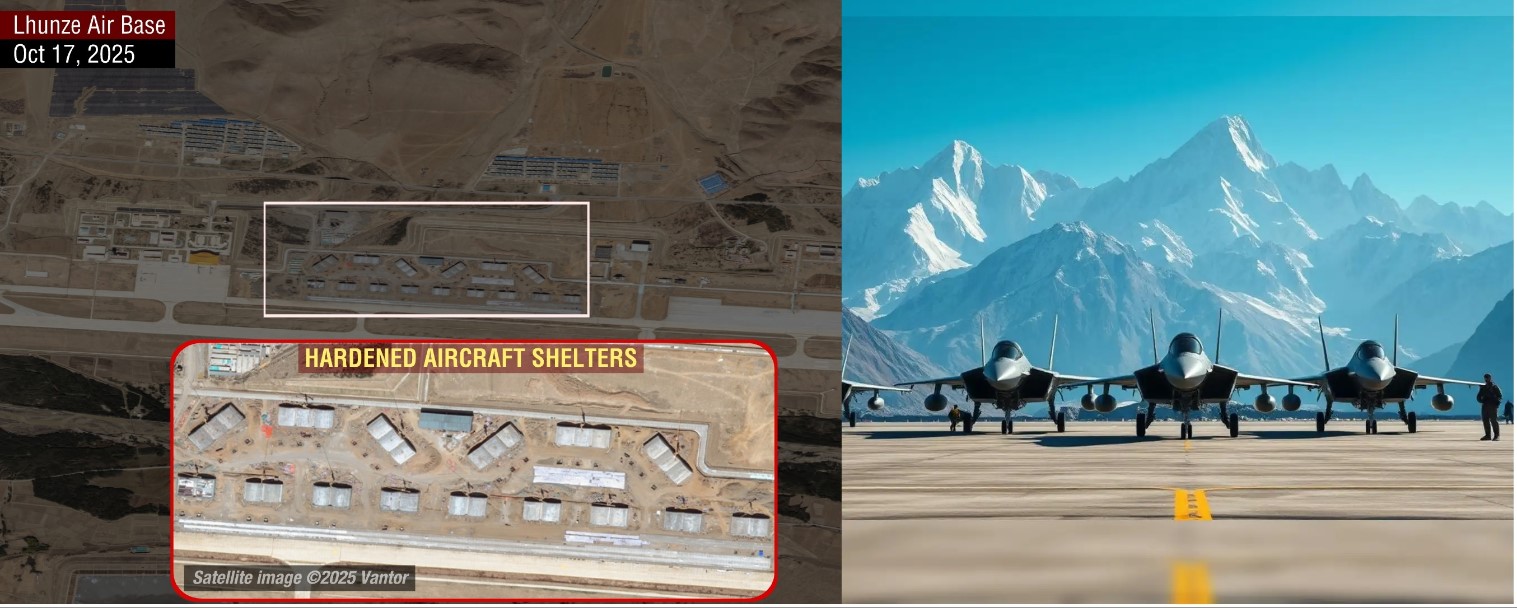
World
China is rapidly expanding its military footprint across the Tibetan plateau, constructing and upgrading a network of high-altitude airbases designed to enhance Beijing’s ability to project power along the contested border with India. A new analysis of more than 100 satellite images by The Wall Street Journal reveals a significant acceleration in military infrastructure development, including at least 16 newly built or modernized airfields and heliports, many located above 14,000 feet. A Network of High-Altitude Military Hubs The satellite review shows long, newly paved runways — some stretching up to 14,850 feet — and more than 70 hardened aircraft shelters in various stages of construction. These shelters allow China to permanently base fighter jets, helicopters, transport aircraft, and drones in positions much closer to the Line of Actual Control (LAC) than before. At several bases, including Lhunze near Arunachal Pradesh, satellite imagery confirms that dozens of new aircraft shelters have already been completed. In some cases, entire mountain slopes have been leveled to create the needed flat terrain, with construction teams working under severe altitude and weather constraints. Expansion of Drone Operations China is also integrating a wide variety of unmanned systems into its high-altitude strategy. Several Tibetan facilities now support advanced UAVs, including: GJ-11 Sharp Sword stealth combat drones WZ-7 Soaring Dragon high-altitude reconnaissance drones CH-4 and CH-5 long-endurance drones for surveillance and strike missions These platforms expand China’s ability to conduct continuous intelligence, surveillance, and reconnaissance (ISR) missions over Indian deployments, as well as rapid precision-strike capabilities without risking pilots in the thin air of the Himalayan frontier. Beijing officially labels many of these airports as “dual-use”, but the ongoing militarization — particularly the movement of stealth drones to bases like Shigatse — underscores their strategic intent. Training a New Generation of “Plateau Eagles” Operating at extreme altitudes remains a formidable challenge. Aircraft engines lose thrust in low-density air, requiring longer take-off distances, and pilots face risks of acute mountain sickness, oxygen deprivation, and disorientation. Ground crews also struggle with freezing temperatures, fierce winds, and intense UV exposure. Despite these obstacles, China is investing heavily in specialized mountain aviation units. The PLA Air Force has begun training “Plateau Eagles,” pilots and technicians equipped with supplemental oxygen systems, specialized cold-weather gear, and tailored physiological training designed to support continuous operations above 14,000 feet. Strategic Shift After 2020 Galwan Clash Beijing’s infrastructure surge accelerated sharply after the 2020 Galwan Valley clashes, which exposed the logistical weaknesses of relying solely on ground forces in rugged Himalayan terrain. China has since pursued an explicit strategy to turn high-altitude geography — once a natural barrier — into a platform for rapid troop movement and persistent air dominance. The new network of high-altitude air hubs allows China to: Surge troops, armour, and supplies to frontier zones in hours instead of days Maintain near-continuous drone surveillance across Ladakh, Arunachal Pradesh, and Sikkim Pre-position aircraft in hardened shelters to withstand strikes or sabotage Rapidly escalate or respond to border incidents For India, the development erodes what was once considered a natural advantage: the difficulty of sustaining air operations on the Tibetan plateau. With new hardened shelters, longer runways, and stealth UAVs, China has begun to normalize high-altitude airpower in a region where such capability was previously limited. India Watches “With Growing Concern” Indian military planners have closely tracked China’s new bases, especially those located 40–60 km from the LAC. New Delhi has responded with its own infrastructure drive — expanding runways at Nyoma and Leh, reinforcing air-defense systems, and upgrading surveillance capabilities. Yet analysts warn that the sheer scale and pace of China’s build-up could alter the long-term balance of power across the Himalayas, allowing Beijing to maintain a persistent, real-time presence over the border region. A New Era of Himalayan Militarization The transformation of the Tibetan plateau into a dense grid of airpower nodes marks one of China’s most ambitious military construction efforts in decades. As these bases become fully operational, the Himalayan frontier — once shaped by mountain passes and difficult terrain — is shifting into an arena where drones, hardened shelters, and long runways define strategic advantage.
Read More → Posted on 2025-12-06 14:45:51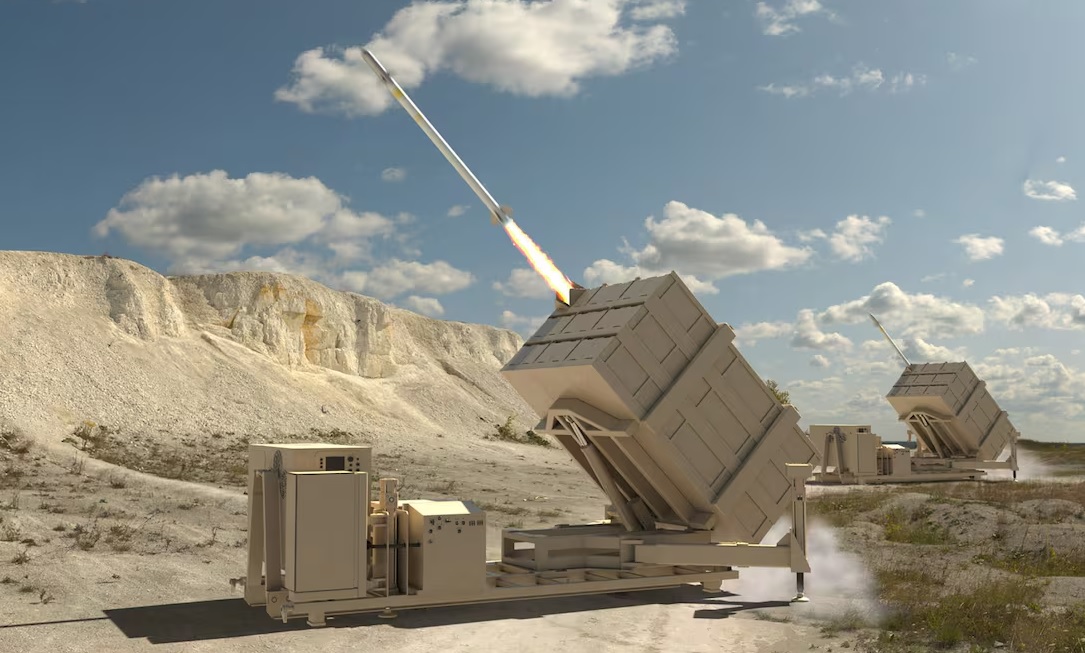
World
On 5 December 2025, The U.S. Department of State has approved a proposed Foreign Military Sale (FMS) worth approximately US$3.0 billion to the government of Denmark. The package includes the cutting-edge Integrated Battle Command System (IBCS) combined with the Indirect Fire Protection Capability (IFPC), along with radars, launchers, ammunition magazines, and related support equipment. The deal — officially notified to Congress by the Defense Security Cooperation Agency (DSCA) — covers a comprehensive set of components: 24 All-Up Round Magazines (AUR-M), 8 IFPC Increment 2 launchers, 2 Sentinel A4 radars, 2 IBCS Engagement Operations Centers, 2 IBCS Integrated Collaborative Environments, 6 IBCS Integrated Fire Control Network relays, plus associated communications, training systems, and logistical support. What Are IBCS and IFPC And Why It Matters IBCS is a state-of-the-art command-and-control (C2) fire-control system developed by the U.S. Army. Its core advantage lies in the “plug-and-fight” architecture — it can link diverse radar and sensor systems to different missile/launcher systems, giving commanders flexibility: “any sensor, any shooter.” By integrating sensors and effectors across domains (radar, missiles, launchers), IBCS enables a unified air- and missile-defence network, improving situational awareness, resource management, and responsiveness. IFPC — the Indirect Fire Protection Capability — is designed to complement traditional air defence systems by protecting critical fixed or semi-fixed sites against threats such as cruise missiles, unmanned aerial systems (UAS), and rocket, artillery or mortar (RAM) attacks. The combination of IBCS + IFPC gives Denmark a layered, flexible ground-based air defence architecture with the capacity to detect, track, and engage multiple simultaneous threats — from low-flying drones to ballistic or cruise missiles. Beyond Launchers and Radars In addition to the headline items, the authorised sale covers a broad suite of ancillary systems and support elements: Communications gear, including GPS receivers, encrypted communications devices, radios, IFF devices, and network encryptors. Tools, test and support equipment, generators, publications, technical documentation, and spare/repair parts. Training systems, including a reconfigurable air-defence trainer; initial and long-term training for Danish personnel; and provision of U.S. Government and contractor technical, logistics, and engineering support. System integration and checkout, field office support, and sustained program support over multiple years. According to the DSCA, 9–14 U.S Government staff and 12–17 contractor personnel are expected to travel to Denmark over a period of up to seven years to support delivery, integration, training, and maintenance. This means Denmark is not only acquiring hardware, but also the infrastructure, support, and training necessary to operate and sustain a modern ground-based air and missile defence network. For Denmark, NATO, and Regional Defense According to the DSCA, the sale supports U.S. foreign-policy and security goals by enhancing the defence posture of a NATO ally, strengthening political stability and collective security in Europe. For Denmark, the acquisition signals a significant upgrade in its air and missile defence capabilities — giving it modern, layered protection against a wide array of aerial threats, from drones to missiles. The flexibility offered by IBCS makes it easier to integrate future sensors or weapons, ensuring the system remains adaptable as threats evolve. From a NATO perspective, the addition of an advanced, interoperable ground-based defence node in Denmark enhances the alliance’s collective air- and missile-defense architecture, reinforcing deterrence and increasing readiness against fast-moving or hybrid threats. Officials noted that the sale “will not alter the basic military balance in the region,” suggesting that while it upgrades Denmark’s capabilities, it is calibrated to avoid fueling regional arms races. Contractors and Implementation The prime contractors for the sale have been identified as RTX Corporation (Arlington, VA), Lockheed Martin (Syracuse, NY), Leidos Inc. (Reston, VA), and Northrop Grumman (Falls Church, VA). DSCA noted there are currently no offset agreements publicly disclosed; any offset arrangements would be negotiated separately between Denmark and the contractors. As for deployment, integration, and activation: hundreds of components — radars, launchers, command centers, communications gear — must be delivered, integrated, and tested. The U.S. Government and contractor personnel are expected to remain in Denmark for up to seven years for training, system integration, and maintenance support. IBCS + IFPC in Modern Air and Missile Defence The IBCS — first conceptualized in 2004 — represents a major shift from traditional standalone air-defence systems to a network-centric architecture. By 2023, the IBCS was approved for full-rate production after completing initial operational testing and evaluation. With IBCS, a single radar (or sensor) can feed data to any compatible weapons system — improving flexibility, reducing reaction times, and enabling more efficient resource use (“any sensor, any shooter”). When integrated with IFPC — designed to counter threats like missiles, rockets, mortar fire, and drones — IBCS delivers a layered defence capability bridging gaps between short-range systems (SHORAD), medium/high-altitude missile defence (Patriot, THAAD), and counter-RAM / counter-UAS protection. From Approval to Field Deployment With the State Department’s determination, the sale now awaits formal agreement, purchase order, financing, and scheduling. Once finalized, delivery, installation, training, and system integration will follow — a process expected to take several years given the complexity and scale of the package. During that period, U.S. and Danish engineering, logistics, and support teams will collaborate to deploy hardware, configure networks, and train Danish personnel. After commissioning, Denmark will become one of the few European nations operating a modern, IBCS-enabled air and missile defence network — a capability likely to influence its future defense posture, NATO’s readiness, and broader European security dynamics.
Read More → Posted on 2025-12-06 14:28:40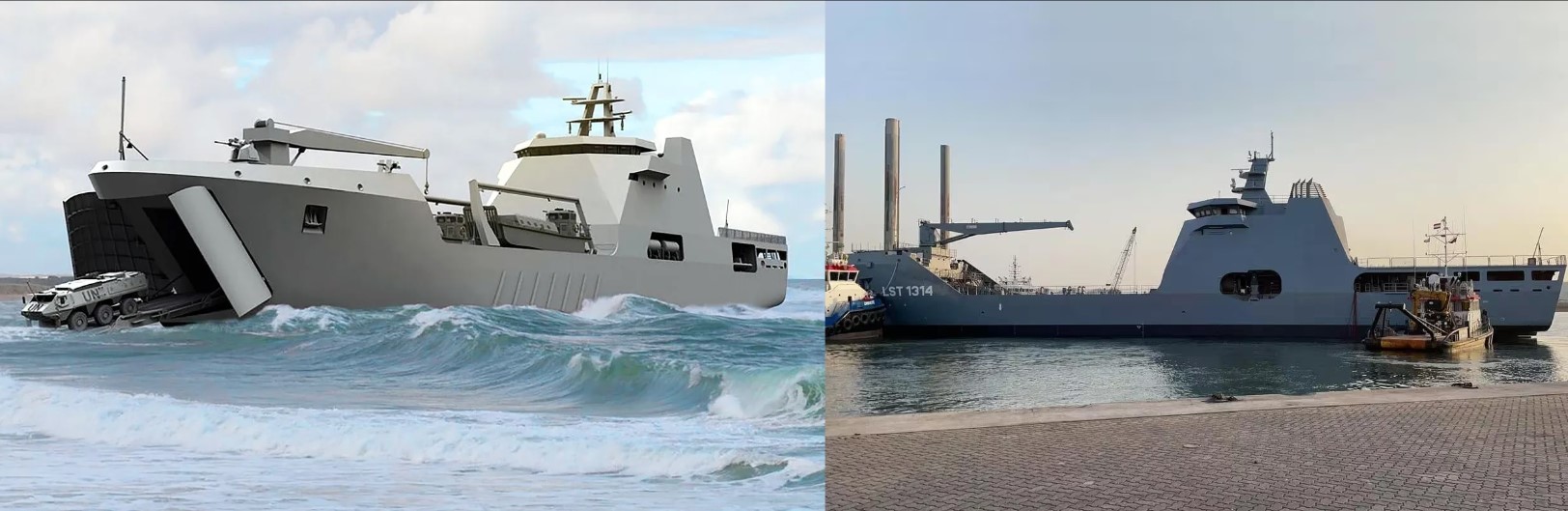
World
The United States Navy and Marine Corps have selected Dutch shipbuilder Damen’s LST 100 design as the basis for their future Medium Landing Ship (LSM) program, marking a major milestone in Washington’s effort to rebuild affordable, survivable amphibious lift for operations in contested littoral waters. The decision was formally announced on 5 December by Secretary of the Navy John C. Phelan, who confirmed that the Damen Landing Ship Transport 100 has been designated the official design basis for the new class of LSMs. From Concept to Concrete Design The LSM program, previously known as the Light Amphibious Warship (LAW), aims to procure 18 to 35 medium-sized landing ships to support the Marine Corps’ evolving Expeditionary Advanced Base Operations (EABO) concept. These ships are intended to move Marine Littoral Regiments, weapons, fuel and supplies between island outposts across the Indo-Pacific and other contested regions, operating closer to shore than traditional large amphibious assault ships. For several years, the Navy examined clean-sheet designs before shifting to an “off-the-shelf” approach when cost estimates exceeded budget expectations. In 2025, the service acquired full technical data packages for two foreign-derived designs – Israel’s Logistics Support Vessel (ILSV) and Damen’s LST 100 – and began assessing them as potential baselines for the program. According to a recent contracting notice, the Navy has now designated the Damen LST 100 as the official design basis for the LSM, enabling planners to adapt the proven hull and layout to U.S. survivability, communications and combat systems requirements while compressing design risk and schedule. LST 100: A Modern Beaching Ship Damen’s LST 100 is a modern take on the classic landing ship, combining a beaching bow ramp with roll-on/roll-off cargo spaces and a full-length vehicle deck. According to company data, the design has a displacement of about 3,900–4,000 tonnes, a length of 100 meters, a beam of 16 meters, and is optimised for operations in shallow waters and small harbours. Key characteristics of the baseline LST 100 design include: Cargo capacity: around 500 tonnes of vehicles and supplies, with roughly 1,020 m² of roll-on/roll-off deck area. Range and endurance: more than 3,400 nautical miles, suited for intra-theater movements rather than trans-oceanic crossings. Well-developed logistics layout with internal ramps, a large stern working deck, and a crane for loading boats, containers and vehicles. Secondary roles such as maritime security, humanitarian assistance, disaster relief, and search and rescue, supported by accommodation and command spaces for embarked forces. The LST 100 has already been built for export customers, including Nigeria, which commissioned the landing ship Kada (LST 1314) in 2022, and has been selected by Australia as the preferred design for its Landing Craft Heavy replacement program. For the U.S. Navy, the Damen design will be adapted into an American-built variant with U.S. combat systems, communications, and survivability features, but the underlying hull form, cargo layout and beaching capability are expected to remain broadly consistent with the proven template. Enabling Marine Corps island-hopping The Marine Corps has repeatedly argued that smaller, more numerous amphibious ships like the LSM are essential to its Force Design transformation. Rather than relying exclusively on large, expensive amphibious assault ships, Marine Littoral Regiments are expected to disperse across island chains, operating anti-ship missiles, air defenses and surveillance systems from austere bases. To sustain those forces, the LSM is being designed as a “coastal logistics ship”—able to beach on rough, unimproved shores, offload vehicles and missile launchers rapidly, and then reposition before adversary sensors and weapons can target it. Analysts see the choice of the LST 100 as a logical step in that direction. The design’s shallow-water optimisation, bow ramp, and relatively modest propulsion demands make it well suited to shuttle runs between islands and coastal sites, while being cheaper and easier to build in numbers than traditional big-deck amphibs. Industrial Strategy And Next Steps While Damen provides the design, the ships themselves will be constructed in the United States, in line with U.S. law for major naval combatants. The Navy has already signalled that it will competitively award a Vessel Construction Manager (VCM) to oversee the program, manage the “build-to-print” design, and coordinate multiple shipyards that may participate in serial production. Earlier this year, U.S. shipbuilder Bollinger was identified as the preferred builder for the lead LSM hull, leveraging its experience constructing Israel’s ILSV design in American yards. With Damen’s LST 100 now formally selected as the design basis, Bollinger and other yards are expected to compete to build follow-on ships once the detailed U.S. variant is finalised. Current planning calls for the Navy to field the first operational LSM before the end of the decade, with a long-term objective of a fleet of around 35 ships if budgets permit. A signal of Urgency in the Pacific By choosing a mature foreign design rather than a bespoke American concept, the Navy and Marine Corps are signalling that speed and affordability now outweigh the desire for a custom solution. The LST 100 decision compresses development time, builds on real experience from existing operators, and moves the LSM program closer to the “shovel-ready” status that Congress has demanded as lawmakers scrutinise the Navy’s broader shipbuilding record. If schedules hold, the new LSM class based on Damen’s design will give U.S. forces a flexible, hard-working workhorse for island-hopping, logistics and crisis response—and a critical tool for sustaining dispersed Marines in any future confrontation in the Indo-Pacific.
Read More → Posted on 2025-12-06 13:16:10
World
Argentina’s long-awaited fighter fleet renewal took a significant leap forward on 5 December, as the first six Lockheed Martin F-16AM/BM Fighting Falcon multirole combat aircraft purchased from Denmark arrived in the country. The jets, drawn from Copenhagen’s surplus inventory, flew to Argentina under their own power with multiple technical stopovers along the route. The ferry mission was supported by three U.S. Air Force Boeing KC-135 Stratotanker tankers, underscoring the trilateral cooperation behind the transfer. A Turning Point for Argentina’s Air Force The arrival of these aircraft begins the most important combat aviation upgrade for the Argentine Air Force (FAA) in more than four decades. Under the agreement signed in April 2024, Buenos Aires is acquiring 25 used F-16AM/BM fighters from Denmark — 24 flying examples and one non-flying airframe delivered in late 2024 for training and instruction. The procurement ends years of stalled efforts to replace Argentina’s ageing A-4AR Fightinghawks, many of which have become difficult to sustain due to spare-parts shortages. The F-16s — though used — provide Argentina with a modern, NATO-standard system, improved sensors, and access to a broader inventory of Western weapons. U.S. Support Package Expands the Deal Following the initial Denmark-Argentina agreement, a separate U.S. government-to-government package was finalised in December 2024. Valued at up to USD 941 million, it includes: Training for pilots and ground crews Long-term logistical and sustainment support A weapons package, including a limited quantity of AIM-120C-8 AMRAAM beyond-visual-range air-to-air missiles GBU-12 Paveway II laser-guided bombs Access to U.S. technical assistance and upgrade pathways This makes the F-16 programme not simply a transfer of aircraft, but a comprehensive integration of the FAA into Western air combat standards. Regional Impact With the induction of the F-16, Argentina becomes the third South American nation to operate the type, joining Venezuela (which received F-16As in the 1980s) and Chile (which operates upgraded MLU-standard F-16AM/BMs and Block 50 models). Analysts say the step will give Buenos Aires far greater air policing capability, better interoperability with Western partners, and a more credible deterrent posture in the South Atlantic. Future Possibilities: Toward New-Build Fighters? While the current fleet consists of used MLU-standard aircraft, Argentine officials have suggested that the programme could lay the foundation for future acquisition of new F-16C/D Block 70/72 aircraft — the latest iteration of the Fighting Falcon equipped with AESA radars, new mission computers, and extended service life. Industry sources have also noted that Argentina’s smooth acceptance and operation of the Danish aircraft will be an important benchmark for Washington’s willingness to approve higher-end systems later. Accelerated Delivery Timeline Originally, most of the Danish aircraft were expected to travel by sea. However, the arrival of the first six fighters by air suggests a faster-than-anticipated delivery tempo, signalling Buenos Aires’ urgency in restoring combat readiness. More airframes are expected to follow through 2025 as the FAA prepares bases, simulators, maintenance infrastructure, and conversion training for its pilots. Final Delivery Timeline April 2024 — Argentina and Denmark sign agreement for 24 flying F-16AM/BM aircraft + 1 non-flying example. December 2024 — First non-flying training airframe delivered; U.S.–Argentina support and weapons package signed. 5 December 2025 — First batch of six Danish F-16s arrives in Argentina by air, marking the operational start of the programme. Early–Mid 2026 (Expected) — Delivery of the next batches of Danish F-16s; pilot and ground crew conversion intensifies. Late 2026 / Early 2027 (Projected) — Completion of all 24 flying aircraft deliveries, enabling the FAA to field a fully operational F-16 squadron with trained personnel and full logistical infrastructure. A Rebuilt Deterrent For a country that has not operated supersonic fighters since the retirement of the Mirage III/V family in 2015, the return of a true multirole platform marks a transformational moment. The F-16s will provide: Supersonic interception capability Precision strike options Improved radar and surveillance performance Higher sortie rates and better reliability As the first six jets touch down, Argentina signals not only a technological upgrade but a strategic shift — re-establishing its presence in the region’s airpower landscape and rebuilding an air force that has struggled with decades of underinvestment. If you want, I can also write a shorter breaking-news version or a headline-focused version.
Read More → Posted on 2025-12-06 12:53:38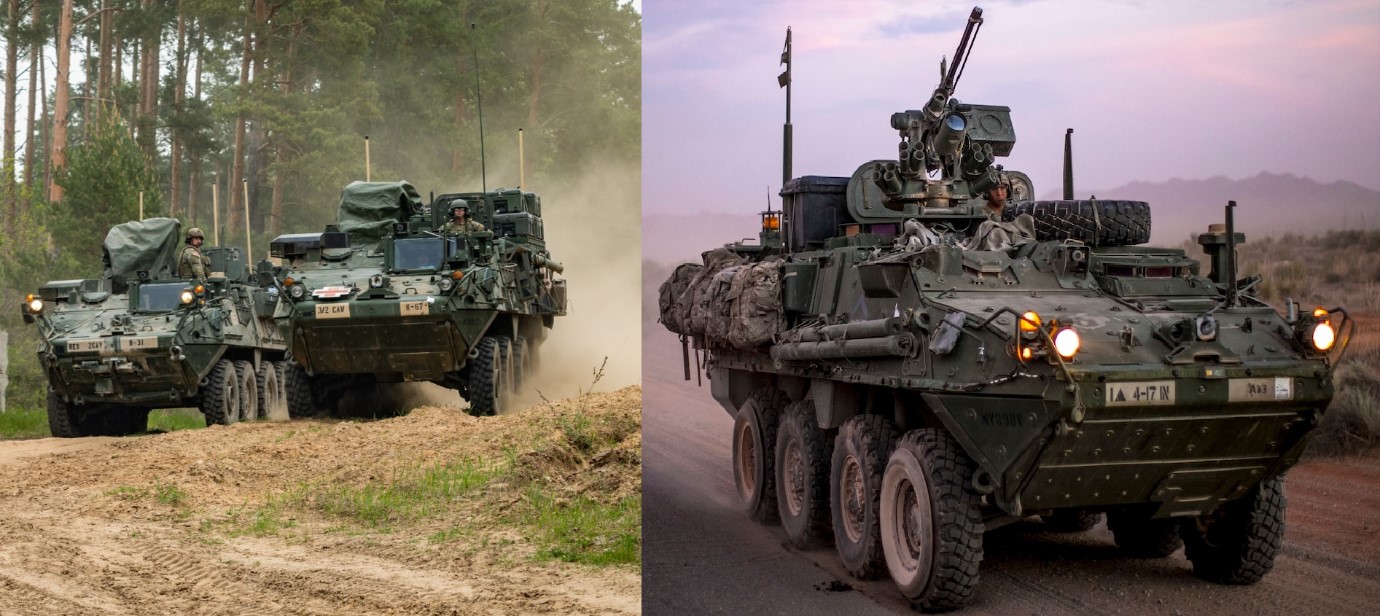
World
Poland is advancing toward a landmark defense agreement to acquire roughly 250 American Stryker armored personnel carriers for a symbolic price of one U.S. dollar, according to public comments by Deputy Prime Minister and Defense Minister Władysław Kosiniak-Kamysz and reporting from Polskie Radio. The vehicles would come from U.S. Army Stryker units already stationed in Europe as Washington reduces its forward-deployed Stryker footprint, offering Warsaw a rapid and cost-effective way to reinforce its mechanized formations without waiting for new production or transatlantic shipment delays. Why One Dollar? The one-dollar price is a long-standing mechanism used in defense cooperation among close allies. When equipment is no longer needed by U.S. forces—with depreciation already accounted for—Washington can transfer it at a nominal value to strengthen a partner’s military capabilities without triggering complex procurement, auction, or market-value procedures.Poland will still bear the costs of inspections, refurbishment, upgrades, transportation, and integration, but the symbolic transfer price emphasizes political solidarity and strategic alignment rather than commercial profit. A Strategic Boost for NATO’s Eastern Flank The transfer, once a technical inspection and refurbishment plan is concluded, is expected to significantly accelerate Poland’s ability to field additional mechanized units. With Poland retiring its aging BWP-1 infantry fighting vehicles and donating large numbers of legacy platforms to Ukraine, Warsaw has faced acute shortages in modern troop carriers. The Strykers—pulled from U.S. formations downsizing in Europe as force structure is realigned—would fill this gap rapidly. General Wiesław Kukuła confirmed that the Polish Armed Forces have prepared initial recommendations, with formal assessments planned through 2026. A deteriorating security environment, however, could accelerate the timeline. Stryker: A Proven, Mobile, Coalition-Ready Platform The Stryker M1126 Infantry Carrier Vehicle (ICV)—a member of the well-known 8x8 family derived from the LAV III and Piranha III—was chosen by the U.S. Army for its rapid deployment potential, enabling a full brigade to be transported within 96 hours. It carries nine infantry soldiers plus a crew of two, using a rear ramp for fast dismount and urban maneuver. The vehicle’s dimensions—6.95 m long and 2.72 m wide—are optimized for airlift via C-17, C-5, and in some configurations C-130 aircraft, offering unprecedented mobility for coalition operations. Over the past decade, Strykers have been exported to several nations including Colombia and Thailand, and more than 100 units have been supplied to Ukraine since 2023. Weapons and Protection The M1126 is armed with the M151 Protector remote weapon station, capable of mounting a 12.7 mm machine gun, 7.62 mm MG, or 40 mm automatic grenade launcher. Fully stabilized optics and a Detached Line of Sight mode allow the gunner to maintain target lock while the vehicle traverses rough ground. More recent upgrades include the CROWS-J configuration, integrating a Javelin anti-tank missile launcher with a 2.5 km range, enabling the Stryker to engage armored threats from beyond direct line of sight. Protection features include: High-hardness steel hull Ceramic add-on armor against 14.5 mm rounds and artillery fragments Afghanistan-era V-hull kits for mine and IED resistance Full CBRN overpressure system External fuel tanks to reduce risk to crew FBCB2 digital battle-management network, enabling rapid tactical data sharing Polish Modernization Strategy: Stryker, Rosomak, Borsuk Officials stress that integrating Strykers will not undermine Poland’s domestic industry. The country already fields more than 900 Rosomak (Patria AMV-based) vehicles, with the latest versions mounting the ZSSW-30 remote turret featuring a 30 mm Mk44S cannon and Spike-LR missiles. Thirty-five such upgraded units are now in service with the 21st Podhale Rifles Brigade. Additionally, the first 15 Borsuk tracked IFVs have been delivered to the 15th Mechanized Brigade in Giżycko, under a program that includes 111 initial units and may expand to 1,400 vehicles including specialist variants. Together, these platforms form a three-tiered mechanized structure: Stryker: rapid mobility, infantry lift, coalition flexibility Rosomak: medium-weight firepower and anti-tank capability Borsuk: heavy tracked survivability for high-intensity combat Digital-hardware harmonization will support full integration into NATO command architectures, enabling real-time data sharing, sensor fusion, and coordinated fires across the alliance’s eastern flank. Washington–Warsaw Alignment The near-finalized Stryker deal reinforces growing U.S.–Polish strategic alignment at a time of sustained Russian pressure. By transferring proven platforms so cheaply, Washington signals confidence in Poland’s role as a frontline land power and rapidly strengthens NATO’s defensive posture in Central Europe. For Poland, the acquisition represents a swift, low-cost injection of modern mobility at a time when equipment gaps remain significant due to donations to Ukraine and the phasing out of Soviet-era systems. If completed as expected in the second half of 2026, the one-dollar Stryker transfer will stand as one of the most symbolic—and strategically meaningful—examples of U.S. military support to a European ally in recent years.
Read More → Posted on 2025-12-06 12:23:34
World
The U.S. Air Force has officially entered a new era of pilot training with the arrival of its first T-7A Red Hawk on 5 December, delivered to the 12th Flying Training Wing under Air Education and Training Command (AETC). The milestone marks the beginning of a sweeping modernization effort aimed at preparing pilots for the cognitive and technological demands of fifth- and sixth-generation combat aircraft. A Symbolic and Technological Leap Brig Gen Matthew Leard, Director of AETC Plans, Programs, Requirements and International Affairs, called the arrival “the first physical representation of progress within the program.” The T-7A replaces the ageing T-38 Talon, which has trained generations of American fighter and bomber pilots since the early 1960s. Costly to maintain and increasingly out of step with modern aircraft, the T-38 has been extended “multiple times,” Leard noted. “There’s an escalating cost of keeping it flyable, and it’s no longer aligned with current or future platforms.” The T-7A, developed by Boeing in partnership with Saab, is named to honor the Tuskegee Airmen. It will be assigned to the storied 99th Flying Training Squadron, the “Red Tails,” which will introduce the aircraft into the Air Force training pipeline over the next several years. Lt Col Michael Trott, commander of the 99th, said the squadron intends to continue the Tuskegee legacy of innovation. “The 99th will re-write what pilot production looks like and shape the future of pilot training for the next generation of warfighters in America,” he said. Building Pilots for a Data-Rich Battlespace According to AETC leaders, the T-7A is not just a replacement trainer—it is a complete shift in training philosophy. Maj Gen Gregory Kreuder, commander of the 19th Air Force, said that from the first day of training, new pilots will be immersed in sensor-rich, information-heavy environments similar to operational fifth-generation fighters like the F-35. “Students won’t just be learning to fly; they’ll be learning to manage information, interpret data from advanced sensors, and make critical decisions in a complex environment,” he said. “This aircraft enables us to close the gap between basic pilot training and the realities of fifth-generation plus warfare.” Leard compared the transformation to the leap from early mobile phones to today’s software-driven platforms. The T-7A’s open-architecture system allows rapid upgrades, while its fly-by-wire configuration lets instructors tailor handling characteristics to student needs. Kreuder added that traditional flying skills alone are no longer enough. “Our legacy T-38 built incredible ‘stick-and-rudder’ aviators, but it is ill-suited for the aircraft we employ today. Students must become tactical problem-solvers and be comfortable as critical nodes in a data-rich environment.” New Training Features: Virtual Integration and Ground Systems The T-7A integrates tightly with a Ground-Based Training System (GBTS) and features Live Virtual Constructive (LVC) training, allowing pilots in simulators and aircraft to operate in the same scenario. This reduces the number of required flying hours while maintaining—and in many cases improving—training quality. Leard said the LVC model offers long-term flexibility. “It’s like hardware that grows more powerful through software upgrades.” Along with the aircraft, the training system includes modern simulators, AI-enabled instruction tools, and real-time data analytics for individualized learning paths. Investing in Digital Infrastructure and Instructors AETC is investing heavily in instructor preparation, maintenance modernization, and digital ecosystems that support data-driven training. Kreuder said, “We’re empowering our Airmen to innovate and shape how we train our warfighters so they will continue to dominate in any future fight.” Programme Scale and Future Expansion The T-7 program includes 351 aircraft, 46 simulators, and an advanced training system that will eventually replace not just the T-38 but also the T-6 Texan II. Testing will continue at Edwards Air Force Base, where the T-7 has already undergone high angle-of-attack trials, climatic chamber testing, and escape-system certification. Meanwhile, the 99th Squadron will begin Type 1 maintenance and pilot training as the aircraft matures. “Training will start in parallel with aircraft envelope expansion,” Leard confirmed. Delivery Timeline and Long-Term Fleet Transition The Air Force’s fielding plan for the T-7A includes: Initial Operational Capability (IOC): August 2027, with 14 aircraft assigned to the 99th FTS. Full-rate procurement of 40–60 aircraft per year by 2033. Final deliveries by 2035–2036. The T-38 will remain operational until transition completion. Future T-7A deliveries are scheduled for: Columbus AFB – Fiscal 2027 Laughlin AFB – Fiscal 2032 Vance AFB – Fiscal 2034 Sheppard AFB – Fiscal 2035 Why the T-7A Matters The T-7A arrives at a time when the U.S. Air Force is preparing for the Next Generation Air Dominance (NGAD) era, rapid global deployments, and operations against technologically sophisticated adversaries. Modern combat aircraft rely heavily on sensor fusion, AI-assisted decision-making, and multi-domain networked warfare—skills that older training aircraft cannot adequately teach. The Red Hawk’s digital backbone, cockpit design, embedded training systems, and advanced flight characteristics are intended to shape pilots capable of transitioning seamlessly into platforms such as the F-35, F-22, B-21, and future NGAD systems. With the first T-7A now delivered, AETC leaders say the transformation of U.S. Air Force pilot training has officially begun. If you want, I can also prepare a shorter version, headline variations, or a bold-marking version for key details.
Read More → Posted on 2025-12-06 12:12:19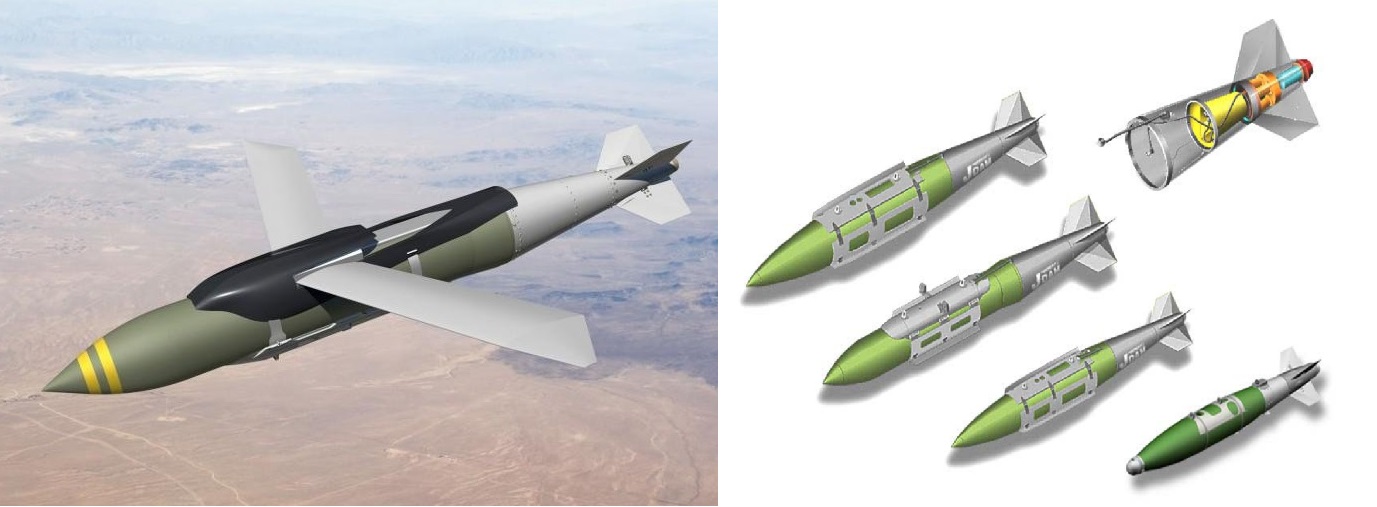
World
The United States has approved a possible Foreign Military Sale (FMS) to Canada worth an estimated $2.68 billion for a large package of precision air-strike weapons and support equipment, in a move that will significantly upgrade Ottawa’s strike capabilities and deepen U.S.–Canada defense cooperation. The approval, announced by the Defense Security Cooperation Agency (DSCA) on December 4, 2025, covers a wide mix of Small Diameter Bombs (SDB I and SDB II), Mark 80-series general-purpose bombs, and Joint Direct Attack Munition (JDAM) guidance kits, alongside spare parts, training, and technical support. Under U.S. law, this is a possible sale: the State Department’s green light and DSCA’s notification to Congress allow negotiations to proceed, but a final contract, configuration, and total value will depend on Canada’s budget decisions and the outcome of talks with industry. What Canada Is Buying According to DSCA, Canada has requested one of the largest single packages of precision munitions ever cleared for the country, including: Up to 3,108 GBU-39 Small Diameter Bomb Increment I (SDB I) – compact, GPS-guided glide bombs designed to strike fixed targets with high precision while allowing aircraft to carry many weapons at once. Up to 2,004 GBU-53/B SDB II “StormBreaker” bombs, plus 100 GBU-53 test vehicles – a newer, multi-mode guided weapon able to hit moving targets in all weather using radar, imaging infrared, laser and GPS guidance. Up to 3,414 BLU-111 500-lb general-purpose bombs and 220 BLU-117 2,000-lb bombs, part of the Mark 80-series family that can be used in “dumb” or precision-guided configurations. 146 I-2000 penetrator warheads, designed to defeat hardened or buried targets. 750 inert GBU-39 practice bombs and 100 GBU-39 guided test vehicles for training and weapons integration. 5,352 KMU-572 JDAM guidance kits, 396 KMU-556 and 140 KMU-557 JDAM kits, which transform unguided Mark 80-series bombs into GPS/INS-guided JDAMs, allowing accurate, all-weather strikes at relatively low cost. Beyond the munitions, the sale includes fuzes, practice bombs, support equipment, software, documentation, training aids, spare parts, and U.S. government and contractor technical services. These elements are critical for integrating the weapons onto Canadian aircraft, training crews, and sustaining the arsenal over time. Boeing and Raytheon (RTX) as Prime Contractors The principal contractors for the proposed sale are: The Boeing Company (Arlington, Virginia) – developer of the original SDB I and manufacturer of JDAM guidance kits. RTX Corporation (formerly Raytheon Technologies, also based in Arlington, Virginia) – prime contractor for SDB II / GBU-53/B StormBreaker and key provider of precision-guided weapons and support systems. DSCA notes that the U.S. government is not yet aware of any offset agreements associated with the deal; any industrial participation or offset package would be negotiated directly between Canada and the companies. Implementation of the sale is not expected to require additional permanent U.S. personnel in Canada and is assessed to have no negative impact on U.S. defense readiness. Boosting Canada’s Strike and Deterrence Power Washington has framed the proposed sale as an important step in strengthening both U.S. foreign policy objectives and the military capabilities of a key NATO ally. According to the DSCA notification, the package is intended to improve Canada’s credible defense posture and enhance its ability to deter aggression in an increasingly complex security environment. The transfer also aims to deepen interoperability between Canadian, U.S., and allied forces, particularly in joint air operations where common munitions and shared logistics significantly improve efficiency and mission readiness. The deal further supports Canada’s role in continental defense, including its responsibilities under NORAD, while reinforcing its contributions to NATO, peacekeeping missions, and coalition operations abroad. It arrives at a time when Ottawa is engaged in a wide defense modernization effort, including the acquisition of F-35A stealth fighters and M142 HIMARS rocket artillery, as part of a broader shift away from legacy systems toward a more advanced and flexible force structure. Once delivered, the new precision air-strike weapons are expected to be integrated into Canada’s existing CF-18 Hornet fleet and later into its incoming F-35A fighters. This will provide Canada with modern, long-range strike capabilities for both homeland defense and allied missions overseas, marking a significant upgrade in the Royal Canadian Air Force’s operational reach. What Are SDBs and JDAMs – and Why Do They Matter? The core of the package revolves around two families of weapons that have reshaped modern air warfare: GBU-39 SDB I: A 250-lb class precision glide bomb developed by Boeing. Its small size and folding wings allow a fighter like the F-15 or F-35 to carry multiple SDBs internally, hitting many targets per sortie while minimizing collateral damage. GBU-53/B SDB II “StormBreaker”: Developed by Raytheon (RTX), this advanced bomb adds a tri-mode seeker and data-link, letting it track and hit moving targets in poor visibility, including through dust, smoke, or bad weather. It is designed to be carried inside the weapons bays of the F-35. JDAM kits (KMU-572, KMU-556, KMU-557): Guidance tail kits that bolt onto standard Mark 80-series bombs, turning them into JDAMs – GPS/INS-guided munitions that are far cheaper than cruise missiles but still highly accurate. For Canada, this mix means it can tailor weapons loads to different missions: low-yield bombs for urban or limited-collateral strikes, heavier warheads for hardened targets, and a blend of SDB II and JDAMs for moving and fixed targets across a wide range of scenarios. Political and Strategic Context News of the sale comes as Ottawa faces pressure to increase defense spending and make good on long-standing NATO commitments, including the goal of spending 2% of GDP on defense. The weapons package complements Canada’s shift toward more capable air and missile forces, including participation in allied operations in Europe and the Middle East, and renewed attention to Arctic security. In Washington, the sale underscores the United States’ use of the FMS system to arm close allies with high-end U.S. munitions, deepening interoperability but also tying partners into U.S. supply chains and export controls. The proposal must now clear the U.S. Congress, which has the ability to block or condition major arms deals, and then be translated into final contracts between Canada, Boeing, and RTX. As DSCA emphasizes, the $2.68 billion figure reflects the maximum possible configuration; the final value is expected to be lower depending on what Canada ultimately orders and how negotiations conclude. If completed, however, the deal will give Canada one of the most modern precision-strike arsenals among U.S. allies—capable of supporting everything from NORAD air defense and Arctic patrols to NATO operations abroad for years to come.
Read More → Posted on 2025-12-05 17:15:54
World
The United States has privately informed European allies that it expects Europe to assume most of NATO’s conventional defense responsibilities by 2027, signalling a major rebalancing of military roles within the alliance. According to diplomats briefed on the discussions in Washington, U.S. officials warned that America may scale back its participation in NATO’s defense planning structures if Europe does not demonstrate significant progress within the coming three years. The message reflects Washington’s deepening concern that NATO’s collective defense architecture remains overwhelmingly dependent on U.S. military power. Although the United States emphasized that it will maintain its nuclear deterrent and remain committed to NATO’s core mission, the shift is clear: Europe must be prepared to handle the bulk of day-to-day deterrence, force readiness, and operational planning, areas the U.S. has dominated for decades. European officials familiar with the meetings acknowledge the political logic behind Washington’s position but describe the 2027 timeline as extremely difficult given Europe’s industrial capacity and force generation constraints. Accurate financial data underscores the scale of the imbalance. NATO’s common annual budget—funding headquarters, command systems, and shared programs—was about €3.3 billion in 2024. The United States contributed 15.8% to 16% of that amount, or roughly €520 million, a meaningful but not overwhelming share. Yet this common budget accounts for only a fraction of NATO’s real military strength. The true asymmetry lies in national defense spending. In 2024, the United States spent nearly US$997 billion on defense, according to SIPRI—representing almost 70% of all NATO members’ combined military expenditure. Through this investment, Washington provides NATO with its most advanced capabilities, including strategic airlift, satellite intelligence, missile defense systems, and forward-deployed high-end forces across Europe. European NATO members collectively spent US$454 billion in 2024, far below U.S. levels, though spending has been rising sharply since Russia’s invasion of Ukraine. A total of 18 NATO members now meet or exceed the 2% GDP defense benchmark, compared with only six members four years earlier. Despite this progress, Europe still faces major gaps in ammunition production, air defense, long-range strike systems, and the industrial base needed to sustain large-scale operations without American support. NATO has already set an ambitious long-term financial direction. In 2025, allied leaders endorsed a spending ambition that approaches 3.5% of GDP for core defense and up to 5% of GDP for broader security investments by 2035. These targets are designed to allow Europe to rebuild sufficient military power over a decade. For many European capitals, even achieving those goals by 2035 is challenging; reaching anything close by 2027 is viewed as unrealistic under current conditions. U.S. officials, however, argue that Europe must accelerate, not delay, major defense investments. The request comes as Washington faces strategic pressures elsewhere, especially competition with China in the Indo-Pacific. The war in Ukraine has also highlighted Europe’s dependence on U.S. intelligence, logistics, and industrial capacity, reinforcing the perception that Europe cannot yet act without American leadership. In the U.S. domestic political arena, debates over NATO burden-sharing have intensified, with critics arguing that allies rely too heavily on Washington’s military capabilities. This leaves NATO facing a pivotal test. If Europe cannot meet the expectations set for 2027, the United States may adjust its posture and reduce its involvement in NATO’s operational planning—a shift that could alter deterrence dynamics across the alliance’s eastern flank. European officials warn that uncertainty regarding U.S. commitments may embolden adversaries, while others view Washington’s message as a necessary catalyst for Europe to assume real strategic responsibility for its own defense. What remains clear is that the alliance is entering a decisive phase. As Washington pushes for a more balanced transatlantic defense architecture and Europe races to expand its military capabilities, the next few years will determine whether NATO can adapt to a new burden-sharing reality—or whether long-standing structural imbalances will create deeper strategic tension within the alliance.
Read More → Posted on 2025-12-05 16:53:48
World
On September 21, 2025, aerospace major Lockheed Martin — via its advanced-development arm Skunk Works — unveiled its latest ambitious project: Vectis, a next-generation stealth unmanned combat aircraft. The platform is described as a “Group 5” collaborative combat aircraft (CCA) configured to operate either independently or in tight cooperation with crewed fighters such as the F-35 Lightning II and forthcoming next-gen jets. What is Vectis And What It Promises A new paradigm in airpower. According to Skunk Works’ leadership, Vectis is not simply “another drone”: it is built as an “agile drone framework,” promising high customizability, modularity, and affordability — aimed at delivering advanced capabilities without the cost and complexity of a full-fledged manned fighter. Large, capable, and stealthy. As a Group 5 unmanned aerial vehicle, Vectis is in the weight and performance class of major drones significantly larger than many UAVs, but smaller than a conventional manned fighter like an F-16. It sports stealth-optimized design elements and a lambda/delta-wing planform with tailless configuration, giving it potentially low radar observability. Multi-role flexibility. Vectis is designed to perform a variety of mission types: precision strike, intelligence, surveillance & reconnaissance (ISR), electronic warfare (EW), air-to-air and air-to-ground combat. It can either fly solo or act as a “loyal wingman” to crewed combat jets, extending the reach and lethality of manned platforms while reducing risk to pilots. Integration & “Teaming”: Working With the F-35 and Beyond One of the core ambitions for Vectis is to integrate seamlessly into the evolving concept of “manned-unmanned teaming.” Under this doctrine — often referred to as “loyal wingman” — autonomous or remotely piloted drones accompany manned fighters, acting as sensor platforms, missile carriers, decoys, or electronic-warfare nodes. Lockheed Martin says Vectis is built with open mission architecture and common control systems that ensure compatibility with fifth-generation fighters and future next-gen jets. That means an F-35 (or another advanced jet) could command a number of Vectis drones during operations, greatly multiplying force projection while keeping human exposure to danger minimal. Survivability, Affordability And A New Drone Philosophy What distinguishes Vectis from many previous UAVs or UCAVs? Skunk Works emphasizes a triplet of characteristics: survivability, lethality, and reusability — all packaged in a system designed for cost-effective production. Rather than being a one-time “attritable” drone built to be lost in high-risk missions, Vectis is developed as a reusable, flexible asset — capable of being upgraded, reconfigured, or repurposed depending on mission demands or evolving threats. Its modular architecture aims to allow end-users (be it the U.S. military or allied partners) to tailor payloads, sensor suites, or mission systems. Moreover, because Lockheed is self-funding the initial development, rather than waiting for a direct contract (such as under the U.S. military’s official CCA program), the company can move faster to build and test prototypes — signaling confidence in the concept’s future relevance. Timeline & Where Vectis Stands Now Unveiled: September 21, 2025. Current status: Vectis is still under development; parts have reportedly been ordered, and the prototype program is underway. Expected first flight: Skunk Works is targeting the first flight within two years — potentially by 2027. Intended market: U.S. military (Air Force, possibly Navy), but also foreign allies — especially those needing a modern, flexible, stealth-capable drone wingman for their fleet of fighter jets. Strategic Significance & Broader Implications The reveal of Vectis underscores a broader shift in aerial combat doctrine: away from large fleets of crewed fighters alone, and toward mixed manned-unmanned force packages. As modern air defenses — including radar, surface-to-air missiles, and anti-access/area-denial (A2/AD) systems — become more advanced, stealthy drones like Vectis offer a way for air forces to project power while minimizing risk to human pilots. For the U.S. and its allies, Vectis could be a critical element of “air dominance” strategy — especially in theaters where long-range operations, stealth penetration, or electronic-warfare capabilities are essential. For Lockheed Martin, successful development and adoption of Vectis could help the company maintain technological edge in both manned and unmanned combat aviation. That said — Vectis is not guaranteed to succeed. The broader official Collaborative Combat Aircraft Program (CCA) run by the U.S. military reportedly did not select Vectis in its first increment — possibly due to Vectis being more capable (and more expensive) than what the first phase required. Still, Lockheed seems committed to continuing development independently. What Remains Unknown And What to Watch While Vectis’ unveiling came with impressive claims, there remain many uncertainties: Propulsion & performance details. Lockheed has not disclosed the exact engine type for Vectis, nor whether the drone will be capable of supersonic flight. The company has said that operational analysis does not point to supersonic performance as a central requirement. Range and endurance. While Lockheed indicates that Vectis’ endurance will be compatible with major theaters like the Indo-Pacific, Europe and CENTCOM, precise range, mission endurance, and payload capacity remain unspecified. Cost per unit and procurement timeline. Lockheed has declined to give concrete figures for cost per aircraft, nor confirmed any procurement orders from the U.S. or allied militaries. Operational doctrine & deployment models. How militaries will deploy Vectis — as attritable expendables, as reusable assets, as part of mixed manned-unmanned squadrons — remains to be seen. A Glimpse at the Future of Aerial Warfare The unveiling of Vectis marks a major step toward autonomous, networked air combat. With its stealth design, flexible architecture, multi-role capability, and F-35 teaming, Vectis signals a shift from purely manned fleets to hybrid human-drone air wings. If development stays on track, Vectis may redefine how nations conduct air warfare — shaping global air combat strategy for years to come.
Read More → Posted on 2025-12-05 15:59:03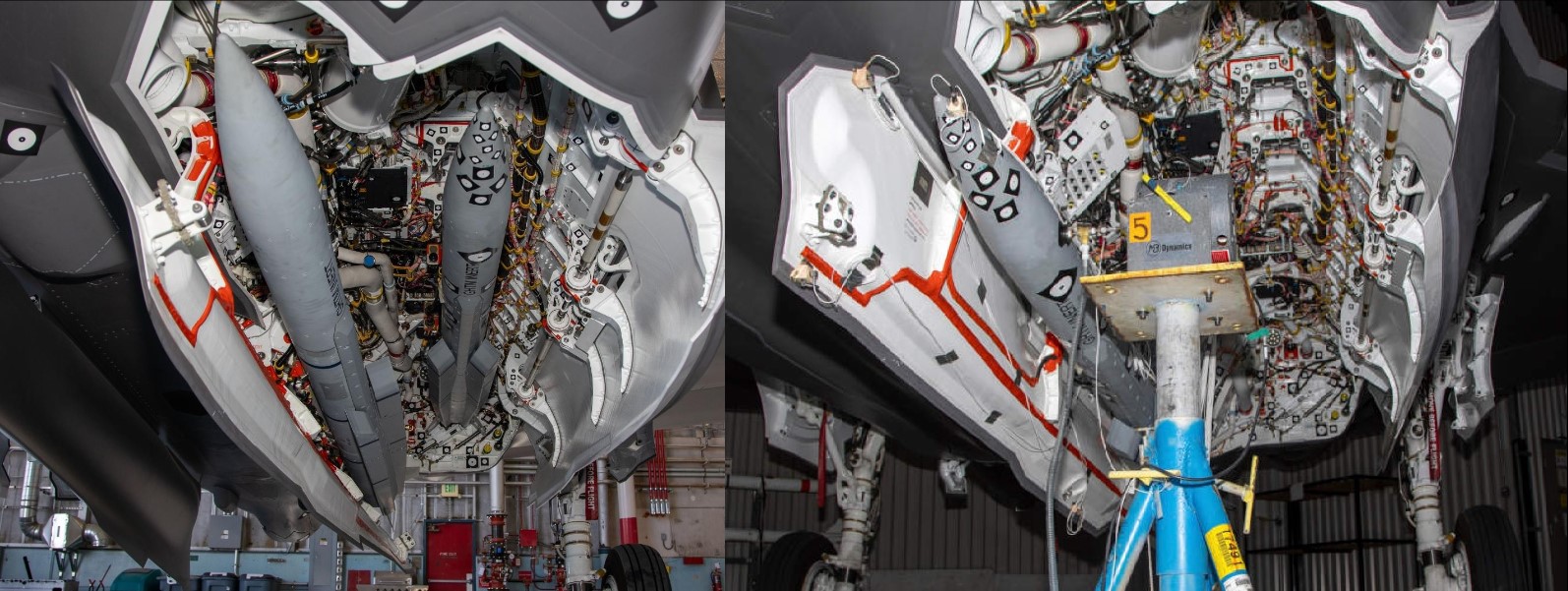
World
On 4 December 2025, European missile manufacturer MBDA confirmed that integration of the Meteor beyond-visual-range air-to-air missile on the US-built F-35A Lightning II has reached a decisive new stage, marking one of the programme’s most significant milestones to date. A series of extensive ground integration tests—conducted jointly by MBDA, Lockheed Martin, and the F-35 Joint Program Office—has successfully validated that Meteor can be safely housed and deployed from the F-35A’s internal weapons bay, a prerequisite for maintaining the aircraft’s stealth profile. The trials, carried out at Edwards Air Force Base in California, place the programme on the verge of flight testing, opening the path for full operational clearance. Beyond technical achievement, this milestone represents a major evolution in European and NATO air-combat doctrine, reinforcing long-range deterrence at a time of rising geopolitical tensions and contested airspace. A Transition from Design to Practical Integration The latest test series included ground vibration trials, fit checks, and structural response assessments, all designed to evaluate how the missile and aircraft interact as a unified weapon system. During these tests, both the F-35A and Meteor were fitted with diagnostic instruments to measure structural loads and confirm safe clearances within the weapons bay. These vibrations simulate the full range of forces the missile experiences during flight, hard manoeuvres, and aircraft operations. The checks also ensure that internal carriage does not compromise the F-35’s low-observable geometry, a central factor distinguishing the aircraft from 4th-generation fighters. Engineers report that just one final ground test remains before shifting to airborne release trials, a major leap toward certification. According to MBDA, the programme is now “one step closer” to delivering a fully integrated European long-range missile for the world’s most widely operated 5th-generation fighter. This effort builds on earlier UK-led Meteor testing on the F-35B, while Italy sponsors the F-35A integration, demonstrating the multinational nature of the programme. Norway, the Netherlands, and Denmark have also expressed strong interest, setting the stage for widespread European adoption. Meteor: Europe’s High-Energy Long-Range Interceptor At the core of this integration is Meteor itself—an advanced, network-enabled BVR missile jointly developed by six European nations: the UK, France, Italy, Germany, Spain, and Sweden. Unlike traditional missiles that rely on a single rocket burn followed by a glide, Meteor employs a unique throttleable solid-fuel ramjet, allowing continuous, adjustable propulsion throughout its flight. This provides: A dramatically enlarged no-escape zone, limiting an adversary’s ability to outrun or dodge the missile. Sustained energy at long range, ensuring lethality even during end-game manoeuvres. Mid-course updates via data link, enabling dynamic retargeting in networked combat scenarios. The missile’s active radar seeker, inertial navigation, two-way data link, and blast-fragmentation warhead make it one of the most lethal air-superiority weapons in the world. It is already operational on Rafale, Eurofighter Typhoon, and Gripen, and is now under testing with South Korea’s KF-21 Boramae. Meteor’s pairing with the F-35A—an aircraft designed to detect threats before being detected—creates a powerful long-range engagement capability unmatched by legacy systems. What Meteor Means for F-35A Operators For the F-35A, Meteor is more than an additional missile—it changes how the aircraft can fight. The F-35’s combination of AESA radar, Electro-Optical Targeting System, and passive electronic intelligence sensors generates a multi-layered detection picture. With Meteor onboard: The aircraft can engage targets at extreme ranges while maintaining stealth. Meteor’s ability to receive updates enables cooperative engagements, using data from other aircraft, drones, AWACS, or ground-based sensors. Internal carriage preserves the aircraft’s low radar signature, unlike traditional fighters that mount long-range missiles externally. F-35 formations can operate in distributed networks, engaging threats without broadcasting their position. This transforms the F-35A from a primarily strike-oriented platform into a dominant long-range air-superiority asset for NATO. Geostrategic Significance The integration reflects a broader strengthening of European defence autonomy, while still operating within the transatlantic F-35 ecosystem. With Europe supplying one of the jet’s most important air-to-air weapons, the partnership reinforces: European industrial relevance in 5th-generation warfare Interoperability across NATO A unified deterrence posture across the Baltic, Black Sea, and Arctic theatres Italy’s sponsorship and the UK’s leadership on the F-35B highlight how partner nations are leveraging their roles to shape the fighter’s future capability set. As Meteor becomes available across Europe’s F-35 operators—including Norway, Denmark, the Netherlands, Belgium, Poland and Germany—air-policing missions and quick-reaction alert strategies will be reorganised around long-range, stealth-enabled interception. The message to adversaries is explicit:any attempt to challenge NATO airspace will confront a layered system combining stealth aircraft with high-energy, long-range interceptors designed to deny escape. What Comes Next Following completion of the final ground test, the programme will transition to: Captive-carry flight tests Safe separation trials Live missile firings Full operational evaluation If airborne tests validate ground results, F-35A fleets will gain a new long-range air-combat dimension previously limited to high-performance 4.5-generation European fighters. For MBDA, Lockheed Martin, and participating nations, the achievement marks more than a technical milestone—it represents a major step toward a future in which stealth platforms, high-speed ramjet missiles, and networked combat systems operate as an integrated strike web, giving NATO decisive advantage in 21st-century air warfare.
Read More → Posted on 2025-12-05 15:39:37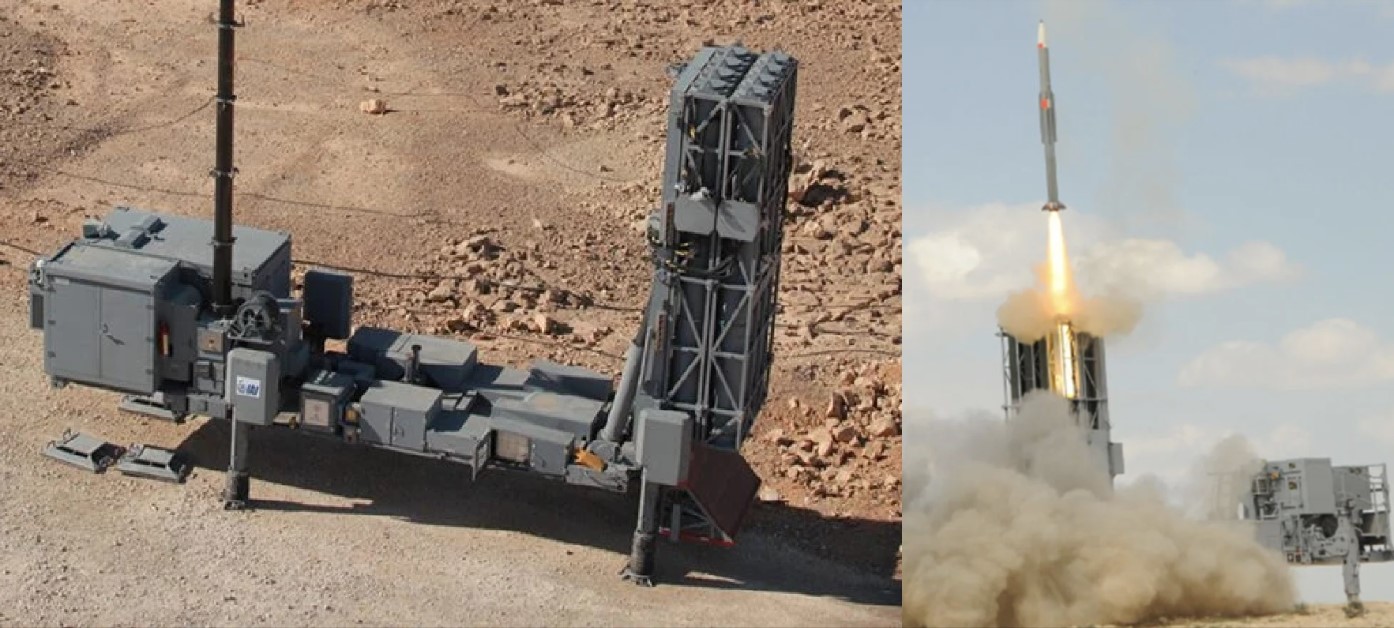
World
Israel Aerospace Industries (IAI) has formally signed a contract to supply the Royal Thai Air Force (RTAF) with the advanced Barak MX air-and-missile defence system, marking a significant expansion of Thailand’s ground-based air-defence capability and a new milestone in Israel–Thailand defence cooperation. The acquisition will provide Thailand with its first-ever medium-range air-defence system, capable of intercepting both Tactical Ballistic Missiles (TBMs) and Air-Breathing Targets at ranges of up to 150 kilometres. Thailand Steps Into the Medium-Range Air Defence Era The Barak MX is a modular, network-centric air-and-missile defence system designed to counter multiple simultaneous threats. It integrates Multi-Mission Radar, C2 (Command-and-Control), and smart launchers to form a flexible, layered defensive shield. The system uses a family of interceptors — MRAD, LRAD, and ER missiles — giving operators the ability to select the right interceptor for each situation. This architecture allows Barak MX to engage aircraft, UAVs, cruise missiles, and ballistic missiles from short to extended ranges. IAI President and CEO Boaz Levy said the agreement represents “a significant milestone for IAI in East Asia, with Thailand being a key and influential country in the region.” He added that the Barak MX will provide the RTAF with “comprehensive protection against both ballistic and aerial threats.” Levy emphasized that the system exceeded Thailand’s operational requirements, highlighting its advanced network-centric capabilities, interoperability with local command systems, and suitability for Thailand’s long-term defence framework. What the Contract Includes The procurement package for Thailand includes: Command and Control (C2) Unit Multi-Mission Radar (MMR) Barak MX Launchers Surface-to-Air Missiles (SAMs) Missile Reloading Vehicle Logistic Support Vehicle All components are mounted on high-mobility platforms, allowing rapid deployment, quick repositioning, and fast operational readiness — critical requirements for modern air defence. The deal is valued at approximately 3.44 billion Thai baht (about US $107 million) and secures a full operational battery for the RTAF. IAI is partnering with Thai Aviation Industries (TAI) to provide long-term maintenance, technical support, and local services — strengthening Thailand’s domestic capability to sustain high-end defence systems. Barak MX: A Proven, Multi-Layered Defence System The Barak MX is already in service with multiple international customers and has gained a reputation as a combat-proven, cost-efficient, and scalable solution. Designed around a multi-layered and multi-mission architecture, it allows armed forces to respond flexibly to diverse aerial threats across broad operational environments. Its “Economy of Battle” concept helps reduce long-term operational costs by using a unified launcher for all interceptor types. For Thailand — which is modernizing its Integrated Air Defence System (IADS) — the Barak MX offers: Ballistic-missile defence capability for the first time Stronger protection of air bases and national infrastructure Increased deterrence against regional missile proliferation Seamless integration with future Thai and allied systems Strategic Impact for Thailand and the Region The acquisition positions Thailand among Southeast Asia’s more advanced air-defence operators. As neighbouring countries expand missile and UAV inventories, Thailand’s deployment of the Barak MX strengthens its strategic posture and helps safeguard key national assets. For Israel and IAI, the contract enhances their footprint in East Asia and deepens ties with a country the firm considers “a key regional partner.” Thailand’s decision to acquire the Barak MX air-and-missile defence system marks a transformative step in its defence modernization. By adding a 150-km-range, network-centric, ballistic-and-aerial defence shield, the RTAF is significantly boosting its ability to confront emerging regional threats. With strong industrial cooperation, cutting-edge technology, and proven battlefield performance, the Barak MX now becomes a core pillar in Thailand’s evolving air-defence architecture. If you want, I can also create a shorter, headline-focused version or a more dramatic newspaper-style edition.
Read More → Posted on 2025-12-05 14:56:04Search
Top Trending in 24 Hours
-
 U.S Navy Orders 50 Blackbeard Hypersonic Missiles in New $23.4 Million Contract
-
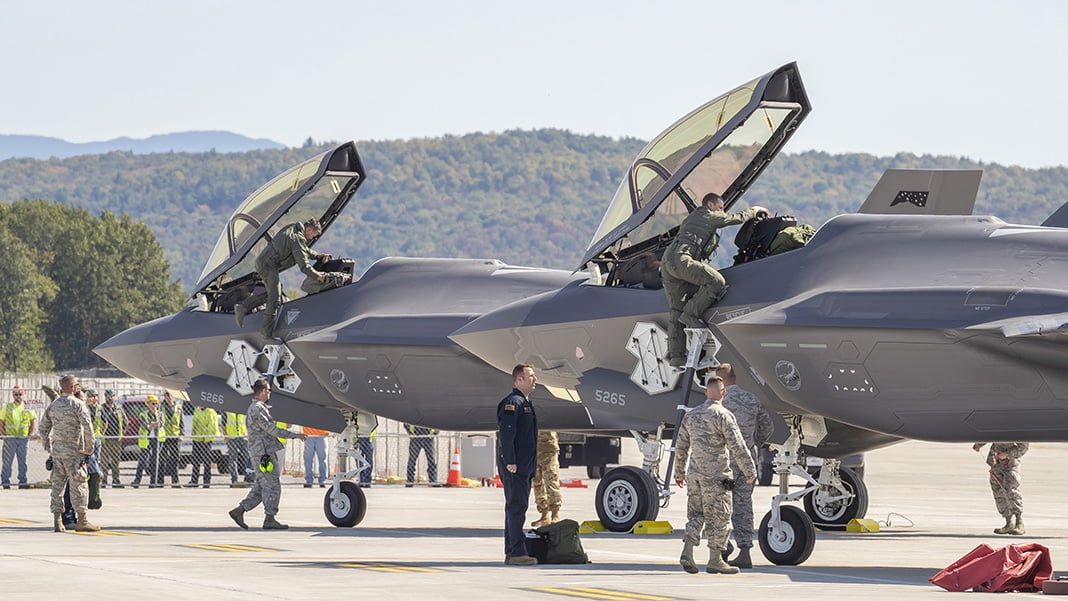 F-35 Fleet Readiness Falls to 25% Amid Parts Shortages and Software Delays: GAO Report
-
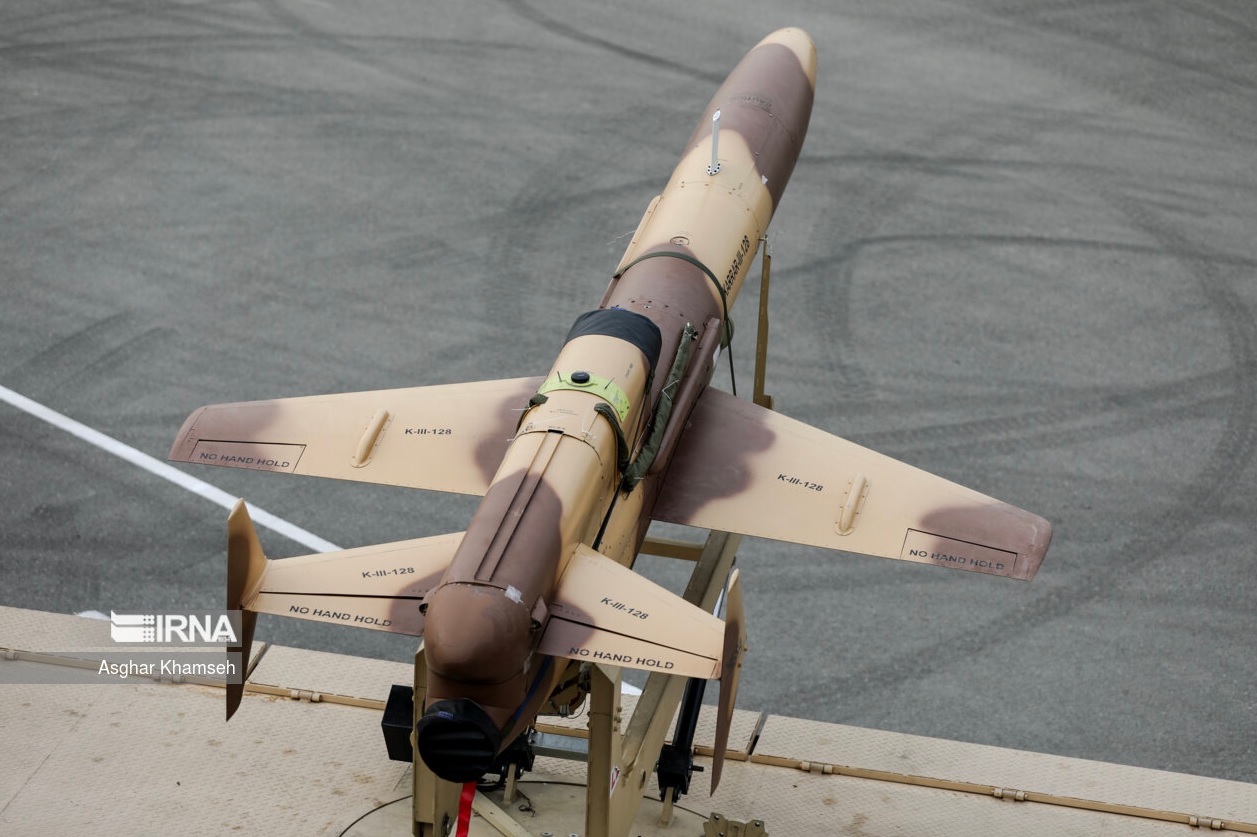 Russia Launches 1,400 Jet-Powered Drones in 2026 as Strike Tactics Evolve to Challenge Ukraine's Air Defenses
-
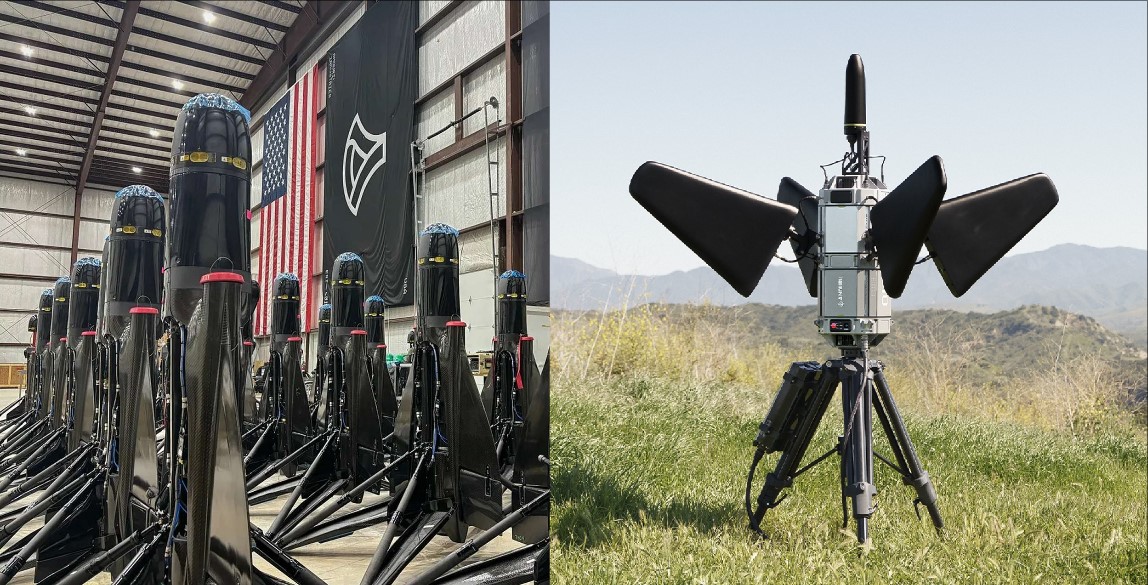 U.S. Approves $1.98 Billion Sale of Anduril AI-Powered Counter-Drone Systems to Kuwait
-
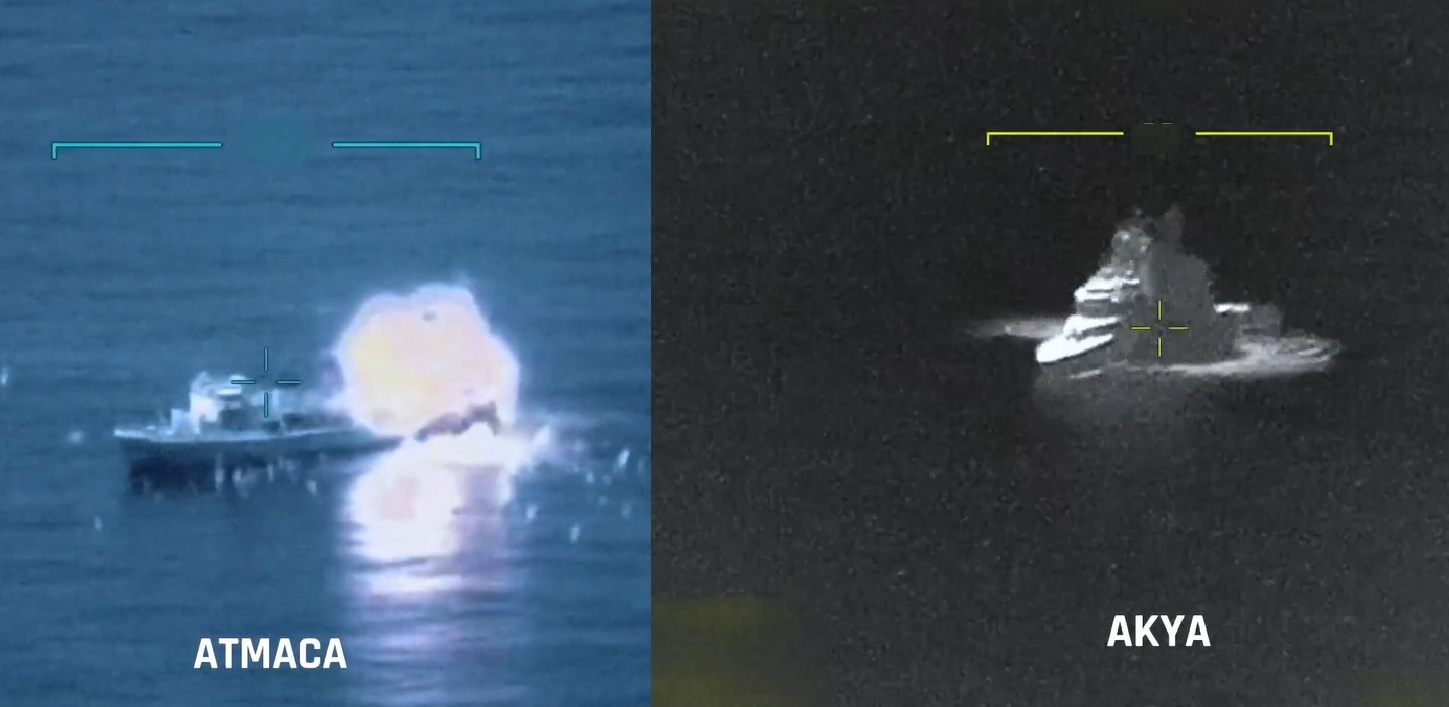 Turkey Navy Successfully Tests AKYA Torpedo and ATMACA Missile During Major Denizkurdu-II Naval Exercise
-
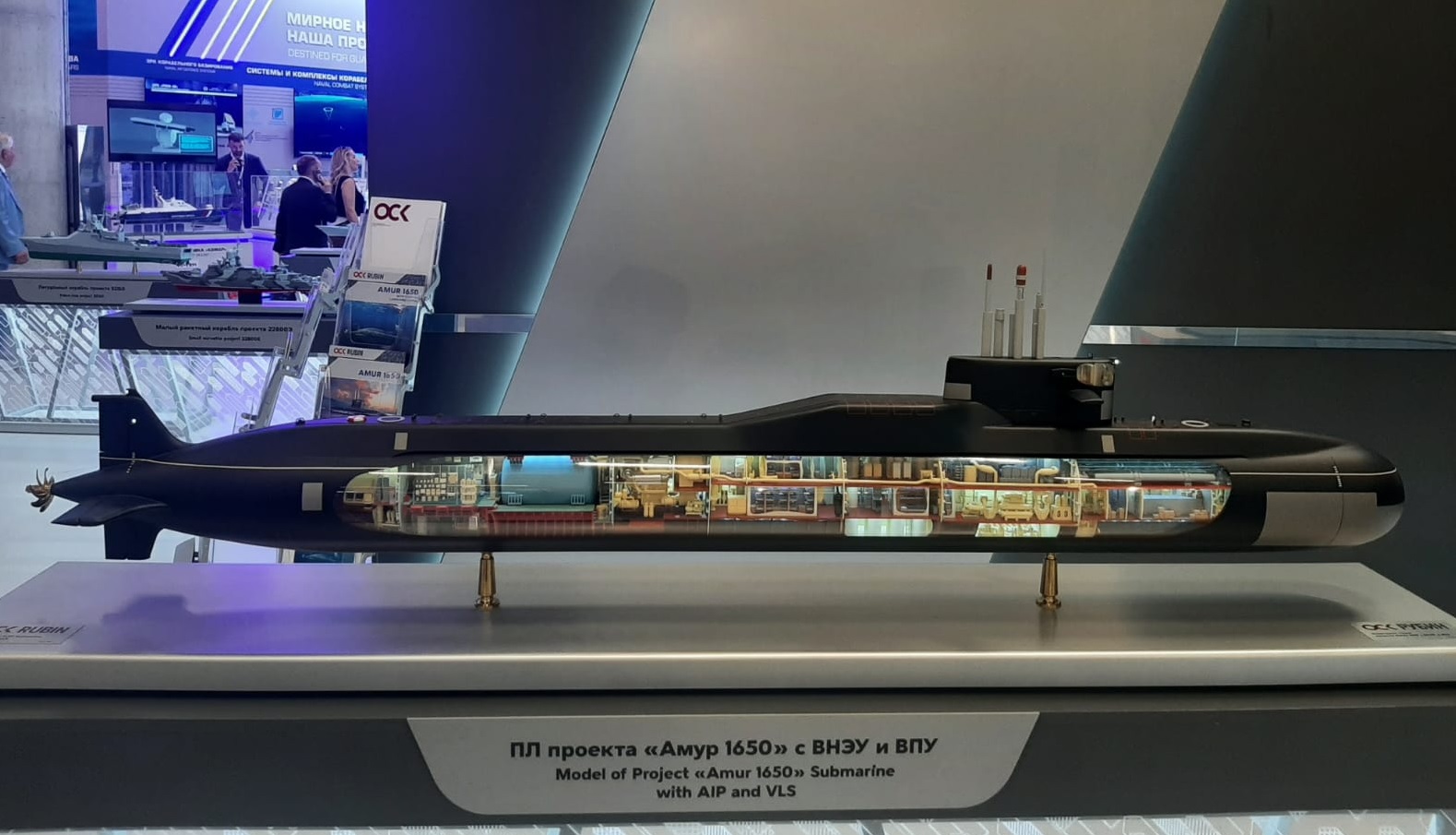 Russia Unveils Amur-1650 AIP Submarine Equipped with BrahMos Vertical Launch System at Fleet-2026
-
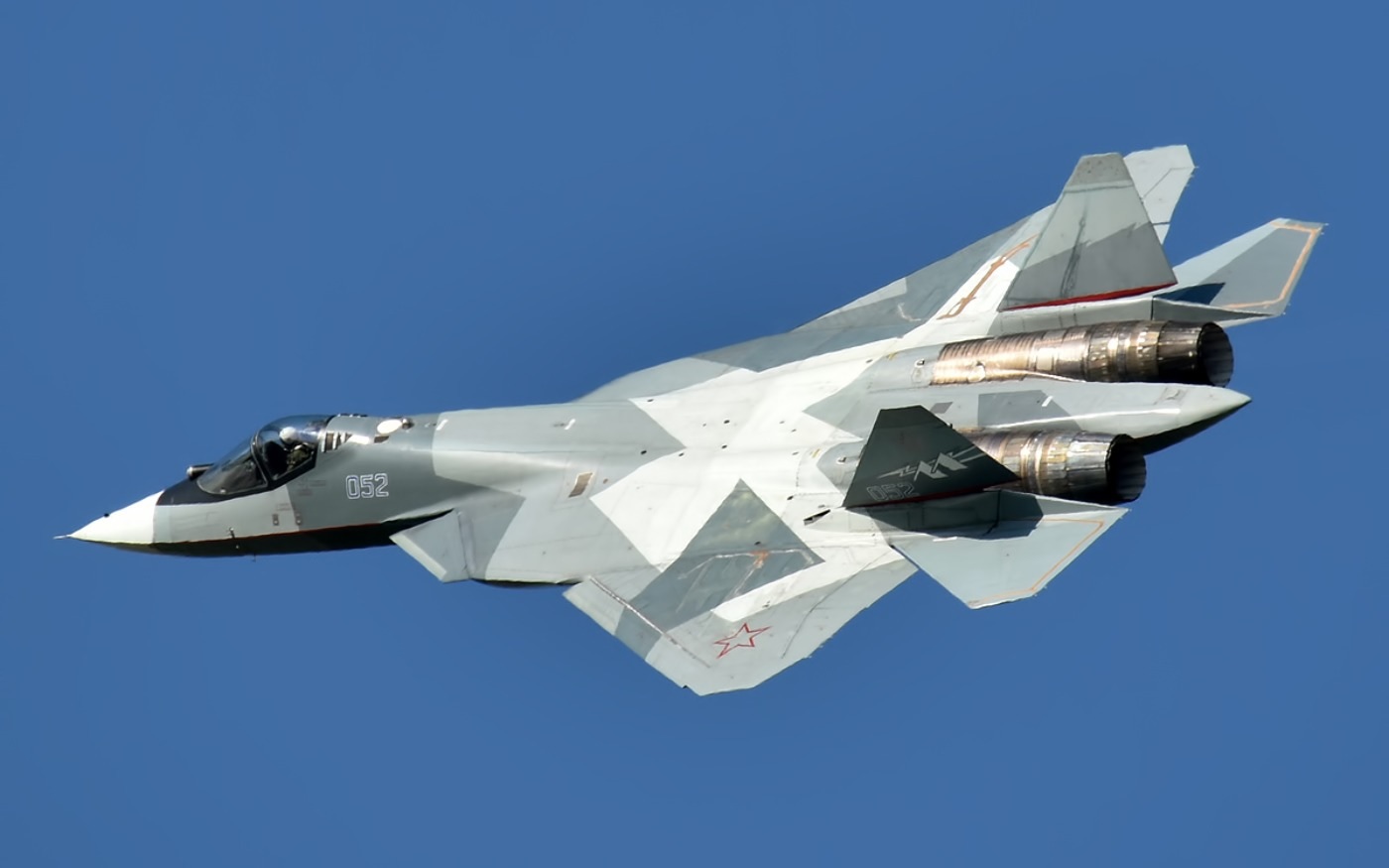 Russian Analysts Debate Su-57 Capabilities After Putin Calls Fighter Superior to F-35
-
 UAE Denies Reports of Releasing Up to $20 Billion in Funds to Iran Amid Regional De-Escalation Efforts
Top Trending in 4 Days
-
 Iranian Media Leaks 14-Point U.S.-Iran Peace Framework Amid Ongoing Negotiations
-
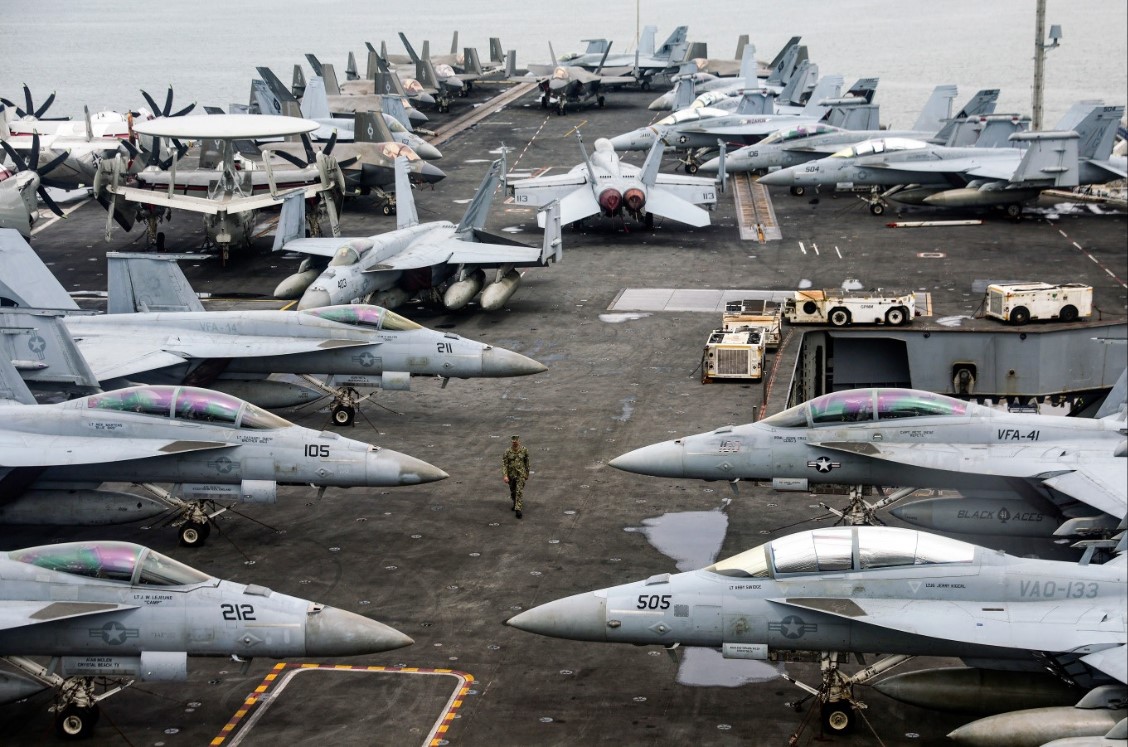 US Plans Significant Reduction of Fighter Jets and Warships for NATO Operations in Europe
-
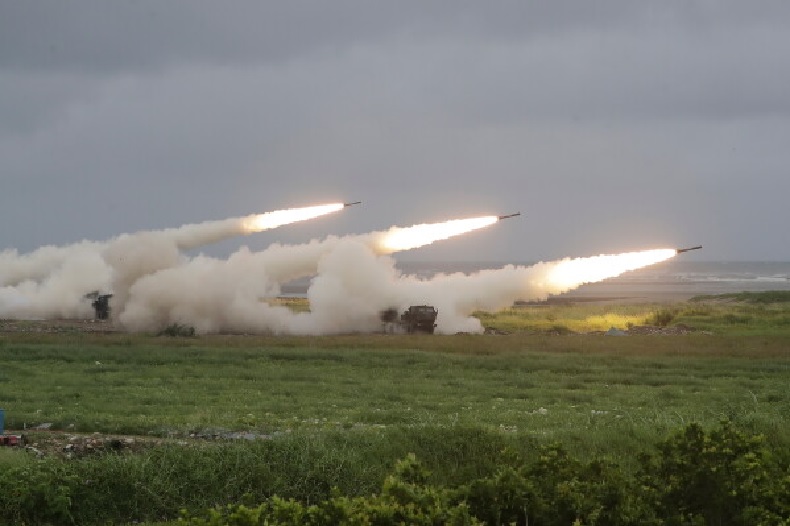 Taiwan Conducts First Live-Fire of HIMARS Rockets From West Coast During Invasion Defense Drill
-
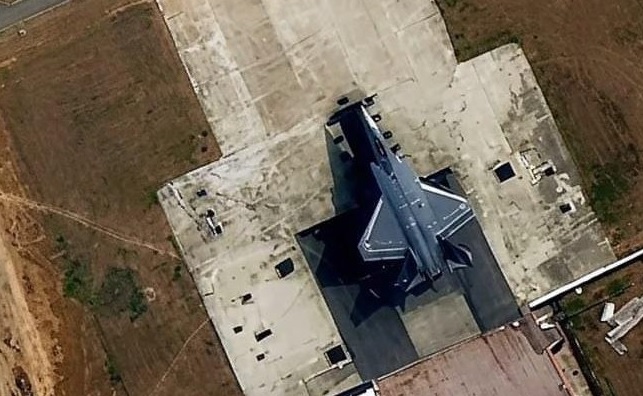 AMCA Airframe Spotted at DRDO’s ORANGE Facility for Radar Cross-Section Testing
-
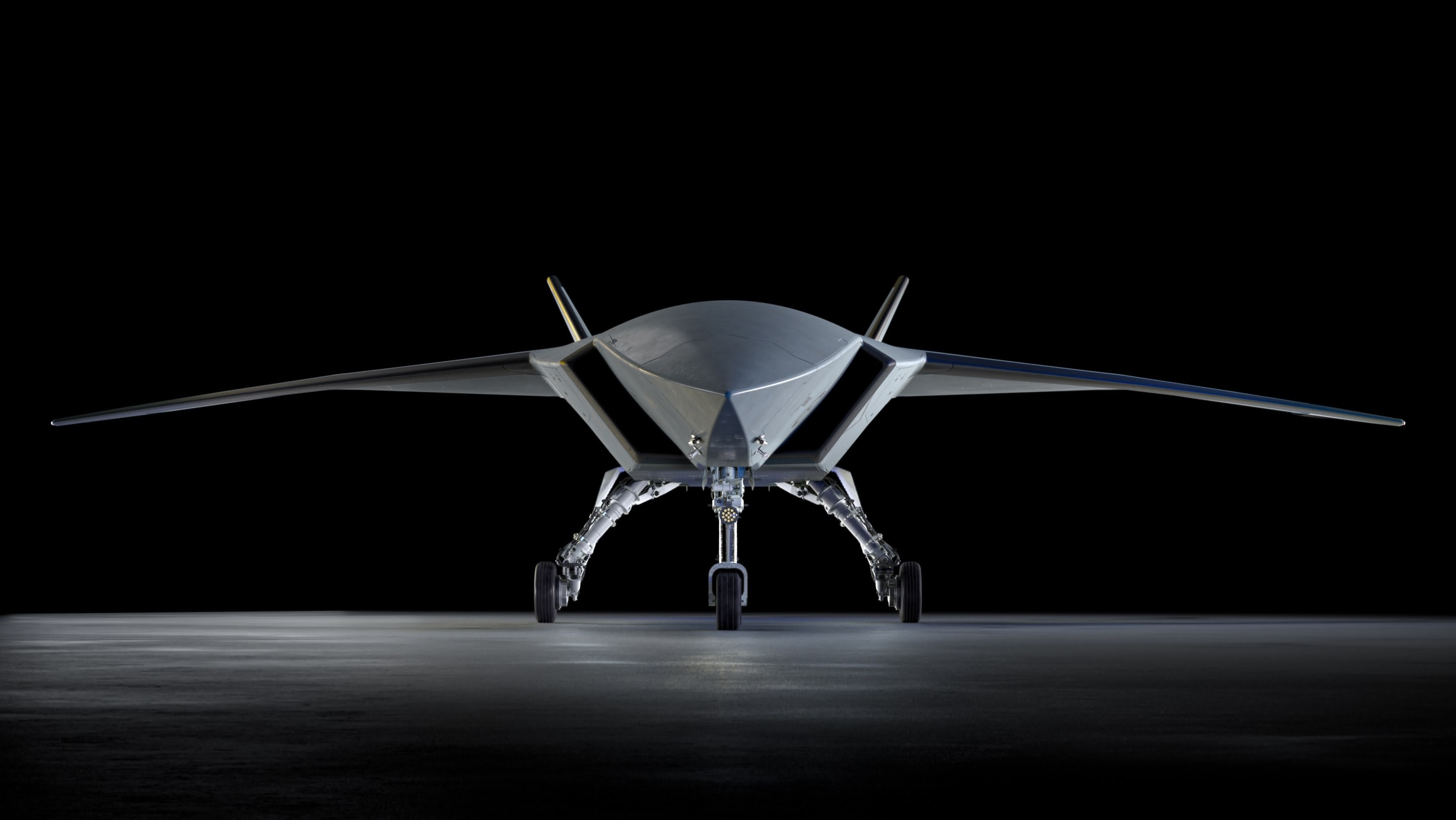 Boeing Introduces New MQ-28 Ghost Bat Upgrades with Increased Range, Payload and Weapons Capacity at ILA Berlin 2026
-
 Diehl Defence Unveils IRIS-T Armed Cobra 600 Air Defense Drone at ILA Berlin 2026
-
 Russian Defense Firm ZALA Unveils KAMA Unmanned Surface Vessel Family at FLOT-2026 Naval Exhibition
-
 U.S Aircraft Carrier USS Theodore Roosevelt Departs San Diego for Major RIMPAC 2026 Naval Exercise