
World
Germany is preparing to authorize an unprecedented €52 billion military procurement package, marking the largest single-year defense investment in the country’s history and signaling a decisive shift toward full-scale rearmament amid rising security demands across Europe. Largest Defense Commitment Ever Undertaken Government officials and parliamentary leaders have agreed in principle to advance the package, which includes 73 major procurement programs covering airpower, missile defense, drones, armored vehicles, digital systems, and infantry equipment. The initiative is part of Germany’s broader effort to rebuild and modernize the Bundeswehr, which policymakers say must transition into a fully capable European security force able to assume greater responsibilities within NATO and the EU. What the €52 Billion Package Includes According to government procurement papers and defense-industry disclosures, the funding spans nearly every critical capability area: F-35A fighter jets, intended to replace the Tornado fleet and support NATO’s nuclear-sharing mission Air- and missile-defense systems, including interceptors, sensors, and launch platforms Unmanned aerial systems, including reconnaissance and strike-capable drones Military support and combat vehicles, including armored transporters and heavy logistics equipment New infantry weapons, with expanded orders for the G95 assault rifle Surveillance, communication, and AI-enabled reconnaissance systems Standard soldier equipment, including protective gear and training systems Among the more technologically advanced projects is investment in AI-based surveillance networks, which will integrate data from drones, satellites, and ground sensors to improve real-time situational awareness. Logistics enhancements — such as heavy transport trailers for Leopard 2 main battle tanks — are also included. Why Germany Is Accelerating Rearmament Berlin’s decision reflects a major shift in strategic thinking since Russia’s invasion of Ukraine. German leaders now emphasize that Europe must assume a larger share of its own defense, particularly as global power dynamics shift. Officials acknowledge that the Bundeswehr has faced decades of underinvestment, leaving critical capability gaps. The new procurement wave, combined with the earlier €100 billion special defense fund, marks a long-term modernization strategy. German planning documents project over €350 billion in equipment investments by 2041. Impact on European Security and Industry The scale of the procurement package is expected to strengthen Germany’s position as Europe’s central military power. Analysts note that the move could reshape NATO’s internal balance and prompt additional defense spending among EU partners. Europe’s defense industrial base will also benefit significantly. German manufacturers dealing with stalled production lines are now preparing for expanded orders of vehicles, missiles, drones, and digital systems. What Comes Next The Bundestag is expected to approve a first tranche of 29 major contracts in the coming days. Delivery schedules will extend into the late 2020s, but lawmakers say faster procurement and simplified approval processes will remain priorities. With this package, Germany enters a new phase of military development — one in which it is poised to take on a leading role in European defense and position itself for the challenges of an increasingly unstable global environment.
Read More → Posted on 2025-12-10 16:46:37
World
Russian Tu-95MS and Chinese H-6K strategic bombers have carried out an approximately eight-hour joint patrol over waters near Japan and South Korea, prompting both Tokyo and Seoul to scramble fighter jets and lodge formal protests. The flight marks the latest in a series of coordinated air operations by Moscow and Beijing and comes amid a sharp downturn in Japan–China relations. According to the Russian Defence Ministry, the mission involved at least two Tu-95MS and two H-6K bombers flying a long-range route over the Sea of Japan, the East China Sea and the western Pacific, as part of the countries’ 2025 military cooperation plan. Route Through Japan’s Strategic Chokepoints Japan’s Defence Ministry said the bombers first appeared over the Sea of Japan before heading toward the East China Sea, where they joined up and flew through the Miyako Strait, a key international waterway between Okinawa and Miyako islands that links the East China Sea to the wider Pacific. Once past Miyako, the combined formation continued into the western Pacific south of Japan’s main islands before reversing course and retracing parts of the route. Russian and Chinese officials stressed that the aircraft remained in international airspace and described the mission as a “long-distance joint flight” conducted “in strict accordance with international law.” The Russian side said the patrol lasted about eight hours, a figure echoed in Japanese and South Korean reporting. Fighters Shadow Bombers – Including Likely F-35s Throughout the flight, the bomber package was accompanied by a larger supporting force. Video and imagery released by regional defence ministries and local media show Chinese J-16 and J-11BS fighters, as well as a Russian A-50 airborne early-warning aircraft and Su-30 fighters, operating in conjunction with the bombers over different legs of the route. Japan scrambled fighters from the Japan Air Self-Defense Force (JASDF) to intercept and monitor the formation. Tokyo did not publicly specify aircraft types, but Japanese air units in the region include F-15J, F-2, and newer F-35A stealth fighters; photos circulated by regional media appear to show at least one Japanese F-35 shadowing the bombers at close range. South Korea’s military separately reported that seven Russian and two Chinese aircraft entered its air defence identification zone (KADIZ), prompting Seoul to scramble its own jets and issue warnings by radio. Both Moscow and Beijing do not formally recognise the KADIZ, arguing that it has no basis in international law. Tokyo Calls Patrol a “Show of Force” Japanese Defence Minister Shinjiro Koizumi condemned the mission as a deliberate signal aimed at Japan. In a statement and posts on social media, Koizumi said the joint operations were “clearly intended as a show of force against our nation” and described them as a “serious concern for our national security.” The JASDF, he added, “strictly implemented air defence identification measures,” with radar tracking and fighters maintaining visual contact as the bombers transited near Japanese airspace but did not enter it. Japan has lodged diplomatic protests with both Moscow and Beijing. The patrol also unfolded just days after Tokyo accused Chinese carrier-based fighters of locking their fire-control radar onto Japanese aircraft near Okinawa—an allegation Beijing denies. That earlier incident had already heightened fears of a miscalculation in the crowded skies around Japan. Second Joint Bomber Patrol of the Year – and the 10th Since 2019 Chinese and Russian statements framed the flight as part of a regular annual programme. Beijing’s Defence Ministry said it was the 10th joint strategic air patrol conducted by the two countries since such flights began in 2019, and the second bomber patrol of 2025 over the Pacific. These patrols have often been timed to coincide with major regional events, such as Quad summits or large-scale U.S. and allied exercises, reinforcing the perception that they are as much political messaging as military training. In addition to air patrols, China and Russia have conducted joint anti-missile drills on Russian territory and a series of “Joint Sea” naval exercises, including plans for a combined maritime drill near Japan announced earlier this year. Strategic Bombers as Tools of Signalling The aircraft involved underscore the strategic nature of the mission. The Tu-95MS “Bear” is a long-range, turboprop strategic bomber capable of carrying nuclear or conventional cruise missiles over intercontinental distances. The H-6K, a modernised Chinese derivative of the Soviet Tu-16, can also carry long-range land-attack and anti-ship cruise missiles and has become a central tool in Beijing’s strategy to project power into the western Pacific. Together, such bombers can simulate coordinated missile strikes against naval task forces or land targets at ranges that test Japanese and U.S. early-warning, air defence and command-and-control networks. The presence of an A-50 early-warning aircraft and front-line fighters suggests the patrol was also used to rehearse complex multi-platform operations under realistic conditions. Rising Tension Triangle: Japan, China and Russia The flight comes at a time when Tokyo’s relations with both Beijing and Moscow are strained. Japan has adopted a more outspoken stance on Taiwan’s security, warning that a conflict in the Taiwan Strait would directly endanger Japanese territory and sea lanes. China has responded with harsh rhetoric and stepped-up air and naval activity around Japan, including more frequent transits by carrier groups and bomber flights. Since Russia’s full-scale invasion of Ukraine in 2022, Japan has also aligned closely with Western sanctions and has expanded defence cooperation with the United States, South Korea and other partners. Moscow, in turn, has increased military activity in the Russian Far East, including bomber patrols and naval exercises near Japan’s northern approaches. Tokyo’s latest defence white paper singled out Sino-Russian military coordination as a key concern, warning that their combined operations “could create a security situation more serious than the simple sum of their individual activities.” Implications for the U.S. and Regional Security While Washington has not publicly detailed its response to the latest patrol, U.S. officials have repeatedly stressed that the U.S.–Japan security treaty covers all Japanese territory, including the Nansei island chain stretching toward Taiwan. The United States routinely flies its own bombers and surveillance aircraft in the region and operates carrier strike groups and submarines throughout the western Pacific. For now, the joint Sino-Russian patrol appears designed to send several overlapping messages: deterrence toward Japan and its U.S. ally, reassurance to domestic audiences in China and Russia that their militaries are standing up to Western pressure, and a demonstration to other regional states that Beijing and Moscow are prepared to coordinate at range and at scale. But as the number and complexity of such missions grow—against a backdrop of radar locks, ADIZ disputes and dense military traffic—the risk of miscalculation also increases. Each new patrol reinforces the pattern of a slow-burn, multi-actor standoff in the skies of northeast Asia, in which a single misstep could rapidly escalate into a wider crisis.
Read More → Posted on 2025-12-10 16:32:53
World
For generations, U.S. defense planners have viewed the Pacific Ocean as a natural buffer—5,000 nautical miles of water that keeps any conflict with China far from American shores. But Beijing’s development of extra-extra-large uncrewed underwater vehicles (XXLUUVs) is beginning to upend that assumption, raising concerns that the U.S. West Coast could one day face direct pressure in a conflict. New satellite imagery, defense show models, and intelligence assessments indicate that China is secretly testing two submarine-sized underwater drones that rival crewed diesel-electric submarines in scale. These drones, operating without a human on board, could potentially travel across the Pacific, deploy weapons, or disrupt major maritime chokepoints—offering China a low-risk means of projecting power far from home waters. A New Tool That Could Change the Pacific Balance U.S. military strategy in East Asia long relied on the idea that China could not easily send ships or submarines to American shores. Any future conflict—particularly one involving Taiwan—was expected to be fought “forward,” far from U.S. ports and infrastructure. But China’s new XXLUUVs appear to challenge that logic. According to naval analysts, the two large underwater drones currently under evaluation are: Diesel-electric, with massive battery compartments replacing traditional crew spaces Equipped with torpedoes, naval mines, and deployable smaller drones Roughly the size of a small submarine, making them the largest underwater drones in the world The drones’ design is comparable in concept to Boeing’s Orca XLUUV, but at a dramatically larger scale. 10,000 Nautical Miles of Range—Enough to Reach California Technical data presented at a recent Chinese defense exhibition, along with size-based calculations, suggest the drones can travel approximately 10,000 nautical miles—a distance that puts the U.S. West Coast, Alaska, Hawaii, and even the Panama Canal within reach. The conceptual model displayed by a Chinese shipbuilder highlighted: 7,000 nautical miles cruising on diesel engines, likely while snorkeling 3,000 nautical miles fully submerged, enabled by a massive bank of modern lithium-iron batteries Potential for even greater range if upgraded to lithium-ion batteries Such endurance far exceeds the submerged range of most advanced diesel-electric submarines. Analysts say the drones could use their long underwater range during the final phase of a journey, helping them slip past anti-submarine defenses between the island chains that surround East Asia. Not Just a Science Project Despite the program’s secrecy, several indicators point to China preparing for operational deployment, rather than research alone. Chinese shipyards typically promote new experimental projects to attract government attention and funding. But in this case, the XXLUUVs are being hidden inside floating docks and tested at a little-documented facility in the South China Sea. The scale of China’s uncrewed undersea development is also striking. At least eight large underwater drones (XLUUVs) appeared in a recent military parade in Beijing—more than any other navy currently possesses. The presence of two competing XXLUUV designs, tested from the same port, further suggests a procurement competition similar to earlier Chinese drone programs that later entered service. Potential Missions: From Minelaying to West Coast Disruption Because they lack crews, the drones cannot replace submarines for complex tasks requiring human judgment. But they excel in high-risk missions, including: Minelaying at long distance, possibly with new Chinese deep-water mines Interdicting commercial shipping in designated zones Surveillance and scouting far from Chinese waters Expendable strikes on targets too risky for crewed submarines The strategic implications are more concerning. Analysts warn that a fleet of long-range XXLUUVs could allow China to: Threaten key U.S. ports such as Los Angeles, Seattle, or San Diego Disrupt Pacific supply chains during a crisis Pressure the Panama Canal, a cornerstone of global commerce Force the U.S. Navy to defend its own coastline, reducing its ability to operate in Asia China’s growing undersea fleet also includes the Type 041 Zhou-class, a hybrid “nuclear-AIP” submarine reportedly using a small reactor for slow, near-indefinite underwater cruising. Some experts believe the Zhou-class and the XXLUUVs may eventually work together to expand China’s reach deeper into the Pacific. A New Phase in Undersea Competition The Pentagon has already begun to take notice. While the U.S. is developing its own Orca XLUUV, American programs remain behind China in scale and speed. Defense officials worry that the Pacific—once seen as a protective moat—could become a vulnerability if China fields dozens of long-range drones. If deployed in significant numbers, China’s XXLUUVs could redefine not just warfare but global shipping security, forcing the United States and its allies to rethink anti-submarine strategies built for a different era. What once seemed impossible—the prospect of uncrewed Chinese submarines reaching American waters—may soon become a question of when, not if.
Read More → Posted on 2025-12-10 16:15:22
World
Peru has taken an important step toward modernizing its army. On December 9, 2025, the Peruvian and South Korean governments signed a major agreement in Lima that sets the stage for Peru to receive K2 Black Panther tanks and K808 armored vehicles. For Peru, this is the beginning of a long-awaited upgrade. For South Korea, it is its first sale of the K2 tank in Latin America, a milestone that shows how fast Korean defense technology is expanding worldwide. The agreement was signed during the national celebration of the Battle of Ayacucho, a symbolic moment that connected Peru’s military past with its future. Top leaders from both countries attended the ceremony, showing how important this partnership is for both sides. A New Path for Peru’s Military Industry One of the most meaningful parts of this agreement is that Peru will not just buy vehicles—it will help build them. South Korea’s Hyundai Rotem and Peru’s state-owned company FAME S.A.C. will work together to produce and assemble nearly 195 armored vehicles inside Peru. This means Peruvian workers, engineers, and technicians will gain skills and take part in building the army’s future equipment. The plan also includes training, long-term maintenance, and technology transfer. Peru wants this partnership to grow over time, eventually building a fleet of 150 K2 tanks and around 280 K808 vehicles in the coming years. For Peru’s industry, this is a chance to become more capable and more independent. Replacing Old Tanks After Many Years For decades, Peru has relied on old T-54 and T-55 tanks, which have been in service since the Cold War era. The country had looked at several options to replace them, including American, Russian, and Ukrainian tanks, but no deal was finalized. South Korea has slowly built a strong relationship with Peru, showing its tanks at local defense shows and working with FAME. Over time, the K2 Black Panther became the most attractive option, especially because it is designed for mountainous terrain, similar to what Peru’s army faces in many regions. Why the K2 Tank Fits Peru’s Needs The K2 Black Panther is one of the world’s most advanced tanks. It has a powerful main gun, a smart fire control system, and a strong engine that lets it move quickly even on difficult terrain. Its special suspension allows it to adjust its height and angle, giving the crew better control on hills or uneven ground. Peru’s geography is full of mountains and steep landscapes, so the K2’s mobility is a major advantage. The tank is also built to be upgraded in the future, giving Peru the option to add new protection systems or digital equipment later. Expanding Peru’s Armored Vehicle Fleet The agreement also includes the K808 infantry vehicle, which will help transport soldiers safely across rough terrain. It offers protection from mines and bullets, can carry a full squad, and can be fitted with different weapon systems. More than 500 of these vehicles are already used by South Korea, and Peru will begin forming its own fleet, with some units being assembled locally. Peru also displayed the first KIA KLTV light vehicles that recently arrived, showing how different types of South Korean vehicles will work together in its future army structure. A Growing Role for South Korea in Global Defense South Korea has been expanding its defense exports rapidly. After signing large deals with countries like Poland and Norway, entering the Latin American market is another major achievement. For South Korea, Peru’s decision shows trust in Korean technology and opens the door for more deals in the region. A Symbolic Step Toward Modernization During the ceremony, the Peruvian Army also presented a book celebrating 50 years of its General Headquarters. The message was clear: the army is honoring its past while building a stronger future. If all stages of the agreement move forward, Peru will soon have one of the most modern armored forces in South America and a growing industrial capability to support it.
Read More → Posted on 2025-12-10 15:33:10
World
In a rare display of bipartisan alignment on national security, the U.S. Congress is advancing legislation that would sharply restrict the Pentagon’s ability to withdraw American troops from Europe and South Korea, inserting strict guardrails into the 2026 National Defense Authorization Act (NDAA). The move reflects growing concern among lawmakers that abrupt reductions in overseas forces could destabilize key alliances at a moment of rising geopolitical strain. A Hardening of Congressional Oversight The language—finalized after weeks of negotiations between House and Senate leaders, Armed Services Committees, and the White House—sets firm minimum troop levels for two of the United States’ most strategically important theaters. Under the bill, the U.S. may not decrease its troop presence in Europe below 76,000 personnel without first providing Congress detailed justification and certifying that the move would not undermine U.S. or NATO security interests. The restrictions come amid heightened anxiety over Russia’s ongoing war against Ukraine and Moscow’s intensified military posture along NATO’s eastern flank. Similarly, the NDAA prohibits reducing troop levels in South Korea below 28,500, reaffirming a force threshold that has been central to deterrence on the Korean Peninsula for decades. Lawmakers privately described the measure as a safeguard against any abrupt changes in U.S. posture that could unsettle Seoul or embolden Pyongyang. Why Congress Is Drawing the Line The troop-level protections mirror concerns shared by NATO allies and South Korean officials, who have privately warned Washington about the destabilizing effects of sudden shifts in American commitments. Some legislators also point to the Trump administration’s past efforts to question or renegotiate long-standing basing arrangements, prompting Congress to codify these limits more firmly in law. Defense analysts say the provisions reflect: A desire to maintain NATO cohesion as the alliance undergoes its largest military transformation since the Cold War. Heightened focus on deterring North Korea, which has expanded missile testing and military cooperation with Russia. Growing bipartisan unease over the potential for unilateral troop drawdowns to be used as bargaining tools in diplomatic or budget disputes. Preserving NATO’s Command Structure In a notable addition, the bill also requires that the United States maintain its hold on the position of Supreme Allied Commander Europe (SACEUR) — NATO’s highest operational military command. The role has always been filled by a senior American general since NATO’s founding in 1949, but Congress is now formalizing expectations to prevent any renegotiation within alliance structures. Senior officials say maintaining U.S. leadership at SACEUR is essential for ensuring continuity in joint planning, rapid decision-making, and integrated deterrence across Europe. What Happens Next The 2026 NDAA is expected to be delivered to President Trump later this week for his signature. While the administration has not signaled opposition to the troop-level restrictions, insiders note that the White House negotiated several of the final compromises—an indication that congressional leaders sought to avoid a veto fight over the Pentagon’s global posture. Once signed, the bill will legally lock in America’s military commitments in Europe and South Korea for the coming year, limiting the administration’s flexibility and ensuring that any future attempt to significantly alter U.S. deployments must pass through Congress first. As global tensions intensify and alliances take on renewed strategic weight, the move signals a clear message from Washington: U.S. forward presence is not up for negotiation—at least not without Congress in the driver’s seat.
Read More → Posted on 2025-12-10 15:10:34
World
The U.S. Space Force has opened a major new phase in Washington’s effort to build a layered, next-generation missile-defence network, issuing a fresh request for prototype proposals for space-based interceptors capable of destroying hostile missiles during their midcourse phase of flight. The solicitation, released on 7 December, marks the first formal move toward developing a kinetic kill vehicle that would operate from orbit—an idea long debated in U.S. defence circles and widely viewed as one of the most technically complex elements of the Pentagon’s Golden Dome architecture. Focus on Kinetic Interceptors, Not Directed-Energy Weapons According to the public notice, the Space Force is seeking kinetic interception solutions only, excluding directed-energy concepts such as lasers or high-power microwaves. Proposals are due by 19 December, and the service has not disclosed performance specifications, interceptor deployment numbers, or targeted orbital regimes, indicating the effort remains in a tightly controlled early stage. The push follows the agency’s earlier award of 18 prototype contracts for boost-phase interceptors, announced in November under Other Transaction Authority arrangements. Speaking at the Reagan National Defense Forum on 6 December, Golden Dome programme director Gen. Michael Guetlein said space-based midcourse weapons will require a transformational approach to cost, production volume, and reliability. “When we start talking about things like space-based interceptor, I’ve got to switch that equation on its head,” Guetlein said. “I’ve got to have high magazine depth, low cost per shot. How do I do that? We’re going to have to tap into industry innovation.” A Revival of Old Ideas—With Modern Scale and Cost Challenges The Golden Dome concept draws heritage from earlier Strategic Defense Initiative (SDI) experiments, including the “Brilliant Pebbles” programme of the late 1980s. While those efforts demonstrated feasibility for orbital interceptors, they were ultimately halted due to cost, technology maturity, and geopolitical concerns. Today’s geopolitical landscape—characterised by expanding long-range missile arsenals in China, Russia, North Korea, and Iran—has revived debate over deploying interceptors in orbit. Golden Dome aims to provide the first truly comprehensive U.S. missile shield capable of handling ballistic, hypersonic, and maneuvering glide vehicles in their midcourse trajectories. Programme officials acknowledge, however, that affordability remains the defining obstacle. Former President Donald Trump recently projected the programme’s budget at $175 billion over three years, but independent estimates are far higher. A September study by the American Enterprise Institute calculated that the 20-year cost could range from $252 billion to as much as $3.6 trillion, depending on interceptor constellation size and launch costs. Industry Prepares for a Massive Technical Undertaking Industry leaders say such a system will demand unprecedented cooperation between government, prime contractors, and the commercial space sector. Northrop Grumman CEO Kathy Warden told forum attendees that a successful interceptor architecture must be both technically viable and economically scalable. “It will take a whole-of-government and industry approach to determine a design that can be deployed aggressively and at scale,” Warden said. “The design has to not only be to develop a system. It has to be to develop a system that can scale and scale affordably.” Companies expected to participate include major missile-defence primes such as Lockheed Martin, Raytheon, Northrop Grumman, Aerojet Rocketdyne, and rapidly growing commercial-space integrators capable of mass-manufacturing small spacecraft. The Space Force has separately emphasised that responsive launch capability—including rapid replenishment of on-orbit assets—will be essential for any operational architecture. MDA Opens Competition for SHIELD: Over 1,000 Firms Qualified In a parallel development, the Missile Defense Agency announced on 2 December that more than 1,000 companies are eligible to compete for task orders under its new SHIELD (Space High-Altitude Interceptor Layer Development) initiative. SHIELD will focus on experimentation, sensor integration, propulsion, and kill-vehicle technologies feeding into Golden Dome’s development pipeline. MDA officials say the unusually broad industrial base is intentional: the agency aims to draw on capabilities from traditional defence contractors, commercial satellite manufacturers, AI-driven tracking firms, and propulsion startups capable of delivering lightweight, high-ΔV systems suitable for orbital engagements. Growing Congressional Scrutiny as Costs Rise Lawmakers have accelerated oversight mechanisms as the programme expands. Senator Deb Fischer, ranking member on the Senate Armed Services Subcommittee on Strategic Forces, said Congress must now prioritise clarity on what elements of Golden Dome are truly essential. “We have to be able to know what we need and prioritize that,” she said. “Those decisions are becoming clearer when we work with the department and the military and really get the information there.” The fiscal 2026 National Defense Authorization Act, headed for a House vote on 10 December, includes mandatory annual reporting on Golden Dome’s costs, testing milestones, operational plans, and deployment timelines. Quarterly briefings will continue until the system becomes fully operational. Technical, Strategic, and Political Tests Golden Dome’s midcourse interceptor layer is expected to undergo several years of prototyping before any orbital tests occur. Defence officials have privately indicated that on-orbit demonstrations could begin in the early 2030s, depending on funding and technology maturity. The programme’s supporters argue it is essential for countering the emerging threat of nuclear-armed hypersonic glide vehicles and multi-warhead ballistic missiles. Critics, however, warn that orbital interceptors may escalate strategic tensions, trigger counter-space weapons development by adversaries, and create long-term debris risks. For now, the Space Force’s new solicitation signals that the United States is moving steadily toward one of the most ambitious missile-defence initiatives in its history—a system that, if successfully deployed, could permanently reshape the global strategic balance.
Read More → Posted on 2025-12-10 15:03:05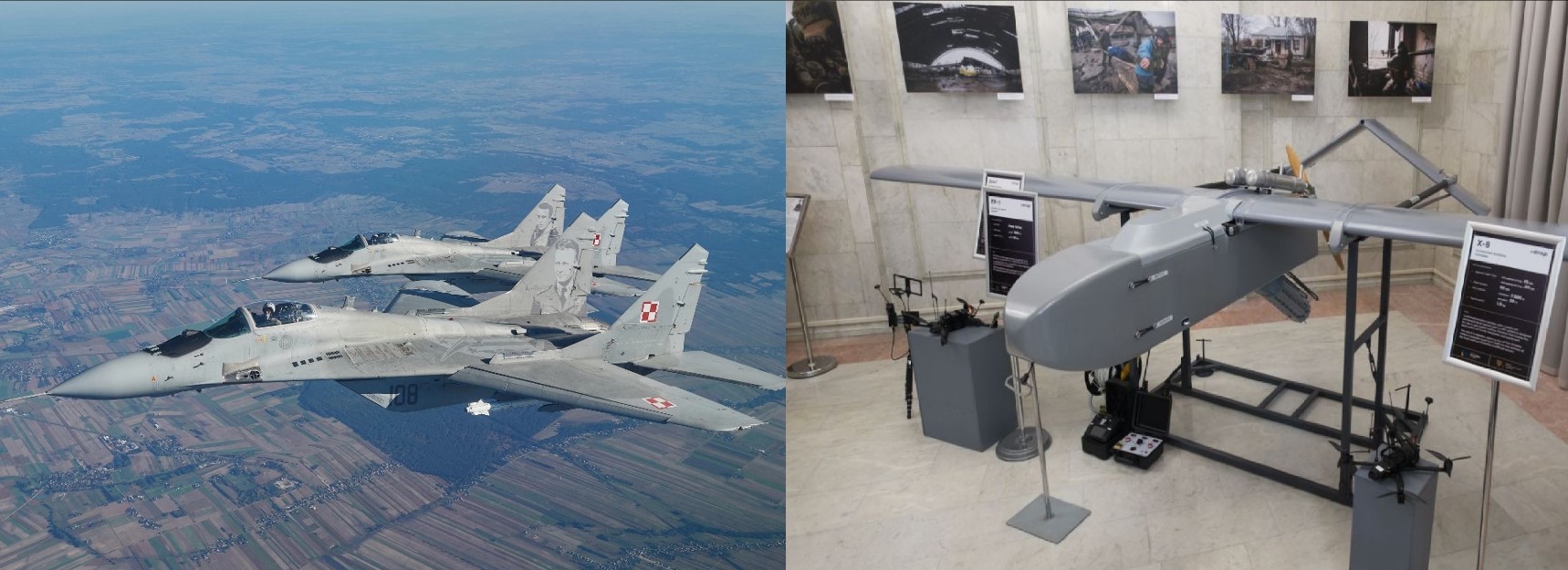
World
Poland is in advanced negotiations to transfer its remaining MiG-29 fighter jets to Ukraine, the General Staff of the Polish Armed Forces confirmed on 10 December 2025, framing the proposal as both an act of allied solidarity and a strategic investment in next-generation drone and missile capabilities developed inside Ukraine’s wartime innovation ecosystem. While no final decision has been announced, officials in Warsaw describe the talks as “constructive and ongoing,” with Polish defense planners emphasizing that the Soviet-built fighters are nearing the end of their useful life in Polish service. Poland Preparing to Retire Its Last MiG-29s Poland’s defense minister reiterated that the airframes under discussion are the final MiG-29s remaining in Polish inventory, following an earlier tranche transferred to Kyiv in 2023 and 2024. The aircraft once formed the backbone of Poland’s air defense, but Warsaw’s sweeping modernization program—built around F-16s, FA-50 light fighters, and future F-35A squadrons means the MiG-29s will not undergo further upgrades. Their roles will be fully absorbed by Western platforms in the coming years. Despite their age, the MiG-29s have retained significant point-defense value. The twin RD-33 afterburning engines, Mach 2-class performance, high thrust-to-weight ratio, and tight low-altitude maneuverability make the jet a rugged first-responder in high-threat environments. Equipped with a 30 mm GSh-30-1 cannon, R-27 and R-73 air-to-air missiles, and limited ground-attack stores, the Fulcrum remains a potent quick-reaction platform—particularly suited for Ukraine’s daily battle against cruise missiles, glide bombs, and low-flying drones. Poland’s fleet received incremental NATO compatibility upgrades, including improved radios, identification systems, and navigation avionics. While modest, these updates have increased reliability and interoperability, making the jets immediately usable by Ukraine without further modification. Why Ukraine Wants More MiG-29s The Ukrainian Air Force already operates several MiG-29 variants, and its pilots, maintainers, and depots are fully integrated into the Fulcrum support structure. Following earlier Western efforts, Ukrainian MiG-29s have been successfully adapted to deploy AGM-88 HARM anti-radiation missiles, and additional Western weapon integrations remain possible. As Ukraine fields its first F-16 squadrons, officials in Kyiv acknowledge that a transitional period is unavoidable. Training pipelines, spare parts chains, and hardened air bases need time to mature. Until then, combat-ready MiG-29s serve as critical attrition replacements, allowing Ukraine to disperse aircraft across small airfields and operate under heavy Russian air-defense pressure. Their acceleration and short-field performance remain valuable as Ukraine confronts Russia’s expanding use of glide bombs and long-range missile barrages. Poland Seeks Access to Ukraine’s Rapidly Advancing Drone Technology In return for the MiG-29s, Poland is seeking access to Ukrainian drone and missile technologies, including: FPV and kamikaze drone production methods AI-assisted targeting software Electronic warfare-resistant datalinks Modular warheads for ground and aerial unmanned systems Long-range strike drone designs capable of deep penetration Ukraine’s drone industry has emerged as one of the most dynamic wartime innovations in decades. Ukrainian officials estimate more than one million drones were produced domestically in 2024, with even larger output planned in 2025. Battlefield adaptation has accelerated breakthroughs in autonomous navigation, hardened communications, and low-cost manufacturing—areas in which NATO states, including Poland, now seek close cooperation. Poland aims to integrate these technologies into its artillery brigades, territorial defense units, coastal protection forces, and future counter-UAV formations. Warsaw is also exploring co-production arrangements, allowing joint facilities to mass-manufacture drones for both Ukrainian and NATO use. A New Industrial Logic: Fighters for Drones The emerging deal represents a novel model of wartime equipment exchange. Poland would send combat aircraft that no longer fit its modernization plan, while Ukraine leverages one of its strongest comparative advantages—its rapidly evolving combat-proven unmanned systems—as strategic currency. Defense analysts note that this is the first major exchange in which a NATO ally seeks not only hardware compensation but also direct access to Ukrainian technology and intellectual property, turning Ukraine’s battlefield innovations into long-term industrial capacity for the alliance. NATO’s Strategic Perspective For NATO, the arrangement achieves two goals simultaneously: Keeping the MiG-29 operational where it is most effective—over Ukraine’s front lines, not in storage hangars. Absorbing Ukrainian innovation into the alliance’s eastern industrial base, helping to accelerate Europe’s preparedness for high-intensity conflict. The alliance has long sought ways to strengthen deterrence on its eastern flank while supporting Ukraine’s war effort without depleting Western fighter inventories. This transfer-and-tech-access model, if finalized, could become a template for future cooperation. What Comes Next? Polish officials say the negotiations are in “the decisive phase,” with a formal political decision expected in the coming weeks. Technical teams from both countries are already discussing timelines, delivery conditions, and the scope of joint production arrangements tied to the drone and missile technology exchange. If approved, the deal would mark the final retirement of the MiG-29 from Polish service—but also the beginning of a new chapter for the aircraft as Ukraine continues to rely on rugged legacy platforms while transitioning into a Western-equipped air force. For Ukraine, the additional airframes would enhance survivability and operational flexibility. For Poland, the deeper technological partnership could anchor its emerging role as a central node in NATO’s drone and missile industrial revival. And for Europe, the arrangement would represent a rare convergence of immediate battlefield utility and long-term strategic development—uniting old fighters with new drone warfare innovations.
Read More → Posted on 2025-12-10 14:31:56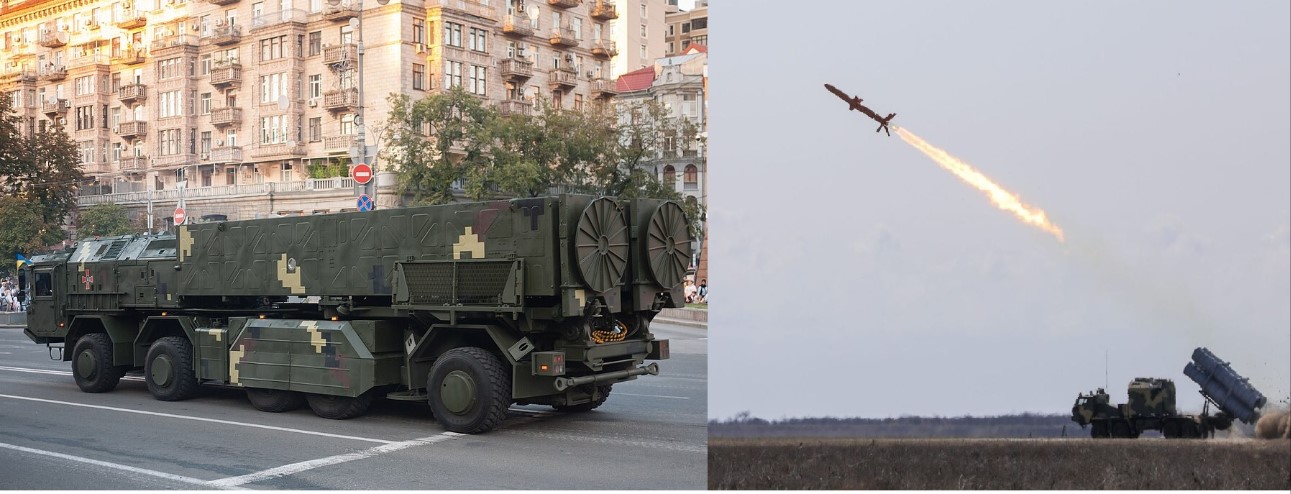
World
Ukraine has officially begun using its indigenous “Sapsan” operational-tactical ballistic missile system in combat, President Volodymyr Zelensky has confirmed, marking a major expansion of Kyiv’s home-grown long-range strike capability. Alongside “Neptune”, “Palianytsia” and “Flamingo” cruise missiles, the new system gives Ukraine an increasingly diversified ability to hit Russian targets far beyond the front line. Speaking in a recent Q&A, Zelensky said Ukraine is already using “Neptunes, long Neptunes, Palianytsia, Flamingo – and also Sapsan”, adding that he would not disclose quantities so as not to reveal “all the precedents and details” to Russia. He stressed that “Neptunes are really working well”, and that Russian forces often misidentify which type of weapon has struck them – something Kyiv sees as an advantage. Sapsan: Ukraine’s First Indigenous Tactical Ballistic Missile The Sapsan (also known as Hrim-2 / Grom-2) is a Ukrainian operational-tactical ballistic missile system developed by the Yuzhnoye (Pivdenne) design bureau and produced by Pivdenmash. It is mounted on a wheeled transporter-erector-launcher, allowing rapid shoot-and-scoot operations similar to Russia’s Iskander-M. Open-source assessments and Ukrainian reporting indicate the following approximate performance: Range: Export “Hrim-2” variant: about 280–300 km, restricted to comply with the Missile Technology Control Regime. Domestic “Sapsan” variant: up to 500 km, allowing deep strikes into Russian rear areas. Speed:The missile is believed to reach over Mach 5 at peak, with some sources describing speeds in the Mach 4–5+ class, making interception significantly harder than subsonic cruise missiles. Warhead:Sapsan carries a high-explosive warhead of roughly 400–500 kg, with several Ukrainian and analytical sources specifically citing about 480 kg – more than double the payload of a U.S. ATACMS in some configurations. In May–June 2025, Ukrainian and Western reports indicated that Sapsan had already conducted successful combat trials, striking Russian military targets at nearly 300 km range and moving into mass production during the summer. With Zelensky now confirming its operational use, Sapsan becomes a key element in Kyiv’s strategy to reduce dependence on Western-supplied ATACMS and to maintain a long-range strike option even if foreign stocks become constrained. Neptune and “Long Neptune”: From Coastal Defense to 1,000 km Strike Weapon Ukraine’s missile renaissance began with the R-360 “Neptune”, originally an anti-ship cruise missile developed from the Soviet Kh-35 and fielded as a coastal defense system. Early in the full-scale invasion, Neptunes gained global attention after being credited with the sinking of the Russian cruiser Moskva. The original R-360 Neptune has been widely reported with: Range: about 280 km in its standard anti-ship configuration, with later land-attack adaptations reaching 300–400 km. Speed: roughly 900 km/h, a typical subsonic cruise profile. Warhead: about 150 kg high-explosive in the baseline anti-ship version. Since 2024–2025, however, Ukraine has showcased a dramatically upgraded “Long Neptune” variant: Range: up to 1,000 km, according to Ukrainian officials and multiple independent assessments, enabling strikes deep into Russia, including targets like Novorossiysk and Tuapse. Speed: around 900–950 km/h, still subsonic but optimized for long-range endurance. Warhead: open sources indicate a heavier payload of roughly 260 kg or more compared to the original 150 kg, though precise figures remain officially undisclosed. By pairing Long Neptune with Sapsan, Ukraine now fields both a long-range cruise missile and a fast ballistic system, complicating Russian air and missile defense planning. Palianytsia: The “Rocket-Drone” for 600+ km Deep Strikes The “Palianytsia” (often transliterated Palianytsya) is described by Kyiv as a hybrid between a cruise missile and a long-range attack drone. It was first unveiled publicly in August 2024, after suspected use in strikes against Russian ammunition depots far beyond the front line. After initial secrecy, Ukraine’s state defense conglomerate Ukroboronprom disclosed detailed specs in 2025: Range: up to about 650 km, with earlier estimates putting it in the 600–700 km band. Speed: a maximum of roughly 900 km/h, comparable to Russian Kh-101 cruise missiles. Warhead / Payload: around 100 kg of payload, typically a high-explosive warhead. Flying at low altitudes between 15 and 500 meters and guided by INS + GPS, Palianytsia is designed to slip through gaps in Russian radar coverage and attack high-value targets like ammunition depots, air bases and logistics hubs. For Ukraine, Palianytsia fills an important niche: cheaper and lighter than Flamingo, but fast and long-ranged enough to threaten important military infrastructure hundreds of kilometers inside Russia. Flamingo (FP-5): A 3,000 km Heavy Cruise Missile The most dramatic of Ukraine’s new systems is “Flamingo”, also known as FP-5, a large ground-launched cruise missile developed by Ukrainian private firm Fire Point. It was formally presented in August 2025 and has since moved into early serial production. Key known characteristics from Ukrainian and international analyses include: Range: around 3,000 km, allowing strikes far into the Russian interior and potentially beyond. Speed: subsonic, up to about 900–950 km/h, with reported endurance of around four hours of flight. Warhead: a massive 1,000–1,150 kg high-explosive payload, placing Flamingo in the same weight class as – or heavier than – well-known systems like the U.S. Tomahawk or Russian Kh-101. Flamingo’s ability to fly at very low altitude, sometimes below 50 meters, and to follow complex routes is intended to “outsmart” Russian air defenses and radar coverage. According to Zelensky and Ukrainian media, Flamingo has already been used in multiple real operations, with at least nine confirmed combat launches reported by Ukrainian sources by late 2025. A New Phase in Ukraine’s Long-Range War with Russia Taken together, Sapsan, Neptune / Long Neptune, Palianytsia and Flamingo represent a rapid and deliberate build-up of Ukraine’s domestic long-range strike complex since Russia’s full-scale invasion in 2022. International reporting notes that Kyiv now fields a mix of ballistic missiles, heavy and light cruise missiles, and long-range “kamikaze” drones capable of reaching hundreds to thousands of kilometers beyond the front line. By confirming that Sapsan has moved from testing into actual combat use, Zelensky is signaling that Ukraine’s long-promised indigenous ballistic missile is no longer just a development project but an operational tool. Its combination of: High speed (Mach 4–5+), Heavy warhead (around half a ton), and 500 km domestic range gives Kyiv a way to strike hardened targets like command bunkers, airfields and logistics nodes on timelines and trajectories that differ sharply from cruise missiles. At the same time, by refusing to reveal how many missiles have been produced or used, and by allowing Russia to misguess whether a strike was carried out by Neptune, Palianytsia, Flamingo or Sapsan, Ukrainian officials are using ambiguity as a weapon – forcing Moscow to stretch its air defenses over a growing volume of sky and a widening list of threats.
Read More → Posted on 2025-12-10 14:13:23
World
Babcock has unveiled a major new technology programme aimed at accelerating the Royal Navy’s shift toward a Hybrid Fleet, positioning the UK as a European leader in naval autonomy and AI-enabled maritime operations. The announcement comes as the First Sea Lord, General Sir Gwyn Jenkins, used the International Seapower Conference to call for a decisive transformation in how the Navy integrates crewed and autonomous platforms. The initiative—branded ARMOR Force (Autonomous and Remote, Maritime Operational Response – Force)—is a new architecture made up of disaggregated autonomous systems and platforms capable of independent operations, all linked by advanced digital command networks. Babcock says this distributed, modular approach will help the Royal Navy deploy more resilient, persistent, and scalable maritime forces across the Atlantic and Indo-Pacific. Royal Navy Pushes Ahead With Hybrid Warfare Concepts The Royal Navy has increasingly stressed the need to merge traditional naval assets with large uncrewed vessels, AI-driven decision tools, and multi-domain sensors. Jenkins’ remarks outlined that this fusion is essential for the UK to stay ahead of adversaries reshaping maritime warfare. ARMOR Force is designed to directly support the Navy’s Atlantic Bastion, Atlantic Strike, and Atlantic Shield operational concepts—missions that rely on autonomous systems for anti-submarine warfare, air defence, strike capabilities, and long-range surveillance across NATO waters. Type 31 Frigates to Become Command Hubs At the core of the plan is a new Type 31 Common Command Vessel (CCV) concept. Developed by Babcock, the CCV would allow the Royal Navy’s newest frigates to command swarms of autonomous vessels and mission systems. The enhanced Type 31s would control: Large Uncrewed Surface Vessels (USVs) Autonomous mission pods (PODS) for rapid role changes A networked force of sensors and effectors Distributed, AI-equipped surveillance platforms Babcock says this configuration will allow a single frigate to direct a much larger maritime footprint than traditional ships can manage. Partnership With HII Brings ROMULUS USVs Into UK Service A central component of ARMOR Force is the introduction of the ROMULUS family of unmanned surface vessels, developed by U.S. shipbuilding giant HII. These AI-enabled USVs offer long endurance, modular payloads, and repeatable mass production—attributes the Royal Navy sees as vital for 2030s operations. The ROMULUS vessels are built for open-ocean autonomy, carrying sensors or weapons for anti-submarine, surveillance, or strike missions. Babcock will design and build the handling systems required to load and deploy mission modules onto ROMULUS platforms. HII President and CEO Chris Kastner said the partnership “brings scale, autonomy, and real operational advantage” to the Royal Navy’s future fleet. Arondite to Provide the AI Brain Another key partner is Arondite, a UK-founded defence technology firm whose Cobalt Operating System will serve as the central autonomy and mission-orchestration layer for ARMOR Force. Cobalt will integrate: crewed and uncrewed vessels heterogeneous sensors distributed effectors shore-based and ship-based command nodes Will Blyth, co-founder and CEO of Arondite, said the future of maritime power “will be defined by an adaptable blend of crewed and uncrewed systems,” adding that Cobalt was engineered precisely for this challenge. Autonomous Mission System Expected by Late 2026 Babcock plans to deliver the first deployable autonomous mission system under ARMOR Force by the end of 2026, a timeline that aligns with NATO’s push for rapid adaptation to autonomous naval technologies. NATO-Ready, Export-Focused Design ARMOR Force is built on open commercial and NATO standards, allowing interoperability with allied fleets. Babcock also emphasised that the system is designed to be exportable, providing a scalable autonomy solution for navies seeking rapid modernization. Rosyth Positioned as Autonomy Integration Hub Babcock’s Rosyth facility—already home to a digital dockyard concept—will lead integration and testing for ARMOR Force. The site is equipped for: autonomous mission-system development real-time AI model training and simulation remote operations multi-platform system integration production of modular PODS Sir Nick Hine, Chief Executive of Babcock Marine, said ARMOR Force is “a bold step forward,” adding that the initiative “will keep the Royal Navy at the forefront of global maritime security for decades to come.” A New Phase in UK Maritime Power The unveiling marks one of the most ambitious moves yet in Britain’s naval modernization effort. By combining large autonomous vessels, AI mission control, modular payloads, and upgraded surface combatants, the Royal Navy is preparing for a future where hybrid fleets dominate maritime operations.
Read More → Posted on 2025-12-09 15:55:37
World
U.S. defence contractor Northrop Grumman announced today that a new software update for its AN/TPS-80 Ground/Air Task-Oriented Radar (G/ATOR) has significantly enhanced detection range — allowing earlier threat identification and faster defensive reactions for operators in the United States Marine Corps (USMC) and the United States Air Force (USAF).Defence Industry Europe The upgrade, disclosed at a company press event in Baltimore, introduces an “extended range mode” alongside improved Identification Friend or Foe (IFF) capability and enhanced system interoperability. According to Northrop Grumman, all fielded AN/TPS-80 units have already received the upgrade.Defence Industry Europe “G/ATOR’s extended range and improved identification systems provide U.S. and allied forces with a crucial tactical advantage,” said Bob Gough, vice president of maritime and land systems and sensors at Northrop Grumman. He added that the radar — designed for “the most complex air defence environments” — now offers even greater real-time detection, tracking, and targeting capabilities.Defence Industry Europe What is G/ATOR — And What Does the Update Change? The AN/TPS-80 G/ATOR is a long-range, mobile AESA (Active Electronically Scanned Array) radar operating in the S-band, capable of providing 360-degree surveillance for air defence, missile warning, air traffic control, and counterfire support. G/ATOR was designed as a “one-radar, many-missions” solution — combining the roles previously handled by up to five separate legacy systems (including air defence radars, fire-control radars, ground-weapon locating radars, and air-traffic control radars) into a single, expeditionary package. Because of its highly mobile architecture, G/ATOR can be deployed rapidly — via transport aircraft or heavy-lift helicopters — and be operational in minutes. The radar comprises three main components: the radar antenna (on a trailer), a power generator unit, and a communications control vehicle. Also notable is its use of modern Gallium Nitride (GaN) AESA modules — an upgrade that began with early deliveries to the Marine Corps in 2018. GaN enables higher power efficiency, greater sensitivity, and improved reliability over earlier electronics. With this update, G/ATOR retains all its multi-mission flexibility — enabling surveillance, missile warning, targeting and even air-traffic control — but now with boosted range and tighter integration into command-and-control networks. Strategic Implications: What the Extended Range Means for US and Allied Forces Earlier threat detection and reaction: The extended-range mode allows forces to detect and classify incoming threats — including aircraft, cruise missiles, hypersonic weapons, unmanned aerial vehicles (UAVs), rockets, artillery, and mortar fire — at greater distances. That extra time can be critical for intercepting or evading attacks. Improved identification and targeting: Enhanced IFF and improved tracking accuracy reduce the risk of misidentifying friendly assets — vital in complex, multi-domain battlefields. The software update sharpens threat categorization and provides more reliable tracking for fire-control systems. Better integration and information sharing: Leveraging open-architecture design, the upgrade improves interoperability with U.S. and allied command-and-control networks. That allows data from G/ATOR to be shared more seamlessly across services or partner nations — boosting coordinated air and missile defense efforts. Cost- and force-efficiency: By consolidating multiple radar functions into one system still deployable on the ground or via air transport, G/ATOR helps streamline logistics, maintenance, and operational footprint — all while keeping up with evolving threats. Program History & Deliveries — Where G/ATOR Stands Development on the G/ATOR program began in September 2005. Over time it evolved through multiple blocks — transitioning from early AESA/GaAs-based prototypes to modern full-rate production systems featuring GaN electronics. Under a contract awarded in June 2019, Northrop Grumman began full-rate production for an additional 30 GaN G/ATOR systems. As of April 2025, reports indicated that the USMC was “more than halfway through” fielding its inventory of G/ATOR units, with plans to procure a total of 60 systems by 2029. In today’s announcement, Northrop Grumman said 39 systems have now been delivered; the 40th is expected later this year. Broader Context: Why Upgrades to Ground-Based Radars Matter Modern warfare places increasing emphasis on high-speed, low-observable threats — including cruise missiles, hypersonic weapons, small drones, and rocket/mortar attacks. Traditional radars, especially older legacy designs, often struggle to detect such fast, low-RCS targets reliably. In that environment, a system like G/ATOR — mobile, multi-mission, AESA-based, and now enhanced for extended range and better identification — offers a tangible advantage. Its adaptability means that as new threats emerge, capabilities can be added via software or incremental hardware upgrades, rather than requiring new radar platforms. Moreover, for allied and partner nations seeking interoperable air and missile defence — especially under coalition or NATO frameworks — having a common radar solution that integrates smoothly with multiple command-and-control architectures becomes increasingly valuable. G/ATOR has been cited as a candidate for broader multinational adoption beyond the US. What Comes Next With this update, all fielded G/ATOR systems have been enhanced — but the program’s future potential remains significant. Analysts will be watching whether further software upgrades (enhanced signal processing, clutter rejection, electronic-warfare resilience) are introduced in the coming years. Additionally, as production continues toward the planned 60-unit total, there may be new users — either within additional US services or allied foreign forces. The open-architecture and modular design make such expansion feasible. For now, the December 2025 update marks a meaningful step forward in ensuring that ground-based radar technology keeps pace with evolving aerial and missile threats — giving U.S. and allied forces sharper eyes, earlier warnings, and greater battlefield flexibility.
Read More → Posted on 2025-12-09 14:22:08
World
BAE Systems has secured a $36 million production contract from Lockheed Martin to build and supply its new Multifunction Modular Mast (MMM) systems for installation aboard U.S. Navy submarines, specifically the latest submarines in the Virginia-class submarine program. Stealth-Ready Antennas For Undersea Signal Detection The MMM is a high-performance radio-frequency receiving antenna system engineered to enable submarines to detect, identify, and determine the direction of adversary communications signals — while remaining submerged. Once installed, the mast will feed data into Lockheed Martin’s advanced submarine EW (Electronic Warfare) suite, AN/BLQ-10, providing a critical enhancement to the submarine’s signal-intelligence and situational-awareness capabilities. By using the MMM, Virginia-class submarines can detect communications from potential threats before surfacing — giving them an edge in stealth operations and reducing the risk of detection. The mast offers a secondary layer of sensing, supplementing the submarine’s radar and sonar systems. Designed For Undersea Rigors And Future Upgrades According to BAE Systems, the MMM antenna is enclosed inside a composite radome designed to withstand extreme pressures and corrosive conditions of deep-sea operation. The radome helps maximize signal reception while minimizing the mast’s visibility. The design also includes a payload module, enabling the U.S. Navy to integrate additional sensors in the future and expand the mast’s mission capabilities. The contract calls for production work to be carried out at BAE’s facilities in Hudson, Merrimack, and Nashua, New Hampshire. Enhancing Submarine Electronic Warfare And Situational Awareness The AN/BLQ-10 is a well-established submarine electronic-warfare support system: when paired with masts like the MMM, it provides automatic detection, classification, localization, and identification of potentially hostile radar and communication signals — even while the submarine remains submerged or at periscope depth. This latest contract comes amid increasing demand for advanced undersea surveillance, intelligence, and reconnaissance capabilities. As maritime threats evolve — including quieter submarines, remote sensors, and stealthy communications — the importance of EW suites like AN/BLQ-10, supported by modular masts such as the MMM, is rising. Analysts note that the MMM supports the Navy’s goal of electromagnetic-spectrum dominance and enhanced tactical flexibility. BAE Systems’ Long Heritage in Maritime Communications BAE Systems has more than 65 years of experience developing maritime communications and sensor systems, including antennas, acoustic transducers, and deep-water sensors. The MMM continues that legacy, tailored to the demands of modern undersea warfare. With this contract, the company will supply cutting-edge mast systems to complement the U.S. Navy’s Virginia-class submarine fleet — reinforcing the fleet’s ability to detect and track hostile communications signals while maintaining stealth, and improving overall mission readiness. Strategic Implications As the U.S. Navy modernizes its undersea force amid rising geopolitical tensions, investments like the $36 million MMM contract highlight a commitment to advanced sensing, EW, and intelligence-gathering systems. By allowing submarines to “listen before surfacing,” the MMM–AN/BLQ-10 combination strengthens U.S. undersea stealth operations and widens tactical options for submarine commanders. In the words of BAE Systems’ programme area director for Maritime Sensors and Systems, Michael Rottman, “In dynamic and contested environments, stealth is key, and submarines rely on accurate communications signal information to make decisions quickly.” He added that the MMM system gives U.S. Navy submarines “critical capabilities to locate and identify potential threats, enabling them to analyze and respond accordingly.” As production begins in New Hampshire, naval-defense observers will be watching how quickly the new masts are fielded on Virginia-class submarines — and how significantly they strengthen undersea operations alongside the AN/BLQ-10 EW suite.
Read More → Posted on 2025-12-09 13:55:06
World
Boeing and the Royal Australian Air Force (RAAF) have completed a breakthrough weapons trial in South Australia, where an MQ-28 Ghost Bat unmanned aircraft, working alongside an E-7A Wedgetail and an F/A-18F Super Hornet, successfully carried out an autonomous air-to-air engagement, destroying a fighter-class target drone with an BVR AIM-120C AMRAAM. The AIM-120C, depending on the variant, has an effective range of around 90 km, giving aircraft the ability to strike airborne threats well beyond visual distance and making the MQ-28’s autonomous launch a major operational achievement. The test, conducted at RAAF Base Woomera, showcased a fully networked kill chain. The E-7A Wedgetail served as the mission commander, tracking the target and fusing battlefield data, while the F/A-18F Super Hornet operated as part of the crewed strike package. The MQ-28, receiving targeting information through secure datalinks, autonomously manoeuvred into firing position and launched the AMRAAM after human operators aboard the E-7A authorised the engagement. The missile successfully destroyed the airborne target, marking a new era in human–machine air combat cooperation. This event is officially recognised as the first autonomous air-to-air weapon engagement involving an MQ-28, validating the Ghost Bat’s role as a frontline Collaborative Combat Aircraft (CCA). Meanwhile, human authority remained central—operators supervised the engagement and approved the weapon release, preserving ethical and legal oversight while allowing autonomous systems to handle speed and complexity. The demonstration highlights the accelerating maturity of the Ghost Bat program, the first military aircraft designed in Australia in more than 50 years. With a range exceeding 3,700 km, modular payload options, and an AI-driven mission system, the MQ-28 is being positioned as a force multiplier that can carry sensors, electronic warfare packages, or weapons as needed. The test aligns with Australia’s decision to award Boeing a A$1.4 billion contract for six MQ-28A Ghost Bats, transitioning the aircraft from an experimental platform to an operational capability. It also reflects Canberra’s broader ambition to integrate autonomous systems across air, sea, and undersea domains to strengthen deterrence in the Indo-Pacific. Strategically, the demonstration reinforces a critical shift in aerial warfare: distributed combat networks, where sensing, tracking, and firing do not need to occur on the same aircraft. In this trial, the Wedgetail managed the battlespace, the Super Hornet served as a crewed node, and the Ghost Bat acted as the autonomous shooter—a structure that promises greater survivability and flexibility in contested airspace. Future testing is expected to expand the MQ-28’s roles in strike missions, electronic warfare, and multi-vehicle teaming. Defence analysts say CCAs like the Ghost Bat will soon take on high-risk missions, operate as decoys, or carry additional missiles to increase the firepower of crewed fighters. Comparison: Turkey’s Stealth Drone Achievement This milestone for Australia comes shortly after Turkey demonstrated its own autonomous air-to-air engagement capability. The Baykar Kızılelma, Turkey’s stealthy, jet-powered unmanned combat aircraft, equipped with an indigenous AESA radar, successfully fired an air-to-air missile to destroy an aerial target during testing. That event was celebrated as Turkey’s first demonstration of a drone performing an air-to-air engagement using its own onboard radar, rather than relying on a manned aircraft or ground station for targeting. While Kızılelma’s test proved autonomous target detection and missile launch from a stealth UCAV, the MQ-28 test showcased integrated, network-centric combat, where a drone seamlessly operated alongside multiple crewed aircraft and a command-and-control platform. Together, these milestones signal a rapidly changing global air-combat landscape—one where autonomous aircraft are no longer just scouts or decoys, but fully capable shooters preparing to operate alongside fifth- and sixth-generation fighters in tomorrow’s battles.
Read More → Posted on 2025-12-09 13:22:21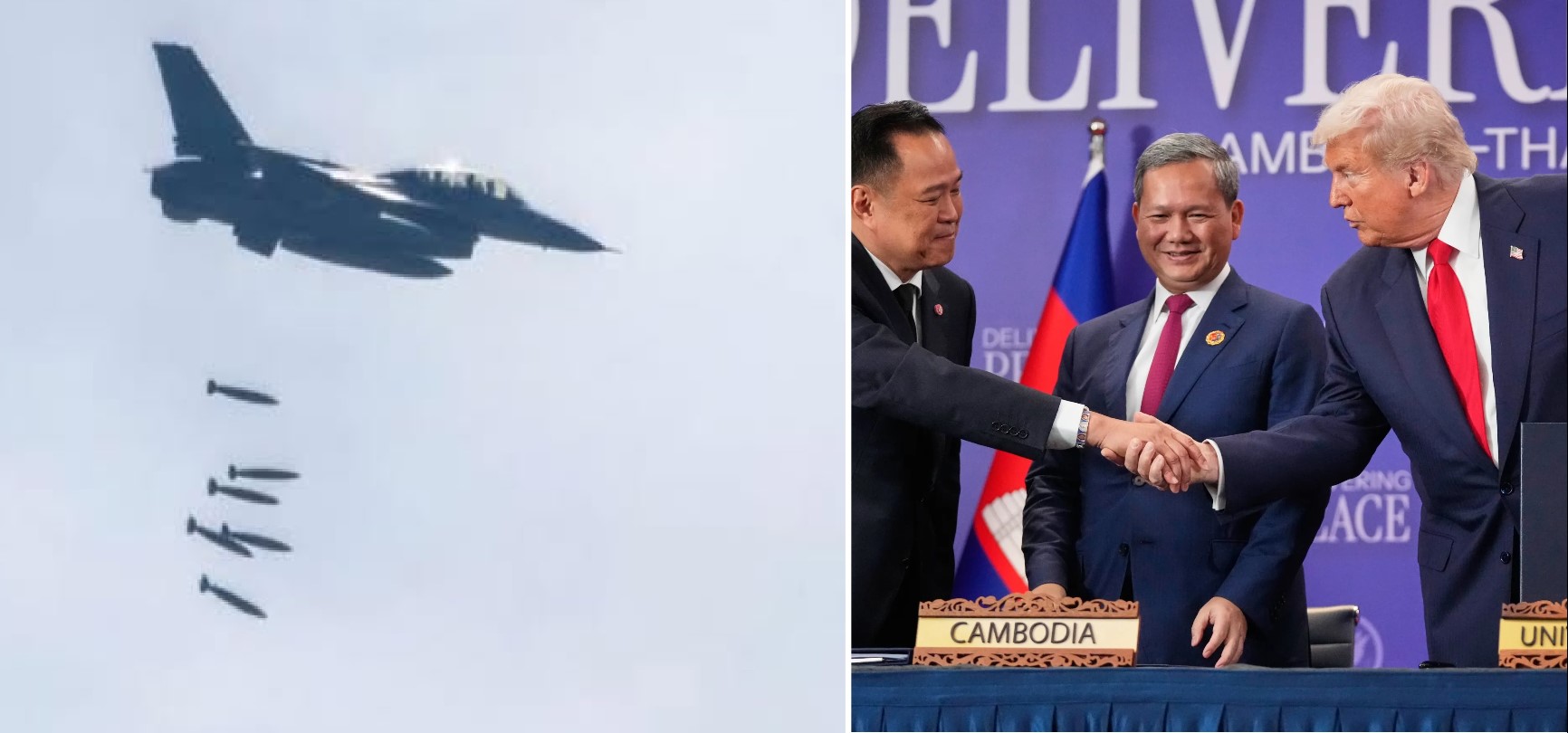
World
A fragile peace between Thailand and Cambodia collapsed this week after Thailand launched dozens of F-16 airstrikes into southern Cambodia on 8–9 December 2025, triggering the most serious escalation since the Trump-backed peace accord was signed in October. At least 14 people are confirmed dead, including civilians, and more than 500,000 residents have been displaced as both nations trade fire across the heavily contested frontier. Thai defense officials say the strikes—now exceeding 20 sorties—target Cambodian artillery, rocket sites, and drone launch positions believed to be responsible for recent cross-border attacks. Cambodia, however, has accused Thailand of initiating unprovoked aggression and insists its forces only responded after repeated violations of the ceasefire line. The renewed fighting has shattered the Kuala Lumpur Peace Accord, the agreement negotiated with support from former U.S. President Donald Trump and signed on 26 October. The deal had paused months of skirmishes that followed a brief but intense border war in July. But tensions never fully eased, with both sides accusing each other of failing to implement key withdrawal commitments. Escalation After Border Clashes According to the Royal Thai Army, the decision to deploy F-16s came after what they described as a Cambodian troop buildup and a series of artillery exchanges that killed or injured Thai soldiers. Bangkok said the strikes were necessary to “neutralize imminent threats.” Cambodia has rejected this claim, saying Thai jets struck civilian areas near Oddar Meanchey, forcing thousands to flee. Cambodian officials say Thailand “fabricated a provocation” to justify its offensive. Humanitarian Crisis Deepens The sudden escalation has triggered a mass displacement crisis along the border: Thailand has opened emergency shelters in schools, stadiums, and temples. Cambodia has evacuated entire villages as artillery and rocket fire intensifies. Aid agencies warn that relief supplies are running thin and that the number of displaced people could rise sharply if fighting continues. Regional Tensions and Diplomatic Pressure The conflict has drawn urgent responses from regional and international actors: Malaysia, which mediated the peace deal, has called for “immediate restraint and dialogue.” The United Nations has urged both sides to halt airstrikes and allow safe humanitarian access. China and the United States have appealed for de-escalation, worried that the collapse of the accord could destabilize mainland Southeast Asia. Despite these appeals, neither Bangkok nor Phnom Penh has shown willingness to halt military operations. Diplomats say backchannel communications are underway, but the political climate in both capitals is hardening. A Peace Deal in Ruins The renewed violence deals a significant blow to Trump’s efforts to position himself as a regional dealmaker. The Kuala Lumpur accord, once hailed as a breakthrough, quickly deteriorated as mistrust and unverified skirmishes eroded confidence. Now, with fighter jets active, artillery booming, and hundreds of thousands displaced, the border crisis risks spiraling beyond what regional diplomacy can contain. For civilians living along the frontier, the collapse of the peace deal has once again turned daily life into a scramble for safety—while both governments continue to insist the other fired first.
Read More → Posted on 2025-12-09 13:04:09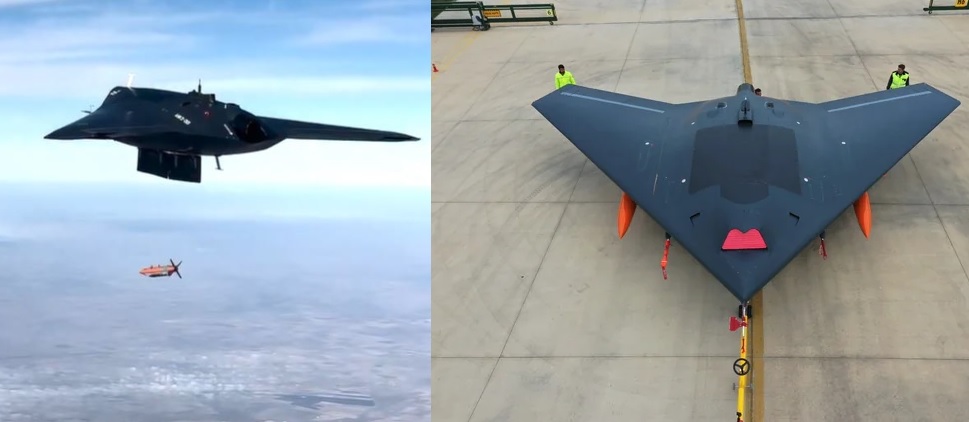
World
Türkiye’s ANKA III stealth unmanned combat aerial vehicle (UCAV) has taken a significant step toward frontline deployment with a successful series of advanced autopilot trials during its 46th system verification flight on December 8, 2025, according to Turkish Aerospace (TUSAŞ). The achievement marks a pivotal moment in the aircraft’s fast-moving development program, signaling that Türkiye’s first operational flying-wing stealth drone is nearing the stage where autonomous long-range strike missions and complex teaming operations become viable. Autopilot Trials Validate High-Autonomy Flight Envelope During the 46th sortie, ANKA III’s autopilot system executed a set of envelope-expansion maneuvers including autonomous climb, descent, turning, route-tracking, and automated recovery functions designed to validate its stability logic and flight-control algorithms. Engineers described the test as the moment when ANKA III’s autonomy profile “transitioned from software maturity to operational reliability.” For Turkish defense officials, these trials are more than routine checks—they represent a prerequisite for missions where the UCAV must operate with minimal operator input, including cooperative engagement with crewed platforms and other drones. The success keeps the program on track for initial operational integration before 2030, aligning with TUSAŞ’s roadmap for high-end unmanned combat systems. A Flying-Wing Stealth UCAV With Strategic Ambition ANKA III belongs to a class of UCAVs traditionally dominated by Western demonstrators such as the Dassault nEUROn or BAE Systems Taranis, but unlike many of those projects, Türkiye is shaping ANKA III as a deployable combat asset rather than a one-off research vehicle. Built around a tailless flying-wing airframe, the 7-ton-class UCAV is powered by the Ivchenko-Progress AI-322F turbofan, giving it: Max take-off weight: 6,500 kg Payload capacity: 1,600 kg (internal + external) Operating ceiling: 40,000 ft Endurance: ~10 hours Max speed: ~425 knots (Mach 0.7 at altitude) Twin internal weapon bays and five external hardpoints allow a flexible mix of low-observable strike payloads and traditional stores. TUSAŞ has confirmed that a future twin-engine variant, powered by Türkiye’s emerging TF6000/TF10000 engines, is under consideration—offering a possible pathway to supersonic loyal-wingman roles. Mission Suite Tailored for Multi-Domain Warfare ANKA III is designed for missions far beyond conventional drone surveillance. Its integrated suite includes: EO/IR targeting systems SAR/GMTI radar for all-weather ISR Electronic support measures (COMINT, ELINT, ESM) Electronic attack capabilities, including jamming SATCOM links and airborne relay functions Deployment of air-launched unmanned systems, including Super Şimşek decoys and potential future loitering munitions Combined with its stealth shaping and internal bays, the platform is optimized for SEAD, deep-strike, electronic warfare, and high-autonomy reconnaissance in contested airspaces. Rapid Development Timeline: From Concept to Weaponized Flight Tests ANKA III has progressed unusually quickly for a stealth UCAV: 2023: Ground tests and fully autonomous first flight (Dec 28) 2024: Formation flight with HÜRJET (May 5) First landing-gear retraction test (Aug) First weapon-carrying flight with Teber-82 (early Sept) Live guided strike with ASELSAN/Roketsan (late Sept) 2024–2025: Integration of TOLUN SDB First internal-bay guided glide bomb release (Jan 2025) Cooperative tests with Super Şimşek Formation flights with two ANKA III prototypes The pace reflects Türkiye’s intent to operationalize stealth UCAV capabilities faster than many legacy aerospace powers. A Key Component of Türkiye’s Future Air Combat Structure ANKA III is central to Türkiye’s ambition to field a layered, AI-enabled air combat ecosystem: Manned–Unmanned Teaming (MUM-T): Designed to operate alongside the KAAN 5th-generation fighter and other UAVs. Swarm operations: Supports AI-assisted multi-ship coordination. Deep-strike capability: Internal carriage allows it to penetrate defended airspace. SEAD/DEAD missions: Electronic attack suite and precision weapons aim to suppress advanced air-defense systems. Its introduction will give Türkiye one of the world’s first operational stealth UCAVs capable of networked warfare—placing it alongside the U.S. MQ-Next initiatives and China’s GJ-11 Sharp Sword. NATO Implications and Export Outlook For NATO, ANKA III provides a rare non-U.S. contribution to the alliance’s autonomous deep-strike and ISR inventory. With interoperability features aligned to NATO data standards, the UCAV is expected to participate in multinational exercises once fully cleared. Export interest is already emerging from countries that either operate ANKA/AKSUNGUR drones or seek access to stealth UCAV capabilities outside Western restrictions. The combination of cost-effective stealth, weapon flexibility, and rapid production scalability offers Ankara a competitive position in the growing market for high-end unmanned systems. Industrial Scale and Program Momentum The program is backed by significant investment from the Presidency of Defence Industries (SSB). TUSAŞ has built a production line capable of supporting rapid scaling, leveraging common components and training systems shared with earlier ANKA platforms. Turkish officials privately frame ANKA III as one of the “three pillars” of the country’s transformation in airpower: KAAN (crewed 5th-gen fighter) ANKA III (stealth UCAV) Loyal-wingman and swarm systems (future autonomous assets) With autopilot validation now largely complete, the test campaign advances toward multi-ship autonomous missions, electronic-attack rehearsals, and more complex internal-bay weapons trials. A Test Flight That Signals Operational Readiness While the 46th flight may appear routine on paper, its successful autopilot campaign signifies a turning point. For the first time, the ANKA III’s autonomy stack is behaving like that of a combat-ready platform rather than an experimental prototype. For the Turkish Air Force—and for foreign customers—this is the milestone that transforms ANKA III from an intriguing concept into a credible strategic asset. As Türkiye moves steadily toward a fully networked unmanned combat force, ANKA III’s latest achievement underscores a simple reality: the age of operational stealth UCAVs is no longer theoretical—it is arriving, and Türkiye intends to be one of its leading architects.
Read More → Posted on 2025-12-09 12:43:53
World
France has signaled a major leap in its carrier-based strike capabilities after a Rafale Marine in the latest F4.1 configuration executed a live firing of the 1,000-kg AASM Hammer during a complex operational work-up in the Mediterranean on 6 December 2025. The event, first reported by the French defense outlet Opex360, is being widely interpreted as a demonstration of France’s readiness to conduct long-range, high-precision naval strikes at a time of rising geopolitical friction across the eastern Mediterranean. A 1,000-Nautical-Mile Strike Planned and Executed in Under 24 Hours Operating from the aircraft carrier Charles de Gaulle, the Rafale Marine released its heavy AASM 1000 after a low-altitude penetration mission that took the aircraft across Italy and into Greek airspace. The target—a naval objective on the Karavia test range in Greece—was engaged from a distance of more than 1,000 nautical miles from the carrier, a feat illustrating the extended-range strike envelope enabled by the rocket-powered AASM variant. The mission was supported by the fleet replenishment ship Jacques Chevallier, which provided fuel, munitions transfer, and logistical backup, allowing the carrier to maintain flight operations, including deployment of an alert air-defence patrol throughout the drill. The sortie involved two Rafale Marines departing from a position west of Corsica. A “buddy-buddy” tanker aircraft, fitted with a Narang in-flight refuelling pod, accompanied the strike jet as far as southern Italy. After topping up fuel over Apulia, the strike aircraft continued alone, skimming low over the Mediterranean to delay radar detection before releasing the AASM 1000 at the end of the penetration phase. Charles de Gaulle’s Intensive Work-Up Cycle The firing occurred during one of the most demanding training cycles the French carrier has undertaken since its last major deployment. Between late November and early December, the Charles de Gaulle completed: 15 SECUREX safety drills 11 ADEX air-defence scenarios Multiple MACOPEX operational capability exercises An integrated anti-ship exercise featuring Exocet missile employment The carrier air wing fielded 18 Rafale Marine fighters, two E-2C Hawkeye AEW&C aircraft, and three helicopters—a force package that enabled France to practice combined strike, air-defence, and maritime surveillance operations, all tied together through advanced data-link networks. AASM 1000: France’s Heavy Precision Hammer The AASM Hammer, developed by Safran Electronics & Defense, is a modular guided bomb family with variants ranging from 125 to 1,000 kg. Each uses: GPS + inertial guidance Optional infrared or laser seekers A propulsion kit for extended-range strikes The AASM 1000 GS—qualified in 2022 by the French defence procurement agency (DGA)—is the most powerful of the family. Its rocket-boosted configuration allows long-range engagement even from low altitude, expanding survivability against dense air-defence networks and surface sensors. This heavy weapon, paired with the Rafale F4.1’s enhanced connectivity and EW suite, forms a new centrepiece of France’s deep-strike and maritime interdiction capabilities. Rafale F4.1: A Networked, Multi-Mission Carrier Fighter The Rafale Marine F4.1 brings improved sensors, cyber-resilience and EW protection, as well as enhanced tactical networking via Link 16 and advanced national data links. Key features include: RBE2 AESA radar Front Sector Optronics (FSO) Spectra electronic warfare suite Ability to carry up to three AASM 1000s while retaining MICA/Meteor missiles and external tanks Compatibility with the Talios targeting pod Together, these systems give the aircraft a refined synthetic battlespace picture and the ability to defend itself even while carrying heavy strike ordnance. Strategic Message to the Mediterranean The French Navy is one of the only European services operating a catapult-equipped carrier able to deploy a fourth-generation-plus fighter with heavy precision munitions. The AASM 1000 firing is being interpreted by analysts as a deliberate message: To NATO partners: France remains a high-end contributor capable of independent long-range strike. To regional navies: The Charles de Gaulle battle group can threaten surface combatants, logistics vessels, and fortified coastal infrastructure even behind sophisticated air-defence networks. To geopolitical rivals: Paris retains the capability to respond rapidly to crises in contested maritime spaces such as the eastern Mediterranean, where energy rights, EEZ disputes, and Russian naval activity heighten tensions. The demonstration also aligns with a broader European shift toward increased use of stand-off weapons—including glide bombs, cruise missiles, and extended-range guided munitions—driven by the need to counter modern integrated air-defence systems. A Carrier Group Ready for Modern Naval Conflict With a reaction time of less than 24 hours from mission planning to weapon release, the Charles de Gaulle and its air wing showcased the capability to conduct responsive, long-range precision strikes while sustaining a full combat air-defence posture. For France, the exercise marks not only the validation of the Rafale F4.1 + AASM 1000 pairing, but also a reaffirmation of its ambition to remain a decisive maritime actor from the western Mediterranean to the Levant.
Read More → Posted on 2025-12-08 16:13:41Search
Top Trending in 24 Hours
-
 U.S Navy Orders 50 Blackbeard Hypersonic Missiles in New $23.4 Million Contract
-
 Russia Launches 1,400 Jet-Powered Drones in 2026 as Strike Tactics Evolve to Challenge Ukraine's Air Defenses
-
 F-35 Fleet Readiness Falls to 25% Amid Parts Shortages and Software Delays: GAO Report
-
 U.S. Approves $1.98 Billion Sale of Anduril AI-Powered Counter-Drone Systems to Kuwait
-
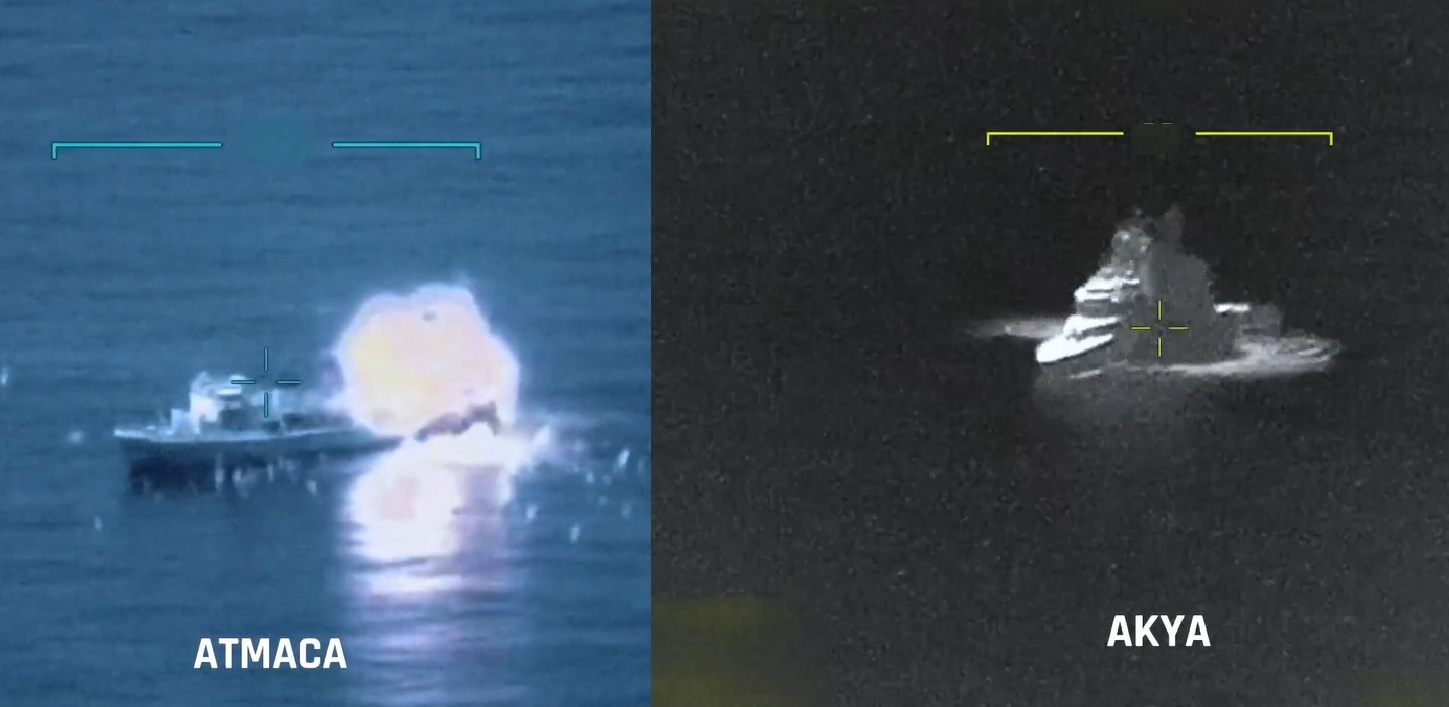 Turkey Navy Successfully Tests AKYA Torpedo and ATMACA Missile During Major Denizkurdu-II Naval Exercise
-
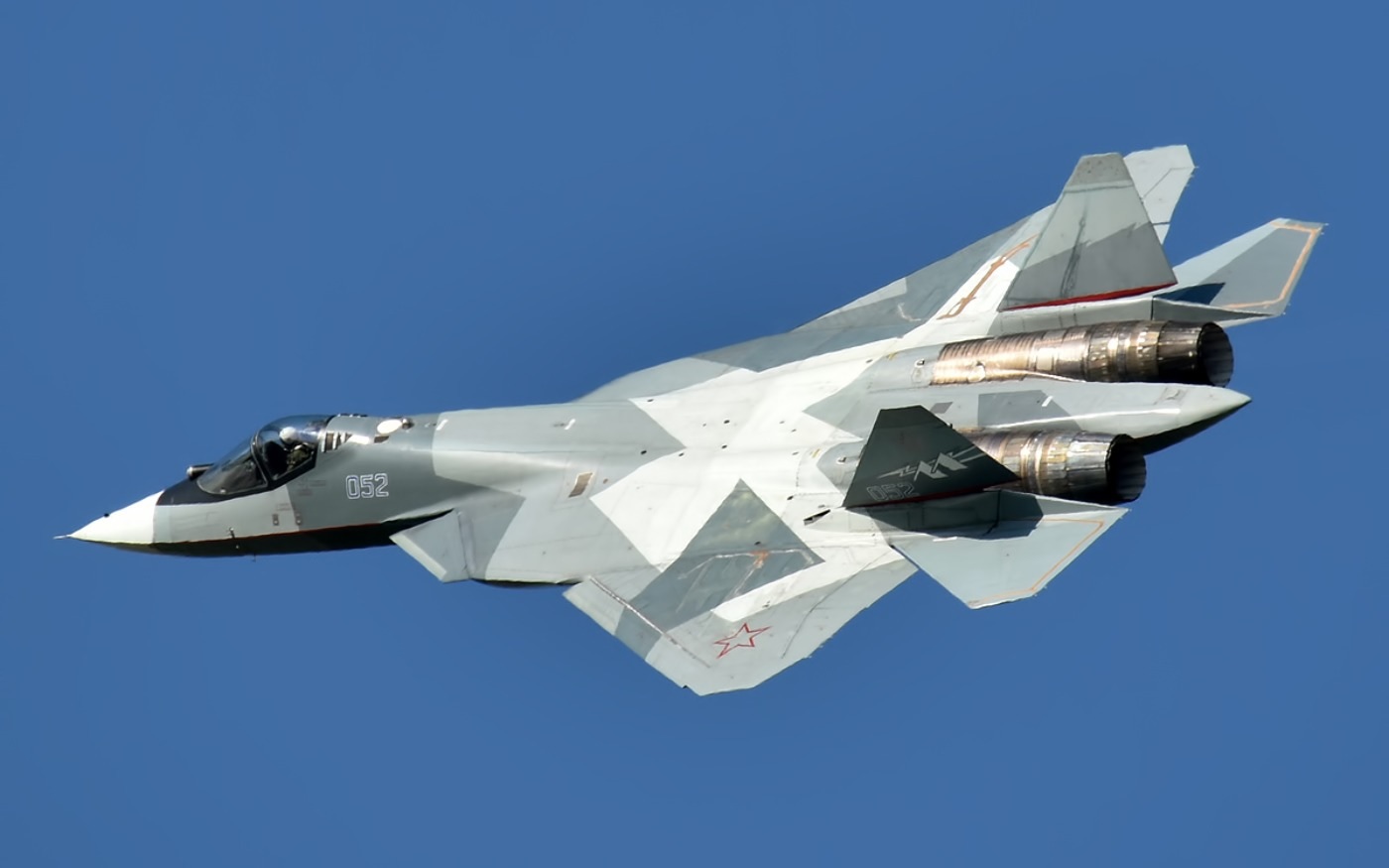 Russian Analysts Debate Su-57 Capabilities After Putin Calls Fighter Superior to F-35
-
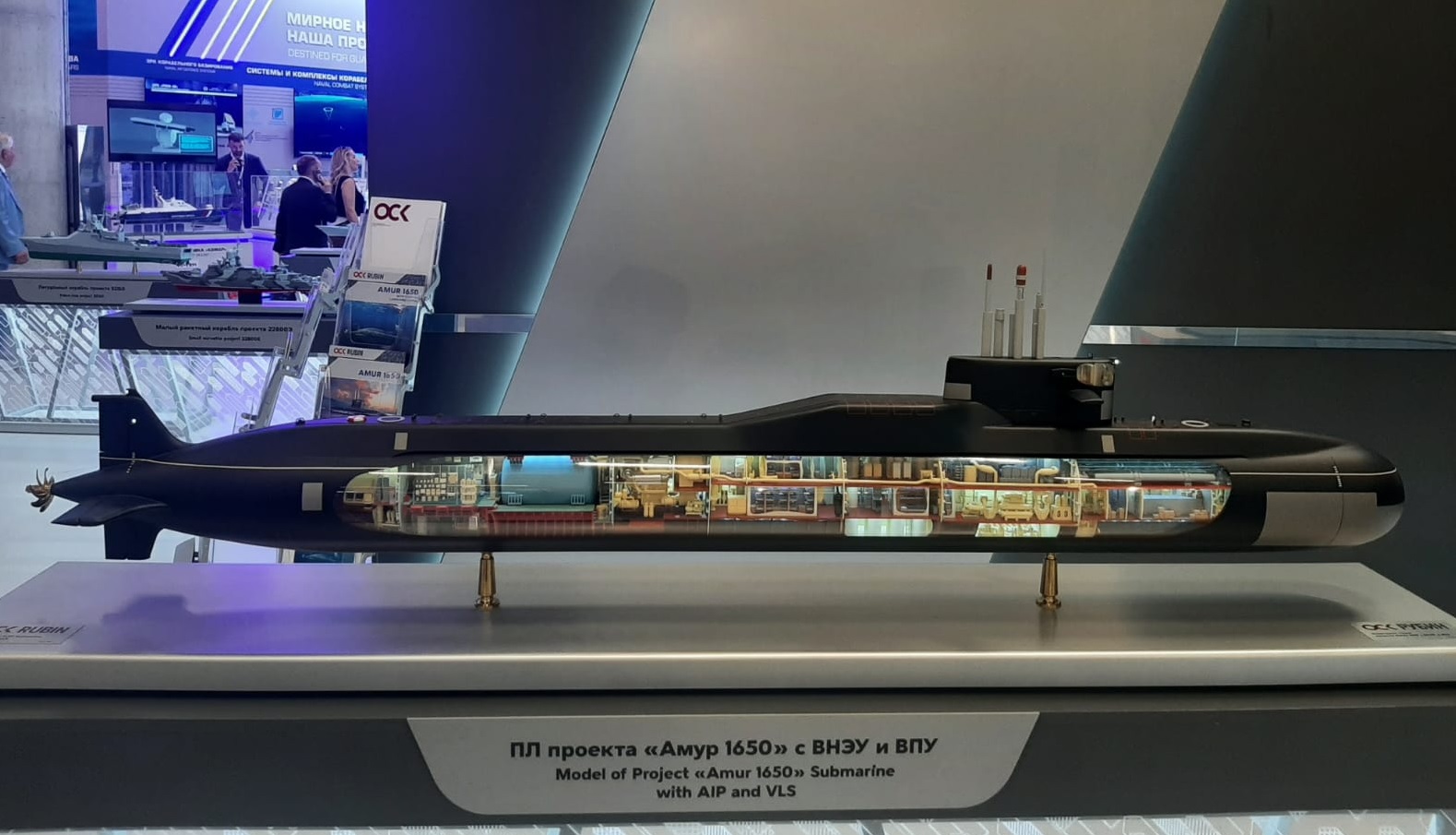 Russia Unveils Amur-1650 AIP Submarine Equipped with BrahMos Vertical Launch System at Fleet-2026
-
 UAE Denies Reports of Releasing Up to $20 Billion in Funds to Iran Amid Regional De-Escalation Efforts
Top Trending in 4 Days
-
 Iranian Media Leaks 14-Point U.S.-Iran Peace Framework Amid Ongoing Negotiations
-
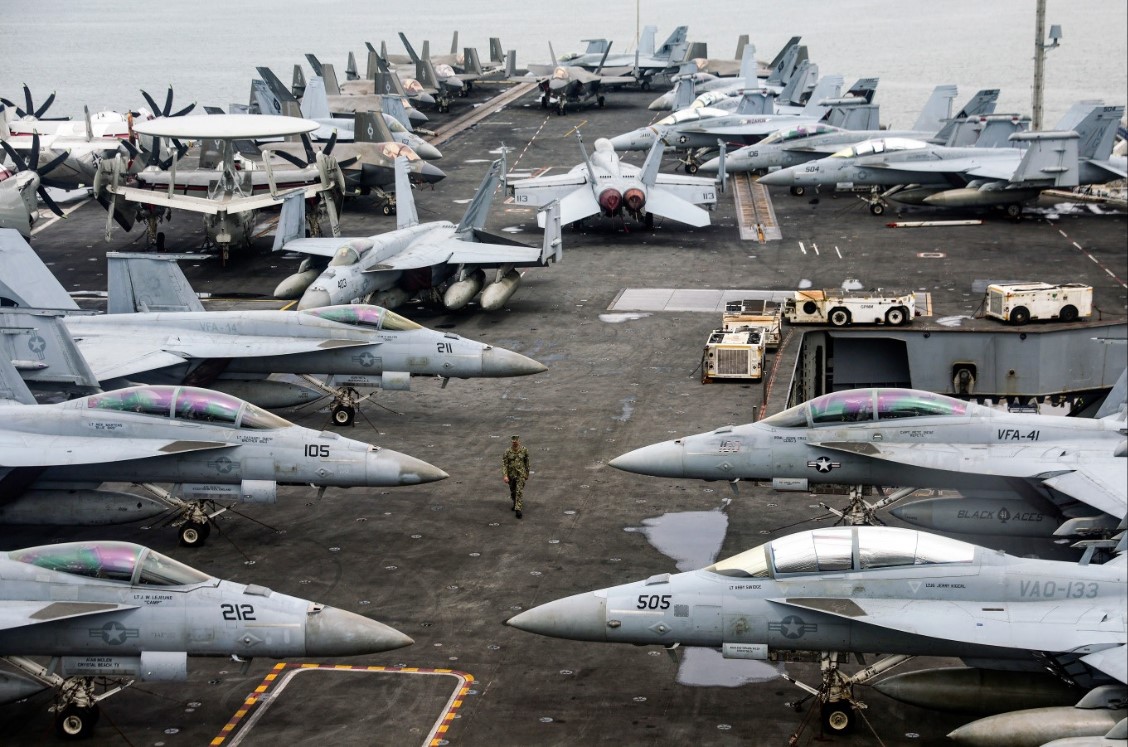 US Plans Significant Reduction of Fighter Jets and Warships for NATO Operations in Europe
-
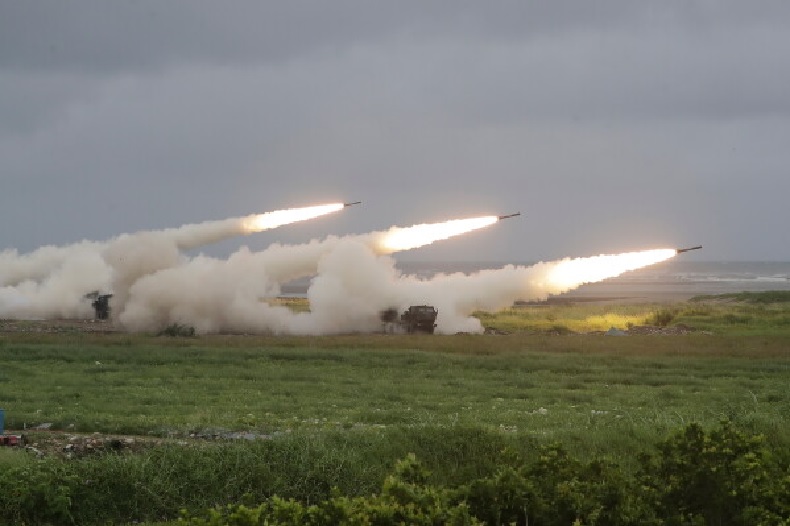 Taiwan Conducts First Live-Fire of HIMARS Rockets From West Coast During Invasion Defense Drill
-
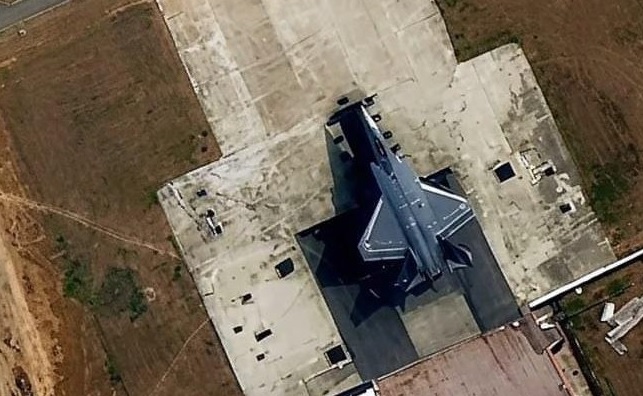 AMCA Airframe Spotted at DRDO’s ORANGE Facility for Radar Cross-Section Testing
-
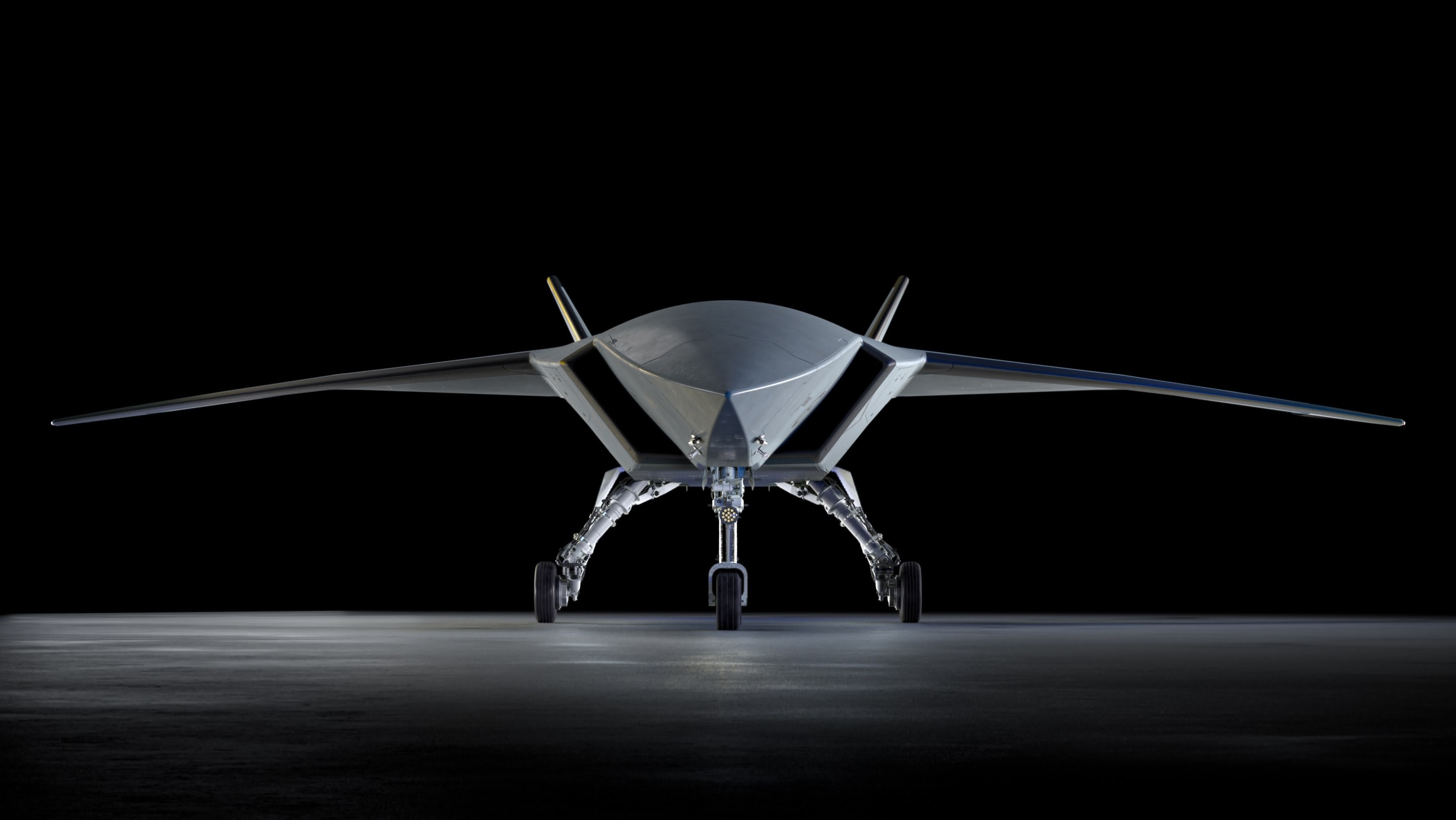 Boeing Introduces New MQ-28 Ghost Bat Upgrades with Increased Range, Payload and Weapons Capacity at ILA Berlin 2026
-
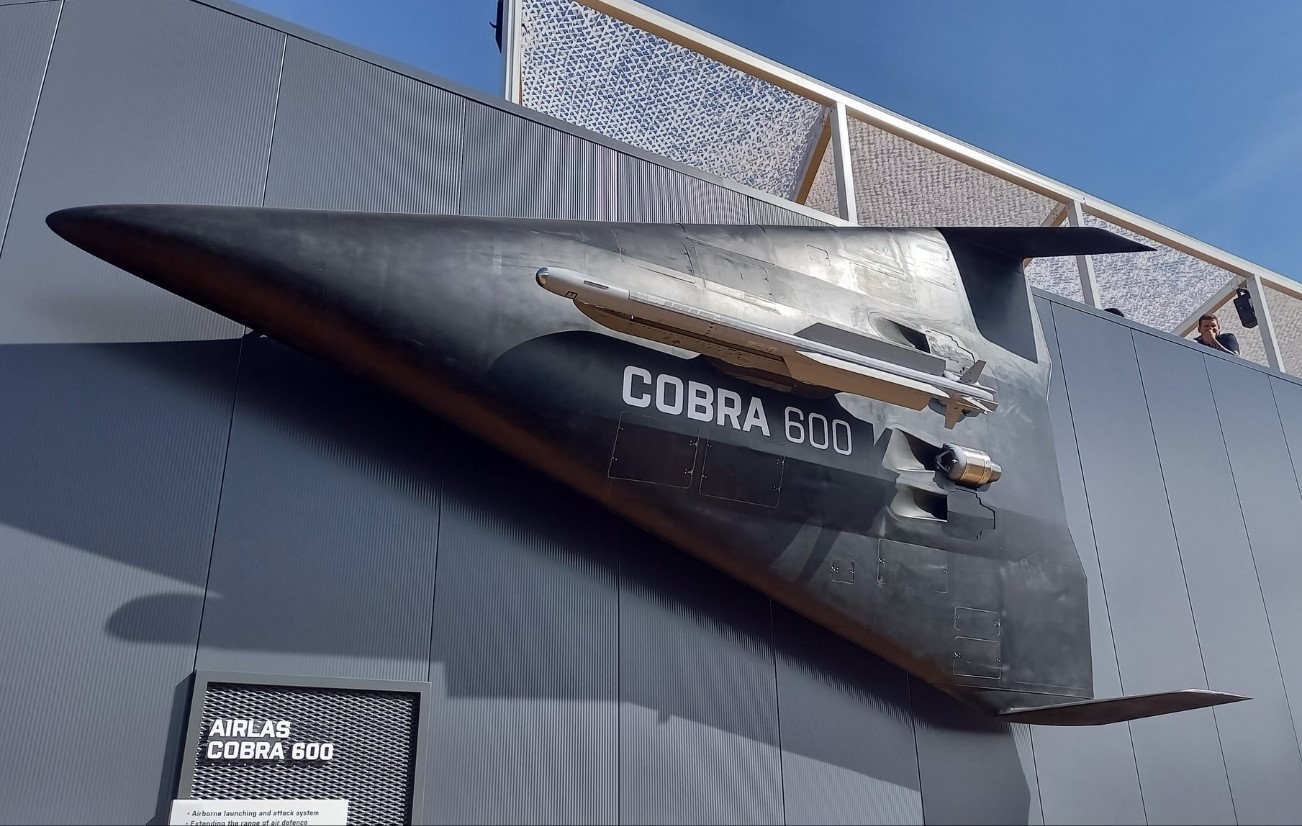 Diehl Defence Unveils IRIS-T Armed Cobra 600 Air Defense Drone at ILA Berlin 2026
-
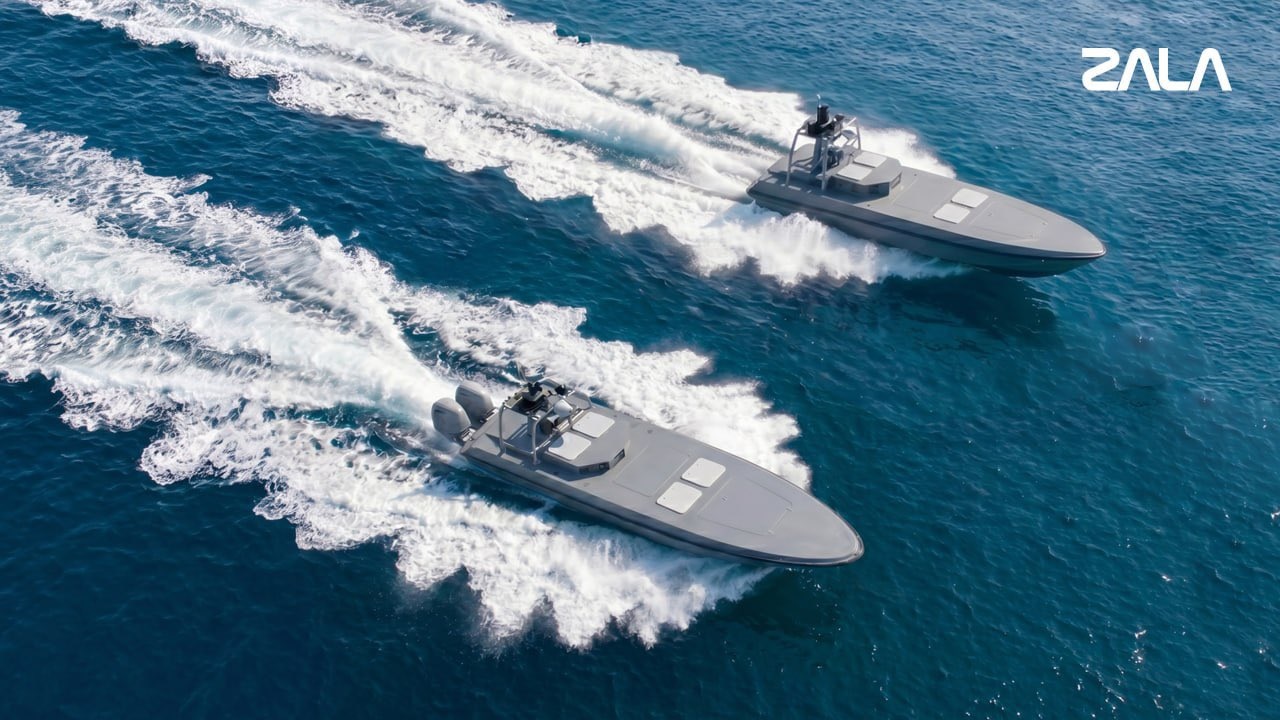 Russian Defense Firm ZALA Unveils KAMA Unmanned Surface Vessel Family at FLOT-2026 Naval Exhibition
-
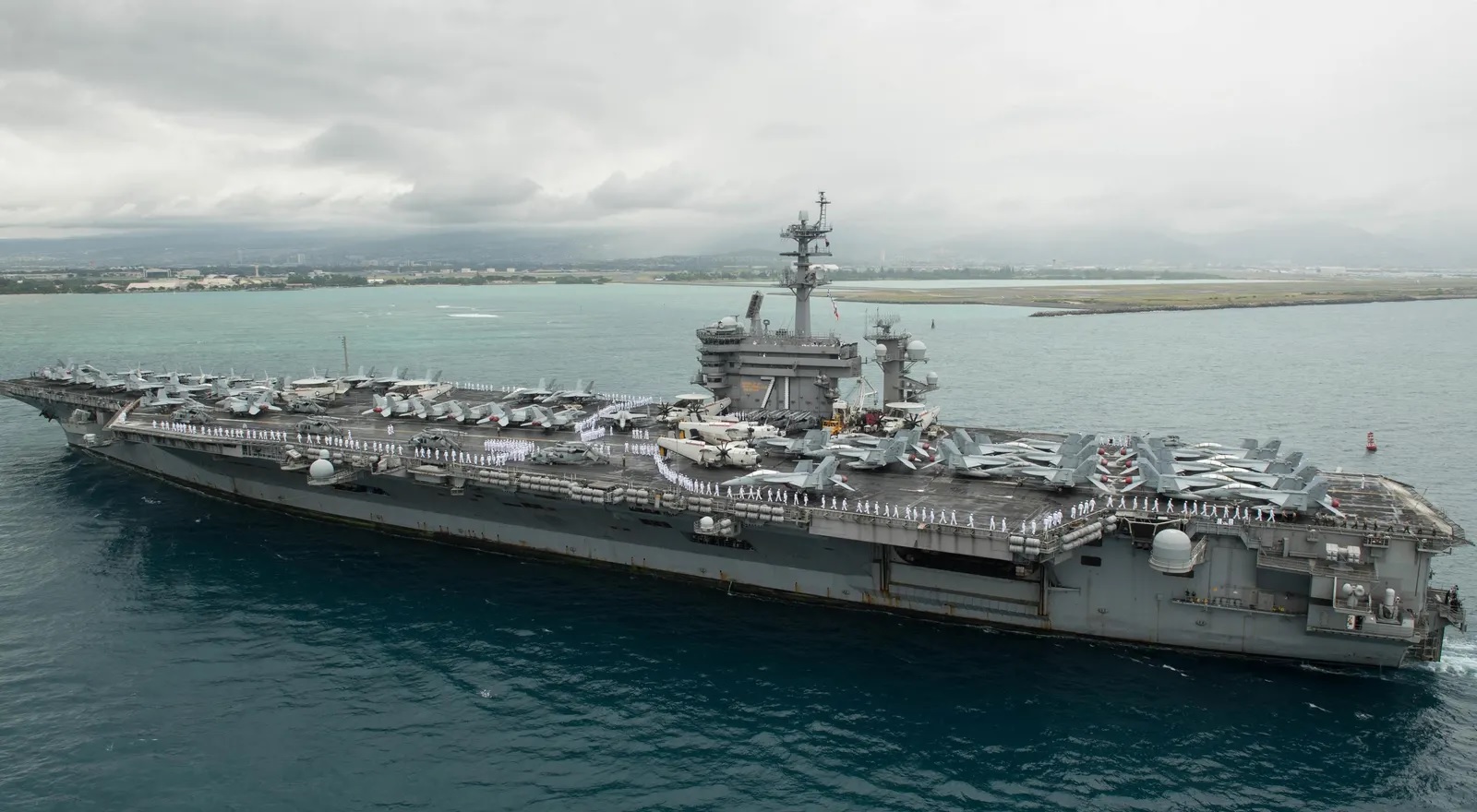 U.S Aircraft Carrier USS Theodore Roosevelt Departs San Diego for Major RIMPAC 2026 Naval Exercise