
World
On December 11, 2025, Boeing announced that it has delivered the first B-52 bomber fitted with a new modern radar system to the U.S. Air Force. The aircraft has now arrived at Edwards Air Force Base for a full series of tests, beginning the next major phase of the B-52 Radar Modernization Program. The aircraft completed its ferry flight to Edwards after successful radar integration work and system checks at Boeing’s facility in San Antonio. The Air Force says this marks the transition from factory work to an official test campaign that will guide future upgrades across the entire fleet. A joint crew from the 49th Test Evaluation Squadron at Barksdale Air Force Base and the 419th Flight Test Squadron at Edwards flew the aircraft on December 8. Testing will continue through 2026 before the Air Force makes a final production decision. A New Radar for a 65-Year-Old Bomber The B-52 received a brand-new Active Electronically Scanned Array (AESA) radar, known as the AN/APQ-188, developed by Raytheon Technologies and integrated by Boeing. This radar replaces the old AN/APQ-166 mechanical radar that has been in service for decades. The new AESA radar is far more advanced. It can scan faster, track many targets at once, and produce clearer images in all weather conditions. It has no moving parts, which means better reliability and easier maintenance. The radar also brings targeting and navigation abilities similar to the systems used on modern fighters like the F-15 and F/A-18. Compared to the old radar, the AESA system is several times more powerful. It provides longer-range detection, sharper resolution, faster reaction time, and much greater resistance to jamming. It also gives the B-52 the ability to find and track targets in difficult environments where the older radar struggled. Air Force Leaders Welcome the Upgrade Secretary of the Air Force Troy Meink said the successful ferry flight is “an important moment in our efforts to modernize the bomber force.” He added that the new radar will keep the B-52 effective well into the future, as it continues to operate alongside new aircraft like the B-21 Raider. Air Force Chief of Staff Gen. Ken Wilsbach called the program essential for readiness and long-term deterrence. He said the upgrade will ensure that future Airmen inherit a modern, capable B-52 fleet. Part of a Larger Modernization Plan The radar upgrade is only one part of a much wider modernization program for the B-52. The Air Force plans to keep the bomber in service beyond 2050, and the fleet of 76 aircraft will receive new engines, cockpit improvements, updated communications, better avionics, and new weapons. These improvements will help the B-52 continue its role as a key long-range strike aircraft for both conventional and nuclear missions. Engineers and pilots at Edwards Air Force Base will now conduct detailed ground and flight tests of the new radar through 2026. The results will decide how quickly the rest of the fleet will receive the upgrade. With this milestone, the Air Force says it is committed to keeping the B-52 operational, reliable and ready to support global missions for decades to come.
Read More → Posted on 2025-12-12 11:56:31
World
The Danish Ministry of Defence’s Acquisition and Logistics Organisation (DALO) has formally signed a strategic contract with Danish radar specialist Weibel Scientific to deliver four XENTA-M5 radar systems, a crucial component of Denmark’s Very Short Range Air Defence (VSHORAD) capability. The agreement marks a significant step in bolstering the Royal Danish Army’s 1st Brigade against evolving aerial threats, ranging from advanced aircraft and missiles to low, slow, and small (LSS) targets such as drones. Strengthening Denmark’s Short-Range Air Defence Posture Under the terms of the contract, Weibel Scientific will design, develop, and produce four mobile XENTA-M5 radar systems at its headquarters in Allerød, Denmark. The first radar unit is slated for delivery in late 2027, with the remaining units to follow in 2028. Each radar will be mounted on Rheinmetall all-terrain vehicles and integrated into Denmark’s air defence architecture via Terma’s command-and-control (C2) systems. The procurement is funded under Denmark’s Defence Contract 2024–2033, which includes comprehensive system integration and user training. “If you want to neutralize drones, you first need to see them,” said Weibel Scientific CEO Peter Røpke, underscoring the importance of advanced detection capabilities. “Our XENTA radar can track both small and large flying objects like drones, aircraft and missiles… This contract is not just an order for us in Weibel; it’s a quality stamp. This shows that our technology is trusted by our national defense.” Advanced Radar Capabilities and Specifications The XENTA-M5 is part of Weibel’s XENTA-M series of short-range air defence radars, built on X-band Frequency-Modulated Continuous Wave (FMCW) Doppler radar technology. It offers 360° coverage with three-dimensional target tracking and advanced signal processing to simultaneously detect, track, and classify a diverse array of aerial threats — from high-speed missiles and aircraft to modern low, slow, and small drones that often evade conventional sensors. Key technical features of the XENTA-M5 include: X-Band FMCW Doppler Technology: Offers high resolution and continuous target illumination for precise tracking. 360° Azimuth Coverage with 3D Tracking: Enables full situational awareness without blind spots. Advanced Tracking Algorithms: Supports detection of small drones at extended ranges beyond 10 km — including micro-UAVs — as evidenced by similar XENTA family performance. Integration-Ready with C2 Systems: Seamless connection to command, control and communications architectures for real-time air picture sharing. These capabilities make the XENTA-M5 an ideal sensor for Very Short Range Air Defence (VSHORAD) and Ground-Based Air Defence (GBAD) roles, providing early warning and robust situational awareness to frontline units and air defence assets. Role Within Denmark’s Broader Air Defence Network The XENTA-M5 radars will form a key detection layer within Denmark’s layered air defence architecture. Mounted on mobile platforms for tactical flexibility, they are expected to complement other short-range systems such as the Rheinmetall Skyranger 30 SHORAD vehicles — selected separately by Denmark for mobile air defence — and medium-to-long-range systems integrated under Denmark’s broader defence agreements. Furthermore, independent defence collaborations ensure XENTA radars are interoperable with allied systems. For instance, Thales Group has signed agreements to incorporate Weibel’s short-range radar technology into its own GBAD portfolio, enhancing export potential and interoperability across European defence networks. Domestic Capability and Future Outlook Founded in 1936 and headquartered in Allerød, Weibel Scientific has evolved into a leading designer of advanced Doppler radar systems. The XENTA series — including the XENTA-M5 — reflects the company’s emphasis on counter-UAS and SHORAD solutions tailored to the demands of modern air defence. The company already supplies similar systems to NATO partners and has achieved export success in Norway and other markets. Denmark’s investment in XENTA-M5 radars underscores a strategic priority: ensuring that ground forces can detect, track, and respond effectively to the increasingly complex aerial threat environment — from drones to cruise missiles. As Peter Røpke affirmed, the contract not only delivers cutting-edge technology to Denmark’s armed forces but also serves as a testament to Danish industry’s role in shaping future defence capabilities.
Read More → Posted on 2025-12-12 11:42:25
World
A sweeping diplomatic effort is under way as the United States, Ukraine, and key European governments intensify negotiations on a comprehensive, multi-layered peace architecture aimed at freezing front lines, formalizing Western security guarantees, and unlocking long-term reconstruction financing. According to officials familiar with the talks, the developing framework spans three major documents: a political peace agreement, a security guarantees treaty, and an economic recovery and investment plan. The emerging proposal marks the most ambitious attempt yet to outline a pathway toward ending large-scale hostilities while preserving Ukraine’s strategic autonomy and enabling its integration with Western institutions. A Ceasefire Built Around a “Korean-Style” Line of Separation Central to the discussions is a “Korea-style” model, in which a line of separation would be established along current forward positions, running approximately from Donetsk through Zaporizhzhia to Kherson. The arrangement would not resolve questions of sovereignty but would freeze the battlefield, creating space for diplomacy to continue over the political status of contested territories. Negotiators are evaluating a demilitarized zone on both sides of the line, with a thicker outer buffer where artillery, armor and missile systems would be prohibited. Western officials say the model is intended to prevent rapid escalation and reduce the risk of renewed offensive action. However, disagreements persist over border checkpoint arrangements, monitoring mechanisms, and the extent of international oversight—potentially involving the OSCE, UN, or a new multinational monitoring body. Zaporizhzhia Nuclear Plant and U.S.-Led Oversight One of the most sensitive components of the peace proposal involves the Zaporizhzhia Nuclear Power Plant, which has remained under Russian control since early 2022. Draft scenarios circulating among negotiators would place the facility under international or U.S.-led technical management to guarantee safety and prevent militarization of the complex. The United States has signaled willingness to provide civilian oversight teams and enhanced radiation-monitoring systems, while the IAEA would retain regulatory authority. Moscow’s position remains opaque, though Russian negotiators have privately indicated flexibility if the arrangement does not imply political concession on territorial status. Kyiv’s EU Accession and Pressure on Hungary European diplomats say Ukraine’s target EU accession date of 2027 is being built into the peace architecture, both as a political guarantee and an economic roadmap. Washington has increased pressure on Hungary—currently blocking accession steps—to lift its veto, arguing that Ukraine’s integration would stabilize internal reforms, expand trade corridors, and reassure investors ahead of reconstruction. The EU is expected to present an updated accession timetable in early 2026, tied to anti-corruption benchmarks and judicial reforms already underway in Kyiv. Security Pact Modeled Partly on Article 5 but With U.S. Ratification A second major document under negotiation outlines long-term security guarantees, potentially more binding than the G7’s 2023 commitments. Ukraine is pressing for a U.S.-ratified treaty to ensure that any future administration cannot unilaterally withdraw support or recognize Russian territorial claims. The guarantees may include: Rapid military assistance mechanisms similar to NATO’s Article 5 consultation clause Pre-positioned U.S. and European equipment inside Ukraine A long-term training mission involving NATO partners Air and missile defense integration with Western systems Debate continues over force-size caps. Some Western negotiators have floated a cap at 800,000 Ukrainian troops, up from the current 600,000, to stabilize defense spending and reduce mobilization burdens. Kyiv has firmly rejected hard limits, insisting that the size of its army must remain sovereign, flexible, and responsive to Russian force levels. $100 Billion Asset Plan, Reconstruction Fund, and Private Investment Push Economic reconstruction is emerging as the third pillar of the peace plan. The Trump administration has proposed deploying $100 billion in frozen Russian assets immediately for infrastructure, energy networks, and demining—an idea gaining traction in the EU as legal debates narrow. European governments are exploring mechanisms to convert interest from seized Russian central bank assets into long-term Ukrainian recovery bonds. At the same time, the United States is drafting a Ukrainian Development Fund, structured with BlackRock, the World Bank, and other financial partners. The concept envisions $300–$400 billion in mobilized investment, combining public guarantees with private capital targeted at energy modernization, technology, logistics, and agriculture. Sources involved in the talks say the Trump administration is also examining whether a parallel investment framework for Russia could be introduced later—conditional on ceasefire compliance—to encourage long-term regional stability. Contentious Negotiations With Uncertain Timelines Diplomats caution that the talks remain highly fluid, with major political obstacles unresolved. Ukraine insists that any agreement must not prevent it from pursuing the return of occupied territories through legal or diplomatic means. Russia has publicly rejected the idea of a demilitarized buffer and opposes international control of the Zaporizhzhia plant, though back-channel discussions reportedly show more nuance. European officials say the three-document structure is designed to allow partial implementation even if political negotiations stall, ensuring that security assistance, EU integration, and reconstruction planning continue regardless of territorial disputes. What remains clear is that the proposed framework—if finalized—would represent the most comprehensive political, military, and economic settlement attempted since the war began. Whether it becomes a durable pathway to peace or merely a temporary freeze depends on the ability of all sides to bridge the remaining gaps in the months ahead.
Read More → Posted on 2025-12-11 17:05:41
World
Taiwan’s Deputy Foreign Minister François Wu quietly travelled to Israel in recent weeks to explore deeper security and technology cooperation, according to people briefed on the visit. The discreet trip, first reported by Reuters, underscores a growing though unofficial partnership as Taiwan races to build a multi-layered “T-Dome” air-defense network modeled in part on Israel’s Iron Dome. A Visit Kept Out of Public View Sources familiar with the matter say Wu’s visit was intentionally low-profile, involving meetings with Israeli officials, defence technologists and lawmakers. Neither Taipei nor Jerusalem formally announced the trip, reflecting sensitivities surrounding Israel’s complex relationship with China, a major economic partner. The unpublicised diplomacy highlights expanding practical ties in defence systems, early-warning technologies, drones, cybersecurity, semiconductor cooperation and trade, despite the absence of formal diplomatic relations. Analysts describe this as a “quiet convergence” shaped by strategic necessity. Taipei Looks to Israel’s Experience Wu’s visit comes as Taiwan pushes ahead with its T-Dome programme — a multi-layered air-defence shield President Lai Ching-te unveiled in October 2025. Designed to counter rockets, drones, cruise missiles, ballistic threats and saturation attacks, the system aims to integrate: Patriot and Sky Bow long-range interceptors new short- and medium-range interceptors an upgraded radar and sensor network AI-enabled battle-management software inspired by Israeli models Taipei has openly acknowledged that Israel’s Iron Dome, David’s Sling and Arrow systems offer important lessons for building a defence architecture tailored to Taiwan’s geography and the threat posed by the People’s Liberation Army (PLA). Strategic Imperatives Drive Cooperation Taiwan’s defence planners face an increasingly complex environment as the PLA expands its missile arsenal, drone fleet and gray-zone air operations. Military assessments warn that any future conflict could involve large-scale missile volleys, drone swarms and intense electronic warfare, making a unified defensive shield essential for Taiwan’s survival. For Israel, deeper engagement with Taiwan opens avenues in defence technology, radar algorithms, drone defence and AI-based targeting tools, though cooperation remains politically sensitive due to Israel’s broader ties with Beijing. Growing but Quiet Exchanges Despite lacking formal diplomatic relations, Taiwan and Israel have steadily broadened their cooperation through: exchanges on missile defence concepts and command-and-control systems collaboration in cybersecurity and research strengthening links in semiconductors and AI, especially as Israel diversifies its supply lines trade missions in biotech, medical devices and advanced materials Wu’s visit sought to give greater structure to these channels, enabling both sides to collaborate while avoiding open diplomatic confrontation. Financing Taiwan’s Air-Defense Transformation Taipei is aligning the T-Dome initiative with a wider expansion of defence spending. President Lai has pledged to raise military expenditure toward 5% of GDP by 2030, dedicating significant resources to: interceptor procurement radar upgrades drone-defence technologies AI-enabled early-warning systems Taiwan’s defence ministry describes T-Dome as a “system of systems”, designed to significantly boost interception rates under high-intensity attack scenarios. Quiet Cooperation Likely to Deepen Neither government has released details of Wu’s discussions, but further technical delegations, industry-level talks and shared research projects are expected. Still, major public arms deals remain unlikely given Israel’s need to carefully manage its relationship with China. Even so, the momentum is unmistakable: as tensions rise across the Taiwan Strait, Taipei’s pursuit of a modern air-defense shield — and its growing interest in Israeli expertise — is pushing the two sides into closer, if discreet, strategic alignment.
Read More → Posted on 2025-12-11 16:44:34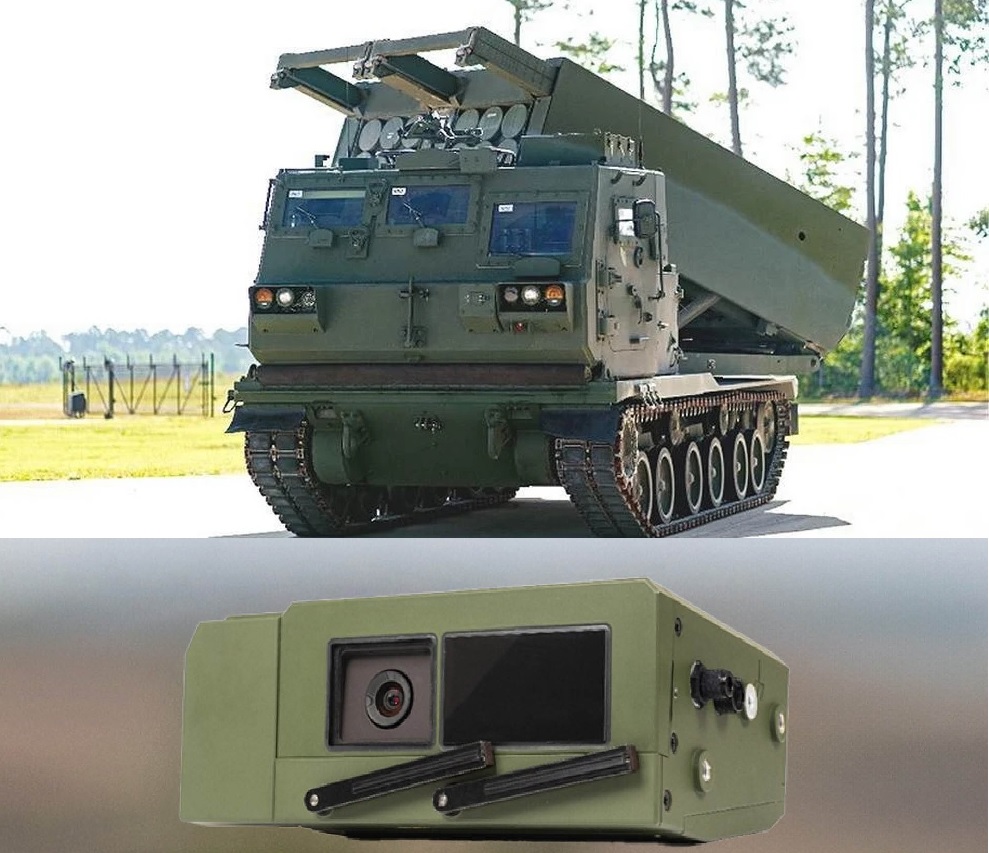
World
Rheinmetall UK (United Kingdom–based division of Rheinmetall) has secured a significant defence contract from the NATO Support & Procurement Agency (NSPA) to supply its advanced Trailblazer Driver Vision and Local Situational Awareness System for the UK Ministry of Defence’s upgraded M270A2 Multiple Launch Rocket System (MLRS) fleet. Prototypes are slated for delivery in early 2026, with full-rate production scheduled to begin later that year. The deal, valued in the mid-single-digit million euro range, marks the 17th military platform worldwide to adopt the British-developed Trailblazer suite, which is currently in service with seven countries. Enhancing Mobility and Safety for Modern Battlefield Operations Under the terms of the contract, Rheinmetall UK will design, test and integrate a tailored version of Trailblazer to meet the unique operational requirements of the M270A2 system. The upgrade aims to bolster driver and commander situational awareness during manoeuvres in complex terrain and challenging weather, day or night. Trailblazer is a software-defined, Safety Integrity Level 2 (SIL-2) certified system already fielded on other British Army platforms including the Boxer mechanised infantry vehicle, Challenger 3 main battle tank and Warrior infantry fighting vehicle. Its adoption across these fleets supports standardisation in UK armoured forces. The M270A2 upgrade will see modern vision sensors installed for the driver and commander, as well as remote side and rear cameras and robust installation kits complete with hardened cabling, switches and protective covers. Technology That Sees Beyond Daylight Rheinmetall says Trailblazer significantly enhances crew effectiveness by extending vision beyond the daylight spectrum. The system combines enhanced daylight imaging, thermal vision and fusion outputs, enabling better terrain navigation, obstacle avoidance, threat detection and route selection even in adverse conditions. The suite adheres to multiple cross-platform standards including SIL-2 safety protocols, NATO Generic Vehicle Architecture ((N)GVA) video standards, and UK defence standard DEF STAN 00-82, which governs military video infrastructure. Strategic Importance Amid Deep Fires Modernisation The integration of Trailblazer comes at a time when the British Army is expanding the operational capabilities of its deep fires forces — units equipped to deliver long-range precision fires — in response to evolving threats and lessons from recent conflicts. Upgrading the M270 fleet to the A2 standard is part of the broader UK Land Deep Fires Programme, which aims to increase launcher numbers and introduce more capable effectors such as Extended Range Guided Multiple Launch Rocket System (ER-GMLRS) munitions and potentially the Precision Strike Missile. According to defence industry analysts, improved situational awareness systems like Trailblazer are critical for “shoot-and-scoot” operations — enabling MLRS crews to fire, relocate and avoid counter-battery fire more effectively, especially in contested or urban environments. Industry and Defence Commentary Richard Streeter, Managing Director of Rheinmetall Electronics UK, said the award reinforces Trailblazer’s position as the UK Army’s driver vision system of choice. “That choice is built on our reputation for delivery of innovative and reliable technologies into the UK MoD,” Streeter added, noting the company’s pride in upgrading the UK’s latest MLRS platforms with cutting-edge vision capability. A Boost for UK Defence Industry The contract is also viewed as a positive development for the UK defence industrial base. Trailblazer is developed and manufactured on British soil, and its export and integration on a NATO partner fleet underscores the global competitiveness of UK-built military technology. Rheinmetall UK has been active in supplying critical systems across numerous British Army modernisation programmes, including Boxer, Challenger 3 and Warrior vehicle upgrades, further cementing its role as a key supplier to the UK Ministry of Defence.
Read More → Posted on 2025-12-11 16:37:10
World
The Republic of Korea Navy (ROKN), in partnership with the Defense Acquisition Program Administration (DAPA), successfully launched four advanced Chamsuri-class PKMR (Patrol Killer Medium Rocket) fast attack craft on December 8 at the HJ Shipbuilding & Construction shipyard in Busan, marking a major step forward in Seoul’s coastal defense modernization. The newly unveiled vessels — Chamsuri-231, Chamsuri-232, Chamsuri-233, and Chamsuri-235 — are the first four units of the PKX-B Batch-II program, a domestically designed and built series of high-speed patrol boats intended to replace aging Chamsuri-class PKM craft that have served for decades. Strategic Enhancement in Coastal Defense The 230-ton Batch-II patrol boats, each approximately 44 meters long with a 7-meter beam, are tailor-made for littoral engagements and rapid response missions close to Korean shores, particularly along the Northern Limit Line (NLL) where tensions with North Korean naval forces have periodically flared. At the launching ceremony, attended by some 70 military, government, and industry representatives, including Rear Admiral Ahn Sang-min, Commander of the ROK Navy Logistics Command, officials emphasized the strategic importance of these vessels for enhanced maritime surveillance, coastal interdiction, and neutralization of infiltration threats. Advanced Capabilities and Design Upgrades The Batch-II PKMRs bring significant improvements over both the legacy PKM fleet and the earlier PKX-B Batch-I boats. Key systems and capabilities include: Heavier and more versatile armament: A 76 mm main gun, dual 12.7 mm machine gun remote weapon stations (RWS), and a 12-cell 130 mm guided rocket launcher with rapid salvo capability provide both precision and area-denial firepower. Next-generation combat management and sensor suites: Integrated fire-control consoles unify weapon engagement and missile targeting, while enhanced radar and electro-optical sensors improve situational awareness in complex coastal environments. Improved survivability: Advanced electronic warfare systems, anti-jamming communications, and performance-enhanced MASS soft-kill decoy systems bolster resistance to modern anti-ship missiles. Structural and safety upgrades: Batch-II boats incorporate fire dampers and ventilation controls that limit fire spread and improve crew protection. Propulsion is provided by state-of-the-art marine gas turbine and diesel engines in a CODAG (Combined Diesel and Gas) configuration, delivering maximum speeds of up to 40 knots — critical for swift reaction to surface threats. A supplier contract with GE Aerospace will provide additional LM500 marine gas turbines for future Batch-II units, underscoring the program’s industrial scale and long-term sustainment plan. Program Timeline and Outlook The PKX-B Batch-II program began with a construction contract signed in 2022, followed by steel-cutting in 2024 and keel-laying in 2025. After final outfitting and sea trials, the four newly launched vessels are slated for delivery between August and November 2026, ahead of their full integration into the ROK Navy’s operational forces. Once commissioned, these patrol boats will operate alongside Yoon Youngha-class patrol vessels (PKG) and previous Batch-I PKMRs, forming a layered coastal defense architecture designed to protect South Korea’s northern and western maritime approaches. Broader Security Context South Korea’s emphasis on advanced small combatants reflects an evolving maritime doctrine that prioritizes distributed lethality, rapid response, and network-centric operations in congested and contested littoral waters — where swift interception and precision firepower often outweigh sheer size. The addition of Batch-II PKMRs comes as regional naval competition intensifies and the ROK Navy seeks to maintain robust defensive and deterrent posture along disputed maritime boundaries, such as those near the Yellow Sea and the Yellow Sea’s Northern Limit Line, historically the site of clashes including the 2002 Battle of Yeonpyeong. With a total of 18 units planned in the Batch-II series, South Korea is steadily building a modern, highly mobile coastal patrol force capable of confronting both traditional and asymmetric naval threats well into the next decade.
Read More → Posted on 2025-12-11 15:52:42
U.S Congress Blocks Air Force’s 2026 A-10 Retirement Plan, Orders Three-Year CAS Transition Strategy
World
As reported by Aerospace Global News on December 10, 2025, the U.S. Congress has approved the Fiscal Year 2026 National Defense Authorization Act (NDAA) with provisions that halt the U.S. Air Force’s push to retire the A-10 Thunderbolt II, forcing the service to maintain a minimum fleet size, justify future divestments, and deliver a comprehensive transition strategy for the close air support (CAS) mission. Congress Rejects Accelerated Drawdown The FY2026 NDAA blocks the Air Force from using authorized funds to retire, prepare to retire, or reclassify any A-10 if doing so reduces the fleet below 103 aircraft, a threshold specifically designed to prevent the service from executing its proposed rapid divestment of all remaining 162 A-10s in a single fiscal year. At least 93 aircraft must remain primary mission-capable through September 30, 2026, ensuring several combat-ready squadrons remain active. Retirements can only proceed through a unit-by-unit waiver process, requiring the Secretary of the Air Force to certify that each divestment includes a viable recapitalization plan, mission redistribution strategy, personnel adjustments and measures to mitigate local base impacts. Even after certification, a 30-day congressional notification period is required before any action can be taken. Congress additionally mandates that the Air Force submit a detailed A-10 transition plan for 2027–2029 by March 31, 2026, laying out how CAS requirements will be met once the A-10 begins its eventual retirement. Why Congress Stepped In Lawmakers have consistently argued that the A-10 still fills a specialized niche that no current aircraft fully replaces. Throughout the early 2020s, the Air Force gained approval for limited retirements, but Congress repeatedly intervened, claiming that alternatives—primarily the F-35, and in some cases the F-15E and MQ-9 Reaper—were not yet mature enough to assume the full CAS burden. Senators on the Armed Services Committees have emphasized several key concerns: Limited availability of high-end fighters for low-altitude, high-precision CAS missions, especially when F-35 squadrons are tasked with Indo-Pacific deterrence operations. Ongoing delays in F-35 production and modernization, including Block 4 capabilities required to improve targeting, survivability and sensor performance for close support missions. The A-10’s unmatched combination of loiter time, survivability, low operating cost per hour, and visual engagement capability, features essential for ground forces in permissive or semi-permissive environments. The absence of a specialized CAS-designated replacement aircraft, following the cancellation of earlier light attack experiments such as OA-X. Members of Congress have repeatedly warned that retiring the A-10 prematurely would create a CAS capability gap, particularly in regional conflicts, counterinsurgency missions, and contingency operations where modern air defenses are limited. Air Force Counterarguments and Long-Term Goals The Air Force has consistently sought A-10 retirement for more than a decade, citing: The need to shift resources toward next-generation airpower, including F-35 procurement and collaborative combat aircraft (CCA) development. Difficulties sustaining a unique A-10 training pipeline as the fleet size shrinks. Increasing operational risk if A-10 units are deployed against modern integrated air defense systems, where survivability is not assured. The desire to reallocate maintainers across fighter platforms facing manpower shortages. While the FY2026 NDAA accepts the Air Force’s broader intention to eventually retire the A-10, it rejects the proposed accelerated, single-year drawdown, insisting that the transition must be gradual, justified, and accompanied by validated capability replacements. Historical Context Behind Congressional Protection The A-10’s durability in U.S. force structure has long been tied to its performance in combat and its unique engineering. Developed under the post-Vietnam A-X program, the A-10 was designed specifically for close air support: A titanium “bathtub” cockpit to survive direct ground fire. High-mounted engines, minimizing risk from debris ingestion and improving survivability. A straight wing and high-lift design enabling slow-speed maneuvering and long loiter times. Redundant hydraulics and manual reversion controls, enabling flight even after catastrophic damage. Its defining feature, the GAU-8/A Avenger 30 mm cannon, fires up to 3,900 rounds per minute and was engineered into the aircraft’s geometry, with recoil counterbalanced by the airframe’s centerline. Its accuracy and armor-penetrating capability made it a decisive platform during conflicts from the Cold War to the Gulf War, Iraq and Afghanistan. The A-10’s reputation for toughness was cemented by incidents such as Capt. Kim “Killer Chick” Campbell’s 2003 Iraq mission, where an A-10 returned safely despite massive structural damage and total hydraulic failure—an outcome possible only because of the aircraft’s unique design. What Happens Next With the FY2026 NDAA now law: A-10 squadrons will remain operational through 2026. The Air Force must justify any retirements via detailed, mission-specific waiver requests. Congress will evaluate the upcoming 2027–2029 transition plan to determine whether CAS alternatives finally meet required maturity levels. The debate over the A-10’s future is expected to continue into the late 2020s as the Air Force develops CCAs, advances F-35 capabilities and explores potential light-attack or CAS-oriented platforms. For now, Congress has reaffirmed that the A-10 Thunderbolt II remains indispensable to U.S. close air support doctrine—and will not be retired until a credible, fielded replacement is in place.
Read More → Posted on 2025-12-11 15:41:46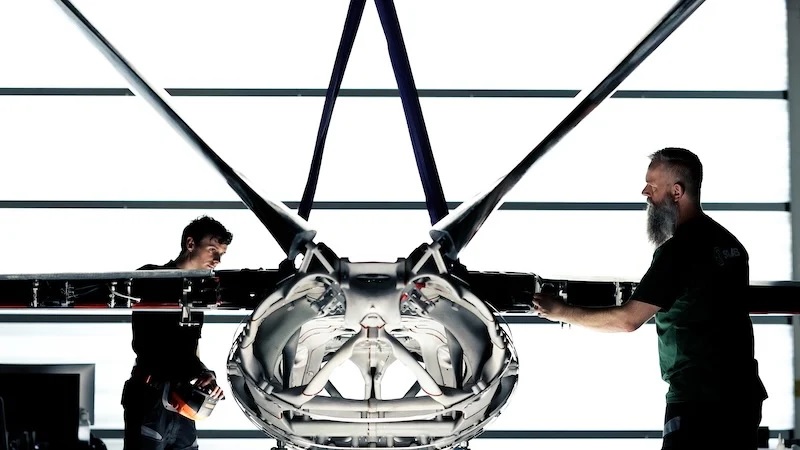
World
Saab has unveiled a landmark achievement in aerospace engineering: a five-metre aircraft fuselage produced entirely through 3D printing, using Divergent Technologies’ advanced additive manufacturing system. The structure, which has already passed initial proof-load testing, is scheduled for its first flight in 2026 and is being described as a decisive step toward a new era of software-defined hardware in aviation. The demonstrator goes far beyond a novel manufacturing method. Saab says it represents the first attempt by any airframer to apply the rapid-iteration philosophy of software development to physical aircraft structures. If flight trials confirm its performance, the approach could transform how military aircraft are designed, produced and modernised—shifting from decades-long cycles to continuous, software-driven hardware evolution. A New Phase in Swedish Aerospace Strategy The project reflects a broader transformation inside Sweden’s aerospace sector. Saab has long argued that competitive advantage in future air combat will come from the ability to orient and adapt faster than opponents. That thinking shaped the original Gripen’s modular, low-cost architecture and later inspired the digital-engineering push behind the Gripen E. The 3D-printed fuselage is positioned as the next expression of that strategy. Saab brought together additive production, AI-driven optimisation and its maturing model-based digital engineering environment to create a structure that can be redesigned as quickly as mission software. Gripen E’s Digital Twin and AI Avionics Led to the Breakthrough Much of the groundwork began during the Gripen E programme, where Saab abandoned traditional paper engineering in favour of a fully digital model-based approach. Every discipline worked from a shared digital twin of the aircraft, enabling early simulations, faster design trades and more accurate integration before any manufacturing began. Gripen E’s avionics architecture advanced that concept further by separating flight-critical and mission-critical software, enabling rapid updates throughout the jet’s life cycle. Saab notes that Gripen E became the first production fighter to fly with an onboard AI agent integrated into standard avionics computers. This prompted internal research into whether hardware could be made as flexible as software—a question that led directly to the 3D-printed fuselage project. Inside Saab’s Push for Software-Defined Hardware At the company’s Rainforest innovation centre, engineers began exploring how AI, 3D printing and model-based engineering could unlock a new class of adaptable airframes. Axel Baathe, who heads the unit, said the ambition was to give customers the same pace of iteration for structures that they currently enjoy for mission-system updates. “Customers can develop mission-critical applications in the morning and fly them in the afternoon,” Baathe said. “Our challenge was to bring that same flexibility to physical hardware. We call this software-defined hardware manufacturing.” Baathe noted that conventional factories rely heavily on fixed tooling, moulds and jigs—components that take months to produce and limit redesign. By contrast, software-defined manufacturing aims to eliminate those constraints entirely. A 3D-Printed Fuselage Built From Just 26 Parts To achieve this, Saab partnered with California-based Divergent Technologies, whose Divergent Adaptive Production System integrates AI-optimised design, high-precision metal additive manufacturing and fixtureless robotic assembly. The joint effort produced a five-metre fuselage section composed of only 26 printed metal parts, compared with the thousands typically found in a traditional aircraft section. Instead of the familiar ribs and stringers of conventional designs, the internal structure follows flowing, organic load paths generated by optimisation algorithms. Saab says these shapes would be impossible to design by hand. The approach reduces part count by more than a factor of 100, eliminates thousands of fasteners and opens the door to embedding systems like wiring and cooling channels directly into the printed components. The fuselage will be flight-tested on an autonomous airborne platform now in development. If successful, it would be one of the largest 3D-printed structures ever to complete powered flight. Saab’s Reconfigurable Factory Vision Beyond the hardware, Saab sees the project as the first step toward a fully reconfigurable “digital factory” capable of building any airframe defined in its digital twin. The company envisions production lines that shift instantly between designs without cost-prohibitive tooling changes. “We believe the future factory will become one of our most important products,” Baathe said. “It will allow our customers to avoid being locked into fixed designs—either in hardware or software.” The concept, internally summarised as “CAD in the morning, fly in the afternoon,” represents a dramatic departure from the aerospace industry’s traditional model, where tooling may remain in service for decades and restrict how often a design can evolve. Implications for Future Fighters and Unmanned Systems Although Saab has not linked the fuselage to any specific next-generation fighter programme, analysts say the implications are clear. The ability to rapidly redesign airframe sections could enable mission-specific variants, low-cost unmanned aircraft produced on demand, or frequent structural upgrades that are normally avoided due to cost and manufacturing complexity. Saab says the new approach “reduces the cost of change, making redesign and implementing innovative ideas easier.” That philosophy aligns with the direction of modern airpower, where speed of adaptation is becoming as critical as outright performance. A Potential Shift in Certification Standards The 2026 test flight will also be closely watched by regulators. Aviation certification bodies have so far approved 3D printing primarily for small brackets and secondary structures due to concerns about fatigue behaviour and inspection challenges. A successful fuselage demonstration could push regulators to update certification pathways for large, printed primary structures. Toward a Rapid-Iteration Future in Airpower For Saab, the 3D-printed fuselage marks the beginning of a larger industrial shift—one that could enable smaller nations or constrained budgets to maintain cutting-edge fleets without the expense of decade-long development cycles. “The joint team has done an excellent job preparing for first flight,” Saab said in its announcement. If the 2026 demonstration succeeds, Saab and Divergent may help steer the aerospace sector toward an era where aircraft evolve continuously, driven by digital design, AI and software-defined manufacturing—reshaping not only how airframes are built, but how airpower itself is conceived.
Read More → Posted on 2025-12-11 15:36:15
World
The U.S. Navy has finalized a major five-year, indefinite-delivery/indefinite-quantity contract with BAE Systems, confirming a ceiling value of $1.7 billion for the continued production of Advanced Precision Kill Weapon System (APKWS) laser-guidance kits. The announcement, made on December 10, 2025, includes an initial funded order of $322 million, formally launching the next phase of high-volume manufacturing as U.S. forces and allies accelerate the procurement of cost-effective precision weapons. The multi-year agreement—structured as an IDIQ vehicle—allows the Navy to place annual delivery orders for tens of thousands of guidance sections, ensuring both procurement flexibility and a stable industrial base at a moment when operational consumption rates remain exceptionally high. According to BAE Systems, the guidance kits will be produced in Hudson, New Hampshire, and Austin, Texas, continuing more than a decade of continuous manufacturing for the program. A Scalable Precision Weapon for Modern Combat APKWS is not a new missile but a mid-body guidance kit added between the motor and warhead of the widely used 70 mm Hydra rocket, converting existing stockpiles into semi-active laser–guided munitions. The U.S. designation AGR-20 APKWS II covers the fully assembled round, combining the WGU-59A/B guidance section with legacy motors and warheads. The system’s key feature is its distributed aperture laser seeker, embedded in the forward canards, which provides sub-meter accuracy while maintaining a relatively small warhead—making it suitable for urban combat and low-collateral engagements. Because the kit is compatible with standard 70 mm launchers, APKWS can be fired from: Rotary-wing aircraft (AH-1Z, UH-1Y, AH-64, MH-60) Fixed-wing jets (A-10, F-16, F/A-18) Unmanned systems (MQ-8 Fire Scout) Vehicle-mounted ground launchers (VAMPIRE, EAGLS) Naval platforms with 70 mm launcher pods The weapon’s modularity and low cost have made it a core U.S. precision effector, filling the gap between unguided rockets and higher-end missiles like Hellfire and AMRAAM. Rising Operational Demand and New Mission Profiles Since its first use in Afghanistan in 2012, APKWS has rapidly expanded from a niche close-air-support tool into a multi-domain weapon. Hundreds of rounds were fired during the anti-ISIS campaigns, where aircraft required precision with minimal collateral damage. The weapon has since emerged as a frontline counter-UAS interceptor, with 2019 trials proving its ability to destroy drone targets and even low-flying cruise-missile surrogates. Subsequent tests under the Joint Counter-Small UAS Office confirmed a high kill probability at a fraction of the cost of traditional interceptors. U.S. Central Command has publicly highlighted APKWS’ role in recent Middle East operations. In one seven-week period, nearly 40% of drone kills were made using APKWS fired from fighter aircraft—demonstrating its utility as a low-cost alternative to expendable air-to-air missiles. For ground forces and partners such as Ukraine, mobile launchers like VAMPIRE and EAGLS have extended APKWS into short-range air-defense roles, creating a rapidly deployable, truck-mounted anti-drone capability. Cost Advantage Drives Global Adoption One of APKWS’s strongest advantages is its affordability. Open sources estimate the unit price of a complete rocket in the mid-$20,000 range, roughly one-third of a typical laser-guided bomb and dramatically cheaper than most air-defense missiles. This cost-exchange ratio is particularly critical against drones, many of which cost similar or smaller amounts. APKWS has become the U.S. government’s official program of record for 70 mm guided rockets, surpassing competitors such as: Lockheed Martin DAGR Roketsan Cirit Thales FZ275 LGR Its compatibility with existing Hydra stockpiles and launchers has made it attractive across NATO and allied air forces. Several European nations are now evaluating or integrating APKWS on platforms such as Eurofighter Typhoon, NH90, and H145M. BAE Systems is also showcasing APKWS-armed Malloy TRV-150 drones, positioning the weapon as part of a new mobile counter-drone ecosystem. Contract Significance and Long-Term Production Outlook The new Navy contract builds on a long series of expanding APKWS awards: 2018: $224 million contract for 10,000+ rounds 2019: $2.68 billion IDIQ for Lots 8–12 (full-rate production) 2025 (August): $1.7 billion IDIQ for Lots 13–17, covering up to 55,000 kits through 2031 2025 (December 10): $322 million initial order triggering the Lot 13–17 production cycle Combined, these multi-year programs have elevated APKWS into a multi-billion-dollar modernization effort with strategic implications for U.S. and allied force readiness. Defense officials note that the IDIQ structure gives the Pentagon the flexibility to scale production “as needed” amid fluctuating consumption, while ensuring BAE Systems can maintain workforce stability, tooling, and supply chains. Stockpiles of low-cost effectors have become a critical priority as militaries grapple with high drone usage and the need to conserve expensive missiles like AIM-120 AMRAAM, AIM-9X, NASAMS interceptors, and Patriot rounds. A Cornerstone of Future Air-Defense and Precision-Strike Doctrine Strategically, the Navy’s contract underscores a broader shift toward layered, high-volume precision strike and air-defense architectures. By enabling tens of thousands of guided rockets each year, APKWS provides a reliable and affordable tool for daily tactical engagements, allowing high-end missile inventories to be preserved for major threats. For allies, the expanding availability of APKWS through Foreign Military Sales creates a de facto standard for NATO precision-rocket systems at a time of heightened demand due to conflicts in Europe and the Middle East. With new ground, naval, and unmanned applications emerging, the weapon is now positioned at the center of Western defense planning for counter-drone warfare and precision engagements through the end of the decade. The December contract confirms APKWS not as a simple upgrade to legacy rockets, but as a fully mature, scalable precision-strike solution that will shape U.S. and allied combat capabilities for years to come.
Read More → Posted on 2025-12-11 14:54:43
World
China has carried out the maiden flight of its groundbreaking Jiutian SS-UAV, the nation’s first dedicated aerial “mothership” designed to deploy drone swarms at long range and high altitude. Built by AVIC’s Xian Chida division, the jet-powered platform is positioned to become one of the most significant developments in China’s unmanned aviation strategy, combining the range of a strategic asset with the operational flexibility of a multi-mission drone carrier. According to official and industry reports, the Jiutian — meaning “High Sky” — demonstrated stable aerodynamic performance during its first flight, validating years of design, integration and iterative testing. The UAV can cruise at approximately 15 kilometres, operate for up to 7,000 kilometres, and carry a 6-ton payload, giving it a lift capacity comparable to half that of the H-6K bomber. Most notably, it is capable of deploying over 100 reconnaissance drones or loitering munitions, allowing the platform to launch swarms capable of overwhelming air defences and saturating wide surveillance zones. Aviation engineers have described the maiden flight as a decisive step toward a new model of high-altitude, distributed warfare — one where unmanned carriers coordinate dozens of subordinate UAVs across contested regions. Beyond its core strike and swarm-deployment role, the Jiutian’s large internal bay and modular architecture enable rapid configuration for missions ranging from electronic warfare and maritime patrol to border surveillance and high-risk cargo delivery. AVIC sources indicate the aircraft’s internal systems are compatible with ELINT pods, EO/IR packages and synthetic-aperture radar arrays, giving the platform tremendous versatility once it enters operational service with the PLA. A Development Timeline Years in the Making The Jiutian SS-UAV is the product of a multi-year development cycle shaped by China’s push to integrate autonomy, swarm tactics and long-range unmanned power projection. Its origins trace back to 2018, when Chinese military researchers began publishing studies on airborne drone-launch platforms and high-altitude unmanned strike carriers. These early concepts matured between 2020 and 2022, when AVIC formally launched design work for a heavy UAV capable of carrying small- and medium-class drones internally and externally. Prototype manufacturing accelerated through 2023 and early 2024, when satellite images and leaked footage revealed a full-scale airframe undergoing static load tests, avionics trials and landing gear evaluations at an AVIC airfield in Shaanxi. Engineers later completed full power-on tests, communications-link validation and the integration of multi-channel swarm-control systems designed to manage more than a hundred drones simultaneously. By late 2024, high-speed taxi tests indicated the program was entering its final pre-flight phase. Over the first half of 2025, the aircraft completed avionics certification, structural stress testing for heavy payload operations and systems verification for long-range swarm deployment missions. Mission simulations in PLA testing ranges evaluated maritime surveillance profiles, autonomous routing and precision-strike coordination between the mothership and subordinate drones. The successful maiden flight in late 2025 confirms the aircraft’s readiness to enter the second phase of testing, where it is expected to demonstrate live swarm launches, electronic-warfare payload deployments and autonomous teaming with other Chinese UAVs. If testing continues at its current pace, analysts expect the platform to reach initial operating capability by 2027, giving the PLA a unique long-range tool for both peacetime surveillance and high-intensity conflict. Strategic Impact and Future Role in China’s Air Power Military experts believe the Jiutian introduces a disruptive capability for China, potentially altering air-combat dynamics in the Indo-Pacific. Whereas traditional UAVs operate alone or in pairs, the Jiutian is designed as an airborne command-and-launch hub, able to dispatch drone swarms into layered enemy defences while remaining at high altitude and far from risk. Its long endurance and payload allow it to function as a distributed sensor node, a strike facilitator, and an electronic-warfare asset depending on mission requirements. The platform’s capabilities also reflect China’s growing interest in autonomous, networked air operations, similar to U.S. programs such as the MQ-25, Loyal Wingman cooperative aircraft, and experimental X-61A “Gremlins” programs. But China’s Jiutian stands apart in combining heavy payload capacity, long-range flight, and large-scale swarm deployment into a single unmanned system — a concept few nations have yet fielded. As operational trials progress through 2026 and 2027, China’s first aerial mothership is expected to redefine how the PLA conducts reconnaissance, strike coordination, maritime security and high-altitude drone warfare. The Jiutian’s first flight marks not just the debut of a new aircraft, but the arrival of a new strategic doctrine built around autonomous networks and swarm-centric aerial operations.
Read More → Posted on 2025-12-11 14:25:28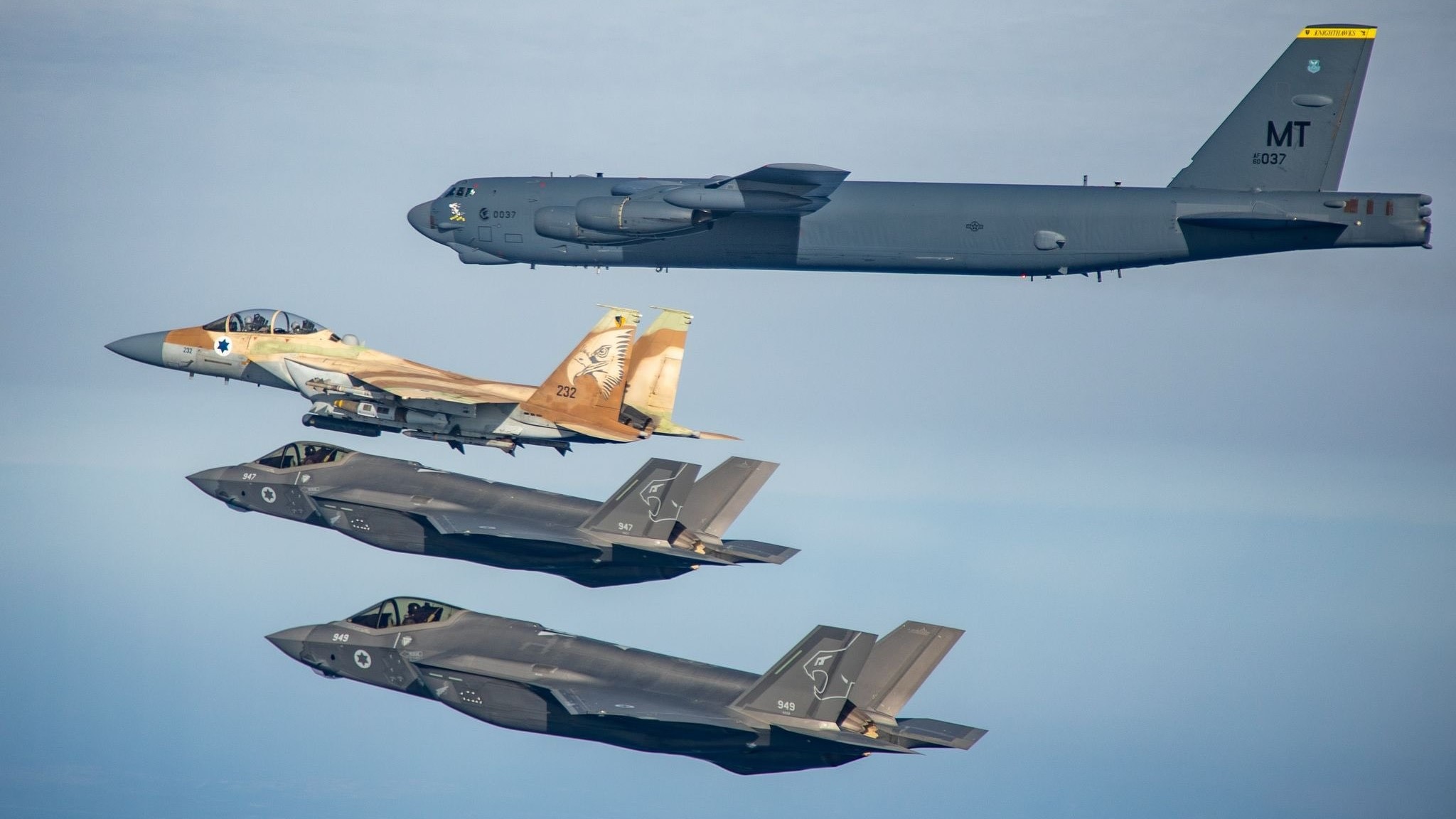
World
Tokyo — In a high-profile display of allied power, two U.S. Air Force B-52H Stratofortress bombers flew alongside Japan Air Self-Defense Force F-35A and F-15J fighters over the Sea of Japan on Wednesday, Japan’s defence ministry confirmed. The drill came just a day after Chinese and Russian strategic bombers conducted a joint patrol over the East China Sea and western Pacific, further escalating tensions in the region. Japan said the exercise was meant to demonstrate “the unwavering commitment of Japan and the United States to protect regional stability and counter coercive actions that threaten the security environment.” A Rapid Response to Escalating Regional Activity The B-52s joined Japanese fighters over international waters west of Japan, conducting complex formation maneuvers, long-range strike coordination, and interoperability checks. The flight followed multiple incidents involving Chinese military aircraft near Japan’s airspace. On Tuesday, Japan scrambled jets in response to Chinese aircraft carrier drills, saying its fighters were targeted by radar beams from Chinese aircraft operating south of Japan. The incident drew immediate criticism from Washington, which said the maneuver was “not conducive to regional peace and stability” and reaffirmed that the U.S.–Japan alliance remained “unwavering.” China denied Japan’s accusation, insisting that Japanese jets flying near its carrier had endangered Chinese air operations. China–Russia Patrol Triggers Wider Military Reactions The latest China–Russia joint bomber flight — involving PLAAF H-6K bombers and Russian Tu-95 aircraft — prompted both Japan and South Korea to respond. South Korea’s military said it scrambled fighter jets when the Chinese and Russian aircraft entered its Air Defence Identification Zone (ADIZ), an early-warning buffer that lies outside sovereign airspace. Japan’s defence ministry has also reported increasing frequency of radar lock-on incidents involving Chinese fighters and more Russian long-range patrols around Japanese territory. Analysts say the combined pressure from Beijing and Moscow has forced Tokyo and Washington to adopt more visible shows of military cooperation. Deepening U.S.–Japan Defence Coordination Wednesday’s bomber-escort mission underscores the accelerating alignment between the United States and Japan as both governments respond to expanding Chinese military operations and Russia’s renewed activity in the region. Japan is home to the largest concentration of U.S. military power overseas, including a U.S. Marine expeditionary force and a forward-deployed aircraft carrier strike group. The U.S. Indo-Pacific Command said cooperation with Japan is being strengthened to ensure rapid, seamless joint operations in any contingency. Recent steps by Japan include expanding its fleet of F-35A and F-35B fighters, upgrading its F-15J Kai aircraft, and increasing the pace of maritime and aerospace drills with the United States. Strategic Context: The Taiwan Factor Regional tensions have risen sharply following remarks last month by Japanese Prime Minister Sanae Takaichi, who suggested Tokyo could consider certain responses if China were to attack Taiwan. Her comments triggered a diplomatic dispute with Beijing. China claims the self-governed island as its own and has not ruled out the use of force to bring it under control. Taiwan lies just over 100 km (62 miles) from Japanese territory, close to key maritime supply routes on which Japan depends. Analysts say this proximity — and the rising frequency of Chinese military activity — has made Taiwan a central factor in Japan’s defence planning and in U.S.–Japan joint operations. Purpose of the B-52 Deployment The B-52, one of the most recognisable symbols of U.S. long-range strike capability, plays several strategic roles in the current security environment. Its presence over the Sea of Japan signals Washington’s readiness to deter threats across the region, while also demonstrating the ability of U.S. strategic bombers to operate seamlessly alongside Japanese fighters during complex missions. The deployment reinforces broader deterrence efforts at a time of heightened concerns over Taiwan, North Korea, and expanding Chinese activity. It also serves as a direct response to recent Sino-Russian coordination, which Tokyo views as an increasingly serious challenge along its borders. Defence analysts said the mission sends strategic clarity to both Beijing and Moscow, underscoring that the U.S.–Japan alliance is prepared to respond firmly to any coercive military actions. More High-End Drills Expected With regional tensions unlikely to ease, officials expect the United States and Japan to continue ramping up advanced joint operations. The coming months are likely to see additional bomber-escort flights over the Sea of Japan, as well as expanded multinational air exercises involving South Korea, Australia, and the Philippines. Intelligence cooperation is also expected to deepen as the allies work to monitor and understand increasing Chinese and Russian air activity. Japan’s growing fleet of F-35s will play a larger role in these operations, with both countries preparing for more complex integration of fifth-generation aircraft in joint missions. A U.S. Indo-Pacific Command official said the alliance is moving steadily toward “seamless joint operations for any potential contingency,” reflecting the deepening military coordination between Washington and Tokyo.
Read More → Posted on 2025-12-11 14:08:02
World
Diehl Defence has secured a fresh contract from the Swedish Defence Materiel Administration (FMV) for additional launchers for the IRIS-T SLS short-range ground-based air defence system, marking another significant step in Stockholm’s multi-layered air defence modernisation. The agreement includes a full logistics package with spare parts, ensuring long-term operational availability and deepening the defence industry partnership between Sweden and the German manufacturer. A Long-Standing Partnership Strengthened Sweden has been part of the IRIS-T international development consortium since its inception in the early 2000s, contributing to the design and evolution of what has become one of Europe’s most trusted missile families.The Swedish Air Force formally introduced the IRIS-T air-to-air missile into operational service in 2005, integrating it on the JAS 39A/B and later on the Gripen C/D. Since then, Sweden has consistently upgraded missile software and seeker algorithms through multinational IRIS-T enhancement programs. In the ground-based domain, Sweden became one of the earliest European adopters of the IRIS-T SLS (Short-Range) system, placing its first orders in the mid-2010s to replace older RBS 70 variants and to reinforce homeland air defence. Those initial procurements included vehicle-integrated launchers, command-and-control modules, and associated training systems. Deliveries for these early orders continued through the early 2020s, laying the groundwork for today’s expansion. Recent Acceleration: SLS + SLM for a Modern Layered Shield The latest launcher purchase follows Sweden’s landmark June 2025 decision to acquire seven IRIS-T SLM medium-range units, a move intended to build a fully layered air defence architecture capable of countering contemporary aerial threats. With the SLS covering the SHORAD and VSHORAD layer, and the SLM providing medium-range protection, Sweden is creating a defence shield comparable to that of leading European NATO members. The IRIS-T SLS system uses the same standard IRIS-T missile employed in air combat—requiring no modification. Its agility, high off-boresight capability, and advanced infrared seeker provide a 360-degree defensive envelope, countering cruise missiles, aircraft, drones, and armed helicopters with high precision. Operational Advantages and Swedish Contributions The IRIS-T missile’s multi-role capability—air-to-air and surface-to-air—offers both cost efficiency and logistic simplicity, an advantage Sweden emphasised when it joined the consortium. Swedish engineers played a notable role in refining the missile’s seeker algorithms and propulsion elements, ensuring top-tier performance in high-latitude and multi-weather operations. The combination of SLS and SLM, both using the same missile family, enables Sweden to streamline ammunition stockpiles and maintenance cycles while increasing battlefield flexibility. Growing Global Confidence in IRIS-T Systems With Sweden’s latest purchases, the IRIS-T ecosystem continues to expand globally. As of 2025, 21 nations have already procured or initiated procurement of either the IRIS-T air-to-air missile, the IRIS-T SLS, or Diehl Defence’s IRIS-T SLM and SLX long-range systems. Demand surged further after the IRIS-T SLM demonstrated strong battlefield performance in Ukraine, elevating its reputation as one of the world’s most capable air defence weapons. For Sweden, whose defence posture has sharpened significantly following geopolitical tensions in Northern Europe and NATO accession initiatives, the expanded IRIS-T portfolio represents a pivotal enhancement of national security and a substantial contribution to collective European air defence. A Next Phase in a Decades-Long Collaboration From early IRIS-T development participation to the latest acquisition of new SLS launchers, Sweden and Diehl Defence have built a 20-year partnership that continues to shape Europe’s evolving air defence landscape. With SLS and SLM systems entering service side-by-side, Sweden is now positioned to field one of the continent’s most modern and layered ground-based air defence networks, safeguarding critical infrastructure and strengthening regional deterrence.
Read More → Posted on 2025-12-11 13:51:39
World
The United States has formally approved a $686 million sale of defence goods and services to Pakistan to upgrade and sustain its F-16 fighter jet fleet, marking Washington’s most significant military support package to Islamabad in recent years. The decision—conveyed to Congress by the Defence Security Cooperation Agency (DSCA) on December 8—initiates a mandatory 30-day review period, after which the deal will be considered approved unless rejected. According to the notification, the package includes $37 million in defence equipment and $649 million worth of additional systems and services, ranging from secure communications and advanced identification systems to navigation tools, software upgrades, mission-planning systems and electronic security modules. Crucially, the shipment comprises 92 Link-16 systems, enabling encrypted tactical data networking, and six Mk-82 inert 500-lb bombs for training and integration purposes. US officials said the sale “supports the foreign policy and national security objectives of the United States” by ensuring Pakistan remains interoperable with US and partner militaries, particularly in counterterrorism missions and contingency response operations. Islamabad operates a mixed fleet of Block-52 and Mid-Life Upgrade (MLU) F-16s, and the proposed support package is designed to extend the aircraft’s lifespan through 2040, while addressing flight-safety and mission-readiness concerns. Lockheed Martin has been named the principal contractor for the programme, which falls under the broader F-16 Cryptographic Mandate Compliance and Service Life Extension Program (SLEP) framework. Congressional documents noted that Pakistan “has demonstrated the ability to maintain its forces” and is expected to absorb the upgraded systems without difficulty. Renewed US–Pakistan Military Engagement Raises India’s Concerns While Washington describes the move as a routine sustainment package, the development has raised strategic concerns in New Delhi. Speaking on Wednesday, Dhruva Jaishankar, Executive Director of the Observer Research Foundation America, said renewed US engagement with Pakistan’s military establishment remains a sensitive issue for India. Jaishankar remarked that Pakistan’s long track record of leveraging militant proxies against India—combined with past instances of third-party mediation—has shaped India’s scepticism toward external involvement in bilateral disputes. He noted that although the US has pursued a policy of “de-hyphenation,” separate engagement with Pakistan still complicates India-US strategic cohesion at a time when both nations are seeking greater alignment on trade, defence technology and Indo-Pacific security. Indian officials have not issued a formal statement yet, but the upgrade of Pakistan’s F-16 fleet has historically been viewed in New Delhi as an operational capability boost with direct implications for regional air-power balance. Not an Isolated Deal: US–Pakistan Economic Ties Accelerate The defence sale comes as the two countries signal a broader revival in economic and strategic ties. On Wednesday, the US Export-Import Bank (EXIM) approved $1.25 billion in financing for the development of the Reko Diq critical minerals project in Pakistan’s Balochistan province—one of the world’s largest undeveloped copper-gold deposits. In a message posted on X, Natalie A. Baker, Charge d’Affaires at the US Embassy in Islamabad, said the financing will enable up to $2 billion in American mining equipment and services to be supplied over the project’s construction years. The investment, she said, is expected to generate 6,000 jobs in the US and 7,500 jobs in Balochistan, calling Reko Diq a “model for future US-Pakistan mining partnerships.” The US Embassy described the commitment as a “game-changer for US businesses and local Pakistani communities,” emphasising that the project aligns with Washington’s push to strengthen global supply chains for critical minerals essential to clean-energy and advanced-technology industries. The EXIM approval also represents the largest US government-backed financing package for Pakistan in more than a decade, signalling renewed attention toward resource development and industrial cooperation under the Trump administration’s economic diplomacy initiatives. A Broader Strategic Opening: Oil Cooperation and Trade Talks This phase of expanded engagement traces back to July, when President Donald Trump announced a proposed US-Pakistan cooperation framework for developing Pakistan’s “massive oil reserves.” In a post on Truth Social, he stated that both countries would jointly select an American energy firm to lead exploration efforts, expressing optimism that Pakistan might eventually become an energy exporter—“maybe selling oil to India someday.” Although still in the exploratory phase, the proposal has triggered discussions on potential US investment in Pakistan’s underdeveloped petroleum sector, which remains constrained by infrastructure limitations and a financing crunch. Washington has also stepped up dialogue on trade, supply-chain integration and industrial co-development as Islamabad attempts to stabilise its economy following repeated IMF interventions. Analysts say these initiatives mark one of the most active US economic outreach efforts toward Pakistan since the early 2000s. Strategic Implications and the Road Ahead The combination of military, economic, and industrial engagements suggests a broader recalibration of US policy toward Pakistan—one that strengthens Islamabad’s defence capabilities while deepening cooperation in critical sectors. For Pakistan, the F-16 sustainment package provides long-term stability for its most sophisticated combat aircraft fleet, crucial for both national air defence and counterinsurgency operations. For the US, it ensures continued leverage and interoperability with a nuclear-armed South Asian partner situated at a crossroads of global strategic theatres. However, the developments also sharpen sensitivities in India at a time when New Delhi and Washington are working to reinforce their partnership across defence manufacturing, Indo-Pacific security, and emerging technologies. The F-16 deal now awaits Congressional review, after which delivery schedules and upgrade timelines are expected to be finalised. Meanwhile, US-Pakistan coordination on minerals and energy is set to expand, with both sides signalling readiness for additional agreements in 2026.
Read More → Posted on 2025-12-11 13:35:54
World
U.S. forces on Thursday carried out a rare, highly choreographed seizure of the very large crude carrier Skipper in international waters off the coast of Venezuela. The high-profile operation, announced by President Donald Trump on Wednesday, involved MH-60S Seahawk helicopters from the aircraft carrier USS Gerald R. Ford fast-roping elite boarding teams onto the Skipper, a very large crude carrier (VLCC) linked by U.S. officials to Iranian-backed oil smuggling and terrorist financing networks. Military Operation and Tactics According to U.S. government officials, the operation unfolded when helicopters launched from the USS Gerald R. Ford, which has been deployed in the Caribbean amid a growing U.S. military presence in the region. MH-60S Seahawk helicopters hovered over the deck of the Skipper, deploying fast-rope teams composed of U.S. Coast Guard Maritime Security Response Team personnel, Marines, and other special-operations forces. The boarding was executed swiftly and without reported casualties. Attorney General Pam Bondi released footage showing U.S. forces descending onto the deck before securing the bridge and taking control of the vessel. U.S. agencies involved included the Federal Bureau of Investigation (FBI), Homeland Security Investigations, and the U.S. Coast Guard, with the Navy providing air and sea support. Sanctions and Legal Basis The Skipper has been sanctioned by the U.S. Treasury Department since 2022 for its alleged role in transporting oil that helped finance the Islamic Revolutionary Guard Corps and Hezbollah through clandestine shipping networks. The vessel, formerly known as Adisa, reportedly transported Venezuelan heavy crude and Iranian oil in violation of longstanding U.S. sanctions. According to publicly available data and maritime tracking analysis, the tanker departed Venezuela’s main oil port at Puerto José between December 4 and 5 after loading roughly 1.1 to 1.9 million barrels of heavy crude. It conducted a ship-to-ship transfer near Curaçao, offloading part of its cargo to another tanker bound for Cuba, before U.S. forces intercepted the vessel in international waters. President Trump described the vessel as “very large — largest one ever seized”, confirming the unprecedented scale of the operation and hinting at further actions to come. On the fate of the oil, Trump said: “We keep it, I guess,” underscoring Washington’s intent to retain control of the seized cargo. International Reaction and Regional Impact The Venezuelan government, led by President Nicolás Maduro, condemned the seizure vehemently, labeling it “an act of international piracy” and “barefaced robbery.” Caracas has vowed to pursue legal action before international bodies and insists the move amounts to theft of Venezuela’s sovereign resources. The incident has also stirred broader geopolitical tensions. Oil markets reacted sharply to the news, with global benchmark Brent crude rising following the announcement. Analysts warn that further interdictions or pressure on Venezuela’s oil exports could worsen already strained relations and destabilize energy flows in the Caribbean region. Strategic and Political Context This marks the first major interdiction of Venezuelan oil cargo under U.S. sanctions since 2019, reflecting a more assertive U.S. posture toward sanctions enforcement and countering illicit energy flows tied to allegedly hostile actors. The operation comes amid an increased U.S. military presence in the Caribbean, including deployments of naval vessels and aircraft, and follows a series of U.S. strikes on vessels accused of drug trafficking. Critics of the administration’s strategy — including some U.S. lawmakers — have raised concerns over the legal foundations and risks of such missions, questioning whether the actions could lead to unintended escalation with foreign governments. Supporters argue the operation disrupts networks that undermine sanctions and fund terrorism. As the international community digests the implications of the seizure, the Skipper incident is likely to dominate discussions on maritime law, sanctions enforcement, and U.S. policy toward Venezuela, Iran, and broader regional security dynamics for weeks to come.
Read More → Posted on 2025-12-11 12:27:56
World
Russia’s attempt to finally bring the diesel-electric submarine B-587 Velikiye Luki into active fleet service represents more than the completion of a single naval platform—it reflects the struggle, recalibration, and persistence of an entire submarine program that has spent nearly two decades chasing its intended performance. As of late November 2025, indications from Russian naval observers suggest that Admiralty Shipyards hopes to deliver the submarine to the Navy before the New Year, closing one of the most extended development chapters in modern Russian non-nuclear shipbuilding. The submarine remains in trials for now, but it is undergoing what officials and industry insiders quietly describe as the final sequence of its Baltic test program. The Final Push After Years of Trial Cycles For much of 2024 and 2025, the Velikiye Luki has repeatedly left port for test sorties, only to return to the shipyard days or weeks later for refinements. This rhythm—trial, return, adjust, and resume—has defined the submarine’s life since it began sea trials in December 2023. What stands out is the methodical depth progression of its tests: In December 2024, the boat descended to around 100 meters, validating basic integrity and key systems. By July 2024, with Baltic Fleet support, it pushed toward 180 meters, testing emergency procedures, propulsion reliability, sonar performance, and system coordination at more demanding pressures. Each trial has revealed something—sometimes an improvement, sometimes a problem requiring correction. That cycle, though normal for advanced naval vessels, appears to have been unusually prolonged for this submarine. Whether the delays reflect the complexity of integrating the revised Project 677M standard, or lingering issues inherited from earlier Lada-class prototypes, is something Russian officials have not clarified. But the pattern is evident: the submarine is nearing its acceptance threshold, and its current trial phases are described as the last significant hurdle before commissioning. A Submarine Defined by Delays, Redesigns, and Shifting Expectations The Velikiye Luki was not always called by that name. Laid down in 2006 as Sevastopol, it was one of the early members of the Lada-class lineage—Russia’s intended successor to the aging Kilo-class. But the Lada program ran into trouble almost immediately. The lead vessel, B-585 Sankt Peterburg, struggled with propulsion, noise levels, electrical performance, and onboard systems integration. By 2009, Russia paused work on the second and third boats, including the early Velikiye Luki hull. A reassessment followed. Years later—by 2014 and 2015—the program was revived, redesigned, renamed, and the submarine was re-laid under the improved Project 677M architecture. Initial optimism again led to ambitious deadlines: delivery in 2018, then in 2019, then 2021, 2022, and 2024. By December 2022, the submarine was finally launched. It even appeared at the 2023 Main Naval Parade, signaling that progress was happening. But real testing—the kind that reveals whether a submarine truly performs as expected—did not start until late 2023, setting the stage for the long trial sequence that continues today. Thus, the submarine arriving in the fleet around New Year 2025 would close a chapter stretching nearly two decades from first steel cutting to operational readiness. A Closer Look at What Velikiye Luki Represents Technically The submarine now aligns with the Project 677M Lada-class standard—a compact, low-noise, modernized design conceived for Russia’s shallow and acoustically complex internal seas. Its technical attributes reflect this focus: A submerged displacement of around 2,650 tons, far lighter and smaller than the more common Project 636.3 Kilo-class units. A single-shaft diesel-electric propulsion system powered by two diesel generators and a main electric motor capable of speeds up to 21 knots underwater. Two large battery groups intended to enhance submerged endurance, an area where Russia has historically lagged behind Western AIP-equipped designs. Stealth-oriented design elements, from hull coatings to vibration isolation, meant to reduce detectability. Weapons capability remains similar to the Kilo-class: Six 533 mm torpedo tubes A standard complement of up to 18 torpedoes or mines The ability to fire Kalibr cruise missiles from torpedo tubes for land-attack or anti-ship missions Even minor surface-defense features, such as stored Igla or Verba MANPADS, reflect how Russian designers imagined practical self-defense scenarios. Observers also noted the submarine temporarily carrying a heavy machine gun atop its sail during certain fitting periods—a sight not typical, but not unheard of for Russian submarines under construction. Importantly, the Velikiye Luki does not incorporate an air-independent propulsion (AIP) module, even though such technology was studied for later variants. The absence of AIP slightly limits its submerged endurance compared to German or Swedish equivalents, but Russia has balanced that limitation with battery capacity and acoustic improvements. The Larger Context: A Submarine Class Trying to Prove Its Worth To understand why completing Velikiye Luki matters to Russia, one must see where the Lada-class stands today. The program was intended to be Russia’s next-generation non-nuclear submarine family—lighter, quieter, more advanced, and more exportable than the Kilo line. But chronic engineering issues, funding interruptions, and shifting naval priorities have repeatedly stalled progress. The lead boat Sankt Peterburg never achieved the performance levels envisioned and is reportedly slated for retirement rather than modernization. The second boat, Kronstadt, took from 2005 to 2024 to enter service. The two newer units, Vologda and Yaroslavl, laid down in 2022, have since had work suspended due to funding shortages. Thus, Velikiye Luki, if delivered by year-end, becomes not merely another submarine but a proof-of-concept milestone for Russia’s ability to field operational 677M-class boats in meaningful numbers. Why the Baltic Fleet Wants This Submarine For the Baltic Fleet, a vessel like Velikiye Luki offers specific advantages: It is compact and maneuverable in shallow waters. Its acoustic profile is lower than the older Kilo-class submarines. Its Kalibr-launch capability allows the Fleet to pose both regional and extended-range threats. It is suitable for anti-submarine warfare, anti-surface missions, chokepoint monitoring, and coastal defense. In a region where NATO’s maritime surveillance networks are dense, a stealthier submarine—if it performs as intended—provides Russia with greater flexibility and a more modern undersea asset. What This Delivery Would Symbolize If Admiralty Shipyards does succeed in handing over the submarine before the end of 2025, several implications follow: The 677M design may finally be stabilizing, giving Russia confidence to proceed with additional units when funding allows. The Navy would gain a submarine optimized for its most politically and militarily sensitive maritime region—the Baltic. The shipyard would score a rare success amid sanctions and industrial constraints that have challenged Russia’s defense production. The Lada-class, after years of doubt, would take a step closer to proving that it still has a future in Russia’s naval doctrine. After nearly two decades, the Velikiye Luki stands on the threshold of joining the fleet. Its story is one of long delays, cautious optimism, and the persistent effort to bring a modern non-nuclear submarine program to maturity. Whether the handover happens this year or slips again into early 2026, the submarine’s final trial runs mark the closing phase of one of the Russian Navy’s most protracted development journeys.
Read More → Posted on 2025-12-10 17:05:43Search
Top Trending in 24 Hours
-
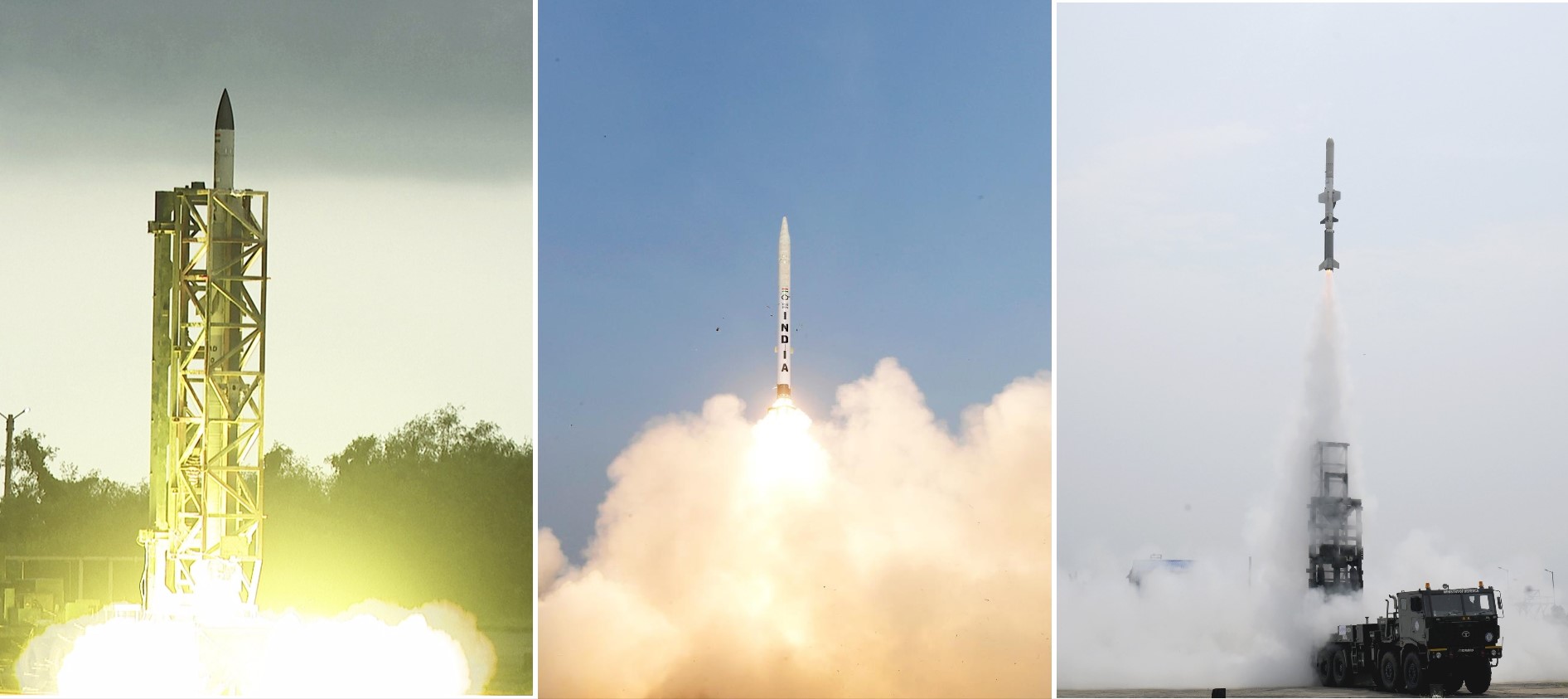 India Successfully Conducts AD-1, AD-2 Interceptor Tests and Maiden NASM-MR Flight Trial
-
 U.S Navy Orders 50 Blackbeard Hypersonic Missiles in New $23.4 Million Contract
-
 Russia Launches 1,400 Jet-Powered Drones in 2026 as Strike Tactics Evolve to Challenge Ukraine's Air Defenses
-
 F-35 Fleet Readiness Falls to 25% Amid Parts Shortages and Software Delays: GAO Report
-
 U.S. Approves $1.98 Billion Sale of Anduril AI-Powered Counter-Drone Systems to Kuwait
-
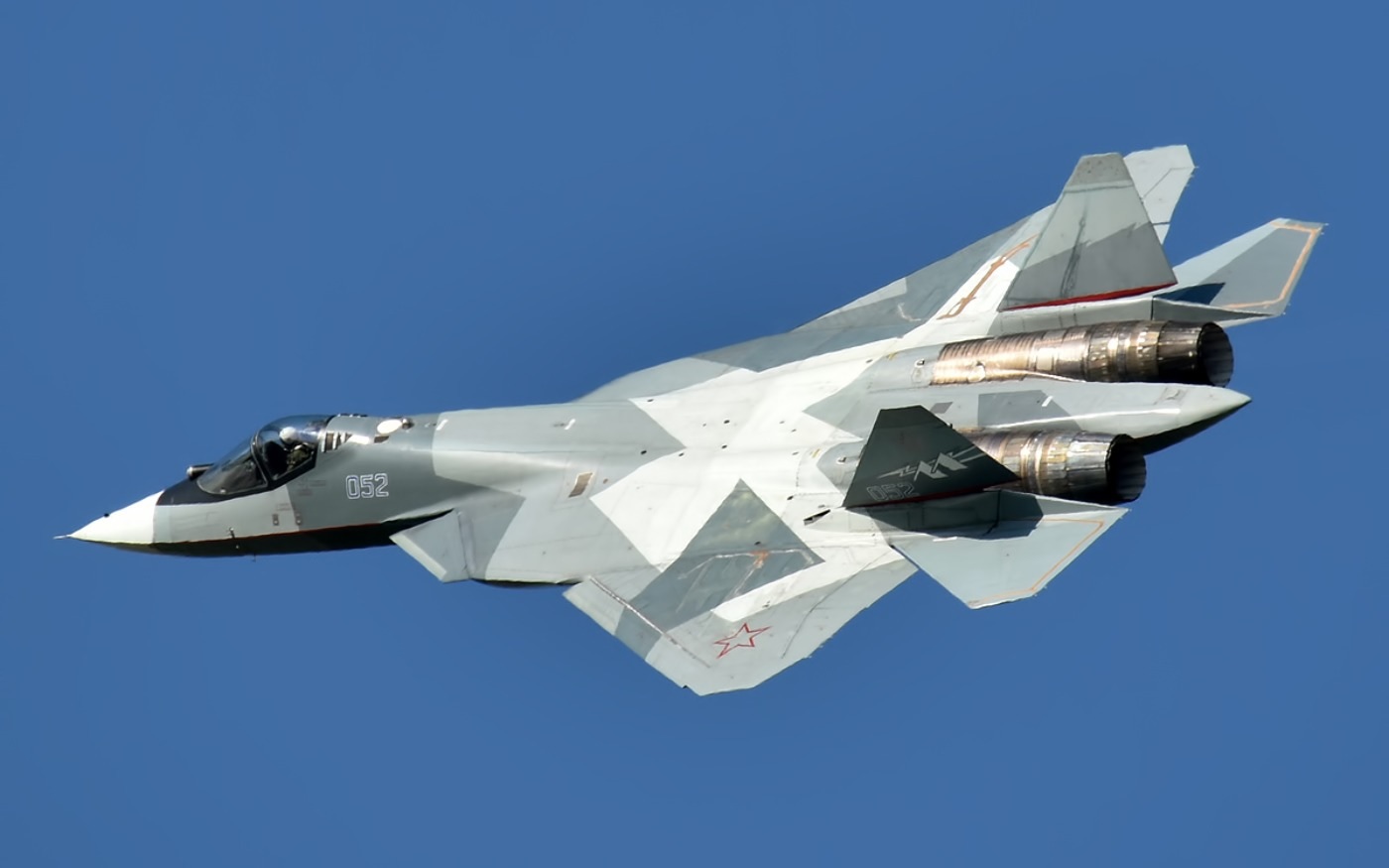 Russian Analysts Debate Su-57 Capabilities After Putin Calls Fighter Superior to F-35
-
 UAE Denies Reports of Releasing Up to $20 Billion in Funds to Iran Amid Regional De-Escalation Efforts
-
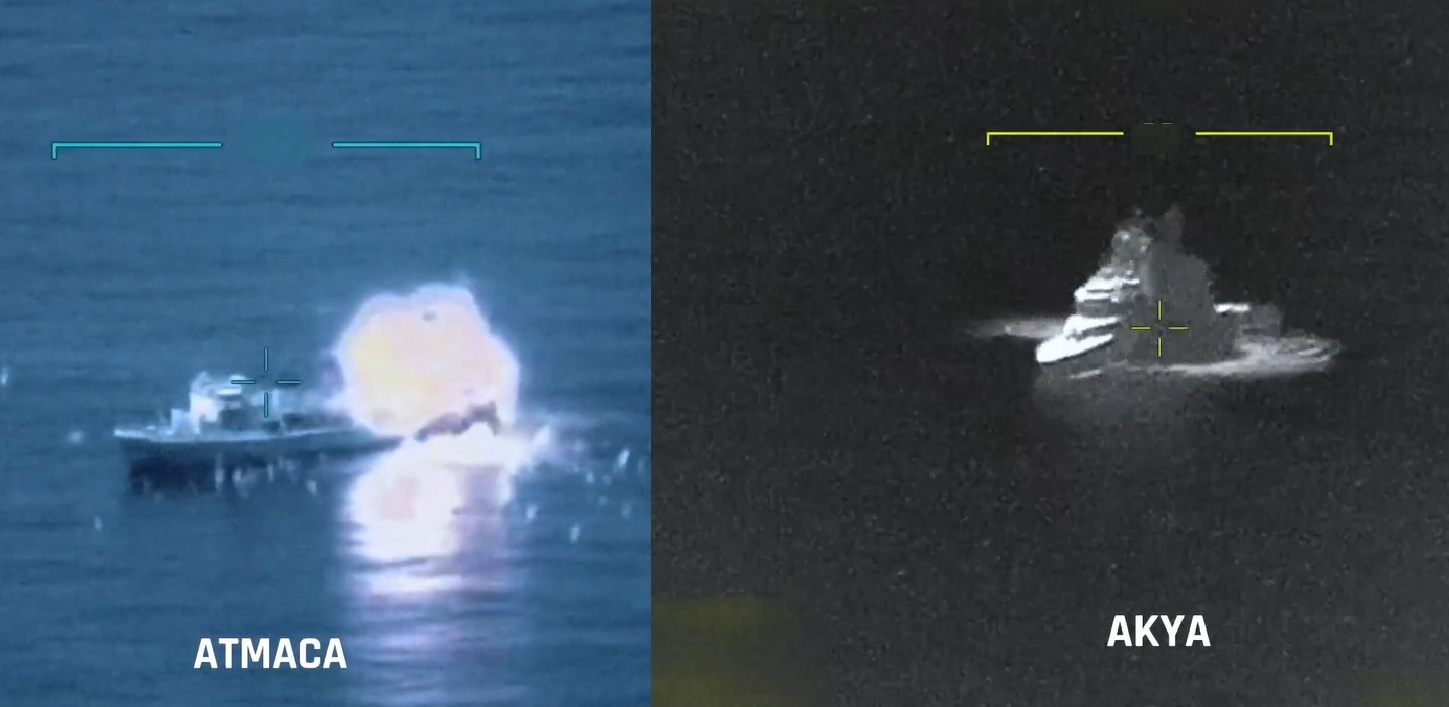 Turkey Navy Successfully Tests AKYA Torpedo and ATMACA Missile During Major Denizkurdu-II Naval Exercise
Top Trending in 4 Days
-
 Iranian Media Leaks 14-Point U.S.-Iran Peace Framework Amid Ongoing Negotiations
-
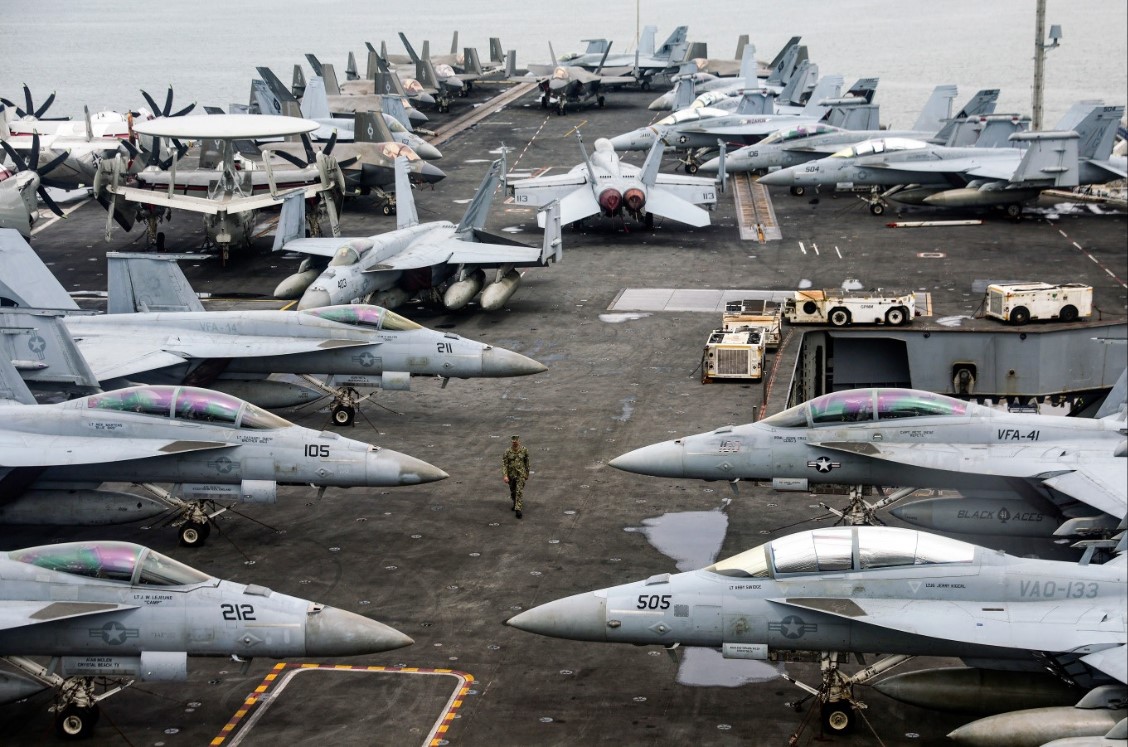 US Plans Significant Reduction of Fighter Jets and Warships for NATO Operations in Europe
-
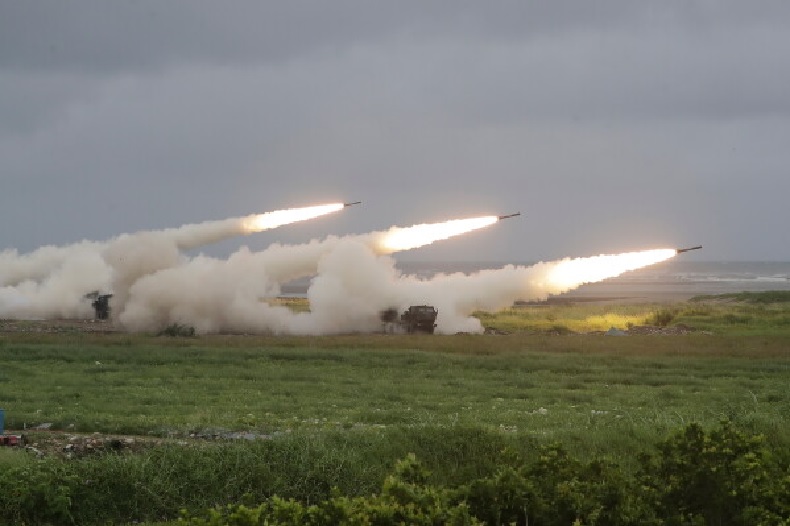 Taiwan Conducts First Live-Fire of HIMARS Rockets From West Coast During Invasion Defense Drill
-
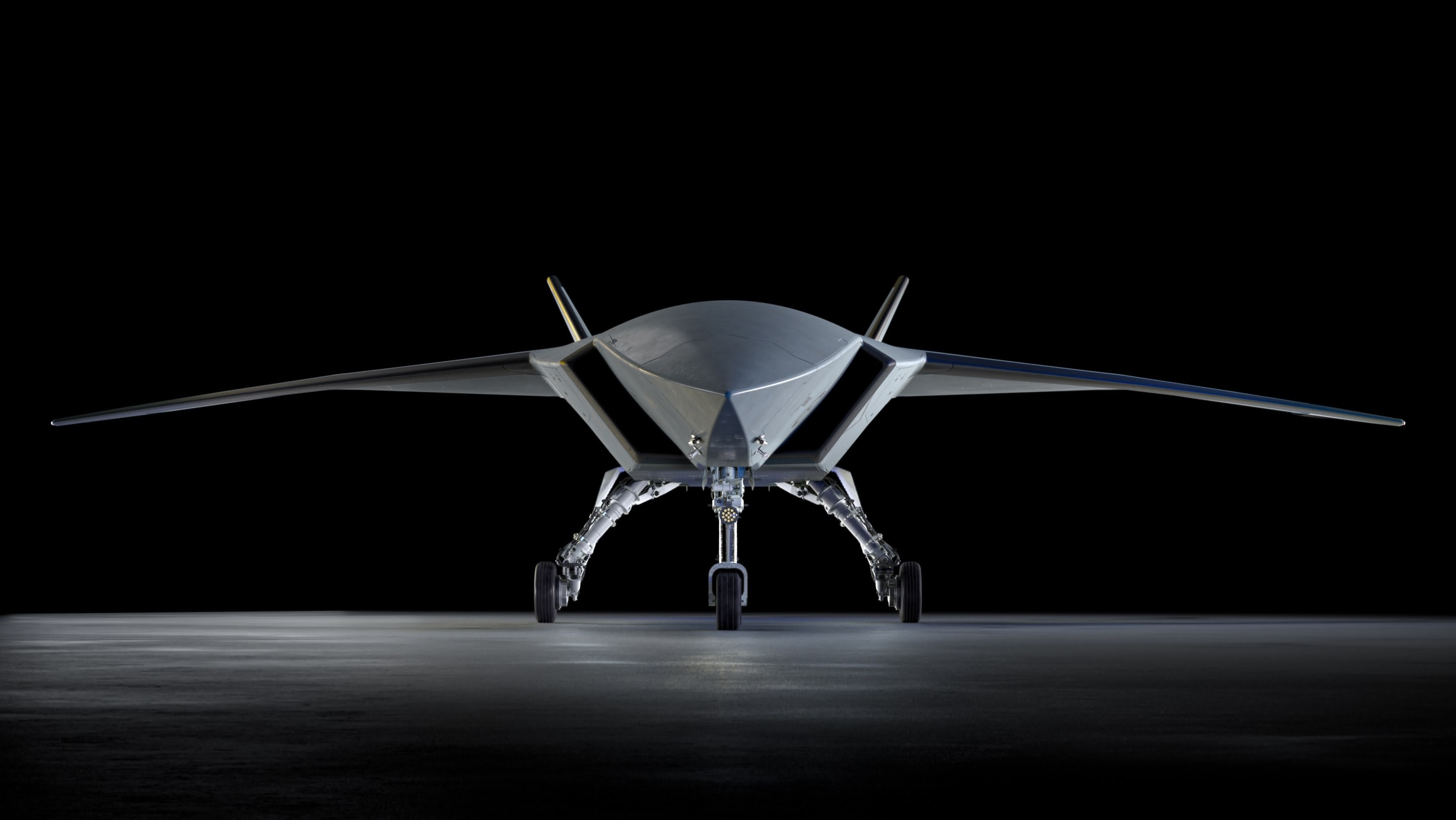 Boeing Introduces New MQ-28 Ghost Bat Upgrades with Increased Range, Payload and Weapons Capacity at ILA Berlin 2026
-
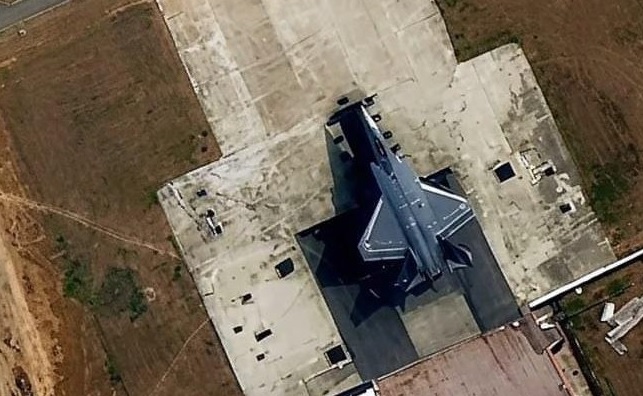 AMCA Airframe Spotted at DRDO’s ORANGE Facility for Radar Cross-Section Testing
-
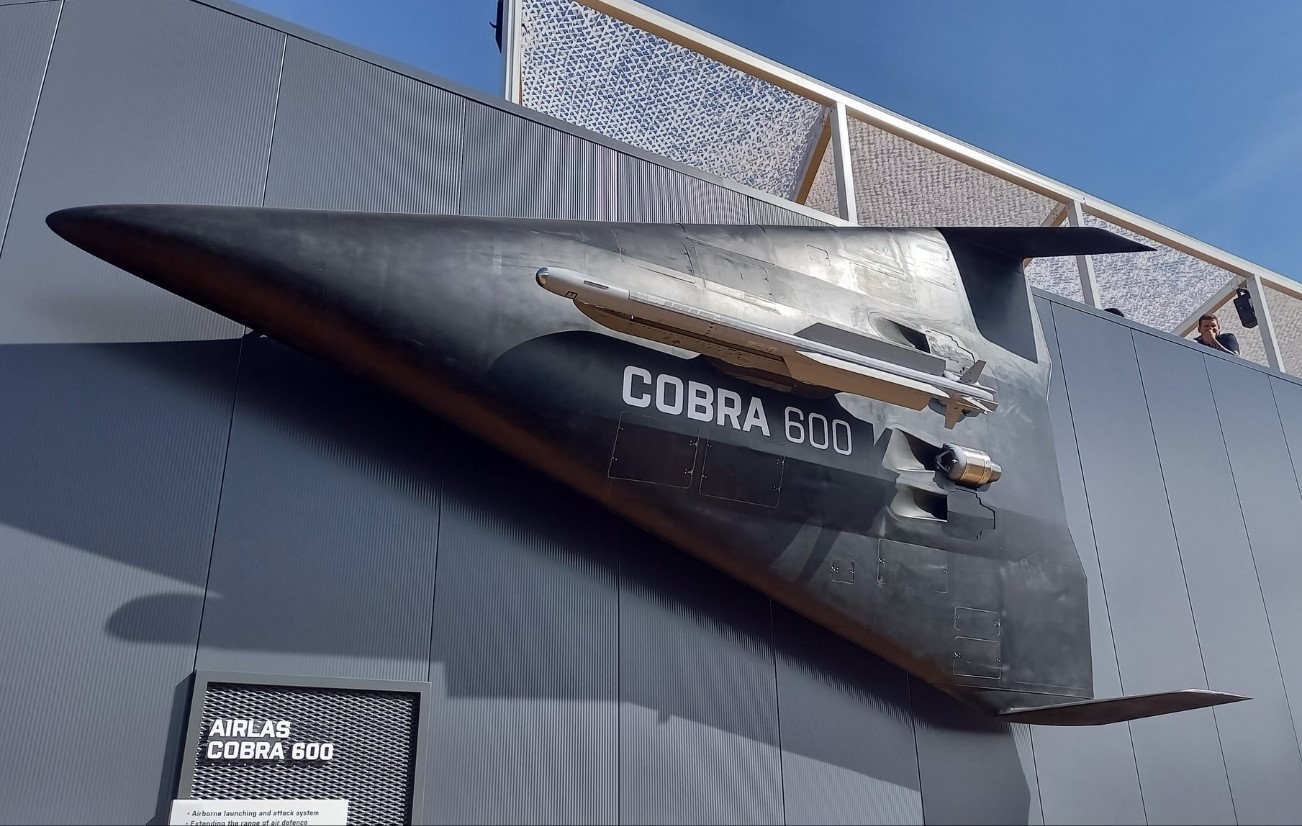 Diehl Defence Unveils IRIS-T Armed Cobra 600 Air Defense Drone at ILA Berlin 2026
-
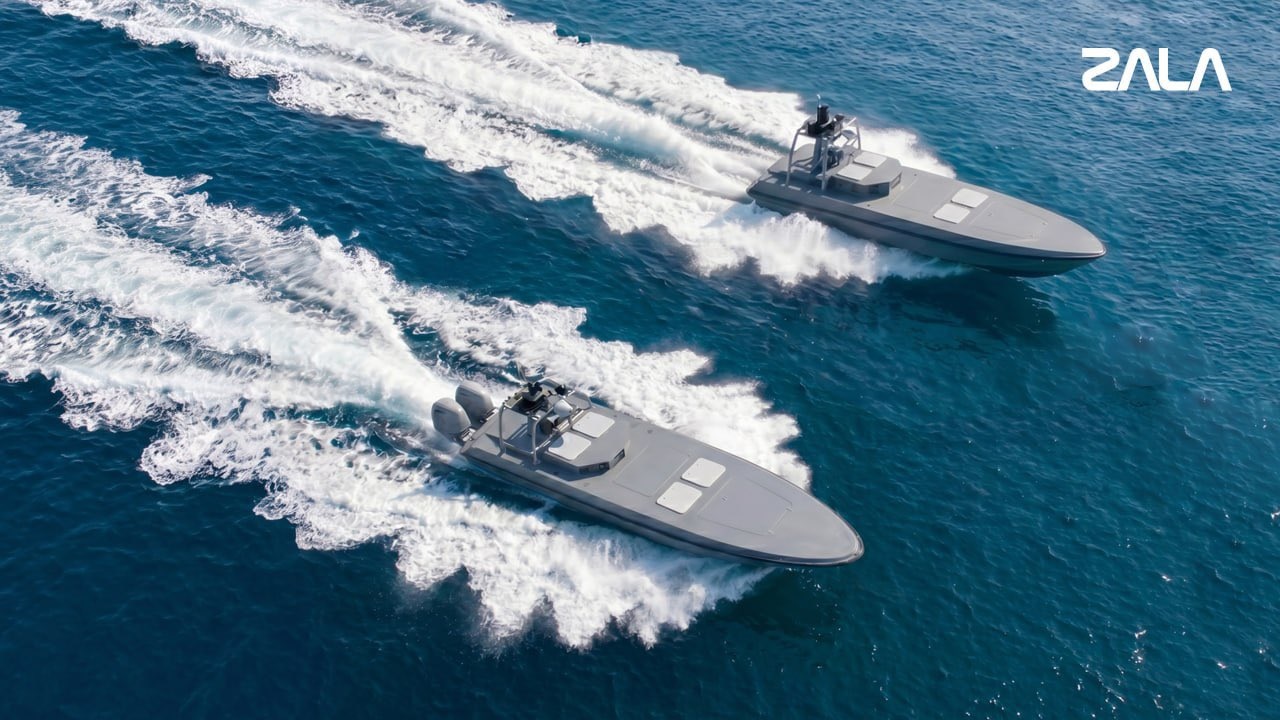 Russian Defense Firm ZALA Unveils KAMA Unmanned Surface Vessel Family at FLOT-2026 Naval Exhibition
-
 U.S Aircraft Carrier USS Theodore Roosevelt Departs San Diego for Major RIMPAC 2026 Naval Exercise