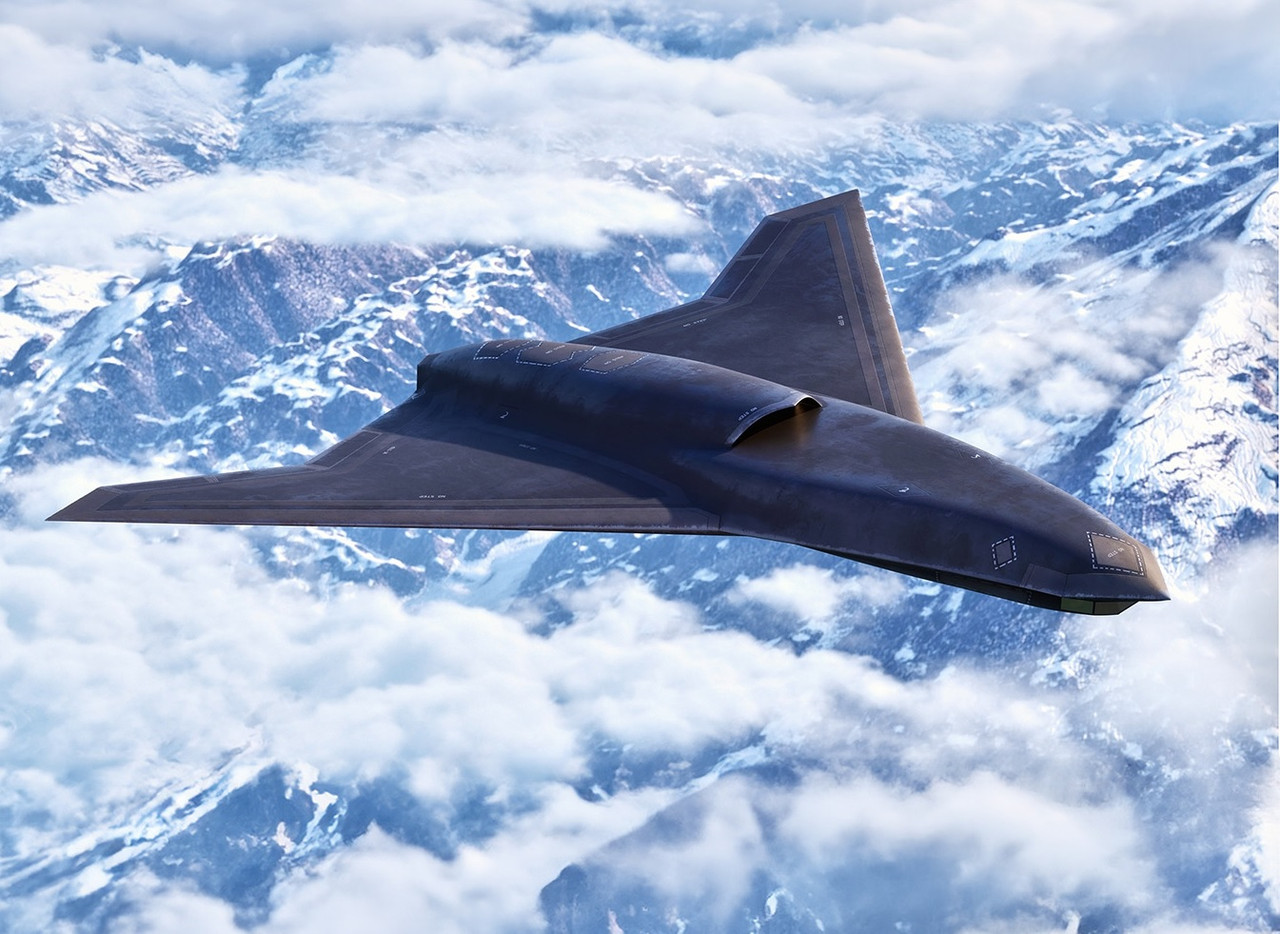
On September 21, 2025, aerospace major Lockheed Martin — via its advanced-development arm Skunk Works — unveiled its latest ambitious project: Vectis, a next-generation stealth unmanned combat aircraft. The platform is described as a “Group 5” collaborative combat aircraft (CCA) configured to operate either independently or in tight cooperation with crewed fighters such as the F-35 Lightning II and forthcoming next-gen jets.
What is Vectis And What It Promises
-
A new paradigm in airpower. According to Skunk Works’ leadership, Vectis is not simply “another drone”: it is built as an “agile drone framework,” promising high customizability, modularity, and affordability — aimed at delivering advanced capabilities without the cost and complexity of a full-fledged manned fighter.
-
Large, capable, and stealthy. As a Group 5 unmanned aerial vehicle, Vectis is in the weight and performance class of major drones significantly larger than many UAVs, but smaller than a conventional manned fighter like an F-16. It sports stealth-optimized design elements and a lambda/delta-wing planform with tailless configuration, giving it potentially low radar observability.
-
Multi-role flexibility. Vectis is designed to perform a variety of mission types: precision strike, intelligence, surveillance & reconnaissance (ISR), electronic warfare (EW), air-to-air and air-to-ground combat. It can either fly solo or act as a “loyal wingman” to crewed combat jets, extending the reach and lethality of manned platforms while reducing risk to pilots.
Integration & “Teaming”: Working With the F-35 and Beyond
One of the core ambitions for Vectis is to integrate seamlessly into the evolving concept of “manned-unmanned teaming.” Under this doctrine — often referred to as “loyal wingman” — autonomous or remotely piloted drones accompany manned fighters, acting as sensor platforms, missile carriers, decoys, or electronic-warfare nodes.
Lockheed Martin says Vectis is built with open mission architecture and common control systems that ensure compatibility with fifth-generation fighters and future next-gen jets. That means an F-35 (or another advanced jet) could command a number of Vectis drones during operations, greatly multiplying force projection while keeping human exposure to danger minimal.
Survivability, Affordability And A New Drone Philosophy
What distinguishes Vectis from many previous UAVs or UCAVs? Skunk Works emphasizes a triplet of characteristics: survivability, lethality, and reusability — all packaged in a system designed for cost-effective production.
Rather than being a one-time “attritable” drone built to be lost in high-risk missions, Vectis is developed as a reusable, flexible asset — capable of being upgraded, reconfigured, or repurposed depending on mission demands or evolving threats. Its modular architecture aims to allow end-users (be it the U.S. military or allied partners) to tailor payloads, sensor suites, or mission systems.
Moreover, because Lockheed is self-funding the initial development, rather than waiting for a direct contract (such as under the U.S. military’s official CCA program), the company can move faster to build and test prototypes — signaling confidence in the concept’s future relevance.
Timeline & Where Vectis Stands Now
-
Unveiled: September 21, 2025.
-
Current status: Vectis is still under development; parts have reportedly been ordered, and the prototype program is underway.
-
Expected first flight: Skunk Works is targeting the first flight within two years — potentially by 2027.
-
Intended market: U.S. military (Air Force, possibly Navy), but also foreign allies — especially those needing a modern, flexible, stealth-capable drone wingman for their fleet of fighter jets.
Strategic Significance & Broader Implications
The reveal of Vectis underscores a broader shift in aerial combat doctrine: away from large fleets of crewed fighters alone, and toward mixed manned-unmanned force packages. As modern air defenses — including radar, surface-to-air missiles, and anti-access/area-denial (A2/AD) systems — become more advanced, stealthy drones like Vectis offer a way for air forces to project power while minimizing risk to human pilots.
For the U.S. and its allies, Vectis could be a critical element of “air dominance” strategy — especially in theaters where long-range operations, stealth penetration, or electronic-warfare capabilities are essential. For Lockheed Martin, successful development and adoption of Vectis could help the company maintain technological edge in both manned and unmanned combat aviation.
That said — Vectis is not guaranteed to succeed. The broader official Collaborative Combat Aircraft Program (CCA) run by the U.S. military reportedly did not select Vectis in its first increment — possibly due to Vectis being more capable (and more expensive) than what the first phase required. Still, Lockheed seems committed to continuing development independently.
What Remains Unknown And What to Watch
While Vectis’ unveiling came with impressive claims, there remain many uncertainties:
-
Propulsion & performance details. Lockheed has not disclosed the exact engine type for Vectis, nor whether the drone will be capable of supersonic flight. The company has said that operational analysis does not point to supersonic performance as a central requirement.
-
Range and endurance. While Lockheed indicates that Vectis’ endurance will be compatible with major theaters like the Indo-Pacific, Europe and CENTCOM, precise range, mission endurance, and payload capacity remain unspecified.
-
Cost per unit and procurement timeline. Lockheed has declined to give concrete figures for cost per aircraft, nor confirmed any procurement orders from the U.S. or allied militaries.
-
Operational doctrine & deployment models. How militaries will deploy Vectis — as attritable expendables, as reusable assets, as part of mixed manned-unmanned squadrons — remains to be seen.
A Glimpse at the Future of Aerial Warfare
The unveiling of Vectis marks a major step toward autonomous, networked air combat. With its stealth design, flexible architecture, multi-role capability, and F-35 teaming, Vectis signals a shift from purely manned fleets to hybrid human-drone air wings.
If development stays on track, Vectis may redefine how nations conduct air warfare — shaping global air combat strategy for years to come.
——— End of Article ———