World
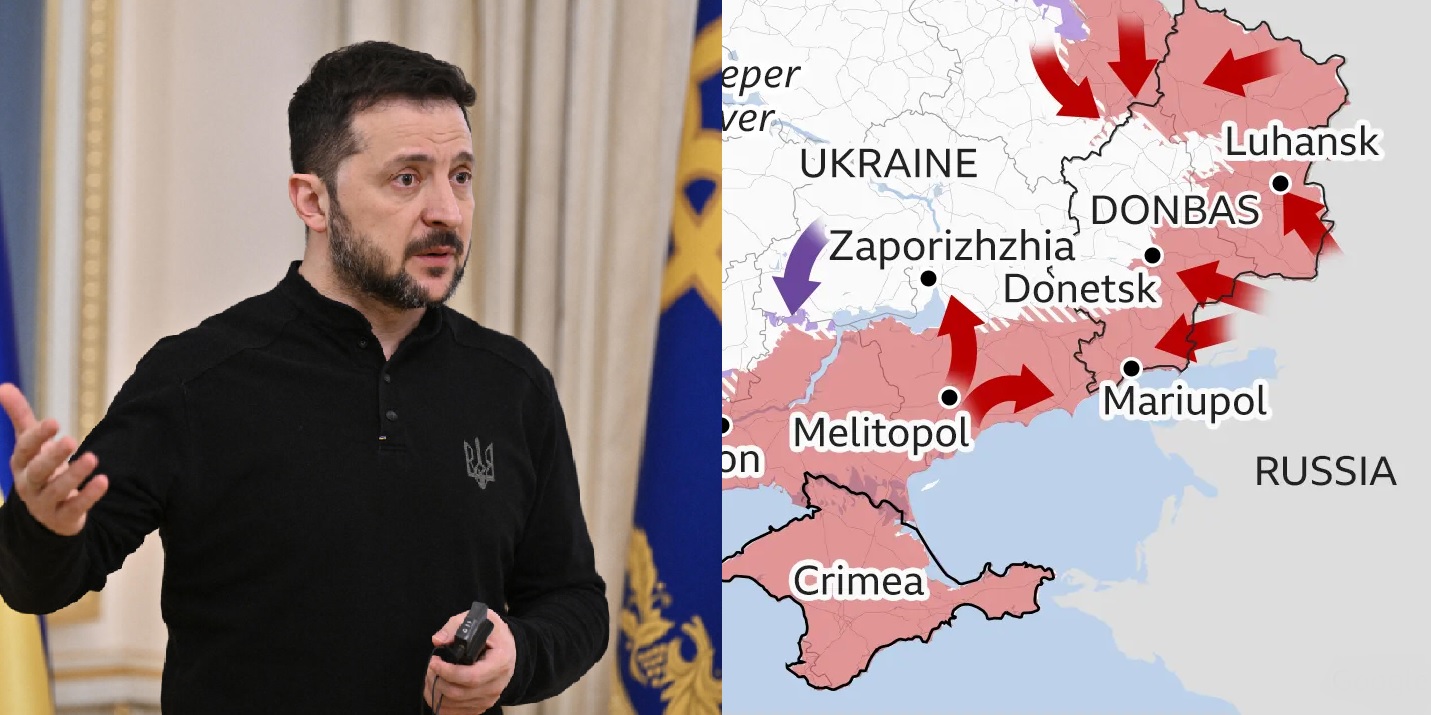
Peace negotiations involving the United States, Ukraine, and indirect channels to Russia have reached a critical impasse, with Ukrainian President Volodymyr Zelensky confirming that talks remain stalled over the future of the eastern Donbas region. The hardening positions come amid growing frustration in Washington and open irritation from former President Donald Trump, who has pushed for a rapid settlement to end the nearly three-year war. Disagreement Over Donbas Remains the Central Obstacle In an interview with Bloomberg, Zelensky said negotiators “do not have a shared view” on the status of Donetsk and Luhansk, the two provinces that make up the broader Donbas region and where some of the most intense battles of the war have taken place. He emphasized that Kyiv will not accept any arrangement that formally hands over territories still under Ukrainian control. Ukrainian forces retain roughly 30% of Donbas, including major population centers and key defensive lines. According to officials familiar with the talks, Washington’s proposed framework would require Ukraine to relinquish the entire region, effectively recognizing Russian administrative control even though Moscow has failed to capture it fully since the invasion began. The proposal is part of a broader US initiative aimed at rapidly reducing hostilities, stabilizing NATO’s eastern flank, and redirecting American focus toward Asia. But it has run into firm resistance in Kyiv, where leaders argue that conceding land would reward aggression and undermine Ukraine’s long-term security. Kyiv Insists on Freezing the Conflict Along Present Front Lines Ukraine’s negotiators maintain that any peace deal must formalize the current line of contact, preventing Russia from claiming additional territory beyond what its forces presently occupy. Officials say this approach would prevent Moscow from using negotiations to legitimize unachieved military objectives. Zelensky also highlighted unresolved issues around security guarantees, including long-term Western military support, air-defense commitments, and a pathway to eventual NATO membership. Without such assurances, Kyiv fears any ceasefire could merely give Russia time to regroup and launch a future offensive. Rising Frustration from Trump and Shifting US Pressure Former President Trump, who has taken a dominant role in shaping US messaging on the conflict since the election, has voiced impatience with Kyiv’s negotiating stance. According to US media reports, Trump believes Ukraine’s refusal to cede Donbas is preventing what he views as an achievable deal, and he has privately urged advisers to press Kyiv more aggressively. Inside Washington, the policy debate has sharpened. Supporters of the US proposal argue that the war has reached a strategic stalemate, Ukrainian manpower shortages are worsening, and Western defense stockpiles cannot sustain another year at current consumption rates. Critics, however, warn that forcing Kyiv into concessions could destabilize Ukraine’s domestic politics and weaken Western credibility globally. Moscow Watches as Negotiations Struggle Russia, which claims to have annexed Donetsk and Luhansk despite not fully controlling either region, has shown little incentive to compromise. The Kremlin continues to insist on “irreversible” recognition of its territorial claims, along with demilitarization demands Kyiv has already rejected. Analysts note that Moscow may view the widening US-Ukraine divide as an opportunity to extract more favorable terms or prolong the conflict until Western cohesion deteriorates. A Peace Process in Limbo For now, the diplomatic track appears to be at a standstill. Zelensky stressed that any peace framework must be acceptable to the Ukrainian people, who overwhelmingly oppose territorial concessions in recent polls. Western officials, meanwhile, acknowledge the growing difficulty of balancing Kyiv’s security needs with Washington’s push for a negotiated settlement. With front-line fighting still ongoing and winter conditions slowing large-scale operations, the future of the US-brokered peace plan remains uncertain. What is clear, however, is that the Donbas question has become the defining barrier to any near-term ceasefire—and a test of unity among Ukraine, its allies, and the shifting political dynamics shaping US foreign policy.
Read More → Posted on 2025-12-08 15:41:31
World
BAE Systems has launched a major new business division, OneArc, consolidating its simulation, synthetic training, data analytics, geospatial tools and artificial intelligence expertise to better serve the U.S. military, NATO, and allied partners. The establishment of this unit marks a significant strategic expansion of BAE Systems’ role in the fast-growing defense digitalization market, where military forces are rapidly adopting advanced virtual environments and AI-enabled tools to prepare for future conflicts. A Unified Digital Ecosystem for Modern Warfare OneArc brings together several key acquisitions BAE Systems has made in recent years—Bohemia Interactive Simulations (BISim), TerraSim, and Pitch Technologies—creating a single ecosystem capable of delivering “ready-now” commercial solutions across land, air, maritime, cyber, and space domains. The new division is designed around NATO interoperability standards, ensuring its products integrate seamlessly with coalition systems used for mission rehearsal, training, and multi-domain operations. The approach reflects a global trend: militaries are increasingly relying on synthetic environments, modular software, and data-driven tools to counter rapidly evolving threats—from drone swarms and electronic warfare to dispersed operations and urban combat. Leadership Vision: Integration and Interoperability Rahul Thakkar, president of OneArc, said the unit’s mission is rooted in integration, collaboration, and collective advancement across the defense industry. He highlighted that modern defense challenges require unified efforts among government, technology providers, and international partners—especially as simulation and AI become critical components of force readiness. BISim Secures Major International Contracts Bohemia Interactive Simulations, now operating under OneArc, recently won a five-year enterprise license with the Canadian Department of National Defence for its Digital Virtual Trainer (DVT). The platform enables large-scale, immersive virtual environments for the Canadian Army, underlining the rising demand for high-fidelity training systems capable of replicating complex battlefield conditions. BISim has also expanded its footprint in Europe through a strategic partnership with Rheinmetall AG. Under this arrangement, BISim’s VBS4 and Blue IG simulation technologies will be integrated into Rheinmetall’s Heavy Infantry Weapons Carrier project for the German Army’s medium forces. The collaboration aims to develop realistic combat simulators that support advanced weapons, sensor suites, and tactical scenarios. New Partnerships Expand Multi-Domain Training OneArc’s broader vision is further reflected in its agreement with PLEXSYS, combining PLEXSYS’ Advanced Simulation Combat Operations Trainer (ASCOT) environment generator with OneArc’s VBS4 platform. This integration aims to create fully unified live-virtual-constructive (LVC) training systems, a capability that allows militaries to simultaneously train real operators, virtual participants, and AI-driven constructive forces. The partnership supports multi-domain training across air, land, maritime, space, and cyber, an area of escalating focus for NATO and allied militaries preparing for high-intensity, networked warfare. Strengthening a Growing Global Market The defense simulation and training sector has experienced rapid growth, driven by rising geopolitical tensions, manpower shortages, and the need for cost-effective training solutions that reduce wear on real equipment. Synthetic environments now support: Joint and coalition mission rehearsal Urban operations simulation Electronic warfare and cyber training Artificial intelligence experimentation Autonomous systems testing Analysts note that BAE Systems’ consolidation of simulation capabilities under OneArc positions it as one of the major players in a market valued at more than $12–15 billion annually, with continued expansion expected. A Strategic Step in Future Military Readiness With OneArc, BAE Systems aims to create an interoperable digital backbone that allows allied forces to train together, share data, and respond faster to emerging threats. As AI, autonomy, and multi-domain integration reshape modern warfare, the new division represents a long-term investment in the technologies that will define the next generation of global defense readiness. By combining advanced simulation platforms, real-time analytics, and cross-domain integration, OneArc is set to become a central pillar in how Western militaries prepare for increasingly complex operational environments.
Read More → Posted on 2025-12-08 15:27:34
World
The European Union’s proposal to finance Ukraine using frozen Russian state assets is facing major internal resistance, with France and Belgium now blocking the plan and sharply reducing hopes of a unified EU strategy. France Rejects Use of €18 Billion Frozen in Its Banks France has refused to contribute the €18–19 billion in Russian sovereign assets frozen in its commercial banks to the EU’s proposed “reparations loan” for Ukraine. Paris argues that forcing private banks to pledge or transfer these assets could trigger serious legal liabilities, including lawsuits from Russia and affected clients. French officials say the status of these assets — held in various private accounts and financial products — makes them far more complex than the centralized Russian reserves held at Euroclear in Belgium. Belgium Refuses to Take the Burden Alone Belgium, which hosts €165–185 billion of immobilized Russian assets at Euroclear — the largest single holding in the EU — has also rejected the Commission’s plan. Brussels insists it will not carry the legal and financial risk alone while other EU capitals hold back. Belgian leaders warn that any unilateral confiscation could: Belgium could be exposed to huge compensation claims if the war ends and Russia sues for restitution; the amount at stake is close to a third of Belgian GDP, making any unilateral liability politically and financially explosive; and Russian retaliation could threaten Euroclear itself, with its CEO reportedly warning that overly aggressive moves could even risk the depository’s solvency. The EU’s Financing Plan Hits a Wall The European Commission had proposed raising up to €90 billion for Ukraine by using frozen Russian assets as backing for a new EU loan programme. The idea followed the earlier EU decision to redirect windfall profits generated from Russian central bank assets — which yields only a few billion euros annually. The Commission’s new proposal aimed to create a more powerful, long-term financing mechanism as Ukraine struggles with growing budget needs. However, the plan requires unanimity, and both France and Belgium have now created a political deadlock. Legal Risks and Financial Warnings EU lawyers, national finance ministries, and the European Central Bank have repeatedly warned that confiscating or pledging the principal of Russian sovereign assets could violate international protections for central bank property. The ECB has refused to act as a guarantor, signalling that the proposal falls outside its legal mandate. Russia, meanwhile, has vowed to fight any asset seizure in court for decades and to retaliate by targeting European companies’ assets in Russia. Some EU States Push Forward, But Momentum Slows Seven EU member states — including Estonia, Lithuania, Latvia, Finland, Sweden, Poland, and Ireland — have urged Brussels to push ahead, arguing that Russia’s invasion already justifies exceptional action and that Ukraine cannot afford financial delays. But without France and Belgium, the Commission may need to scale down its ambitions and rely only on windfall profits or conventional EU borrowing instead of asset-backed loans. Ukraine Left Waiting For Ukraine, the stalled proposal comes at a critical moment. The G7 has already approved a $50 billion loan backed by future profits from frozen Russian assets, but EU backing is essential for longer-term stability. With major internal divisions, the EU’s plan to turn frozen Russian reserves into a substantial, securitized fund for Ukraine is effectively paralyzed — politically alive, but in practice “deader than dead,” as one official described.
Read More → Posted on 2025-12-08 15:16:56
World
The US Air Force’s Hypersonic Attack Cruise Missile (HACM) program is accelerating toward a 2027 fielding timeline, with new details from the Government Accountability Office (GAO) outlining progress, risks, and a clearer picture of the weapon’s design and development path. The missile, a key part of America’s next-generation strike arsenal, is being built under the Pentagon’s rapid prototyping framework to counter growing Chinese and Russian hypersonic capabilities. A Two-Stage Hypersonic Weapon for Fighter Jets HACM is being developed as a conventional, air-launched hypersonic cruise missile that can be carried by fighter aircraft—starting with the F-15E Strike Eagle. The missile uses a two-stage configuration, combining a rocket booster for initial acceleration with a scramjet-powered cruiser that sustains hypersonic speeds as it races toward its target. Unlike boost-glide hypersonic weapons, HACM is designed to maneuver through the atmosphere during flight, making it harder for enemy air defenses to track or intercept. According to GAO, the Air Force plans to build 13 missiles during the rapid prototyping phase. These include test rounds, spare missiles, and a small number that could provide an initial operational capability after successful trials. Industry Team and Technology Base Raytheon was selected as the prime contractor in 2022, working alongside Northrop Grumman, which supplies the scramjet engine. The program builds on earlier US-Australian cooperation under the SCIFiRE hypersonic research initiative, making HACM the first major operational weapon emerging from that partnership. The missile draws heavily on lessons from the Hypersonic Air-breathing Weapon Concept (HAWC) program, which completed several successful demonstration flights. Rapid Fielding Expected in 2027 The Air Force plans to begin a rapid fielding phase in FY 2027, allowing production of additional missiles while the design continues to evolve. This approach is intended to speed delivery to front-line units, giving the service a fighter-launched hypersonic capability years earlier than a traditional development program would allow. Once operational, HACM is expected to be compatible not only with the F-15E but also with a broader mix of US and allied aircraft, potentially including the F/A-18F and future variants of the F-35. Schedule Risks and Compressed Testing Despite positive momentum, GAO warns of schedule pressure. The program’s major design review slipped from early 2024 to September 2024, delaying follow-on development steps. As a result, the test schedule has tightened, leaving the Air Force with only five flight tests planned before the rapid fielding decision. This raises the risk of discovering performance or reliability issues late in development, after initial production has already begun. Still, Air Force officials remain confident that the combination of digital engineering, a proven scramjet design, and incremental build-up testing will keep the program on track. Strategic Importance After ARRW Cancellation HACM has taken on greater significance following the Air Force’s decision to halt procurement of the AGM-183A ARRW hypersonic boost-glide missile. With ARRW sidelined, HACM now represents the service’s primary path to an air-launched hypersonic weapon, one that can be carried by tactical fighters rather than a limited fleet of bombers. The missile’s expected performance—reported in open sources as approaching Mach 8 with ranges near 1,800 km—would make it a central asset for penetrating advanced air defenses and striking high-value targets across the Indo-Pacific or Europe. Outlook If testing proceeds as planned, HACM could become the first operational US air-breathing hypersonic cruise missile, entering service in limited numbers by 2027. For the Pentagon, it represents not only a new weapon but also an opportunity to demonstrate that rapid prototyping and accelerated fielding can deliver cutting-edge capabilities on time. For now, HACM remains one of the Air Force’s most closely watched development programs—one that could redefine how fast tactical aircraft strike across contested airspace in the years ahead.
Read More → Posted on 2025-12-08 14:09:50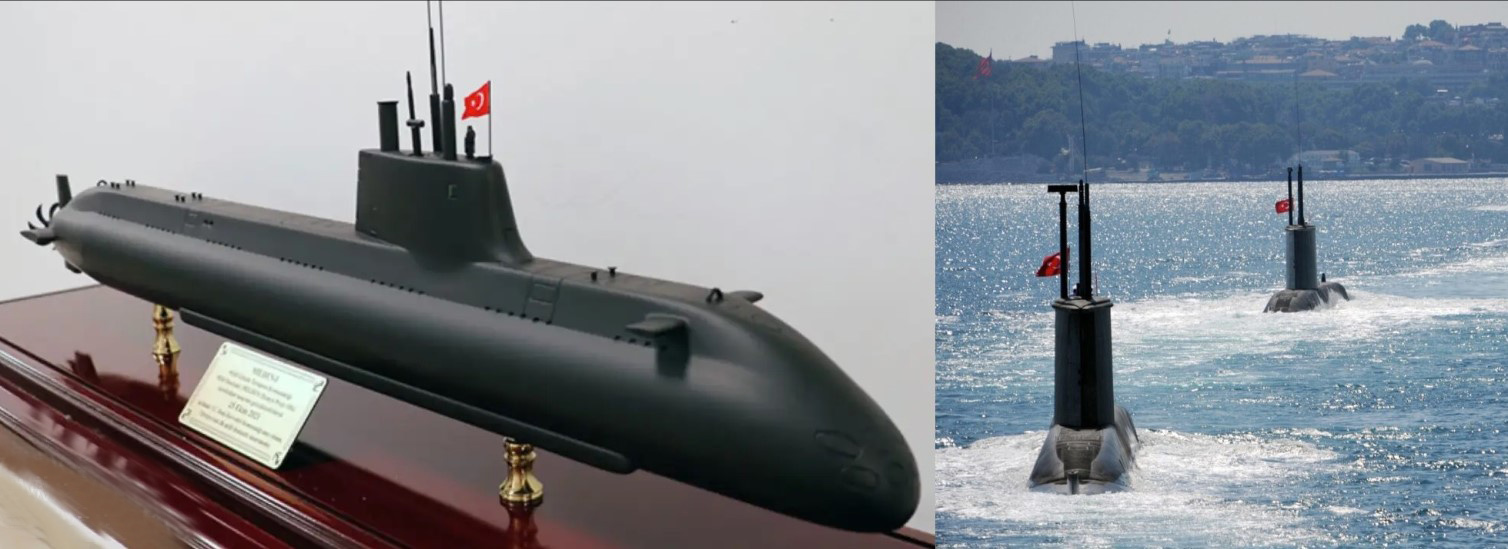
World
Turkey has launched construction of its first domestically designed submarine, marking a significant step in Ankara’s drive to expand sovereign defense capabilities and reduce reliance on foreign suppliers. Work on the National Submarine Program, known as MILDEN, has formally begun at Gölcük Shipyard Command, the traditional home of the Turkish Navy’s undersea fleet. The milestone follows the recent start of Turkey’s TF-2000 naval air-defense destroyer project at Istanbul Shipyard Command, underscoring a rapid expansion of naval modernization efforts. Both initiatives fall under the country’s broader Steel Dome multilayered defense architecture, which aims to strengthen maritime, air, and missile defense capacity across the Turkish armed forces. According to Turkish media, the country signed 275.9 billion Turkish lira (about $6.5 billion) in defense contracts last week alone to support Steel Dome-related systems and platforms — a reflection of how aggressively Ankara is investing in homegrown military capabilities. A Milestone for Turkey’s Submarine Industry The MILDEN program is designed to deliver Turkey’s first indigenous conventional submarine, moving beyond licensed production models such as the German-designed Type-214TN Reis-class. Engineers at Gölcük Shipyard are now working on the first sections of the hull, with the project expected to span several years of design refinement, systems integration, and trial phases. The domestically developed submarine is expected to incorporate: A low-observable hydrodynamic design Indigenous combat management and sonar systems Turkish-made AKYA heavyweight torpedoes Advanced acoustic signature reduction technologies Air-independent propulsion (AIP) concepts currently under development Once completed, MILDEN will place Turkey among a select group of nations capable of independently designing and producing submarines. Part of a Larger Naval Expansion Turkey is simultaneously working on a number of key naval programs, including: Reis-class submarines, built under German license I-Class frigates, with the first vessel already in sea trials Uncrewed surface vessels, such as ULAQ and MARLIN The newly initiated TF-2000 air-defense destroyer, set to serve as the navy’s most advanced surface combatant Together, these programs aim to give Turkey a more autonomous and technologically sophisticated fleet capable of operating well beyond its immediate waters. Global Momentum Behind Indigenous Submarine Programs Turkey’s move mirrors a broader global trend, as several countries push to develop domestic submarine capabilities to enhance strategic independence. South Korea is advancing production of its KSS-III Dosan Ahn Chang-ho-class submarines, the first in the country to feature domestically developed ballistic missile systems. The sixth boat is already under construction. India continues to expand its underwater fleet with new Kalvari-class submarines and additional nuclear-powered Arihant-class vessels, forming part of its long-term deterrence strategy. Brazil is pressing ahead with more Scorpène-class submarines at the Itaguaí shipyard and pursuing its first nuclear-powered submarine under the PROSUB program. Australia has begun early assembly work under the SEA 1000 initiative, a major effort to replace its Collins-class fleet with next-generation diesel-electric submarines. A Strategic Shift for Ankara For Turkish defense planners, the MILDEN submarine represents more than a technological project — it is a strategic declaration of independence at a time of shifting global alliances and rising tensions in the Eastern Mediterranean and beyond. By developing a domestically designed submarine, Turkey aims to secure control over sensitive underwater technologies, avoid export restrictions, and strengthen its long-term naval deterrence. The move also positions Ankara to eventually offer advanced submarine designs for export, reinforcing its growing role in the global defense market. The coming years will determine how quickly MILDEN progresses from construction hall to open sea, but its launch marks a defining moment in Turkey’s ambition to reshape its naval future with homegrown capabilities.
Read More → Posted on 2025-12-08 13:53:10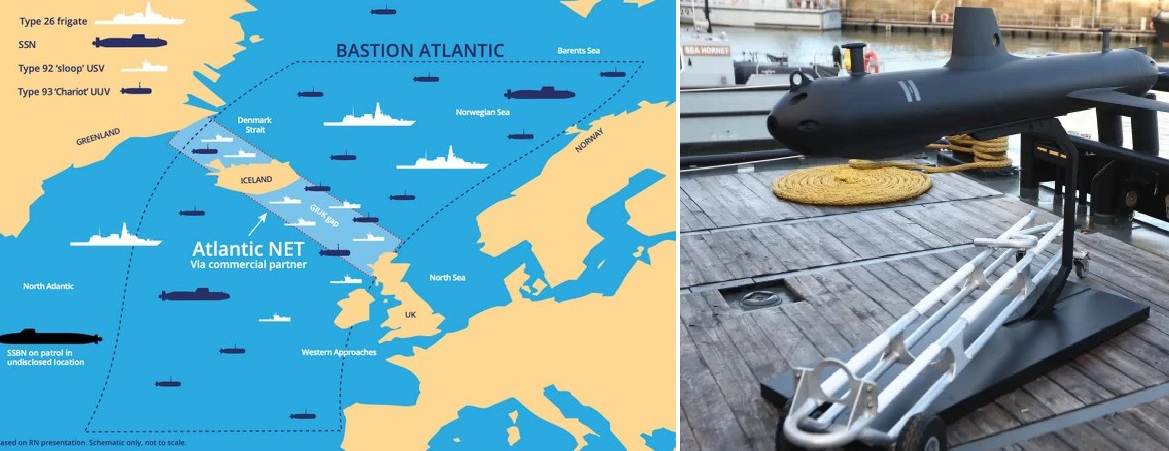
World
The UK Ministry of Defence has formally begun early work on Atlantic Bastion, an expansive undersea surveillance and targeting initiative unveiled during Defence Secretary John Healey’s visit to HM Naval Base Portsmouth on 8 December 2025. Framed by officials as a flagship outcome of the latest Strategic Defence Review, the programme marks one of the most ambitious transformations of British undersea defence since the Cold War, integrating Royal Navy warships, RAF P-8 Poseidon aircraft, and a new generation of autonomous vessels into a single AI-enabled detection and response web. A Response to Rising Russian Activity Beneath the Waves UK defence intelligence has repeatedly warned of a renewed surge in Russian submarine operations, with increased traffic through the GIUK gap—the vital Greenland-Iceland-UK chokepoint that guards NATO’s Atlantic access. Particularly concerning has been the presence of Russia’s specialist research and intelligence ship Yantar, observed multiple times near British seabed cables and offshore energy installations. Nearly 97% of global digital communications flow through underwater fibre-optic cables, while offshore pipelines and wind farms have become critical to European energy security. British officials argue that these systems are now priority targets for Russian mapping missions and potential sabotage units. The Strategic Defence Review highlighted these vulnerabilities, pushing London to accelerate a modern, mobile successor to the Cold War SOSUS fixed listening arrays. What Atlantic Bastion Will Look Like Described by Healey and First Sea Lord General Sir Gwyn Jenkins as a “revolutionary underwater shield,” Atlantic Bastion will build a networked defence system stretching from the Mid-Atlantic Ridge to the Norwegian Sea. It will blend: Crewed ships such as Type 26 frigates and Astute-class submarines RAF P-8 Poseidon maritime patrol aircraft New autonomous underwater vehicles (AUVs) Fixed seabed sensing nodes AI-driven acoustic processing and digital fusion All assets—crewed or autonomous—will plug into a single digital targeting web, enabling continuous detection, classification, and tracking of hostile submarines or suspicious seabed activity. Strategic Command’s digital infrastructure is being fused with Royal Navy and RAF systems, aiming to create a real-time, multi-domain operational picture that closes the gap between detection and engagement. Industry’s Role: Building the Backbone of Atlantic Bastion The MOD has already seeded more than £14 million into early-stage prototyping, matched by roughly four times as much private-sector investment. Twenty-six firms are participating, led by major defence primes: BAE Systems – Herne XLAUV The Herne Extra-Large Autonomous Underwater Vehicle—now a centrepiece of the Bastion architecture—offers multi-week endurance, deep-water operations, modular payload bays, and BAE’s Nautomate autonomy suite. Its missions include covert patrol, long-range sensing, and seabed surveillance. Helsing – SG-1 “Fathom” Glider Developed at Helsing’s Plymouth Resilience Factory, the Fathom glider is designed for three-month endurance, drifting silently or sitting on the seabed while its Lura AI analyses acoustic anomalies. The gliders can operate in swarms, creating persistent coverage in high-traffic corridors. Anduril – Seabed Sentry A network of fixed seabed sensor nodes, equipped with advanced sonar and integrated through the Lattice AI operating system, providing persistent “tripwires” along vulnerable cable and pipeline routes. Additional partners such as Sonardyne, QinetiQ, Atlas Elektronik UK, and Northrop Grumman are contributing to underwater communications, acoustic processing, payload development, and multistatic detection technologies. Reinventing Anti-Submarine Warfare Atlantic Bastion aims to solve the toughest problem in modern naval warfare: maintaining contact with ultra-quiet submarines designed to hide in a noisy ocean. New Russian nuclear and diesel-electric boats—such as the Yasen-M class—prioritise low broadband noise signatures and can evade traditional ship-based search patterns. The UK’s answer is persistent dwell time, achieved by: Swarms of low-signature underwater gliders Extra-large AUVs operating continuously Fixed seabed listening grids Multistatic sonar operations where one platform transmits and many listen AI anomaly detection to find subtle disturbances This creates a constantly refreshed acoustic picture, reducing the gaps adversaries exploit. How Contact Will Be Handled If a glider detects an anomaly near a cable route or transit corridor, that contact will be instantly uploaded to the digital network and seamlessly handed off to a crewed Royal Navy asset: A Type 26 ASW frigate may move to localise the contact An Astute-class submarine may shadow it covertly A P-8 Poseidon may conduct wide-area verification This layered approach allows high-end platforms to focus on engagement and deterrence while low-cost autonomous systems handle broad-area monitoring. The same network will help protect infrastructure. If unusual activity appears near a wind farm or pipeline, unmanned systems can investigate without exposing high-value manned platforms. NATO Integration and North Atlantic Strategy Atlantic Bastion is designed to mesh with new UK-Norway agreements on undersea infrastructure protection and emerging NATO plans to rebuild an integrated barrier across the North Atlantic. Officials say the UK intends to reassert itself as NATO’s premier anti-submarine warfare navy, anchoring the alliance’s northern flank. NATO commanders have privately welcomed the programme, viewing it as a model for integrating autonomy, AI, and manned platforms across the alliance. Strategic and Industrial Implications For the UK, the programme serves multiple national goals: Closing undersea vulnerabilities exposed by Russian seabed mapping Reinforcing NATO deterrence in the GIUK gap Accelerating Britain’s maritime autonomy sector—a market worth over £200 billion Creating new engineering and high-tech jobs across the UK Boosting exports of British underwater drones and AI systems However, success depends on the Royal Navy generating sufficient frigate and submarine availability, and the RAF providing regular P-8 coverage. Analysts warn that “data overload” will be a major challenge requiring strong AI governance and resilient communications networks. A New Era of Undersea Deterrence If fully realised, Atlantic Bastion will redefine how the UK—and NATO—operate beneath the waves. Instead of episodic searches, Britain will maintain continuous, AI-driven visibility over key Atlantic transit routes, infrastructure corridors, and maritime choke points. Officials describe the strategy as a shift from “anti-submarine warfare” to “undersea domain control”—a concept likely to shape 21st-century maritime security. Atlantic Bastion’s first operational elements are expected to enter the water next year, marking the start of a new chapter in Britain’s effort to stay ahead of Russian undersea competition.
Read More → Posted on 2025-12-08 13:28:42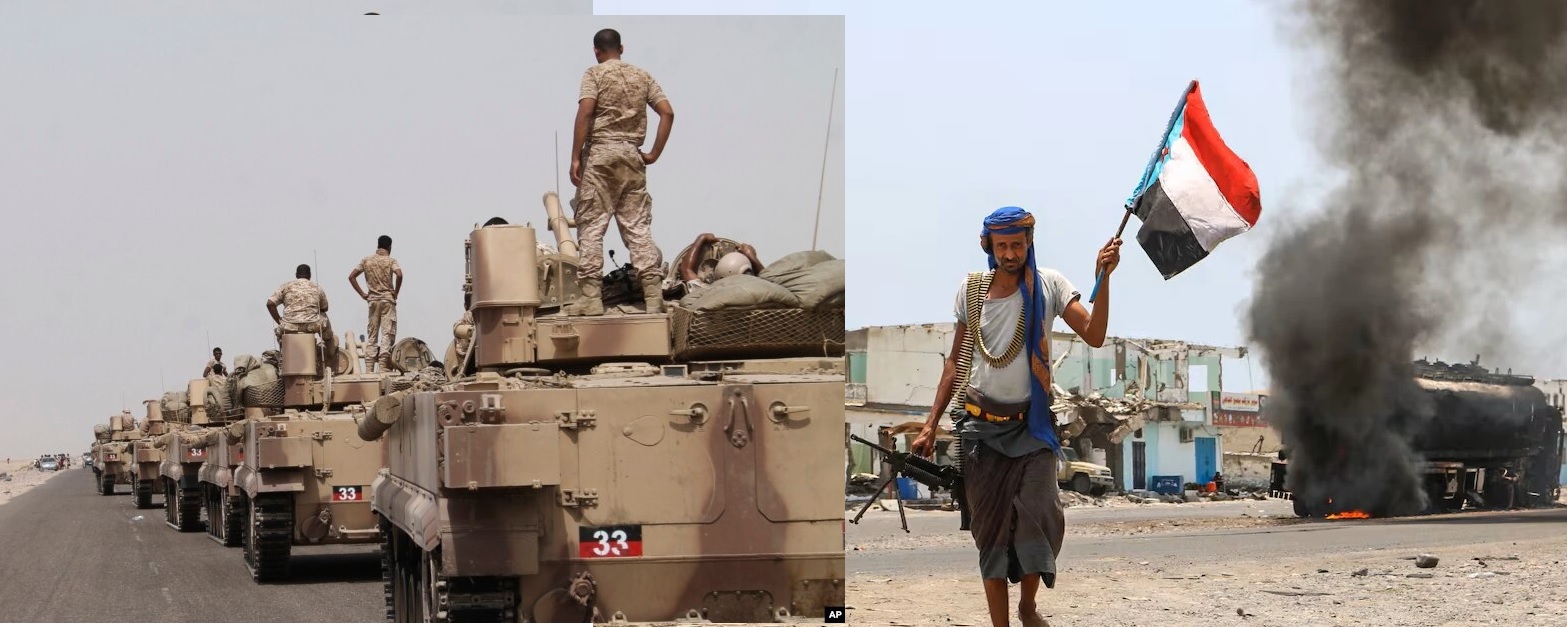
World
Saudi Arabia has sent armored vehicles and troops toward Yemen’s eastern Hadramaut province after UAE-backed separatist forces swept aside Saudi-aligned units and took control of much of the country’s main oil region, sharply exposing a growing rift inside the anti-Houthi coalition. What Just Happened in Hadramaut The trigger for Riyadh’s move is a fast-moving offensive launched at the start of December by the Southern Transitional Council (STC), a separatist group backed and trained by the United Arab Emirates. On 2–3 December, STC “Southern Armed Forces” began advancing through Wadi Hadramaut, targeting positions held by Yemen’s internationally recognised government, tribal militias and army units of the 1st Military Region. In a campaign the STC calls “Operation Promising Future”, its fighters seized key towns including Seiyun and Tarim, overran bases and checkpoints, and pushed government forces into a hurried retreat. According to diplomats and local sources, Saudi-backed tribal and government formations offered only light resistance before withdrawing, leaving the separatists in charge of large stretches of the valley and major military sites. This offensive is now commonly referred to as the 2025 Hadramaut offensive, an ongoing operation that has decisively shifted control of the governorate’s inland areas. Why Hadramaut Is So Important Hadramaut is Yemen’s largest governorate, covering roughly a third of the country’s land area. More importantly, it contains most of Yemen’s known oil reserves, centred on the Masila basin and the PetroMasila fields, which are responsible for nearly all of the country’s current crude output—around 100,000 barrels per day before the latest turmoil. The province is also a crucial land bridge: its desert hinterland connects directly into Saudi Arabia’s south, while its coast links to key ports on the Arabian Sea. Any actor controlling Hadramaut gains leverage over Yemen’s export infrastructure and future revenue-sharing in any peace or federal arrangement. In recent years, local tribal and political leaders have tried to assert greater control over these resources. The Saudi-backed Hadramaut Tribal Alliance created the Hadramaut Protection Forces and deployed them around the Masila fields, declaring they were defending “national resources” from outside interference. That deployment significantly raised tensions with the STC, which accused its rivals of corruption, smuggling and obstructing southern aspirations. Who Are the STC – and Whose Side Are They On? The Southern Transitional Council emerged in 2017 out of southern Yemeni protests and long-standing demands to restore the former state of South Yemen. Its leadership, based in Aden, openly calls for either full independence or a high degree of autonomy for the south. Over time, the STC has become the dominant military and political force across much of southern Yemen, thanks largely to Emirati funding, training and equipment. STC-aligned formations such as the Giants Brigades, Hadhrami Elite Forces and Shabwah Defence Forces now form a powerful, relatively cohesive bloc. During the Hadramaut offensive they deployed an estimated 10,000 fighters, overwhelming scattered government units and extending STC control from the key southern coastal cities deep into the oil-rich interior, and more recently into neighbouring Mahrah on the Omani border. For years, the STC has nominally been part of the Saudi-sponsored coalition against the Iran-aligned Houthi movement in northern Yemen. In practice, however, it often acts independently, pursuing its own southern agenda and closely coordinating with Abu Dhabi. Saudi–UAE Rivalry Comes Into the Open The STC’s rapid takeover of Hadramaut is a strategic setback for Saudi Arabia. Riyadh has invested heavily in pro-government units, border guard forces and tribal militias in the east to ensure that a future Yemeni state remains unified and friendly to Saudi interests. Those forces have now been pushed aside in the very region that contains Yemen’s main oil wealth and that borders Saudi territory. Reports from regional media and analysts suggest that Saudi Arabia has responded by pushing armored columns—tanks, infantry fighting vehicles and troop carriers—across the Al-Wadi’ah and other crossings into eastern Yemen, reinforcing remaining loyalist positions and establishing new strongpoints along key roads leading into Wadi Hadramaut and toward Mahrah. At the same time, a Saudi delegation in Hadramaut is said to be under intense pressure from Riyadh to “salvage something from the chaos” through negotiations or local deals, even as the balance of power tilts sharply toward the STC. Some commentators link Abu Dhabi’s green light for the offensive to wider regional tensions, suggesting the Hadramaut front has become a test of strength between the two Gulf partners. Local Forces and Tribes Squeezed Between Two Patrons The immediate losers on the ground are the Saudi-aligned tribal and military structures that once shared power in Hadramaut. The Hadramaut Protection Forces, the 1st Military Region, border guard units and various tribal militias have seen positions fall or have withdrawn with little fighting. Many tribal sheikhs had carefully balanced between Emirati and Saudi support, hoping to keep outside powers at arm’s length while securing funds and weapons. Now they face a stark choice: accommodate the STC, accept a new southern-separatist authority and negotiate for local autonomy and revenue shares, or realign openly with Saudi Arabia and risk being targeted or marginalized if the STC consolidates control. Early signals suggest a patchwork outcome, with some districts striking understandings with STC commanders while others appeal to Riyadh for protection and resources. What Saudi Armor Is Likely Trying to Achieve Saudi Arabia’s armored deployment appears aimed at several overlapping goals rather than direct confrontation: 1. Securing Borders and Crossings Riyadh wants to ensure the Saudi–Yemeni frontier remains under loyal forces, especially after years of Houthi drone and missile attacks. Controlling crossings also shapes trade and aid flows. 2. Protecting Oil and Infrastructure By positioning forces near key highways and approaches to the Masila basin, Saudi Arabia can pressure any future authority in Hadramaut regarding oil exports and revenue-sharing. 3. Preserving Leverage in Peace Talks As talks continue with the Houthis and other factions, territorial control equals negotiating power. Riyadh cannot allow the STC and UAE to become the sole power in the south. What It Means for Yemen’s War and Future The escalation in Hadramaut does not directly involve the Houthis, but it could reshape the broader conflict. If the STC manages to hold all of former South Yemen—Aden, Lahj, Dhale, Abyan, Shabwah, Socotra, Hadramaut and Mahrah. it will be in a strong position to push for independence or a loose federal structure, effectively splitting Yemen once again. For Saudi Arabia, that would mean dealing with: a Houthi-dominated north aligned with Iran, and an Emirati-backed southern entity controlling coasts and oil resources. This outcome challenges Riyadh’s goal of a unified Yemeni state and could intensify Saudi–UAE competition.
Read More → Posted on 2025-12-08 12:44:57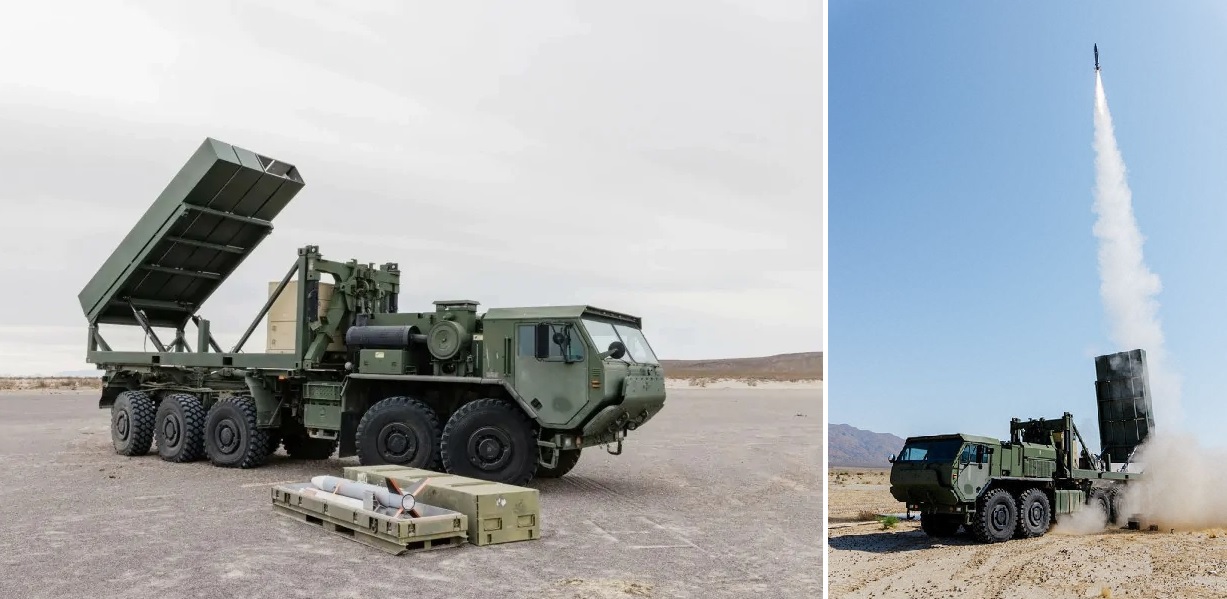
World
Castelion has secured $350 million in Series B funding to fast-track large-scale U.S. hypersonic missile production—one of the most significant private investments in the sector in recent years. The company said the capital will drive rapid expansion of its Blackbeard hypersonic weapon, support integration efforts with U.S. Army and Navy platforms, and accelerate America’s attempt to close a widening capability gap with China and Russia. The round was led by Altimeter Capital and Lightspeed Venture Partners, joined by a formidable lineup of defence-focused investors including Lavrock Ventures, Andreessen Horowitz, General Catalyst, First In, Space VC, Cantos, BlueYard, Avenir, Champion Hill and Interlagos. Castelion emphasised that the new funding anchors the transition from experimental testing to industrial-scale production, aligning directly with the Pentagon’s push for faster procurement cycles and larger hypersonic stockpiles. A Shift From Prototype to Production Castelion said the financing will unlock major development milestones, notably the build-out of Project Ranger, the company’s final-assembly and high-rate-production facility in Sandoval County, New Mexico. Announced in November, the 1,000-acre site is set to become one of the largest solid-rocket-motor manufacturing campuses in the country. Once operational, it will host tooling, qualification lines, assembly halls, testing bays and workforce training complexes designed to support the mass-manufacturing era of hypersonic weapons. Officials said Project Ranger is envisioned to produce thousands of Blackbeard missiles annually, supported by “hundreds” of new industrial and engineering jobs. The facility is expected to begin key commissioning activities in 2026, alongside multi-service testing that will validate the weapon for future Army and Navy deployments. Blackbeard: A Rapidly Developed Hypersonic System CEO and co-founder Bryon Hargis described the Blackbeard program as a response to an urgent national-security gap.“Blackbeard helps close America’s hypersonic capability deficit,” Hargis said. “This funding lets us build fast, test often and produce at volumes that matter in the real world.” Castelion notes that its engineering approach—driven heavily by automation, additive manufacturing and simplified subsystem design—aims to shrink traditional missile-development timelines from years to months. By the end of 2025, the company had completed more than 20 development flight tests, validating solid-rocket motors, guidance and control systems, thermal-protection solutions, seekers and mission software. Industry analysts say Castelion’s “move-fast” methodology closely mirrors the prototyping culture at SpaceX, which several of the company’s founders previously worked for. Investors Cite Speed, Scale and Strategic Alignment Altimeter Capital partner Erik Kriessmann praised the velocity of the programme:“This team took a clean-sheet hypersonic from concept to 25+ flight tests and major integration contracts in just 2.5 years. We’re leading this round so they can now scale production from hundreds to thousands of missiles per year.” Lightspeed’s Connor Love said Castelion is rebuilding the industrial depth the U.S. defence sector has struggled to regain:“They’ve proven they can move from blank-sheet design to hardware under test faster than anyone expected. This isn’t just about missiles—it’s about restoring America’s manufacturing base.” Other investors highlighted the geopolitical stakes.Lavrock Ventures’ Alex Poulin said hypersonics only matter if they can be produced at scale, while Andreessen Horowitz partner Katherine Boyle noted that China deployed mass-produced hypersonics nearly a decade ago.“Castelion leads America’s arsenal renewal with the speed, scale and cost advantage our nation demands,” she said. General Catalyst managing director Paul Kwan described the programme as a transformation of defence-industrial economics:“Modern deterrence demands capabilities at a pace and scale the U.S. hasn’t seen before.” A Strategic Response to Global Hypersonic Competition The Pentagon has repeatedly warned Congress that both China and Russia maintain a clear lead in operational, deployable hypersonic weapons. China’s DF-17 hypersonic glide vehicle is already fielded in significant numbers, and Russian forces have employed Kinzhal missiles in Ukraine. By contrast, the U.S. has struggled with test failures, cost overruns and slow production pipelines. Castelion’s system is positioned as a lower-cost, mass-manufacturable solution to this capability gap. Defence officials familiar with the programme say Blackbeard is designed with simplified manufacturing processes, modular subsystems and streamlined supply chains—features intended to reduce barriers to mass production. What Comes Next Castelion plans high-tempo testing throughout 2026, including demonstrations across multiple service branches. In parallel, the company will begin development of a second hypersonic weapon, leveraging the same manufacturing infrastructure. The combination of rapid design cycles, private-sector capital, and an industrial complex purpose-built for scale marks a decisive shift in how hypersonic weapons are brought to maturity in the U.S. With its latest funding round, Castelion has signalled that America’s next phase of hypersonic development will not be measured in prototypes, but in production lines capable of delivering weapons at strategic volumes—a requirement that Pentagon leaders increasingly view as essential to future deterrence.
Read More → Posted on 2025-12-08 12:24:43
World
General Dynamics Land Systems (GDLS) has taken a major step toward redefining U.S. armored warfare doctrine, announcing on December 5, 2025, that it successfully demonstrated its Precision Effects & Reconnaissance, Canister-Housed (PERCH) launcher on M1A2 Abrams SEPv3 tanks. The test was carried out during the U.S. Army’s Machine Assisted Rugged Sapper (MARS) event at Fort Hood, Texas, and marks the first time the Abrams has been equipped to launch Switchblade loitering munitions for beyond-line-of-sight (BLOS) reconnaissance and precision strike. The trial comes as Western armies accelerate their adaptation to lessons from recent high-intensity conflicts, where drones and loitering munitions have become decisive tools for reconnaissance, counter-battery fire, and deep precision engagement. PERCH Turns the Abrams Into a Sensor-Shooter Platform At the center of the demonstration is the PERCH modular launcher, developed jointly by GDLS and AeroVironment. The system embeds Switchblade 300 and Switchblade 600 loitering munitions directly onto frontline armored platforms without requiring structural modifications to the turret. The launcher replaces the Abrams loader’s sponson box and bolts into existing hardpoints, allowing rapid integration while preserving maintainability and access. GDLS says future versions will connect directly to vehicle digital architecture, giving crews the ability to launch and control drones through onboard systems. This non-invasive integration approach is designed to give armored units an organic BLOS reconnaissance and strike capability without waiting for new turrets or specialized vehicles. Realistic Combat Testing at MARS The MARS event, held from October 26–30, provided a realistic operational environment to test the concept. Soldiers operated an Abrams SEPv3 equipped with PERCH during a complex obstacle-breaching mission, using Switchblade 300 for aerial surveillance and Switchblade 600 for simulated precision strikes on high-value targets beyond the tank’s direct line of sight. The loitering munitions delivered real-time targeting data to the crew, allowing the Abrams to engage threats over the horizon while remaining under armor. The demonstration showed how the tank could transition from a purely direct-fire role to a combined reconnaissance and precision-strike node, shaping the battlespace ahead of the formation. Answering a New Operational Demand PERCH directly addresses a fast-growing requirement in modern armored warfare: giving frontline units the ability to generate their own long-range precision effects instead of relying solely on artillery or air support. With the proliferation of anti-tank teams, hidden observers, and drone threats, tanks require tools to sense and strike far beyond traditional engagement ranges. GDLS emphasizes that PERCH allows crews to launch Switchblade munitions while remaining covered and concealed, turning heavy armor into a protected launch platform for expendable drones. AeroVironment notes that integrating Switchblade systems onto armored vehicles offers immediate gains in responsiveness, reach, and survivability—particularly in urban, forested, or defiladed terrain where direct observation is limited. Global Lessons Driving the Shift The integration of loitering munitions onto armored platforms reflects broader lessons from conflicts in Ukraine, the South Caucasus, and the Middle East. Loitering munitions have proven highly effective at: suppressing anti-tank guided missile teams striking artillery observers degrading armored formations directing combined fires in real time Western militaries are now accelerating efforts to equip armored forces with organic drone capabilities, counter-UAV systems, and integrated sensor networks. With PERCH, the U.S. Army is testing a concept where heavy armor is not only protected against drones but also actively contributes to the drone fight. Rapid Development From AUSA to Field Trials PERCH was first unveiled at the AUSA 2025 exposition in Washington, where GDLS presented it as a low-risk integration kit intended to connect to existing vehicle systems without modifying the tank structure. Just months later, the system has moved into realistic field trials with soldiers, demonstrating its readiness for further evaluation. The Army is expected to study how PERCH might be incorporated into armor brigades, Stryker formations, and future vehicle programs. Additional testing will examine its integration with digital battle networks and potential expansion into cooperative engagement with ground and aerial unmanned systems. A New Role for Heavy Armor The successful MARS demonstration signals a shift in how the U.S. Army envisions armored warfare in drone-dominated environments. By equipping the Abrams with Switchblade 300 and 600 munitions, GDLS and AeroVironment are offering a model where tanks operate as integrated sensor-shooter platforms, capable of reconnaissance, deep strikes, and precision support long before direct-fire contact. If adopted at scale, PERCH could influence the doctrine of breaching operations, reconnaissance-in-force, and distributed fires across armored formations, shaping how U.S. and allied armies prepare for high-threat future battlefields.
Read More → Posted on 2025-12-07 16:51:07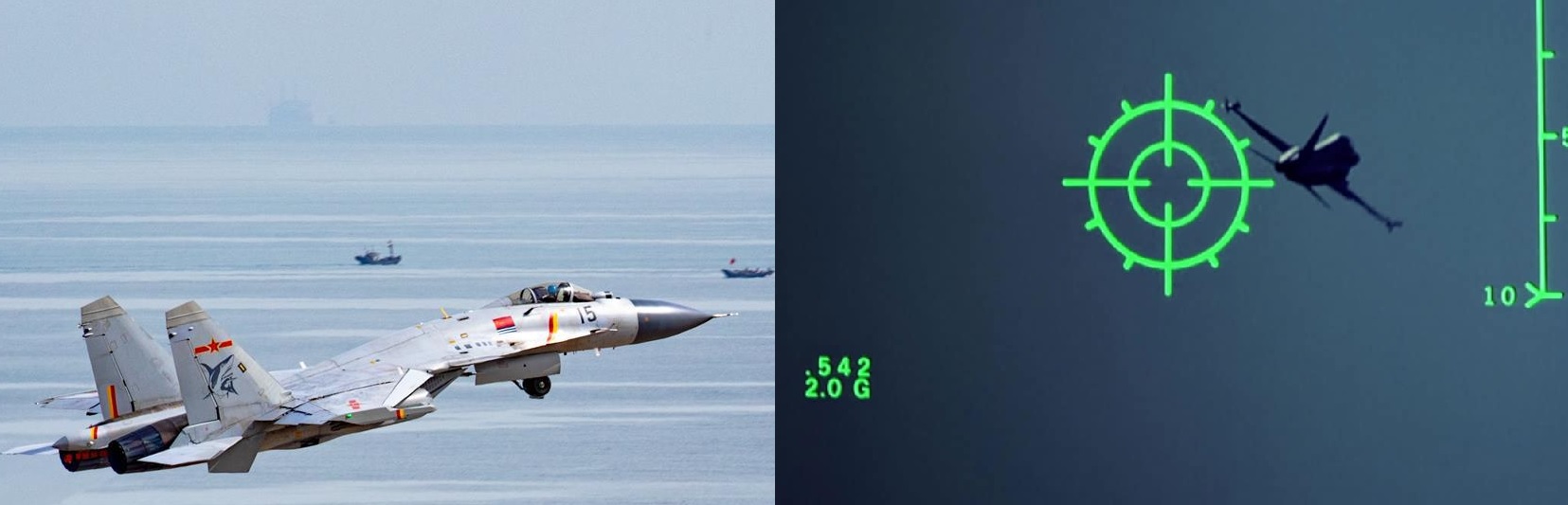
World
Japan has accused Chinese J-15 fighter jets of locking their fire-control radar onto Japanese Air Self-Defense Force (ASDF) aircraft in two separate incidents near the Okinawa island chain, escalating tensions between Asia’s two largest economies at a time of intensifying military activity in the region. Defense Minister Shinjiro Koizumi confirmed the incidents on Sunday, stating that the radar lock-ons represented a serious safety concern and went “beyond what is necessary for the safe flight of aircraft.” He said Japan had filed a formal diplomatic protest with Beijing. The encounters occurred on Saturday, when Japanese F-15s scrambled to monitor a Chinese carrier group operating in the western Pacific. According to Japan’s Defense Ministry, aircraft from the PLA Navy’s carrier Liaoning were conducting drills in international airspace southeast of Okinawa. Two Radar Lock-Ons in One Day According to Japan’s Defense Ministry, the confrontation unfolded as Japanese F-15 fighters scrambled to monitor Chinese aircraft operating from the PLA Navy aircraft carrier Liaoning as it conducted drills in the western Pacific. The Chinese jets involved were identified as J-15 carrier-based fighters. The ministry says the first radar lock occurred just after 4:30 p.m. local time, when a J-15’s fire-control radar was trained on a Japanese F-15 for around three minutes. Roughly two hours later, another J-15 intermittently targeted a different F-15 for about 30 minutes, again over international waters and without any reported violation of Japanese airspace. No weapons were fired and there were no reports of damage or injuries, but officials stressed that using fire-control radar – the system used to guide weapons to a target – is widely regarded as a hostile step, as it can signal preparation to launch missiles and may force the targeted aircraft to take evasive action. Tokyo Issues Protest, Warns of Escalation Risks Defense Minister Koizumi said Japan would respond “calmly but firmly”, warning that actions like these “could lead to unexpected situations.”Prime Minister Sanae Takaichi, speaking during a bilateral security meeting with Australia, called the incidents “deeply worrying” and said Japan would continue close coordination with partners to ensure regional stability. Japanese officials also linked the radar lock-ons to a broader rise in Chinese military activity around the Miyako Strait and Okinawa’s southwestern islands—areas through which the PLA Navy increasingly deploys ships and aircraft to access the Pacific. China Denies the Accusation, Blames Japan Beijing denied the Japanese account, stating that the Liaoning carrier group was conducting routine, lawful training and accusing Japan of approaching Chinese aircraft at close range in a manner that “endangered safety.” A spokesperson for China’s Ministry of Defense said the Chinese pilots took “necessary and professional countermeasures” and called Japan’s protest “unfounded.”Chinese state media also criticized Japan’s increasing security cooperation with the United States and recent statements concerning Taiwan, accusing Tokyo of “creating tension.” A Region Already Under Pressure The radar incidents come during an uptick in Chinese and Japanese military activity around contested ranges: China frequently flies large formations through the Miyako Strait, a strategic gateway into the Pacific. Japanese fighters scramble hundreds of times every year to intercept Chinese aircraft approaching Japan’s air defense identification zone (ADIZ). Tensions remain high around the Senkaku/Diaoyu Islands, administered by Japan but claimed by China. The last major radar-lock confrontation between the two countries occurred more than a decade ago, involving naval vessels in the East China Sea. Analysts say incidents like Saturday’s underscore how quickly routine military monitoring can turn into a dangerous encounter. Strategic Signals From Both Sides Japan is undergoing its most significant defense buildup in decades—acquiring long-range missiles, upgrading its F-15 fleet, and expanding the role of its F-35B-capable carriers.China, meanwhile, is expanding its carrier operations and increasing presence around Taiwan and the western Pacific. Saturday’s confrontation, though it ended without incident, shows how easily close-range interactions between armed aircraft could escalate. Both governments have said they do not seek conflict, but neither appears willing to reduce operations in contested areas.
Read More → Posted on 2025-12-07 16:30:11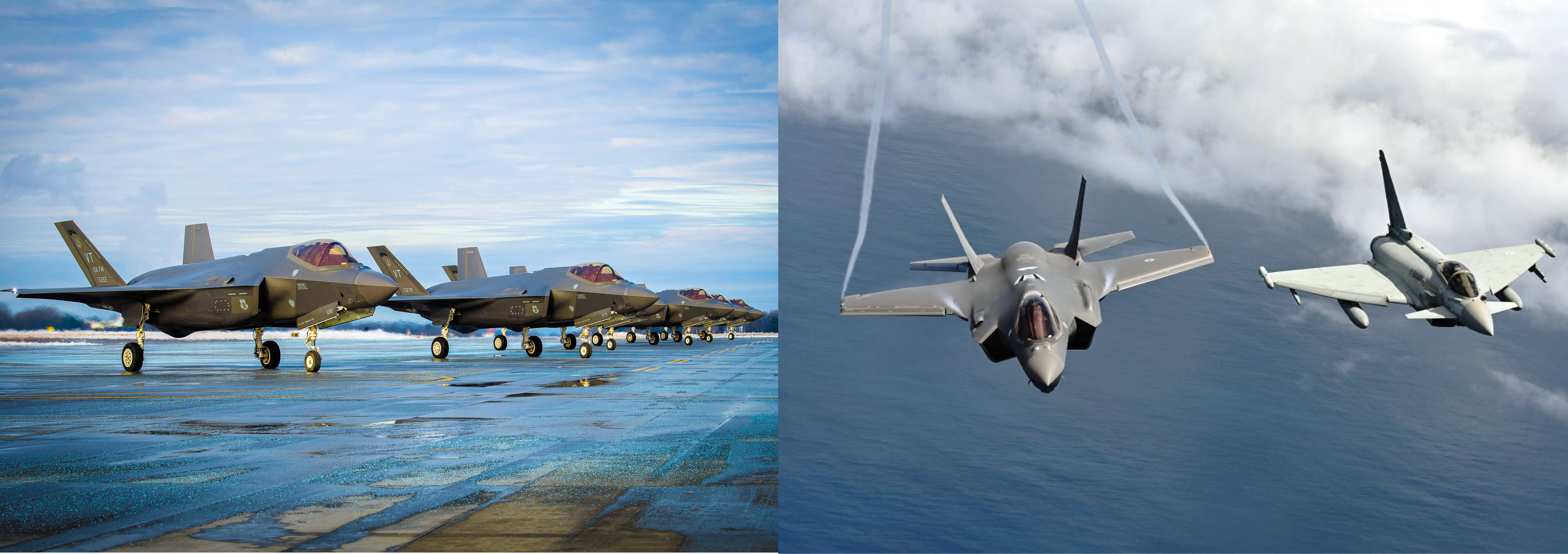
World
Berlin is preparing to lift its planned fleet of F-35A Lightning II fighters from 35 to 50 aircraft, a move that would make Germany one of Europe’s largest operators of the U.S.-built stealth jet and further anchor the country in NATO’s nuclear-sharing posture. According to reporting based on confidential submissions to the Bundestag’s budget committee, the Defence Ministry intends to seek approval for the purchase of 15 additional F-35A fighters from Lockheed Martin at an estimated cost of around €2.5 billion. If authorised, the new batch will complement the 35 F-35s ordered in 2022 under an approximately $8 billion (€7.5–8.3 billion) package that covers aircraft, training, support and infrastructure. That original contract was designed to replace the Luftwaffe’s aging Panavia Tornado fleet and preserve Germany’s ability to carry U.S. nuclear gravity bombs under NATO’s nuclear-sharing arrangements. Replacing the Tornado in Germany’s Nuclear Role Since the 1980s, Tornado strike aircraft from Taktisches Luftwaffengeschwader 33 at Büchel Air Base in Rhineland-Palatinate have performed Germany’s share of NATO’s nuclear mission. The base is believed to host an estimated 10–15 U.S. B61 nuclear bombs, stored in underground vaults integrated into aircraft shelters under the U.S.-run Weapon Storage and Security System (WS3). In March 2022, Berlin formally selected the F-35A to take over this role by around 2030, arguing that the aircraft’s stealth design, advanced sensors and planned certification for the new B61-12 bomb offered the most credible way to maintain the mission while deepening interoperability with other NATO air forces. The planned expansion to 50 aircraft would not only secure the nuclear mission but also give the Luftwaffe a larger pool of jets for conventional strike, air defence and multinational operations, reflecting Berlin’s broader “Zeitenwende” shift toward higher defence readiness following Russia’s full-scale invasion of Ukraine. Massive Infrastructure Upgrades at Büchel The F-35 decision has triggered one of the most complex infrastructure projects in the history of the German Air Force. At Büchel, work is underway on: Reinforced special shelters hardened for fifth-generation jets New maintenance and service areas dedicated to the F-35A Runway refurbishment and taxiway upgrades Enhanced perimeter and facility security around the nuclear weapons area, including new access points suitable for U.S. C-17 transport aircraft used to move nuclear weapons and components. A June 2025 update from Germany’s Defence Ministry said both the infrastructure programme and F-35 procurement remain “on schedule,” though the complexity of the construction works has pushed projected costs for the Büchel refit to nearly €2 billion. Delivery Schedule: Training in the U.S., Jets in Germany From 2027 Under current planning, the first German F-35s will initially be based in the United States for pilot and maintainer training. German crews are expected to begin training around 2026, with facilities at Ebbing Air National Guard Base and Luke Air Force Base among the hubs used for international F-35 training. Recent programme updates indicate: First aircraft for Germany already in production in the U.S. First F-35s to arrive at Büchel Air Base in Germany in the third quarter of 2027 Deliveries to continue through 2029 Initial Operational Capability (IOC) targeted for 2029 Full Operational Capability (FOC) expected around 2030, in line with the planned retirement of the Tornado. These dates broadly match Berlin’s original goal of ensuring a seamless transition from Tornado to F-35 for the nuclear mission without a capability gap. What the F-35 Brings to the Luftwaffe The F-35A is a single-engine, stealthy multirole fighter designed for air-to-air combat, deep strike, intelligence, surveillance and reconnaissance (ISR), and electronic warfare. Key features include: A low-observable airframe with internal weapon bays to reduce radar signature An advanced AESA radar, electro-optical targeting system and distributed aperture system giving 360° situational awareness A powerful sensor-fusion architecture that combines data from the jet and other assets into a single picture for the pilot Secure data links enabling networked operations with allied F-35 fleets and other platforms. For Germany, that means an aircraft able to penetrate sophisticated air defences, deliver both conventional and (once certified) nuclear weapons, and operate seamlessly alongside other NATO F-35 users in the North Atlantic, Baltic and Eastern European theatres. Germany Joins the Top Tier of European F-35 Operators If the additional 15 jets are approved, Germany’s planned fleet of 50 F-35As would place it in the top group of European operators alongside countries such as Italy, the United Kingdom, the Netherlands, Norway, Denmark, Belgium, Poland and Finland, all of which are in various stages of receiving or operating the type. For NATO, the proliferation of F-35 squadrons across Europe creates a dense network of interoperable fifth-generation aircraft able to share data and coordinate operations in real time, which alliance planners see as crucial for deterring Russia and protecting vulnerable regions such as the Baltic and Black Sea. Domestic Debate: Cost, Risk and Nuclear Politics The expansion of the F-35 plan is unfolding against a wider debate in Germany over defence spending and nuclear policy. Supporters in the government and the armed forces argue that a larger F-35 fleet is necessary to: Guarantee the nuclear-sharing mission under more demanding security conditions Provide enough aircraft for training, maintenance rotations and deployments Contribute credibly to NATO airpower, including in high-threat environments. Critics, including parts of the opposition and some civil-society groups, question the high lifecycle costs of the F-35, the risk of schedule slippage in both aircraft and infrastructure delivery, and the political message sent by renewed investment in nuclear-sharing at a time when disarmament advocates had hoped for the opposite. Long-running anti-nuclear protests at Büchel, which have targeted the presence of U.S. bombs there since the 1990s, are likely to continue as the base is rebuilt around the new fighter. Next Steps in Berlin The immediate step is for the Bundestag’s budget committee to review the additional F-35 funding request, expected to be framed as part of Germany’s broader efforts to meet NATO capability targets and implement its post-2022 defence “turning point.” If lawmakers give the green light, Germany’s F-35 programme will shift from a 35-jet replacement effort to a 50-aircraft cornerstone of Luftwaffe air power — cementing the F-35 at the heart of both Berlin’s national defence planning and NATO’s future air posture in Europe.
Read More → Posted on 2025-12-07 15:55:10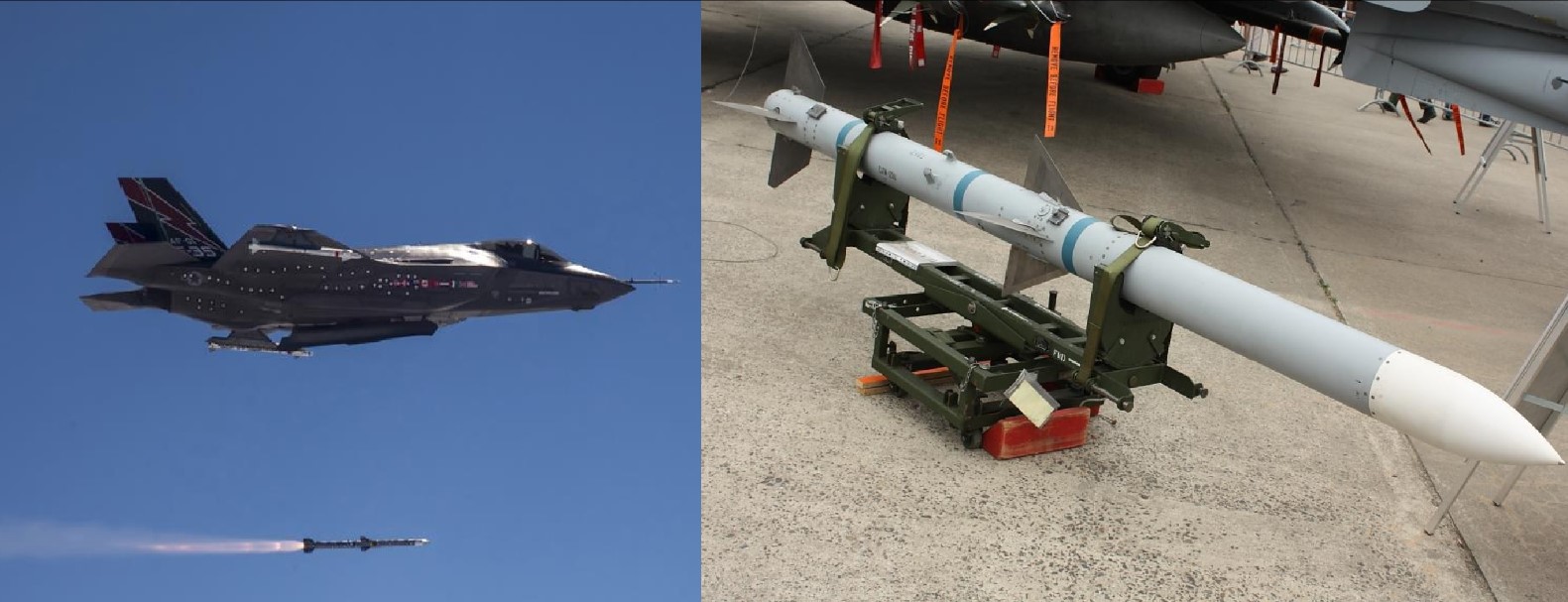
World
The United States has formally approved the sale of AIM-120C-8 Advanced Medium Range Air-to-Air Missiles (AMRAAMs) to Denmark, marking a major step in Copenhagen’s ongoing modernization of its combat aviation capabilities. The decision, announced through a recent notification from the U.S. Department of State to Congress, falls under the Foreign Military Sales (FMS) program and carries an estimated value of $730 million. Denmark Expands Airpower as F-35 Fleet Grows Denmark is rapidly transforming its air force structure as it transitions from fourth-generation F-16s to fifth-generation F-35A Lightning II fighters. The Royal Danish Air Force has already begun retiring its F-16s, with several transferred to Ukraine as part of Denmark’s support for Kyiv. Additionally, six F-16AM/BM fighters have been delivered to Argentina under a separate agreement. Copenhagen’s long-term plan includes not only fielding a fully operational F-35 fleet but also negotiating for an additional batch of stealth aircraft. Danish lawmakers have signaled broad political backing for strengthening national and NATO-aligned airpower as regional security challenges intensify. New Missiles to Enhance Long-Range Engagement Capabilities The approved package includes: 200 AIM-120C-8 AMRAAMs Three guidance sections Training, spare parts, and contractor support RTX Corporation has been named the primary contractor. The C-8 variant—one of the latest in the AMRAAM family—offers improved guidance, enhanced electronic counter-countermeasures, and longer operational ranges, making it a critical weapon for modern air combat, particularly when paired with the advanced sensor and networking capabilities of the F-35. The Defense Security Cooperation Agency (DSCA) emphasized that the sale will “improve Denmark’s capability to meet current and future threats” by ensuring access to modern, combat-proven air-to-air munitions. The acquisition also reinforces NATO interoperability, as AMRAAM-equipped F-35s are increasingly central to European air defense planning. A Broader Danish Missile Procurement Strategy The newly approved purchase is part of a broader Danish strategy to expand its air-to-air weapons inventory. In the past year alone, Denmark has submitted requests for: AIM-9X Block II short-range missiles (November 2024) AIM-120D-3 medium/long-range missiles (October 2024) The AIM-120D-3—the most advanced AMRAAM variant currently used by the U.S. Air Force—is typically approved only for close allies, underscoring Washington’s confidence in Denmark’s defense role. Denmark has also made previous requests for the AIM-120C-8, including a June 2024 submission for 84 missiles, demonstrating a clear focus on building a robust ammunition stockpile as its F-35 fleet expands. Geopolitical Context and Regional Importance The sale comes at a time of heightened security tensions in Northern Europe and the Arctic. Denmark’s strategic location—bridging the North Atlantic and the Baltic Sea—places it at the center of NATO’s deterrence posture against emerging air and missile threats. The F-35, armed with AIM-120C-8 and AIM-120D-3 missiles, significantly enhances Denmark’s ability to contribute to NATO air policing, joint strike missions, and integrated air & missile defense networks. U.S. officials noted that Denmark “will have no difficulty absorbing these items into its armed forces,” reflecting the country’s increasingly sophisticated defense infrastructure and ongoing investments in training, sustainment, and modernization. Strengthening NATO’s Collective Air Defense With multiple European nations upgrading to the F-35 and procuring next-generation munitions, NATO is building one of the most interoperable air combat networks in its history. Denmark’s latest purchase adds to similar acquisitions by Norway, the Netherlands, Italy, and the United Kingdom, all of whom field advanced AMRAAM variants. The approved sale not only deepens U.S.-Danish defense cooperation but also reinforces the alliance’s long-term shift toward integrated, stealth-enabled, precision airpower. As Denmark continues expanding its missile inventory and negotiating more aircraft, its role within NATO’s northern defense corridor is set to grow significantly—making this latest AMRAAM sale a critical building block in shaping the region’s future air combat readiness.
Read More → Posted on 2025-12-07 14:55:55
World
The future of the transatlantic alliance is again at the center of political debate in Washington, as arguments intensify over whether the United States should scale back or even withdraw from NATO. With U.S. defense spending nearing US$1 trillion and national debt continuing to rise, many in America now question whether the country can afford to remain the primary guarantor of Europe’s security. The discussion is not new—but the economic pressures facing the United States, combined with Europe’s slow movement toward military self-reliance, have pushed the issue into sharper focus. America’s Unequal Burden In 2024, the United States spent US$997 billion on defense—an amount expected to exceed US$1 trillion in the near term. This enormous budget supports not only American military needs but also extensive commitments overseas, including the majority of NATO’s operational structure, missile defense, surveillance networks, and troop deployments across Europe. By comparison, European NATO members collectively spent US$454 billion in 2024, less than half of the U.S. total. Even though spending has grown since Russia’s 2022 invasion of Ukraine, several European nations continue to fall short of the 2% of GDP defense target, instead directing more funds toward welfare programs, infrastructure, and domestic development. This imbalance has strengthened the argument in the U.S. that American taxpayers are effectively subsidizing Europe’s security, while European governments focus their resources on improving living standards for their own citizens. A Strained U.S. Economy Drives the Debate The U.S. national debt has climbed above US$35 trillion, and economists warn that sustaining such high levels of military spending will pressure federal budgets for years to come. Critics of NATO’s current structure argue that America should redirect a larger share of its resources toward domestic needs: modernizing transportation and energy infrastructure improving healthcare and education supporting manufacturing and technology industries strengthening border and cyber defenses For many Americans, the question is simple: Why continue paying disproportionately for Europe’s protection when the U.S. itself faces deep economic and social challenges? What America Could Gain From Leaving or Reducing Its NATO Role Supporters of a reduced American presence in NATO highlight several potential advantages, both economic and strategic. Europe Would Be Forced to Increase Defense Spending A reduced U.S. commitment would push Europe into a new era of military responsibility. Without America’s security umbrella, European governments would have no choice but to dramatically expand their defense budgets and rapidly invest in new capabilities. This would include modern fighter aircraft, missile-defense systems, armored vehicles, advanced munitions, and high-end surveillance platforms. Such a surge in procurement would heavily benefit the United States. Europe relies on American defense technology, and any expansion in military spending would translate into massive contracts for U.S. manufacturers, leading to more jobs, more production, and increased revenue across the American defense industry. Reduced Pressure on the U.S. Pentagon Budget Another significant advantage involves the strain on the Pentagon’s resources. The United States currently finances a vast network of troops, bases, and operational missions across Europe, all of which cost billions annually. Scaling back these commitments would allow Washington to cut overseas expenditures, reduce NATO-related obligations, and lighten the burden on a defense budget that is approaching US$1 trillion. Even modest reductions would help ease long-term fiscal pressure and free the Pentagon to invest in new technologies rather than maintaining costly legacy structures abroad. More Freedom to Invest at Home If less money flows toward securing Europe, the United States could redirect funds to strengthen its own economy. Analysts note that even a modest reduction in overseas defense commitments could free billions annually for: job-creation programs semiconductor and AI research veterans’ health systems rural and urban development support for American families A Strategic Shift Toward Asia Many U.S. policymakers argue that future threats lie not in Europe but in the Indo-Pacific, especially as China expands military and economic influence. A reduced NATO footprint would allow the U.S. to reposition aircraft carriers, air squadrons, and missile networks toward the Pacific—seen as the highest strategic priority. The European Challenge Without America If the U.S. withdraws or substantially reduces involvement, Europe would face a stark reality. NATO depends on Washington for roughly 70% of its total military capabilities, including long-range strike power, intelligence and satellite networks, strategic mobility, and nuclear deterrence.No European nation, nor any combination of them, is currently capable of filling that void. Building a comparable force would require decades of investment and hundreds of billions of dollars, marking a dramatic shift in Europe’s defense landscape. For the first time in generations, Europe would have to confront the true cost of its security. A Turning Point for the Alliance The debate over whether the United States should remain NATO’s primary pillar reflects deeper questions about national priorities, economic limits, and shifting global power dynamics.American voters increasingly demand a focus on domestic needs, while political leaders acknowledge that Europe has become structurally dependent on U.S. protection. Whether the U.S. chooses to remain fully engaged, redefine its role, or eventually step back, the conversation itself signals a major turning point for the alliance. NATO’s future—and the stability of the transatlantic relationship—may ultimately depend on how Washington answers a critical question: Should America continue carrying the weight of Europe’s defense, or is it time for Europe to stand on its own?
Read More → Posted on 2025-12-07 14:40:02
World
Japan is rapidly hardening its far-southwestern islands and sharpening its pledge to act if China attacks Taiwan, in a military buildup that Tokyo openly links to the growing risk of a Taiwan crisis. Prime Minister Sanae Takaichi has repeatedly warned in parliament that “a contingency for Taiwan would be a contingency for Japan,” stressing that any Chinese attempt to seize the self-ruled island could trigger a Japanese response under its security laws and alliance with the United States. She has framed Japan’s role as defending peace and stability in the Taiwan Strait and vowed that Tokyo “will not stand by if our own security is directly threatened.” Her comments have drawn sharp protests from Beijing, which accuses Japan of meddling in China’s “internal affairs,” but they have been warmly welcomed in Taipei, where officials say they are “very moved” by the public support. Missiles on Yonaguni: Air Defense Just 110 km From Taiwan At the heart of Japan’s new posture is Yonaguni, a small island at the western edge of Okinawa Prefecture, only about 110 km from Taiwan’s east coast. Tokyo has confirmed plans to deploy medium-range surface-to-air missiles on Yonaguni as part of a wider ring of air and missile defenses across the Nansei (Ryukyu) island chain. The unit will field upgraded Type-03 Chu-SAM systems capable of engaging aircraft and some ballistic threats out to roughly 48 km, giving Japan a denser shield over the narrow waters between Yonaguni and Taiwan. Defense Minister Shinjiro Koizumi has described the deployment as strictly defensive, saying it is intended to “reduce the possibility of an armed attack on Japan” and deter aggression against its remote islands. China has reacted angrily. Its foreign and defense ministries have denounced the plan as a “deliberate provocation” and warned that Japan will “pay a painful price” if it “steps out of line” over Taiwan. New Electronic Warfare Air-Defense Unit Facing the Taiwan Strait Alongside the missile batteries, Japan is preparing to station an electronic warfare (EW) air-defense unit on Yonaguni, also about 110 km from Taiwan. According to Japanese and Taiwanese media reports, the unit will be equipped with systems designed to jam or deceive hostile radar and communications, forming a new layer in Japan’s air-defense network across Okinawa and the nearby islands. In a crisis, the EW unit would support air-defense batteries and fighter jets by disrupting incoming aircraft and missile targeting, complicating any Chinese attempt to operate freely over the East China Sea. Officials in Tokyo emphasize that the equipment “is not intended to attack other countries” but to protect Japanese territory and support responses to a potential “Taiwan contingency.” 100-Kilowatt Shipboard Laser Enters Sea Trials Japan is also moving into next-generation directed-energy weapons as part of preparations for a high-intensity conflict around Taiwan and the Ryukyu islands. This month, the Japan Maritime Self-Defense Force began live sea trials of a new 100-kilowatt-class laser weapon system mounted on its test ship JS Asuka. The containerized laser module has been spotted installed on Asuka’s aft deck and is undergoing trials to track and engage drones, small boats and potentially incoming rockets or missiles. Defense analysts say a 100-kW laser could eventually help ships defend against saturation drone and missile attacks, firing beams at the speed of light with a very low cost per shot—capabilities seen as crucial if Chinese forces try to overwhelm Japanese defenses in the confined seas around Taiwan and Okinawa. The laser program follows earlier experiments with a railgun on the same test ship, underlining Tokyo’s push to field multiple new technologies, from hypersonic weapons to long-range cruise missiles, that would complicate Chinese planning. A Historic Defense Budget Surge to Fund the Buildup Japan’s posture around Taiwan is being enabled by a record surge in defense spending. Under a Defense Buildup Program approved in 2022, Tokyo plans to spend about 43 trillion yen (roughly $300 billion) on defense between fiscal 2023 and 2027—an increase of over 50% compared with the previous five-year period. Key elements include: Raising annual defense outlays toward 2% of GDP by 2027, roughly in line with NATO’s benchmark, up from about 1% traditionally. Record annual budgets for 2024 and 2025 to accelerate deployment of long-range Type-12 cruise missiles, U.S.-made Tomahawk missiles, and new missile-defense interceptors, many earmarked for Japan’s southwestern islands facing Taiwan. Additional supplementary spending that could push Japan’s annual defense budget to around $70 billion, placing it among the world’s top military spenders. Government documents explicitly cite China as Japan’s “greatest strategic challenge” and point to the risk that a conflict over Taiwan could quickly spill over into attacks on Japanese islands, air bases and sea lanes. Tensions with China and Support From Taiwan Beijing has reacted furiously not only to the Yonaguni deployments but also to Takaichi’s comments hinting that Japan might intervene militarily if China attacks Taiwan. Chinese officials accuse Tokyo of abandoning its post-war pacifism and “reviving militarism,” and have responded with trade and cultural restrictions, including limits on Japanese food imports and entertainment. Taiwan, by contrast, has openly welcomed Japan’s stance. Taipei’s premier said the island was “very moved” by Takaichi’s statements and stressed that close cooperation between democratic partners is essential to deter war in the region. Tokyo, Taipei and Washington are also conducting more frequent joint drills and contingency planning, including evacuation plans for more than 100,000 civilians from islands near Taiwan if fighting breaks out. “First Line of Defense” in a Taiwan Crisis While Japanese officials stop short of saying Tokyo would be the very first country to fire in Taiwan’s defense, their message is increasingly clear: Japan sees its southwestern islands as the front line in any Taiwan conflict and is preparing to act quickly if its territory or vital sea lanes come under threat. With missiles and electronic-warfare units on Yonaguni, high-energy lasers at sea, and a rapidly expanding defense budget, Japan is signaling that it intends to be a central player in any future showdown over Taiwan—risking deeper confrontation with China, but betting that visible resolve will help keep a war from starting in the first place.
Read More → Posted on 2025-12-07 13:23:17
World
The Polish Air Force’s F-35 program marked another milestone this week as the General Staff of the Polish Armed Forces confirmed the delivery of two additional F-35A Husarz multirole fighters to the United States. The aircraft, tail numbers 3506 and 3507, arrived at Ebbing Air National Guard Base in Fort Smith, Arkansas, where Poland’s training detachment is steadily taking shape. Training Component Grows Toward Full Strength The new arrivals expand the Polish F-35 training fleet currently stationed in the U.S., where pilots and ground personnel are undergoing conversion training on the fifth-generation platform.Poland plans to operate a total of eight F-35A jets in the American training program before subsequent deliveries begin reaching home bases. According to the General Staff, flight trials for the eighth aircraft, No. 3508, are already under way at Lockheed Martin’s facility in Fort Worth, with delivery expected in 2026. To date, the Polish F-35A Husarz jets in the U.S. have completed over 500 flights, marking steady progress in operational familiarization. Under Poland’s Letter of Offer and Acceptance (LOA) with the United States, 24 Polish pilots will complete full-spectrum training including air-to-air combat, precision strike operations, systems management, and simulator-based mission rehearsals. Deliveries to Poland to Begin in 2026 While the first eight jets remain assigned to American training units, the production of subsequent aircraft will soon transition to operational deployment in Europe.Beginning with the ninth aircraft, deliveries will be routed directly to Poland’s 32nd Tactical Air Base in Łask, which will serve as the first operational home of the Husarz. The first pair of F-35s is expected to land in Poland in May 2026, marking the start of domestic introduction and integration into NATO’s Eastern Flank air-defence architecture. In the long term, two full Polish F-35 squadrons will be established — one at Łask and the second at Świdwin, underpinning Poland’s shift toward a modern, stealth-capable air combat force. Poland’s Largest-Ever Combat Aircraft Purchase Poland became the twelfth nation to join the global F-35 program when it signed its intergovernmental LOA agreement in January 2020. The deal covers 32 F-35A Lightning II Block 4 fighters, training systems, mission data support, logistics, and a full maintenance and sustainment package. The contract, valued at approximately $4.6 billion, represents one of the most significant modernization projects in the history of the Polish Air Force. The Global F-35 Program Continues Its Expansion The F-35 remains the most widely produced fifth-generation fighter aircraft in the world. Lockheed Martin has delivered more than 1,270 aircraft across all variants, and the global fleet has now surpassed one million cumulative flight hours. Key enhancements under the Block 4 upgrade — the version Poland is receiving — include improved computing power, advanced electronic warfare systems, new precision weapons, enhanced sensors, and improved data fusion. Strategic Significance for NATO’s Eastern Flank With Russia’s continued military pressure on NATO’s borders, Poland views the F-35 as a core element of its future air-defence and deterrence posture.The aircraft’s stealth capability, long-range precision strike, network-centric warfare integration, and sensor-fusion advantages are expected to transform Poland’s ability to conduct ISR, air dominance, and deep-strike missions. Polish officials emphasize that the Husarz fleet will operate seamlessly alongside U.S. and allied F-35s in Europe, ensuring interoperability during joint NATO operations. As deliveries continue over the next several years, Poland is preparing to become one of the most advanced air forces in Central and Eastern Europe — anchored by a next-generation combat aircraft fleet designed to meet evolving strategic threats.
Read More → Posted on 2025-12-07 12:42:06Search
Top Trending in 24 Hours
-
 U.S Navy Orders 50 Blackbeard Hypersonic Missiles in New $23.4 Million Contract
-
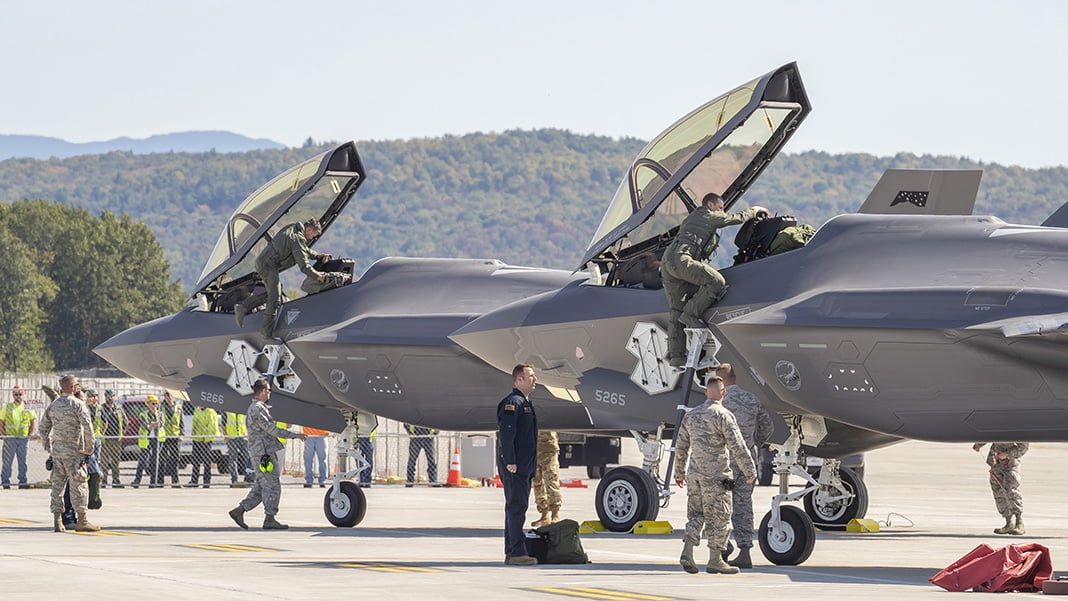 F-35 Fleet Readiness Falls to 25% Amid Parts Shortages and Software Delays: GAO Report
-
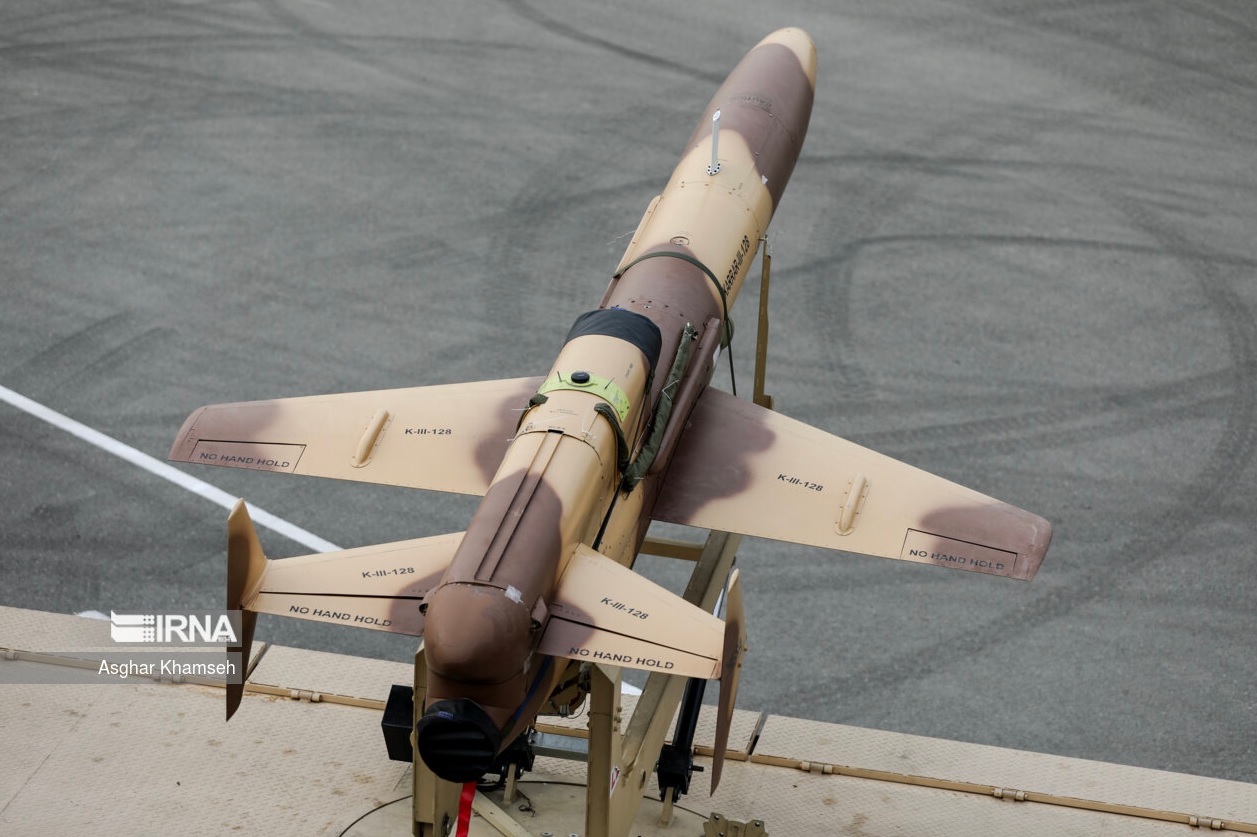 Russia Launches 1,400 Jet-Powered Drones in 2026 as Strike Tactics Evolve to Challenge Ukraine's Air Defenses
-
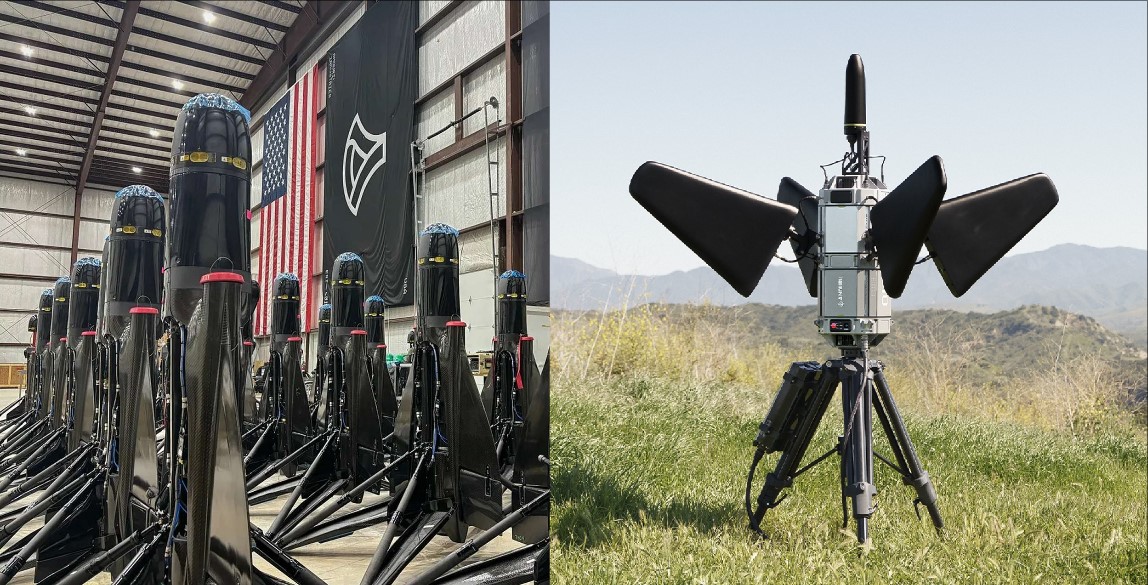 U.S. Approves $1.98 Billion Sale of Anduril AI-Powered Counter-Drone Systems to Kuwait
-
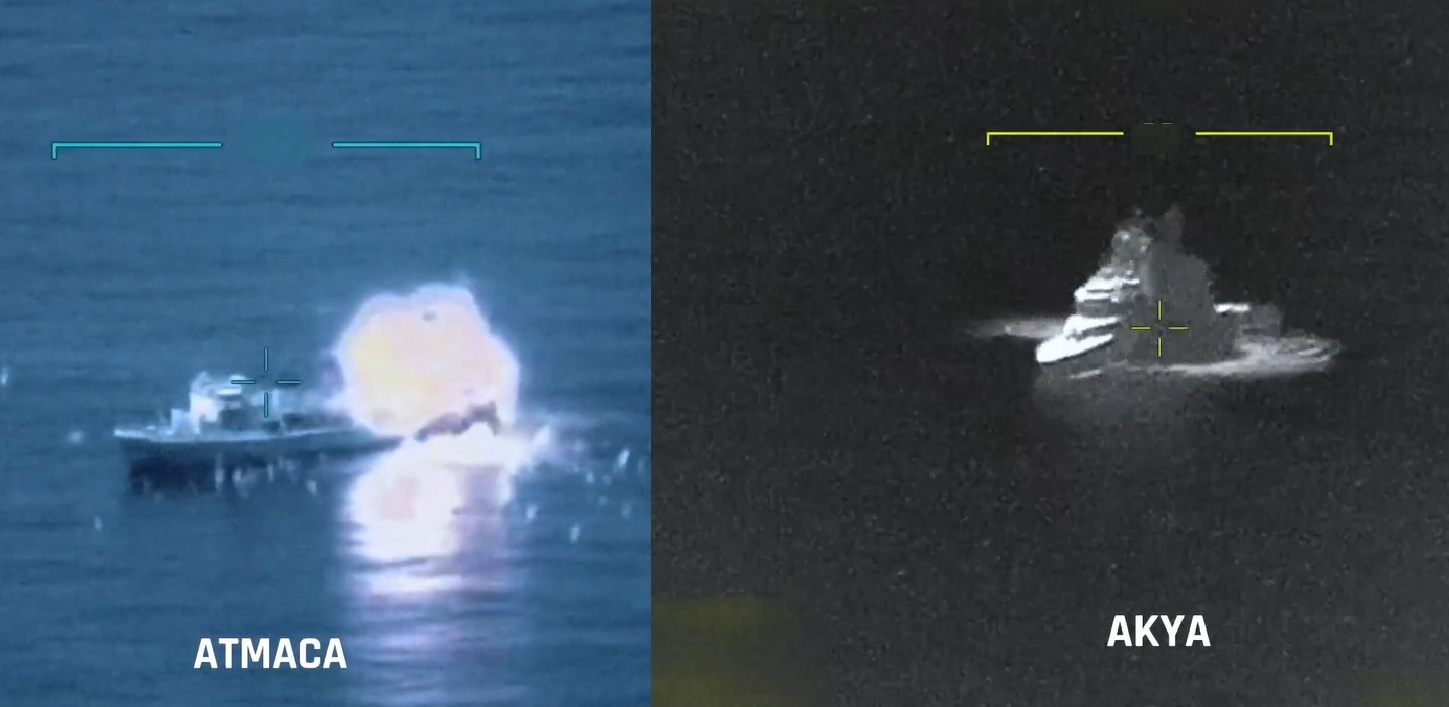 Turkey Navy Successfully Tests AKYA Torpedo and ATMACA Missile During Major Denizkurdu-II Naval Exercise
-
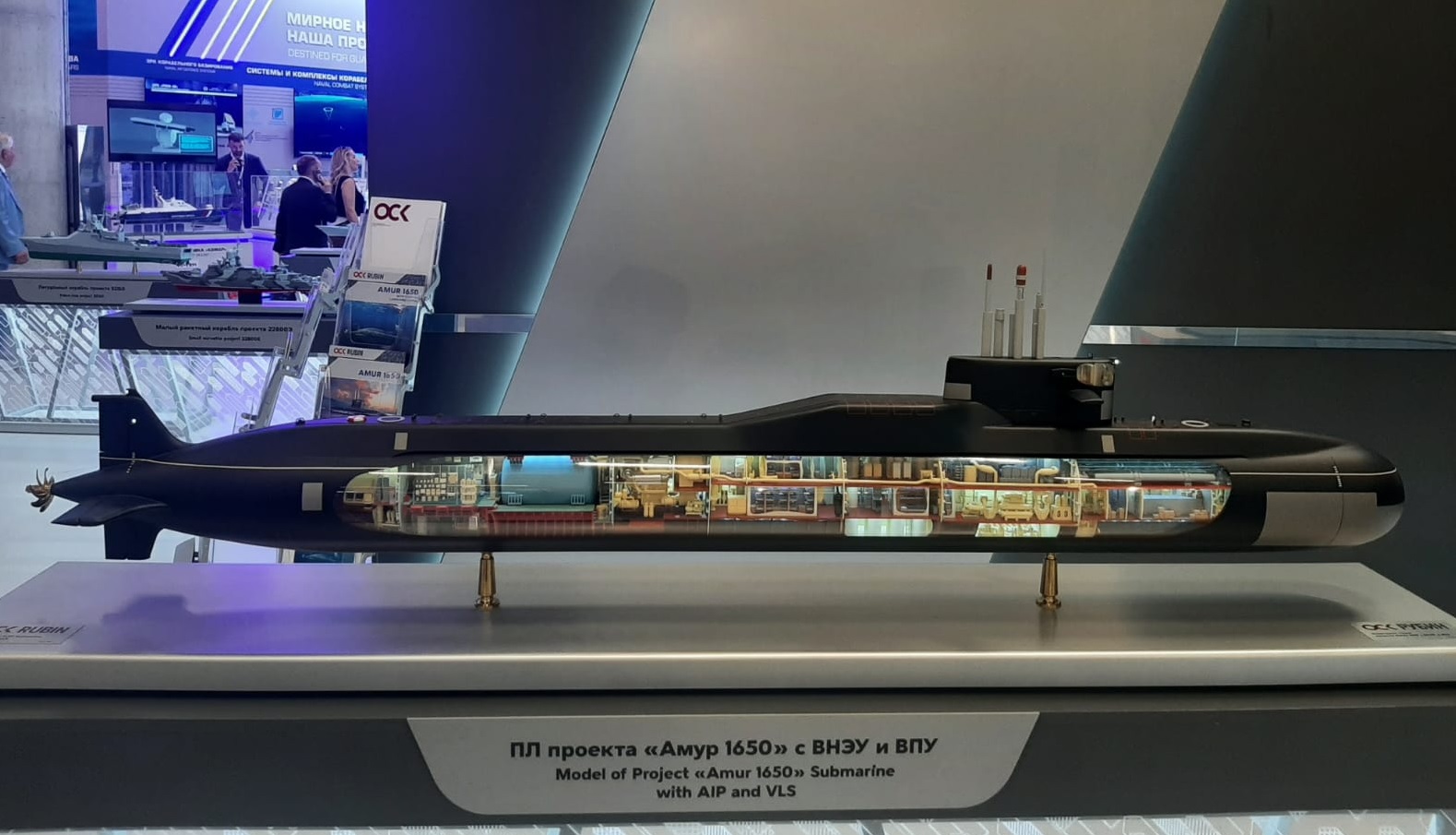 Russia Unveils Amur-1650 AIP Submarine Equipped with BrahMos Vertical Launch System at Fleet-2026
-
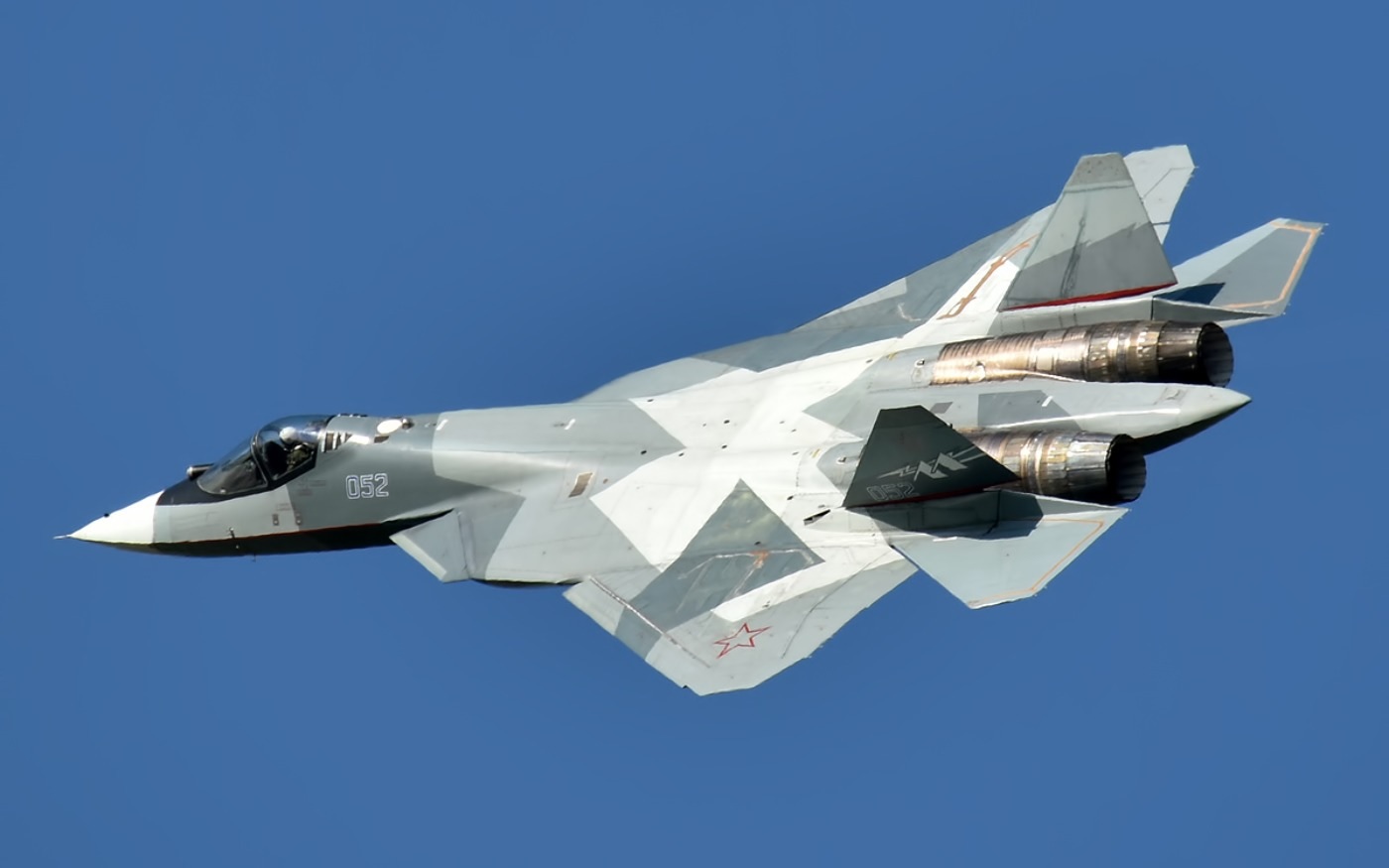 Russian Analysts Debate Su-57 Capabilities After Putin Calls Fighter Superior to F-35
-
 UAE Denies Reports of Releasing Up to $20 Billion in Funds to Iran Amid Regional De-Escalation Efforts
Top Trending in 4 Days
-
 Iranian Media Leaks 14-Point U.S.-Iran Peace Framework Amid Ongoing Negotiations
-
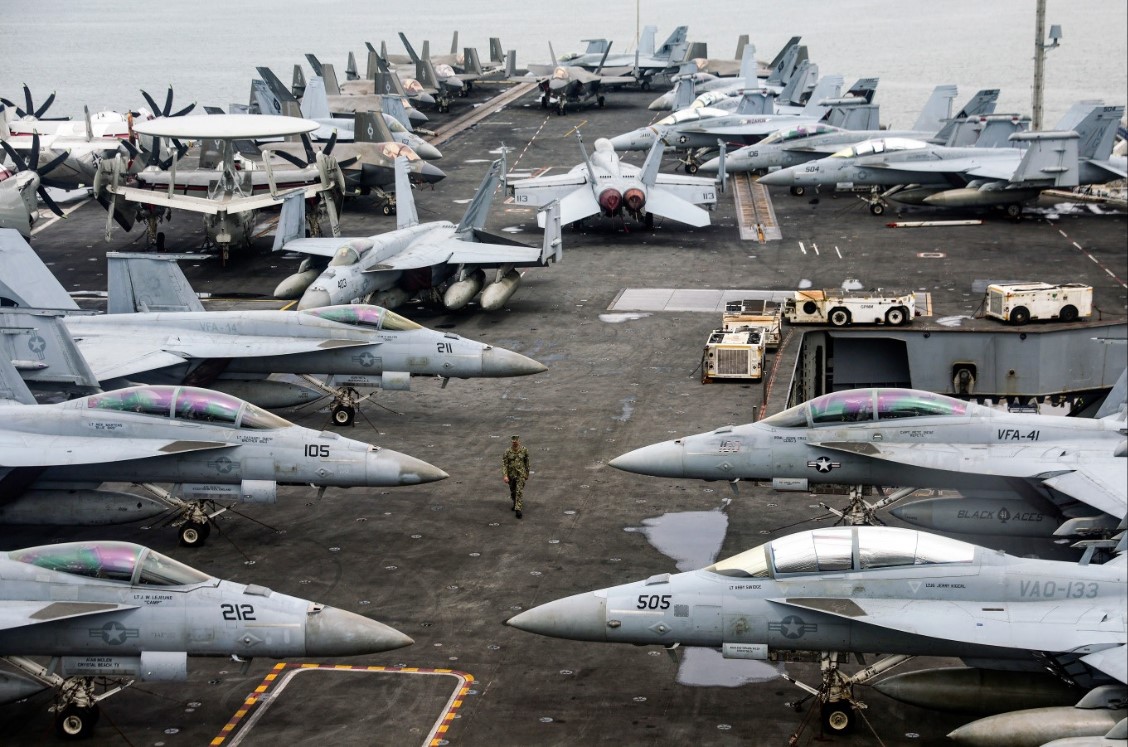 US Plans Significant Reduction of Fighter Jets and Warships for NATO Operations in Europe
-
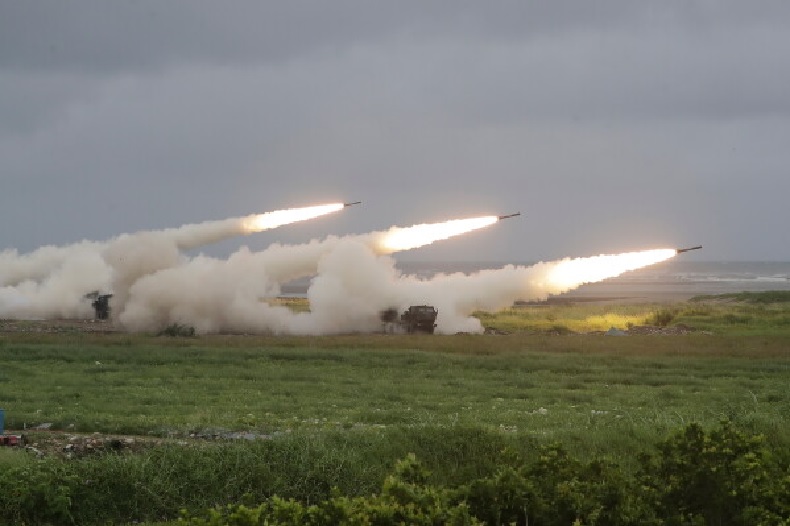 Taiwan Conducts First Live-Fire of HIMARS Rockets From West Coast During Invasion Defense Drill
-
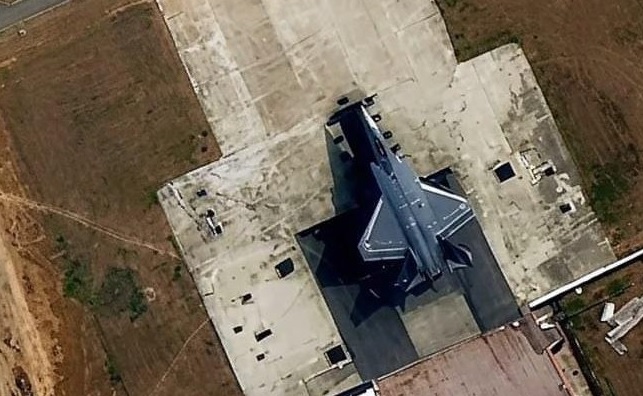 AMCA Airframe Spotted at DRDO’s ORANGE Facility for Radar Cross-Section Testing
-
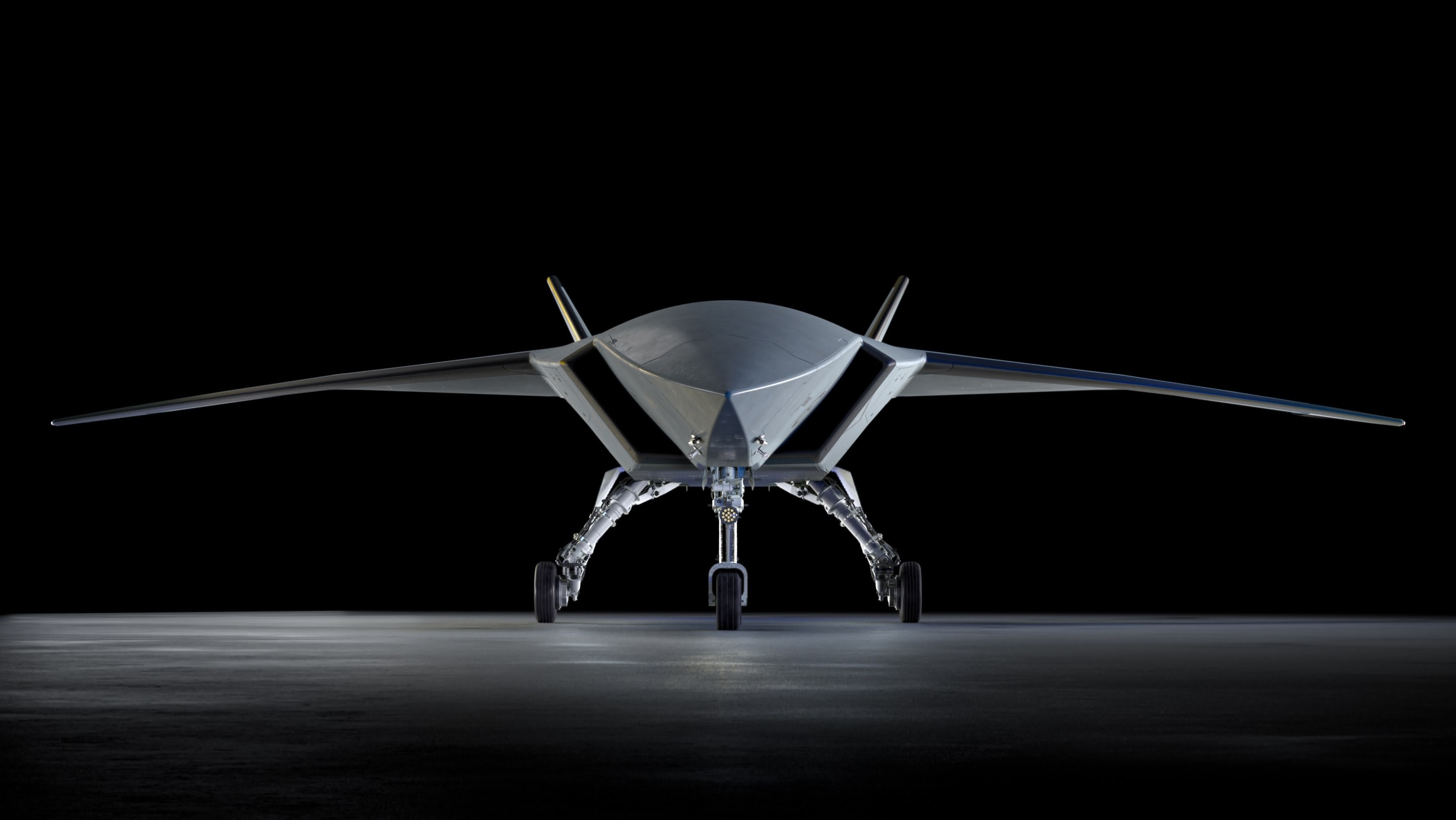 Boeing Introduces New MQ-28 Ghost Bat Upgrades with Increased Range, Payload and Weapons Capacity at ILA Berlin 2026
-
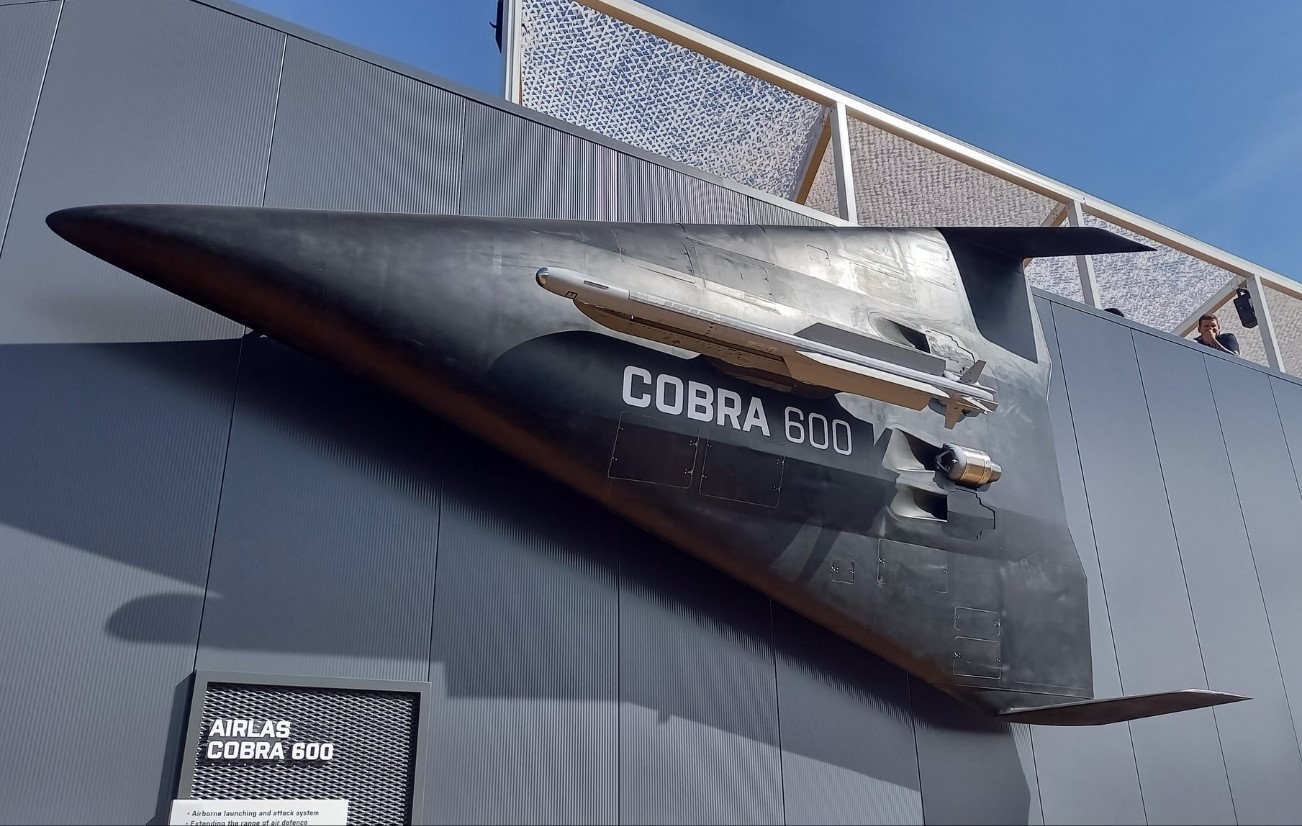 Diehl Defence Unveils IRIS-T Armed Cobra 600 Air Defense Drone at ILA Berlin 2026
-
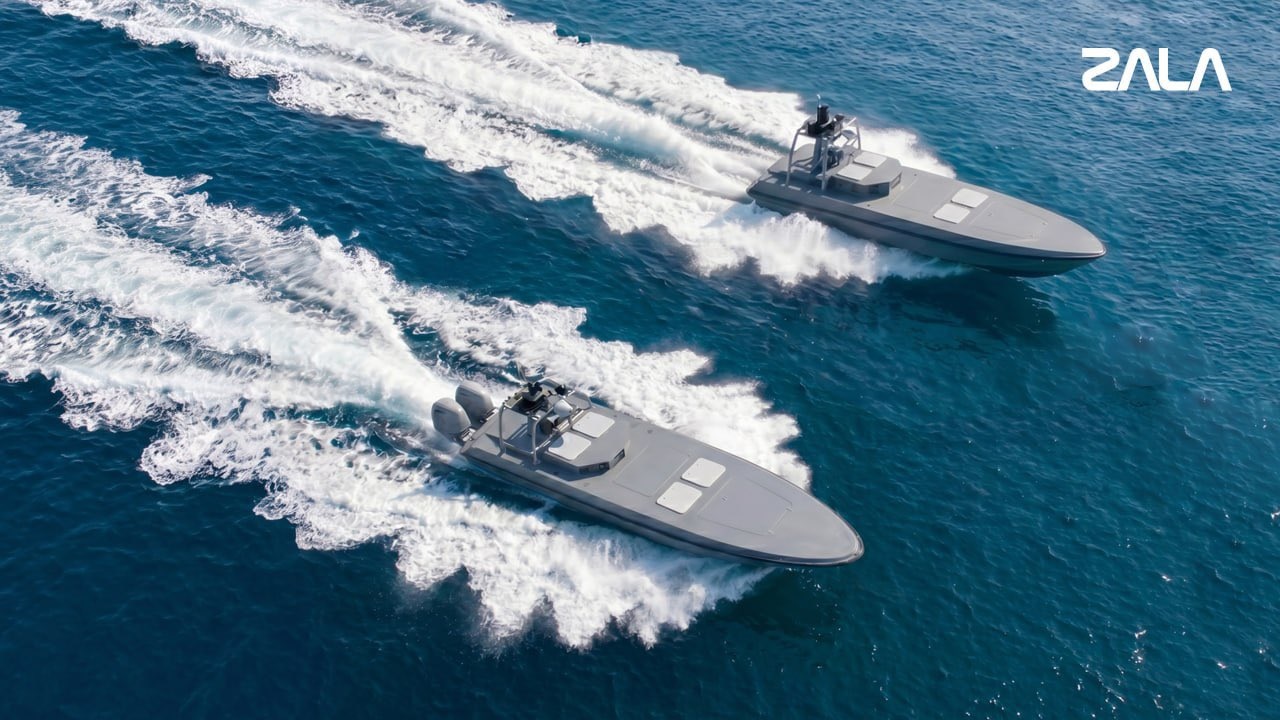 Russian Defense Firm ZALA Unveils KAMA Unmanned Surface Vessel Family at FLOT-2026 Naval Exhibition
-
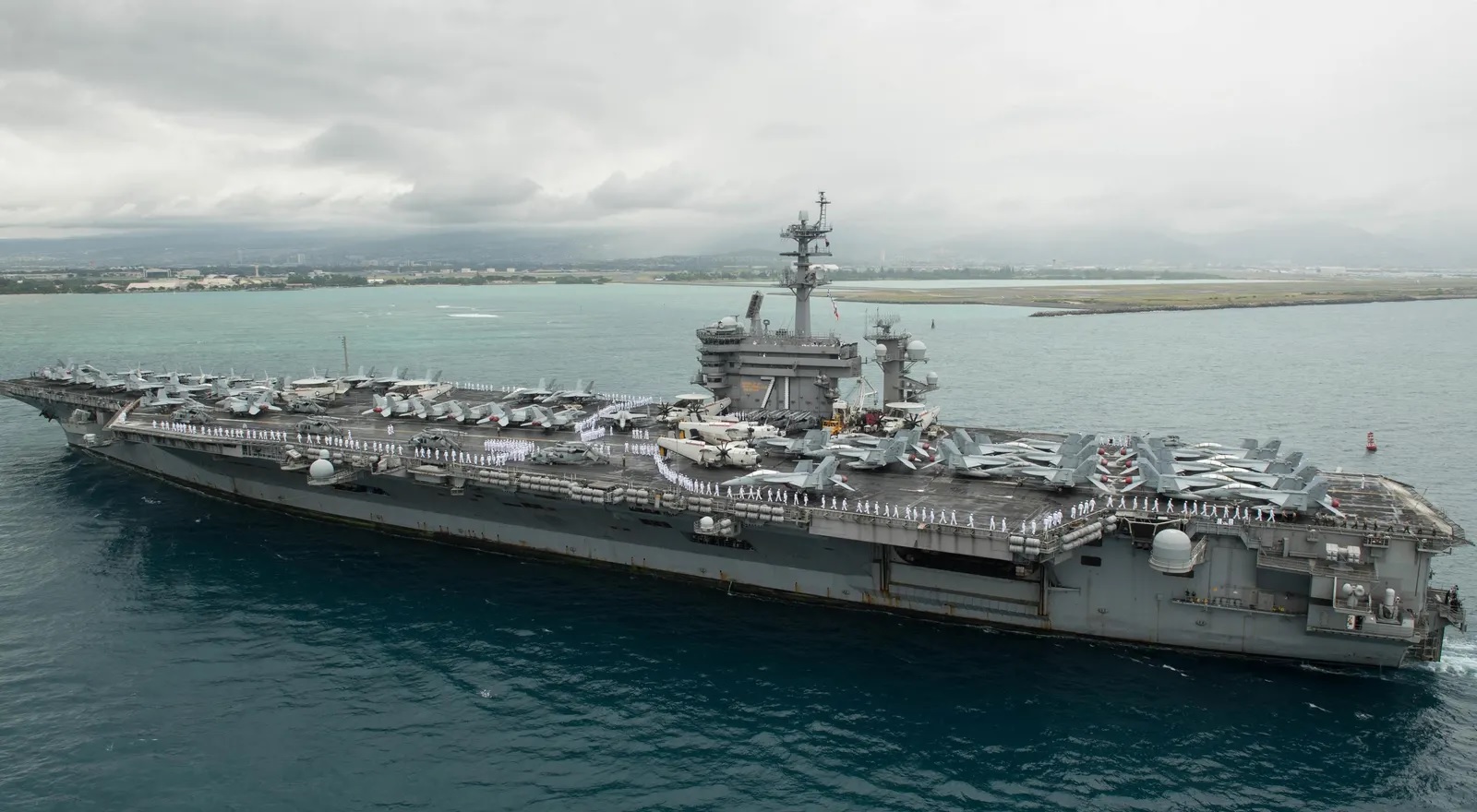 U.S Aircraft Carrier USS Theodore Roosevelt Departs San Diego for Major RIMPAC 2026 Naval Exercise