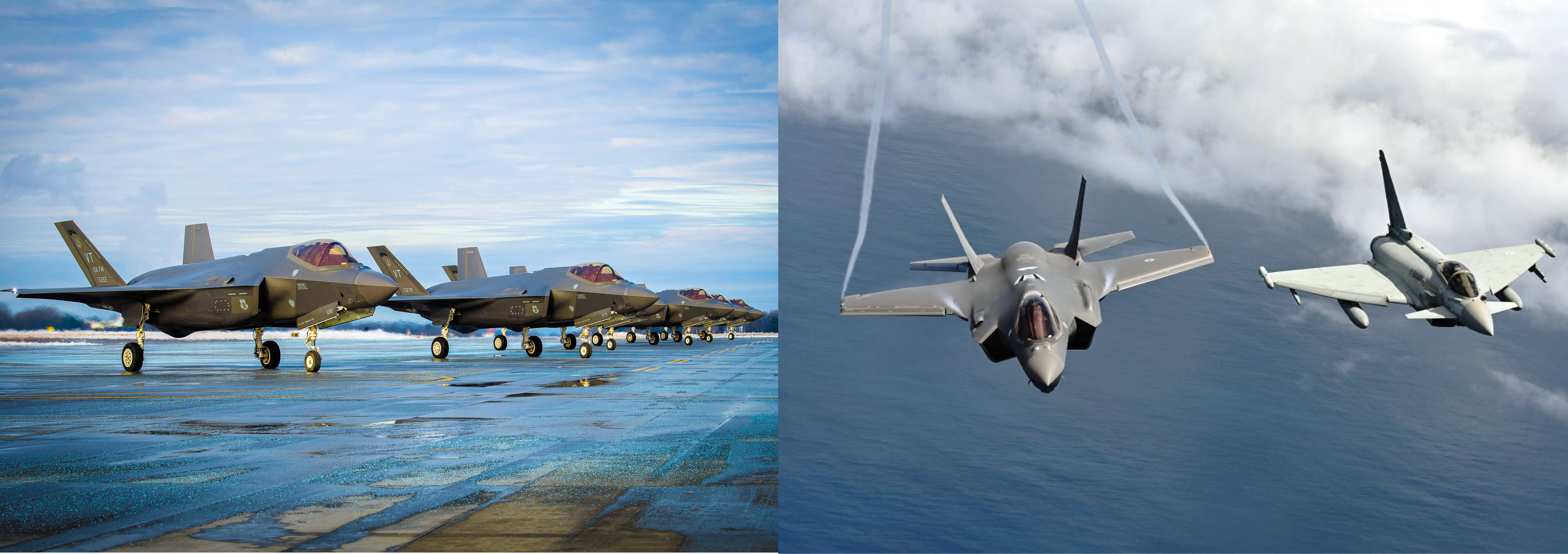
Berlin is preparing to lift its planned fleet of F-35A Lightning II fighters from 35 to 50 aircraft, a move that would make Germany one of Europe’s largest operators of the U.S.-built stealth jet and further anchor the country in NATO’s nuclear-sharing posture.
According to reporting based on confidential submissions to the Bundestag’s budget committee, the Defence Ministry intends to seek approval for the purchase of 15 additional F-35A fighters from Lockheed Martin at an estimated cost of around €2.5 billion.
If authorised, the new batch will complement the 35 F-35s ordered in 2022 under an approximately $8 billion (€7.5–8.3 billion) package that covers aircraft, training, support and infrastructure. That original contract was designed to replace the Luftwaffe’s aging Panavia Tornado fleet and preserve Germany’s ability to carry U.S. nuclear gravity bombs under NATO’s nuclear-sharing arrangements.
Replacing the Tornado in Germany’s Nuclear Role
Since the 1980s, Tornado strike aircraft from Taktisches Luftwaffengeschwader 33 at Büchel Air Base in Rhineland-Palatinate have performed Germany’s share of NATO’s nuclear mission. The base is believed to host an estimated 10–15 U.S. B61 nuclear bombs, stored in underground vaults integrated into aircraft shelters under the U.S.-run Weapon Storage and Security System (WS3).
In March 2022, Berlin formally selected the F-35A to take over this role by around 2030, arguing that the aircraft’s stealth design, advanced sensors and planned certification for the new B61-12 bomb offered the most credible way to maintain the mission while deepening interoperability with other NATO air forces.
The planned expansion to 50 aircraft would not only secure the nuclear mission but also give the Luftwaffe a larger pool of jets for conventional strike, air defence and multinational operations, reflecting Berlin’s broader “Zeitenwende” shift toward higher defence readiness following Russia’s full-scale invasion of Ukraine.
Massive Infrastructure Upgrades at Büchel
The F-35 decision has triggered one of the most complex infrastructure projects in the history of the German Air Force. At Büchel, work is underway on:
-
Reinforced special shelters hardened for fifth-generation jets
-
New maintenance and service areas dedicated to the F-35A
-
Runway refurbishment and taxiway upgrades
-
Enhanced perimeter and facility security around the nuclear weapons area, including new access points suitable for U.S. C-17 transport aircraft used to move nuclear weapons and components.
A June 2025 update from Germany’s Defence Ministry said both the infrastructure programme and F-35 procurement remain “on schedule,” though the complexity of the construction works has pushed projected costs for the Büchel refit to nearly €2 billion.
Delivery Schedule: Training in the U.S., Jets in Germany From 2027
Under current planning, the first German F-35s will initially be based in the United States for pilot and maintainer training. German crews are expected to begin training around 2026, with facilities at Ebbing Air National Guard Base and Luke Air Force Base among the hubs used for international F-35 training.
Recent programme updates indicate:
-
First aircraft for Germany already in production in the U.S.
-
First F-35s to arrive at Büchel Air Base in Germany in the third quarter of 2027
-
Deliveries to continue through 2029
-
Initial Operational Capability (IOC) targeted for 2029
-
Full Operational Capability (FOC) expected around 2030, in line with the planned retirement of the Tornado.
These dates broadly match Berlin’s original goal of ensuring a seamless transition from Tornado to F-35 for the nuclear mission without a capability gap.
What the F-35 Brings to the Luftwaffe
The F-35A is a single-engine, stealthy multirole fighter designed for air-to-air combat, deep strike, intelligence, surveillance and reconnaissance (ISR), and electronic warfare. Key features include:
-
A low-observable airframe with internal weapon bays to reduce radar signature
-
An advanced AESA radar, electro-optical targeting system and distributed aperture system giving 360° situational awareness
-
A powerful sensor-fusion architecture that combines data from the jet and other assets into a single picture for the pilot
-
Secure data links enabling networked operations with allied F-35 fleets and other platforms.
For Germany, that means an aircraft able to penetrate sophisticated air defences, deliver both conventional and (once certified) nuclear weapons, and operate seamlessly alongside other NATO F-35 users in the North Atlantic, Baltic and Eastern European theatres.
Germany Joins the Top Tier of European F-35 Operators
If the additional 15 jets are approved, Germany’s planned fleet of 50 F-35As would place it in the top group of European operators alongside countries such as Italy, the United Kingdom, the Netherlands, Norway, Denmark, Belgium, Poland and Finland, all of which are in various stages of receiving or operating the type.
For NATO, the proliferation of F-35 squadrons across Europe creates a dense network of interoperable fifth-generation aircraft able to share data and coordinate operations in real time, which alliance planners see as crucial for deterring Russia and protecting vulnerable regions such as the Baltic and Black Sea.
Domestic Debate: Cost, Risk and Nuclear Politics
The expansion of the F-35 plan is unfolding against a wider debate in Germany over defence spending and nuclear policy.
Supporters in the government and the armed forces argue that a larger F-35 fleet is necessary to:
-
Guarantee the nuclear-sharing mission under more demanding security conditions
-
Provide enough aircraft for training, maintenance rotations and deployments
-
Contribute credibly to NATO airpower, including in high-threat environments.
Critics, including parts of the opposition and some civil-society groups, question the high lifecycle costs of the F-35, the risk of schedule slippage in both aircraft and infrastructure delivery, and the political message sent by renewed investment in nuclear-sharing at a time when disarmament advocates had hoped for the opposite. Long-running anti-nuclear protests at Büchel, which have targeted the presence of U.S. bombs there since the 1990s, are likely to continue as the base is rebuilt around the new fighter.
Next Steps in Berlin
The immediate step is for the Bundestag’s budget committee to review the additional F-35 funding request, expected to be framed as part of Germany’s broader efforts to meet NATO capability targets and implement its post-2022 defence “turning point.”
If lawmakers give the green light, Germany’s F-35 programme will shift from a 35-jet replacement effort to a 50-aircraft cornerstone of Luftwaffe air power — cementing the F-35 at the heart of both Berlin’s national defence planning and NATO’s future air posture in Europe.
——— End of Article ———