
World
ROME / ERBIL — March 13, 2026 : Italy has begun withdrawing its remaining military personnel from the Kurdistan Region of Iraq following a missile and drone strike on its base near Erbil International Airport on March 12. Italian officials said the drawdown had already been planned due to the deteriorating security environment in the Middle East, but the latest attack has accelerated the timetable. The Italian contingent is stationed at Camp Singara, located within the military zone of Erbil International Airport. The base hosts Italian forces participating in the U.S.-led international coalition mission Operation Inherent Resolve, which focuses on training Kurdish Peshmerga forces and supporting operations against the Islamic State. Gradual Reduction of Italian Forces Before the recent regional escalation that began in late February 2026, Italy maintained more than 300 troops at Camp Singara. The deployment consisted mainly of military trainers, support personnel, and logistical staff assigned to assist Kurdish Peshmerga units. According to the Italian Ministry of Defense, the troop presence has been steadily reduced over the past two weeks: Approximately 100 Italian troops have already returned to Italy.Around 70 personnel have been redeployed to bases in Jordan as a temporary relocation measure.As of the latest update, about 140 to 141 troops remain in Erbil, awaiting evacuation. Italian Defense Minister Guido Crosetto confirmed that the withdrawal had been under preparation even before the March 12 attack. However, the suspension of direct flights and the complex logistics of operating in a conflict-affected environment mean the remaining troops will likely leave Iraq via land routes, potentially transiting through Türkiye before returning to Europe. Italian authorities also confirmed that smaller Italian military contingents stationed in Qatar, Kuwait, and Bahrain have been partially relocated in recent weeks due to the heightened regional security situation. Details of the March 12 Attack The strike occurred overnight on March 12–13 and targeted the Camp Singara facility near Erbil. According to Italian military officials, the attack involved an unmanned aerial vehicle believed to be a Shahed-type drone and a missile. Camp commander Colonel Stefano Pizzotti stated that an air-raid alert was issued at approximately 8:30 p.m. local time, allowing Italian personnel and civilian staff at the base to move into reinforced bunkers well before the impact. The strike occurred shortly before 1:00 a.m. local time. Officials reported: Casualties: None. All Italian military personnel and civilian staff were accounted for and unharmed. Damage: The projectile struck the perimeter area of the base, destroying a military logistics vehicle and causing limited infrastructure damage. Facilities affected: Reports indicate damage to structures including a base restaurant and two vehicles, though the main barracks and protected facilities were not penetrated. Explosive ordnance disposal teams were deployed following the attack to secure the area and inspect debris from the drone and missile. Italian Government Response Defense Minister Crosetto stated that the attack appeared deliberate, but emphasized that the security precautions implemented at the base prevented casualties. “We had implemented all the security conditions necessary to protect the contingent,” Crosetto said, noting that personnel had sufficient warning to reach shelters. Italian Foreign Minister Antonio Tajani also condemned the strike and held discussions with Kurdistan Regional Government President Nechirvan Barzani, emphasizing the need for caution to avoid further escalation and ensure the safety of coalition personnel in the region. Broader Regional Context The security situation in Iraqi Kurdistan has deteriorated since the start of the United States and Israeli military campaign against Iran, which began on February 28, 2026. Monitoring groups and local officials report that nearly 200 drone, missile, and rocket attacks have targeted military and civilian infrastructure across the Kurdistan Region since the start of the conflict. Several coalition facilities in the region, including bases near Erbil International Airport, have been placed on heightened alert due to the risk of attacks by Iranian forces or Iran-aligned groups. Italian Prime Minister Giorgia Meloni has repeatedly stated that Italy does not intend to participate in the broader conflict involving Iran. Speaking to the Italian Senate, Meloni emphasized that the government’s priority is the protection of approximately 2,000 Italian troops deployed across the Middle East, as well as tens of thousands of Italian civilians living in the region. Status of the Evacuation Italian officials described the withdrawal from Erbil as a temporary security measure while the regional situation remains unstable. No exact timetable has been publicly announced for the complete evacuation of the remaining personnel from Camp Singara. The Italian government said it is continuing to monitor the situation through its embassy in Baghdad, coordination with coalition partners, and military command channels operating within the international coalition framework.
Read More → Posted on 2026-03-13 17:56:06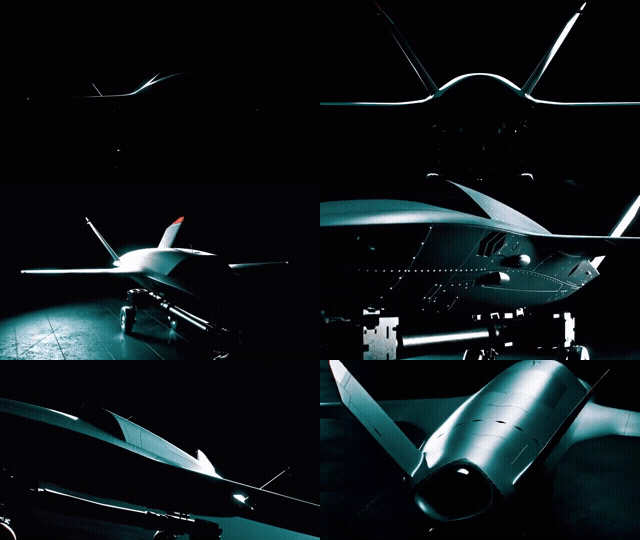
Airbus Integrating XQ-58A Valkyrie Drones for German Air Force Collaborative Combat Aircraft Program
World
BRUSSELS — March 13, 2026 : Airbus Defence and Space is accelerating development of an operational Uncrewed Collaborative Combat Aircraft (UCCA) capability for the German Air Force, targeting initial operational availability by 2029. The program centers on integrating a European-designed autonomous mission architecture into the XQ-58A Valkyrie, an uncrewed combat drone developed by Kratos Defense & Security Solutions. Airbus has acquired two Valkyrie aircraft that are currently undergoing modification and systems integration at the company’s defense facility in Manching, Germany, located near Munich. The first flight of the Airbus-modified Valkyrie variant is scheduled for later in 2026, marking the start of flight testing for the European mission system integrated into the American-built platform. Integration of European Autonomous Mission Architecture Airbus is equipping the Valkyrie aircraft with its Multiplatform Autonomous Reconfigurable and Secure (MARS) mission system, a modular architecture designed to enable autonomous operations and coordinated mission execution across multiple platforms. A key element of the system is MindShare, an artificial-intelligence-supported software framework developed to perform functions traditionally handled by human pilots. The system enables autonomous navigation, mission execution, and decision support while maintaining the option for human oversight or direct command. MindShare is designed to operate across both crewed and uncrewed aircraft, allowing the creation of distributed mission networks in which multiple drones and fighter jets share data, coordinate flight operations, and execute assigned tasks collectively. The architecture also enables the aircraft to conduct sensitive or high-risk missions—including electronic warfare, surveillance operations, and strike tasks—while minimizing exposure of human pilots to contested environments. Flight Testing Program in Germany The integration and testing work is being conducted at Airbus facilities in Manching, one of Germany’s primary defense aviation centers. Engineers are installing the MARS mission system and associated avionics into the two Valkyrie airframes before beginning ground testing and flight trials. The upcoming maiden flight of the modified aircraft in 2026 will validate the integration of the European mission system with the Valkyrie’s flight control architecture. The test campaign will focus on several key objectives: Verifying autonomous mission execution through the MindShare system Evaluating secure communications and mission coordination across multiple aircraft Testing integration with command platforms such as fighter aircraft Demonstrating the ability to perform both kinetic and non-kinetic missions Data from these tests will support further development of the UCCA system intended for the German Air Force. Integration with Eurofighter Command Aircraft The UCCA program is designed to operate in Manned-Unmanned Teaming (MUM-T) configurations with the Eurofighter Typhoon, which will serve as a command platform for coordinating drone operations. To enable this capability, Airbus is collaborating with Rafael Advanced Defense Systems to enhance the Litening 5 Advanced Targeting Pod, which has already been contracted for the Eurofighter fleet. The upgraded pod will include cross-platform connectivity functions, allowing fighter pilots to communicate with and control uncrewed aircraft during missions. These capabilities will be supported by targeted upgrades to the Eurofighter’s onboard avionics, enabling real-time data sharing and command coordination between crewed fighters and autonomous drones. Under this operational model, the fighter aircraft can function as a mission command node, directing multiple Valkyrie drones to perform tasks such as reconnaissance, electronic attack, or precision strike operations. Valkyrie Platform Characteristics The XQ-58A Valkyrie was selected as the baseline platform because it is already flight-proven and in limited production, allowing Airbus to accelerate development timelines by avoiding the need to design a new airframe. The aircraft conducted its first flight in the United States in 2019 and has since completed numerous test flights demonstrating its operational performance. Key specifications of the Valkyrie include: Length: 9.1 meters Wingspan: 8.2 meters Maximum take-off weight: approximately 3 tons (around 2,700–2,800 kg depending on configuration) Operational range: more than 5,000 kilometers Service ceiling: approximately 45,000 feet The platform is designed to support both kinetic missions, such as strike operations, and non-kinetic missions, including intelligence gathering, surveillance, and electronic warfare. The Valkyrie can operate independently, in coordinated groups of unmanned systems, or in direct cooperation with crewed aircraft. Strategic Objectives of the Airbus–Kratos Partnership The collaboration between Airbus and Kratos was originally announced in July 2025 as a means of accelerating European access to a collaborative combat drone capability. Instead of developing a new aircraft platform from the ground up, Airbus opted to integrate its own mission system into the existing Valkyrie airframe. This approach reduces development timelines and costs while allowing European operators to maintain sovereign control over mission software and operational data systems. Marco Gumbrecht, Head of Key Account Germany at Airbus Defence and Space, stated that combining the Valkyrie platform with the MARS system allows the program to deliver a combat-ready uncrewed aircraft with a European mission architecture within a relevant operational timeframe. He noted that the program aims to deliver credible combat capability at a comparatively affordable cost, which has become a key requirement for modern air forces seeking to field large numbers of collaborative drones. Concept of “Affordable Mass” in Modern Air Warfare According to Steve Fendley, President of the Kratos Unmanned Systems Division, the resulting platform is designed to support the concept of “affordable mass”—a procurement and operational strategy increasingly emphasized in modern military planning. The concept focuses on deploying large numbers of relatively low-cost systems capable of operating together in coordinated formations. In military simulations and operational analyses, such massed systems can complicate adversary defenses and increase mission survivability. Under this model, Valkyrie drones could be deployed in groups to perform tasks such as: Reconnaissance and targeting Electronic warfare and suppression of enemy air defenses Precision strike operations Decoy and sensor extension missions These roles allow the drones to support crewed aircraft while reducing the risk faced by human pilots in contested airspace. Planned Role in the German Air Force For the German Air Force, the initial UCCA capability is expected to focus on specific operational roles that extend combat air power while keeping pilots outside the most dangerous mission areas. The system will allow the Eurofighter fleet to deploy uncrewed aircraft ahead of crewed fighters to conduct reconnaissance, electronic warfare, or strike tasks. If the current development timeline is maintained, Airbus aims to deliver a fully operational collaborative combat drone capability by 2029, providing Germany with a domestically integrated autonomous combat system based on a proven unmanned aircraft platform.
Read More → Posted on 2026-03-13 17:44:18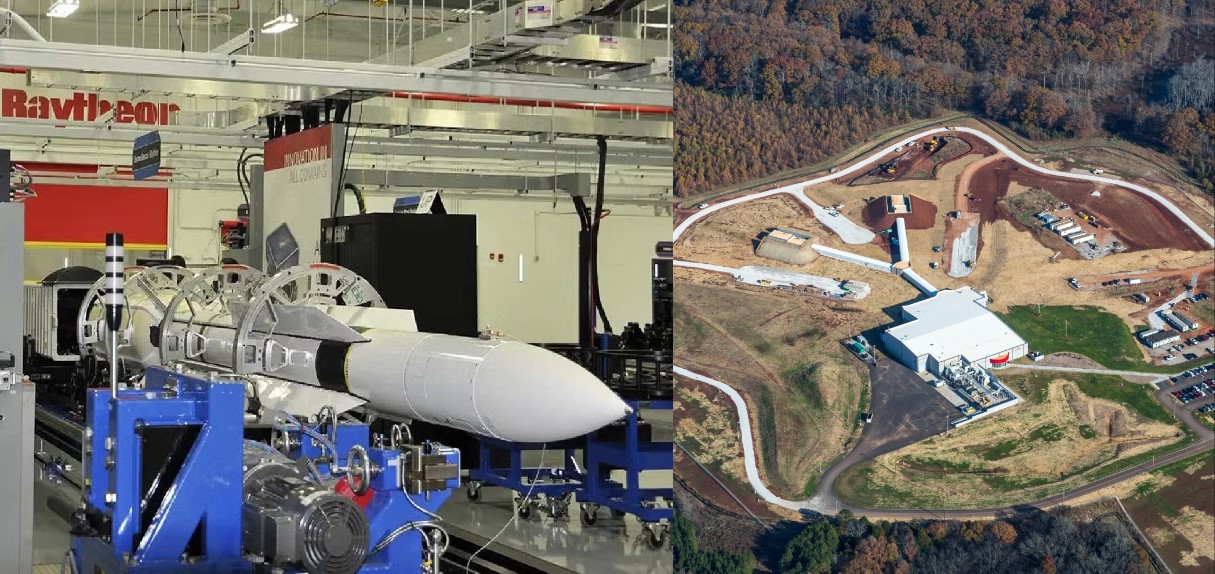
World
HUNTSVILLE, Alabama — March 13, 2026 : Raytheon, a business unit of RTX Corporation, has completed a $115 million expansion of its missile integration facility located at Redstone Arsenal in Huntsville, Alabama. The project significantly increases the company’s domestic missile integration capacity and is intended to support growing demand from the U.S. Navy, the Missile Defense Agency, and allied defense partners. The expansion adds 26,000 square feet of manufacturing and integration space to the Redstone Raytheon Missile Integration Facility, increasing the plant’s physical footprint and raising its overall integration and delivery capacity by more than 50 percent. The site plays a key role in the U.S. defense supply chain as the final integration point for several major missile systems before delivery to operational users. Facility Background and Production Infrastructure The Redstone Raytheon Missile Integration Facility originally opened in 2012 as a 70,000-square-foot all-up-round missile production center built with a $75 million investment. The plant was designed to serve as the final integration and assembly site for missile systems supporting programs managed by the U.S. Navy and the Missile Defense Agency. The facility specializes in the assembly of All-Up Rounds (AURs)—fully integrated missiles that include propulsion, guidance, control, and warhead systems and are delivered in ready-to-fire configuration. Production lines at the plant employ advanced robotics, automated handling systems, and specialized testing equipment to streamline assembly of complex weapon systems while maintaining quality control requirements. With the newly completed expansion, the plant now has additional production space dedicated to final assembly, systems integration, and testing. The increased capacity allows Raytheon to scale manufacturing throughput for current missile programs while also introducing production infrastructure for next-generation interceptor systems. Standard Missile Production The Huntsville facility currently handles the final integration of the entire Standard Missile family used by the U.S. Navy. The plant supports nine variants within the program, including the Standard Missile-3 (SM-3) and the Standard Missile-6 (SM-6). These missile systems perform multiple operational roles. The SM-3 is designed primarily for exo-atmospheric ballistic missile defense and is a key interceptor used within the U.S. Navy’s Aegis Ballistic Missile Defense architecture. The SM-6 provides a broader capability set, supporting fleet air defense, terminal ballistic missile defense, and anti-surface strike missions. The Redstone facility assembles the final integrated missile rounds before delivery to U.S. naval forces and missile defense units. Recent framework agreements signed by the U.S. Department of Defense in February 2026 are expected to significantly increase output requirements. Under the agreements, annual production of SM-6 interceptors will rise from approximately 125 missiles per year to more than 500 units. Manufacturing rates for the SM-3 Block IIA and SM-3 Block IB variants are also scheduled to accelerate. The expanded integration facility provides the physical infrastructure necessary to support these higher production volumes while maintaining ongoing deliveries to operational customers. Integration of the Glide Phase Interceptor Another major purpose of the expansion is to support the future integration of the Glide Phase Interceptor (GPI), a next-generation interceptor currently under development. The Glide Phase Interceptor is designed to counter hypersonic glide vehicles during the glide phase of their flight trajectory. Unlike traditional ballistic missiles, hypersonic glide vehicles maneuver within the atmosphere at extremely high speeds, making them difficult to intercept with existing missile defense systems. The GPI program aims to provide the ability to track and intercept these weapons during the midcourse glide stage, when they are still outside terminal engagement range but within interceptable flight conditions. The Redstone facility will integrate GPI production alongside ongoing Standard Missile assembly operations once the interceptor completes development and testing. Workforce and Regional Impact The expansion is expected to create approximately 185 new jobs at the Huntsville site. Once hiring is completed, RTX’s total workforce in the state of Alabama will exceed 2,200 employees. Huntsville has become a central hub for U.S. missile defense development and manufacturing due to the presence of Redstone Arsenal, the Missile Defense Agency, and numerous defense contractors. The expanded Raytheon facility strengthens the region’s role in the national missile defense industrial base. Strategic Production Objectives Raytheon states that the expansion is intended to address broader bottlenecks in the defense supply chain and enable faster delivery of missile defense systems. The increased manufacturing footprint allows the company to operate simultaneous production lines for multiple Standard Missile variants while preparing infrastructure for emerging interceptor programs. The facility’s modular manufacturing design also allows production lines to be reconfigured for new missile systems as programs evolve. This approach is intended to support both current stockpile replenishment and the integration of advanced capabilities such as the Glide Phase Interceptor without interrupting existing production schedules. While the expansion increases overall capacity by more than 50 percent, Raytheon has not disclosed detailed per-line output figures for the expanded facility beyond the overall production increases associated with the Department of Defense framework agreements.
Read More → Posted on 2026-03-13 17:35:02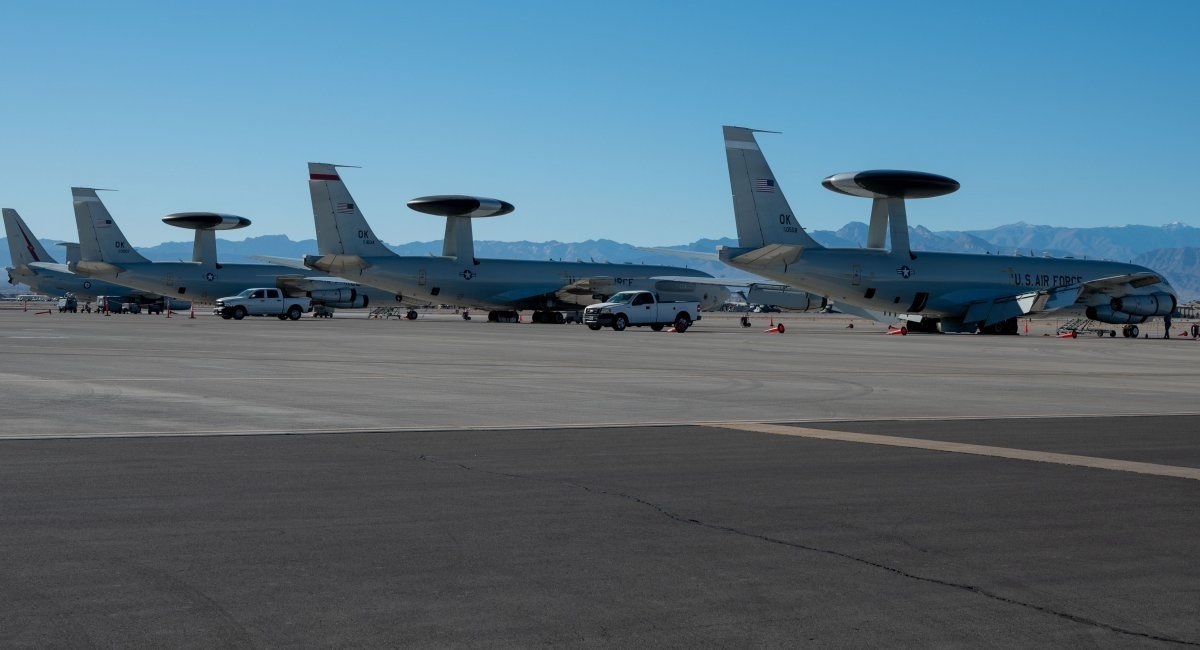
World
WASHINGTON — March 13, 2026 : The United States Air Force has sharply increased the operational tempo of its E-3 Sentry airborne early warning and control (AWACS) aircraft across the Middle East as U.S. and allied forces attempt to compensate for the loss of multiple ground-based early warning radar systems destroyed during ongoing hostilities with Iran. According to defense officials and regional flight tracking data, E-3 aircraft are now flying frequent surveillance missions over Jordan, northern Saudi Arabia, southern Iraq, and portions of the eastern Mediterranean. The aircraft are being used to provide persistent detection and tracking of Iranian drones and ballistic missiles targeting sites in Israel and Jordan after significant portions of the regional radar network were damaged in Iranian strikes. The expanded airborne surveillance activity follows a series of attacks on U.S. military installations after the United States and Israel launched coordinated strikes against Iranian military infrastructure on February 28, 2026. Loss of Ground-Based Radar Infrastructure Since the beginning of the conflict, Iranian forces have targeted numerous U.S. and allied military sites across the region. According to available assessments, approximately 17 U.S. military facilities have been attacked by Iranian missiles or drones. Several high-value radar installations were destroyed or severely damaged during these strikes, resulting in the loss of an estimated $2.7 billion in radar systems. Among the most significant confirmed losses were: • AN/FPS-132 early warning radar located at Al Udeid Air Base in Qatar, valued at approximately $1.1 billion. The radar was the only system of its type deployed outside the United States and served as a critical sensor for ballistic missile detection. • AN/TPY-2 missile tracking radars associated with Terminal High Altitude Area Defense (THAAD) batteries deployed in Jordan and the United Arab Emirates. Commercial satellite imagery from Planet Labs and independent analysts shows damage to radar installations at several locations, including strikes recorded between March 1 and March 3 at Muwaffaq Salti Air Base in Jordan, where a THAAD radar was positioned. The loss of these sensors has significantly reduced the ground-based early warning coverage used to detect incoming missiles and drones across the region. Shift Toward Airborne Surveillance To maintain situational awareness and missile detection capabilities, the U.S. Air Force has relied increasingly on its fleet of E-3 Sentry AWACS aircraft, which provide long-range airborne radar coverage and command-and-control capabilities. Prior to the start of hostilities, the United States deployed a large portion of its available E-3 fleet to operational theaters in Europe and the Middle East. Approximately six of the Air Force’s remaining 16 operational E-3 aircraft — around 37.5 percent of the fleet — were forward deployed ahead of the February 28 strikes. Operating primarily from regional bases, the aircraft provide wide-area radar surveillance and transmit targeting and tracking information to U.S. and allied air defense systems through secure tactical data links. The aircraft carry the AN/APY-1 and AN/APY-2 airborne radars, which are among the largest radar systems installed on aircraft and are capable of tracking hundreds of aerial targets simultaneously. Operational Demands and Limitations Maintaining continuous radar coverage using airborne platforms requires sustained aerial refueling operations. E-3 aircraft typically require refueling every four to six hours during long surveillance missions. The shift from ground-based radar networks to airborne detection platforms has placed additional logistical demands on tanker aircraft and maintenance crews supporting AWACS operations. The E-3 Sentry platform itself is also facing growing operational limitations. The aircraft’s radar and avionics systems were originally developed during the 1970s, and the platform was not designed specifically for ballistic missile defense missions. Defense analysts note that the sensors are less effective against certain modern threats, including low-observable drones such as Iran’s Shahed-series systems, and that the aircraft could face challenges in environments with heavy electronic warfare activity. Fleet availability has also declined after decades of service. The U.S. Air Force currently operates a significantly smaller number of E-3 aircraft than it did during Operation Desert Storm in 1991, when AWACS aircraft maintained continuous surveillance over Iraq and the Persian Gulf. Replacement Program and Budget Debate The aging AWACS fleet was expected to be replaced by the E-7 Wedgetail, a modern airborne early warning aircraft based on the Boeing 737 platform and equipped with an advanced multi-role electronically scanned array radar. However, the U.S. Department of Defense proposed canceling procurement of the E-7 in the fiscal year 2026 budget due to rising program costs and schedule delays. Members of the U.S. Congress have continued to support the program and have allocated funding to keep the project moving forward, citing the increasing capability gap created by the aging E-3 fleet. Allied Support and Regional Radar Data Allied nations are also contributing to airborne surveillance and missile detection operations. On March 11, 2026, the Royal Australian Air Force deployed an E-7A Wedgetail aircraft from No. 2 Squadron at RAAF Base Williamtown to the Gulf region for an initial four-week deployment supporting regional air defense missions. The aircraft is expected to operate from bases such as Al Minhad Air Base in the United Arab Emirates. Australia has additionally committed to supplying replacement AIM-120 air-to-air missiles to replenish stocks held by the UAE. Regional partners are also providing radar tracking data to support the U.S.-led air defense network. Turkey’s AN/TPY-2 ballistic missile tracking radar located at Kurecik Radar Station, operational since 2012, continues to supply early warning information to NATO and Israeli missile defense systems against potential threats originating from Iran or Syria. Reports indicate that tracking data from Turkey’s S-400 long-range air defense system may also contribute to regional missile detection networks, although official confirmation of this cooperation has not been publicly provided. Continuing Missile Threats The aerial threat environment over Israel and neighboring states remains complex as Iranian ballistic missiles and drones continue to target regional military sites. Recent footage recorded by an Israeli fighter pilot showed submunitions descending from an Iranian ballistic missile over Israeli territory. Such payloads release multiple smaller bomblets, creating additional challenges for missile interception systems. Defense officials say the combination of degraded ground-based radar coverage, increased reliance on airborne surveillance platforms, and the growing diversity of Iranian strike systems has placed additional pressure on regional air defense networks. U.S. Central Command has not publicly disclosed the exact sortie rate of AWACS flights or provided a detailed assessment of the impact of radar losses on overall missile defense coverage in the region. However, the intensified deployment of E-3 aircraft across the Middle East indicates that airborne early warning platforms are currently playing a central role in maintaining situational awareness while replacement ground-based radar systems are redeployed to the theater.
Read More → Posted on 2026-03-13 17:20:58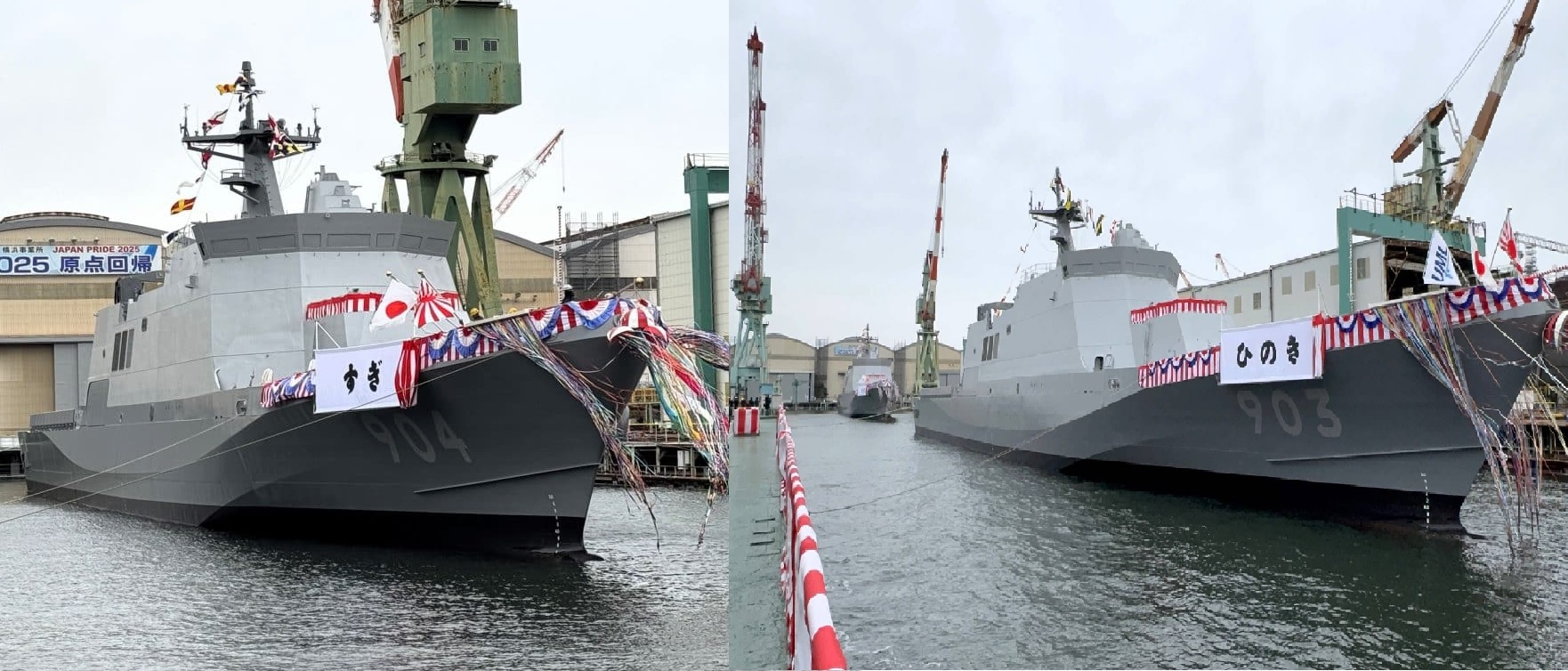
World
YOKOHAMA, Japan — March 13, 2026 : Japan has launched the third and fourth vessels of its new Sakura-class offshore patrol vessel (OPV) program, continuing a procurement effort designed to strengthen routine maritime surveillance and free larger warships for higher-intensity missions. The launching ceremony for the vessels Hinoki (OPV-903) and Sugi (OPV-904) was held on March 13 at the Japan Marine United (JMU) Isogo shipyard in Yokohama, Kanagawa Prefecture. Both ships are being constructed for the Japan Maritime Self-Defense Force (JMSDF) under a new patrol vessel program introduced as part of Japan’s broader Defense Buildup Program. The Sakura-class marks the first time the JMSDF has formally used the “offshore patrol vessel” designation for a naval platform. The vessels are intended to conduct routine patrol, maritime domain awareness, and security missions across Japan’s surrounding waters, including areas around the Nansei Islands chain and the country’s large Exclusive Economic Zone (EEZ), which is the sixth largest in the world. Naming Conventions and Historical Lineage The two newly launched ships follow a naming convention distinct from the traditional JMSDF destroyer naming system. JMSDF destroyers are usually named after meteorological phenomena, mountains, rivers, or regions. By contrast, the Sakura-class OPVs are named after trees. The names were selected through an internal solicitation and review process within the JMSDF and received final approval from Japan’s Minister of Defense, Shinjiro Koizumi. The third vessel, Hinoki, is named after the Japanese cypress tree. It is the third Japanese naval vessel to carry the name. Earlier ships included the third vessel of the Imperial Japanese Navy’s Momo-class destroyers and the sixteenth vessel of the Matsu-class destroyers during World War II. The fourth ship, Sugi, takes its name from the Japanese cedar tree, a species widely found across Japan. It becomes the fourth Japanese naval vessel to carry that name. Previous ships included the ninth vessel of the Kaba-class destroyers, the seventh vessel of the Matsu-class destroyers, and a Kusu-class escort ship leased from the United States Navy in 1953. Hinoki and Sugi were laid down on February 14, 2025, together with the first two ships of the class, Sakura (OPV-901) and Tachibana (OPV-902). The lead pair were launched earlier on November 13, 2025. According to the JMSDF Maritime Staff Office, all four vessels are scheduled to enter service around March 2027. Design Characteristics and Technical Specifications The Sakura-class OPVs are designed primarily for long-duration patrol missions rather than high-intensity naval combat. The design emphasizes automation, operational efficiency, and reduced manpower requirements. Each vessel measures approximately 95 meters in length, with a beam of about 12 meters, depth of 7.7 meters, and draft of 4.2 meters. Standard displacement is roughly 1,900 to 1,950 tons, while full-load displacement is estimated at around 2,300 tons. The ships incorporate stealth-oriented hull shaping influenced by the design principles used in the JMSDF’s Mogami-class frigates. However, the patrol vessels are not equipped with the extensive combat systems found on frontline warships. Propulsion is provided through a Combined Diesel-electric And Diesel (CODLAD) system. This arrangement uses one diesel engine and one electric motor connected to a single propeller shaft. The configuration allows the vessels to operate efficiently during patrol missions while still achieving a maximum speed of approximately 20 to 25 knots. A key design feature of the Sakura-class is its high level of automation. The ships require a crew of only 30 personnel, significantly smaller than the roughly 90 sailors assigned to a Mogami-class frigate. The reduced crew size addresses long-term manpower concerns within Japan’s Self-Defense Forces, particularly as the country faces demographic decline and shrinking recruitment pools. Armament on the patrol vessels is limited to a single 30-millimeter naval gun mounted on the foredeck for self-defense. The ships do not carry anti-ship missiles or anti-aircraft missile systems, unlike destroyers and frigates. The design also incorporates a modular architecture, allowing mission systems to be adapted depending on operational requirements. According to Japan’s Acquisition, Technology and Logistics Agency (ATLA), the concept emphasizes surveillance, operational flexibility, and long-term sustainability rather than combat capability. Integration of Unmanned Aerial Systems To enhance surveillance capability, the Japanese Ministry of Defense plans to equip the Sakura-class vessels with unmanned aerial vehicles (UAVs). In the fiscal year 2025 defense budget, approximately 4 billion yen was allocated for the procurement of six V-BAT unmanned aerial systems produced by the U.S. defense company Shield AI. The UAV systems are expected to be installed on the OPVs at a later stage after the ships enter service. The vertical takeoff and landing (VTOL) V-BAT drones are intended to extend reconnaissance range and improve maritime domain awareness during surveillance operations. Procurement Plan and Rising Construction Costs The Sakura-class program forms part of Japan’s Defense Buildup Program, adopted in December 2022, which outlines the modernization and expansion of Japan’s defense capabilities over the coming decade. Under the plan, the Ministry of Defense intends to acquire 12 Sakura-class offshore patrol vessels. The Japanese government initially allocated 35.7 billion yen in the fiscal year 2023 defense budget for construction of the first four ships. The third and fourth vessels, Hinoki and Sugi, each cost approximately 8.9 billion yen, equivalent to roughly $56 million per ship. However, construction costs have increased. In the fiscal year 2026 defense budget, 28.5 billion yen was allocated for the fifth and sixth ships of the class. This raises the estimated unit cost to approximately 14.25 billion yen per vessel, reflecting broader shipbuilding cost increases. Strategic Role in Japan’s Naval Force Structure The introduction of the Sakura-class OPVs is part of a broader restructuring effort within the JMSDF aimed at optimizing the deployment of naval assets. Routine maritime security patrols currently require the use of larger and more heavily armed destroyers and frigates. By assigning these missions to smaller OPVs, the JMSDF intends to allow frontline combat ships to focus on high-intensity operations and combat readiness. The patrol vessels will eventually be assigned to a newly planned Patrol and Defense Group, which will operate under a reorganized command structure known as the Fleet Surface Force, expected to be established by the JMSDF in March 2026. This new formation will include both Sakura-class OPVs and Mogami-class frigates, supporting maritime surveillance and security operations across Japan’s surrounding waters. Regional Security Context Japan’s naval modernization efforts are occurring amid expanding Chinese maritime activity in the western Pacific and East China Sea. According to Japan’s 2025 Defense White Paper, China currently operates 94 modern destroyers and frigates and 55 modern submarines. In comparison, the JMSDF operates 51 destroyers and 22 submarines as of March 31, 2025. Japanese defense planners view the Sakura-class vessels as a cost-effective platform for maintaining continuous surveillance over Japan’s territorial waters and its large exclusive economic zone. The vessels are also intended to support overseas deployments, multinational exercises, and maritime security missions, while helping mitigate long-term manpower shortages caused by Japan’s demographic trends. With four ships already launched and eight more planned, the Sakura-class program represents a new category of naval vessel within the JMSDF designed specifically for sustained maritime monitoring and patrol operations.
Read More → Posted on 2026-03-13 16:43:33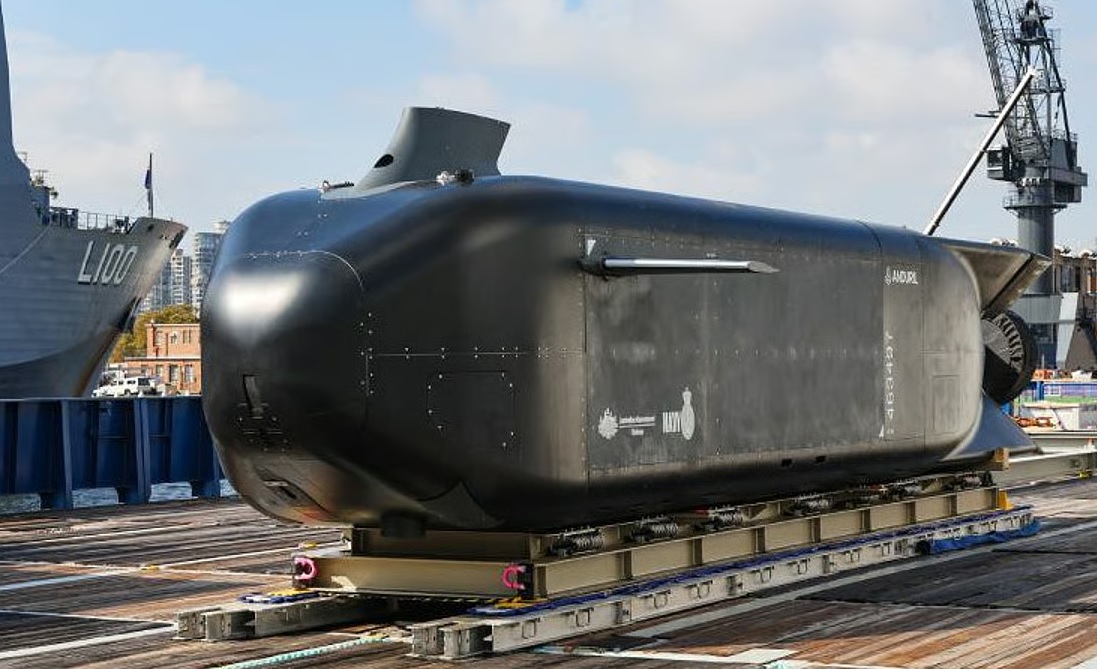
World
WASHINGTON — March 13, 2026 : The Defense Innovation Unit (DIU) and the United States Navy have selected Anduril Industries to participate in the Combat Autonomous Maritime Platform (CAMP) project, a Department of Defense initiative focused on rapidly prototyping and fielding extra-large autonomous underwater vehicles (XL-AUVs) capable of transporting heavy payloads across long distances beneath the ocean surface. The program seeks to accelerate development of autonomous maritime systems that can operate for extended durations in contested undersea environments and support distributed maritime operations. The CAMP initiative builds on a solicitation issued in April 2025, which requested commercially available or demonstration-ready systems capable of traveling more than 1,000 nautical miles, operating in GPS-denied environments, and diving to depths exceeding 200 meters. Selection Through Competitive Process Anduril was selected through DIU’s Commercial Solutions Opening (CSO) acquisition process, a procurement method designed to allow the Department of Defense to rapidly evaluate and integrate commercially developed technologies. The selection followed the completion of what the company described as the longest demonstration of an extra-large autonomous underwater vehicle conducted to date. According to Anduril, the test validated the endurance, range, and operational performance of the system under conditions intended to replicate real mission environments. Under the CAMP project, Anduril will conduct a long-duration, operationally representative demonstration of its Dive-XL autonomous submarine platform within four months of contract award. The demonstration will allow the Navy and DIU to evaluate the system’s performance as part of broader experimentation with large autonomous undersea vehicles. No financial details of the contract were disclosed. Dive-XL Autonomous Submarine Platform The system proposed for the CAMP program is Anduril’s Dive-XL, an extra-large autonomous underwater vehicle designed for extended missions at long ranges and varying depths. The vehicle uses an all-electric propulsion system and is capable of traveling more than 2,000 nautical miles without surfacing. The platform is engineered to operate autonomously in GPS-denied environments and at depths greater than 200 meters, allowing it to function in areas where satellite navigation is unavailable. The Dive-XL platform is designed with a modular architecture capable of carrying up to three payload modules simultaneously, with a total payload volume of approximately 11.4 cubic meters. The modular configuration allows the vehicle to be adapted for different mission requirements, including sensor packages or payload delivery. The submarine incorporates a two-point lift interface that allows launch and recovery from ships, piers, or other maritime infrastructure. The design also allows the vehicle to fit inside standard commercial freight containers, enabling transportation by commercial trucks, rail systems, or cargo logistics networks for rapid deployment. Operational Testing and Performance Data Operational data released by Anduril indicates that the company’s autonomous undersea vehicles have collectively accumulated more than 42,355 kilometers of operational travel and 6,752 hours of mission time. The company states that these operational metrics demonstrate the maturity, reliability, and endurance required for long-duration undersea missions and distributed maritime operations. Anduril currently operates multiple Dive-XL vehicles within the United States, which have been used for testing and operational demonstrations. Manufacturing and Production Infrastructure Production of the Dive-XL platform is supported by manufacturing facilities in both the United States and Australia. The company operates a purpose-built production facility in Quonset Point, Rhode Island, designed to manufacture dozens of Dive-XL vehicles annually along with hundreds of the smaller Dive-LD autonomous underwater vehicles. Additional production activities take place in Sydney, Australia, where Dive-XL systems are also manufactured. Previous Program Experience Anduril’s work on the Dive-XL platform draws in part from its earlier defense programs, including a contract awarded in 2025 by the Royal Australian Navy for the Ghost Shark project. The Ghost Shark program involved delivery of an extra-large autonomous underwater vehicle derived from the Dive-XL design and the establishment of a dedicated production facility. The project was intended to accelerate development timelines and demonstrate an alternative approach to defense procurement focused on rapid prototyping and delivery. Strategic Role of Autonomous Undersea Systems The CAMP project is part of a broader effort by the United States Department of Defense to expand the use of autonomous and robotic maritime systems alongside traditional crewed naval platforms. Military planners expect extra-large autonomous underwater vehicles to play a growing role in future naval operations by extending operational reach, maintaining persistent presence in contested maritime areas, and supporting a range of missions such as intelligence collection and payload deployment. For the U.S. Navy, the CAMP program provides a platform for large-scale experimentation with autonomous undersea systems, helping evaluate how such vehicles can be integrated into existing naval command structures and operational concepts. Officials involved in the program have indicated that autonomous platforms are expected to complement rather than replace crewed submarine fleets, providing additional capabilities for sustained operations in the undersea domain.
Read More → Posted on 2026-03-13 16:23:16
World
MOORESTOWN, N.J. — March 13, 2026 : Lockheed Martin has completed the delivery of the second shipset of AN/SPY-7(V)1 radar equipment for Japan’s Aegis System Equipped Vessel (ASEV) program to the Japan Ministry of Defense. The delivery was finalized on March 12, 2026, marking the completion of the major radar hardware deliveries required for Japan’s current two-ship ASEV procurement program. The transfer was conducted through a Direct Commercial Sale (DCS) arrangement facilitated by Mitsubishi Corporation. The shipment includes radar equipment intended for the second ASEV warship being built for Japan’s expanding ballistic missile defense architecture. Integration and Testing Procedures Before installation at Japanese shipyards, the full second radar shipset will undergo system integration and operational testing at Lockheed Martin’s Production and Test Center (PTC-2) located in Moorestown, New Jersey. The land-based facility allows engineers to integrate the radar system with the Aegis Combat System and verify operational performance prior to shipboard installation. Testing at the Moorestown site is intended to validate the radar’s Integrated Air and Missile Defense (IAMD) capabilities, ensuring the system can detect, track, and support engagement of multiple airborne threats simultaneously. Conducting full integration testing prior to installation helps reduce technical risks during the ship construction phase and supports the planned commissioning schedule of the vessels. Chandra Marshall, vice president of Multi-Domain Combat Solutions at Lockheed Martin, stated that the on-time delivery demonstrates the production readiness of the radar system and the company’s ability to meet program timelines for Japan. Status of Japan’s ASEV Program The ASEV program was initiated by the Japan Ministry of Defense to strengthen the country’s ballistic missile defense and long-range air defense capabilities. The program includes the construction of two large surface combatants designed specifically to operate advanced Aegis missile defense systems. Ship construction responsibilities are divided between two Japanese shipbuilders. The first vessel is being built by Mitsubishi Heavy Industries, while the second vessel will be constructed by Japan Marine United. According to the current program timeline, the first ASEV is scheduled for commissioning in Japan Fiscal Year 2027, followed by the second vessel in Fiscal Year 2028. The delivery of the second radar shipset follows an earlier milestone in the program. Lockheed Martin previously delivered the first complete ASEV radar shipset, including four radar antenna arrays, in July 2025. That system reached the initial “light-off” phase in September 2025, marking the start of full system testing and integration activities. AN/SPY-7 Radar System Capabilities The AN/SPY-7(V)1 is a solid-state active electronically scanned array (AESA) radar designed to provide continuous 360-degree surveillance, tracking, and missile defense targeting capabilities. The system uses modular radar arrays and digital beamforming technology to detect and track multiple targets simultaneously across long ranges. The radar is designed to counter a range of threats, including ballistic missiles, cruise missiles, and advanced aerial targets. Its architecture supports integration with the Aegis Combat System, enabling coordinated tracking, targeting, and engagement operations within integrated air and missile defense networks. The SPY-7 system is part of a broader family of radar technologies developed by Lockheed Martin. Variants of the underlying radar architecture are also being deployed by the U.S. Missile Defense Agency for the TPY-6 radar system intended for the defense of Guam. The radar technology has also been selected for other international naval programs, including Canada’s River-class destroyers and F‑110 Multi‑Mission Frigate vessels being developed for Spain. Industrial Collaboration and Domestic Production To support long-term sustainment of the radar systems in Japan, Lockheed Martin has expanded cooperation with Japanese industry partners. In February 2026, the company finalized a procurement agreement with Fujitsu Limited to support domestic production of key SPY-7 components. Under the agreement, Fujitsu will manufacture the Subarray Suite Power Supply Line Replaceable Unit (PS LRU), an important subsystem responsible for power management within the radar’s modular architecture. Establishing local production capability for the component allows Japan to support long-term maintenance and operational readiness of the ASEV fleet within its domestic industrial base. Program Background Japan selected the SPY-7 radar for the ASEV program following the 2020 cancellation of the Aegis Ashore land-based missile defense system. The ASEV ships were subsequently designed to provide equivalent or expanded missile defense capability at sea while maintaining persistent coverage of regional missile threats. The vessels will serve as a central component of Japan’s layered ballistic missile defense network, operating alongside Aegis-equipped destroyers and land-based radar systems. With the delivery of the second radar shipset completed, the ASEV program continues progressing toward its planned commissioning timeline, with additional system integration, testing, and ship construction activities scheduled through the late 2020s.
Read More → Posted on 2026-03-13 16:15:33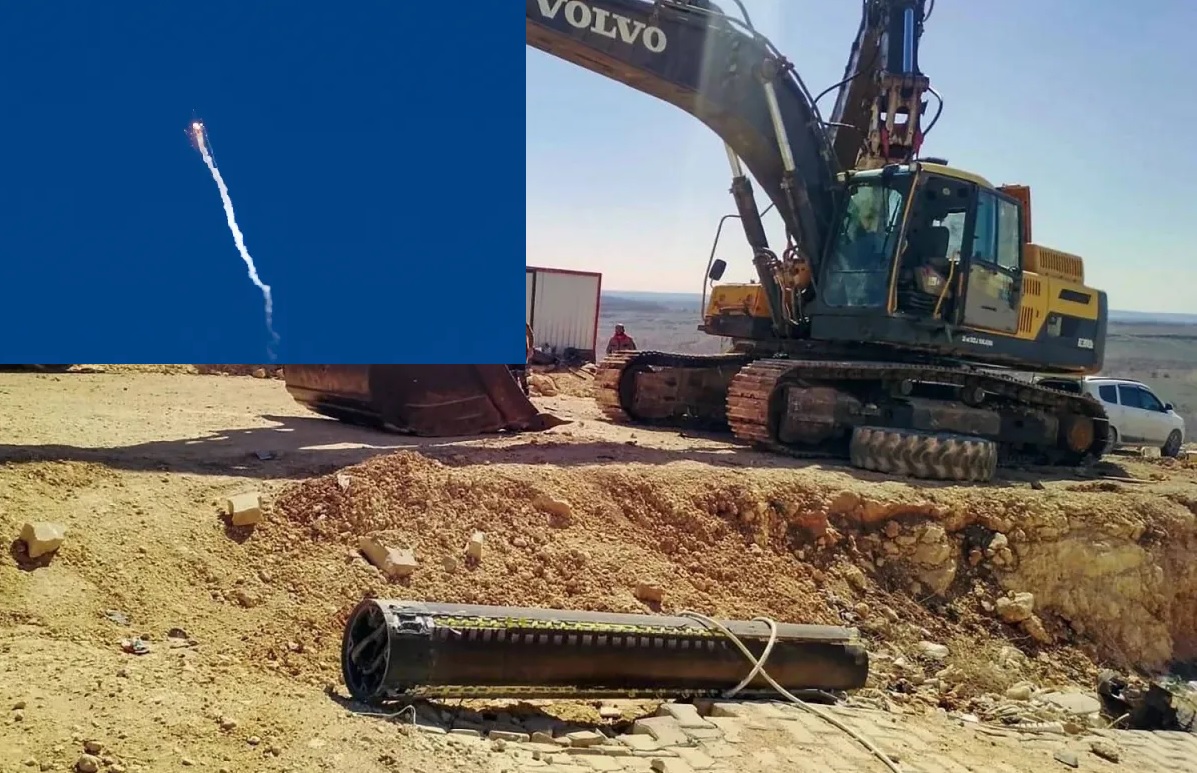
World
ANKARA — March 13, 2026 : NATO air and missile defense assets deployed in the eastern Mediterranean intercepted a third Iranian ballistic missile after it entered Turkish airspace early Friday, according to the Turkish Ministry of National Defense. The latest incident marks the third interception of an Iranian ballistic projectile over Turkey in less than ten days. Turkish authorities stated that the missile was neutralized by NATO defensive systems shortly after crossing into the country’s southern airspace. Warning sirens were activated at Incirlik Air Base, a major NATO facility hosting U.S. personnel and aircraft, as well as in the southeastern Turkish city of Batman. The interception occurred over Adana Province, close to key NATO military installations. No casualties or damage were reported following the incident. Timeline of Missile Interceptions The March 13 interception follows two earlier incidents involving Iranian ballistic missiles that crossed into Turkish airspace during the past week. March 4 — Hatay Province : The first missile was intercepted near Dörtyol in the coastal province of Hatay Province after traveling through Iraqi and Syrian airspace. The engagement involved a Arleigh Burke-class destroyer from the United States Navy, which launched a RIM-161 Standard Missile 3 interceptor. A MIM-104 Patriot battery operated by Spanish Armed Forces stationed in Turkey also contributed to the defense. Debris from the destroyed missile fell in the surrounding area. March 9 — Gaziantep Province : A second ballistic missile was intercepted over Gaziantep Province in southern Turkey. Missile fragments landed in open fields and no casualties were reported. The inland trajectory of the projectile raised concerns among Turkish defense officials that the violations could not be attributed solely to border navigation errors. March 13 — Adana Province : The third missile entered Turkish airspace before being intercepted by NATO missile defense systems. The interception occurred near Incirlik Air Base, triggering air raid sirens across nearby areas. Turkish authorities confirmed that the projectile was destroyed before reaching populated locations. Turkish Government Response The Turkish government has issued multiple diplomatic protests following the incidents. After the first missile interception on March 4, Ankara summoned the Iranian ambassador for an explanation. Turkish President Recep Tayyip Erdoğan also held a phone conversation with Iranian President Masoud Pezeshkian, stating that violations of Turkish airspace “cannot be excused for any reason whatsoever.” Erdoğan described the incidents as “wrong and provocative steps” and warned that Turkey would take necessary measures to protect its sovereignty. Following the latest interception, Turkish Foreign Minister Hakan Fidan again raised the issue with Iranian officials and requested clarification from Tehran, calling the airspace violation unacceptable. Iranian authorities have previously denied targeting Turkey and have not acknowledged that the missiles were directed toward Turkish territory. NATO Defensive Measures In response to the repeated incidents, NATO has reinforced missile defense coverage across southern Turkey. Additional Patriot missile defense units have been deployed to Malatya Province to protect the Kurecik Radar Base, an important early-warning facility that feeds tracking data into NATO’s ballistic missile defense network. Spanish Patriot batteries remain deployed near Incirlik Air Base, while U.S. naval vessels operating in the eastern Mediterranean continue to provide additional ballistic missile interception capability. NATO spokesperson Allison Hart confirmed that alliance systems carried out the interceptions and stated that NATO “remains vigilant and stands firm in its defense of all Allies.” Strategic Context The missile interceptions have taken place during a period of broader regional military tensions involving Iran, the United States, and Israel. Turkish officials have emphasized that the country’s priority remains the protection of national airspace while avoiding escalation. Despite three confirmed airspace violations, Turkey has not invoked Article 5 or Article 4, both of which could trigger formal alliance consultations or collective defense measures. Instead, Ankara has maintained a diplomatic approach while continuing to strengthen defensive capabilities with NATO support. Defense officials in Turkey and NATO member states continue to monitor the missile activity and trajectories closely. While no casualties or major damage have resulted from the three incidents, the repeated interceptions have prompted sustained reinforcement of NATO’s missile defense posture in the region.
Read More → Posted on 2026-03-13 14:29:02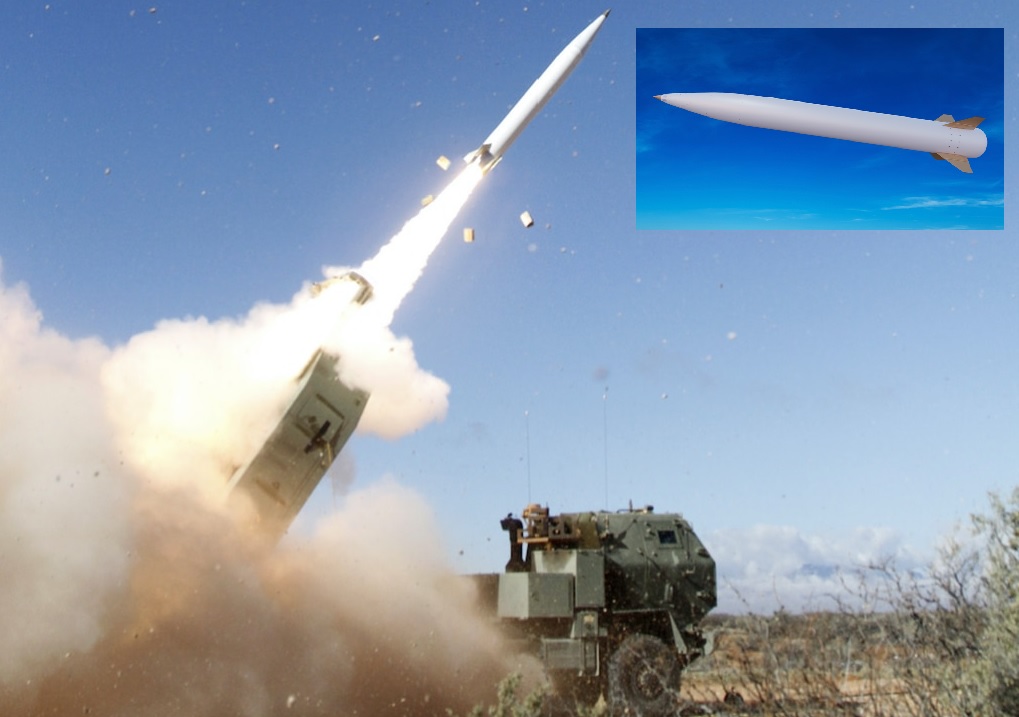
World
DALLAS — March 13, 2026 — Lockheed Martin and the United States Army have completed the first flight test of the Precision Strike Missile (PrSM) Increment 2, a new variant of the Army’s next-generation long-range surface-to-surface missile designed to engage both land targets and moving maritime threats. The test, conducted on March 12, 2026, represents an early milestone in the development of the Army’s evolving long-range fires capability. The missile was launched from an M142 HIMARS launcher and successfully completed a 350-kilometer flight, meeting all primary test objectives. During the flight, the missile deployed protective seeker covers and transmitted a full set of telemetry and performance data. Engineers will use this data to evaluate system performance and support further validation of the missile’s guidance, navigation, and targeting systems as the program advances. PrSM Increment 2 and the Long-Range Fires Program The Precision Strike Missile program is the U.S. Army’s replacement for the aging Army Tactical Missile System (ATACMS). It is designed to provide significantly improved range, precision, and lethality while remaining compatible with existing artillery launch platforms. The baseline PrSM Increment 1 focuses on long-range precision strikes against fixed land targets. The Increment 2 configuration introduces additional targeting technologies intended to expand the missile’s operational role. Under current program plans, the missile will continue to integrate with both the M142 HIMARS and the M270A2 MLRS launcher platforms already in service with the U.S. Army and allied forces. Maintaining compatibility with these systems allows the Army to field the upgraded missile without major changes to launch vehicles, logistics networks, or fire-control architecture. Multi-Mode Seeker and Moving Target Engagement The primary technological addition in the Increment 2 missile is a multi-mode seeker designed to provide terminal guidance against moving or time-sensitive targets. Unlike earlier versions that rely mainly on GPS-based coordinates for fixed targets, the new seeker allows the missile to detect and track targets during the final phase of flight. This capability enables engagement of: Relocating ground targets Mobile missile launchers Moving maritime vessels By integrating this seeker, the PrSM Increment 2 gains a maritime-strike capability, effectively transforming the missile into a land-based anti-ship weapon in addition to its traditional land-attack role. This capability is intended to support multi-domain operations, allowing ground forces to contribute to sea-denial missions from land-based launch positions. Compatibility With Existing Launch Systems Despite the addition of the new seeker and associated guidance systems, the missile retains the same external launcher interface used by the baseline PrSM. The system remains fully compatible with: M142 HIMARS launchers M270A2 MLRS launchers This design approach allows the U.S. Army to integrate the missile into existing units without requiring structural modifications to launch platforms. Maintaining the established platform footprint also simplifies training, maintenance procedures, and supply chain logistics. Industry Statements Program officials at Lockheed Martin emphasized that the Increment 2 missile was developed to meet operational requirements specified by the Army. Carolyn Orzechowski, Vice President of Precision Fires Launchers and Missiles at Lockheed Martin, said the new version provides the capability required to defeat both moving land targets and maritime threats at extended ranges. Gaylia Campbell, Vice President and General Manager of Lockheed Martin Tactical Missiles, stated that the company is applying digital engineering methods, modular design principles, and agile development processes to accelerate the program’s timeline while maintaining performance and reliability standards. Lockheed Martin also noted that close coordination with the U.S. Army and the broader supplier network is intended to support faster transition from development testing to operational deployment. Program Development and Testing The PrSM Increment 2 program is currently in its technology-maturation phase, with a Preliminary Design Review (PDR) underway. The data collected from the March 12 flight test will contribute to system validation and guide future engineering refinements. Additional flight tests are scheduled for later in 2026 to further evaluate: moving-target acquisition capability seeker performance guidance and navigation accuracy overall system reliability These tests will help determine the timeline for the missile’s transition toward operational fielding. Baseline Missile Characteristics The baseline Precision Strike Missile is designed as a next-generation precision strike weapon with a range exceeding 499 kilometers, significantly extending the reach of U.S. Army ground-launched fires. The missile is intended to operate within existing Army fire-control networks and is built using an open architecture design, allowing future increments to introduce additional sensors, targeting systems, and mission capabilities. Increment 2 builds upon this foundation by adding the ability to engage moving targets in both land and maritime environments while preserving compatibility with current launcher platforms.
Read More → Posted on 2026-03-13 14:08:07
World
TAMPA, Fla. — March 13, 2026 : U.S. Central Command (CENTCOM) confirmed on Friday that four U.S. service members were killed after a U.S. Air Force KC-135 Stratotanker aerial refueling aircraft crashed in western Iraq during ongoing U.S. military operations in the region. Two additional crew members remain unaccounted for as search and recovery operations continue. According to CENTCOM, the aircraft went down at approximately 2:00 p.m. Eastern Time on March 12, 2026, in remote desert terrain in western Iraq. Initial reports indicate the crash occurred near Turaibil, a border area located along the Iraq–Jordan frontier, a region frequently used for coalition air operations and logistics corridors. Incident Overview The KC-135 involved in the incident was operating in friendly airspace as part of Operation Epic Fury, the designation for ongoing U.S. military operations linked to the broader conflict involving Iran. U.S. military officials stated that two Boeing KC-135 Stratotanker aircraft were involved in the incident while operating in the same airspace. One tanker crashed, while the second aircraft sustained damage but remained controllable and was able to divert and land safely at an airfield in Israel. Preliminary operational reporting suggests the possibility of a mid-air collision between the two refueling aircraft, although officials emphasized that the exact sequence of events remains under investigation. CENTCOM stated that the aircraft loss was not caused by hostile fire or friendly fire, and that the incident occurred during routine operational activity supporting the mission. Crew and Casualties The downed aircraft carried six crew members at the time of the incident. On March 13, CENTCOM confirmed that four of the crew members were killed in the crash. Two additional crew members remain missing, and Tactical Recovery of Aircraft and Personnel (TRAP) teams, supported by U.S. and coalition forces in the region, are continuing search and recovery operations at and around the crash site. In accordance with U.S. Department of Defense casualty notification procedures, the identities of the deceased service members are being withheld until next of kin notifications are completed. Military policy requires that names be publicly released no sooner than 24 hours after family members have been notified. CENTCOM has not yet provided further information regarding the condition or location of the two missing crew members. Investigation and Claims A formal U.S. military accident investigation has been initiated to determine the cause of the crash, including the possibility of operational, mechanical, or procedural factors. Shortly after the incident, the Islamic Resistance in Iraq, an umbrella network of Iran-aligned armed groups operating in the region, issued a statement claiming that its fighters had shot down the U.S. aircraft. U.S. military officials have rejected those claims, reiterating that current assessments show no evidence of hostile engagement and that the aircraft loss occurred due to non-combat causes. Investigators are expected to analyze flight data, communications records, and damage assessments from the second aircraft that landed safely in Israel. Role of the KC-135 Stratotanker The KC-135 Stratotanker, manufactured by Boeing, has been a core component of the U.S. Air Force’s aerial refueling capability since entering service in the late 1950s. The aircraft enables fighter jets, bombers, reconnaissance aircraft, and other platforms to receive fuel in flight, allowing them to extend operational range and remain airborne for longer missions without landing. KC-135 aircraft are typically assigned to Air Mobility Command units and operate globally in support of combat operations, strategic deployments, and long-range patrol missions. A standard KC-135 crew generally consists of a pilot, co-pilot, and boom operator, although mission configurations can include additional personnel such as navigators, flight engineers, or mission specialists, depending on operational requirements. The aircraft involved in the crash was operating with a crew of six. Operational Risks of Aerial Refueling Aerial refueling is considered one of the most technically demanding procedures in military aviation. During refueling operations, aircraft must maintain precise formation flying at high speeds and close proximity, often while transferring thousands of pounds of aviation fuel between aircraft. The procedure requires constant coordination between flight crews and the refueling boom operator. Environmental conditions such as turbulence, visibility limitations, or mechanical irregularities can significantly increase operational risk. Although aerial refueling operations are routinely conducted by U.S. and allied air forces worldwide, incidents involving tanker aircraft remain rare but can result in serious aviation accidents when multiple aircraft are operating in confined airspace. Continuing Operations CENTCOM has not released additional operational details about the mission being conducted at the time of the crash or whether aerial refueling was actively underway between the two aircraft. Search and recovery efforts remain ongoing in western Iraq, where the crash occurred in a sparsely populated desert region with limited infrastructure. Further updates are expected as rescue teams continue recovery efforts and as the formal military investigation progresses.
Read More → Posted on 2026-03-13 14:01:06
World
WASHINGTON — March 13, 2026 : U.S. naval forces engaged and struck an Iranian vessel that approached the aircraft carrier USS Abraham Lincoln (CVN-72) in the Arabian Sea earlier this week, according to U.S. officials familiar with the incident. The engagement occurred while the carrier strike group was conducting operations in support of the ongoing U.S. military campaign against Iran, known as Operation Epic Fury. Initial Naval Engagement According to two U.S. officials briefed on the matter, the Iranian vessel approached the carrier strike group while the USS Abraham Lincoln was operating in the Arabian Sea. A U.S. Navy surface combatant escorting the carrier attempted to engage the vessel using its Mark-45 5-inch, 54-caliber naval deck gun, firing several rounds toward the approaching craft. The shots did not strike the vessel. Officials have not confirmed whether the rounds were intended as warning fire or as direct engagement. The specific escort ship that fired the weapon has not been publicly identified. The Mark-45 deck gun is the standard naval artillery system mounted on U.S. Navy destroyers and cruisers. Introduced in the early 1970s, the fully automated cannon is integrated with the Aegis combat system and is capable of firing up to 20 rounds per minute with an effective engagement range estimated between 13 and 20 nautical miles, depending on ammunition type. Helicopter-Launched Hellfire Strike After the unsuccessful gun engagement, a U.S. Navy helicopter was launched from the carrier strike group to intercept the vessel. Officials indicated that the aircraft was likely an MH-60R Seahawk, a multi-mission naval helicopter used for anti-surface warfare, anti-submarine operations, and maritime surveillance. The helicopter fired two AGM-114 Hellfire missiles at the Iranian vessel, successfully striking the target. The Hellfire is a precision-guided air-to-surface missile commonly used by U.S. helicopters for engagements against small surface targets. U.S. officials stated that the Iranian vessel was hit, but the current condition of the ship and its crew remains unknown. No further information has been released regarding potential casualties or the extent of the damage. Limited Official Comment U.S. Central Command (CENTCOM) declined to provide details on the encounter. In response to media inquiries, the command stated that it had “nothing for you on this.” Neither the Pentagon nor CENTCOM has issued a formal public statement describing the engagement, the identity of the Iranian vessel, or the exact circumstances of the approach. Officials also did not confirm whether additional Iranian vessels were present in the vicinity during the incident. Iranian Claims of Carrier Strike Following the engagement, Iran’s Islamic Revolutionary Guard Corps (IRGC) issued a separate statement claiming that Iranian forces had launched a precision drone and ballistic missile strike targeting the USS Abraham Lincoln. Iranian state media asserted that the attack caused significant damage to the Nimitz-class carrier, allegedly rendering the ship non-operational and forcing the strike group to withdraw from the area at high speed. U.S. military officials rejected those claims. The Pentagon and CENTCOM stated that the reports were inaccurate and released a recent photograph of the carrier at sea, indicating that the Abraham Lincoln Carrier Strike Group continues to operate normally and support Operation Epic Fury. U.S. officials added that Iranian missiles and drones did not come close to the carrier, and no damage to American vessels or aircraft has been reported. Carrier Strike Group Deployment The USS Abraham Lincoln, a Nimitz-class nuclear-powered aircraft carrier, has been operating in the Arabian Sea since late January as part of a carrier strike group assigned to regional operations. The strike group includes several guided-missile destroyers providing air defense, missile defense, and maritime security for the carrier. Confirmed escort vessels include USS Spruance (DDG-111) and USS Michael Murphy (DDG-112), with six additional guided-missile destroyers reported to be operating in the region as of last week. Carrier strike groups are structured to provide layered defense against aerial, missile, and surface threats while enabling sustained air operations from the carrier’s embarked air wing. Previous Close Approach Incident The encounter marks the second reported close approach involving Iranian assets and the USS Abraham Lincoln in recent months. In early February 2026, an Iranian Shahed-139 drone approached the carrier while it was operating in the region. The drone was intercepted and destroyed by a U.S. fighter aircraft launched from the carrier before it reached the strike group. U.S. officials did not indicate whether the vessel involved in the latest incident was affiliated with the IRGC Navy, Iran’s regular navy, or another maritime unit. Wider Naval Conflict The incident occurred amid an ongoing high-intensity maritime conflict between U.S. and Iranian forces in the Middle East. According to figures released by U.S. Central Command, American forces have damaged or destroyed more than 90 Iranian vessels since the broader conflict began. These vessels reportedly include small fast-attack craft, coastal minelaying boats, unmanned maritime systems, and larger logistics or base ships operating in regional waters. U.S. officials confirmed that no American service members were injured during the latest engagement and that no U.S. ships or equipment were damaged. The USS Abraham Lincoln and its escorts continue to conduct operations in support of U.S. military objectives in the region.
Read More → Posted on 2026-03-13 13:40:11
World
KYIV — March 13, 2026 : Ukrainian defense manufacturer Fire Point has reported new progress in its domestic ballistic missile development program, announcing the successful completion of initial tests for its FP-7 short-range ballistic missile while preparing a longer-range system, the FP-9, for flight trials later this year. The update was provided by Denys Shtilerman, chief executive officer and chief designer of the company, who confirmed that the FP-7 has completed three test launches and that development work on the FP-9 is approaching the next testing phase. The programs form part of Ukraine’s broader effort to expand its domestic missile production capacity and reduce reliance on foreign-supplied long-range strike systems. FP-7 Short-Range Ballistic Missile Program Fire Point’s FP-7 missile has completed its first phase of flight testing, with the company confirming an operational range of 300 kilometers. The missile is designed as a mobile tactical weapon system intended to provide a domestically produced alternative to Western short-range ballistic missile systems such as the ATACMS. According to company officials, the missile emphasizes cost-efficient production. Fire Point estimates the FP-7 can be manufactured at two to two-and-a-half times lower cost than comparable Western systems. The company attributes this reduction primarily to the use of domestic engineering, locally produced solid rocket fuel, and specialized carbon-fiber structural components. The missile carries a 150-kilogram warhead and is designed for deployment on mobile launch platforms. Fire Point indicated that the launchers are configured to resemble standard trucks, enabling operational mobility and potentially simplifying logistics and concealment during field operations. Earlier test footage released by the company in late February 2026 showed the initial launches of the missile. According to statements from the company, the FP-7 design incorporates technology derived from adapted Soviet-era 48N6 missile systems, which were originally developed for surface-to-air defense roles but have been modified for ballistic strike applications. Fire Point has stated that production could be scaled without major manufacturing limitations if the system enters operational procurement. FP-7 Technical Overview Classification: Short-range ballistic missile Operational Range: 300 km Warhead: 150 kg Production Cost: 2–2.5 times lower than comparable Western systems Status: Three test launches completed Development of the FP-9 Long-Range Ballistic Missile Alongside the FP-7 program, Fire Point is developing the FP-9, a longer-range ballistic missile intended for deep-strike missions. According to Shtilerman, the FP-9 is designed with an operational range of approximately 850 kilometers and is expected to carry a warhead of up to 800 kilograms. The missile is also designed to reach a terminal speed exceeding 4,300 km/h during the final phase of its trajectory. A key design focus for the FP-9 is the ability to penetrate advanced air defense systems protecting heavily defended targets. The missile’s high terminal velocity is intended to complicate interception by layered missile defense networks. Additional design parameters provided by the company indicate a flight ceiling of around 70 kilometers and a reported strike accuracy of roughly 20 meters. According to Shtilerman, the missile’s speed profile is intended to exceed the terminal velocity of some existing tactical ballistic missile systems, including the Russian Iskander-M. Engine development for the FP-9 is nearing completion, and flight tests are scheduled to begin in early summer 2026. FP-9 Technical Overview Classification: Long-range ballistic missile Operational Range: 850 km Terminal Speed: Over 4,300 km/h Warhead Capacity: Up to 800 kg Flight Ceiling: Approximately 70 km Accuracy: ~20 meters CEP (reported) Status: Flight testing scheduled for early summer 2026 Fire Point’s Expanding Missile and Drone Portfolio Fire Point was founded in 2022 and has expanded rapidly within Ukraine’s defense sector during the ongoing war with Russia. The company has developed several strike systems in addition to its ballistic missile projects. These include the FP-1 deep-strike drone, the FP-2 strike drone, and the FP-5 “Flamingo” cruise missile. The company has previously presented details of the FP-7 and FP-9 missile concepts at international defense exhibitions in 2025, where early specifications for both systems were introduced. Since then, Fire Point has continued development and testing, releasing video documentation of FP-7 launches and providing updates through company channels and Ukrainian defense media. Strategic Role of Domestic Missile Development The development of the FP-7 and FP-9 reflects Ukraine’s ongoing effort to expand its domestic defense manufacturing base. Producing ballistic missiles within Ukraine would allow the country to sustain long-range strike capabilities without relying solely on foreign-supplied munitions, which can be subject to political restrictions or export limitations. While Fire Point has confirmed the testing milestones for both missiles, the company has not announced specific production timelines, integration plans with Ukrainian armed forces, or any potential export arrangements. Further updates are expected as the FP-9 enters its scheduled flight testing phase in the coming months.
Read More → Posted on 2026-03-13 13:28:08
World
WASHINGTON — March 13, 2026 : The United States has issued a temporary general license authorizing the sale, delivery, and offloading of Russian crude oil and petroleum products currently stranded at sea, providing a 30-day exemption from existing sanctions in an effort to stabilize global energy markets and increase available supply. The authorization was issued by the U.S. Department of the Treasury through its Office of Foreign Assets Control (OFAC). According to the official license text, the measure applies exclusively to Russian-origin oil cargoes that were loaded onto vessels on or before March 12, 2026, and permits transactions necessary for their sale, transfer, or discharge until 12:01 a.m. Eastern Daylight Time on April 11, 2026. The exemption allows activities ordinarily incident and necessary to the handling of the cargoes, including docking, anchoring, and maritime operational services required to complete delivery. These services include ship piloting, insurance coverage, bunkering fuel supply, emergency repairs, and other standard maritime support functions needed for vessels carrying the oil to safely reach ports and unload their cargo. However, the license contains strict limitations. It does not authorize any new loading of Russian oil or petroleum products, and it does not lift broader sanctions imposed on Russian energy exports or remove any sanctioned individuals or entities from U.S. restrictions. The authorization applies solely to cargoes already loaded before the March 12 cutoff date. Additionally, the license explicitly excludes any transactions involving Iran, the Government of Iran, or Iranian-origin goods or services, ensuring that existing sanctions targeting Iran remain fully in place. Objective: Stabilizing Global Energy Supply U.S. Treasury Secretary Scott Bessent stated that the temporary authorization was designed to address disruptions in global oil supply resulting from the ongoing conflict involving Iran and the resulting instability in key maritime shipping routes in the Middle East. In a public statement, Bessent described the waiver as a “narrowly tailored” and “short-term” measure intended to allow oil already in transit to reach global markets. Because the authorization applies only to cargoes that were previously loaded and stranded at sea, U.S. officials maintain that the measure will not significantly increase revenue for the Russian government, which derives the majority of its oil-sector income from extraction taxes rather than downstream transactions. The waiver was announced after global oil prices surged above $100 per barrel, reflecting concerns about supply disruptions following escalating military operations and maritime security risks in the region. Prices eased slightly in Asian trading after news of the waiver increased expectations that additional crude supply would reach international markets. Estimated Volume of Oil Affected Russian presidential envoy Kirill Dmitriev indicated that the waiver could affect approximately 100 million barrels of Russian crude oil currently stranded on tankers worldwide. That volume represents roughly one day of global oil production, making it a potentially significant short-term addition to available supply. Industry estimates have placed the total volume of sanctioned Russian crude and petroleum products held at sea prior to the announcement in the range of 118 million to 124 million barrels, distributed across numerous tankers and maritime storage locations. The stranded cargoes accumulated as sanctions restrictions, shipping risks, and insurance limitations complicated deliveries following disruptions to maritime trade routes in the Middle East. Expansion of Earlier U.S. Waiver The broader license follows a previous 30-day sanctions waiver issued on March 5, which specifically allowed Indian refiners to receive Russian oil cargoes already loaded on vessels. That earlier authorization permitted deliveries to Indian ports of Russian crude loaded before the specified cutoff date in order to prevent supply shortages caused by shipping disruptions. The newly announced license significantly expands the scope of the exemption, allowing countries and buyers worldwide to complete transactions involving Russian oil cargoes already at sea rather than limiting the authorization to India alone. Market and Political Reactions The policy adjustment represents the second easing of Russia-related oil sanctions within roughly a week, reflecting mounting concerns in Washington over rising energy prices and supply disruptions linked to Middle East instability. While Russian officials welcomed the measure, several European governments expressed concern that relaxing sanctions—even temporarily—could undermine Western efforts to economically isolate Russia over its ongoing war in Ukraine. Some countries in Asia, including Thailand, have indicated interest in purchasing Russian crude under the waiver, while other governments have signaled that they will continue adhering to existing sanctions regimes. Continued Sanctions Framework Despite the temporary authorization, the United States emphasized that the broader sanctions framework targeting Russian energy exports remains unchanged. The license is limited exclusively to the specified cargoes already loaded before the March 12 deadline and does not permit new Russian oil shipments to be loaded or exported under the exemption. U.S. officials described the measure as part of a short-term effort to address supply constraints in the global oil market while maintaining the overall sanctions regime related to Russia’s energy sector and its ongoing conflict with Ukraine. The 30-day authorization is scheduled to expire on April 11, 2026, after which normal sanctions restrictions on the affected cargoes will resume unless further exemptions are issued.
Read More → Posted on 2026-03-13 13:19:31
World
WHITE SANDS MISSILE RANGE, New Mexico — March 12, 2026 : The United States Navy has resumed live-fire testing of its long-studied electromagnetic railgun weapon system after several years of limited activity. According to the Naval Sea Systems Command (NAVSEA) Warfare Centers Year in Review 2025, a dedicated testing campaign was conducted in February 2025 at the White Sands Missile Range (WSMR), a major U.S. military testing facility located in New Mexico. The trials marked the first structured series of railgun firing tests after the program was largely paused around 2021 due to funding adjustments and shifting modernization priorities within the U.S. Department of Defense. The February campaign focused on collecting detailed technical data on high-velocity projectile launches and evaluating system performance during repeated electromagnetic firings under controlled conditions. February 2025 Testing Campaign The three-day testing effort was conducted by the Naval Surface Warfare Center Port Hueneme Division (NSWC PHD) through its White Sands Detachment (WSD), working in cooperation with the Naval Surface Warfare Center Dahlgren Division in Virginia. The activity was performed on behalf of NAVSEA’s Joint Hypersonics Transition Office, which coordinates U.S. defense research related to high-speed weapons technologies. Engineers involved in the campaign focused on gathering telemetry and instrumentation data associated with electromagnetic launches. Measurements included projectile acceleration, launch dynamics, rail and barrel structural stresses, power delivery behavior, and the overall operational performance of the system during high-energy firing sequences. Testing at White Sands Missile Range provides several operational advantages. The range encompasses approximately 3,200 square miles of restricted airspace and land area, allowing engineers to safely conduct high-velocity projectile launches while tracking them using long-range radar, optical sensors, and telemetry systems. Conducting trials at a land-based facility also enables the recovery of fired projectiles and components for detailed forensic examination, which is significantly more difficult during naval tests conducted at sea. Principles of Electromagnetic Railgun Technology Electromagnetic railguns differ fundamentally from conventional naval artillery systems. Traditional naval guns rely on chemical propellants to launch explosive projectiles. In contrast, railguns use electromagnetic forces generated by high electrical currents to accelerate solid metal projectiles. The system stores large amounts of electrical energy in capacitor banks. During firing, the stored energy is rapidly discharged through two parallel conductive rails. As electrical current flows through the rails and the projectile’s armature, a powerful electromagnetic field is generated that propels the projectile forward along the rails. Earlier U.S. Navy experiments demonstrated projectile velocities reaching approximately Mach 6, placing the weapon within the hypervelocity regime. Because the projectile itself contains no explosive payload, the destructive effect is generated entirely through kinetic energy. At such velocities, the impact energy alone can disable or destroy targets. The concept offers potential advantages such as reduced reliance on explosive munitions, extended engagement ranges compared with conventional naval guns, and the possibility of lower per-shot costs once operational systems are fully developed. Development History of the U.S. Railgun Program Formal research into naval electromagnetic railgun technology began in 2005 under the Office of Naval Research (ONR). Over the course of the program, the U.S. government invested more than $500 million in research and prototype development. Two primary industry partners were involved in building prototype systems: BAE Systems, which developed a railgun prototype used extensively for early performance testing. General Atomics, which constructed an alternative system based on the same electromagnetic launch principles. Testing during the program’s earlier phases was conducted primarily at facilities such as the Naval Surface Warfare Center Dahlgren Division in Virginia. Engineers evaluated factors including projectile velocity, accuracy, system energy requirements, launch dynamics, and durability of the gun components. During this period, the Navy also examined the use of hypervelocity projectiles (HVP) that could potentially be fired from both railguns and modified conventional artillery systems. Technical Challenges and Program Suspension Despite promising early demonstrations, the railgun program encountered several engineering and operational challenges that slowed its development. One major issue involved component degradation. Each firing generates extremely high electrical currents and temperatures, placing heavy stress on the conductive rails and barrel structures. These forces cause significant wear and erosion of the launch components, reducing their operational lifespan and requiring frequent replacement. Another challenge relates to power generation and management. A single railgun shot can require energy levels exceeding 32 megajoules, delivered in a very short time interval. Supplying and managing this amount of power demands specialized electrical systems that exceed the capabilities of most existing naval ship designs. These technical obstacles, combined with shifting defense priorities toward hypersonic missiles, directed-energy weapons, and other advanced technologies, resulted in the railgun program entering a reduced-activity phase around 2021. Although full development slowed, research on related technologies such as hypervelocity projectiles continued. Role of White Sands Missile Range The White Sands Missile Range has supported U.S. military weapons testing for decades. The facility’s instrumentation infrastructure enables tracking of high-speed objects using radar, telemetry receivers, optical sensors, and long-range measurement systems. The environment allows engineers to observe projectile flight behavior across large distances and collect data on factors such as trajectory stability, aerodynamic performance, and terminal effects. Recovery of fired components also provides opportunities for materials analysis, allowing researchers to evaluate rail wear, projectile deformation, and other structural effects caused by electromagnetic launch forces. The February 2025 tests therefore represent a renewed effort to gather baseline data on system durability and launch performance during repeated high-velocity firings. International Development of Railgun Systems Interest in electromagnetic railgun technology continues internationally, with several countries conducting their own research and prototype testing programs. In Japan, the Japan Maritime Self-Defense Force has conducted live-fire trials of a ship-mounted railgun prototype developed by the Acquisition, Technology and Logistics Agency (ATLA). In 2025, the prototype was reportedly tested from the experimental vessel JS Asuka, marking a milestone in at-sea railgun experimentation. Meanwhile, China has also explored electromagnetic launch technology. Defense analysts have reported modifications to certain People's Liberation Army Navy vessels to support experimental railgun installations for sea-based trials. These developments have sustained international interest in electromagnetic launch systems as potential future naval weapons. Future Evaluation and Program Outlook The resumption of railgun testing at White Sands Missile Range indicates that the United States Navy continues to examine the feasibility of electromagnetic launch systems as part of its long-term weapons research portfolio. Data gathered during the February 2025 campaign will help engineers analyze projectile acceleration behavior, structural durability, power system performance, and component wear under repeated firing conditions. The information will support ongoing assessments by NAVSEA and the Joint Hypersonics Transition Office regarding the future role of electromagnetic launch technology in next-generation naval platforms. The Navy has not announced any immediate plans to deploy the railgun system aboard operational vessels. However, the renewed testing program suggests continued technical evaluation of high-velocity kinetic weapon systems within the broader framework of U.S. defense research and hypersonic weapons development.
Read More → Posted on 2026-03-12 17:38:56
World
WRIGHT-PATTERSON AIR FORCE BASE, Ohio — March 12, 2026 : The U.S. Air Force Research Laboratory (AFRL) and aerospace propulsion company Ursa Major have successfully carried out a flight test of the Affordable Rapid Missile Demonstrator (ARMD), a prototype vehicle designed to validate new approaches for rapidly developing and producing missile systems. The demonstrator, powered by Ursa Major’s Draper liquid rocket engine, achieved supersonic speeds during the test, confirming the viability of a throttleable liquid-propulsion system for tactical missile applications. The flight represents a key milestone in a program focused on accelerating missile development timelines while lowering production costs and enabling scalable manufacturing. AFRL officials stated that the ARMD initiative progressed from contract award to a fully integrated, flight-ready vehicle and propulsion system in approximately eight months, illustrating a compressed development cycle intended to support rapid fielding of future defense technologies. The test vehicle was staged for launch on January 27, 2026, using a specialized air-log cart for transport before being loaded onto a Transportable Target Launcher for the demonstration flight. During the mission, the vehicle validated the integration of the Draper engine within a tactical missile-type platform and demonstrated operational concepts associated with liquid propulsion in rapidly deployable weapons systems. Program Structure and Industry Partnership The ARMD program operates as a technology demonstration platform that allows AFRL to evaluate propulsion technologies, system integration methods, and production models aimed at enabling rapid and affordable missile manufacturing. The project is part of broader U.S. Air Force efforts to accelerate defense innovation through public-private partnerships with commercial aerospace firms. Ursa Major served as the lead vehicle integrator for the demonstrator under a $28.6 million contract awarded by AFRL in 2025. As the prime integrator, the company was responsible for incorporating the Draper propulsion system into the flight vehicle and overseeing system integration. Prior to the flight demonstration, the ARMD propulsion system completed a full-duration static fire test in late 2025, which verified the performance of the bipropellant propulsion system across the full mission cycle. The static test validated engine start-up, sustained thrust generation, and shutdown procedures before the system progressed to flight testing. Brig. Gen. Jason Bartolomei, Commander of AFRL and the Air Force Technology Executive Officer, said the project demonstrates how changes in acquisition models can accelerate technology delivery. “This project proves that we can transform and leverage our acquisition models to rapidly deliver critical technology advancements to deter and win in a future conflict,” Bartolomei said. “We are not just building a single missile; we are forging a new path toward a cost-effective, mass-producible deterrent for the nation.” Draper Liquid Rocket Engine Central to the ARMD demonstration is the Draper liquid rocket engine, a throttleable propulsion system designed to provide greater operational flexibility compared with traditional solid rocket motors used in most tactical missiles. The Draper engine builds on the architecture of Ursa Major’s earlier Hadley liquid rocket engine, incorporating design improvements to support missile and hypersonic applications. The engine produces approximately 4,000 pounds of thrust and uses storable bipropellant propellants — hydrogen peroxide and kerosene. Unlike cryogenic propellant systems used in many launch vehicles, Draper uses non-cryogenic, storable propellants, allowing the engine to remain ready for extended periods without specialized storage infrastructure. This approach aims to combine the long-term storability typically associated with solid rocket motors with the control advantages of liquid propulsion. Approximately 60 percent of the Draper engine components are manufactured using additive manufacturing (3D printing), a design choice intended to reduce production time, lower costs, and simplify supply chains. Liquid propulsion systems differ from solid rocket motors in several key operational aspects. In a solid rocket motor, fuel and oxidizer are combined into a single solid propellant grain that burns once ignited, producing a fixed thrust profile that cannot be adjusted during flight. In contrast, liquid rocket engines store propellants separately and mix them during operation. This configuration enables throttleable thrust, allowing a missile or flight vehicle to adjust power levels, start or stop the engine during flight, and perform more flexible maneuvering profiles. Such capabilities could support new operational concepts in missile design, including adaptable flight trajectories and improved terminal maneuverability. Operational and Technology Objectives AFRL officials stated that the ARMD program was designed not only to validate propulsion technology but also to test the speed at which missile systems can move from concept development to flight testing. Dr. Javier Urzay, Chief of the AFRL Rocket Propulsion Division, described the program as part of a broader effort to develop scalable propulsion technologies for future defense systems. “ARMD represents a key milestone in our efforts to develop revolutionary, affordable and scalable liquid rocket engine technologies to win the wars of tomorrow,” Urzay said. The program also explores production concepts aimed at supporting high-volume manufacturing of missile systems, a capability considered increasingly important in modern military planning where large inventories of affordable weapons may be required. Future Development and Applications Following the successful supersonic flight demonstration, Ursa Major remains under contract with AFRL to continue testing and characterization of the Draper engine in operational flight environments. Additional flight tests are planned to collect further performance data and refine system integration concepts. The Draper engine has been designed for a range of potential applications beyond the ARMD demonstrator. According to program information, the propulsion system is being evaluated for use in tactical hypersonic systems, missile defense interceptors, in-space propulsion systems, and space-based interception platforms. Ursa Major has also developed related concepts building on ARMD technology, including the HAVOC hypersonic missile concept, which incorporates the Draper propulsion system for potential medium-range strike applications. Chris Spagnoletti, Chief Executive Officer of Ursa Major, said the demonstration highlights the speed at which new propulsion technologies can transition from design to flight. “This flight proves that you can get a vehicle with a safe, storable and throttleable liquid engine in the air quickly and affordably,” Spagnoletti said. “We went from contract to flight-ready of an all-up round and propulsion system in just eight months.” With the successful ARMD test flight completed, AFRL and its industry partners plan to continue expanding testing to further evaluate the capabilities of liquid propulsion in future missile platforms while refining rapid development models intended to shorten timelines for next-generation defense technologies.
Read More → Posted on 2026-03-12 17:25:42Search
Top Trending in 24 Hours
-
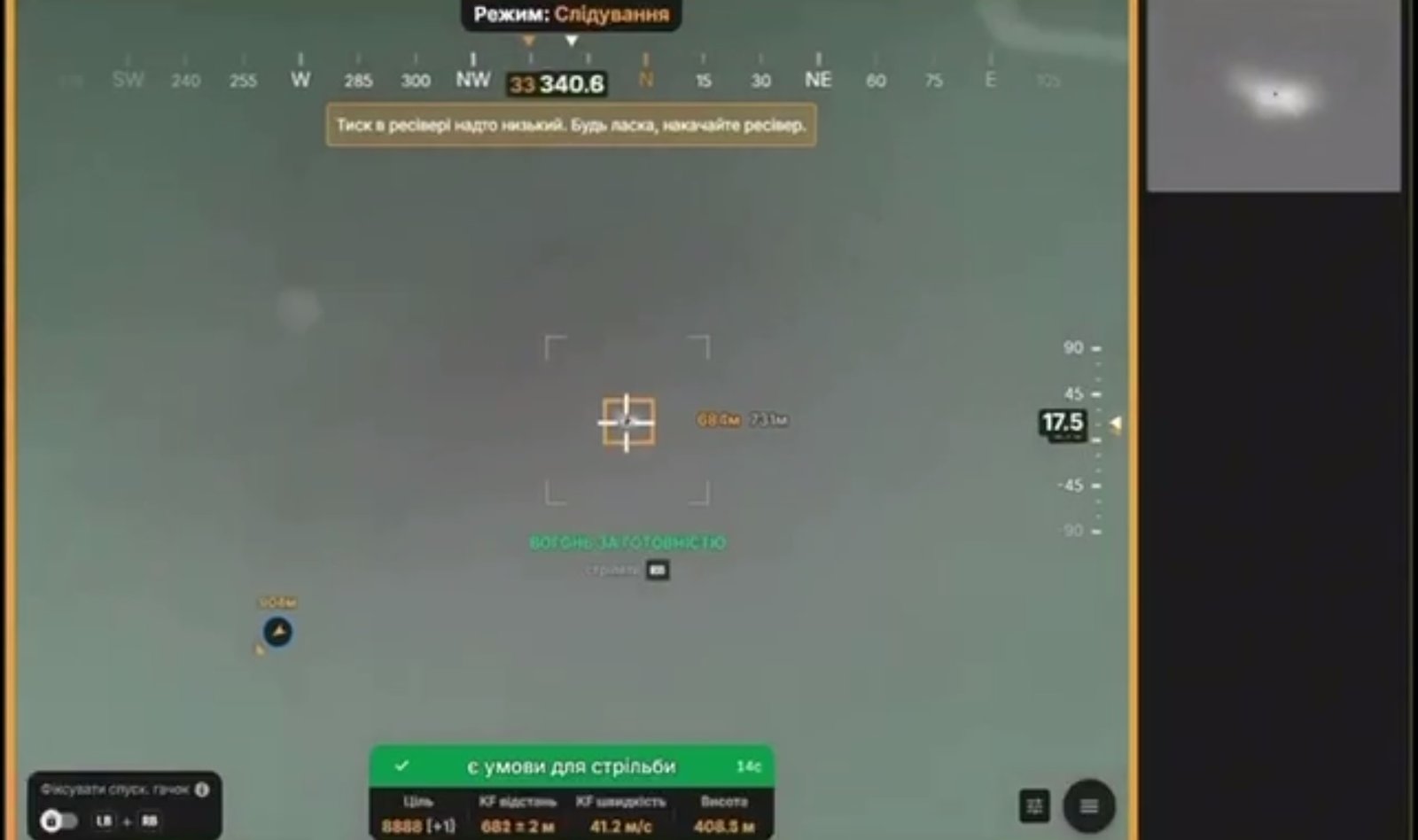 Ukraine’s Blysk Laser Air Defence System Shoots Down Russian Jet-Powered Geran Drone
-
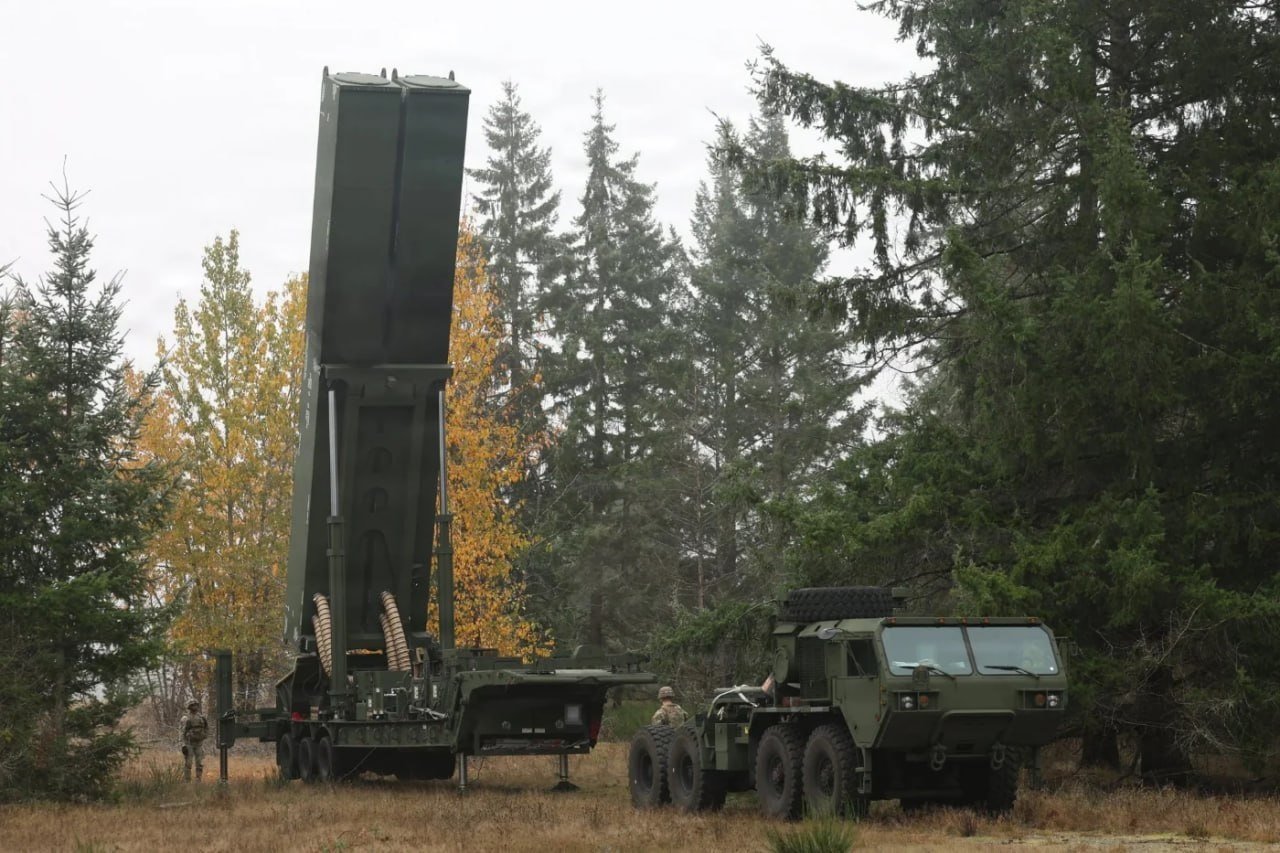 U.S. Army Declares First Dark Eagle Hypersonic Missile Battery Ready for Combat Deployment
-
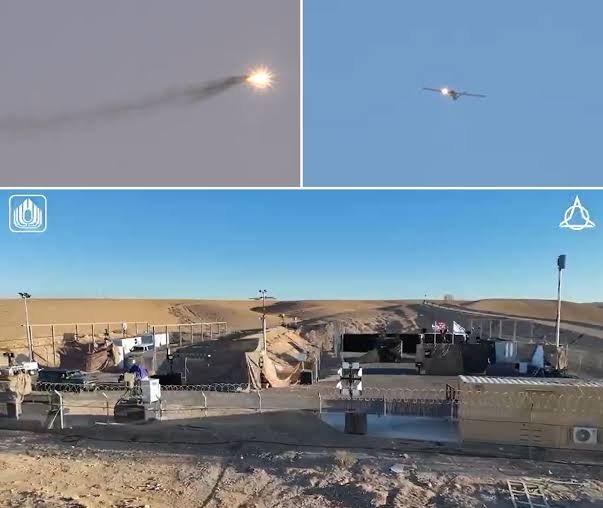 Israel and US Test 20 Counter-Drone Systems in First Joint Trials on Israeli Soil
-
 Europe Opens Largest Satellite Factory in Belgium to Build Starlink Alternative
-
 India's SiGaN Validates First 20-Watt GaN RF Power Amplifier, Opens Commercial Orders
-
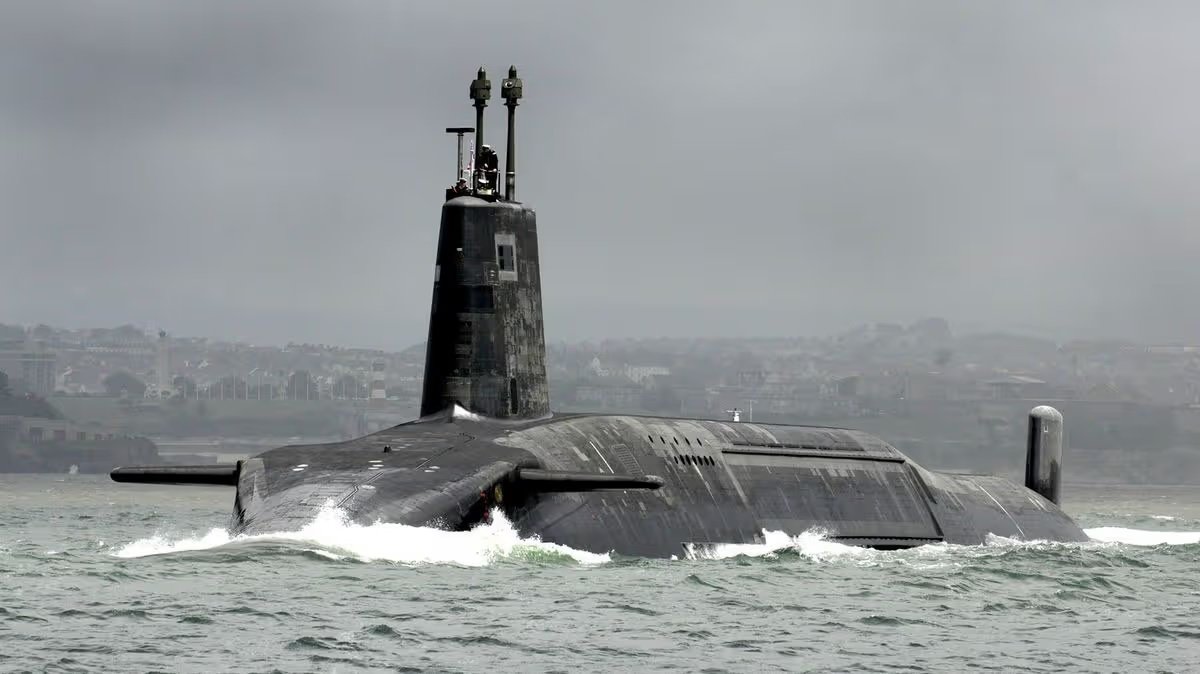 Babcock Signs Record £8.7 Billion Deal to Support UK Nuclear Submarine Fleet
-
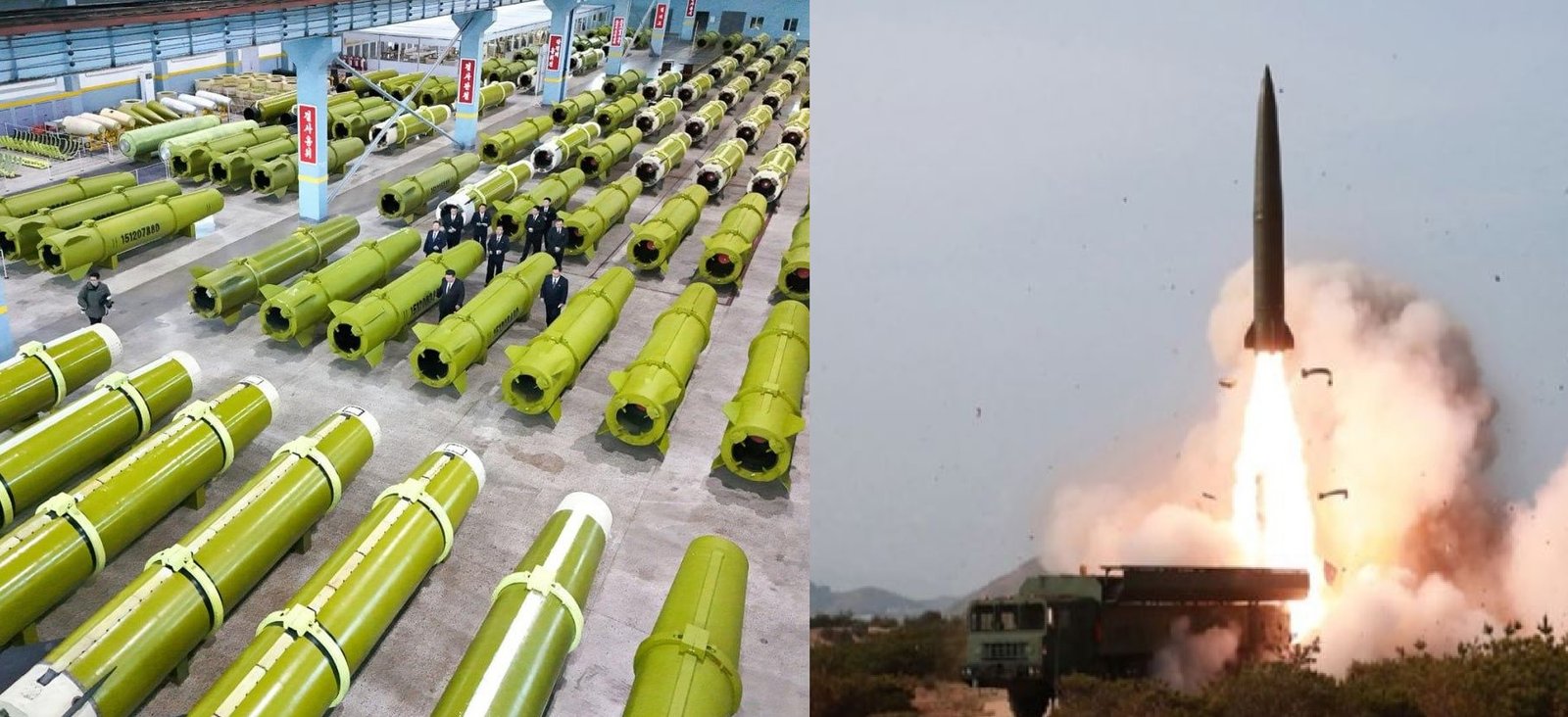 North Korea Suspends KN-23 Missile and Artillery Deliveries to Russia Amid Diplomatic Tensions
-
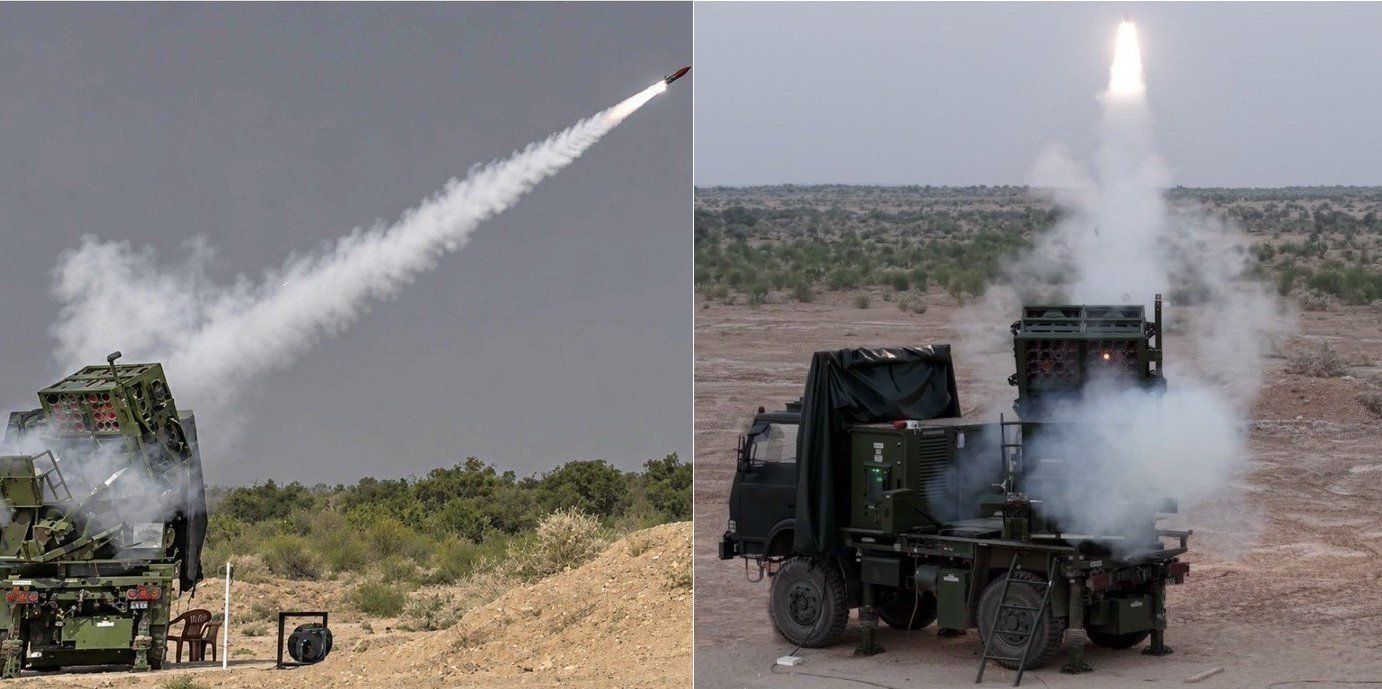 India’s Bhargavastra Counter-Swarm Drone System Completes Pokhran Trials Ahead of Army Demonstration
Top Trending in 4 Days
-
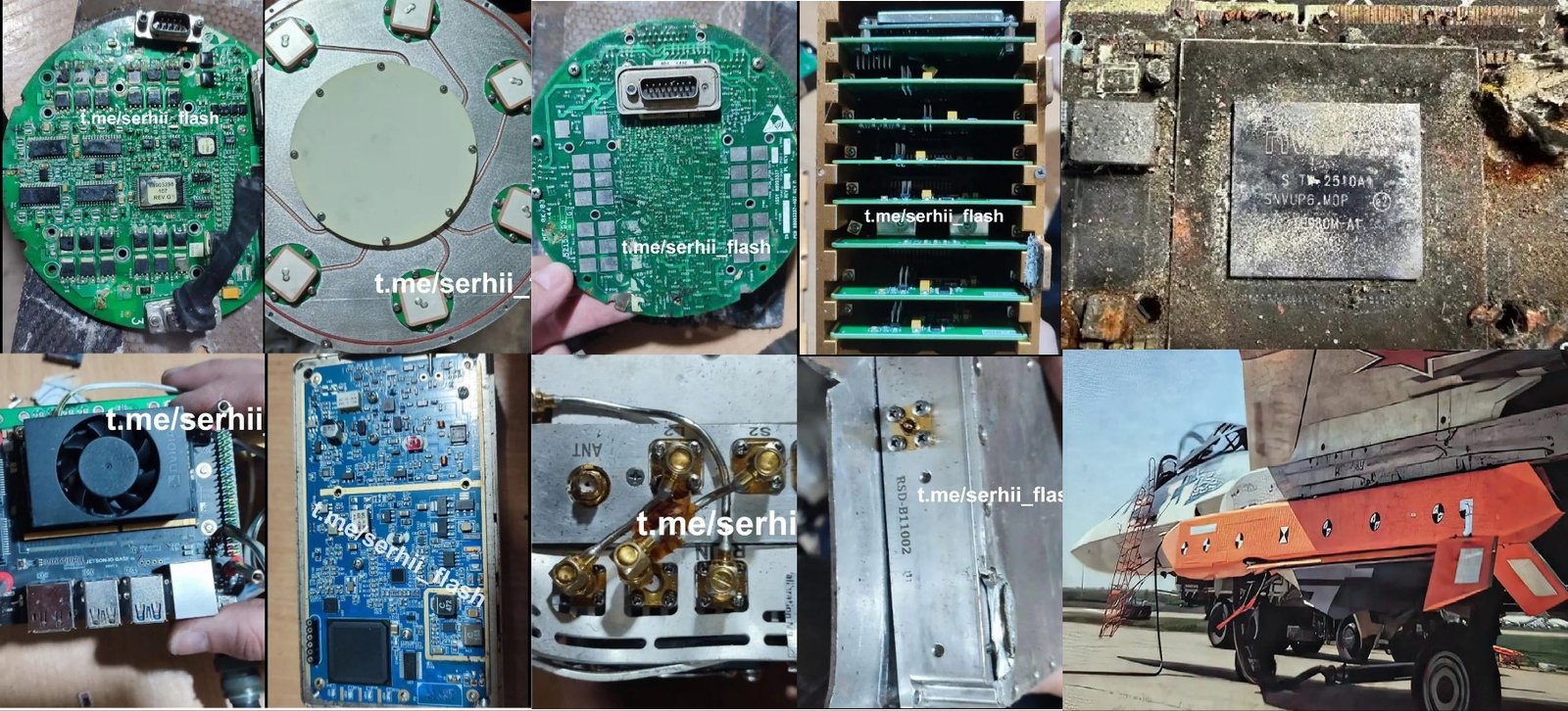 Russian Drones and Cruise Missiles Found Using Civilian NVIDIA AI Chips in Ukraine
-
 Western Intelligence Warns Russia Could Launch Nuclear-Armed Satellite as Early as December
-
 NASA Suspends Science Operations on Perseverance Rover and Mars Odyssey After Hardware Failures
-
 IG Defence Successfully Test-Fires JWALA MK-1 Counter-Drone Missile at Pokhran
-
 U.S. Awards Lockheed Martin $330.6 Million Contract for Long-Lead Materials Supporting 75 F-35 Lot 22 Aircraft
-
Ukraine’s Blysk Laser Air Defence System Shoots Down Russian Jet-Powered Geran Drone
-
 Chinese Military Warns U.S. AI Could Threaten China’s Nuclear Missile Survivability
-
 Ukraine Strikes Five Russian Warplanes, Including Three Kinzhal-Capable MiG-31s at Savasleyka Airbase