U.S
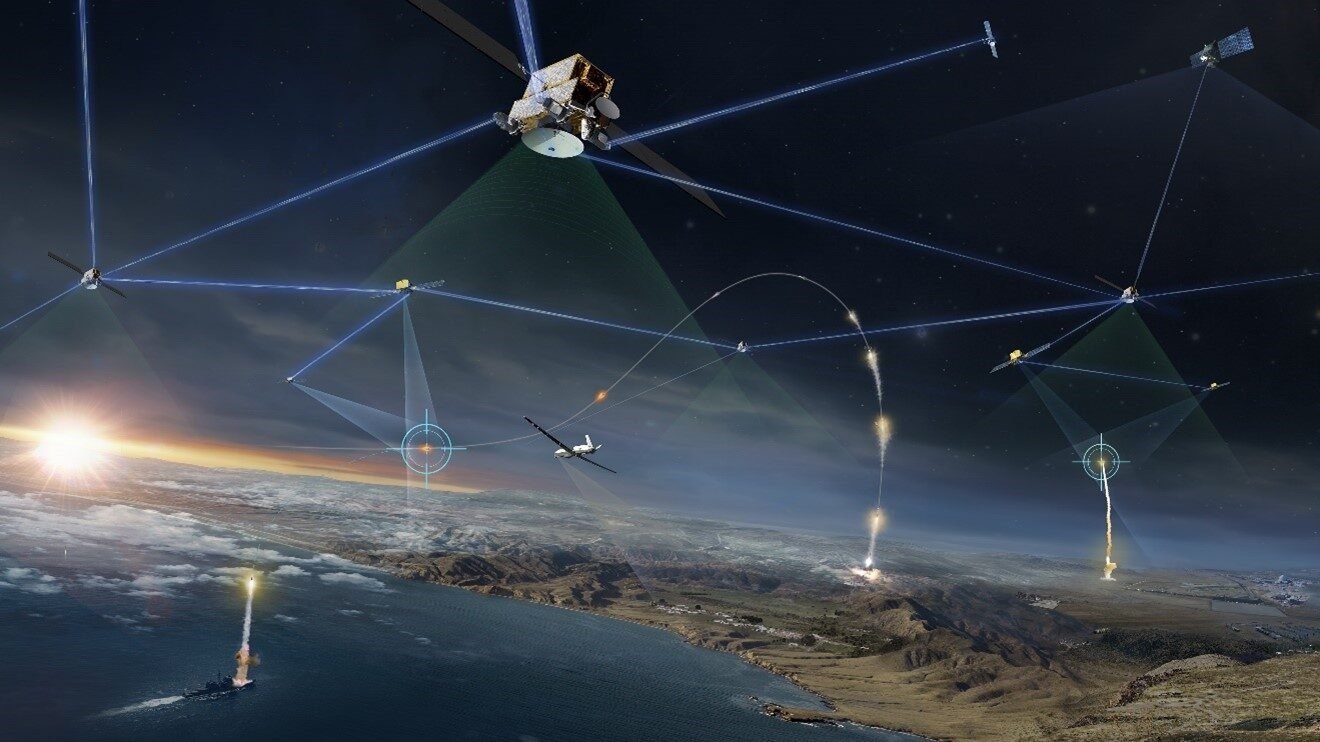
REDONDO BEACH, California — Northrop Grumman is developing an integrated missile defense architecture that connects space-based sensors, battle management systems and interceptors to detect, track and engage ballistic and hypersonic missile threats. The architecture links capabilities across space, air, sea and land and combines existing systems with those under development. The objective is to create a continuous chain from initial missile detection and tracking to interceptor engagement. At the center is the Integrated Battle Command System (IBCS), which connects sensors and weapons that were not originally designed to operate together. The system provides a common command-and-control network and uses software-based data integration. Artificial intelligence supports threat classification and interceptor selection, giving operators a shared view of the battlespace. Rob Fleming, corporate vice president and president of Northrop Grumman Space Systems, said the company is combining next-generation sensors, advanced interceptors and AI-enabled decision-making to help warfighters detect and understand threats sooner, make faster decisions and adapt as threats evolve. Space-based detection The space layer includes Next-Generation Overhead Persistent Infrared (NG-OPIR) Polar satellites operating in highly elliptical orbits. Their infrared sensors are designed to detect missile heat signatures across the Northern Hemisphere. Northrop Grumman is under a $4.2 billion contract to build and launch two OPIR-Polar spacecraft for the U.S. Space Force. Another component is the Ballistic Missile Defense System Overhead Persistent Infrared Architecture (BOA). It combines infrared data from multiple satellite constellations and processes the information into three-dimensional missile tracks for command-and-control systems. BOA is designed to support real-time threat detection, tracking and classification, including during high-volume missile attacks. Northrop Grumman is also involved in the Hypersonic and Ballistic Tracking Space Sensor (HBTSS) program and the Space Development Agency's Proliferated Warfighter Space Architecture Tracking Layer, providing infrared missile warning and tracking capabilities from low-Earth orbit. Glide Phase Interceptor For hypersonic threats, the architecture includes the Glide Phase Interceptor (GPI), which is designed to engage hypersonic glide vehicles during their glide phase. GPI is being developed for launch from Mk 41 Vertical Launch Systems on Aegis-equipped ships and Aegis Ashore sites. The U.S. Missile Defense Agency selected Northrop Grumman as the prime contractor. In April 2026, the Missile Defense Agency awarded a $475 million contract modification, bringing the total agreement value to approximately $1.31 billion. Work under the current agreement is scheduled for completion by June 2028, with the preliminary design review targeted around that period. The program is being developed with Japan under a 50-50 workshare arrangement. The United States is responsible for the first-stage booster, third-stage solid rocket motor and key kill-vehicle components, including the aeroshell, avionics and seeker. Japan is developing the second-stage solid rocket motor, third-stage attitude-control system and parts of the kill vehicle, including the rocket motor, fin actuators and fins. The interceptor uses advanced seekers, dual aerodynamic and rocket-motor guidance, modular software and energy-flexible propulsion. Digital twins and modular open-system architecture are being used during development. IBCS and missile defense integration IBCS is a core part of the U.S. Army's integrated air and missile defense modernization. It connects different sensors and effectors and combines their information into an integrated air picture. Northrop Grumman reports that IBCS has completed numerous successful flight tests, including its 34th consecutive successful missile flight test and 44th intercept as of mid-2026. The system has been demonstrated with capabilities including the Indirect Fire Protection Capability and Lower Tier Air and Missile Defense Sensor. IBCS is in full-rate production and has achieved operational milestones with Poland's WISŁA medium-range air defense program. It has also been fielded with U.S. combatant commands in Europe and the Indo-Pacific. Expanding rocket motor production Northrop Grumman is expanding solid rocket motor production to support multiple missile programs. The company has produced more than 1.3 million solid rocket motors and increased annual production from about 13,000 motors in 2024, with a target of 25,000 annually by 2029. The company has invested more than $1 billion in recent years to expand production facilities in West Virginia, Maryland and Utah. Propellant production is currently around 30 million pounds, with additional capacity planned. Multi-year agreements include production support for PAC-3 and THAAD motors. Digital manufacturing and allied cooperation Northrop Grumman is using additive manufacturing and digital engineering to support missile production. Some interceptor components are produced using 3D-printed titanium, reducing certain tooling requirements and shortening production lead times from months to weeks. The company's Modular Avionics Control Hardware (MACH) provides a flexible architecture that can be configured for different launch-vehicle control systems. Digital twins and virtual testing are also being used to reduce development risks and schedules. The company is extending its integrated approach to allies, including the United Kingdom, Japan, Australia and several NATO members. Cooperation includes GPI development with Japan, solid rocket motor activities with Australia and IBCS-related work with European partners. The broader approach emphasizes shared procurement, interoperable data standards and open architectures. Northrop Grumman also plans forward-deployed ground stations in Europe and the Indo-Pacific to provide participating nations with real-time situational awareness. The overall architecture is intended to connect space-based detection and tracking with command-and-control systems and interceptors, creating a multi-domain missile defense network for U.S. and allied forces against ballistic and hypersonic threats.
Read More → Posted on 2026-08-10 15:41:46
U.S
DJIBOUTI — A US Air Force MQ-9 Reaper drone crashed on Sunday near Chabelley airfield in Djibouti, according to reports and official statements. The US Embassy in Djibouti first noted the situation earlier in the day. It said it was tracking an aircraft in distress in Djiboutian airspace and advised the public to avoid the area around Chabelley airbase until further notice. Later, the embassy confirmed an incident involving a US military aircraft in the vicinity of Chabelley Airfield. It stated that the matter is under investigation. Initial reports showed no casualties and no property damage on the ground. US personnel are coordinating with Djiboutian authorities. Media inquiries were directed to United States Africa Command. A US military official confirmed the aircraft was an MQ-9 and said it was not shot down. Local reports and open-source accounts identified the drone as operating from the US facility at Chabelley, which hosts MQ-9 aircraft used for regional missions. The crash occurred near the airfield, with some accounts placing it near a local cemetery area. No injuries or ground damage were reported. Chabelley airfield supports US Air Force operations in the region. The incident is under investigation, and further details on the cause have not been released by US or Djiboutian authorities at this time. Iranian media outlets reported the crash and referenced the embassy’s earlier advisory. Some of those reports suggested other factors, but US officials have stated the drone was not shot down.
Read More → Posted on 2026-08-09 16:12:25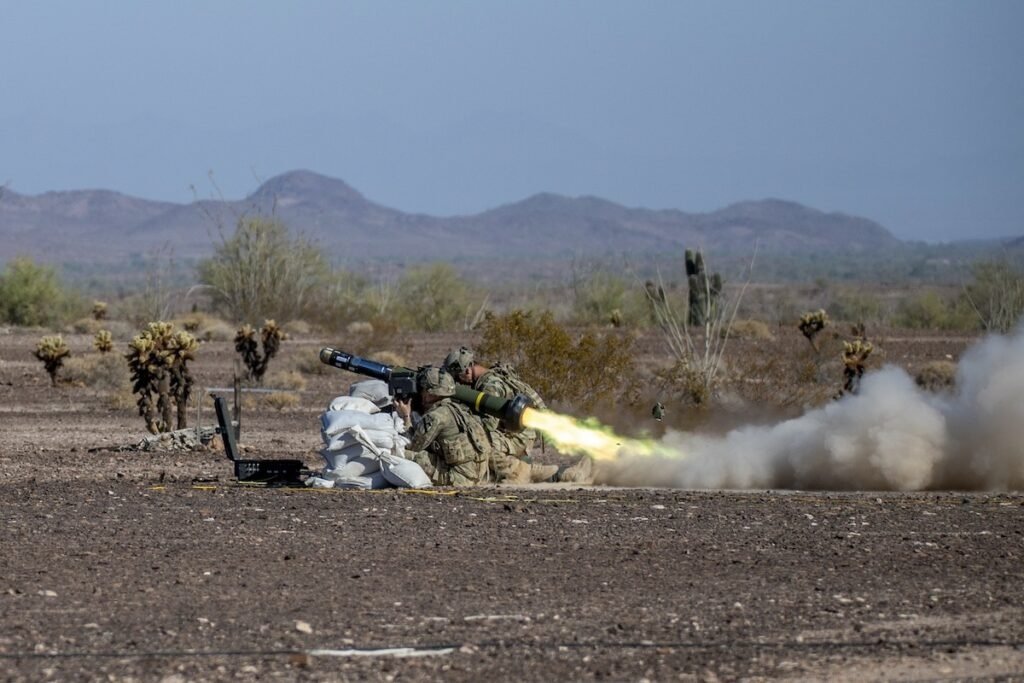
U.S
SAN DIEGO — Kratos Defense & Security Solutions has received a U.S. Army contract to develop, manufacture and test an enhanced infrared seeker for the FGM-148 Javelin anti-tank guided missile. The contract, awarded on August 6 by the U.S. Army Combat Capabilities Development Command (DEVCOM) C5ISR Center, focuses on replacing obsolete components in the Javelin's existing guidance section and developing a production-ready seeker for continued long-term use. Kratos will conduct development and manufacturing at its Advanced Manufacturing Center in Birmingham, Alabama. The completed seeker will then undergo testing at U.S. Army government facilities. New seeker to address aging components The Javelin's infrared seeker is responsible for detecting and tracking the target after launch. Its fire-and-forget capability allows the operator to lock onto a target before firing, after which the missile tracks the target independently. The new Kratos seeker is intended primarily to address obsolescence in the current guidance section. Some older semiconductor, detector and manufacturing technologies used in military systems can become unavailable as suppliers discontinue older product lines. The contract therefore focuses on providing a production-ready replacement that can be manufactured and supported for the Javelin's continued service. Overall development, production and support of the Javelin system remain with the Lockheed Martin-RTX Javelin Joint Venture. Lockheed Martin currently supplies the existing seeker, while Raytheon is responsible for the Command Launch Unit, related guidance electronics and system software. Kratos will develop the next-generation seeker. Javelin modernization continues The seeker program follows the U.S. Army's introduction of the Lightweight Command Launch Unit (LWCLU). The first LWCLUs were delivered to the Army on May 26, 2026. The new unit is 25 percent lighter and 30 percent smaller than the legacy Block 1 Command Launch Unit and provides roughly twice the target detection and recognition range. It is compatible with current, past and future Javelin missile variants. Raytheon has invested $22 million to modernize its Tucson, Arizona, production facility to support higher LWCLU production rates. The Javelin missile production line is also being expanded. Lockheed Martin is increasing annual production capacity to 3,960 missiles by late 2026, compared with the previous capacity of 2,400 missiles per year. The expansion includes additional tooling, testing equipment and supply-chain capacity. Long-term Javelin production The Javelin entered U.S. service in 1996 and replaced the wire-guided M47 Dragon. Full-rate production began in 1994, and more than 50,000 missiles had been delivered by 2021. The system is expected to remain in U.S. service through at least 2050. Its combination of a portable launcher, imaging infrared seeker and fire-and-forget guidance allows infantry units to engage armored targets without maintaining guidance after launch. The Javelin has also been widely supplied to Ukraine since Russia's full-scale invasion in 2022. Those transfers increased the requirement for additional U.S. production and subsequent replenishment of U.S. inventories. The Kratos contract adds a new element to the broader Javelin modernization effort. While the LWCLU addresses the weapon's launch and target-acquisition equipment and Lockheed Martin expands missile production, Kratos will replace the aging seeker technology inside the missile. The new seeker is intended to keep the Javelin's guidance system supportable and suitable for continued production as the U.S. Army maintains the weapon for long-term service.
Read More → Posted on 2026-08-09 16:09:32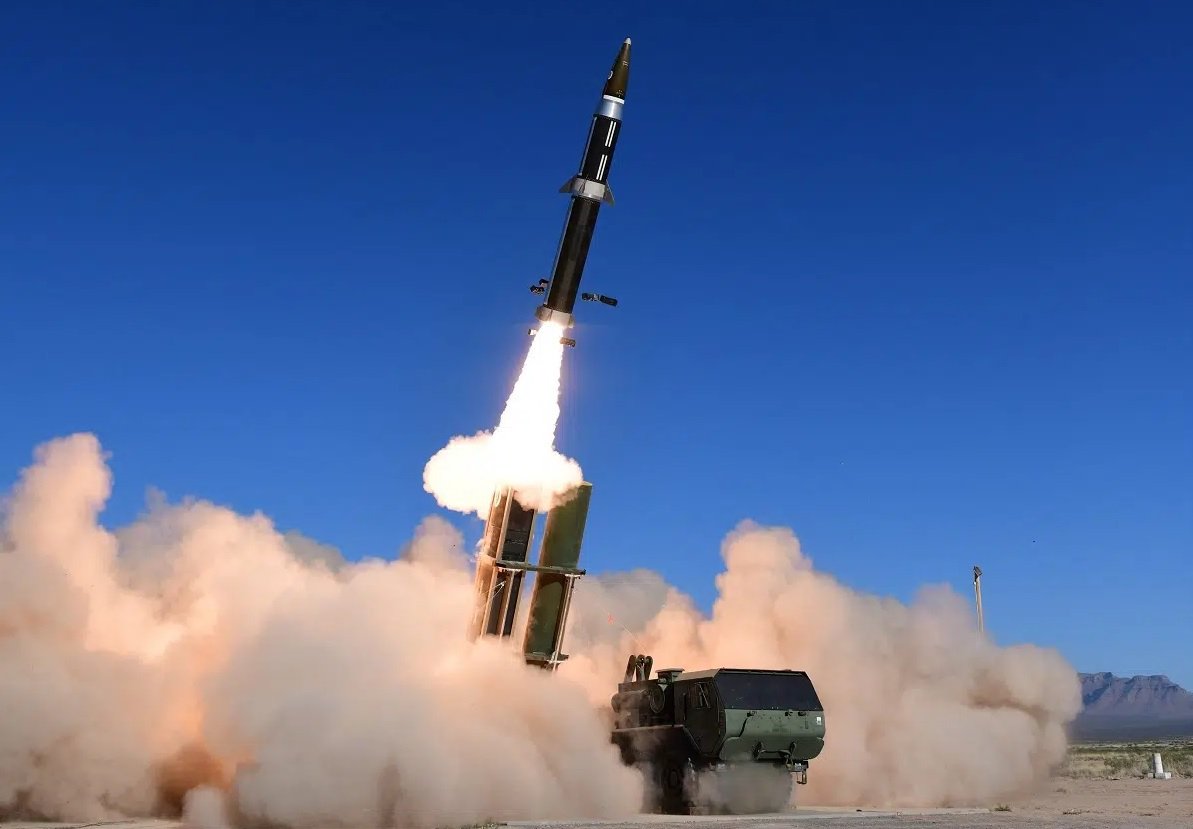
U.S
ARLINGTON, Virginia — The U.S. Defense Advanced Research Projects Agency (DARPA) is seeking industry concepts for a new generation of hypersonic cruise missile designed to combine speeds above Mach 5 with lower development and production costs. DARPA’s Tactical Technology Office issued a Request for Information (RFI) on August 7 for the Next Generation Hypersonic Cruise Missile (NGHCM). The agency is looking for an air-breathing weapon that can fly faster than Mach 5 and can be produced efficiently at scale. Responses are due by October 6. DARPA also plans to hold an industry day in September in Arlington, Virginia, to provide additional technical information and discuss the program with interested organizations. An RFI does not award a contract or guarantee funding. It allows the government to collect industry input while developing potential technical requirements and acquisition plans. Focus on Air-Breathing Hypersonic Technology The NGHCM is planned as an air-breathing hypersonic cruise missile rather than a boost-glide weapon. The concept would use oxygen from the atmosphere during flight instead of carrying an oxidizer. DARPA is seeking concepts based on scramjet propulsion. Scramjets compress incoming air at supersonic speeds and use it to support combustion of fuel. The agency is also asking industry to consider different missile sizes and launch methods. Concepts could include weapons small enough for fighter aircraft weapons bays, as well as larger versions for bombers, naval ships or ground launchers. The primary objective is to develop a weapon capable of operating against advanced integrated air defense systems (IADS), which combine radars, surface-to-air missiles and fighter aircraft. Building on the HAWC Program The NGHCM effort builds on DARPA's previous Hypersonic Air-breathing Weapon Concept (HAWC) program, conducted with the U.S. Air Force. HAWC focused on technologies for air-breathing hypersonic flight, including scramjet propulsion, vehicle design and thermal management. In January 2023, a Lockheed Martin-built HAWC vehicle completed its final flight test. DARPA reported that it exceeded Mach 5, reached an altitude above 60,000 feet and traveled more than 300 nautical miles. The work later continued through More Opportunities with HAWC (MoHAWC), which involved further development and flight testing of technologies from Raytheon and Northrop Grumman. HAWC technology also contributed to the Air Force's Hypersonic Attack Cruise Missile (HACM) program led by Raytheon. Cost and Production Challenges DARPA's new effort places strong emphasis on manufacturing from the beginning of development. The agency wants companies to apply Design for Manufacturing and Assembly (DFMA) principles so that future weapons can be produced more efficiently instead of relying on expensive prototypes that are difficult to manufacture in larger numbers. The RFI asks industry to explore new propulsion technologies, heat-resistant materials and testing methods that could reduce development time and production costs. DARPA is also encouraging partnerships between major defense contractors and smaller or non-traditional companies, including universities and government laboratories. The approach reflects challenges faced by existing U.S. hypersonic programs, including HACM. A July 2026 Government Accountability Office report said HACM's flight-testing plan had been reduced from seven tests to five, while its initial operational capability target had moved to fiscal year 2029. The report also said development costs were approaching $2 billion. The Air Force has also provided funding for the earlier AGM-183A Air-Launched Rapid Response Weapon (ARRW) as another path while hypersonic development continues. Next Steps DARPA will use responses to the RFI to assess available technologies and help shape potential technical requirements and acquisition plans. The September industry day in Arlington will provide additional information to interested organizations, while responses to the RFI are due October 6. The NGHCM remains at the information-gathering and technology-development stage. DARPA has not awarded a production contract through the RFI. The program is focused on finding an air-breathing hypersonic cruise missile approach that can achieve Mach 5-plus speeds while addressing development time, manufacturing efficiency and production cost.
Read More → Posted on 2026-08-08 16:13:49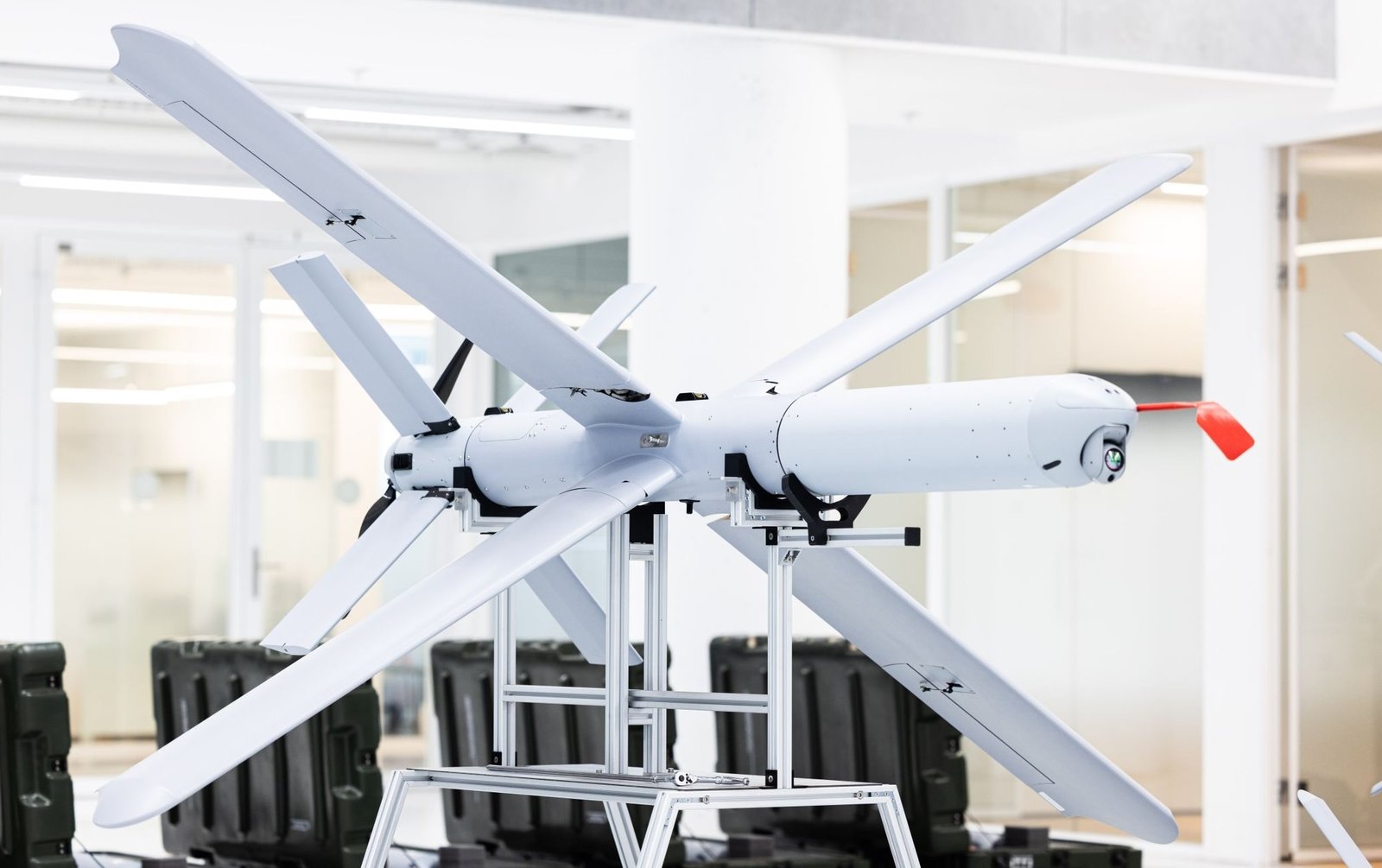
U.S
WASHINGTON — The U.S. Army has placed an additional order worth more than $50 million for HERO 120 loitering munition systems and supporting equipment from Mistral Inc. and Uvision Inc. under the Army’s Lethal Unmanned Systems (LUS) program. The new order expands the number of HERO 120 systems being delivered to U.S. Army soldiers and supports training, readiness and operational requirements. The award follows the successful completion of the first Lot Acceptance Tests (LAT) for the system on August 4, 2026. Mistral and Uvision announced the additional order on August 5. The companies said the production systems completed the required acceptance-test missions and met the Army’s performance standards during the LAT process. The systems are manufactured domestically in the United States. Additional Order Under $982 Million Army Contract The latest order is part of an existing multi-year Indefinite Delivery, Indefinite Quantity (IDIQ) contract valued at $982 million. The Army awarded the contract to Mistral and Uvision in October 2025 for the procurement, fielding, training and sustainment of the HERO 120 under the LUS program. Mistral serves as the prime contractor for system integration and program management, while Uvision is the original designer and design authority for the HERO 120. The exact number of HERO 120 systems covered by the latest order has not been disclosed. The order includes additional systems and ancillary equipment for Army soldiers. Yoav Banai, senior vice president at Mistral, said the award increases the number of HERO 120 systems and supporting equipment available to soldiers, allowing them to train, build confidence and prepare for missions. Jarmin Blanton, vice president of business development, sales and marketing at Uvision, said the company remains committed to supporting the Army’s LUS program and its precision-strike requirements. HERO 120 Capabilities The HERO 120 is a mid-range loitering munition designed for target observation, identification, tracking and engagement. According to Uvision, the system is intended for precision engagement of armored and other high-value targets. The system weighs approximately 24 kilograms (53 pounds) and carries a 4.5-kilogram (9.9-pound) warhead. It has an operational range of up to 60 kilometers (37 miles) and can remain airborne for up to 60 minutes. The HERO 120 is controlled by an operator through a datalink terminal and handheld fire-control unit. Its loitering capability allows the munition to remain in the target area while the operator observes and tracks targets before deciding whether to conduct an engagement. The system also has a mission-abort capability. If an attack is cancelled, the HERO 120 can return to loitering, search for another target or recover using its parachute, according to the information provided by Uvision. Production Moves Into Acceptance and Fielding The completion of the first Lot Acceptance Tests marks a production-quality milestone for the HERO 120. The tests are used to verify that production systems meet the Army's required acceptance criteria before fielding. The latest order comes shortly after this testing milestone, expanding deliveries under the Army's existing multi-year contract. Initial deliveries under the $982 million contract were scheduled to begin in early 2026. The broader agreement covers not only the systems themselves but also training and lifecycle sustainment. The Army's latest order therefore adds to an existing procurement effort rather than representing a separate HERO 120 acquisition program. U.S. Manufacturing Mistral and Uvision are producing the HERO 120 systems domestically in the United States for the Army program. Mistral is responsible for integration and program management, while Uvision provides the original HERO 120 design and technical authority. The two companies have previously received U.S. government contracts for the HERO 120 family. In 2024, Uvision and Mistral announced a $73 million contract for HERO-120SF systems for U.S. Special Operations Command. The latest order increases the number of HERO 120 systems and related equipment available to Army units while supporting the program's training and readiness requirements.
Read More → Posted on 2026-08-08 13:12:37
U.S
BELGRADE — Ukraine has reached an agreement with the United States for monthly deliveries of Patriot air defense interceptor missiles, Ukrainian President Volodymyr Zelenskyy said Saturday. However, he said the agreed quantities are not sufficient to meet Ukraine’s air defense requirements. Zelenskyy made the comments during a joint press conference with Serbian President Aleksandar Vučić in Belgrade. “Who has the anti-missiles and systems? Primarily the manufacturer – the United States of America,” Zelenskyy said. “Can they help? We are working on it. Will they supply us with missiles every month? Yes, we have agreements. Are these missiles enough? No.” 2026 Deliveries Below Previous Levels Zelenskyy said the volume of Patriot interceptors expected in 2026 is significantly lower than the amount Ukraine received in 2025. He did not provide exact figures for the monthly deliveries. The shortage comes as Ukraine continues to face Russian missile and drone attacks. Zelenskyy said earlier this week that allied deliveries of air defense missiles during the first half of 2026 were about one-third of the level recorded in 2025. Patriot systems are particularly important to Ukraine's air defense because they are used against ballistic missile threats. Ukraine Seeks Additional European Support With US deliveries falling short of Ukraine's requirements, Kyiv is continuing negotiations with European and other international partners for additional interceptors. Zelenskyy identified Germany and Poland as countries that could provide significant assistance. He also said the Netherlands and Scandinavian countries were contributing smaller quantities from their available stocks. Ukraine has also explored possible assistance from Japan and South Korea. However, Zelenskyy said legal restrictions in those countries prevent them from directly supplying lethal weapons to Ukraine. An option to purchase equipment from Israel was also considered, but Zelenskyy said that arrangement is currently unavailable. Patriot Production Talks Face Delays Ukraine is also seeking a longer-term solution through joint or domestic production of Patriot interceptors. US officials have said that advanced PAC-3 interceptors remain under strict export controls and that American manufacturers are currently the only companies permitted to produce the missiles. US Ambassador to NATO Matthew Whitaker said earlier in August that Washington would not enter into a long-term agreement for joint Patriot production with Ukraine before winter. The position followed earlier comments by US President Donald Trump in July suggesting that Ukraine could potentially receive a license to manufacture Patriot missiles. Trump later expressed concerns about transferring sensitive defense technology. According to Reuters, discussions over possible production arrangements have continued, including a proposal under which Ukraine could manufacture some Patriot missile components while final assembly would take place in Germany. US Production Expansion The United States is also working to increase Patriot interceptor production. Existing production capacity, however, cannot immediately eliminate the shortage faced by Ukraine. For Kyiv, the immediate priority remains obtaining additional interceptors from US and allied stocks while longer-term production plans are considered. Zelenskyy's latest comments underline Ukraine's continued effort to secure sufficient air defense missiles ahead of the coming winter, when Kyiv expects Russian attacks on Ukrainian infrastructure to remain a major concern.
Read More → Posted on 2026-08-08 12:15:47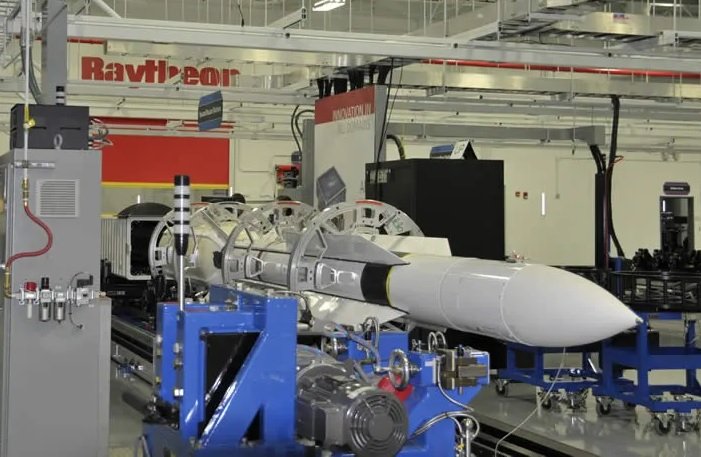
U.S
WASHINGTON — RTX’s Raytheon business has received a noncompetitive production contract valued at up to $745.4 million to manufacture and assemble Standard Missile-3 (SM-3) Block IIA ballistic missile interceptors for the United States and Japan. The contract was announced Aug. 7 by the U.S. Department of War, acting through the Missile Defense Agency (MDA). It covers requirements for the U.S. government and Japan’s Ministry of Defense through Foreign Military Sales arrangements. The initial obligations total about $553.2 million, including $275.6 million in U.S. fiscal 2026 procurement funds and approximately $277.6 million in funding from Japan’s Ministry of Defense. Work under the initial funding is scheduled to continue through February 2031. Manufacturing and related engineering work will be performed at RTX facilities in Tucson, Arizona, and Huntsville, Alabama, with an estimated completion date of Feb. 28, 2031. SM-3 Block IIA The SM-3 Block IIA is a ballistic missile interceptor jointly developed by the United States and Japan. It is designed to engage ballistic missile threats outside the Earth's atmosphere during the midcourse phase of flight. The interceptor uses a three-stage solid-fuel rocket propulsion system and a kinetic warhead. Rather than using an explosive charge, the interceptor destroys its target through direct physical impact. Japan has been closely involved in the development of the Block IIA, including work on the missile's third-stage rocket motor and nose cone. The interceptor is launched from Mk 41 vertical launch systems installed aboard Aegis-equipped U.S. Navy and Japan Maritime Self-Defense Force warships, as well as at certain Aegis Ashore land-based missile-defense sites. Recent Operational Use The SM-3 family was used operationally during the April 2024 Iranian missile and drone attack on Israel. U.S. Navy Arleigh Burke-class destroyers USS Arleigh Burke and USS Carney, operating in the eastern Mediterranean, launched SM-3 interceptors during the operation. Defense officials reported that at least six Iranian ballistic missiles were intercepted. Some accounts identified the Block IIA variant specifically, although public reporting has not provided complete variant information for every interceptor used. The SM-3 family has also been associated with later U.S. ballistic missile interceptions involving operations near Israel and the eastern Mediterranean in 2026. However, the U.S. military has not publicly confirmed the specific SM-3 variant involved in every engagement. Continued U.S.-Japan Production The latest award supports continued production of SM-3 Block IIA interceptors for both countries. It adds to previous U.S. procurement efforts aimed at maintaining ballistic missile defense capacity and supporting the jointly developed interceptor program.
Read More → Posted on 2026-08-08 11:38:45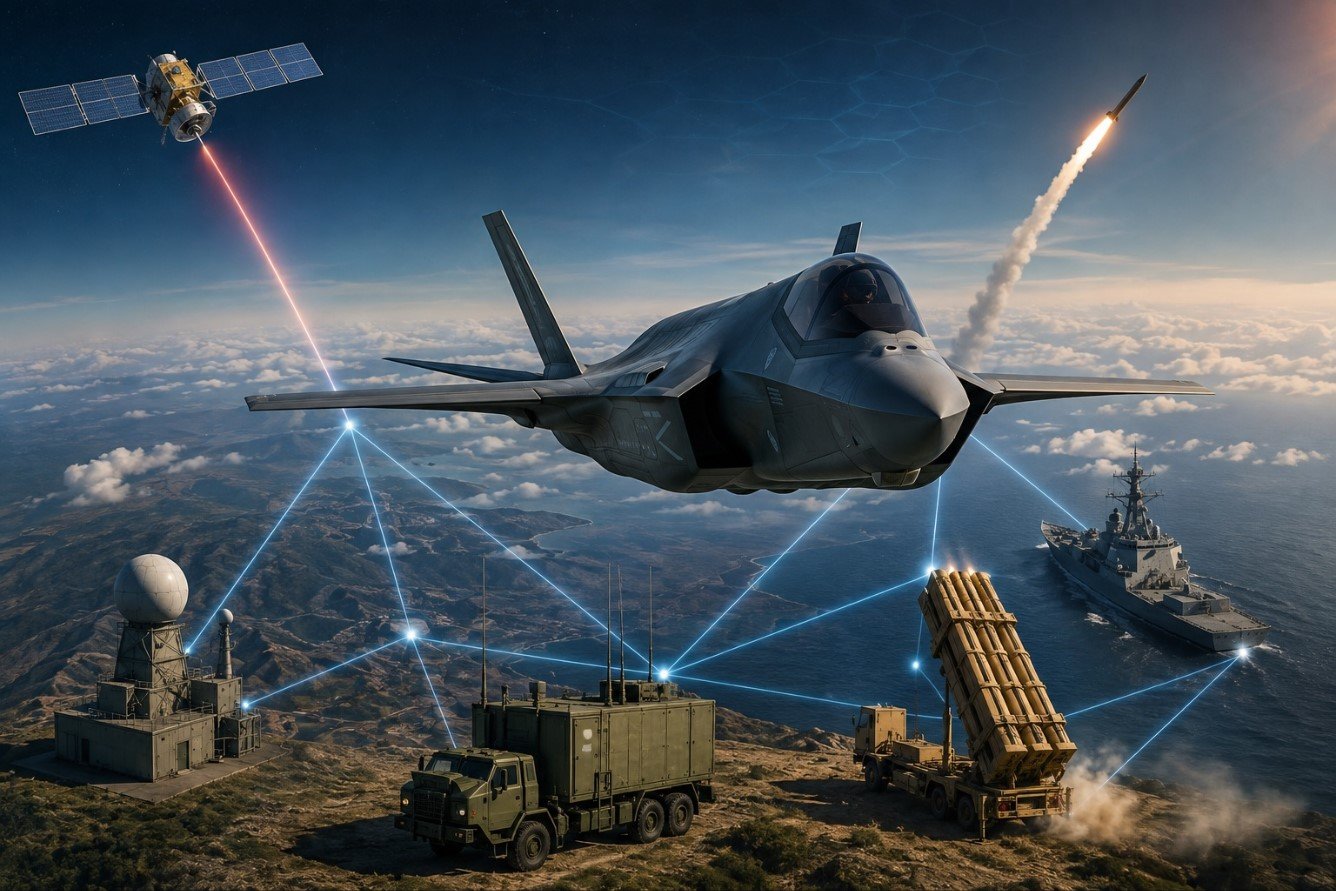
U.S
BETHESDA, Md. — Lockheed Martin is positioning the F-35 Lightning II as an airborne tracking and targeting node within a broader integrated missile defense architecture that connects aircraft, space-based warning systems, command-and-control networks and missile interceptors. The approach is designed to allow information collected by different sensors to be shared across the defense network, helping reduce the time between detecting a missile threat and responding to it. F-35 Adds an Airborne Sensor Layer According to Lockheed Martin, the process can begin with space-based infrared systems detecting the launch of a missile. The information can then be combined with data collected by F-35 aircraft operating closer to the threat. The F-35 is designed to function as a mobile intelligence, surveillance and reconnaissance platform. Its Distributed Aperture System (DAS), Electro-Optical Targeting System (EOTS) and sensor-fusion software allow it to combine information from different sources with its own sensor detections. Lockheed Martin has also highlighted passive infrared capabilities such as IRST21, which can provide infrared tracking without actively transmitting signals. The company describes these capabilities as part of the F-35's role as an airborne sensor within networked defense operations. The company has previously demonstrated the F-35's ability to provide sensor information to ground-based air and missile defense systems. In a 2019 demonstration, F-35 track data was sent to the U.S. Army's Integrated Air and Missile Defense Battle Command System (IBCS), allowing the aircraft to operate as an elevated sensor. A 2020 test also demonstrated F-35 integration with IBCS during a live-fire event. C2BMC Connects the Defense Network A key part of the architecture is Lockheed Martin's Command and Control, Battle Management and Communications (C2BMC) system. C2BMC serves as an integrating element of the U.S. Missile Defense System, connecting sensors, weapons and command elements to provide commanders with a coordinated view of missile threats. Lockheed Martin says the system has operated continuously since 2004 and is deployed across multiple locations and time zones. The company has also worked with the Missile Defense Agency to integrate additional sensors and missile-defense systems into C2BMC. These efforts include the integration of the Ballistic Missile Defense Overhead Persistent Infrared Architecture and other capabilities. In the architecture described by Lockheed Martin, F-35-generated tracking and targeting information can therefore become part of a wider operational picture rather than remaining limited to the aircraft itself. THAAD and NGI Form Part of the Intercept Layer The architecture also connects the sensor and command layers with missile interceptors. The Terminal High Altitude Area Defense (THAAD) system provides a terminal-phase ballistic missile defense capability. The Missile Defense Agency describes THAAD as a land-based system capable of intercepting ballistic missiles inside or just outside the atmosphere during the terminal phase of flight. Its AN/TPY-2 radar provides tracking and discrimination information to support engagements. The Next Generation Interceptor (NGI) is being developed for the U.S. Ground-based Midcourse Defense system to strengthen homeland defense against long-range ballistic missile threats. Lockheed Martin says NGI is designed to work with ground-based radars and command-and-control systems as part of a layered defense architecture. This creates a multi-layered chain in which space-based systems provide early warning, airborne platforms such as the F-35 can contribute additional tracking information, command-and-control systems distribute the information, and appropriate interceptors can be used against the threat. Moving From Individual Systems to an Integrated Network Lockheed Martin's approach focuses on connecting systems that are already operational or being delivered rather than creating an entirely new missile-defense architecture from the beginning. The company's integrated air and missile defense portfolio combines sensors, satellites, command-and-control systems and interceptors across different parts of the defense network. Lockheed Martin describes C2BMC as a key element for coordinating these systems across domains. The company has emphasized that such architectures need to remain connected, maintainable and scalable as additional capabilities are introduced. For the F-35, this means its role can extend beyond traditional air-to-air and air-to-ground missions. The aircraft can contribute information gathered by its sensors to other elements of the force, allowing its data to become part of a wider missile-defense picture. Lockheed Martin's 2026 material specifically describes the F-35 as a "flying sensor" that can combine space-based information with its own onboard detections. The company presents this integration as part of a broader effort to connect space, air, land and command-and-control capabilities into a unified defense architecture. The concept therefore places the F-35 within the sensor and information-sharing layer of an integrated missile-defense network, complementing space-based warning systems, C2BMC and ground-based interceptor systems such as THAAD and NGI.
Read More → Posted on 2026-08-08 11:20:27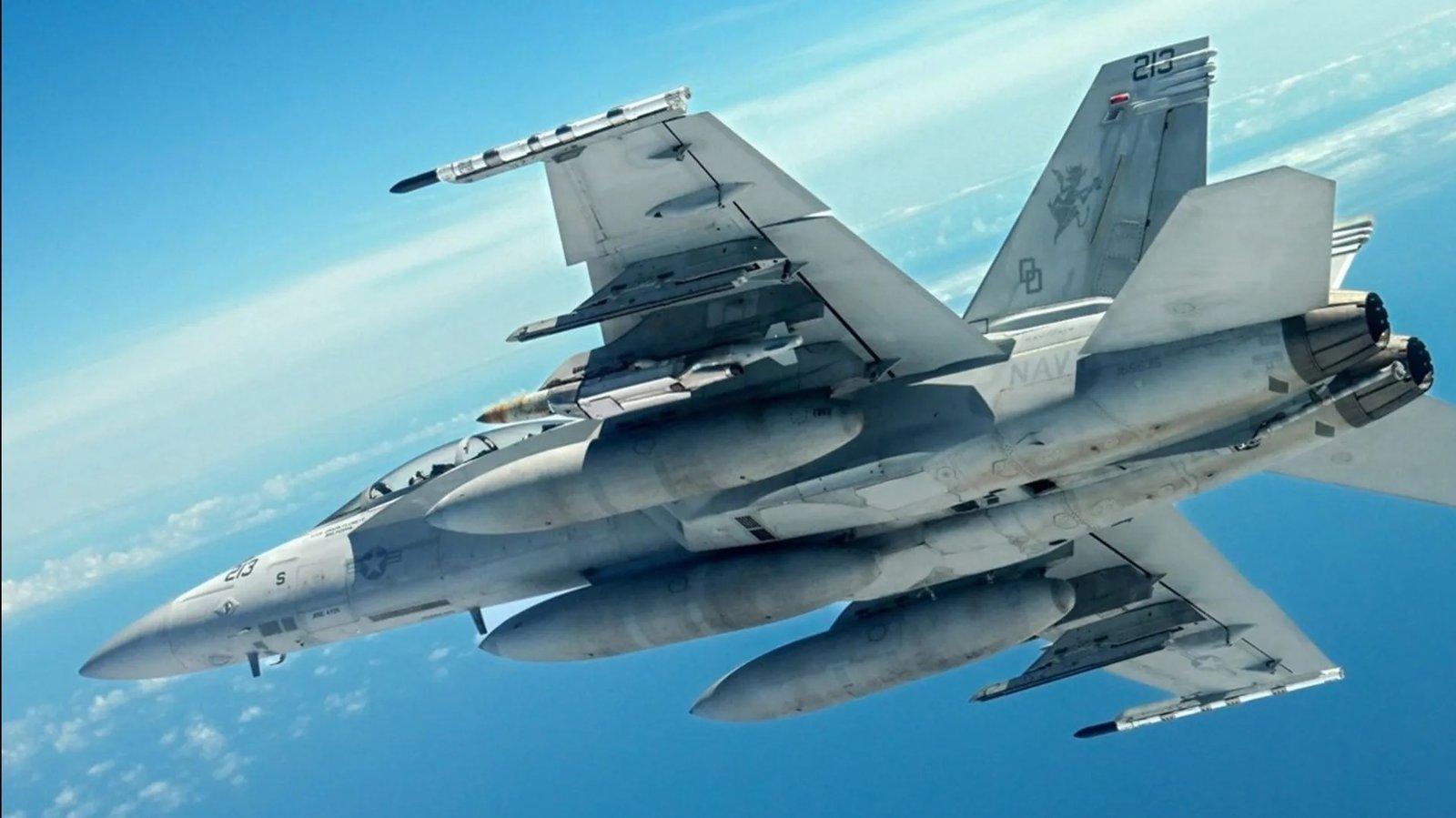
U.S
ST. CHARLES, Missouri — Boeing has received approval to begin initial serial production of the JDAM-LR (Joint Direct Attack Munition Long Range), designated GBU-75, following the award of a $75 million undefinitized contract action from the U.S. Air Force for BSU-111/B Payload Delivery Units intended for the U.S. Navy. The production approval follows a series of successful U.S. Navy flight tests conducted in April 2026, marking an important step toward fielding a long-range precision-guided weapon designed to increase the strike range of carrier-based aircraft while using existing JDAM technology. Initial Production Approved Following Successful Flight Tests The U.S. Air Force awarded Boeing the initial production contract for the BSU-111/B Payload Delivery Units, which form the core of the JDAM-LR system for U.S. Navy use. The approval came after successful flight demonstrations conducted by the U.S. Navy on April 1 and April 3, 2026, over the Point Mugu Sea Range off the California coast. During both tests, F/A-18E/F Super Hornet fighter aircraft released inert JDAM-LR weapons. Each test covered approximately 200 nautical miles (370 kilometers). During the first flight, the weapon remained in powered flight for about 34 minutes before landing within meters of its planned target. The second test included altitude changes and maneuvering while maintaining guidance throughout the mission. According to the reported test results, the demonstrations confirmed safe separation from the aircraft, compatibility with existing aircraft interfaces, powered free flight, and navigation using military-code GPS. Powered Upgrade to the JDAM Family The JDAM-LR is the newest member of Boeing's Joint Direct Attack Munition (JDAM) family. Unlike the standard JDAM, which converts unguided bombs into precision-guided glide weapons, the JDAM-LR adds a compact propulsion system that allows sustained powered flight. The system combines: A GPS-aided inertial navigation system (INS) derived from the existing JDAM family. Aircraft interface systems. A BSU-111/B deployable wing payload delivery unit. A Kratos TDI-J85 turbojet engine producing 200 pounds of thrust. The kit is designed to be fitted to a 500-pound-class (approximately 230-kilogram) bomb body, typically a Mk-82, effectively converting a conventional gravity bomb into a powered long-range precision weapon. According to Boeing, the JDAM-LR is capable of striking land and maritime targets at ranges exceeding 300 nautical miles (more than 555 kilometers). Boeing Highlights Program Milestone Commenting on the production award, Bob Ciesla, Vice President of Boeing Precision Engagement Systems, said: "This first production contract is a major milestone for the JDAM LR program, demonstrating our ability to deliver long-range precision-strike capability at a significantly lower cost." The company said the contract represents the transition of the program from successful development and testing into production. Comparison With Existing JDAM Variants The JDAM-LR expands Boeing's existing family of precision-guidance kits, each designed for different operational requirements. The standard JDAM uses GPS-aided inertial navigation and typically provides a launch range of 15 to 28 kilometers. The JDAM-ER (Extended Range) adds folding wings that increase range to approximately 70 to 80 kilometers, while some official figures describe the range as about 40 nautical miles, depending on configuration. The Laser JDAM (LJDAM) adds a laser seeker, allowing engagement of moving targets. The new JDAM-LR (GBU-75) retains the JDAM guidance system while adding deployable wings and a compact turbojet engine to extend its range beyond 300 nautical miles (555 kilometers). Designed for Existing Aircraft One of the key features of the JDAM-LR is its compatibility with aircraft already cleared to carry standard JDAM weapons. According to Boeing, the weapon is designed to integrate without requiring aircraft modifications. Platforms identified for compatibility include the U.S. Navy's F/A-18E/F Super Hornet and the U.S. Air Force's B-52. Qualification work and aircraft integration activities are continuing as production begins. Manufacturing and Program Development Boeing said it invested nearly $100 million of its own funding in the JDAM-LR program before receiving the production award. Manufacturing preparations are underway at the company's St. Charles, Missouri facility, where production of the initial units has now started following the contract announced in early August 2026. Cost and Operational Role Boeing has not disclosed the unit cost of the JDAM-LR. Standard JDAM guidance kits are generally reported to cost between $20,000 and $30,000. Boeing has stated that the powered JDAM-LR is intended to provide a lower-cost long-range precision-strike capability compared with traditional cruise missiles by using existing bomb bodies and established JDAM architecture. The weapon is expected to support land strike, naval strike, and maritime aerial-mining missions. Further qualification efforts will focus on shipboard integration for carrier operations. Because the system is designed around the existing JDAM family and is compatible with aircraft already qualified to carry JDAM weapons, it could also be adopted in the future by other U.S. military services and international operators that already use JDAM weapons.
Read More → Posted on 2026-08-07 16:43:32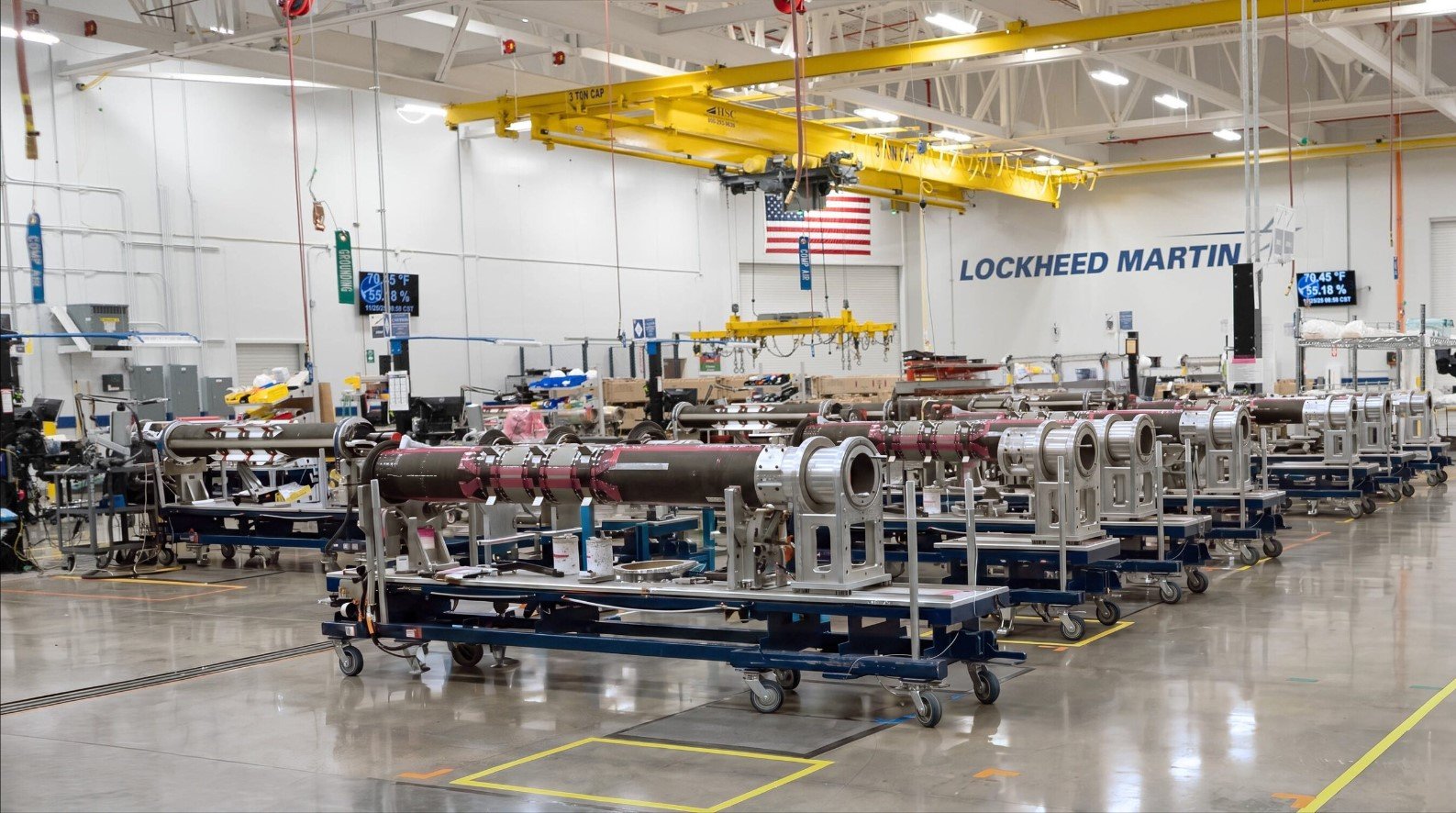
U.S
BETHESDA, Md. — Lockheed Martin has announced a major manufacturing modernization and expansion program, committing between $8 billion and $9 billion through 2030 to upgrade more than 20 manufacturing facilities across the United States. The investment is aimed at increasing production capacity for three of the company's key missile defense programs: the PAC-3 Missile Segment Enhancement (MSE) interceptor, the Terminal High Altitude Area Defense (THAAD) interceptor, and the Next Generation Interceptor (NGI). According to the company, the investment will support facility modernization, advanced manufacturing technologies, workforce development, and supply chain improvements as demand for air and missile defense systems continues to grow. Multiyear Contracts Support Production Expansion The expansion follows a series of major multiyear procurement contracts awarded by the U.S. government. In July 2026, Lockheed Martin received a seven-year undefinitized contract action (UCA) modification worth up to $53.86 billion for PAC-3 MSE interceptors. Combined with a $4.7 billion first-year award received in April 2026, the total value of the multiyear PAC-3 MSE procurement reached $58.62 billion. Lockheed Martin said the funding will support its plan to triple PAC-3 MSE production capacity by the end of 2030. The PAC-3 agreement is the second major multiyear procurement executed under the Department of War's Acquisition Transformation Strategy. It follows a June 2026 procurement contract worth up to $35 billion for THAAD interceptors. According to previously announced contract details, the THAAD procurement is intended to increase annual production from 96 interceptors to 400 interceptors. Work under the contract will be carried out at facilities in Dallas, Texas; Sunnyvale, California; Troy, Alabama; and Camden, Arkansas. "We are moving with speed to support the Department of War's Arsenal of Freedom," said Dan Nimblett, Vice President of Lockheed Martin Munitions Acceleration Integration. "Lockheed Martin continues to move with urgency to support investments to expand capacity, modernize critical facilities and deter adversaries through comprehensive defensive capabilities," Nimblett added. New Facilities in Alabama and Arkansas To support higher production rates, Lockheed Martin has started construction on two major manufacturing projects during 2026. In Troy, Alabama, construction has begun on Munitions Production Center Building 47, an 87,000-square-foot facility that will support THAAD production and provide capacity for potential future Next Generation Interceptor (NGI) manufacturing. The company said the expansion will nearly double the site's existing manufacturing footprint. In Camden, Arkansas, Lockheed Martin is building the Munitions Acceleration Center, which will support increased production of PAC-3 MSE interceptors. Camden is responsible for the final assembly of complete PAC-3 MSE rounds. The company expects the Camden expansion to increase the local workforce by about 50 percent, growing from approximately 1,200 employees to around 1,850 employees. Courtland Facility to Support Next Generation Interceptor In June 2026, Lockheed Martin opened Missile Assembly Building 5 (MAB-5) at its Courtland, Alabama, campus. The 88,000-square-foot facility is dedicated to Next Generation Interceptor (NGI) production and uses digital engineering and advanced manufacturing processes. According to the company, MAB-5 brings together digital manufacturing tools and smart production methods adapted from programs including THAAD and hypersonic systems. Manufacturing at the facility is expected to begin in 2027. "Once again, we are expanding the Courtland campus to meet the national security challenges of today," said Reshondra McInnis, Lockheed Martin Courtland Site Executive. "MAB-5 will shape the local workforce by introducing high-skill jobs to create even more pathways toward advanced manufacturing careers." The Next Generation Interceptor (NGI) is being developed to defend the United States and allied nations against evolving long-range ballistic missile threats. Lockheed Martin stated that the new Courtland facility will help accelerate the program's transition from development into production. The company was selected by the Missile Defense Agency (MDA) in 2024 to develop the interceptor. "NGI is more than a 'next generation interceptor', it's a next generation solution to missile defense's most serious threats," said Chris Jewell, Vice President of the Lockheed Martin NGI Program. "We are creating a foundation that enables long-term production, sustainment and mission support with greater adaptability and more resilient defense architecture." PAC-3 Integration With Aegis Combat System Alongside expanding production, Lockheed Martin is also working to broaden the operational use of the PAC-3 interceptor. In April 2026, the U.S. government awarded the company a contract to develop, integrate and test the capability to launch the PAC-3 missile from the Aegis Combat System. Lockheed Martin said the work will expand the flexibility and capacity of the Aegis system. The company plans land-based testing in 2027, while initial operational capability is targeted for later years. According to Lockheed Martin, Aegis is currently deployed aboard more than 120 ships across six nations and is also used in land-based Aegis Ashore operations. Long-Term Manufacturing Investment Lockheed Martin said its $8 billion to $9 billion investment through 2030 will fund modernization efforts across more than 20 U.S. facilities, including sites in Alabama, Arkansas, Florida, Massachusetts and Texas. The company stated that the investment will focus on expanding manufacturing capacity, introducing advanced production technologies, strengthening the supply chain, and supporting workforce growth to meet increasing demand for air and missile defense systems. Company officials also noted that more than $1 billion had already been invested in production capacity expansion before the latest multiyear contract awards.
Read More → Posted on 2026-08-07 15:20:00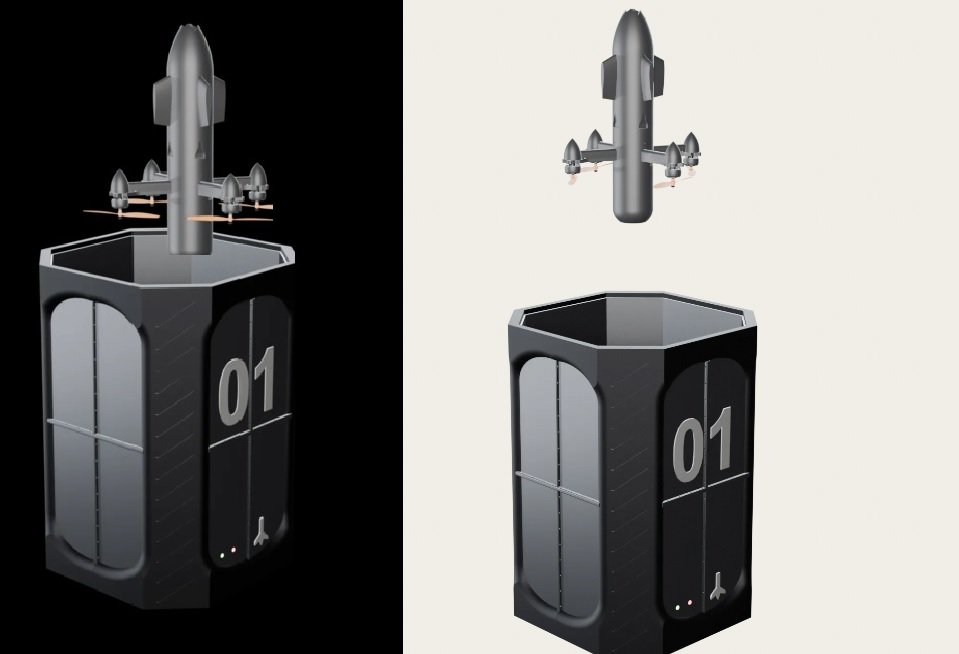
U.S
SAN FRANCISCO — IMPACT Drones, Inc., a counter-drone company backed by Y Combinator, has launched Air Defense as a Service (ADaaS), a commercial security system that uses autonomous interceptor drones to protect critical infrastructure from hostile drone attacks. The system is designed for sites including data centers, power grid facilities, airports, and military bases. According to the company, it aims to address the growing challenge of defending fixed infrastructure from increasingly common drone threats. IMPACT said conventional air defense systems are often too expensive for routine protection of civilian infrastructure. Traditional interceptors can cost more than $1 million per engagement, while hostile drones may cost approximately $30,000 to $50,000 to manufacture. This cost imbalance has left many infrastructure operators without an affordable physical defense against aerial threats. The need for such protection was highlighted earlier this year when a drone attack disrupted three Amazon Web Services (AWS) data centers in the Middle East. The incident took a dozen core cloud services offline, and Amazon reported an estimated $200 million loss in a single day. Autonomous Container-Based System The ADaaS system consists of a sealed container permanently installed at the protected site. It does not require dedicated launch crews or launch pads. When external sensors detect a hostile drone, an interceptor automatically breaks through the container's frangible lid and launches toward the target. Using onboard visual navigation, it physically collides with the incoming drone to neutralize the threat. Because the system relies on visual navigation instead of GPS, it can continue operating in environments where Global Navigation Satellite System (GNSS) signals are jammed or unavailable. HUNTER and SABLE Interceptors IMPACT currently offers two interceptor platforms running the company's common autonomy software. HUNTER is the point-defense interceptor designed to protect the airspace directly above a facility. It can reach speeds of up to 300 km/h and uses electro-optical/long-wave infrared (EO/LWIR) terminal guidance. The company said its hardware lineage is based on systems previously used in Ukraine against Shahed-136, Geran-2, and Gerbera drones. SABLE, which is still under development, is a turbine-powered interceptor with a delta-wing airframe. It is designed to reach speeds of up to 825 km/h to engage faster aerial threats. Subscription-Based Protection Instead of selling individual interceptor missiles, IMPACT is offering the system through a subscription model. The service includes the installed hardware, replacement interceptors, reloads, and continuous monitoring, with pricing scaled to the size of the protected site and expected threat level. "Drones are hitting data centers, substations, and airports today, and the defenses built for armies do not scale down to a single site. So we put the whole thing in a box. It sits at your site, it launches when something hostile comes in, and it rams it out of the sky. You do not buy missiles, you subscribe to safe skies. That is Air Defense as a Service," said Jasper Lortije, Founder and CEO of IMPACT Drones. Pilot Deployments Planned IMPACT Drones is part of Y Combinator's Summer 2026 batch. The launch was announced through Y Combinator's channels, and pilot deployments of the interceptor system are scheduled to begin in the third quarter of 2026. The San Francisco-based company was founded by Jasper Lortije, an aerospace engineer with a master's degree from TU Delft who previously worked on visual navigation systems, and Alessandro Fiume, who has a background in sales. The company said it is seeking partnerships with data center operators, airport managers, and energy infrastructure organizations for future deployments.
Read More → Posted on 2026-08-07 14:32:41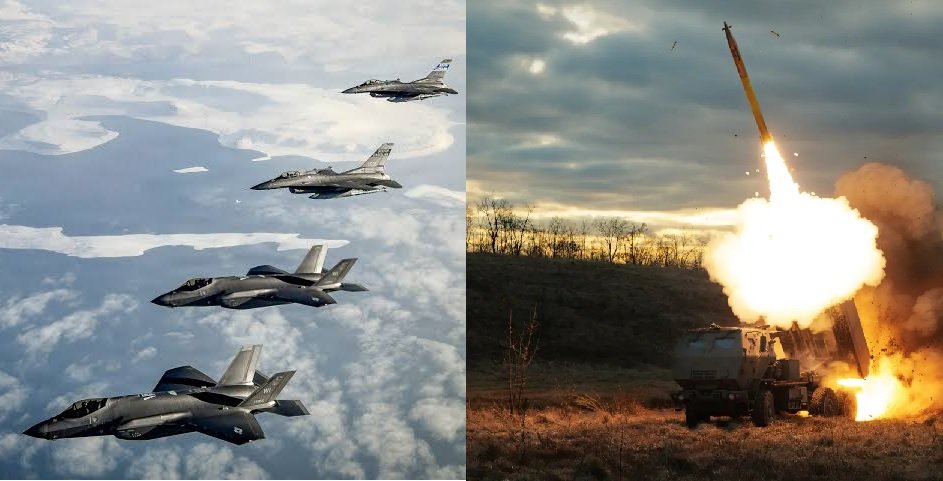
U.S
NOME, Alaska — U.S. joint military forces carried out a multi-domain homeland defense exercise near Nome, Alaska, on August 4 and 6, 2026, integrating fifth-generation fighter aircraft with long-range ground artillery to test their ability to detect, track and engage simulated threats approaching North America through the Arctic. The exercise was conducted under Operation TUNDRA MERLIN, a long-planned homeland defense operation led by U.S. Northern Command and Alaskan Command. The mission focused on improving coordination between air and land forces, validating rapid deployment capabilities, and strengthening joint operations in the Arctic environment. Air and Ground Forces Conduct Integrated Mission The exercise brought together a range of U.S. military assets from the Air Force and Army. Air Force units from Eielson Air Force Base, Alaska, deployed two F-35 Lightning II fighter aircraft, two F-16 Fighting Falcons, and a KC-135 Stratotanker for aerial refueling. On the ground, the U.S. Army fielded an M142 High Mobility Artillery Rocket System (HIMARS) from Joint Base Lewis-McChord, Washington, supported by an AN/TPQ-53 radar system and soldiers from the 1st Battalion, 5th Infantry Regiment, 1st Mobile Brigade Combat Team (Air Assault), 11th Airborne Division. The entire operation was conducted under the command and control of U.S. Northern Command and Alaskan Command. HIMARS Rapidly Deployed to Nome As part of the exercise, the HIMARS launcher was deployed to Nome on July 31, 2026, demonstrating the military's ability to rapidly move combat systems into remote Arctic locations. The 17th Field Artillery Brigade, I Corps, transported the HIMARS aboard a Royal Canadian Air Force C-17 Globemaster III from Joint Base Lewis-McChord. During the flight, the aircraft also stopped at Fort Wainwright, Alaska, to transport soldiers from the 11th Airborne Division, who later operated alongside the HIMARS and AN/TPQ-53 radar during the mission. F-35s and HIMARS Conduct Long-Range Precision Strike The main objective of the exercise was to integrate airpower with long-range precision fires in a single coordinated mission. After receiving aerial refueling from the KC-135, the F-35s and F-16s flew toward the vicinity of Saint Lawrence Island in the Bering Sea. The F-35s then digitally synchronized with the HIMARS unit on the ground to detect and engage a simulated target approximately 135 miles away, demonstrating coordination between airborne sensors and ground-based precision fires. F-16s Practice Defensive Counterair Operations Alongside the strike mission, the exercise also included defensive counterair training. The F-16 Fighting Falcons were assigned to defend the airspace by intercepting the F-35s, which temporarily acted as simulated inbound threats. This scenario allowed aircrews to practice defensive tactics while operating alongside other joint-force elements. Military Leaders Highlight Joint Force Integration Lt. Gen. Robert Davis, commander of Alaskan Command, the Alaskan North American Aerospace Defense Command Region, and the Eleventh Air Force, said the exercise demonstrated the value of integrating air and land capabilities for homeland defense. "This operation demonstrated the power of an integrated joint force capable of layering effects across the air and land domains to strengthen homeland defense," Davis said. "By synchronizing command and control, airpower and long-range precision fires, we strengthened our ability to posture combat-ready forces, eliminate operational seams and demonstrate the credible combat capability required to deter aggression across the Arctic." Maj. Gen. John Cogbill, commander of the 11th Airborne Division, said the deployment showed the Army's ability to rapidly move forces into the Arctic and integrate them with other military capabilities. "This deployment under Operation TUNDRA MERLIN demonstrates our ability to rapidly deploy forces and seamlessly integrate joint capabilities across the Arctic," Cogbill said. "By deploying alongside the HIMARS, we are proving our readiness to deter adversaries by demonstrating lethal, long-range precision capabilities that can hold their assets at risk." Operation TUNDRA MERLIN Supports Arctic Homeland Defense Operation TUNDRA MERLIN is a long-planned and ongoing homeland defense operation conducted by Alaskan Command with U.S. and Canadian partners. The operation integrates joint and multinational forces across the Alaskan theater to strengthen command and control, improve force integration, and maintain combat-ready forces capable of defending the northern approaches to North America. Earlier phases of the operation included a five-day, 800-mile combined maritime patrol conducted from July 20 to 24 in the Bering Sea and Bering Strait. The patrol involved the U.S. Coast Guard Cutters Munro and Storis and the Royal Canadian Navy ship HMCS Max Bernays. Before the August exercise, residents of Nome were notified about increased military activity and planned low-flying aircraft operations. Military officials said all activities were coordinated to minimize disruption to local communities while maintaining readiness for homeland defense missions in the Arctic.
Read More → Posted on 2026-08-07 14:22:01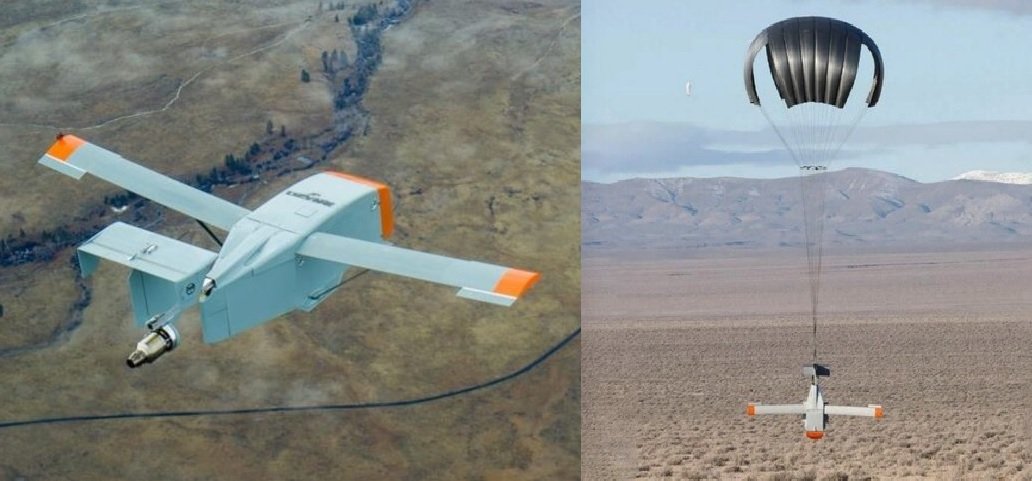
U.S
WEST PALM BEACH, Fla. — The U.S. Air Force Research Laboratory (AFRL) has awarded a contract valued at more than $6 million to DZYNE Technologies, LLC, now part of Ondas Inc., to continue development of the Long-Range Grasshopper autonomous aerial delivery system. The contract supports the advancement of a runway-independent logistics platform designed to deliver supplies over extended distances in contested and austere environments. The award was announced by Ondas on August 6, 2026. Following Ondas' acquisition of DZYNE Technologies in a transaction valued at $875.8 million, all defense-related contract work is now managed through Ondas Sentinel, the company's dedicated U.S. defense division. The Long-Range Grasshopper is part of DZYNE's Grasshopper Family of Systems, which provides autonomous precision aerial resupply for military operations. The systems are designed as low-cost, expendable aircraft that are not intended to be recovered or reused after completing their mission. This approach allows military forces to deliver essential supplies without exposing personnel or high-value aircraft to operational risks. The Grasshopper family includes both a glider version and a turbine-powered Long-Range variant. Both versions are capable of carrying up to 500 pounds of cargo and delivering it with high precision. After being released from a variety of host aircraft, the systems immediately transition into autonomous flight and navigate to pre-planned destinations. According to the company, the glider version has an empty weight of approximately 575 pounds and a maximum launch weight of 1,075 pounds. The turbine-powered Long-Range version has an empty weight of about 650 pounds and a maximum launch weight of 1,700 pounds. Both variants share a 20-foot wingspan. The systems are designed to operate in GPS-denied or GPS-degraded environments using autonomous navigation capabilities. They complete deliveries by deploying a parachute for precision landing at the designated target area. Ondas stated that the estimated production cost is approximately $40,000 per vehicle, supported by low-cost manufacturing methods. The latest contract builds on several years of collaboration between AFRL and the engineering teams now operating under Ondas Sentinel. During a 2024–2025 flight test campaign, the Long-Range Grasshopper successfully demonstrated several key capabilities, including autonomous deployment, jet-engine air-start, extended-range navigation, and precision payload delivery. The flight testing was conducted at locations including Dugway Proving Ground in Utah and the Pendleton UAS Range in Oregon. According to the company, the original Grasshopper glider progressed from a research concept to a fielded capability in less than 12 months, with several dozen units delivered to the U.S. Air Force. Development of the longer-range version began after operational users requested greater delivery range following the initial deployment of the glider system. Under the new AFRL contract, development work will continue on both the Long-Range Grasshopper and the Grasshopper glider. The program will focus on improving extended-range flight and endurance, modular payload integration, autonomous navigation in GPS-limited and GPS-denied environments, and increasing system reliability and manufacturability to support larger-scale fielding. The Long-Range Grasshopper has been developed to support the U.S. Air Force's Agile Combat Employment (ACE) concept, which emphasizes dispersed operations, flexible force deployment, and scalable logistics. The autonomous delivery system is intended to provide precision resupply from multiple launch platforms while reducing the need for fixed infrastructure and helping keep crewed aircraft outside higher-risk areas. Ondas said the acquisition of DZYNE Technologies expanded its defense capabilities across several mission areas, including multi-domain intelligence, surveillance and reconnaissance (ISR), counter-uncrewed aerial systems (counter-UAS), autonomous effects, aerial security, precision strike, autonomous logistics, and AI-enabled mission orchestration. Commenting on the contract award, Eric Brock, Chairman and Chief Executive Officer of Ondas, said the agreement supports the company's strategy of building an autonomous defense platform focused on technologies addressing current national security requirements. Ryan Hartman, Chief Executive Officer of Ondas Sentinel, said long-range, low-cost autonomous delivery is becoming an important capability for future military operations and that AFRL's continued partnership reflects the potential of the Grasshopper system to support distributed logistics in contested environments. The Long-Range Grasshopper is part of Ondas Sentinel's broader autonomous defense portfolio, which also includes LEAP, ULTRA, and counter-UAS systems. The new AFRL contract further supports continued development of scalable autonomous logistics technologies for future U.S. defense operations.
Read More → Posted on 2026-08-07 12:10:36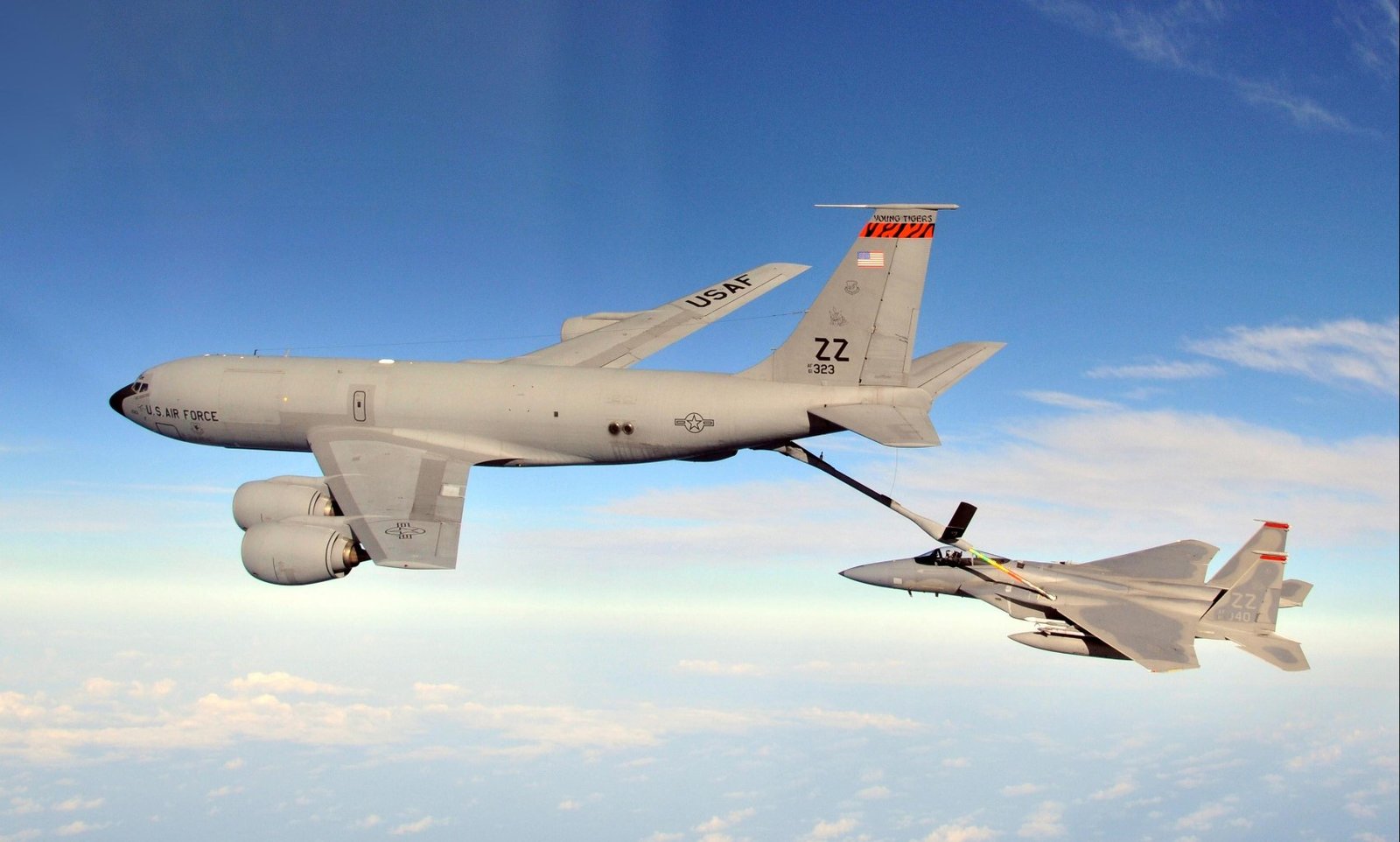
U.S
DAYTON, Ohio — The U.S. Air Force Research Laboratory (AFRL) has issued a Request for Information (RFI) seeking industry partners to help establish a KC-135 Electrified Boom Automation Lab, a new research facility that will support the development and testing of automated aerial refueling boom technology for the KC-135 Stratotanker. The notice, published on Aug. 6, 2026, is part of the Air Force's broader Combat Refueling and Operations Networked Universal Systems (CRONUS) program. Companies interested in participating in the project when it moves to a formal contract have until Sept. 6, 2026, to submit responses. The planned laboratory will use an actual KC-135 tail section fitted with a movable refueling boom, allowing researchers to evaluate automated boom operations in a controlled ground environment before moving to flight testing. KC-135 Tail Section to Be Installed at Wright-Patterson AFB According to the RFI, the government will acquire a KC-135 tail section, complete with a movable refueling boom, from the 309th Aerospace Maintenance and Regeneration Group (AMARG) at Davis-Monthan Air Force Base, Arizona. The equipment will be provided to the selected contractor as government-furnished equipment. The tail section will be installed inside a motion capture laboratory operated by the Air Force Institute of Technology (AFIT) at Wright-Patterson Air Force Base, Ohio. The laboratory uses arrays of wall- and ceiling-mounted cameras to capture highly accurate movement data, enabling engineers to study complex mechanical motion with precision. Contractor Will Design Support and Motion Systems Under the proposed project, the selected contractor will be responsible for designing a structural support system capable of holding the full weight of the KC-135 tail section while allowing it to move during testing. The contractor must also develop an overhead actuation system that enables the refueling boom to move through its complete operating range, including yaw, pitch, and probe extension. The Air Force specified that no equipment may be placed on the laboratory floor if it could obstruct the motion capture cameras or interfere with their line of sight. Supporting Future Automated Aerial Refueling KC-135 aerial refueling operations are currently performed manually by a boom operator positioned at the rear of the aircraft. During a refueling mission, the operator controls the extendable boom and guides it into the receiving aircraft's fuel receptacle. The new automation laboratory will allow researchers to move a real refueling boom through its full range of motion while recording detailed movement data. The controlled environment will support the development, refinement, and testing of automated or robotic boom control systems before they are evaluated during flight testing. Modernization Effort Comes Amid Continued KC-135 Reliance The automation initiative comes as the Air Force continues to depend heavily on the KC-135 fleet despite the aircraft's age. Earlier in 2026, during Operation Epic Fury, the fleet experienced significant operational losses. On March 12, a KC-135 crashed in western Iraq following a midair collision with another tanker, killing all six crew members aboard. The Air Force described it as the first loss of a KC-135, or any Air Force tanker, in 13 years. Two days later, an Iranian missile strike on Prince Sultan Air Base in Saudi Arabia damaged five additional KC-135 aircraft parked on the flight line. Air Force officials later said the damaged aircraft are expected to return to service, although repairs to the most heavily damaged airframes could take one to two years. Some reports based on satellite imagery suggested additional tanker damage during the campaign, but those claims have not been independently confirmed through official sources. Aging Fleet Continues Flying as KC-46 Faces Challenges According to U.S. Air Force fact sheets, the final KC-135 rolled off the production line in 1965, meaning aircraft still flying operational missions are approaching six decades of service. The aircraft's planned replacement, the KC-46A Pegasus, has faced continued development and production challenges. These include a production pause in 2025 after structural cracks were discovered in multiple aircraft, along with ongoing technical issues involving its aerial refueling boom system, as identified by the Pentagon's testing office. As a result, the KC-135 remains the Air Force's primary aerial refueling workhorse while the KC-46 program continues to address those issues. Center Console Refresh Program Progressing in Parallel The boom automation effort is one of several modernization programs aimed at extending the operational life of the KC-135 fleet. A separate initiative known as the Center Console Refresh (CCR) program, managed from Tinker Air Force Base, Oklahoma, is focused on modernizing the aircraft's cockpit instrumentation console. Since early 2025, the program has advanced through industry questions, draft solicitations, industry engagement activities, and other acquisition milestones, and remains in an advanced stage of the procurement process. Supporting the Future of the KC-135 Fleet The KC-135 Electrified Boom Automation Lab and the Center Console Refresh (CCR) program demonstrate the Air Force's continued investment in maintaining and improving its legacy tanker fleet. By creating a dedicated ground-based facility for automated boom research while upgrading cockpit systems, the Air Force aims to keep the KC-135 operational and effective as work continues on resolving technical and production challenges affecting the KC-46A Pegasus program.
Read More → Posted on 2026-08-06 16:56:20
U.S
HONOLULU, Hawaii — Firestorm Labs has successfully demonstrated at-sea manufacturing by producing 3D-printed drones and hundreds of spare parts aboard the U.S. Navy's Wasp-class amphibious assault ship USS Essex while the vessel was sailing to Hawaii for the Rim of the Pacific (RIMPAC) 2026 exercise. The demonstration showed how a containerized manufacturing system can support naval operations by allowing drones and repair parts to be produced directly aboard a warship instead of relying on shore-based supply chains. Containerized Microfactory Produces Drones at Sea The production was carried out using Firestorm Labs' xCell system, a transportable microfactory housed inside standard shipping containers. The platform combines additive manufacturing (3D printing), digital preparation tools, automation, and assembly stations to manufacture unmanned aerial systems (UAS) and replacement parts in operational environments. During approximately two weeks at sea, the xCell system produced more than 1,000 components and manufactured 12 Squall first-person view (FPV) drones aboard USS Essex. The Squall is a light electric FPV quadcopter with a largely printable airframe. According to Firestorm Labs, it can reach speeds of up to about 80 mph, has a range of up to 20 miles, provides around 42 minutes of flight time, and can carry a payload of roughly 5.5 pounds. Components that cannot be printed, including batteries, motors, flight controllers, cameras, and radio systems, are supplied as kits and integrated during assembly. Manufacturing Continued in Challenging Sea Conditions The production and assembly process continued while USS Essex operated in sea conditions with waves reaching 12 feet, equivalent to Sea State 5. Service members from the U.S. Navy, Marine Corps, and other participating units took part in printing, assembling, and supporting the manufacturing process aboard the ship. The demonstration formed part of the Naval Postgraduate School's Consortium for Advanced Manufacturing Research and Education (CAMRE) distributed advanced manufacturing network and was facilitated by FLEETWERX. Drones Used During RIMPAC 2026 Exercise After USS Essex arrived in Hawaii, the newly produced Squall drones were used during training activities at Makua Military Reservation on Oahu. Marines from the 3rd Light Armored Reconnaissance Battalion operated the drones after receiving training from Firestorm Labs personnel on additive manufacturing, drone assembly, and flight operations. During the exercise, the drones served as "red cell" adversary aircraft in a counter-unmanned aircraft systems (C-UAS) training scenario, supporting experimentation under the Naval Postgraduate School's CAMRE program during RIMPAC 2026. On-Demand Production of Repair Parts In addition to manufacturing drones, the xCell microfactory produced a variety of repair and maintenance items requested by the USS Essex crew. According to Firestorm Labs, printed items included: Gauges for deck tie-down inspections Reverse-engineered valve handwheels A non-conductive digging knife A deployment mount for Starlink internet hardware Mechanical test articles used to evaluate printer performance during operations at sea An Apache Rotor Guard droop stop designed to protect helicopter rotor systems Multiple versions of a Life Preserving Unit vacuum adapter, developed from a sailor's concept for testing inflatable safety equipment More than 20 additional crew-requested parts The company said these parts were manufactured directly aboard the ship without waiting for delivery from shore or resupply vessels. Reducing Logistics Requirements Firestorm Labs said manufacturing equipment onboard reduces the need to transport replacement parts through long supply chains. According to the company: "Every part xCell printed on deck is one that doesn't need to be flown or shipped across contested waters — cutting the fuel, aircraft hours, and personnel it takes to keep a ship operational." The company added that repairs which previously could require days or weeks while waiting for replacement parts can instead be completed within hours while the ship remains deployed. Supporting the Navy's Containerized Capability Strategy The demonstration aligns with the U.S. Navy's broader effort to expand the use of modular and containerized systems that can be deployed across different ships. In March 2026, Chief of Naval Operations Adm. Daryl Caudle announced the Navy's "containerized capability campaign plan" during the McAleese Defense Programs conference. Speaking about the initiative, Caudle said: "I want to containerize everything." He described a concept in which standardized shipping containers carrying capabilities such as drones, weapons, and sensors could be installed on different vessels and moved between operational regions as needed. The approach is intended to provide greater flexibility while using standardized engineering, interfaces, and integration with combat and communications systems. Pentagon Expanding Containerized Weapons Programs The Department of Defense is also expanding containerized military capabilities beyond manufacturing. In May 2026, the Pentagon announced the Low-Cost Containerized Munitions (LCCM) program, signing framework agreements with Anduril, CoAspire, Leidos, and Zone 5. Under the program, the Department of Defense plans to acquire more than 10,000 containerized missiles over a three-year period beginning in 2027. The initiative reflects the Pentagon's broader focus on modular, transportable systems that can rapidly increase military capability while complementing existing platforms. Demonstration of At-Sea Manufacturing The USS Essex trial demonstrated that containerized manufacturing can operate under real maritime conditions while supporting both unmanned aircraft production and ship maintenance. By producing drones and repair parts directly aboard the ship, the demonstration provided a practical example of how distributed manufacturing could reduce dependence on traditional logistics and improve operational support during deployed naval missions.
Read More → Posted on 2026-08-06 16:52:18Search
Top Trending in 24 Hours
-
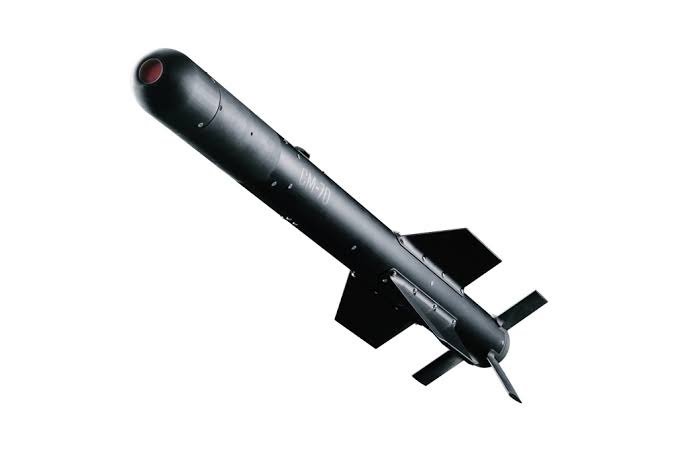 CSG and North Vector Dynamics Sign MoU to Explore European Production of CM-70 Counter-Drone Interceptor
-
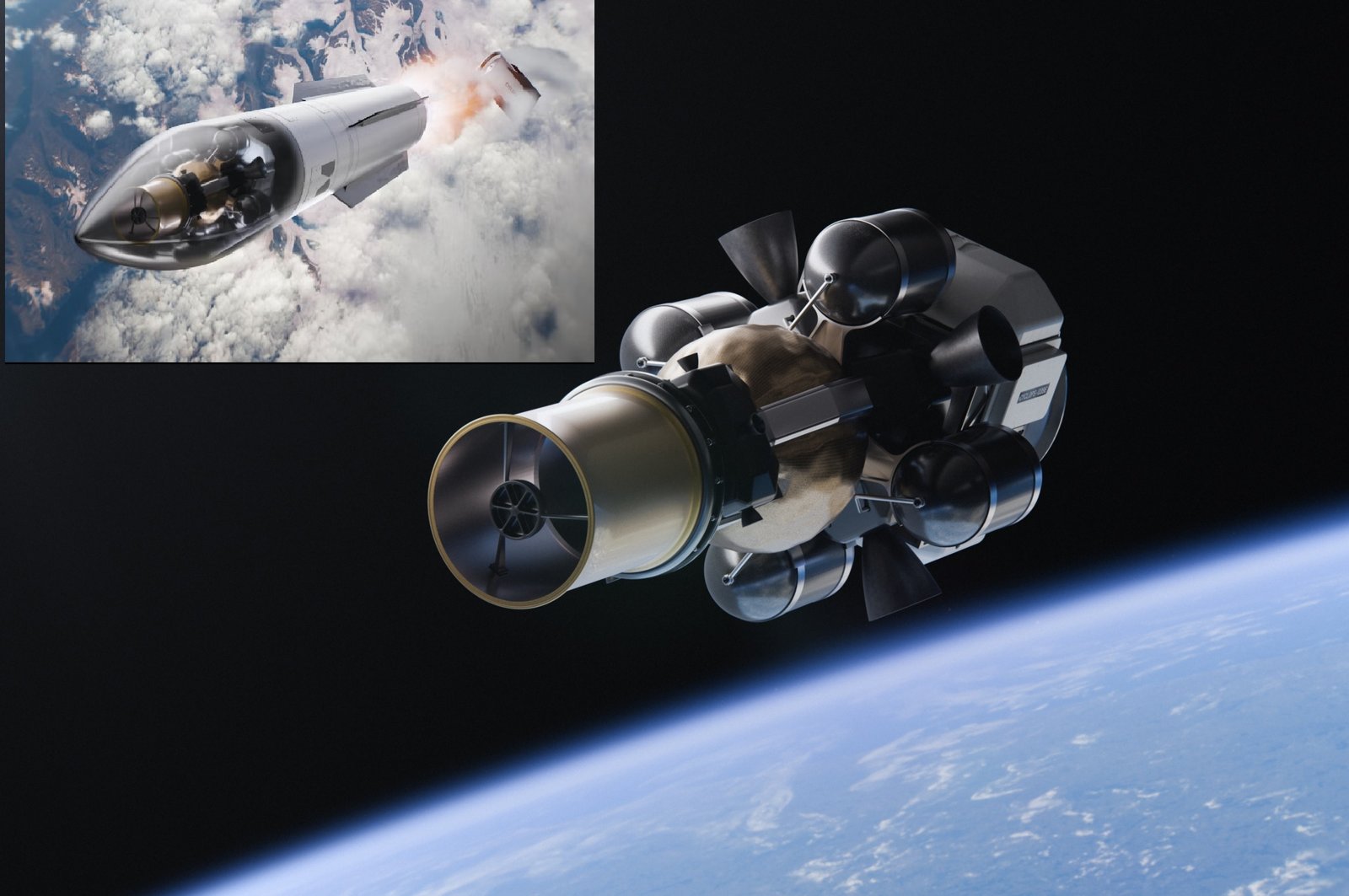 Long Wall Receives $75 Million MDA Award to Complete Cyclops Interceptor Flight Testing
-
 Denmark Acquires Anthem and Joint Strike Missiles in Major Long-Range Defense Overhaul
-
 Russia’s SJ-100 Superjet Flight Control System Enters Final Certification Stage After 1,500 Tests
-
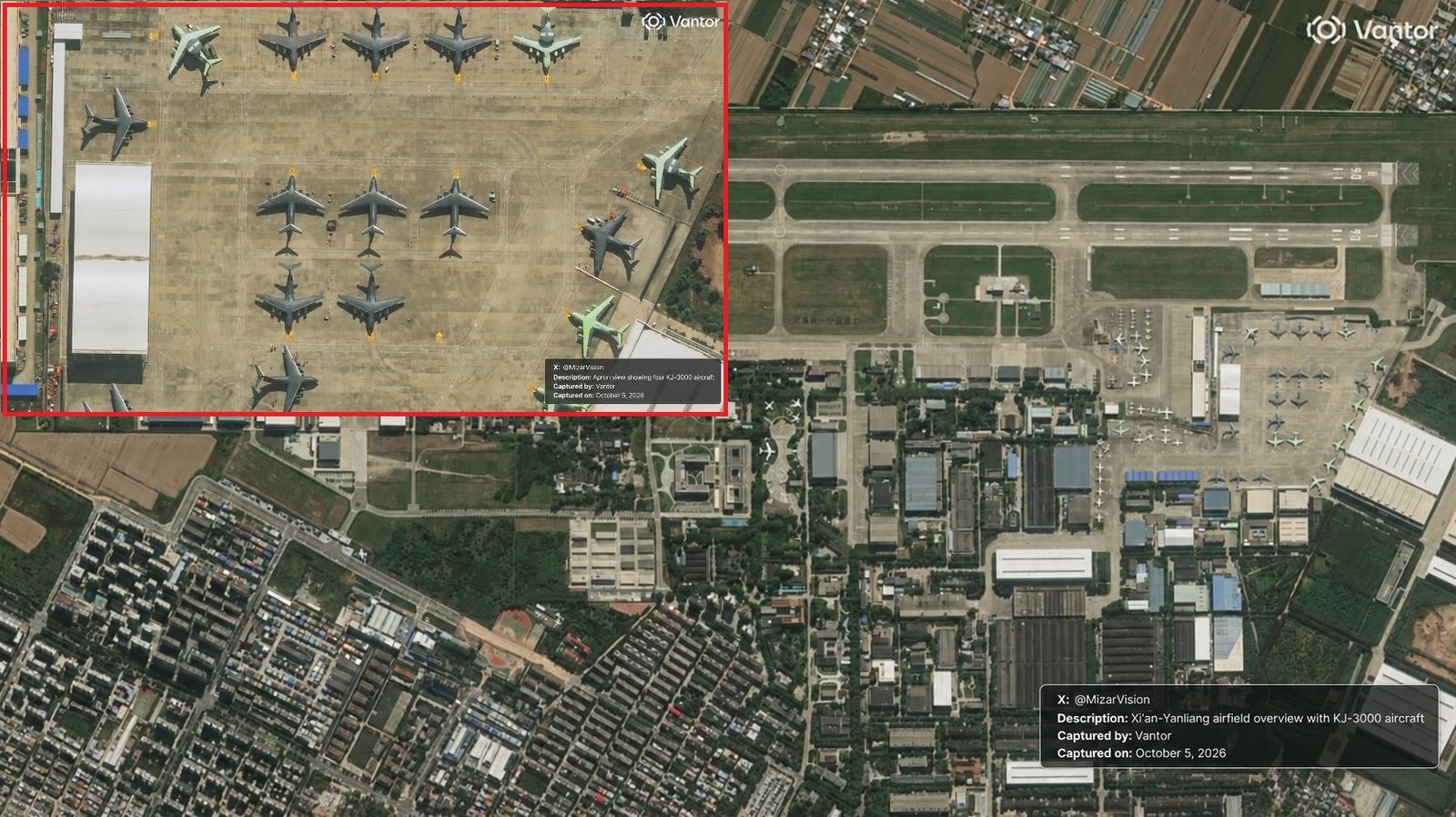 Satellite Images Reveal Four KJ-3000 AEW&C Aircraft at Chinese Aircraft Facility, Hinting at Possible Serial Production
-
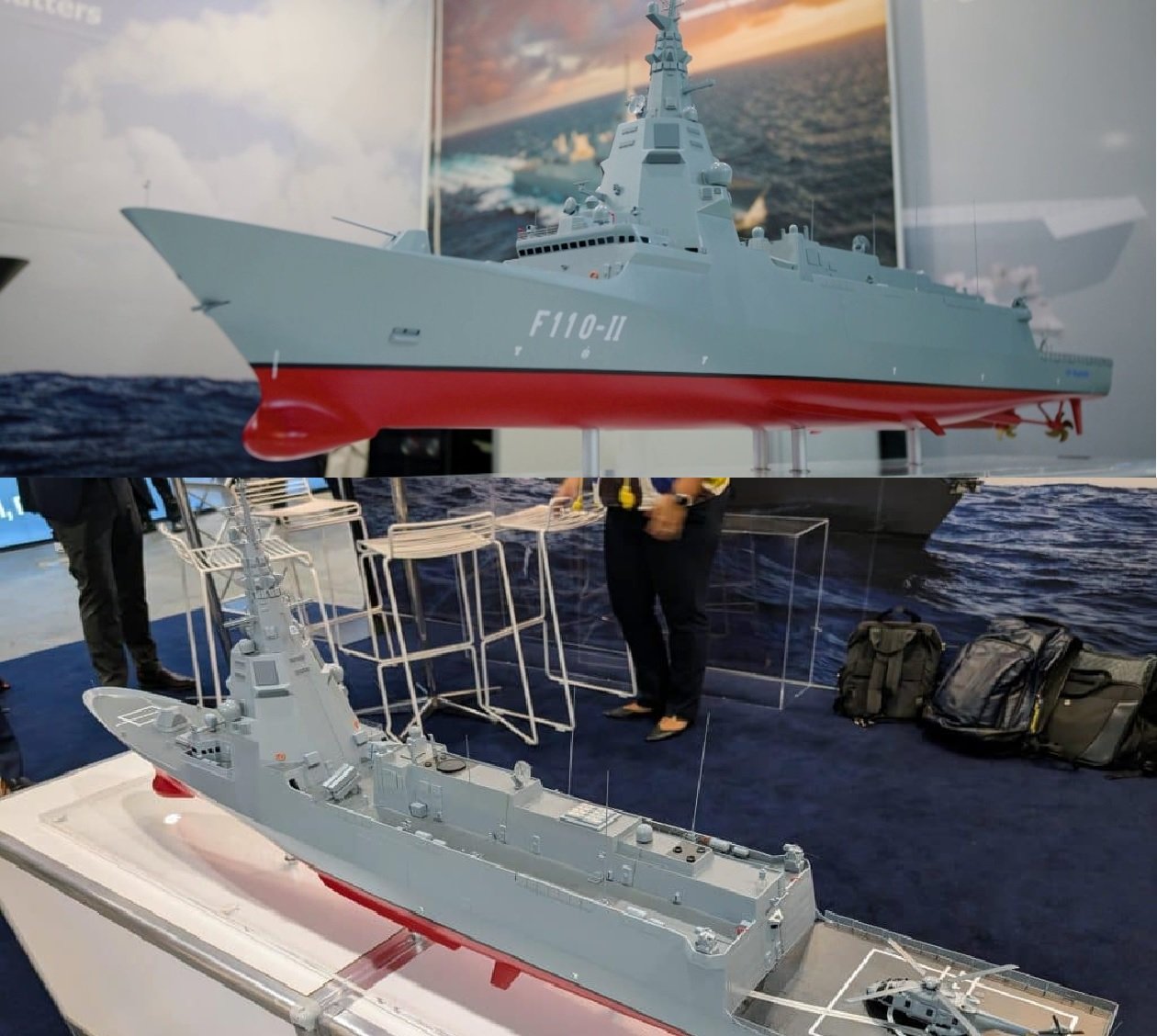 Spanish Navy and Navantia Advance F110 Frigate Design with Enhanced Air and Missile Defence
-
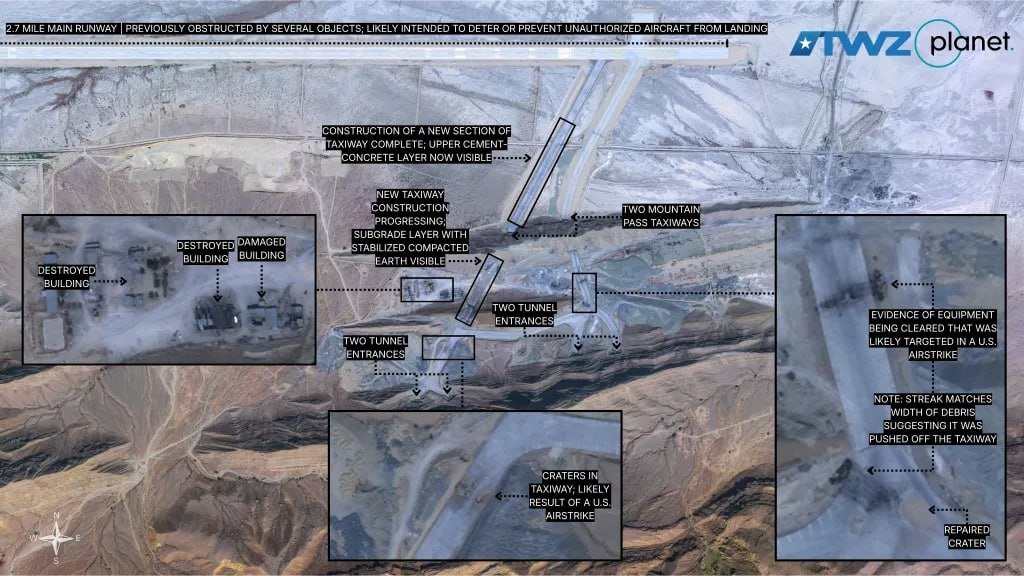 Satellite Images Reveal Iran Continues Restoration of Eagle 44 Underground Airbase After 2026 Strikes
-
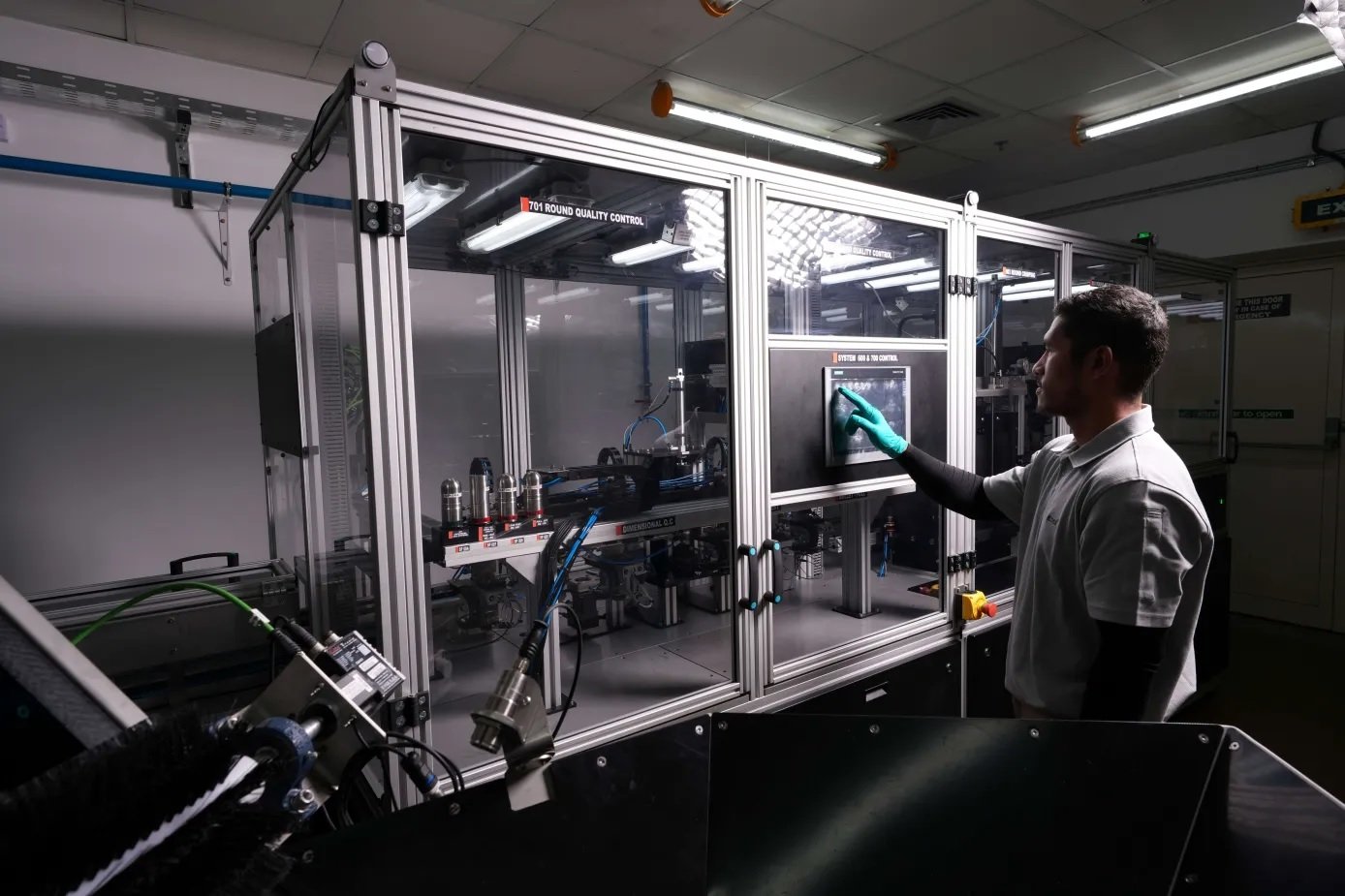 EDGE Group Achieves Full-Rate Production at Automated LAHAB 40mm Ammunition Facility
Top Trending in 4 Days
-
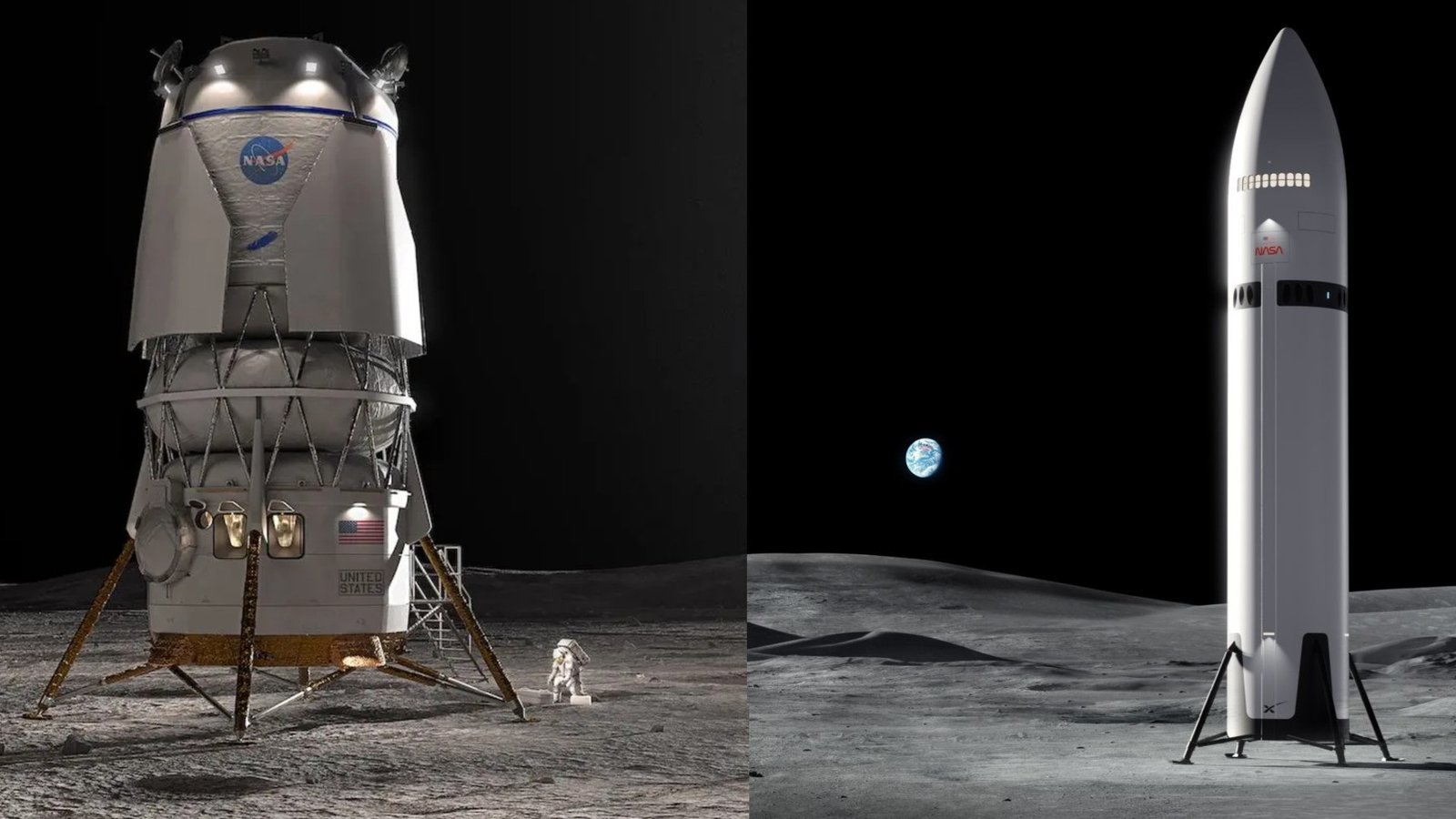 NASA Sets New Artemis Milestones as SpaceX and Blue Origin Target Moon Landings in 2027–2028
-
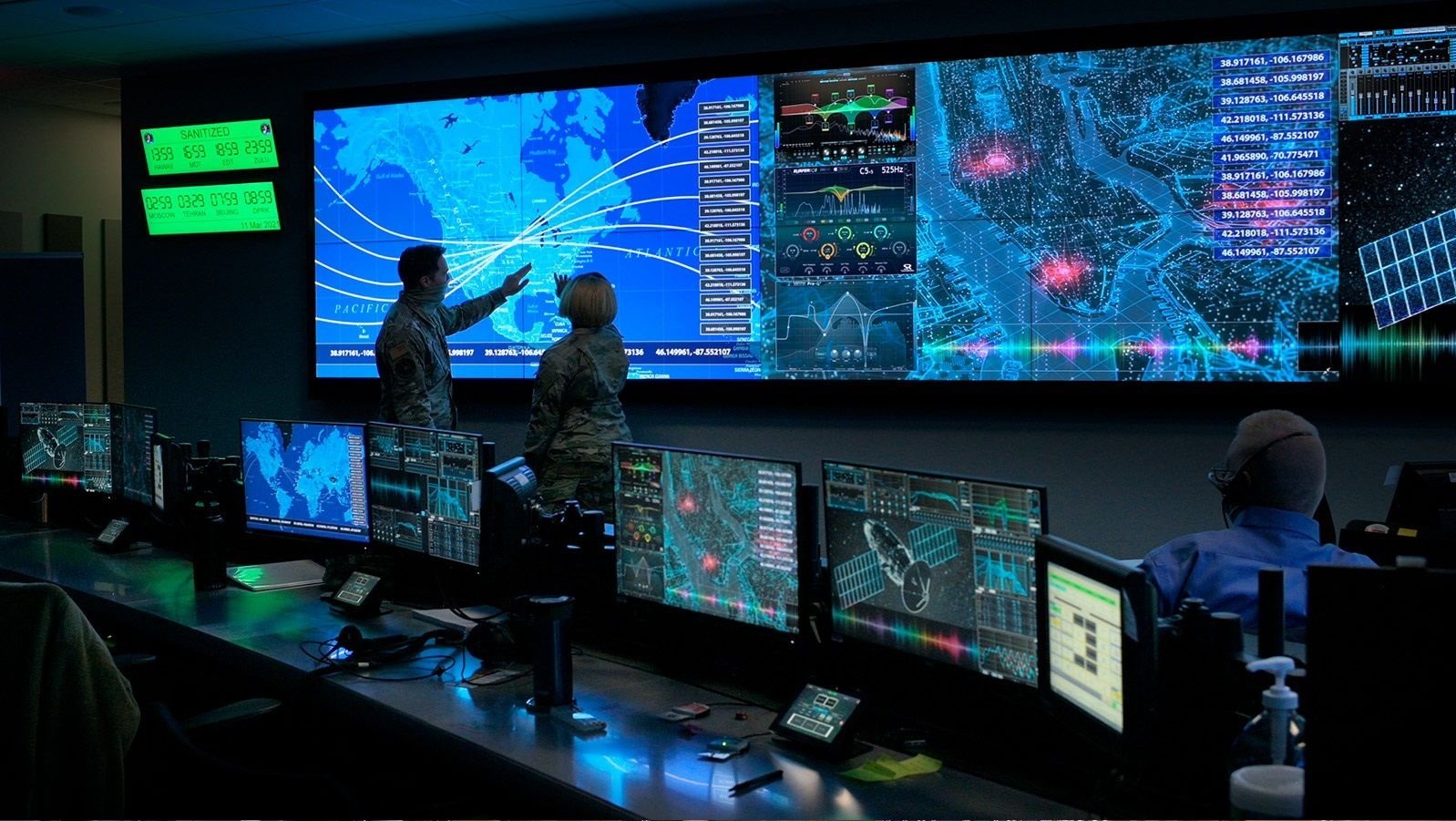 U.S. Air Force Awards HII Subsidiary Enlighten IT $332.8 Million Cyber Defense Contract
-
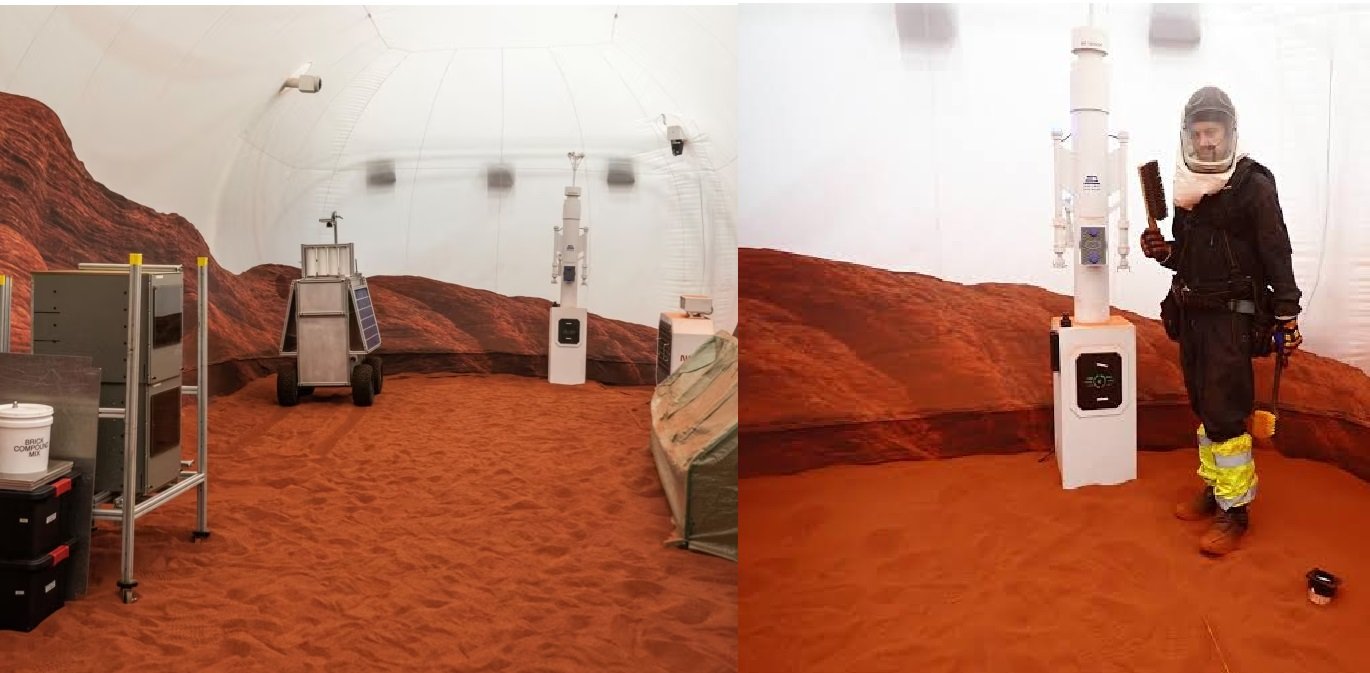 Four NASA Volunteers Mark One Year in Simulated Mars Habitat
-
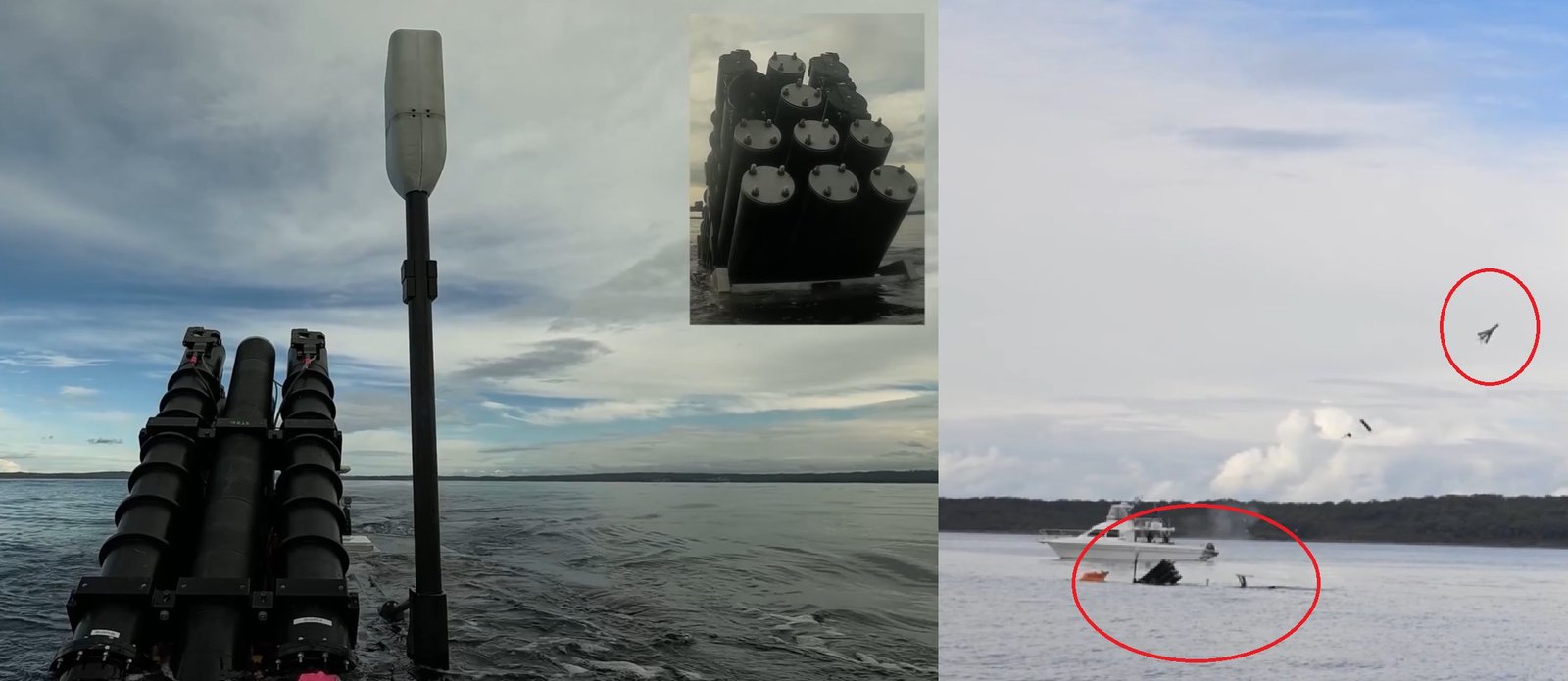 Australia Unveils Ghost Shark Autonomous Submarine’s Mine, Drone and Logistics Capabilities
-
 L3Harris Opens ‘Arsenal of Freedom’ Rocket Motor Plant in Arkansas to Double Production Capacity
-
 Russia Reportedly Offers Su-35 Fighters and S-400 Air Defence System to Protect Tehran
-
 Unitree Unveils H2-X ‘Kung Fu Legend: Guardian’ Humanoid Robot for Security and Rescue
-
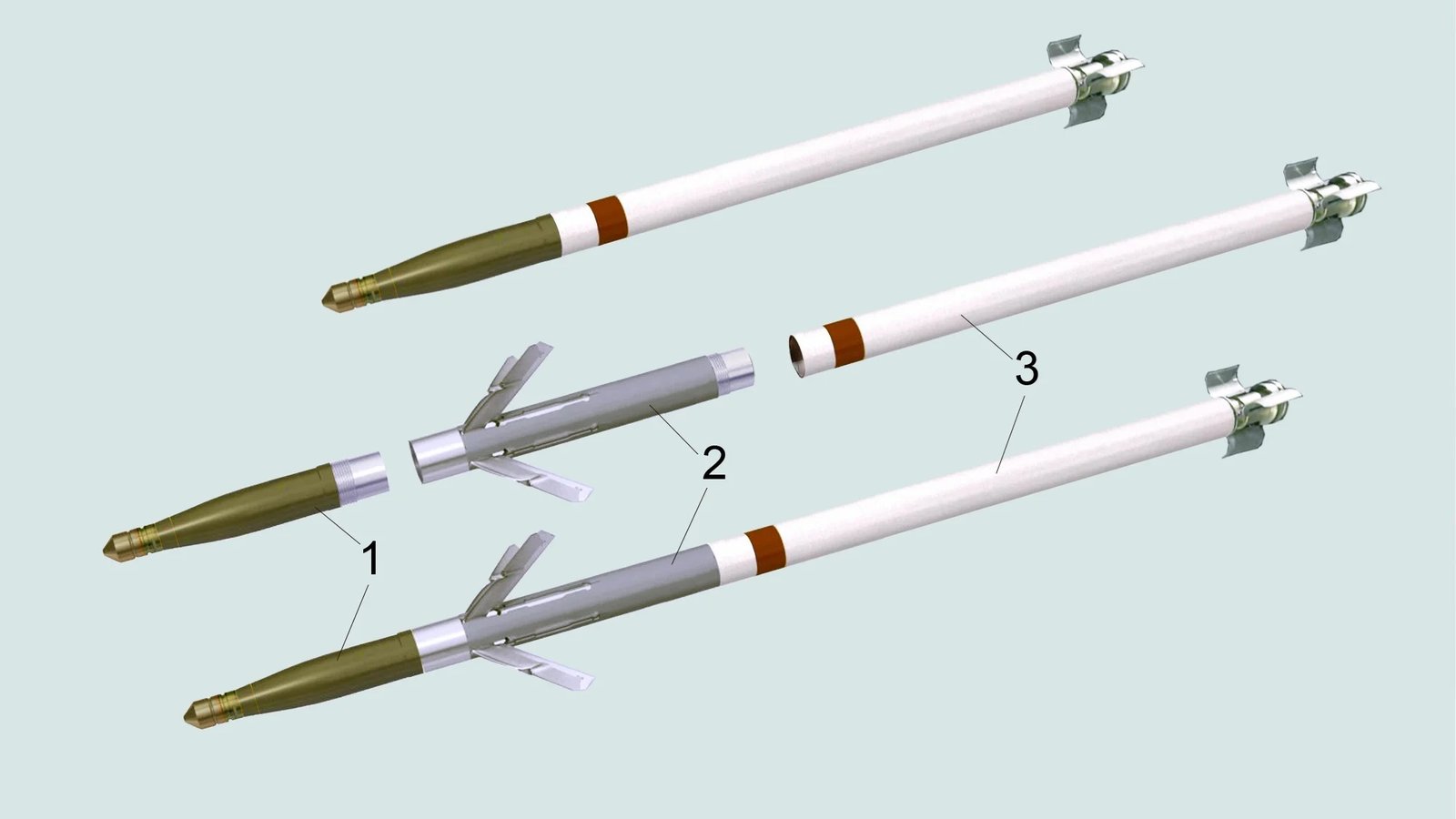 US to Buy Up to 25,000 APKWS Kits Annually, With Option to Increase to 35,000