BETHESDA, Md. — Lockheed Martin is positioning the F-35 Lightning II as an airborne tracking and targeting node within a broader integrated missile defense architecture that connects aircraft, space-based warning systems, command-and-control networks and missile interceptors.
The approach is designed to allow information collected by different sensors to be shared across the defense network, helping reduce the time between detecting a missile threat and responding to it.
F-35 Adds an Airborne Sensor Layer
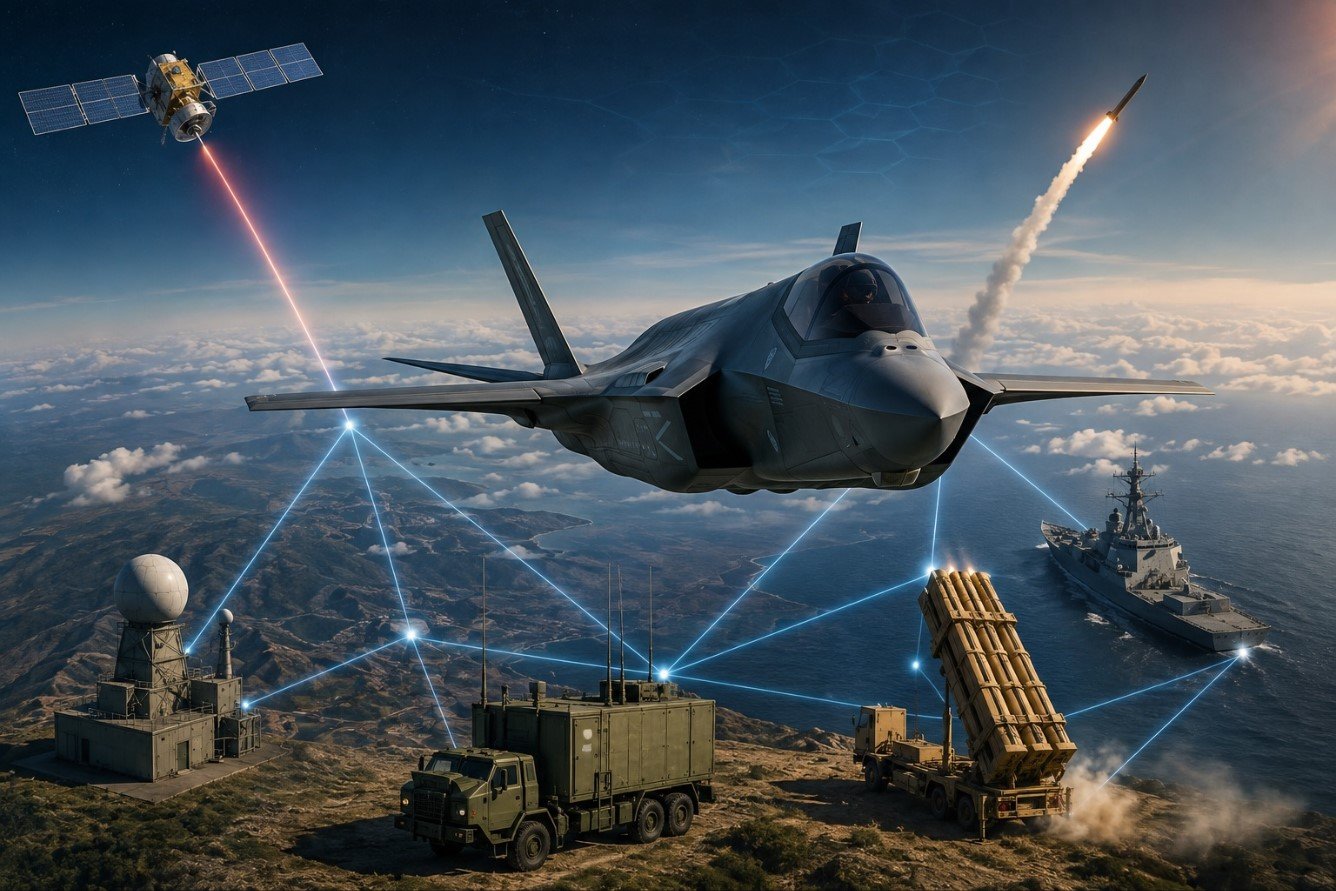
According to Lockheed Martin, the process can begin with space-based infrared systems detecting the launch of a missile. The information can then be combined with data collected by F-35 aircraft operating closer to the threat.
The F-35 is designed to function as a mobile intelligence, surveillance and reconnaissance platform. Its Distributed Aperture System (DAS), Electro-Optical Targeting System (EOTS) and sensor-fusion software allow it to combine information from different sources with its own sensor detections.
Lockheed Martin has also highlighted passive infrared capabilities such as IRST21, which can provide infrared tracking without actively transmitting signals. The company describes these capabilities as part of the F-35's role as an airborne sensor within networked defense operations.
The company has previously demonstrated the F-35's ability to provide sensor information to ground-based air and missile defense systems. In a 2019 demonstration, F-35 track data was sent to the U.S. Army's Integrated Air and Missile Defense Battle Command System (IBCS), allowing the aircraft to operate as an elevated sensor. A 2020 test also demonstrated F-35 integration with IBCS during a live-fire event.
C2BMC Connects the Defense Network
A key part of the architecture is Lockheed Martin's Command and Control, Battle Management and Communications (C2BMC) system.
C2BMC serves as an integrating element of the U.S. Missile Defense System, connecting sensors, weapons and command elements to provide commanders with a coordinated view of missile threats. Lockheed Martin says the system has operated continuously since 2004 and is deployed across multiple locations and time zones.
The company has also worked with the Missile Defense Agency to integrate additional sensors and missile-defense systems into C2BMC. These efforts include the integration of the Ballistic Missile Defense Overhead Persistent Infrared Architecture and other capabilities.
In the architecture described by Lockheed Martin, F-35-generated tracking and targeting information can therefore become part of a wider operational picture rather than remaining limited to the aircraft itself.
THAAD and NGI Form Part of the Intercept Layer
The architecture also connects the sensor and command layers with missile interceptors.
The Terminal High Altitude Area Defense (THAAD) system provides a terminal-phase ballistic missile defense capability. The Missile Defense Agency describes THAAD as a land-based system capable of intercepting ballistic missiles inside or just outside the atmosphere during the terminal phase of flight. Its AN/TPY-2 radar provides tracking and discrimination information to support engagements.
The Next Generation Interceptor (NGI) is being developed for the U.S. Ground-based Midcourse Defense system to strengthen homeland defense against long-range ballistic missile threats. Lockheed Martin says NGI is designed to work with ground-based radars and command-and-control systems as part of a layered defense architecture.
This creates a multi-layered chain in which space-based systems provide early warning, airborne platforms such as the F-35 can contribute additional tracking information, command-and-control systems distribute the information, and appropriate interceptors can be used against the threat.
Moving From Individual Systems to an Integrated Network
Lockheed Martin's approach focuses on connecting systems that are already operational or being delivered rather than creating an entirely new missile-defense architecture from the beginning.
The company's integrated air and missile defense portfolio combines sensors, satellites, command-and-control systems and interceptors across different parts of the defense network. Lockheed Martin describes C2BMC as a key element for coordinating these systems across domains.
The company has emphasized that such architectures need to remain connected, maintainable and scalable as additional capabilities are introduced.
For the F-35, this means its role can extend beyond traditional air-to-air and air-to-ground missions. The aircraft can contribute information gathered by its sensors to other elements of the force, allowing its data to become part of a wider missile-defense picture.
Lockheed Martin's 2026 material specifically describes the F-35 as a "flying sensor" that can combine space-based information with its own onboard detections. The company presents this integration as part of a broader effort to connect space, air, land and command-and-control capabilities into a unified defense architecture.
The concept therefore places the F-35 within the sensor and information-sharing layer of an integrated missile-defense network, complementing space-based warning systems, C2BMC and ground-based interceptor systems such as THAAD and NGI.
——— End of Article ———