SAN FRANCISCO — IMPACT Drones, Inc., a counter-drone company backed by Y Combinator, has launched Air Defense as a Service (ADaaS), a commercial security system that uses autonomous interceptor drones to protect critical infrastructure from hostile drone attacks.
The system is designed for sites including data centers, power grid facilities, airports, and military bases. According to the company, it aims to address the growing challenge of defending fixed infrastructure from increasingly common drone threats.
IMPACT said conventional air defense systems are often too expensive for routine protection of civilian infrastructure. Traditional interceptors can cost more than $1 million per engagement, while hostile drones may cost approximately $30,000 to $50,000 to manufacture. This cost imbalance has left many infrastructure operators without an affordable physical defense against aerial threats.
The need for such protection was highlighted earlier this year when a drone attack disrupted three Amazon Web Services (AWS) data centers in the Middle East. The incident took a dozen core cloud services offline, and Amazon reported an estimated $200 million loss in a single day.
Autonomous Container-Based System
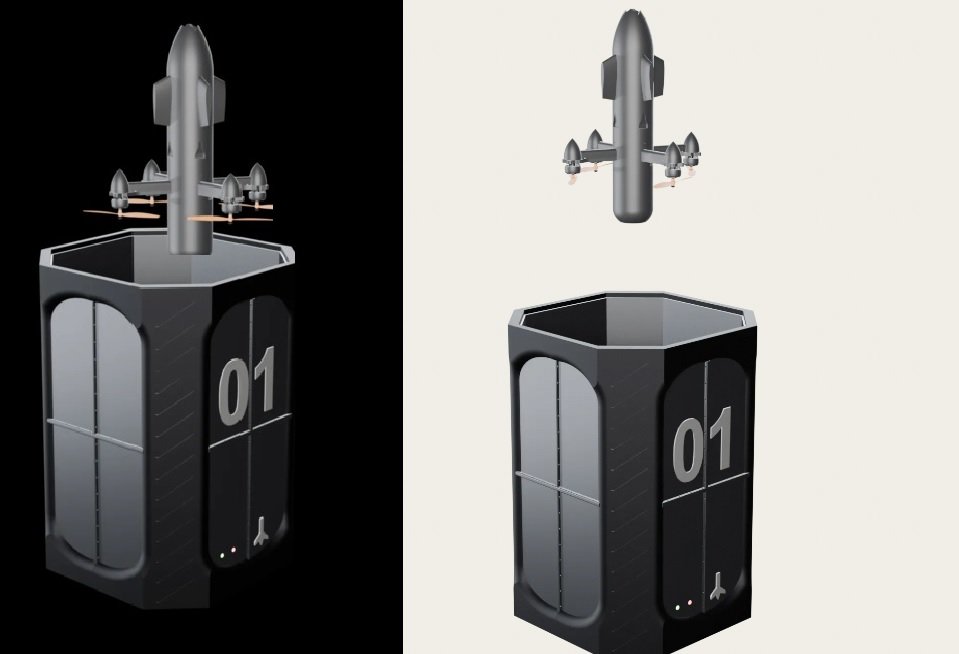
The ADaaS system consists of a sealed container permanently installed at the protected site. It does not require dedicated launch crews or launch pads.
When external sensors detect a hostile drone, an interceptor automatically breaks through the container's frangible lid and launches toward the target. Using onboard visual navigation, it physically collides with the incoming drone to neutralize the threat. Because the system relies on visual navigation instead of GPS, it can continue operating in environments where Global Navigation Satellite System (GNSS) signals are jammed or unavailable.
HUNTER and SABLE Interceptors
IMPACT currently offers two interceptor platforms running the company's common autonomy software.
HUNTER is the point-defense interceptor designed to protect the airspace directly above a facility. It can reach speeds of up to 300 km/h and uses electro-optical/long-wave infrared (EO/LWIR) terminal guidance. The company said its hardware lineage is based on systems previously used in Ukraine against Shahed-136, Geran-2, and Gerbera drones.
SABLE, which is still under development, is a turbine-powered interceptor with a delta-wing airframe. It is designed to reach speeds of up to 825 km/h to engage faster aerial threats.
Subscription-Based Protection
Instead of selling individual interceptor missiles, IMPACT is offering the system through a subscription model. The service includes the installed hardware, replacement interceptors, reloads, and continuous monitoring, with pricing scaled to the size of the protected site and expected threat level.
"Drones are hitting data centers, substations, and airports today, and the defenses built for armies do not scale down to a single site. So we put the whole thing in a box. It sits at your site, it launches when something hostile comes in, and it rams it out of the sky. You do not buy missiles, you subscribe to safe skies. That is Air Defense as a Service," said Jasper Lortije, Founder and CEO of IMPACT Drones.
Pilot Deployments Planned
IMPACT Drones is part of Y Combinator's Summer 2026 batch. The launch was announced through Y Combinator's channels, and pilot deployments of the interceptor system are scheduled to begin in the third quarter of 2026.
The San Francisco-based company was founded by Jasper Lortije, an aerospace engineer with a master's degree from TU Delft who previously worked on visual navigation systems, and Alessandro Fiume, who has a background in sales. The company said it is seeking partnerships with data center operators, airport managers, and energy infrastructure organizations for future deployments.
——— End of Article ———