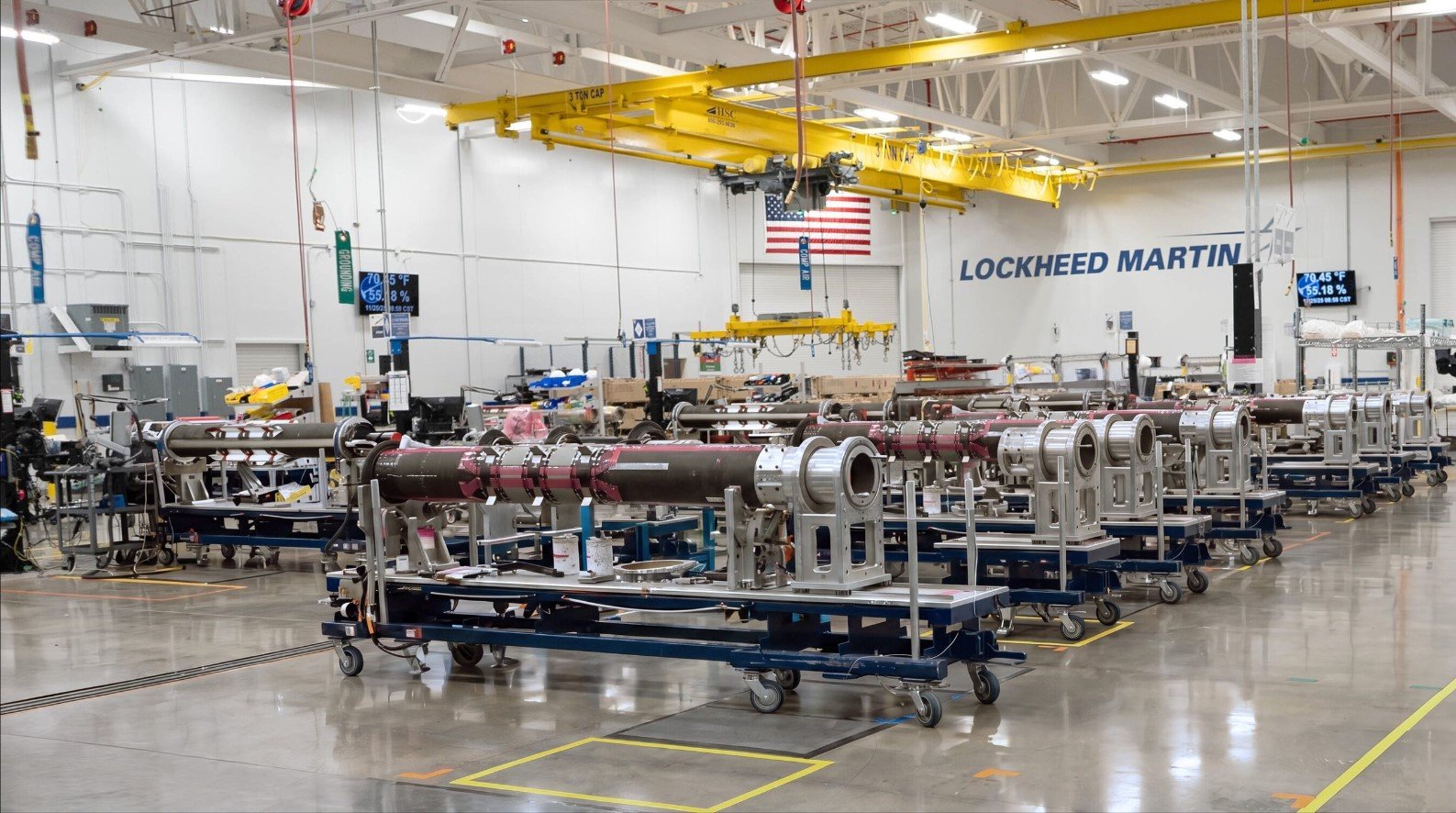
BETHESDA, Md. — Lockheed Martin has announced a major manufacturing modernization and expansion program, committing between $8 billion and $9 billion through 2030 to upgrade more than 20 manufacturing facilities across the United States. The investment is aimed at increasing production capacity for three of the company's key missile defense programs: the PAC-3 Missile Segment Enhancement (MSE) interceptor, the Terminal High Altitude Area Defense (THAAD) interceptor, and the Next Generation Interceptor (NGI).
According to the company, the investment will support facility modernization, advanced manufacturing technologies, workforce development, and supply chain improvements as demand for air and missile defense systems continues to grow.
Multiyear Contracts Support Production Expansion
The expansion follows a series of major multiyear procurement contracts awarded by the U.S. government.
In July 2026, Lockheed Martin received a seven-year undefinitized contract action (UCA) modification worth up to $53.86 billion for PAC-3 MSE interceptors. Combined with a $4.7 billion first-year award received in April 2026, the total value of the multiyear PAC-3 MSE procurement reached $58.62 billion.
Lockheed Martin said the funding will support its plan to triple PAC-3 MSE production capacity by the end of 2030.
The PAC-3 agreement is the second major multiyear procurement executed under the Department of War's Acquisition Transformation Strategy. It follows a June 2026 procurement contract worth up to $35 billion for THAAD interceptors.
According to previously announced contract details, the THAAD procurement is intended to increase annual production from 96 interceptors to 400 interceptors. Work under the contract will be carried out at facilities in Dallas, Texas; Sunnyvale, California; Troy, Alabama; and Camden, Arkansas.
"We are moving with speed to support the Department of War's Arsenal of Freedom," said Dan Nimblett, Vice President of Lockheed Martin Munitions Acceleration Integration.
"Lockheed Martin continues to move with urgency to support investments to expand capacity, modernize critical facilities and deter adversaries through comprehensive defensive capabilities," Nimblett added.
New Facilities in Alabama and Arkansas
To support higher production rates, Lockheed Martin has started construction on two major manufacturing projects during 2026.
In Troy, Alabama, construction has begun on Munitions Production Center Building 47, an 87,000-square-foot facility that will support THAAD production and provide capacity for potential future Next Generation Interceptor (NGI) manufacturing. The company said the expansion will nearly double the site's existing manufacturing footprint.
In Camden, Arkansas, Lockheed Martin is building the Munitions Acceleration Center, which will support increased production of PAC-3 MSE interceptors. Camden is responsible for the final assembly of complete PAC-3 MSE rounds.
The company expects the Camden expansion to increase the local workforce by about 50 percent, growing from approximately 1,200 employees to around 1,850 employees.
Courtland Facility to Support Next Generation Interceptor
In June 2026, Lockheed Martin opened Missile Assembly Building 5 (MAB-5) at its Courtland, Alabama, campus.
The 88,000-square-foot facility is dedicated to Next Generation Interceptor (NGI) production and uses digital engineering and advanced manufacturing processes. According to the company, MAB-5 brings together digital manufacturing tools and smart production methods adapted from programs including THAAD and hypersonic systems.
Manufacturing at the facility is expected to begin in 2027.
"Once again, we are expanding the Courtland campus to meet the national security challenges of today," said Reshondra McInnis, Lockheed Martin Courtland Site Executive.
"MAB-5 will shape the local workforce by introducing high-skill jobs to create even more pathways toward advanced manufacturing careers."
The Next Generation Interceptor (NGI) is being developed to defend the United States and allied nations against evolving long-range ballistic missile threats. Lockheed Martin stated that the new Courtland facility will help accelerate the program's transition from development into production.
The company was selected by the Missile Defense Agency (MDA) in 2024 to develop the interceptor.
"NGI is more than a 'next generation interceptor', it's a next generation solution to missile defense's most serious threats," said Chris Jewell, Vice President of the Lockheed Martin NGI Program.
"We are creating a foundation that enables long-term production, sustainment and mission support with greater adaptability and more resilient defense architecture."
PAC-3 Integration With Aegis Combat System
Alongside expanding production, Lockheed Martin is also working to broaden the operational use of the PAC-3 interceptor.
In April 2026, the U.S. government awarded the company a contract to develop, integrate and test the capability to launch the PAC-3 missile from the Aegis Combat System.
Lockheed Martin said the work will expand the flexibility and capacity of the Aegis system. The company plans land-based testing in 2027, while initial operational capability is targeted for later years.
According to Lockheed Martin, Aegis is currently deployed aboard more than 120 ships across six nations and is also used in land-based Aegis Ashore operations.
Long-Term Manufacturing Investment
Lockheed Martin said its $8 billion to $9 billion investment through 2030 will fund modernization efforts across more than 20 U.S. facilities, including sites in Alabama, Arkansas, Florida, Massachusetts and Texas.
The company stated that the investment will focus on expanding manufacturing capacity, introducing advanced production technologies, strengthening the supply chain, and supporting workforce growth to meet increasing demand for air and missile defense systems.
Company officials also noted that more than $1 billion had already been invested in production capacity expansion before the latest multiyear contract awards.
——— End of Article ———