DAYTON, Ohio — The U.S. Air Force Research Laboratory (AFRL) has issued a Request for Information (RFI) seeking industry partners to help establish a KC-135 Electrified Boom Automation Lab, a new research facility that will support the development and testing of automated aerial refueling boom technology for the KC-135 Stratotanker.
The notice, published on Aug. 6, 2026, is part of the Air Force's broader Combat Refueling and Operations Networked Universal Systems (CRONUS) program. Companies interested in participating in the project when it moves to a formal contract have until Sept. 6, 2026, to submit responses.
The planned laboratory will use an actual KC-135 tail section fitted with a movable refueling boom, allowing researchers to evaluate automated boom operations in a controlled ground environment before moving to flight testing.
KC-135 Tail Section to Be Installed at Wright-Patterson AFB
According to the RFI, the government will acquire a KC-135 tail section, complete with a movable refueling boom, from the 309th Aerospace Maintenance and Regeneration Group (AMARG) at Davis-Monthan Air Force Base, Arizona. The equipment will be provided to the selected contractor as government-furnished equipment.
The tail section will be installed inside a motion capture laboratory operated by the Air Force Institute of Technology (AFIT) at Wright-Patterson Air Force Base, Ohio. The laboratory uses arrays of wall- and ceiling-mounted cameras to capture highly accurate movement data, enabling engineers to study complex mechanical motion with precision.
Contractor Will Design Support and Motion Systems
Under the proposed project, the selected contractor will be responsible for designing a structural support system capable of holding the full weight of the KC-135 tail section while allowing it to move during testing.
The contractor must also develop an overhead actuation system that enables the refueling boom to move through its complete operating range, including yaw, pitch, and probe extension. The Air Force specified that no equipment may be placed on the laboratory floor if it could obstruct the motion capture cameras or interfere with their line of sight.
Supporting Future Automated Aerial Refueling
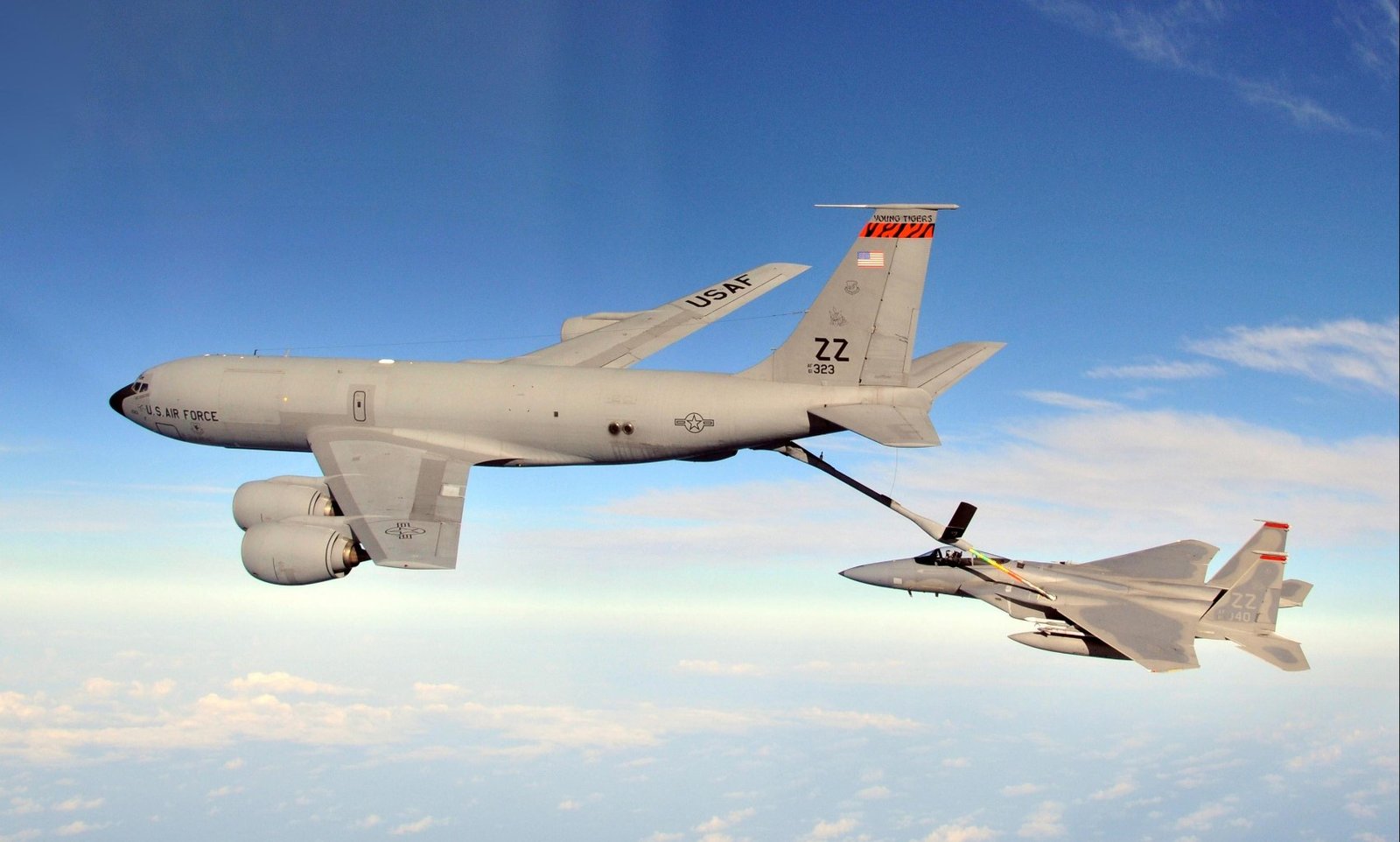
KC-135 aerial refueling operations are currently performed manually by a boom operator positioned at the rear of the aircraft. During a refueling mission, the operator controls the extendable boom and guides it into the receiving aircraft's fuel receptacle.
The new automation laboratory will allow researchers to move a real refueling boom through its full range of motion while recording detailed movement data. The controlled environment will support the development, refinement, and testing of automated or robotic boom control systems before they are evaluated during flight testing.
Modernization Effort Comes Amid Continued KC-135 Reliance
The automation initiative comes as the Air Force continues to depend heavily on the KC-135 fleet despite the aircraft's age.
Earlier in 2026, during Operation Epic Fury, the fleet experienced significant operational losses. On March 12, a KC-135 crashed in western Iraq following a midair collision with another tanker, killing all six crew members aboard. The Air Force described it as the first loss of a KC-135, or any Air Force tanker, in 13 years.
Two days later, an Iranian missile strike on Prince Sultan Air Base in Saudi Arabia damaged five additional KC-135 aircraft parked on the flight line. Air Force officials later said the damaged aircraft are expected to return to service, although repairs to the most heavily damaged airframes could take one to two years.
Some reports based on satellite imagery suggested additional tanker damage during the campaign, but those claims have not been independently confirmed through official sources.
Aging Fleet Continues Flying as KC-46 Faces Challenges
According to U.S. Air Force fact sheets, the final KC-135 rolled off the production line in 1965, meaning aircraft still flying operational missions are approaching six decades of service.
The aircraft's planned replacement, the KC-46A Pegasus, has faced continued development and production challenges. These include a production pause in 2025 after structural cracks were discovered in multiple aircraft, along with ongoing technical issues involving its aerial refueling boom system, as identified by the Pentagon's testing office.
As a result, the KC-135 remains the Air Force's primary aerial refueling workhorse while the KC-46 program continues to address those issues.
Center Console Refresh Program Progressing in Parallel
The boom automation effort is one of several modernization programs aimed at extending the operational life of the KC-135 fleet.
A separate initiative known as the Center Console Refresh (CCR) program, managed from Tinker Air Force Base, Oklahoma, is focused on modernizing the aircraft's cockpit instrumentation console. Since early 2025, the program has advanced through industry questions, draft solicitations, industry engagement activities, and other acquisition milestones, and remains in an advanced stage of the procurement process.
Supporting the Future of the KC-135 Fleet
The KC-135 Electrified Boom Automation Lab and the Center Console Refresh (CCR) program demonstrate the Air Force's continued investment in maintaining and improving its legacy tanker fleet.
By creating a dedicated ground-based facility for automated boom research while upgrading cockpit systems, the Air Force aims to keep the KC-135 operational and effective as work continues on resolving technical and production challenges affecting the KC-46A Pegasus program.
——— End of Article ———