
World
LONDON — May 14, 2026 : The United Kingdom has signed a contract worth nearly £1 billion (approximately $1.35 billion) for the procurement of 72 RCH 155 wheeled self-propelled howitzers for the British Army, the Ministry of Defence announced on May 13, 2026. The acquisition is intended to restore Britain’s close support artillery capability following the transfer of AS90 artillery systems to Ukraine, while also supporting domestic defence manufacturing and sustaining more than 500 jobs across the country. The contract was awarded by the Organisation for Joint Armament Cooperation (OCCAR) on behalf of the British Army to ARTEC GmbH, a joint venture between KNDS and German defence manufacturer Rheinmetall. Deliveries are scheduled to begin in 2028, with the Ministry of Defence aiming to achieve a minimum deployable operational capability before the end of the decade. Replacement for AS90 Fleet The procurement replaces the British Army’s AS90 self-propelled howitzers, which served as the Army’s primary close support artillery system for more than 30 years before being donated to Ukraine in 2023. The transfer created a temporary capability gap within the Army’s artillery force structure, with the UK currently operating 14 Swedish-designed Archer artillery systems as an interim solution. Lieutenant General Simon Hamilton, Deputy Chief of the General Staff, said the UK had accepted operational risk in order to support Kyiv during the early stages of the war. “Britain answered the call for aid by providing artillery systems to Ukraine at the outbreak of the war. We knew the risk — the gap in our warfighting capability — that this would present,” Hamilton stated. “The success of bringing the RCH 155 onto contract to develop our 155mm Close Support Artillery requirement, in collaboration with Germany, marks the first significant milestone in replenishing this capability.” Mobility and Automated Firepower The RCH 155 represents a significant shift from the tracked AS90 platform, integrating the Artillery Gun Module (AGM) onto the Boxer 8x8 wheeled chassis. The configuration provides improved operational mobility, with the vehicle capable of reaching road speeds of up to 100 kilometres per hour and travelling approximately 700 kilometres without refuelling. The system was designed with lessons drawn from the war in Ukraine, where static artillery positions have become increasingly vulnerable to counter-battery radars, drones and precision-guided munitions. The RCH 155 is able to fire and rapidly reposition within seconds, reducing exposure to enemy fire. Unlike conventional self-propelled howitzers requiring crews of four or five personnel, the RCH 155 can be operated by two soldiers from a protected crew compartment using an automated control interface. The turret can engage targets in any direction without repositioning the vehicle. The howitzer is capable of firing up to eight rounds per minute and can strike targets at distances of up to 70 kilometres when using extended-range guided ammunition. Standard unguided 155 mm artillery rounds generally achieve ranges between 30 and 40 kilometres. The platform is also compatible with NATO-standard precision-guided projectiles. The Boxer-based system has a combat weight of under 39 tonnes and shares logistical commonality with other Boxer armoured vehicles already in British Army service. The vehicle is also designed for high tactical mobility, including the ability to cross trenches up to two metres wide and climb vertical obstacles measuring 0.8 metres. UK Industrial Production and Job Support Domestic industrial participation formed a central requirement of the programme. Rheinmetall will manufacture the weapon systems, including the barrel, breech, recoil system and trunnions, at its large-calibre production facility in Telford. The site will use British steel supplied by Sheffield Forgemasters, which received more than £420 million in UK government investment last year. Meanwhile, KNDS UK will manufacture Boxer drive modules at its facility in Stockport, supporting domestic armoured steel fabrication and vehicle production capabilities. The programme is expected to support approximately 100 jobs in Telford, 100 jobs in Stockport, and an estimated 300 additional positions across the wider UK defence supply chain. The contract builds upon a £52 million Early Capability Demonstrator agreement signed in December 2025 and a £53 million long-lead item contract awarded earlier in 2026 to prepare industrial production capacity ahead of the full procurement decision. UK-Germany Defence Cooperation The programme also fulfills key commitments under the UK-Germany Trinity House Agreement, a bilateral defence cooperation pact signed in October 2024 aimed at strengthening interoperability between British and German armed forces within NATO. UK Defence Secretary John Healey said the procurement would support both military readiness and the British defence industry. “This major investment is defence delivering for the battlefield and for Britain’s economy,” Healey stated. “By securing next-generation artillery with Germany, not only are we rearming to strengthen NATO against growing Russian aggression but also creating highly skilled jobs here in Britain.” German Defence Minister Boris Pistorius said the programme would improve operational integration between NATO allies while modernising artillery capabilities. “The RCH 155 will significantly enhance the artillery’s firepower, safety and flexibility,” Pistorius said. “Together with the United Kingdom, we are demonstrating that we take interoperability within NATO seriously and are putting it into practice.”
Read More → Posted on 2026-05-14 13:42:36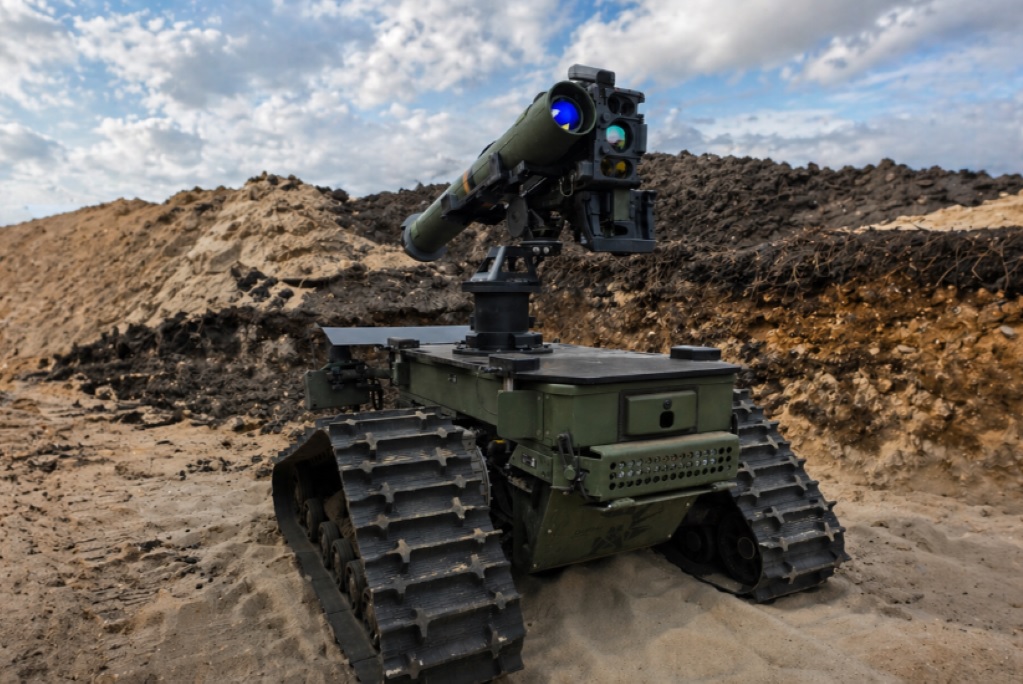
World
ÜBERLINGEN, Germany — May 14, 2026 : Diehl Defence, in cooperation with RAFAEL Advanced Defense Systems and EuroSpike GmbH, has successfully completed a series of live-firing trials involving the SPIKE LR guided missile launched from the Ziesel unmanned ground vehicle (UGV), marking the first successful integration of a modern guided missile system on the Ziesel platform. The trials were conducted over a five-day period and involved the successful launch of 17 SPIKE LR guided missiles. According to the participating companies, the primary objective of the testing campaign was to evaluate the structural load-bearing capability and operational resilience of the Ziesel platform under repeated live-fire conditions. During the tests, the UGV reportedly maintained stable operational performance and successfully withstood the stresses generated during missile launches. The milestone was achieved only three months after Diehl Defence first presented the Ziesel UGV equipped with a SPIKE launcher configuration during the Enforce Tac 2025 exhibition in Nürnberg. Platform Configuration and Technical Characteristics The Ziesel UGV used during the trials was an upgraded configuration featuring revised hardware and software improvements compared to earlier variants. The vehicle is based on the tracked platform developed by Mattro and measures approximately 1.6 metres in length and 1.3 metres in width. It has an empty weight of 380 kilograms and can carry payloads exceeding 500 kilograms. The platform is powered by exchangeable 11 kWh lithium-ion battery packs and can reach speeds of up to 20 kilometres per hour. Its fully electric propulsion system significantly reduces acoustic and thermal signatures, lowering detectability during battlefield operations. According to Diehl Defence, the compact tracked design and high manoeuvrability enable the Ziesel to accompany infantry formations through dense wooded terrain and difficult operating environments without restricting troop movement. Prior to its current role as an armed effector carrier, the Ziesel platform had already undergone operational testing in logistical support and casualty evacuation (CASEVAC) configurations. Autonomous Capability and Sensor Integration The UGV is integrated with Diehl Defence’s PLATON autonomy kit, which provides autonomous navigation and follow-me functionality. The system enables operation without dependence on highly detectable active sensors such as LiDAR or GPS, reducing vulnerability to electronic warfare interference, jamming, and battlefield detection. The autonomy package also allows the vehicle to navigate obstacles independently while maintaining low observability during operations. SPIKE LR Missile System The SPIKE LR guided missile integrated on the Ziesel platform is designed primarily for anti-armour operations and has an operational range of up to 5.5 kilometres. The missile employs fifth-generation dual-mode seeker technology that combines an uncooled infrared imaging sensor with a high-resolution daylight camera. Connected through a fibre-optic data link, the system supports both fire-and-forget and fire-observe-update engagement modes. The missile also incorporates all-weather-capable optronic targeting systems and a tandem high-explosive anti-tank warhead intended to maximise penetration capability against protected targets while maintaining high engagement precision. Growing Interest in Armed UGV Systems EuroSpike GmbH, the European joint venture responsible for the SPIKE missile programme, includes Diehl Defence, Rheinmetall Electronics, and RAFAEL Advanced Defense Systems as partner companies. The companies stated that unmanned ground-based systems are receiving increasing military attention due to growing demand for versatile payload platforms capable of extending stand-off distances and reducing direct exposure of soldiers in hazardous combat environments. According to Diehl Defence, the Ziesel UGV is currently undergoing evaluation by several armed forces, including those of Germany and Ukraine. Future Development Plans Following completion of the firing campaign, the participating companies announced plans to continue development of the integration concept and advance toward additional testing milestones. A formal demonstration involving military representatives from multiple armed forces is also scheduled to showcase the operational capabilities and technical potential of the Diehl Defence Ziesel UGV integrated with the SPIKE LR missile system.
Read More → Posted on 2026-05-14 13:33:45
World
BRUSSELS — May 13, 2026 : NATO Secretary-General Mark Rutte has proposed that alliance members allocate 0.25% of their Gross Domestic Product (GDP) annually toward military assistance for Ukraine, a move that would significantly expand long-term support for Kyiv and raise total allied security assistance to an estimated $143 billion per year if adopted across the alliance. The proposal was presented during a recent closed-door meeting of NATO ambassadors and is intended to establish a predictable and structured funding mechanism for Ukraine’s future defense requirements. NATO officials said the target would apply proportionally across member states according to the size of their economies. The initiative follows recent requests from Ukrainian defense officials, who estimated the country’s defense requirements for the coming year at approximately $120 billion and asked international partners to help cover the shortfall. NATO’s previous baseline commitment for Ukraine was approximately €40 billion, or around $43 billion, annually. At present, annual military assistance from NATO allies is estimated at roughly $47–48 billion through existing bilateral aid packages and NATO-coordinated mechanisms, including the Prioritised Ukraine Requirements List (PURL). Adoption of the proposed 0.25% benchmark would therefore represent a substantial increase in long-term allied support. Opposition From Major NATO Members The proposal has already faced resistance from several major NATO members, including France and the United Kingdom. Officials from both countries have reportedly expressed concerns regarding the rigid nature of a fixed GDP-based contribution system and its potential impact on national defense budgets and fiscal planning. Some allies argue that mandatory percentage targets do not adequately account for differences in domestic economic conditions, existing bilateral security arrangements, or non-military support already being provided to Ukraine. Concerns have also been raised about institutionalizing long-term financial obligations at a time of broader economic pressures across Europe. Burden-Sharing Disputes Inside the Alliance The debate has also highlighted continuing disagreements within NATO regarding burden-sharing and the distribution of military assistance responsibilities. Several Nordic and Baltic member states have argued that countries located closer to NATO’s eastern flank are carrying a disproportionately large share of support for Ukraine. Governments in the region have increasingly pushed for larger Western European economies to adopt more formalized contribution commitments. Countries such as Estonia and Latvia have already exceeded the proposed 0.25% threshold through bilateral military aid and have publicly supported the establishment of alliance-wide proportional funding commitments. Upcoming NATO Discussions in Sweden The proposal is expected to become a central topic during the upcoming NATO foreign ministers’ meeting scheduled for May 21–22 in Helsingborg. The gathering will be the first NATO ministerial meeting hosted by Sweden since joining the alliance in 2024. Alliance members are expected to discuss the proposed financial targets, broader questions surrounding long-term military assistance for Ukraine, and ongoing disagreements over burden-sharing ahead of the NATO summit scheduled for July 2026 in Ankara. NATO continues coordinating security assistance to Ukraine through frameworks including the Comprehensive Assistance Package and the Ukraine Defence Contact Group. Alliance members previously exceeded earlier funding baselines by providing more than €50 billion in security assistance during 2024, followed by additional military aid commitments in 2025 and 2026.
Read More → Posted on 2026-05-13 16:59:33
Space & Technology
MOUNT PLEASANT, Wisconsin — May 13, 2026 : Foxconn has confirmed that several of its North American manufacturing facilities were targeted in a cyberattack following claims by the Nitrogen ransomware group that it breached the company’s network and exfiltrated more than 8 terabytes of data. The company acknowledged the incident in a statement issued on May 12, 2026, saying its cybersecurity team immediately activated internal response procedures to contain the breach and maintain manufacturing operations. “The cybersecurity team immediately activated the response mechanism and implemented multiple operational measures to ensure the continuity of production and delivery. The affected factories are currently resuming normal production,” a Foxconn spokesperson stated. U.S. Facilities Impacted The cyberattack primarily affected Foxconn facilities in the United States, including the company’s manufacturing complex in Mount Pleasant, Wisconsin, and another operational site in Houston, Texas. The disruption reportedly began in early May and caused temporary outages across internal IT and network systems. Employees at the Wisconsin facility reported Wi-Fi disruptions and interruptions to internal digital systems, forcing some staff to temporarily shift to manual paper-based processes. Some workers were also reportedly sent home during parts of the outage while systems were being restored. Foxconn stated that despite the IT disruptions, production operations were not permanently halted. The company said affected factories are gradually returning to normal operational status, although it has not provided a timeline for full restoration of internal networks. Nitrogen Claims Theft of 11 Million Files The Nitrogen ransomware group claimed responsibility for the breach on May 11 after listing Foxconn on its dark web leak site. The group alleged it had stolen approximately 11 million files totaling more than 8TB of data from Foxconn’s network infrastructure. According to the ransomware group, the stolen data includes confidential instructions, technical hardware drawings, internal project documentation, circuit board layouts, integrated circuit documentation, temperature sensor records, and financial files associated with the Houston facility. Nitrogen also claimed the compromised files contained information connected to projects involving major technology companies including Apple, Intel, Google, Dell, Nvidia, and AMD. Foxconn has not confirmed the authenticity or scope of the alleged stolen data and has not stated whether customer information was compromised. Analysts Review Leaked Samples Cybersecurity analysts reviewing sample files released by Nitrogen reported that some leaked documents appeared to include network topology maps linked to Google and Intel projects. Security researchers noted that such infrastructure maps could potentially expose operational architecture details that may be useful in identifying vulnerabilities within data center environments. However, analysts examining the leaked material also stated that no critical Apple consumer product schematics or sensitive quality-control documentation appeared in the initial sample release. Researchers noted that Foxconn’s Mount Pleasant facility primarily manufactures televisions and data servers rather than Apple consumer devices. Nitrogen Ransomware Group Nitrogen emerged in 2023 as a ransomware-as-a-service (RaaS) operation using a double-extortion strategy in which attackers both encrypt corporate systems and threaten to publicly release stolen data. Cybersecurity researchers monitoring the group recently identified a programming flaw affecting Nitrogen malware used against VMware ESXi environments. According to security analysts, the flaw can corrupt public encryption keys during the attack process, potentially making encrypted files unrecoverable even if victims obtain the group’s decryptor tool after paying a ransom. Security firms have warned organizations that ransom payments may not successfully restore encrypted data in incidents involving the flawed malware variant. Ongoing Response Foxconn, one of the world’s largest electronics contract manufacturers, operates more than 230 factories across 24 countries, including facilities in Wisconsin, Ohio, Texas, Virginia, Indiana, and multiple locations in Mexico. The company has not disclosed whether it has received a ransom demand or whether negotiations with the attackers are taking place. Foxconn stated that its current priority remains securing affected infrastructure, restoring full network stability, and ensuring continuity of production across its North American operations.
Read More → Posted on 2026-05-13 16:54:37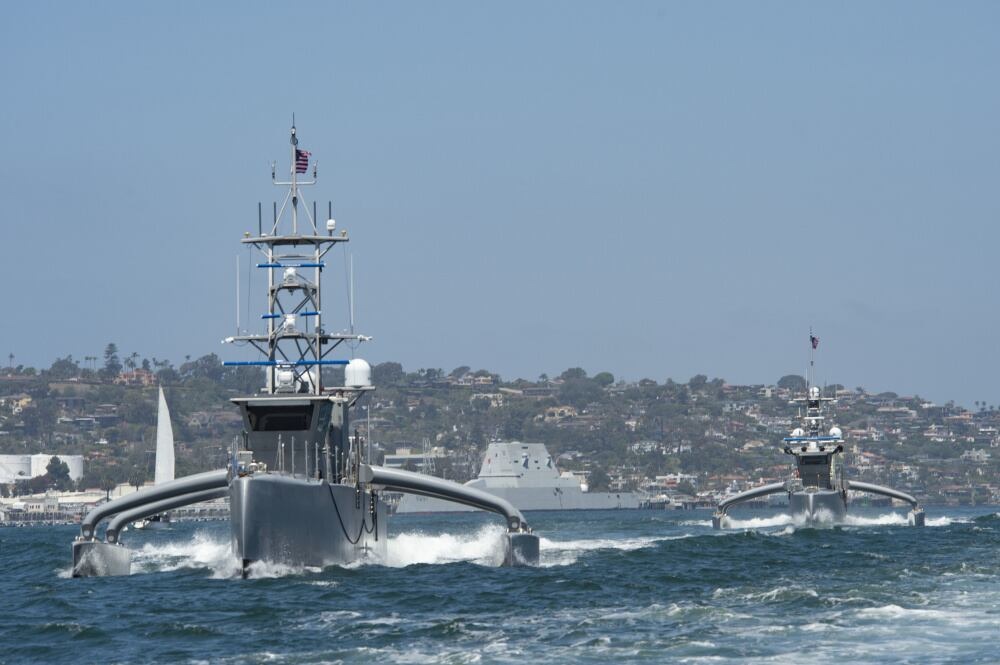
World
WASHINGTON — May 13, 2026 : The U.S. Navy is accelerating procurement of its Medium Unmanned Surface Vessel (MUSV) program under a long-term strategy aimed at expanding distributed naval operations and strengthening force presence in the Indo-Pacific region amid growing maritime competition with China. According to the Navy’s May 2026 Shipbuilding Plan, the service has allocated $171 million in Fiscal Year 2027 for the procurement of three MUSVs, while planning a broader acquisition effort valued at $3.11 billion through FY31. The procurement program will add 47 new unmanned surface vessels during the Future Years Defense Program period following FY26. The latest shipbuilding plan formally places the MUSV alongside traditional battle force and auxiliary ships for the first time, reflecting the Navy’s assessment that the platform has progressed beyond the experimental phase and is now suitable for operational fleet integration. Procurement Timeline and Fleet Expansion The Navy’s acquisition schedule outlines a rapid increase in procurement over the next several fiscal years. Current planning includes: FY26: 36 MUSVs funded through the One Big Beautiful Bill Act FY27: 3 vessels FY28: 10 vessels FY29: 10 vessels FY30: 12 vessels FY31: 12 vessels Under the projected inventory plan, the Navy expects the MUSV fleet to expand from 39 vessels in FY27 to 49 in FY28, 59 in FY29, 71 in FY30, 83 in FY31, and 95 vessels by FY32 before stabilizing at an estimated long-term operational inventory of approximately 72 vessels following initial retirement cycles. Unlike traditional warship procurement, the MUSV program is funded through the “Other Procurement, Navy” account rather than standard shipbuilding accounts. The budget structure reflects an acquisition strategy focused on rapid procurement, shorter upgrade cycles, iterative development, and faster integration of emerging technologies. Modular Payload Architecture The MUSV is being developed around a modular and containerized payload system intended to support multiple mission profiles without requiring permanent ship redesigns. Planned mission packages include: Anti-Submarine Warfare (ASW) sensors and effectors Anti-Surface Warfare (ASuW) systems Missile strike modules C4I command-and-control systems Electronic warfare payloads Communications relay systems Distributed sensing and surveillance packages The Navy intends for the same payload containers to be compatible across several vessel classes, including frigates, Littoral Combat Ships (LCS), and MUSVs. Standardized interfaces for power, cooling, and data integration are intended to allow naval commanders to rapidly configure force packages based on operational requirements. Officials say the concept will enable a single frigate or Littoral Combat Ship to control multiple unmanned vessels equipped with different mission modules during forward deployments. Operational Role in Distributed Maritime Operations The MUSV program forms part of the Navy’s broader Distributed Maritime Operations doctrine, which emphasizes dispersing combat capability across a larger number of platforms rather than concentrating capabilities on a limited number of crewed warships. Under this concept, MUSVs can operate ahead of carrier strike groups or expeditionary strike groups as: Radar pickets Acoustic surveillance nodes Electronic emitters Decoys Communications relays Armed extensions of crewed surface combatants In contested environments, the vessels are expected to support reconnaissance and sensing missions without immediately exposing destroyers, amphibious assault ships, or other high-value crewed platforms to risk. Navy planners also view the MUSV as a method of increasing operational pressure on adversaries by forcing them to identify, track, and potentially engage a larger number of distributed autonomous platforms across wide maritime areas. Origins of the MUSV Program The Navy’s unmanned surface vessel development effort is based on several years of operational testing and prototype development. The earliest operational prototypes were the Sea Hunter and Seahawk autonomous vessels originally developed through DARPA’s Anti-Submarine Warfare Continuous Trail Unmanned Vessel (ACTUV) program in partnership with the Office of Naval Research. Built by Leidos, the vessels measure approximately 41 meters in length and displace around 142 metric tons at full load. Both are based in San Diego and have participated in exercises including Integrated Battle Problem 23.1, Integrated Battle Problem 23.2, and RIMPAC 2022, where they operated as distributed maritime sensing platforms in support of anti-submarine warfare and maritime domain awareness missions. A separate acquisition effort began in July 2020 when Naval Sea Systems Command awarded L3Harris Technologies a contract valued at approximately $35 million for a new MUSV prototype. Contract options could raise the total value to more than $281 million for up to eight additional vessels. The prototype design used a commercially derived 195-foot hull developed by Gibbs & Cox and Incat Crowther, constructed by Swiftships, and integrated with L3Harris’ ASView autonomous navigation system. Program requirements focused on endurance, modularity, self-deployment capability, autonomous navigation, and open-architecture mission integration. Acquisition Strategy and Industrial Base Expansion The Navy is pursuing the MUSV through an acquisition strategy using Other Transaction Authority (OTA) agreements and a marketplace-based procurement model for the MUSV Family of Systems program. The approach is intended to accelerate prototyping and operational testing while allowing participation from smaller shipbuilders and non-traditional defense contractors alongside established naval industry firms. According to Navy planning documents, the service intends to evaluate commercially mature technologies capable of operational testing by September 2026, with potential production deliveries beginning in FY27. The MUSV expansion is also linked to the Navy’s broader Golden Fleet Initiative and its long-term 30-year shipbuilding strategy focused on increasing fleet size, expanding operational flexibility, and strengthening the U.S. maritime industrial base. The Department of the Navy’s FY27 budget request includes approximately $65.8 billion allocated for shipbuilding and related maritime programs.
Read More → Posted on 2026-05-13 16:46:14
World
FORT CARSON, Colo. — May 13, 2026 : The U.S. Army has completed operational evaluations of the CX2 Wraith autonomous electronic warfare drone during Exercise Ivy Mass at Fort Carson, Colorado, testing the platform’s ability to detect and identify hostile electronic emitters in contested electromagnetic environments. The evaluation was conducted in May 2026 by Apache Company’s Electronic Warfare Platoon, 4-10 Cavalry, 3rd Armored Brigade Combat Team, 4th Infantry Division, in support of the division’s Next Generation Command and Control (NGC2) modernization initiative. The program is intended to improve battlefield sensor integration and operational data-sharing capabilities ahead of larger Army Project Convergence exercises. Autonomous Missions Conducted by Army Personnel During the two-week exercise, the 4-10 Cavalry Electronic Warfare Platoon executed nearly a dozen planned autonomous missions using the Wraith platform. Army personnel conducted the sorties independently without contractor assistance, successfully delivering radio frequency threat geolocation and target confirmation data to ground commanders. The exercise provided electronic warfare soldiers operational experience with a system designed to address a key capability gap within brigade-level formations: the ability to autonomously detect, classify, and visually confirm hostile electronic emitters in GPS-denied environments. According to Army evaluation data, the Wraith supported battlefield operations by locating enemy electronic activity and enabling commanders to identify and fix opposing force positions while maintaining freedom of maneuver for adjacent units. Wraith Combines RF Detection and EO/IR Target Confirmation The CX2 Wraith is a quadrotor unmanned aerial vehicle designed for autonomous airborne electronic warfare missions. The platform folds to compact transport dimensions of approximately 15 by 48.5 by 20 inches and weighs about 32 pounds, allowing rapid deployment and transport by tactical units. The system has an operational endurance of roughly 45 minutes. The drone integrates radio frequency sensors with electro-optical and infrared gimballed optics into a single airborne package. This sensor fusion architecture enables the aircraft to perform multiple functions during one autonomous sortie. The system first detects an electronic emitter through its radio frequency signature, then characterizes the signal type before optically confirming the target using its EO/IR payload. Army evaluators tested the drone against simulated battlefield emitters, including radar systems, jammers, communications arrays, and drone control links operating in dense electromagnetic conditions. By combining RF detection, signal classification, and optical confirmation into a single autonomous platform, the Wraith consolidates functions that traditionally require multiple intelligence, surveillance, reconnaissance, and ground-based electronic warfare assets operating together. Designed for GPS-Denied Operations A primary focus of the evaluation was the Wraith’s ability to operate in electronically contested environments where GPS signals are degraded, spoofed, or jammed. The platform uses CX2’s proprietary Pathfinder navigation software together with hardened Global Navigation Satellite System protections and layered non-GPS navigation architecture. Instead of relying primarily on satellite navigation links, the system uses onboard processing and autonomous navigation protocols to maintain operational capability under electronic attack conditions. This capability is considered increasingly important for modern battlefield operations, where adversary electronic warfare systems are expected to target GPS-dependent platforms and communications networks. The Wraith also incorporates resilient communications architecture intended to continue transmitting operational data in degraded electromagnetic environments. Onboard Processing Supports Threat Classification During Exercise Ivy Mass, the Wraith’s onboard processing engine matched detected emissions against known electronic signature databases to classify threats in real time. According to the evaluation, the platform successfully differentiated between multiple signal types in crowded electromagnetic conditions where numerous emitters were active simultaneously. The resulting intelligence data was transmitted directly to ground commanders to support targeting and battlefield maneuver decisions. The Army stated that the platform enabled rapid geolocation and confirmation of enemy electronic positions across the exercise area without requiring external specialist support. Part of Broader Army Electronic Warfare Modernization Exercise Ivy Mass served as the 4th Infantry Division’s culminating training event integrating air, ground, and sustainment operations through the Army’s Next Generation Command and Control framework. The evaluation forms part of broader Army efforts to restore and modernize electronic warfare capabilities at brigade level and below following lessons identified in recent conflicts, particularly the growing importance of electromagnetic spectrum operations in high-intensity warfare. Military planners have increasingly emphasized the need for autonomous systems capable of identifying hostile radars, jammers, and communications systems before friendly forces are detected, especially in environments where traditional GPS-based navigation and communications cannot be relied upon. CX2, based in El Segundo, launched the Wraith platform in December 2025. The company develops artificial intelligence-enabled hardware and software systems focused on electromagnetic warfare operations and contested-environment sensing technologies for military applications.
Read More → Posted on 2026-05-13 16:02:54
World
WASHINGTON — May 13, 2026 : The United States has imposed sanctions on three Chinese commercial satellite companies accused of providing Iran with satellite imagery and geospatial intelligence used to monitor and target U.S. and allied military positions during Operation Epic Fury, according to an announcement by the U.S. Department of State on May 8, 2026. The sanctions were announced days before U.S. President Donald Trump is scheduled to travel to Beijing for a summit with Chinese President Xi Jinping. The upcoming discussions are expected to focus on trade relations, regional security issues, and the aftermath of the recent Middle East conflict. The sanctioned entities are The Earth Eye, also known as TEE or Beijing Mumei Starry Sky Technology Co. Ltd.; Meentropy Technology (Hangzhou) Co. Ltd., operating as MizarVision; and Chang Guang Satellite Technology Co. Ltd. (CGST). U.S. officials stated that the companies supplied imagery and geospatial intelligence that enabled Iranian military forces to identify and monitor American facilities during Operation Epic Fury. According to the State Department, the sanctions are part of a broader package targeting 11 entities and three individuals based in Iran, China, Belarus, and the United Arab Emirates for supporting Iranian ballistic missile, unmanned aerial vehicle, and military procurement networks. U.S. Secretary of State Marco Rubio stated that the provision of satellite imagery to Iran endangered American and partner personnel in the Middle East and that the United States would continue to hold third-country entities accountable for supporting Iranian military operations. U.S. officials outlined separate roles for each sanctioned company in the intelligence support network. The Earth Eye, a Beijing-based satellite ground station operator, allegedly provided satellite imagery directly to Tehran during the conflict. Intelligence reports also indicated that the company previously built and launched a satellite acquired by Iran’s Islamic Revolutionary Guard Corps (IRGC), which was later used to monitor U.S. military sites. MizarVision, identified as a Chinese geospatial intelligence company, was accused of publishing open-source satellite imagery detailing U.S. troop activity and military deployments during Operation Epic Fury. Chang Guang Satellite Technology, one of China’s major commercial satellite operators based in Changchun, Jilin Province, allegedly collected operational imagery of U.S. and allied military facilities in response to Iranian requests. The State Department stated that the imagery provided by the companies supported Iranian military strike planning during the conflict. Operation Epic Fury, launched by the United States on February 28, 2026, targeted Iranian missile forces, missile production infrastructure, naval assets, and other military facilities. Chang Guang Satellite Technology had previously been sanctioned by the United States in December 2023 under Executive Order 14024. U.S. authorities had earlier accused the company of supplying satellite imagery to Yemen’s Iran-backed Houthi movement for operations targeting U.S. military assets. The sanctions introduce an additional point of tension ahead of the planned summit between Washington and Beijing. U.S. officials have recently called on China to use its economic and diplomatic influence to encourage Tehran to maintain the ceasefire established after the conclusion of Operation Epic Fury. In response, the Chinese Ministry of Foreign Affairs and the Chinese Embassy in Washington criticized the sanctions, stating that China opposes unilateral sanctions lacking a basis in international law. Chinese officials maintained that Beijing strictly regulates exports of dual-use technologies and applies a cautious policy regarding arms-related exports. Despite the dispute, Chinese officials indicated that Beijing remains prepared to continue engagement with the United States during the upcoming presidential summit and to pursue cooperation while managing bilateral differences through dialogue.
Read More → Posted on 2026-05-13 15:52:55
World
WASHINGTON — May 13, 2026 : Classified U.S. intelligence assessments indicate that Iran has retained approximately 70 percent of its operational missile arsenal despite extensive U.S.-led strikes launched on February 28, 2026, according to information cited by The New York Times on May 13. The assessments state that Iran has restored operational access to 30 of 33 missile facilities located along the Strait of Hormuz, representing roughly 91 percent of the network. Intelligence findings also indicate that nearly 90 percent of Iran’s underground missile storage facilities and launch pads are again operational following the conflict. The data suggests that U.S. planners significantly overestimated the level of damage inflicted on Iranian missile infrastructure during the campaign and underestimated Tehran’s ability to rapidly restore military facilities and underground launch systems. Underground Missile Network Remained Operational The destruction of Iran’s missile infrastructure had been one of the primary objectives of U.S. military operations during the conflict. Alongside strikes targeting senior political leadership and critical civilian infrastructure, U.S. forces sought to disable Iran’s ballistic and cruise missile capabilities, which Tehran relies upon as its principal strategic deterrent against the United States and allied regional powers. According to intelligence assessments, the survival of much of Iran’s missile capability was linked to the resilience of its extensive underground military infrastructure. Over the past four decades, Iran expanded and modernized its missile program with significant North Korean technical assistance. Intelligence officials assessed that this cooperation extended beyond missile production to the construction of fortified underground tunnel complexes and multi-level missile bases. Many of these facilities are reportedly connected through underground rail systems located hundreds of meters below ground, enabling Iranian forces to redeploy launchers and missile stockpiles while remaining protected from sustained aerial bombardment. U.S. assessments reportedly concluded that facilities constructed using North Korean tunneling and concealment methods proved particularly difficult to destroy. Only three of the 33 missile facilities along the Strait of Hormuz remain fully inaccessible, according to the intelligence findings. Missile Defense Systems Faced Growing Pressure The continued functionality of Iran’s underground launch network placed increasing pressure on U.S. and allied missile defense systems throughout the conflict. A late-March report by Israeli newspaper Haaretz stated that approximately 8 out of 10 Iranian missiles launched toward Israeli targets were successfully penetrating regional air defense systems as interceptor inventories declined and radar infrastructure sustained damage. Footage recorded from forward operating positions during the conflict also showed repeated interception failures involving Patriot missile defense systems. Defense analysts subsequently assessed that destroying Iranian missiles before launch remained the most effective method for limiting strike operations. Iran’s missile arsenal was estimated before the war at between 2,500 and more than 3,000 ballistic missiles, making it one of the largest missile inventories in the Middle East. During the conflict, Iranian forces also employed hypersonic glide vehicles in strikes against high-value targets in Israel. Iranian Air Force F-4 fighter aircraft were additionally observed operating from the underground Oghab 44, also known as Eagle 44, airbase during the conflict. U.S. Precision Munitions and Interceptor Stocks Declined While much of Iran’s missile infrastructure remained operational, U.S. inventories of advanced precision-guided weapons and missile interceptors experienced substantial depletion during the campaign. An April assessment published by the Center for Strategic and International Studies stated that sustained combat operations had significantly reduced stockpiles of Precision Strike Missiles (PrSM), Patriot interceptors, THAAD interceptors, SM-3 and SM-6 missiles, and Tomahawk cruise missiles. The report noted that stocks of the Precision Strike Missile — extensively used against Iranian missile facilities — were close to exhaustion by mid-April. The U.S. Air Force’s inventory of GBU-57 bunker-penetrating bombs was also assessed as nearly depleted. The munition, designed specifically to strike deeply fortified underground facilities, had already been used against Iranian targets in June 2025 before the current conflict began. Each GBU-57 is estimated to cost more than $370 million and was never produced in large quantities. Strategic Concerns Following the Conflict Defense analysts and officials have expressed concern regarding the long-term strategic implications of the conflict, particularly the disparity between the depletion of U.S. precision munitions and the continued operational capability of Iran’s missile infrastructure. Analysts noted that Iran’s missile arsenal was primarily developed to deter the United States, Israel, Turkey, and the United Arab Emirates, while the United States must maintain sufficient stockpiles to address potential future contingencies involving China, Russia, and North Korea. The conflict concluded in early April 2026 following a Pakistan-brokered ceasefire agreement.
Read More → Posted on 2026-05-13 15:44:45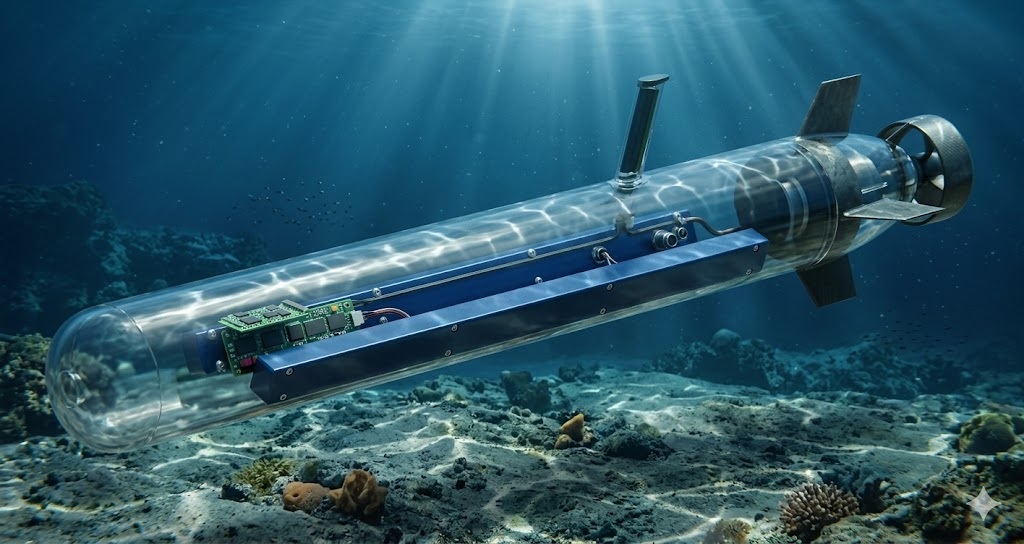
World
SALEM, New Hampshire — May 13, 2026 : Klein Marine Systems has unveiled the MANTIS UUV, a new side scan sonar system specifically developed for autonomous underwater vehicle (UUV) platforms, as defense, commercial, and scientific operators continue expanding the use of autonomous maritime systems for long-duration underwater missions. The newly introduced system is designed to provide consistent, high-resolution sonar imagery across varying survey ranges and operational speeds while reducing payload demands on compact autonomous platforms. The announcement comes amid growing demand for underwater systems capable of operating with reduced crew requirements and increased onboard processing capability. SmartArray Technology and Compact Integration At the center of the MANTIS UUV is Klein’s proprietary SmartArray Technology, which integrates critical sonar electronics directly into the transducer array rather than separating them into dedicated payload compartments. The approach differs from conventional sonar architectures commonly used on underwater survey systems. According to the company, this configuration reduces the overall system footprint while lowering size, weight, and power (SWaP) requirements — a key consideration for UUV manufacturers and operators working with limited payload capacity. The design also preserves internal vehicle space for additional sensors, batteries, or mission-specific equipment while simplifying installation and integration planning. Ted Curley, Executive Vice President and General Manager of Klein Marine Systems, stated that the system was developed to combine advanced imaging performance with onboard processing and practical integration for future autonomous underwater operations. Sonar Performance and Technical Specifications The MANTIS UUV employs multi-channel side scan sonar technology and is engineered to maintain operational effectiveness at vehicle speeds between 6 and 8 knots across all survey ranges. Klein stated that the motion-tolerant design helps mitigate image degradation caused by underwater vehicle movement and dynamic operating conditions. The baseline sonar configuration operates at 600 kHz, while additional 720 kHz and 850 kHz frequency options are available to support different mission profiles and imaging requirements. The system provides swath coverage of up to 150 meters per side, enabling a total coverage width of 300 meters during survey operations. Resolution specifications include 1.0 cm across-track resolution and 10 cm along-track resolution at ranges up to 50 meters. Advanced signal processing capabilities integrated into the system include: Dynamic focusing Multiple-look processing Adaptive beamforming These processing techniques are intended to improve image consistency, target identification, and sonar clarity during autonomous underwater operations. Real-Time Data Processing and Ethernet-Based Architecture The MANTIS UUV incorporates onboard real-time data processing capabilities, allowing sonar information to be analyzed during active missions rather than relying entirely on post-mission review. Klein stated that this capability supports autonomous decision-making workflows and provides a foundation for machine learning and AI-assisted underwater analysis applications. The system uses an Ethernet-centric architecture for control and data interfaces, which the company says reduces integration complexity for modern autonomous underwater platforms. The sonar is also fully compatible with the company’s SonarPro NXT software platform, enabling mission playback, detailed data review, and post-survey analysis. Operational Applications Klein Marine Systems identified several operational roles for the MANTIS UUV across defense, commercial, and scientific sectors. These include: Route survey operations for mine countermeasures (MCM) Search and recovery (SAR) missions Hydrographic and geophysical surveys Offshore infrastructure inspection Environmental habitat mapping and seafloor monitoring The company stated that the system is intended for missions requiring both high-speed survey capability and high-resolution underwater imaging performance. Expanding Autonomous Underwater Systems Market The MANTIS UUV enters a growing market for autonomous underwater technologies as naval forces, offshore operators, and research organizations increasingly invest in autonomous maritime systems for persistent underwater operations. Based in Salem, New Hampshire, Klein Marine Systems supplies sonar systems to military, commercial, and scientific users in more than 80 countries. The company’s product portfolio supports applications ranging from naval mine countermeasures and subsea infrastructure inspection to hydrographic surveying and seafloor mapping.
Read More → Posted on 2026-05-13 15:35:01
World
WASHINGTON — May 13, 2026 : The Congressional Budget Office (CBO) has estimated that the proposed Golden Dome for America missile defense system could cost approximately $1.2 trillion to develop, deploy and operate over the next two decades, according to a 12-page report released on May 12, 2026. The assessment provides one of the most detailed public cost projections so far for the planned multi-layered national missile defense architecture intended to defend the United States against ballistic missiles, hypersonic weapons, cruise missiles and other advanced aerial threats. Acquisition Costs Could Exceed $1 Trillion According to the CBO, acquisition costs alone for the programme would surpass $1 trillion. The estimate includes interceptor systems, a space-based missile warning and tracking network, research and development activities, system integration, operational infrastructure and long-term performance upgrades. The report identified the proposed space-based interceptor layer as the largest and most expensive component of the entire architecture. The orbital defense network, consisting of approximately 7,800 satellites, is projected to account for nearly 70 percent of acquisition costs and roughly 60 percent of the programme’s total projected cost over 20 years. The Congressional Budget Office stated that deploying enough orbiting interceptors to counter approximately ten incoming ballistic missiles could alone require an estimated $720 billion in funding. Major Gap Between Pentagon and CBO Estimates The CBO projection is significantly higher than earlier estimates provided by the Trump administration and Pentagon officials. President Donald Trump previously stated that the Golden Dome programme would cost approximately $175 billion, while Space Force Gen. Mike Guetlein, director of the Office of Golden Dome for America, estimated in March 2026 that the system would require around $185 billion through 2035 to achieve its planned “objective architecture.” According to the CBO, the large difference between the estimates likely reflects major differences in the scale, structure and timeframe of the system being evaluated. The report stated that the Pentagon’s proposed architecture may be substantially more limited than the broader multi-layered defense network modeled by the Congressional Budget Office under the framework established by the programme’s executive order. The agency also noted that the Department of Defense could be expecting “significant funding from other accounts” to support portions of the programme, adding that both explanations may contribute to the discrepancy. Funding Requests and FY2027 Defense Budget Initial funding for the Golden Dome initiative was approved after Republicans in Congress allocated approximately $24.4 billion through the One Big Beautiful Bill Act signed into law by President Donald Trump on July 4, 2025. The Pentagon is currently seeking an additional $17 billion for the programme through reconciliation measures. Defense officials also stated that approximately $750 billion from the administration’s proposed $1.5 trillion fiscal year 2027 defense budget request is intended for missile defense systems, drones, artificial intelligence programmes and expansion of the U.S. defense industrial base. The administration has described Golden Dome as part of a broader layered homeland defense strategy designed to strengthen national protection against evolving missile threats. Budget documents stated that the programme would rely on “innovative program management and acquisition approaches to prudently employ taxpayer dollars.” Programme Origins and Strategic Objectives The Golden Dome programme originated from a January 27, 2025 executive order titled “The Iron Dome for America,” which was later renamed Golden Dome for America. The initiative calls for the development of a layered missile defense architecture capable of detecting, tracking and intercepting ballistic missiles, hypersonic glide vehicles, cruise missiles and other airborne threats targeting the United States. The Congressional Budget Office said its projections were based on a notional architecture consistent with the capabilities outlined in the executive order. However, the report noted that the Department of Defense has not yet publicly released detailed plans for the final objective architecture, making precise long-term cost estimates difficult. CBO Warns of Operational and Strategic Limitations Despite describing the proposed network as substantially more capable than existing U.S. missile defenses, the CBO cautioned that the system would not provide complete protection against large-scale nuclear attacks launched by major powers such as Russia or China. According to the report, the Golden Dome architecture “would be far more capable than defenses” currently available to the United States, but it “would not be an impenetrable shield or be able to fully counter a large attack” conducted by a peer nuclear adversary. The agency also warned that deployment of the missile defense network could influence adversary behavior. The report stated that while the system could deter or defeat smaller missile raids during regional conflicts, it could also encourage rival powers to increase the scale of future attacks in an effort to overwhelm the defense architecture. Defense officials nevertheless continue to support the programme, arguing that the system represents a major expansion of U.S. homeland missile defense capabilities and a long-term investment in layered national security infrastructure.
Read More → Posted on 2026-05-13 15:24:08
World
TAIPEI — May 13, 2026 : U.S. defense technology company Shield AI and Taiwan-based unmanned systems manufacturer Thunder Tiger Corporation have signed a memorandum of understanding to integrate AI-enabled autonomy software into Taiwan’s unmanned maritime platforms, beginning with the SeaShark family of unmanned surface vessels (USVs). The agreement was announced in Taipei on May 13, 2026, and marks a new step in Taiwan’s effort to expand autonomous maritime defense capabilities using domestically produced unmanned systems combined with U.S.-developed artificial intelligence software. The first phase of the partnership will integrate Shield AI’s Hivemind autonomy software into a Thunder Tiger USV, with a live AI-piloted maritime demonstration planned for later this summer. The initiative is intended to transition Taiwan’s maritime defense architecture from remotely operated drones toward coordinated autonomous systems capable of functioning in contested environments where communications and GPS signals may be degraded or disrupted. The companies stated that the partnership is designed to support distributed maritime operations, coastal defense missions, and scalable unmanned warfare concepts in the Taiwan Strait. Hivemind Autonomy Integration At the center of the agreement is Shield AI’s Hivemind Enterprise software platform, a modular autonomy system designed to operate unmanned platforms with reduced reliance on continuous human control. The platform includes capabilities such as mapping, sensing, state estimation, object tracking, task planning, motion planning, behavior planning, and multi-agent coordination. Traditional unmanned maritime vessels typically rely on stable communications links and direct operator control, making them vulnerable to jamming, cyberattacks, signal disruption, and battlefield saturation. By integrating an autonomous AI layer, the vessels are intended to continue navigation, adapt routes, avoid obstacles, maintain formation, and coordinate with other systems even in communications-denied or GPS-disrupted environments. Shield AI stated that human operators would remain responsible for mission oversight and lethal decision-making authority. The company’s Commander software will connect Hivemind-enabled systems with command-and-control networks and mission-planning workflows to maintain operational supervision during deployments. SeaShark USV Family The first integration effort will focus on Thunder Tiger’s SeaShark family of unmanned surface vessels, particularly the SeaShark 800 platform. The vessel is approximately 8 meters long, features an aluminum hull with stealth coating, and is capable of reaching speeds of up to 50 knots. Images released alongside the announcement showed a SeaShark 800 equipped with a launcher-type module mounted on the vessel. Neither company disclosed the exact launcher model, payload configuration, or intended weapon system. However, the configuration highlighted the modular nature of the SeaShark platform family, which is designed to support multiple mission profiles including reconnaissance, strike operations, electronic warfare, decoy missions, coastal defense, and explosive delivery roles. Previous reports have indicated that the SeaShark 800 may be capable of carrying payloads of up to 1,200 kilograms and operating at ranges approaching 500 kilometers. Other variants within the SeaShark family have reportedly supported reconnaissance and attack payloads ranging between 300 and 600 kilograms depending on mission configuration. Phased Testing and Multi-Agent Operations According to the companies, the integration program will follow a phased development structure that includes simulation-based testing, hardware-in-the-loop integration, and live maritime trials in waters surrounding Taiwan. Shield AI executives stated that the broader operational objective is to move beyond isolated drone operations toward coordinated “multi-agent teaming,” where multiple autonomous platforms can operate together in contested operational environments. While the initial focus remains on maritime systems, the companies indicated that future development could extend toward mixed autonomous fleets combining unmanned surface vessels and unmanned aerial systems. Industrial and Strategic Significance Thunder Tiger Corporation manufactures unmanned aerial, surface, and underwater systems for defense, industrial inspection, disaster response, and security applications. Several of the company’s aerial platforms have received Blue UAS approval from the U.S. Department of Defense, meeting cybersecurity and supply chain standards required for military procurement programs. Company officials described the agreement as part of Taiwan’s broader effort to strengthen local autonomous defense manufacturing and reduce dependence on externally operated systems. Thunder Tiger General Manager Gene Su stated that integrating Hivemind autonomy would provide the company’s platforms with autonomous decision-making capabilities required for increasingly complex operational missions. Shield AI co-founder Brandon Tseng said the partnership aligns with efforts to provide Taiwan’s Ministry of National Defense with asymmetric defense technologies intended to support distributed maritime operations and deterrence capabilities. The agreement also expands Shield AI’s regional presence in Taiwan following the company’s February 2026 contract with Taiwan’s National Chung-Shan Institute of Science and Technology to accelerate development and deployment of AI-enabled unmanned systems using the Hivemind autonomy platform.
Read More → Posted on 2026-05-13 15:21:42
World
JERUSALEM — May 13, 2026 : Israel and the United Arab Emirates reportedly expanded covert security and military coordination during the recent conflict with Iran, including intelligence sharing, missile defence cooperation, and joint operational planning, according to reports published on May 13, 2026. A report by The Wall Street Journal, citing Arab officials and sources familiar with the matter, stated that David Barnea conducted at least two undisclosed visits to United Arab Emirates during March and April 2026. The visits reportedly focused on coordinating wartime operations linked to the conflict, referred to in some Israeli reports as Operation Roaring Lion. The discussions reportedly involved intelligence coordination, missile defence integration, and planning for responses to Iranian military activity during the conflict. The cooperation represented one of the most extensive operational partnerships between Israel and the UAE since the signing of the Abraham Accords. Reported Covert Strikes on Iranian Targets During the conflict, the UAE reportedly carried out covert military strikes against Iranian infrastructure. One of the reported operations targeted an oil refinery on Lavan Island in early April 2026. The refinery is considered a major Iranian energy facility and processes approximately 200,000 barrels of condensate per day. Reports stated that Emirati Mirage 2000-9 fighter jets conducted the strike, causing extensive fires and significant operational damage at the site. The facility was reportedly forced to suspend much of its production capacity for several months following the attack. The UAE Ministry of Foreign Affairs did not directly comment on the reported operation. However, officials referenced previous statements emphasizing the country’s right to defend its security interests against hostile actions. According to regional reports, the strikes were conducted in response to repeated Iranian missile and drone attacks targeting Emirati civilian infrastructure and energy facilities during the conflict. Missile Defence Cooperation Following the reported strike on Lavan Island, Iran reportedly launched approximately 2,800 missiles and drones toward Emirati infrastructure and military targets. The escalation led to direct military coordination between Israel and the UAE in air and missile defence operations. U.S. Ambassador to Israel Mike Huckabee stated that Israel deployed an Iron Dome air defence battery along with Israeli military personnel to the UAE during the conflict. The system was reportedly used to intercept incoming Iranian missiles and drones targeting Emirati territory. The deployment marked the first reported operational use of the Israeli Iron Dome system and Israeli combat-support personnel on foreign soil. Israeli defence assistance to the UAE also reportedly included the Iron Beam laser-based defence system and the Spectro drone detection and surveillance platform. Real-time intelligence sharing between Israeli and Emirati officials regarding Iranian missile launch preparations and drone operations was also reportedly conducted throughout the conflict. Intelligence and Security Coordination Israeli media reports further stated that David Zini also traveled to the UAE during the war to coordinate intelligence and internal security matters with Emirati counterparts. The reported visits by Barnea and Zini highlighted the growing intelligence relationship between Israel and the UAE as both countries increased security coordination regarding Iran and regional military threats. Neither Israel nor the UAE has officially confirmed the reported visits by Israeli intelligence officials or the UAE’s alleged involvement in strikes against Iranian targets. However, the reports indicate a significant expansion in operational defence cooperation between the two countries during the conflict.
Read More → Posted on 2026-05-13 14:41:50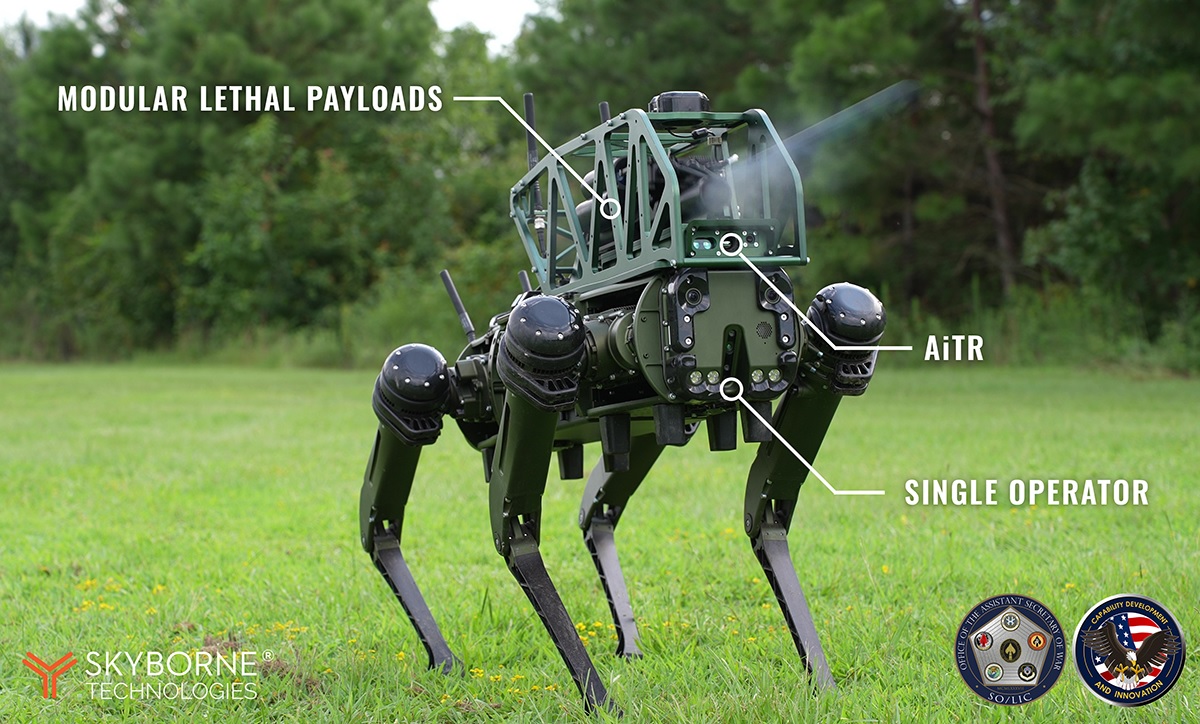
World
TAMPA, Florida — May 13, 2026 : Skyborne Technologies has received a U.S. Department of War Limited Safety Release for its Controller Operated Direct Action Quadruped (CODiAQ) armed unmanned ground system, clearing the platform to proceed into Operational Test and Evaluation (OT&E) and combat assessments with units from United States Special Operations Command (USSOCOM) and a partnered foreign ally. The milestone follows independent government testing conducted by the U.S. Army Test and Evaluation Center (ATEC) at Aberdeen Proving Ground. The evaluation confirmed that the armed robotic system met Department of War safety requirements for tactical operator handling and live weapon employment. The CODiAQ platform is based on the Ghost Robotics Vision 60 quadruped system, a four-legged unmanned ground vehicle designed for operations in terrain where wheeled and tracked systems face mobility limitations. The robot is intended for use in urban combat zones, subterranean environments, rubble-filled areas, and confined interior spaces frequently encountered during special operations missions. Modular Armed Configuration Skyborne Technologies has integrated modular weapon payloads into the CODiAQ platform, including the HAVOC 40mm grenade launcher and the CHAOS 12-gauge shotgun system. The modular design allows operators to rapidly change payloads depending on mission requirements. According to the company, the fully loaded system weighs approximately 66 kilograms with the HAVOC payload installed. The platform can be assembled within 10 minutes, while weapon swaps and reload procedures can be completed in approximately 90 seconds. The system provides an operational endurance of two hours and 15 minutes and is controlled by a single operator using a UXV Technologies SRoC Ground Control Station connected through a Silvus StreamCaster 4200 data link. The platform also incorporates onboard electro-optical and infrared sensors for targeting and navigation support. Safety Validation and AI-Assisted Targeting The armed variants utilize Skyborne’s proprietary EXITUS AI targeting software, which provides AI Target Recognition and Tracking (AiTR) capabilities to support rapid target identification and engagement assistance. Company officials stated that the system operates under a human-in-the-loop architecture, requiring direct operator authorization before weapon employment. The ATEC validation specifically assessed the fire control and safety mechanisms to ensure the robotic platform does not create unacceptable risk to nearby personnel during operations and testing. The CODiAQ platform is also equipped with a structural roll cage for rollover protection and meets IP67 and MIL-STD-810H environmental testing standards. The system is NDAA compliant and fully compatible with the Android Team Awareness Kit (ATAK) battlefield networking system. Contract Structure and Delivery Timeline The Limited Safety Release was granted under a $6.5 million firm-fixed-price research, development, test, and evaluation contract funded and managed by the Office of the Assistant Secretary of Defense for Special Operations and Low-Intensity Conflict. Under the agreement, Skyborne Technologies will deliver 14 CODiAQ systems and 28 modular weapon payloads. The contract also includes a 24-month sustainment package covering maintenance, hardware support, operator training, and maintainer instruction for both U.S. and allied personnel. Delivery will take place as a complete fielding package rather than through staggered shipments, allowing equipment, sustainment, and training to be integrated into a single operational handoff later in 2026. Michael J. Trexler, the Government Program Manager overseeing the effort, confirmed that live-fire operator training is scheduled for October 2026. “We are working closely with Skyborne to deliver CODiAQs and new equipment live fire training to our Tactical Operators in October 2026,” Trexler stated. “CODiAQ represents a deliberate and important step in armed robotic ground systems. This milestone allows the Department of War to rapidly assess operational utility with rigorous emphasis on system safety, operator control, and risk management during OT&E and combat evaluations.” Operational Role and Manufacturing The evaluation program will involve multiple Tactical Units of Action within USSOCOM alongside at least one allied foreign partner. The platform is intended for high-risk missions where robotic systems can reduce direct exposure of human operators during close-quarters combat and direct-action operations. Skyborne Technologies stated that the CODiAQ systems procured under the contract are manufactured in the United States, aligning with current Department of War priorities focused on domestic production, secure supply chains, and long-term sustainment resilience. The company is scheduled to publicly display the CODiAQ system during SOF Week 2026 in Tampa, Florida, from May 19 to 21 at the Australia Pavilion, Booth 721. Quadruped robotic systems have increasingly attracted military interest over the past decade, with platforms such as the Vision 60 undergoing various defense evaluations. However, the CODiAQ program’s progression into a formal safety-certified operational testing phase with USSOCOM represents one of the more advanced publicly disclosed procurement and evaluation efforts involving armed quadruped robotic systems.
Read More → Posted on 2026-05-13 14:30:03
World
ISTANBUL, TÜRKIYE — May 13, 2026 : EDGE Group and Baykar have signed two strategic agreements at the SAHA 2026 International Defence, Aerospace and Space Industry Exhibition aimed at strengthening cooperation in unmanned combat aerial systems, precision-guided weapons integration, and international defence marketing initiatives. The agreements, announced during the SAHA 2026 exhibition held at the Istanbul Expo Center from May 4 to 8, focus on integrating EDGE’s AL TARIQ family of precision-guided munitions onto Baykar’s Bayraktar AKINCI unmanned combat aerial vehicle (UCAV), while also establishing a joint commercial framework allowing both companies to market products from each other’s defence portfolios. AL TARIQ Integration on Bayraktar AKINCI The primary agreement formalises the integration of EDGE’s AL TARIQ precision-guided munition family onto the Bayraktar AKINCI platform. The contract was signed by Hamad Al Marar, Managing Director and Chief Executive Officer of EDGE Group, and Haluk Bayraktar, Chief Executive Officer of Baykar. Under the agreement, Baykar will provide technical support, system integration, and demonstration services required to certify the compatibility of the AL TARIQ weapon system with the AKINCI UCAV platform. The companies stated that the integration is intended to expand operational flexibility and improve scalable precision-strike capabilities for AKINCI operators across a range of mission environments. The AL TARIQ family consists of modular precision-guided kits designed for Mk 81, Mk 82, and Mk 83 general-purpose aerial bombs. The system is designed for all-weather, day-and-night precision strike operations and offers stand-off engagement capability exceeding 120 kilometres in its long-range configuration equipped with wing kits. According to the companies, the munition family supports launch operations from altitudes up to 40,000 feet at speeds approaching Mach 0.9. Guidance options include GNSS-aided inertial navigation systems, with optional semi-active laser and imaging infrared seekers. The system is also designed to support automatic target recognition, moving target engagement, and strike accuracy of less than two metres circular error probable in certain configurations. The AKINCI platform is a high-altitude, long-endurance multirole unmanned combat aerial vehicle equipped with twin turboprop engines. The aircraft has a maximum take-off weight of 6,000 kilograms, payload capacity of 1,500 kilograms, operational range of approximately 6,000 kilometres, and endurance exceeding 24 hours. Joint Commercial and Cross-Selling Framework A second agreement signed during the exhibition establishes a formal framework for joint commercial cooperation and international marketing activities between the two defence companies. The agreement was signed by Yousef Al Blooshi and Murat Kilinc. The arrangement authorises both companies to include products from each other’s portfolios in future export campaigns and customer proposals. Officials stated that the framework is intended to create broader cross-selling opportunities across their wider defence product ranges while strengthening market access in international defence sectors. The companies said the partnership reflects increasing global demand for integrated defence solutions combining unmanned aerial platforms with advanced precision-guided weapon systems. Executive Statements Hamad Al Marar stated that the partnership reflects a broader transition within the defence industry toward integrated end-to-end operational systems. “The defence industry is moving towards integrated, end-to-end solutions, and this partnership with Baykar is a direct reflection of that,” Al Marar said. He added that combining EDGE’s smart weapon systems with the AKINCI UCAV platform would provide international operators with improved precision, scalability, and operational flexibility across complex mission environments. Haluk Bayraktar stated that Baykar’s ongoing integration of multiple munition types onto the AKINCI platform is intended to provide operators with a broader range of operational capabilities. “With this strategic collaboration, we are enhancing the capabilities of our platforms while further strengthening our global partnerships and leading position in the defence industry,” Bayraktar said. Expanding Strategic Defence Cooperation The agreements represent the latest phase in a broader strategic partnership between the UAE and Turkish defence industries focused on expanding precision-strike capabilities for unmanned aerial systems. The cooperation builds upon a previous agreement involving the integration of EDGE’s DESERT STING 16 guided-glide munition onto the Bayraktar TB2 platform. Baykar remains one of the world’s leading UAV exporters, with the company previously reporting export agreements with nearly 40 countries and export volumes exceeding $2.2 billion in recent years. EDGE Group continues to expand the UAE’s sovereign defence manufacturing sector through investments in autonomous systems, artificial intelligence, advanced smart weapons, and integrated defence technologies for international markets.
Read More → Posted on 2026-05-13 14:18:14
World
HELSINKI — May 13, 2026 : Rafael Advanced Defense Systems has unveiled STORM SHIELD, a miniature electronic warfare (EW) self-protection and deception system specifically developed for unmanned aerial platforms, during the AOC Europe 2026 Electronic Warfare conference in Helsinki, Finland. The system was introduced as part of Rafael’s broader electronic warfare portfolio showcased at the conference, which is being held from May 19–21 under the theme “Re-Arming Europe for Electromagnetic Spectrum Superiority.” STORM SHIELD is designed to address the growing operational vulnerability faced by unmanned aerial vehicles (UAVs) operating in increasingly contested electromagnetic environments. Designed for Contested Airspace Operations According to Rafael, modern integrated air defense systems and radar-guided threats have significantly increased the risks faced by UAVs operating without onboard electronic protection systems. The absence of compact, combat-proven active EW systems suitable for unmanned platforms has limited the operational reach and survivability of drones in high-threat environments. As military forces increasingly shift reconnaissance, strike, and support missions toward unmanned systems, the requirement for lightweight defensive technologies compatible with UAV size, weight, power, and cost constraints has become more urgent. Rafael stated that STORM SHIELD was specifically engineered to provide active self-protection and deception capabilities for UAVs operating in suppressed or degraded operational theaters. Autonomous Electronic Warfare Capability STORM SHIELD is a lightweight active electronic warfare suite capable of autonomously detecting, analyzing, and countering a wide range of radar-guided anti-aircraft threats. Once activated, the system continuously monitors the surrounding electromagnetic spectrum and automatically generates and transmits counter-signals without requiring operator intervention. The system provides full 360-degree spatial coverage, allowing protection regardless of the host platform’s orientation, altitude, or maneuver profile during flight operations. Rafael stated that the system also supports broad frequency coverage to address multiple threat categories simultaneously while maintaining continuous electromagnetic environment monitoring. Additional capabilities include advanced direction-finding functions and Digital Radio Frequency Memory (DRFM)-based deception techniques intended to disrupt or mislead hostile radar systems. AESA-Based Architecture and Miniaturized EW Technology At the hardware level, STORM SHIELD is built around an Active Electronically Scanned Array (AESA) transmitter architecture using solid-state receiver/transmitter modules. The system integrates advanced DRFM-based signal generation and electronic deception technologies derived from Rafael’s existing electronic warfare portfolio. According to the company, the technologies incorporated into STORM SHIELD have already been validated in operational service across multiple air and naval EW systems. Rafael stated that the miniaturized architecture was specifically adapted to meet the physical and power limitations associated with unmanned aerial platforms. The company noted that technologies from systems such as the SEWS-DV naval electronic warfare suite, the SKY SHIELD escort jamming pod, the LITE SHIELD self-protection jammer, and other airborne EW systems informed the development of STORM SHIELD. Modular Integration and Upgradeability Rafael stated that STORM SHIELD was designed with a fully modular architecture to simplify integration across a broad range of unmanned aerial platforms using standardized components. The system is fully programmable, allowing operators to install mission-specific software configurations before deployment based on operational requirements and anticipated threat environments. The company added that the EW suite was developed for long-term adaptability, maintainability, and future upgrades as UAV operational requirements continue to evolve. Rafael emphasized that STORM SHIELD is not being presented as a developmental concept, but rather as an operationally validated capability derived from electronic warfare technologies already fielded across its existing defense systems portfolio. Based in Israel, Rafael Advanced Defense Systems develops and manufactures advanced defense technologies across air, land, sea, space, and cyber domains, including missile defense systems, precision-guided munitions, electronic warfare systems, and integrated battlefield technologies.
Read More → Posted on 2026-05-13 14:07:31
World
NEW DELHI, — May 13, 2026 : Indian defence start-up Veda Aeronautics has commenced delivery of the first batch of S-UMS Sureshastra Mk1 jet-powered swarm drones to the Indian Air Force under a ₹300 crore ($35.1 million) contract signed in August 2023 for the supply of 200 units. The deliveries, which began in April 2026, mark the start of operational induction of the indigenous loitering munition system developed under the IAF’s Mehar Baba Swarm Drone programme. The contract is currently the largest order awarded by the Indian military to a private-sector company for loitering munitions. Indigenous Jet-Powered Strike System The S-UMS (Smart Unmanned Munitions System) Sureshastra Mk1 is a jet-powered, fixed-wing kamikaze drone designed for long-range precision strike missions against high-value targets. The platform measures approximately 3.5 metres in length, features a 3-metre wingspan, and weighs around 90 kilograms in its fully loaded configuration. The drone is equipped with a 30 to 40-kilogram high-explosive warhead and operates at cruising speeds between 350 and 400 km/h. Designed with a low-observable V-tail configuration to reduce radar visibility, the system is launched using a rail or catapult-based platform. According to programme details, the Sureshastra Mk1 has an operational strike range exceeding 500 kilometres and is intended to engage targets such as enemy airfields, parked combat aircraft, radar installations, and command-and-control centres with precision. Swarm Intelligence and Multi-Role Capability A key feature of the Sureshastra Mk1 is its autonomous swarm warfare capability. The platform enables more than 20 drones to coordinate simultaneously during operations, exchange targeting data in real time, and execute synchronized attacks designed to saturate and overwhelm hostile air defence systems. The drone is also equipped with navigation systems capable of operating in GPS-denied environments, allowing continued mission execution under electronic warfare conditions. In addition to its primary strike role, the modular platform can be configured for Intelligence, Surveillance and Reconnaissance (ISR) missions, electronic warfare operations, and decoy missions intended to expose or distract enemy air defence assets. Development Under Mehar Baba Programme Development of the Sureshastra Mk1 originated from the Indian Air Force’s Mehar Baba Swarm Drone contest launched in 2018 to encourage indigenous development of advanced unmanned combat systems. Veda Aeronautics developed the platform in collaboration with the IAF and conducted extensive user trials in the Thar Desert prior to the contract award in 2023. The trials evaluated the drone’s swarm coordination, strike capability, and operational performance in desert conditions. The Indian Air Force has maintained strict operational security surrounding the programme. No official photographs or video footage of the weapon system or its user trials have been publicly released. Future Variants in Development Veda Aeronautics is currently expanding the Sureshastra programme for additional branches of the Indian Armed Forces. The company is developing a canister-launched variant for the Indian Army intended for integration with BMP-II infantry fighting vehicles. The company is also working on ship-launched variants for the Indian Navy as well as advanced air-dropped canisterised swarm systems for the Indian Air Force. The air-launched variant is being conceptualized for deployment from heavy transport aircraft such as the Boeing C-17 Globemaster III under the IAF’s Air Dropped Canisterised Swarm programme. According to development plans, the airborne deployment concept could potentially extend the system’s operational strike range to nearly 1,000 kilometres.
Read More → Posted on 2026-05-13 13:59:46
World
RESTON, Virginia — May 13, 2026 : Leidos has been awarded a $2.7 billion contract by the United States Army to transition key hypersonic weapons programmes from the prototyping stage into full-scale production, marking a significant step in the expansion of U.S. long-range strike capabilities. The contract consolidates the Thermal Protection Shield (TPS) and Common Hypersonic Glide Body (CHGB) programmes into a unified production framework intended to accelerate manufacturing timelines and improve coordination between suppliers supporting both the U.S. Army and the U.S. Navy. The CHGB serves as the maneuverable payload section of the hypersonic missile system and carries the warhead, navigation, and guidance components. It is the core element of the Army’s Long-Range Hypersonic Weapon system, known as “Dark Eagle,” as well as the Navy’s Conventional Prompt Strike programme. The TPS programme focuses on developing protective technologies designed to shield the glide body from the extreme heat and aerodynamic pressure generated during hypersonic flight. According to Leidos, integrating the two programmes under a single production structure is intended to support ongoing Army acquisition reform initiatives by reducing duplication across suppliers, simplifying logistics, and improving manufacturing efficiency. The company stated that the consolidation is expected to shorten production timelines while ensuring a stable supply of critical components for operational deployment requirements. Hypersonic weapons are capable of travelling at speeds greater than Mach 5 while maintaining maneuverability during flight, making them more difficult to track and intercept using conventional missile defence systems. The move into sustained production reflects continued Pentagon efforts to field operational hypersonic strike systems amid growing competition in advanced missile technologies. Leidos said it will apply its experience in guidance systems, sensor technologies, and precision munitions integration during the production phase. Through its subsidiary Dynetics, the company has served as the prime contractor for the CHGB programme since 2019 and for the TPS programme since 2021. In March 2026, the Army and Navy conducted joint testing of the hypersonic missile system associated with the programme, as both services continue efforts to accelerate deployment schedules for long-range hypersonic capabilities. “This contract is a major step forward in delivering hypersonic capabilities to the warfighter at speed,” said Cindy Gruensfelder, president of Leidos Defense. “Our team is committed to supporting the Army and Navy in producing this critical operational capability.” The agreement also supports the company’s NorthStar 2030 corporate strategy, which focuses on advanced military technologies, precision-strike systems, and integrated air and missile defence capabilities. Headquartered in Reston, Virginia, Leidos employs approximately 50,000 personnel worldwide and reported annual revenues of approximately $17.2 billion for the fiscal year ending January 2, 2026. The company stated that the programme is intended to support current and future operational requirements for both the U.S. Army and the U.S. Navy through expanded large-scale hypersonic weapons manufacturing.
Read More → Posted on 2026-05-13 13:51:48
World
WASHINGTON — May 12, 2026 : The United States Navy is set to begin development of a new Long Range Anti-Submarine Warfare Weapon (LRAW) under its Fiscal Year 2027 Research, Development, Test and Evaluation (RDT&E) budget, according to newly released budget documentation. The program is intended to expand the Navy’s long-range anti-submarine warfare capability and eventually replace or supplement existing vertically launched anti-submarine weapons currently in service. The LRAW program has been approved as a new-start initiative for FY2027 and will receive an initial allocation of $11.423 million. The funding will support preliminary design activities, engineering work, production of test articles, and modifications to existing Vertical Launch Anti-Submarine (VLA) rounds for testing and evaluation. Navy Seeks Greater Anti-Submarine Engagement Range The U.S. Navy currently relies on the RUM-139C Vertical Launch Anti-Submarine Rocket (VL-ASROC) as its primary ship-launched long-range anti-submarine warfare weapon. The system uses a rocket booster and guidance package to deliver a lightweight torpedo, including the Mk-46 or Mk-54, to a designated drop location before the torpedo enters the water by parachute and autonomously searches for enemy submarines. According to the FY2027 budget justification documents, the Navy identified insufficient operational range in current VLA systems as a major capability gap. Publicly available data places the RUM-139C’s maximum operational range at approximately 10 to 12 nautical miles, or roughly 19 to 22 kilometers. The Navy assessed that evolving undersea threats now require surface combatants to engage hostile submarines from significantly greater stand-off distances. Modern adversary submarines are increasingly equipped with advanced sensors and long-range heavyweight torpedoes, allowing them to threaten surface ships from beyond the effective engagement range of existing anti-submarine rockets. The Navy also noted that the active inventory of RUM-139 missiles is declining. Budget documents stated that limited maintenance funding has reduced the number of missiles being sustained in operational service, increasing the requirement for a modern replacement capable of future mass production. LRAW Expected to Build on Existing VL-ASROC Concept Although the final configuration of the weapon remains under development, defense analysts expect LRAW to retain a similar operational concept to the current VL-ASROC system. The new weapon is anticipated to use rocket-assisted delivery to transport an acoustic-homing lightweight torpedo, likely the Mk-54, to substantially greater distances before deployment into the water. The Navy has not yet disclosed details regarding the weapon’s propulsion system, target range objectives, guidance architecture, or planned operational timeline. However, the program is expected to significantly increase the anti-submarine reach of future U.S. surface combatants operating in contested maritime regions. Program Signals Deeper AUKUS Integration One of the most notable elements of the LRAW program is its apparent integration with the AUKUS trilateral security partnership involving the United States, United Kingdom, and Australia. The FY2027 development schedule for LRAW includes a reference to an “AUKUS RWG/TLR” review, likely referring to an AUKUS Requirements Working Group or Top Level Requirements review process. The inclusion suggests the weapon is being designed from the outset to meet interoperability requirements across all three allied navies. LRAW is expected to fall under AUKUS Pillar 2, which focuses on joint development and integration of advanced military technologies. Undersea warfare capabilities remain one of the primary focus areas within the Pillar 2 framework. MK-41 Compatibility Could Enable Allied Fleet Integration Compatibility with the MK-41 Vertical Launching System is expected to play a central role in the program’s multinational integration potential. The U.S. Navy and Royal Australian Navy already operate the MK-41 system extensively across multiple surface combatants, while the British Royal Navy plans to deploy strike-length MK-41 launch cells aboard its future Type 26 and Type 31 frigates. The United Kingdom has previously issued requests for information regarding long-range anti-submarine warfare weapons for future MK-41-equipped surface vessels. If LRAW maintains compatibility with the same launch architecture used by current VL-ASROC systems, integration across allied fleets could be achieved with relatively limited structural modifications. The Navy has not released additional technical information regarding the weapon at this early stage of development. However, the program represents a broader effort to restore and expand long-range organic anti-submarine warfare capability for U.S. and allied naval forces amid increasing undersea competition in strategically important maritime regions.
Read More → Posted on 2026-05-12 16:59:06
World
BYDGOSZCZ, Poland — May 12, 2026 : Poland’s state-owned defense conglomerate Polska Grupa Zbrojeniowa (PGZ) has signed agreements with American defense companies General Dynamics Ordnance and Tactical Systems and Paramount Enterprises International Inc. to establish domestic assembly and future production capabilities for Hydra 70mm rockets in Poland. The agreements were signed through PGZ subsidiary Nitro-Chem S.A. and are aimed at creating a production and logistics hub for the Hydra 70 rocket system at the company’s facility in Bydgoszcz. The project forms part of Poland’s broader strategy to expand domestic ammunition manufacturing capacity and strengthen supply chain resilience for future military operations. Under the first phase of the initiative, Hydra 70 rockets will be assembled in Poland using components supplied directly by General Dynamics. Later phases are expected to transition toward full domestic manufacturing, with Polish suppliers and additional PGZ subsidiaries gradually integrated into the production chain. The Polish Ministry of National Defense is expected to become the primary customer for the rockets, although PGZ officials have indicated that future exports to allied countries are also being considered. Linked to Apache Helicopter Acquisition The program is closely connected to Poland’s acquisition of 96 Boeing AH-64E Apache Guardian attack helicopters from the United States under a multi-billion-dollar Foreign Military Sales agreement finalized with Washington. The Hydra 70 is a standard air-to-ground munition used by the Apache platform, and local production is intended to ensure a secure and sustainable ammunition supply for the future fleet. Poland has accelerated military modernization programs following Russia’s 2022 invasion of Ukraine, with particular emphasis on expanding domestic production of ammunition and precision-guided weapons. Multi-Role Operational Use PGZ President Adam Leszkiewicz stated that the Hydra 70 rockets are expected to support multiple operational roles across the Polish Armed Forces. According to Leszkiewicz, the rockets will arm Poland’s future Apache helicopter fleet while the guided APKWS variant will also serve as a cost-effective counter-drone interceptor for the SAN air defense system. He additionally noted that Ukrainian aircraft are currently employing Hydra rockets against Russian attack drones and suggested that Poland’s Air Force may consider adopting similar operational concepts in the future as a lower-cost alternative to more expensive missile systems. The combination of helicopter armament, air defense integration, and potential aviation applications is expected to create significant long-term production demand for the system. Hydra 70 and APKWS Capabilities The Hydra 70 is a 2.75-inch (70mm) fin-stabilized unguided rocket family powered by the Mk 66 solid-propellant rocket motor. In its standard configuration, the rocket is designed for use against soft targets and lightly armored vehicles from helicopters and fixed-wing aircraft. The rocket’s operational flexibility is expanded through the Advanced Precision Kill Weapon System (APKWS), developed by BAE Systems. The APKWS adds a laser-guidance section between the rocket motor and warhead, converting the standard unguided rocket into a precision-guided munition capable of engaging point targets, including unmanned aerial vehicles. The guidance kit uses Distributed Aperture Semi-Active Laser Seeker technology integrated into deployable control canards, allowing the rocket to strike targets with improved accuracy while remaining significantly less expensive than dedicated anti-air or anti-armor missiles. Expanding Domestic Defense Production Poland currently allocates approximately 4.3 percent of its GDP to defense spending, making it one of NATO’s highest military spenders relative to economic output. The government has increasingly prioritized local ammunition and weapons production after observing the high ammunition consumption rates seen during the war in Ukraine. The Hydra 70 production initiative is expected to support Poland’s long-term objective of reducing dependence on foreign wartime supply chains while strengthening the country’s domestic defense-industrial base for sustained high-intensity military operations.
Read More → Posted on 2026-05-12 16:53:17
World
MOSCOW — May 12, 2026 : Russian President Vladimir Putin announced on May 12 that Russia had successfully conducted a test launch of the RS-28 Sarmat intercontinental ballistic missile (ICBM), confirming that the first regiment equipped with the system will officially enter combat duty by the end of 2026 as part of a broader modernization of the country’s strategic nuclear forces. The launch was conducted from the Plesetsk Cosmodrome, with Strategic Missile Forces Commander Sergei Karakayev reporting that the missile completed all assigned objectives during the test. Russian authorities stated that the first Sarmat regiment will be deployed with the Uzhur missile division in Krasnoyarsk Krai. During a televised briefing with senior military officials, Putin described the Sarmat as the most powerful missile system currently in existence and said it is intended to replace the Soviet-era R-36M2 Voyevoda, known in NATO terminology as the “Satan” missile system. According to Russian officials, the liquid-fueled, silo-based ICBM is capable of carrying multiple independently targetable reentry vehicles (MIRVs) as well as hypersonic glide vehicles. Putin stated that the missile can travel along both traditional ballistic and suborbital trajectories, with an operational range exceeding 35,000 kilometers when using a suborbital flight path. Russian leadership further claimed that the total yield of the warheads carried by the Sarmat is more than four times greater than that of the most powerful comparable Western systems currently in service. Officials stated that the missile surpasses its predecessor in flight range, throw-weight capacity, launch readiness, and onboard countermeasure systems designed to penetrate existing and future anti-missile defense networks. Putin linked the development of the Sarmat and other advanced strategic systems to the United States’ withdrawal from the Anti-Ballistic Missile (ABM) Treaty in 2002, stating that the move forced Russia to accelerate the development of new deterrence capabilities. He added that Russia’s strategic missile and nuclear modernization programs are advancing across multiple sectors and asserted that no Western equivalents currently exist for several of Russia’s newest systems. Alongside the Sarmat update, Russian officials also provided status reports on other strategic weapons programs currently under development or operational deployment. The Oreshnik intermediate-range ballistic missile system has officially entered active combat duty, according to the Kremlin. Russian authorities stated that the hypersonic-capable missile system can be equipped with nuclear warheads and is intended to strengthen regional deterrence capabilities. Officials also confirmed that testing work is nearing completion for two experimental systems powered by compact nuclear propulsion units. These include the Poseidon autonomous underwater vehicle and the Burevestnik global-range cruise missile, both of which are designed for extended-range strategic operations. In addition, Russia announced that modernization work continues on the Kh-47M2 Kinzhal air-launched hypersonic missile system. The missile, which entered service in 2017 and has been used in ongoing military operations, is reportedly undergoing accuracy improvements for missions involving conventional, non-nuclear warheads. The scheduled deployment of the Sarmat missile regiment in 2026, combined with the operational status of the Oreshnik and Kinzhal systems and the continued development of Poseidon and Burevestnik, reflects Russia’s ongoing transition toward a new generation of strategic deterrence platforms.
Read More → Posted on 2026-05-12 16:46:01Search
Top Trending in 24 Hours


Top Trending in 4 Days
-
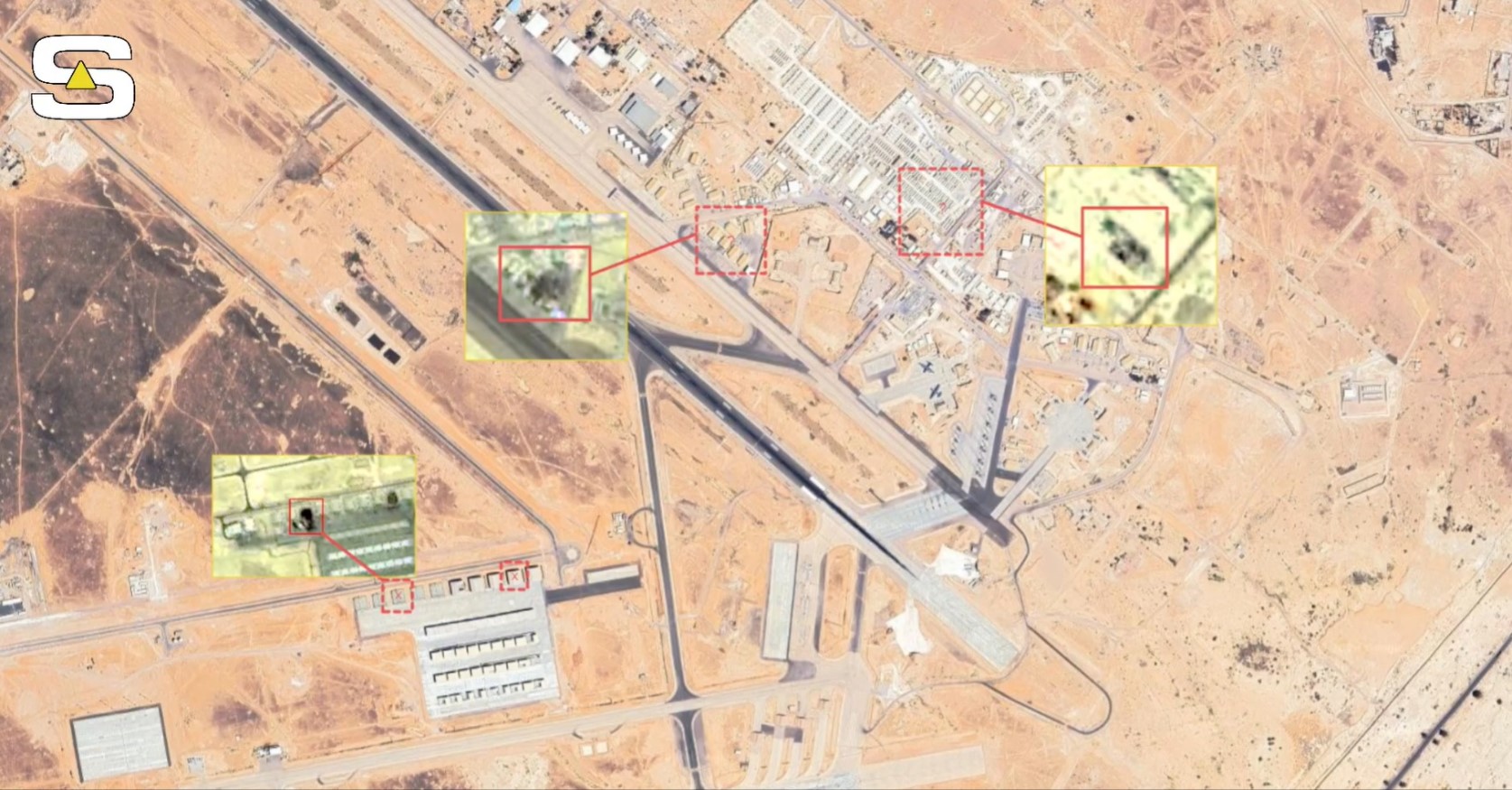 New Satellite Imagery Reveals Extensive Damage at Jordan's Muwaffaq al-Salti Air Base After Iranian Missile Strike
-
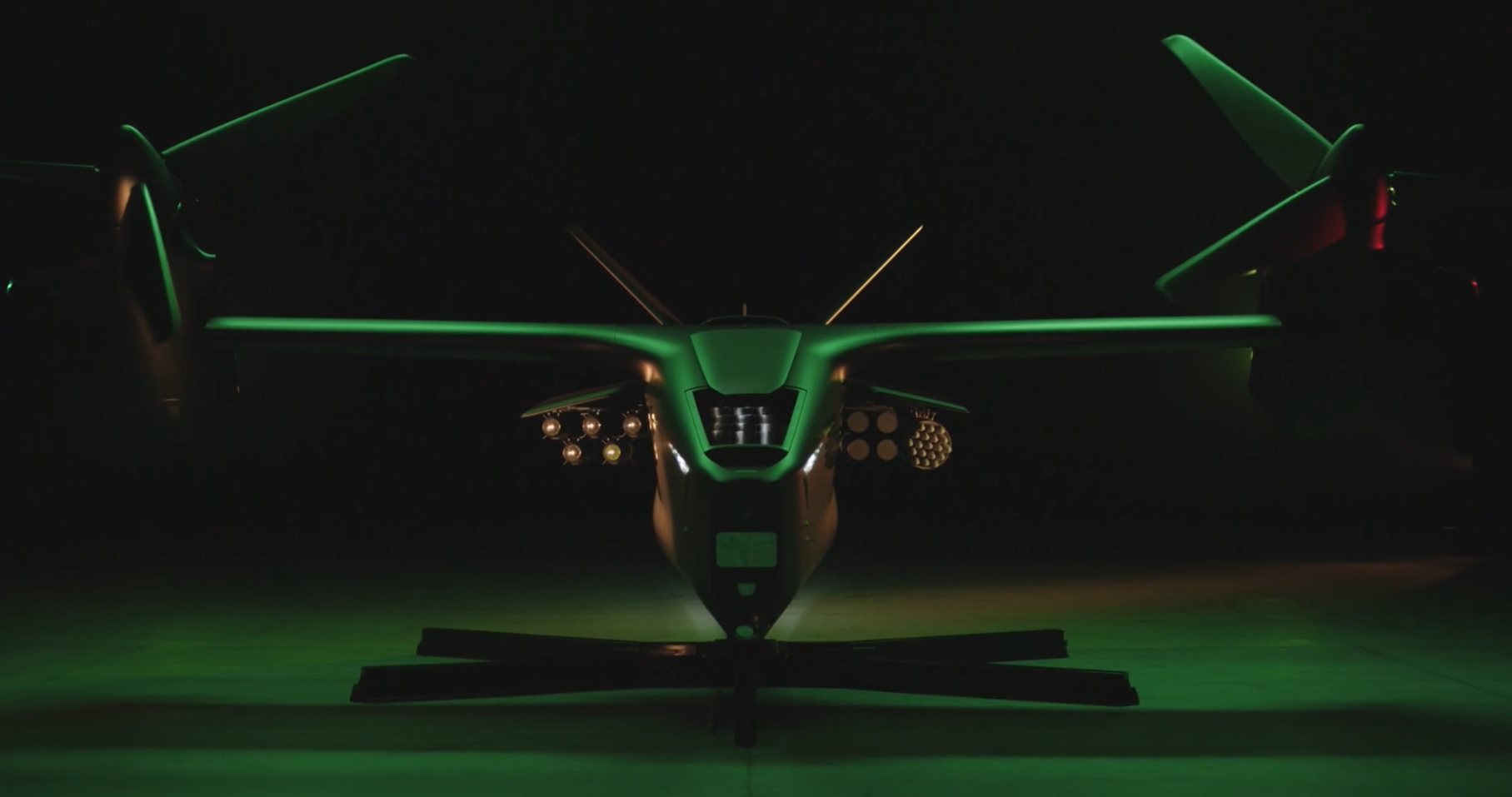 Anduril Unveils Thunder Autonomous Attack Rotorcraft Built with Archer Aviation to Support Apache Helicopters
-
 U.S. Space Force Awards Slingshot Aerospace $69.2 Million Contract to Develop AI Space Training Platform
-
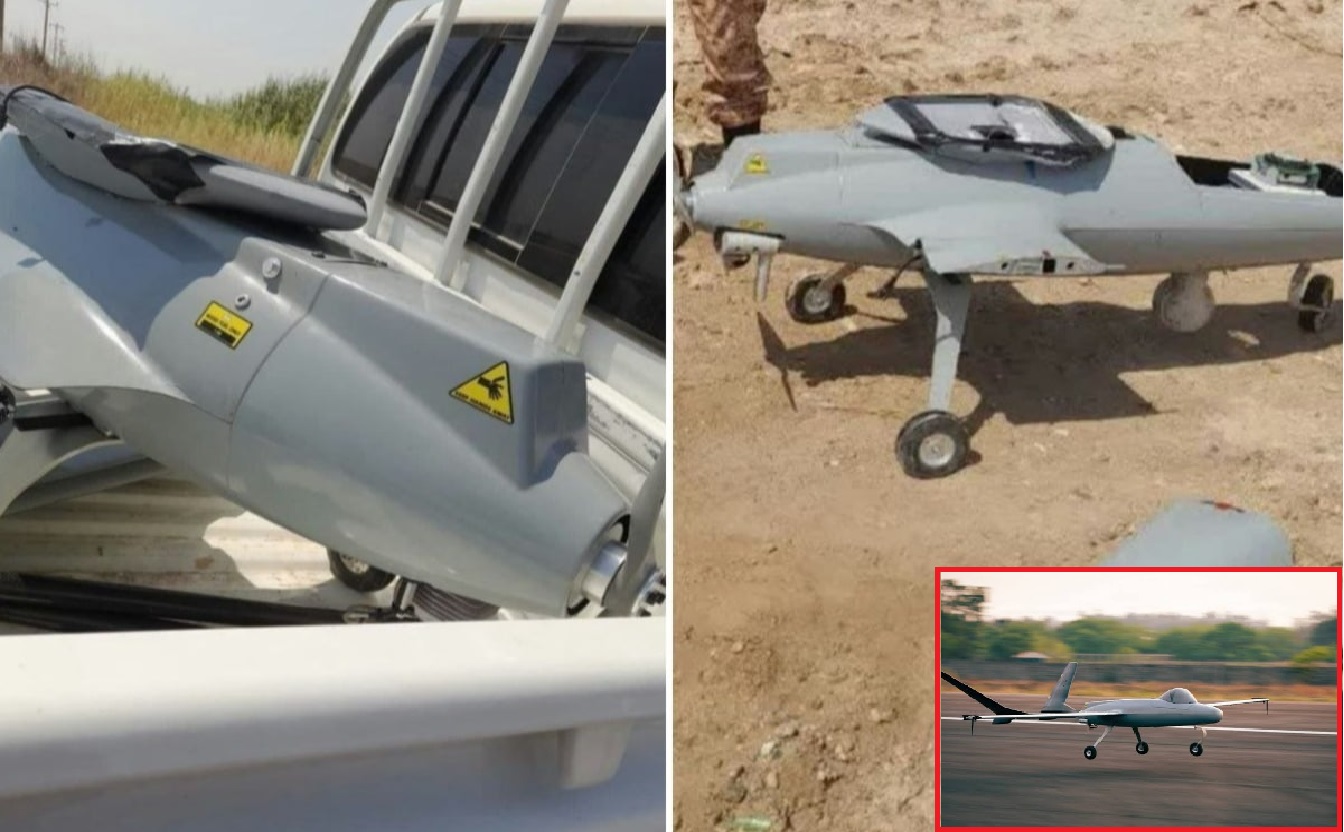 Iran Claims It Shot Down U.S.-Operated Polish-Built Tiguar-M Drone, Releases Images
-
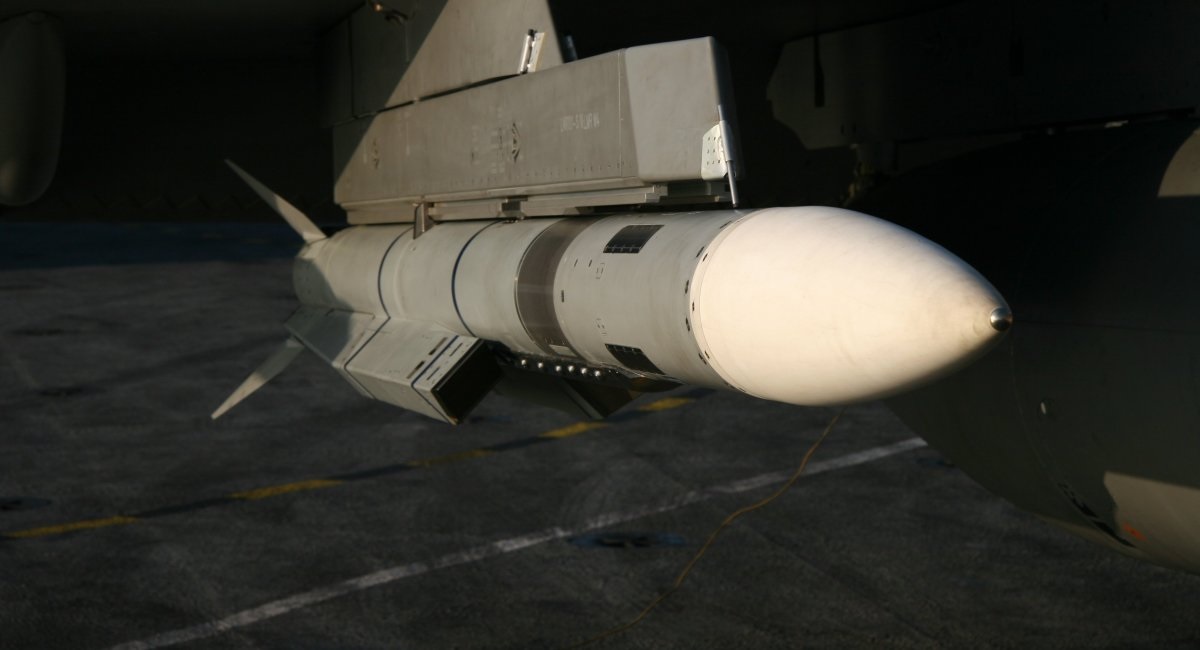 UK Cancels Meteor Missile Mid-Life Upgrade, Prioritizes Next-Generation FASE Air-to-Air Missile Programme
-
 NASA, Draper Cancels CP-12 Lunar Lander Mission After Development Delays Push Mission Beyond 2030
-
 Satellite Images Confirm Russian Tu-95MS Bomber Destroyed After Ukrainian Drone Strike on Engels-2 Air Base
-
 U.S. Navy's Zumwalt Destroyer Hypersonic Missile Upgrade Program Delayed by Two Years as Costs Top $2 Billion: GAO Reports
