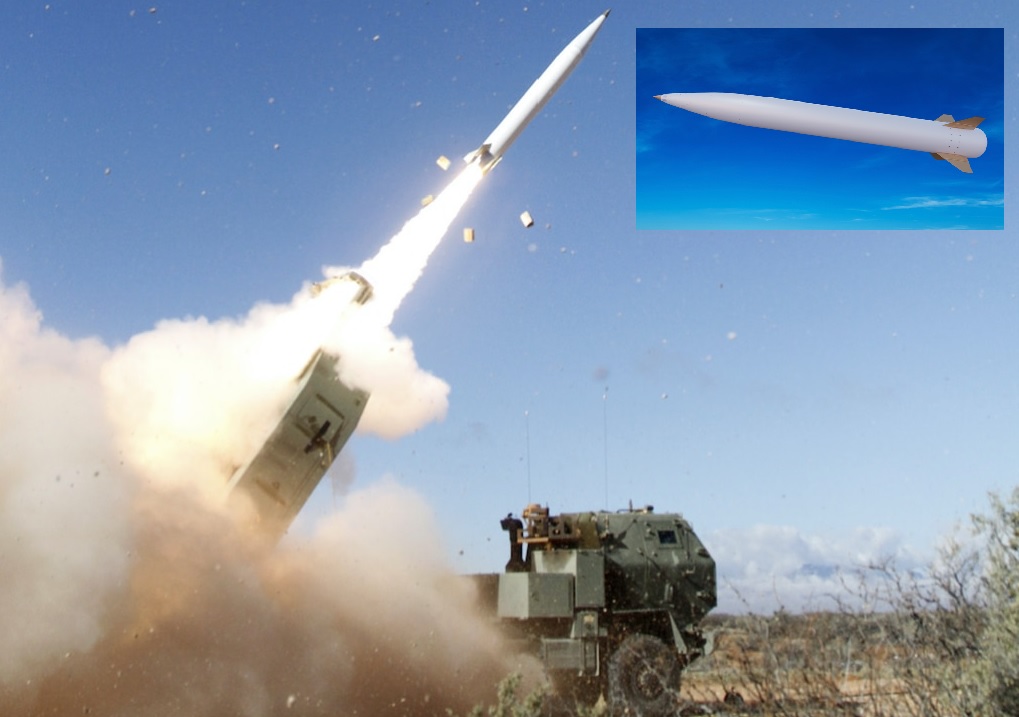
DALLAS — March 13, 2026 — Lockheed Martin and the United States Army have completed the first flight test of the Precision Strike Missile (PrSM) Increment 2, a new variant of the Army’s next-generation long-range surface-to-surface missile designed to engage both land targets and moving maritime threats.
The test, conducted on March 12, 2026, represents an early milestone in the development of the Army’s evolving long-range fires capability. The missile was launched from an M142 HIMARS launcher and successfully completed a 350-kilometer flight, meeting all primary test objectives.
During the flight, the missile deployed protective seeker covers and transmitted a full set of telemetry and performance data. Engineers will use this data to evaluate system performance and support further validation of the missile’s guidance, navigation, and targeting systems as the program advances.
PrSM Increment 2 and the Long-Range Fires Program
The Precision Strike Missile program is the U.S. Army’s replacement for the aging Army Tactical Missile System (ATACMS). It is designed to provide significantly improved range, precision, and lethality while remaining compatible with existing artillery launch platforms.
The baseline PrSM Increment 1 focuses on long-range precision strikes against fixed land targets. The Increment 2 configuration introduces additional targeting technologies intended to expand the missile’s operational role.
Under current program plans, the missile will continue to integrate with both the M142 HIMARS and the M270A2 MLRS launcher platforms already in service with the U.S. Army and allied forces. Maintaining compatibility with these systems allows the Army to field the upgraded missile without major changes to launch vehicles, logistics networks, or fire-control architecture.
Multi-Mode Seeker and Moving Target Engagement
The primary technological addition in the Increment 2 missile is a multi-mode seeker designed to provide terminal guidance against moving or time-sensitive targets.
Unlike earlier versions that rely mainly on GPS-based coordinates for fixed targets, the new seeker allows the missile to detect and track targets during the final phase of flight. This capability enables engagement of:
-
Relocating ground targets
-
Mobile missile launchers
-
Moving maritime vessels
By integrating this seeker, the PrSM Increment 2 gains a maritime-strike capability, effectively transforming the missile into a land-based anti-ship weapon in addition to its traditional land-attack role.
This capability is intended to support multi-domain operations, allowing ground forces to contribute to sea-denial missions from land-based launch positions.
Compatibility With Existing Launch Systems
Despite the addition of the new seeker and associated guidance systems, the missile retains the same external launcher interface used by the baseline PrSM.
The system remains fully compatible with:
-
M142 HIMARS launchers
-
M270A2 MLRS launchers
This design approach allows the U.S. Army to integrate the missile into existing units without requiring structural modifications to launch platforms. Maintaining the established platform footprint also simplifies training, maintenance procedures, and supply chain logistics.
Industry Statements
Program officials at Lockheed Martin emphasized that the Increment 2 missile was developed to meet operational requirements specified by the Army.
Carolyn Orzechowski, Vice President of Precision Fires Launchers and Missiles at Lockheed Martin, said the new version provides the capability required to defeat both moving land targets and maritime threats at extended ranges.
Gaylia Campbell, Vice President and General Manager of Lockheed Martin Tactical Missiles, stated that the company is applying digital engineering methods, modular design principles, and agile development processes to accelerate the program’s timeline while maintaining performance and reliability standards.
Lockheed Martin also noted that close coordination with the U.S. Army and the broader supplier network is intended to support faster transition from development testing to operational deployment.
Program Development and Testing
The PrSM Increment 2 program is currently in its technology-maturation phase, with a Preliminary Design Review (PDR) underway. The data collected from the March 12 flight test will contribute to system validation and guide future engineering refinements.
Additional flight tests are scheduled for later in 2026 to further evaluate:
-
moving-target acquisition capability
-
seeker performance
-
guidance and navigation accuracy
-
overall system reliability
These tests will help determine the timeline for the missile’s transition toward operational fielding.
Baseline Missile Characteristics
The baseline Precision Strike Missile is designed as a next-generation precision strike weapon with a range exceeding 499 kilometers, significantly extending the reach of U.S. Army ground-launched fires.
The missile is intended to operate within existing Army fire-control networks and is built using an open architecture design, allowing future increments to introduce additional sensors, targeting systems, and mission capabilities.
Increment 2 builds upon this foundation by adding the ability to engage moving targets in both land and maritime environments while preserving compatibility with current launcher platforms.
——— End of Article ———