World
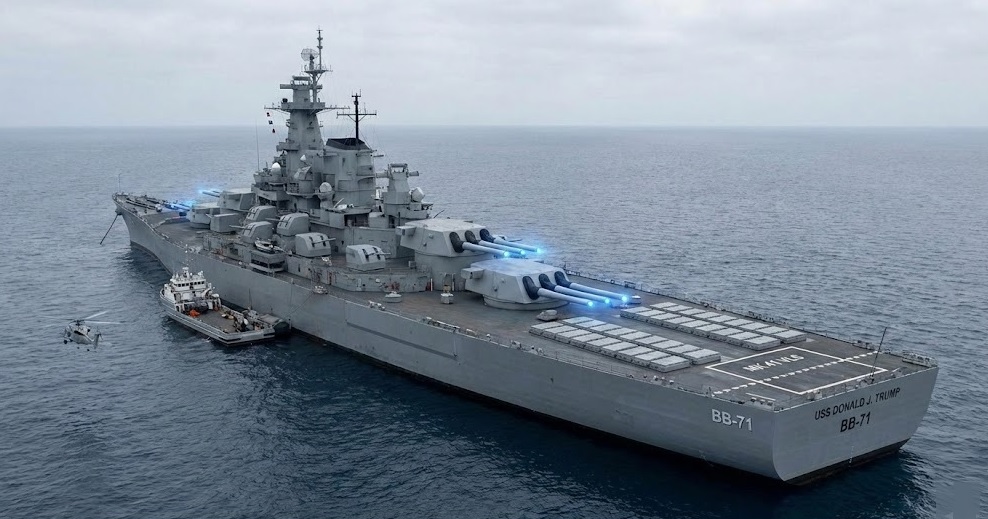
ARLINGTON, VIRGINIA : A weapon system once thought to be abandoned by the United States Navy is quietly re-entering strategic discussions, as General Atomics confirms it is engaged in talks with the U.S. government over the possible operational role of electromagnetic railguns aboard the newly unveiled Trump-class guided-missile battleships. The renewed focus follows the public debut of the Trump-class last month, which revealed a heavily armed surface combatant featuring an advanced weapons suite. Among its most striking elements was a forward-mounted electromagnetic railgun rated at 32 megajoules, signaling that the Navy may be reconsidering a technology it officially stepped away from more than four years ago. A Program That Never Truly Ended Speaking on the sidelines of the 38th National Symposium of the Surface Navy Association, Nick Bucci, vice president for defense systems and technologies at General Atomics, said the company’s railgun work continued even after U.S. military programs were halted in 2021. Bucci told Naval News that while visible testing and funding slowed, core technologies were preserved and refined through international collaboration and internal research. Some of that work, he noted, was temporarily redirected into other parts of the company’s defense portfolio, allowing railgun components and expertise to mature quietly rather than disappear. According to Bucci, the Trump-class revelation represents the first clear indication that those efforts could soon transition back into an operational naval weapons program. Overcoming Early Technical Barriers Railguns have long promised extreme range and velocity by using electromagnetic force instead of chemical propellants, but early U.S. testing exposed serious technical challenges. These included rapid barrel wear, enormous power demands, and difficulties protecting sensitive electronics from intense electromagnetic forces. Bucci argued that many of those issues have now been resolved. Advances made through other General Atomics programs — including electromagnetic launch and recovery systems for aircraft carriers and precision-guided projectile electronics — have directly addressed problems that once limited railgun feasibility. In his assessment, skepticism surrounding railguns today often reflects outdated assumptions based on early prototypes rather than the current state of the technology. Allied Momentum Abroad While American programs slowed earlier in the decade, allied nations continued to pursue electromagnetic weapons research. Bucci acknowledged that General Atomics has worked with international partners, though he declined to identify them. Several U.S. allies have openly advanced their own railgun efforts. Japan conducted its first at-sea firing of a ship-mounted railgun last summer, while Germany and France continue to explore electromagnetic weapons as part of broader naval modernization plans. These developments have helped keep global interest — and technical knowledge — alive. Unclear Missions, Open Questions Despite the Trump-class design suggesting a renewed embrace of railguns, key questions remain unresolved. Bucci said General Atomics is still waiting for clearer guidance from the Navy on how the railgun is expected to be used. Earlier company briefings indicated that railguns could contribute to air and missile defense missions, including terminal defense roles linked to broader homeland and regional protection concepts, as well as the defense of strategic locations such as Guam. Past work also supported U.S. Army concepts focused on smaller railgun launchers for air defense, rather than large naval guns. The Navy’s interest, however, appears centered on a much larger system — one that exploits the power generation, magazine depth, and endurance of a battleship-sized platform. The Trump-Class and Future Naval Warfare For the U.S. Navy, the Trump-class battleship is positioned as more than a symbolic return to heavy surface firepower. The class is expected to deliver extended loitering time, sustained presence, and long-range strike capability through a combination of missiles, advanced guns, and potentially hypersonic weapons. At the symposium, U.S. Marine Corps Brigadier General Lee Meyers, director of expeditionary warfare, highlighted Marine Corps interest in how such a platform could support future ship-to-shore operations as threats evolve and become more complex. A Technology Poised for Revival The reappearance of railguns aboard a frontline U.S. warship underscores a broader shift in naval thinking. Once viewed as an experimental gamble, electromagnetic weapons are again being evaluated as a practical tool for future conflict — this time supported by years of quiet development, allied experimentation, and a new generation of heavily armed surface combatants. Whether railguns ultimately become a defining feature of the Trump-class or remain a limited capability will depend on forthcoming Navy decisions. For now, their return to the discussion marks a notable turning point in the evolution of U.S. naval firepower.
Read More → Posted on 2026-01-16 15:41:05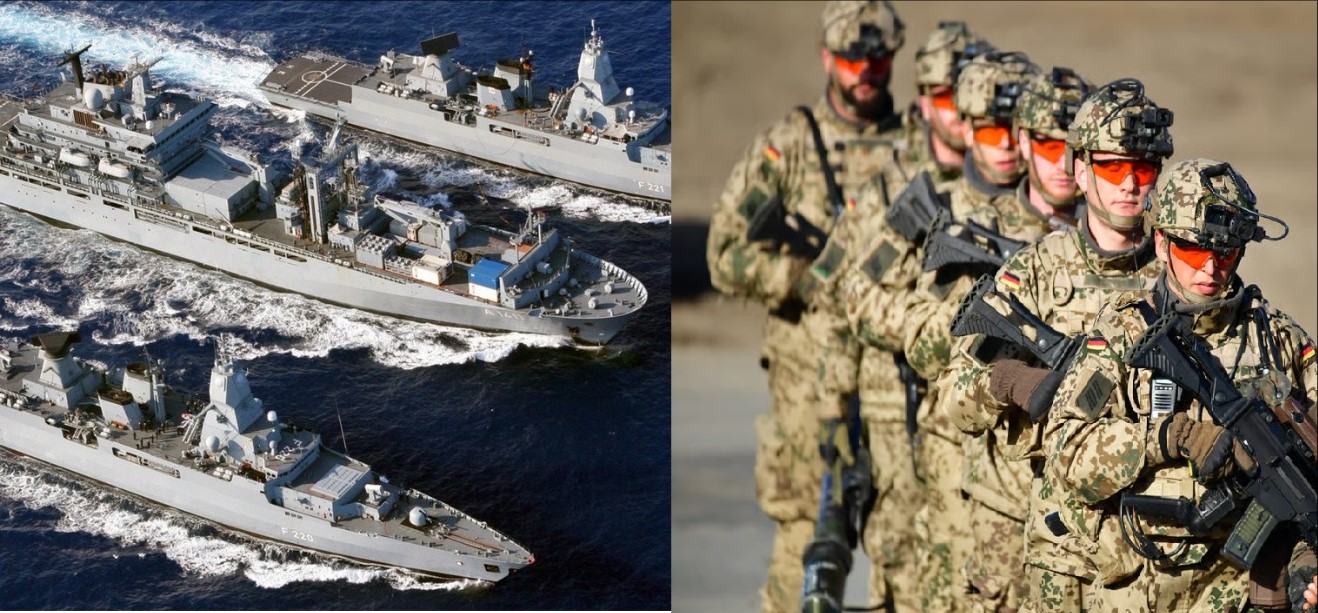
World
BERLIN / NUUK : In one of the most consequential shifts in its post–Cold War defense posture, Germany has confirmed that it is preparing for the possible deployment of air and naval forces to Greenland, marking Berlin’s clearest signal yet that it intends to play a permanent role in Arctic security alongside its NATO allies. The announcement, made by the German Ministry of Defense on Friday, January 16, 2026, follows the arrival earlier this week of a Bundeswehr reconnaissance and logistics assessment team in Nuuk. The team’s mandate is to evaluate infrastructure, basing options, and supply chains needed to support the sustained presence of heavy military assets in the High North — a move that would have been politically unthinkable in Germany little more than a decade ago. German officials stressed that the initiative is being coordinated closely with NATO and at the direct invitation of Copenhagen, underlining that the effort is designed to reinforce collective defense rather than establish a unilateral military footprint. Frigates, Fighters, and a Permanent Arctic Role Speaking in Berlin, a Defense Ministry spokesperson made clear that Germany’s plans go well beyond symbolic participation or short-term exercises. “This is about assessing the security environment in the Arctic and determining how Germany can contribute meaningfully to its protection alongside our partners,” the spokesperson said. “That includes planning regular exercises, deploying maritime patrol aircraft, naval surface combatants, and potentially fighter aircraft for airspace security.” Defense officials confirmed that the assets under consideration include Eurofighter Typhoon jets from the Luftwaffe, as well as advanced frigates such as the F125 class or the forthcoming F126, which are optimized for long-duration deployments and sustained maritime surveillance. If approved, the forward deployment of German fighter aircraft to Greenland would represent the Bundeswehr’s most significant northern stationing since the Cold War, placing German pilots and sailors at the center of an increasingly contested strategic theater. The GIUK Gap and Germany’s New Eyes Under the Sea Berlin’s Arctic recalibration is centered on its newly operational fleet of Boeing P-8A Poseidon aircraft. Designed for long-range anti-submarine warfare and maritime surveillance missions, the Poseidons give Germany a capability long dominated by the United States and the United Kingdom. These aircraft are central to monitoring the so-called GIUK Gap — the strategic stretch of ocean between Greenland, Iceland, and the UK that serves as the primary gateway for Russian submarines moving from the Arctic into the North Atlantic. With Russia steadily expanding submarine patrols and undersea infrastructure in the region, NATO planners have warned that control of the GIUK Gap is once again becoming decisive for the defense of Europe’s Atlantic sea lanes. German officials privately acknowledge that without greater European contributions, the burden of monitoring the area would fall almost entirely on American forces. The Arctic’s strategic value has also been complicated by China, which has declared itself a “near-Arctic state” and expanded its scientific, commercial, and dual-use presence across the polar region — a development increasingly viewed with suspicion in European defense circles. Diplomacy, Denmark, and a European Answer The timing of Germany’s announcement is notable. Just days earlier, a Luftwaffe Airbus A400M transport landed in Nuuk carrying a 13-member Arctic assessment team. The deployment was conducted in close coordination with Denmark, which retains responsibility for Greenland’s defense despite the island’s extensive autonomy. While Berlin has framed the initiative as a response to Russian and Chinese activity, officials acknowledge that it also reflects a broader desire among European allies to ensure that Greenland’s security remains firmly anchored in multilateral NATO structures. Recent debates in Washington over U.S. strategic interests in Greenland have reinforced European determination to demonstrate that the defense of the island is a shared transatlantic responsibility. A Growing European Arctic Coalition Germany’s move is part of a wider European push northward. Denmark has sharply increased funding for its Arctic Command, while Sweden and Norway have deployed personnel to Greenland this week in support of Danish-led operations aimed at improving surveillance and rapid response capabilities. France has also confirmed its participation in upcoming Arctic exercises, emphasizing EU and NATO solidarity in the polar region. In a written statement, the German Defense Ministry said the objective is to “examine the framework conditions for potential military contributions” and to “support Denmark in ensuring security and freedom of navigation in the region.” A Strategic Line in the Ice While no final decision has yet been taken, defense analysts agree that the direction of travel is clear. Germany, long cautious about deploying combat forces far from home, is now positioning itself as a central European pillar of Arctic defense. Should Berlin proceed with the deployment of frigates, maritime patrol aircraft, and fighter jets to Greenland, it would signal not only a transformation of German military policy, but also the arrival of a more assertive European role in what is rapidly becoming one of the defining strategic frontiers of the 21st century.
Read More → Posted on 2026-01-16 14:59:36
World
WASHINGTON / DOHA / RIYADH : A planned U.S. military strike on Iran was abruptly halted late Wednesday night after urgent diplomatic interventions from the leaders of Qatar and Saudi Arabia, according to multiple regional and defense sources familiar with the matter. The decision, now confirmed by analysts tracking U.S. military movements in the Gulf, underscores how close the region came to a potentially catastrophic escalation with global consequences. Defense officials and regional security monitors say U.S. air assets operating out of Al Udeid Air Base were scrambled and placed on operational standby, indicating that a strike package had entered the final phase of execution. However, aircraft were subsequently instructed to return to base, with crews informed that the mission had been called off pending further orders. At the center of the last-minute reversal was a direct appeal to Donald Trump from the Qatari Emir and the Saudi monarch. According to officials briefed on the calls, both leaders warned that a U.S. attack on Iran would almost certainly trigger immediate Iranian retaliation against Gulf states, rather than against the U.S. homeland. Threats Against the Gulf Security analysts say those warnings were rooted in explicit intelligence assessments that Iran had already issued direct threats to Gulf leaders. While Tehran lacks long-range missile capability to strike the continental United States in any meaningful way, it possesses a large and diverse missile arsenal capable of saturating targets across the Gulf region. Iranian planners, analysts argue, would view U.S. bases and allied infrastructure in the Gulf as the most viable and politically impactful targets. Major cities, energy hubs, oil storage facilities, ports, and desalination plants in Qatar and Saudi Arabia would all be within range, raising the prospect of widespread civilian and economic disruption within hours of any U.S. strike. Energy Shock Fears The potential economic fallout was a central concern behind the Gulf leaders’ intervention. Iran’s oil exports are already constrained, but a U.S. strike would almost certainly halt what remains of Iranian production. In retaliation, Iranian missile attacks on Gulf oil infrastructure could severely disrupt the world’s largest concentration of energy exports. Qatar and Saudi Arabia together anchor a significant share of global oil and liquefied natural gas supply. Any sustained damage to production or export facilities would ripple through international markets, triggering sharp energy price spikes and threatening economic stability far beyond the Middle East. Energy experts warn that a simultaneous disruption of Iranian output and Gulf exports would create a supply shock difficult to offset in the short term, with knock-on effects for inflation, shipping costs, and industrial production worldwide. Strategic Calculations in Washington Within Washington, the episode highlights the delicate balance between military deterrence and regional stability. While U.S. officials have long emphasized their readiness to strike Iranian targets if provoked, the Gulf allies’ warnings reinforced a long-standing reality: any conflict with Iran would almost certainly be fought, at least initially, on their territory. By standing down the strike, the U.S. administration signaled that allied security and global economic risk remain key constraints on the use of force. Analysts note that the return-to-base order does not indicate permanent de-escalation, but rather a pause shaped by diplomatic pressure and threat assessments. A Region on Edge The aborted operation leaves the Middle East in a state of heightened tension. Military assets remain forward-deployed, diplomatic channels are active, and regional governments are reinforcing air defenses amid fears that miscalculation could still spark confrontation. For now, the Gulf has avoided a direct missile exchange that could have reshaped the region and the global energy market overnight. But analysts caution that the underlying drivers of the crisis remain unresolved, and that the decision to halt the strike reflects how narrow the margin has become between deterrence and disaster.
Read More → Posted on 2026-01-16 14:37:22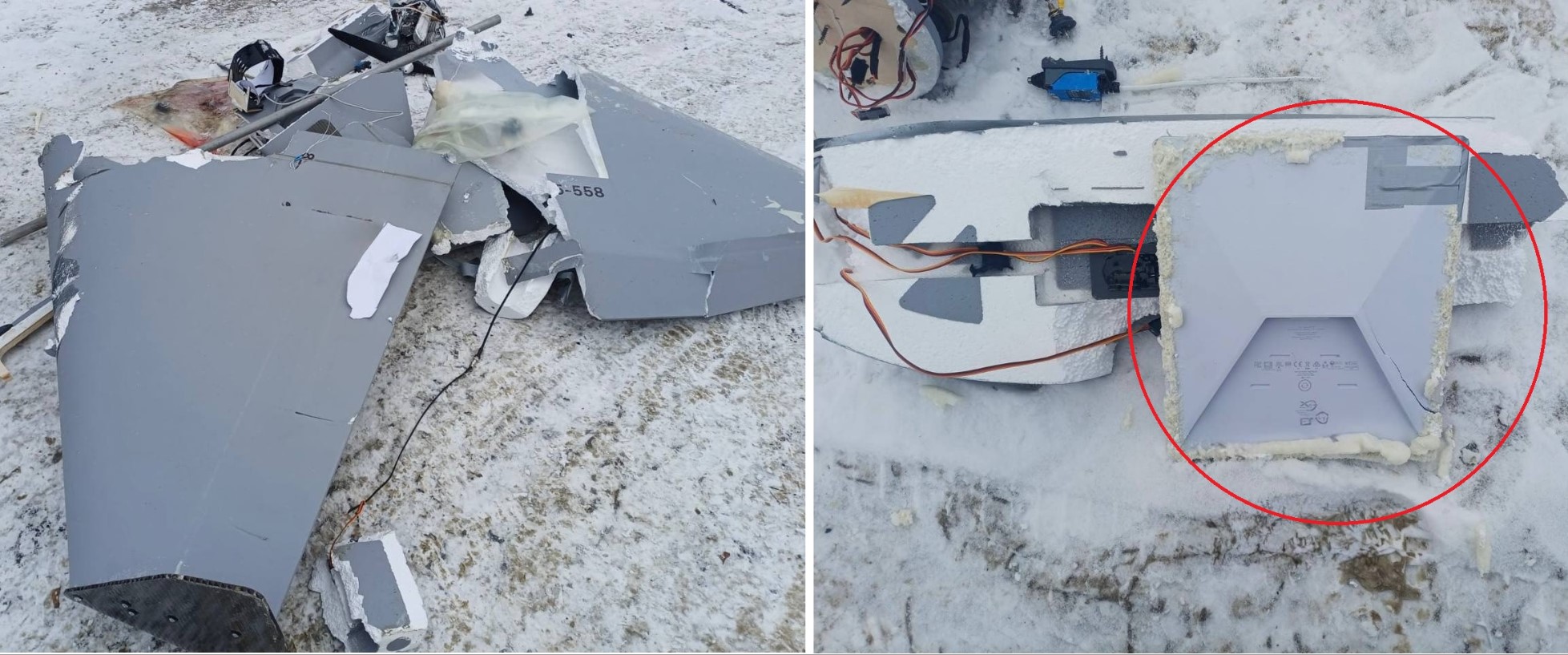
World
KYIV : Ukrainian air defense forces have, for the first time, intercepted a Russian BM-35 strike drone that was being controlled via a satellite communications terminal linked to Starlink, marking a significant technological escalation in Moscow’s unmanned aerial warfare campaign. The breakthrough was disclosed by Serhii Flash, a Ukrainian serviceman and radio-engineering specialist, who said forensic analysis of the downed drone confirmed the use of satellite-based command and control. Until now, such systems had been observed only on smaller Russian kamikaze drones used primarily for tactical reconnaissance or point strikes. According to Flash, the BM-35 represents the first confirmed case in which Russia has deployed satellite control on a drone designed to operate at the operational level, striking deeper targets beyond the immediate frontline. Satellite Control Changes the Battlefield The integration of a Starlink terminal provides the drone with a stable, long-range communications channel, significantly reducing latency in both command transmission and live video feeds. This allows operators to guide the drone more precisely during the terminal phase of flight and to adapt in real time to changes in the battlefield. Equally important, Ukrainian experts say, is the drone’s increased resilience against electronic warfare. Satellite communication partially mitigates the effectiveness of traditional jamming and signal-suppression measures, enhancing survivability in contested electromagnetic environments. Flash warned that this development could soon extend beyond the BM-35 platform. He did not rule out that similar satellite control systems may appear on Russian one-way attack drones such as Shahed-type systems, which are already used extensively against Ukrainian infrastructure. From First Sightings to Confirmed Threat The BM-35 first entered Ukrainian reporting in early September 2025, when air defense units intercepted a video transmission from a drone attacking targets near Sumy. Initial assessments suggested the platform might be linked to Russia’s ZALA drone family or be a modification of the Italmaz system. Subsequent technical analysis, however, revealed that the BM-35 is a distinct design, incorporating a number of unique engineering solutions not seen on earlier Russian unmanned systems. The drone features a delta-shaped wing configuration, optimized for range and stability, and carries a warhead of as-yet unspecified weight and type. Its propulsion system is a two-stroke DLE gasoline engine, with a propeller mounted in the nose of the fuselage—a layout that differs from many rear-propeller Russian designs. For targeting, the BM-35 employs a forward-facing camera linked to an analog video transmission system operating in the 3.3 GHz band, enabling real-time guidance during the attack phase. Foreign Components and Sanctions Concerns Ukrainian investigators examining recovered wreckage report that the BM-35 contains at least 41 foreign-made components. These include parts manufactured in Switzerland, the United States, and Taiwan, with a substantial share originating in China. The findings are likely to intensify scrutiny of sanctions enforcement and export-control regimes, as Kyiv continues to document the use of Western and Asian components in Russian weapons systems despite existing restrictions. Strategic Implications Military analysts say the confirmed use of satellite-controlled strike drones signals a shift in Russia’s approach to unmanned operations. By combining longer range, real-time control, and resistance to electronic warfare, systems like the BM-35 could pose a growing challenge to Ukrainian air defenses if deployed at scale. Further technical analysis is ongoing, as Ukrainian specialists seek to identify vulnerabilities in the BM-35’s guidance and communications architecture. As Flash noted, understanding and countering satellite-linked drones will be critical to protecting Ukraine’s airspace in the next phase of the war. For a deeper examination of the issue, Ukrainian analyst Volodymyr Stepants has explored potential countermeasures in his recent work on protecting Ukraine’s satellite communications domain amid the growing use of Starlink-enabled enemy drones.
Read More → Posted on 2026-01-16 13:50:35
World
Moscow / Jerusalem : Russian President Vladimir Putin has offered to act as a mediator in restoring relations between Israel and Iran, signaling a potential diplomatic role for the Kremlin even as Russia’s military and strategic partnership with Tehran continues to expand. According to officials familiar with the conversation, the proposal was raised during a recent phone call between Putin and Israeli Prime Minister Benjamin Netanyahu, in which the two leaders discussed a range of regional security issues, including Iran’s growing influence in the Middle East and the broader fallout from ongoing regional conflicts. A Kremlin Mediation Offer During the call, Putin told Netanyahu that Russia is prepared to facilitate dialogue between Israel and the Islamic Republic of Iran, two long-standing adversaries whose relations have deteriorated sharply in recent years. The Kremlin framed the offer as part of Russia’s self-described role as a stabilizing force in the Middle East, where it maintains diplomatic channels with nearly all major regional actors. Moscow has positioned itself as one of the few global powers able to speak directly to both Jerusalem and Tehran. Russian officials argue that this unique access gives the Kremlin leverage to reduce tensions, particularly amid fears that miscalculation could trigger a wider regional conflict involving Hezbollah, Iranian-backed militias, and Israeli forces. Israeli officials have not publicly commented on whether Netanyahu welcomed or rejected the offer, but analysts note that Israel remains deeply skeptical of Iran’s intentions and wary of Russia’s close alignment with Tehran. Russia and Iran: A Strategic Partnership Putin’s mediation proposal comes against the backdrop of an increasingly deep military and economic relationship between Russia and Iran. Tehran has emerged as one of Moscow’s most important defense partners since Russia’s full-scale invasion of Ukraine in 2022. According to reporting by Bloomberg, Iran has supplied Russia with missiles and other advanced weapons systems valued at nearly $3 billion in recent years. These weapons, Western intelligence officials say, have been used by Russian forces in strikes against Ukrainian cities and infrastructure. Overall, Russia’s spending on Iranian military equipment since late 2021 is estimated to exceed $4 billion, underscoring how central Tehran has become to Moscow’s war effort as Western sanctions restrict Russia’s access to traditional arms suppliers. Israeli Concerns Over Dual Roles For Israel, Russia’s dual posture—as a potential mediator and a close ally of Iran—raises serious concerns. Iranian missiles and drones supplied to Russia are similar to systems Tehran has transferred to its regional proxies, including Hezbollah in Lebanon, which Israel considers one of its most significant security threats. Israeli officials have long accused Iran of pursuing a strategy of encirclement, arming hostile groups on Israel’s borders while advancing its own missile and nuclear capabilities. Against this backdrop, Moscow’s claim to neutrality is viewed with caution in Jerusalem. Broader Geopolitical Implications Putin’s outreach also reflects Russia’s effort to maintain relevance on the global diplomatic stage despite its growing isolation from the West. By offering mediation between Israel and Iran, the Kremlin signals that it still sees itself as an indispensable power broker in the Middle East. At the same time, the move highlights the complex and often contradictory nature of Russia’s foreign policy: seeking diplomatic credibility while relying heavily on Iran for military support in Ukraine. Whether Putin’s proposal leads to any tangible diplomatic progress remains uncertain. For now, it underscores the shifting alliances and strategic calculations shaping a region already marked by deep mistrust, competing interests, and the risk of escalation.
Read More → Posted on 2026-01-16 13:41:28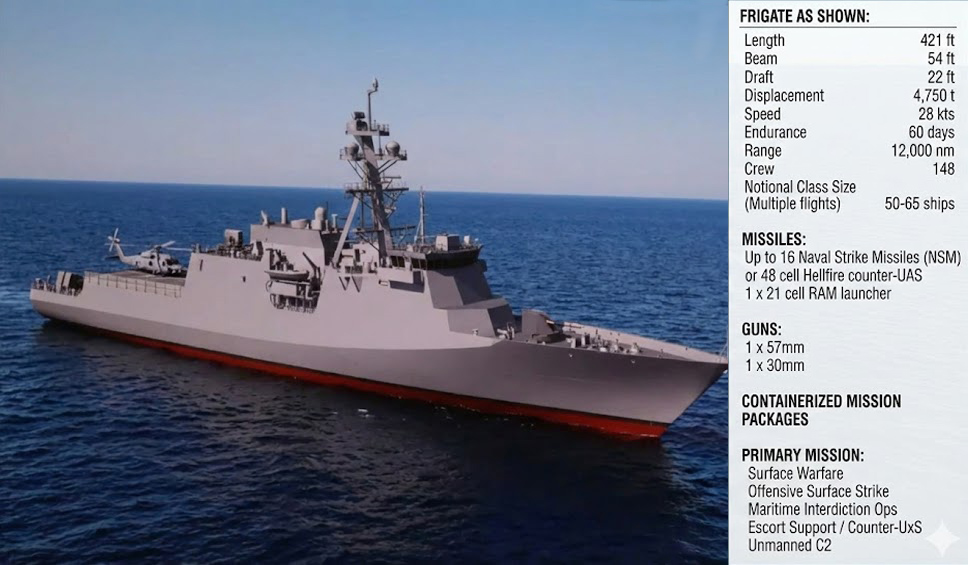
World
WASHINGTON : The United States Navy has unveiled the clearest picture yet of its Next-Generation Light Surface Combatant, confirming that the forthcoming FF(X) Frigate will mark a decisive shift away from the design and operational philosophy that defined the now-curtailed Constellation-Class Program. New details emerged during the “Future Fleet” Panel at Surface Navy 2026, hosted by Chris Miller, Executive Director of Naval Sea Systems Command (NAVSEA), alongside Rear Admiral Derek Trinque, the Navy’s Surface Warfare Director (N96). Senior surface warfare leaders used the forum to frame FF(X) not as a replacement for a High-End Frigate, but as a Purpose-Built, Fast, Modular Platform designed to fill the Low End of the Navy’s evolving force mix. A Deliberate Break From Constellation According to Navy officials, FF(X) represents a radical departure from the 7,000-Plus-Ton, Aegis-Equipped Constellation-Class Frigates. Instead of pursuing a heavily armed, multi-mission warship, the Navy is prioritizing Speed, Rapid Fielding, and Affordability. The First Hull is targeted to be in the water by 2028, a timeline senior leaders describe as Non-Negotiable. To meet that schedule, the Navy has selected a derivative of the Legend-Class Coast Guard Cutter as the basis for the new frigate’s hull. Both the Coast Guard cutters and FF(X) will be built by Huntington Ingalls Industries, leveraging an existing, in-service design to reduce Technical Risk and Construction Delays. Navy leaders acknowledged that the visual and structural similarity to Coast Guard cutters has prompted questions about Survivability and Combat Capability, but stressed that FF(X) must be judged in the context of its Intended Mission Set, rather than against larger surface combatants. Armament Focused On Modular Strike As outlined during the panel, FF(X) will carry a lighter but highly flexible Weapons Suite optimized for Lower-End Threats and Distributed Operations. The baseline configuration includes a 57-Millimeter Main Gun, a 30-Millimeter Auxiliary Cannon, and a Mk-49 Launcher loaded with 21 Rolling Airframe Missiles (RAM) for point air defense. Electronic Warfare will be provided by Two SLQ-32(V)6 Systems, complemented by Nulka Soft-Kill Decoy Launchers. The defining feature of the design, however, is its Modular Payload Space at the stern. This area is designed to accept Containerized Weapon and Mission Packages, including up to 16 Naval Strike Missiles, as many as 48 Hellfire Missiles, or alternative Strike, Surveillance, and Mission Modules. Navy officials repeatedly emphasized that this “Capability In A Box” approach allows the same hull to be rapidly reconfigured for different tasks and potentially shared with Unmanned Surface Vessels (USVs). Chris Miller described the concept as central to the program’s Risk-Reduction Strategy, allowing capabilities to be developed, upgraded, and integrated independently of the ship’s core design. Built For The Low End Of The Fight Senior officers were explicit about where FF(X) fits within the Navy’s future force structure. The ship is intended to serve as the “Low” Component of a Low-Medium-High Mix, operating alongside Flight III Arleigh Burke-Class Destroyers and future Large Surface Combatants. Missions envisioned for the class include Counter-Narcotics Patrols, Maritime Security, Escort Duties, and Presence Operations—roles that currently tie up High-Value Destroyers and Cruisers. Rear Admiral Derek Trinque drew on his own experience to illustrate the logic behind the requirements, noting that employing Guided-Missile Cruisers or Destroyers for counter-drug missions is an inefficient use of scarce assets. FF(X), he argued, is meant to remove that dilemma from Fleet Commanders. By focusing on Lower-End Threats, the Navy hopes to free its most capable surface combatants for Deterrence and High-Intensity Conflict Scenarios elsewhere. Speed, Numbers, And Future Growth The Navy plans to procure between 50 And 65 FF(X) Hulls across multiple Production Flights. While the initial configuration is deliberately modest, officials said the class is designed with Growth Margin for future upgrades over its production life. Potential enhancements discussed include Upgraded Sensors and the possible addition of Vertical Launch System (VLS) Cells, though no specific upgrades have been approved. This incremental approach stands in contrast to the Constellation-Class Program, which sought to field a highly capable frigate from the outset and suffered repeated Delays and Cost Growth as requirements evolved. ASW Questions Remain One area that drew particular attention during the panel was Anti-Submarine Warfare (ASW). Admirals stressed that the Navy intends to preserve ASW Capacity within the surface fleet despite the effective cancellation of the Constellation-Class. However, questions remain about how much ASW capability FF(X) will ultimately carry. Observers noted the apparent absence, at least in early design concepts, of a Hull-Mounted Sonar or Towed Array System—key components of traditional frigate ASW operations. Navy officials acknowledged the uncertainty, suggesting that ASW functions could be addressed through Modular Payloads, Aviation Assets, or Manned-Unmanned Teaming, but stopped short of offering definitive answers. A Pragmatic Recalibration Taken together, the FF(X) Program reflects a broader Recalibration underway within the U.S. Navy. Rather than pursuing fewer, more complex ships, the service is betting on Speed, Numbers, and Modularity to meet near-term operational demands. By adapting an existing hull, emphasizing Flexible Payloads, and narrowing the mission focus, Navy leaders believe FF(X) can be fielded quickly and at scale—accepting limits in Capability in exchange for Availability and Presence. Whether that trade-off proves sufficient in an increasingly Contested Maritime Environment remains an open question. For now, however, FF(X) stands as the Navy’s clearest signal yet that the era of the All-Purpose Frigate has given way to a more Specialized, Distributed Vision Of Surface Warfare.
Read More → Posted on 2026-01-16 13:33:26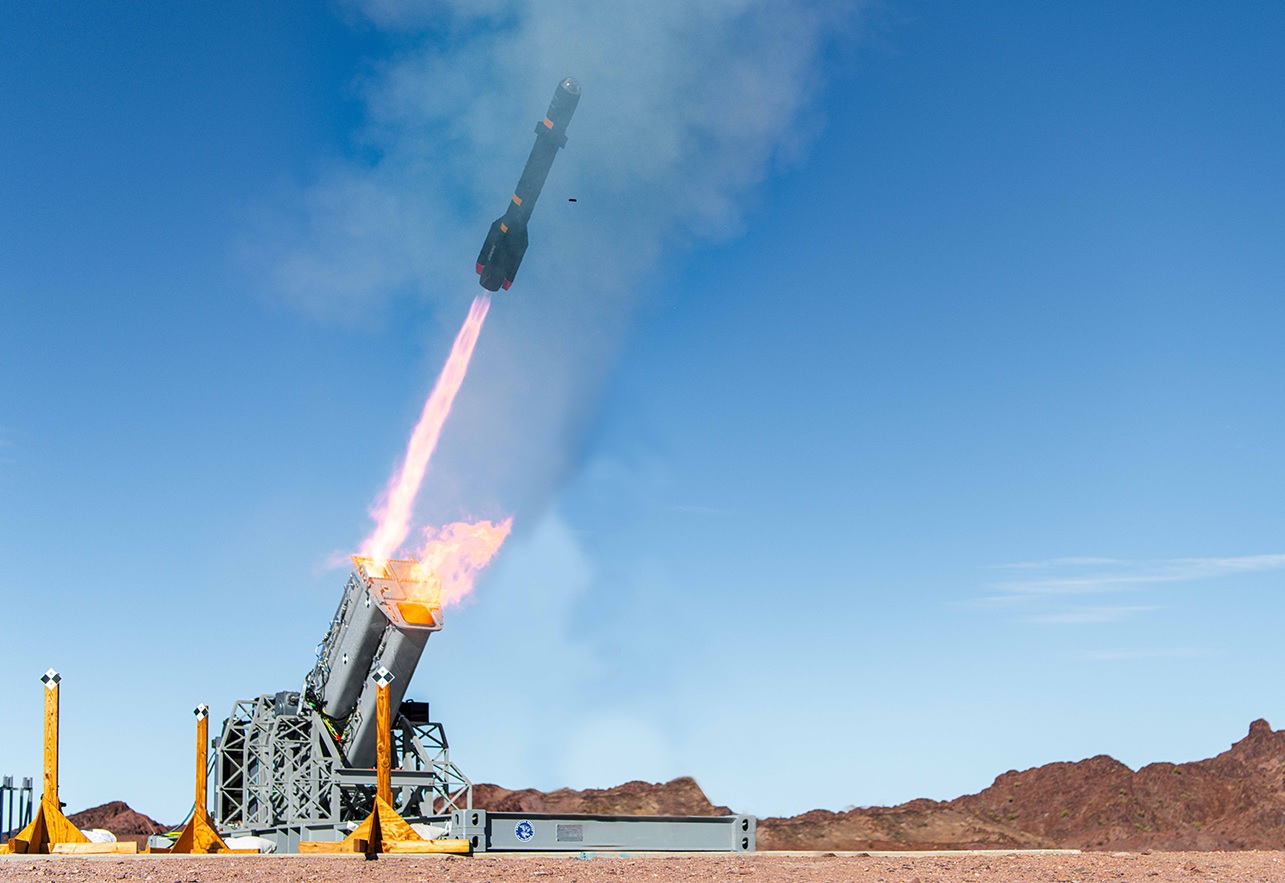
World
China Lake, California : Lockheed Martin has successfully conducted the first-ever 90-degree vertical launch of its Joint Air-to-Ground Missile (JAGM) from the newly developed JAGM Quad Launcher (JQL), marking a major advancement in multi-domain missile deployment and modern naval defense. The demonstration, carried out at the Naval Air Weapons Station China Lake, validated JAGM’s ability to launch vertically and engage threats across air, land, and sea environments. Defense officials say the test confirms the missile’s suitability for providing a full 360-degree defensive envelope, particularly for naval forces facing increasingly complex and fast-emerging threats. Vertical Launch Breakthrough for a Proven Missile Traditionally employed as an air-launched precision weapon, JAGM’s successful vertical launch represents a significant shift in deployment capability. Fired straight up from the JQL before maneuvering toward its target, the missile demonstrated controlled post-launch orientation and rapid target acquisition. This capability enables JAGM to be deployed from confined or space-limited platforms such as ship decks, mobile ground vehicles, and expeditionary installations, without requiring angled launchers. For naval forces, vertical launch means threats approaching from any direction can be engaged instantly, a critical advantage in high-tempo maritime operations. Counter-UAS Success Highlights Emerging Mission Role During the test event, JAGM successfully engaged an unmanned aerial system (UAS) simulating a hostile drone. The missile detected, tracked, and neutralized the target, underscoring its effectiveness against unmanned and asymmetric threats. Lockheed Martin officials emphasized that this capability extends beyond aerial drones. JAGM is designed to counter unmanned surface vehicles (USVs), small fast-attack craft, and other low-altitude air threats. As adversaries increasingly rely on drones and autonomous systems to overwhelm defenses, this capability is becoming essential for modern navies. Multi-Domain Mission Integration Across Air, Land and Sea The integration of JAGM with the JAGM Quad Launcher demonstrates Lockheed Martin’s focus on flexible, mission-tailored deployment. The system allows operators to select different engagement envelopes depending on mission requirements, platform constraints, and threat profiles. JAGM can now be employed from helicopters, fixed-wing aircraft, ground platforms, and vertical launch systems, providing a single missile solution across multiple operational domains. This commonality reduces logistical complexity, lowers training requirements, and improves interoperability among joint and allied forces. Guidance, Propulsion and Warhead Capabilities JAGM incorporates a multi-mode guidance system combining semi-active laser (SAL) guidance with millimeter-wave (MMW) radar. This dual-mode seeker allows the missile to operate effectively in poor weather, smoke, dust, and contested electronic environments, while also enabling fire-and-forget capability when required. The missile is powered by a solid rocket motor derived from the Hellfire family, ensuring reliability and a well-understood performance profile. Its multi-purpose warhead combines shaped-charge and fragmentation effects, enabling it to defeat a wide range of targets, from lightly armored vehicles to unmanned systems and small maritime threats. Full Baseline JAGM Specifications The baseline Joint Air-to-Ground Missile measures approximately 70 inches (178 centimeters) in length, with a diameter of about 7 inches (17.8 centimeters). The missile weighs roughly 115 pounds (51.5 kilograms). For helicopter operations, JAGM has an effective range of approximately 0.3 to more than 4.9 miles (0.5 to over 8 kilometers), with extended range achievable from fixed-wing aircraft. These characteristics allow the missile to support both close-in defense and stand-off engagement roles. Strategic Benefits for Naval and Joint Forces The vertical launch demonstration highlights several operational benefits. JAGM offers navies a compact, cost-effective interceptor capable of addressing drone and small surface threats without expending larger, more expensive air-defense missiles. It supports layered defense strategies and improves response times against sudden, low-signature threats. By combining precision, flexibility, and cross-domain compatibility, JAGM enhances force survivability and expands commanders’ operational options in contested environments. Analysts say such adaptable systems are increasingly vital as modern warfare shifts toward distributed operations and unmanned threats. A Step Toward Future Integrated Defense Lockheed Martin’s successful test at China Lake positions JAGM and the JAGM Quad Launcher as a key component of future multi-domain defense architectures. As unmanned and asymmetric threats continue to proliferate, systems capable of rapid deployment, precise engagement, and seamless integration across platforms are expected to play a decisive role in shaping next-generation military operations. The demonstration signals JAGM’s evolution from a traditional air-launched missile into a versatile, all-domain weapon system, reflecting broader changes in how modern forces approach integrated defense and precision strike in an increasingly complex battlespace.
Read More → Posted on 2026-01-16 12:39:12
World
WASHINGTON : The U.S. Marine Corps has awarded Anduril Industries a $23.9 million contract to deliver more than 600 Bolt-M loitering munition systems, advancing the next phase of the Organic Precision Fires-Light (OPF-L) program and marking a significant step in modernizing infantry-level strike capabilities. The contract, which runs from February 2026 through April 2027, follows more than a year of intensive testing and evaluation. Under the agreement, Anduril will supply over 600 Bolt-M systems, along with associated ground control units and ancillary equipment. Initial fielding to operational Marine units is scheduled to begin in the summer of 2026. A New Capability for Marine Infantry The OPF-L program is designed to equip dismounted Marine rifle squads with a man-packable, easy-to-operate precision strike capability capable of engaging targets beyond line of sight. The Bolt-M system, a compact loitering munition, is intended to provide organic firepower at the squad and platoon level, reducing reliance on external assets while increasing battlefield responsiveness. Marine Corps officials have emphasized that OPF-L is a key component of broader force modernization efforts focused on distributed operations, expeditionary warfare, and the demands of future high-end conflict. Rigorous Testing and Selection Anduril’s selection comes after 13 months of rigorous government testing. During this period, the company delivered an initial tranche of more than 250 Bolt-M systems for evaluation. According to program officials, the system was subjected to a wide range of safety, environmental, and performance assessments, including operations across diverse climates and mission profiles. Across hundreds of flight tests, Bolt-M demonstrated what the Marine Corps described as category-leading range, endurance, and payload capacity. The system was evaluated against multiple target sets, validating its effectiveness as a loitering, precision strike platform suitable for frontline infantry use. Following the successful completion of this phase, the Marine Corps selected Bolt-M for initial operational fielding under OPF-L. Production at Scale and Speed In parallel with testing, Anduril has been investing heavily in scaling its manufacturing capacity to meet anticipated demand. The company has refined its Bolt production process across design engineering, supply chain management, quality assurance, manufacturing engineering, and operations. Upgrades to its production facility have increased output to more than 100 complete systems per month. Anduril has stated that it plans to further scale production across Bolt variants to a sustained rate exceeding 175 systems per month later this year. This expanded capacity is intended not only to support the OPF-L program, but also to meet requirements from other customers. The company recently demonstrated this production capability by building and delivering more than 300 Bolt systems within five months of contract award, an effort Anduril says validated its approach of rapidly developing, manufacturing, and delivering advanced defense systems at scale. Fielding and Training Timeline Under the new contract, Bolt-M systems will begin flowing to Marine units in early 2026, with the first operational units receiving the capability by summer 2026. Marines will train to integrate the system into tactical formations, employing organic loitering munitions for reconnaissance, target identification, and precision strike missions. Defense analysts note that the fielding of OPF-L reflects a broader trend toward decentralized, precision-guided firepower at the lowest tactical levels. For the Marine Corps, Bolt-M is expected to enhance lethality, flexibility, and survivability for small units operating in contested environments. Broader Implications The award underscores growing confidence in non-traditional defense contractors and rapid acquisition models as the Pentagon seeks to adapt to fast-evolving threats. With OPF-L moving into its next phase, the Marine Corps is positioning infantry units to operate with greater autonomy and precision, while Anduril’s success further cements its role as a key supplier in U.S. military modernization. As deliveries begin in 2026, the Bolt-M system is set to become a cornerstone of the Marine Corps’ vision for lightweight, expeditionary precision fires in the years ahead.
Read More → Posted on 2026-01-16 12:19:51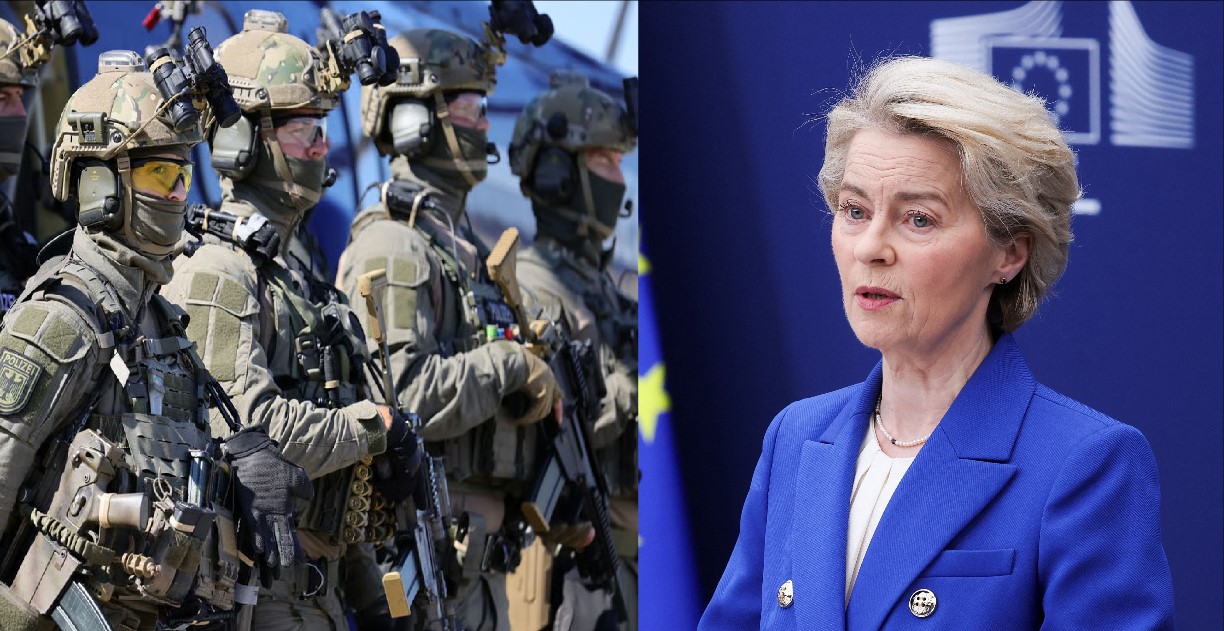
World
BRUSSELS : The European Union has taken a decisive step toward reshaping its collective security architecture after the European Commission approved the national defence investment plans of eight Member States, paving the way for nearly €38 billion in low-cost, long-term loans aimed at strengthening Europe’s military readiness. The move, announced on Wednesday, advances the EU’s broader effort to respond to growing security threats on its eastern flank and to reduce decades-long reliance on external defence suppliers. A formal proposal has now been submitted to the Council of the European Union to grant financial assistance to Belgium, Bulgaria, Denmark, Spain, Croatia, Cyprus, Portugal and Romania under the Security Action for Europe (SAFE) framework. A Turning Point in EU Defence Policy Speaking in Brussels, Ursula von der Leyen described the decision as a historic acceleration in European defence cooperation. “Last year, the EU made more progress in defence than in decades before,” von der Leyen said, pointing to the White Paper on Defence and the Readiness Roadmap 2030 as the foundations for a new era of military investment. Together, she noted, these initiatives enable Member States to mobilise up to €800 billion for defence spending across the bloc. Central to this effort is the SAFE mechanism, which allocates €150 billion for joint procurement of military equipment. The Commission has now approved an initial batch of SAFE plans for the eight countries, with further approvals expected in the coming weeks. “It is now urgent for the Council to approve these plans to allow fast disbursement,” von der Leyen said, stressing the need to move quickly amid an increasingly unstable security environment. Why the EU Is Taking This Step Now The decision comes against the backdrop of Russia’s ongoing war against Ukraine, heightened tensions in the Middle East, and growing concerns over Europe’s ability to defend itself independently. EU officials argue that fragmented national defence spending has left the bloc with capability gaps, duplication of weapons systems, and limited interoperability between armed forces. By approving coordinated national plans under SAFE, the EU aims to address these weaknesses collectively. The initiative is designed to help Member States rapidly modernise their militaries, replenish depleted stockpiles, and invest in advanced technologies, while ensuring that equipment can be used seamlessly across borders. Another strategic objective is to integrate Ukraine more closely into the European security framework. SAFE explicitly allows Ukraine to participate in joint procurement projects, reinforcing Kyiv’s defence capabilities while aligning them with EU standards. How the Funding Will Work The approval follows an in-depth assessment of the National Defence Investment Plans submitted by the eight countries. Once the Council adopts the necessary implementing decisions — a process expected to take up to four weeks — loan agreements will be finalised, and the first payments are projected for March 2026. Funding amounts were provisionally set in September based on principles of solidarity and transparency. Cyprus is expected to receive €1.18 billion, while Romania, reflecting its strategic position on NATO’s eastern flank, has been earmarked for €16.68 billion. In total, the eight Member States will be eligible for around €38 billion to support key strategic capabilities. The loans are designed to be low-interest and long-term, easing pressure on national budgets while encouraging swift defence investment. Benefits for Europe and Its Partners EU officials say the benefits of SAFE extend well beyond individual countries. Joint procurement is expected to reduce costs through economies of scale, strengthen Europe’s defence industrial base, and reduce dependence on non-European suppliers. Greater interoperability between national forces is also seen as essential for credible collective defence. The framework further allows participation by EFTA and EEA countries, as well as EU candidate and partner states, widening Europe’s defence cooperation network at a time of heightened geopolitical uncertainty. Part of the Readiness 2030 Strategy The SAFE Regulation, adopted on 27 May 2025, is a cornerstone of the Readiness 2030 defence package. The strategy aims to ensure that Europe can deter aggression, respond rapidly to crises, and act more autonomously in security matters by the end of the decade. With Council approval now pending, EU officials say the first wave of funding represents a critical test of whether the bloc can translate political ambition into concrete military capability. As von der Leyen made clear, the message from Brussels is one of urgency: Europe’s security, long considered a distant concern, has become an immediate priority — and collective action is no longer optional.
Read More → Posted on 2026-01-16 12:14:40
World
WASHINGTON : The U.S. Navy’s push toward a more Distributed, Unmanned, And Lethal Fleet is entering a decisive new phase as autonomous surface vessels built by Saildrone are being redesigned to carry Full-Scale Missile Launchers developed by Lockheed Martin. Following a $50 Million Strategic Investment by the defense giant, Saildrone has confirmed that Significantly Larger Variants of its unmanned surface vehicles, or USVs, are now in development to support the Mk 70 Vertical Launching System, a Containerized Missile Launcher capable of firing some of the U.S. military’s most powerful naval weapons. The initiative represents a Fundamental Shift in the role of Saildrone’s Wind-Powered Vessels, which until recently were primarily used for Oceanographic Research, Climate Monitoring, And Maritime Surveillance. Armed with Vertical Launch Cells, future Saildrone platforms would move beyond Sensing And Intelligence Collection, becoming Forward-Deployed Weapons Carriers designed to expand the Navy’s firepower without adding Crewed Warships. From Ocean Science To Frontline Combat Roles Saildrone has spent the past decade refining Autonomous Sailing Vessels capable of operating for Months At Sea Without Refueling. Its best-known platform, the 20-Meter Surveyor, has already been used by the U.S. Navy for Long-Duration Intelligence, Surveillance, And Reconnaissance Missions in the Pacific and other Contested Waters. Defense planners see those same Endurance And Low-Operating-Cost Advantages as critical to future naval warfare, particularly against Near-Peer Adversaries. Lockheed Martin’s investment formalized a partnership aimed at transforming those endurance platforms into Combat-Relevant Assets. Company officials say the focus is on creating Unmanned Vessels that can carry Meaningful Missile Loads while remaining far Cheaper And More Numerous than traditional Destroyers Or Cruisers. Larger Hulls For Heavier Weapons The Mk 70 Vertical Launching System requires a much larger and more robust hull than Saildrone’s current operational fleet. Saildrone executives have confirmed that Entirely New Designs are underway, optimized to support the Weight, Power, And Stability Demands of containerized missile launchers and other Heavy Mission Systems. Construction of the first of these Enlarged Hulls is expected to begin in Early 2026 at Austal USA, a major U.S. naval shipbuilder with experience producing Aluminum And Steel Vessels for the Navy And Coast Guard. The new USVs are being sized not only for the Mk 70 Payload Delivery System but also for Advanced Sensors such as Thin-Line Towed Sonar Arrays, potentially giving them a future role in Anti-Submarine Warfare. While precise Dimensions And Displacement Figures have not been publicly released, defense officials familiar with the program say the new Saildrone variants will be Substantially Larger than the Surveyor class, approaching the scale of Small Crewed Patrol Craft. The Mk 70 “Missile Launcher In A Box” At the heart of the concept is the Mk 70 Payload Delivery System, a self-contained vertical launcher built around the Navy’s widely used Mk 41 Vertical Launching System architecture. Housed inside a Standard 40-Foot Shipping Container, the Mk 70 includes Four Strike-Length Launch Cells identical to those found on U.S. Navy Destroyers. Because it uses the same architecture as the Mk 41 system, the Mk 70 can theoretically fire a Broad Range Of Missiles already in the Navy’s inventory, including SM-2 And SM-6 Air-Defense Interceptors and the Tomahawk Land-Attack Cruise Missile. The Containerized Design allows the launcher to be installed, removed, or reloaded at Expeditionary Bases, reducing the need for unmanned vessels to return to Major Ports. A New Approach To Firepower And Survivability For the U.S. Navy, the attraction of Armed Saildrone USVs lies in addressing one of its most pressing challenges: Missile Magazine Depth. Modern naval combat increasingly depends on Long-Range Precision Weapons, yet even large destroyers can carry only a Finite Number Of Missiles. By deploying groups of Relatively Inexpensive Unmanned Vessels, each carrying a small number of missiles, the Navy could dramatically increase the Total Number Of Weapons available in a theater without concentrating them on a handful of High-Value Ships. Defense analysts note that Eight Large Saildrone USVs equipped with Mk 70 launchers could collectively carry 32 Missiles, roughly equivalent to the armament of a Frigate, while being spread across a wide area and far Harder To Detect And Destroy. The vessels’ Extreme Endurance further strengthens their appeal. Saildrones are designed to remain at sea for Months At A Time, allowing them to serve as Persistent Forward-Deployed Assets or Pre-Positioned Missile Reserves in contested regions such as the Western Pacific. Stepping Stone: Armed Surveyor Demonstrations Before the larger Mk 70-capable vessels are launched, Saildrone and Lockheed Martin plan to demonstrate armed capabilities on the existing Surveyor Platform. The companies are integrating a Quad Launcher for the Joint Air-To-Ground Missile (JAGM) onto the Surveyor as an Intermediate Step toward more complex missile operations. A Live-Fire Demonstration of the JAGM-armed Surveyor is scheduled for the Summer Of 2026. While the missile has a Far Shorter Range than weapons fired from a vertical launch system, the test is intended to validate Targeting, Communications, And Command-And-Control Procedures for armed unmanned surface vessels. Human Control Remains Central Despite the move toward autonomous platforms, Saildrone and Navy officials have emphasized that any use of weapons will remain firmly under Human Control. The vessels will navigate and operate autonomously, but Missile Launches will require Explicit Authorization from human operators connected via Secure Satellite Links. That approach is designed to ensure compliance with Department Of Defense Policies governing autonomous weapons and to reassure Allies And Partners that lethal decisions will Not Be Delegated To Machines. Redefining Naval Warfare If successful, the Saildrone–Mk 70 Concept could mark a Turning Point In Naval Force Design. Instead of relying solely on a small number of Highly Capable But Extremely Expensive Crewed Warships, the Navy would gain a new layer of Distributed, Unmanned Firepower that complements existing fleets. As development accelerates toward 2026, defense planners see the program as a Test Case for how Autonomy, Endurance, And Modular Weapon Systems could reshape maritime warfare in the decades ahead, shifting the balance from Concentrated Platforms to Resilient, Widely Dispersed Networks Of Unmanned Combat Vessels.
Read More → Posted on 2026-01-15 17:31:34
World
WASHINGTON : In a development that could reshape modern search-and-rescue operations, urban combat tactics, and intelligence gathering, the United States Patent and Trademark Office (USPTO) has granted a new patent to SRC, Inc. for a radar system capable of detecting human breathing and heartbeats through walls, rubble, and other physical barriers. The patent, titled “Method and Apparatus for Detecting Breathing Radar Targets,” was invented by John Dougherty, SRC’s chief systems engineer. It formally recognizes a technology that can locate stationary people by identifying minute, rhythmic biological motions that persist even when an individual is completely still and hidden from view. The issuance of the patent provides rare technical clarity around a class of “through-barrier” sensing tools long associated with classified military and intelligence programs, marking a significant step toward broader operational deployment. A Radar That Sees Life, Not Movement Traditional radar systems excel at tracking motion — vehicles, aircraft or people walking across open ground. They struggle, however, when a target is stationary, particularly behind solid structures. SRC’s patented system addresses that limitation by focusing not on gross movement, but on life itself. At the heart of the invention is micro-Doppler processing, a method that analyzes extremely small frequency shifts in reflected radar signals. These shifts are produced by involuntary biological motions such as the expansion and contraction of the chest during breathing or the subtle mechanical vibrations caused by heartbeats. According to the patent documentation, the radar scans an enclosed space and separates the returned signals into two components: an alternating current (AC) signal representing movement-related energy, and a direct current (DC) signal representing the static background of walls, furniture or debris. By comparing energy spikes between these two signal paths, the system can determine whether a detected object is stationary clutter or a living, breathing human presence. Targeting the Frequency of Human Life The patented method is designed to isolate Doppler frequencies in the approximate range of 0.1 to 4 hertz — a band that corresponds closely to normal human respiration and heartbeat patterns. Signals falling within this range are further analyzed against defined thresholds, allowing the radar to classify a return as a “stationary breathing target.” This approach enables the system to filter out environmental noise and static objects with remarkable precision. Even when a person is unconscious, immobilized, or deliberately motionless, the radar can still detect the involuntary biological rhythms that betray their presence. Crucially, the technology does not rely on sound, heat, or visible light, making it effective in darkness, smoke-filled environments, and noisy disaster zones where other sensing tools often fail. Designed for Through-Barrier Detection SRC’s radar is engineered to transmit signals capable of penetrating common construction materials such as drywall, wood, brick, and certain types of concrete, as well as debris found in collapsed structures. This allows operators to scan rooms, vehicles, or buried voids from a position of safety outside the structure. Unlike traditional moving target indicator (MTI) systems, this design is specifically optimized for detecting biologically active but physically stationary individuals — a distinction that significantly expands its operational value. Implications for Rescue, Combat, and Intelligence Defense analysts say the technology addresses long-standing gaps in situational awareness across both civilian and military domains. In disaster response scenarios such as earthquakes and building collapses, rescue teams race against time to locate survivors trapped beneath rubble. Acoustic sensors can be overwhelmed by noise, while thermal cameras may struggle in extreme conditions. A radar capable of detecting breathing offers a non-invasive method to locate survivors who cannot call out or move, potentially saving lives in the critical early hours. In urban combat and hostage rescue operations, the ability to determine whether a room or building is occupied before entry could dramatically reduce risk to soldiers and law enforcement. By revealing the presence and approximate location of individuals behind walls or doors, the system provides tactical intelligence previously unavailable without direct visual contact. Firefighters operating in smoke-filled or high-heat environments could also benefit, particularly when thermal imaging is degraded. The radar’s focus on biological motion rather than temperature may help locate unconscious victims inside burning structures. From an intelligence and surveillance perspective, the technology enables covert occupancy detection without placing physical sensors inside a building, offering a powerful tool for reconnaissance and counterterrorism operations. From Patent to Battlefield and Beyond While SRC has not disclosed whether the system is already fielded or integrated into existing platforms, the patent suggests a maturity level suitable for operational use. The formal recognition by the USPTO may also pave the way for civilian adaptations, particularly in emergency services and infrastructure protection. As conflicts increasingly shift toward dense urban environments and climate-driven disasters grow more frequent, technologies that can detect life where human eyes cannot see are becoming strategically critical. With this patent, SRC has secured intellectual ownership over a capability that blurs the line between radar sensing and biological detection — a reminder that in modern warfare and disaster response, information about who is present can be as decisive as firepower itself.
Read More → Posted on 2026-01-15 17:22:14
World
Berlin : Germany’s decision to shut down all of its nuclear power plants was a “huge mistake” that has proved extremely costly for the German economy, according to Friedrich Merz, reopening one of the most divisive debates in modern German politics. Merz said that experts, industry leaders and international partners warned Berlin more than a decade ago that abandoning nuclear energy would weaken energy security and raise costs. “Everybody told them 10 years ago,” he said, arguing that Germany refused to listen and is now paying the price. When And How Germany Shut Down Nuclear Power Germany’s nuclear phase-out began in March 2011, immediately after the Fukushima nuclear disaster in Japan. In a dramatic policy reversal, then-Chancellor Angela Merkel announced that Germany would accelerate its nuclear exit, despite having previously extended reactor lifetimes. Eight reactors were shut down immediately in 2011, while the remaining plants were placed on a fixed closure timetable. The final three reactors — Isar 2, Emsland and Neckarwestheim 2 — were permanently switched off on 15 April 2023, bringing an end to more than 60 years of nuclear electricity generation in Germany. The decision was a central pillar of the Energiewende, Germany’s long-term strategy to shift toward renewable energy, cut emissions and move away from both nuclear and fossil fuels. Why Germany Decided To Abandon Nuclear Energy The nuclear exit was driven by a mix of safety fears, political pressure and public opinion. Germany has one of the world’s strongest anti-nuclear movements, shaped by the Chernobyl disaster in 1986 and reinforced by Fukushima. Large-scale protests and deep public anxiety made continued nuclear operation politically unacceptable. Successive governments argued that wind and solar power could safely replace nuclear energy while creating a cleaner, decentralized and sustainable power system. Why Critics Now Say The Decision Backfired Merz and other critics argue that Germany shut down nuclear power too early, before renewables and storage systems were capable of fully replacing it. Nuclear plants had provided stable, low-carbon baseload electricity, which vanished almost overnight. As reactors closed, Germany became increasingly dependent on coal and natural gas, particularly Russian gas. This vulnerability was exposed after Russia’s invasion of Ukraine in 2022, when gas supplies tightened and prices soared, triggering an energy crisis across Europe. Economic Impact And Rising Energy Costs Data from energy markets show that the loss of nuclear capacity reduced supply stability, contributing to higher wholesale electricity prices, especially during periods of low wind and solar output. Germany’s energy-intensive industries — including chemicals, steel and manufacturing — were hit hardest. Some firms cut production, delayed investment or moved operations abroad, citing uncompetitive power prices. While electricity prices are influenced by multiple factors, economists widely agree that removing nuclear power increased reliance on more expensive fossil fuels during supply shocks. Environmental And Emissions Consequences Critics also point to environmental side effects. Several studies show that nuclear shutdowns led to higher coal and gas generation, increasing carbon dioxide emissions and air pollution in certain years. Merz and other conservatives argue that closing zero-emission nuclear plants while burning more fossil fuels undermined Germany’s climate goals. Supporters of the phase-out counter that emissions will fall in the long term as renewables expand further. Political Fallout And The Road Ahead Merz’s remarks highlight a growing political divide. Conservative parties say Germany must at least acknowledge the economic damage caused by the nuclear exit, even if restarting reactors is no longer realistic. The current government and Green Party leaders insist that reversing the phase-out is impractical, citing dismantling work, legal barriers and public resistance. Germany is instead focusing on renewable expansion, grid upgrades, hydrogen development and energy storage. A Decision Still Shaping Germany’s Future More than a decade after Fukushima, Germany’s nuclear exit remains a defining and controversial policy choice. Merz’s criticism reflects a broader reassessment driven by geopolitical instability, industrial pressure and energy insecurity. Whether the phase-out will be remembered as a visionary transition or a costly strategic error remains unresolved. What is clear is that Germany’s nuclear decision continues to shape its economy, climate policy and political debate — long after its reactors have gone dark.
Read More → Posted on 2026-01-15 17:11:06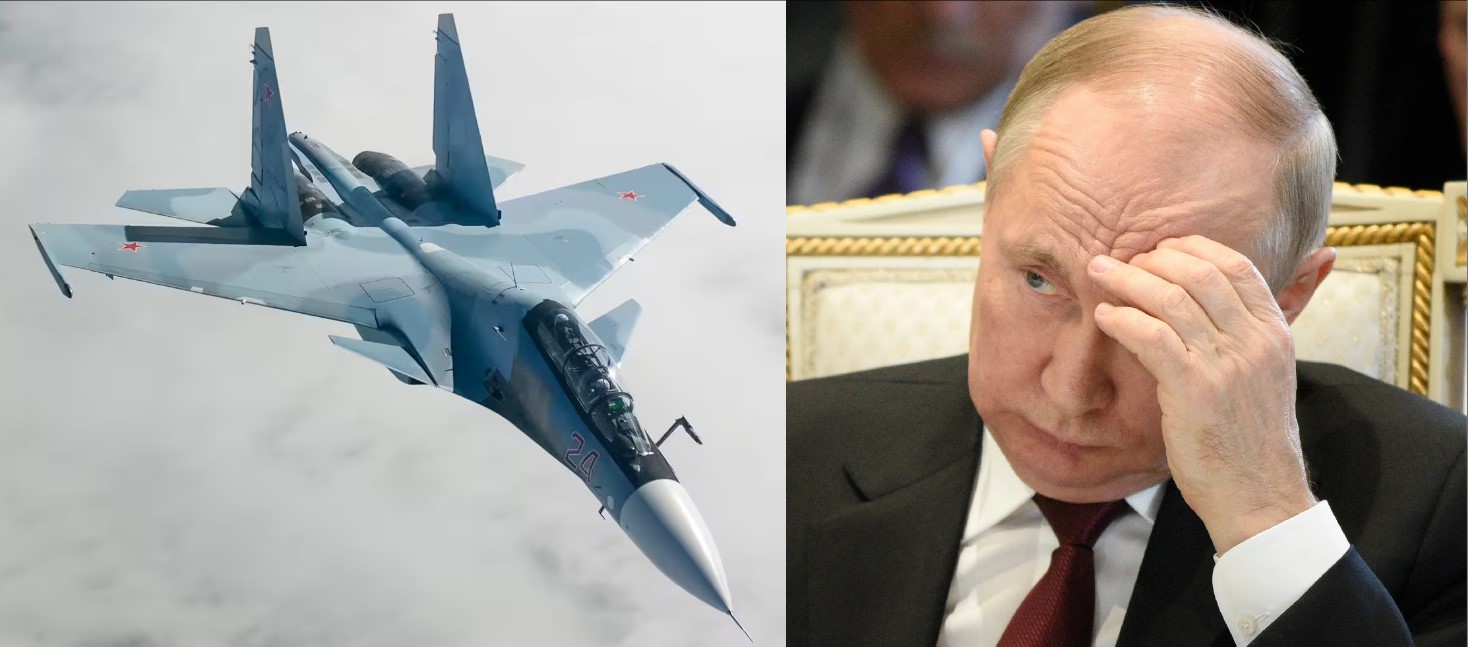
World
Moscow : A leaked internal letter from Russia’s aerospace sector has exposed the financial strain behind Moscow’s continued support for China’s fleet of Soviet-designed combat aircraft, revealing that Russian manufacturers are supplying critical components for Chinese Su-27 and Su-30 fighter jets at a significant loss in order to avoid damaging relations with Beijing and other long-standing defense partners. The document, dated March 2025 and attributed to Russia’s state-run aviation holding United Aircraft Corporation (UAC), details how soaring production costs and rigid export pricing rules have left Russian firms absorbing sharp losses while fulfilling after-sales support contracts for Chinese-operated aircraft. According to the letter, the cost of certain components has risen by nearly 200 percent compared with 2022 levels, yet export prices have remained largely frozen due to political and contractual constraints. Costs Surge, Prices Stay Frozen At the center of the dispute are spare parts and assemblies produced by JSC “2 MPZ,” a Russian manufacturer supplying components used to maintain Su-27 and Su-30 aircraft operated abroad. The leaked correspondence shows that the release price of some items reached 452,302 rubles excluding VAT—an increase of roughly 193.6 percent over 2022 benchmarks and more than eight times the price specified in earlier contracts signed in 2014 and 2016. Despite these increases, UAC officials warn that passing higher costs on to the foreign customer—identified in the document only as “Foreign Customer 156,” widely understood to be China—would almost certainly derail ongoing and future contracts. The letter states bluntly that the customer reacts “extremely negatively” to sharp price fluctuations and would interpret any unjustified increase as a lack of commitment to a long-term partnership. Fear of Losing the Chinese Market The documents underline how sensitive Moscow has become to Beijing’s reaction. Chinese operators rely heavily on Russian technical support to keep older Su-27 and Su-30 variants airworthy, even as China expands its domestic fighter programs. Russian officials argue that maintaining this support is essential not only for revenue continuity but also for preserving the global reputation of the Su family of aircraft on the international arms market. UAC’s after-sales director warns that a unilateral refusal to supply parts, or an attempt to reprice them strictly according to rising domestic costs, could result in the collapse of established military-technical cooperation frameworks. Such an outcome would risk pushing China to accelerate full substitution of Russian components with domestically produced alternatives, permanently locking Russian firms out of a once-lucrative market. State Controls and Contractual Constraints Compounding the problem is Russia’s pricing regime for defense products. The letter references government regulations approved in December 2022 that tie military production prices closely to verified cost structures under state defense orders. While this system is designed to prevent profiteering, it leaves little flexibility when export contracts—often negotiated years earlier—fail to account for inflation, sanctions-driven supply disruptions, and rising labor and materials costs. In this case, UAC notes that even with an 18 percent discount already granted to the foreign customer and a modest annual price escalation of three percent built into earlier agreements, current prices still fall well short of covering actual production expenses. A Strategic Loss, Not a Commercial One The leaked analysis makes clear that the losses are deliberate. Russian firms appear to be absorbing higher costs as a strategic trade-off. By continuing deliveries at below-cost prices, Moscow preserves political goodwill with Beijing, sustains interoperability between Russian and Chinese air forces, and keeps Russian aircraft relevant in China’s inventory for as long as possible. Industry analysts say the episode highlights a broader shift in Russia’s defense exports since the start of the Ukraine war and the expansion of Western sanctions. With fewer markets available and China now its most important major customer, Moscow has less leverage to enforce strictly commercial terms. Why Russia Sells at a Loss The central question raised by the leaked letter—why Russia would knowingly sell military components at a loss—appears to have a clear answer. The documents suggest that the Kremlin and state-owned defense firms view the financial hit as the cost of maintaining a strategic partnership. Preserving access to the Chinese market, protecting long-term political ties, and avoiding reputational damage to Russia’s flagship combat aircraft programs now outweigh short-term profitability. In effect, the losses reflect a calculated decision: Russia is paying to keep China close, even if that means subsidizing the maintenance of Chinese fighter jets with its own strained defense industry.
Read More → Posted on 2026-01-15 16:27:58
World
NEW DELHI : As negotiations gather momentum around India’s proposed acquisition of 114 Additional Rafale Fighter Jets, clarity is emerging on one of the most sensitive aspects of the deal: Software Access. Senior defence officials and industry sources indicate that while India will gain substantial Operational And Integration Flexibility, it will not receive Full Source-Code Ownership of the Rafale’s Core Combat Software. Instead, access will be granted at the Interface And Application Layer, with the aircraft’s Central Fusion Logic remaining under the control of Dassault Aviation. The distinction is subtle but decisive, and it reflects the way the Rafale has been engineered from its inception. A Fundamentally Different Avionics Philosophy Unlike older combat aircraft such as the Mirage 2000, which relied on a largely Monolithic Fire-Control Computer that could be progressively opened and modified, the Rafale is built around a Distributed, Partitioned Avionics Architecture. At its core lies Dassault’s Modular Data Processing Unit (MDPU), which functions not as a single mission computer but as a Federated Real-Time Processing Backbone. The MDPU Architecture divides the aircraft’s avionics into multiple, Isolated Processing Domains. Using ARINC-653–Style Time And Space Partitioning, each domain runs independently, ensuring Fault Isolation, Redundancy, and Predictable Real-Time Behaviour. Radar processing, Electronic Warfare, Flight Controls, Navigation, Weapons Management, and Sensor Fusion are handled by multiple federated processors rather than a single box. This allows the Rafale to sustain High Mission Availability even under Combat Damage or Subsystem Failure. Sitting above this hardware layer is the Operational Mission Kernel, which manages Task Scheduling and Data Flow across domains. Together, these elements form the Digital Skeleton of the aircraft. SPECTRA: The Guarded Combat Brain What truly defines the Rafale’s combat effectiveness is its Fusion Layer centred on the SPECTRA Electronic Warfare And Self-Protection System, developed by Thales. SPECTRA integrates Radar Data, Electronic Support Measures, Jamming Responses, Electro-Optical Inputs, Data Links, and Threat Libraries into a single, coherent Tactical Picture. This Fusion Kernel governs how threats are Prioritised, how sensors Cross-Cue each other, how Countermeasures are deployed, and how the pilot Perceives And Reacts to the battlespace. It effectively turns the Rafale into a Networked Sensor-Shooter Node rather than a standalone fighter. It is also the Most Tightly Protected Intellectual Property in the entire Rafale ecosystem. Industry officials stress that the Weapon–Radar–Electronic Warfare Fusion Kernel is Dassault-Controlled Interface Code by design. No Rafale operator, including France’s Closest European Partners, has been granted Unrestricted Kernel-Level Source-Code Access. This is not a technical constraint but a deliberate policy rooted in Export Control, Cybersecurity, and Platform Integrity. What India Will Receive And What It Will Not For India, the expected model under the 114-Aircraft Programme is API-Level Access rather than Kernel-Level Control. This means the Indian Air Force (IAF), through certified interfaces, will be able to integrate Indigenous Weapons, Sensors, and Mission Systems without altering the underlying Fusion Logic. In practical terms, this opens the door for integration of Indian systems such as the Astra Mk-2 And Mk-3 Beyond-Visual-Range Missiles, the Rudram Series Of Anti-Radiation Weapons, Indigenous Precision-Guided Munitions, and future Indian Seekers. Mission Data Loads, Threat Libraries, and Tactical Profiles can be tailored to Indian requirements, while remaining within Dassault’s Certified Software Framework. What India will not receive is the ability to Rewrite Or Independently Certify the Rafale’s Core Combat Kernel. The algorithms that govern Sensor Fusion, Electronic Warfare Response Logic, Radar–Electro-Optical Correlation, and Threat Prioritisation will remain closed. Any deep modification in these areas will continue to require Dassault’s Direct Involvement And Approval. Operational Sovereignty, Not Software Sovereignty This arrangement reflects a broader reality of Modern Western Combat Aircraft. Platforms like the Rafale are not designed as fully open architectures in the academic sense. They are Tightly Integrated Combat Systems where Software Integrity is treated as a Strategic Asset, on par with Airframe Design or Engine Technology. For the Indian Air Force, the result is Operational Sovereignty, not Full Software Sovereignty. The service will be able to field Indian Weapons, Customise Missions, Adapt Tactics, and integrate selected Indigenous Subsystems, but it will not own the aircraft’s Mission Brain in the way it eventually did with earlier generations of fighters. This marks a clear departure from the Mirage Era, when India gained deep access to large parts of the Fire-Control System and could implement Major Local Modifications over time. Rafale belongs to a different generation, where Software Defines Combat Capability, and Software Ownership Defines Platform Control. Strategic Implications For Future Upgrades The implications extend beyond the current deal. Every major Software Upgrade, New Sensor Integration, or Deep Capability Enhancement will pass through Dassault’s Certification Pipeline. From the manufacturer’s perspective, this ensures Fleet-Wide Commonality, protects against Platform Fragmentation across customers, and preserves the Integrity Of The Rafale Ecosystem. From India’s perspective, it accelerates Capability Induction but reinforces Long-Term Dependence on the original equipment manufacturer for core upgrades. This dynamic was evident earlier when the Indian Navy explored the possibility of an Indigenous AESA Fire-Control Radar for the Rafale M. Such a move would have required Deeper Interface Openness and reduced reliance on Dassault’s Kernel Certification Chain. With the retention of the Thales Radar, that window narrowed significantly. A Controlled-Access Future As discussions on the 114-Aircraft Programme continue, the software question underscores a central trade-off. India will gain a Highly Capable, Combat-Proven Aircraft with substantial Integration Flexibility. But the Rafale’s Crown Jewel — its Weapon–Radar–EW Fusion Engine — will remain firmly in French Hands. In essence, the forthcoming Rafale deal is shaping up as a Controlled-Access Partnership. India will receive Interface Control, not Mission-Brain Control; Integration Rights, not Kernel Rights. It is a model increasingly common in Fifth- And 4.5-Generation Fighters Worldwide, and one that will continue to shape how Air Power, Sovereignty, and Software intersect in the decades ahead.
Read More → Posted on 2026-01-15 16:10:24
World
OSLO : Growing unease over renewed U.S. interest in Greenland has spilled into Norway’s domestic politics, with opposition parties warning that President Donald Trump’s Arctic ambitions could ultimately place Norway’s Svalbard archipelago under pressure. The concerns have prompted the leader of the Socialist Left Party (SV), Kirsti Bergstø, to demand a formal briefing from Prime Minister Jonas Gahr Støre on what she describes as “Svalbard’s new security situation.” The debate reflects rising anxiety in Oslo that shifts in great-power behaviour in the High North could weaken long-standing legal and political arrangements that have kept Svalbard largely insulated from geopolitical confrontation for more than a century. From Greenland To Svalbard The immediate trigger for the controversy is renewed international attention on Greenland, following public signals from Washington that the island’s strategic value to U.S. security interests could justify unprecedented measures. While Denmark and Greenland’s authorities have firmly rejected any change in sovereignty, Norwegian opposition politicians argue that the precedent alone is destabilising. Their fear is twofold: that the United States, having openly questioned existing arrangements over Greenland, could eventually take a harder look at Svalbard’s strategic position in the Arctic Ocean, or that Russia could interpret U.S. actions as a signal that territorial and treaty-based settlements in the region are once again open to challenge. Why Svalbard Matters Svalbard occupies a uniquely sensitive place in international law. Under the 1920 Svalbard Treaty, Norway holds sovereignty, but all signatory states enjoy equal rights to economic activity on the islands. The treaty also restricts military use, prohibiting permanent bases and fortifications and barring the archipelago from being used for “war-like purposes.” For decades, Norway has pursued a careful balancing act: asserting sovereignty through civilian administration and limited security presence while avoiding steps that could be interpreted as militarisation. Russia maintains a long-standing civilian presence through its settlements and has repeatedly challenged Norway’s interpretation of the treaty, particularly in relation to maritime zones and dual-use infrastructure. Political Pressure On The Government Against this backdrop, Bergstø has called on the government to explain whether the strategic environment around Svalbard has fundamentally changed. She argues that parliament must be informed if new threat assessments are in place or if Norway’s room for manoeuvre under the treaty is narrowing. Other opposition figures have echoed the demand, warning that silence risks undermining public confidence at a time when Arctic stability appears increasingly fragile. They stress that the issue is not an imminent takeover of Svalbard, but the gradual erosion of norms that have underpinned Norway’s control of the archipelago. The government has so far maintained that Norway’s sovereignty over Svalbard is secure and grounded firmly in international law, while acknowledging that geopolitical tensions in the Arctic have intensified. The Wider Arctic Picture The dispute highlights how rapidly Arctic geopolitics is evolving. Climate change has opened new sea routes and increased access to natural resources, sharpening the strategic value of northern territories. NATO has intensified its focus on the High North, while Russia has expanded its military footprint across its Arctic coastline. In that environment, analysts say even rhetorical challenges to territorial arrangements can have outsized effects. “Once major powers start openly questioning settled frameworks, smaller states have reason to worry about knock-on consequences,” one Oslo-based security expert said. Risk Through Precedent, Not Invasion Most experts agree that a direct challenge to Norway’s sovereignty over Svalbard remains unlikely. The legal protections of the Svalbard Treaty, combined with Norway’s NATO membership, make any overt attempt to seize or control the islands highly improbable. The greater risk lies in gradual pressure: intensified foreign activity in surrounding waters, legal disputes over treaty interpretation, or expanded dual-use infrastructure that shifts the practical balance without breaching the treaty outright. In this sense, opposition fears are less about immediate threats and more about a changing international climate in which established rules carry less weight. Calls for transparency from the government reflect a belief that political clarity is itself a form of deterrence. By reaffirming Norway’s legal position and explaining how it intends to defend it, Oslo can reduce uncertainty both at home and abroad. A Test For Norway’s Arctic Strategy As attention on the Arctic grows, the Svalbard debate is becoming a litmus test for Norway’s broader High North policy. How the Støre government responds — whether with detailed briefings, diplomatic initiatives, or renewed emphasis on treaty-based governance — will shape domestic confidence and signal to other Arctic actors how firmly Norway intends to defend the status quo. For now, Svalbard remains calm and governed by law. But the political storm gathering around it suggests that, in today’s Arctic, even distant developments in Greenland can quickly cast long shadows over Norway’s northernmost territory.
Read More → Posted on 2026-01-15 15:35:40Search
Top Trending in 24 Hours
-
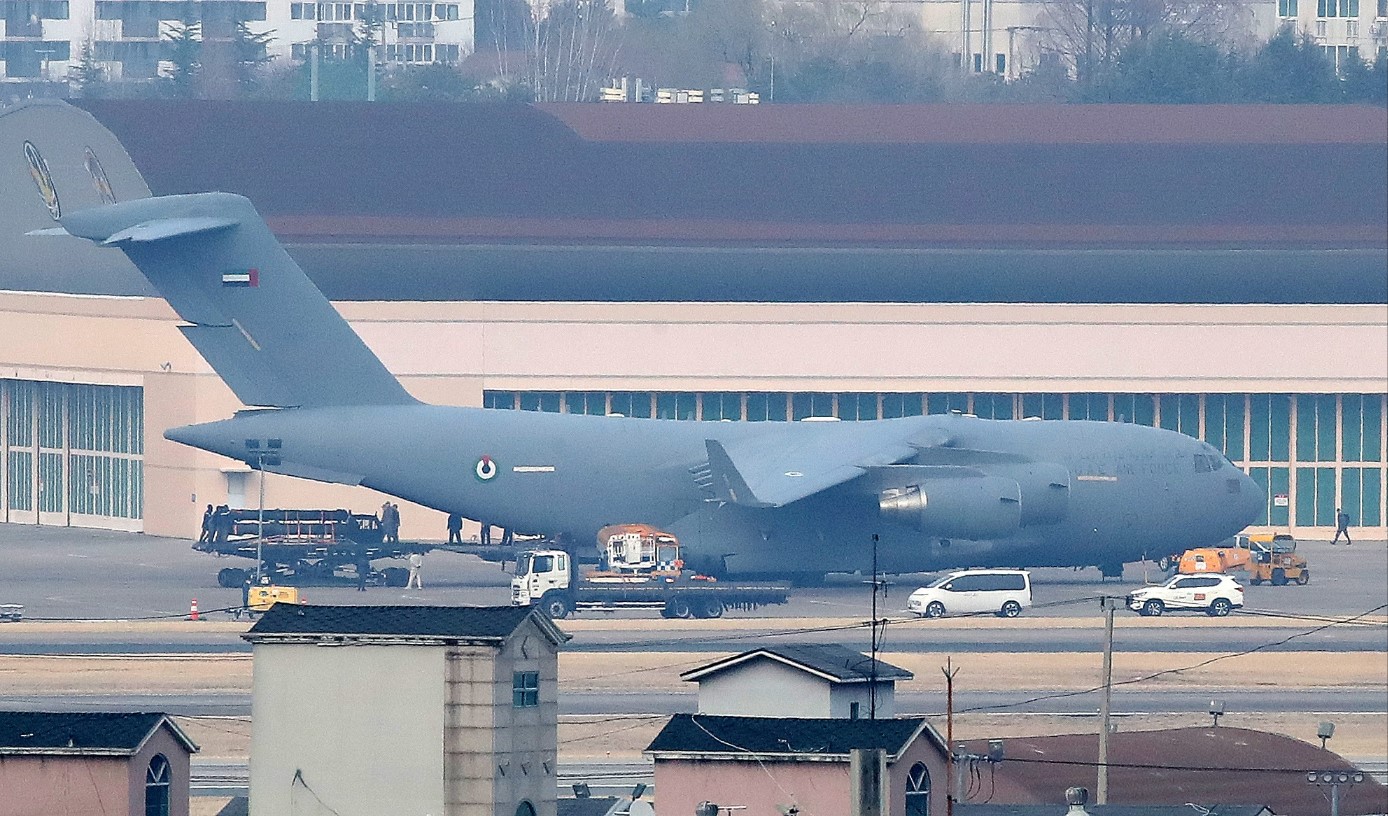 UAE Urgently Airlifts Cheongung-II Missile Defense Battery From South Korea Using Eight C-17 Aircraft
-
 NATO Commander Says Russia Not Seeking Conflict With Alliance Despite U.S. Force Reductions
-
 U.S. Space Force Awards $437.7 Million Contracts for First PTS-G Swarm 1 Anti-Jam Satellites
-
 U.S. Air Force Faces Strategic Airlift Shortfall as C-17 Production Restart Remains Uncertain
-
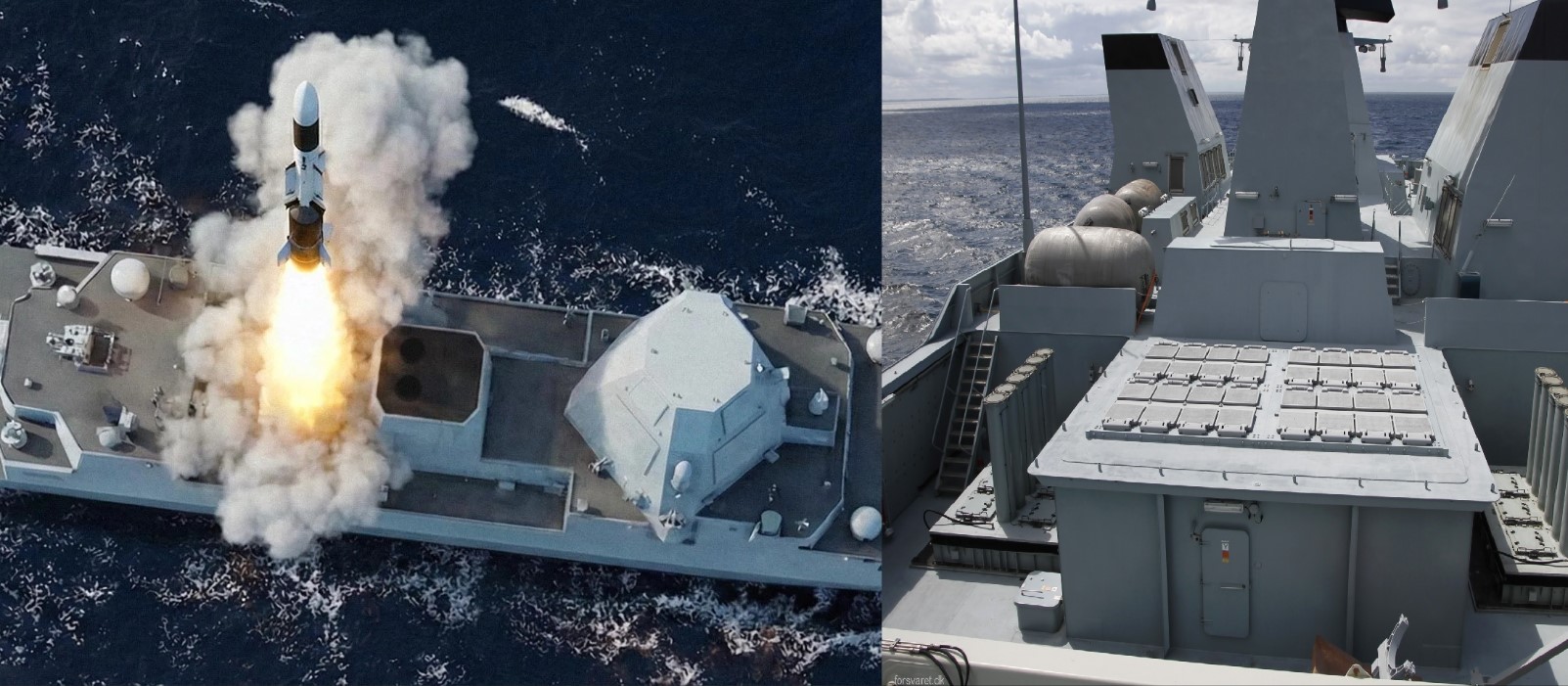 Engineering Challenges Behind the US Navy's Decision to Drop MK41 VLS from Flight I FF(X) Frigates
-
 Russia Unveils AI-Powered Counter-Drone System for Maritime and Coastal Defense at Fleet 2026
-
 Greek Parliament Approves €1.2 Billion Defense Package Including VICTA Submersibles, V-BAT Drones, C-390 Airlifters, and Frigate Upgrades
-
 France Launches Search for Carrier-Capable Combat Drones Under New CCA Program
Top Trending in 4 Days
-
 Boeing Introduces New MQ-28 Ghost Bat Upgrades with Increased Range, Payload and Weapons Capacity at ILA Berlin 2026
-
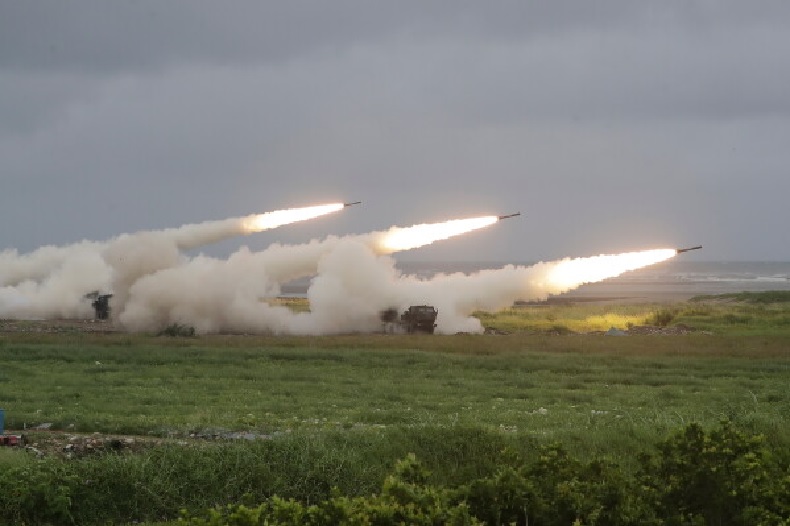 Taiwan Conducts First Live-Fire of HIMARS Rockets From West Coast During Invasion Defense Drill
-
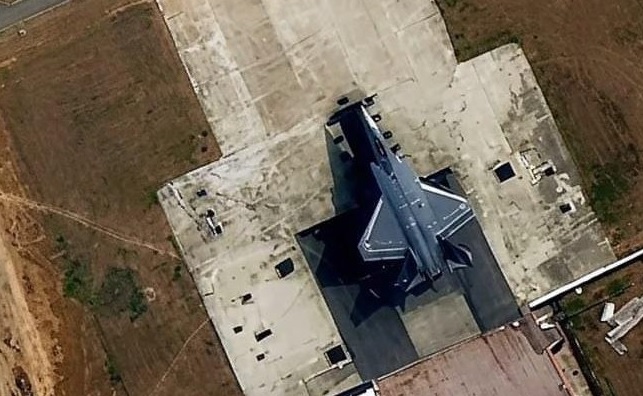 AMCA Airframe Spotted at DRDO’s ORANGE Facility for Radar Cross-Section Testing
-
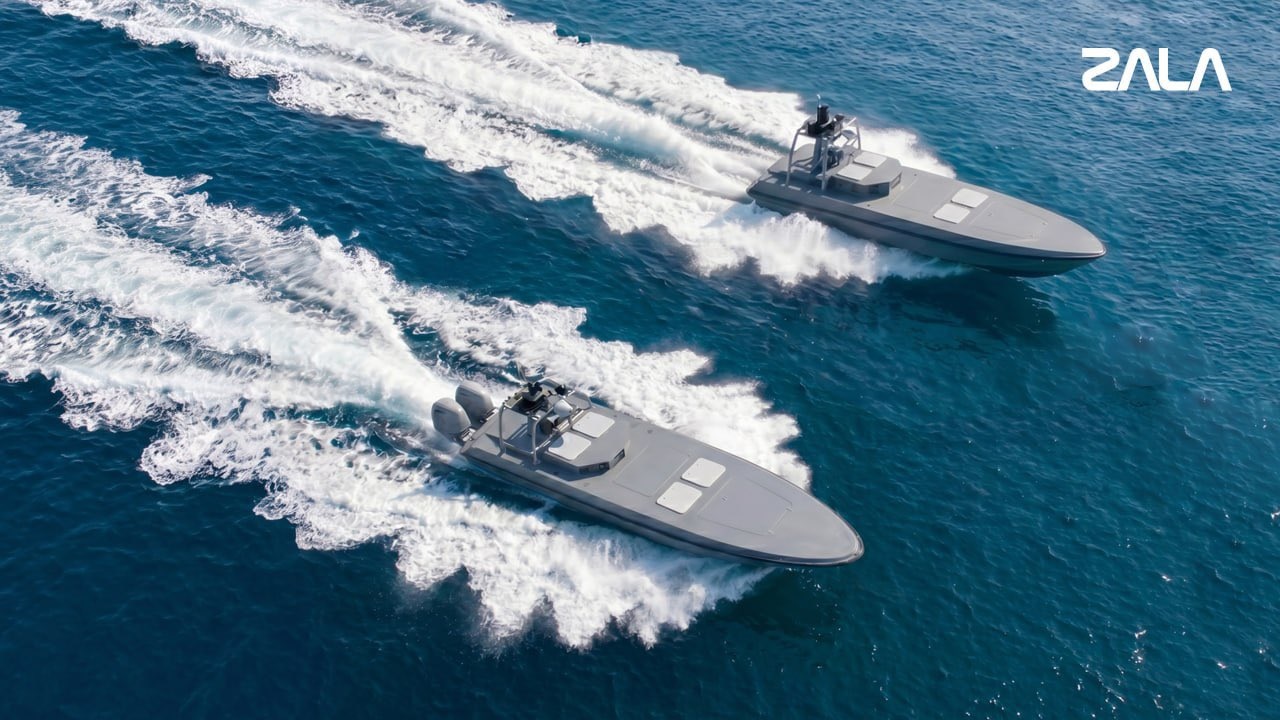 Russian Defense Firm ZALA Unveils KAMA Unmanned Surface Vessel Family at FLOT-2026 Naval Exhibition
-
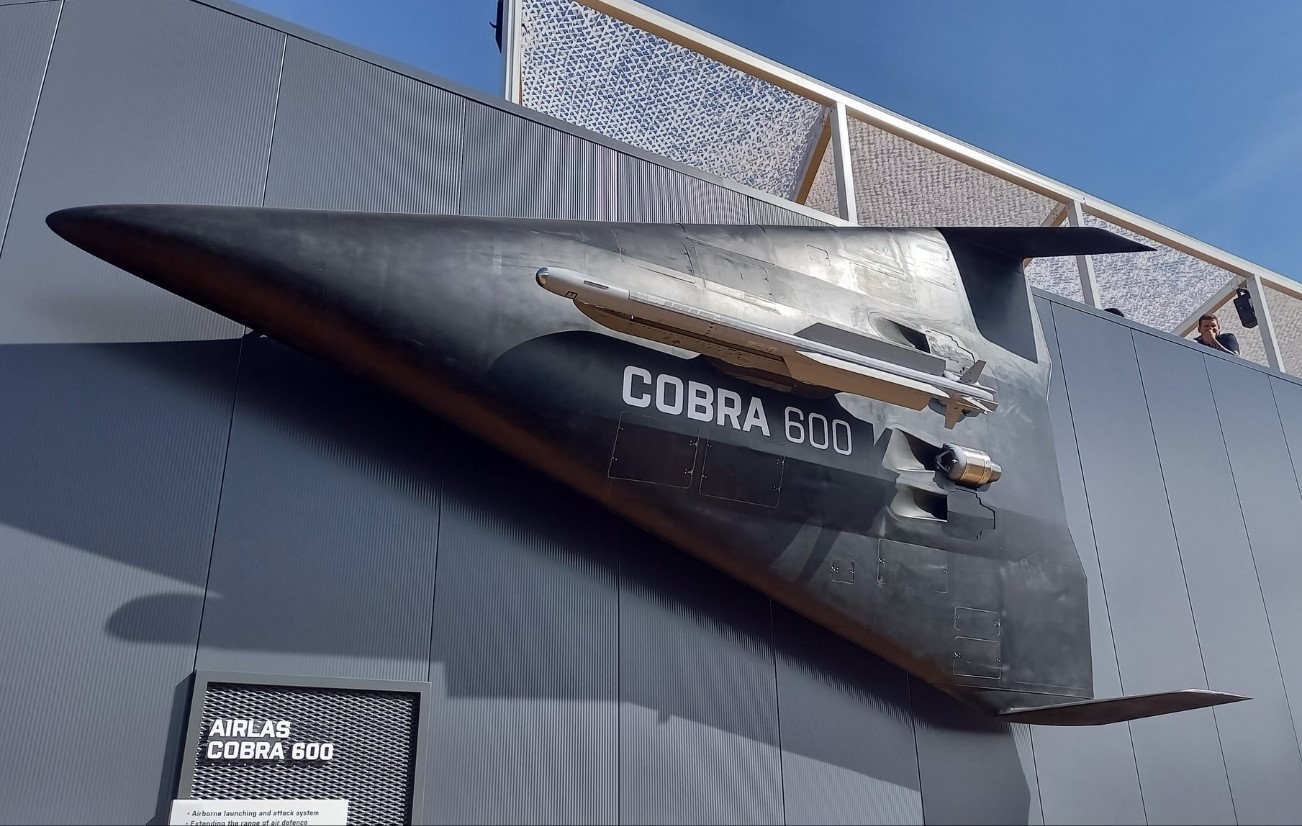 Diehl Defence Unveils IRIS-T Armed Cobra 600 Air Defense Drone at ILA Berlin 2026
-
 Airbus Unveils U760 Ravenstorm Loyal Wingman Drone at ILA Berlin 2026
-
 U.S. Army Successfully Demonstrates Quantum Sensor That Can Precisely Locate Radio Signals in 3D
-
 MBDA Develops AQUILA Interceptor to Counter Hypersonic and Maneuvering Missile Threats