WASHINGTON / DOHA / RIYADH : A planned U.S. military strike on Iran was abruptly halted late Wednesday night after urgent diplomatic interventions from the leaders of Qatar and Saudi Arabia, according to multiple regional and defense sources familiar with the matter. The decision, now confirmed by analysts tracking U.S. military movements in the Gulf, underscores how close the region came to a potentially catastrophic escalation with global consequences.
Defense officials and regional security monitors say U.S. air assets operating out of Al Udeid Air Base were scrambled and placed on operational standby, indicating that a strike package had entered the final phase of execution. However, aircraft were subsequently instructed to return to base, with crews informed that the mission had been called off pending further orders.
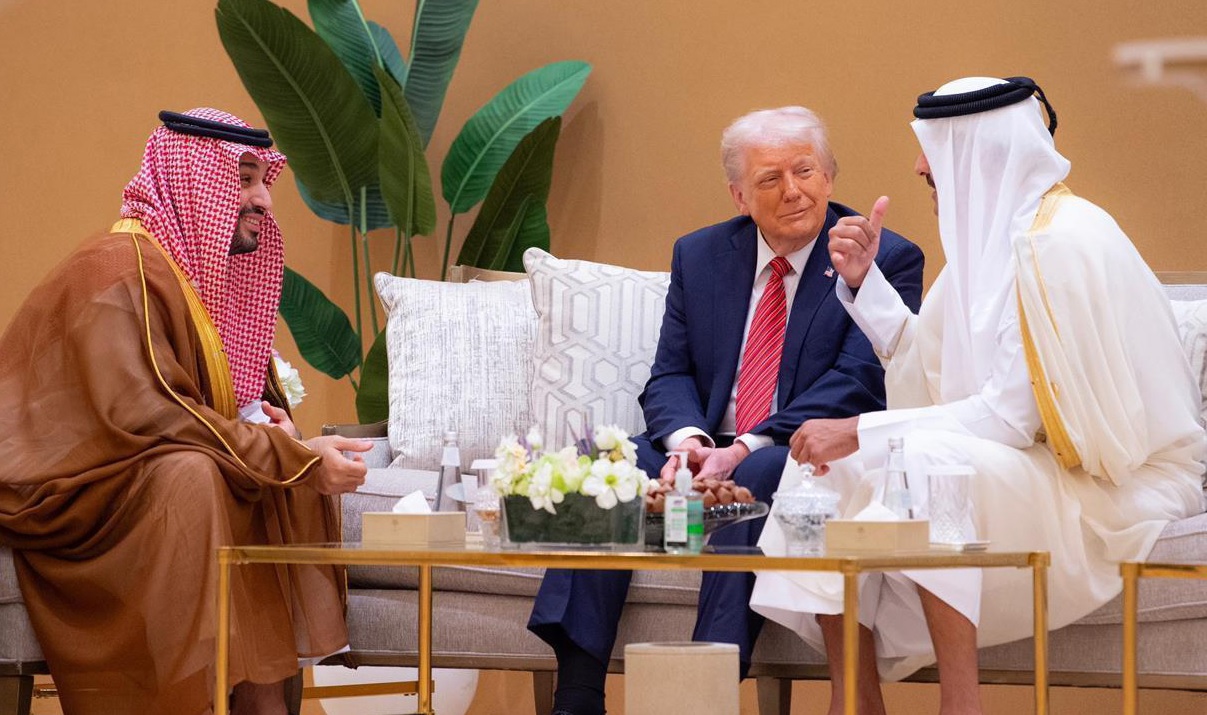
At the center of the last-minute reversal was a direct appeal to Donald Trump from the Qatari Emir and the Saudi monarch. According to officials briefed on the calls, both leaders warned that a U.S. attack on Iran would almost certainly trigger immediate Iranian retaliation against Gulf states, rather than against the U.S. homeland.
Threats Against the Gulf
Security analysts say those warnings were rooted in explicit intelligence assessments that Iran had already issued direct threats to Gulf leaders. While Tehran lacks long-range missile capability to strike the continental United States in any meaningful way, it possesses a large and diverse missile arsenal capable of saturating targets across the Gulf region.
Iranian planners, analysts argue, would view U.S. bases and allied infrastructure in the Gulf as the most viable and politically impactful targets. Major cities, energy hubs, oil storage facilities, ports, and desalination plants in Qatar and Saudi Arabia would all be within range, raising the prospect of widespread civilian and economic disruption within hours of any U.S. strike.
Energy Shock Fears
The potential economic fallout was a central concern behind the Gulf leaders’ intervention. Iran’s oil exports are already constrained, but a U.S. strike would almost certainly halt what remains of Iranian production. In retaliation, Iranian missile attacks on Gulf oil infrastructure could severely disrupt the world’s largest concentration of energy exports.
Qatar and Saudi Arabia together anchor a significant share of global oil and liquefied natural gas supply. Any sustained damage to production or export facilities would ripple through international markets, triggering sharp energy price spikes and threatening economic stability far beyond the Middle East.
Energy experts warn that a simultaneous disruption of Iranian output and Gulf exports would create a supply shock difficult to offset in the short term, with knock-on effects for inflation, shipping costs, and industrial production worldwide.
Strategic Calculations in Washington
Within Washington, the episode highlights the delicate balance between military deterrence and regional stability. While U.S. officials have long emphasized their readiness to strike Iranian targets if provoked, the Gulf allies’ warnings reinforced a long-standing reality: any conflict with Iran would almost certainly be fought, at least initially, on their territory.
By standing down the strike, the U.S. administration signaled that allied security and global economic risk remain key constraints on the use of force. Analysts note that the return-to-base order does not indicate permanent de-escalation, but rather a pause shaped by diplomatic pressure and threat assessments.
A Region on Edge
The aborted operation leaves the Middle East in a state of heightened tension. Military assets remain forward-deployed, diplomatic channels are active, and regional governments are reinforcing air defenses amid fears that miscalculation could still spark confrontation.
For now, the Gulf has avoided a direct missile exchange that could have reshaped the region and the global energy market overnight. But analysts caution that the underlying drivers of the crisis remain unresolved, and that the decision to halt the strike reflects how narrow the margin has become between deterrence and disaster.
——— End of Article ———