U.S
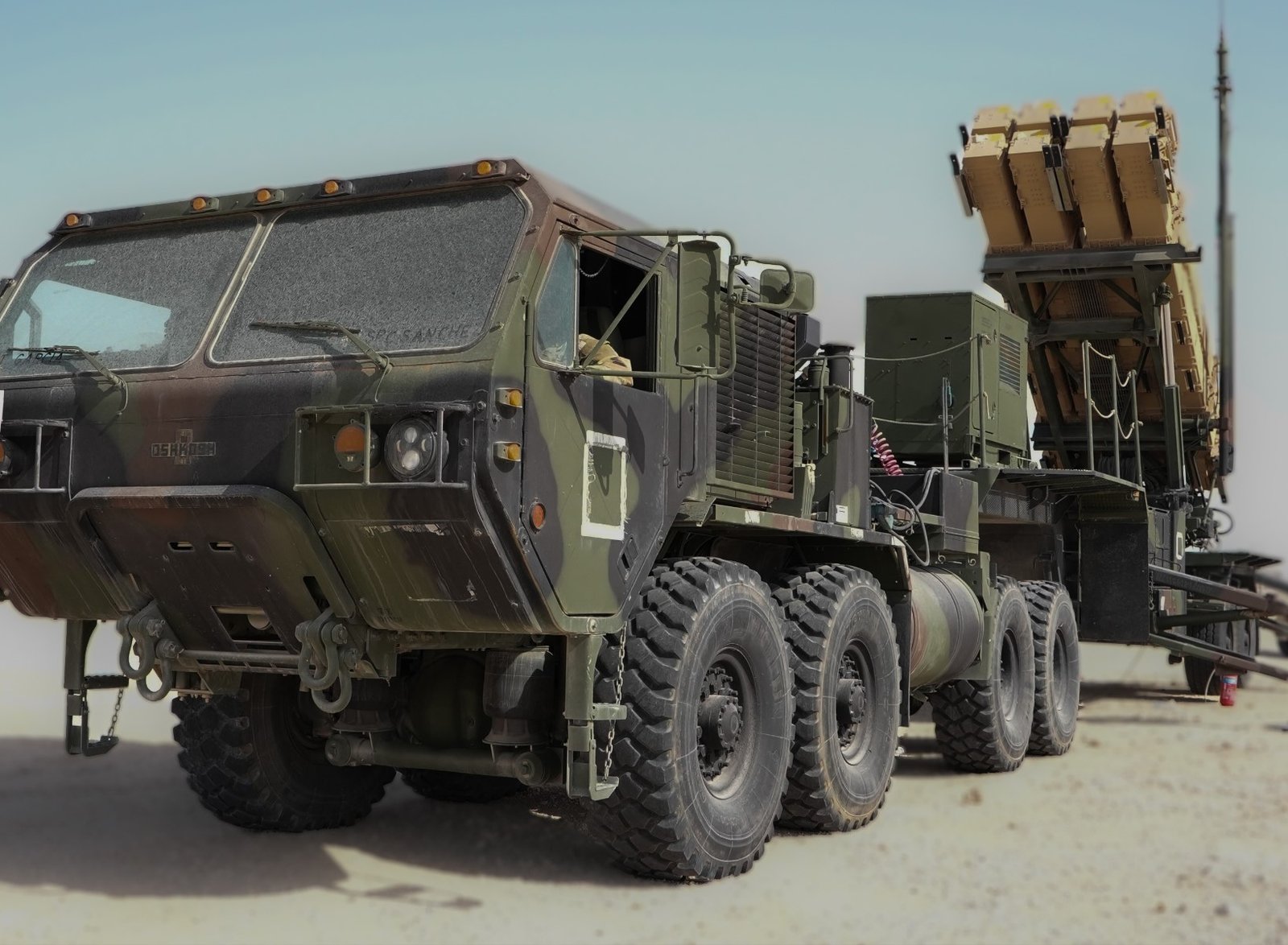
GRAND PRAIRIE, Texas — The U.S. Army has awarded Lockheed Martin Missiles and Fire Control a contract worth up to $347.5 million to continue development of new Patriot missile defense technologies designed to address a long-standing limitation in the system's radar coverage. The contract, awarded on July 1, 2026, funds Phase 2 of the Missile Segment Enhancement (MSE) Containerized Launcher and Remote Interceptor Guidance 360 Degrees (RIG-360) Containerized System program. Lockheed Martin Missiles and Fire Control, based in Grand Prairie, Texas, will carry out the work. The Phase 2 award follows a $61 million Phase 1 contract issued by the U.S. Army in May 2026 for the initial development and demonstration of the same technologies. The Army Contracting Command at Redstone Arsenal, Alabama, awarded the Phase 2 contract on a sole-source basis, citing Lockheed Martin's proprietary technical data. Addressing Patriot's Radar Coverage Limitation Current Patriot air defense batteries rely on the AN/MPQ-65 radar, which is designed to track and engage threats within a fixed 120-degree sector rather than providing full 360-degree coverage. When a missile, aircraft, or drone approaches from outside that sector, the radar cannot generate the precise fire-control tracking data required by the PAC-3 interceptor. The new Phase 2 program is intended to eliminate this operational limitation by improving how Patriot interceptors receive guidance during engagements. The importance of expanding radar coverage has gained increased attention as modern cruise missiles, ballistic missiles, and unmanned aerial systems are capable of approaching from multiple directions. Containerized Launcher for Greater Flexibility One major part of the program is the MSE Containerized Launcher. Instead of installing Patriot launchers on the traditional M903 launcher vehicle, the new design places the launcher inside a standard shipping container. This allows the launcher to be transported by suitable trucks and positioned at improvised deployment locations. By distributing launchers across a wider area, the U.S. Army aims to make individual launch sites more difficult to locate while providing greater deployment flexibility for Patriot batteries. RIG-360 Designed for All-Direction Guidance The second major component is the Remote Interceptor Guidance 360 Degrees (RIG-360) system. RIG-360 is a hemispherical guidance device designed to provide continuous tracking and guidance information to Patriot interceptors regardless of the direction from which a threat approaches. The system is intended to supply the missile with guidance data using information from available sensors, helping overcome the directional limitation of the legacy radar. Integration with the Army's IBCS Network Both the Containerized Launcher and the RIG-360 system will integrate with the U.S. Army's Integrated Battle Command System (IBCS). IBCS enables missiles launched from one location to use tracking and targeting information collected by different sensors elsewhere on the battlefield, allowing multiple air defense assets to operate as a connected network. The U.S. Army successfully demonstrated this networked capability during a 2021 live-fire PAC-3 MSE engagement. Since then, IBCS has entered full-rate production and has been fielded operationally with allied forces in Poland. Eight Development Increments Planned According to the contract, Phase 2 work will be carried out through eight development increments, including five increments for the Containerized Launcher and three increments for the RIG-360 system. Development will progress through hardware-in-the-loop laboratory testing, design maturity reviews, environmental qualification testing, live-fire flight testing, and final manufacturing validation. The phased approach is intended to identify and resolve design issues before wider production. Part of Broader Patriot Modernization The new contract comes as demand for Patriot air defense systems and interceptors continues to increase. In April 2026, Lockheed Martin received a separate $4.76 billion U.S. Army contract to manufacture PAC-3 MSE interceptors through mid-2030. Approximately 94 percent of that contract's funding is expected to come from Foreign Military Sales (FMS) customers. The company also introduced the PAC-3 Adapted Capability Effector (ACE) during the Farnborough International Airshow on July 20, 2026. According to Lockheed Martin, the new interceptor is priced at less than half the cost of a standard PAC-3 MSE interceptor and is intended to increase Patriot magazine capacity while allowing higher-cost PAC-3 MSE interceptors to be reserved for more demanding threats. The newly awarded Phase 2 contract will continue the development and demonstration of the Containerized Launcher and RIG-360 systems as the U.S. Army advances the next stage of Patriot air defense modernization.
Read More → Posted on 2026-07-28 14:14:45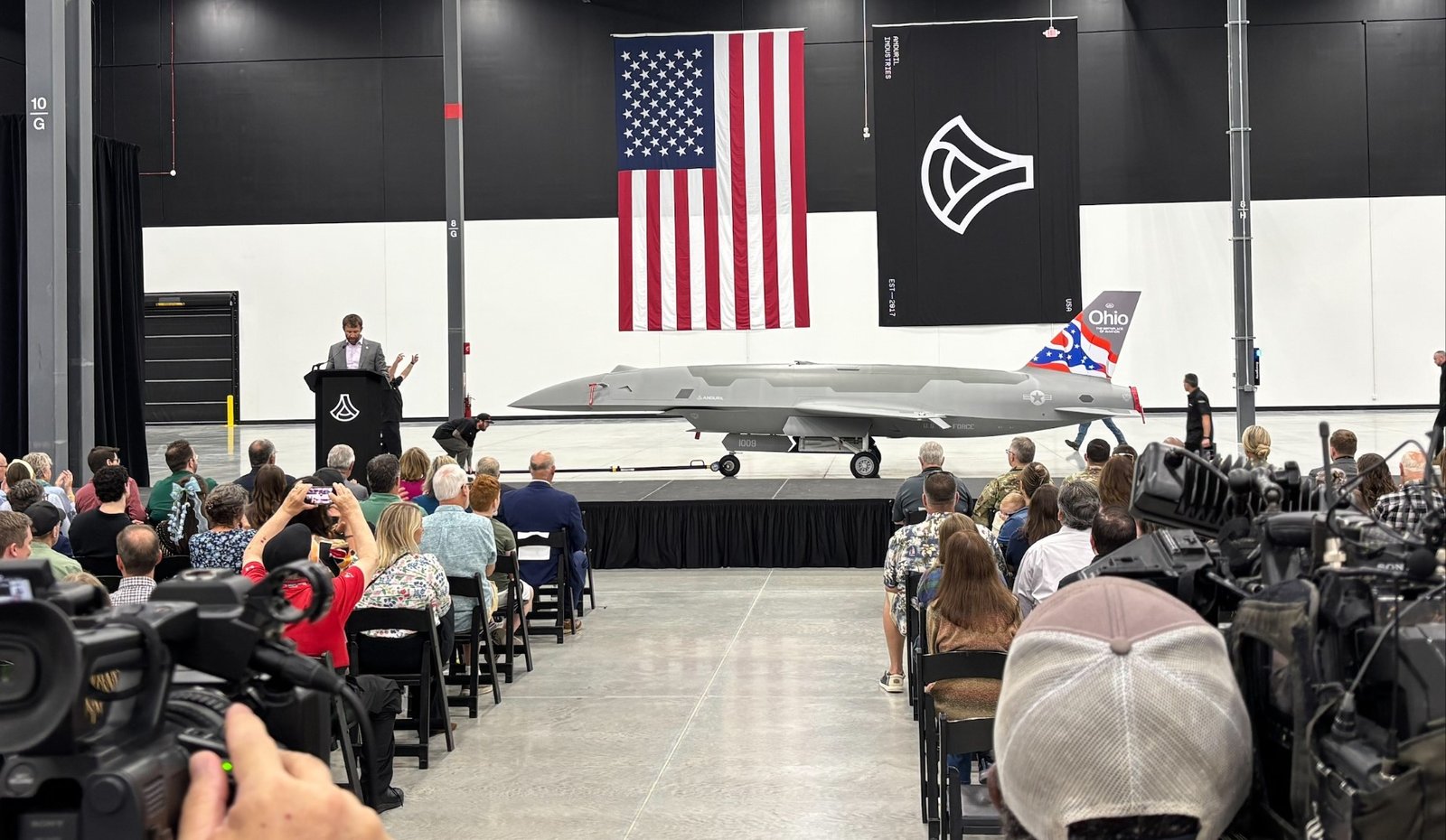
U.S
ASHVILLE, Ohio — Anduril Industries has unveiled the first YFQ-44A Fury autonomous combat aircraft manufactured at its new Arsenal-1 facility in Pickaway County, marking the start of production at the Ohio site roughly 18 months after the company announced plans for the project. The aircraft, known as the YFQ-44A Fury, is the first product built at Arsenal-1 and is being produced for the U.S. Air Force's Collaborative Combat Aircraft (CCA) program. The unveiling took place on Monday, July 27, 2026, about 557 days after the company publicly announced the project in January 2025. The YFQ-44A is designed to operate alongside crewed fighter aircraft as an autonomous "loyal wingman." According to Anduril, the aircraft is intended to perform missions considered too dangerous for human pilots, including scouting hostile airspace, operating in formation with fighter jets, and carrying out air combat missions. John Malone, Anduril's head of production for autonomous airpower and the Fury program, said the aircraft is designed to increase combat capability by taking on higher-risk operations. "It multiplies the force. So it goes into fights that are more dangerous than you want to put a piloted aircraft in," Malone said. The first completed aircraft also pays tribute to Ohio's aviation heritage. Its rudder carries the Ohio state flag along with the phrase "Birthplace of Aviation." Manufacturing Begins at Arsenal-1 The unveiling marks the beginning of active manufacturing at Arsenal-1, even as construction continues across parts of the campus. While the primary hangar used to assemble the aircraft is still being completed and another planned building remains under construction, production of the Fury is already underway. Malone said building the first aircraft required months of collaboration between engineers, technicians and production teams. Early employees hired for the Ohio facility traveled to Anduril's California operations for assembly training before returning to Pickaway County to begin manufacturing. He noted that the development process involved continuous learning and problem-solving as the team worked through technical challenges before completing the first production aircraft. The facility currently employs about 140 workers across three production shifts, while the company continues hiring, with approximately 95 open positions listed. Once fully staffed, Arsenal-1 is expected to produce up to 12 Fury aircraft per month, with annual production capacity projected at approximately 150 aircraft. Anduril co-founder Matt Grimm said the company intends to rapidly expand production rather than follow traditional defense manufacturing timelines. "We have no plans to do this slowly or by the old playbook," Grimm said during Monday's event. U.S. Air Force Production Program The Fury is being built under the U.S. Air Force's Collaborative Combat Aircraft (CCA) program. In June 2026, the U.S. Air Force selected Anduril for the production phase of the program. Under the contract, the company will deliver an initial batch of FQ-44 aircraft for testing, validation and eventual operational use, while the agreement also allows for additional purchases in future years. According to Anduril, the program progressed from a prototype award in 2024 to a production contract in 2026, which the company described as the fastest transition for a fighter aircraft program in more than 50 years. Flight testing of the YFQ-44A began in late 2025, and the aircraft has undergone integration work involving mission autonomy software and inert munitions. Ohio Leaders Highlight Aerospace Investment The unveiling was attended by Ohio Governor Mike DeWine, One Columbus President Jonas Peterson, and other state and local officials. DeWine said Ohio's business environment helped support the project's rapid development and pointed to CNBC's recent ranking of Ohio as the top state for business climate. He said the state continues working to strengthen its aerospace and defense manufacturing sector and described Ohio as "the aerospace capital of the world." Peterson said the Arsenal-1 project is expected to strengthen central Ohio's position as a destination for additional aerospace, defense and advanced technology companies. Major Investment and Job Creation Arsenal-1 is located on approximately 500 acres near Rickenbacker International Airport, about 30 minutes south of Columbus. The site is planned as a 5-million-square-foot hyperscale manufacturing campus designed with flexible production lines and movable workstations that allow manufacturing capacity to be adjusted as demand changes. In addition to the Fury, the facility is expected to manufacture other Anduril systems, including Roadrunner and Barracuda. To support the project, JobsOhio awarded Anduril $310 million in grants distributed over 10 years through 2035. The Ohio Department of Development's Tax Credit Authority also approved a 2.59% refundable Job Creation Tax Credit through 2055, which state officials estimate could provide more than $450 million in tax incentives. In return, Anduril has committed to investing $910 million in the project and creating 4,008 jobs by 2035. State officials say this represents the largest single direct job creation commitment in Ohio's history, surpassing the previous record held by Intel. Average annual salaries at the fully staffed facility are projected to exceed $132,000. The completion of the first YFQ-44A Fury marks the beginning of serial production at Arsenal-1 and represents a key milestone in the expansion of the U.S. Air Force's Collaborative Combat Aircraft (CCA) program as well as Ohio's growing aerospace manufacturing sector.
Read More → Posted on 2026-07-28 12:29:03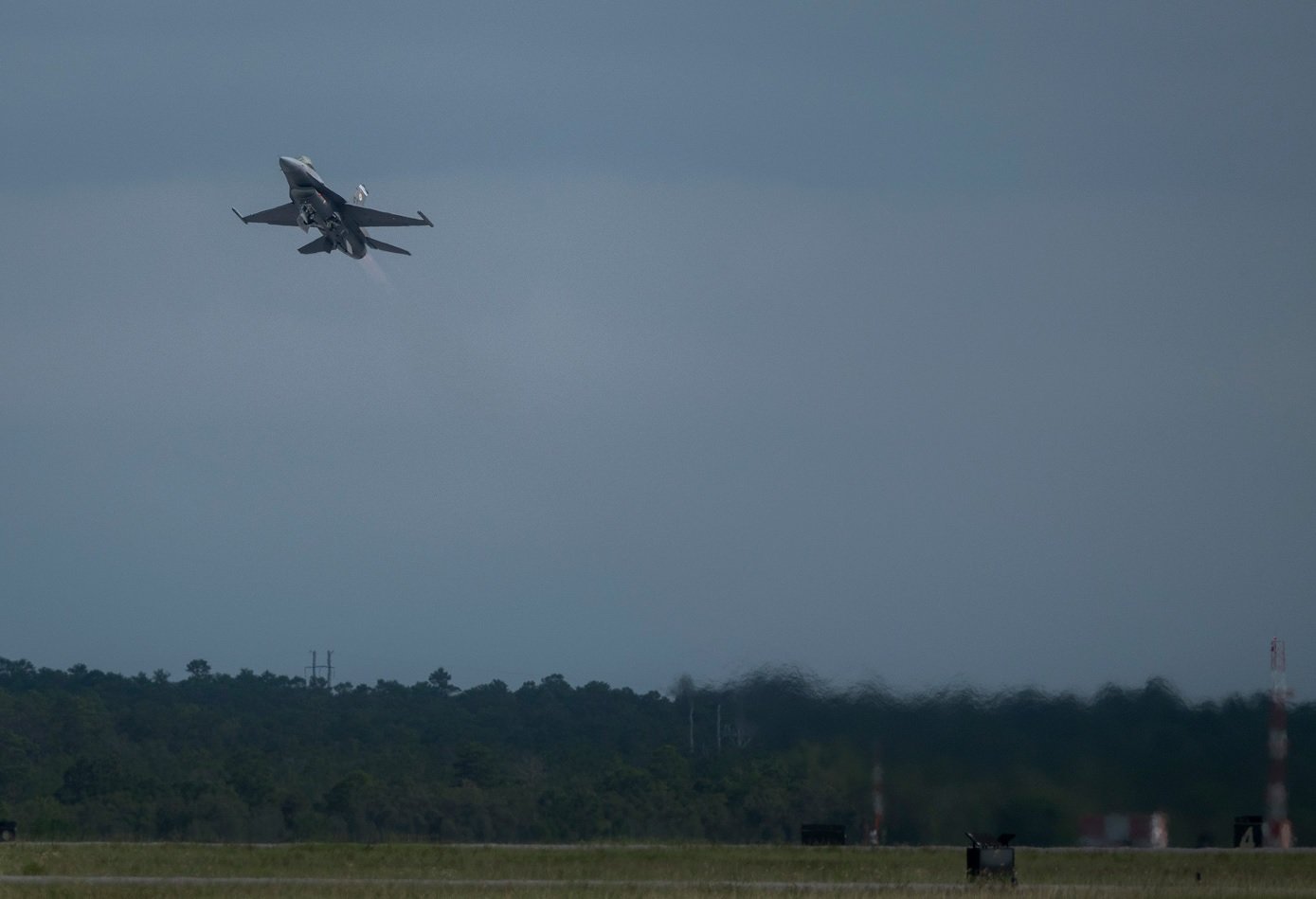
U.S
EGLIN AIR FORCE BASE, Fla. — The U.S. Defense Advanced Research Projects Agency (DARPA) and the U.S. Air Force have begun flight testing of standard F-16 fighter aircraft controlled by an artificial intelligence (AI) agent under the Viper Experimentation and Next-generation Operations Model (VENOM) program. The latest milestone moves AI flight technology from simulation environments and specialized research aircraft to operational F-16 fighters modified for autonomous testing. According to DARPA, the effort is intended to accelerate the development and testing of trusted autonomous air combat capabilities using conventional military aircraft. The VENOM program is a joint initiative between DARPA and the U.S. Air Force and builds directly on DARPA's earlier Air Combat Evolution (ACE) program, which developed the AI algorithms used for autonomous flight. From Experimental Aircraft to Standard F-16 Fighters The new flight tests follow earlier demonstrations conducted with the X-62A Variable In-flight Simulation Test Aircraft (VISTA), a specially modified research aircraft used during the ACE program. During those tests, an AI agent successfully controlled the aircraft during within-visual-range air combat against human pilots. VENOM expands that work by adapting standard F-16 fighters into autonomous-capable flying testbeds. DARPA said using operational aircraft provides a more practical platform for developing and evaluating AI technologies intended for future military aviation. Testing is being conducted at Eglin Air Force Base, Florida, with support from the 96th Test Wing. According to DARPA, modified F-16s first flew in June 2026 to verify that the new autonomous systems operated safely with the aircraft. In July 2026, flight testing advanced to missions in which an AI agent controlled the aircraft while a pilot remained in the cockpit to supervise operations. VENOM Autonomy Kit Enables AI Flight Without Changing Core Software The autonomous capability is provided through the VENOM Autonomy Kit (VAK), which was designed and integrated by multiple contractors during the ACE program. The system connects directly with the F-16's flight controls and mission systems while leaving the aircraft's core software unchanged. According to DARPA, this approach simplifies integration and allows AI capabilities to be tested on standard fighters without modifying the jet's underlying software. During testing, the aircraft remain fully crewed. A pilot can switch between manual flying and AI control using a physical switch inside the cockpit. DARPA describes this arrangement as a "human-on-the-loop" approach, where the pilot continuously monitors the AI's actions and can immediately take back control if required. The agency said this provides a safe environment for evaluating autonomous flight systems while maintaining human oversight throughout each mission. "These groundbreaking flight tests of VENOM-modified F-16s advance the infrastructure needed to develop trusted, autonomous air combat capabilities," said Brig. Gen. James "Fangs" Valpiani, Ph.D., DARPA program manager. "The Air Force and DARPA team has automated flight controls and sensors on a standard F-16 without changing the jet's core software. This enables an efficient pipeline for developing dominant AI for aerial combat, allowing us to rapidly innovate for the warfighter." VENOM Aircraft to Support DARPA's AIR Program Following the initial flight testing, the VENOM fleet will become the primary flying test platform for DARPA's Artificial Intelligence Reinforcements (AIR) program. While the ACE program concentrated mainly on close-range air combat, AIR is intended to evaluate AI agents in more complex operational scenarios, including beyond-visual-range engagements and multi-aircraft operations. According to DARPA, the program will also support future operational concepts in which human pilots command and coordinate teams of autonomous uncrewed aircraft, including efforts associated with the Collaborative Combat Aircraft (CCA) program. "The emerging threat environment, especially as it relates to aerial combat, is growing increasingly complex," Valpiani said. "AI has tremendous potential to help humans manage this complexity in beyond-visual-range combat, but many hard questions remain concerning the performance and trustworthiness of combat AI in the extreme fog and friction of modern warfare. The AIR program aims to apply cutting-edge combat agents to operationally relevant scenarios to address these questions and field war-deterring, war-winning capabilities to our warfighters." Leadership Changes Announced DARPA also announced leadership changes as the program transitions into its next phase. Brig. Gen. James Valpiani will conclude his tenure as DARPA program manager later this month. Lt. Col. Patrick "Dice" Highland, Ph.D., who recently joined DARPA, will become the incoming AIR program manager. "I'm incredibly proud of the AIR program's role in advancing our nation's combat autonomy, demonstrated by this VENOM milestone," Highland said. "We now have the opportunity to create dominant autonomy for beyond-visual-range, multi-ship combat. These flights give us an early glimpse of how AI agents may begin actively transforming air warfare." Terry Wilson, Ph.D., Director of AI Development and Transition for the Air Force Research Laboratory's Autonomy Capability Team, will continue serving as deputy program manager for both the VENOM and AIR programs to provide technical and operational continuity across participating organizations. "I share Gen. Valpiani's deep appreciation for the incredible dedication of our DARPA and industry teammates, joint engineers, the System Program Office, Eglin's test and maintenance crews, and the entire AIR and VENOM ecosystem which has made this milestone possible," Wilson said. "I look forward to unleashing the VENOM platform and moving these capabilities out of simulation and into the sky." Future Testing DARPA plans to expand live flight testing under the AIR program by evaluating AI models in increasingly complex operational scenarios. The agency said the objective is to accelerate AI model development while supporting future multi-ship autonomous air combat operations. According to DARPA, a total of six F-16 aircraft are planned for the VENOM fleet. All aircraft will remain crewed during testing, with human pilots supervising AI-controlled flights as the program continues to mature autonomous combat aviation technologies. Source : Darpa
Read More → Posted on 2026-07-28 12:20:01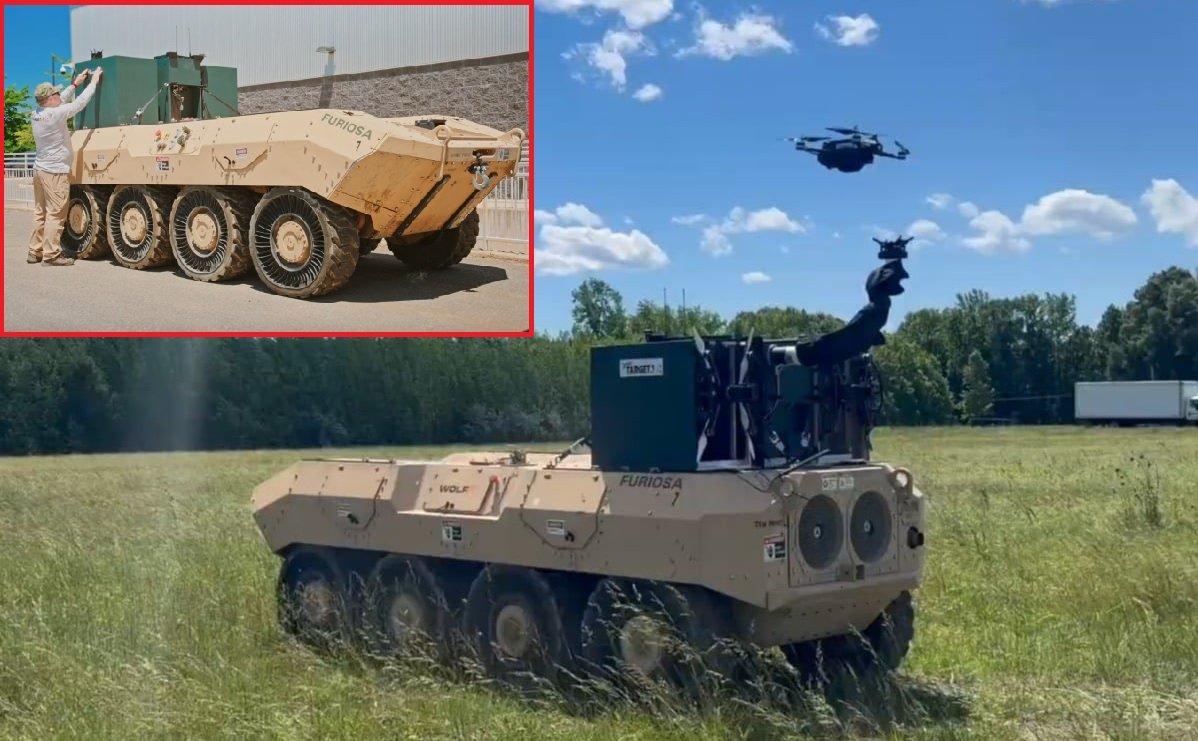
U.S
RIDGEFIELD, Connecticut — Robotics and autonomy company Target Arm Inc. has integrated its Ralar 2 autonomous drone launch and recovery system with unmanned ground vehicles (UGVs) developed by HDT Global, creating what the company describes as an autonomous mobile drone base. The integration was announced on July 27, 2026, through the company's social media channels. The integration combines Target Arm's Ralar 2 technology with HDT Global's Hunter WOLF and WOLF-X unmanned ground vehicle platforms. The system enables certified drones to launch, land, recharge, and relaunch while the host vehicle remains in motion, eliminating the need to stop the vehicle or rely on a human operator to manually manage drone operations in the field. Drone Operations Without Stopping the Vehicle Traditional drone operations typically require a vehicle, ship, or other host platform to remain stationary during takeoff and landing. This process often requires human involvement and can slow operations while increasing risk in situations where stopping a vehicle may expose it to potential threats or interrupt time-sensitive missions. According to Target Arm, its Ralar (Robotic Arm Launch and Recovery) technology is designed to remove this limitation. Using AI-assisted software, a precision sensor engine, and a robotic arm, the Ralar 2 system can recover drones directly from the air while the host platform is moving. After recovery, the drone is placed into an automated magazine that can hold up to 10 aircraft, where batteries are recharged before the drone is prepared for another mission. The entire process is designed to operate autonomously. Target Arm states that both its Ralar 1 and Ralar 2 systems are designed to support autonomous drone launch, recovery, recharging, and relaunch operations from moving platforms operating on land, at sea, or in the air. The systems can be installed on cars, trucks, all-terrain vehicles, unmanned ground vehicles, boats, ships, and aircraft. Integrated with Hunter WOLF and WOLF-X The Ralar 2 system has been integrated with two of HDT Global's unmanned ground vehicle platforms: the Hunter WOLF and the WOLF-X. The Hunter WOLF (Wheeled Offload Logistics Follower) is a rugged 6×6 unmanned ground vehicle used in military and industrial applications. It is capable of carrying payloads of up to 2,800 pounds across difficult terrain, including steep slopes, narrow trails, and dense vegetation. The platform uses a hybrid diesel-electric drivetrain and can provide up to 15 kilowatts of electrical power while supporting logistics, reconnaissance, and other missions. The WOLF-X is an 8×8 wheeled robotic combat vehicle equipped with a hybrid powertrain, advanced suspension, and airless tires. The platform is designed for mobility in demanding environments and can also accommodate modular mission payloads. According to Target Arm, integrating the Ralar 2 system with these platforms allows a single unmanned ground vehicle to support unmanned aerial operations without requiring a separate team to launch or recover drones. Field Demonstration Showcases the System Video released with the announcement shows the integrated system during a recent field demonstration. The footage features a technician inspecting equipment mounted on a tan-colored unmanned ground vehicle marked "FURIOSA." The compact platform is equipped with multiple sensor and camera housings and is designed to travel across rough terrain without an onboard human operator. Roughly the size of a small all-terrain vehicle, the platform is intended for environments where human access may be difficult or impractical. Applications Beyond Military Operations While unmanned ground vehicles such as the Hunter WOLF are widely used for transporting equipment, reconnaissance, and carrying sensor payloads, the addition of autonomous drone launch and recovery expands their operational capability. Target Arm says the technology has applications beyond defense. The company identifies several potential uses, including search and rescue operations, logistics and package delivery, maritime operations involving moving boats or ships, and protection of critical infrastructure such as power plants, pipelines, and water systems. The company states that the ability to continuously launch, recover, recharge, and redeploy drones from a moving platform could support operations that require persistent aerial coverage without interrupting the movement of the host vehicle. Previous U.S. Army Collaboration In June 2026, Target Arm announced a multi-year Cooperative Research and Development Agreement (CRADA) with the U.S. Army Combat Capabilities Development Command Ground Vehicle Systems Center. The agreement is focused on demonstrating the Ralar system as a modular mission payload for U.S. Army ground platforms. Target Arm is a service-disabled veteran-owned small business headquartered in Ridgefield, Connecticut. The company was founded by CEO Jeffrey A. McChesney and develops autonomous launch and recovery technologies for unmanned systems. The integration of the Ralar 2 system with HDT Global's Hunter WOLF and WOLF-X platforms represents another step toward combining unmanned ground and aerial systems into a single autonomous platform capable of conducting drone operations while remaining in motion.
Read More → Posted on 2026-07-28 11:57:59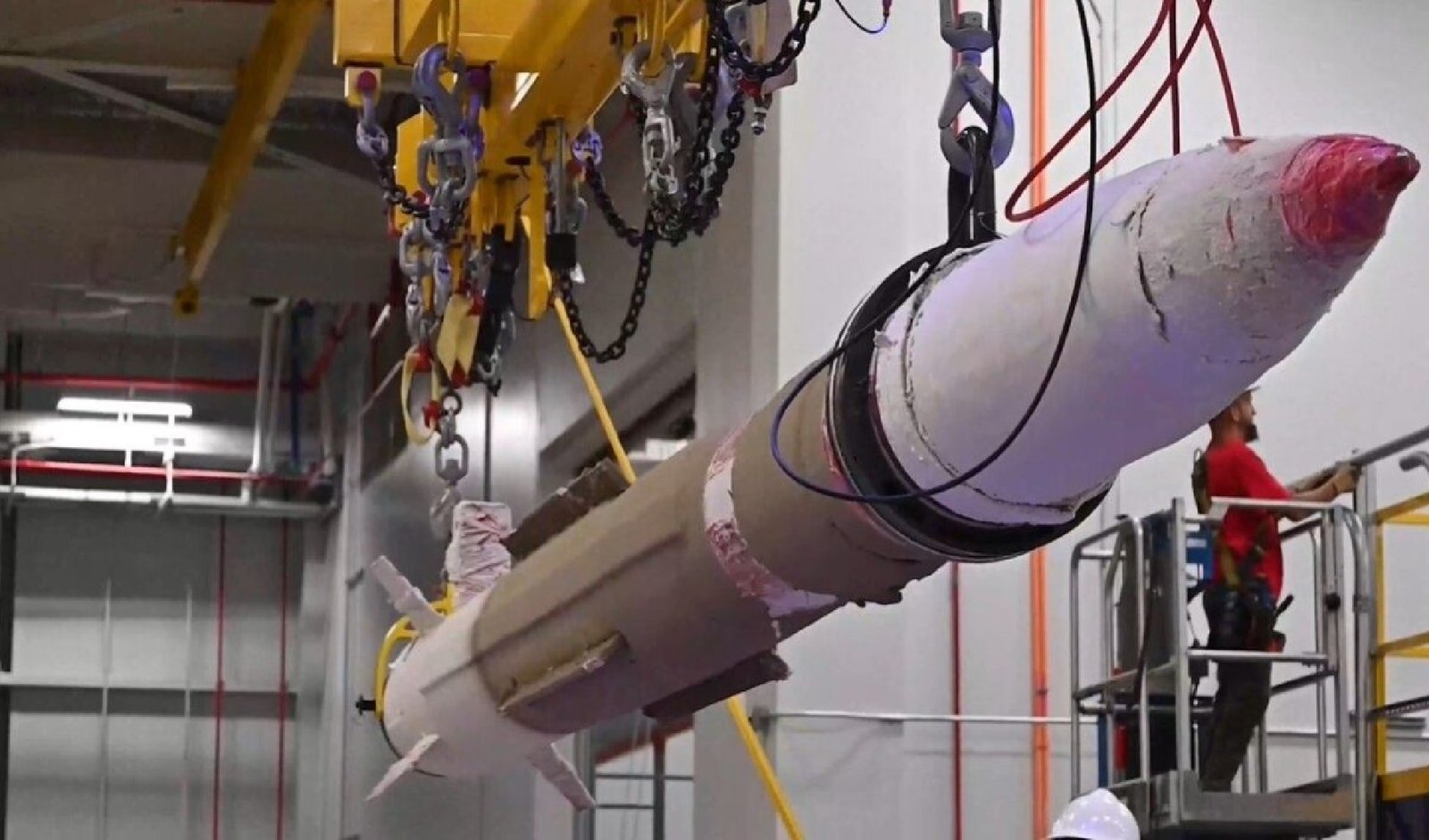
U.S
MELBOURNE, Fla./WASHINGTON — L3Harris Technologies, Lockheed Martin and the U.S. Department of War (DoW) have signed a seven-year framework agreement to nearly triple production of propulsion components for the PAC-3 Missile Segment Enhancement (MSE) interceptor, supporting a broader effort to expand U.S. missile manufacturing capacity. L3Harris said the agreement will become the company's largest PAC-3 propulsion award once the contract is formally finalized later this year. The framework agreement uses U.S. multi-year procurement authorities under the Department of War's Acquisition Transformation Strategy. According to the department, the approach is intended to provide defense suppliers with stable, long-term demand, allowing them to expand manufacturing capacity while reducing procurement delays through closer cooperation with the defense industrial base. Under the agreement, L3Harris will increase production of three key propulsion-related components for the PAC-3 MSE interceptor: the advanced two-pulse solid rocket motor, Attitude Control Motors (ACMs), and the Lethality Enhancer. The two-pulse solid rocket motor provides the interceptor with the speed and range required to engage airborne threats. The Attitude Control Motors enable precise maneuvering during flight, while the Lethality Enhancer is designed to increase the interceptor's kill radius, supporting engagements against threats including cruise missiles. The PAC-3 MSE is a ground-based interceptor designed to counter advanced tactical ballistic missiles, cruise missiles and enemy aircraft. It is part of the Patriot air and missile defense system. "Rebuilding the Arsenal of Freedom requires moving with speed and precision to scale the production of critical munitions," said Michael P. Duffey, Under Secretary of War for Acquisition and Sustainment. "Today's agreements with L3Harris are a decisive win for the Warfighter, underscoring our commitment to sending clear demand signals to the entire supply chain," Duffey added. The Department of War said the framework is part of its wider effort to place U.S. defense acquisition on a wartime footing by accelerating production of critical defense systems and strengthening the industrial base through long-term procurement planning. Ken Bedingfield, President of Missile Solutions at L3Harris, said the long-term agreement will allow the company to significantly increase production rates. "This critical, long-term agreement will allow us to continue to move at unprecedented speed and produce PAC-3 propulsion at rates never before seen," Bedingfield said. "We are actively preparing our facilities and our suppliers to meet the required ramp as well as introducing additional capacity to support future needs of the DoW and our allies and strengthen the Arsenal of Freedom," he added. L3Harris manufactures PAC-3 MSE motors at its facility in Camden, Arkansas. The company said the site includes dedicated processing bays and automated digital X-ray equipment that have reduced inspection times and shortened production cycles. The production increase is part of a broader expansion of L3Harris' solid rocket motor business. The company said it is investing billions of dollars to expand manufacturing capacity by constructing about 60 facilities and adding or upgrading nearly one million square feet of manufacturing and office space across its production sites in Arkansas, Alabama and Virginia. The new framework also follows similar multi-year agreements across the PAC-3 MSE industrial base involving prime contractor Lockheed Martin, seeker manufacturer Boeing and multi-component supplier Honeywell. According to the Department of War, these agreements are intended to strengthen the supply chain supporting PAC-3 MSE production. The seven-year framework provides L3Harris and its suppliers with a longer planning horizon for production while supporting the U.S. government's broader effort to increase domestic missile manufacturing capacity through sustained, long-term procurement commitments.
Read More → Posted on 2026-07-28 11:32:02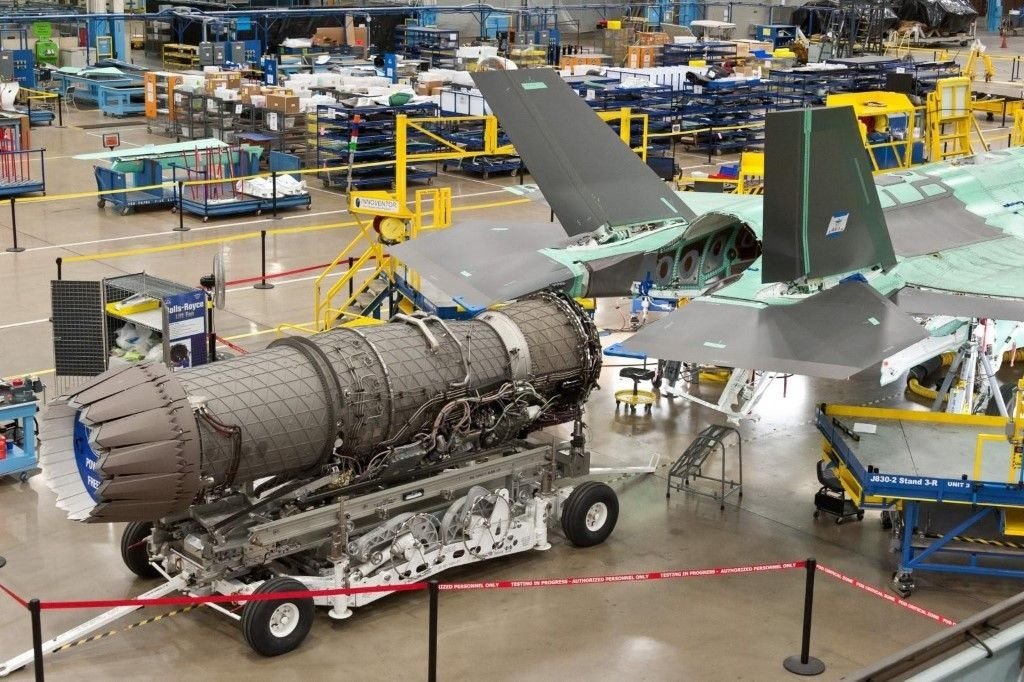
U.S
EAST HARTFORD, Conn. — RTX Corp.'s Pratt & Whitney Military Engines division has received a $53.8 million order from the U.S. Navy to carry out specialized engineering work on the F135 engine, the powerplant used in all variants of the F-35 Lightning II fighter aircraft. The award was issued under a fixed-price incentive (firm-target), cost-plus-fixed-fee structure against a previously established basic ordering agreement. Unlike production contracts for new engines, this order covers non-recurring engineering (NRE), which includes one-time design, testing, evaluation, and engineering activities required to identify, analyze, and correct technical issues affecting the engine during its service life. According to the U.S. Navy's contract announcement, the engineering work will focus on the early identification, development, and qualification of corrections for both potential and existing operational issues within the F135 engine. The effort also includes evaluating operational flight data to determine how long specific engine components can safely remain in service. The Navy said the work is intended to continue the engine's maturation, improve operational readiness, and reduce long-term maintenance and life-cycle costs across the F-35 fleet. The order supports all U.S. military services operating the F-35, including the U.S. Air Force, U.S. Marine Corps, and U.S. Navy, which fly the F-35A, F-35B, and F-35C variants, respectively. It also supports F-35 Cooperative Program Partners and Foreign Military Sales (FMS) customers. Pratt & Whitney states that more than 1,300 F135 engines currently power F-35 aircraft operated by the United States and approximately 20 allied nations, making the engine one of the most widely used fifth-generation fighter powerplants. Focus on Sustainment and Engine Reliability The F135 produces more than 40,000 pounds (18,144 kilograms) of thrust and is described by Pratt & Whitney as the most powerful fighter engine currently in production. Over its service life, the engine has undergone multiple engineering improvements to address technical and sustainment challenges. A 2023 U.S. Government Accountability Office (GAO) report estimated that sustainment issues related to the F135 could add approximately $38 billion in unplanned maintenance costs over the lifetime of the global fleet. According to the GAO, one of the primary factors behind these costs has been an engine cooling system that proved undersized for the increasing demands of the aircraft's advanced sensors and electronic systems. The report also noted that sustainment challenges have affected maintenance planning and operating costs. In addition to long-term sustainment efforts, Pratt & Whitney has implemented engineering fixes over the years to address issues such as premature wear on protective coatings inside turbine blades and harmonic resonance vibration that affected a limited number of engines. The newly awarded engineering order is intended to continue addressing such technical issues as they arise while supporting improvements in engine reliability and availability. Funding Shared Across the Global F-35 Program Funding for the order includes $14 million from the U.S. Navy's Fiscal Year 2026 Research, Development, Test and Evaluation (RDT&E) budget. The F-35 Cooperative Program Partners are contributing $22.3 million, reflecting the shared investment in sustaining the multinational F-35 fleet. The contract was awarded without competitive bidding, with the Naval Air Systems Command (NAVAIR) at Patuxent River, Maryland, serving as the contracting activity. Work to Continue Through 2028 Engineering work under the order will be carried out at seven locations across the United States and Puerto Rico: East Hartford, Connecticut – 74% Middletown, Connecticut – 7% West Palm Beach, Florida – 7% Indianapolis, Indiana – 6% Windsor Locks, Connecticut – 3% Aguadilla, Puerto Rico – 2% North Berwick, Maine – 1% The work is scheduled for completion by December 2028. Parallel Efforts on Production and Sustainment The engineering order comes as Pratt & Whitney and the F-35 Joint Program Office continue work on the F135 engine while advancing production for Lots 18 and 19. Earlier in March 2026, RTX and the U.S. Department of Defense finalized a $6.6 billion contract modification for F135 engine production covering Lots 18 and 19 following earlier production and sustainment negotiations. The latest engineering order complements those production efforts by focusing on resolving technical issues, improving engine performance over time, and supporting long-term sustainment for the growing global fleet of F-35 aircraft.
Read More → Posted on 2026-07-28 10:44:58
U.S
NEW YORK/LONDON — Global financial markets shifted on Monday as a temporary pause in U.S. military strikes on Iran pushed oil prices sharply lower, easing concerns over a wider regional conflict. The de-escalation improved investor risk appetite, sending the U.S. dollar lower against several major currencies ahead of a busy week of monetary policy decisions by the Federal Reserve, the Bank of England (BoE), and the Bank of Japan (BoJ). The biggest market reaction came in the energy sector. Brent crude, the global oil benchmark, fell 7.5% to settle at $89.42 per barrel after the U.S. military temporarily halted its two-week air campaign in Iran. Tehran said it would also suspend its counterattacks as long as the United States maintained the pause, raising hopes that diplomatic efforts could reduce tensions. Earlier this month, the conflict had briefly pushed Brent crude above $100 per barrel. The sharp decline in oil prices helped improve overall market sentiment and eased concerns that higher energy costs could keep inflation elevated. Dollar Weakens Ahead of Federal Reserve Meeting The U.S. Dollar Index (DXY), which measures the U.S. currency against a basket of six major currencies, slipped 0.1% to 101.34. Currency markets are now focused on the Federal Reserve's July 28-29 policy meeting, where investors are awaiting guidance on interest rates. Federal Reserve Chair Kevin Warsh, who succeeded Jerome Powell in May 2026, has offered limited forward guidance on future policy decisions. As a result, markets have frequently adjusted their interest-rate expectations in recent weeks in response to softer U.S. inflation data and geopolitical developments in the Middle East. According to the CME Group FedWatch Tool, traders currently assign a 33% probability that the Federal Reserve will raise interest rates by a quarter percentage point on Wednesday. That is down from 37% at the end of last week but remains about double the probability priced in one week earlier. "It could be that the market is not particularly well-informed after this meeting because Warsh doesn't like to give forward guidance, and there is so much uncertainty, particularly with respect to how long the Iran war will last," said Jane Foley, Head of FX Strategy at Rabobank. Despite Monday's decline, investors continue to hold a positive outlook on the U.S. dollar. Data from the Commodity Futures Trading Commission (CFTC) showed that net long positions in the dollar increased to $45.37 billion in the week ending July 20, the highest level of bullish positioning since 2015. Later this week, investors will also closely watch the release of U.S. second-quarter Gross Domestic Product (GDP) data and core Personal Consumption Expenditures (PCE) inflation, the Federal Reserve's preferred inflation measure, for further indications on the strength of the U.S. economy. Yen, Euro and Pound React Against the Japanese yen, the dollar fell 0.1% to 163.645 yen, marking its sharpest daily decline since July 10. Despite the move, the yen remains close to its weakest level against the dollar in around 40 years. The Bank of Japan is scheduled to announce its policy decision on Friday. While the central bank is widely expected to keep interest rates unchanged, analysts expect policymakers to leave open the possibility of future rate increases to help limit further weakness in the yen. So far, verbal interventions by Japanese officials have had only limited impact on the currency. "There is a sense of walking on eggshells when the Fed and Japan's authorities are prepared to be less predictable and when there is not a great understanding of what could happen next between the U.S. and Iran," wrote Paul Mackel, Global Head of FX Research at HSBC. "We still side with favouring the dollar." In Europe, the euro rose 0.2% to $1.130, while the British pound eased about 0.1% to $1.331 after giving up earlier gains. Even with Monday's slight decline, sterling remained on track for its second consecutive session of gains, recovering from last week's multi-week low of $1.330. The Bank of England is expected to leave interest rates unchanged when policymakers meet on Thursday. The central bank continues to monitor inflation risks linked to recent increases in oil prices. The meeting comes shortly after Prime Minister Andy Burnham and Finance Minister John Healey formally took office. Norwegian Crown Falls, Cryptocurrencies Rise The decline in oil prices also affected commodity-linked currencies. The Norwegian crown, which had been among July's strongest major currencies due to higher oil prices, fell 0.6% to 9.642 per U.S. dollar. Meanwhile, cryptocurrencies moved higher. Bitcoin gained about 1% to $65,155.60, while Ether rose 2.5% to $1,961.29, reaching its highest level since June 2. Markets Await Central Bank Decisions With geopolitical tensions temporarily easing, investors are now shifting their attention to a series of major central bank meetings and key U.S. economic data releases. Decisions by the Federal Reserve, Bank of England, and Bank of Japan, along with upcoming GDP and inflation figures, are expected to shape market expectations for interest rates and global financial markets in the coming days.
Read More → Posted on 2026-07-27 14:31:03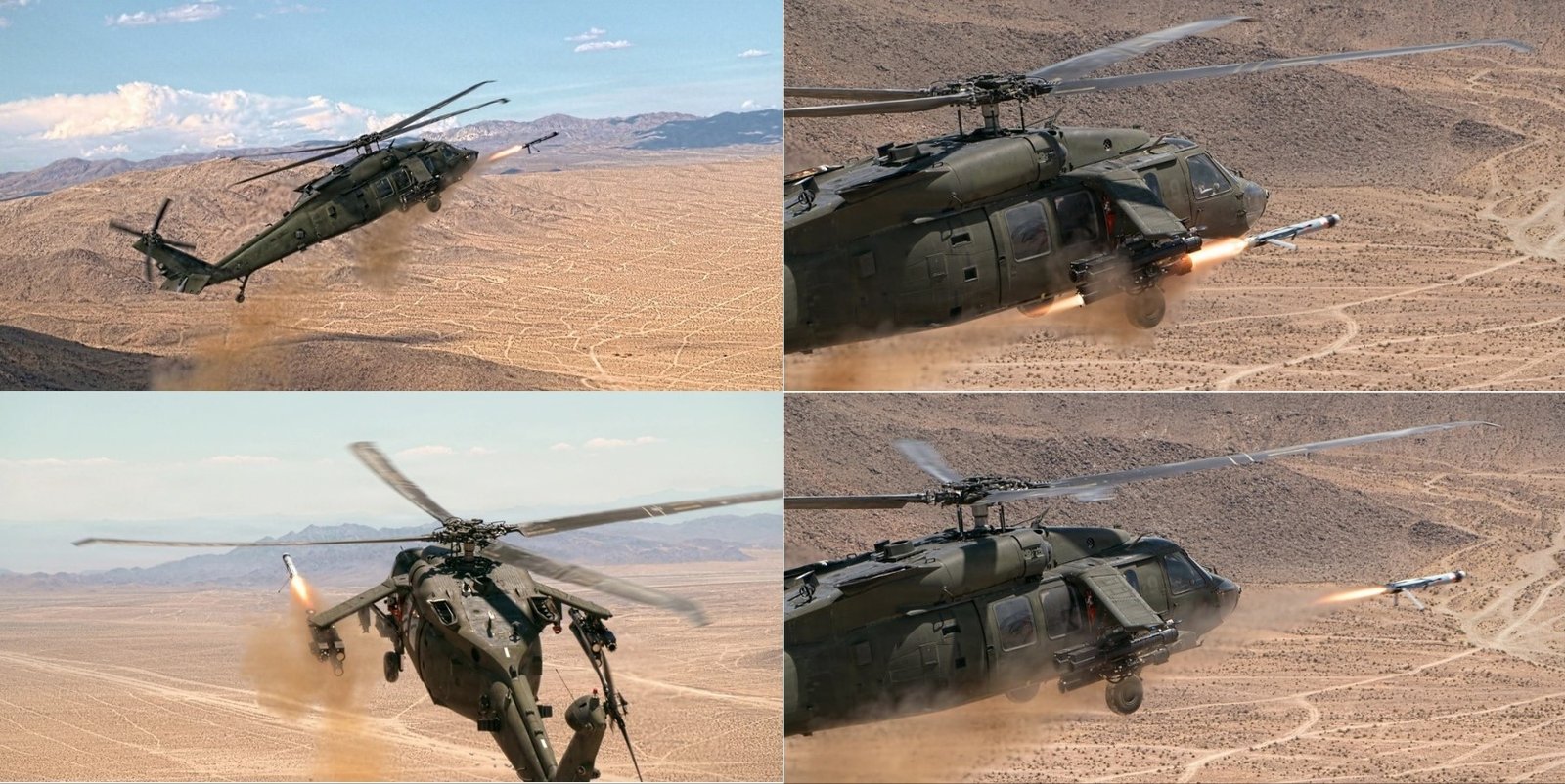
U.S
FORT IRWIN, Calif. — The U.S. Army demonstrated a networked drone strike sequence during Project Convergence-Capstone 6, showing how multiple air-launched drones can work together to locate, identify, and destroy enemy air defense threats while keeping crewed aircraft away from high-risk areas. The demonstration took place during the Army's large-scale experimentation event held at Fort Irwin, California, from July 20 to July 29, 2026. The exercise focused on the Army's Launched Effects (LE) family of air-launched drones, which are designed with different payloads and mission roles rather than as a single standardized platform. During the demonstration, two Active/Passive Infrared Launched Effects carried out the military's detect, identify, locate, and report mission by finding a simulated adversary threat and transmitting its location to friendly forces. A third weaponized Launched Effect equipped with a Long-Range Precision Munition (LRPM) then carried out the strike against the identified target. The Army said this approach enables reconnaissance and strike missions to be divided among different drones, reducing the need to send crewed aircraft into heavily defended airspace. Designed for Different Mission Roles The Launched Effects portfolio includes multiple variants developed for different operational requirements. Some are equipped for reconnaissance missions to locate and track enemy positions, while others carry electronic warfare payloads designed to disrupt enemy communications and radar systems. Additional variants are armed to engage targets directly. Rather than relying on a single drone to perform every task, the Army is developing a family of systems that can operate together depending on mission requirements. Reducing Risk to Crewed Aircraft The Army said the concept is intended to help aviation units operate against Integrated Air Defense Systems (IADS), which combine radar, surface-to-air missiles, and anti-aircraft guns to defend contested airspace. By using relatively low-cost and expendable drones to enter these areas first, Army Aviation aims to reduce the exposure of crewed aircraft and pilots while creating opportunities for follow-on operations. The capability is also intended to support ground maneuver forces by targeting enemy artillery, rocket systems, and other threats operating deep inside contested areas. Networked "Wolfpack" Operations A key element of the demonstration was the networking between the drones. The medium-range Launched Effects used the Integrated Tactical Network operating within the Army's Next Generation Command and Control (NGC2) architecture to send real-time targeting information to corps-level commanders. According to the Army, treating the flow of targeting data as a core part of the weapon system helps accelerate strike decisions by rapidly sharing target information across the force. The Army also demonstrated the ability for multiple Launched Effects to operate as a coordinated "wolfpack." In this concept, several drones can approach a target simultaneously from different directions and altitudes, making it more difficult for traditional air defense systems to respond. Because the drones are designed to be expendable, commanders can accept the loss of individual platforms when required to complete the mission. Long-Range Precision Munition Reaches New Milestone In a separate demonstration during Project Convergence-Capstone 6, a crewed aircraft launched a production-line Long-Range Precision Munition into contested airspace. According to the Army, the munition independently identified and destroyed a high-priority target, marking an important milestone for the medium-range lethal capability. The Army plans to field the LRPM at scale by fiscal year 2027. Government contracting documents indicate an anticipated funding line of $100 million to $200 million to deliver 200 to 600 fieldable LRPM prototypes supporting this medium-range lethal capability. Standardized Launch and Control Systems To support operational deployment across Army Aviation, the service is also developing two supporting systems: the Launched Effects Dispenser for Ground and Rotorcraft (LEDGR) and the Universal Vehicle Control (UVC) system. These systems are designed to provide a standardized interface that allows aircrews to launch and control different Launched Effects variants without requiring separate launch hardware or dedicated cockpit software for each payload. Both systems are scheduled to support fielding at scale by fiscal year 2027. Army Continues Evaluating Future Variants Project Convergence has served as the Army's experimentation event since 2020, providing an environment to evaluate how sensors, weapons, and command-and-control networks operate together across the joint force and with allied and partner nations. Capstone 6 included thousands of participants from the joint force, allies, partners, and industry. In addition to systems moving toward fielding, the Army evaluated emerging medium-range Launched Effects technology demonstrators featuring increased speed and longer range. These platforms remain in the technology demonstration phase and are not yet formal programs of record. Dan Bailey, Deputy Director of the Aviation Future Capability Directorate, said the systems are intended to operate as connected combat capabilities rather than independent platforms. "Launched Effects are not just stand-alone tools; they are networked combat enablers. By standardizing our launch and control systems, we're giving the Combat Aviation Brigades the flexibility to dynamically deploy multiple capabilities, share critical targeting data on the fly, and secure a decisive overmatch against peer adversaries." The Army has not disclosed the specific adversary air defense systems replicated during the demonstration, the exact number of Launched Effects used in the wolfpack sequence, or the long-term procurement quantities planned for the Long-Range Precision Munition program after fielding begins.
Read More → Posted on 2026-07-27 14:10:35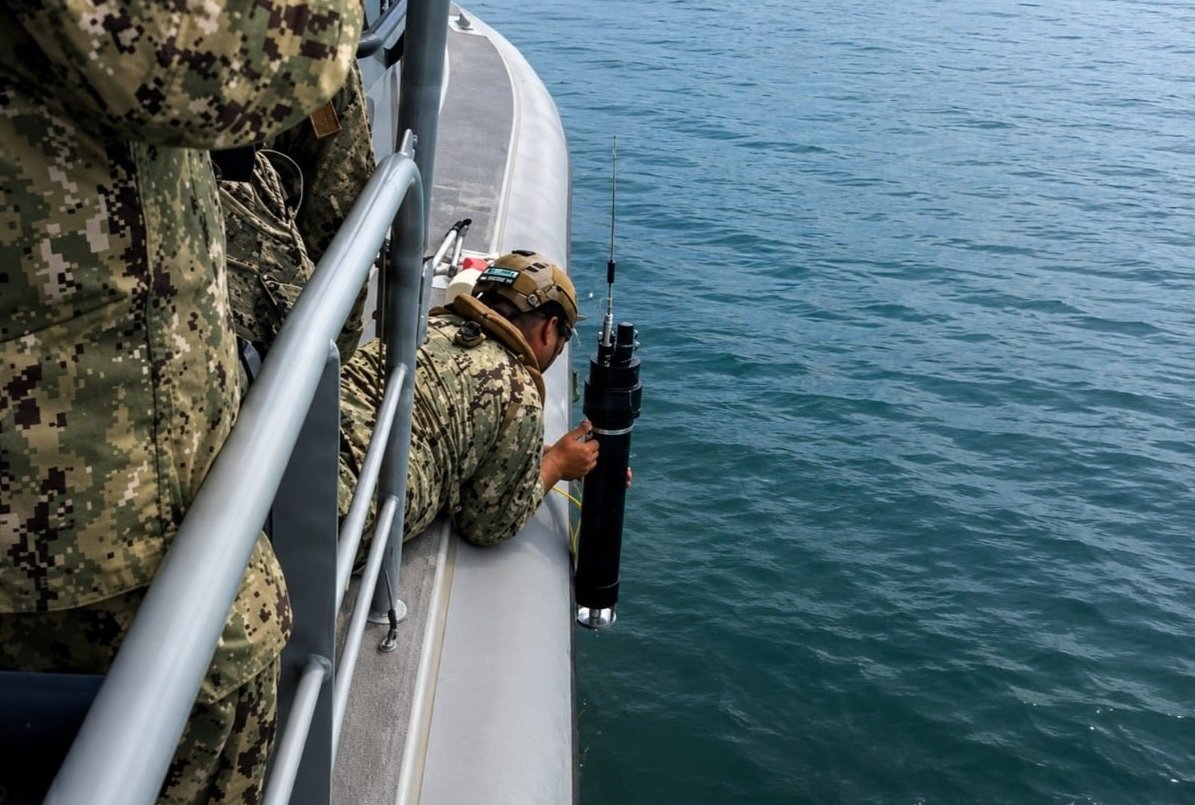
U.S
FORT IRWIN, Calif. — The U.S. Army, Navy and Space Force have successfully completed the first maritime test of the Hammer of the Gods electronic warfare (EW) system during Project Convergence Capstone 6 (PC-C6), marking the system's debut in a naval environment. The mid-July 2026 experiment was conducted as part of the Army-led Project Convergence Capstone 6 at Fort Irwin, California. According to a report published on July 26, 2026, by Sgt. Sar Paw of the Army's 5th Mobile Public Affairs Detachment, the trial demonstrated the system's ability to deliver electronic warfare and command-and-control capabilities in a maritime setting while supporting joint military operations. First Maritime Deployment Hammer of the Gods is not a conventional weapon. It is a highly deployable electronic warfare emitter designed to broadcast electromagnetic signals while maintaining a low electromagnetic signature. This allows the system to operate closer to contested areas with a reduced chance of being detected by adversary sensors. The system provides an expanded suite of electronic warfare and command-and-control capabilities. Electronic warfare uses the electromagnetic spectrum to disrupt an adversary's communications, radar and other electronic systems while protecting friendly military networks. Ground-based versions of Hammer of the Gods have been used in military exercises and demonstrations over the past two years. However, Project Convergence Capstone 6 marked the first time the system has been deployed and tested at sea. Adapting the System for Maritime Operations Moving the system from land to a maritime environment introduced several operational challenges. Unlike land-based exercises, naval operations require equipment to function under constant platform movement, exposure to saltwater and radar clutter generated by the ocean surface. The maritime trial was supported by U.S. Space Forces Pacific and Naval Base San Diego. Organizers designed the experiment to meet the learning objectives of both the U.S. Army Space and Missile Defense Command and U.S. Space Forces Pacific, allowing multiple services to evaluate the technology under realistic operating conditions. Joint Force Integration Lt. Col. Darrin Hall, Chief of Modeling, Simulation and Integration for U.S. Space Forces Pacific, said the experiment highlighted the importance of joint testing for future military operations. "Joint experimentation is how we prepare for future fights. By integrating space, cyber and conventional forces into realistic scenarios, we strengthen our ability to operate as one joint team in contested environments," Hall said. The experiment reflected the Department of Defense's continued effort to develop and integrate cross-service capabilities early in their development, particularly for operations in contested electromagnetic environments. Focus on Counter-PNT Capabilities A primary objective of the maritime demonstration was evaluating the system's counter-Positioning, Navigation and Timing (counter-PNT) capabilities. PNT systems support military navigation, communications and precision targeting by providing the data required for GPS-enabled operations. They are widely used across military platforms for navigation, command and control, and precision-guided weapons. During the exercise, the joint force tested how Hammer of the Gods could disrupt an adversary's PNT capabilities while maintaining operational effectiveness through resilient mesh networking, extending communications and operational reach in a maritime environment. Hall emphasized the importance of protecting friendly forces while operating in environments where PNT systems may be disrupted. "Positioning, Navigation and Timing is the foundation of modern military operations. Understanding how to protect and operate through PNT disruption ensures our forces can continue to shoot, move and communicate effectively," Hall said. He added that counter-PNT capabilities directly affect the targeting backbone used by long-range artillery, guided missiles and cruise munitions. "Without PNT data, modern weapon precision drops sharply, resulting in delayed missions, missed objectives, or severe collateral damage." According to Hall, the experiment demonstrated that counter-PNT capabilities could be deployed, controlled and recovered during real-world maritime operations while extending operational reach through resilient mesh networking. Part of Project Convergence Capstone 6 The Hammer of the Gods demonstration formed one element of the broader Project Convergence Capstone 6, which ran from July 20 to July 29, 2026 and brought together Army, joint and multinational participants to evaluate future military technologies and operational concepts. A key objective of PC-C6 is validating the Next Generation Command and Control (NGC2) architecture. The initiative is designed to replace fragmented legacy systems with a unified, data-centric network that incorporates artificial intelligence and commercial software to improve decision-making across the joint force. By integrating systems such as Hammer of the Gods into the NGC2 architecture, the U.S. military is evaluating how electronic warfare, command-and-control and resilient networking capabilities can operate together in contested electromagnetic environments. Significance of the Test The successful maritime demonstration marks the first operational sea-based test of Hammer of the Gods and provides valuable data for future development of joint electronic warfare capabilities. The experiment also demonstrated continued cooperation among the U.S. Army, Navy and Space Force in testing technologies designed to support future multi-domain operations across land, sea, space and the electromagnetic spectrum.
Read More → Posted on 2026-07-27 12:23:51
U.S
WASHINGTON — President Donald Trump has temporarily paused plans to expand U.S. military strikes against Iran after senior military officials warned that a broader campaign could significantly reduce the supply of Patriot air defense interceptors needed to protect American forces across the Middle East. According to a report by The New York Times, the decision followed 13 consecutive days of U.S. military strikes against Iranian targets. The pause came after a high-level White House meeting on Friday attended by Cabinet members and senior advisers, including Vice President JD Vance and Chairman of the Joint Chiefs of Staff Gen. Dan Caine. Military Warns of Shrinking Patriot Missile Stocks During the meeting, military leaders reportedly informed the president that while expanding military operations against Iran remained operationally feasible, doing so could dangerously reduce the number of Patriot interceptor missiles available to U.S. Central Command (CENTCOM), which oversees American military operations across the Middle East. The concern comes as the Pentagon has already used more than 1,200 Patriot interceptor missiles in recent months, placing significant pressure on available inventories. Defense officials warned that any further large-scale operations could affect the military's ability to defend U.S. forces and bases across the region. The importance of maintaining sufficient interceptor stocks was reinforced after an Iranian ballistic missile recently penetrated U.S. air defenses in Jordan, killing three American service members. Broader Strike Options Were Under Consideration Before the decision to pause the expansion, the Trump administration had been considering a multi-stage bombing campaign against additional Iranian military targets. Options under review reportedly included strikes on coastal radar systems, anti-ship missile launchers, attack boats, energy facilities, and certain nuclear-related sites. Other reported options included targeting railway bridges used to transport military supplies. At the same time, the Pentagon has continued moving additional weapons, military equipment, and logistical support to the Middle East to maintain readiness if the security situation changes or diplomatic efforts fail. Officials Assess Risks of Wider Conflict Officials also evaluated the broader consequences of an expanded military campaign. According to the report, advisers warned that increased strikes could lead to stronger Iranian retaliation, place additional pressure on Gulf allies, disrupt global energy markets, slow the global economy, and worsen existing refugee challenges in the region. Diplomatic Window Opens The pause has also created an opportunity for renewed diplomatic engagement. Hours before the decision took effect, an Omani delegation arrived in Tehran to discuss a possible framework for reopening the Strait of Hormuz, one of the world's most important maritime routes for global oil shipments. Speaking to reporters on Friday, President Trump said the U.S. military remains prepared for military action but emphasized that diplomacy is currently the preferred approach. "We're talking to them right now. I think they're getting more and more serious as the days go by," Trump said. He also added that he does not believe Tehran is ready to reach an immediate agreement. Trump: Military Ready, Diplomacy Preferred Earlier in the week, Trump had stated that U.S. forces were "locked and loaded" and ready to act if necessary. In a separate interview on Thursday, he said he was considering a military operation that would be "bigger than ever before," but by Friday he had decided to delay any major expansion of the campaign. White House Reaffirms Diplomatic Approach White House Communications Director Steven Cheung said the administration continues to favor a negotiated solution while keeping military options available. Cheung said President Trump "has always been consistent in saying he prefers a diplomatic solution," but added that all options remain available if Iran continues activities that threaten the Strait of Hormuz or U.S. regional partners. Military Readiness Maintained During Pause Following the temporary halt, U.S. strikes paused for the first time in nearly two weeks after 13 consecutive nights of operations. At the same time, the administration has continued economic pressure on Iran through additional Treasury sanctions targeting companies and individuals linked to Iranian financial networks. Defense officials stressed that the pause does not represent an end to military planning. Instead, it is intended to preserve critical air defense resources while allowing diplomatic efforts to continue. U.S. forces remain on alert, and additional military assets continue to be positioned across the Middle East to ensure readiness if negotiations do not produce results. Strategic Impact The developments highlight how the availability of key air defense munitions, particularly Patriot interceptor missiles, has become an important factor in shaping U.S. military planning as tensions with Iran continue. Source : aa.com.tr
Read More → Posted on 2026-07-26 15:54:37
U.S
WASHINGTON — Previously unreleased documentary footage has revealed that late U.S. Sen. Lindsey Graham abandoned plans to urge President Donald Trump to support Israeli military strikes against Hezbollah in Lebanon after Israeli Prime Minister Benjamin Netanyahu advised against expanding the conflict. The footage, filmed by documentary director Alex Holder and reviewed by The Wall Street Journal following Graham's death earlier this month, provides a behind-the-scenes look at the South Carolina Republican's foreign policy efforts and his close communications with Trump, Netanyahu and other world leaders. The documentary has not yet been released publicly. Graham Planned to Lobby Trump According to the documentary footage, Graham was preparing to travel to Florida in early March to persuade President Trump to support a joint U.S.-Israeli military operation targeting Hezbollah in Lebanon. Before making the trip, Graham held a telephone conversation with Netanyahu on March 4 to discuss the proposal and the broader regional security situation. Netanyahu Advised Against Expanding the Conflict During the call, Netanyahu urged Graham not to push for military action against Hezbollah while Israel was focused on Iran. "We're concentrating right now on Iran," Netanyahu said during the conversation. The Israeli prime minister explained that while threatening Hezbollah with a large-scale attack could help deter the group, carrying out such an operation could remove any remaining restraint. "If we tell Hezbollah that we're going all the way, we threaten them, but if we actually do it, then they have no reason not to go all the way against us. And right now that's not our interest," Netanyahu said. According to the footage, Netanyahu cautioned that bringing the United States into military action against Hezbollah while the broader conflict involving Iran was underway would go "too far, too fast." Graham Dropped the Proposal Graham accepted Netanyahu's assessment during the call. Speaking from his Senate office, he replied that the prime minister's advice was "good counsel" and subsequently abandoned his plan to lobby Trump to support military strikes against Hezbollah. The documentary indicates that the planned meeting with Trump to advocate for the proposal did not move forward. Documentary Highlights Graham's Foreign Policy Efforts Beyond the Hezbollah discussion, the documentary captures several of Graham's international engagements during his final years. The footage shows him traveling to Saudi Arabia to meet Crown Prince Mohammed bin Salman, where he sought Saudi support for military action against Iran. It also documents meetings with Ukrainian President Volodymyr Zelenskyy and Ukrainian military commanders, along with strategy discussions with former U.S. National Security Advisor Jake Sullivan. Views on U.S. Middle East Policy The documentary also shows Graham expressing frustration with Trump's preliminary agreement involving Iran despite their close political relationship. In the footage, Graham says Secretary of State Marco Rubio should lead U.S. diplomatic efforts related to Middle East negotiations. Unreleased Footage Reviewed After Graham's Death The documentary remains unreleased, but excerpts reviewed by The Wall Street Journal provide new details about Graham's private efforts to influence U.S. foreign and defense policy and his close coordination with Israeli leadership during the conflict involving Iran. Graham, a longtime Republican senator from South Carolina known for his focus on foreign policy and strong support for Israel, died on July 12 at the age of 71 following a brief illness. Preliminary findings from the District of Columbia medical examiner listed the cause of death as an aortic dissection related to arteriosclerotic cardiovascular disease. According to the report, Netanyahu adjusted his travel schedule to attend Graham's funeral service later this month and is also scheduled to meet President Trump at the White House around the same time. Source : WSJ
Read More → Posted on 2026-07-26 13:53:27
U.S
WASHINGTON — U.S. military commanders are selectively intercepting Iranian missiles and explosive-laden drones in an effort to preserve the Pentagon's shrinking stockpile of interceptor missiles, according to an NBC News report citing two senior U.S. officials. The officials said commanders are prioritizing the interception of projectiles assessed to pose a direct threat to U.S. troops, critical military facilities, or regional allies. Missiles and drones that radar analysis determines are heading toward areas without personnel or other non-essential locations may be allowed to reach their targets rather than being intercepted. Shift in Air Defense Strategy According to NBC News, the current approach marks a change from earlier stages of the conflict, when air defense operators generally attempted to intercept a broader range of incoming threats approaching U.S. military bases. Under the revised strategy, every incoming missile or drone is evaluated individually. Air defense operators analyze its trajectory, projected impact point, and the immediate risk to personnel before deciding whether to launch an interceptor. The officials said operators are trained not to expend interceptor missiles on threats that are expected to miss critical targets. They also told NBC News they were not aware of any incidents in which a projectile intentionally allowed through had resulted in casualties among U.S. military personnel or civilians. High Attack Volume Straining Interceptor Stocks The reported change comes as U.S. air defense systems continue to face sustained pressure from a large number of Iranian missile and drone launches. According to the report, Iran has fired nearly 9,000 projectiles since the conflict began. The continued pace of attacks has significantly reduced U.S. inventories of advanced interceptor systems, including Patriot, THAAD (Terminal High Altitude Area Defense), and SM-series interceptors. Recent estimates cited in the report indicate: Approximately 60% of the U.S. Patriot missile stockpile has been used. Roughly 80% of available THAAD interceptors have been expended. Significant portions of SM-3 and SM-6 interceptor inventories have also been used to counter missile and drone attacks. Officials noted that replacing these interceptor missiles will take years because of production timelines and limited manufacturing capacity, even as manufacturing has been expanded. Ongoing Iranian Attacks According to NBC News, Iran has continued launching ballistic missiles and drones against U.S. military outposts and civilian infrastructure across Gulf nations in recent weeks, including Kuwait, Bahrain, and Jordan. The continued attacks have required U.S. commanders to carefully manage available interceptor inventories while maintaining protection for deployed forces and key facilities. Strategic Impact The reported shortage of interceptor missiles is also influencing military planning at the highest levels of the U.S. government. According to the report, the Trump administration temporarily shelved plans for a broader military escalation against Iran after senior military advisers, including the chairman of the Joint Chiefs of Staff, warned that further offensive operations could significantly reduce U.S. Central Command's remaining air defense inventory. Officials said preserving interceptor missiles for threats most likely to cause casualties or major operational damage has become a key priority as the conflict continues. Pentagon Response The Pentagon has not issued a formal public response to the NBC News report. U.S. officials have continued to emphasize that protecting American personnel remains the highest priority in defensive operations against Iranian missile and drone attacks. The reported interception strategy reflects an effort to balance that objective with the need to conserve limited interceptor stocks amid a sustained campaign of incoming threats. Source : NBC
Read More → Posted on 2026-07-26 13:33:09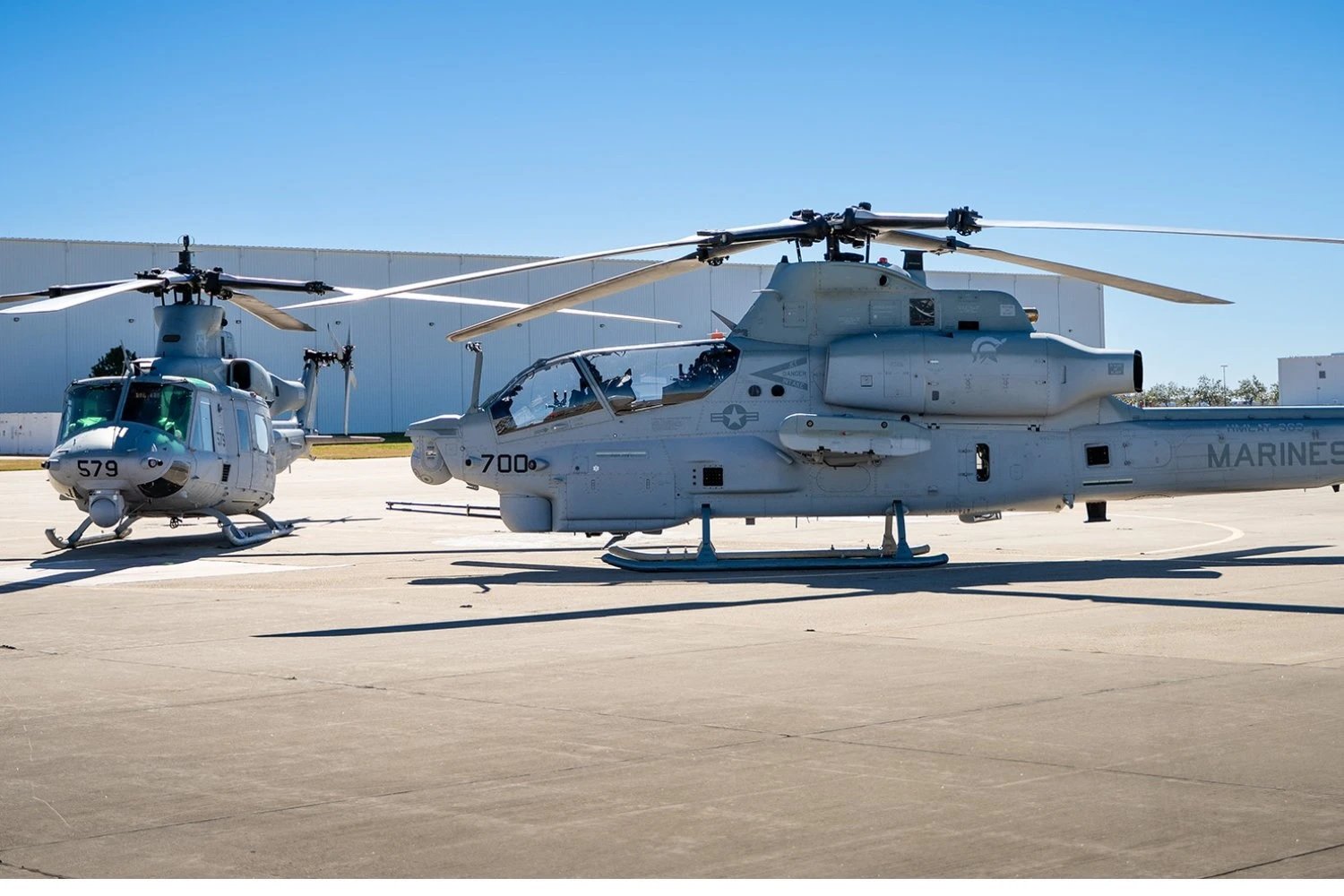
U.S
WASHINGTON — The U.S. Department of War has awarded Bell Textron a $33.64 million contract to continue modernization of the U.S. Marine Corps' AH-1Z Viper and UH-1Y Venom helicopter fleet under the Structural and Power Improvements for Next-Generation Effects (SPINE) program. Awarded on July 24, 2026 through Naval Air Systems Command (NAVAIR), the contract supports upgrades that increase the helicopters' structural strength, electrical power generation and digital architecture. These improvements are intended to provide the foundation for integrating future mission systems, advanced sensors, secure communications and networked combat capabilities. Contract Covers Aircraft Kits and Critical Components The contract, valued at $33,642,332, includes: Nine aircraft installation A-kits Two D-kits designated as mission kits Associated hardware, labor, materials and spares 12 rotorcraft station control units 12 alternating-current generators 12 generator control units 12 tube assemblies Seven combining gearboxes The contract combines fixed-price incentive, firm-fixed-price and cost-plus-fixed-fee elements and is scheduled for completion by July 2028. SPINE Program Builds Foundation for Future Upgrades The SPINE program, previously known as the Structural Improvement and Electrical Power Upgrade (SIEPU), is designed to improve the H-1 fleet's structural integrity, electrical capacity and onboard digital systems. Rather than introducing new weapons under this contract, the program provides the infrastructure needed to support future integration of advanced sensors, processors, encrypted radios, electronic warfare equipment, weapon interfaces and mission systems. Bell completed the first fully modified AH-1Z Viper and UH-1Y Venom helicopters in March 2026 at its Amarillo Assembly Center following a 19-month modification effort. The aircraft were subsequently transferred to Naval Air Station Patuxent River for final configuration work and flight testing. Improved Electrical and Digital Architecture The modernization package increases available electrical power for onboard systems while enabling advanced digital capabilities, including: Link 16 connectivity Advanced data buses Improved mission computers Enhanced defensive systems The Marine Corps has already demonstrated two-way Link 16 and Advanced Networking Wideband Waveform connectivity between the AH-1Z, UH-1Y and a portable ground station. These upgrades are intended to support future networking with other military platforms while handling increased data and power demands from modern mission equipment. AH-1Z Viper Remains the Primary Focus The AH-1Z Viper is the main platform being modernized under the SPINE program. The attack helicopter currently features: Third-generation Target Sight System Helmet-mounted cueing system Six wing stations Three-barrel 20 mm cannon Precision-guided rockets Air-to-ground missiles Air-to-air capability The UH-1Y Venom will receive the same electrical and digital improvements to enhance its performance in armed utility, escort, command-and-control and sensor relay missions. The Marine Corps currently operates 186 AH-1Z Viper helicopters and 131 UH-1Y Venom helicopters. The two aircraft share approximately 85 percent component commonality, reducing maintenance requirements, spare parts and logistics support for mixed H-1 detachments. Supporting Future Weapons Integration A major objective of SPINE is to prepare the H-1 fleet for future weapons and mission systems by providing sufficient electrical power and digital capacity. One capability associated with the broader H-1 modernization roadmap is the Precision Attack Strike Munition (PASM), identified as the L3Harris Red Wolf launched effect. According to L3Harris, Red Wolf has completed dozens of flight tests, including a low-altitude launch from an AH-1Z helicopter. The company states the system has demonstrated ranges of up to 200 nautical miles while supporting beyond-line-of-sight communications and autonomous over-the-horizon engagement functions. Operational range depends on factors including launch altitude, payload, flight profile, target geometry and communications availability. The July 24 contract does not procure Red Wolf or any other new weapon systems. Instead, it upgrades the aircraft so future systems can be integrated. The AH-1Z will continue operating with existing weapons, including: 20 mm cannon Advanced Precision Kill Weapon System (APKWS) rockets AGM-179 Joint Air-to-Ground Missile (JAGM) The Marine Corps has previously demonstrated JAGM employment against a moving vessel in the Philippine Sea. Planned AIM-9X integration and future counter-unmanned aircraft system capabilities remain part of the helicopter's longer-term modernization roadmap. Supporting Distributed Operations The SPINE program aligns with the Marine Corps' distributed operations concept, particularly in the Indo-Pacific region. Marine aviation units increasingly operate from: Amphibious assault ships Expeditionary sea bases Forward arming and refueling points Temporary island locations Operations from the expeditionary sea base USS Miguel Keith have demonstrated the ability of mixed AH-1Z and UH-1Y detachments to operate beyond traditional amphibious formations. The upgraded aircraft are expected to receive targeting information from platforms including F-35B aircraft, MQ-9A drones, surface ships and ground units while operating at low altitude or behind terrain, expanding their role in networked operations. Modernization Focused on Future Growth Although the SPINE program improves the H-1 fleet's electrical capacity, connectivity and digital architecture, it does not eliminate the operational challenges of rotary-wing missions in contested environments. Aircraft deployed from dispersed locations will continue to require fuel, maintenance, munitions, secure communications and force protection while remaining vulnerable to air defenses, electronic warfare, fighters and long-range fires. The program's primary objective is to ensure the Marine Corps' existing H-1 fleet has the structural, electrical and digital capacity needed to integrate future technologies and mission systems as they become available.
Read More → Posted on 2026-07-26 13:01:24
U.S
AUSTIN, Texas — Oracle has secured a 10-year enterprise software contract with the U.S. Department of War with a potential value of up to $6.99 billion. The agreement, awarded under the Department of War's Enterprise Software Initiative (ESI), is intended to centralize software procurement across multiple defense organizations through a single contracting framework. The contract includes a five-year base period valued at $3.31 billion and a five-year option period. If the option is exercised in full, the total contract value will reach $6.99 billion. The Naval Information Warfare Center Pacific awarded the single-award indefinite-delivery/indefinite-quantity (IDIQ) contract after it was negotiated by the Department of the Navy on behalf of the wider Department of War. According to department officials, it is the first direct-award contract with Oracle for department-wide use of Oracle's on-premises software. Centralizing Enterprise Software Procurement The agreement is designed to replace fragmented software purchasing across defense organizations with a centralized enterprise procurement model. It will support the Department of War, the U.S. Coast Guard, and the U.S. Intelligence Community, allowing participating organizations to acquire Oracle technologies and services through a common contract vehicle. Department officials said the new framework is expected to improve visibility into software usage and spending while reducing duplicate purchases across participating organizations. According to government projections, consolidating Oracle software licenses under the agreement is expected to save at least $441 million over the life of the contract. Contract Covers Multiple Oracle Technologies Under the agreement, participating organizations will be able to place individual task orders for: Oracle on-premises software Software support services Software-as-a-Service (SaaS) applications Cloud technologies Artificial intelligence capabilities Professional services Pricing, deliverables, and performance requirements will be established through individual task orders rather than being fixed across the entire contract. Department of War Highlights Enterprise Benefits Honorable Kirsten A. Davies, Chief Information Officer for the Department of War, said the agreement will strengthen the department's digital infrastructure while improving enterprise software management. "This nearly $7 billion agreement with Oracle strengthens our digital ecosystem, supporting our warfighters with secure, scalable technology to dominate current and future missions." Davies added that the centralized procurement approach will improve visibility into how Oracle software is purchased, funded, and used across participating defense organizations. Department of the Navy Focuses on Operational Readiness Barry Tanner, Performing the Duties of the Department of the Navy Chief Information Officer, said the agreement will support faster delivery of software across naval operations. "For the Department of the Navy, this agreement supports faster delivery of secure, scalable software from the shore enterprise to the tactical edge for our Navy and Marine Corps teams. Reducing fragmented procurement and advancing enterprise standardization will strengthen interoperability, reduce cybersecurity risk, and help us focus resources on resilient capabilities that can scale, integrate, and endure in contested conditions." Oracle Says Agreement Simplifies Technology Procurement Oracle said the Enterprise Software Initiative (ESI) provides a standardized procurement path for its commercial technologies, including cloud services, artificial intelligence, on-premises software, and professional services. Kim Lynch, Executive Vice President, Government, Defense & Intelligence, Oracle, said the initiative is intended to simplify technology acquisition for defense organizations. "For the Department of War, the challenge is not just finding the right technology, it's doing so quickly, compliantly, and at scale, without getting bogged down by complex procurement processes. ESI is designed to address those challenges by creating a more standardized and efficient path to Oracle cloud and AI technology tuned to support mission-critical scenarios." Transition to Begin in Summer 2026 Oracle has supplied technology to the department since the 1990s. Agencies are expected to begin transitioning to the Enterprise Software Initiative contract vehicle during the summer of 2026. To support the transition, Oracle said it will establish dedicated program operations and standardized intake processes to help route requests efficiently and maintain consistent support across participating defense organizations. Source : Oracle
Read More → Posted on 2026-07-25 15:45:16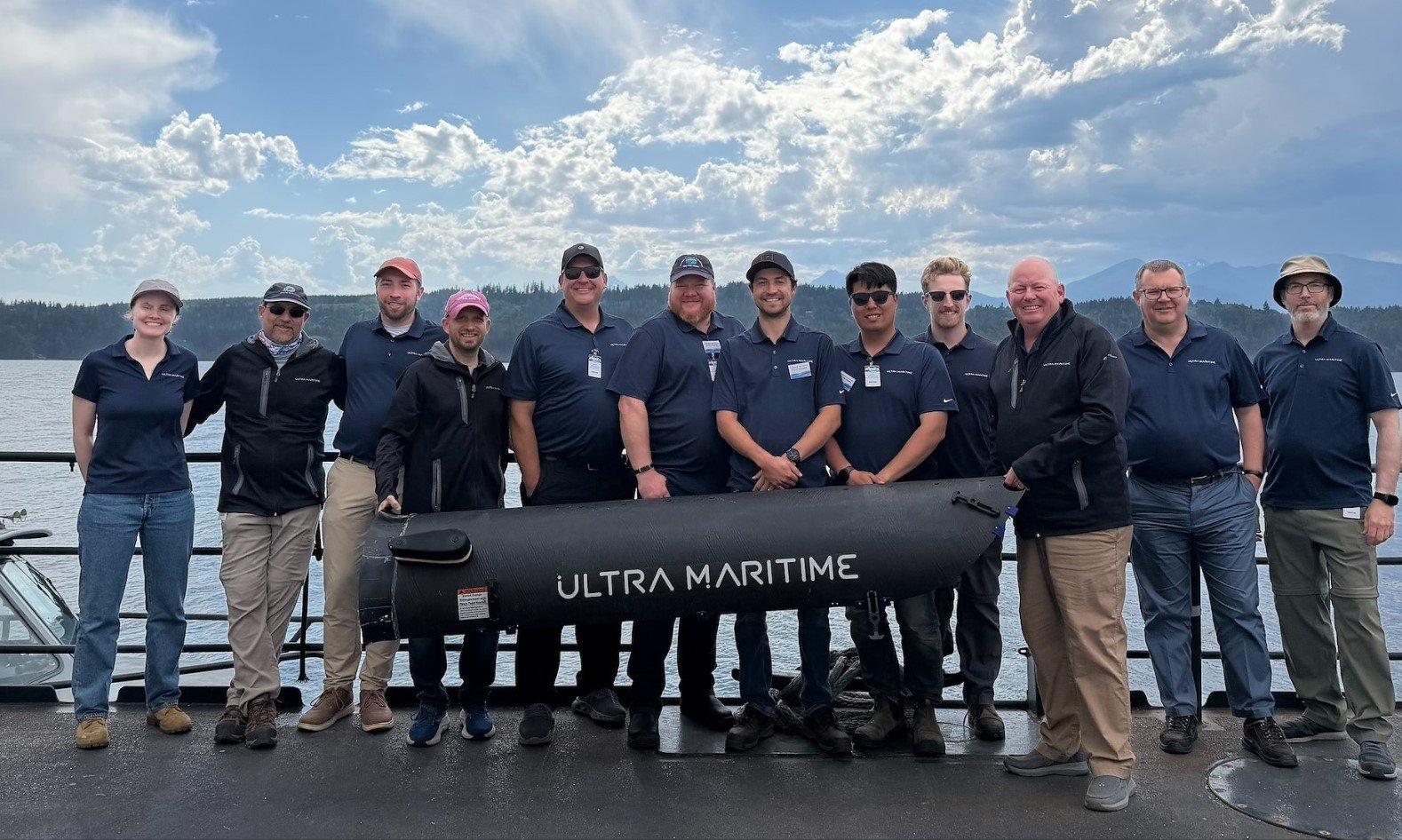
U.S
KEYPORT, Washington — The U.S. Navy has successfully evaluated a counter-unmanned underwater vehicle (C-UUV) capability during Exercise Lanternfish 2026, demonstrating integrated technologies designed to detect, track, and classify autonomous underwater threats in realistic port protection scenarios. The multinational capability development and demonstration event brought together technology and personnel from the United States, the United Kingdom, and Australia to assess emerging undersea defense technologies and strengthen cooperation between the U.S. Navy, AUKUS partners, and industry. Joint Technology Demonstration The demonstration combined Ultra Maritime's Sea Spear deployable sonar system with Anduril Industries' Seabed Sentry autonomous undersea system and the Lattice battle management platform. During operations in the waters off Keyport, Washington, Sea Spear consistently detected, tracked, and classified medium- and large-diameter unmanned underwater vehicles (UUVs), also known as autonomous underwater vehicles (AUVs). The system provided persistent acoustic sensing and transmitted track data for further processing. Sea Spear is a lightweight deployable sonar system that can operate from both manned and unmanned platforms. Depending on mission requirements, it can function either as a permanent installation or as an attritable asset. The system is intended to support persistent sensing in ports, maritime choke points, remote locations, and other strategically important waterways. Integration with Navy Command-and-Control Network As part of the exercise, acoustic tracks generated by Sea Spear were received by Anduril's Seabed Sentry, which then published the data to the Lattice battle management platform. Lattice processed the acoustic information and transmitted the operational picture through the U.S. Navy's cUxV command-and-control (C2) architecture. This allowed operators at the Navy's Unmanned Operations Center (UOC) to monitor both subsea and surface assets in real time. According to the demonstration, Seabed Sentry was able to detect an autonomous underwater vehicle and automatically send an alert through the Navy's existing command-and-control system without requiring a human operator to manually relay the information. Open Architecture Supports Interoperability The exercise also demonstrated end-to-end integration between Ultra Maritime's sensing technology, Anduril's software, and the Navy's command-and-control architecture used during the exercise. Using Lattice's open software architecture, the system incorporated acoustic tracks from Sea Spear and delivered the resulting operational picture into the Navy's C2 network. According to the participating companies, this integration was completed without custom engineering between the participating systems in the exercise environment. Lattice, previously employed in air defense and counter-intrusion operations, was adapted for the undersea domain through Seabed Sentry, enabling edge processing and fusion of acoustic data. Focus on Emerging Undersea Threats Exercise Lanternfish focused on technologies designed to address the increasing use of autonomous underwater systems that can operate in ports, harbors, coastal waterways, and other critical maritime areas. According to the exercise information, these systems can pose threats to ports, pipelines, undersea cables, and other maritime infrastructure. Traditional harbor defense systems have primarily been designed to detect larger submarines and surface vessels, while smaller autonomous underwater vehicles require specialized sensors, faster data processing, and integrated command-and-control capabilities. The demonstration showed how deployable acoustic sensors and an integrated command-and-control network can support the detection and tracking of autonomous underwater threats while providing operators with a common operational picture across multiple domains. Multinational Collaboration Lanternfish is a multinational capability development and demonstration event involving autonomous underwater vehicle and subsea technologies from Australia, the United Kingdom, and the United States. The exercise is intended to enhance collaboration among the U.S. Navy, AUKUS partners, and industry in the development and evaluation of future undersea capabilities. Ultra Maritime-Anduril Partnership The demonstration builds on the exclusive partnership between Ultra Maritime and Anduril Industries, announced in April 2025. The partnership combines Ultra Maritime's Sea Spear deployable acoustic arrays and AI-enabled acoustic processing with Anduril's undersea autonomy systems, including Dive XL, Seabed Sentry, and the Lattice software framework. The collaboration aims to support distributed undersea surveillance for U.S. and allied forces. Ultra Maritime develops anti-submarine warfare solutions across airborne, surface, and undersea domains and operates in the United States, Canada, the United Kingdom, and Australia. The company continues to invest in autonomous undersea sensing technologies to support scalable and distributed surveillance networks. No Procurement Decision Announced The U.S. Navy has not announced any procurement decisions related to the technologies demonstrated during Exercise Lanternfish 2026. The event served as an operational capability demonstration to evaluate the integration of autonomous sensing, acoustic processing, and command-and-control technologies under realistic conditions. Source : prnewswire
Read More → Posted on 2026-07-25 14:22:46Search
Top Trending in 24 Hours
-
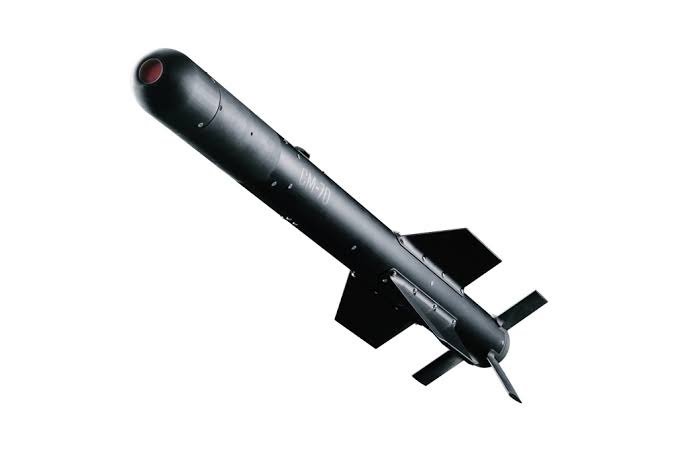 CSG and North Vector Dynamics Sign MoU to Explore European Production of CM-70 Counter-Drone Interceptor
-
 Long Wall Receives $75 Million MDA Award to Complete Cyclops Interceptor Flight Testing
-
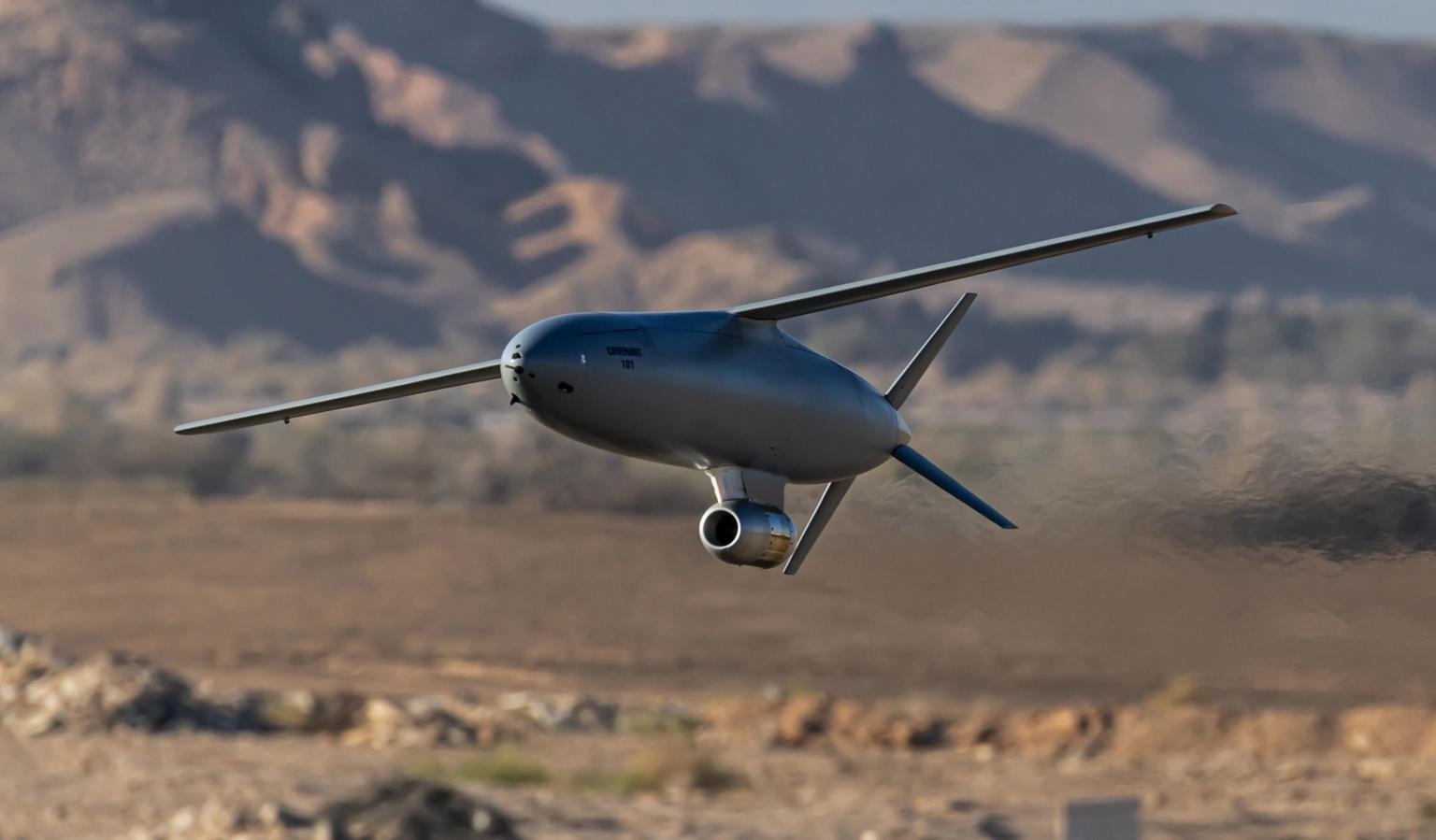 Denmark Acquires Anthem and Joint Strike Missiles in Major Long-Range Defense Overhaul
-
 Russia’s SJ-100 Superjet Flight Control System Enters Final Certification Stage After 1,500 Tests
-
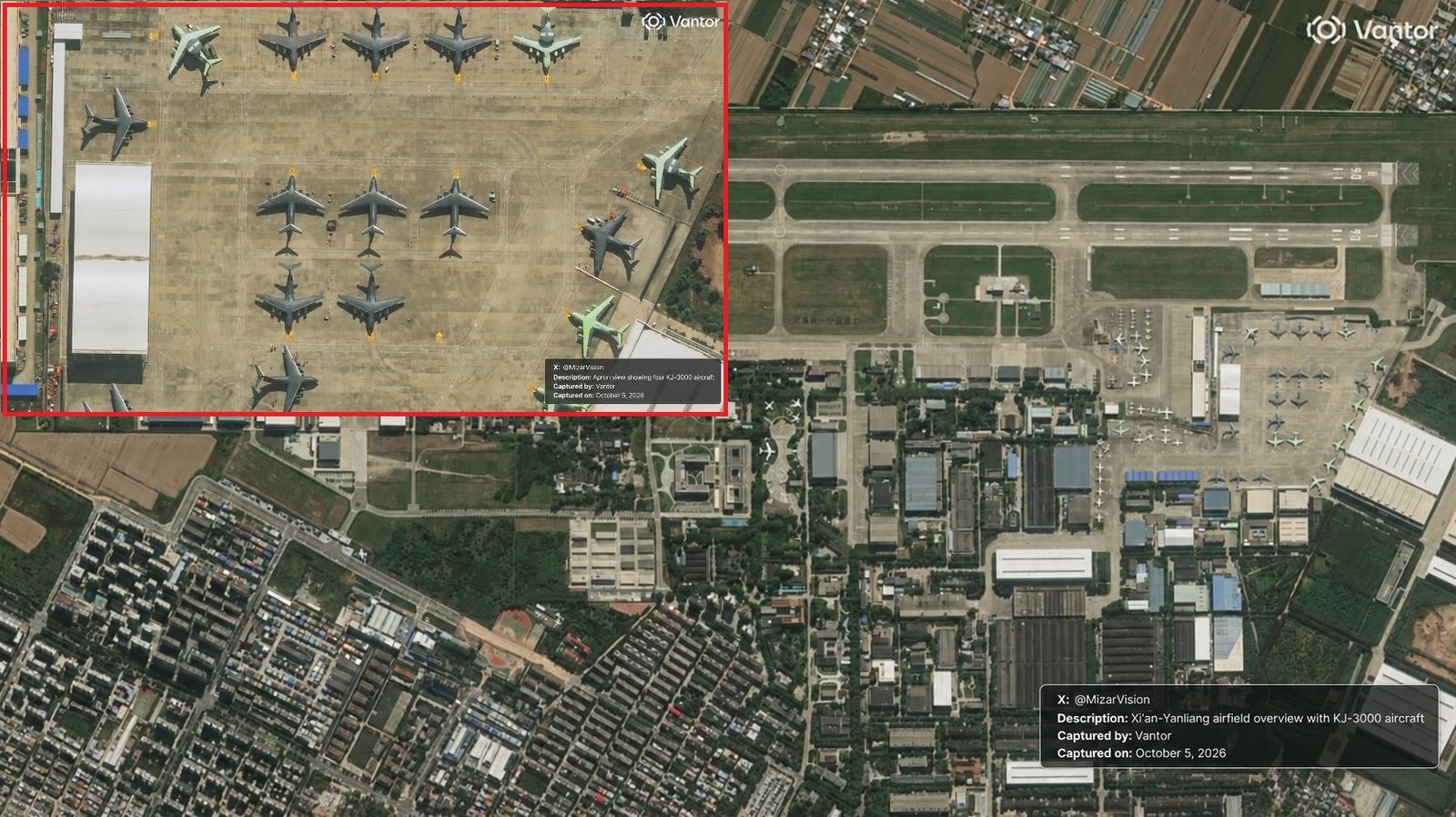 Satellite Images Reveal Four KJ-3000 AEW&C Aircraft at Chinese Aircraft Facility, Hinting at Possible Serial Production
-
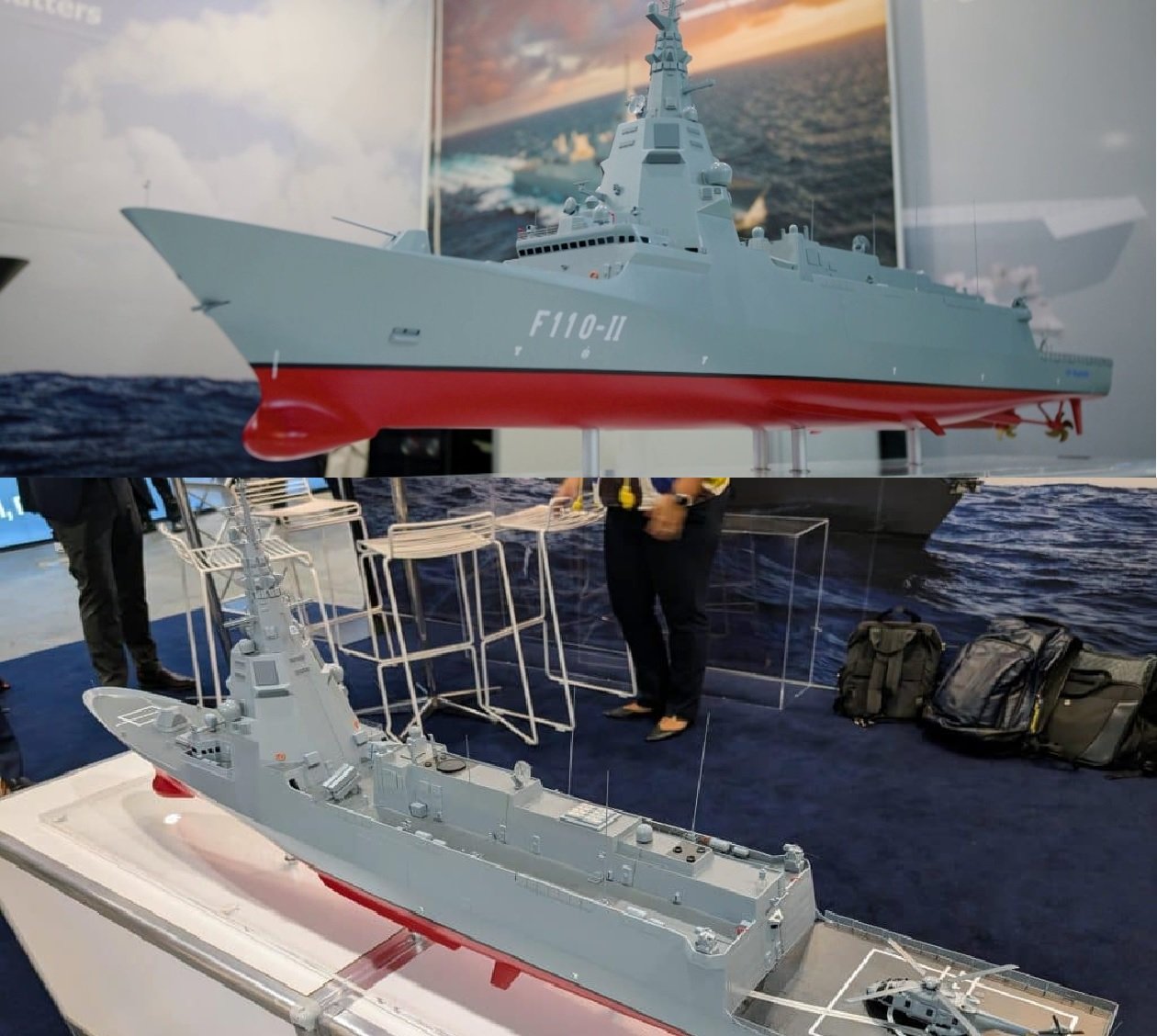 Spanish Navy and Navantia Advance F110 Frigate Design with Enhanced Air and Missile Defence
-
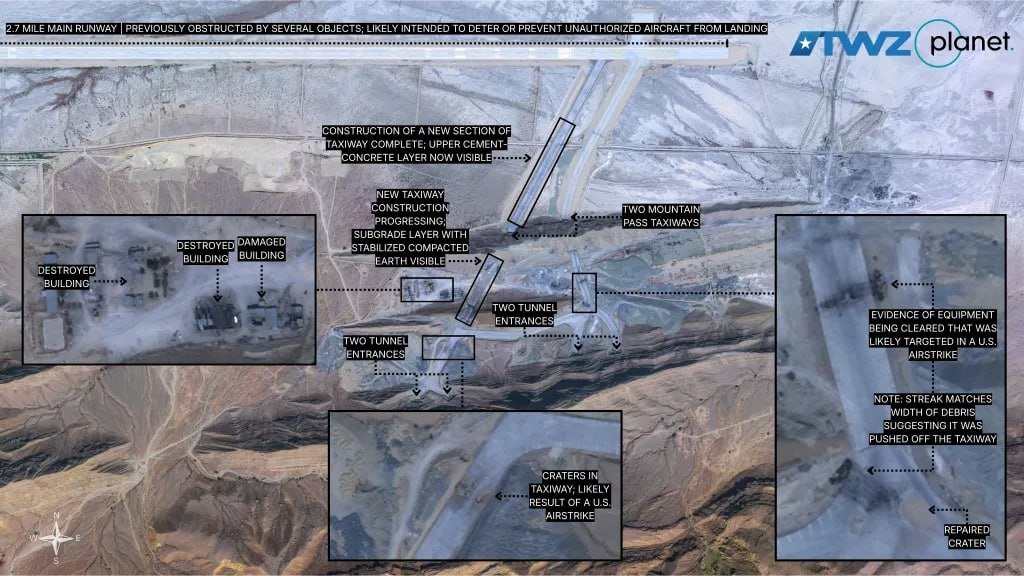 Satellite Images Reveal Iran Continues Restoration of Eagle 44 Underground Airbase After 2026 Strikes
-
 EDGE Group Achieves Full-Rate Production at Automated LAHAB 40mm Ammunition Facility
Top Trending in 4 Days
-
 NASA Sets New Artemis Milestones as SpaceX and Blue Origin Target Moon Landings in 2027–2028
-
 U.S. Air Force Awards HII Subsidiary Enlighten IT $332.8 Million Cyber Defense Contract
-
 Four NASA Volunteers Mark One Year in Simulated Mars Habitat
-
 Australia Unveils Ghost Shark Autonomous Submarine’s Mine, Drone and Logistics Capabilities
-
 L3Harris Opens ‘Arsenal of Freedom’ Rocket Motor Plant in Arkansas to Double Production Capacity
-
 Russia Reportedly Offers Su-35 Fighters and S-400 Air Defence System to Protect Tehran
-
 Unitree Unveils H2-X ‘Kung Fu Legend: Guardian’ Humanoid Robot for Security and Rescue
-
 US to Buy Up to 25,000 APKWS Kits Annually, With Option to Increase to 35,000