FORT IRWIN, Calif. — The U.S. Army, Navy and Space Force have successfully completed the first maritime test of the Hammer of the Gods electronic warfare (EW) system during Project Convergence Capstone 6 (PC-C6), marking the system's debut in a naval environment.
The mid-July 2026 experiment was conducted as part of the Army-led Project Convergence Capstone 6 at Fort Irwin, California. According to a report published on July 26, 2026, by Sgt. Sar Paw of the Army's 5th Mobile Public Affairs Detachment, the trial demonstrated the system's ability to deliver electronic warfare and command-and-control capabilities in a maritime setting while supporting joint military operations.
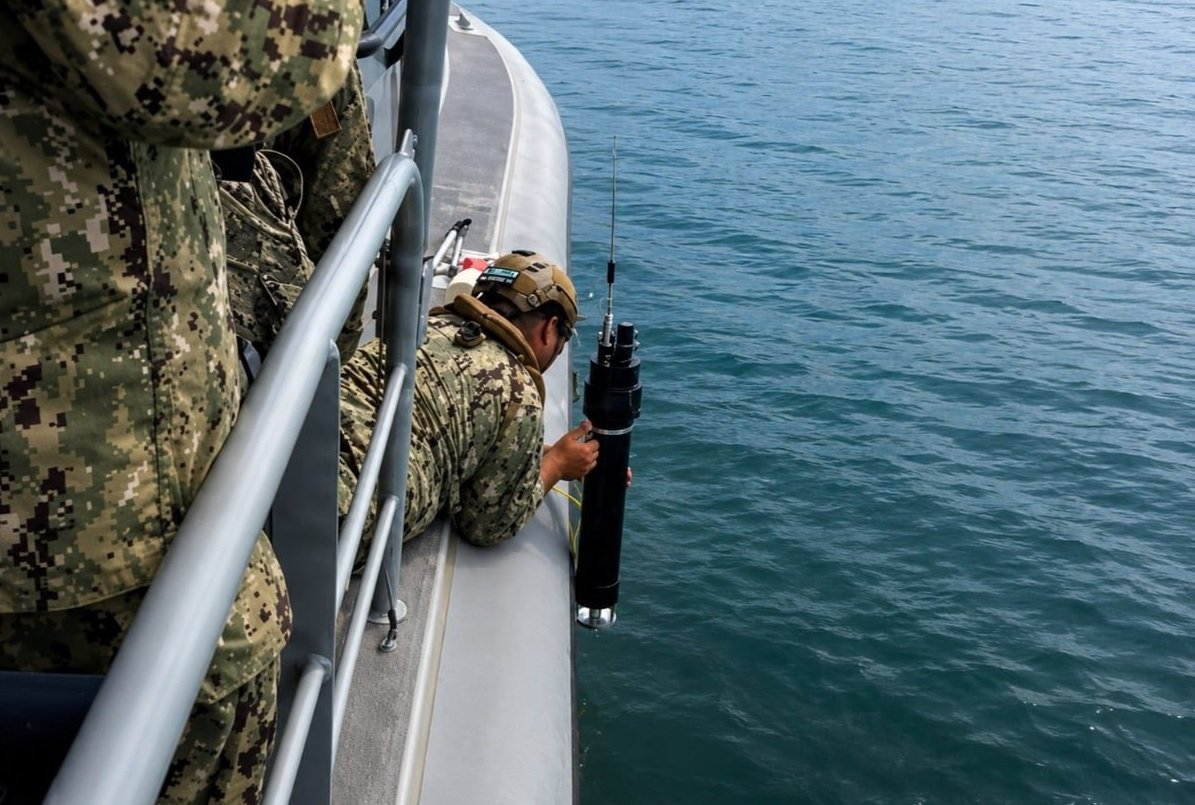
First Maritime Deployment
Hammer of the Gods is not a conventional weapon. It is a highly deployable electronic warfare emitter designed to broadcast electromagnetic signals while maintaining a low electromagnetic signature. This allows the system to operate closer to contested areas with a reduced chance of being detected by adversary sensors.
The system provides an expanded suite of electronic warfare and command-and-control capabilities. Electronic warfare uses the electromagnetic spectrum to disrupt an adversary's communications, radar and other electronic systems while protecting friendly military networks.
Ground-based versions of Hammer of the Gods have been used in military exercises and demonstrations over the past two years. However, Project Convergence Capstone 6 marked the first time the system has been deployed and tested at sea.
Adapting the System for Maritime Operations
Moving the system from land to a maritime environment introduced several operational challenges. Unlike land-based exercises, naval operations require equipment to function under constant platform movement, exposure to saltwater and radar clutter generated by the ocean surface.
The maritime trial was supported by U.S. Space Forces Pacific and Naval Base San Diego. Organizers designed the experiment to meet the learning objectives of both the U.S. Army Space and Missile Defense Command and U.S. Space Forces Pacific, allowing multiple services to evaluate the technology under realistic operating conditions.
Joint Force Integration
Lt. Col. Darrin Hall, Chief of Modeling, Simulation and Integration for U.S. Space Forces Pacific, said the experiment highlighted the importance of joint testing for future military operations.
"Joint experimentation is how we prepare for future fights. By integrating space, cyber and conventional forces into realistic scenarios, we strengthen our ability to operate as one joint team in contested environments," Hall said.
The experiment reflected the Department of Defense's continued effort to develop and integrate cross-service capabilities early in their development, particularly for operations in contested electromagnetic environments.
Focus on Counter-PNT Capabilities
A primary objective of the maritime demonstration was evaluating the system's counter-Positioning, Navigation and Timing (counter-PNT) capabilities.
PNT systems support military navigation, communications and precision targeting by providing the data required for GPS-enabled operations. They are widely used across military platforms for navigation, command and control, and precision-guided weapons.
During the exercise, the joint force tested how Hammer of the Gods could disrupt an adversary's PNT capabilities while maintaining operational effectiveness through resilient mesh networking, extending communications and operational reach in a maritime environment.
Hall emphasized the importance of protecting friendly forces while operating in environments where PNT systems may be disrupted.
"Positioning, Navigation and Timing is the foundation of modern military operations. Understanding how to protect and operate through PNT disruption ensures our forces can continue to shoot, move and communicate effectively," Hall said.
He added that counter-PNT capabilities directly affect the targeting backbone used by long-range artillery, guided missiles and cruise munitions.
"Without PNT data, modern weapon precision drops sharply, resulting in delayed missions, missed objectives, or severe collateral damage."
According to Hall, the experiment demonstrated that counter-PNT capabilities could be deployed, controlled and recovered during real-world maritime operations while extending operational reach through resilient mesh networking.
Part of Project Convergence Capstone 6
The Hammer of the Gods demonstration formed one element of the broader Project Convergence Capstone 6, which ran from July 20 to July 29, 2026 and brought together Army, joint and multinational participants to evaluate future military technologies and operational concepts.
A key objective of PC-C6 is validating the Next Generation Command and Control (NGC2) architecture. The initiative is designed to replace fragmented legacy systems with a unified, data-centric network that incorporates artificial intelligence and commercial software to improve decision-making across the joint force.
By integrating systems such as Hammer of the Gods into the NGC2 architecture, the U.S. military is evaluating how electronic warfare, command-and-control and resilient networking capabilities can operate together in contested electromagnetic environments.
Significance of the Test
The successful maritime demonstration marks the first operational sea-based test of Hammer of the Gods and provides valuable data for future development of joint electronic warfare capabilities. The experiment also demonstrated continued cooperation among the U.S. Army, Navy and Space Force in testing technologies designed to support future multi-domain operations across land, sea, space and the electromagnetic spectrum.
——— End of Article ———