FORT IRWIN, Calif. — The U.S. Army demonstrated a networked drone strike sequence during Project Convergence-Capstone 6, showing how multiple air-launched drones can work together to locate, identify, and destroy enemy air defense threats while keeping crewed aircraft away from high-risk areas.
The demonstration took place during the Army's large-scale experimentation event held at Fort Irwin, California, from July 20 to July 29, 2026. The exercise focused on the Army's Launched Effects (LE) family of air-launched drones, which are designed with different payloads and mission roles rather than as a single standardized platform.
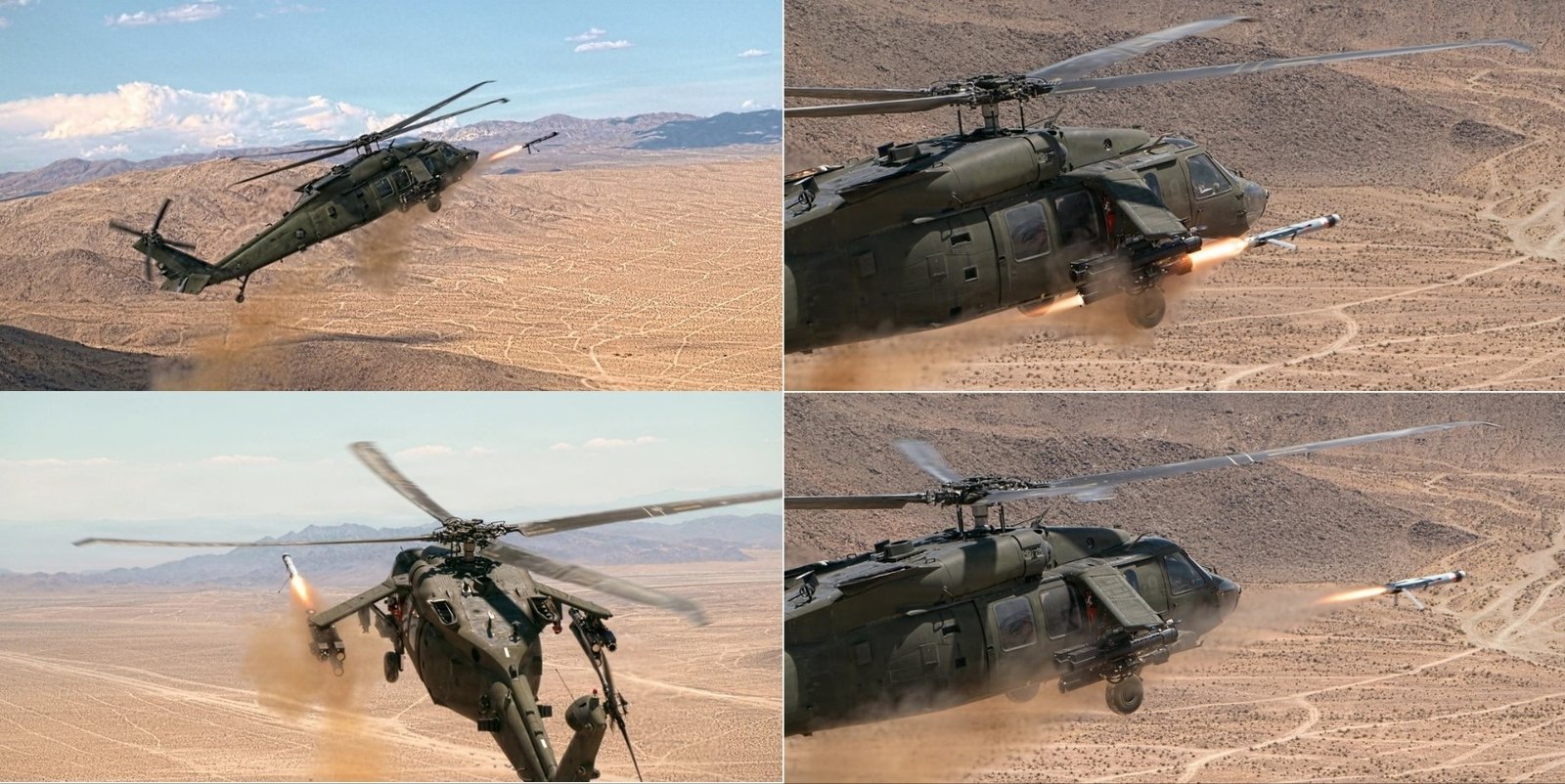
During the demonstration, two Active/Passive Infrared Launched Effects carried out the military's detect, identify, locate, and report mission by finding a simulated adversary threat and transmitting its location to friendly forces. A third weaponized Launched Effect equipped with a Long-Range Precision Munition (LRPM) then carried out the strike against the identified target.
The Army said this approach enables reconnaissance and strike missions to be divided among different drones, reducing the need to send crewed aircraft into heavily defended airspace.
Designed for Different Mission Roles
The Launched Effects portfolio includes multiple variants developed for different operational requirements. Some are equipped for reconnaissance missions to locate and track enemy positions, while others carry electronic warfare payloads designed to disrupt enemy communications and radar systems. Additional variants are armed to engage targets directly.
Rather than relying on a single drone to perform every task, the Army is developing a family of systems that can operate together depending on mission requirements.
Reducing Risk to Crewed Aircraft
The Army said the concept is intended to help aviation units operate against Integrated Air Defense Systems (IADS), which combine radar, surface-to-air missiles, and anti-aircraft guns to defend contested airspace.
By using relatively low-cost and expendable drones to enter these areas first, Army Aviation aims to reduce the exposure of crewed aircraft and pilots while creating opportunities for follow-on operations. The capability is also intended to support ground maneuver forces by targeting enemy artillery, rocket systems, and other threats operating deep inside contested areas.
Networked "Wolfpack" Operations
A key element of the demonstration was the networking between the drones.
The medium-range Launched Effects used the Integrated Tactical Network operating within the Army's Next Generation Command and Control (NGC2) architecture to send real-time targeting information to corps-level commanders.
According to the Army, treating the flow of targeting data as a core part of the weapon system helps accelerate strike decisions by rapidly sharing target information across the force.
The Army also demonstrated the ability for multiple Launched Effects to operate as a coordinated "wolfpack." In this concept, several drones can approach a target simultaneously from different directions and altitudes, making it more difficult for traditional air defense systems to respond. Because the drones are designed to be expendable, commanders can accept the loss of individual platforms when required to complete the mission.
Long-Range Precision Munition Reaches New Milestone
In a separate demonstration during Project Convergence-Capstone 6, a crewed aircraft launched a production-line Long-Range Precision Munition into contested airspace.
According to the Army, the munition independently identified and destroyed a high-priority target, marking an important milestone for the medium-range lethal capability.
The Army plans to field the LRPM at scale by fiscal year 2027.
Government contracting documents indicate an anticipated funding line of $100 million to $200 million to deliver 200 to 600 fieldable LRPM prototypes supporting this medium-range lethal capability.
Standardized Launch and Control Systems
To support operational deployment across Army Aviation, the service is also developing two supporting systems: the Launched Effects Dispenser for Ground and Rotorcraft (LEDGR) and the Universal Vehicle Control (UVC) system.
These systems are designed to provide a standardized interface that allows aircrews to launch and control different Launched Effects variants without requiring separate launch hardware or dedicated cockpit software for each payload.
Both systems are scheduled to support fielding at scale by fiscal year 2027.
Army Continues Evaluating Future Variants
Project Convergence has served as the Army's experimentation event since 2020, providing an environment to evaluate how sensors, weapons, and command-and-control networks operate together across the joint force and with allied and partner nations. Capstone 6 included thousands of participants from the joint force, allies, partners, and industry.
In addition to systems moving toward fielding, the Army evaluated emerging medium-range Launched Effects technology demonstrators featuring increased speed and longer range. These platforms remain in the technology demonstration phase and are not yet formal programs of record.
Dan Bailey, Deputy Director of the Aviation Future Capability Directorate, said the systems are intended to operate as connected combat capabilities rather than independent platforms.
"Launched Effects are not just stand-alone tools; they are networked combat enablers. By standardizing our launch and control systems, we're giving the Combat Aviation Brigades the flexibility to dynamically deploy multiple capabilities, share critical targeting data on the fly, and secure a decisive overmatch against peer adversaries."
The Army has not disclosed the specific adversary air defense systems replicated during the demonstration, the exact number of Launched Effects used in the wolfpack sequence, or the long-term procurement quantities planned for the Long-Range Precision Munition program after fielding begins.
——— End of Article ———