
World
A growing series of drone incursions in Belgium has sparked serious security concerns across Europe, prompting the United Kingdom to send both personnel and specialized counter-drone equipment to assist Belgian authorities. The decision, confirmed by Air Chief Marshal Richard Knighton, marks one of the rare instances of a NATO member directly aiding another in responding to unexplained airspace violations during peacetime. Alarming Drone Activity Over Strategic Sites Over the past week, Belgium’s main international airport in Brussels and Liège Airport, one of Europe’s largest cargo hubs, were forced to suspend operations after repeated sightings of unidentified drones in restricted airspace. More concerning, the drones were also detected flying near Kleine-Brogel Air Base, a high-security installation believed to host U.S. nuclear weapons as part of NATO’s deterrence posture. The incidents have triggered widespread speculation about the motive and origin of the flights. Belgium’s Defence Minister Theo Francken told reporters that investigators suspect a coordinated spying operation, saying, “These incidents were not carried out by amateurs; they appear deliberate and technically advanced.” Britain Steps In In an interview with the BBC, Air Chief Marshal Knighton confirmed that the U.K. military had begun deploying teams and technology to Belgium following a formal request from Brussels. “We don’t yet know the source of those drones, and neither do the Belgians,” Knighton said. “But we will help them by providing our kit and capability, which has already started to deploy.” British personnel reportedly include members of the Royal Air Force’s specialist counter-UAS units, equipped with advanced drone detection and jamming systems. The U.K.’s deployment underscores a growing recognition that such incidents are not isolated but part of a wider European security challenge. Strategic Stakes for Europe Belgium’s importance extends far beyond its size. The country hosts the headquarters of NATO and the European Union, and it is home to the Euroclear financial clearinghouse, which manages tens of billions of euros in frozen Russian assets. Those assets have become a point of contention within the EU, with several countries pushing to use them to fund loans for Ukraine’s reconstruction, a move Belgium has so far resisted. Some analysts see the drone incursions as potentially linked to geopolitical pressure over this issue. Though Belgian officials have stopped short of blaming any specific actor, European intelligence sources have privately suggested that the pattern of activity resembles Russian hybrid operations, using drones and cyber tools to test Western vulnerabilities without triggering direct confrontation. Not an Isolated Problem Belgium is not alone in facing unexplained drone intrusions. Over the past few months, Germany, Sweden, and Poland have also reported similar incidents near airports, energy facilities, and military installations. In many cases, the drones appear to have been highly capable—able to loiter for extended periods, evade radar, and operate in no-fly zones. European security agencies have been scrambling to modernize airspace surveillance systems, including by integrating counter-UAS networks capable of detecting and neutralizing small drones. Belgium’s government recently announced plans to establish a national air security coordination centre by early 2026 and to invest in a dedicated anti-drone defense network. The Unknown Operator Despite multiple sightings, no drone has yet been captured or recovered, leaving investigators with few physical clues. The Belgian Air Force has scrambled interceptors on several occasions, but the drones reportedly disappeared before interception. Officials believe the aircraft are remotely controlled from beyond Belgian borders, possibly using satellite links or pre-programmed flight paths. Defence Minister Francken noted that the precision and persistence of the incursions suggest access to sophisticated technology, saying, “This is not a hobbyist with a drone bought online. Whoever is behind this knows exactly what they are doing.” NATO’s Quiet Response Though NATO officials have avoided public statements on the issue, alliance insiders acknowledge that the drone activity near a nuclear storage base has raised serious alarm. Discussions are reportedly underway about expanding NATO’s integrated air and missile defense system (NATINAMDS) to include small-drone detection and response capabilities. The United Kingdom’s rapid support is being viewed as both a symbolic gesture of solidarity and a practical test case for how allied forces can coordinate counter-drone operations across borders. A New Frontline in Hybrid Warfare The mystery over who is flying the drones may persist for weeks, but the strategic message is already clear: Europe’s skies are no longer secure from small, silent intruders. What began as temporary airport closures has now escalated into a trans-Atlantic security operation. Whether this represents probing, espionage, or an early stage of hybrid coercion remains uncertain — but for Belgium, the aerial chessboard has become a new front line. As Air Chief Marshal Knighton put it, “We’re working with our allies to make sure Europe’s airspace remains safe. Whoever is behind these incursions should know — we’re watching closely.”
Read More → Posted on 2025-11-09 17:35:12
World
Pakistan is once again standing at a critical turning point. The country’s proposed 27th Constitutional Amendment — backed by Field Marshal Gen. Asim Munir and the current government — is being presented as a reform to strengthen “stability” and “national unity.”But behind those words lies a much bigger story — one that could change Pakistan’s democracy forever. What Is the 27th Amendment? The 27th Amendment is a new law being discussed in Pakistan’s Parliament. On the surface, it talks about reorganizing the military and improving coordination between the army, navy, and air force. But when you look deeper, it’s really about giving permanent power and protection to the military, especially to General Asim Munir. Under this amendment: The army chief will be officially promoted to Field Marshal and given lifetime privileges and legal immunity, meaning no court or government could question his actions. The military could gain more control over national decisions, including security, the economy, and administration. A new Federal Constitutional Court would be created — one that could weaken the current Supreme Court and reduce judicial independence. Some powers that belong to provincial governments might be moved back to the central government, giving the military even more influence over the whole country. In short, it would give the uniform constitutional authority — something Pakistan has never seen in its modern democratic history. Why Is This So Controversial? Supporters of the amendment say it will bring “stability” to Pakistan, especially at a time when the country is struggling with economic troubles and political divisions. They argue that it will help all state institutions work together smoothly. But critics — including lawyers, journalists, and opposition leaders — see it very differently. They say it is not about stability, but about control. If this amendment passes, Pakistan’s democracy will be left with almost no real power. The army chief, already the most powerful person in the country, would become a permanent figure above politics, untouchable by courts or parliaments. As one lawyer said, “When a constitution starts to serve one man, it stops serving the nation.” The Man at the Center: Field Marshal Asim Munir General Asim Munir became Pakistan’s army chief in 2022 and was promoted to Field Marshal in 2025 — the first person to hold that title since the 1960s. The 27th Amendment would make that title permanent, giving him lifetime powers and protection. Under his leadership, the military has taken a larger role in managing Pakistan’s economy and foreign affairs. Some of his supporters describe him as a “stabilizing force.” But others warn that such centralization of power could lead to a one-man system, where no one can question decisions — not the Parliament, not the courts, and not the people. What Could Happen If It Passes? If the amendment becomes law, Pakistan could face serious consequences: Democracy could weaken even further.Civilian leaders would have little authority left. The military could become a permanent part of the political system. Judicial independence could disappear.A new court structure could allow the government — and the military — to influence which judges are appointed and how they rule. Provinces might lose their autonomy.Local governments would lose power to the central government, which is often controlled by the army. This could increase anger in Balochistan and Sindh. The economy could suffer.Investors and international organizations prefer stability and rule of law. If Pakistan’s politics become too military-driven, foreign investors may lose trust. Even the army could split.Not all officers may agree with giving one man lifetime power. This could create divisions inside Pakistan’s most powerful institution. A Lesson from History This is not the first time something like this has happened. In 1958, General Ayub Khan took power through a military coup and made himself Pakistan’s first Field Marshal. He promised to bring order and growth — but his rule ended with protests, political chaos, and eventually the breakup of Pakistan in 1971. Many fear that the 27th Amendment is history repeating itself — not through a coup, but through the constitution itself. What Happens Next? The amendment has already been approved by the cabinet and presented in Parliament. The ruling coalition — led by the Pakistan Muslim League (N) — seems ready to support it. Opposition parties, lawyers, and civil society groups have started protesting, calling it “a legal coup.” If Parliament passes the bill, the president’s signature will make it law. Once that happens, it will be almost impossible to reverse. The 27th Amendment is being sold as a plan for reform, but many Pakistanis see it as the legal end of democracy in their country. It gives extraordinary powers to the military and turns the constitution into a tool for one man’s authority. When a nation writes unlimited power into its laws, it doesn’t gain stability — it loses freedom.If this amendment passes, Pakistan may not need another military coup — because the coup will already be written into its constitution.
Read More → Posted on 2025-11-09 17:31:41
World
In a statement that has rippled across international media, Argentine President Javier Milei delivered a sharp message to New Yorkers following the election victory of Zohran Mamdani, a self-described Democratic Socialist whose ascent to New York’s mayoralty marks a striking ideological turn for America’s largest city. During a speech in Miami, Milei declared: “I dedicate these words to New Yorkers, who have taken the opposite path that of Argentina, and will now be living under a communist party. They should know that if the going gets tough, they will always be warmly welcome in our land if they seek to prosper.” The remark, characteristically fiery and ideological, underscores Milei’s growing reputation as one of the world’s most outspoken defenders of free-market capitalism and critic of socialism. His words were less about foreign policy than about ideology—casting Argentina as a global haven for those fleeing the failures of state-controlled economics. The Context: Mamdani’s Victory and the “Communist” Label Mamdani’s recent victory in New York City has been celebrated by progressives as a breakthrough for the American left. Known for his calls to tax the wealthy, expand social housing, and rethink private ownership in essential sectors, Mamdani has drawn comparisons to left-wing movements in Europe and Latin America. However, his critics—both in the U.S. and abroad—have called his policies “radical” and “communist.” Former President Donald Trump went as far as to label Mamdani “a 100% Communist lunatic,” warning that his leadership could drive away investment and business confidence from the city. For Milei, Mamdani’s victory offered a perfect ideological counterpoint. Where New York’s new leadership embraces state intervention, Milei’s Argentina is moving in the opposite direction—slashing public spending, privatizing state assets, and opening its markets to foreign investors. Argentina as the “Opposite Path” Since taking office, Milei has embarked on one of the most aggressive free-market reform programs in modern Latin American history. He has cut government ministries from 18 to 9, eliminated thousands of public positions, and worked to stabilize the peso through strict monetary discipline.To his supporters, these moves represent Argentina’s rebirth after decades of populism and inflation. To his critics, they represent austerity and social hardship. By invoking New York’s election, Milei sought to frame Argentina’s reforms as a global ideological alternative—“the path of freedom,” as he calls it. His message to New Yorkers was as much an invitation as it was a warning: those who reject socialism have a home in Argentina. A Message Beyond Borders Milei’s words also reveal his ambition to project Argentina’s new identity onto the world stage. The president, who describes himself as a “libertarian capitalist,” has openly aligned with Western conservative movements, including Trump-aligned figures in the United States and pro-market leaders in Europe. In the Miami address, Milei repeated his long-held belief that “socialism is the root of poverty,” warning that any nation embracing it “will lose its freedom, its prosperity, and its soul.” His framing of Mamdani’s win as a “communist takeover” reflects this uncompromising worldview. Analysts note that such rhetoric, while resonating with international right-wing audiences, may complicate diplomatic relations. However, Milei has made it clear that ideological clarity matters more to him than diplomatic restraint. The Broader Symbolism The Milei-Mamdani exchange—though indirect—symbolizes a deeper global divide. On one side are leaders pushing for stronger state roles in welfare, taxation, and social equality; on the other, figures like Milei championing deregulation, privatization, and individual liberty. In this new landscape, even local elections in a U.S. city can trigger commentary from world leaders. The ideological fault lines that once separated domestic politics are now transnational, shaping global debates on economics and governance. President Javier Milei’s reaction to Zohran Mamdani’s victory in New York City was not merely a comment on American politics—it was a statement of ideological identity.By contrasting Argentina’s libertarian revolution with what he calls New York’s “communist turn,” Milei positioned his country as a beacon for pro-capitalist values in an era of rising global polarization. Whether taken as satire, provocation, or genuine invitation, Milei’s message carries unmistakable symbolism: Argentina, once a cautionary tale of economic mismanagement, now seeks to redefine itself as the refuge of those who choose freedom over control.
Read More → Posted on 2025-11-09 17:18:03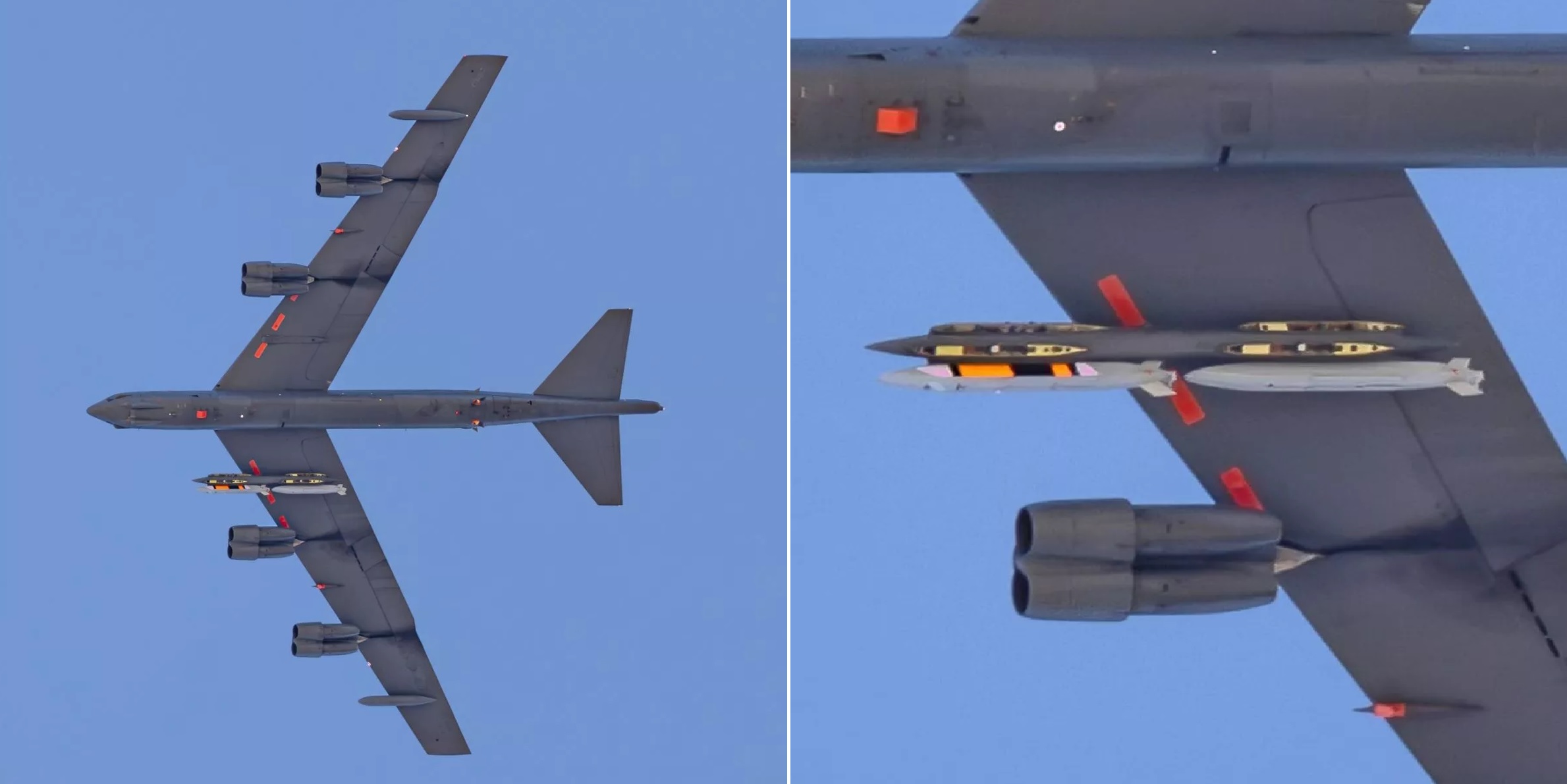
World
For years, it was a rumor — a whispered secret in classified budgets and closed-door Pentagon meetings. But now, the AGM-181 Long-Range Stand-Off (LRSO) missile, America’s newest stealth nuclear cruise missile, has been seen for the first time. A U.S. Air Force B-52 bomber has been photographed over California carrying what appears to be the first visible prototype of the LRSO, marking a rare glimpse of one of the most secretive projects in the U.S. nuclear modernisation programme. The sighting, captured by aviation photographer Ian Recchio and reported by The Aviationist, showed a B-52H Stratofortress flying over Owens Valley on October 29, with two unusual weapons mounted beneath its right wing. The aircraft, call sign Torch52, bore orange test markings, the hallmark of experimental Air Force flights. As Recchio’s images circulated online, analysts immediately noticed something extraordinary. The bomber’s payload featured wedge-shaped missiles with fold-out wings and inverted-T tails—exactly matching renderings of the AGM-181 LRSO released earlier in June 2025. The resemblance was too close to dismiss. America’s Silent Deterrent Takes Shape Developed by Raytheon Technologies, the LRSO is the successor to the AGM-86 Air-Launched Cruise Missile (ALCM)—a weapon that has served for more than four decades. The new missile represents a leap into the next era of strategic nuclear deterrence, designed to be smaller, stealthier, and far deadlier than its predecessor. Unlike the Cold War-era ALCM, the AGM-181 is built from the ground up for low-observability. Its smooth trapezoidal body, recessed engine intake, and radar-absorbent coating allow it to vanish into the background of enemy radar. The LRSO flies subsonically, hugging the terrain to avoid detection, and carries the W80-4 variable-yield thermonuclear warhead, capable of delivering between 5 and 150 kilotons of destruction — up to ten times the power of Hiroshima. With a range estimated to exceed 2,400 kilometers (1,500 miles), it gives U.S. bombers the ability to strike from beyond the reach of even the most advanced air-defense systems. A Shadow in the Sky According to Recchio’s account, the B-52 was first spotted entering a low-level training route, before climbing to about 5,000 feet — giving observers a clear view of the payload. The orange test markings on the fuselage confirmed that this was part of an official flight evaluation, not a training sortie. Defense observers quickly connected the dots. The test’s timing came just days after Russian President Vladimir Putin publicly announced new trials of the Burevestnik, a nuclear-powered cruise missile touted as a key part of Moscow’s deterrent arsenal. The coincidence was unlikely to be accidental. Strategic analysts believe the public sighting of the LRSO prototype was a calculated signal — a subtle reminder that the United States is completing its own modernization of the nuclear triad. In an era of growing nuclear brinkmanship, simply allowing the world to glimpse such a weapon can be as powerful as a formal announcement. Inside the LRSO Program The AGM-181 program, valued at approximately $16 billion, aims to replace more than 1,000 aging ALCMs by 2030. The missile will equip both the venerable B-52 Stratofortress and the futuristic B-21 Raider stealth bomber, ensuring the U.S. nuclear bomber fleet remains capable of penetrating next-generation air defenses. Each missile is expected to cost around $14 million, with low-rate production beginning in 2027. The first test launches from operational bombers could take place before the end of the decade. Stealth, Silence, and Strategy The LRSO isn’t meant to dazzle with speed — it’s built to disappear. Its purpose is to slip through radar networks, evade electronic warfare, and strike without warning. Where ballistic missiles announce their presence with fiery trails across the sky, the LRSO glides quietly under the radar, a ghost in the air. It gives U.S. commanders an unmatched flexible deterrent — a weapon that can be launched, recalled, or redeployed without crossing red lines. It’s the modern embodiment of credible, controlled deterrence — visible enough to send a message, invisible enough to survive. A Message to Moscow and Beijing The timing of this public reveal couldn’t be clearer. As Russia flaunts its exotic Burevestnik missile and China accelerates its own nuclear modernization, the United States is demonstrating that its deterrent edge remains very much intact. The AGM-181 LRSO isn’t just another warhead — it’s a message. A message that if the world ever comes to the brink, the first sign of war might be the last sound anyone hears. In the skies over California, the “invisible” nuke became visible — just long enough to remind the world that silence can be the deadliest weapon of all.
Read More → Posted on 2025-11-09 17:08:51
World
In a landmark moment for India’s aerospace ambitions, LAT Aerospace, the country’s most talked-about aviation startup, has officially unveiled the scale model of India’s first hybrid-electric Short Take-Off and Landing (STOL) aircraft, while simultaneously inaugurating its 50,000-square-foot R&D headquarters in Gurugram. The dual milestone marks LAT’s emergence from stealth mode into full public view — blending cutting-edge hybrid propulsion, indigenous research facilities, and a bold vision to reshape how smaller Indian cities connect by air. From Food Delivery to Flight Design Founded in January 2025 by Zomato CEO Deepinder Goyal and former Zomato COO Surobhi Das, LAT Aerospace represents a radical pivot from food logistics to flight logistics. The idea, born from late-night discussions during Zomato’s expansion years, was simple yet revolutionary: to build “buses in the sky” — short-range, hybrid-electric aircraft that could connect Tier-2 and Tier-3 cities using ultra-compact “air-stops” instead of large airports. Unlike air taxis or luxury electric aircraft concepts in the West, LAT’s aircraft are designed for affordable, high-frequency regional travel, capable of operating from airstrips barely 300–600 meters long. Das, who now leads LAT as its operational head, described the startup’s progress in a recent LinkedIn post that generated widespread buzz across the aerospace community. “We’ve been heads-down building the kind of company India’s aerospace ecosystem hasn’t seen before,” she wrote. “From designing our own hybrid powertrain to simulating STOL aerodynamics — this is hands-on engineering, ground-up.” The Aircraft: Eight Hybrid Engines, 1,500 km Range, and Short-Field Mastery The scale model, recently showcased at LAT’s new facility, depicts a sleek high-wing aircraft powered by eight distributed hybrid-electric engines mounted along the wings. Each motor contributes to lift, thrust, and redundancy, allowing safer low-speed flight and extremely short take-offs. This Distributed Electric Propulsion (DEP) setup is inspired by emerging global designs but is being fully developed in India. The system integrates battery-powered electric motors with a lightweight gas turbine generator, which recharges batteries in-flight and provides power during cruise — delivering both efficiency and endurance. The result: a hybrid aircraft targeting a range of up to 1,500 km, roughly double that of many current regional turboprops, but with up to 40% lower operating emissions and noise. Advanced In-House R&D: India’s First Startup Wind Tunnel The true showpiece of LAT’s new Gurugram base is its custom-built wind tunnel — a rarity in India’s private aerospace sector. The subsonic wind tunnel will be used to simulate airflow around prototype airframes and refine aerodynamic efficiency for STOL operations. The new R&D complex also houses: A Powertrain Lab to test hybrid-electric propulsion units, Hardware-in-the-Loop Simulation (HILS) rigs for real-time system validation, and Custom Monte Carlo simulation software to model hybrid flight dynamics under thousands of conditions. “We’re optimizing for ultra-short take-off and landing — under 300 meters,” Das noted. “We’re cutting grams of weight, building our own simulators, and designing physics models from scratch.” This hands-on approach differentiates LAT from India’s traditional aerospace firms, which often depend on external laboratories or partnerships for aerodynamic testing. Indigenous Power: A “Made-in-India” Turbine Co-founder Deepinder Goyal, who remains in a non-executive but visionary role, has teased another key project — a homegrown gas turbine engine designed specifically for hybrid-electric aircraft. In a recent statement, Goyal called it “a lightweight, efficient, and flight-ready engine designed and built in India,” emphasizing the company’s focus on indigenization. This would make LAT the first Indian private entity to pursue both airframe and propulsion system development simultaneously. LAT Aerospace Milestones Milestone Date Highlight Founding & Seed Round January 2025 Goyal-Das duo launches LAT with $20M; targets 8–24 seater STOL hybrids. Vision Reveal July 2025 Concept unveiled: “Buses in the sky” with up to 1,500 km range; focus on gas turbine integration. R&D HQ Inauguration November 2025 50,000 sq ft Gurugram facility opens; includes powertrain lab, HILS, and proprietary wind tunnel. Tech Demonstrator Tease Q4 2025 First demonstrator under design; STOL optimization and weight reduction in focus. Funding Horizon 2026 Targeting an additional $50M to scale R&D and expand engineering hires in Delhi NCR and Bengaluru. Toward India’s First Hybrid Flight With its distributed eight-engine concept, 1,500 km range target, and STOL performance, LAT Aerospace could fundamentally redefine regional aviation. The company plans to move from wind tunnel testing to prototype assembly by 2027, with taxi trials in 2028 and first flight tests by 2029. If successful, LAT will place India alongside the United States and Europe in the race for certified hybrid-electric aircraft — but with a distinctive focus on affordability and accessibility for developing economies. A New Chapter for Indian Aviation What began as a conversation between two tech entrepreneurs has evolved into a genuine aerospace revolution in the making. LAT Aerospace’s hybrid-electric aircraft program — powered by eight engines, born from a 50,000-square-foot innovation hub, and aimed squarely at India’s regional skies — may soon turn the dream of “buses in the sky” into a tangible reality. With its fusion of engineering, sustainability, and vision, LAT Aerospace isn’t just building an aircraft — it’s building a new frontier for Indian aviation.
Read More → Posted on 2025-11-09 16:13:14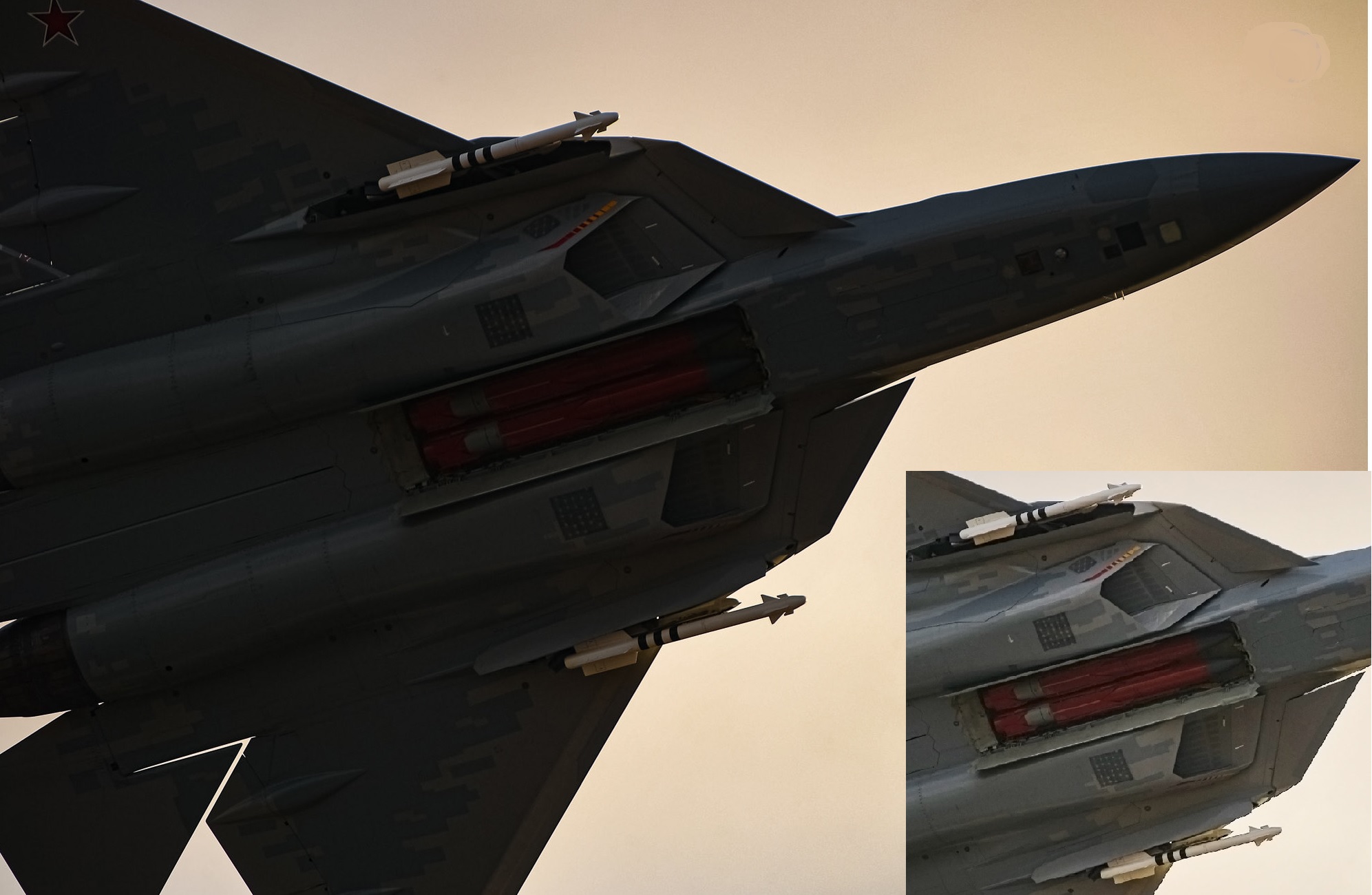
World
On November 9, 2025, the United Aircraft Corporation (UAC) released new promotional footage that immediately caught the world’s attention. For the first time, the video clearly showed Russia’s fifth-generation Su-57 Felon with its forward internal weapons bay open, revealing two large anti-radiation missiles nestled inside. The timing of this reveal—just days before the Dubai Airshow 2025—was no coincidence. It was a calculated display aimed at showcasing a maturing Suppression of Enemy Air Defenses (SEAD) capability, signaling to global buyers that the Su-57 has evolved into more than just a stealthy air-superiority fighter. The Reveal: Inside the Felon’s Forward Bay In the footage, the Su-57—specifically test airframe T-50-9 (“509”)—was seen performing dynamic fly-pasts with its bay doors partially open. What viewers saw inside those bays confirmed years of speculation: two long-bodied Kh-58UShK anti-radiation missiles adapted for internal carriage. This marks the first public proof that the Su-57 can carry such heavy ordnance internally, validating its UVKU-50 ejector system and confirming Russia’s progress in internal weapons integration. The Kh-58UShK, part of the long-standing Kh-58 family, has been redesigned with folding control surfaces to fit within the Felon’s deep internal bays. This engineering feat allows the aircraft to carry and deploy heavy missiles without compromising stealth—something few non-Western fighters can claim. Interestingly, the footage also showed two R-74 short-range air-to-air missiles mounted externally. While this compromises the Su-57’s radar signature, it served a marketing purpose: to visually demonstrate the fighter’s dual role—capable of striking enemy radars while defending itself in close-range engagements. In real operations, analysts believe these missiles would be moved into the Su-57’s side bays to preserve its low observable profile. The Kh-58UShK: Russia’s Long-Range Anti-Radiation Spear The Kh-58 family remains the backbone of Russia’s anti-radiation missile arsenal. Originally developed in the Soviet era, the missile has evolved into modern variants optimized for digital warfare environments and stealth integration. The Kh-58UShK, the variant adapted for the Su-57, features modular architecture and improved guidance capable of detecting and homing in on radar emissions from enemy surface-to-air missile (SAM) systems. Key Specifications (Kh-58UShK): Length: ~4.8 meters Weight: ~650 kilograms Speed: Up to Mach 3.6 Range: 200–250 kilometers (depending on altitude and launch profile) Warhead: ~150 kg high-explosive fragmentation Guidance: Passive radar seeker with programmable frequency bands This long-range reach allows the Su-57 to target advanced air defense radars, such as the Patriot, SAMP/T, or NASAMS, without leaving the stealth protection envelope. The internal carriage ensures reduced radar cross-section (RCS) while maintaining the fighter’s aerodynamic efficiency and speed during ingress missions. Engineering Feat: The UVKU-50 Ejector System One of the less visible but most critical elements of this capability is the UVKU-50 family of internal ejectors developed by Vympel. These launchers were purpose-built to release large weapons like the Kh-58UShK cleanly into the airstream, even during high-speed or high-G maneuvers. Until now, there had been doubts about whether the Su-57’s internal structure could accommodate and eject such long weapons without compromising the stealth bay’s integrity. The new footage ends that debate: the Su-57’s forward bay has sufficient volume, sequencing, and door clearance to deploy large anti-radiation missiles safely. Comparisons: How Other Stealth Fighters Handle SEAD In the global context, only a handful of stealth fighters are capable of internally carrying anti-radiation missiles. F-35 Lightning II (USA): The F-35 has been progressively integrated with the AGM-88G AARGM-ER and SiAW (Stand-in Attack Weapon)—smaller, faster, and more compact missiles designed to fit into its internal bays. These weapons can hit targets over 200 km away and are optimized for stealth operations. F-22 Raptor (USA): The F-22 remains primarily an air-superiority fighter. It does not routinely carry large ARMs internally and relies on other platforms for SEAD roles. J-20 Mighty Dragon (China): While the Chinese J-20 possesses internal bays large enough for long-range weapons, no evidence has surfaced of internal ARM carriage. This puts the Su-57 in a unique position among non-Western stealth aircraft: capable of housing heavy, full-sized anti-radiation missiles internally, rather than relying on externally mounted or miniaturized versions. Strategic Timing: A Message Before Dubai The release of this footage just before the Dubai Airshow 2025 was a masterstroke in defense marketing. Moscow is seeking to attract foreign buyers for the Su-57 amid Western sanctions and production challenges. The clip also follows a string of leaks—allegedly by the “Black Mirror” group—hinting at export talks with Iran, Algeria, and Ethiopia. For each of these nations, the Su-57’s new SEAD capability carries specific strategic value: Iran could use such capability to counter advanced radar systems in the Persian Gulf region. Algeria seeks to maintain a technological edge in North Africa’s increasingly layered air defense environment. Ethiopia may view the Su-57 as a prestige purchase to anchor its air force modernization program. By showing the Su-57 carrying heavy ARMs internally, Russia signals not just technological progress—but a readiness to export a complete fifth-generation strike and suppression package. Operational Significance: From Speculation to Reality For years, the Su-57’s combat potential in SEAD/DEAD missions was speculative. With this footage, it becomes tangible. The dual Kh-58UShK loadout demonstrates that the aircraft can engage radar emitters deep inside defended zones while maintaining stealth. Combined with its sensor fusion, L-band radar arrays, and infrared search and track (IRST) systems, the Su-57 can independently locate, classify, and strike enemy radars. The presence of external R-74 missiles—even if theatrical—reinforces the notion of a self-protecting strike fighter rather than a single-role stealth jet. The Bigger Picture The Su-57’s latest reveal is more than a marketing stunt. It’s a statement of intent and capability. By showing heavy anti-radiation missiles carried internally, Russia is positioning the Felon as a fifth-generation SEAD/strike platform capable of penetrating complex Integrated Air Defense Systems (IADS). For Western observers, the video suggests that Russian engineers have solved one of the major challenges of stealth aircraft design—integrating long, heavy missiles into internal bays without sacrificing aerodynamic or radar performance. At the same time, it reflects Moscow’s strategic effort to reassure potential buyers that the Su-57 is not just a developmental showpiece but an evolving, export-ready fighter that combines stealth, speed, and firepower. The November 9 footage of the Su-57 carrying two Kh-58UShK anti-radiation missiles internally marks a turning point in the Felon’s narrative. For years, the Su-57 has been seen as Russia’s answer to the F-35—ambitious but uncertain. Now, with tangible proof of a credible internal SEAD loadout, it’s clear that the aircraft has reached a new stage of operational maturity. As the Dubai Airshow 2025 approaches, Russia’s message to the global defense community is unmistakable: the Su-57 is not merely a stealth fighter—it’s a stealth strike platform built to suppress modern air defenses and open corridors for the rest of Russia’s airpower. In the crowded arena of fifth-generation jets, this may be Moscow’s most compelling argument yet.
Read More → Posted on 2025-11-09 15:44:00
World
Dhaka, Bangladesh — Fear and uncertainty are tightening their grip on Bangladesh’s minority communities after a disturbing wave of bomb attacks and targeted assaults struck both Christian and Hindu groups across the country. What began with a string of small bombings at Catholic sites in Dhaka has now unfolded into a broader pattern of intimidation, coinciding with the political transition following Muhammad Yunus’s appointment as interim prime minister more than a year ago. Once celebrated globally as a Nobel Peace Prize laureate and microfinance pioneer, Yunus took charge in what was meant to be a period of national stabilization after the ouster of Sheikh Hasina’s long-ruling government. Yet since his rise to power, reports of religious violence and communal hostility have increased sharply, raising fears that extremist elements are exploiting the country’s fragile political climate to target minorities. A Community on Edge The latest series of attacks began in early October when three Catholic institutions — the Holy Rosary Church, St. Mary’s Cathedral, and St. Joseph’s School and College — were hit by small explosive devices. Although no injuries were reported, police confirmed that the bombings were deliberate acts designed to instill terror. According to Dhaka police spokesman Muhammad Talebur Rahman, investigators are examining whether the incidents were coordinated. “The attacks were symbolic — intended to frighten communities rather than cause mass casualties,” he said. The incidents have deeply shaken Bangladesh’s Christian population of about 500,000, already accustomed to living on the margins in a Muslim-majority nation of 170 million. “We feel like we’re being watched,” said a young Christian teacher in Dhaka. “Every Sunday feels more dangerous than the last.” At St. Joseph’s, Principal Brother Chandan Benedict Gomes insisted that classes would continue despite the anxiety. “Our faith teaches courage,” he said. “We won’t let fear dictate our future.” Violence Extends Beyond the Churches While Christians were the first visible targets, Bangladesh’s Hindu community — the country’s largest minority group — has also come under attack in recent months. Several temples and Hindu-owned shops in Khulna, Rangpur, and Chittagong have reportedly been vandalized by radical Islamist mobs. In late September, a Durga Puja pandal in northern Bangladesh was torched, and local witnesses told reporters that attackers chanted slogans linking their actions to “revenge” against so-called “enemies of Islam.” Local Hindu leaders have accused the government of doing too little to contain the violence. A senior member of the Bangladesh Hindu Buddhist Christian Unity Council (BHBCUC) said, “Since Muhammad Yunus took over, there’s been a vacuum of authority. Extremists sense that. They act without fear of punishment.” Though police have increased patrols and promised a thorough investigation, arrests remain rare. Human rights groups argue that this climate of impunity emboldens attackers and sends a chilling message to vulnerable communities. The Political Storm Behind the Fear Bangladesh is still reeling from the political chaos that followed Sheikh Hasina’s fall from power. The interim administration led by Muhammad Yunus was initially seen as a compromise to restore calm and prepare for elections scheduled in February 2026. But the political vacuum has instead given rise to instability. Street protests, violent rallies, and factional clashes between supporters of rival political parties have become commonplace. The Bangladesh National Party (BNP) and Islamist-leaning groups are regaining prominence, and many observers believe that radical elements are using the unrest as cover to stoke religious division. “The attacks are not random,” said one Dhaka-based political analyst. “They reflect how fringe groups exploit instability to assert dominance. When the political center weakens, minorities become the easiest targets.” History Repeating Itself Religious minorities in Bangladesh have faced persecution at various points in history, particularly during political transitions. Under the guise of nationalism or religious fervor, extremist factions often resort to violence against Hindus and Christians, accusing them of being disloyal or aligned with foreign interests. During the 2016 Dhaka café attack, ISIS-inspired militants targeted foreigners and secular Muslims — a grim reminder of how radical ideology can flourish in times of uncertainty. Now, nearly a decade later, similar undercurrents appear to be resurfacing. Human rights reports indicate a sharp rise in hate crimes since Yunus took power. According to the Times of India, more than 2,400 attacks against minorities were recorded in the past year alone — from assaults on Hindu temples to threats against Christian clergy — with very few resulting in convictions. The Struggle for Coexistence Despite the fear, both Christian and Hindu communities continue to demonstrate resilience. Churches are still holding services, schools remain open, and Hindu temples have resumed worship after temporary closures. Yet behind these acts of faith lies a deep unease. “We are citizens of this country,” said Nirmal Rozario, president of the Bangladesh Christian Association, “but we are made to feel like outsiders every time such violence happens. It’s not just our churches being attacked — it’s the idea of coexistence itself.” Brother Chandan Gomes echoed this sentiment, noting that the community’s greatest strength is unity. “Fear thrives in silence. The more we come together — Muslims, Hindus, Christians — the less power hate has.” The Government’s Challenge Prime Minister Muhammad Yunus has repeatedly assured the nation that the upcoming 2026 elections will proceed peacefully and that “no citizen will be discriminated against on the basis of faith.” However, his government faces growing criticism for what activists describe as a “soft approach” toward Islamist factions and weak enforcement of law and order. To restore confidence, the police have offered cash rewards for information on over 1,300 illegal firearms believed to be circulating since last year’s civil unrest. Security has been increased in areas with large minority populations, but many say these are temporary measures. “Protection should not only come after an attack,” said a Hindu temple trustee in Narayanganj. “We need prevention — not condolence.” A Nation at a Crossroads Bangladesh stands at a delicate crossroads. On one side is a vision of a pluralistic nation that respects diversity — a legacy of its founding ideals. On the other is the resurgence of religious extremism and political opportunism that threatens to unravel those very foundations. For the Christian and Hindu minorities, the coming months may determine whether faith and fear can coexist — or whether the country’s fragile tolerance will give way to a darker chapter. As election season draws closer, and the interim government struggles to maintain control, Bangladesh’s minorities wait — wary, vigilant, and hopeful — for a future where attending church or temple no longer feels like an act of courage.
Read More → Posted on 2025-11-09 15:25:42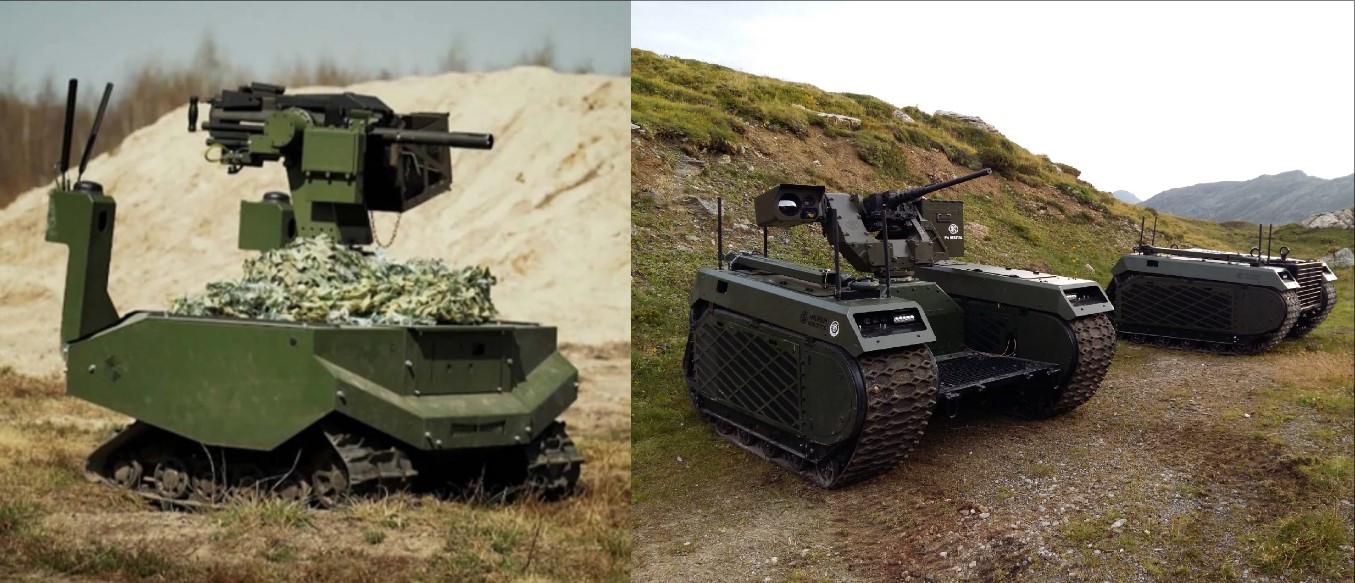
World
In a bold step toward modernizing its battlefield operations, Ukraine’s Armed Forces are preparing for an unprecedented technological leap — the large-scale deployment of unmanned ground vehicles (UGVs). The plan, revealed by Viktor Pavlov, founder of the Ground Robotic Systems (NRK) School and commander in the 3rd Assault Brigade, outlines the procurement of nearly 30,000 robotic systems by the end of next year. This ambitious move marks one of the most extensive efforts by any military in the world to integrate robotic systems into front-line warfare, reflecting both necessity and innovation born from the realities of Ukraine’s ongoing defense campaign. A New Doctrine for Modern Warfare The NRK School, established to train and standardize the use of robotic systems, plays a central role in Ukraine’s transformation. Its mission is to prepare operators across all branches of the military, ensuring these systems are not just fielded but effectively integrated into combat operations. “The number is based on operational needs and attrition,” Pavlov explained in an interview with Telegraf. “Every loss on the front shows us how vital automation has become. Our goal is to standardize training and make robotic systems a daily part of military operations.” Most of these unmanned vehicles are homegrown innovations — the result of Ukraine’s thriving ecosystem of volunteer engineers, defense startups, and local workshops. Despite limited industrial resources, the country has managed to develop a diverse array of ground drones, ranging from small supply carriers to armed tactical platforms. Depending on capability and size, these systems cost between $10,000 and $50,000, a fraction of what comparable Western military robots might cost. Transforming the Front Lines The introduction of UGVs is already reshaping Ukraine’s battlefield dynamics. Once limited to reconnaissance and supply tasks, these robotic systems are now performing an expanding range of missions — from logistical delivery to direct combat support. In the war’s most dangerous zones, UGVs are increasingly replacing humans in life-threatening roles. They deliver ammunition, transport food and water, evacuate wounded soldiers, and collect intelligence in areas too hazardous for manned units. Pavlov noted that a single unmanned system can complete missions that might otherwise require multiple soldiers, reducing exposure to artillery and sniper fire. “Every time a robot takes a route that would have cost a soldier’s life, it proves its worth,” he said. Beyond Logistics — Robots in Combat and Engineering While logistical roles dominate UGV operations, their versatility is rapidly expanding. Ukrainian engineers are now adapting ground drones for: Mine Clearance: Specialized UGVs are being used to neutralize landmines, traditionally the responsibility of human sappers. Combat Support: Certain models are now equipped with machine guns, grenade launchers, or recoil-less rifles, capable of providing suppressive fire or engaging enemy positions remotely. Engineering Tasks: Robots are clearing debris, towing equipment, and laying communications lines under fire. These innovations are redefining the balance between manned and unmanned warfare, allowing Ukrainian units to maintain high operational tempo with fewer casualties. Human Control Still Central Despite automation advances, human operators remain indispensable. Ukrainian defense doctrine emphasizes that mission planning, target engagement, and maintenance all require trained personnel. UGVs are currently semi-autonomous, meaning they rely on real-time human oversight for critical tasks. As Pavlov explains, “Robots can carry, see, and shoot — but humans decide when, where, and why.” This human-machine integration is precisely what the NRK School aims to institutionalize. Operators are trained not just to control robots but to understand their tactical employment, maintenance, and battlefield limitations. Strategic Importance and Broader Impact Ukraine’s robotic warfare strategy is part of a broader shift toward automation, aligning with global trends in military modernization. However, Ukraine’s approach is uniquely pragmatic — born from wartime necessity rather than long-term experimentation. By mass-deploying UGVs, Ukraine hopes to: Reduce troop exposure to artillery, snipers, and mines. Increase operational efficiency by automating supply chains. Leverage domestic innovation to bypass foreign procurement bottlenecks. Build self-reliant defense technology ecosystems capable of scaling production. If successful, Ukraine could become the first country to standardize ground robotics at scale, setting a new model for modern militaries worldwide. Challenges Despite the promise, several challenges remain. The integration of tens of thousands of UGVs demands robust logistics, training infrastructure, and technical support. Communication jamming, electronic warfare, and limited battlefield connectivity can disrupt robot operations. Additionally, ensuring standardization across models built by different local manufacturers will be crucial for maintenance and spare parts management. Nevertheless, Ukraine’s defense community views these obstacles as solvable through experience and innovation. The NRK School continues to expand its curriculum, and new partnerships with domestic firms are being explored to sustain production. A Glimpse into the Future of Warfare Ukraine’s UGV push symbolizes a larger paradigm shift in military strategy — where automation and human ingenuity merge to overcome the limitations of conventional warfare. From the trenches of Donetsk to the industrial workshops of Dnipro, robots built by volunteers and engineers are now saving lives on the front lines. They represent not only technological progress but also a story of adaptation, resilience, and determination in the face of overwhelming odds. If the plan to field 30,000 unmanned ground systems is realized by 2026, Ukraine will have achieved something unprecedented: the world’s first robotized ground army, operating at scale in active conflict. A revolution in land warfare — and a signal that the future of combat may no longer belong solely to the human soldier.
Read More → Posted on 2025-11-09 15:13:01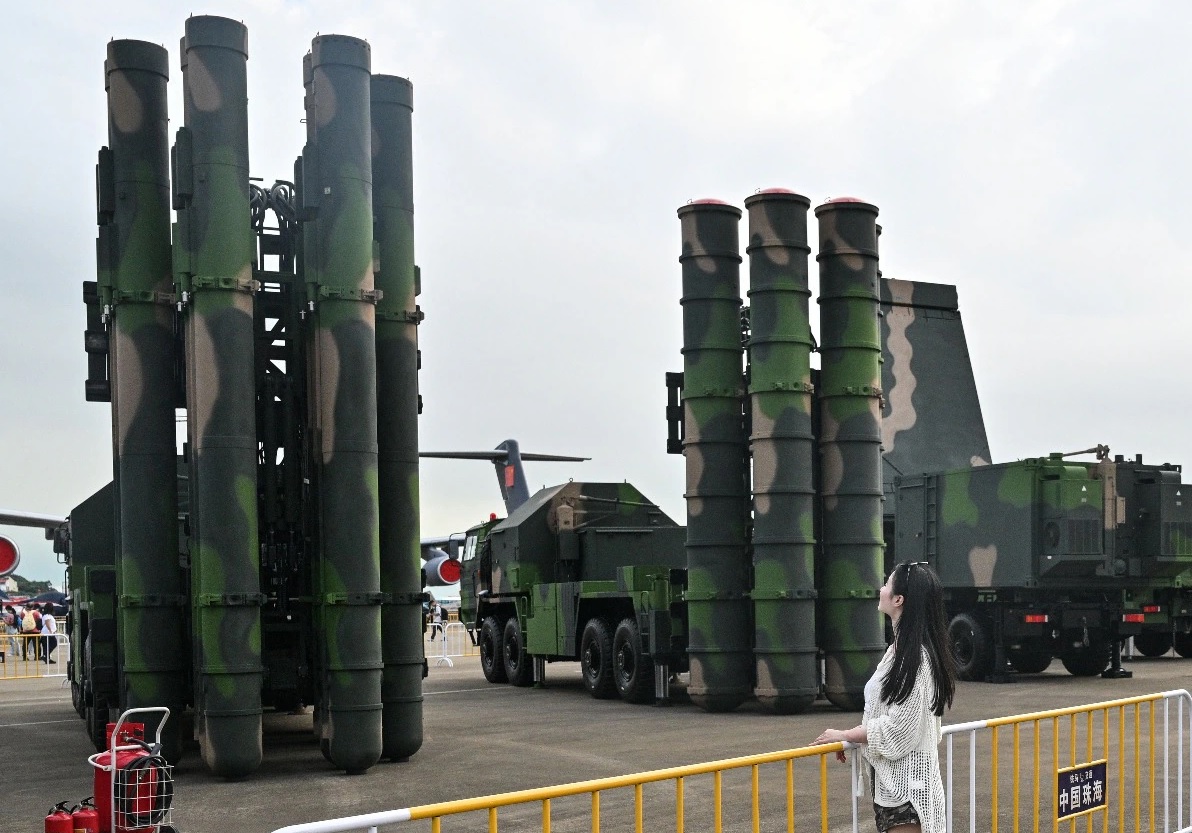
World
In a development that underscores the growing strategic alignment between Tehran and Beijing, Iran has reportedly entered into a barter agreement with China, exchanging large volumes of crude oil for HQ-9B long-range air defense systems and other advanced military technologies. This unprecedented oil-for-weapons arrangement not only signals a deeper military relationship between the two nations but also reflects a calculated effort to bypass U.S.-led financial sanctions and reshape the power balance across the Middle East. Iran’s Oil Lifeline to China Despite decades of Western sanctions, Iran’s oil exports have surged, largely thanks to its covert but expanding trade with China.According to international energy trackers and trade data, over 90% of Iran’s crude oil exports now flow to China, often through indirect shipping routes using reflagged or “ghost fleet” tankers. As of mid-2025, Iran was exporting between 1.5 and 1.8 million barrels per day (bpd) of crude oil to China — the highest level since before the U.S. reimposed sanctions in 2018.In 2022, Iranian oil exports to China were valued at approximately $12.6 billion, and that figure has only grown as China’s independent refiners — the so-called “teapot” refineries — continue to absorb discounted Iranian crude. This steady flow of oil has given Tehran both leverage and liquidity. But instead of relying on complex currency transactions blocked by sanctions, Iran has turned to barter mechanisms — a direct exchange of energy for weapons, training, and military support. What Iran Gains: The HQ-9B Air Defense System The barter deal centers on China’s HQ-9B surface-to-air missile (SAM) system, a next-generation long-range defense platform capable of engaging aircraft, drones, and ballistic missiles across a range of up to 300 kilometers. Developed by the China Academy of Defense Technology, the HQ-9B features active radar homing, an AESA (Active Electronically Scanned Array) radar, and advanced electronic counter-countermeasures. It can track up to 100 targets simultaneously and engage several at once. For Iran, this system fills a long-standing gap. Its existing network — composed of Russian-made S-200s, limited S-300 units, and the domestically produced Bavar-373 — struggles to provide full-spectrum coverage against modern threats. With HQ-9B batteries in place, Tehran could fortify its airspace against potential Israeli or U.S. airstrikes and better protect its critical infrastructure, including nuclear and missile facilities. The Price of Protection The cost of the HQ-9B system reflects its sophistication. Open-source defense market analyses estimate a single HQ-9B regiment (comprising multiple launchers, radars, command posts, and support vehicles) at around $1.3 to $1.5 billion.Simpler HQ-9 units or earlier variants, like the FD-2000, are priced between $300 to $600 million per battery, depending on configuration and export terms. For a barter arrangement, this translates to a massive volume of oil. Based on Brent crude averaging $85 per barrel, one HQ-9B regiment could equate to nearly 17 million barrels of Iranian crude — roughly ten days of Tehran’s current export volume to China. In practical terms, the system’s cost will likely be paid through incremental shipments over several months, reducing Tehran’s financial pressure while deepening Beijing’s energy dependency on sanctioned crude. Strategic Calculations Behind the Deal For Iran, this barter is about more than technology — it’s about survival and deterrence. After years of covert strikes, drone attacks, and cyber operations against its defense facilities, Iran has prioritized the creation of a modern, layered air defense grid. The HQ-9B provides a critical upper tier to complement its medium- and short-range systems. For China, the motivations are multifaceted. Beyond securing cheap oil, Beijing seeks to expand its arms footprint in the Middle East, where Russia’s capacity has diminished under the weight of the Ukraine war. Iran serves as a testing ground and strategic partner — a gateway for Chinese defense systems to gain operational experience in real-world, high-tension environments. Moreover, by supplying Iran with advanced air defense systems, China effectively challenges U.S. regional influence, signaling that its defense exports are now a tool of geopolitical competition rather than simple commerce. Implications for the Region The introduction of the HQ-9B could reshape the Middle East’s aerial calculus.Israel and the United States, which have previously relied on freedom of movement in Iranian airspace for reconnaissance and contingency planning, may now face new strategic constraints. For Gulf Arab states — particularly Saudi Arabia and the UAE — the Iran-China defense linkage adds another layer of complexity. While these nations maintain deep energy ties with Beijing, they now face the reality that China is simultaneously arming their primary rival. Regionally, this barter deal represents a symbolic break from Western-dominated defense supply chains. It showcases an alternative model of military financing that sanctions cannot easily disrupt — one in which energy resources, not currency, fuel modernization. Integration Challenges Ahead Despite the apparent advantages, integrating the HQ-9B into Iran’s command network will not be straightforward.Iran’s defense infrastructure is a patchwork of Russian, indigenous, and legacy Western systems. To achieve full operational efficiency, Iran will require Chinese technical teams, logistics support, and possibly joint training programs. This dependency could tether Iran even closer to China over time — both militarily and technologically. There are also questions about how many HQ-9B units Iran will receive. Some reports suggest only an initial delivery of two to three batteries, while others hint at a broader multi-year plan involving radar upgrades and mobile SAM variants. A New Model for Global Defense Trade The Iran-China oil-for-weapons deal reflects a broader trend: the rise of barter-based defense diplomacy in a sanctions-fractured world. It is a clear demonstration that state-level trade can evolve beyond dollar transactions into a strategic exchange of energy for technology. If confirmed, this model could inspire other sanctioned or isolated nations — such as Russia, Venezuela, or North Korea — to pursue similar deals with willing partners. It also exposes the limitations of existing Western sanctions frameworks, which were designed for a financial world now being rewritten by political necessity. The reported trade of Iranian crude oil for China’s HQ-9B air defense systems marks a turning point in Tehran’s defense strategy and Beijing’s global posture.For Iran, it represents the arrival of cutting-edge protection at a time of mounting regional pressure.For China, it’s another milestone in expanding its influence from East Asia to the Persian Gulf — using energy, weapons, and strategic patience as its primary tools. This oil-for-weapons pact is more than a simple transaction. It is a statement: that in the emerging multipolar world, energy and defense are now currencies of equal value — and those who control both can redefine the balance of power.
Read More → Posted on 2025-11-09 13:05:05
World
In a rare and highly visible display of conventional power, the Afghan Taliban have conducted a large-scale military exercise near the Pakistan border, deploying Soviet-era air defense guns, armored tanks, helicopters, and heavy artillery. The drills mark one of the largest mobilizations by the Taliban since taking power in 2021 and come amid rising tensions with Islamabad over border clashes and militant sanctuaries. Show of Force in a Sensitive Region The military exercise, reportedly held in southern and eastern Afghanistan close to the Durand Line, involved a combination of live-fire artillery drills, mechanized movements, and air support operations. Footage circulating on local Afghan media channels showed columns of tanks and armored vehicles, believed to be T-55 and T-62 models left from the Soviet occupation era, maneuvering across the dusty plains under Taliban flags. Several Mi-17 transport helicopters were also seen conducting troop-lift operations, while gun-mounted ZU-23-2 anti-aircraft cannons were positioned on ridgelines for simulated low-altitude defense. Taliban fighters, dressed in new camouflage fatigues, were observed coordinating using radio and drone surveillance equipment, signaling a growing degree of tactical sophistication within their ranks. “The exercise demonstrates our readiness to defend every inch of Afghan soil,” a Taliban defense official told local media. “Our forces are now capable of defending our airspace, borders, and sovereignty without foreign assistance.” Soviet-Era Arsenal Still in Use Most of the equipment on display originated from the Soviet-Afghan War period (1979–1989) or from captured stockpiles of the former Afghan National Army. This includes T-55 and T-62 tanks, D-30 artillery pieces, and ZU-23-2 twin-barrel air defense guns, all of which remain serviceable for ground and low-altitude defense operations. In addition to older Soviet systems, Taliban units have also been using U.S.-origin weapons and vehicles left behind after the withdrawal of American and NATO forces in August 2021.These include Humvees, Mine-Resistant Ambush Protected (MRAP) vehicles, M1117 Guardian armored cars, and small arms such as M4 carbines, M16 rifles, and light machine guns.Some Taliban units have reportedly adapted night-vision and communication equipment from the former Afghan National Army’s U.S.-supplied inventory. Military analysts say this mix of legacy Soviet platforms and modern U.S. gear provides the Taliban with both symbolic and practical advantages — allowing them to operate a hybrid force that combines older, heavy firepower with newer mobility and communication tools. Tensions With Pakistan at a Boil The timing of the drills coincides with intensified hostilities between Afghanistan and Pakistan. Over the past two months, cross-border shelling and armed clashes have killed dozens of soldiers on both sides, while each government has accused the other of harboring militants. Islamabad has charged that the Taliban regime allows Tehrik-e-Taliban Pakistan (TTP) militants to operate from Afghan territory — a claim Kabul denies. In turn, the Taliban have accused elements within the Pakistani military of pursuing “anti-Afghanistan policies” and attempting to destabilize the region. Just days before the exercise, Taliban officials issued a statement condemning Pakistani artillery fire across the border, calling it a violation of Afghan sovereignty. Observers believe the military exercise was designed as a direct response to these incursions — a demonstration of readiness and deterrence. Message of Strength — and Independence Beyond regional signaling, analysts say the Taliban are using such exercises to project internal unity and authority. Since returning to power, the Taliban’s leadership has sought to transform its guerrilla fighters into a structured national military, now referred to as the “Islamic Emirate Army.” While international recognition of the Taliban government remains limited, the leadership continues to consolidate military control across Afghanistan. This latest exercise is likely intended to showcase that the regime can now operate as a functioning state military, not just a network of insurgent groups. “The Taliban are trying to send multiple messages — to Pakistan, to regional powers like China and Iran, and to their own citizens,” said Dr. Rahim Yusufzai, a Kabul-based analyst. “They want to show that Afghanistan is no longer dependent, that it can defend its borders and manage its own security.” Regional Reactions and Strategic Implications The exercise has drawn the attention of neighboring countries, particularly Pakistan, Iran, and China, all of whom have strategic and security interests tied to Afghanistan. Pakistan’s military has not officially commented on the drills but has reportedly increased aerial reconnaissance and troop presence along Balochistan and Khyber Pakhtunkhwa sectors. Meanwhile, China — which has invested heavily in mineral and infrastructure projects in Afghanistan — has urged “calm and restraint on both sides” following the recent border clashes. For regional defense analysts, the Taliban’s transition toward conventional military practices marks a significant evolution. Once known solely for asymmetric warfare and insurgency tactics, the group is now attempting to modernize its forces, using old Soviet weapons as a foundation for a future standing army. Uncertain Future, Heightened Risks However, the move carries risk. Concentrating heavy weaponry and troops near the border could increase the chance of miscalculation or accidental escalation with Pakistan’s powerful armed forces. A single exchange of artillery fire or a drone strike could spiral into a larger confrontation — something both sides can ill afford. For now, the Taliban’s display appears aimed at deterrence rather than confrontation, but the show of tanks, helicopters, and anti-aircraft guns sends a clear message:Afghanistan under the Taliban is not merely guarding its borders — it is asserting its place as a military power in the region once again.
Read More → Posted on 2025-11-09 11:54:08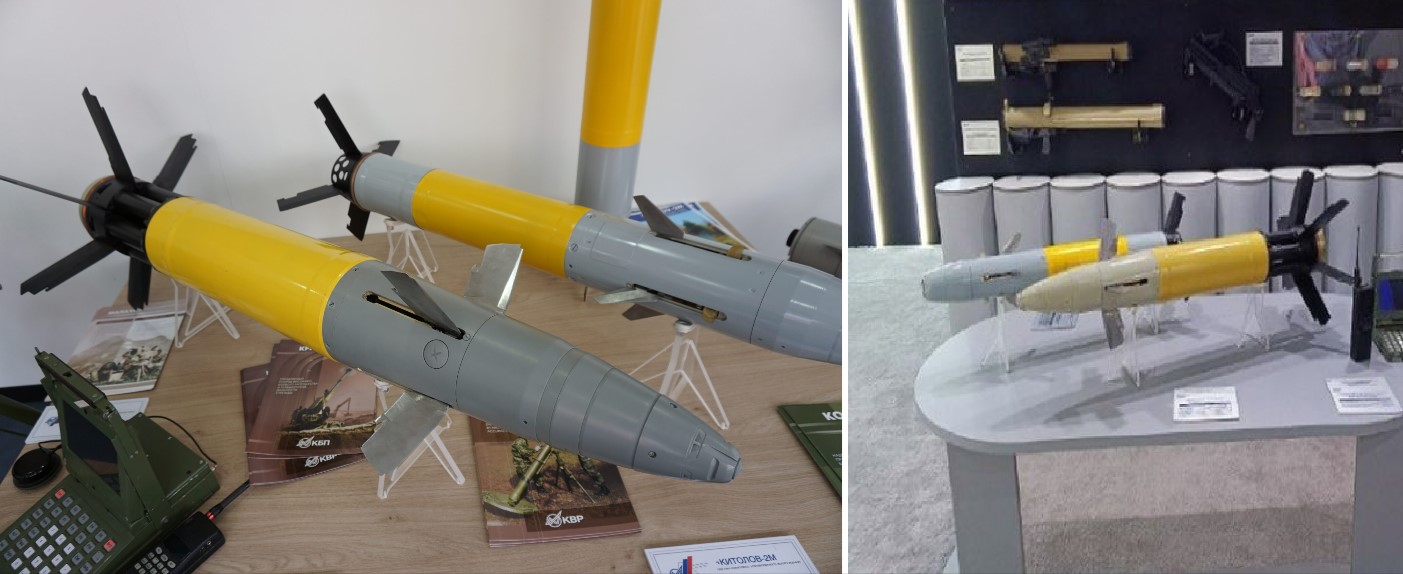
World
Russia has confirmed the delivery of new batches of Krasnopol-M2 laser-guided artillery shells to its frontline units, marking a continued shift toward precision strike capabilities on the Ukrainian battlefield. The announcement, made by Rostec’s High Precision Systems and reported by TASS, underscores Moscow’s growing emphasis on precision firepower to offset the challenges of modern counter-battery warfare and electronic interference. Rostec’s Push for Precision Artillery According to Rostec’s arms cluster director Bekhan Ozdoyev, the new Krasnopol-M2 rounds are “highly needed today” as Russian forces face an increasingly complex combat environment. The deliveries form part of a larger program to modernize artillery forces with smart munitions capable of hitting pinpoint targets while conserving ammunition stockpiles. The move signals a broader doctrinal shift in Russian ground operations — from the traditional “mass fire” approach toward “precision effects”, allowing fewer rounds to achieve greater tactical results. The integration of guided artillery also shortens the sensor-to-shooter loop, a critical factor in fast-paced counter-battery duels. Inside the Krasnopol-M2: Russia’s Laser-Guided “Sniper Shell” The Krasnopol-M2 is an advanced, semi-active laser-guided artillery shell developed by the KBP Instrument Design Bureau, part of Rostec’s High Precision Systems holding. Designed for 152 mm and 155 mm calibre howitzers, the M2 represents the latest evolution of Russia’s precision artillery technology. Key Specifications: Calibre: 152 mm (Russian standard); 155 mm version for export systems Weight: ~54 kg Length: Approx. 1,300 mm Effective Range: 20–25 km (depending on gun type and conditions) Guidance System: Semi-active laser homing Warhead: High-Explosive Fragmentation (HE-FRAG) Accuracy: Circular Error Probable (CEP) under 2 meters when laser-designated Targets: Armoured vehicles, artillery positions, command posts, and fortified structures Operational Envelope: Day/night capability; effective in limited visibility but weather and smoke can reduce accuracy The M2 variant introduces several improvements over its predecessors, including higher resistance to electronic interference, enhanced seeker sensitivity, and the ability to engage moving targets up to 36 km/h. It can also perform synchronized salvo fire, allowing multiple shells from different guns to strike distinct targets simultaneously — a feature that enhances survivability and suppressive fire effectiveness. Battlefield Context: Adapting to Counter-Battery Threats Russia’s renewed focus on guided munitions reflects lessons from the war in Ukraine, where artillery duels dominate the frontlines. Ukrainian forces, supported by Western counter-battery radars, drones, and precision munitions, have made traditional massed artillery fire increasingly risky. By deploying Krasnopol-M2 shells, Russian units aim to deliver precision strikes from safer distances, reducing the number of rounds needed and minimizing exposure to counter-fire. This also conserves logistics resources — a significant advantage amid ongoing ammunition production constraints. Moreover, laser-guided shells like the Krasnopol are less vulnerable to GPS jamming, which has become widespread in the conflict. However, their reliance on laser designation means that spotters or UAVs must maintain visual contact with the target, which poses its own operational risks. Integration with Modern Artillery Systems The Krasnopol-M2 is compatible with Russia’s 2S19 Msta-S and 2S35 Koalitsiya-SV self-propelled howitzers, as well as legacy 152 mm field guns. When coupled with modern fire-control systems such as Malakhit and Kapustnik-B, and UAVs like the Orlan-10, the shell becomes a crucial part of a networked artillery strike ecosystem. This ecosystem enables faster target acquisition, coordination with drone reconnaissance, and real-time battle damage assessment — essential features in modern high-intensity warfare. Industrial and Strategic Implications Rostec’s High Precision Systems has expanded its high-precision munition output in response to wartime demand. Russian sources suggest that production of smart munitions, including the Krasnopol line, has increased severalfold since 2022. From an industrial standpoint, this reflects Russia’s adaptation under sanctions: focusing on domestically sourced components, simplified electronics, and modular design to sustain large-scale production. Strategically, the delivery of guided shells indicates that Russia intends to sustain long-term, precision-enabled operations rather than relying solely on volume fire. This aligns with the Ministry of Defense’s broader modernization strategy, which emphasizes precision strike, survivability, and digitized command networks.
Read More → Posted on 2025-11-09 11:38:14
World
In November 2025, China officially commissioned the Fujian (Type 003) — its first catapult-equipped supercarrier, signaling the most serious challenge yet to U.S. naval dominance. This move comes as the U.S. Navy’s USS Gerald R. Ford (CVN-78), the world’s most advanced nuclear-powered carrier, continues its global operations. Both ships represent their nations’ peak achievements in naval engineering — yet they are built on vastly different doctrines. The Ford is designed for global power projection and nuclear endurance, while the Fujian is a regional strike platform meant to dominate the Western Pacific and South China Sea. Below is a deep, technical, and strategic comparison of the two — covering propulsion, sensors, aircraft, catapult systems, automation, and strategic value. General Design and Dimensions Specification USS Gerald R. Ford (CVN-78) Fujian (Type 003) Country United States China Commissioned 22 July 2017 5 November 2025 (reported) Shipyard Newport News Shipbuilding, Virginia Jiangnan Shipyard, Shanghai Displacement (full load) ~100,000 long tons (~112,000 tons) Estimated 80,000–85,000 tons Length 1,106 ft (337 m) ~1,050 ft (316 m, estimated) Beam (Flight Deck Width) 256 ft (78 m) ~246 ft (78 m, estimated) Draft 41 ft (12.5 m) ~36 ft (11 m, estimated) Hull Material High-tensile steel with layered armor Steel with radar-reducing superstructure Island Design Reduced radar cross-section, smaller island More compact island, farther aft (for deck efficiency) Verdict: The Ford is larger and heavier, offering greater hangar space and aviation fuel capacity. Fujian, while slightly smaller, is comparable in deck area — a feat for China’s first indigenous supercarrier. Propulsion and Power Systems Feature Ford Fujian Type Nuclear Conventional Reactor / Engine Type 2 × A1B nuclear reactors, 4 shafts Conventional steam turbines (possibly gas-steam hybrid), 8 boilers (speculated) Power Output ~700 MW total electrical power ~150–200 MW estimated electrical output Speed 30+ knots 30 knots (estimated) Range Unlimited (nuclear) ~10,000–12,000 nautical miles (before refueling) Endurance 25+ years before reactor refueling Limited by fuel logistics (~45–60 days without replenishment) Verdict: Nuclear propulsion gives the Ford unmatched endurance and power for energy-intensive systems (EMALS, radars, directed-energy weapons). Fujian’s conventional plant limits its operational range, tying it closer to home waters and supply lines. Launch and Recovery Systems System Ford Fujian Launch System EMALS (Electromagnetic Aircraft Launch System) — 4 catapults Electromagnetic Catapult System (Type-003 EM system) — 3 catapults Arresting Gear Advanced Arresting Gear (AAG) PLAN Electro-hydraulic Arresting Gear Launch Rate ~160 sorties/day nominal; 270 in surge Estimated 120–150 sorties/day (early projections) Launch Energy Control Fly-by-wire digital modulation Similar concept using power storage banks (MVDC) Launch Compatibility Supports F-35C, UAVs, AEW aircraft Supports J-15T, J-35, KJ-600, drones (future UCAVs) Verdict: Both carriers use electromagnetic catapults — a rare technological parity. The Ford’s EMALS is combat-proven; Fujian’s version is new and untested but reflects major progress in Chinese naval engineering. Aircraft Capacity and Composition Category Ford Fujian Aircraft Capacity 75–90 aircraft 60–70 aircraft Fighter Aircraft F/A-18E/F Super Hornet, F-35C Lightning II J-15T (Flanker-based), J-35 (stealth fighter) AEW Aircraft E-2D Advanced Hawkeye KJ-600 (AEW&C aircraft) Electronic Warfare (EW) EA-18G Growler J-15DT EW variant (planned) UAV Integration MQ-25 Stingray (tanker), MQ-9 naval variant GJ-11 Sharp Sword (stealth UCAV, test phase) Helicopters MH-60R/S Seahawk Z-20 and Z-18 ASW/utility Sortie Rate ~160–270 per day 120–150 per day (estimated) Deck Elevators 3 advanced electromagnetic elevators 2 traditional elevators Verdict: The Ford’s air wing is larger, more diverse, and fully fifth-generation integrated. Fujian’s air wing is smaller but introduces new AEW and stealth fighters — transforming China’s naval aviation. Sensors, Radar, and Combat Systems System Ford Fujian Primary Radar Dual Band Radar (DBR): X- and S-band AESA arrays Type 346B AESA (same family as on Type-055 destroyers) Combat System Aegis-like Ship Self-Defense System (SSDS) Mk2 PLAN Integrated Combat System (ICS, based on Type-055 network) Data Links Link 16, CEC, NIFC-CA Beidou-based network, datalink with Type-055s & AEW aircraft Electronic Warfare Suite AN/SLQ-32(V)7 SEWIP Indigenous ECM/ECCM suite, details classified Self-Defense Missiles ESSM, RIM-116 RAM, Phalanx CIWS HQ-10 SAMs, Type 1130 CIWS Decoys / Jammers Nulka, SRBOC, SLQ-32 Chaff/flare dispensers, electronic jammers Verdict: The Ford has a broader, more integrated C4ISR network and proven radar systems. Fujian’s sensors rival top-tier destroyers, but full fleet data integration remains under development. Crew, Automation, and Maintenance Feature Ford Fujian Crew (ship + air wing) ~4,500 ~2,500–2,800 (estimated) Automation Level Highly automated — 25% reduction in manpower vs Nimitz Moderate automation, less advanced software control Weapons Elevators 11 advanced electromagnetic elevators 8 hydraulic elevators (estimated) Maintenance Intervals 12 years between major overhauls Regular drydock after 5–7 years (fuel-dependent) Verdict: Ford’s automation cuts crew size and boosts efficiency. Fujian’s systems are more conventional, but China has made major strides in maintenance design. Strategic Role and Doctrine Strategic Focus Ford Fujian Operational Range Global — Atlantic, Pacific, Indian Oceans Regional — South China Sea, Taiwan Strait, Indian Ocean Power Projection Blue-water dominance and deterrence Regional sea control and anti-access area denial (A2/AD) Carrier Strike Group Support 1 cruiser + 2–3 destroyers + submarines + supply ships 1–2 Type-055 cruisers + 2–3 Type-052D destroyers + logistics ships Allied Infrastructure Global (NATO, Indo-Pacific, CENTCOM bases) Regional (Djibouti, Gwadar, and home ports) Doctrinal Purpose Global response, deterrence, crisis management Strategic deterrence, Taiwan contingency, regional control Verdict: The Ford is designed to project power worldwide; Fujian is built to dominate Asia’s maritime periphery. Network Warfare and Future Integration Ford integrates with F-35C’s sensor fusion, E-2D Hawkeye’s networked battlespace management, and U.S. satellites, forming the backbone of NIFC-CA (Naval Integrated Fire Control - Counter Air) — allowing cross-domain target sharing between ships, aircraft, and land units. Fujian will link with KJ-600 AEW aircraft, Type-055 cruisers, and China’s Beidou navigation satellites, forming the PLAN’s first carrier-centric battle network. Integration remains under development, but China is rapidly improving its C4ISR architecture. Strategic Implications For the United States: The Ford symbolizes unrivaled global reach — able to sustain combat operations thousands of miles from home, support expeditionary forces, and deploy carrier strike groups on demand. Its nuclear endurance, automated systems, and combat-proven fleet structure keep the U.S. far ahead in operational readiness. For China: The Fujian marks China’s arrival as a true blue-water navy. Its CATOBAR system enables modern carrier aviation — a critical step toward competing with Western navies. While it cannot match Ford’s global endurance, it makes China regionally dominant across Asia-Pacific waters. With Fujian, the PLAN can now project power beyond the first island chain, maintain persistent air coverage, and challenge U.S. naval supremacy near its maritime frontiers. Strengths and Weaknesses Aspect Ford Advantage Fujian Advantage Propulsion Nuclear, unlimited endurance Simpler maintenance, lower cost Aircraft Capacity 75–90 aircraft New stealth fighters (J-35) and AEW capability Sortie Generation Highest in the world (160–270/day) Still developing but revolutionary for China Sensors / Network Global combat integration (CEC, Link 16) Integrated with regional PLAN assets Strategic Range Global blue-water Regional A2/AD environment Combat Experience 80 years of carrier doctrine Rapidly improving, still learning Cost $13 billion (CVN-78) Estimated $8–9 billion (Fujian) Conclusion The USS Gerald R. Ford remains the benchmark for carrier dominance — unmatched in endurance, combat integration, and global reach. Its nuclear propulsion, automated systems, and fifth-generation air wing keep it far ahead in sustained power projection. However, China’s Fujian is a technological milestone. It elevates the PLAN from a regional force to a near-peer navy capable of operating CATOBAR carriers, electromagnetic launch systems, and stealth air wings. While Fujian cannot yet equal the Ford in endurance or experience, its emergence closes the capability gap faster than many predicted.Together, these carriers represent a new era of competition: Ford — the standard of global dominance.Fujian — the symbol of China’s rise as a maritime power. Both will define 21st-century naval warfare — not through size alone, but through technology, integration, and strategy.
Read More → Posted on 2025-11-08 18:01:20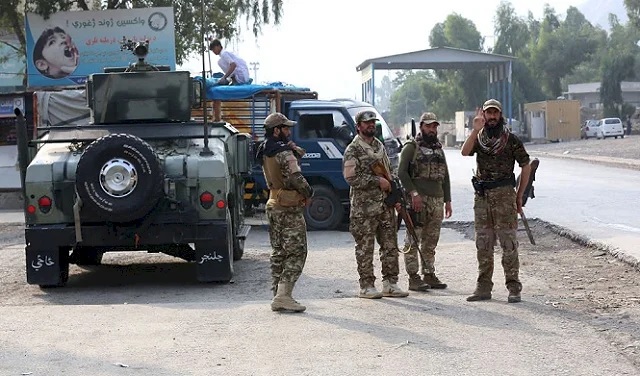
World
In a statement released on November 8, 2025, in Kabul, the spokesman of the Islamic Emirate of Afghanistan (IEA), Zabihullah Mujahid, accused elements within the Pakistan Armed Forces of pursuing “anti-Afghanistan policies” and fomenting tensions through “manufactured pretexts.” The remarks were issued under the title “Remarks by the Spokesperson of the Islamic Emirate Concerning Recent Developments and the Tehreek-e-Taliban Pakistan (TTP)”.In his post on X (formerly Twitter), Mujahid contended that certain Pakistani military factions view a strong, stable Afghanistan as contrary to their interests: “Unfortunately, certain military elements in Pakistan appear to perceive a strong central government in Afghanistan, along with stability, security, and development, as contrary to their interests.” He added that these elements had, for years, exploited Afghanistan's instability, conflicts, and displacement — and now seem intent on creating fresh tensions. Historical Context and the TTP Mujahid’s statement sought to push back against assertions linking the Taliban’s return to power in 2021 with the resurgence of the Tehreek-e-Taliban Pakistan (TTP). He argued that both “insecurity in Pakistan” and the emergence of the TTP stretched back to 2002 — as a consequence of misguided Pakistani military policies, including alignment with the U.S., drone strikes in Waziristan, and the alienation of local populations. He referenced a sequence of Pakistani military operations — including Operation Al-Mizan, Operation Rah-e-Rast, Operation Sher Dil, Operation Nijat, Operation Koh-e-Safid, and Operation Zarb-e-Azb — pointing out how these operations had led to the displacement of hundreds of thousands of civilians and resulted in casualties of 80,000-90,000 military personnel and civilians, based on Islamabad’s own figures. By framing it this way, Mujahid aimed to portray the current faults as home-grown to Pakistan’s internal security and policy failures — rather than as consequences of Afghanistan’s change in governance. Afghanistan’s Stance on Sovereignty and Refugees The Afghan statement emphasised that the Islamic Emirate has taken steps since 2021 to uphold regional stability. These steps include: Facilitating dialogue among tribal, political, and religious figures. Relocating tribal refugees away from the contentious Durand Line border region, and banning weapon possession among refugee populations. Issuing religious edicts (fatwas) forbidding individuals to engage in foreign jihad operations without authorisation. Offering to facilitate the safe return of refugees to their homes, while insisting it will not allow Afghan territory to be used for interference in another country’s affairs. Mujahid stressed: “The Islamic Emirate warmly welcomes any efforts and measures that enable these refugees to safely return to their homes. At the same time … the Islamic Emirate continues to consider itself responsible for ensuring that no one uses its territory to interfere in the affairs of another country, and it will take necessary steps to prevent such actions, God-willing.” Breakdown of Talks & Rising Tensions The statement comes on the heels of a deadlock in talks between Afghanistan and Pakistan held in Istanbul on 6-7 November 2025, mediated by Turkey and Qatar. Pakistan’s Defence Minister Khawaja Asif announced there were “no plans for a fourth round” of negotiations. Key points from this phase: The Afghan delegation said they participated “in good faith and with appropriate authority,” expecting Pakistan to engage seriously and constructively. The IEA accused Pakistan of trying to shift responsibility for security entirely onto Kabul while refusing to assume any of its own. Afghanistan’s Minister for Tribes, Borders & Tribal Affairs, Noorullah Noori, warned Pakistani officials “not to test the patience of Afghans,” cautioning against over-confidence in technology and noting that “both the elders and youth of Afghanistan will rise to fight” if challenged. Implications: What’s at Stake Regional Stability:The two neighbours share a long and disputed border along the Durand Line. With mutual accusations escalating, the risk of military confrontation or cross-border escalation looms large. Afghanistan’s reaffirmation of its duty to defend its land and citizenry signals its readiness to respond to any external aggression. TTP and Cross-Border Militancy:Pakistan maintains that the TTP — a militant group based in Pakistan’s tribal areas and aligned with the Afghan Taliban — uses Afghan territory as a sanctuary. Kabul counters that the TTP issue predates the Taliban’s takeover and is Pakistan’s internal security problem. The disagreement here remains a major stumbling block to any lasting peace. Refugees and Humanitarian Dimension:The displacement of tribal populations due to past Pakistani military operations continues to influence border dynamics, local allegiances, and security on both sides. Afghanistan emphasises its willingness to see refugee returns, but hints at responses if its territory is misused. Diplomatic Channels vs. Blame Game:The breakdown of Istanbul talks indicates a shift from negotiation to hardened rhetoric. Unless either side softens its stance, there is a danger of a protracted stalemate or further confrontation. The Afghan side emphasised its desire to cooperate “within limits” of its capabilities and responsibilities. Concluding Thoughts The statement by Zabihullah Mujahid marks a clear escalation in messaging by the Islamic Emirate of Afghanistan — a direct rejection of Pakistani claims, a reassertion of Afghan sovereignty, and a warning against interference. By placing blame on specific “elements within the Pakistani military,” Kabul signals that the issue lies not with Islamabad’s civilian leadership, but with its security establishment that, in Afghanistan’s view, benefits from persistent instability. In the immediate term, this rhetorical standoff risks hardening attitudes on both sides of the Durand Line, threatening border security and regional cooperation. For Pakistan, the challenge is to contain the TTP insurgency and demonstrate good faith diplomacy. For Afghanistan, the task is to balance international legitimacy with national pride and sovereignty. How this evolving confrontation unfolds will significantly shape South Asia’s security calculus, testing both countries’ ability to prevent historical grievances from igniting a new front of conflict.
Read More → Posted on 2025-11-08 17:31:53
World
For years, scientists have dreamed of building particle beam weapons — devices that can fire streams of tiny particles at almost the speed of light. These beams could hit enemy satellites or missiles with such energy that they melt or disable them instantly. But there has always been one big problem: power. To work, a particle beam weapon needs two things at the same time — massive energy and perfect timing. The particles have to be pushed and accelerated by strong electromagnetic fields, and these fields must turn on and off at exactly the right moments — within millionths or even billionths of a second. If the timing is even slightly off, the beam loses focus and becomes useless. The problem is, powerful systems are usually slow to control, while precise systems can’t handle huge energy bursts. Scientists have spent decades trying to make both happen together — without success. Now, a group of Chinese engineers say they have solved this puzzle. A Major Breakthrough by Chinese Scientists According to a study published in Advanced Small Satellite Technology, a research team led by Su Zhenhua at DFH Satellite Co., Ltd. (China’s biggest satellite builder) has built a new power system that can do both — deliver very high energy and keep super-accurate timing. In ground tests, their device produced 2.6 megawatts (MW) of pulsed power — that’s roughly the energy needed to power over 2,000 homes — while keeping its timing accurate to just 0.63 microseconds (a little more than half a millionth of a second). By comparison, older systems usually had less than 1 MW of power and timing errors that were thousands of times worse. The team said this new system could be useful for things like particle beam weapons, electronic warfare simulators, and advanced radar systems, which all need short, powerful, and precisely controlled bursts of energy. How It Works Instead of relying on one special part, the engineers redesigned the entire power system from top to bottom. Solar panels provide the base electricity, just like on normal satellites. A special converter boosts the low-voltage solar power into very high voltage — like pumping water up into a tank to store it at high pressure. This energy is stored in a bank of capacitors (devices that can release power very quickly). When triggered, these capacitors discharge the energy through a system that keeps the current steady and smooth. To make sure everything fires at exactly the same time, the system uses a central control chip — known as an FPGA — that synchronizes 36 separate modules so they all release their energy within 630 nanoseconds (less than a microsecond) of each other. The result is a powerful, clean energy pulse that could be used for lasers, particle accelerators, or high-energy space equipment. Why This Matters This breakthrough could open the door to new kinds of space-based directed energy weapons — devices that attack using electricity instead of explosives. Right now, space defense relies heavily on missiles, which are expensive and single-use. But a satellite that fires beams or pulses powered by sunlight could attack multiple targets quickly and cheaply. Such systems could disable or damage satellites without creating dangerous space debris — making them a silent but powerful tool in future space conflicts. However, the same technology could also have peaceful uses. Peaceful Applications The Chinese researchers said their pulsed power system can help in many non-military areas: Ion thrusters for faster and more efficient space travel. Laser communication systems for high-speed data links between satellites. Lidar and radar systems for better Earth observation and weather monitoring. Microwave systems that can map or sense the Earth’s surface in detail. So, while the technology could power weapons, it could also be key to the next generation of scientific and civilian satellites. Challenges Experts say this is an impressive step, but turning it into a real space system won’t be easy. Space is an extreme environment — it’s freezing cold, has no air for cooling, and is full of harmful radiation. Electronics that work on Earth often fail in orbit. Also, managing heat is a huge challenge. A satellite that releases megawatts of power must somehow get rid of all the waste heat, or it will overheat and fail. And even if such a system works in space, using it as a weapon raises tough questions — both technical and political. Would it really be powerful enough to damage hardened satellites? How would other countries respond if such a satellite appeared in orbit? These are issues that go beyond engineering. A Glimpse Into the Future Still, this new technology marks a major leap in space power systems. For the first time, scientists have shown that it might be possible to deliver huge power with incredible precision in a satellite-sized device. If proven in orbit, this could transform everything from space travel to defense, creating systems that use pure energy to move, communicate, or even fight. For now, it remains a laboratory success — but one that could shape the next chapter in the race for space dominance. Because in the coming decades, energy and timing, not just rockets and missiles, may decide who controls the final frontier.
Read More → Posted on 2025-11-08 16:11:07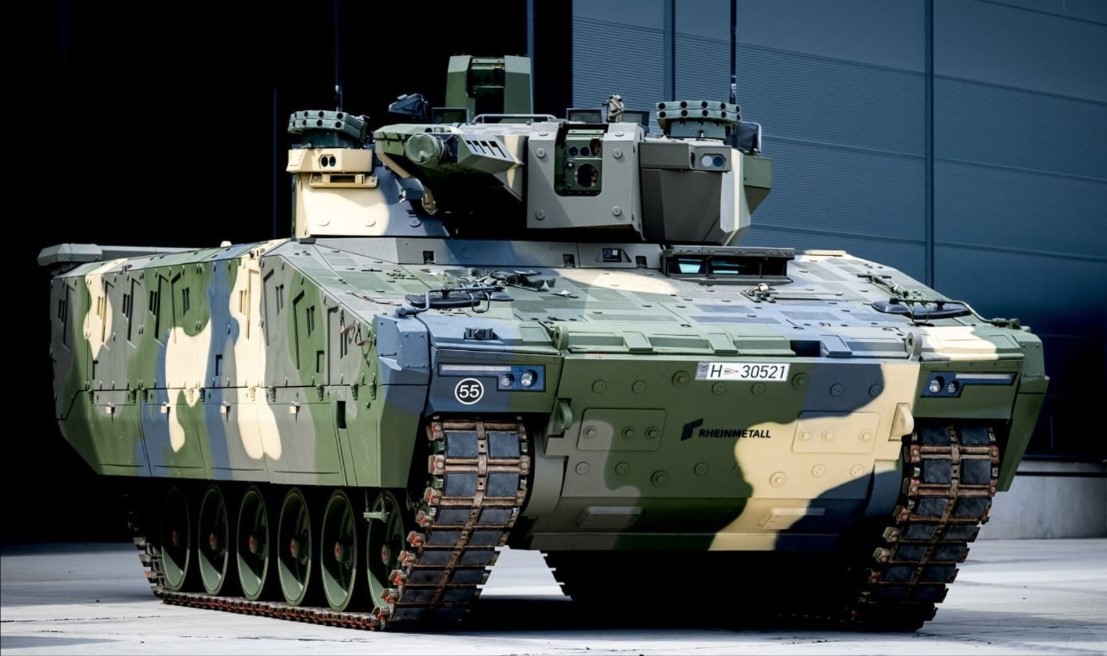
World
Germany is reportedly preparing a major defence proposal to supply Greece with over 400 infantry fighting vehicles (IFVs), marking one of the largest European land systems offers in recent years. The package, valued at more than €2 billion, includes a mix of new-generation KF41 Lynx IFVs and refurbished Marder 1A3 vehicles, along with extensive local industry participation and long-term financing options. A Two-Tier Armoured Vehicle Package According to sources in Athens and Berlin, the offer comprises 205 new KF41 Lynx vehicles built by Rheinmetall and 200 Marder 1A3 IFVs from the surplus stocks of the German Army (Bundeswehr). The Marder units would undergo comprehensive refurbishment before delivery to ensure combat readiness and standardisation with Greek operational requirements. The proposal will soon be formally presented to Greek Prime Minister Kyriakos Mitsotakis and Defence Minister Nikos Dendias, as part of ongoing efforts to modernise the Hellenic Army’s armoured fleet amid increasing regional security challenges. Germany’s package is designed as a “strategic partnership offer” — combining new-generation equipment, technology transfer, and industrial cooperation — reflecting Berlin’s intent to strengthen its defence ties with Athens while supporting European defence autonomy. Industrial Partnership and Local Production A defining element of the proposal is the industrial participation clause, which is expected to exceed 25% of the total programme value. Greek companies will be involved in vehicle assembly, component production, armour systems, and maintenance support. The primary Greek partner in this endeavour would be EODH S.A., a company already working closely with Rheinmetall in armour protection technologies. EODH is anticipated to play a central role in the integration, testing, and logistical support phases of both the Lynx and Marder vehicles, ensuring that a significant portion of the work remains within Greece. Other domestic defence firms could also benefit from subcontracts for electronic systems, optics, and communication suites, potentially revitalising segments of Greece’s struggling defence industrial base. Financing and Strategic Benefits To make the offer more attractive, Germany is reportedly including favourable financing terms, with long repayment periods and potential government-backed credit guarantees. Such arrangements are designed to ease the budgetary burden on Greece’s defence ministry while enabling faster procurement of urgently needed assets. For Berlin, the deal not only opens a new export opportunity but also reinforces political and defence cooperation with Athens, especially as both countries share interests in stability in the Eastern Mediterranean and EU-NATO defence integration. Greece’s Armoured Modernisation Context The proposal arrives as Greece continues a broad modernisation of its ground forces. The Hellenic Army currently operates 40 Marder 1A3s, which were transferred from Germany in 2022 as part of an exchange — Athens sent its older BMP-1 IFVs to Ukraine in return. The Marder 1A3, while an older platform, offers solid reliability and remains a capable vehicle for mechanised infantry operations. However, the addition of the KF41 Lynx would represent a leap in capability. The Lynx, one of the world’s most advanced infantry fighting vehicles, features a modular architecture, digital battlefield integration, enhanced survivability, and the ability to mount various weapons from 30mm cannons to anti-tank missiles. It can carry eight soldiers and boasts modern protection systems suitable for NATO-standard operations. Tanks Modernisation: The Leopard Path Ahead Parallel to the IFV proposal, Germany has also offered Greece cooperation on main battle tank upgrades. Both Krauss-Maffei Wegmann (KMW) and Rheinmetall are vying for the contract to modernise Greece’s large Leopard 1A5 and Leopard 2A4 fleets. The upgrade options vary widely: A basic modernisation of the 183 Leopard 2A4s — involving new fire control, sensors, and armour improvements — is estimated at €700 million. A full upgrade to the Leopard 2A7 HEL standard, similar to those operated by Germany and Qatar, could cost up to €1.5 billion. Greece is currently evaluating the cost-benefit ratio of these options, balancing between comprehensive upgrades and maintaining operational readiness across its entire fleet. Strategic Implications If accepted, the German proposal could significantly enhance Greece’s armoured warfare capabilities, enabling the Hellenic Army to phase out ageing Soviet-origin platforms and standardise with NATO systems. For Germany, the deal represents a continuation of its strategy to deepen defence-industrial partnerships within Europe — mirroring similar KF41 Lynx production collaborations in Hungary and Australia. The project would also strengthen Greece’s defence autonomy, boost its domestic manufacturing sector, and solidify its position as a key NATO ally on Europe’s southeastern flank. While negotiations are still at an early stage, the political and industrial signals suggest that both Athens and Berlin are interested in reaching a comprehensive defence agreement. With Greece’s focus on modernising its army after decades of constrained budgets, and Germany’s push to expand its defence exports within Europe, this deal could mark a turning point in bilateral defence cooperation. If finalised, the acquisition of KF41 Lynx and Marder 1A3 vehicles — alongside the potential Leopard tank upgrades — would form the backbone of Greece’s next-generation land combat capability for decades to come.
Read More → Posted on 2025-11-08 15:58:02Search
Top Trending in 24 Hours
-
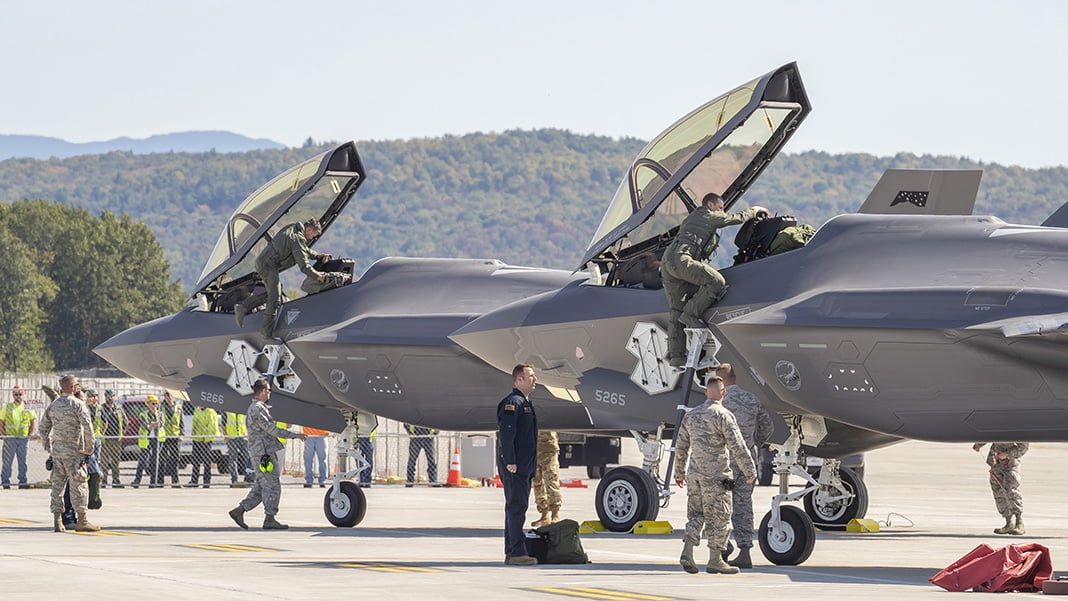 F-35 Fleet Readiness Falls to 25% Amid Parts Shortages and Software Delays: GAO Report
-
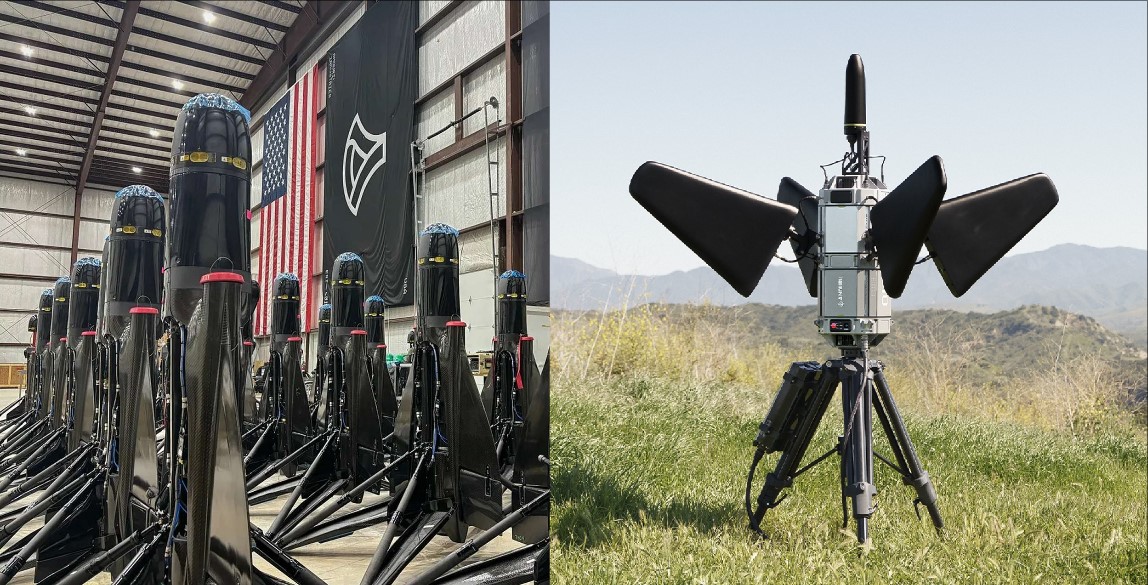 U.S. Approves $1.98 Billion Sale of Anduril AI-Powered Counter-Drone Systems to Kuwait
-
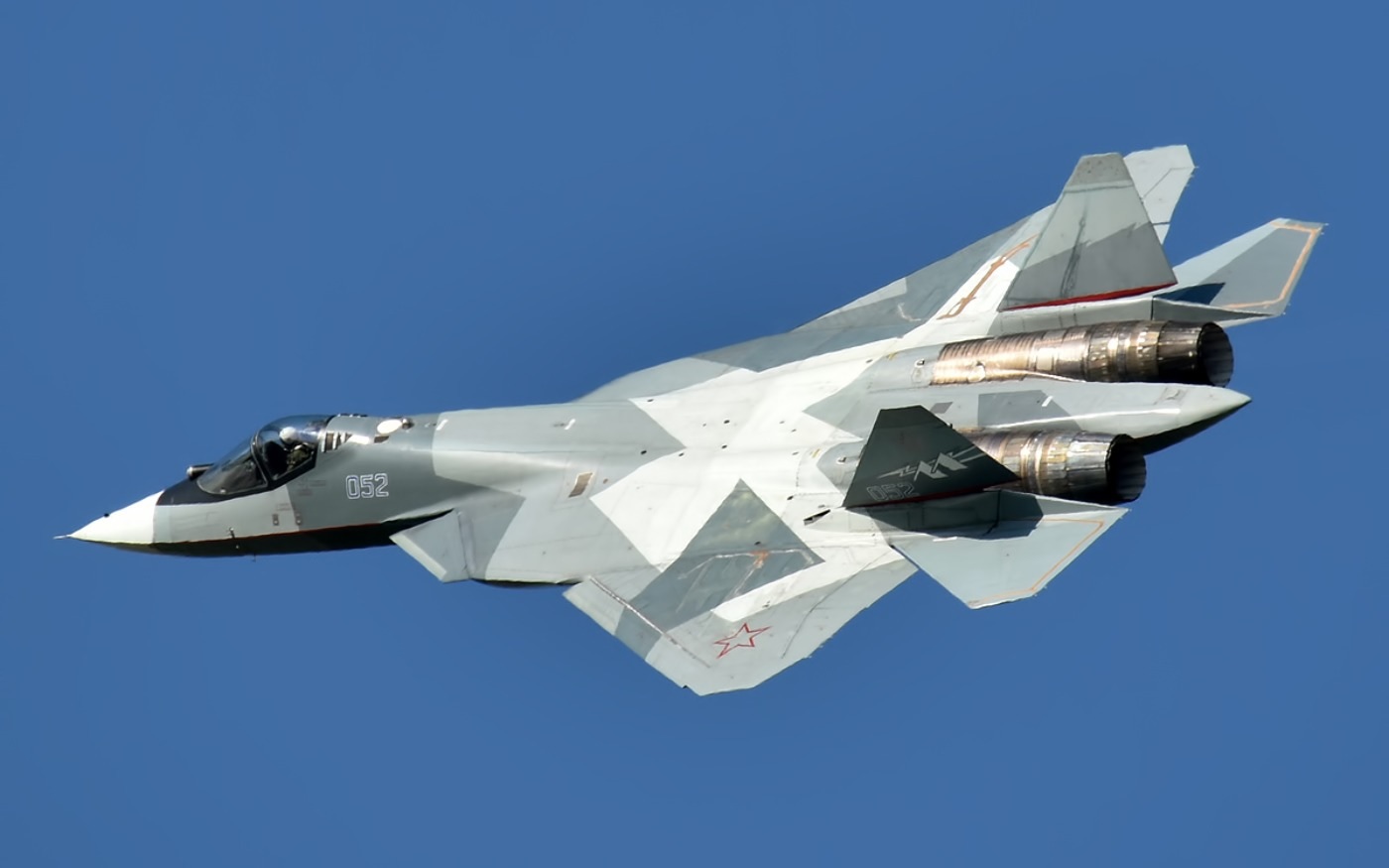 Russian Analysts Debate Su-57 Capabilities After Putin Calls Fighter Superior to F-35
-
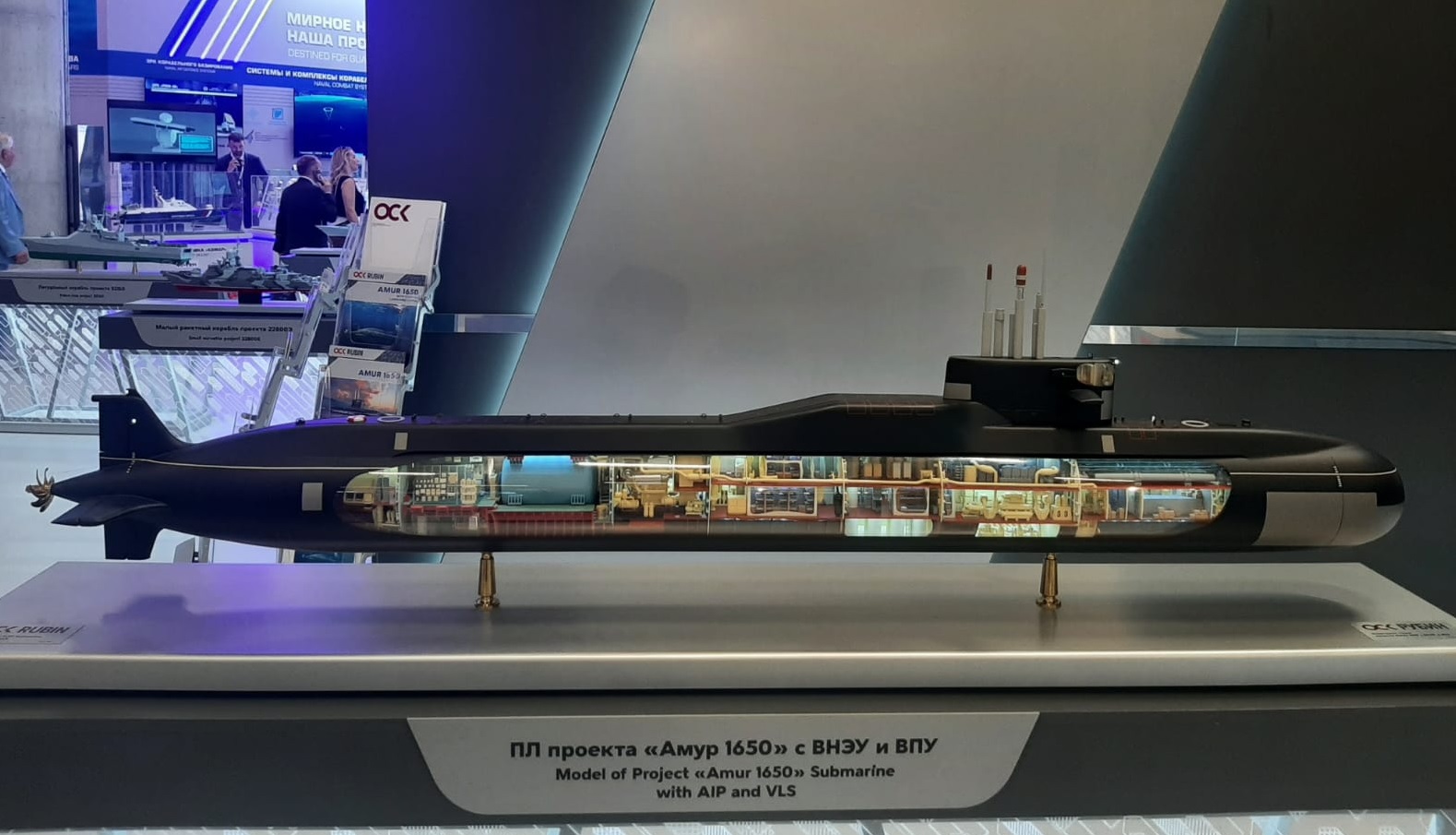 Russia Unveils Amur-1650 AIP Submarine Equipped with BrahMos Vertical Launch System at Fleet-2026
-
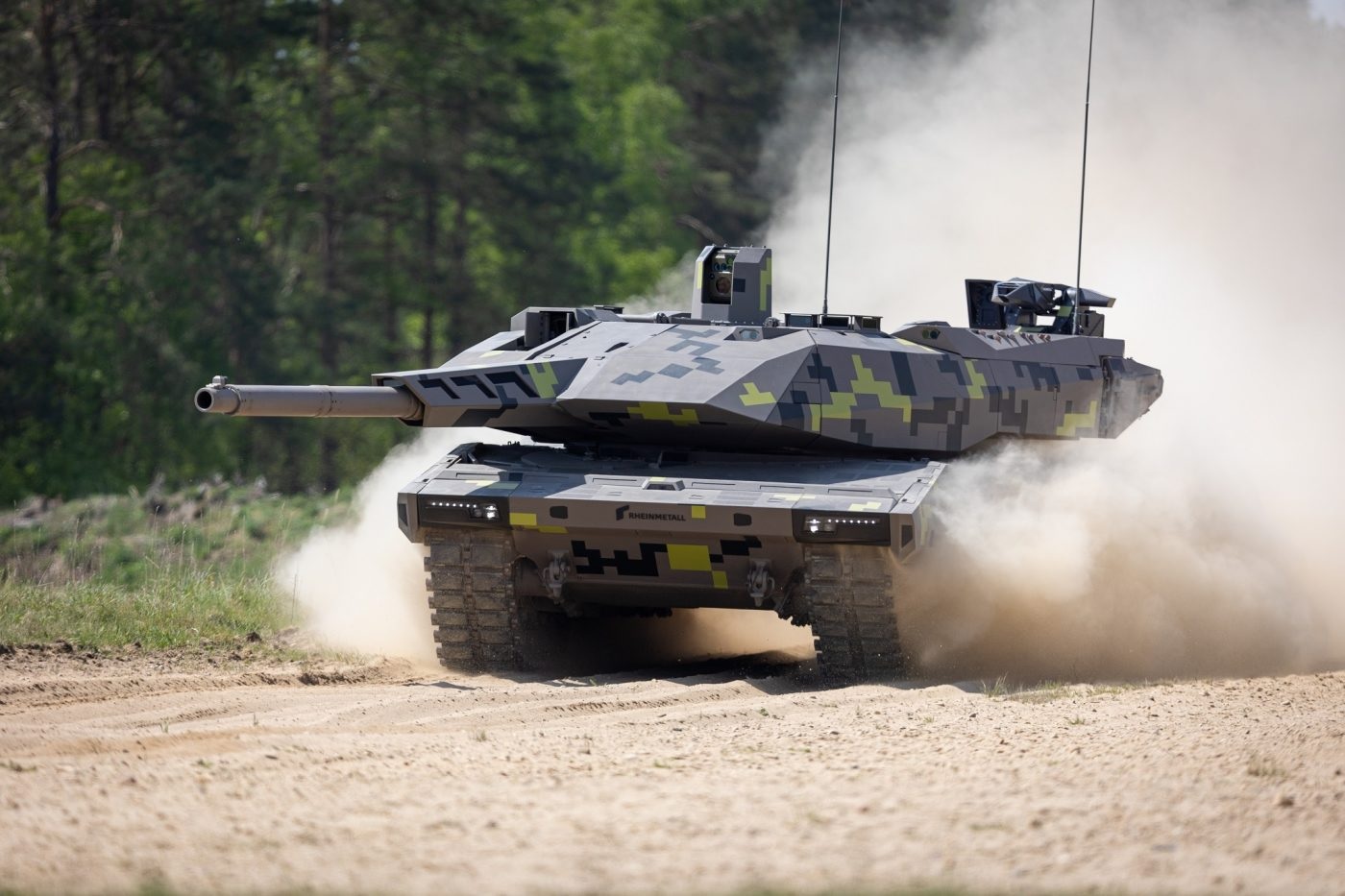 France Considers Reduced Role or Exit from Franco-German MGCS Tank Project
-
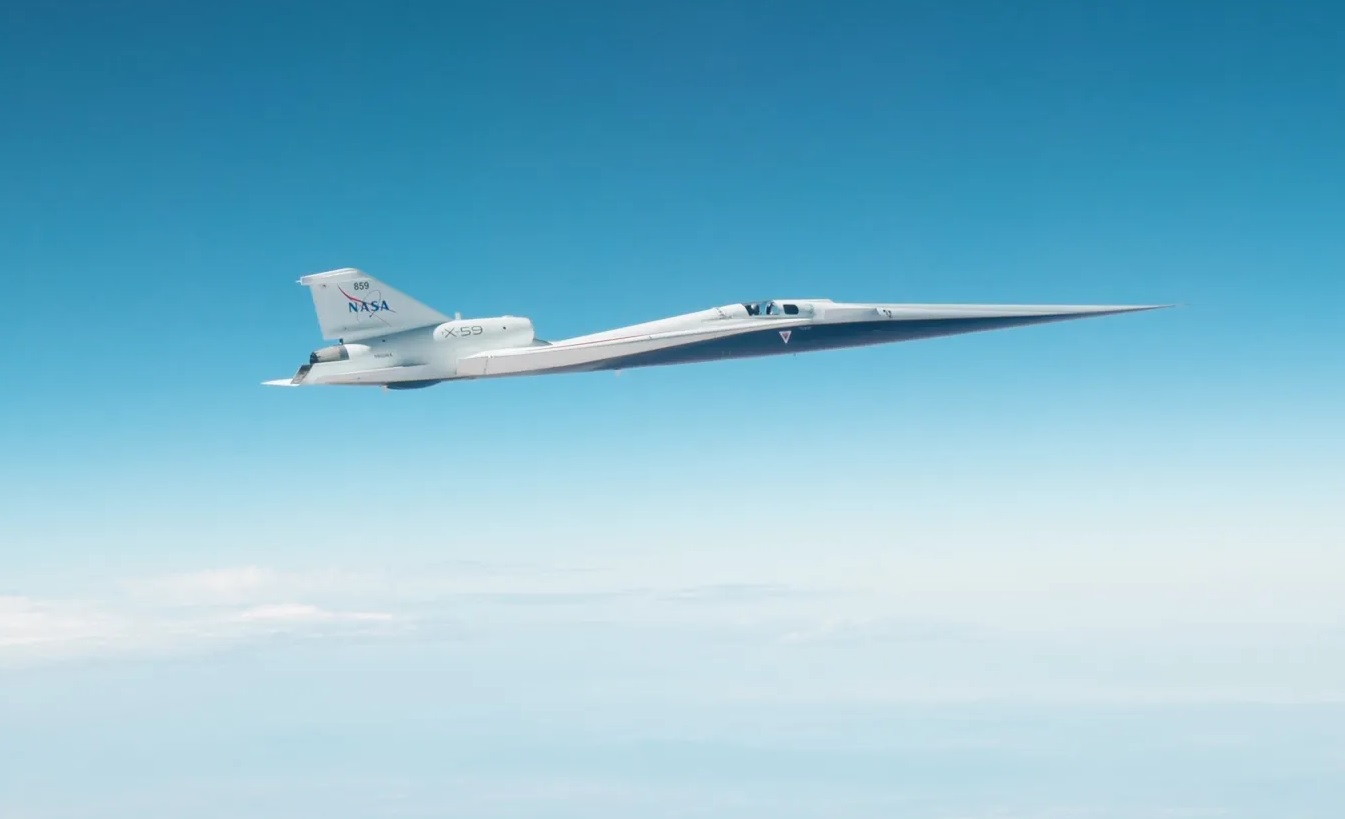 NASA X-59 Achieves Planned Mission Conditions with Mach 1.4 Flight at 55,000 Feet
-
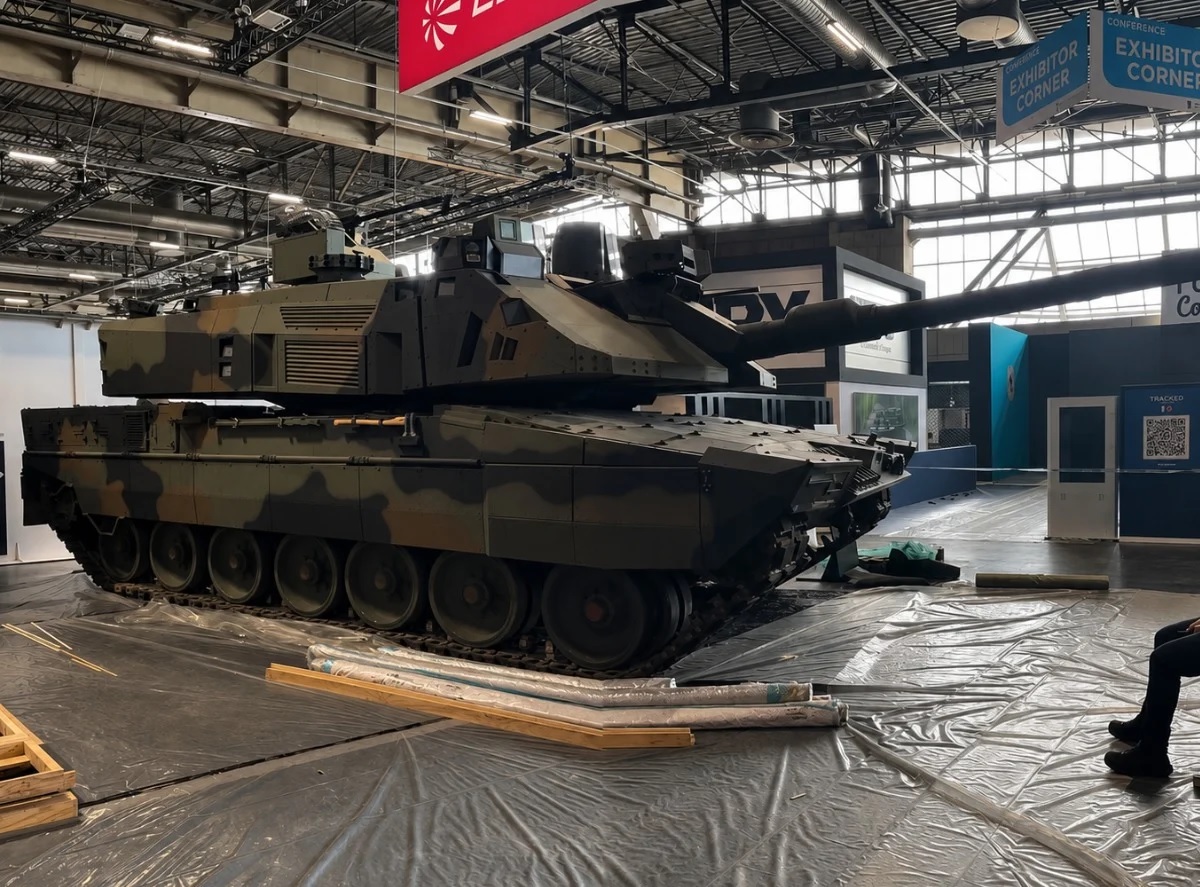 Leonardo Rheinmetall to Unveil Italy’s New IMBT Main Battle Tank at Eurosatory 2026
-
 Anduril Wins $363 Million CBP Contract to Deploy Over 200 Extended Range AI Surveillance Towers
Top Trending in 4 Days
-
 Iranian Media Leaks 14-Point U.S.-Iran Peace Framework Amid Ongoing Negotiations
-
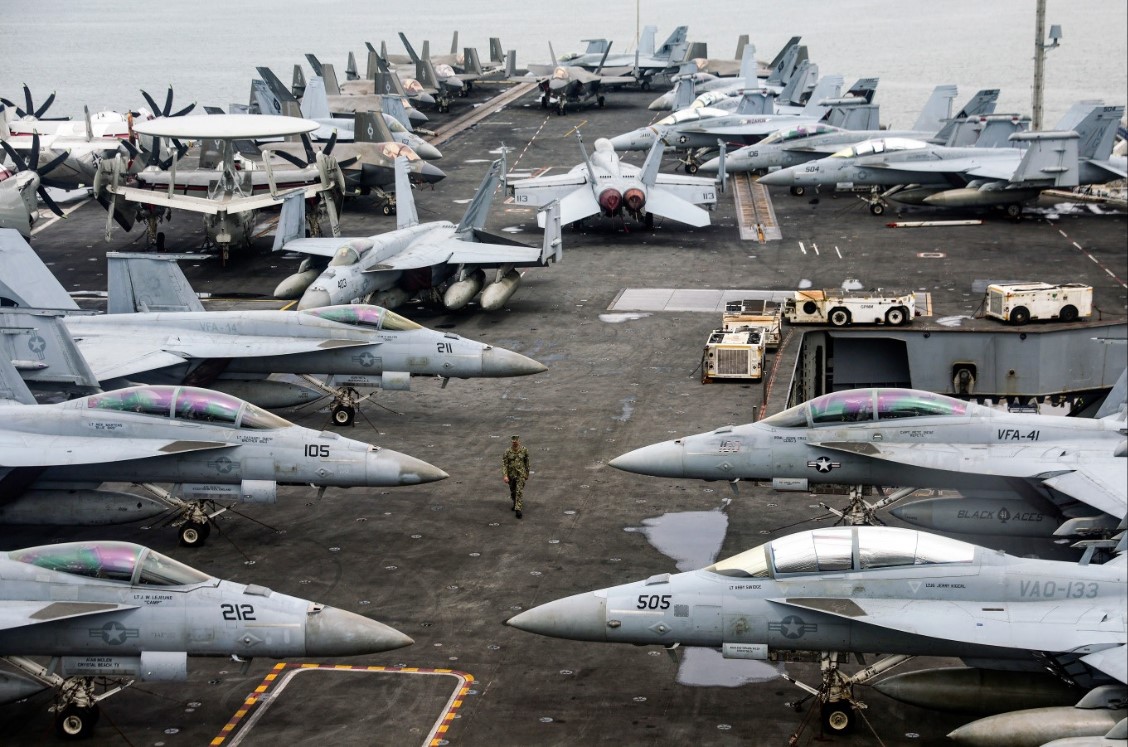 US Plans Significant Reduction of Fighter Jets and Warships for NATO Operations in Europe
-
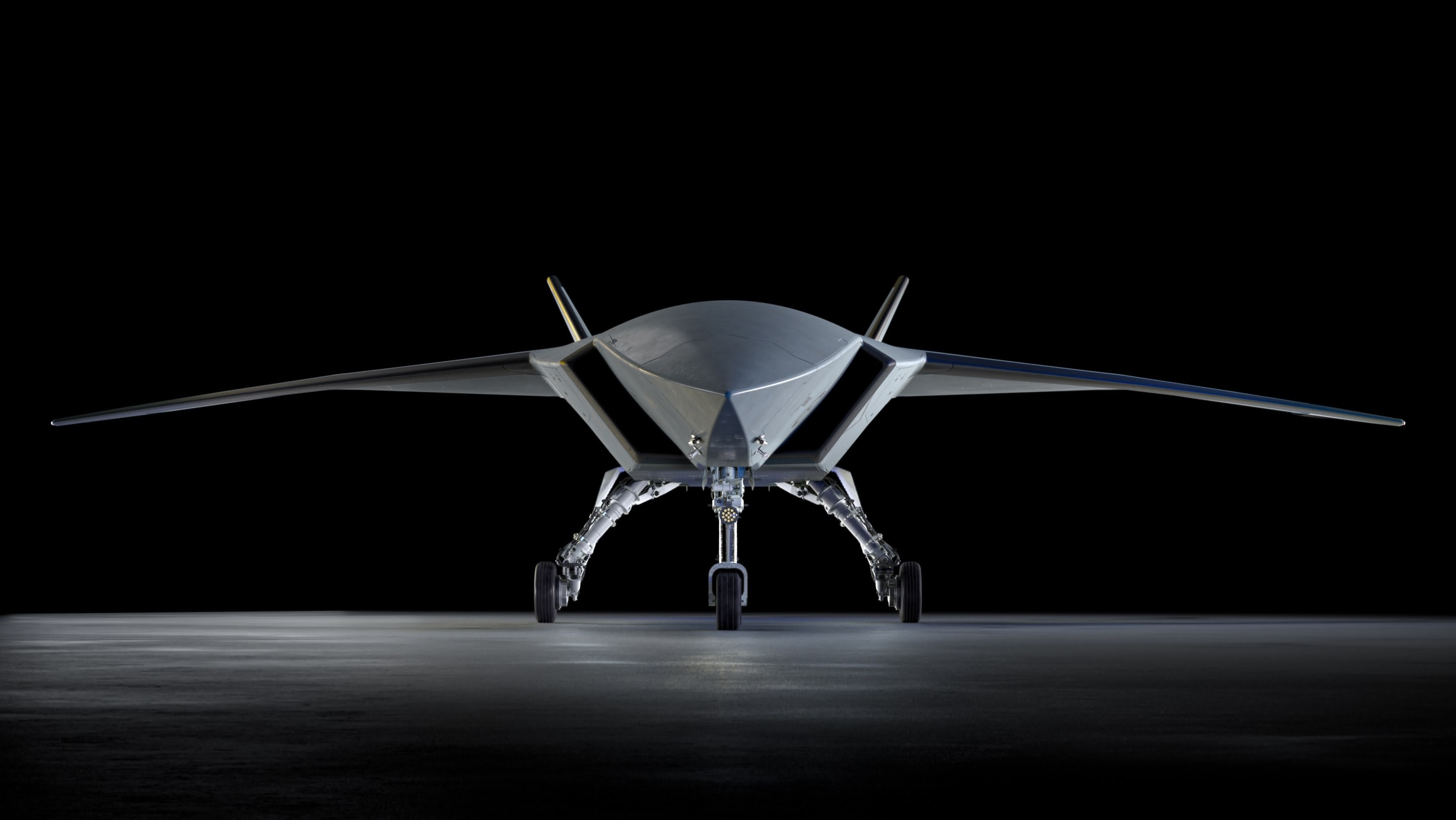 Boeing Introduces New MQ-28 Ghost Bat Upgrades with Increased Range, Payload and Weapons Capacity at ILA Berlin 2026
-
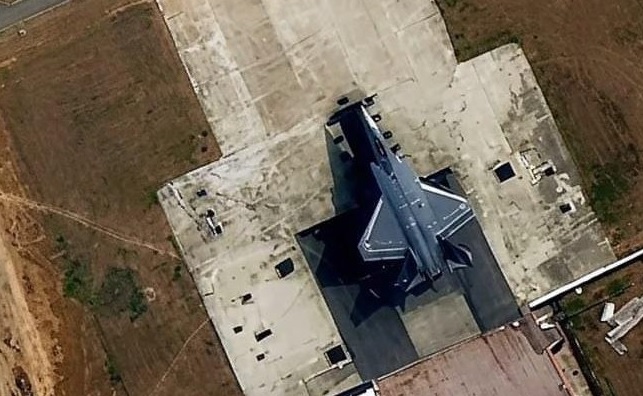 AMCA Airframe Spotted at DRDO’s ORANGE Facility for Radar Cross-Section Testing
-
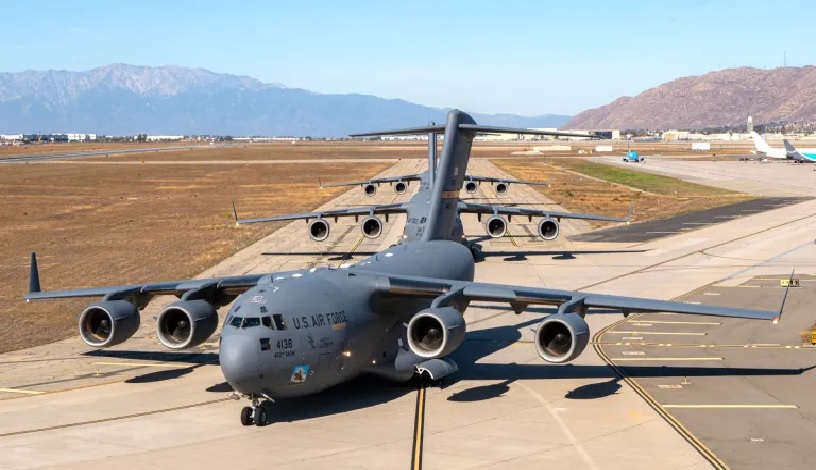 U.S. Air Force Faces Strategic Airlift Shortfall as C-17 Production Restart Remains Uncertain
-
 U.S Aircraft Carrier USS Theodore Roosevelt Departs San Diego for Major RIMPAC 2026 Naval Exercise
-
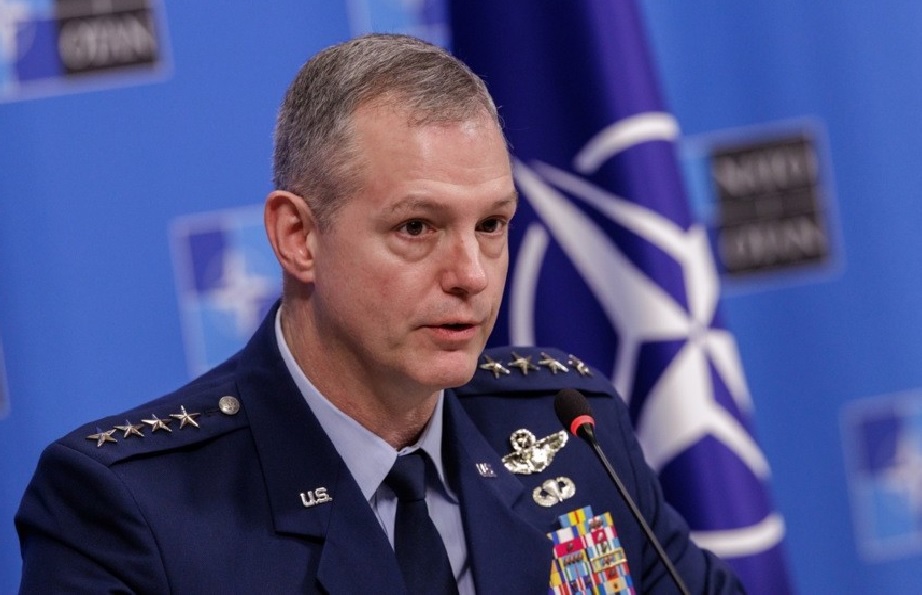 NATO Commander Says Russia Not Seeking Conflict With Alliance Despite U.S. Force Reductions
-
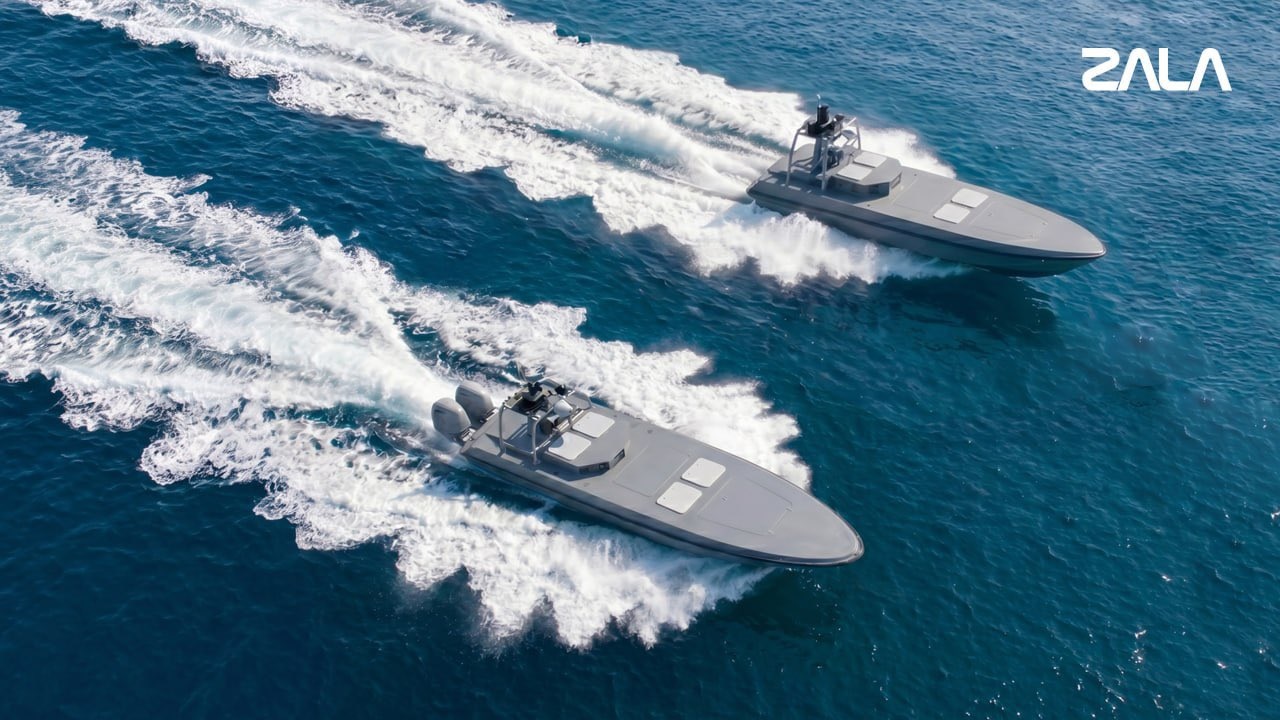 Russian Defense Firm ZALA Unveils KAMA Unmanned Surface Vessel Family at FLOT-2026 Naval Exhibition