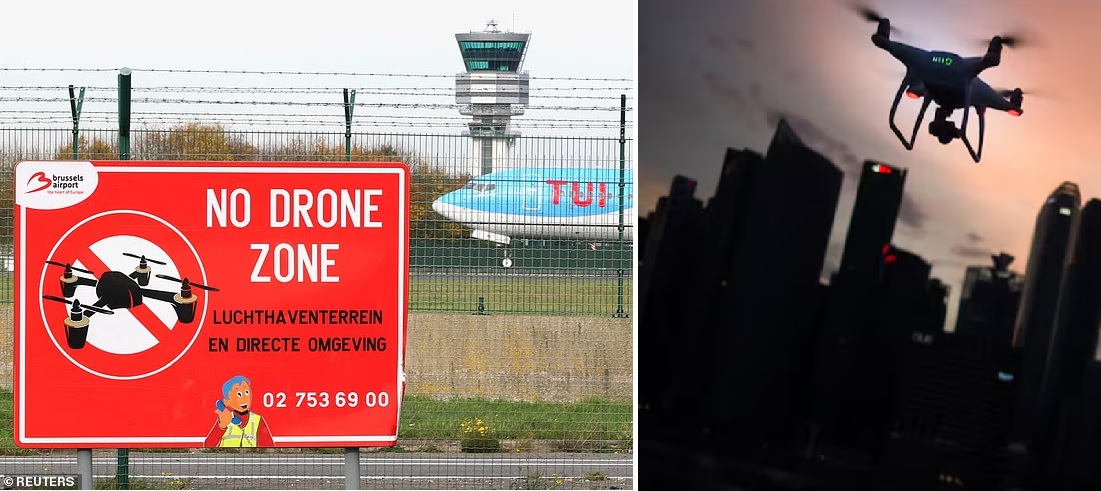
A growing series of drone incursions in Belgium has sparked serious security concerns across Europe, prompting the United Kingdom to send both personnel and specialized counter-drone equipment to assist Belgian authorities. The decision, confirmed by Air Chief Marshal Richard Knighton, marks one of the rare instances of a NATO member directly aiding another in responding to unexplained airspace violations during peacetime.
Alarming Drone Activity Over Strategic Sites
Over the past week, Belgium’s main international airport in Brussels and Liège Airport, one of Europe’s largest cargo hubs, were forced to suspend operations after repeated sightings of unidentified drones in restricted airspace. More concerning, the drones were also detected flying near Kleine-Brogel Air Base, a high-security installation believed to host U.S. nuclear weapons as part of NATO’s deterrence posture.
The incidents have triggered widespread speculation about the motive and origin of the flights. Belgium’s Defence Minister Theo Francken told reporters that investigators suspect a coordinated spying operation, saying, “These incidents were not carried out by amateurs; they appear deliberate and technically advanced.”
Britain Steps In
In an interview with the BBC, Air Chief Marshal Knighton confirmed that the U.K. military had begun deploying teams and technology to Belgium following a formal request from Brussels.
“We don’t yet know the source of those drones, and neither do the Belgians,” Knighton said. “But we will help them by providing our kit and capability, which has already started to deploy.”
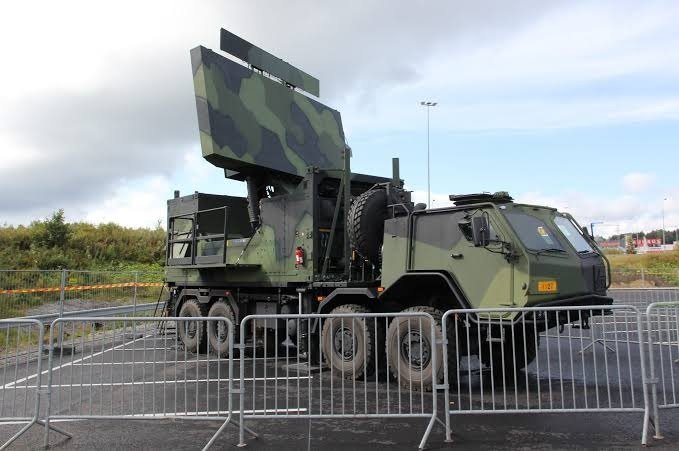
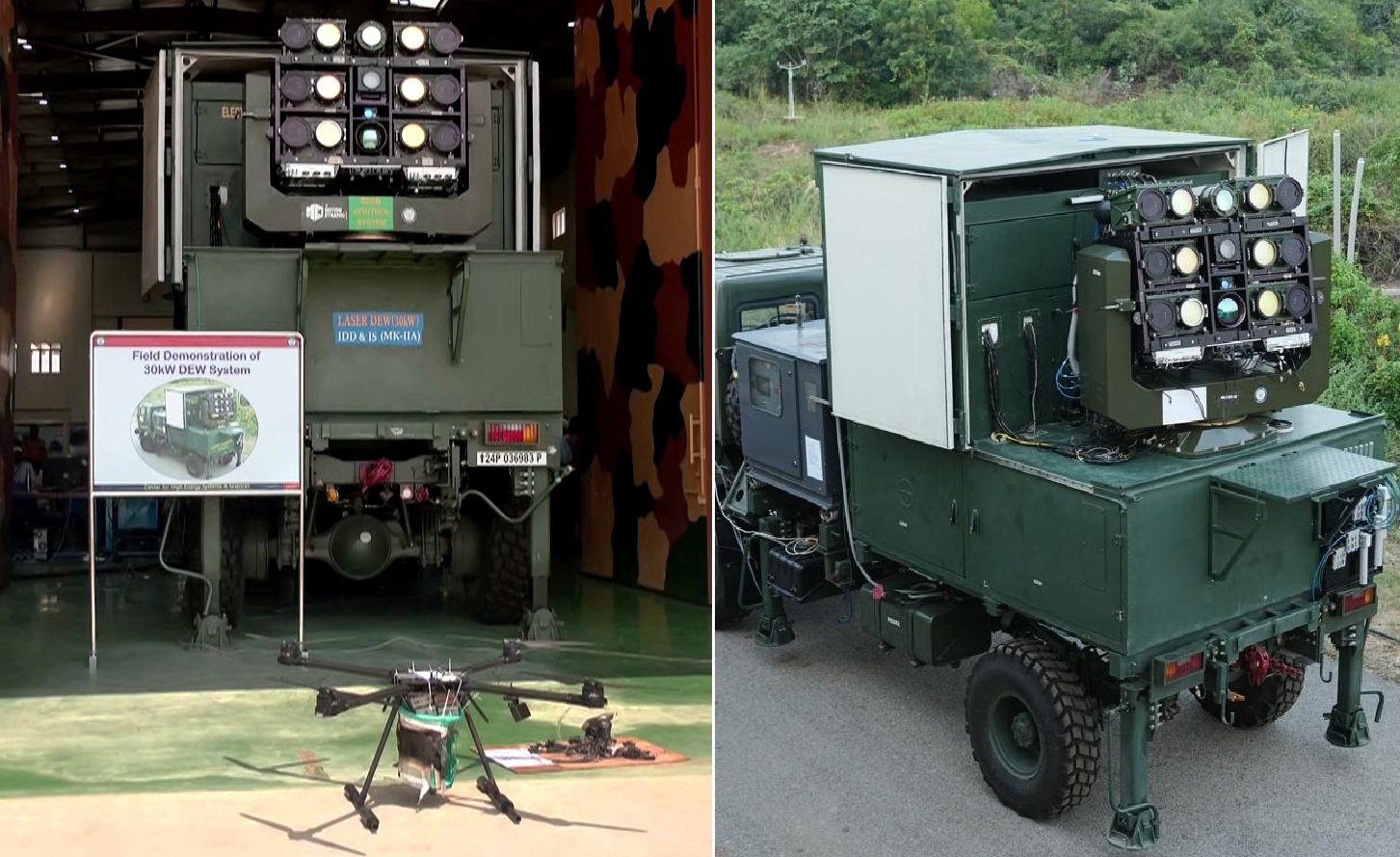
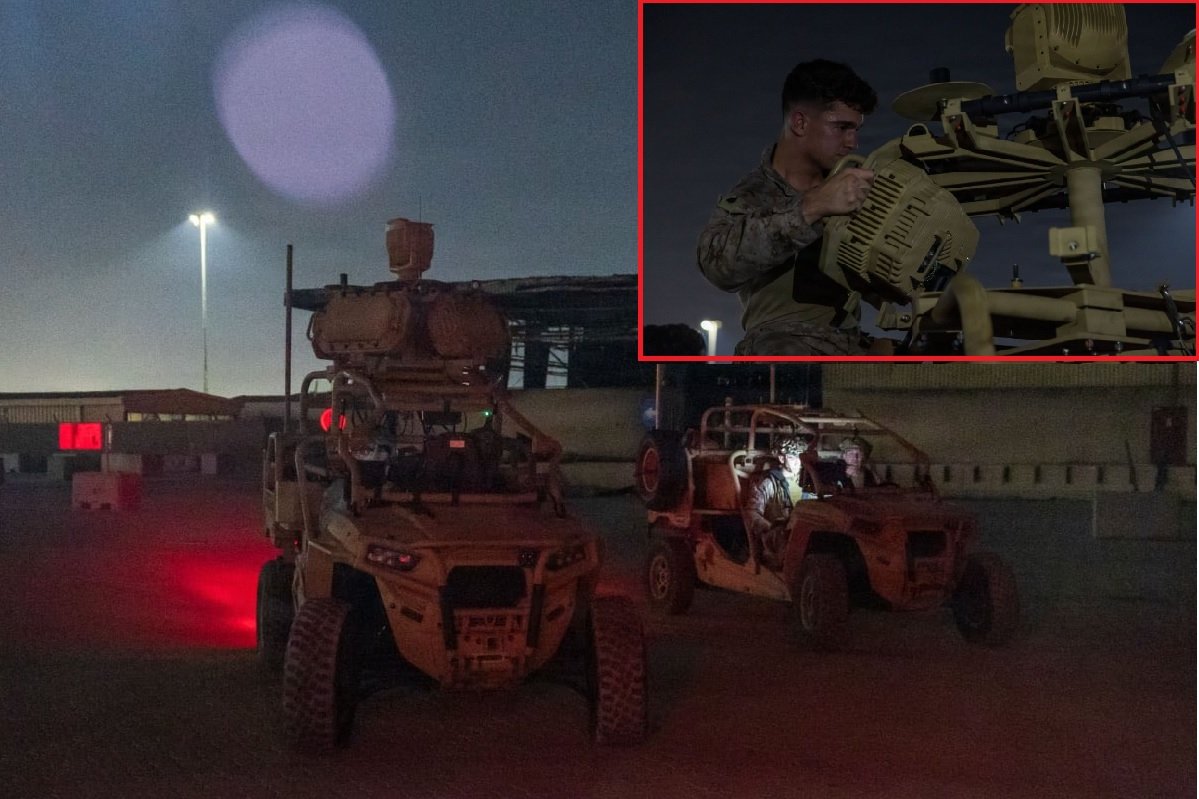
British personnel reportedly include members of the Royal Air Force’s specialist counter-UAS units, equipped with advanced drone detection and jamming systems. The U.K.’s deployment underscores a growing recognition that such incidents are not isolated but part of a wider European security challenge.
Strategic Stakes for Europe
Belgium’s importance extends far beyond its size. The country hosts the headquarters of NATO and the European Union, and it is home to the Euroclear financial clearinghouse, which manages tens of billions of euros in frozen Russian assets. Those assets have become a point of contention within the EU, with several countries pushing to use them to fund loans for Ukraine’s reconstruction, a move Belgium has so far resisted.
Some analysts see the drone incursions as potentially linked to geopolitical pressure over this issue. Though Belgian officials have stopped short of blaming any specific actor, European intelligence sources have privately suggested that the pattern of activity resembles Russian hybrid operations, using drones and cyber tools to test Western vulnerabilities without triggering direct confrontation.
Not an Isolated Problem
Belgium is not alone in facing unexplained drone intrusions. Over the past few months, Germany, Sweden, and Poland have also reported similar incidents near airports, energy facilities, and military installations. In many cases, the drones appear to have been highly capable—able to loiter for extended periods, evade radar, and operate in no-fly zones.
European security agencies have been scrambling to modernize airspace surveillance systems, including by integrating counter-UAS networks capable of detecting and neutralizing small drones. Belgium’s government recently announced plans to establish a national air security coordination centre by early 2026 and to invest in a dedicated anti-drone defense network.
The Unknown Operator
Despite multiple sightings, no drone has yet been captured or recovered, leaving investigators with few physical clues. The Belgian Air Force has scrambled interceptors on several occasions, but the drones reportedly disappeared before interception. Officials believe the aircraft are remotely controlled from beyond Belgian borders, possibly using satellite links or pre-programmed flight paths.
Defence Minister Francken noted that the precision and persistence of the incursions suggest access to sophisticated technology, saying, “This is not a hobbyist with a drone bought online. Whoever is behind this knows exactly what they are doing.”
NATO’s Quiet Response
Though NATO officials have avoided public statements on the issue, alliance insiders acknowledge that the drone activity near a nuclear storage base has raised serious alarm. Discussions are reportedly underway about expanding NATO’s integrated air and missile defense system (NATINAMDS) to include small-drone detection and response capabilities.
The United Kingdom’s rapid support is being viewed as both a symbolic gesture of solidarity and a practical test case for how allied forces can coordinate counter-drone operations across borders.
A New Frontline in Hybrid Warfare
The mystery over who is flying the drones may persist for weeks, but the strategic message is already clear: Europe’s skies are no longer secure from small, silent intruders. What began as temporary airport closures has now escalated into a trans-Atlantic security operation.
Whether this represents probing, espionage, or an early stage of hybrid coercion remains uncertain — but for Belgium, the aerial chessboard has become a new front line.
As Air Chief Marshal Knighton put it, “We’re working with our allies to make sure Europe’s airspace remains safe. Whoever is behind these incursions should know — we’re watching closely.”
——— End of Article ———