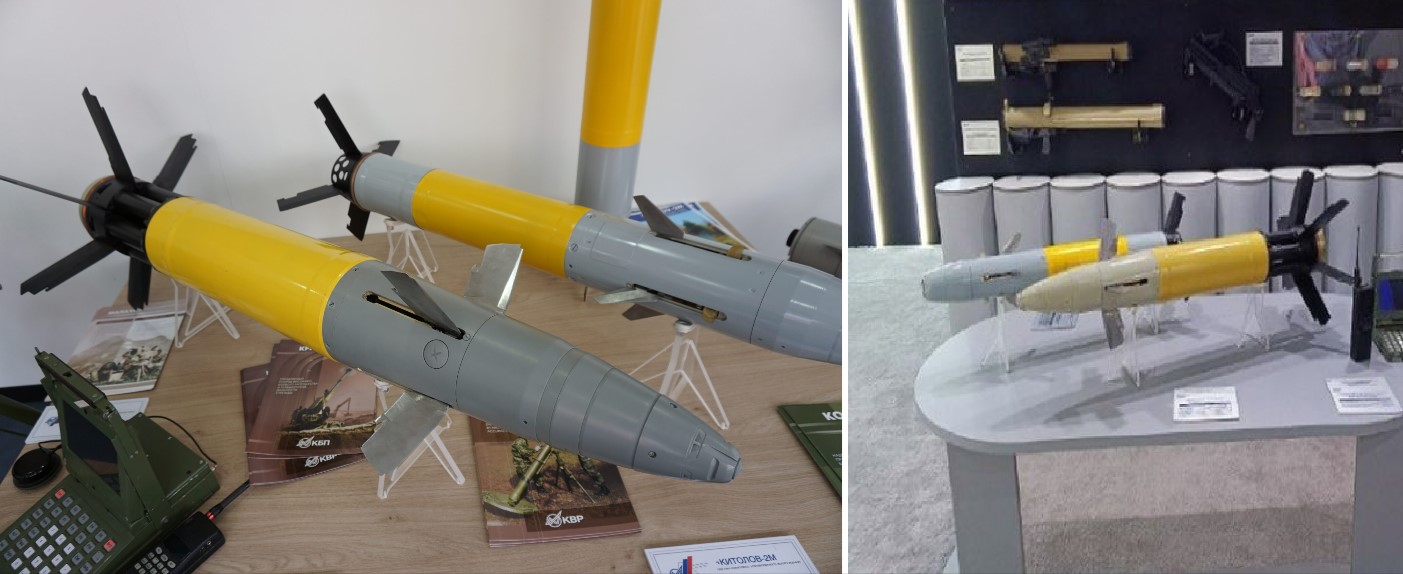
Russia has confirmed the delivery of new batches of Krasnopol-M2 laser-guided artillery shells to its frontline units, marking a continued shift toward precision strike capabilities on the Ukrainian battlefield. The announcement, made by Rostec’s High Precision Systems and reported by TASS, underscores Moscow’s growing emphasis on precision firepower to offset the challenges of modern counter-battery warfare and electronic interference.
Rostec’s Push for Precision Artillery
According to Rostec’s arms cluster director Bekhan Ozdoyev, the new Krasnopol-M2 rounds are “highly needed today” as Russian forces face an increasingly complex combat environment. The deliveries form part of a larger program to modernize artillery forces with smart munitions capable of hitting pinpoint targets while conserving ammunition stockpiles.
The move signals a broader doctrinal shift in Russian ground operations — from the traditional “mass fire” approach toward “precision effects”, allowing fewer rounds to achieve greater tactical results. The integration of guided artillery also shortens the sensor-to-shooter loop, a critical factor in fast-paced counter-battery duels.
Inside the Krasnopol-M2: Russia’s Laser-Guided “Sniper Shell”
The Krasnopol-M2 is an advanced, semi-active laser-guided artillery shell developed by the KBP Instrument Design Bureau, part of Rostec’s High Precision Systems holding. Designed for 152 mm and 155 mm calibre howitzers, the M2 represents the latest evolution of Russia’s precision artillery technology.
Key Specifications:
-
Calibre: 152 mm (Russian standard); 155 mm version for export systems
-
Weight: ~54 kg
-
Length: Approx. 1,300 mm
-
Effective Range: 20–25 km (depending on gun type and conditions)
-
Guidance System: Semi-active laser homing
-
Warhead: High-Explosive Fragmentation (HE-FRAG)
-
Accuracy: Circular Error Probable (CEP) under 2 meters when laser-designated
-
Targets: Armoured vehicles, artillery positions, command posts, and fortified structures
-
Operational Envelope: Day/night capability; effective in limited visibility but weather and smoke can reduce accuracy
The M2 variant introduces several improvements over its predecessors, including higher resistance to electronic interference, enhanced seeker sensitivity, and the ability to engage moving targets up to 36 km/h. It can also perform synchronized salvo fire, allowing multiple shells from different guns to strike distinct targets simultaneously — a feature that enhances survivability and suppressive fire effectiveness.
Battlefield Context: Adapting to Counter-Battery Threats
Russia’s renewed focus on guided munitions reflects lessons from the war in Ukraine, where artillery duels dominate the frontlines. Ukrainian forces, supported by Western counter-battery radars, drones, and precision munitions, have made traditional massed artillery fire increasingly risky.
By deploying Krasnopol-M2 shells, Russian units aim to deliver precision strikes from safer distances, reducing the number of rounds needed and minimizing exposure to counter-fire. This also conserves logistics resources — a significant advantage amid ongoing ammunition production constraints.
Moreover, laser-guided shells like the Krasnopol are less vulnerable to GPS jamming, which has become widespread in the conflict. However, their reliance on laser designation means that spotters or UAVs must maintain visual contact with the target, which poses its own operational risks.
Integration with Modern Artillery Systems
The Krasnopol-M2 is compatible with Russia’s 2S19 Msta-S and 2S35 Koalitsiya-SV self-propelled howitzers, as well as legacy 152 mm field guns. When coupled with modern fire-control systems such as Malakhit and Kapustnik-B, and UAVs like the Orlan-10, the shell becomes a crucial part of a networked artillery strike ecosystem.
This ecosystem enables faster target acquisition, coordination with drone reconnaissance, and real-time battle damage assessment — essential features in modern high-intensity warfare.
Industrial and Strategic Implications
Rostec’s High Precision Systems has expanded its high-precision munition output in response to wartime demand. Russian sources suggest that production of smart munitions, including the Krasnopol line, has increased severalfold since 2022.
From an industrial standpoint, this reflects Russia’s adaptation under sanctions: focusing on domestically sourced components, simplified electronics, and modular design to sustain large-scale production.
Strategically, the delivery of guided shells indicates that Russia intends to sustain long-term, precision-enabled operations rather than relying solely on volume fire. This aligns with the Ministry of Defense’s broader modernization strategy, which emphasizes precision strike, survivability, and digitized command networks.
——— End of Article ———