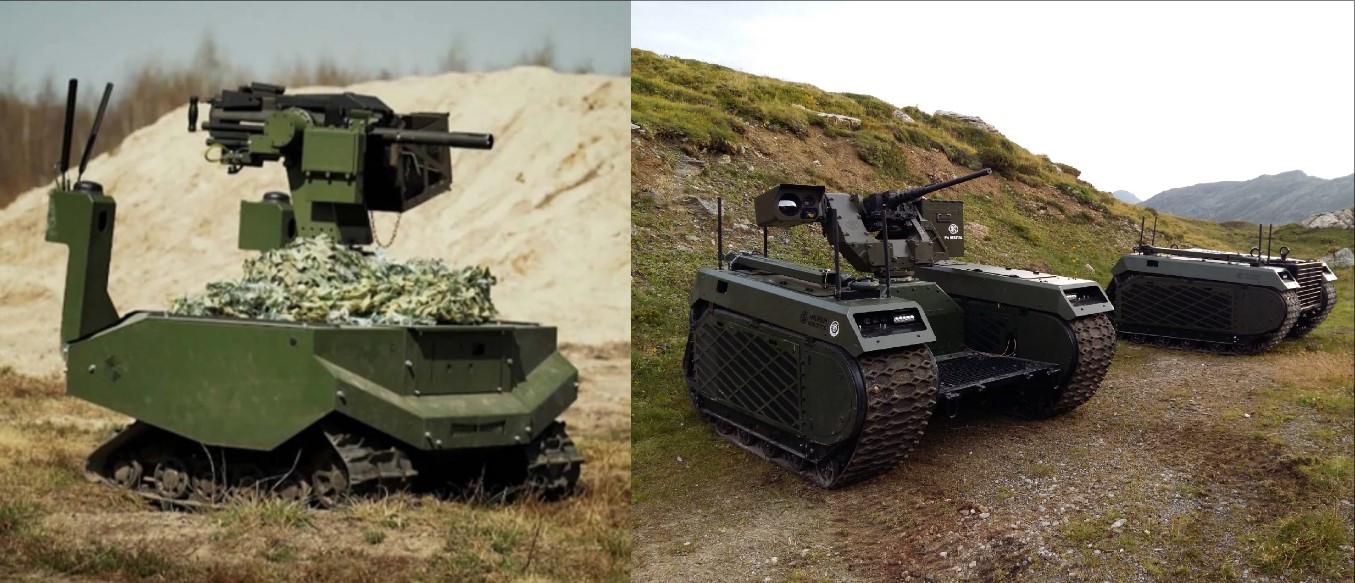
In a bold step toward modernizing its battlefield operations, Ukraine’s Armed Forces are preparing for an unprecedented technological leap — the large-scale deployment of unmanned ground vehicles (UGVs). The plan, revealed by Viktor Pavlov, founder of the Ground Robotic Systems (NRK) School and commander in the 3rd Assault Brigade, outlines the procurement of nearly 30,000 robotic systems by the end of next year.
This ambitious move marks one of the most extensive efforts by any military in the world to integrate robotic systems into front-line warfare, reflecting both necessity and innovation born from the realities of Ukraine’s ongoing defense campaign.
A New Doctrine for Modern Warfare
The NRK School, established to train and standardize the use of robotic systems, plays a central role in Ukraine’s transformation. Its mission is to prepare operators across all branches of the military, ensuring these systems are not just fielded but effectively integrated into combat operations.
“The number is based on operational needs and attrition,” Pavlov explained in an interview with Telegraf. “Every loss on the front shows us how vital automation has become. Our goal is to standardize training and make robotic systems a daily part of military operations.”
Most of these unmanned vehicles are homegrown innovations — the result of Ukraine’s thriving ecosystem of volunteer engineers, defense startups, and local workshops. Despite limited industrial resources, the country has managed to develop a diverse array of ground drones, ranging from small supply carriers to armed tactical platforms.
Depending on capability and size, these systems cost between $10,000 and $50,000, a fraction of what comparable Western military robots might cost.
Transforming the Front Lines
The introduction of UGVs is already reshaping Ukraine’s battlefield dynamics. Once limited to reconnaissance and supply tasks, these robotic systems are now performing an expanding range of missions — from logistical delivery to direct combat support.
In the war’s most dangerous zones, UGVs are increasingly replacing humans in life-threatening roles. They deliver ammunition, transport food and water, evacuate wounded soldiers, and collect intelligence in areas too hazardous for manned units.
Pavlov noted that a single unmanned system can complete missions that might otherwise require multiple soldiers, reducing exposure to artillery and sniper fire. “Every time a robot takes a route that would have cost a soldier’s life, it proves its worth,” he said.
Beyond Logistics — Robots in Combat and Engineering
While logistical roles dominate UGV operations, their versatility is rapidly expanding. Ukrainian engineers are now adapting ground drones for:
-
Mine Clearance: Specialized UGVs are being used to neutralize landmines, traditionally the responsibility of human sappers.
-
Combat Support: Certain models are now equipped with machine guns, grenade launchers, or recoil-less rifles, capable of providing suppressive fire or engaging enemy positions remotely.
-
Engineering Tasks: Robots are clearing debris, towing equipment, and laying communications lines under fire.
These innovations are redefining the balance between manned and unmanned warfare, allowing Ukrainian units to maintain high operational tempo with fewer casualties.
Human Control Still Central
Despite automation advances, human operators remain indispensable. Ukrainian defense doctrine emphasizes that mission planning, target engagement, and maintenance all require trained personnel. UGVs are currently semi-autonomous, meaning they rely on real-time human oversight for critical tasks.
As Pavlov explains, “Robots can carry, see, and shoot — but humans decide when, where, and why.”
This human-machine integration is precisely what the NRK School aims to institutionalize. Operators are trained not just to control robots but to understand their tactical employment, maintenance, and battlefield limitations.
Strategic Importance and Broader Impact
Ukraine’s robotic warfare strategy is part of a broader shift toward automation, aligning with global trends in military modernization. However, Ukraine’s approach is uniquely pragmatic — born from wartime necessity rather than long-term experimentation.
By mass-deploying UGVs, Ukraine hopes to:
-
Reduce troop exposure to artillery, snipers, and mines.
-
Increase operational efficiency by automating supply chains.
-
Leverage domestic innovation to bypass foreign procurement bottlenecks.
-
Build self-reliant defense technology ecosystems capable of scaling production.
If successful, Ukraine could become the first country to standardize ground robotics at scale, setting a new model for modern militaries worldwide.
Challenges
Despite the promise, several challenges remain. The integration of tens of thousands of UGVs demands robust logistics, training infrastructure, and technical support. Communication jamming, electronic warfare, and limited battlefield connectivity can disrupt robot operations.
Additionally, ensuring standardization across models built by different local manufacturers will be crucial for maintenance and spare parts management.
Nevertheless, Ukraine’s defense community views these obstacles as solvable through experience and innovation. The NRK School continues to expand its curriculum, and new partnerships with domestic firms are being explored to sustain production.
A Glimpse into the Future of Warfare
Ukraine’s UGV push symbolizes a larger paradigm shift in military strategy — where automation and human ingenuity merge to overcome the limitations of conventional warfare.
From the trenches of Donetsk to the industrial workshops of Dnipro, robots built by volunteers and engineers are now saving lives on the front lines. They represent not only technological progress but also a story of adaptation, resilience, and determination in the face of overwhelming odds.
If the plan to field 30,000 unmanned ground systems is realized by 2026, Ukraine will have achieved something unprecedented: the world’s first robotized ground army, operating at scale in active conflict.
A revolution in land warfare — and a signal that the future of combat may no longer belong solely to the human soldier.
——— End of Article ———