U.S
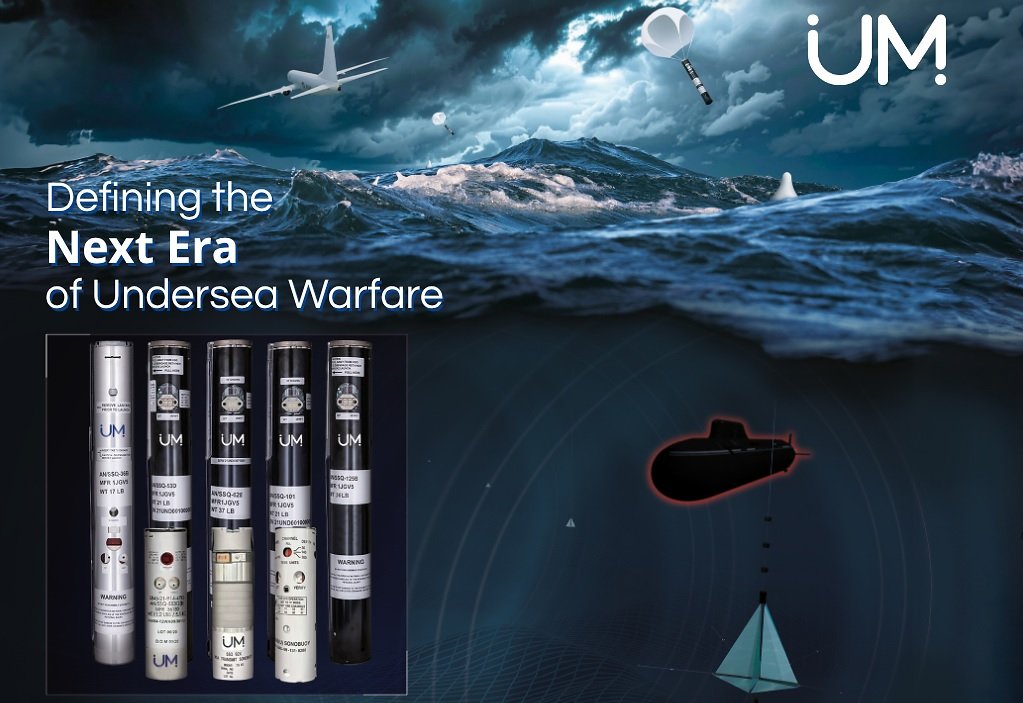
COLUMBIA CITY, Ind. — Naval defense manufacturer Ultra Maritime has announced that all five of its newest U.S.-specification sonobuoy variants are now production ready. The company said the milestone completes what it identifies as the world’s first unified suite of next-generation anti-submarine warfare (ASW) acoustic expendables. The five variants are the AN/SSQ-53H, AN/SSQ-62G, AN/SSQ-101B, AN/SSQ-125B and AN/SSQ-36B, which form the core of the company’s Sea Revealer family. They support underwater surveillance missions ranging from ocean-layer profiling and wide-area acoustic searches to target detection, localization and tracking. The AN/SSQ-53H DIFAR is a passive sonobuoy that listens for acoustic emissions from nuclear and diesel-electric submarines using omnidirectional sensors and directional hydrophone channels. The AN/SSQ-62G DICASS is an active buoy that can be remotely triggered to transmit sound pulses and measure echoes to determine a contact’s bearing and range. The AN/SSQ-101B ADAR uses an unfolding horizontal planar hydrophone array as a high-sensitivity receiver for sound reflected from submerged targets. The AN/SSQ-125B MAC is a multistatic active acoustic source that can operate with passive receivers such as the Q-101B and Q-53H to transmit structured sound bursts across patrol areas. The AN/SSQ-36B AXBT provides environmental data rather than directly tracking targets. Its temperature probe measures the water column down to 800 meters (2,625 feet), generating sound-velocity profiles that help mission systems predict how sonar waves travel through ocean thermal layers. Production Expansion Ultra Maritime recently modernized and expanded its manufacturing complex in Columbia City, Indiana, adding higher-rate manufacturing automation and updated production processes. The company now reports producing more than 1,000 sonobuoys per day across facilities in the United States, United Kingdom and Canada. The expansion has created hundreds of jobs in Northeast Indiana over the past two years, with additional hiring and facility improvements planned as domestic and international procurement increases. Ultra Maritime’s U.S. supply chain includes suppliers in 24 states, more than 70 percent of which are small businesses. Ultra Maritime says it is the only defense contractor worldwide producing G-size, half-length sonobuoys, which can allow aircraft and unmanned platforms to increase sonobuoy payload capacity without increasing airframe weight limits. It also says it is the only manufacturer with active production lines in multiple allied countries. The company supplies sonobuoys for fixed-wing aircraft, helicopters and unmanned aerial vehicles, including major ASW platforms such as the Boeing P-8A Poseidon and Sikorsky MH-60R Seahawk. Earlier in 2026, the U.S. Navy awarded Ultra Maritime a sole-source, firm-fixed-price contract for low-rate initial production of the AN/SSQ-125B for training, peacetime operations, testing and inventory requirements. The Q-125B incorporates improved signal processing and acoustic performance for demanding ocean conditions. Ultra Maritime also demonstrated the SSQ-125B and Sea Spear passive sonar system during the U.S. Navy’s 2026 Lanternfish exercise, focusing on the detection and localization of unmanned underwater vehicles. Headquartered in Braintree, Massachusetts, Ultra Maritime produces active and passive sonobuoys in A-size and G-size configurations and has received U.S. Navy production contracts and delivery orders for systems including the SSQ-53H and SSQ-62G. The announcement comes amid the company’s broader expansion and follows Lockheed Martin’s proposed $3.45 billion acquisition agreement for Ultra Maritime, announced earlier in summer 2026.
Read More → Posted on 2026-09-12 13:44:25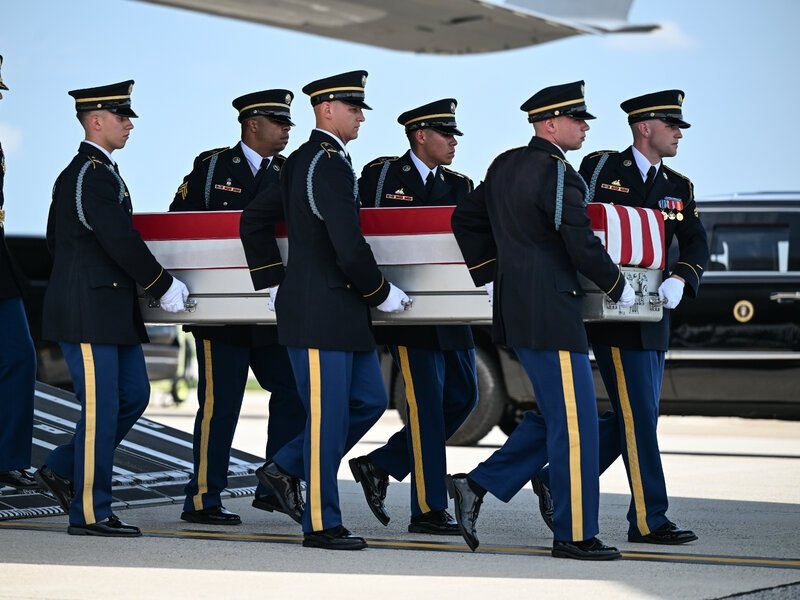
U.S
WASHINGTON — U.S. officials say Iran obtained high-resolution satellite imagery from Chinese sources before and after a July 17 ballistic missile attack on Muwaffaq Salti Air Base in northeastern Jordan, linking the imagery to the strike that killed three American soldiers. Officials described the connection as the clearest evidence so far that Chinese support for Iran has had lethal consequences for U.S. forces. They did not identify the specific Chinese entities involved and did not allege direct involvement by the Chinese government. Iranian ballistic missiles struck a housing area where U.S. troops were sleeping, killing 1st Lt. Tyler James Feehan, 25, Pvt. Isabella Gonzales, 19, and Sgt. Angel S. Rampersad, 28. Four others were seriously wounded and medically evacuated. Iran also targeted manned and unmanned aircraft at the base. The July 17 attack was one of three missile attacks on the installation within 24 hours and marked the first American combat deaths since an April ceasefire in the wider conflict faltered. Improved Iranian Targeting Earlier in the conflict, U.S. strikes had damaged major parts of Iran's radar, satellite and air-surveillance infrastructure. Iranian missile units often struck open ground or lower-value areas. U.S. officials said Iranian targeting accuracy improved during the summer. Within three days of the attack, Iranian state media published high-resolution imagery showing damage across three areas of the base. A Wall Street Journal analysis of publicly available imagery found that more than 20 military and support structures had been hit. Former CIA analyst Jim Lamson said fresh high-resolution imagery can reveal recent troop movements, aircraft rotations and facility changes, while post-strike imagery helps assess accuracy and determine where to direct later attacks. U.S. officials said Chinese commercial imagery is part of a wider Iranian intelligence network that also includes Russian data, remaining Iranian capabilities and human sources. Chinese Satellite Firms Sanctioned In May, the U.S. Treasury Department sanctioned three Chinese firms — MizarVision (Meentropy Technology), Earth Eye and Chang Guang — over the provision, collection or publication of imagery that could be used against U.S. forces. Chang Guang had previously been accused by U.S. officials of providing satellite imagery that supported attacks by Iran-backed Houthi forces. U.S. officials raised the July strike and the satellite imagery with Chinese counterparts. Beijing demanded evidence and rejected the allegations, maintaining that Chinese companies operate within international trade laws. Concerns Over U.S. Navy Ships U.S. defense officials are also examining whether Chinese satellite data could help Iran track American warships. Iran has recently fired anti-ship ballistic missiles toward a U.S. aircraft carrier strike group and accompanying destroyers. U.S. Central Command said the missiles were intercepted or fell into open water without causing damage, although some detonated close to the ships. Officials are investigating whether foreign orbital monitoring could provide Iran with near-real-time information needed to target moving vessels. The satellite imagery issue is part of broader U.S. concerns over Chinese support for Iran. A Shenzhen company, Telefly Telecommunications Equipment, has been linked to miniature turbojet engines used in upgraded Shahed-type drones. Treasury investigations also found that Western-made microelectronics and guidance components reaching Iran's drone program were routed through Chinese intermediaries and Hong Kong shell companies. The Justice Department has separately identified Chinese state agencies as end-users of technical information obtained by cyber groups that targeted U.S. federal defense and weapons laboratories. The developments come ahead of a planned September 24 summit between President Donald Trump and Chinese President Xi Jinping. After meeting Chinese Foreign Minister Wang Yi days after the July 17 strike, Secretary of State Marco Rubio said that nothing China had done had changed the trajectory of the conflict.
Read More → Posted on 2026-09-12 12:25:24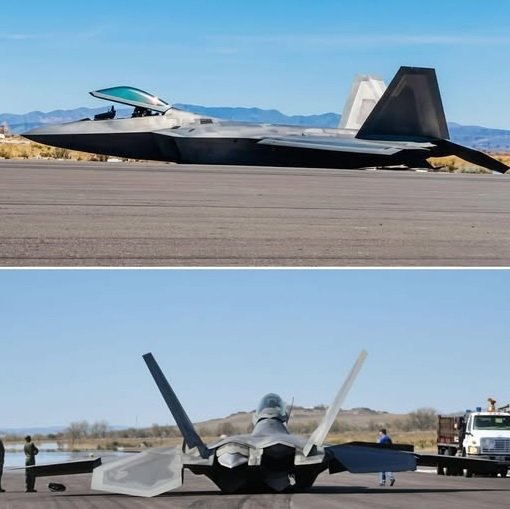
U.S
WASHINGTON — U.S. Air Force Capt. Michael “Wax” Cloninger, an F-22 Raptor pilot assigned to the 90th Fighter Squadron, 3rd Operations Group, at Joint Base Elmendorf-Richardson, Alaska, has received the Air Force’s highest flight-safety award after safely landing a fully armed F-22 that had lost its right main wheel assembly. Air Force Chief of Staff Gen. Ken Wilsbach presented Cloninger with the 2025 Koren Kolligian Jr. Trophy during a ceremony at the Pentagon on Sept. 8, 2026. Cloninger was recognized for the technical discipline and decision-making that saved a $156 million aircraft and prevented serious injury or loss of life. Right Main Wheel Assembly Detached After Takeoff The emergency occurred on Sept. 18, 2024, while Cloninger was deployed to the U.S. Central Command area of responsibility. He was flying as the number-two aircraft in a four-ship formation scheduled to conduct a memorial flyover marking the anniversary of the Battle of Britain. Immediately after takeoff, the F-22’s entire right main wheel assembly detached. Cloninger received no cockpit warning indicating that the wheel had separated. He and his flight lead canceled the flyover and remained near the airfield to assess the aircraft. Cloninger took responsibility for navigation and communications, slowed below the maximum landing-gear extension speed and lowered the gear. His flight lead then flew alongside the F-22 and confirmed that the complete right main wheel assembly was missing. Pilot Selects Gear-Up Landing The F-22’s flight manuals contained no specific procedure for landing after losing a complete wheel assembly. Using crew resource management, Cloninger consulted with his flight lead and chose the landing-with-gear-up procedure rather than attempting an asymmetric landing with the remaining gear extended. Before landing, Cloninger stayed airborne for about one hour to burn excess fuel, reducing the aircraft’s landing weight and the risk of a post-impact fire. He coordinated preparations with the air traffic control tower, crash-response units and the operations supervisor. He also conducted a low approach over the runway to assess the aircraft’s handling using the emergency alternate-flap flight-control mode. F-22 Safely Recovered For the final landing, Cloninger used a shallow glide path and calculated on-speed descent before touching down on the runway centerline. The F-22 slid to a stop without catching fire. Cloninger immediately shut down both engines and safely exited the aircraft. Maintenance personnel later completed diagnostic checks and structural repairs, allowing the F-22 to return to flying condition and be flown out of the theater. The Air Force described the recovery as an unprecedented recovery for an F-22 after a belly landing. Cloninger Credits His Teammates During the Pentagon ceremony, Wilsbach praised Cloninger’s discipline, teamwork and decision-making during the emergency. Cloninger credited the personnel who supported him throughout the incident, particularly those who assisted with communications and checklists. “Without my teammates assisting with communication and walking through the checklists, I truly believe I wouldn’t be standing here today,” Cloninger said. About the Koren Kolligian Jr. Trophy Established in 1957, the Koren Kolligian Jr. Trophy is the Air Force’s premier flight-safety award and the only one personally presented by the Chief of Staff. It recognizes aircrew members whose situational awareness, technical judgment or piloting skill prevents an aircraft accident or significantly limits its consequences. The award honors 1st Lt. Koren Kolligian Jr., whose Lockheed T-33 Shooting Star disappeared off the California coast on Sept. 14, 1955. He was later declared missing in the line of duty. Kris Kolligian, the nephew of the trophy’s namesake, attended the Pentagon ceremony.
Read More → Posted on 2026-09-12 11:27:56
U.S
GRAHAM, Kentucky — Tampa, Florida-based defense contractor Nitradyn LLC has been awarded a $581 million Department of War contract to design, construct and commission a new domestic production facility for Insensitive Munition Explosive-104 (IMX-104) in Graham, Kentucky. The facility is expected to produce approximately 8 million pounds of IMX-104 annually once fully operational. Commissioning is planned before the end of 2030, with the contract listing an estimated completion date of August 9, 2030. The firm-fixed-price, indefinite-delivery/indefinite-quantity contract is managed by Army Contracting Command at Rock Island Arsenal, Illinois. The new plant will be built at the same Graham site where the U.S. Army is constructing a TNT production facility. Together, the two projects will form an explosives manufacturing campus capable of producing multiple energetic formulations. IMX-104 is a melt-castable explosive made from RDX, NTO and DNAN. It is used as an explosive fill in 155 mm artillery shells and mortar rounds. The formulation was developed as an insensitive munition designed to provide greater resistance to accidental detonation from hazards such as fire, fragments and impact compared with traditional TNT fills. Nitradyn plans to manufacture all three IMX-104 components—RDX, NTO and DNAN—at the Graham site. The facility will also produce HMX and will include additional capacity for other energetic materials in the future. The project comes as the U.S. Army works to expand domestic ammunition production and address constraints in the supply of explosive fillers needed for increased 155 mm artillery shell production. The United States has also relied on allied countries, including Australia, India and Poland, to help offset domestic shortages of energetic materials. Nitradyn President Braden Lusk said the contract represents an investment in U.S. capacity to produce critical munitions. He said combining the IMX-104 facility with the TNT project will create an advanced explosives manufacturing campus capable of producing a diverse range of formulations. Lusk also said the facility will strengthen the domestic industrial base, create American jobs and increase U.S. capacity to meet future defense requirements. Founded in 2025, Nitradyn LLC is headquartered in Tampa, Florida, and was established as a joint venture between Dyno Nobel Limited and Paligen Chemical LLC, part of the Paligen Technologies group. The company manufactures and supplies explosives, propellants and energetic materials for defense and commercial customers. The Graham IMX-104 project will add another major domestic explosives production capability alongside the planned TNT facility, expanding U.S. capacity for several key military energetic materials at one location.
Read More → Posted on 2026-09-11 15:42:31
U.S
WASHINGTON — Senior White House officials, including Vice President JD Vance and Secretary of State Marco Rubio, have privately warned President Donald Trump that the U.S. conflict with Iran could continue through the end of his current term in January 2029, according to reporting by The Wall Street Journal. The private assessment contrasts with Trump's recent public statements. On September 10, Trump said he expected the conflict to end after the November midterm elections and argued that Iran was under severe pressure. Advisers See Possibility of a Long Conflict According to the reported discussions, senior U.S. officials believe Iran could continue resisting American military and economic pressure, including the naval blockade and sanctions. The assessment indicates that there is no clear near-term path to a comprehensive ceasefire or a full restoration of normal commercial shipping through the Strait of Hormuz. The conflict began with U.S. and Israeli strikes on Iranian targets in late February and has now continued for more than six months. Fighting has included periods of intense military activity, retaliatory strikes and disruptions to shipping. Recent fighting has centered increasingly on maritime routes. On September 9, Iran said it had attacked 10 ships after the U.S. military sank five Iranian oil tankers following attacks on U.S. naval forces. The escalation sharply reduced shipping through the Strait of Hormuz and pushed oil prices above $100 per barrel. U.S. Military Deployments Extended The possibility of a prolonged conflict is also reflected in U.S. military planning. According to The Wall Street Journal, some American military deployments in the Middle East have been extended into 2027, while some air-defense units are expected to remain in the region without a fixed withdrawal date. The continued deployments indicate that Washington is preparing for the possibility that military operations and regional security requirements will continue beyond the immediate period surrounding the November elections. Iran Continues to Resist Pressure Iran has continued to signal that it intends to resist the U.S. campaign despite the economic costs. Reuters reported that the U.S.-led blockade and sanctions have placed significant pressure on Iran's economy, while Iranian officials and analysts have continued to consider ways to maintain resistance. The conflict has also included renewed attacks involving Iranian forces, U.S. military assets and commercial shipping. The latest escalation has increased concerns that the fighting could remain at a lower but sustained level even if the intensity of major operations declines. Fighting Expands Around Red Sea The conflict has also widened beyond the Strait of Hormuz. Iran-aligned Houthi forces in Yemen recently seized the port of Mocha and advanced toward areas near the Bab el-Mandeb Strait, another important maritime route. Reuters reported that the development has increased concerns over shipping and Saudi oil exports. The situation around both Hormuz and Bab el-Mandeb has added further pressure to regional energy transportation. Shipping through Hormuz remains significantly below pre-war levels, while attacks and security concerns in the Red Sea are affecting another major route. Oil Prices Rise Above $100 The continuing disruption has also affected global energy markets. On September 10, Brent crude settled at $107.63 per barrel, while U.S. West Texas Intermediate (WTI) reached $102.48, according to Reuters. Both benchmarks moved above $100 as tanker attacks increased concerns about supply disruptions. Reuters also reported on September 11 that oil prices remained on track for a weekly gain of more than 8% despite falling during the day's trading. The market continues to respond to uncertainty surrounding oil shipments through Hormuz and the Red Sea. The latest developments leave Washington facing the possibility of a much longer confrontation than the timeline publicly suggested by Trump. While the president continues to expect the conflict to end after the November midterms, private assessments by senior officials indicate that the U.S.-Iran confrontation could potentially continue through the remainder of Trump's term in January 2029.
Read More → Posted on 2026-09-11 15:34:27
U.S
LAKE KICKAPOO, Texas — The U.S. Space Force has selected Lake Kickapoo, Texas, as the preferred location for the third and final site of the Deep Space Advanced Radar Capability (DARC) network. The decision was announced on September 9, 2026, and remains subject to final planning approvals and the award of a construction contract. The Texas site will complete a three-site network being developed by the United States, United Kingdom and Australia under a 22-year trilateral memorandum of understanding. The U.S. Space Force is the overall lead, while Northrop Grumman is building the radars. DARC Deep-Space Radar Network Once completed, DARC is designed to provide continuous, all-weather, day-and-night surveillance of geostationary orbit, about 22,000 miles (35,000 kilometers) above Earth. The system is intended to identify, track and characterize objects and activity in deep space, including smaller objects, with greater sensitivity, accuracy, capacity and tracking agility than existing ground-based optical systems. “Selecting Texas as the preferred location for the final DARC site keeps us on track to deliver a truly global deep-space sensing network with our closest allies,” said Chief of Space Operations Gen. Douglas Schiess. He said the capability will improve visibility in the contested space domain and strengthen the allies' ability to protect space systems. Three-Site Allied Network The first DARC site, on the Exmouth Peninsula in Western Australia, was completed in December 2024 and entered early-use operations in 2025. U.S. Space Force Guardians from Mission Delta 2 and the 20th Space Surveillance Squadron, headquartered at Eglin Air Force Base, Florida, currently operate the Australian sensor under an early-use agreement. The UK DARC site at Cawdor Barracks in Pembrokeshire, Wales, remains the preferred location and is awaiting planning approval. Construction at the UK site is also expected to begin in 2027. Statements From U.S. Space Force Officials “DARC is a strong example of how we are translating operational requirements into fielded capability through deliberate acquisition and close collaboration with our allies,” said Assistant Secretary of the Air Force for Space Acquisition and Integration Dr. Erich “HB” Hernandez-Baquero. He said completing the Texas site will improve network resilience and provide sustained sensing for long-term space domain awareness. Col. Barry Croker, commander of Mission Delta 2, said the completed network will give operators a more persistent and responsive ability to detect and track activity in deep space and support protection of space-enabled services used by U.S. forces and allies. Lake Kickapoo Site Lake Kickapoo is located in Archer County, north Texas, roughly 120 miles northwest of Fort Worth and about 150 miles northwest of Dallas, near Archer City and Wichita Falls. The location previously hosted the main transmitter site for the AN/FPS-133 Space Fence, an older continuous-wave radar network that operated for decades before being decommissioned in 2013. Construction and Operational Timeline Construction at the Texas site is expected to begin in 2027 after required approvals and contract award. 2027: Construction expected to begin 2029: Civil construction projected to finish After 2029: Technical testing and evaluation 2030: Operational acceptance planned This is earlier than previous projections that had pointed toward full operations closer to 2032. Funding and Final Capability The fiscal 2027 budget request includes $442 million for the DARC program, with additional funding planned through fiscal 2031 to support remaining work across the sites. When complete, the three-site DARC network will provide the United States, United Kingdom and Australia with a shared deep-space surveillance capability to support space domain awareness and protect critical space-enabled military and civilian infrastructure.
Read More → Posted on 2026-09-11 13:06:20
U.S
CRANE, Ind. — General Dynamics Mission Systems has received a $184.25 million U.S. Navy contract to manufacture Next Generation Electronic Attack Units (NGEAUs) for the EA-18G Growler. The contract also includes sustainment support for the NGEAU and future sustainment support for the aircraft’s Advanced Capability Mission Computer. The firm-fixed-price and cost-plus-fixed-fee indefinite-delivery/indefinite-quantity contract was awarded on a sole-source basis under 10 U.S. Code 3204(a)(1) because only one responsible source could meet the requirements. The Naval Surface Warfare Center Crane, Indiana, is the contracting activity. Work will be performed in Bloomington, Minnesota, and is expected to continue through September 2032. The contract number is N0016426DWS86. About $40.06 million in funding was obligated at the time of the award. This includes $29.69 million from fiscal 2026 Aircraft Procurement, Navy funds and $10.37 million from fiscal 2025 Aircraft Procurement, Navy funds. The public award announcement does not specify the delivery quantities or the full contract ceiling. NGEAU Supports Growler Block II The NGEAU is a major part of the Growler Block II modernization program. The system is designed to process, identify and counter increasingly complex radar and electromagnetic threats. A key capability is Reactive Electronic Attack Measures (REAM), which uses machine-learning-enabled processing to support rapid responses against adaptive and unfamiliar emitters in dense electromagnetic environments. The new hardware and processors are intended to expand frequency coverage, increase electronic-attack bandwidth and enable autonomous processing and response to unknown signals. The system also addresses diminishing manufacturing sources and material shortages affecting the previous Electronic Attack Unit. Growler Block II uses a more modular, open architecture based on Open Mission Systems, along with Multi-Level Security and Multi-Tier Resource Management. Integration With Other Growler Upgrades The NGEAU and REAM form the focus of Phase 1 of Growler Block II. The modernization is also being developed alongside other capabilities, including the Next Generation Jammer–Low Band (NGJ-LB) and Mid-Band pods. A later Block II effort, known as Phase 2 or Beowulf, is planned to add further sensor enhancements. The EA-18G Growler is a specialized variant of the F/A-18F Super Hornet and serves as the Navy’s carrier-based airborne electronic attack aircraft. Production of new Growlers has ended, making sustainment and modernization important for maintaining the existing fleet into the 2040s. The new General Dynamics award enables full-rate production of NGEAU units and provides sustainment support as the Navy continues upgrading the Growler’s electronic warfare capabilities.
Read More → Posted on 2026-09-11 11:02:43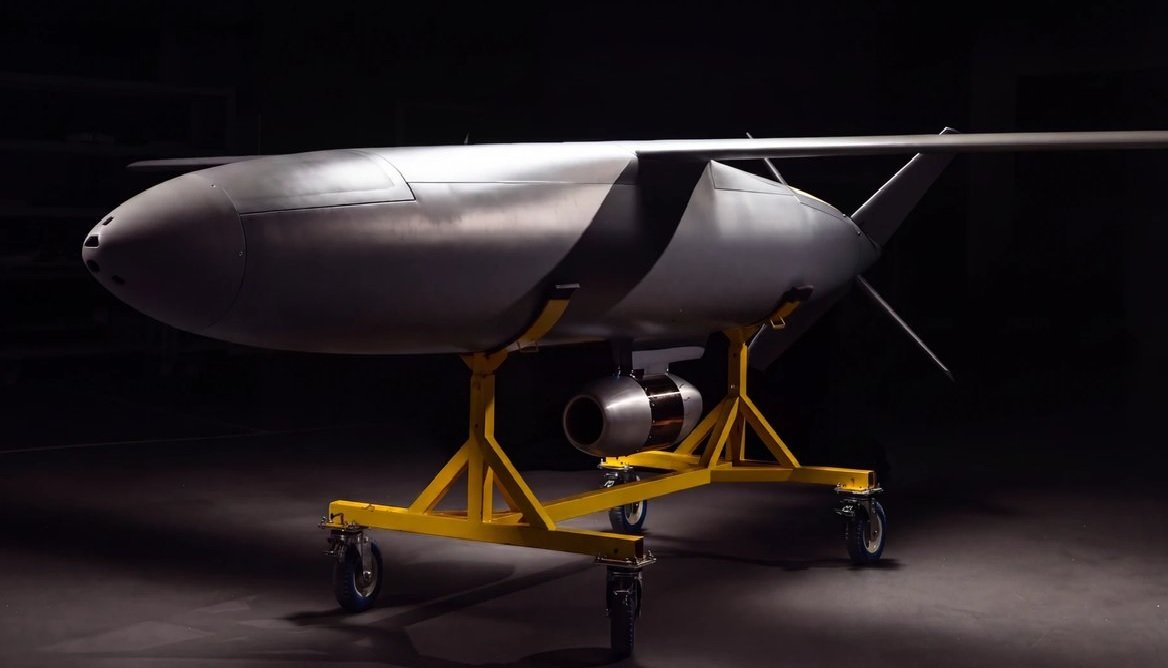
U.S
DALLAS — Defense technology startup Covenant has emerged from two years of stealth operations with more than $250 million in venture funding, introducing Anthem, a ground-launched, long-range precision strike cruise missile designed to carry a heavy payload and be produced in large numbers. Founded in 2024, Covenant has more than 200 employees across the United States, Germany and Israel. The company said it has already secured approximately $150 million in orders covering research and development, qualification and production contracts. Anthem Targets the Deep-Strike Gap Anthem is designed to carry a payload of more than 200 kilograms (over 440 pounds) over long distances. Covenant has not disclosed its exact range, but says the missile offers multiples of the range and payload of other systems in its price class. The company is targeting a unit cost in the mid-six figures at full-rate production. Anthem is intended for hardened targets, including ports, runways and weapons facilities. Covenant has developed its own ground launcher, storage and handling systems, along with mission-planning and command-and-control software designed to support coordinated launches of large numbers of missiles. More Than 200 Test Flights Covenant said Anthem first flew in August 2025 and has completed more than 200 test flights. The testing has included trials with the U.S. military in the United States and overseas. A recent demonstration was conducted in August 2026 at a U.S. Army range in Morocco. $250 Million Funding and Military Contracts Covenant raised more than $250 million across three funding rounds, with investors including Andreessen Horowitz, Founders Fund, Lux Capital, 8VC, Aleph and Lightspeed Venture Partners. Reports place the company's valuation at more than $1 billion. The company has an Other Transaction Agreement with the U.S. Army for accelerated testing and qualification. The U.S. Navy's Rapid Capabilities Office also awarded Covenant a roughly $70 million cost-sharing contract to develop a maritime Anthem variant and incorporate Defense Exportability Features for potential sales to U.S. allies. Covenant said additional awards are expected before the end of 2026. Production Designed for Scale Covenant is using commercial off-the-shelf components for Anthem where possible. Where commercial parts were unavailable, the company said it worked with suppliers to establish dedicated production lines. The company has opened a 105,000-square-foot production facility in Grand Prairie, Texas, while a 110,000-square-foot facility in Saxony, Germany, is planned around a predominantly European supply chain. Covenant is also operating a roughly 30,000- to 32,000-square-foot facility in northern Israel. Serial production is scheduled to begin in the first quarter of 2027, with an initial goal of about 1,000 missiles in the first year and a longer-term target of 5,000 units annually. Covenant expects deliveries of German-built systems to an international customer by the end of 2026, while U.S. Army deliveries are planned for 2027. Leadership and Western Strike Requirements Covenant was founded by Michael Kaufman and Ofir Dayan. Kaufman, the company's CEO, is a former investor at Thiel Capital, while Dayan, the CTO, previously worked on systems including Iron Dome. Abby Denburg is President and Chief Growth Officer, and former U.S. Deputy Secretary of Defense Kathleen Hicks serves as an adviser. Covenant is positioning Anthem around the growing requirement for large numbers of heavy-payload precision weapons against hardened targets. Its approach combines a lower-cost production model, localized manufacturing and integrated launch and mission-planning systems. The company says the priority now is execution—delivering mission-critical capability to customers on time, at scale and with the performance they expect.
Read More → Posted on 2026-09-10 09:13:25
U.S
AUBURN HILLS, Mich. — American Rheinmetall has secured a $7.28 million contract to supply the U.S. Marine Corps with 12 Mission Master SP autonomous unmanned ground vehicles (A-UGVs), along with five specialized Marine Kits and related support equipment. Contract and Marine Corps Evaluation The procurement is being executed by the Defense Logistics Agency (DLA), with ADS Inc. serving as the prime contractor for the Marine Corps Warfighting Laboratory (MCWL). American Rheinmetall will lead the project in the United States, while Rheinmetall Canada, the Mission Master SP's original equipment manufacturer and technical partner, will provide engineering and production support. The vehicles will undergo operational evaluation, experimentation and capability development. The program is intended to support the Marine Corps' efforts to expand autonomous logistics, mobility and expeditionary capabilities. Mission Master SP Capabilities The Mission Master SP is a compact, low-profile autonomous unmanned ground vehicle designed to support dismounted troops. It can be configured for missions including logistics, tactical overwatch, fire support and casualty evacuation. The latest configuration uses Rheinmetall's PATH autonomy architecture, which supports autonomous navigation and mission planning in complex and GPS-degraded environments. The vehicle supports modular payloads and can operate in follow-me, convoy and fully autonomous modes. Its lithium-ion battery-powered electric drivetrain supports low-signature operations. The vehicle is also compact enough to be transported internally by CH-47, CH-53 and C-130 aircraft. Amphibious Marine Kit The contract includes five Marine Kits, which are designed to improve the Mission Master SP's ability to operate in littoral environments and perform extended amphibious tasks. Five of the 12 vehicles will be equipped with the kits for maritime mobility testing. “This collaboration between Rheinmetall colleagues enables the U.S. Marine Corps to deploy the Mission Master SP in multi-domain environments and continue to push boundaries of Canadian innovation,” said Pietro Mazzei, president and CEO of Rheinmetall Canada. Four Years of Marine Corps Cooperation The award builds on more than four years of collaboration between Rheinmetall and the Marine Corps. Earlier Mission Master systems were tested in missions including casualty evacuation, resupply and autonomous road marches of up to 50 kilometers. The vehicles also participated in exercises including Talisman Sabre in Australia and Apollo Shield at Twentynine Palms, California. Rheinmetall has also integrated the Fieldranger Remote Weapon Station on an armed Mission Master SP and demonstrated the system during live-fire testing. “This award represents a significant milestone in our long-standing partnership with the United States Marine Corps,” said Matt Warnick, CEO of American Rheinmetall. He said the company has worked with Marines for more than four years to develop and advance autonomous ground capabilities. Support and Future U.S. Production The contract includes engineering support, logistics coordination, program management, operator training, technical documentation and acceptance testing. American Rheinmetall also plans to develop its Maine facility into a future U.S. Advanced Land Autonomy Center of Excellence (ALACOE). The center is planned to focus on PATH integration, local production, sustainment and lifecycle support. The current procurement does not require immediate expansion of the Maine facility, although the company said the planned center could support future U.S. manufacturing, workforce growth and long-term sustainment. The new contract will provide the Marine Corps with additional Mission Master SP vehicles for continued testing and development of autonomous logistics, mobility and amphibious capabilities.
Read More → Posted on 2026-09-10 09:00:27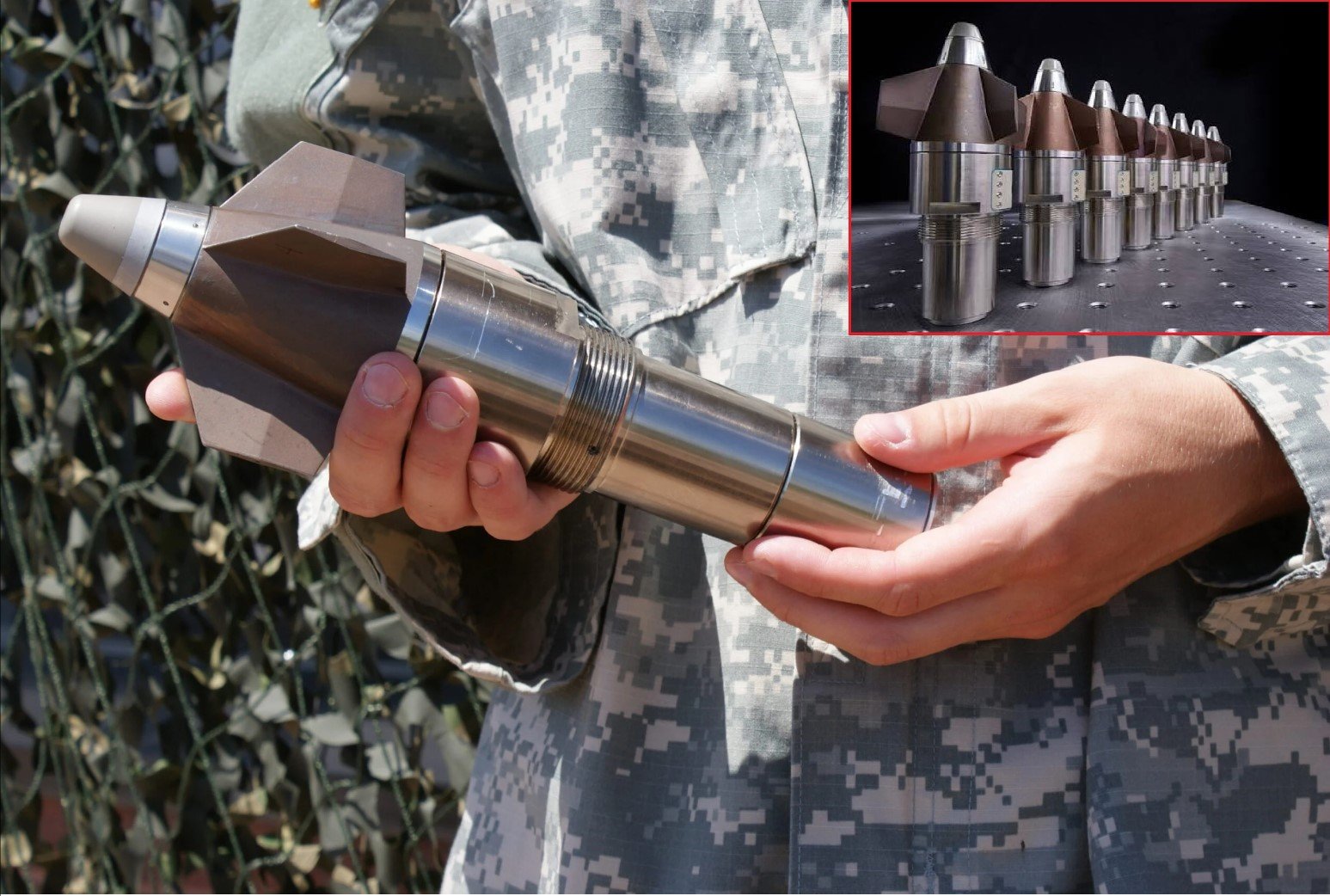
U.S
PLYMOUTH, Minn. — Northrop Grumman has begun production of its PGK E5 precision guidance kit for the U.S. Army. The upgraded system is designed to maintain the accuracy of 155 mm artillery rounds when GPS signals are jammed or degraded. Production is underway at Northrop Grumman’s facility in Plymouth, Minnesota, with the first deliveries expected in early 2028. The company has not disclosed the specific number or value of PGK E5 kits ordered. The PGK E5 is the latest version of the M1156 Precision Guidance Kit, which has been in production since 2013 and in service since 2015. The kit screws into the fuze well of compatible conventional 155 mm projectiles, allowing existing ammunition to receive GPS-guided course-correction capability without requiring new guided shells or changes to the artillery platform. Anti-Jamming Upgrade The main improvement in the E5 is its enhanced anti-jamming technology, developed to maintain precision when GPS signals are disrupted by electronic warfare. Northrop Grumman said the system recently exceeded the Army’s threshold and objective accuracy requirements during testing in GPS-degraded conditions. The Army lists a threshold accuracy of less than 50 meters circular error probable (CEP) and an objective of less than 30 meters CEP. The E5 maintains the same fit, form and user experience as previous PGK versions. It is compatible with projectiles including the M795 and M549A1 high-explosive rounds and fielded artillery systems such as the M109A6/A7 Paladin and M777A2. The system also retains standard fuze functions, including point detonation and proximity, or height-of-burst, operation. “Today’s threat environment demands speed and innovation and we’re working closely with the U.S. Army to ensure the PGK E5 keeps maneuver forces ready to win in GPS degraded environments,” said Dave Fine, vice president of armament systems at Northrop Grumman. $862.8 Million Production Contract The E5 production follows a $862.8 million firm-fixed-price indefinite-delivery/indefinite-quantity contract awarded to Northrop Grumman by the U.S. Army in September 2026. The five-year agreement covers the manufacture, inspection, testing, packaging and delivery of M1156 precision guidance kits and variants through September 2031. Individual orders will determine work locations and funding. The Army Contracting Command in Newark, New Jersey, manages the agreement. Northrop Grumman has delivered more than 145,000 PGK kits to date, with the system reporting a 98 percent point reliability rate since 2013. PGKs are used by U.S. forces and allied countries, including Australia, Canada and Finland. Finland purchased 5,500 kits in August 2024. The PGK approach allows existing stocks of conventional 155 mm ammunition to receive precision-guidance capability, providing the Army with an anti-jam upgrade without requiring replacement of its existing artillery platforms.
Read More → Posted on 2026-09-10 08:50:21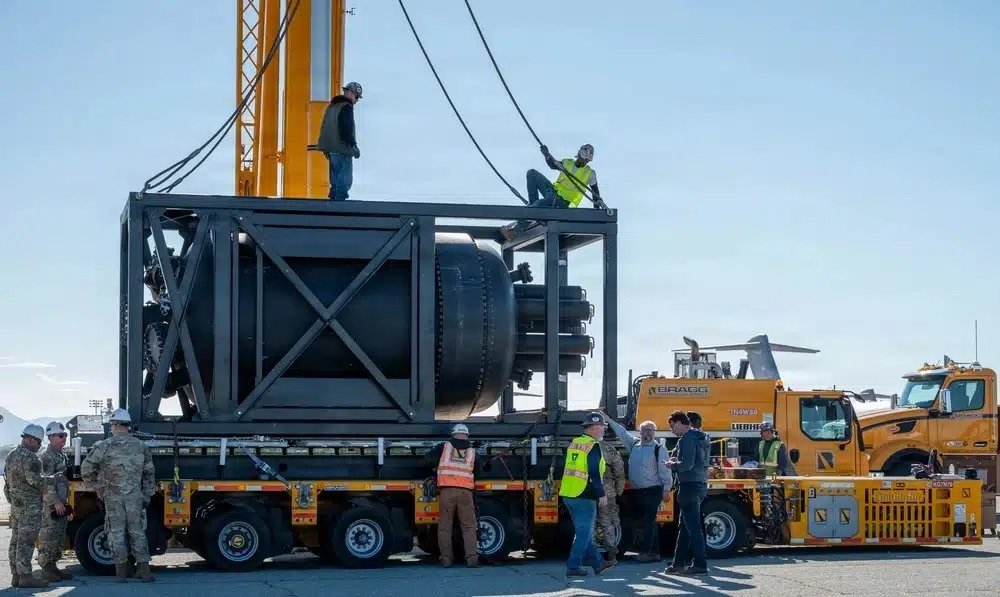
U.S
WASHINGTON — The U.S. Department of War plans to install an advanced nuclear Micro Modular Reactor (MMR) at Naval Weapons Station (NWS) Crane in Indiana no later than September 2028. The project will provide the installation with continuous electricity independent of the commercial power grid. The reactor will be the U.S. Navy’s first shore-based advanced microreactor and the first power-producing nuclear reactor installed in Indiana. The commercially owned and operated reactor is intended to improve the energy resilience of NWS Crane, allowing critical activities to continue during commercial grid disruptions and other demanding conditions, including physical and cyber threats. Nuclear Power for Naval Weapons Station Crane NWS Crane is a major U.S. military installation in southern Indiana. It supports defense technology and weapons-related activities, including weapons development, electronic warfare, strategic missions and expeditionary warfare systems. The installation hosts the Naval Surface Warfare Center Crane Division and Crane Army Ammunition Activity and employs thousands of civilian personnel, including scientists and engineers. The new reactor is intended to provide a reliable source of electricity for critical operations without depending on the civilian power grid. Microreactors are generally designed as relatively small nuclear power systems that can be factory-built and deployed to individual sites. Systems in this category typically produce 20 megawatts or less and are intended to supply power to a specific installation rather than a regional electricity network. The Department of War has not publicly identified the reactor vendor for the Crane project. It also has not released a cost estimate, specific reactor design or power output. Army’s Janus Program Leads Deployment The Crane project is being carried out through the Army’s Janus Program, with the Army serving as the Department of War’s executive agent for nuclear energy at military installations and holding regulatory authority for the unit. The Navy is responsible for establishing the operational requirements for the Crane site, while the Department of War Innovation Unit is connecting the military effort with commercial nuclear technology developers. The program also involves the Office of the Under Secretary of War for Research and Engineering, the Office of the Assistant Secretary of War for Critical Technologies and the State of Indiana. “Janus was designed from the beginning to deliver capability beyond the Army,” said W. Jordan Gillis, Assistant Secretary of the Army for Installations, Energy and Environment. He said the effort is intended to create a pathway for resilient nuclear power across the Joint Force. Brendan Rogers, Assistant Secretary of the Navy for Energy, Installations and Environment, said energy security is directly connected to military capability. He said placing the Navy's first shore-based advanced microreactor at Crane would support efforts to protect shore infrastructure from physical, cyber and commercial-grid vulnerabilities. Part of Wider Military Microreactor Program The Crane deployment follows earlier selections under the Janus Program for other Department of War installations. The Army previously selected five companies and initial locations: Antares Nuclear — Fort Bragg, North Carolina BWXT Advanced Technologies — Fort Campbell, Kentucky General Atomics Electromagnetic Systems — Fort Hood, Texas Radiant Industries — Fort Benning, Georgia Westinghouse Government Services — Fort Drum, New York Those awards have a combined value of up to $2.2 billion. Private funding is expected to support more than 20 reactors across Department of War installations over time. The Crane project is therefore being positioned as an early part of a broader effort to deploy advanced nuclear power at military facilities. Executive Orders Set 2028 Target The project follows President Donald Trump’s executive orders concerning advanced nuclear reactors for national security and rebuilding the U.S. nuclear industrial base. Executive Order 14299, signed in May 2025, directed the Army to operate an Army-regulated nuclear reactor at a domestic military installation by September 30, 2028. Emil Michael, Under Secretary of War for Research and Engineering, said the department is working to field next-generation energy technologies while strengthening the U.S. nuclear industrial base and ensuring military installations have resilient infrastructure for uninterrupted operations. Mike Dodd, Assistant Secretary of War for Critical Technologies, said his office is focused on moving technologies from development into operational use. He said the office's standard is to field and deploy capability within 24 months or less, with the Crane effort being pursued under the Contested Logistics Critical Technology Area. Indiana Support and Next Steps The Crane initiative follows more than a year of coordination between the Department of War and Indiana officials. The project has received support from Senator Jim Banks, Governor Mike Braun, Senator Todd Young, Representative Erin Houchin and Representative Mark Messmer. Federal, state and local authorities will continue work on the safety, environmental, regulatory and installation requirements needed before the reactor can be deployed. Officials have also said that nuclear safety, physical security, cybersecurity and responsible use of taxpayer funds will remain priorities throughout the project. The initiative is also expected to create skilled employment opportunities and contribute to expansion of the domestic nuclear supply chain. The Department of War has set September 2028 as the deadline for the Crane deployment, but has not publicly provided further details on the specific reactor design, power output or construction schedule.
Read More → Posted on 2026-09-10 08:29:20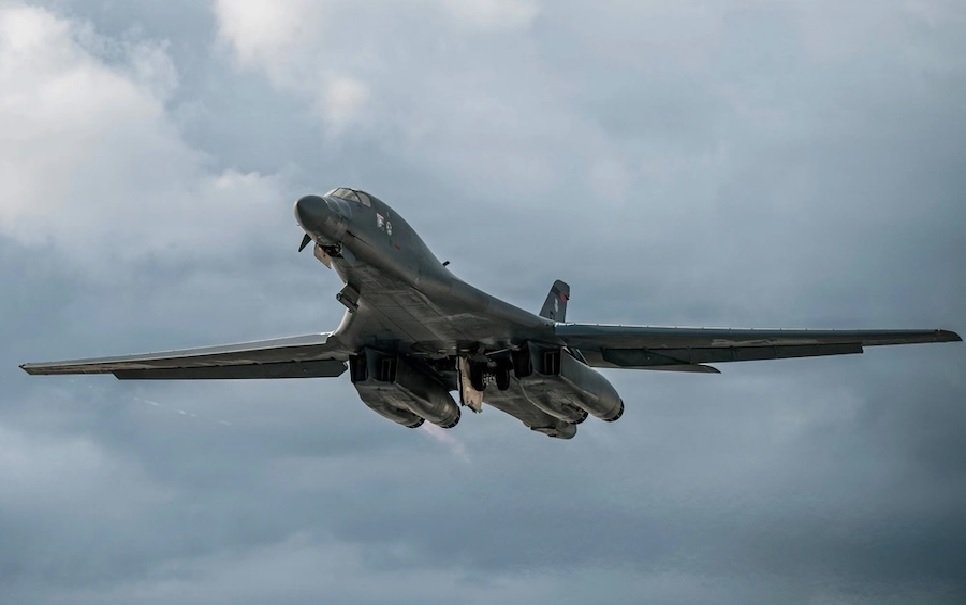
U.S
WASHINGTON — The U.S. Air Force has launched the North Star Readiness Campaign to increase the number of mission-capable B-52 Stratofortress and B-1 Lancer bombers available for operations. The campaign was launched on September 8 by Air Force Global Strike Command (AFGSC) in partnership with Air Force Materiel Command (AFMC) and the Defense Logistics Agency (DLA). The effort focuses on reducing logistical delays, improving parts availability, strengthening engineering support and speeding up depot maintenance. The Air Force said the campaign is intended to maintain a ready bomber force capable of supporting global operations. It brings operators, sustainment organizations, logisticians and maintainers together to address problems that can keep aircraft out of service. Faster Parts Delivery One of the main elements of the campaign is the use of daily aircraft-on-ground meetings. These meetings bring together DLA representatives, supply-chain personnel, base logistics units and flight-line maintainers to identify parts shortages and work on solutions. According to the Air Force, some lateral shipments that previously took a week or longer can now reach operating units in two to three days. The campaign has also reduced the number of mission-impacting parts problems, known as MICAPs, from more than 450 to approximately 160. The reduction allows maintenance teams to spend more time working on high-priority backorders and identifying emerging reliability problems instead of responding to immediate parts shortages. Focus on B-1 and B-52 Fleets For the B-1 fleet, the campaign is focused on improving the availability of critical structural and avionics parts while also reducing delays associated with depot-level maintenance. The objective is to return aircraft to the fleet faster and reduce aircraft downtime. The campaign is also supporting the continued modernization of the B-52 fleet. Both the B-52 and B-1 are receiving upgrades intended to allow the aircraft to remain in service for decades longer. The Air Force is also continuing to sustain the B-2 Spirit for maximum combat effectiveness until the B-21 Raider becomes fully operational. Air Force Leadership Emphasizes Readiness Gen. S.L. Davis, commander of Air Force Global Strike Command, said the campaign brings together operators, acquisition and sustainment experts and logistics partners with a focus on operational readiness. “This is a team effort,” Davis said, emphasizing the need to provide maintainers with the parts and support required to keep the bomber force ready. Lt. Gen. Linda Hurry, commander of Air Force Materiel Command, said continued cooperation between Global Strike leadership and logistics organizations has helped improve the supply chain and return aircraft to the fleet faster after depot maintenance. The campaign also uses ideas developed by Airmen working directly on the aircraft. Standardized maintenance playbooks and changes to day-to-day processes are being used to improve the movement of parts and streamline flight-line maintenance. The North Star Readiness Campaign brings together ongoing and new modernization efforts, primarily managed through the Office of the Assistant Secretary of the Air Force for Acquisition and Air Force Materiel Command. The Air Force says the coordinated approach is intended to deliver parts, resources and engineering solutions more efficiently and increase the number of B-52 and B-1 aircraft available for operations.
Read More → Posted on 2026-09-10 07:02:44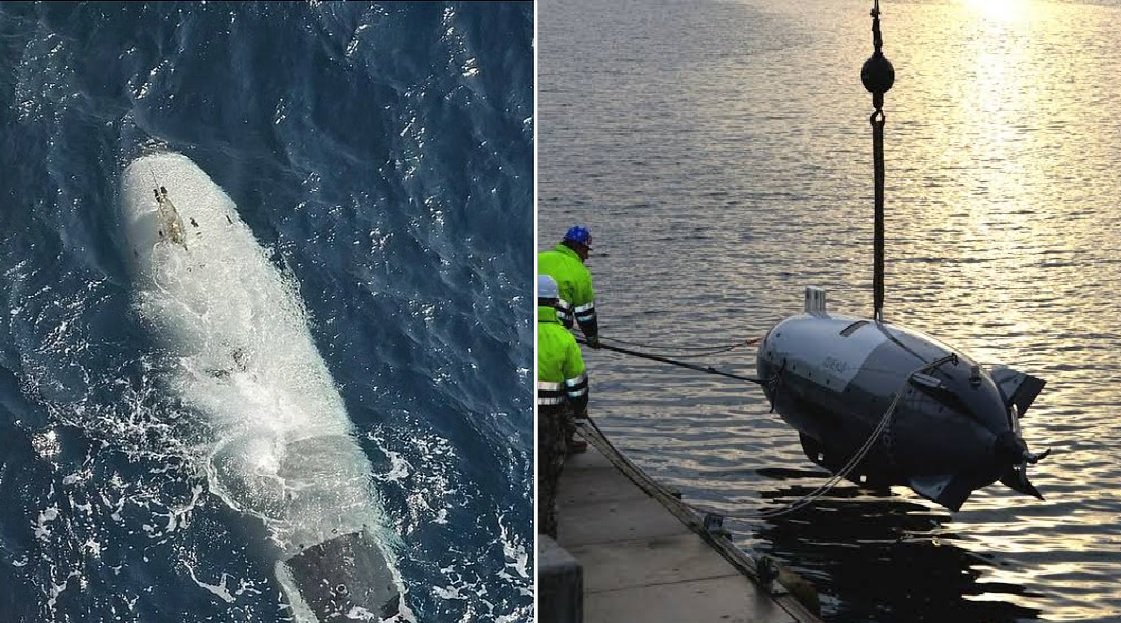
U.S
WASHINGTON — The U.S. military has confirmed the loss of an uncrewed underwater vehicle in the Strait of Hormuz area, but said the vehicle had malfunctioned more than a day before Iranian forces recovered it. Iran’s Islamic Revolutionary Guard Corps (IRGC) Navy announced on September 8 that it had captured a U.S. autonomous underwater vehicle near the entrance to the Strait of Hormuz. Iranian state media described it as one of the most modern and intelligent unmanned submarines operated by the United States and released footage of its recovery. U.S. Central Command (CENTCOM) said the vehicle was an older model that suffered a mechanical failure while surveying regional waters in support of ongoing operations. Navy Capt. Tim Hawkins, a CENTCOM spokesperson, said it did not collect sensitive data or carry classified sonar or radar equipment. He added that U.S. operations in the area are continuing. Vehicle Identified as Anduril Dive-LD Images released by Iranian sources show a vehicle consistent with the Dive-LD, a large autonomous underwater vehicle made by California-based Anduril Industries. Open-source analysis found matching features including the hull shape, flood holes, transparent mast, fastening points, seam lines and X-shaped rudders. Reuters and other defense publications also identified it as a Dive-LD. Anduril confirmed that one of its Dive-LD vehicles had been lost and described the system as an attritable autonomous system, designed for dangerous operations where loss of the vehicle is an expected possibility. The U.S. Navy received Dive-LD systems in 2025 for units operating unmanned underwater vehicles. Dive-LD Capabilities According to Anduril specifications, the Dive-LD is approximately 5.8 meters (19 feet) long, about 1.2 meters (4 feet) in diameter, weighs roughly three tons, and can operate autonomously for up to 10 days. Its maximum advertised operating depth is approximately 6,000 meters. Its modular design allows different payloads and sensors to be integrated. Listed missions include intelligence, surveillance and reconnaissance, mine warfare, seabed mapping, hydrographic surveying, environmental monitoring, and inspection of underwater infrastructure such as cables and pipelines. The system uses direct-drive electric propulsion and can be launched and recovered from vessels and shore facilities. Different Accounts From Iran and the U.S. The IRGC described the recovery as a complex intelligence and operational action and called the vehicle advanced U.S. underwater technology. Iranian officials also said the system had been delivered to the U.S. military in 2025. The U.S. and Pentagon accounts differ, saying the vehicle had malfunctioned more than a day earlier and was an older model without sensitive data or classified sonar or radar equipment. The incident provides a public example of U.S. use of large autonomous underwater vehicles around the Strait of Hormuz. Iran says the vehicle is now in its possession, while U.S. officials maintain that the particular vehicle carried no classified equipment and that U.S. operations continue.
Read More → Posted on 2026-09-09 14:32:20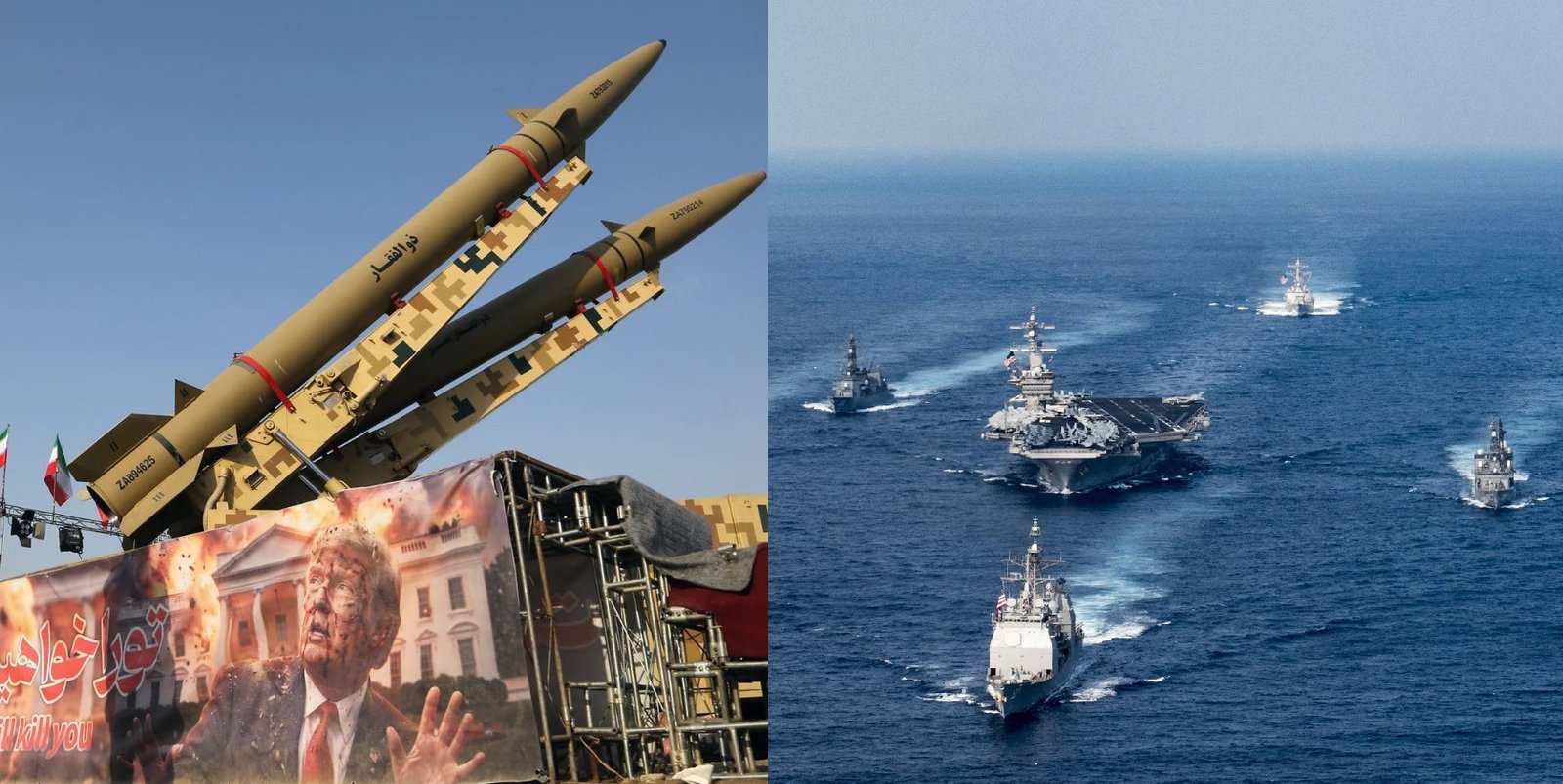
U.S
WASHINGTON — U.S. officials are increasingly concerned about Iran’s improved missile technology after a series of ballistic missile attacks targeting U.S. Navy ships operating around the Gulf of Oman and Strait of Hormuz. Officials are also examining whether Russia or China may be helping Iran track the location of American warships. The Wall Street Journal, citing U.S. officials, reported a previously undisclosed attack on U.S. Navy ships on Monday, following weekend ballistic missile launches directed at a U.S. aircraft carrier and a guided-missile destroyer. Iran’s Islamic Revolutionary Guard Corps (IRGC) publicly claimed to have inflicted significant damage on two Arleigh Burke-class destroyers, but U.S. Central Command rejected those claims. According to CENTCOM, the targeted warships successfully evaded the incoming ballistic missiles during multiple engagements. The vessels continued their regional patrols without suffering operational damage, and no American personnel were harmed. Advanced Guidance Raises Questions Iranian officials described the (Monday) recent launches as involving improved systems. Major General Mohsen Rezaei, secretary of Iran’s Supreme National Security Council, said a specialized ballistic missile had been tested against a U.S. warship. Iran’s messaging in recent days has become more assertive, and a Monday report described the Qassem Basir as a “turning point in Iran’s defense strategy.” It described the missile as having greater range and accuracy and a half-ton warhead. The missile was unveiled last year, when it was described as having at least a 1,200-kilometer (745-mile) range. Iranian state media has presented the Qassem Basir as having enhanced range, accuracy and guidance features, including thermal imaging and electro-optical seekers that allow terminal-phase adjustments. Weapons analysts have noted that missiles fitted with electro-optical seekers can use imagery to adjust their flight path and maneuver toward a moving target, such as a ship at sea, during the final stage of flight. However, even with advanced terminal guidance, Iran would still generally need an approximate location of the target before launch. Concerns about Iran’s ballistic missile program were among the stated reasons the United States and Israel attacked Iran earlier this year, sparking the war. U.S. officials and intelligence assessments over the course of the conflict have pointed to Iran’s use of more sophisticated missile technology. Reports have described improved maneuverability, multi-system navigation that can draw on GPS along with China’s BeiDou and Russia’s GLONASS, and terminal guidance that is less vulnerable to certain forms of electronic jamming. Questions Over Russian and Chinese Assistance The requirement to locate a moving warship before launch has raised questions among U.S. officials and analysts about whether Russia or China may be providing Iran with satellite imagery, location information or other surveillance assistance. Earlier U.S. intelligence reporting indicated that Russia has shared satellite imagery and location information on American ships and installations with Iran. China has been linked to the provision of commercial satellite imagery of U.S. and allied positions, dual-use components useful for missile programs, and access to its BeiDou navigation system. Beijing has also faced U.S. sanctions related to companies supplying imagery that could aid targeting. Russia maintains an advanced space surveillance network capable of providing optical and radar imagery. These developments have raised questions among analysts about whether external assistance has helped Iran obtain better location data on U.S. naval forces operating in the confined waters of the Gulf of Oman and Strait of Hormuz. According to officials and analysts, such assistance could support more precise initial targeting information, even if the missile’s final guidance relies on Iranian-developed seekers. U.S. Retaliation Against Iranian Tankers In response to the weekend attacks on U.S. naval assets, the American military launched retaliatory strikes against several Iranian crude oil tankers. CENTCOM said the targeted tankers were part of a “multibillion-dollar shadow network” used by Iran to fund the IRGC and its regional proxies. The operation resulted in the destruction or permanent disabling of multiple vessels off Kharg Island, near Jask, and in the Gulf of Oman. The vessels included the M/T Downy, M/T Stark 1, M/T Kylo, M/T Kaviz and M/T Charminar. Before the strikes, U.S. forces directed the crews to abandon the ships to prevent casualties. Admiral Brad Cooper, commander of U.S. Naval Forces Central Command, said the strikes were intended to impose a direct economic cost on Tehran. Secretary of State Marco Rubio also stated that Iran continues to try to hit U.S. naval ships and that each such attempt would result in the loss of additional tankers. U.S. Naval Operations in the Region The United States currently has an estimated 19 warships supporting operations in the Middle East, according to a Navy official cited by The Wall Street Journal. The forces are operating in an environment centered on maintaining freedom of navigation in the Strait of Hormuz, a major maritime chokepoint for global oil and gas supplies. The United States is also maintaining a blockade and economic pressure campaign against Iranian ports. The recent missile attacks and subsequent U.S. strikes on Iranian tankers have added to the confrontation between the two countries. The latest developments have focused attention on both Iran’s improved missile guidance technology and its ability to obtain accurate information on the location of moving U.S. warships. U.S. officials are also examining whether foreign satellite and surveillance assistance could be contributing to Iran’s ability to obtain the initial targeting information required for such attacks.
Read More → Posted on 2026-09-09 14:18:09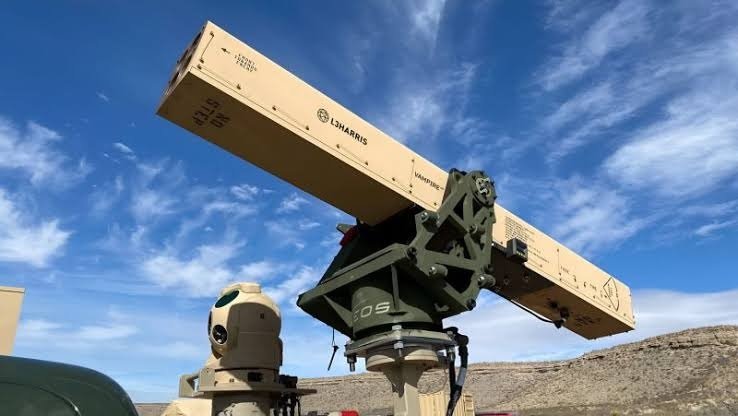
U.S
MELBOURNE, Fla. — The U.S. Navy has selected L3Harris Technologies to provide its VAMPIRE counter-unmanned systems for littoral, or coastal, defense. The selection, announced on September 8, is part of the U.S. military’s expanding effort to develop layered defenses against small unmanned systems. VAMPIRE, which stands for Vehicle-Agnostic Modular Palletized Intelligence, Surveillance and Reconnaissance Rocket Equipment, is a self-contained system that combines reconnaissance and precision-strike capabilities against drones and remotely piloted platforms. The system is designed as a portable kit that can be installed on most vehicles with a cargo bed. It can use the WESCAM MX-10D RSTA electro-optical/infrared sensor mounted on a telescopic mast. The sensor provides high-definition surveillance and laser target designation. VAMPIRE can launch Advanced Precision Kill Weapon System (APKWS) rockets and other laser-guided munitions. When equipped with 70mm APKWS rockets, L3Harris says the system can engage targets at ranges of up to 9 miles (15 km). The company has not disclosed which ammunition will be supplied to the Navy. Adapted for Maritime Operations L3Harris is modifying and ruggedizing VAMPIRE for coastal and maritime conditions so the system can withstand environmental stresses associated with naval operations. “VAMPIRE is a flexible and effective system that meets the unique requirements of the U.S. Navy for littoral C-UxS defense,” said Tony Calderon, president of Targeting & Sensor Systems within L3Harris’ Communications & Spectrum Dominance business. The company has not disclosed the contract value, number of systems or delivery schedule for the Navy order. The wider VAMPIRE family includes sensors, precision weapons, electronic jammers and non-kinetic effectors. It also incorporates artificial intelligence and machine learning to help speed the detection, engagement and defeat of small unmanned threats. The Navy selection follows a separate U.S. Army order worth up to $106 million, announced in June 2026. L3Harris said VAMPIRE systems have supported European combat operations since 2023, logging more than 350,000 operational hours and defeating hundreds of hostile drones. The company began high-volume production at its Huntsville, Alabama, facility in early 2026. L3Harris is also using Wraith Shield software for layered counter-drone operations. The system uses military radios as sensors to identify small unmanned aircraft and can be integrated with VAMPIRE and Drone Guardian systems. The VAMPIRE family also includes VAMPIRE Black Wake, a maritime variant designed for crewed or uncrewed vessels against small drones and fast attack watercraft. Recent work has also included passive AI-based detection software from Shield AI to improve target identification without transmitting signals that could reveal the system’s position. Separately, on September 8, L3Harris announced a seven-year contract valued at up to $4.7 billion from Lockheed Martin to produce solid-rocket propulsion systems for PAC-3 Missile Segment Enhancement interceptors.
Read More → Posted on 2026-09-09 13:47:21Search
Top Trending in 24 Hours
-
 U.S. Intelligence Identifies Suspected Chinese Asset with Ties to Nvidia CEO, Report Says
-
 Iran Uses Network of 5,000 Defense-Linked Agencies to Import Billions in Military Hardware
-
 U.S. Army and Air Force Conduct Joint Counter-Drone Training in Germany with Rapidly Deployable SUADS
-
 Chinese Researchers Develop Catalyst to Convert Mars Carbon Dioxide into Methanol Fuel
-
 Iran Claims Capture of US MQM-170 Drone Over Strait of Hormuz; US Denies Report
-
 U.S. Forces Korea Commander Warns of Daily Electronic Jamming on Korean Peninsula, Communications Could Fail Within 48 Hours of Conflict
-
 U.S. Startup Rendezvous Robotics Raises $20 Million to Develop Self-Assembling Spacecraft in Orbit
-
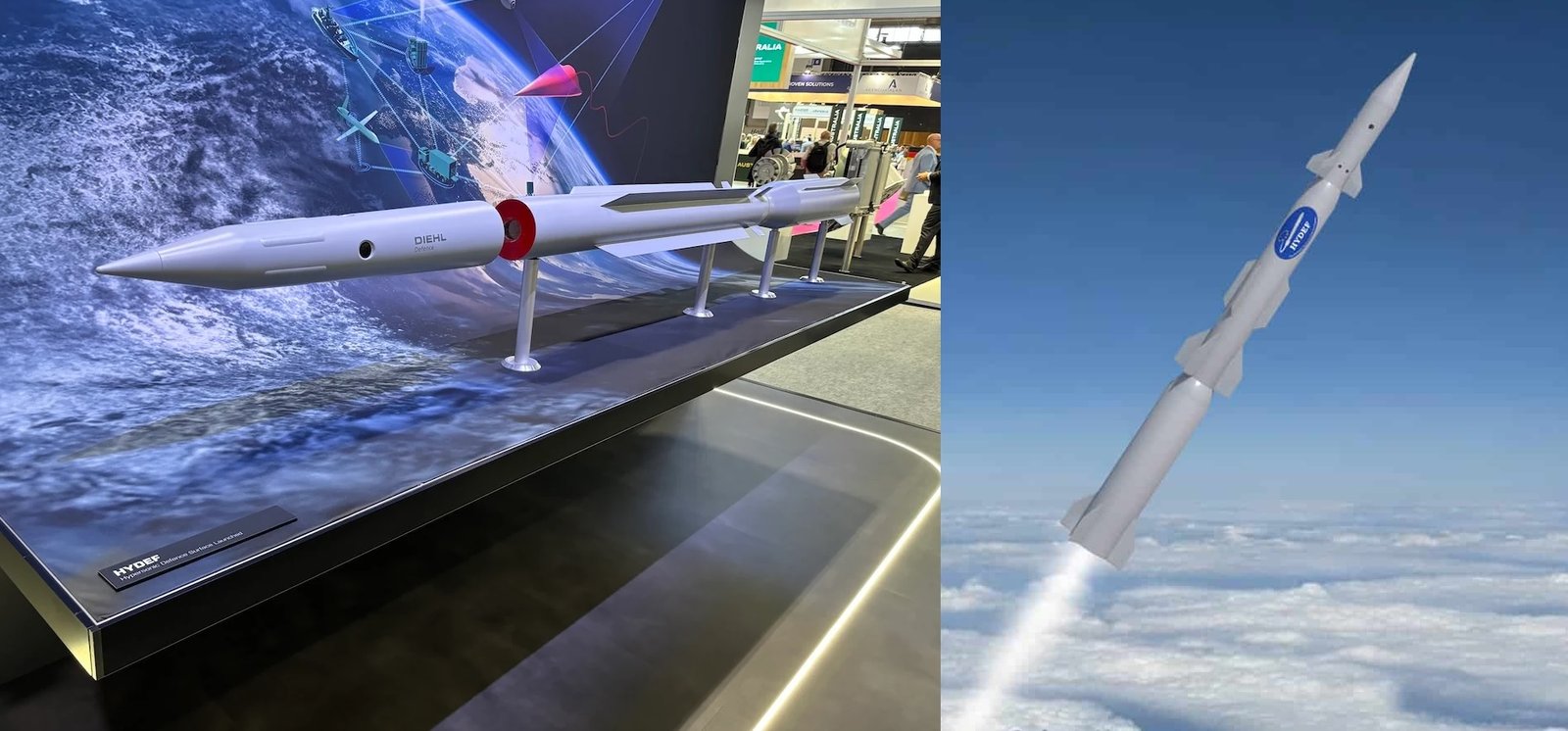 European HYDEF Consortium Completes First Phase of Hypersonic Interceptor Project, Expands Membership
Top Trending in 4 Days
-
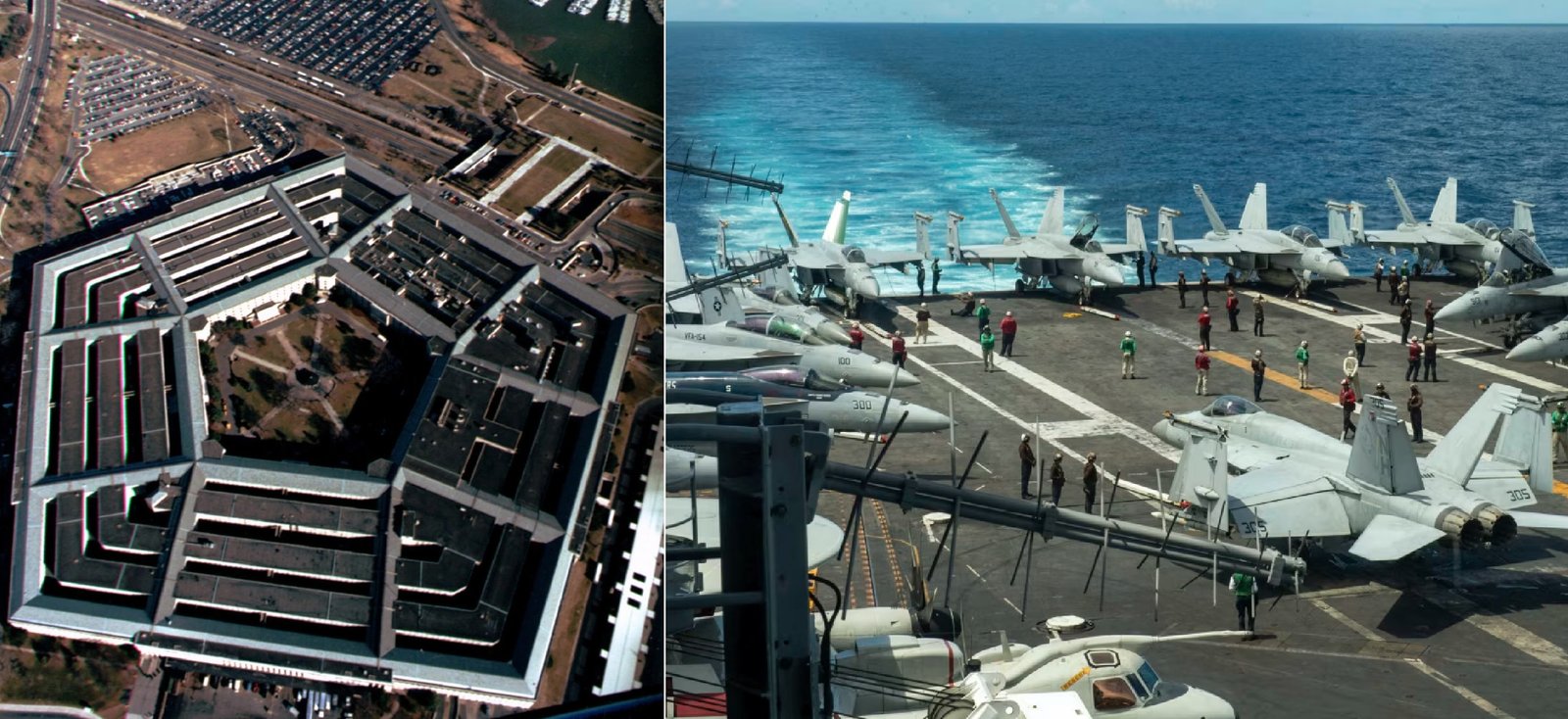 Pentagon Launches FORTRESS Initiative to Make Major U.S. Bases Self-Sufficient for 90 Days
-
 Saudi Arabia, Pakistan and Turkey Hold High-Level Security Talks with Iran in Tehran Amid Reports of Potential Iranian Integration
-
U.S. Intelligence Identifies Suspected Chinese Asset with Ties to Nvidia CEO, Report Says
-
 SpaceX Secures $40 Billion in Debt Financing for AI Chips as Musk Predicts Industry Consolidation
-
 Ethiopia Receives Early Delivery of First 12 Su-35 Fighter Jets from Russia, to Get Four S-400 Systems
-
 U.S. Air Force Plans $1.057 Billion Campus at Nellis to Test F-47 Fighter
-
 Pentagon Report Says Russia Developing Satellite to Carry Nuclear Weapon Into Orbit
-
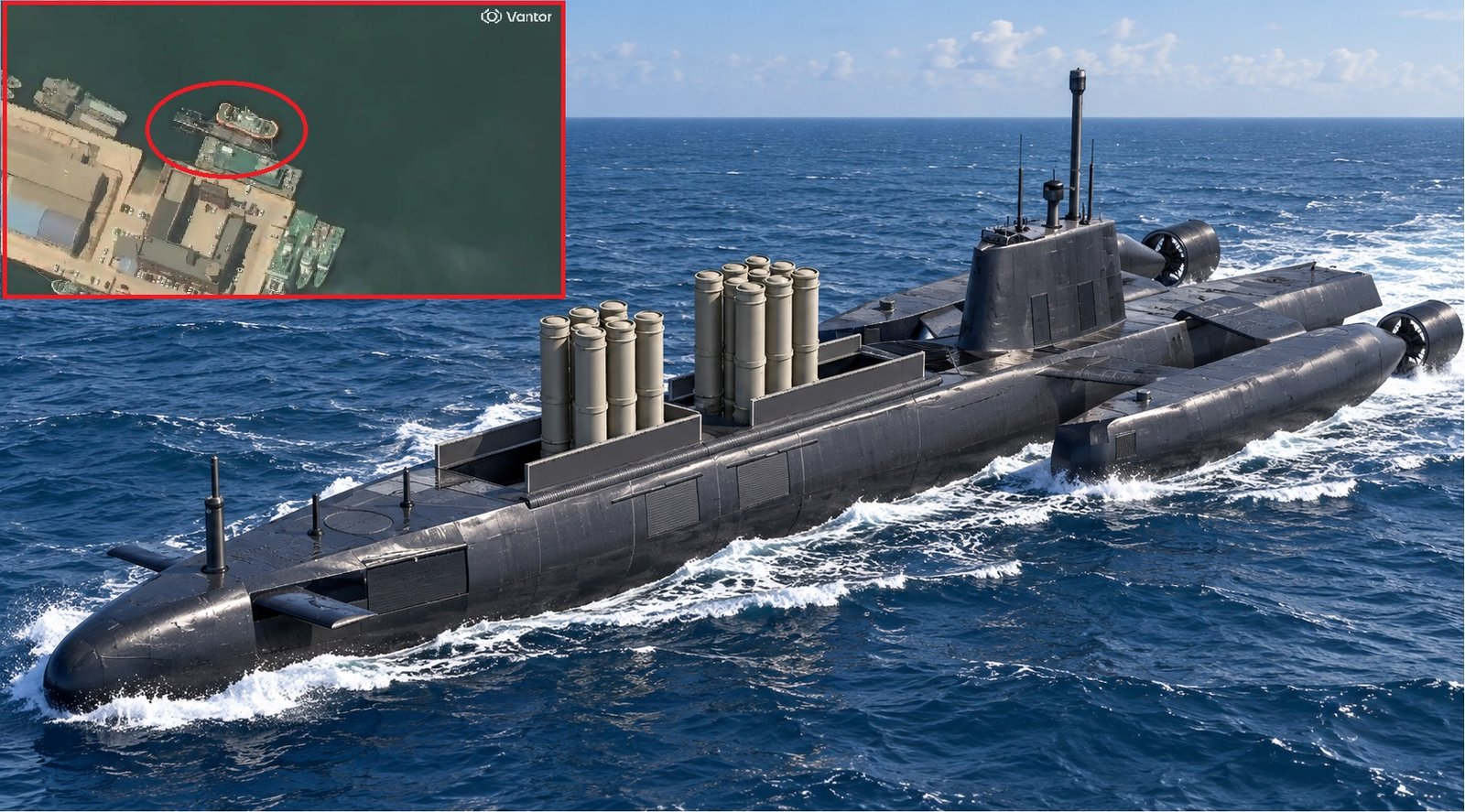 China Tests Unprecedented Uncrewed Semi-Submersible Arsenal Ship With Trimaran Design