U.S
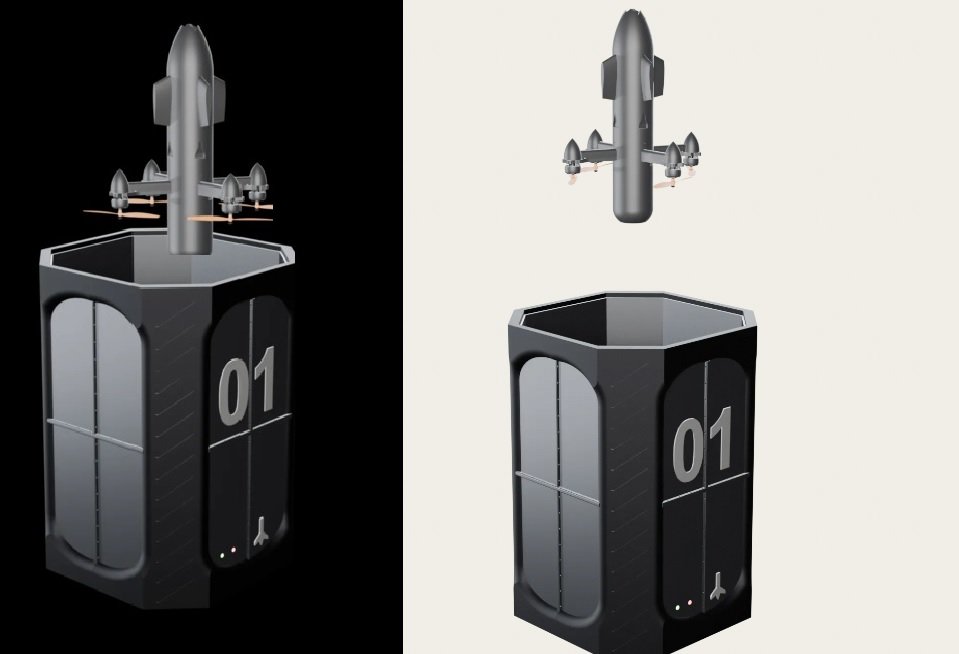
SAN FRANCISCO — IMPACT Drones, Inc., a counter-drone company backed by Y Combinator, has launched Air Defense as a Service (ADaaS), a commercial security system that uses autonomous interceptor drones to protect critical infrastructure from hostile drone attacks. The system is designed for sites including data centers, power grid facilities, airports, and military bases. According to the company, it aims to address the growing challenge of defending fixed infrastructure from increasingly common drone threats. IMPACT said conventional air defense systems are often too expensive for routine protection of civilian infrastructure. Traditional interceptors can cost more than $1 million per engagement, while hostile drones may cost approximately $30,000 to $50,000 to manufacture. This cost imbalance has left many infrastructure operators without an affordable physical defense against aerial threats. The need for such protection was highlighted earlier this year when a drone attack disrupted three Amazon Web Services (AWS) data centers in the Middle East. The incident took a dozen core cloud services offline, and Amazon reported an estimated $200 million loss in a single day. Autonomous Container-Based System The ADaaS system consists of a sealed container permanently installed at the protected site. It does not require dedicated launch crews or launch pads. When external sensors detect a hostile drone, an interceptor automatically breaks through the container's frangible lid and launches toward the target. Using onboard visual navigation, it physically collides with the incoming drone to neutralize the threat. Because the system relies on visual navigation instead of GPS, it can continue operating in environments where Global Navigation Satellite System (GNSS) signals are jammed or unavailable. HUNTER and SABLE Interceptors IMPACT currently offers two interceptor platforms running the company's common autonomy software. HUNTER is the point-defense interceptor designed to protect the airspace directly above a facility. It can reach speeds of up to 300 km/h and uses electro-optical/long-wave infrared (EO/LWIR) terminal guidance. The company said its hardware lineage is based on systems previously used in Ukraine against Shahed-136, Geran-2, and Gerbera drones. SABLE, which is still under development, is a turbine-powered interceptor with a delta-wing airframe. It is designed to reach speeds of up to 825 km/h to engage faster aerial threats. Subscription-Based Protection Instead of selling individual interceptor missiles, IMPACT is offering the system through a subscription model. The service includes the installed hardware, replacement interceptors, reloads, and continuous monitoring, with pricing scaled to the size of the protected site and expected threat level. "Drones are hitting data centers, substations, and airports today, and the defenses built for armies do not scale down to a single site. So we put the whole thing in a box. It sits at your site, it launches when something hostile comes in, and it rams it out of the sky. You do not buy missiles, you subscribe to safe skies. That is Air Defense as a Service," said Jasper Lortije, Founder and CEO of IMPACT Drones. Pilot Deployments Planned IMPACT Drones is part of Y Combinator's Summer 2026 batch. The launch was announced through Y Combinator's channels, and pilot deployments of the interceptor system are scheduled to begin in the third quarter of 2026. The San Francisco-based company was founded by Jasper Lortije, an aerospace engineer with a master's degree from TU Delft who previously worked on visual navigation systems, and Alessandro Fiume, who has a background in sales. The company said it is seeking partnerships with data center operators, airport managers, and energy infrastructure organizations for future deployments.
Read More → Posted on 2026-08-07 14:32:41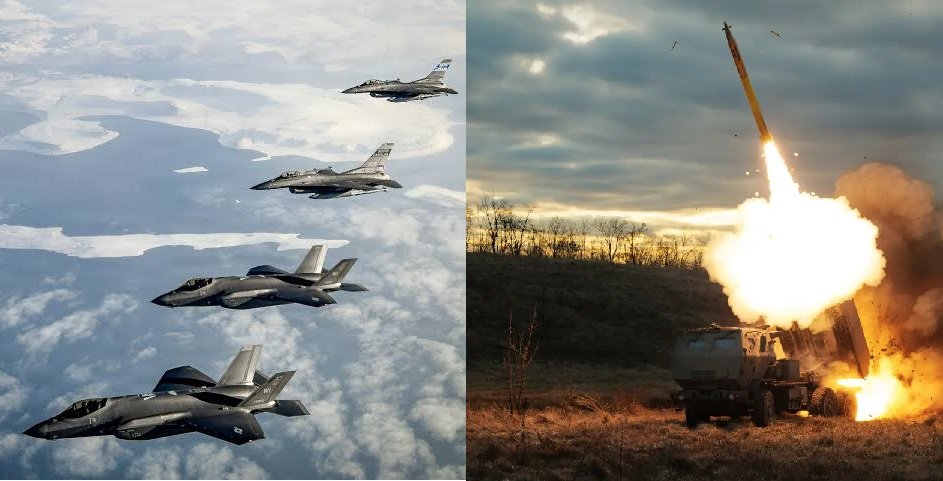
U.S
NOME, Alaska — U.S. joint military forces carried out a multi-domain homeland defense exercise near Nome, Alaska, on August 4 and 6, 2026, integrating fifth-generation fighter aircraft with long-range ground artillery to test their ability to detect, track and engage simulated threats approaching North America through the Arctic. The exercise was conducted under Operation TUNDRA MERLIN, a long-planned homeland defense operation led by U.S. Northern Command and Alaskan Command. The mission focused on improving coordination between air and land forces, validating rapid deployment capabilities, and strengthening joint operations in the Arctic environment. Air and Ground Forces Conduct Integrated Mission The exercise brought together a range of U.S. military assets from the Air Force and Army. Air Force units from Eielson Air Force Base, Alaska, deployed two F-35 Lightning II fighter aircraft, two F-16 Fighting Falcons, and a KC-135 Stratotanker for aerial refueling. On the ground, the U.S. Army fielded an M142 High Mobility Artillery Rocket System (HIMARS) from Joint Base Lewis-McChord, Washington, supported by an AN/TPQ-53 radar system and soldiers from the 1st Battalion, 5th Infantry Regiment, 1st Mobile Brigade Combat Team (Air Assault), 11th Airborne Division. The entire operation was conducted under the command and control of U.S. Northern Command and Alaskan Command. HIMARS Rapidly Deployed to Nome As part of the exercise, the HIMARS launcher was deployed to Nome on July 31, 2026, demonstrating the military's ability to rapidly move combat systems into remote Arctic locations. The 17th Field Artillery Brigade, I Corps, transported the HIMARS aboard a Royal Canadian Air Force C-17 Globemaster III from Joint Base Lewis-McChord. During the flight, the aircraft also stopped at Fort Wainwright, Alaska, to transport soldiers from the 11th Airborne Division, who later operated alongside the HIMARS and AN/TPQ-53 radar during the mission. F-35s and HIMARS Conduct Long-Range Precision Strike The main objective of the exercise was to integrate airpower with long-range precision fires in a single coordinated mission. After receiving aerial refueling from the KC-135, the F-35s and F-16s flew toward the vicinity of Saint Lawrence Island in the Bering Sea. The F-35s then digitally synchronized with the HIMARS unit on the ground to detect and engage a simulated target approximately 135 miles away, demonstrating coordination between airborne sensors and ground-based precision fires. F-16s Practice Defensive Counterair Operations Alongside the strike mission, the exercise also included defensive counterair training. The F-16 Fighting Falcons were assigned to defend the airspace by intercepting the F-35s, which temporarily acted as simulated inbound threats. This scenario allowed aircrews to practice defensive tactics while operating alongside other joint-force elements. Military Leaders Highlight Joint Force Integration Lt. Gen. Robert Davis, commander of Alaskan Command, the Alaskan North American Aerospace Defense Command Region, and the Eleventh Air Force, said the exercise demonstrated the value of integrating air and land capabilities for homeland defense. "This operation demonstrated the power of an integrated joint force capable of layering effects across the air and land domains to strengthen homeland defense," Davis said. "By synchronizing command and control, airpower and long-range precision fires, we strengthened our ability to posture combat-ready forces, eliminate operational seams and demonstrate the credible combat capability required to deter aggression across the Arctic." Maj. Gen. John Cogbill, commander of the 11th Airborne Division, said the deployment showed the Army's ability to rapidly move forces into the Arctic and integrate them with other military capabilities. "This deployment under Operation TUNDRA MERLIN demonstrates our ability to rapidly deploy forces and seamlessly integrate joint capabilities across the Arctic," Cogbill said. "By deploying alongside the HIMARS, we are proving our readiness to deter adversaries by demonstrating lethal, long-range precision capabilities that can hold their assets at risk." Operation TUNDRA MERLIN Supports Arctic Homeland Defense Operation TUNDRA MERLIN is a long-planned and ongoing homeland defense operation conducted by Alaskan Command with U.S. and Canadian partners. The operation integrates joint and multinational forces across the Alaskan theater to strengthen command and control, improve force integration, and maintain combat-ready forces capable of defending the northern approaches to North America. Earlier phases of the operation included a five-day, 800-mile combined maritime patrol conducted from July 20 to 24 in the Bering Sea and Bering Strait. The patrol involved the U.S. Coast Guard Cutters Munro and Storis and the Royal Canadian Navy ship HMCS Max Bernays. Before the August exercise, residents of Nome were notified about increased military activity and planned low-flying aircraft operations. Military officials said all activities were coordinated to minimize disruption to local communities while maintaining readiness for homeland defense missions in the Arctic.
Read More → Posted on 2026-08-07 14:22:01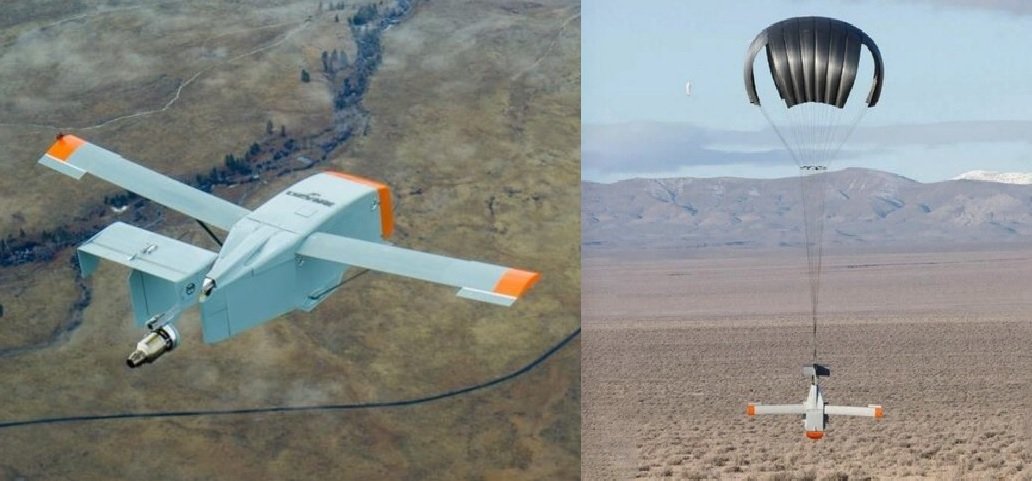
U.S
WEST PALM BEACH, Fla. — The U.S. Air Force Research Laboratory (AFRL) has awarded a contract valued at more than $6 million to DZYNE Technologies, LLC, now part of Ondas Inc., to continue development of the Long-Range Grasshopper autonomous aerial delivery system. The contract supports the advancement of a runway-independent logistics platform designed to deliver supplies over extended distances in contested and austere environments. The award was announced by Ondas on August 6, 2026. Following Ondas' acquisition of DZYNE Technologies in a transaction valued at $875.8 million, all defense-related contract work is now managed through Ondas Sentinel, the company's dedicated U.S. defense division. The Long-Range Grasshopper is part of DZYNE's Grasshopper Family of Systems, which provides autonomous precision aerial resupply for military operations. The systems are designed as low-cost, expendable aircraft that are not intended to be recovered or reused after completing their mission. This approach allows military forces to deliver essential supplies without exposing personnel or high-value aircraft to operational risks. The Grasshopper family includes both a glider version and a turbine-powered Long-Range variant. Both versions are capable of carrying up to 500 pounds of cargo and delivering it with high precision. After being released from a variety of host aircraft, the systems immediately transition into autonomous flight and navigate to pre-planned destinations. According to the company, the glider version has an empty weight of approximately 575 pounds and a maximum launch weight of 1,075 pounds. The turbine-powered Long-Range version has an empty weight of about 650 pounds and a maximum launch weight of 1,700 pounds. Both variants share a 20-foot wingspan. The systems are designed to operate in GPS-denied or GPS-degraded environments using autonomous navigation capabilities. They complete deliveries by deploying a parachute for precision landing at the designated target area. Ondas stated that the estimated production cost is approximately $40,000 per vehicle, supported by low-cost manufacturing methods. The latest contract builds on several years of collaboration between AFRL and the engineering teams now operating under Ondas Sentinel. During a 2024–2025 flight test campaign, the Long-Range Grasshopper successfully demonstrated several key capabilities, including autonomous deployment, jet-engine air-start, extended-range navigation, and precision payload delivery. The flight testing was conducted at locations including Dugway Proving Ground in Utah and the Pendleton UAS Range in Oregon. According to the company, the original Grasshopper glider progressed from a research concept to a fielded capability in less than 12 months, with several dozen units delivered to the U.S. Air Force. Development of the longer-range version began after operational users requested greater delivery range following the initial deployment of the glider system. Under the new AFRL contract, development work will continue on both the Long-Range Grasshopper and the Grasshopper glider. The program will focus on improving extended-range flight and endurance, modular payload integration, autonomous navigation in GPS-limited and GPS-denied environments, and increasing system reliability and manufacturability to support larger-scale fielding. The Long-Range Grasshopper has been developed to support the U.S. Air Force's Agile Combat Employment (ACE) concept, which emphasizes dispersed operations, flexible force deployment, and scalable logistics. The autonomous delivery system is intended to provide precision resupply from multiple launch platforms while reducing the need for fixed infrastructure and helping keep crewed aircraft outside higher-risk areas. Ondas said the acquisition of DZYNE Technologies expanded its defense capabilities across several mission areas, including multi-domain intelligence, surveillance and reconnaissance (ISR), counter-uncrewed aerial systems (counter-UAS), autonomous effects, aerial security, precision strike, autonomous logistics, and AI-enabled mission orchestration. Commenting on the contract award, Eric Brock, Chairman and Chief Executive Officer of Ondas, said the agreement supports the company's strategy of building an autonomous defense platform focused on technologies addressing current national security requirements. Ryan Hartman, Chief Executive Officer of Ondas Sentinel, said long-range, low-cost autonomous delivery is becoming an important capability for future military operations and that AFRL's continued partnership reflects the potential of the Grasshopper system to support distributed logistics in contested environments. The Long-Range Grasshopper is part of Ondas Sentinel's broader autonomous defense portfolio, which also includes LEAP, ULTRA, and counter-UAS systems. The new AFRL contract further supports continued development of scalable autonomous logistics technologies for future U.S. defense operations.
Read More → Posted on 2026-08-07 12:10:36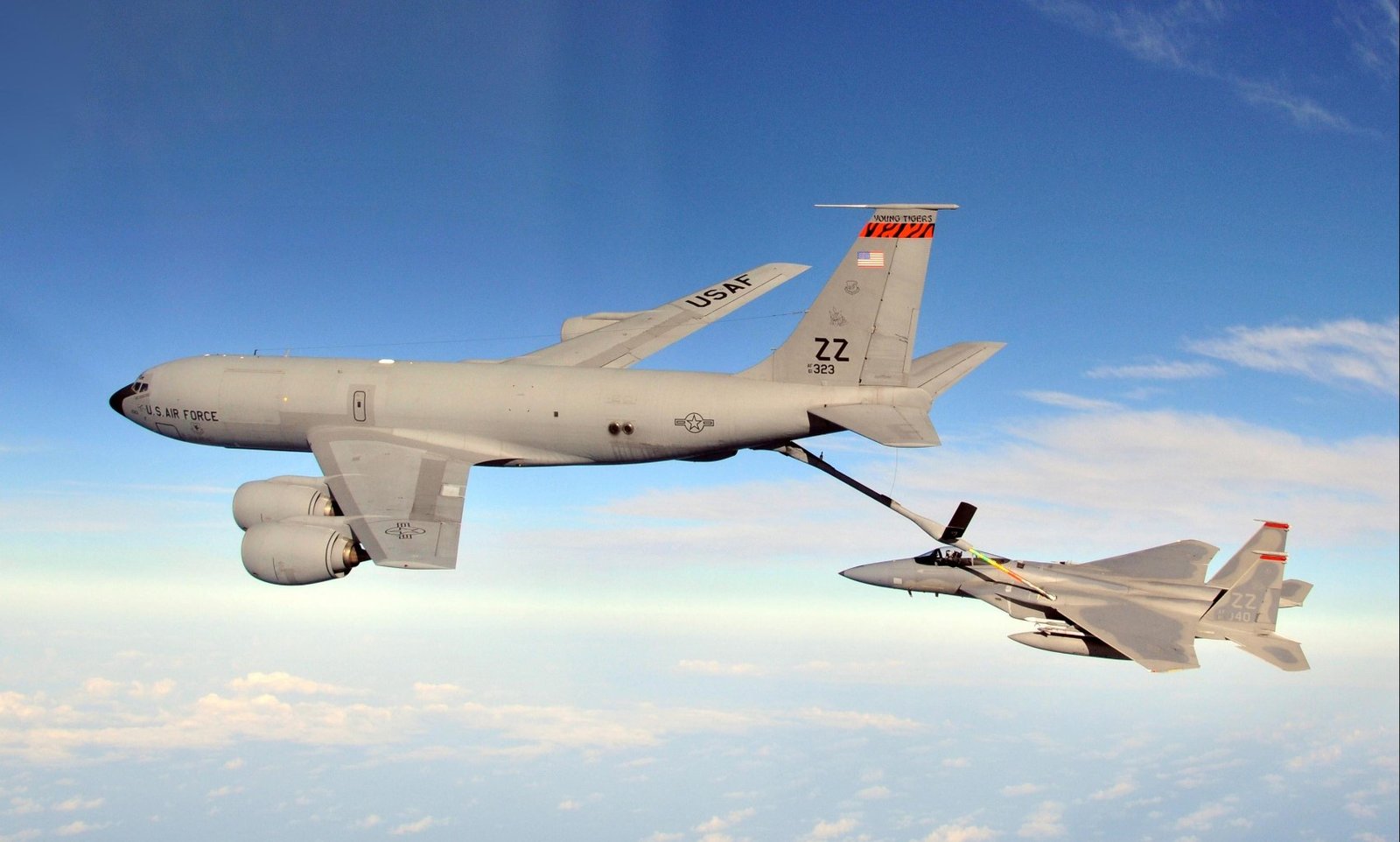
U.S
DAYTON, Ohio — The U.S. Air Force Research Laboratory (AFRL) has issued a Request for Information (RFI) seeking industry partners to help establish a KC-135 Electrified Boom Automation Lab, a new research facility that will support the development and testing of automated aerial refueling boom technology for the KC-135 Stratotanker. The notice, published on Aug. 6, 2026, is part of the Air Force's broader Combat Refueling and Operations Networked Universal Systems (CRONUS) program. Companies interested in participating in the project when it moves to a formal contract have until Sept. 6, 2026, to submit responses. The planned laboratory will use an actual KC-135 tail section fitted with a movable refueling boom, allowing researchers to evaluate automated boom operations in a controlled ground environment before moving to flight testing. KC-135 Tail Section to Be Installed at Wright-Patterson AFB According to the RFI, the government will acquire a KC-135 tail section, complete with a movable refueling boom, from the 309th Aerospace Maintenance and Regeneration Group (AMARG) at Davis-Monthan Air Force Base, Arizona. The equipment will be provided to the selected contractor as government-furnished equipment. The tail section will be installed inside a motion capture laboratory operated by the Air Force Institute of Technology (AFIT) at Wright-Patterson Air Force Base, Ohio. The laboratory uses arrays of wall- and ceiling-mounted cameras to capture highly accurate movement data, enabling engineers to study complex mechanical motion with precision. Contractor Will Design Support and Motion Systems Under the proposed project, the selected contractor will be responsible for designing a structural support system capable of holding the full weight of the KC-135 tail section while allowing it to move during testing. The contractor must also develop an overhead actuation system that enables the refueling boom to move through its complete operating range, including yaw, pitch, and probe extension. The Air Force specified that no equipment may be placed on the laboratory floor if it could obstruct the motion capture cameras or interfere with their line of sight. Supporting Future Automated Aerial Refueling KC-135 aerial refueling operations are currently performed manually by a boom operator positioned at the rear of the aircraft. During a refueling mission, the operator controls the extendable boom and guides it into the receiving aircraft's fuel receptacle. The new automation laboratory will allow researchers to move a real refueling boom through its full range of motion while recording detailed movement data. The controlled environment will support the development, refinement, and testing of automated or robotic boom control systems before they are evaluated during flight testing. Modernization Effort Comes Amid Continued KC-135 Reliance The automation initiative comes as the Air Force continues to depend heavily on the KC-135 fleet despite the aircraft's age. Earlier in 2026, during Operation Epic Fury, the fleet experienced significant operational losses. On March 12, a KC-135 crashed in western Iraq following a midair collision with another tanker, killing all six crew members aboard. The Air Force described it as the first loss of a KC-135, or any Air Force tanker, in 13 years. Two days later, an Iranian missile strike on Prince Sultan Air Base in Saudi Arabia damaged five additional KC-135 aircraft parked on the flight line. Air Force officials later said the damaged aircraft are expected to return to service, although repairs to the most heavily damaged airframes could take one to two years. Some reports based on satellite imagery suggested additional tanker damage during the campaign, but those claims have not been independently confirmed through official sources. Aging Fleet Continues Flying as KC-46 Faces Challenges According to U.S. Air Force fact sheets, the final KC-135 rolled off the production line in 1965, meaning aircraft still flying operational missions are approaching six decades of service. The aircraft's planned replacement, the KC-46A Pegasus, has faced continued development and production challenges. These include a production pause in 2025 after structural cracks were discovered in multiple aircraft, along with ongoing technical issues involving its aerial refueling boom system, as identified by the Pentagon's testing office. As a result, the KC-135 remains the Air Force's primary aerial refueling workhorse while the KC-46 program continues to address those issues. Center Console Refresh Program Progressing in Parallel The boom automation effort is one of several modernization programs aimed at extending the operational life of the KC-135 fleet. A separate initiative known as the Center Console Refresh (CCR) program, managed from Tinker Air Force Base, Oklahoma, is focused on modernizing the aircraft's cockpit instrumentation console. Since early 2025, the program has advanced through industry questions, draft solicitations, industry engagement activities, and other acquisition milestones, and remains in an advanced stage of the procurement process. Supporting the Future of the KC-135 Fleet The KC-135 Electrified Boom Automation Lab and the Center Console Refresh (CCR) program demonstrate the Air Force's continued investment in maintaining and improving its legacy tanker fleet. By creating a dedicated ground-based facility for automated boom research while upgrading cockpit systems, the Air Force aims to keep the KC-135 operational and effective as work continues on resolving technical and production challenges affecting the KC-46A Pegasus program.
Read More → Posted on 2026-08-06 16:56:20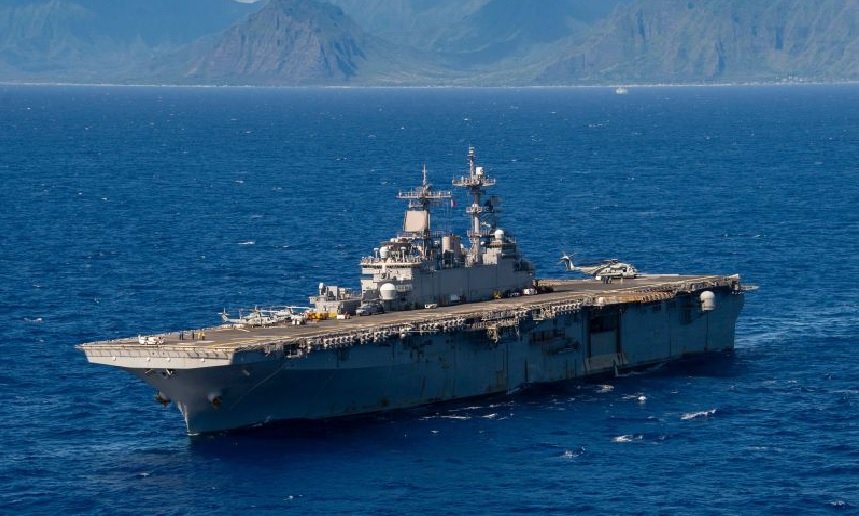
U.S
HONOLULU, Hawaii — Firestorm Labs has successfully demonstrated at-sea manufacturing by producing 3D-printed drones and hundreds of spare parts aboard the U.S. Navy's Wasp-class amphibious assault ship USS Essex while the vessel was sailing to Hawaii for the Rim of the Pacific (RIMPAC) 2026 exercise. The demonstration showed how a containerized manufacturing system can support naval operations by allowing drones and repair parts to be produced directly aboard a warship instead of relying on shore-based supply chains. Containerized Microfactory Produces Drones at Sea The production was carried out using Firestorm Labs' xCell system, a transportable microfactory housed inside standard shipping containers. The platform combines additive manufacturing (3D printing), digital preparation tools, automation, and assembly stations to manufacture unmanned aerial systems (UAS) and replacement parts in operational environments. During approximately two weeks at sea, the xCell system produced more than 1,000 components and manufactured 12 Squall first-person view (FPV) drones aboard USS Essex. The Squall is a light electric FPV quadcopter with a largely printable airframe. According to Firestorm Labs, it can reach speeds of up to about 80 mph, has a range of up to 20 miles, provides around 42 minutes of flight time, and can carry a payload of roughly 5.5 pounds. Components that cannot be printed, including batteries, motors, flight controllers, cameras, and radio systems, are supplied as kits and integrated during assembly. Manufacturing Continued in Challenging Sea Conditions The production and assembly process continued while USS Essex operated in sea conditions with waves reaching 12 feet, equivalent to Sea State 5. Service members from the U.S. Navy, Marine Corps, and other participating units took part in printing, assembling, and supporting the manufacturing process aboard the ship. The demonstration formed part of the Naval Postgraduate School's Consortium for Advanced Manufacturing Research and Education (CAMRE) distributed advanced manufacturing network and was facilitated by FLEETWERX. Drones Used During RIMPAC 2026 Exercise After USS Essex arrived in Hawaii, the newly produced Squall drones were used during training activities at Makua Military Reservation on Oahu. Marines from the 3rd Light Armored Reconnaissance Battalion operated the drones after receiving training from Firestorm Labs personnel on additive manufacturing, drone assembly, and flight operations. During the exercise, the drones served as "red cell" adversary aircraft in a counter-unmanned aircraft systems (C-UAS) training scenario, supporting experimentation under the Naval Postgraduate School's CAMRE program during RIMPAC 2026. On-Demand Production of Repair Parts In addition to manufacturing drones, the xCell microfactory produced a variety of repair and maintenance items requested by the USS Essex crew. According to Firestorm Labs, printed items included: Gauges for deck tie-down inspections Reverse-engineered valve handwheels A non-conductive digging knife A deployment mount for Starlink internet hardware Mechanical test articles used to evaluate printer performance during operations at sea An Apache Rotor Guard droop stop designed to protect helicopter rotor systems Multiple versions of a Life Preserving Unit vacuum adapter, developed from a sailor's concept for testing inflatable safety equipment More than 20 additional crew-requested parts The company said these parts were manufactured directly aboard the ship without waiting for delivery from shore or resupply vessels. Reducing Logistics Requirements Firestorm Labs said manufacturing equipment onboard reduces the need to transport replacement parts through long supply chains. According to the company: "Every part xCell printed on deck is one that doesn't need to be flown or shipped across contested waters — cutting the fuel, aircraft hours, and personnel it takes to keep a ship operational." The company added that repairs which previously could require days or weeks while waiting for replacement parts can instead be completed within hours while the ship remains deployed. Supporting the Navy's Containerized Capability Strategy The demonstration aligns with the U.S. Navy's broader effort to expand the use of modular and containerized systems that can be deployed across different ships. In March 2026, Chief of Naval Operations Adm. Daryl Caudle announced the Navy's "containerized capability campaign plan" during the McAleese Defense Programs conference. Speaking about the initiative, Caudle said: "I want to containerize everything." He described a concept in which standardized shipping containers carrying capabilities such as drones, weapons, and sensors could be installed on different vessels and moved between operational regions as needed. The approach is intended to provide greater flexibility while using standardized engineering, interfaces, and integration with combat and communications systems. Pentagon Expanding Containerized Weapons Programs The Department of Defense is also expanding containerized military capabilities beyond manufacturing. In May 2026, the Pentagon announced the Low-Cost Containerized Munitions (LCCM) program, signing framework agreements with Anduril, CoAspire, Leidos, and Zone 5. Under the program, the Department of Defense plans to acquire more than 10,000 containerized missiles over a three-year period beginning in 2027. The initiative reflects the Pentagon's broader focus on modular, transportable systems that can rapidly increase military capability while complementing existing platforms. Demonstration of At-Sea Manufacturing The USS Essex trial demonstrated that containerized manufacturing can operate under real maritime conditions while supporting both unmanned aircraft production and ship maintenance. By producing drones and repair parts directly aboard the ship, the demonstration provided a practical example of how distributed manufacturing could reduce dependence on traditional logistics and improve operational support during deployed naval missions.
Read More → Posted on 2026-08-06 16:52:18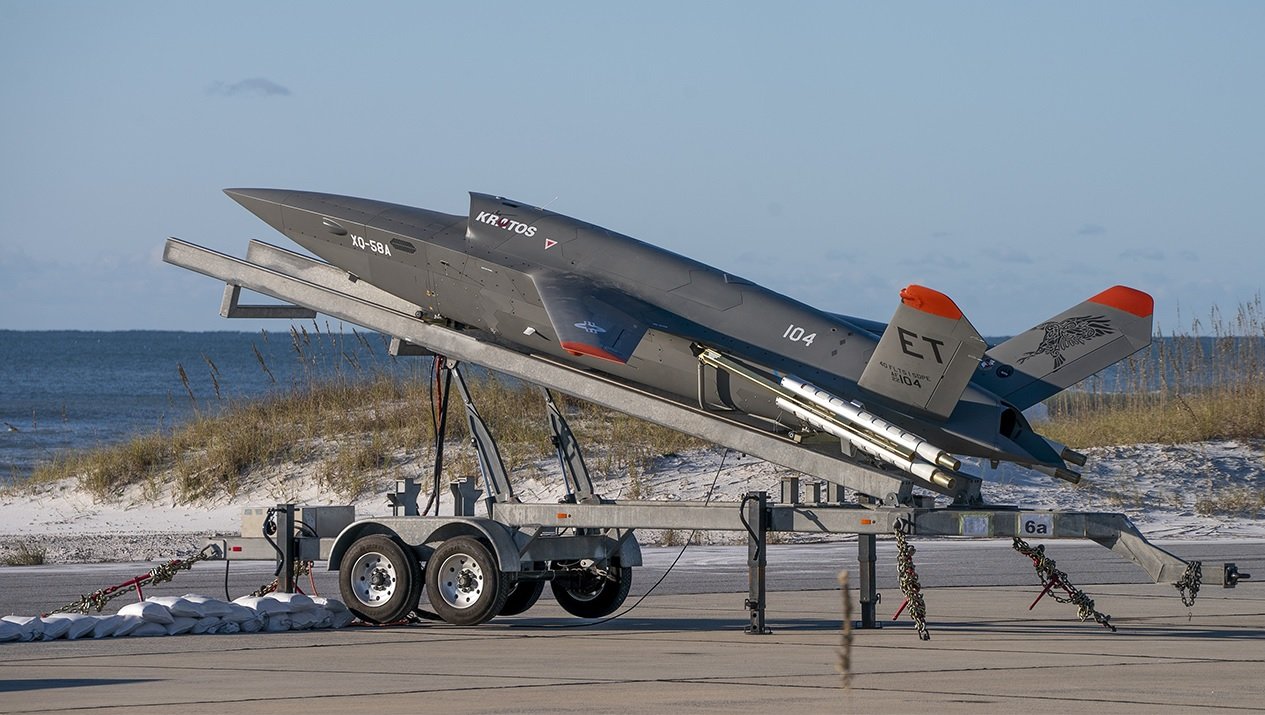
U.S
UTAH — A Kratos Defense XQ-58 Valkyrie uncrewed aircraft crashed shortly after takeoff during a company-funded research and development (R&D) test at the U.S. Army's Dugway Proving Ground in Utah on Tuesday, Aug. 4, 2026, prompting the company to temporarily suspend flight testing of that specific system while an investigation is conducted. According to Kratos, the aircraft involved was a test configuration of the Valkyrie operating as part of the company's ongoing efforts to develop new configurations and capabilities. The incident occurred after the drone took off from a test-range runway at Michael Army Airfield, with the cause of the crash still under investigation. An installation spokesperson at Dugway Proving Ground confirmed that an unspecified uncrewed aircraft crashed at approximately 8:00 a.m. local time shortly after takeoff. Officials said the aircraft was not owned or operated by the U.S. military. There were no injuries, no fatalities, and no damage to base infrastructure or buildings. Base representatives did not identify the aircraft type, but Kratos later confirmed it was one of its XQ-58 Valkyrie drones. In a statement, Kratos said: "A Kratos test configuration of Valkyrie experienced a mishap following takeoff from a test-range runway on Tuesday, August 4, 2026. This was a Kratos internally funded R&D event, part of continually adding configurations and capabilities." The company added: "No one was injured in the incident. As safety is our top priority, flight test operations for this system have been paused temporarily in an abundance of caution while we investigate the cause of the incident." Kratos also confirmed that it has additional test systems available and intends to resume testing once the investigation is completed. Runway-Capable Valkyrie Under Development Kratos declined to disclose the exact configuration of the aircraft involved, stating that doing so could affect the ongoing investigation. However, the company's confirmation that the drone departed from a test-range runway indicates it was likely one of the Valkyrie variants developed for conventional runway operations, rather than relying solely on the aircraft's original launch method. The original XQ-58 Valkyrie, which first flew in 2019, was designed to launch using a rocket-assisted system from a static launcher and recover using a parachute. As development progressed, Kratos introduced a launch trolley to support runway takeoffs and later announced a Conventional Takeoff and Landing (CTOL) variant equipped with built-in landing gear while retaining the ability to use rocket-assisted launches when required. In August 2024, Kratos announced development of the CTOL version. Later, in January 2026, the company said the first flight target for that variant had shifted to early 2026. Platform Continues to Support U.S. Military Programs The XQ-58 Valkyrie remains one of Kratos' key uncrewed combat aircraft programs and has been used to support the development of affordable autonomous aircraft for future military operations. The U.S. Air Force became the first known operator of the Valkyrie after its initial flights in 2019. The platform is also being developed for the U.S. Marine Corps under the Marine Air-Ground Task Force Uncrewed Expeditionary Tactical Aircraft (MUX TACAIR) Collaborative Combat Aircraft program. Kratos has confirmed that the runway-capable version, sometimes referred to as the MQ-58B, is being developed in part for this effort. The Marine Corps plans to receive its first MQ-58 aircraft in 2029 and has already carried out testing with earlier XQ-58 variants. Beyond the United States, the Valkyrie program has also attracted international interest. Kratos has partnered with Airbus to develop a version of the aircraft for the German Luftwaffe. Dugway Remains a Major UAS Test Site The test took place at Michael Army Airfield, located within Dugway Proving Ground, which is regularly used for testing by both the U.S. military and defense companies. The proving ground supports a wide range of research, development, testing, and evaluation activities, including work involving uncrewed aircraft systems and programs focused on defense against chemical and biological threats. Kratos Explains Its Development Approach Speaking after the incident, Steve Fendley, President of Kratos' Unmanned Systems Division, said the company could not discuss the exact aircraft configuration because it is directly related to the ongoing investigation. Fendley said Kratos continually expands the capabilities of its unmanned systems to meet future operational requirements and customer needs. He also described the company's development philosophy as one that aims to accelerate innovation by accepting that occasional setbacks may occur during research and development. According to Fendley, Kratos focuses on rapidly improving its systems, learning from testing outcomes, and moving development forward more quickly than traditional defense acquisition approaches that generally allow little tolerance for failures during testing. Investigation Continues The cause of the Aug. 4 mishap has not yet been determined. Kratos has temporarily suspended flight testing of the affected system while the investigation remains underway. The company has not released additional information regarding the aircraft's configuration or whether the incident will affect the broader development schedule for the various XQ-58 Valkyrie variants.
Read More → Posted on 2026-08-06 15:34:38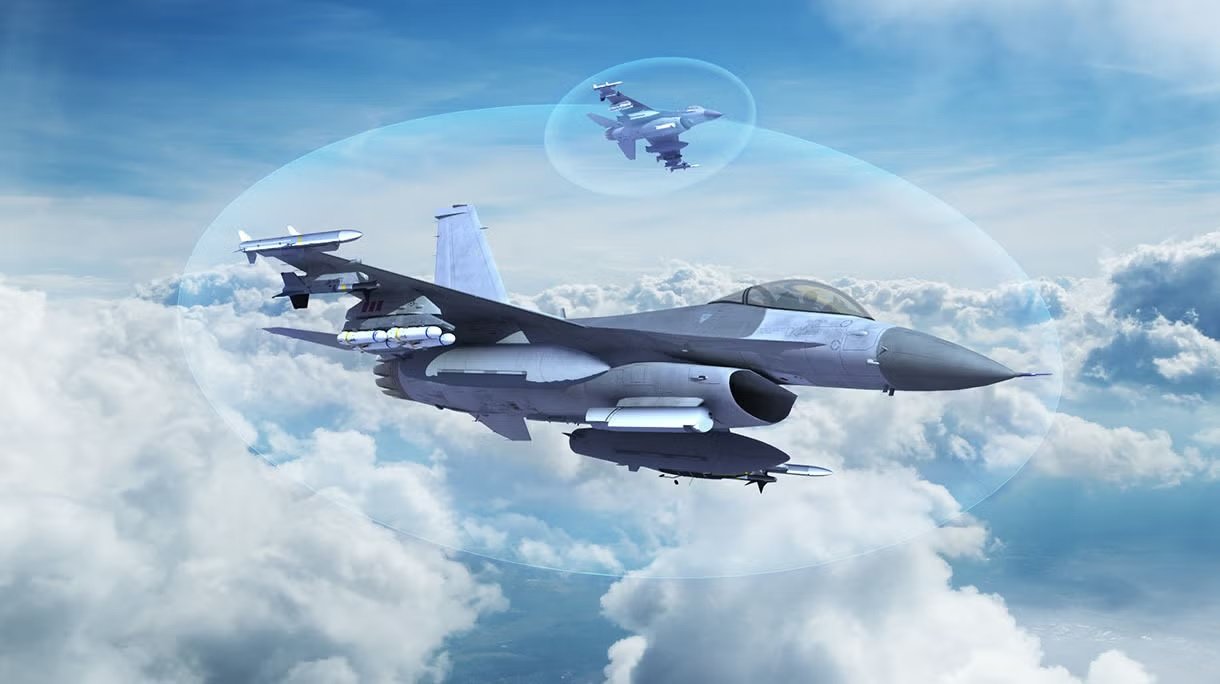
U.S
EDWARDS AIR FORCE BASE, Calif. — L3Harris Technologies has completed the first two-aircraft flight tests of its Viper Shield electronic warfare system at Edwards Air Force Base, marking the first time the system has flown simultaneously aboard an F-16C and an F-16D. L3Harris announced the milestone on Aug. 5 following a series of two-ship flights conducted as part of the ongoing Viper Shield flight-test campaign. The latest testing moves the program beyond individual aircraft evaluations and expands testing into coordinated multi-aircraft operations. The campaign is intended to reduce integration risks, expand the system's test envelope and support preparations for planned deliveries to international F-16 operators. Viper Shield Tested in Two-Aircraft Operations During the flights, test teams evaluated Viper Shield's ability to detect, identify and counter advanced electromagnetic threats while operating alongside the F-16's existing avionics and mission systems. Engineers also assessed the system's digital architecture and real-time response capabilities across different mission profiles. Adding a second aircraft allowed L3Harris and the U.S. Air Force test community to evaluate the electronic warfare suite in a more representative operational environment. Fighters commonly operate alongside other aircraft, requiring electronic warfare equipment to function without disrupting friendly sensors, communications or coordinated tactics. A key part of the evaluation was therefore determining how Viper Shield performs when multiple equipped aircraft operate together. The system is designed to prevent electronic warfare interference between wingmen when fighters simultaneously operate their radars, sensors and countermeasures. F-16C and F-16D Used for Testing The campaign involved both the single-seat F-16C and two-seat F-16D, allowing engineers to evaluate Viper Shield across different aircraft and mission configurations. The F-16C was used to assess combat loadouts, sensor configurations and specific electronic warfare profiles. The F-16D, which is also used for training and multi-crew missions, provided additional opportunities to evaluate the system under different flight conditions, cockpit workflows and mission configurations. Testing the two variants together provided a broader assessment of Viper Shield's performance than previous single-aircraft sorties. Lauren Barnes, President of Spectrum Superiority, Communications & Spectrum Dominance at L3Harris, said the two-aircraft flights demonstrated continued progress in the flight-test program. “The two-ship flights with Viper Shield are another strong example that the system is performing as intended,” Barnes said. “Viper Shield is showing exceptional threat awareness and rapid reaction capability throughout the flight test campaign at Edwards.” AN/ALQ-254(V)1 Viper Shield Viper Shield, designated AN/ALQ-254(V)1, is an all-digital, software-defined electronic warfare suite developed to improve the survivability and combat effectiveness of advanced F-16 fleets. The system combines digital radar threat warning, threat identification and electronic countermeasure capabilities. Its digital radar warning receiver is designed to integrate with the F-16's APG-83 Active Electronically Scanned Array radar, allowing the electronic warfare suite and aircraft radar to operate as part of an integrated configuration. Viper Shield also incorporates a Digital Radio Frequency Memory-based jammer (DRFM jammer), designed to provide rapid and precise electronic countermeasures against advanced radar-guided threats. L3Harris is developing Viper Shield in partnership with Lockheed Martin and the U.S. Air Force. Providing Threat Information to F-16 Pilots Viper Shield is designed to process electromagnetic activity around the aircraft and provide pilots with usable threat information. The system combines threat detection, identification and countermeasure functions to help aircrews respond to hostile emitters. This can provide pilots additional time to maneuver, employ defensive measures or change their mission plan when required. The two-ship flights also allowed test teams to examine how the system supports pilot situational awareness during coordinated operations rather than evaluating aircraft protection only in isolated sorties. L3Harris has incorporated commercial off-the-shelf technology (COTS) into Viper Shield's digital architecture to reduce overall weight and simplify future software upgrades. Internal and Podded Configurations Viper Shield's compact design allows the electronic warfare system to be installed internally on an aircraft or carried in a self-contained external pod. The two configurations use common hardware, helping simplify maintenance, training, software upgrades and logistics support across different F-16 blocks and national configurations. According to L3Harris, Viper Shield is currently the only electronic warfare system in production with a form factor small enough to fit the range of F-16 blocks. The flexible installation approach is particularly relevant for international F-16 fleets because aircraft configurations can differ between operators. 233 Viper Shield Systems Planned L3Harris is preparing to move toward full-rate production of 233 planned Viper Shield systems. The company said eight nations have selected Viper Shield for their F-16 fleets. L3Harris is supporting the program with an active production line, quality assurance processes and a supply chain being prepared for large-scale manufacturing. The planned production effort will support international operators adopting the system as an electronic warfare and survivability upgrade for their F-16 aircraft. Program Moves Toward Operationally Relevant Testing The first coordinated flights involving Viper Shield-equipped F-16C and F-16D aircraft represent another stage in the system's flight-test campaign at Edwards Air Force Base. Moving from individual aircraft evaluations to two-ship operations allows engineers to assess how the electronic warfare suite performs when multiple fighters operate together while using their sensors, radars and defensive systems. The latest testing is intended to further reduce integration risks and support Viper Shield's progression toward planned deliveries to international F-16 operators.
Read More → Posted on 2026-08-06 14:27:24
U.S
WASHINGTON, D.C. — The White House and the Pentagon have strongly denied a report claiming U.S. President Donald Trump confronted Defense Secretary Pete Hegseth over ammunition shortages during a Cabinet meeting at Camp David, even as concerns over U.S. weapons stockpiles continue amid the ongoing conflict with Iran. A report published by The Washington Post, citing two sources familiar with the matter, said Trump questioned Hegseth during last Friday's Cabinet meeting at the Camp David presidential retreat in Maryland after learning that shortages of key long-range guided missiles and air-defense interceptors remained unresolved. According to the report, Trump expressed frustration because he believed the ammunition issue had already been addressed and felt he had not been fully informed about the actual condition of U.S. military stockpiles. The reported shortages have limited available military options during the conflict with Iran. Report Claims Trump Sought Explanation The Washington Post reported that Trump pressed Hegseth for an explanation regarding the continued shortages. According to the newspaper, Hegseth denied responsibility and instead pointed to Deputy Defense Secretary Stephen Feinberg, saying his deputy was responsible for ensuring the president received accurate updates on the military's inventory. The report said the exchange reflected growing tensions between Trump and Hegseth, who had been among the strongest supporters of military action against Iran and had previously assured the president that operations would be short and decisive. Reports Highlight Pressure on U.S. Munitions The reported discussion comes as U.S. military operations have placed heavy demand on precision-guided weapons and air-defense systems. According to The Washington Post, during the first month of the conflict U.S. forces used: More than 850 Tomahawk cruise missiles More than 1,000 Patriot and Terminal High Altitude Area Defense (THAAD) interceptors More than 1,300 Army Tactical Missile Systems (ATACMS) The newspaper, citing a source familiar with the matter, reported that the ATACMS inventory has been reduced to the point that essentially none remain. Earlier reporting by CNN stated that the United States had used roughly 80% of its prewar THAAD interceptor stockpile and about half of its Patriot interceptor inventory during the conflict. CNN also reported that reserves of ATACMS and Precision Strike Missiles (PrSM) had been significantly reduced, with the shortages contributing to Trump's decision to pause plans for additional large-scale strikes. Defense officials have previously acknowledged that replenishing certain advanced munitions takes considerable time. Production of some key air-defense interceptors, including Patriot missiles, can take up to two years despite expanded manufacturing agreements. White House Rejects the Report The White House categorically denied that any confrontation took place. White House Press Secretary Karoline Leavitt dismissed the report, stating: "This is 100% fake news. It literally never happened. President Trump has the utmost confidence in Secretary Hegseth." Leavitt later wrote on X that she attended the Camp David meeting and said the reported exchange never occurred. She also said the story had been shared with several media organizations in an effort to discredit Hegseth, adding that Trump "loves the Secretary and thinks he's doing a tremendous job." Pentagon Also Denies Allegations The Pentagon issued a similar response. Chief Pentagon spokesperson Sean Parnell rejected claims that Hegseth misled the president about U.S. munitions inventories or shifted responsibility to Deputy Defense Secretary Stephen Feinberg. Parnell described the allegations regarding depleted stockpiles, internal disagreements and Hegseth's position on Iran as "fabricated" and "fake news from beginning to end." Senate Hearings Raised Similar Questions Questions regarding U.S. weapons inventories had already surfaced during Senate hearings in July. Democratic lawmakers asked Hegseth whether he had accurately informed President Trump about the risks that a prolonged military campaign could pose to U.S. stockpiles. During those hearings, Hegseth repeatedly attributed any inventory shortfalls to policies of the previous administration. Meanwhile, the administration has taken steps to expand production by invoking the Defense Production Act and requesting additional funding from Congress to replenish military inventories. Trump Responds on Truth Social President Trump also responded publicly following the reports. In a post on Truth Social, he denied that the United States was facing a weapons shortage, saying the country has "massive amounts" of munitions and that additional weapons are being manufactured and supplied as needed. Trump also said his administration was pursuing individuals responsible for leaking what he described as "treasonous statements" to the media and that long prison sentences would be sought. Conflicting Accounts Remain The reported Camp David exchange has become the latest point of disagreement between media reports and official statements from the administration. While The Washington Post and CNN have reported significant pressure on U.S. missile inventories during the conflict with Iran, both the White House and the Pentagon continue to reject claims of internal disagreements over the issue, maintaining that President Trump and Defense Secretary Pete Hegseth remain fully aligned on U.S. national security policy.
Read More → Posted on 2026-08-06 12:03:36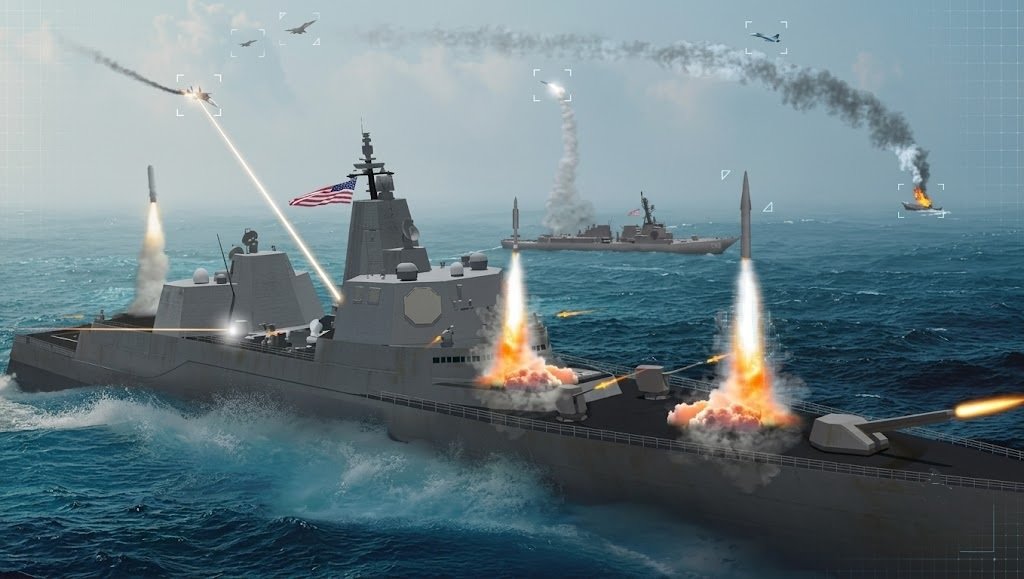
U.S
WASHINGTON — The U.S. Navy's planned fleet of 15 nuclear-powered guided-missile battleships would cost an estimated $275 billion through 2056, according to a report released Wednesday by the Congressional Budget Office (CBO). The nonpartisan budget office estimated that the lead ship of the Trump-class (BBGN) would cost $23.4 billion, while the remaining 14 ships would average about $18 billion each. The estimates are based on 2026 dollars and cover ships expected to be ordered between 2028 and 2056. The planned battleships are part of the Navy's broader Golden Fleet initiative, announced in December 2025, and represent a major shift toward larger, heavily armed surface combatants. Nuclear Propulsion Increases Program Cost According to the CBO, the projected cost of the nuclear-powered fleet is significantly higher than the Navy's earlier estimates for a conventionally powered design. The Navy had previously estimated that the first conventionally powered battleship would cost $15.1 billion, with the second and third ships averaging $10.2 billion each. The CBO estimated that a fleet of 15 conventionally powered ships would cost about $243 billion. By switching to nuclear propulsion, the acquisition cost increases by about $32 billion, or 13 percent, bringing the total estimated program cost to $275 billion. The CBO noted that nuclear propulsion could reduce long-term operating costs by eliminating the need to purchase and transport conventional fuel. However, it said there is not enough information at this stage to estimate those savings because the ship's final design and propulsion requirements have not yet been finalized. The Navy has indicated that the battleships would use a reactor plant similar to the one installed on the Gerald R. Ford-class aircraft carriers. Largest Surface Combatant Planned Since World War II If built as planned, the Trump-class BBGN would become the largest surface combatant in the world and the largest surface warship constructed for the U.S. Navy since World War II. The Navy expects each ship to displace at least 35,000 tons at full load and measure between 840 and 880 feet in length. According to the Navy's current plan, the battleship would carry: 128 Mark 41 vertical-launch system (VLS) cells 12 Conventional Prompt Strike (CPS) hypersonic missiles Nuclear-armed sea-launched cruise missiles (SLCM-N) High-powered laser systems An electronic rail gun Defensive weapon systems The Trump-class would replace the Navy's planned DDG(X) destroyer, which was expected to displace about 14,500 tons. The Navy has said the larger battleship design avoids the "undesirable capability and weapon system compromises" associated with the smaller DDG(X) concept. Cost Comparable to Aircraft Carriers The CBO noted that the lead Trump-class battleship's projected $23.4 billion cost is close to the estimated $22 billion price of future Ford-class nuclear-powered aircraft carriers included in the Navy's fiscal 2027 shipbuilding plan. It also estimated that one Trump-class battleship would cost about the same as five DDG-51 Arleigh Burke-class destroyers. However, the CBO noted that those destroyers would require more sailors, maintenance, and fossil fuel over their operational lives. Construction Timeline Faces Challenges The Navy's fiscal 2027 shipbuilding plan proposes ordering the first three battleships beginning in 2028, followed by approximately one ship every other year. However, the CBO questioned whether construction can realistically begin in 2028 because the battleship remains in the early stages of design. The report noted that beginning construction before completing the design has historically increased the risk of cost growth, schedule delays, and expensive rework. Current U.S. Navy shipbuilding programs already face extended construction timelines. According to the CBO, attack submarines, destroyers, and large amphibious ships now require nine to 11 years to build, compared with five to six years during the early 2000s. The Navy has said it intends to reduce schedule and cost risks by using modern digital engineering, advanced production practices, and artificial intelligence-enabled design tools. However, the CBO pointed to delays affecting the Constellation-class frigate program as an example of the challenges facing current naval shipbuilding efforts. Industrial Base Under Pressure Because the Trump-class will use nuclear propulsion, Newport News Shipbuilding is expected to perform final assembly, as it is currently the only U.S. shipyard certified to build nuclear-powered surface ships. Bath Iron Works and Ingalls Shipbuilding could manufacture non-nuclear modules for the ships, but final integration would take place at Dock 12 at Newport News, the same facility used for aircraft carrier construction. The CBO warned that adding a new class of 35,000-ton nuclear-powered battleships to the existing workload could increase pressure on the shipyard, which is already building three aircraft carriers and several submarines. Final Cost Depends on Ship Size The CBO said the final cost of the lead ship will depend heavily on its final size and configuration. According to the report: Reducing displacement to 30,000 tons could lower the lead ship's cost by about 13 percent. Increasing displacement to 41,000 tons could raise the lead ship's cost by about 16 percent. The report also stated that additional weapon integration and higher survivability requirements could further increase acquisition costs. Part of a Larger Fleet Expansion Plan The Trump-class program forms part of the Navy's broader plan to expand its large surface combatant fleet. Under the fiscal 2027 shipbuilding plan, the Navy proposes operating 72 large surface combatants, compared with 51 in the 2025 shipbuilding plan. To support that expansion, average annual funding for large surface combatants would increase from $6.9 billion to $15.2 billion. Total annual funding for both large and small surface combatants would rise from about $11 billion to $19 billion. The plan also calls for annual construction output of large surface combatants to increase from approximately 16,000 tons to 35,000 tons by 2035, placing additional demand on the U.S. shipbuilding industrial base. According to the information released, the first ship is expected to be named USS Defiant. The program was announced by President Donald Trump in December 2025 as the centerpiece of the Golden Fleet initiative. Congress has not yet fully authorized the program. The Navy's fiscal 2027 budget request includes approximately $1 billion for advance procurement and $837 million for research and development related to the Trump-class battleship program.
Read More → Posted on 2026-08-06 11:37:34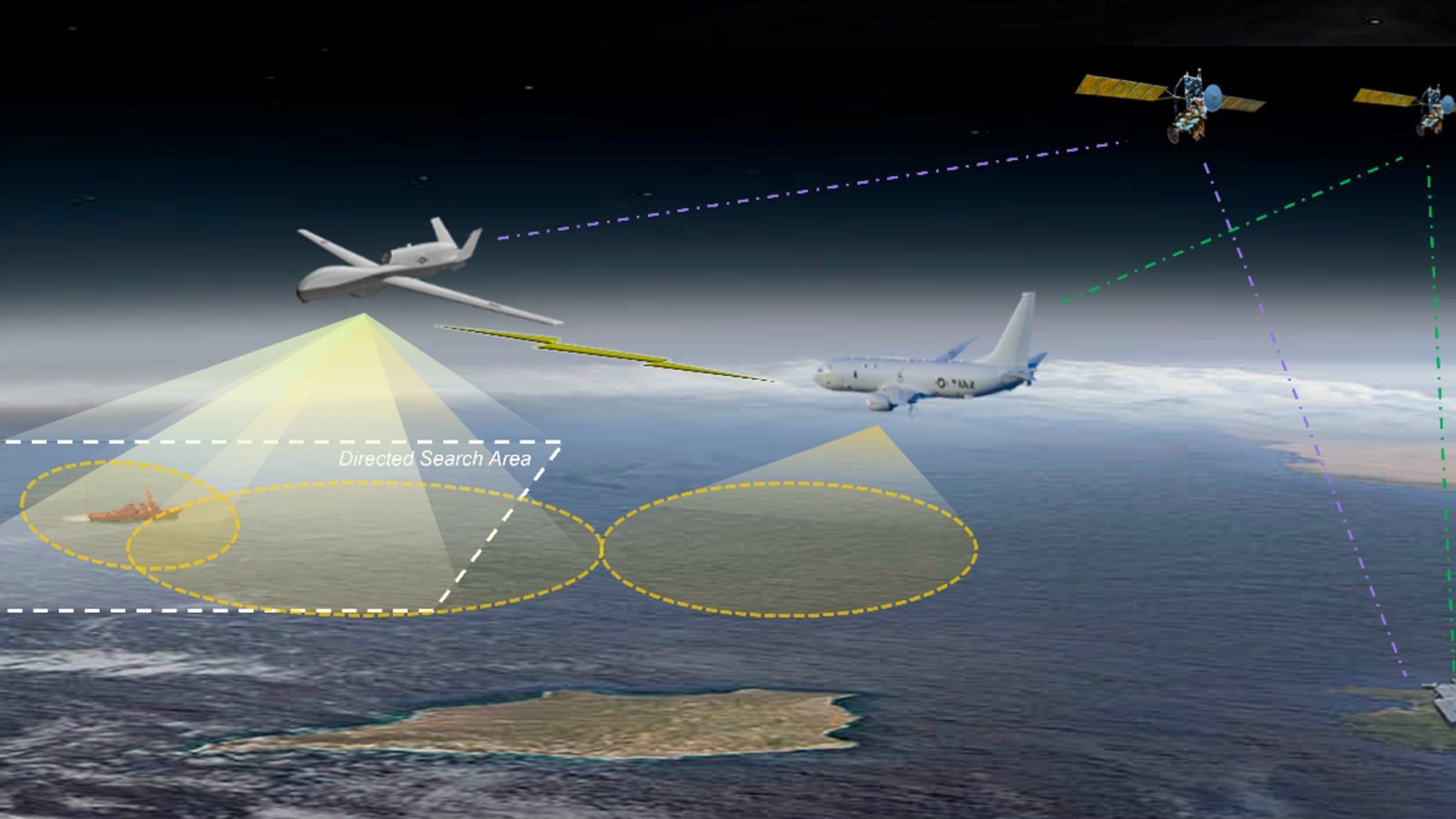
U.S
SAN DIEGO, Calif. — Boeing and Northrop Grumman have successfully completed a jointly funded laboratory demonstration of automated manned-unmanned teaming (MUM-T) between the Boeing P-8A Poseidon maritime patrol aircraft and the Northrop Grumman MQ-4C Triton unmanned aircraft system. The demonstration marked the first time the two platforms collaborated through automated mission control using an open systems architecture, allowing them to exchange mission tasking and intelligence without relying entirely on manual operator inputs. During the laboratory simulation, an operator aboard the P-8A Poseidon transmitted machine-readable and machine-actionable mission tasking to a simulated MQ-4C Triton using Universal Command and Control Interface (UCI) formatted messages. The Poseidon directed the unmanned aircraft to travel to a designated operational area and collect intelligence. After receiving the tasking, the MQ-4C Triton autonomously planned and executed the mission using onboard artificial intelligence (AI) algorithms. The aircraft employed its sensors according to the assigned mission, processed the collected information onboard, and automatically transmitted the intelligence back to the P-8A crew. To replicate real-world operational conditions, the data exchange was conducted through a simulated satellite communication relay. According to the companies, the demonstration showed how crewed and uncrewed maritime platforms can work together more efficiently by sharing intelligence and coordinating missions through standardized digital interfaces. Open Systems Architecture Instead of using a dedicated point-to-point connection between the two aircraft, the demonstration relied on the Universal Command and Control Interface (UCI), a machine-to-machine collaboration standard built on Open Mission Systems (OMS) and the Autonomy–Government Reference Architecture. This standardized approach allows military platforms using the same architecture to communicate and operate together without requiring custom software integration. Boeing and Northrop Grumman said the common interface can support interoperability with other U.S. and allied military systems that use the same standards while reducing integration time and cost. Operational Benefits The companies said the demonstration highlighted several operational advantages for maritime patrol and reconnaissance missions. By allowing the MQ-4C Triton to autonomously carry out assigned tasks and process information before sending results to the P-8A, operator workload can be reduced while enabling crews to focus on mission management. Automated machine-to-machine intelligence sharing can also speed up the delivery of operational information to commanders, improving decision-making during maritime intelligence, surveillance, reconnaissance and targeting (ISR&T) missions as well as anti-surface warfare operations. The use of standardized interfaces also makes future integration between crewed and uncrewed aircraft less complex and more cost-effective across U.S. and allied forces. Company Statements Jane Bishop, vice president and general manager of Northrop Grumman's Global Surveillance Division, said the MQ-4C Triton and P-8A Poseidon form the backbone of the U.S. Navy's maritime patrol and reconnaissance force by providing complementary capabilities. She said the demonstration highlighted the flexibility of both systems, the companies' continued investment in advanced technologies, and the value of industry collaboration. Bishop added that Northrop Grumman remains committed to advancing technologies that support U.S. and allied operators against evolving maritime threats. Tory Peterson, vice president of Boeing's P-8 Program, said the demonstration expands real-world interoperability between the P-8A Poseidon and MQ-4C Triton for the United States and allied operators. He said Boeing's continued investment is intended to help current and future P-8A operators enhance mission capability through evolutionary upgrades while building on the aircraft's existing maritime patrol and reconnaissance roles. About the Aircraft The Boeing P-8A Poseidon is a multi-mission maritime patrol and reconnaissance aircraft designed to conduct anti-submarine warfare (ASW), anti-surface warfare (ASuW), intelligence, surveillance and reconnaissance (ISR), and search and rescue (SAR) missions. The Northrop Grumman MQ-4C Triton is a high-altitude, long-endurance unmanned aircraft system developed for persistent maritime intelligence, surveillance and reconnaissance operations. Built at Northrop Grumman's facility in Palmdale, California, the aircraft also supports signals intelligence, early threat prediction, and search and rescue missions. It is operated by the U.S. Navy and the Royal Australian Air Force. The companies said the demonstration is part of their ongoing investment to accelerate advanced maritime capabilities for U.S. and international operators through open systems architecture and automated collaboration between crewed and uncrewed platforms.
Read More → Posted on 2026-08-06 11:21:07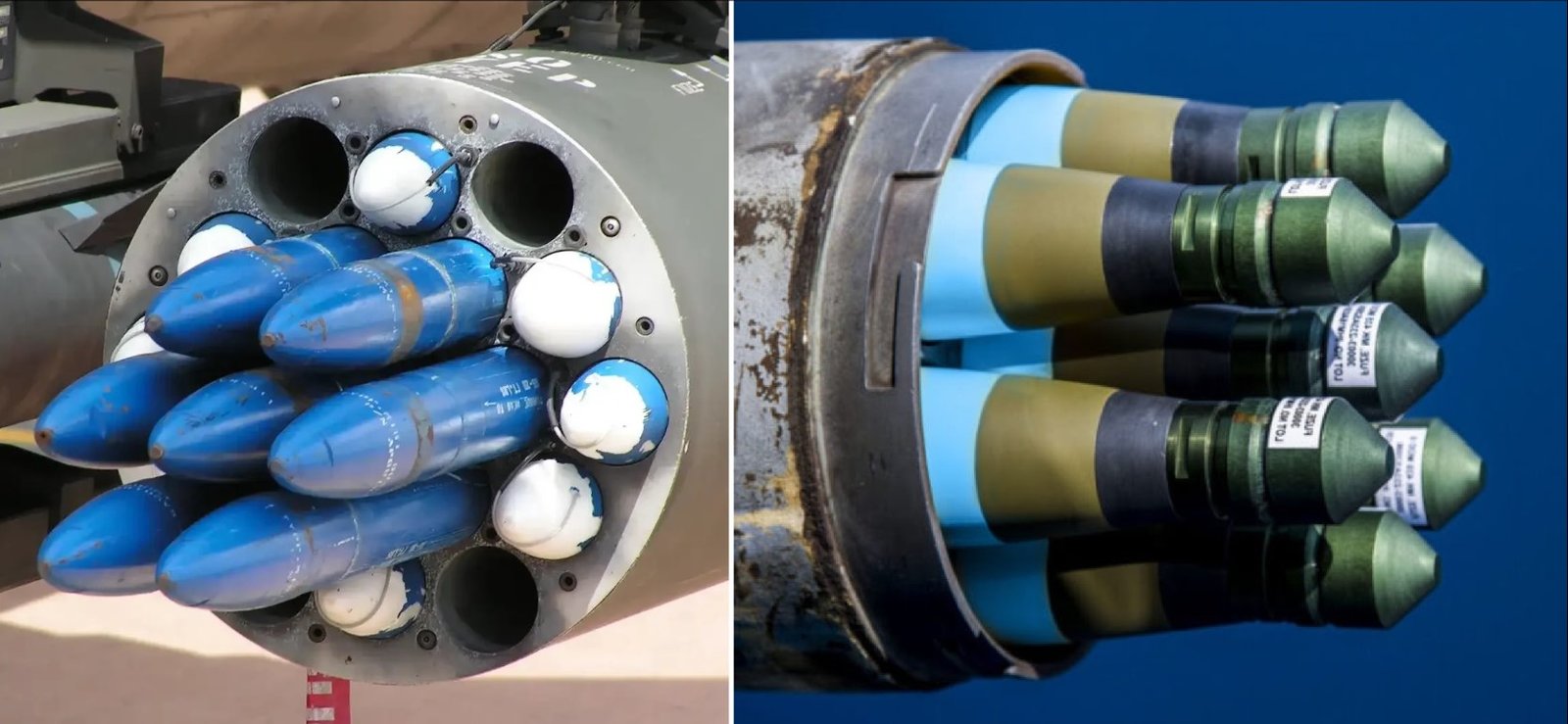
U.S
WASHINGTON — The U.S. Army has selected four defense companies to help expand production of the Hydra-70 rocket as part of an effort to strengthen the defense industrial base, reduce dependence on a single supplier, and improve manufacturing capacity for one of the military's most widely used rocket systems. The Army awarded Other Transaction Authority (OTA) agreements to Firehawk Aerospace, iRocket, Nammo Perry, and Albers through the Aviation Rocket and Small Guided Munitions (ARSGM) Product Office using the One Nation Innovation (ONI) marketplace. According to the Army, the initiative is intended to establish multiple qualified production sources, encourage competitive pricing on future annual orders, and build additional manufacturing capacity to meet operational requirements. Four Companies to Deliver Prototype Rockets Under the agreements, each company will manufacture 24 prototype Hydra-70 M151 High Explosive rockets within the next 18 months. In addition to producing the prototypes, all four companies will work together to update the government's Technical Data Package (TDP) for the Hydra-70. The government-owned TDP contains the engineering and manufacturing information required to build the rocket. The Army said modernizing the package will improve manufacturability and make it easier for additional qualified suppliers to enter production. If the prototype phase is completed successfully, the Army expects to issue follow-on agreements covering additional variants of the Hydra-70 rocket family. Expanding the Industrial Base The Army typically procures 100,000 to 200,000 Hydra-70 rockets each year, making the weapon one of its highest-volume munitions. Officials said expanding the number of qualified manufacturers will strengthen the supply chain and improve the Army's ability to increase production when required. The OTA contracting approach also enables the Army to fund prototype projects more quickly than under traditional acquisition methods while allowing participation from companies beyond the established prime contractor base. Long History of the Hydra-70 Program The Hydra-70 is a 70-millimeter unguided rocket powered by the MK66 rocket motor and can be fitted with different warheads depending on mission requirements. The rocket is launched from multiple platforms, including AH-64 Apache and AH-1 Cobra attack helicopters, as well as fixed-wing aircraft such as the F-16. It is used across all branches of the U.S. military and by many allied nations. The system traces its origins to U.S. Navy rocket designs developed in the late 1940s, while the current Hydra-70 has served as a standard munition since the Vietnam War era. When equipped with the Advanced Precision Kill Weapon System (APKWS) guidance kit, the Hydra-70 becomes a laser-guided precision weapon. The guided version has increasingly been used for counter-drone missions because it provides a lower-cost option than employing Hellfire missiles, which typically cost between $150,000 and $200,000 per missile. Reducing Reliance on a Single Supplier For decades, General Dynamics Ordnance and Tactical Systems has served as the primary systems integrator for the Hydra-70 program. Since 1996, the company has produced more than 5 million Hydra-70 rockets and has received Army contracts that include awards valued at up to $3.42 billion. Army briefing materials shared with industry indicated that the program's maximum production capacity is about 330,000 rockets annually, although actual production has often been below that level. The Army also noted that it fires more than 100,000 Hydra-70 rockets each year for training, in addition to operational and combat use. Over the past decade, approximately 1.7 million Hydra-70 rockets have been used in training, combat, and testing. By bringing additional qualified manufacturers into the program, the Army aims to reduce dependence on a single primary supplier while improving its ability to increase production when required. Firehawk Aerospace Expanding Production Texas-based Firehawk Aerospace said its OTA agreement supports efforts to diversify the Hydra-70 supply chain and strengthen the U.S. defense industrial base. Founded in 2019 by CEO Will Edwards, the company develops rocket motors and propellant using modern manufacturing methods, including 3D printing. Earlier this year, Firehawk opened a rocket integration facility in Crawford, Mississippi, with an initial production capacity of approximately 40,000 rockets per year. The company plans to increase production capacity by 2028. Firehawk is also developing a propellant production facility in Oklahoma and holds propulsion-related contracts supporting programs that include the Javelin, Stinger, and Guided Multiple Launch Rocket System (GMLRS). The company recently raised $60 million in a Series C funding round led by 1789 Capital and also received a strategic investment from Hanwha Defense USA. iRocket Supporting Guided Rocket Production New York-based iRocket also secured a related contract valued between $30 million and $150 million to manufacture components for laser-guided Hydra-70 rockets. The company plans to use its automated Factory ONE production model, which is designed to manufacture up to 97,000 units annually while producing a propellant unit approximately every five minutes. Future Production Plans Following successful completion of the prototype program, the Army plans to expand production opportunities across additional Hydra-70 variants. Army officials said the initiative is intended to create a more resilient manufacturing base, improve competition among suppliers, and ensure long-term production capacity for one of the U.S. military's most widely used rocket systems.
Read More → Posted on 2026-08-06 11:11:58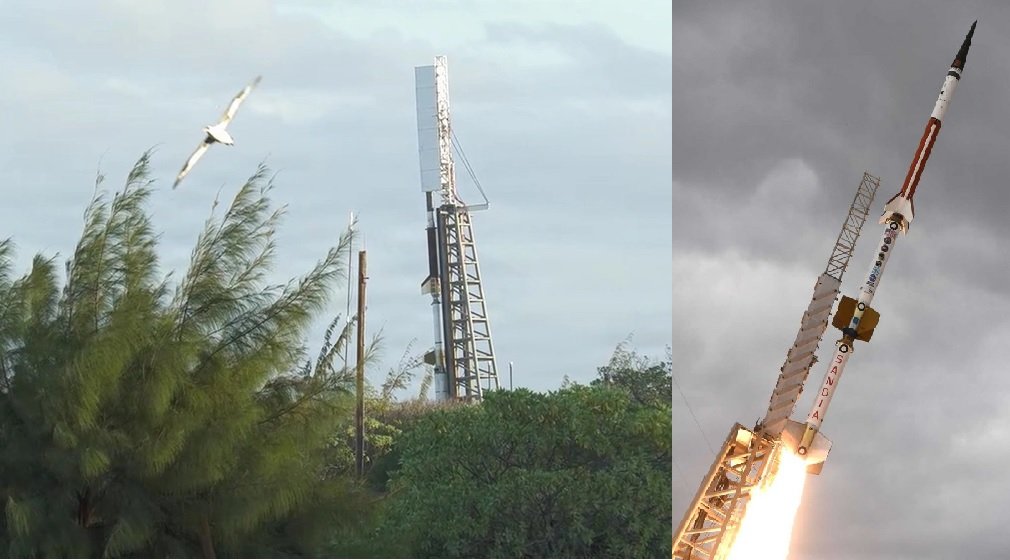
U.S. Navy Successfully Conducts SMART Sounding Rocket Mission from Wake Island to Study Space Plasma
U.S
WAKE ISLAND, Pacific Ocean — The U.S. Navy has released new details of the Space Measurement of A Rocket-released Turbulence (SMART) mission, a scientific sounding rocket experiment conducted on February 12, 2026, from the remote Pacific atoll of Wake Island. The mission was designed to study how plasma energy converts and behaves in space, providing data that could improve understanding of space weather and its effects on satellites and other space-based systems. The SMART mission was managed by the U.S. Naval Research Laboratory (NRL) and carried out by the Naval Surface Warfare Center (NSWC), Port Hueneme Division's White Sands Detachment. The launch marked the detachment's largest sounding rocket mission to date and its first flight of a four-stage sounding rocket. Mission aimed at studying plasma turbulence The experiment focused on understanding plasma turbulence and energy conversion in Earth's upper atmosphere. Scientists say space weather can affect satellite communications, navigation systems, and other spacecraft operating in low Earth orbit. Dr. Gurudas Ganguli, NRL Senior Scientist for Intense Particle Beams and Plasma Processes, said space weather poses challenges for spacecraft in much the same way atmospheric weather affects aircraft. To carry out the experiment, the Navy launched Oriole IV, a 68-foot (20.7-meter), four-stage sounding rocket built using four repurposed motors—Talos, Terrier, Oriole, and Nihka. According to officials, using existing rocket motors significantly reduced mission costs compared with developing a new large single-stage motor capable of reaching the same altitude. The rocket reached an altitude of approximately 539 kilometers (335 miles), within the region where many satellites operate. At that point, the payload separated, and a directional shape charge vaporized several pounds of barium metal, creating an artificial plasma cloud in the ionosphere. After the release, sunlight ionized the neutral barium atoms. Officials said the neutral atoms glowed green, while the ions produced blue and purple colors. Earth's magnetic field confined the ions, triggering electrostatic plasma turbulence. A second payload carrying scientific instruments then passed through the plasma cloud to measure the resulting electric and magnetic field changes and other electromagnetic effects. Testing plasma-wave conversion in space According to the Naval Research Laboratory, the mission was designed to confirm how electrostatic lower hybrid waves convert into electromagnetic whistler waves during a high-speed metal vapor release in the ionosphere. Christopher Netwall, Branch Head for Dynamics and Control Systems at the Naval Research Laboratory's Naval Center for Space Technology, SMART program manager, and experiment lead, said the experiment addressed a scientific question that had previously been studied mainly in laboratory conditions. Officials reported that the team successfully induced and measured plasma turbulence in the space environment using this method. Instruments recorded electric and magnetic field fluctuations, while ground-based sensors tracked the plasma cloud's size, optical intensity, and the propagation of the resulting electromagnetic waves. The complete mission sequence, from liftoff to final measurements, lasted about 10 minutes before the vapor dispersed and recombined with atmospheric elements. Jay Breuer, Senior Test Director in the White Sands Detachment's Suborbital Vehicles Division, said the mission demonstrated scientific theories that could eventually support future operational capabilities. Wake Island selected for safety reasons The SMART mission was originally planned for NASA's Wallops Flight Facility in Virginia. However, NASA safety assessments determined that detonating a shape charge at such a high altitude could spread debris across an area too large for that location. The project was subsequently transferred to the U.S. Navy, which selected Wake Island, a remote atoll managed by the U.S. Air Force. Located approximately 2,300 miles (3,701 kilometers) west of Honolulu and 1,500 miles (2,414 kilometers) northeast of Guam, Wake Island's isolation allowed the military to safely close the required airspace and ocean areas. The nearest inhabited island is nearly 600 miles (966 kilometers) away. Breuer described the location simply as being "in the middle of nowhere." Building a launch site in a remote environment Launching from Wake Island required extensive preparation because the island lacks permanent sounding rocket infrastructure. Unlike established launch ranges such as White Sands Missile Range, the Hebrides Range in Scotland, or the Pacific Missile Range Facility in Kauai, Wake Island did not have permanent telemetry systems or launch control facilities. An advance team surveyed the island months before the mission, and eight personnel from the White Sands Detachment spent about seven weeks, from early January through late February, establishing the launch site. The launch control center was set up inside an abandoned garage with a dirt floor, leaking roof, and mold-covered walls. The team relied on Starlink satellite terminals for internet connectivity throughout the operation. In total, 42 personnel participated in the mission, including scientists from the Naval Research Laboratory, NASA's Goddard Space Flight Center, the Naval Surface Warfare Center Indian Head Division, university research teams, and supporting contractors. Rocket and equipment transported across the Pacific Transporting personnel, rocket hardware, and equipment to Wake Island required three C-17 Globemaster III cargo aircraft operating from Holloman Air Force Base in New Mexico. Aircraft carrying rocket stages and explosives stopped at Travis Air Force Base in California and Joint Base Pearl Harbor-Hickam in Hawaii before continuing across the Pacific to Wake Island. Officials said the journey covered approximately 5,800 miles (9,334 kilometers) and took about four days. The launch used a Missile Defense Agency launcher capable of handling payloads of up to 50,000 pounds (22,680 kilograms). The launcher was extended to accommodate the 68-foot Oriole IV sounding rocket. Mission planners also delayed launch opportunities several times to avoid potential conflicts with orbiting satellites before successfully completing the flight. Mission supports future research and testing Following the successful launch, the Missile Defense Agency transferred ownership of the heavy-duty Wake Island launch rail to the White Sands Detachment. According to Navy officials, the successful expeditionary launch demonstrated the unit's ability to conduct complex sounding rocket operations from remote locations. They said this capability could support future hypersonic vehicle testing and work related to the Golden Dome for America homeland missile-defense architecture. The Naval Research Laboratory said the SMART mission successfully confirmed laboratory predictions of plasma-wave conversion in the actual space environment while providing valuable data to improve understanding of space weather and its potential effects on satellites and other space-based systems. The mission involved multiple government organizations, including the Naval Research Laboratory, Naval Surface Warfare Center divisions, Pacific Air Forces Regional Support Center Wake Island Detachment, U.S. Army Space and Missile Defense Command Reagan Test Site, U.S. Space Force 19th Space Defense Squadron, Missile Defense Agency Test Directorate, NASA Goddard Space Flight Center, the University of Alaska Fairbanks, and the University of Washington. Sponsors included the Office of the Undersecretary of Defense for Research and Engineering, the Office of Naval Research, the Department of War Space Test Program, the Rocket Systems Launch Program, the Defense Advanced Research Projects Agency (DARPA), and the Space Security and Defense Program.
Read More → Posted on 2026-08-05 16:21:08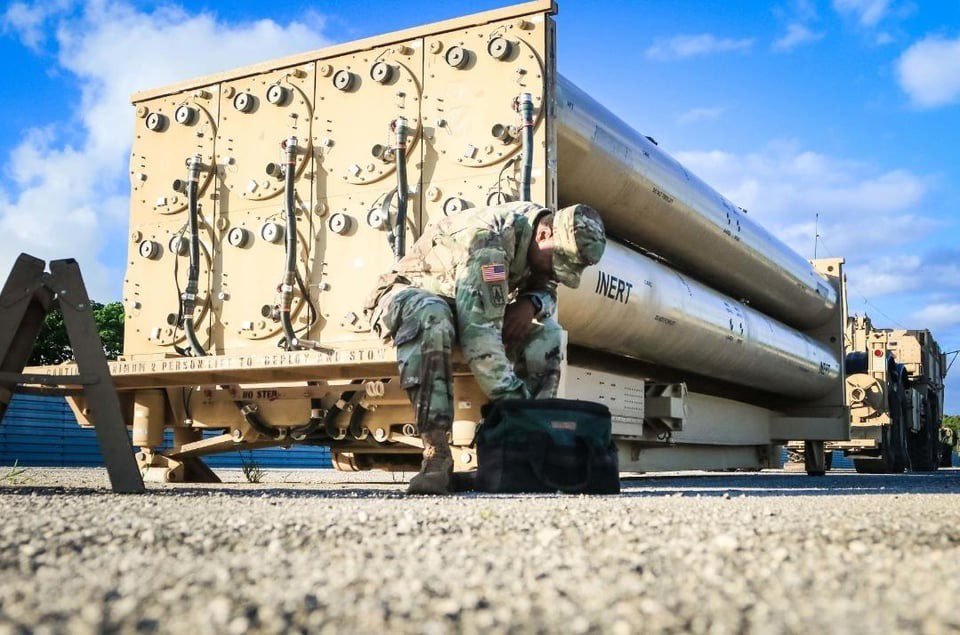
U.S
WASHINGTON — The United States has used a significant portion of its advanced missile interceptor inventory during the five-month conflict with Iran, raising concerns inside the Pentagon over the readiness of U.S. air and missile defense forces if another major conflict emerges. According to an exclusive CNN report published on Tuesday, U.S. military commanders have warned that the Pentagon's stockpile of key interceptor missiles has reached "dangerously low" levels after months of sustained operations against Iranian missile attacks. The report, citing officials familiar with the latest Pentagon inventory assessment, states that the U.S. Army has expended nearly 80% of its pre-war Terminal High Altitude Area Defense (THAAD) interceptor inventory and roughly half of its Patriot air defense interceptors since the conflict began in late February. THAAD and Patriot Inventories Under Pressure The reported decline reflects the heavy use of U.S. layered missile defense systems during repeated Iranian ballistic missile attacks targeting American military bases and regional partners across the Middle East. According to estimates from the Center for Strategic and International Studies (CSIS), the United States entered the conflict with approximately 2,200 Patriot interceptors (including PAC-3 and GEM-T variants) and 452 THAAD interceptors. CNN's assessment indicates that nearly four-fifths of the THAAD inventory has now been consumed, while about half of the Patriot interceptor stockpile has also been used during combat operations. Earlier CSIS estimates, published before the latest Pentagon assessment, projected somewhat lower levels of expenditure. The think tank estimated that between February and July the United States had used about 65% of its Patriot inventory, leaving fewer than 1,000 missiles, while THAAD inventories had fallen by at least 38%, to roughly 250 interceptors. CSIS noted that the actual numbers could change as additional operational data became available. Concerns Raised Before Additional Strikes Were Halted According to CNN, senior military officials warned about the rapid depletion of interceptor stockpiles before President Donald Trump decided last week to halt additional military strikes against Iran. The reported shortage has also raised concerns among U.S. partners in the Middle East, where American missile defense systems play a central role in protecting military installations and allied forces from ballistic missile attacks. Officials are concerned that prolonged regional tensions could place additional pressure on remaining interceptor inventories if another large-scale missile campaign occurs. Budget Request Focuses on Rebuilding Missile Inventories The depletion of interceptor stockpiles is reflected in the Trump administration's fiscal year 2027 defense budget request. The proposal includes $95 billion for munitions procurement, together with an additional $21 billion in supplemental funding, aimed at accelerating production of critical missile systems. The procurement request includes plans to acquire more than 3,000 Patriot interceptor missiles and approximately 800 THAAD interceptors. Defense analysts note that replenishing these inventories will take time because procurement levels in previous years were comparatively lower, limiting near-term missile deliveries. Missile Production Capacity Being Expanded To address increasing demand, the U.S. Department of Defense has begun expanding missile production capacity through long-term agreements with industry. In January 2026, Lockheed Martin signed a framework agreement with the Department of Defense to increase THAAD interceptor production capacity from 96 missiles annually to 400 per year. The company also announced construction of a new Munitions Acceleration Center in Camden, Arkansas, to support higher production rates using advanced manufacturing technologies. Separately, the Pentagon has also signed agreements to increase production capacity for Patriot interceptor components as part of a broader effort to rebuild U.S. missile inventories following high operational demand. THAAD's Role in U.S. Missile Defense THAAD (Terminal High Altitude Area Defense) is designed to intercept ballistic missiles during the terminal phase of flight, including engagements outside the Earth's atmosphere. The system uses the Talon hit-to-kill interceptor, which destroys incoming ballistic missiles through direct kinetic impact rather than an explosive warhead. According to publicly available U.S. Army information, THAAD can engage ballistic missile threats at altitudes of up to 150 kilometers (93 miles) and at ranges of up to 200 kilometers (124 miles). The United States currently operates seven THAAD batteries and plans to expand the force to eight batteries. Higher interceptor production is intended both to replenish depleted inventories and support future force expansion. Patriot Provides Lower-Layer Missile Defense The Patriot air defense system operates alongside THAAD as part of the U.S. layered missile defense architecture. Using PAC-3 and GEM-T interceptor missiles, Patriot is designed to engage tactical ballistic missiles as well as aerodynamic threats such as aircraft and cruise missiles, providing medium- and high-altitude air defense for military forces and critical infrastructure. Precision-Guided Missile Stocks Also Reportedly Affected The reported pressure on U.S. munitions has extended beyond defensive interceptor missiles. According to Reuters, U.S. forces also came close to exhausting inventories of Army Tactical Missile System (ATACMS) and Precision Strike Missile (PrSM) long-range precision-guided weapons during the five-month campaign, highlighting broader concerns over the sustainability of high-intensity military operations and the pace of munitions production. Defense analysts have said rebuilding these inventories will require sustained production increases over several years, even with expanded manufacturing capacity now being introduced across the U.S. defense industrial base.
Read More → Posted on 2026-08-05 14:06:54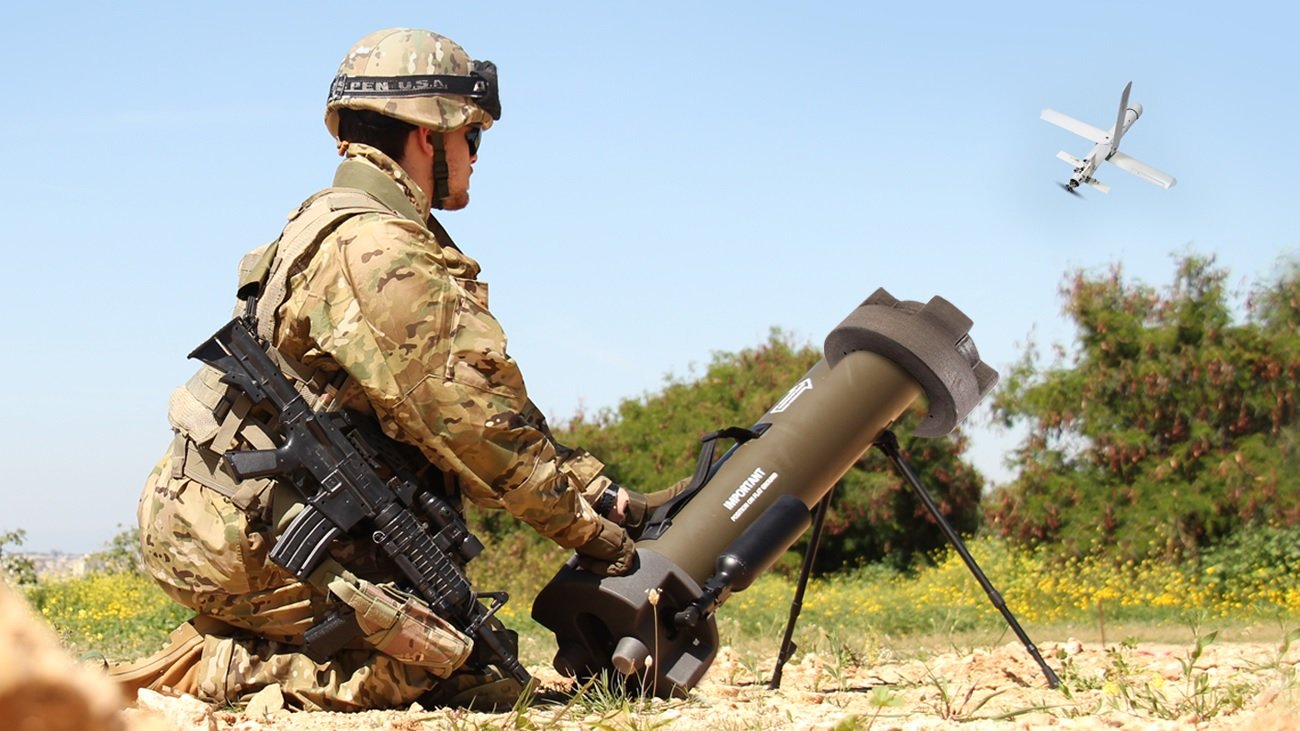
U.S
BETHESDA, Md. — Mistral Inc. and UVision have successfully completed the first Lot Acceptance Tests (LAT) for the HERO 120 loitering munition system under the U.S. Army's Lethal Unmanned System (LUS) program, marking an important step toward fielding the system with Army units. According to the companies, all HERO 120 systems successfully completed the required acceptance-test missions during the recent testing event. The results support continued progress toward operational deployment under the Army's LUS program. The LUS program is managed under the Precision Strike Reconnaissance System (PSRS) portfolio within the Capability Portfolio Executive for Mission Autonomy, which oversees the development and fielding of advanced autonomous capabilities for the U.S. Army. HERO 120 Moves Closer to Army Fielding The successful completion of the first Lot Acceptance Tests confirms that the evaluated HERO 120 systems met the Army's required acceptance-test objectives. The milestone allows the program to continue toward broader fielding across Army units. Mistral Inc. and UVision are jointly delivering the HERO 120 under a $982 million multi-year Indefinite Delivery, Indefinite Quantity (IDIQ) contract awarded in October 2025. The contract covers procurement, fielding, training, and sustainment of the system for the U.S. Army, with initial deliveries scheduled to begin in early 2026. HERO 120 Designed for Reconnaissance and Precision Strike The HERO 120 is a mid-range loitering munition designed to provide tactical units with both reconnaissance and precision-strike capabilities. The system is intended to give soldiers greater operational flexibility while operating in complex battlefield environments. The munition uses a pneumatic launch system and features a gimbaled electro-optical/infrared (EO/IR) seeker supported by advanced image processing technology. A key capability of the HERO 120 is its man-in-the-loop control, which allows the operator to maintain control throughout the mission. Operators can observe, identify, track, and engage both moving and stationary targets. If battlefield conditions change, they can abort an attack during flight or redirect the munition to another target. According to the companies, the system is also designed to operate in GPS-denied environments while maintaining precision accuracy and minimizing collateral damage. Previously released specifications state that the HERO 120 carries an approximately 4.5-kilogram warhead, has an operational range of approximately 40 to 60 kilometers, and can remain airborne for up to 60 minutes. The system is compatible with multiple launch platforms, including vehicles, and can also be operated by infantry teams. Companies Share Responsibilities Mistral Inc. serves as the U.S.-based prime contractor and systems integrator for the program. The company is responsible for system integration, the lethality package, program management, and sustainment. UVision serves as the design authority for the HERO 120. The company supports the system's development, manufacturing, and delivery and also provides training and sustainment support for the HERO family of loitering munitions. Together, the companies are responsible for delivering the systems and supporting Army units throughout fielding and operational service. Company Statements Yoav Banai, Senior Vice President at Mistral Inc., said the successful testing represents an important milestone for the companies and the U.S. Army. "Completing the first Lot Acceptance Tests is an important milestone for Mistral Inc., Uvision, and the U.S. Army. The successful completion of all required acceptance test HERO 120 missions reflects the shared commitment of both companies to deliver reliable, effective, and mission-ready capability to our warfighters. Mistral Inc. and Uvision are proud to support this Army program and remain focused on providing warfighters with the tools they need to win the fight." Jarmin Blanton, Vice President of Business Development, Sales & Marketing at UVision Inc., said the milestone demonstrates the close cooperation between the Army and industry partners. "Uvision is proud to support the U.S. Army's LUS program. As the design authority for HERO 120, Uvision is committed to delivering a mature, reliable, and combat effective system that exceeds the operational needs of the soldier. This LAT milestone reflects the close collaboration between the Army, Mistral Inc., Uvision, and the broader program team, and we look forward to continuing our support as the program advances." Next Phase Following the successful completion of the first Lot Acceptance Tests, the HERO 120 program will continue toward active fielding with the U.S. Army. In addition to supplying the systems, Mistral Inc. and UVision will continue providing training and sustainment support to help ensure Army personnel are prepared to operate and maintain the HERO 120 throughout its service life.
Read More → Posted on 2026-08-05 13:14:38
U.S
WASHINGTON — The U.S. Department of Defense is drafting a new nuclear strategy that would place greater emphasis on the possible use of shorter-range tactical nuclear weapons during regional conflicts involving China or Russia, according to officials familiar with the classified review. The strategy, led by Undersecretary of Defense for Policy Elbridge Colby, is intended to expand the range of nuclear response options available to the U.S. president while retaining all existing strategic capabilities. Officials said the proposal does not replace current nuclear policies but seeks to strengthen regional deterrence by giving greater importance to tactical nuclear weapons. Strategy Aims to Expand Deterrence Options According to officials, the review is designed to provide the president with a broader set of credible nuclear response options during regional crises. Pentagon planners believe that relying only on high-yield strategic nuclear weapons, such as intercontinental ballistic missiles (ICBMs), may not always present a believable deterrent in limited regional conflicts. The draft strategy therefore gives increased attention to lower-yield, shorter-range tactical nuclear weapons, which officials believe offer more proportionate response options while maintaining deterrence. The proposal would leave all existing U.S. nuclear options in place and expand the role of tactical nuclear capabilities within regional defense planning. Review Focused on Two Nuclear-Armed Competitors The classified review comes as U.S. defense officials continue assessing how to deter both China and Russia simultaneously. Officials have pointed to China's continued expansion of its nuclear arsenal and Russia's large inventory of non-strategic nuclear weapons as key factors behind the review. Earlier this year, Elbridge Colby told Congress that the administration would not conduct a formal Nuclear Posture Review similar to previous administrations. Instead, he said the Pentagon was reviewing nuclear strategy to address the challenges posed by two nuclear-armed peer competitors. A senior defense official also said the review is examining nuclear force requirements, modernization efforts, and possible additional theater nuclear weapons programs, including options based on existing stockpiles and delivery platforms. Changing Global Nuclear Environment The review also reflects changes in the international security environment. In February 2026, the New START arms control treaty expired without a replacement agreement, ending the last legally binding limits on U.S. and Russian strategic nuclear forces. At the same time, U.S. officials have highlighted developments in Russian and Chinese nuclear capabilities. Russia has updated its military doctrine to lower the threshold for the possible use of tactical nuclear weapons during conventional conflicts and has deployed tactical nuclear weapons to neighboring Belarus. China, meanwhile, continues expanding its nuclear triad and has deployed dual-capable intermediate-range systems, including the DF-26, which can carry either conventional or nuclear payloads across the Indo-Pacific region. National Defense Strategy Supports Nuclear Modernization The 2026 National Defense Strategy, released earlier this year, calls for modernizing and adapting U.S. nuclear forces with an emphasis on deterrence and escalation management. Defense officials have also identified the nuclear-armed sea-launched cruise missile as one option to strengthen regional deterrence without relying solely on long-range strategic nuclear systems. Officials have stressed that maintaining and modernizing the U.S. nuclear triad remains a top defense priority. Debate Over the Proposed Strategy The draft strategy has generated debate within Washington's national security community. Supporters argue that expanding tactical nuclear options would improve the credibility of U.S. deterrence by providing response choices that are more appropriate for limited regional conflicts. They believe a wider range of options would reduce the likelihood that potential adversaries miscalculate U.S. intentions during a crisis. Critics, however, caution that increasing the role of tactical nuclear weapons could lower the perceived threshold for nuclear use. They argue that integrating such weapons more deeply into regional military planning could increase escalation risks and shift attention away from long-range strategic deterrence. Strategy Still Under Review The nuclear strategy review remains classified, and the Pentagon has not announced when it will be finalized or whether it will lead to changes in U.S. nuclear doctrine, force posture, or future weapons programs. Officials have stated that the review is part of broader efforts to ensure the United States maintains a credible and effective nuclear deterrent while responding to evolving security challenges involving China and Russia. Source : nbcnews
Read More → Posted on 2026-08-05 13:02:18Search
Top Trending in 24 Hours
-
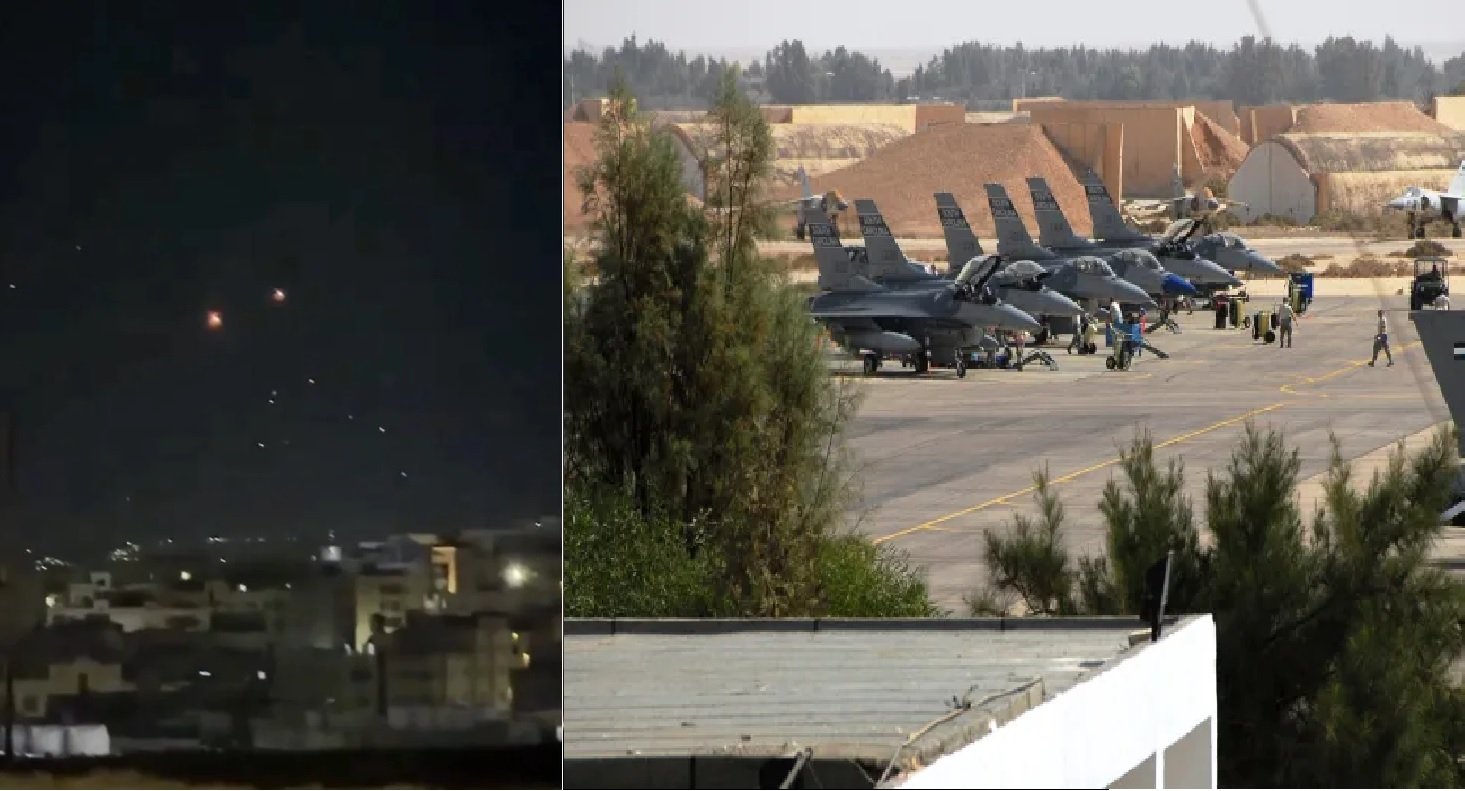 Iranian Missile Strike Damaged U.S. A-10 and Eight F-15s at Jordan Air Base, CBS Reports
-
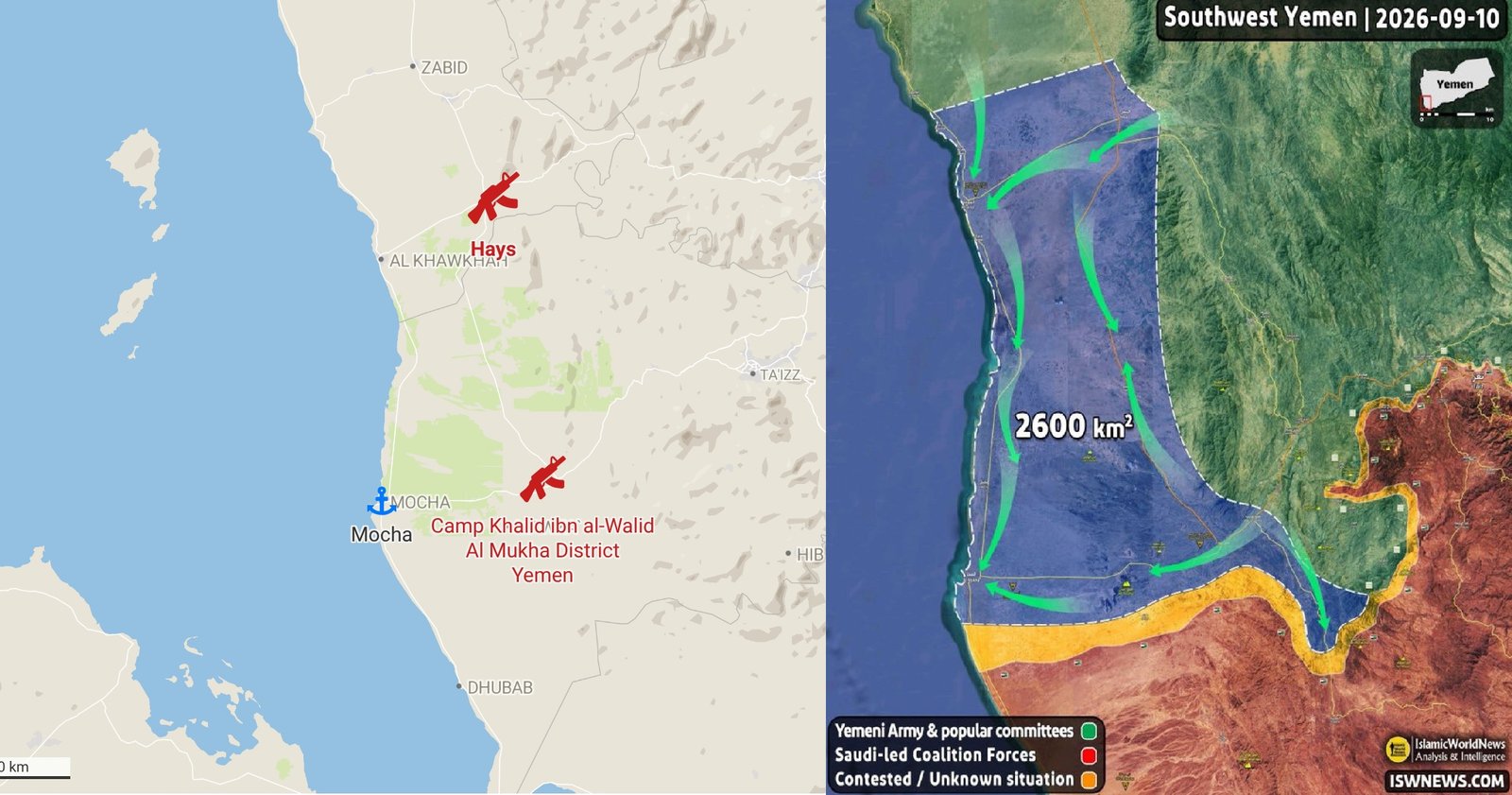 Houthi Forces Capture Strategic Red Sea Port City of Mocha Following Government Withdrawal
-
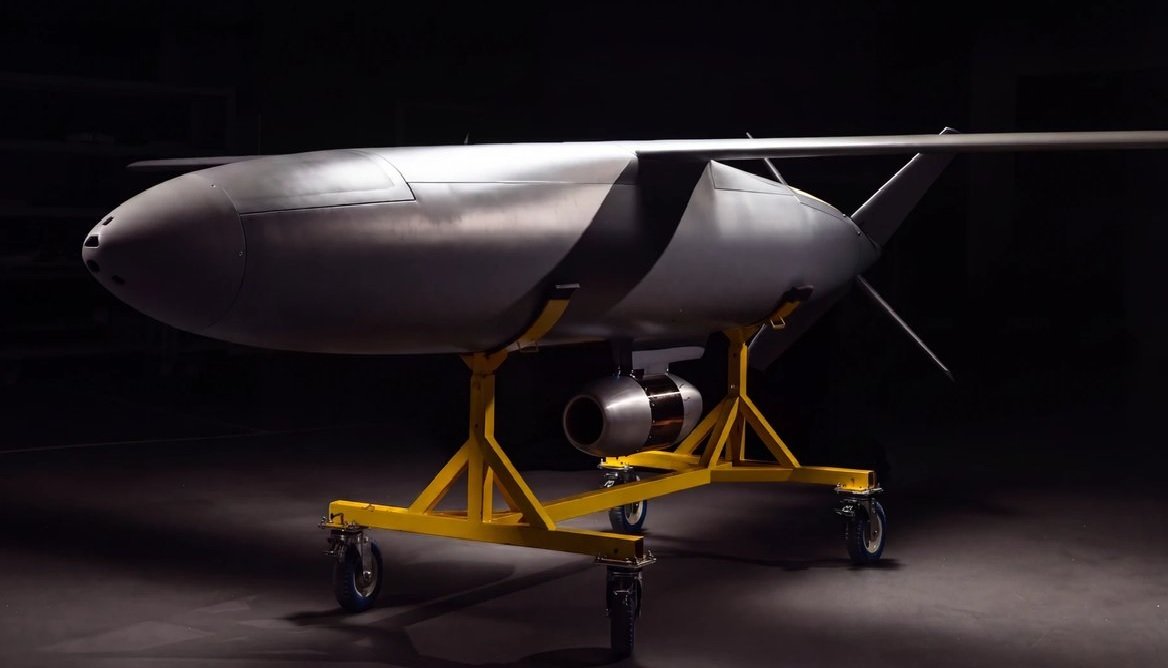 U.S. Startup Covenant Emerges From Stealth With $250 Million Funding and Anthem, a New Long-Range Heavy-Payload Strike Missile After More Than 200 Test Flights
-
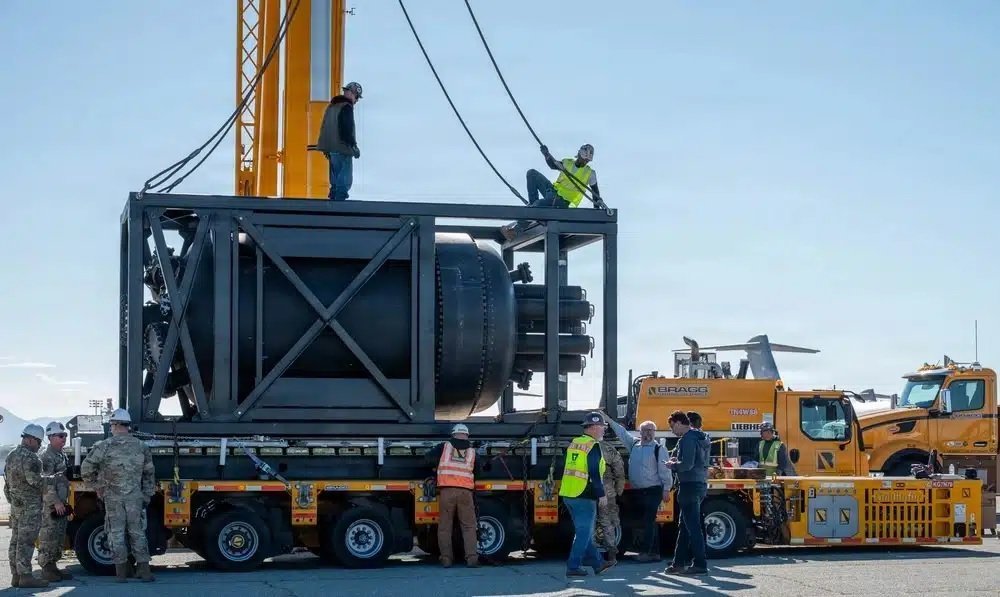 U.S. Navy Plans First Shore-Based Nuclear Microreactor at Indiana’s Crane Base by 2028
-
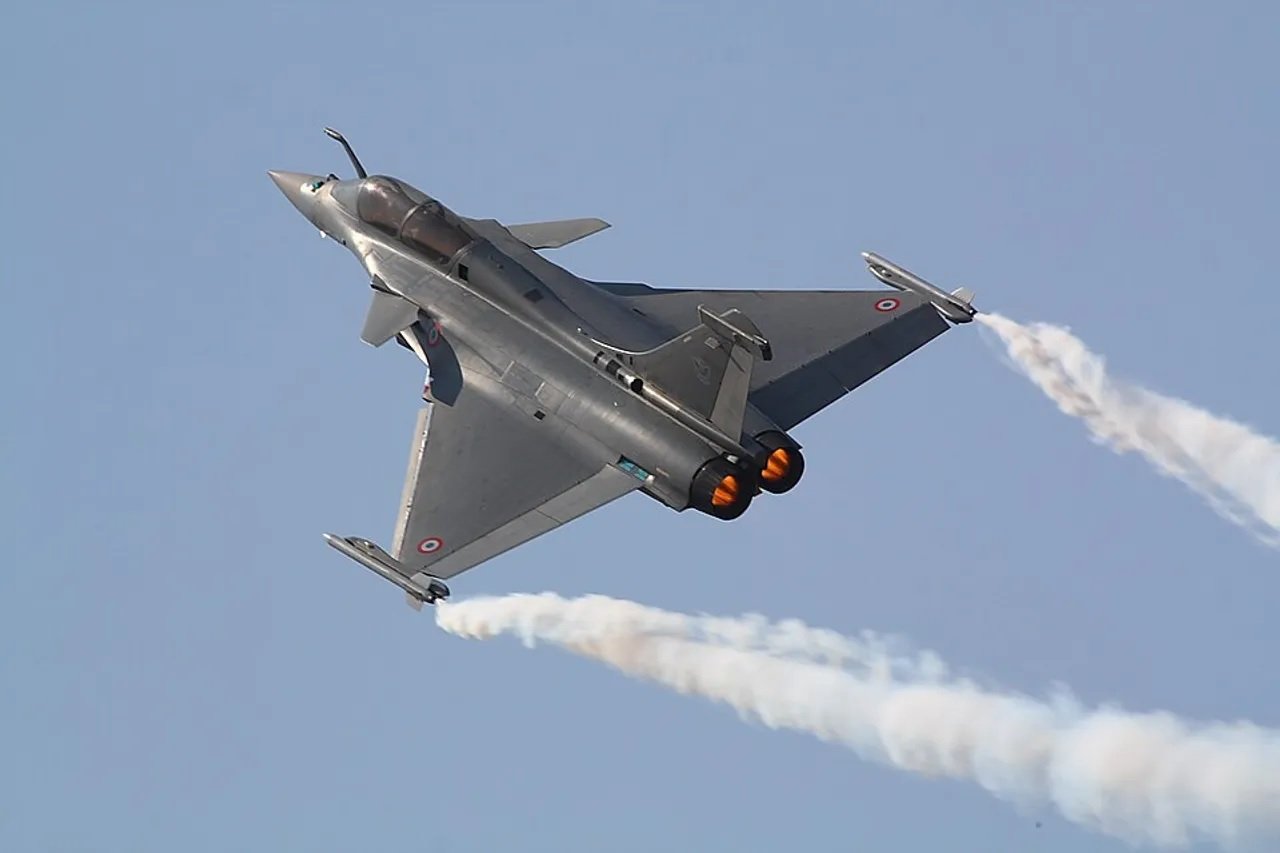 Russian Rafale “Kill Switch” Claim Faces Questions Over Evidence
-
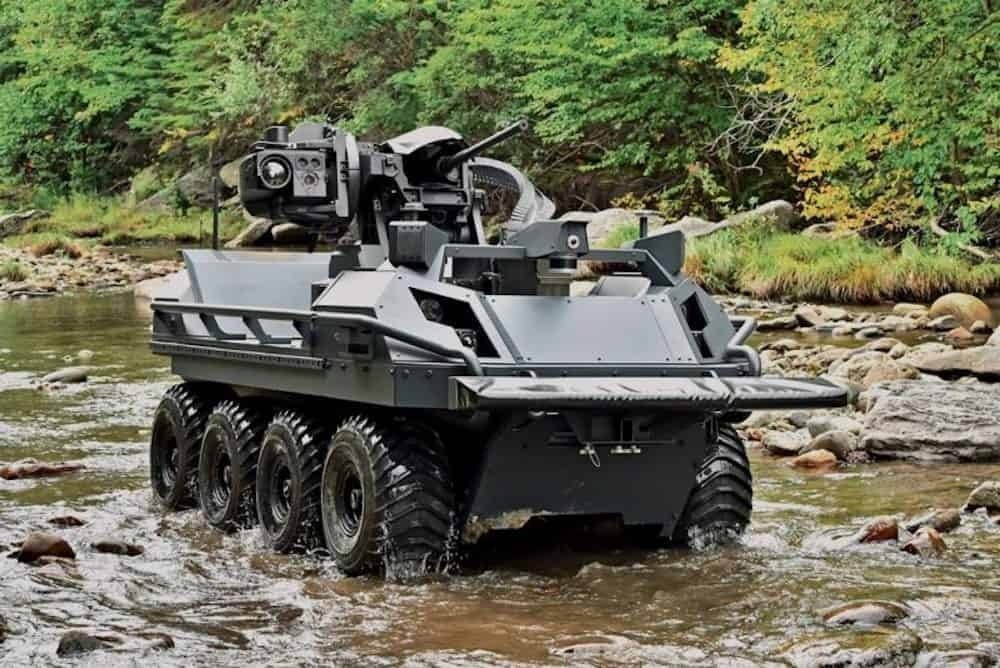 American Rheinmetall Secures $7.28 Million Contract for U.S. Marine Corps Autonomous Vehicles
-
 U.S. Signs $4 Billion Military Financing Guarantee for Poland, Bringing Total Support Near $20 Billion
-
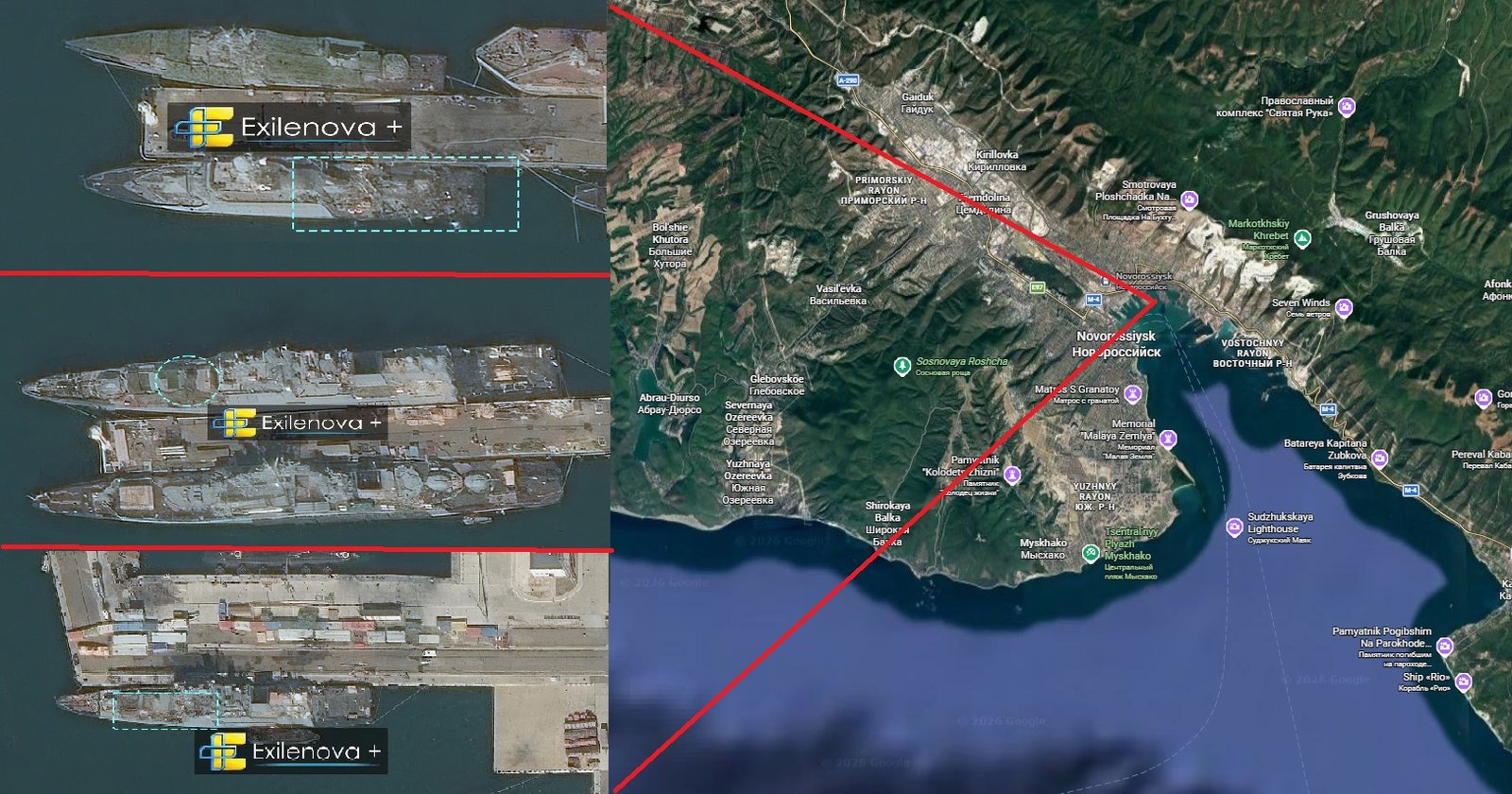 Satellite Imagery Confirms Ukrainian Strike on Russian Frigate Admiral Essen and Buyan-M Corvette in Novorossiysk
Top Trending in 4 Days
-
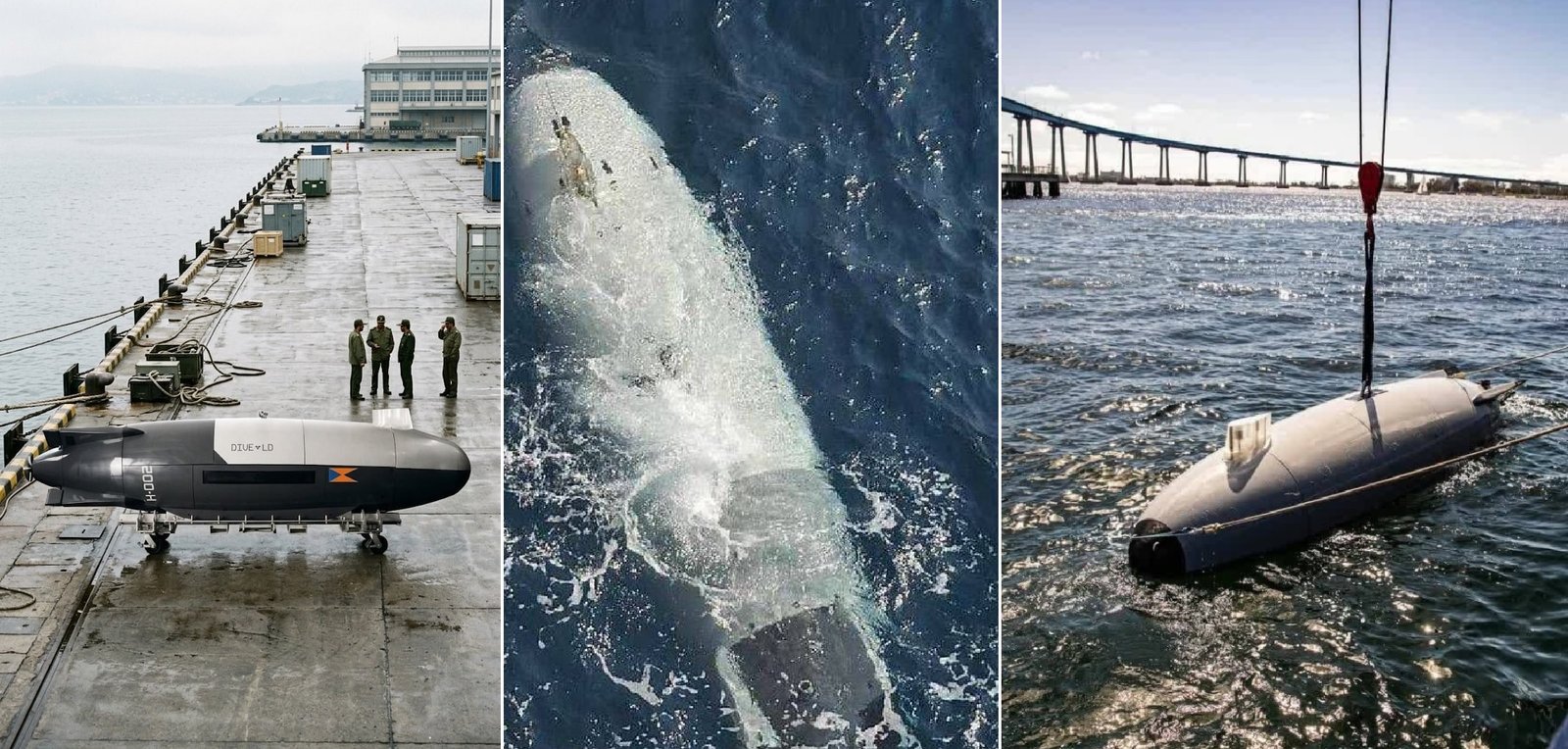 Iran’s IRGC Claims Capture of U.S. Dive-LD Unmanned Underwater Vehicle Near Strait of Hormuz
-
 Satellite Imagery Shows Two U.S. Barracks Destroyed at Kuwait’s Ali Al Salem Air Base in Iranian Attack
-
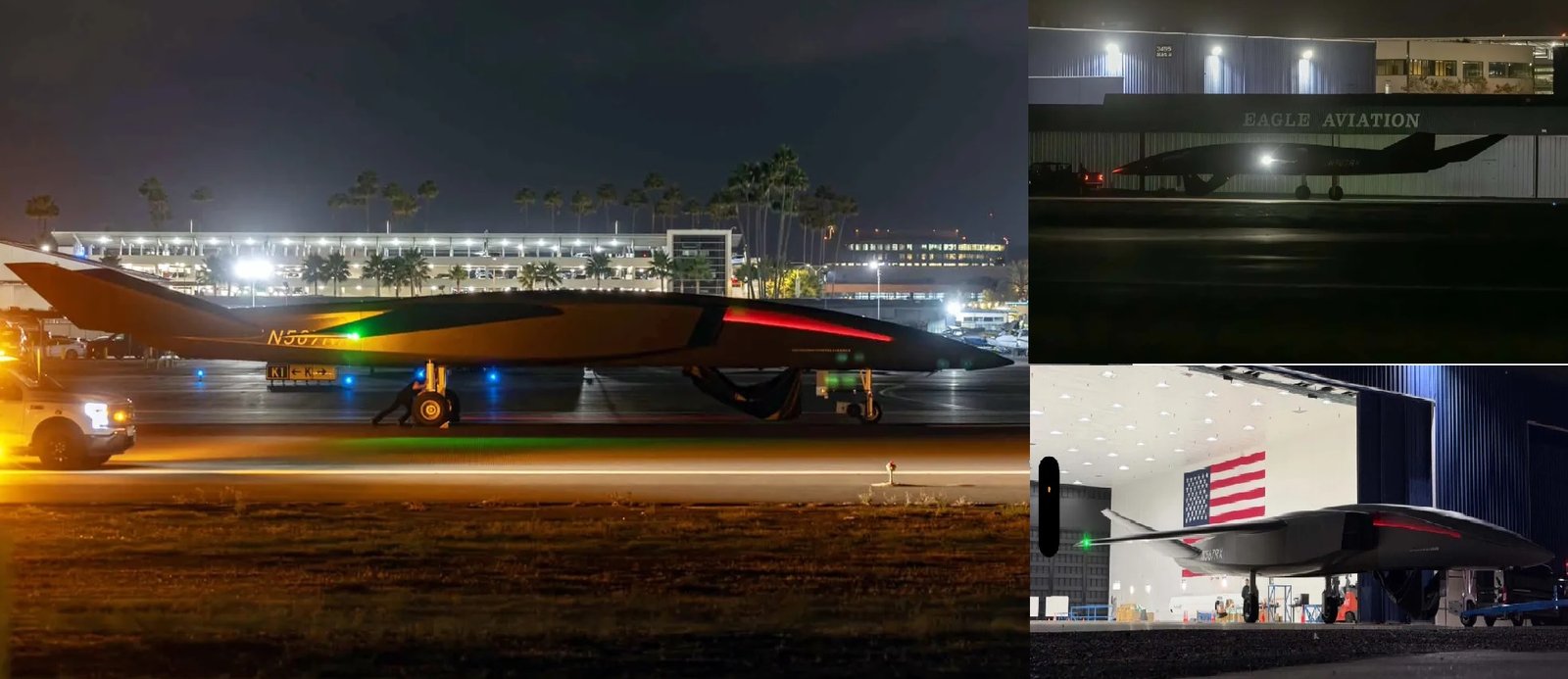 Mysterious Black Aircraft at Long Beach Airport Identified as Aevum’s RAVN X Autonomous Spaceplane After Years Out of Sight
-
 Trump’s ‘The Moon Is Ours’ Post, Space Force Uniform Concept and Green Lantern AI Video Draw Online Backlash
-
 Iranian Missiles Strike U.S. Base in Jordan as Reports Emerge of Injured American Personnel
-
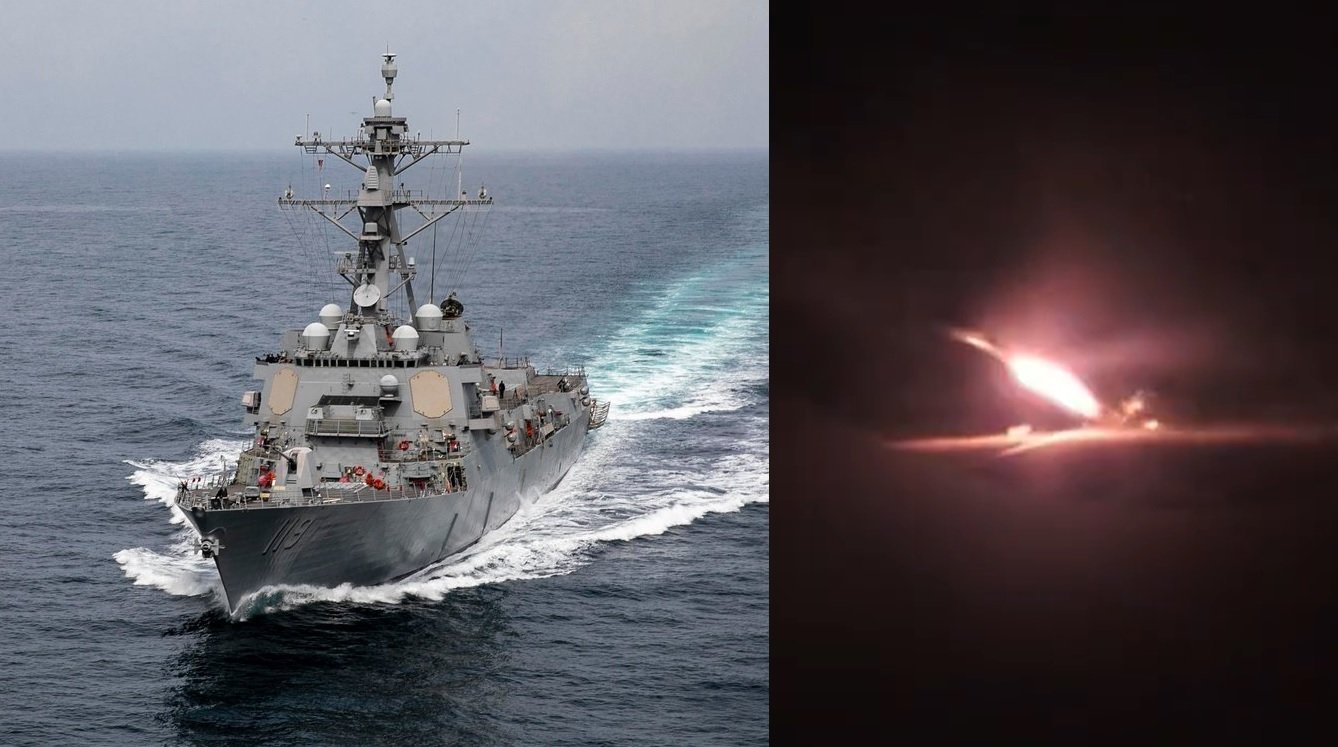 IRGC Claims Significant Damage to Two U.S. Destroyers in Missile Attack; CENTCOM Denies Hits
-
 Iran Launches Massive Ballistic Missile Attack with Cluster Munitions on U.S.-Used Air Base in Jordan, Some Missiles Confirmed to Have Hit Base
-
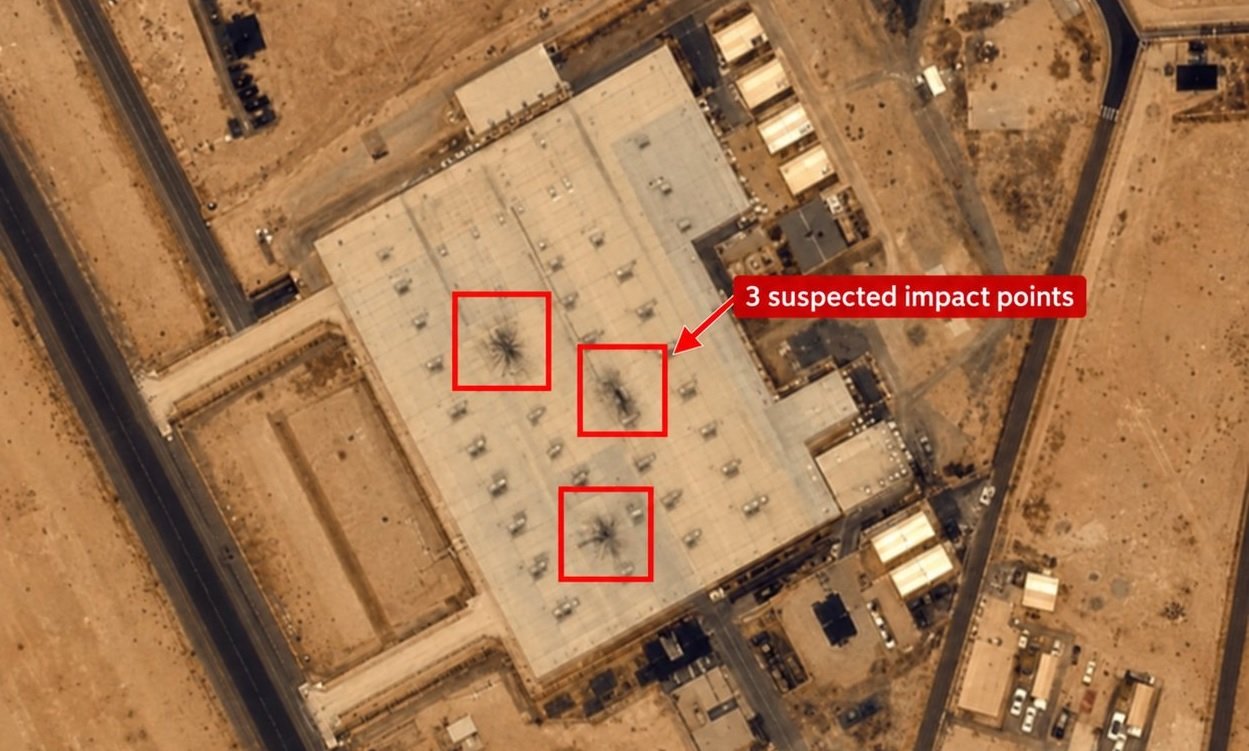 New Satellite Images Show Three Possible Impacts at U.S.-Linked Air Bases in Kuwait