Europe
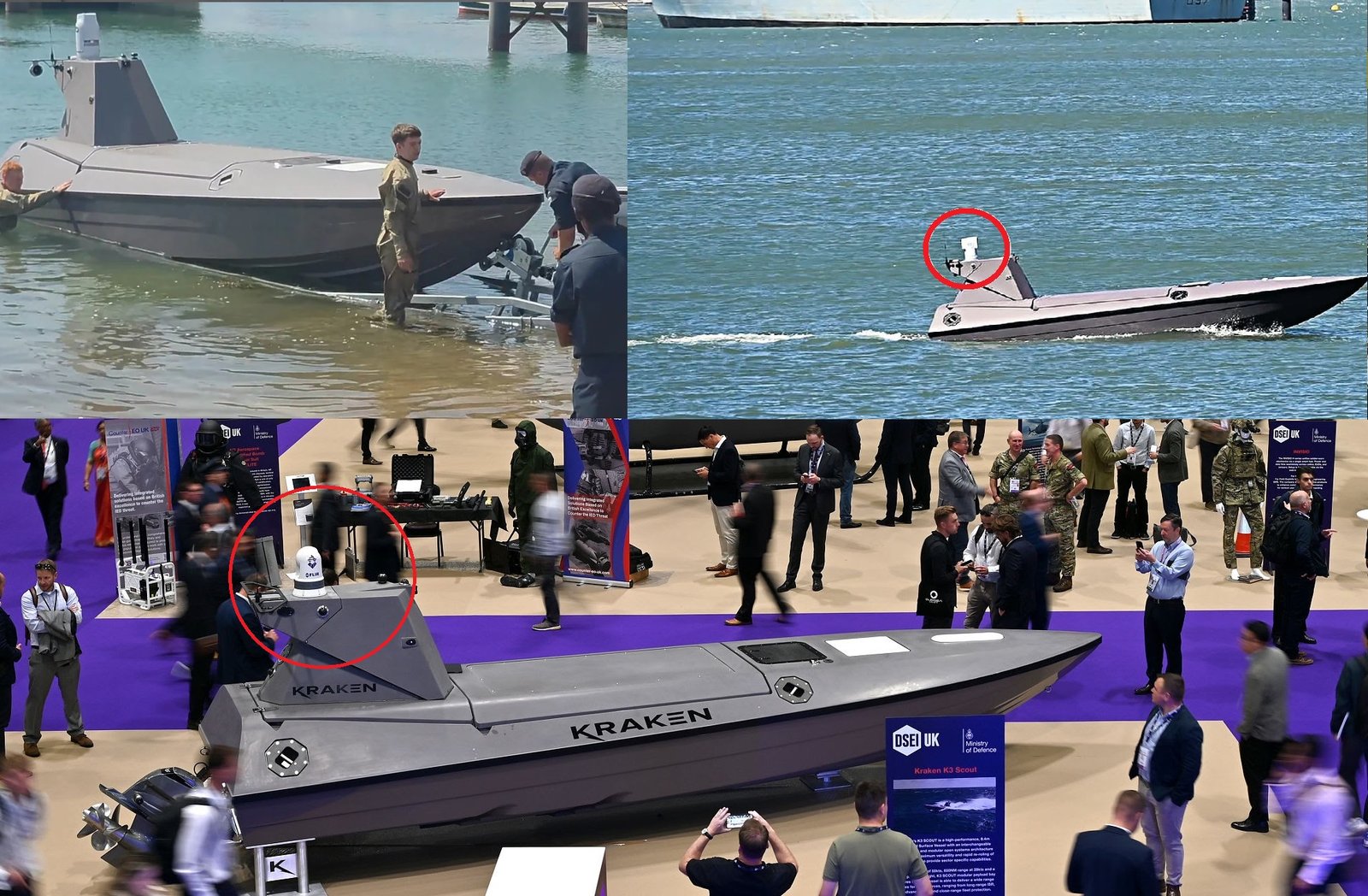
London, August 10, 2026 — Cameras fitted to K3 Scout uncrewed surface vessels operated by the Royal Marines were found transmitting routine “heartbeat communications” to an IP address in China, prompting the UK Ministry of Defence (MoD) to remove internet connectivity from the affected equipment. The issue was identified during a routine cyber vulnerability assessment. The MoD said its investigation found no evidence that Ministry of Defence data or systems had been accessed, compromised or transmitted externally. The discovery was reported by The Telegraph on August 9, 2026, and has raised concerns about the security of third-party components used in British military equipment. Chinese IP Address Detected The cameras installed on the K3 Scout vessels were found to be sending periodic “heartbeat” communications to an IP address located in China. These communications are routine status signals used by devices to indicate that they are online and functioning. The MoD has not said that classified information was transmitted. After identifying the connection, the department removed internet connectivity from the affected cameras. Reports have also raised concerns about the use of the vessels near sensitive activities involving Royal Marines and Special Boat Service personnel in Poole, Dorset. Questions were also raised over whether the cameras could remain active when the vessels were powered down. However, the MoD investigation found no evidence that its data or systems had been compromised. K3 Scout Fleet The vessels are K3 Scout uncrewed surface vessels supplied by Hampshire-based Kraken Technology Group. The Royal Navy acquired about 20 vessels under a package worth approximately £12 million to £12.3 million. The fleet has been operated by the Coastal Forces Squadron and 47 Commando Royal Marines since March 2026 under Project Beehive. Project Beehive is intended to develop the integration of uncrewed systems with traditional warships and support capabilities including surveillance and force protection. The K3 Scout is 8.4 metres long, has a maximum speed of 55 knots, a range of about 650 nautical miles at 25 knots, endurance of up to 30 days depending on the mission, and a payload capacity of around 600 kg. The vessel can be configured for intelligence, surveillance and reconnaissance, logistics and other missions. Third-Party Camera Components Kraken Technology Group sourced the cameras from a third-party supplier. The company said it had received assurances that the equipment met the required security standards and was compliant with the US National Defense Authorization Act. Kraken acknowledged that some of the cameras contained a small number of components originating outside the UK. A company spokesman said: “We are aware that some third-party, NDAA-compliant cameras had a small number of components originating from outside the UK. After a full audit by both Kraken and the Royal Navy we are confident no sensitive information has ever been shared outside of intended channels and any potential vulnerabilities have been identified and closed.” The company and Royal Navy subsequently carried out an audit of the equipment. MoD Investigation An MoD spokesman said: “A routine cyber vulnerability assessment identified an issue affecting a Kraken Unmanned Surface Vessel sub-system used by the Royal Navy.” The department said its investigation found no evidence of MoD data or systems being accessed, compromised or transmitted externally. The MoD added that its assurance and testing procedures are designed to identify and address potential vulnerabilities and that routine security checks continue across its systems and equipment. Potential Strait of Hormuz Deployment The K3 Scout fleet has also been linked to preparations for a possible UK contribution to securing freedom of navigation in the Strait of Hormuz. A defence source familiar with the matter told The Telegraph that the vessels formed part of preparations connected with a potential deployment to the region. The source criticised the failure to identify the origins of the components earlier and said confidence in the platform had been affected. The K3 Scout has previously been tested for operations involving uncrewed maritime systems, including NATO activities in the Baltic Sea. International Interest The K3 Scout has attracted interest from international military organisations. Kraken has reported a $49 million agreement with US Special Operations Command for the vessels. The platform has also taken part in NATO Task Force-X activities in the Baltic and has been involved in Royal Navy trials under Project Beehive. The security issue comes as the UK and other military organisations continue developing uncrewed surface vessels for a wider range of naval missions. Political Response The discovery has prompted calls for greater scrutiny of defence supply chains. Conservative shadow security minister Alicia Kearns called for an urgent audit of military equipment to identify Chinese components and assess potential security vulnerabilities. The incident highlights the difficulty of securing complex defence supply chains when military platforms contain hardware obtained from multiple suppliers. The confirmed finding is that the K3 Scout cameras transmitted routine heartbeat communications to an IP address in China. The MoD has stated that there is no evidence that its data or systems were accessed, compromised or transmitted externally, and the affected cameras have had their internet connectivity removed.
Read More → Posted on 2026-08-10 11:22:37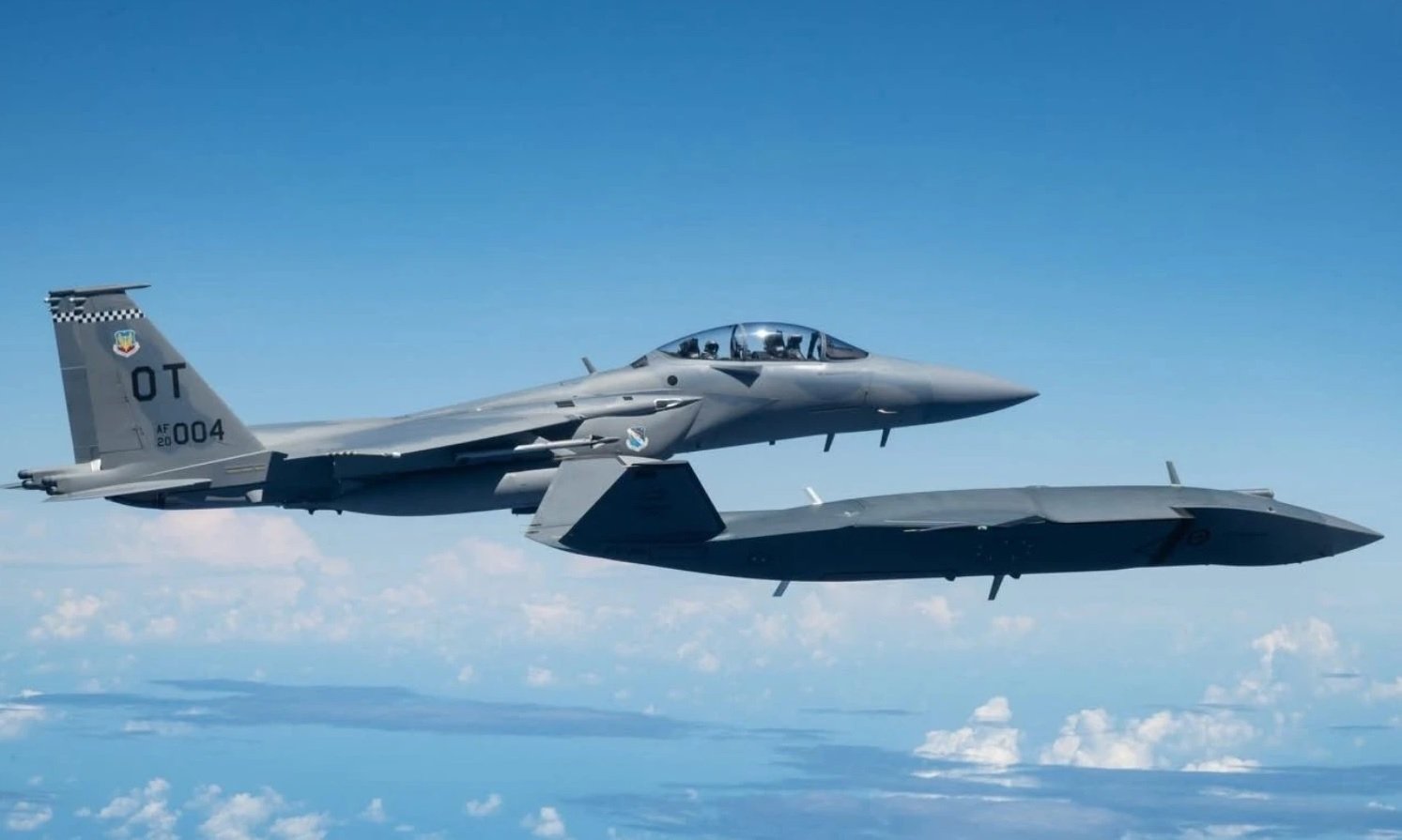
Europe
BERLIN — Boeing and Rheinmetall are offering the MQ-28 Ghost Bat as a mature platform for Germany’s planned Collaborative Combat Aircraft (CCA) capability, with the companies targeting a 2029 deployment for the German Air Force. The proposal would use the existing, flight-tested MQ-28 instead of developing a completely new aircraft. German sensors, weapons and mission software would be integrated into the platform, with Rheinmetall serving as the lead system integrator in Germany. German-Controlled Integration Rheinmetall plans to establish independent system integration for the MQ-28 in Germany. Under the proposed model, software development, mission integration and intellectual property would remain under German control. “Germany does not have to choose between speed and independence. We offer a way to achieve both at the same time,” said Mike Schmidt, CEO of Rheinmetall’s Air, Uncrewed and Space business unit. “The MQ-28 enables us to bypass the lengthy development phase of a new aircraft and go directly to the decisive task: making the capabilities of unmanned combat air systems available to the German Air Force,” Schmidt added. Boeing and Rheinmetall have also established a German industrial network involving Rohde & Schwarz, Diehl Defence and HENSOLDT to support the development and integration of national technologies. MQ-28 Flight-Test Experience The MQ-28 Ghost Bat was originally developed and manufactured in Australia for the Royal Australian Air Force. The aircraft has completed more than 150 test flights and has participated in multinational military exercises, including the US-led Valiant Shield. Boeing Defense Australia’s Global Director for the MQ-28 program, Glen Ferguson, said the aircraft has already passed development stages that other CCA programs are still working through. “While many CCA programs worldwide are still in the concept, definition or early test phase, the MQ-28A Ghost Bat has already gone through these essential development steps,” Ferguson said. The MQ-28 is being developed for both air-to-air and air-to-ground missions, with Boeing continuing development of its air-to-ground capabilities. Modular Design and Digital Development Boeing says the MQ-28 has a modular architecture designed to support continued adaptation to changing mission requirements. Ferguson said the aircraft can be adapted for new missions, including air-to-ground operations, without treating each change as a basic retrofit. The program is also supported by a digital twin of the aircraft, which provides an environment for engineers to simulate and test system changes. For Germany, the MQ-28 could also serve as a development and test platform for tactics, training and force-structure planning involving crewed and uncrewed aircraft. “If the goal is to achieve such a capability by 2029, this work must begin today with the development of tactics, training, definition of force structure and the integration of sovereign technologies,” Ferguson said. The experience gained from integrating German technologies onto the MQ-28 could also support Germany's future participation in European uncrewed combat aircraft programs. The Boeing-Rheinmetall proposal therefore combines an existing flight-tested platform with German-led technology integration, with the stated objective of helping Germany establish a CCA capability by 2029.
Read More → Posted on 2026-08-10 10:54:51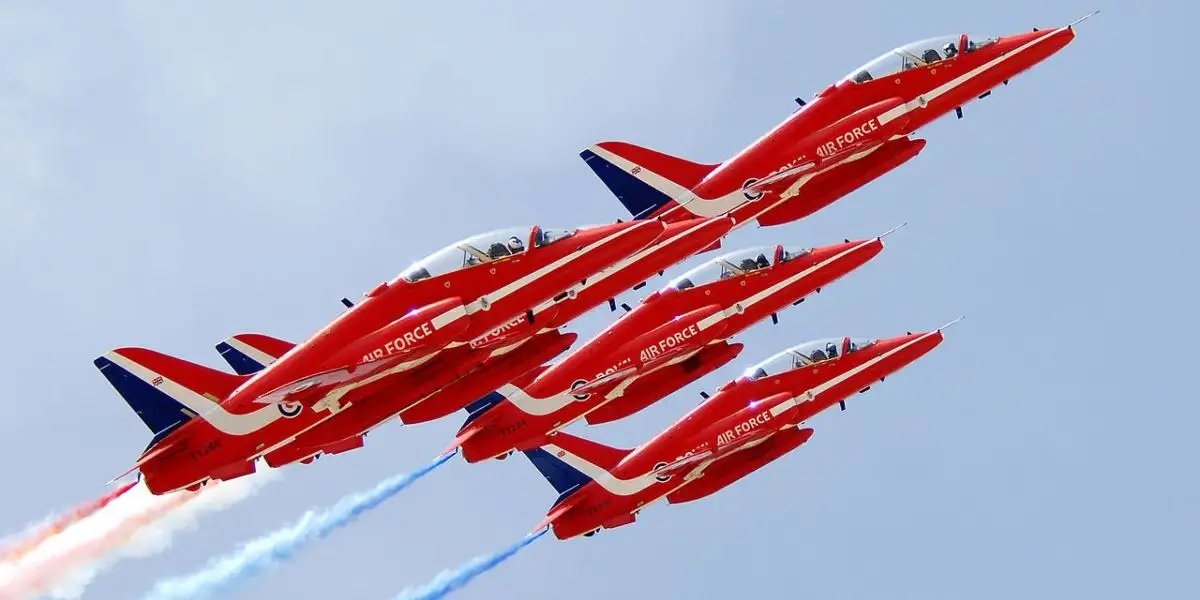
Europe
LONDON, UK — The UK Ministry of Defence (MoD) has opened market engagement for a new Jet Training System to replace the ageing Hawk aircraft used by the Royal Air Force’s Red Arrows and support future fast-jet pilot training. The programme, listed under project code 700004994-RFI, is part of the UK government’s Defence Investment Plan 2026, which commits £360 million to the full recapitalisation of the Jet Training System. The investment includes new aircraft for the Red Arrows and is intended to provide a modernised training capability for UK and international fast-jet training requirements. The MoD says the new system will also support the transition towards fifth- and sixth-generation air systems and will include a significant UK workshare. Hawk T1 replacement The Hawk T1 entered Royal Air Force service in 1976 and has been flown by the Red Arrows since 1979, when the team moved from the Folland Gnat. The aircraft is now approaching the end of its service life, with the Hawk T1 scheduled to leave UK service in 2030. It is no longer used for the RAF's main advanced fast-jet training role, although the Red Arrows and a small number of other operators have continued to fly the type. The new programme will provide a replacement aircraft for the Red Arrows while also addressing the wider requirement for a modern fast-jet training system. Current fast-jet training Advanced fast-jet training for RAF and Royal Navy pilots is currently conducted using the Hawk T2 at RAF Valley in Wales under the UK Military Flying Training System. The Hawk T2 has experienced availability problems in the past, which have affected the military flying-training pipeline. The National Audit Office and parliamentary committees have previously examined problems affecting the UK's military flying-training system. The MoD is now developing the replacement requirement as part of its wider effort to modernise military pilot training. International competition The UK no longer has an active Hawk production line. BAE Systems closed the Hawk production line in 2020 after completing its final export orders. Potential aircraft available on the international market include the Boeing-Saab T-7A Red Hawk, Leonardo M-346 and Korea Aerospace Industries T-50 family. These aircraft are among the established jet-training platforms that could potentially meet elements of the UK's future requirement. BAE Systems has partnered with Boeing and Saab to promote the T-7 for the UK requirement. Leonardo has also been associated with the competition. The British company Aeralis, which was developing a modular jet trainer concept, had also been pursuing the requirement. The company entered administration in May 2026 following funding difficulties. The MoD's requirement for significant UK workshare means industrial participation will be an important part of any future procurement. Link to future combat aircraft The replacement training system is being developed as the RAF prepares for future generations of combat aircraft. The UK is continuing to expand its F-35 capability and is working with Italy and Japan through the Global Combat Air Programme (GCAP), which is intended to deliver a next-generation combat aircraft from 2035. The Defence Investment Plan also includes funding for Collaborative Combat Aircraft that will operate alongside crewed combat aircraft. A modern training system will therefore need to prepare pilots for increasingly advanced aircraft and operating concepts. Procurement process The current Request for Information is an early market-engagement exercise. It is being used by the MoD to gather information from potential suppliers before the detailed requirement, delivery approach and procurement strategy are finalised. Interested companies have been asked to provide their details, a point of contact and their areas of interest to the programme team. The deadline for submissions is 11 September 2026. The MoD has made clear that the exercise is for information gathering only. It is not an invitation to tender and does not represent a commitment to procure a particular aircraft. The aircraft type, number of aircraft and exact delivery schedule have not yet been confirmed. The programme will determine those details as the procurement process develops.
Read More → Posted on 2026-08-09 14:32:02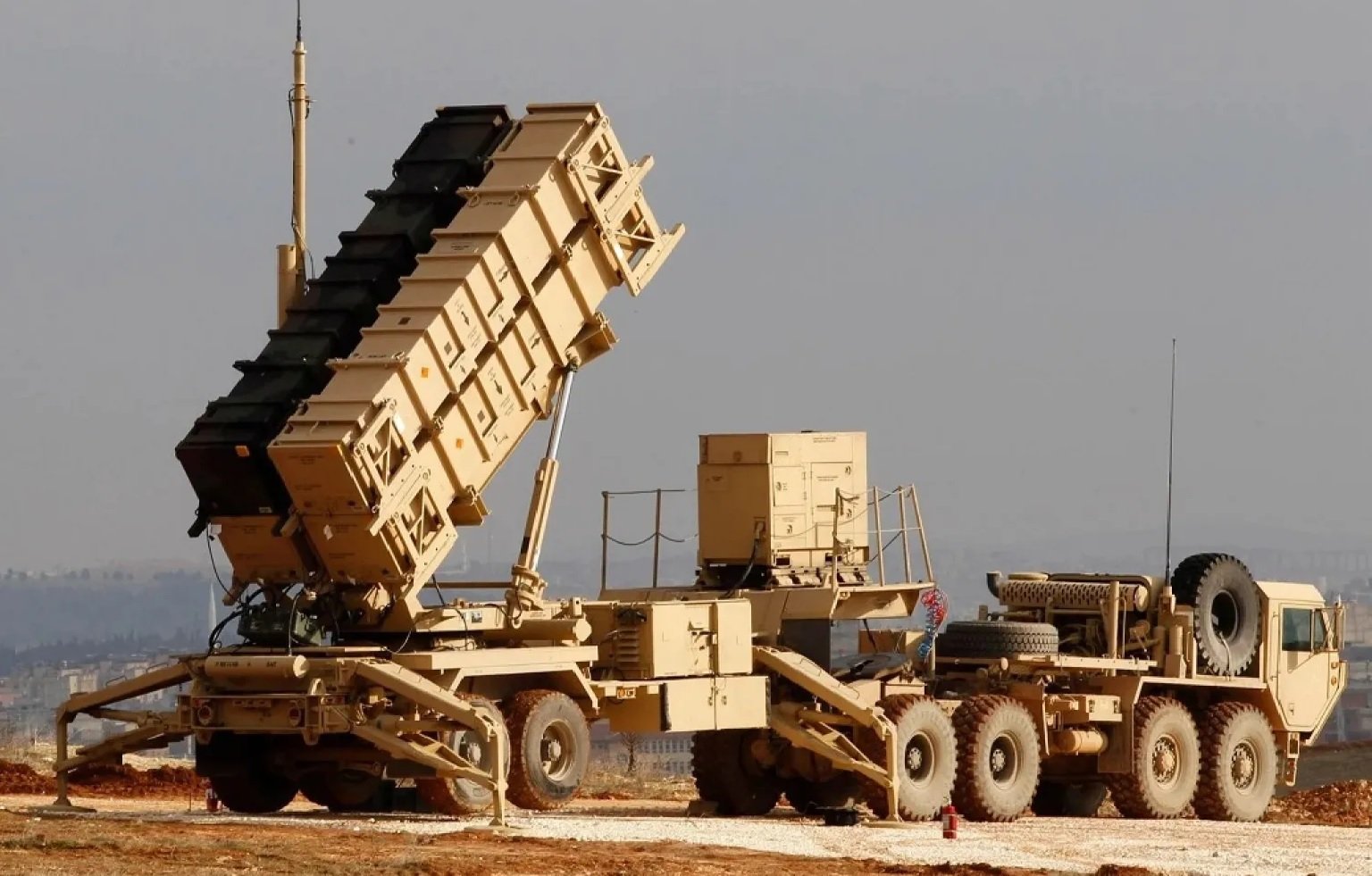
Europe
HELSINKI — Finland will not transfer additional air-defense interceptor missiles to Ukraine if doing so would weaken its own military readiness, Finnish Defense Minister Antti Häkkänen said. In an interview with Finnish newspaper Ilta-Sanomat published around August 8, Häkkänen said Finland had already provided substantial military assistance to Ukraine but could not risk its own air-defense capabilities. “We have done significantly more than could be expected from a country of our size, but as a frontline country, we cannot jeopardize our own air defense readiness,” Häkkänen said. Finland does not operate the Patriot air-defense system and does not possess Patriot interceptor missiles. Häkkänen said Finland has certain air-defense missile capabilities but did not disclose further details. The decision comes as Ukraine continues to seek additional Patriot interceptors from countries operating the U.S.-made system. Finland's Continued Support for Ukraine Finland has continued to provide military assistance while taking the resource requirements of its own armed forces into account. In May 2026, Finland announced its 33rd defense materiel assistance package for Ukraine, worth about €128 million. The Finnish government said the total value of defense materiel delivered to Ukraine had reached approximately €3.4 billion. Details of the equipment were not disclosed for operational and security reasons. Finland has also supported Ukraine's air-defense requirements through the NATO-U.S. Prioritised Ukraine Requirements List (PURL) initiative. In June, Helsinki announced an additional €40 million contribution to the program, which allows European allies and Canada to finance U.S.-sourced defense equipment for Ukraine. Häkkänen has pointed to increased U.S. defense production as a way to address Ukraine's shortage of Patriot interceptors rather than further reducing European national stocks. Ukraine Seeks Additional Patriot Interceptors Ukrainian President Volodymyr Zelenskyy has repeatedly called on countries with Patriot systems and compatible missile stocks to provide additional interceptors. Germany and Poland have been among the countries identified by Kyiv as potential sources of additional assistance. However, countries providing Patriot missiles must also consider their own air-defense requirements and available stocks. Warning Ahead of Winter Häkkänen also warned that the coming winter could be particularly difficult for Ukraine. He said Russia is expected to continue targeting Ukrainian energy infrastructure, increasing the importance of air-defense systems for protecting critical energy facilities. The Finnish minister said expanding U.S. defense production would be important for addressing the interceptor shortage. He also criticized bureaucratic delays and called for faster decisions to increase military production. Finland's decision does not end its military support for Ukraine. Helsinki continues to provide defense materiel and financial assistance through initiatives such as PURL. In June 2026, Finland and Ukraine also signed a memorandum covering quality-assurance cooperation in defense-industry production. Häkkänen's latest comments indicate that Finland will continue supporting Ukraine while maintaining the level of air-defense readiness it considers necessary for its own national security.
Read More → Posted on 2026-08-09 14:13:17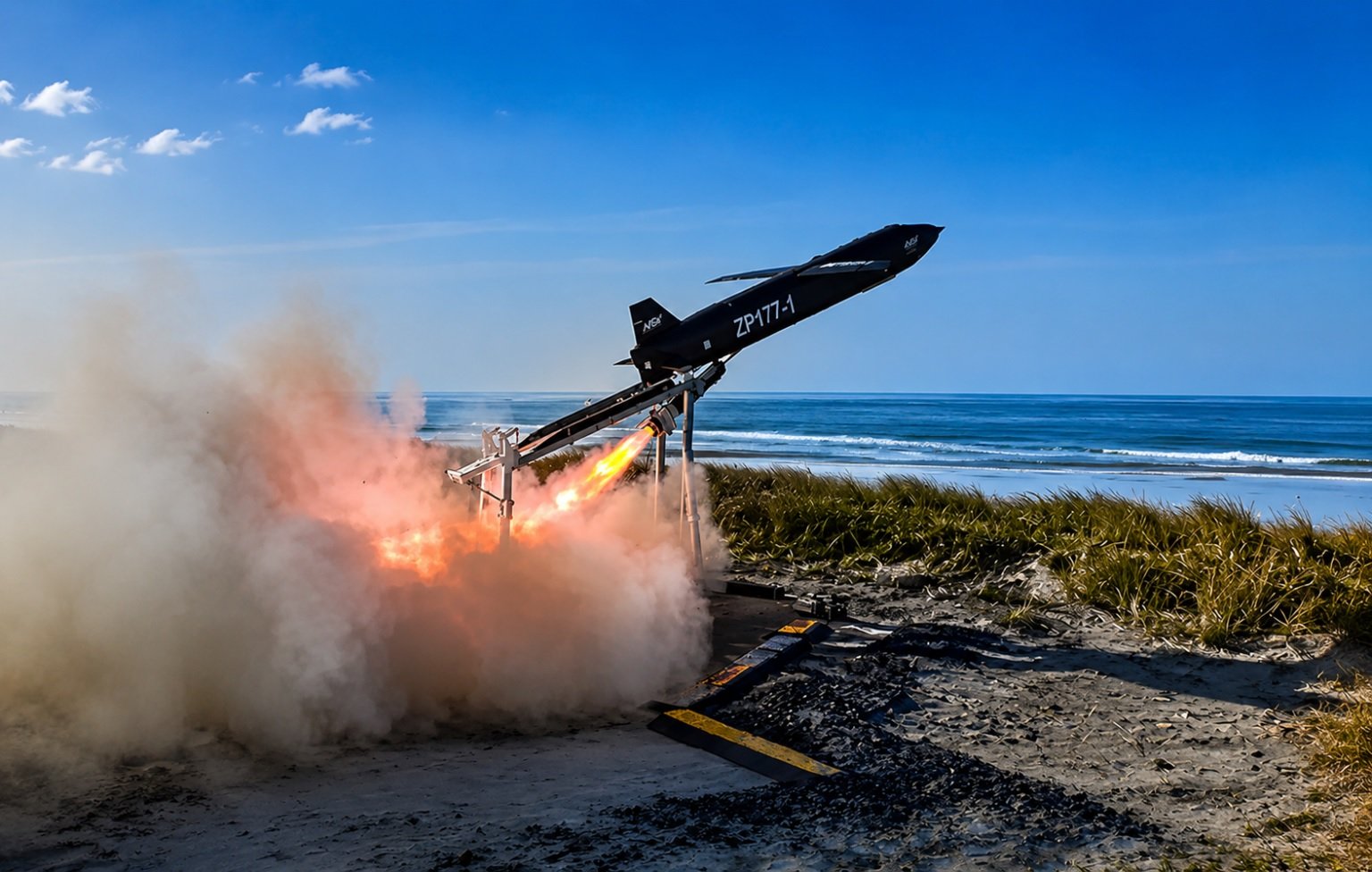
Europe
OXFORDSHIRE, UK — British engineering company MGI Engineering is preparing to make its TigerShark autonomous one-way strike system available from October 2026, following flight testing under the UK Ministry of Defence’s Project Brakestop. Based in Witney, Oxfordshire, MGI Engineering was founded by Mike Gascoyne, who has held senior technical positions with Formula 1 teams including McLaren, Renault and Toyota. The company developed TigerShark as a high-speed, long-range one-way effector for deep-strike missions. A one-way effector is designed to reach its target and deliver its payload without being recovered. MGI positions TigerShark as a lower-cost alternative to traditional long-range strike weapons, including systems such as Storm Shadow and Tomahawk. TigerShark specifications MGI states that TigerShark has a maximum speed of 750 km/h (466 mph) and a cruise speed of about 650 km/h. Its stated range is 900 km (559 miles) with a full payload, while the company has also reported flight testing at ranges exceeding 1,000 km under certain conditions. The system has a 300 kg modular payload bay, which can be configured for high-explosive or electronic-warfare payloads. Its empty mass is 170 kg, while its maximum take-off weight is 800 kg. TigerShark uses composite construction and includes a 3D-printed nose section containing the avionics bay. Propulsion is provided by two Argive A1100 turbojet engines. The system is launched from a land-based vehicle using rocket-assisted take-off, after which the turbojets provide sustained flight. The launcher is designed to support coordinated launches of multiple systems. MGI has stated a unit cost of approximately $549,000. Under Project Brakestop, the UK Ministry of Defence has set a target cost of around £400,000 excluding the warhead for systems developed under the programme. Autonomous operation in GPS-denied environments TigerShark is designed to operate without relying on GPS or GNSS signals. Its navigation system combines inertial navigation with GPS-free terrain mapping. The inertial navigation system tracks the aircraft's movement from a known starting point, while terrain mapping uses onboard sensor information and pre-loaded maps to help correct its position during flight. The autonomy system was developed with Auterion, which provides its open software-defined autonomy architecture, including the Skynode system. The open architecture is intended to allow third-party payloads, sensors and software upgrades to be integrated without requiring a complete redesign of the platform. Development and Project Brakestop MGI first publicly displayed TigerShark at the DSEI defence exhibition in London in September 2025. The system completed its first flight tests in April 2026. Auterion described the trials as the first successful European test of a system in this weight and range class in more than a decade. TigerShark is being developed under Project Brakestop, a UK Ministry of Defence programme focused on accelerating long-range autonomous strike systems. The programme requires participating systems to have a range of at least 500 km, a payload capacity of at least 225 kg, a speed above 600 km/h and production capacity of at least 20 units per month following an order. MGI received a development contract under the programme and displayed TigerShark at a Project Brakestop industry event in June 2026. The company is competing against MBDA UK's Crossbow and Rotron Aerospace's SkyLance. All three systems have completed flight trials at the UK's Hebrides Range. Production plans MGI plans to increase TigerShark production during the fourth quarter of 2026 and into 2027. The company says the system is manufactured entirely in the United Kingdom and is cleared for export licensing to allied nations. MGI is presenting TigerShark as a British-designed and manufactured option for long-range autonomous strike missions, with an emphasis on modularity, autonomous navigation and production at a lower unit cost than traditional cruise-missile programmes. The company has announced that TigerShark will become available from October 2026.
Read More → Posted on 2026-08-08 16:36:14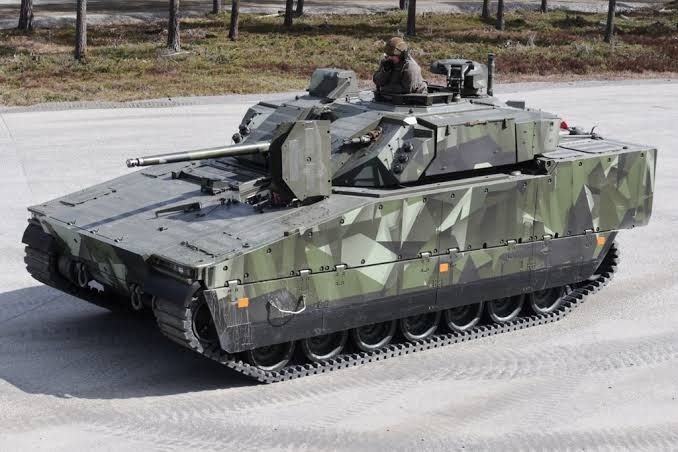
Europe
ÖRNSKÖLDSVIK, Sweden — BAE Systems is expanding production capacity at its Hägglunds facility in northern Sweden to meet rising European demand for its CV90 infantry fighting vehicles and BvS10 all-terrain vehicles. Tom Arseneault, President and CEO of BAE Systems Inc., outlined the production outlook during the company’s first-half 2026 earnings call. He said both vehicle programmes are contributing to the company’s growing order backlog in Sweden and its Platforms & Services business. “Our CV90 and BvS10 combat vehicles are in high demand across a number of European customers,” Arseneault said. Production capacity expanding Hägglunds expects to produce almost 300 combat vehicles in 2026 and more than 400 in 2027. The planned expansion represents an increase of about 400% in production capacity compared with previous levels. BAE Systems has invested more than $300 million at the Örnsköldsvik facility over several years, with additional investment planned. The expansion includes new assembly and welding lines, increased testing and verification capacity, a logistics centre, an integration and inspection facility, and additional office space. The workforce has also expanded significantly, from about 750–800 employees several years ago to approximately 2,600. Growing European orders The production increase is supported by orders from several European customers. Hägglunds is producing CV90 vehicles for countries including Sweden, Denmark, Slovakia and the Czech Republic, while BvS10 programmes involve Sweden, Germany and the United Kingdom. BAE Systems rolled out the first Slovak CV9035 MkIV at Hägglunds in February 2026. Slovakia has ordered 152 CV90 vehicles. The company is also working with European industrial partners on production and assembly activities for its vehicle programmes. Five-country CV90 programme The planned production figures for 2027 do not include a separate multinational CV90 procurement programme that remains under negotiation. The current initiative involves Sweden, Finland, Norway, Lithuania and the Netherlands. Estonia was previously part of the six-country technical agreement but withdrew from the planned new CV90 procurement in April 2026. The programme is based on the CV90 MkIV and could involve more than 400 additional vehicles. BAE Systems submitted its best and final offer in June 2026, with contract negotiations continuing and contract completion expected during 2026. Deliveries are planned to begin in 2028, subject to the procurement being finalised. BAE Systems Hägglunds has already carried out preparatory work to support production if the order is confirmed. Contribution to BAE Systems' European business Hägglunds and Bofors are also contributing to stronger results in BAE Systems’ Platforms & Services business. Chief Financial Officer Brad Greve said Platforms & Services sales increased 12% in the first half of 2026, while sales from Hägglunds and Bofors increased by nearly 30%, driven by European demand. BAE Systems Chief Executive Charles Woodburn has identified Hägglunds, Bofors, MBDA and Eurofighter among the businesses supporting the company’s growth in Europe. The combination of increased production, existing CV90 and BvS10 programmes and the potential five-country CV90 order gives Hägglunds further production opportunities. Arseneault described the Swedish business as having “some really good, strong growth potential” beyond its current performance.
Read More → Posted on 2026-08-08 15:50:14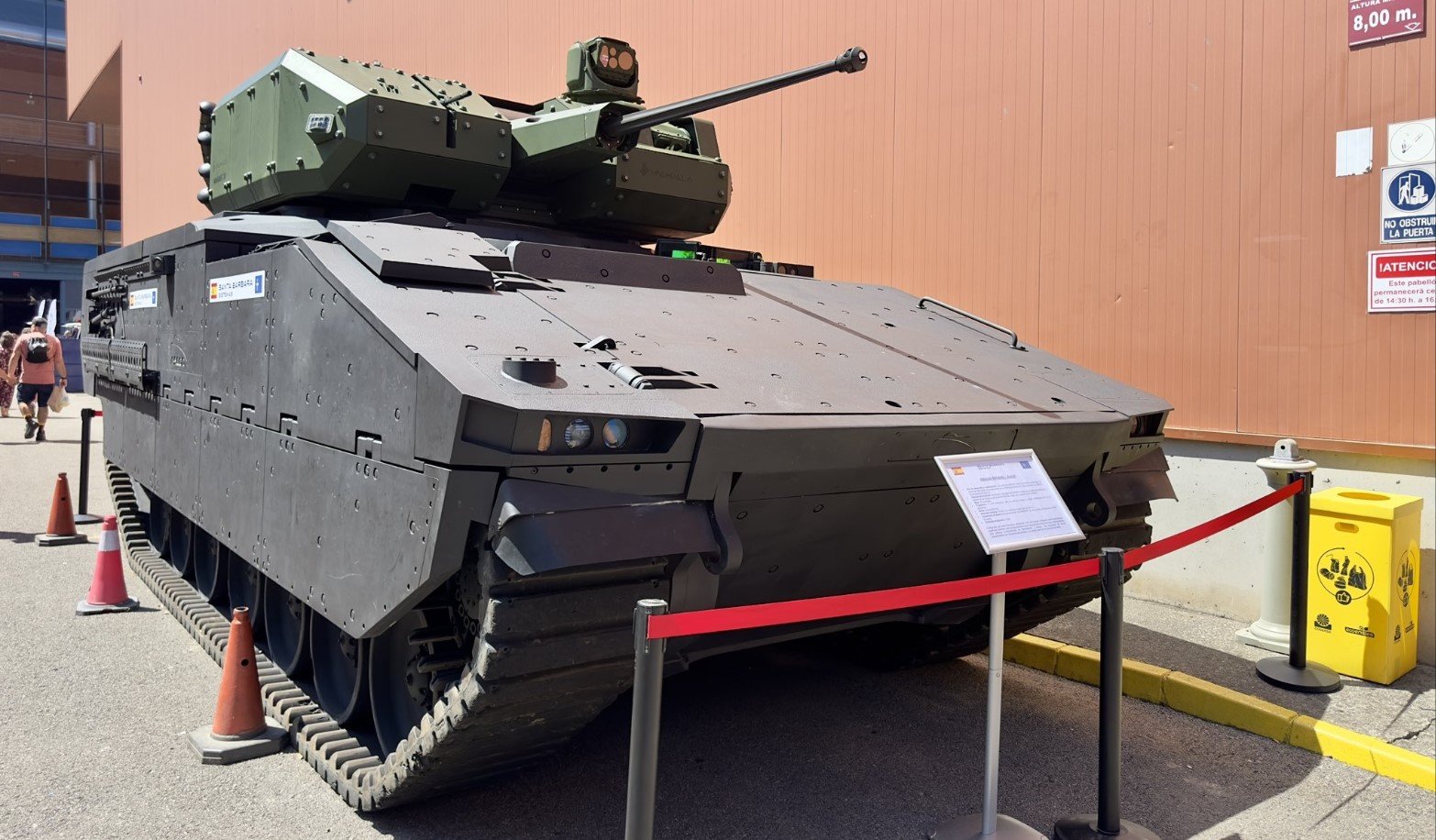
Europe
GIJÓN, Spain — General Dynamics European Land Systems (GDELS) and Santa Bárbara Sistemas have unveiled the ASCOD 42 demonstrator fitted with Valhalla Turrets’ MANGART 30 remote-controlled turret at the FIDMA 2026 international trade fair in Gijón, Spain. The vehicle was displayed in cooperation with the Asturias Military Museum. The configuration combines the tracked ASCOD infantry fighting vehicle platform with a 30 mm turret designed for multiple missions, including counter-unmanned aircraft system (C-UAS) operations. MANGART 30 turret The MANGART 30 is a remotely operated turret that allows the crew to control the weapon system from inside the protected hull. The turret is armed with a Northrop Grumman MK44S Bushmaster 30 mm automatic cannon capable of firing standard 30×173 mm ammunition and air-burst rounds. It also carries a coaxial FN MAG 7.62 mm machine gun. Valhalla Turrets has designed the system with an open architecture, allowing different sensors, effectors and mission equipment to be integrated according to operational requirements. The turret incorporates a computer-based fire-control system, automatic target tracking, day and thermal imaging sensors and a laser rangefinder. Its elevation range extends from -10 to +70 degrees, while the turret provides 360-degree traverse. The combination of automatic tracking, electro-optical sensors and air-burst ammunition gives the MANGART 30 capabilities relevant to engaging a range of ground and aerial targets, including unmanned aircraft. ASCOD 42 configuration The ASCOD 42 belongs to GDELS' ASCOD family of tracked armored vehicles. The platform has been supplied in different configurations to several armed forces. Spain operates the ASCOD-based Pizarro infantry fighting vehicle, while the United Kingdom uses a heavily modified ASCOD variant for its Ajax reconnaissance vehicle programme. The demonstrator displayed at FIDMA uses composite rubber tracks instead of conventional steel tracks. The lighter track solution is intended to reduce noise, vibration and wear on paved surfaces while maintaining traction for off-road operations. Safran PASEO Master sight The ASCOD 42 is also equipped with Safran's PASEO Master commander’s sight. The panoramic sight provides the commander with an independent observation capability and a 360-degree view around the vehicle. The PASEO family is used on armored vehicles for day-and-night observation and targeting. Safran has stated that more than 2,500 systems from the family have been sold worldwide. The independent commander’s sight allows the commander to search for and identify targets separately from the gunner's line of sight. Valhalla's counter-drone focus Valhalla Turrets, founded in 2019 and based in Komenda, Slovenia, develops remotely controlled weapon systems with a particular focus on air-defense and counter-drone applications. The company previously developed the MANGART 25, a smaller turret that combines a 25 mm automatic cannon with radar and electro-optical/infrared sensors. The MANGART 30 represents a larger turret configuration intended for integration on both wheeled and tracked armored vehicles. Valhalla has emphasized the importance of an open architecture for adapting the turret to changing battlefield requirements, including C-UAS missions. The company has also demonstrated the MANGART family on wheeled platforms. Earlier in 2026, the MANGART 25 was tested on a Pandur 6×6 vehicle during live-fire activities in Slovenia involving Valhalla, GDELS-Steyr and the Slovenian Armed Forces. Relevance to future vehicle requirements The ASCOD 42 demonstration brings together GDELS' tracked vehicle platform and a Slovenian-developed remote-controlled turret in a single configuration. It gives potential customers an option combining a tracked armored vehicle, a 30 mm automatic cannon, independent panoramic observation and capabilities aimed at modern aerial and ground threats. The display does not confirm a Slovenian procurement decision for the ASCOD 42. No official contract for such a purchase has been announced in the information provided. The presentation at FIDMA 2026 instead demonstrates the integration of the MANGART 30 with the ASCOD platform and highlights the companies' approach of combining modular vehicle and turret systems for changing battlefield requirements.
Read More → Posted on 2026-08-08 14:15:51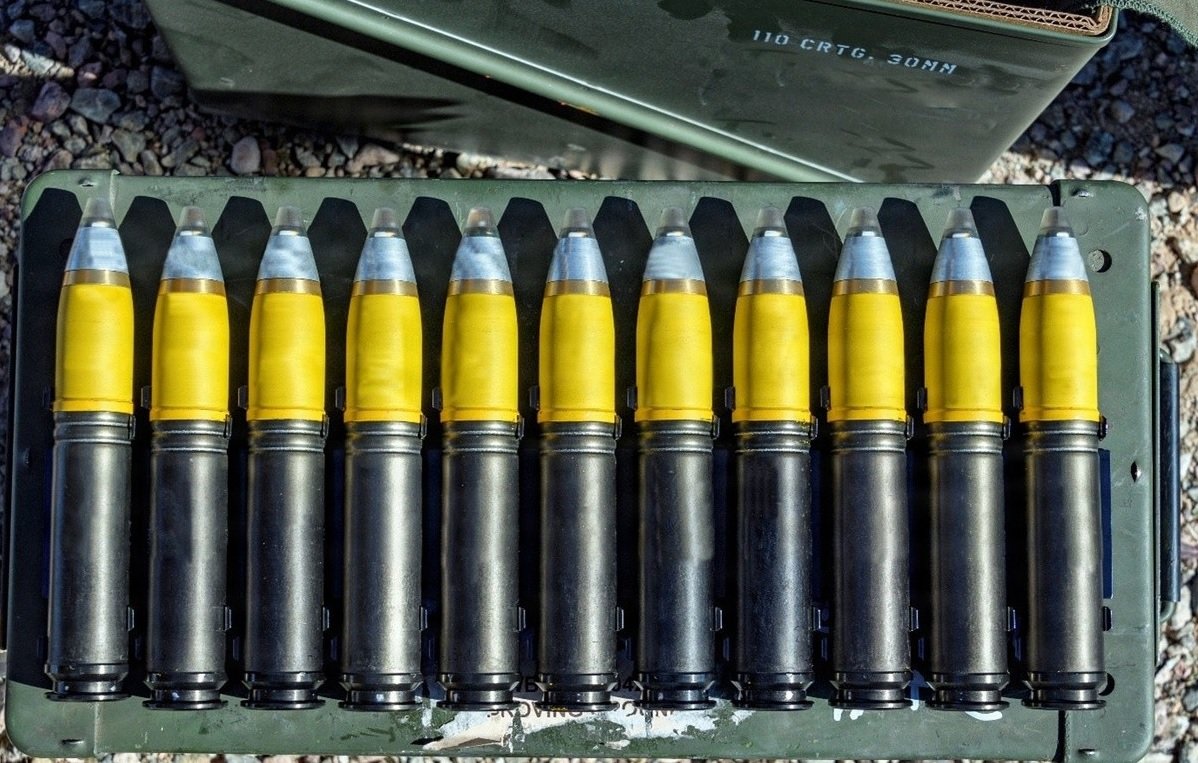
Europe
STOCKHOLM, — Sweden has signed a seven-year framework agreement with Nammo Sweden for the supply of programmable 30mm and 40mm airburst ammunition, marking another step in strengthening the country's short-range air defense and counter-unmanned aircraft system (counter-UAS) capabilities. Nammo has also received the first call-off order under the agreement, with production of the initial ammunition batch set to begin. The agreement covers Nammo's 30mm x 113 PABEX and 40mm L/70 PABEX programmable ammunition. PABEX (Programmable AirBurst EXplosive) is designed to detonate at a pre-programmed point during flight, allowing its fragments to be concentrated around airborne targets rather than requiring a direct impact. Designed for Air and Ground Threats According to Nammo, the programmable rounds are designed to engage unmanned aerial systems (UAS), incoming missiles, and helicopters. The ammunition also remains effective against conventional surface and ground targets, providing greater operational flexibility for the Swedish Armed Forces. Programmable airburst ammunition is particularly effective against small, fast-moving, or maneuvering aerial targets because it can be set to explode at a selected point near the target, increasing the likelihood of a successful engagement. Integration with Existing Swedish Defense Systems The new ammunition will primarily be integrated with two key Swedish air-defense systems: the Trackfire remote weapon station and the TRIDON Mk2 mobile air-defense system. The TRIDON Mk2 is a truck-mounted 40mm anti-aircraft gun system developed to provide highly mobile short-range air defense. The integration of programmable airburst ammunition is intended to improve its ability to counter evolving aerial threats. The agreement also benefits Sweden's existing fleet of CV90 infantry fighting vehicles. Since many CV90 vehicles are already equipped with 40mm Bofors guns, they are fully compatible with the 40mm L/70 PABEX ammunition. This provides the vehicles with an additional capability to engage aerial threats without requiring new platforms or extensive vehicle modifications. Supporting Sweden's Counter-Drone Efforts Nammo said the framework agreement supports Sweden's efforts to strengthen its national air defense and counter-UAS capabilities. The ammunition is designed to combine precision and flexibility against a broad range of threats while making use of existing gun systems already in service. The agreement also aligns with wider efforts by European armed forces to improve defenses against the growing use of unmanned systems on modern battlefields through upgrades to existing air-defense platforms. Nammo Highlights Long-Term Partnership Commenting on the agreement, Morten Brandtzæg, President and CEO of Nammo, said the contract represents an important milestone in the company's partnership with Sweden. "As a trusted partner to Sweden, this agreement marks an important step in further strengthening Swedish defense capabilities. By delivering cutting-edge ammunition solutions, we are helping our customers stay ahead of evolving threats and meet future operational challenges." Financial Details Not Disclosed Nammo stated that the seven-year framework agreement reinforces its position as a supplier of ammunition for modern air-defense operations. While the company confirmed receipt of the first call-off order, it did not disclose the value of the agreement or the quantity of ammunition included in the initial purchase. The agreement and the first production order were announced on Aug. 7, 2026, with no additional financial or procurement details released by Nammo or Swedish authorities.
Read More → Posted on 2026-08-07 11:42:33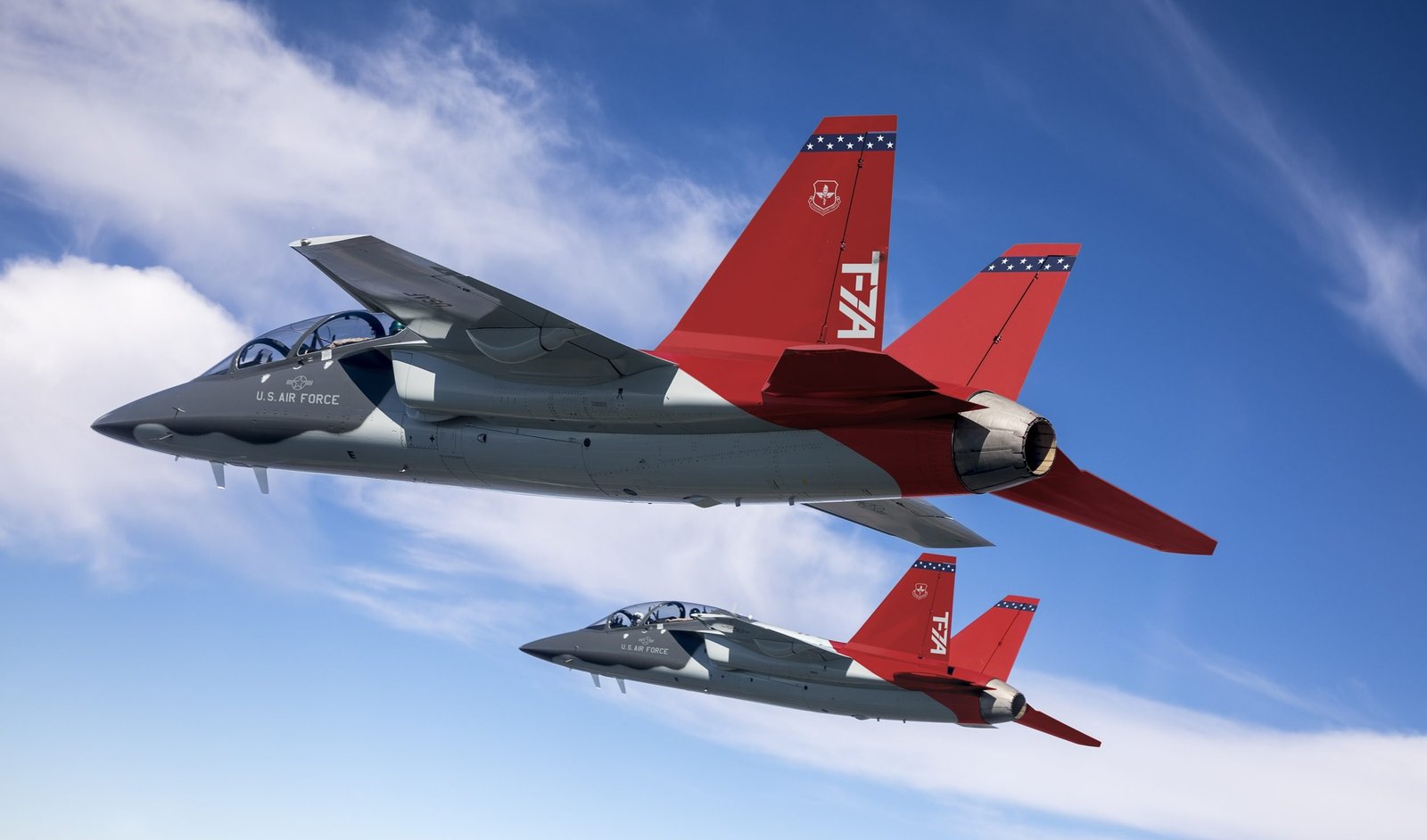
Europe
WEST LAFAYETTE, Ind. — The Boeing-Saab T-7A Red Hawk advanced jet trainer program has entered a new phase after the U.S. Air Force approved Milestone C on April 23, 2026, allowing the aircraft to move from development into low-rate initial production (LRIP). The decision, announced publicly in early May 2026, was followed by a $219 million contract awarded to Boeing for the first 14 production aircraft, together with associated support equipment, training systems, and spare parts. The approval marks a significant milestone for both the U.S. Air Force and Saab, which manufactures the T-7A's aft fuselage at its dedicated production facility in West Lafayette, Indiana. The T-7A Red Hawk is being developed jointly by Boeing and Saab to replace the U.S. Air Force's T-38 Talon advanced trainer, which has served for more than six decades. The aircraft is intended to prepare future pilots for operating modern combat aircraft, including the F-35 Lightning II, F-22 Raptor, F-15EX Eagle II, and B-21 Raider. Indiana Facility Expected to Increase Production Saab's West Lafayette facility was built specifically to support long-term production of the T-7A. The plant uses digital manufacturing methods developed jointly with Boeing and is now the exclusive production site for all T-7A aft fuselage sections after manufacturing was transferred from Sweden to the United States. The facility has operated below planned capacity in recent years because of delays in the T-7A program. As a result, Saab has experienced underutilization at the plant, affecting the financial performance of its Aeronautics business. During Saab's second-quarter 2026 earnings presentation, President and CEO Micael Johansson said the start of production contracts means manufacturing activity now needs to increase. He noted that Saab had already begun work on initial production batches under earlier contracts from Boeing but added that it will take several quarters and "a couple of years" before the Indiana operation reaches stronger financial performance. Johansson also said the T-7A program continues to have a negative impact on Saab's Aeronautics business while production volumes remain below efficient operating levels. Despite the gradual ramp-up, he described the Red Hawk as a long-term industrial program that is expected to become "an excellent franchise program over many years." Milestone C Clears the Way for Production In the U.S. Department of Defense acquisition process, Milestone C authorizes a program to move from engineering and manufacturing development into the production and deployment phase. For the T-7A, the approval allows the aircraft to enter low-rate initial production rather than full-rate manufacturing. The U.S. Air Force is using an incremental production strategy for the Red Hawk. Instead of approving large-scale production immediately, the service plans to review and approve each of the first three LRIP lots separately. This approach allows engineers to incorporate lessons learned from developmental testing before larger production quantities are authorized. The phased production strategy is intended to reduce technical and manufacturing risks while allowing aircraft deliveries to continue. Budget planning documents outline potential follow-on production lots, including 23 aircraft in fiscal year 2027 and 36 aircraft in fiscal year 2028, although each lot will require separate approval. Digital Design Supports Future Growth The T-7A Red Hawk is the first U.S. Air Force aircraft designed and developed using fully digital engineering methods. The aircraft features modern avionics, open-architecture systems, and embedded training capabilities intended to support future upgrades throughout its service life. The program of record includes 351 T-7A aircraft and 46 ground-based training simulators, with deliveries planned to five Air Education and Training Command bases over the coming decade. The aircraft is expected to become the U.S. Air Force's primary advanced trainer for pilots preparing to transition to current and future combat aircraft. Program Moving Toward Initial Operational Capability The T-7A program has experienced development challenges, including work related to the aircraft's ejection seat and flight-control software, resulting in schedule adjustments during testing. Boeing has continued development under the program's fixed-price contract. Five test-configured aircraft have already been delivered, with the first aircraft arriving at Joint Base San Antonio-Randolph in late 2025 for Air Education and Training Command activities. With Milestone C now complete, Boeing and Saab can gradually increase production in line with future U.S. Air Force contracts. Initial production aircraft will support instructor and maintainer training as the Air Force works toward achieving Initial Operational Capability (IOC) in 2027. For Saab, the approval also marks the beginning of a gradual increase in manufacturing activity at its Indiana facility. While company executives expect financial improvements to take time, they continue to view the West Lafayette operation as a long-term production center that will benefit as aircraft output expands and the T-7A program progresses.
Read More → Posted on 2026-08-05 15:24:40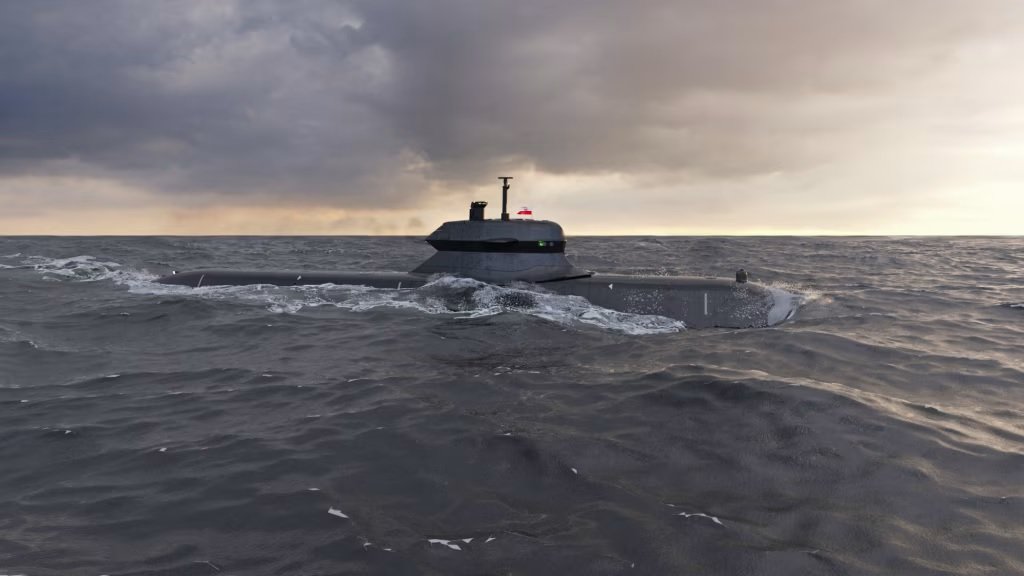
Europe
STOCKHOLM — Swedish defence company Saab is expanding its submarine production capacity as work on Sweden's A26 submarine program continues and a newly signed contract to build three A26-type submarines for Poland significantly increases demand across its naval business. The update was provided by Saab President and Chief Executive Officer Micael Johansson during the company's second-quarter 2026 earnings call. He said the combined Swedish and Polish submarine programs are strengthening industrial capacity, increasing underwater capabilities in the Baltic Sea, and creating greater production resilience through shipyard operations in both Sweden and Poland. Sweden's A26 Program Continues to Progress Johansson said Saab is making "really good progress" on Sweden's A26 submarine program, which remains the company's flagship conventional submarine project. The A26, officially designated as the Blekinge-class in Swedish Navy service, is currently under construction at Saab's Karlskrona shipyard. Sweden has ordered two submarines—HMS Blekinge and HMS Skåne—with deliveries expected in 2031 and 2033, respectively. While Johansson did not provide additional schedule details during the earnings call, he described the program's overall development as positive alongside Saab's expanding international submarine business. Poland's Order Marks a Major Export Success The biggest development during the quarter was Poland's decision to order three A26-type submarines under its Project Orka submarine modernization program. The contract, valued at approximately SEK 47 billion, includes the submarines, a weapons package, training, and long-term support. According to Saab, the first submarine is expected to be delivered in 2031, with the final delivery scheduled for 2038. Johansson described the agreement as one of the most significant contracts secured during the quarter and said it confirms Saab's position in the conventional submarine market. "They have now contracted us for three submarines that will be delivered in the next few years," Johansson said, adding that the order represents both an industrial achievement and a significant increase in underwater capability from a Baltic Sea security perspective. Saab Expands Shipyard Capacity To meet the production requirements of both the Swedish and Polish programs, Saab is increasing submarine manufacturing capacity at its Karlskrona shipyard. The company is also expanding operations at its Landskrona facility, where additional submarine construction and assembly activities will be carried out. "Now the contract on the submarines for Poland, in combination with the Swedish contract, of course, means that we are ramping up production capacity both in Karlskrona," Johansson said, adding that Saab is also expanding capability at its second shipyard in Landskrona. The expanded facilities are intended to support long-term production for both domestic and export submarine programs. Industrial Cooperation with Poland The Polish submarine program also includes extensive industrial cooperation between Saab and Polish industry. As part of the agreement, Saab will establish maintenance, repair and overhaul (MRO) capabilities in Poland while helping develop local shipyard capacity to support the submarines throughout their service life. Johansson said having shipyard capabilities on both sides of the Baltic Sea will improve industrial resilience and reduce dependence on a single production location. "It will also entail industrial collaboration with Poland," Johansson said. "We will have shipyard capabilities on both sides of the Baltic Sea, which makes lots of sense in terms of security and redundancy going forward." Contract Supports Production Expansion Saab said the investments required to expand production facilities are supported by the structure of the Polish contract. The agreement includes an advance payment and a payment schedule designed to help the company rapidly increase shipyard capacity. Saab did not disclose the value or percentage of the advance payment. "It's a good advance payment and a payment schedule that supports our quick ramp-up of shipyard capacity and all that," Johansson said. "We're not going to act like a bank related to that contract, that much I can say." Johansson also said the Polish submarine order was the main contributor to Saab's SEK 68.4 billion order intake during the second quarter, creating a record backlog for the company's naval business and providing long-term production visibility. Broader Swedish-Polish Cooperation Beyond the submarine contract, Sweden and Poland have agreed on additional naval cooperation. Under a separate bilateral agreement, Poland will operate the Swedish submarine HMS Södermanland as an interim capability until 2032. Training for Polish submarine crews is scheduled to begin in August 2026. Sweden will also support Poland's New Type Submarine program from around 2027 to 2038, including participation in testing and experimental activities involving Sweden's A26 submarines currently under construction. Saab has also committed to establishing long-term maintenance, repair and overhaul (MRO) capabilities in Poland in cooperation with local industry. A26 Designed for Baltic Sea Operations The A26 submarine has been designed for operations in the Baltic Sea, with a focus on quiet operation and the ability to remain difficult to detect during missions. The latest updates on the Swedish A26 program, the Polish submarine contract, production expansion, and industrial cooperation were presented during Saab's second-quarter 2026 results presentation and related official statements.
Read More → Posted on 2026-08-05 14:26:52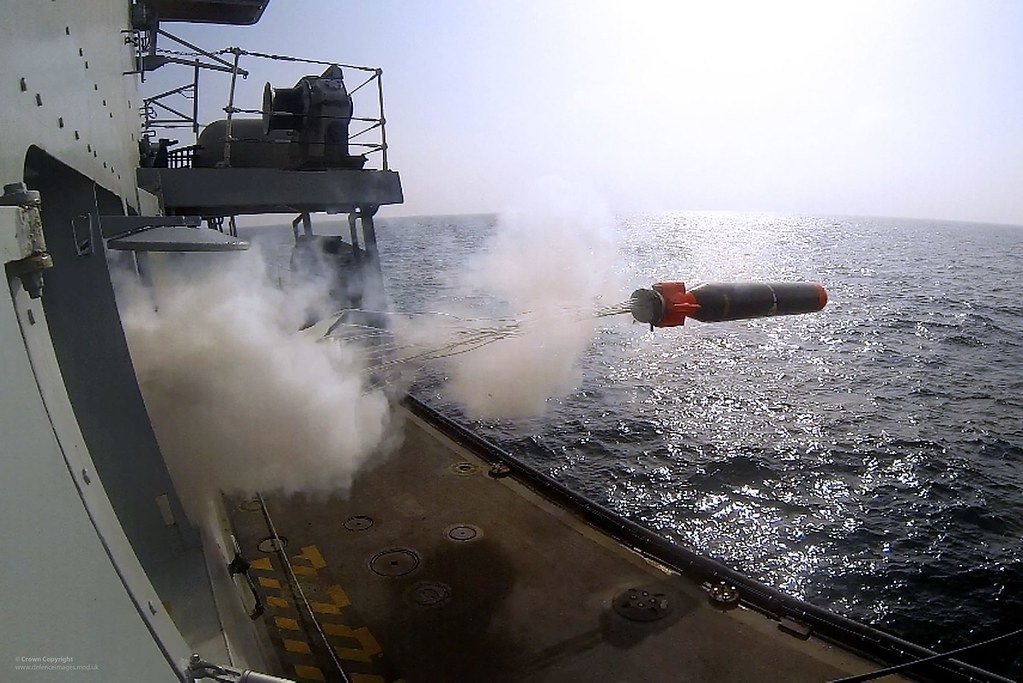
Europe
LONDON — The UK Ministry of Defence (MOD) has awarded BAE Systems a £135 million contract to maintain and repair the Royal Navy's torpedo inventory under the Torpedo Repair and Maintenance (TRAM) programme. The three-year agreement will run from July 2026 to June 2029, ensuring the continued availability of two of the Royal Navy's primary torpedo systems. The funding forms part of the UK government's £298 billion Defence Investment Plan, which outlines defence investment over the next four years. Contract Covers Spearfish and Sting Ray Torpedoes The TRAM contract includes maintenance and repair support for the Spearfish heavyweight torpedo and the Sting Ray lightweight torpedo, both of which are key elements of the Royal Navy's underwater warfare capability. The Spearfish heavyweight torpedo is carried by the Royal Navy's Astute-class attack submarines and Vanguard-class ballistic missile submarines. It serves as the fleet's primary heavyweight torpedo. The Sting Ray lightweight torpedo is designed for anti-submarine warfare and is deployed from submarines, surface warships and maritime patrol aircraft. It is currently used on Type 23 frigates, will also equip the future Type 26 frigates, and is launched from Merlin HM2 and Wildcat helicopters, as well as maritime patrol aircraft including the P-8A Poseidon. Sole-Source Award Based on Design Authority The Ministry of Defence awarded the contract to BAE Systems without a competitive tender. According to a contract award notice published in late July, the sole-source award was approved because BAE Systems is the original Design Authority for both the Spearfish and Sting Ray torpedoes. The MOD stated that no other supplier has the necessary expertise, technical knowledge and infrastructure to provide the required support without creating unacceptable risks to safety and system performance. Contract Supports More Than 300 UK Jobs The agreement will support approximately 315 jobs across the United Kingdom. This includes 150 highly skilled engineering and technician positions within BAE Systems, with around 100 jobs based in Portsmouth and 50 across Edinburgh, Chelmsford and sites near Glasgow. The contract will also sustain an additional 165 jobs throughout the company's UK supply chain. UK Minister for Defence Readiness and Industry Luke Pollard said the agreement supports both national security and the domestic defence industry. "This is defence spending doing exactly what it should – keeping our country safe while securing 315 skilled jobs and creating new opportunities across our country. We are proud to be backing British jobs, British skills and British industry." Officials Highlight Operational Importance Scott Jamieson, Managing Director of BAE Systems' Maritime and Land Defence Solutions, said the company has maintained high levels of torpedo availability for the UK Armed Forces since 2019. "Since 2019 we have delivered consistently high levels of torpedo availability for the UK Armed Forces, supporting both the successful entry into service of Spearfish and the ongoing operational readiness of Sting Ray. As a trusted partner to UK Defence, we are proud to underpin the nation's Continuous At Sea Deterrent and anti-submarine warfare capability through exceptional reliability, availability and performance." Rear Admiral Matt Stratton, Royal Navy Director of Naval Acquisition, said the extension ensures uninterrupted torpedo support for the fleet. "This contract extension ensures the Royal Navy retains a safe, reliable and continuous torpedo support capability. It is a critical enabler of our operational readiness and directly supports the UK's Continuous At Sea Deterrent." Richard Murray, Director Lethality and Protect at the National Armaments Director Group – Materiel, said the extension secures continued reliable support for the UK's torpedo capability and reflects close cooperation between the Royal Navy, the National Armaments Director Group and industry. Bridge to the WHITEHEAD2 Programme Defence officials described the TRAM agreement as a transitional contract that will bridge current torpedo maintenance operations to the long-term WHITEHEAD2 programme. Scheduled to begin in 2029, WHITEHEAD2 is intended to deliver a modernised and comprehensive torpedo support solution for the Royal Navy while ensuring long-term support for its underwater weapons capability. Part of Wider UK Naval Investment The torpedo maintenance agreement follows another major contract awarded to BAE Systems in late July. On 29–30 July 2026, the UK government awarded the company a £5.9 billion contract for the next phase of work on the Dreadnought-class nuclear-powered ballistic missile submarines. The Dreadnought class is being developed to replace the Royal Navy's Vanguard-class submarines in the early 2030s and will continue supporting the UK's Continuous At Sea Deterrent. Maintaining Fleet Readiness The new TRAM agreement will keep the Royal Navy's existing torpedo inventory maintained and serviceable through June 2029, ensuring continued support for submarine, surface fleet and maritime aviation operations while preparations continue for the transition to the WHITEHEAD2 programme.
Read More → Posted on 2026-08-04 16:14:17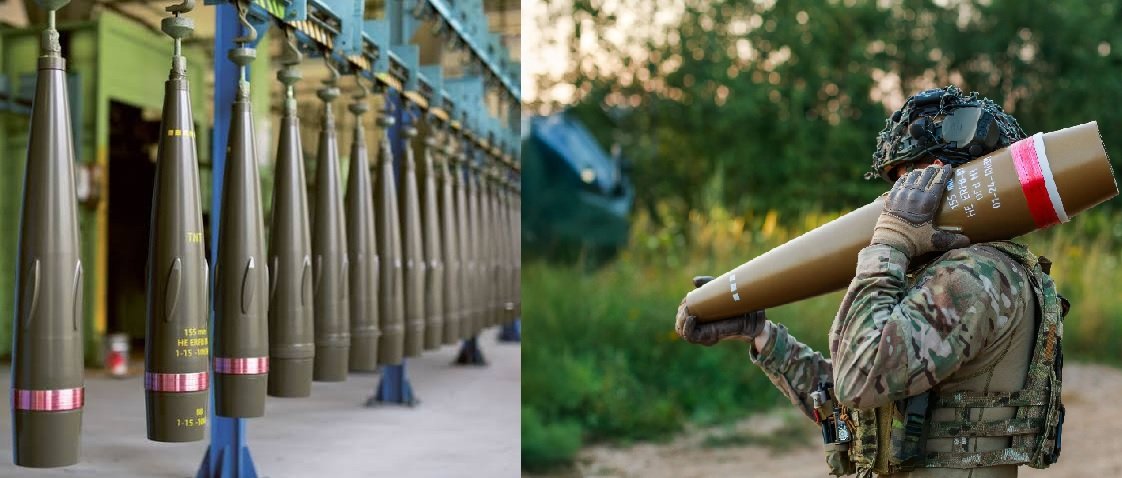
Europe
BAUTZEN, Germany — Czechoslovak Group (CSG) has acquired a 57-hectare industrial site in Gnaschwitz, Saxony, from chemical and explosives manufacturer MAXAM, marking another step in the company's strategy to strengthen Europe's defence supply chain and expand the production of critical energetic materials. The acquisition was completed through CSG Energetic Materials Germany GmbH, the group's German subsidiary. While the financial terms of the land purchase were not disclosed, CSG said it will invest more than €100 million during the first phase of development. The investment will establish production facilities for nitroglycerin and nitroglycerin-based products, which are key raw materials used in propellant charges for small-, medium-, and large-calibre ammunition. The site will also manufacture ammunition and ammunition components. According to the company, the project is expected to create up to 125 new jobs once the planned developments are fully operational. Second Strategic Production Site in Germany The Gnaschwitz facility becomes CSG's second production site in Germany, following its acquisition of the MSM Walsrode plant in Bomlitz, Lower Saxony. That transaction involved the purchase of a nitrocellulose production facility and industrial park from U.S.-based International Flavors & Fragrances (IFF). The agreement was signed in October 2024 and completed in May 2025. At the Walsrode facility, CSG has been expanding production of industrial nitrocellulose, another essential material used in propellants, explosives and artillery ammunition. In June 2025, the company also announced plans to establish its own military-grade nitrocellulose production capacity within two years. Nitrocellulose has both civilian and military applications and, together with nitroglycerin, forms a critical part of the manufacturing process for propellants and explosives used in large-calibre artillery ammunition. Building a Vertically Integrated Ammunition Supply Chain By bringing production of both nitrocellulose and nitroglycerin under its control, CSG is creating a vertically integrated production chain for large-calibre artillery ammunition. The company said this integrated manufacturing network will cover the complete production process, including energetic raw materials, explosives, propellant charges, shell bodies, and the final assembled ammunition. Nitroglycerin produced at the Gnaschwitz facility will supply both CSG's Medium & Large Calibre and Ammo+ divisions, as well as external customers. Site Offers Capacity for Future Expansion The Gnaschwitz industrial site has a history in energetic materials production dating back to 1874. CSG said the site's existing infrastructure provides significant room for future expansion, including the possible production of medium-calibre ammunition, 120 mm mortar ammunition, and tank ammunition. Even after the current investment phase is completed, the company said substantial capacity will remain available for further development. Expansion into the United States Alongside its investments in Europe, CSG is also expanding its manufacturing presence in the United States. The company plans to establish jet engine production for unmanned aerial systems (UAS) through Firecrest Aerospace, a joint venture created by CSG subsidiaries CSE USA and AviaNera Technologies, a Czech company specializing in compact, high-performance propulsion units for unmanned aviation. The U.S. project includes an initial investment of up to USD 15 million in Stevens Point, Wisconsin. Assembly operations are expected to begin in the coming months, with larger-scale production planned for 2027. Company Statement Commenting on the acquisition, Jan Marinov, CEO of CSG Defence Systems, said the Gnaschwitz investment strengthens the group's vertical integration while improving the security of supply for strategic energetic materials and supporting the resilience of the European defence industrial base. The combined investments in Germany and the United States reflect CSG's strategy to expand its manufacturing capabilities, strengthen production of critical energetic materials, and support ammunition manufacturing through an integrated industrial supply chain.
Read More → Posted on 2026-08-04 12:05:56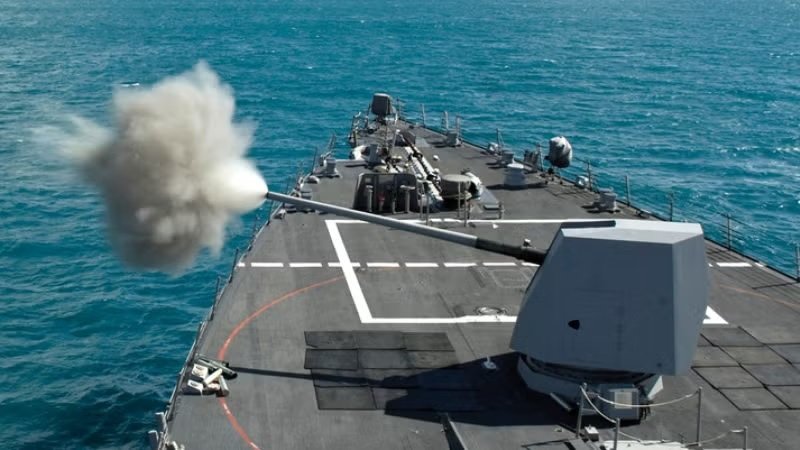
Europe
LONDON — Diehl Defence and BAE Systems have expanded their cooperation to develop joint maritime defence solutions for the German market and international armed forces, following the signing of a memorandum of understanding (MoU) covering technical integration across both companies' defence portfolios. The collaboration will primarily focus on integrating Diehl Defence's 127 mm (5-inch) ammunition family with BAE Systems' Mk 45 naval gun. The companies are giving particular attention to the Mk 45 Mod 4 variant, which is intended for both German and international customers. Under the cooperation, the Mk 45 naval gun will be combined with Diehl Defence's high-precision, long-range 127 mm ammunition. BAE Systems is one of the world's major suppliers of 127 mm naval gun systems and provides defence, aerospace and security technologies. The Mk 45 is a widely used 5-inch naval gun system operated by several navies. The Mk 45 Mod 4 version features a longer 62-calibre barrel and is designed to support extended-range capabilities. In addition to naval gun integration, the companies will expand their cooperation in guided missile systems. Diehl Defence and BAE Systems will examine the potential integration of the IRIS-T missile family with BAE Systems' launching systems as part of the technical work covered by the agreement. Dr. Harald Buschek, Chief Program Officer at Diehl Defence, said the partnership is intended to deliver tailored maritime defence solutions by combining the strengths of both companies. "By working together to explore these technical synergies, we can develop customized solutions for our customers' complex maritime defence requirements. By combining our systems with BAE Systems' platforms, we can enhance the effectiveness and operational capability of maritime defence systems." Jason Casciotti, Vice President of Weapons Systems at BAE Systems, said the cooperation reflects the company's commitment to supporting allied nations through long-term industrial partnerships. "Our collaboration with Diehl Defence builds on BAE Systems' commitment to meeting the needs of our allies through strong local strategic relationships. We are investing in more than just military equipment; we are investing in German defence and local economic growth. Advanced firepower will continue to play a critical role at sea and by combining our battle-tested capabilities, we are focused on delivering superior, integrated solutions that provide the best possible capabilities for the US and its allies." The cooperation brings together Diehl Defence's ammunition and missile technologies with BAE Systems' naval weapons portfolio. According to the companies, the next phase of the partnership will focus on advancing the technical work required for the proposed integrations. The announcement was published by Diehl Defence on August 3, 2026.
Read More → Posted on 2026-08-03 16:20:46
Europe
STOCKHOLM — Swedish defence company Saab plans to increase annual production of its GlobalEye airborne surveillance aircraft from about two aircraft per year to six by around 2030, following recent selections of the platform by NATO and Canada that have significantly expanded the programme's international order outlook. Saab President and Chief Executive Officer Micael Johansson announced the higher production target during the company's second-quarter 2026 earnings call. The new goal represents an increase from Saab's earlier plan to produce four GlobalEye aircraft annually. Johansson said the company is preparing additional manufacturing capacity to maintain delivery schedules as expected orders extend well into the next decade. “I would rather say that we go from two a year now and should aim for six a year in the 2030 timeframe,” Johansson said. He added that Saab prefers to build capacity for a higher production rate because output can be reduced later if demand is lower than expected. NATO and Canada Drive Growing Demand The planned production expansion is largely supported by recent international decisions to acquire the GlobalEye airborne early warning and surveillance system. Earlier in 2026, Canada selected GlobalEye as its preferred solution and is currently negotiating with Saab for the purchase of six aircraft. NATO has also selected GlobalEye to replace the alliance's ageing E-3A Airborne Warning and Control System (AWACS) fleet based at Geilenkirchen, Germany. The requirement covers up to 10 aircraft, which will operate as a shared NATO capability. According to Saab, the NATO programme is backed by 11 member countries: Belgium, Canada, Denmark, Germany, Latvia, Lithuania, Luxembourg, the Netherlands, Norway, Romania and Sweden. Formal negotiations with the NATO Support and Procurement Agency (NSPA) are currently under way. Johansson described the NATO selection as a major industrial milestone that demonstrates the strategic value of Sweden and Saab providing advanced airborne surveillance capabilities to the alliance. Additional Orders Strengthen Production Outlook Beyond the expected NATO and Canadian contracts, Saab said it continues to pursue several additional GlobalEye opportunities, although Johansson did not identify potential customers. In late July 2026, the company received an order worth SEK 10.1 billion (approximately $1 billion) for two GlobalEye aircraft from an undisclosed Middle Eastern customer, with deliveries scheduled for 2030. GlobalEye aircraft are already operational with the United Arab Emirates. France has also ordered two aircraft. Saab said maintaining an active production line enables the company to offer comparatively short delivery times, helping address airborne surveillance capability requirements among prospective customers. Saab Expanding Manufacturing Capacity To support the planned increase in production, Saab is expanding its facilities in Linköping, Sweden, where Bombardier Global 6500 business jets are converted into mission-configured GlobalEye aircraft. The company also plans to establish a production and support hub in Canada while evaluating an additional European site to support NATO and other regional customers. Johansson said the required infrastructure expansion will not involve exceptionally large investments, as part of the additional production capacity will be developed through industrial partnerships with customer nations. GlobalEye Programme Supports Saab's Business Growth GlobalEye remains a key programme within Saab's Surveillance business. The company reported strong second-quarter 2026 financial results, including order bookings of SEK 68.39 billion and organic sales growth of nearly 30%. Johansson also confirmed that profit margins on major platforms such as GlobalEye remain strong. GlobalEye Surveillance Capabilities GlobalEye is designed to monitor air, maritime and land activities simultaneously while serving as a networked command-and-surveillance platform. Its primary radar sensor has a detection range exceeding 650 kilometres, allowing the aircraft to operate at stand-off distances from hostile areas. The aircraft also carries passive sensors capable of detecting systems observing the platform. Information collected from multiple sensors is fused and processed using artificial intelligence to provide operators with a single operational picture. The data can then be shared in real time with combat aircraft, naval vessels, ground command centres and land forces to support operational decision-making. Johansson described GlobalEye as a networked command-and-surveillance node rather than a stand-alone intelligence platform. Saab Advances Unmanned Airborne Surveillance System Alongside the manned GlobalEye programme, Saab is continuing flight testing of an unmanned airborne early warning system developed with General Atomics. The sensor package, known as LoyalEye, is being integrated with the MQ-9B unmanned aircraft and is intended to complement, rather than replace, the GlobalEye platform by providing a lower-tier airborne surveillance capability. According to Johansson, the system has completed its first flight and is already being offered to prospective customers while flight testing continues. Saab said it is prepared to begin commercial discussions with interested buyers as development progresses.
Read More → Posted on 2026-08-03 13:01:01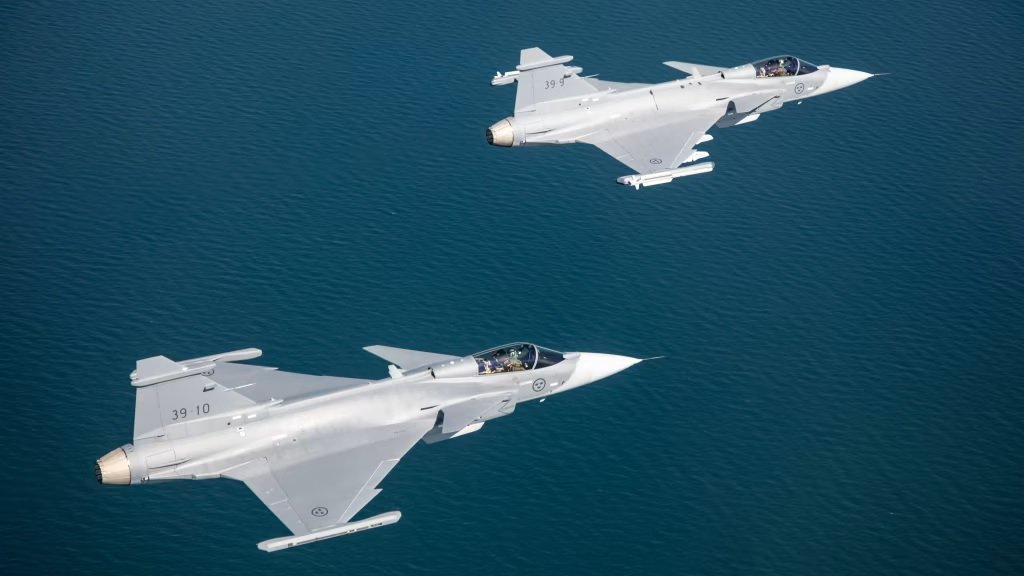
Europe
BRUSSELS — The European Commission has disbursed €3.47 billion to Ukraine under the defence window of the European Union's €90 billion Ukraine Support Loan, providing funding for Gripen fighter jets, missiles, air-defence systems and advanced drone technology. The payment, made on July 30, 2026, is intended to accelerate Ukraine's access to military equipment as the country continues its defence against Russia. According to the European Commission, the latest tranche includes funding under the first procurement schedule for drones and will also support the acquisition of long-range jet-powered drones, missiles, air-defence equipment and Gripen fighter jets. The Commission said additional financing for drones, ammunition, missiles and air-defence systems is expected to be approved and released in the coming weeks. European Commission President Ursula von der Leyen said the latest funding is aimed at strengthening Ukraine's air defence while expanding defence cooperation between Ukraine and European industry. "Today, we are investing an additional €3.47 billion to help protect Ukraine's skies. With this new disbursement under our €90 billion loan package, we are helping Ukraine defend its people. We are also bringing our defence industries closer together, combining Europe's industrial scale with Ukraine's unmatched innovation. This is our new Drone Deal taking shape." The European Commission said the funding supports both Ukraine's immediate defence requirements and deeper industrial cooperation between Ukraine and Europe through the emerging "Drone Deal," which combines European manufacturing capacity with Ukrainian defence innovation. Ukrainian Prime Minister Serhii Koretskyi confirmed the transfer and said the overall €90 billion Ukraine Support Loan is expected to cover around two-thirds of Ukraine's total financial needs during 2026 and 2027. Structure of the €90 Billion Ukraine Support Loan The European Union's Ukraine Support Loan is divided into two main components. €60 billion is allocated to strengthen Ukraine's defence capabilities and expand its domestic defence industrial capacity. €30 billion is designated for state budget support, helping Ukraine maintain essential public services and strengthen economic resilience. According to a Council decision adopted on April 23, 2026, up to €45 billion was made available to Ukraine for 2026. This includes €28.3 billion for defence industrial capacity and €16.7 billion for budget support. The budget support portion is divided equally between additional financing for the Ukraine Facility and a new Macro-Financial Assistance (MFA) operation, each capable of providing up to €8.35 billion. Latest in a Series of EU Payments The €3.47 billion transfer follows several recent EU disbursements to Ukraine. On June 25, the European Commission released €3.2 billion through its Macro-Financial Assistance programme to support Ukraine's state budget. This was followed by €3.9 billion under the defence window on June 30, and another €1.1 billion on July 15. With the latest payment, recent defence disbursements under the programme now total €8.47 billion. The European Union plans to provide €28.3 billion during 2026 to strengthen Ukraine's defence industrial capacity. The allocation is expected to be finalised by September, with additional payments scheduled to continue through the end of the year. Additional Financing Expected On July 30, the Council of the European Union also approved updates to the Ukraine Plan, a framework covering administrative and anti-corruption reforms linked to Ukraine's prospective European Union membership. The approval clears the way for an additional €8.3 billion in future financing. The European Commission said further funding for ammunition, drones, missiles and air-defence systems is expected to be approved in the coming weeks. According to the Commission, the European Union and its member states have provided more than €220 billion in overall support to Ukraine and Ukrainians since Russia launched its full-scale invasion. This figure includes €3.8 billion generated from proceeds linked to immobilised Russian assets. The Commission said the Ukraine Support Loan is financed through EU borrowing on the capital markets and backed by the EU budget. The loan is structured to be repaid from future Russian reparations to Ukraine. Funding is subject to conditions, including adherence to the rule of law and anti-corruption efforts. Defence products financed under the programme are expected, in principle, to be sourced from the European Union, the European Economic Area (EEA), EFTA countries and Ukraine, with limited exceptions for urgent operational requirements.
Read More → Posted on 2026-08-03 12:08:47Search
Top Trending in 24 Hours
-
 Unitree Unveils H2-X ‘Kung Fu Legend: Guardian’ Humanoid Robot for Security and Rescue
-
 US Firm Heaviside Unveils 2.3-Kg TYR Loitering Munition With 40-Km Range at AUSA 2026
-
 Ukraine Reveals Technical Details of Russia’s New Filin Cruise Missile
-
 Iran Showcases Upgraded Arash-3 Drone with 100 kg Warhead, AI Targeting and GPS-Independent Navigation
-
 U.S. Air Force Tests SpaceX Starfall Capsule for Rapid Global Military Cargo Delivery
-
 Exail Wins Major Contract to Equip Entire Fleet of Uncrewed Surface Vessels with Marins Inertial Navigation Systems
-
 General Dynamics Unveils PERCH 2.0 Drone System for Abrams Tanks and Stryker Vehicles
-
 Voyant Demonstrates Satellite-Free Navigation Technology for UK Ministry of Defence
Top Trending in 4 Days
-
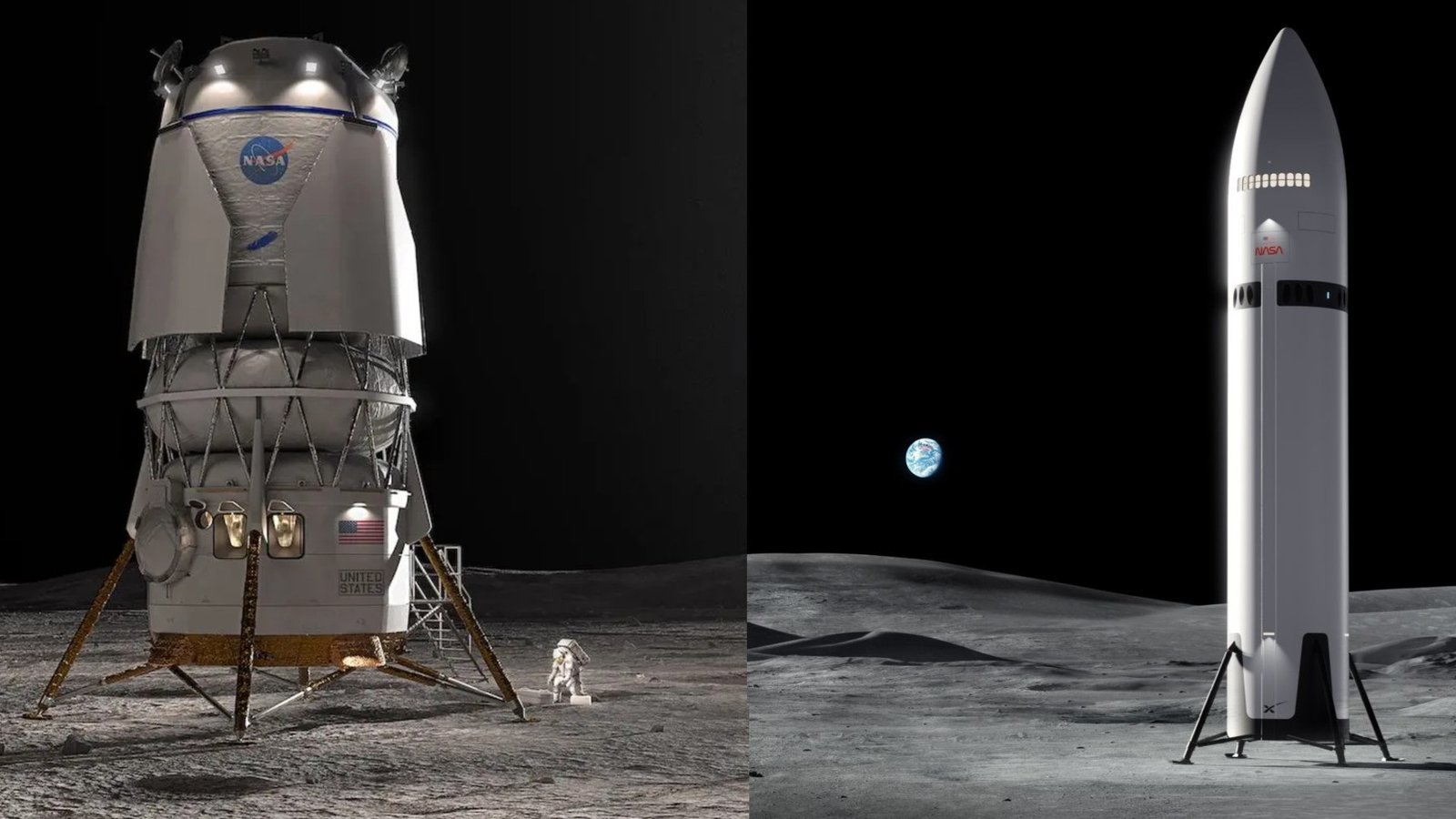 NASA Sets New Artemis Milestones as SpaceX and Blue Origin Target Moon Landings in 2027–2028
-
 US Weighs Strikes on Iran’s Kharg Island Oil Hub Ahead of Midterm Elections
-
 U.S. Air Force Awards HII Subsidiary Enlighten IT $332.8 Million Cyber Defense Contract
-
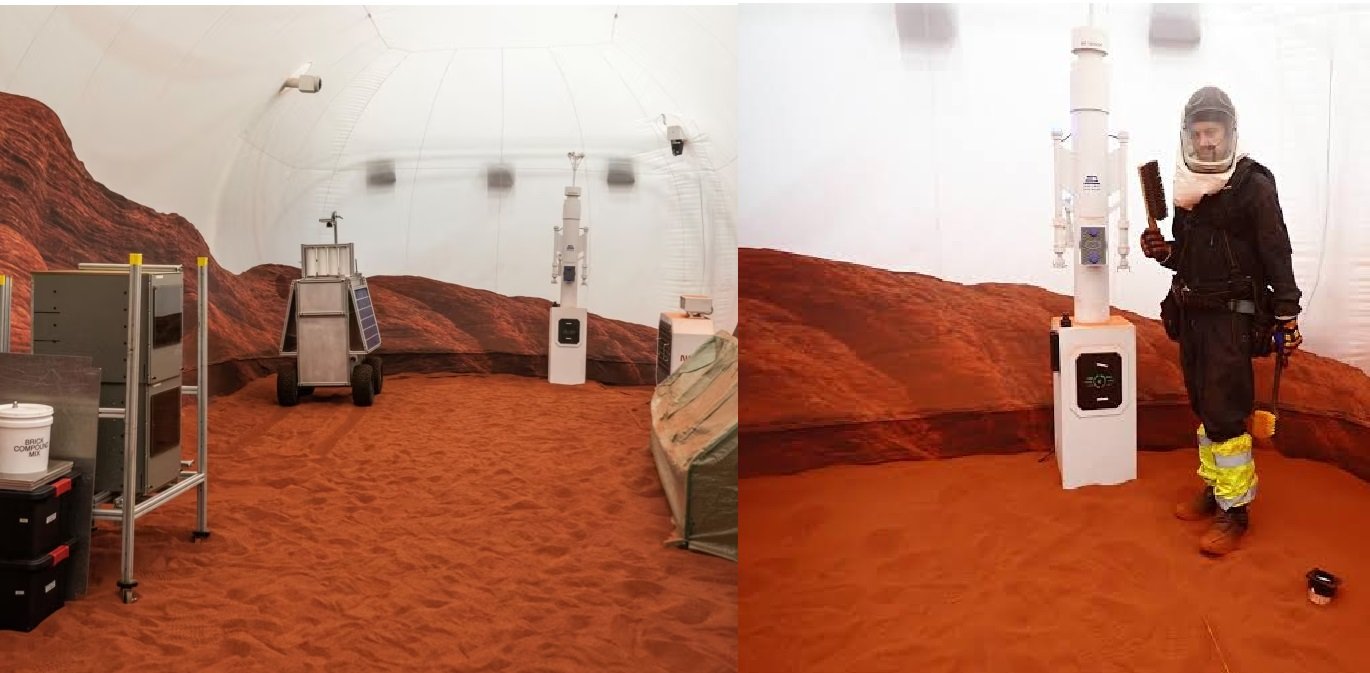 Four NASA Volunteers Mark One Year in Simulated Mars Habitat
-
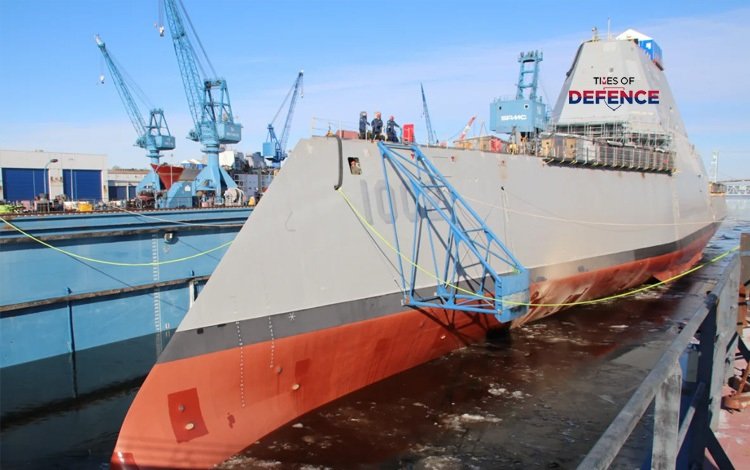 U.S. Navy Awards HII $99.1 Million Contract Modification for Zumwalt-class Destroyer USS Lyndon B. Johnson Sea Trials
-
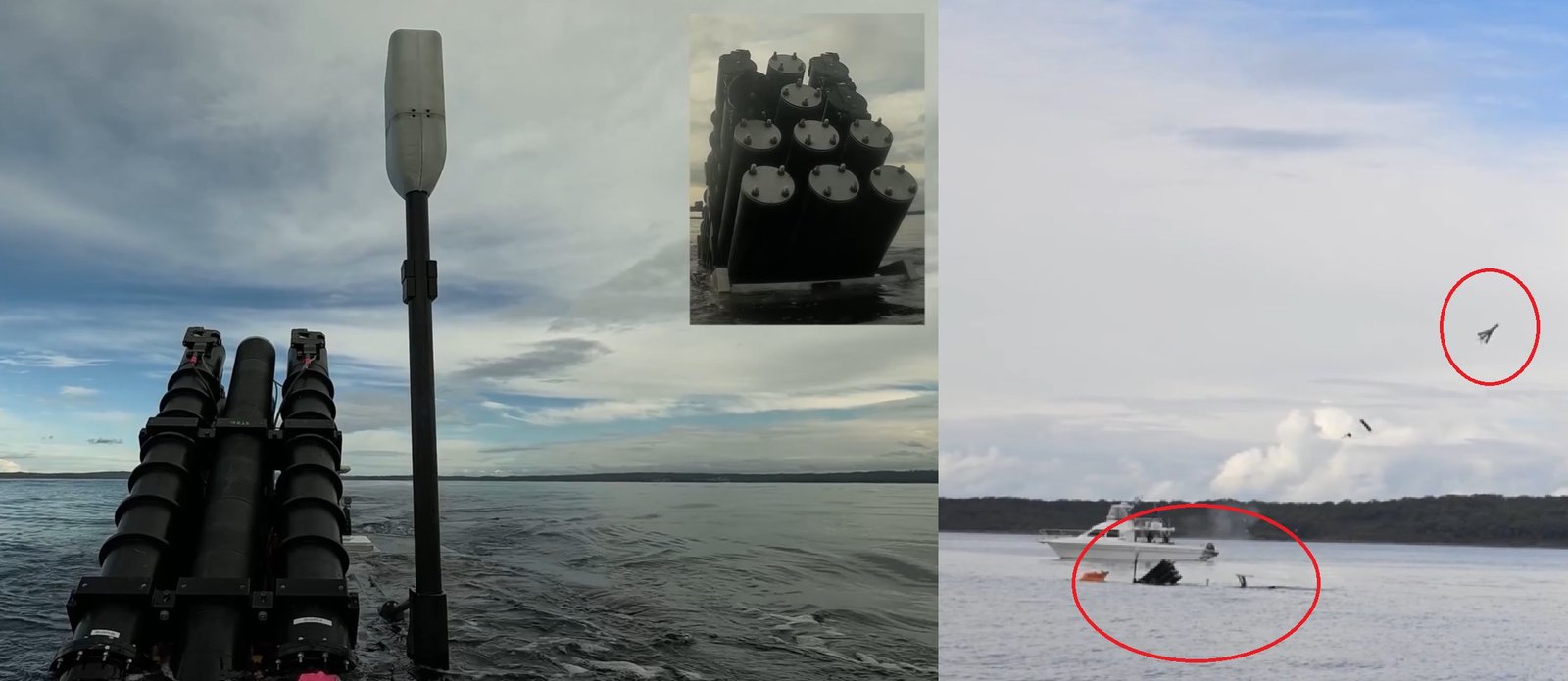 Australia Unveils Ghost Shark Autonomous Submarine’s Mine, Drone and Logistics Capabilities
-
 L3Harris Opens ‘Arsenal of Freedom’ Rocket Motor Plant in Arkansas to Double Production Capacity
-
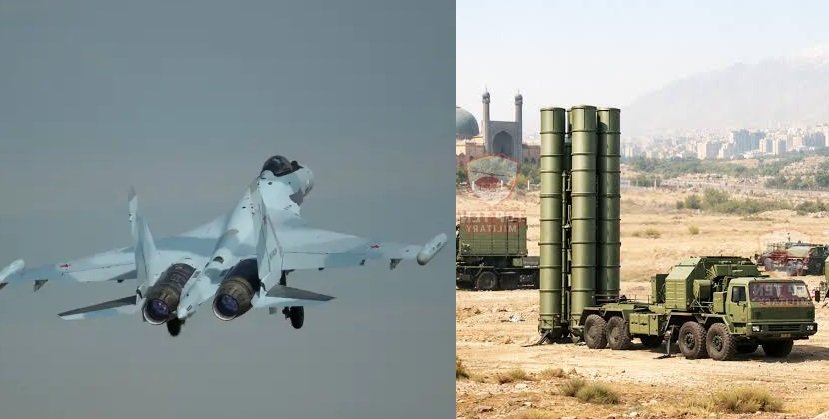 Russia Reportedly Offers Su-35 Fighters and S-400 Air Defence System to Protect Tehran