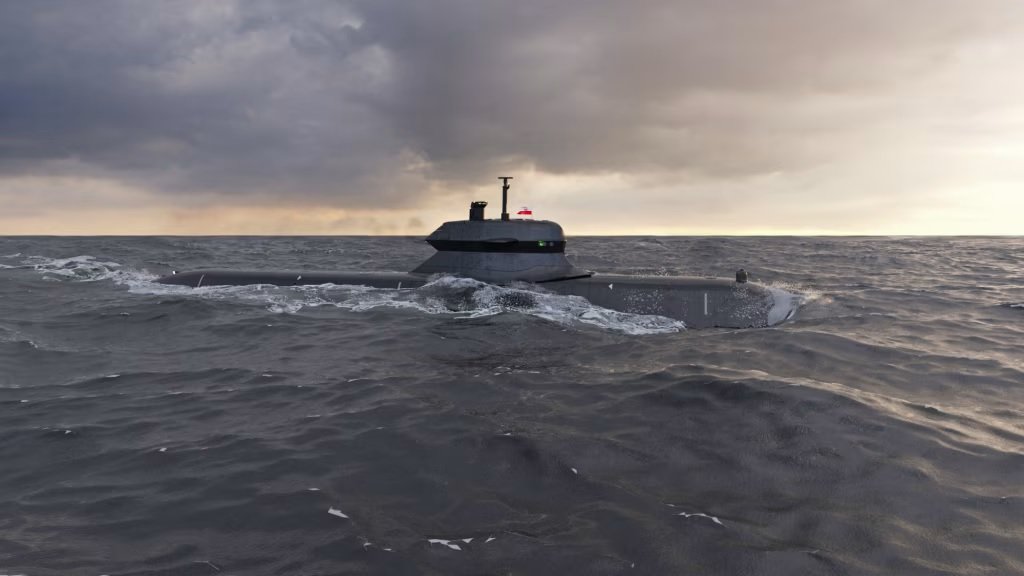
STOCKHOLM — Swedish defence company Saab is expanding its submarine production capacity as work on Sweden's A26 submarine program continues and a newly signed contract to build three A26-type submarines for Poland significantly increases demand across its naval business.
The update was provided by Saab President and Chief Executive Officer Micael Johansson during the company's second-quarter 2026 earnings call. He said the combined Swedish and Polish submarine programs are strengthening industrial capacity, increasing underwater capabilities in the Baltic Sea, and creating greater production resilience through shipyard operations in both Sweden and Poland.
Sweden's A26 Program Continues to Progress
Johansson said Saab is making "really good progress" on Sweden's A26 submarine program, which remains the company's flagship conventional submarine project.
The A26, officially designated as the Blekinge-class in Swedish Navy service, is currently under construction at Saab's Karlskrona shipyard. Sweden has ordered two submarines—HMS Blekinge and HMS Skåne—with deliveries expected in 2031 and 2033, respectively.
While Johansson did not provide additional schedule details during the earnings call, he described the program's overall development as positive alongside Saab's expanding international submarine business.
Poland's Order Marks a Major Export Success
The biggest development during the quarter was Poland's decision to order three A26-type submarines under its Project Orka submarine modernization program.
The contract, valued at approximately SEK 47 billion, includes the submarines, a weapons package, training, and long-term support. According to Saab, the first submarine is expected to be delivered in 2031, with the final delivery scheduled for 2038.
Johansson described the agreement as one of the most significant contracts secured during the quarter and said it confirms Saab's position in the conventional submarine market.
"They have now contracted us for three submarines that will be delivered in the next few years," Johansson said, adding that the order represents both an industrial achievement and a significant increase in underwater capability from a Baltic Sea security perspective.
Saab Expands Shipyard Capacity
To meet the production requirements of both the Swedish and Polish programs, Saab is increasing submarine manufacturing capacity at its Karlskrona shipyard.
The company is also expanding operations at its Landskrona facility, where additional submarine construction and assembly activities will be carried out.
"Now the contract on the submarines for Poland, in combination with the Swedish contract, of course, means that we are ramping up production capacity both in Karlskrona," Johansson said, adding that Saab is also expanding capability at its second shipyard in Landskrona.
The expanded facilities are intended to support long-term production for both domestic and export submarine programs.
Industrial Cooperation with Poland
The Polish submarine program also includes extensive industrial cooperation between Saab and Polish industry.
As part of the agreement, Saab will establish maintenance, repair and overhaul (MRO) capabilities in Poland while helping develop local shipyard capacity to support the submarines throughout their service life.
Johansson said having shipyard capabilities on both sides of the Baltic Sea will improve industrial resilience and reduce dependence on a single production location.
"It will also entail industrial collaboration with Poland," Johansson said. "We will have shipyard capabilities on both sides of the Baltic Sea, which makes lots of sense in terms of security and redundancy going forward."
Contract Supports Production Expansion
Saab said the investments required to expand production facilities are supported by the structure of the Polish contract.
The agreement includes an advance payment and a payment schedule designed to help the company rapidly increase shipyard capacity. Saab did not disclose the value or percentage of the advance payment.
"It's a good advance payment and a payment schedule that supports our quick ramp-up of shipyard capacity and all that," Johansson said. "We're not going to act like a bank related to that contract, that much I can say."
Johansson also said the Polish submarine order was the main contributor to Saab's SEK 68.4 billion order intake during the second quarter, creating a record backlog for the company's naval business and providing long-term production visibility.
Broader Swedish-Polish Cooperation
Beyond the submarine contract, Sweden and Poland have agreed on additional naval cooperation.
Under a separate bilateral agreement, Poland will operate the Swedish submarine HMS Södermanland as an interim capability until 2032. Training for Polish submarine crews is scheduled to begin in August 2026.
Sweden will also support Poland's New Type Submarine program from around 2027 to 2038, including participation in testing and experimental activities involving Sweden's A26 submarines currently under construction.
Saab has also committed to establishing long-term maintenance, repair and overhaul (MRO) capabilities in Poland in cooperation with local industry.
A26 Designed for Baltic Sea Operations
The A26 submarine has been designed for operations in the Baltic Sea, with a focus on quiet operation and the ability to remain difficult to detect during missions.
The latest updates on the Swedish A26 program, the Polish submarine contract, production expansion, and industrial cooperation were presented during Saab's second-quarter 2026 results presentation and related official statements.
——— End of Article ———