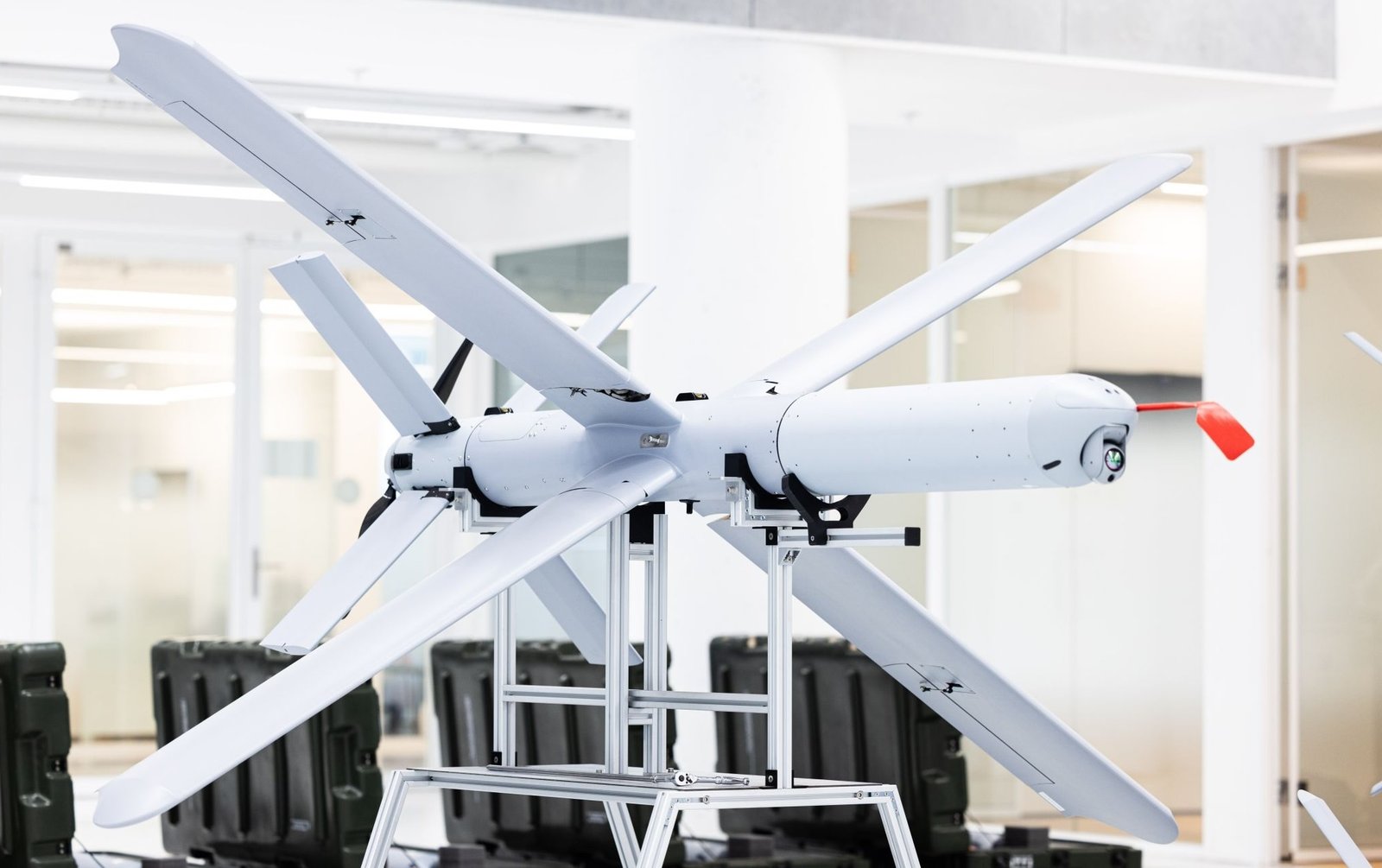
OXFORDSHIRE, UK — British engineering company MGI Engineering is preparing to make its TigerShark autonomous one-way strike system available from October 2026, following flight testing under the UK Ministry of Defence’s Project Brakestop.
Based in Witney, Oxfordshire, MGI Engineering was founded by Mike Gascoyne, who has held senior technical positions with Formula 1 teams including McLaren, Renault and Toyota. The company developed TigerShark as a high-speed, long-range one-way effector for deep-strike missions.
A one-way effector is designed to reach its target and deliver its payload without being recovered. MGI positions TigerShark as a lower-cost alternative to traditional long-range strike weapons, including systems such as Storm Shadow and Tomahawk.
TigerShark specifications
MGI states that TigerShark has a maximum speed of 750 km/h (466 mph) and a cruise speed of about 650 km/h. Its stated range is 900 km (559 miles) with a full payload, while the company has also reported flight testing at ranges exceeding 1,000 km under certain conditions.
The system has a 300 kg modular payload bay, which can be configured for high-explosive or electronic-warfare payloads. Its empty mass is 170 kg, while its maximum take-off weight is 800 kg.
TigerShark uses composite construction and includes a 3D-printed nose section containing the avionics bay. Propulsion is provided by two Argive A1100 turbojet engines.
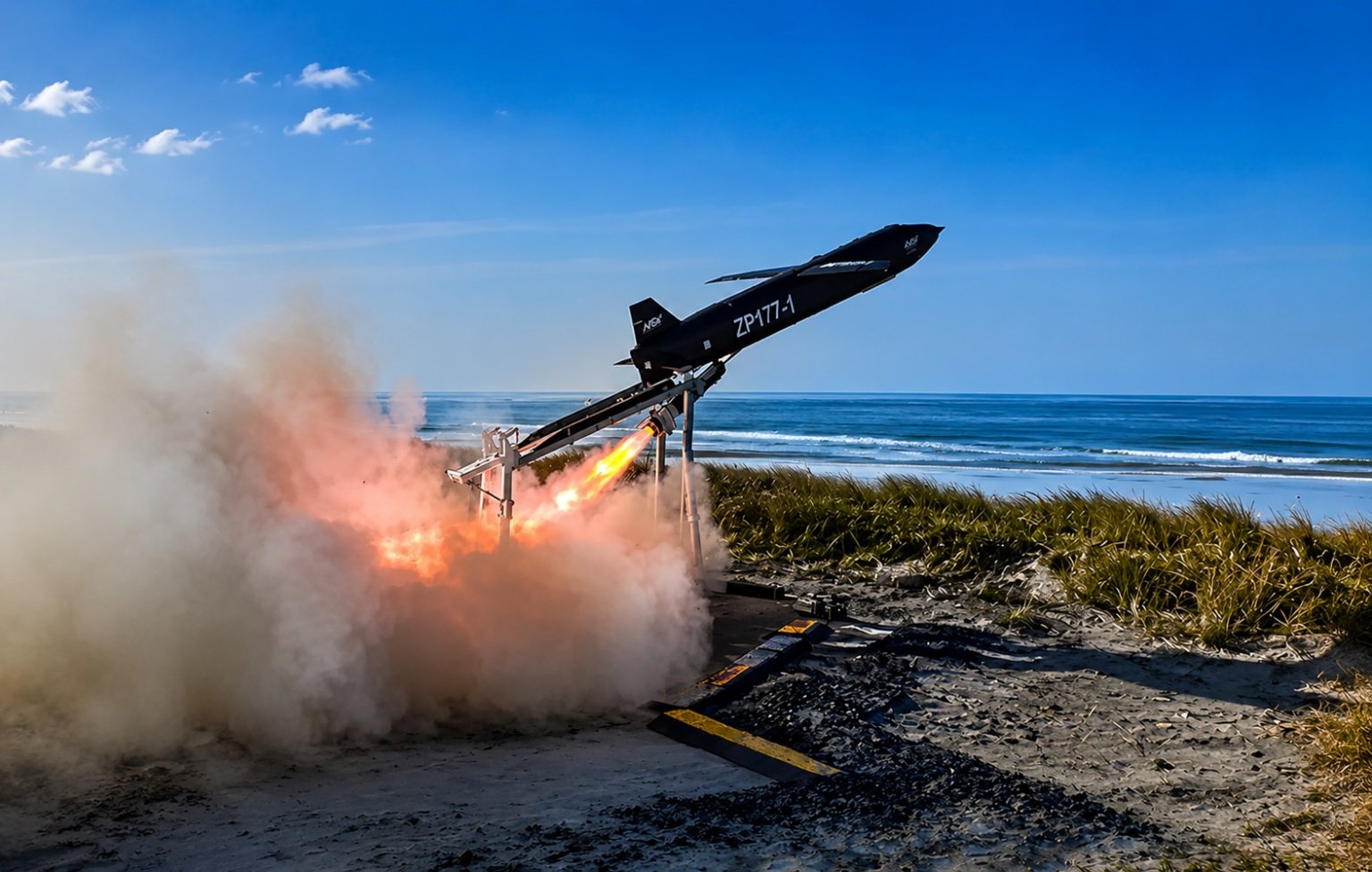
The system is launched from a land-based vehicle using rocket-assisted take-off, after which the turbojets provide sustained flight. The launcher is designed to support coordinated launches of multiple systems.
MGI has stated a unit cost of approximately $549,000. Under Project Brakestop, the UK Ministry of Defence has set a target cost of around £400,000 excluding the warhead for systems developed under the programme.
Autonomous operation in GPS-denied environments
TigerShark is designed to operate without relying on GPS or GNSS signals. Its navigation system combines inertial navigation with GPS-free terrain mapping.
The inertial navigation system tracks the aircraft's movement from a known starting point, while terrain mapping uses onboard sensor information and pre-loaded maps to help correct its position during flight.
The autonomy system was developed with Auterion, which provides its open software-defined autonomy architecture, including the Skynode system. The open architecture is intended to allow third-party payloads, sensors and software upgrades to be integrated without requiring a complete redesign of the platform.
Development and Project Brakestop
MGI first publicly displayed TigerShark at the DSEI defence exhibition in London in September 2025. The system completed its first flight tests in April 2026.
Auterion described the trials as the first successful European test of a system in this weight and range class in more than a decade.
TigerShark is being developed under Project Brakestop, a UK Ministry of Defence programme focused on accelerating long-range autonomous strike systems. The programme requires participating systems to have a range of at least 500 km, a payload capacity of at least 225 kg, a speed above 600 km/h and production capacity of at least 20 units per month following an order.
MGI received a development contract under the programme and displayed TigerShark at a Project Brakestop industry event in June 2026.
The company is competing against MBDA UK's Crossbow and Rotron Aerospace's SkyLance. All three systems have completed flight trials at the UK's Hebrides Range.
Production plans
MGI plans to increase TigerShark production during the fourth quarter of 2026 and into 2027. The company says the system is manufactured entirely in the United Kingdom and is cleared for export licensing to allied nations.
MGI is presenting TigerShark as a British-designed and manufactured option for long-range autonomous strike missions, with an emphasis on modularity, autonomous navigation and production at a lower unit cost than traditional cruise-missile programmes.
The company has announced that TigerShark will become available from October 2026.
——— End of Article ———