KYIV, — Ukraine’s Defence Intelligence Directorate (GUR) has released technical details of Russia’s new Filin (Owl) ground-launched cruise missile, which Russian forces reportedly began using against Ukraine in late summer 2026.
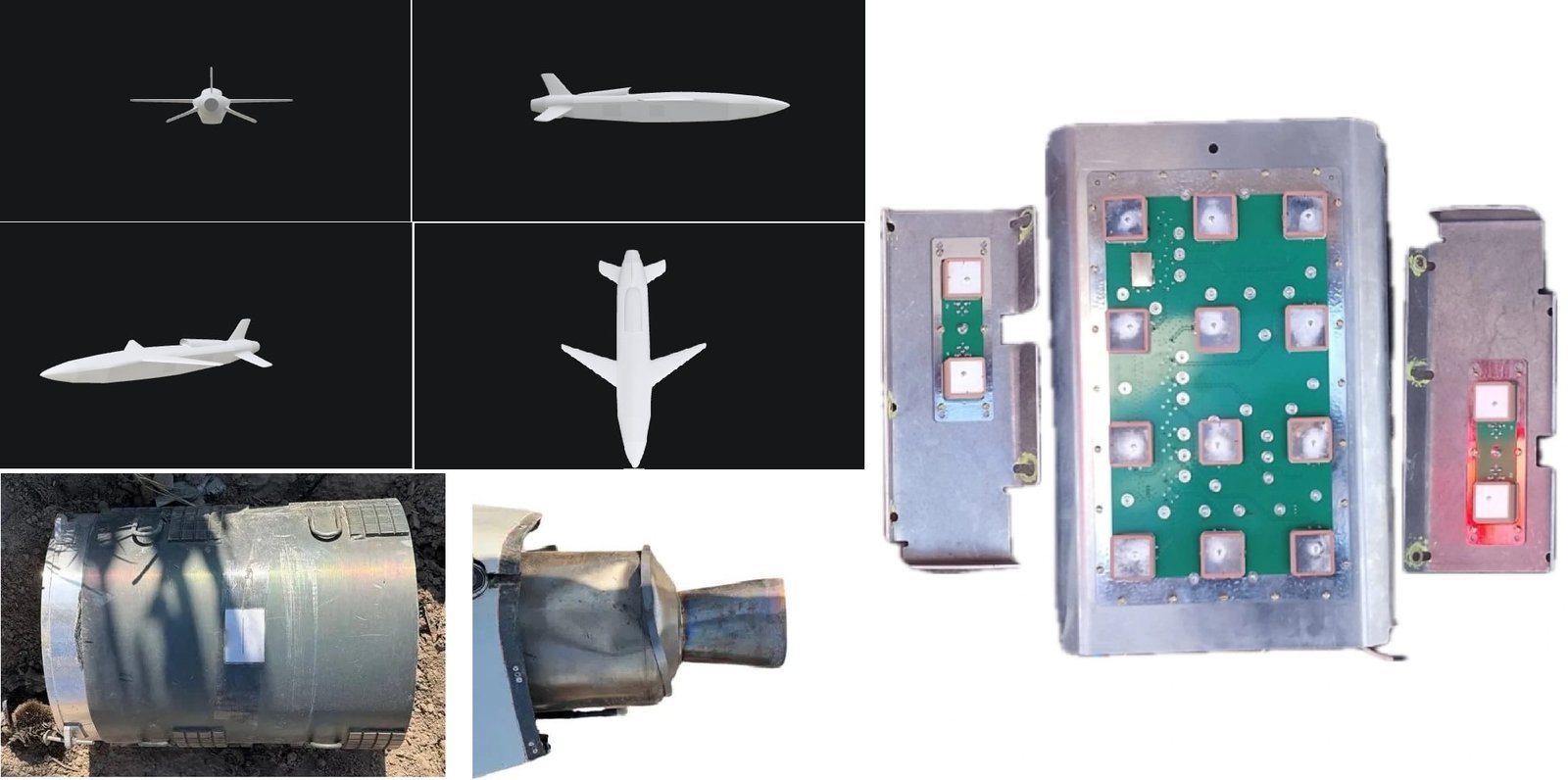
On October 22, GUR published an interactive 3D model, technical specifications, a list of components and an electronic parts database for the missile on its War&Sanctions portal. The information provides details about the weapon’s design, propulsion, navigation and use of foreign-made electronic components.
The Filin was developed by JSC NPO Molniya, part of Russia’s Tactical Missiles Corporation (KTRV). The company is distinct from the separate Russian drone manufacturer with a similar name.
Range, Speed and Warhead Options
According to the Ukrainian intelligence data, the Filin has a reported maximum range of 1,200 kilometres and a maximum speed of 800 km/h. Its reported range is also given as 600–1,200 kilometres.
The missile is launched from a ground-based platform using a solid-propellant booster before its turbojet engine takes over. It can fly at very low altitudes to reduce exposure to radar detection or climb to heights of up to 6,000 metres.
The weapon has a maximum takeoff weight of approximately 210 kilograms and can carry either a 50-kilogram or 100-kilogram warhead. Reported warhead options include high-explosive fragmentation, penetrating and thermobaric types.
Composite Construction and Manufacturing
The Filin measures 3.5 metres in length and has a 3-metre wingspan. Its elongated fuselage is made from composite materials, including carbon fibre and fibreglass.
Some structural components are manufactured using 3D-printing technology, which can simplify the production of selected parts. The design reflects Russia’s continued development of relatively inexpensive, jet-powered weapons for ground-launched strikes.
Engine, Navigation and Electronic Components
The missile is powered by the R500 turbojet engine, manufactured by Russia’s Reynolds LLC. The same engine type has also been identified in the Russian S-71K Kover and S-71M Monokhrom cruise missiles.
Its onboard electronic equipment is produced by PLAZ LLC, a company also involved in manufacturing Garpiya (Harpy) drones. Ukrainian intelligence has reported similarities in the layout and markings of Filin and Garpiya systems.
For navigation, the missile uses a Chinese-made inertial navigation system combined with a 16-channel Kometa (Comet) anti-jamming antenna system designed to help maintain navigation under electronic warfare interference.
Analysis of the examined electronics identified 35 US-made components and 22 Chinese-made components, according to GUR. The findings indicate that the missile incorporates foreign microelectronics alongside Russian-manufactured propulsion and other equipment.
Part of Russia’s Expanding Strike Arsenal
The Filin joins a growing group of relatively low-cost Russian ground-launched strike weapons, including the Banderol (Bandera), Dan-T, Dan-M and Geran-5, also referred to in some reporting as Gerbera-5.
The system combines composite construction, selected 3D-printed components and commercially sourced or foreign-made electronics. These features are consistent with Russia’s wider effort to expand its range of strike weapons.
The performance figures and component details cited in the report are based on information released by Ukrainian intelligence and, where indicated, Russian claims. The missile’s reported range and speed have not been independently verified in the released materials.
——— End of Article ———