
U.S
NORTHERN VIRGINIA, — Dutch radar manufacturer Robin Radar Systems has opened an expanded operations center in Northern Virginia as demand for its drone-detection technology grows in the United States. The facility, opened on August 26, will add 20 local jobs and support the company’s growing customer base across government, defense, law enforcement and critical infrastructure sectors. Robin Radar said U.S. sales of its IRIS drone-detection radars increased by 75% during the first half of 2026 compared with the same period last year. The company has also recorded 60% year-over-year global growth over the past three years. Robin Radar recently secured its largest U.S. agreement to date through a counter-UAS integrator. The deal provides radar systems for federal agencies as well as state, local, territorial and tribal authorities. More than 30 IRIS radars were also deployed across North America during the 2026 FIFA World Cup. Robin Radar said the deployment was one of its largest operational uses of IRIS and provided persistent 3D airspace awareness for U.S. government and local authorities around tournament venues. IRIS Radar IRIS is a compact X-band 3D radar designed to detect, track and classify drones. It weighs 64 pounds (29 kg), can be deployed in less than 15 minutes and provides 360-degree coverage. The system uses micro-Doppler classification and deep neural networks to distinguish drones from birds and other environmental clutter. It can detect hovering drones and track multiple targets simultaneously. Robin Radar said operational experience from recent conflicts, including the war in Ukraine, is influencing U.S. counter-UAS procurement, with customers placing greater emphasis on detection, tracking and classification in complex environments. The company selected Northern Virginia because of its established defense industry ecosystem and proximity to government customers. The new center builds on Robin Radar’s U.S. presence in Virginia and is intended to support customers from system evaluation and deployment through ongoing operations. The opening ceremony was attended by Birgitta Tazelaar, Ambassador of the Kingdom of the Netherlands to the United States, and industry representatives including Ben Wenger, Chief Revenue Officer of Dedrone by Axon. Tazelaar said the expansion represents an investment in the United States, Dutch technology and the transatlantic relationship. Robin Radar CEO Siete Hamminga said the company aims to become part of the U.S. security ecosystem by hiring locally, supporting American customers, working with U.S. businesses and building more capabilities in the country. Robin Radar Systems is headquartered in The Hague and develops radar technology for drone and bird detection. Its systems are used by NATO members, government agencies and critical infrastructure operators in multiple countries.
Read More → Posted on 2026-08-31 13:53:20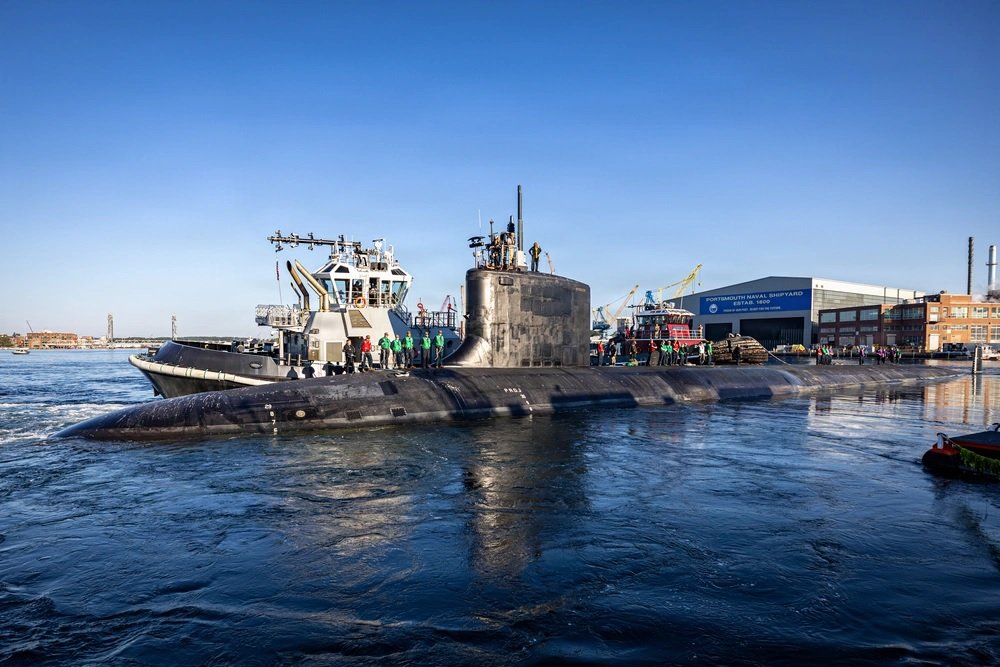
U.S
KITTERY, Maine — The U.S. Navy returned the Virginia-class attack submarine USS North Dakota (SSN 784) to the active fleet on August 29 after Portsmouth Naval Shipyard in Kittery, Maine, completed an Extended Drydocking Selected Restricted Availability. The Virginia-class attack submarine received major maintenance and modernization work and completed the project ahead of its rebaselined schedule. 40-Month Maintenance Period North Dakota arrived at Portsmouth Naval Shipyard on April 28, 2023, and entered Dry Dock No. 2 in September 2023. It undocked on February 26, 2026, before undergoing nearly six more months of pierside work, system integration, testing and certification. The submarine began sea trials on August 20, 2026, and arrived at Naval Submarine Base New London in Groton, Connecticut, on August 27. The availability formally ended on August 29, bringing the total maintenance period to about 40 months. The original plan called for about 33 months of work valued at approximately $347 million. First Block III Availability The project was Portsmouth Naval Shipyard’s first Chief of Naval Operations availability for a Block III Virginia-class submarine. Shipyard workers and North Dakota’s crew worked together to integrate new maritime technologies and complete several technical modifications on a Block III submarine for the first time. The work included structural inspections, repairs, replacement of key mechanical and electrical systems, and upgrades involving the submarine’s bow-array technologies. The Navy said the submarine progressed through its testing program, including its final phase, at a historically rapid pace. The experience gained from the project is expected to help guide future maintenance work on other Block III Virginia-class submarines. Block III Design USS North Dakota is the 11th Virginia-class attack submarine and the first of eight Block III boats. The submarine is 114.8 meters long, nuclear-powered and based at Naval Submarine Base New London. The Block III configuration introduced a redesigned bow with a Large Aperture Bow (LAB) sonar array and two large-diameter Virginia Payload Tubes. These replaced the 12 individual vertical launch tubes used on earlier Virginia-class submarines. Navy and Shipyard Statements “Executing this complex work package on our first Block III submarine was a demanding task, but this team met every challenge head-on with tenacity and selflessness,” said Capt. Jesse Nice, shipyard commander. He said the team’s work created a foundation for future Virginia-class maintenance projects. Capt. Mike Poplawski, commodore of Submarine Squadron TWO, said the technological capabilities integrated during the availability provide an immediate operational benefit and strengthen the readiness and resilience of the submarine force. Andrew Stark, North Dakota’s project superintendent, credited the submarine’s crew and Portsmouth’s civilian workforce for their coordination throughout the project. He said the team executed the “fastest, most aggressive end game in recent history” on a major availability at Portsmouth Naval Shipyard. USS North Dakota General Dynamics Electric Boat built North Dakota in Groton, Connecticut. Its contract was awarded on August 14, 2003. The keel was laid on May 11, 2012, the submarine was launched on September 15, 2013, christened on November 2, 2013, and commissioned on October 25, 2014. The submarine supports missions including anti-submarine warfare, intelligence gathering and special operations support. With North Dakota back in the fleet, Portsmouth Naval Shipyard has completed its first major maintenance project involving the Block III Virginia-class configuration. The experience is expected to support future modernization and maintenance work on other submarines in the block.
Read More → Posted on 2026-08-31 11:41:00
U.S
WASHINGTON, — Senior U.S. military leaders have warned Defense Secretary Pete Hegseth that continuing large-scale operations against Iran is putting increasing pressure on U.S. military resources and could weaken America’s ability to respond to potential threats in Europe, the Indo-Pacific and the homeland. The concerns were detailed in the Aug. 14 Secretary of Defense Orders Book (SDOB), a classified document covering the worldwide availability of U.S. warships, aircraft, personnel and weapons. People familiar with the assessment spoke to The Washington Post on condition of anonymity because the document is classified. Commanders Object to Extensions The commanders of U.S. European Command, U.S. Pacific Command and U.S. Southern Command, along with the Navy’s top admiral, formally recorded a “non-concur” with orders extending forces for the Iran campaign. The designation means they disagreed with the extensions but would still carry out the orders. Army and Air Force leaders concurred with the extensions but warned Hegseth that continuing them carries significant strategic risk. The campaign, which began in late February and has continued for about six months, has required large numbers of ships, aircraft, personnel, air-defense systems and other weapons in the Middle East. More than 50,000 U.S. troops remain on alert in the region. The Aug. 14 orders keep some forces there through September and others into 2027. Military leaders described the situation as “too much for too long”, citing the lack of a clear end date and the continued transfer of resources from other commands. Navy Under Pressure Chief of Naval Operations Adm. Daryl Caudle told Hegseth that the Navy cannot sustain its current level of support indefinitely. Only about one-quarter of the Navy’s destroyers are currently ready to deploy, according to the assessment. The Navy has provided dozens of vessels for the campaign, initially for strikes and defense against Iranian counterattacks and later to support a blockade of Iranian ports aimed at pressuring Tehran to reopen the Strait of Hormuz. Some ship and crew deployments have been extended by months. The assessment warns that continued operations could affect ship maintenance and reduce fleet availability for other conflicts. Adm. Samuel Paparo, commander of U.S. Pacific Command, also opposed the continued requirement to provide a carrier strike group and destroyers to the Middle East. The only U.S. aircraft carrier normally based in the Pacific was sent to the region to relieve another carrier that had been deployed for more than 300 days. Other Forces and Weapons Affected European Command and Southern Command warned that moving ships and surveillance aircraft to Central Command has reduced their ability to conduct training and meet other missions, including homeland-defense responsibilities. The 82nd Airborne Division, which sent about 2,000 soldiers to the region in March, is ordered to remain at least through September, with some officials expecting another extension. Patriot air-defense units are also expected to remain longer, while many Air Force units involved in the operation are scheduled to stay into 2027. The campaign has also drawn on U.S. stocks of Patriot and THAAD interceptors and Tomahawk missiles. Previous reporting cited losses of about 25 percent of the Reaper drone fleet, as well as damage to U.S. bases in the region. The Trump administration has disputed descriptions of U.S. munitions shortages as inaccurate. Pentagon Response Pentagon spokesman Sean Parnell said decisions on the scope and duration of U.S. force commitments are based on the current threat assessment, presidential strategic priorities and advice from the chairman of the Joint Chiefs of Staff and combatant commanders. The Pentagon does not discuss internal operational processes, including specific concurrences, non-concurrences or risk assessments made during force-allocation decisions. A spokesman for Joint Chiefs Chairman Gen. Dan Caine referred questions to Hegseth’s office. President Donald Trump has continued pressing Iran to reopen the Strait of Hormuz and accept U.S. terms for ending the conflict while keeping military options available. The commanders’ assessment highlights the strain created by maintaining the current level of U.S. military operations without a clear end date.
Read More → Posted on 2026-08-30 15:28:53
U.S
SAN DIEGO, California — Voltaic Marine has completed live trials integrating its AEU39 uncrewed surface vessel (USV) with Moog Space and Defense’s Reconfigurable Integrated-weapons Platform (RIwP) remote weapon turret during the U.S. Navy’s Coastal Trident Demo. The demonstration marked the first maritime use of the RIwP and included its detection and tracking functions aboard the autonomous vessel. RIwP Integration During the trials, the RIwP drew power directly from the AEU39’s 300 kWh battery bank while the vessel held position on the water. The system used standard interfaces and an 800-volt-to-12-volt conversion system. The turret was installed in the AEU39’s forward payload bay beneath a hinged armored hatch. The hatch opens upward when the weapon system is needed and closes flush with the hull when it is not in use. The RIwP is a configurable, platform-agnostic remote weapon station already fielded on other platforms. The maritime configuration retains commonality with the standard RIwP while weighing roughly one-third as much. It can accommodate a 30 mm cannon and multiple missile effectors, as well as different weapons and sensors. It also has increased onboard ammunition capacity for extended engagement duration. AEU39 Payload and Propulsion The AEU39 has an open payload architecture with two modular bays and a combined payload capacity of 4,000 pounds (1,814 kg). The forward bay supports modular turret systems. A separate enclosed midship bay is designed to launch and recover uncrewed aircraft from a stabilized deck and provides additional modular payload options. The vessel uses electric-hybrid propulsion with integrated solar panels. Voltaic Marine says the system provides low acoustic and thermal signatures and allows the vessel to remain on station without the noise and heat associated with conventional propulsion. The company says the battery and solar-electric system can keep a fielded weapon system “on watch for weeks at a time.” Autonomy and Logistics The AEU39 is designed to operate with different autonomy and command-and-control systems through open data and communications standards. It supports waypoint transit, area patrol, loitering and repositioning commands. The vessel can be transported on a standard road trailer, launched from a basic boat ramp, shipped inside a 45-foot high-cube container, and carried aboard C-17 and C-130 transport aircraft. Industry Statements Richard Phamdo, CEO of Voltaic Marine, said the AEU39 was built around modular payload bays and abundant electric power, while RIwP provides multiple defeat options from a single reconfigurable mount. Jason Weiss, Moog Land and Sea Business Unit General Manager, said the collaboration brings RIwP’s capabilities from land-based applications into the maritime domain. The companies have not disclosed the specific trial date or location, customer or program involved, whether live munitions were used, or detailed performance results from the demonstration.
Read More → Posted on 2026-08-30 12:15:10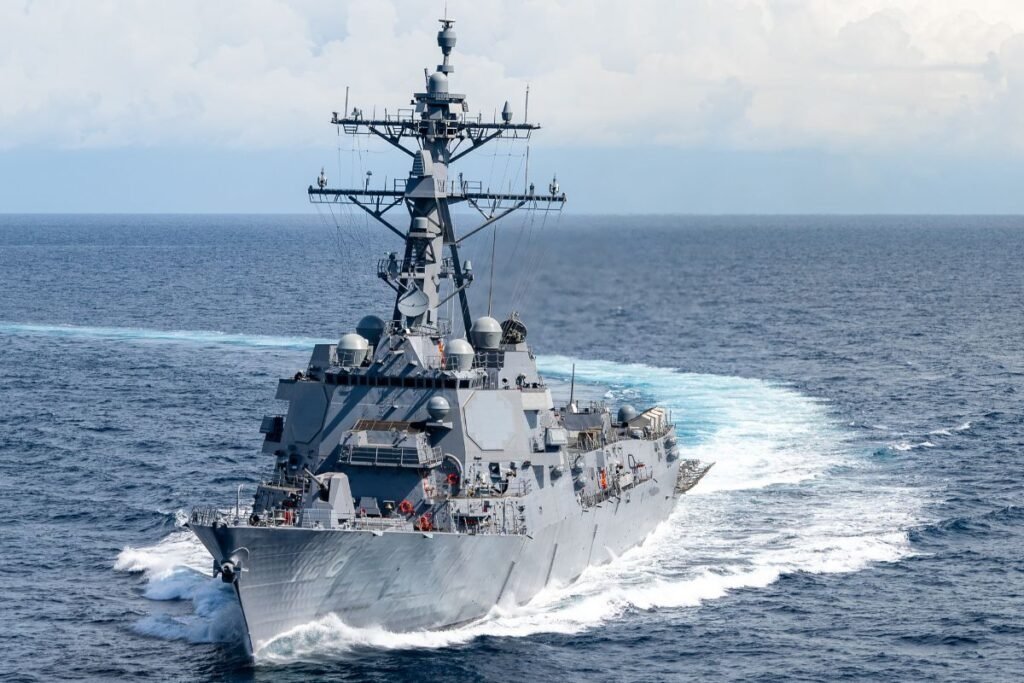
U.S
WASHINGTON, — The U.S. Navy says a single Flight III Arleigh Burke-class destroyer can perform air and ballistic missile defense missions that previously required two Flight IIA destroyers. Two Flight III ships have been delivered, while another 23 are under contract or under construction at Huntington Ingalls Industries’ Ingalls Shipbuilding and General Dynamics Bath Iron Works. The Navy considers Flight III a new type-model warship rather than a minor upgrade. The variant is designed to protect carrier strike groups and operate in more contested environments. SPY-6 Radar and Aegis Baseline 10 The main upgrade is the AN/SPY-6(V)1 Air and Missile Defense Radar, integrated with the Aegis Baseline 10 combat system. The Navy says the combination can detect, track and engage more complex threats at greater distances and in less time than older destroyers. Aegis Baseline 10 processes the larger amount of data produced by SPY-6 and allows Flight III ships to conduct air defense and ballistic missile defense simultaneously without losing performance. The SPY-6 uses gallium-nitride technology and modular assemblies, providing greater sensitivity and longer detection ranges than the earlier SPY-1 radar. It is designed to help track smaller, faster and more complex threats. Major Power and Cooling Changes The larger radar required major changes to the ship’s electrical and cooling systems. Flight III uses a 4,160-volt electrical grid, compared with 450 volts on Flight IIA ships. The increased capacity also supports future systems such as directed-energy weapons. The ships have upgraded air-conditioning systems, a larger chilled-water supply and updated gas-turbine generators producing 4 megawatts each. A modified steel hull supports the additional equipment. These changes increase displacement to more than 9,500 tons, compared with about 9,300 tons for a Flight IIA destroyer. The ships retain the standard Arleigh Burke-class armament, including 96 vertical-launch cells. USS Jack H. Lucas Leads the Class USS Jack H. Lucas (DDG 125), commissioned in October 2023, is the lead Flight III ship and currently the only one in operational service. It is completing initial operational test and evaluation before taking the air and missile defense commander role for a carrier strike group. The destroyer participated in Pacific Dragon 2026, a U.S. 3rd Fleet-led missile-defense exercise around Hawaii involving the Missile Defense Agency and allied forces. Testing will continue during a busy underway schedule for the next 13 months. Capt. Rob Niemeyer, the ship’s commanding officer, said Jack H. Lucas represents a major advance in surface warfare capability and highlighted the performance of its sailors during Pacific Dragon 2026. Ted Stevens and Louis H. Wilson Jr. The future USS Ted Stevens (DDG 128) is nearing commissioning and will become the second Flight III destroyer. It recently completed Full Ship Shock Trials, using live ordnance to test whether the ship can continue operating after combat-related shock. The Navy has scheduled its commissioning for October 3, 2026, in Whittier, Alaska. It will then be homeported in Norfolk, Virginia. Capt. Mary Katey Hays, commanding officer of Ted Stevens, said Flight III ships represent the future of integrated air and missile defense and provide an upgrade needed by carrier strike groups. The future USS Louis H. Wilson Jr. (DDG 126) is also expected to join the surface force as additional Flight III ships enter service. Yeoman 1st Class Kristha Hernandez, assigned to the ship, said serving aboard the next class of DDGs provides an opportunity to contribute to the Navy’s future mission and maintain maritime superiority. Flight III production is continuing at Ingalls Shipbuilding and Bath Iron Works, as the Navy expands a destroyer variant built around SPY-6, Aegis Baseline 10 and substantially increased power and cooling capacity.
Read More → Posted on 2026-08-29 15:32:29
U.S
STAMFORD, Connecticut, — The U.S. Army has awarded Integrate DG LLC a contract worth up to $27.8 million for its Alphawing uncrewed aircraft systems, related support equipment and field technicians. The Department of War announced the award this week. The Army Contracting Command at Redstone Arsenal, Alabama, issued the contract as a firm-fixed-price, indefinite-delivery/indefinite-quantity (IDIQ) agreement. The Army solicited bids online and received one response, from Integrate DG. The contract sets a maximum spending ceiling and allows the Army to place orders as required rather than committing to a fixed number of systems. Funding and work locations will be determined with each order. The estimated completion date is October 30, 2026. Integrate DG is based in Stamford, Connecticut, and has offices in the United States, United Kingdom, Australia, France and Germany. The company describes itself as a defense engineering firm focused on autonomous systems for air and sea. Its work includes moving drone technologies from prototypes toward deployable hardware, with areas of focus including long-endurance missions, maritime surveillance and secure communications relays. The Alphawing is part of Integrate DG's broader portfolio of unmanned systems. However, the Army has not released the technical specifications of the Alphawing variant covered by the contract. It has also not disclosed the number of systems it plans to order, the Army units that will receive them or the missions they will support. The single-bid outcome reflects the procurement of a specialized system, although the Army has not stated why only one company submitted a bid. With the contract scheduled for completion by October 30, 2026, any orders placed under the agreement will fall within a relatively short delivery period.
Read More → Posted on 2026-08-29 15:16:39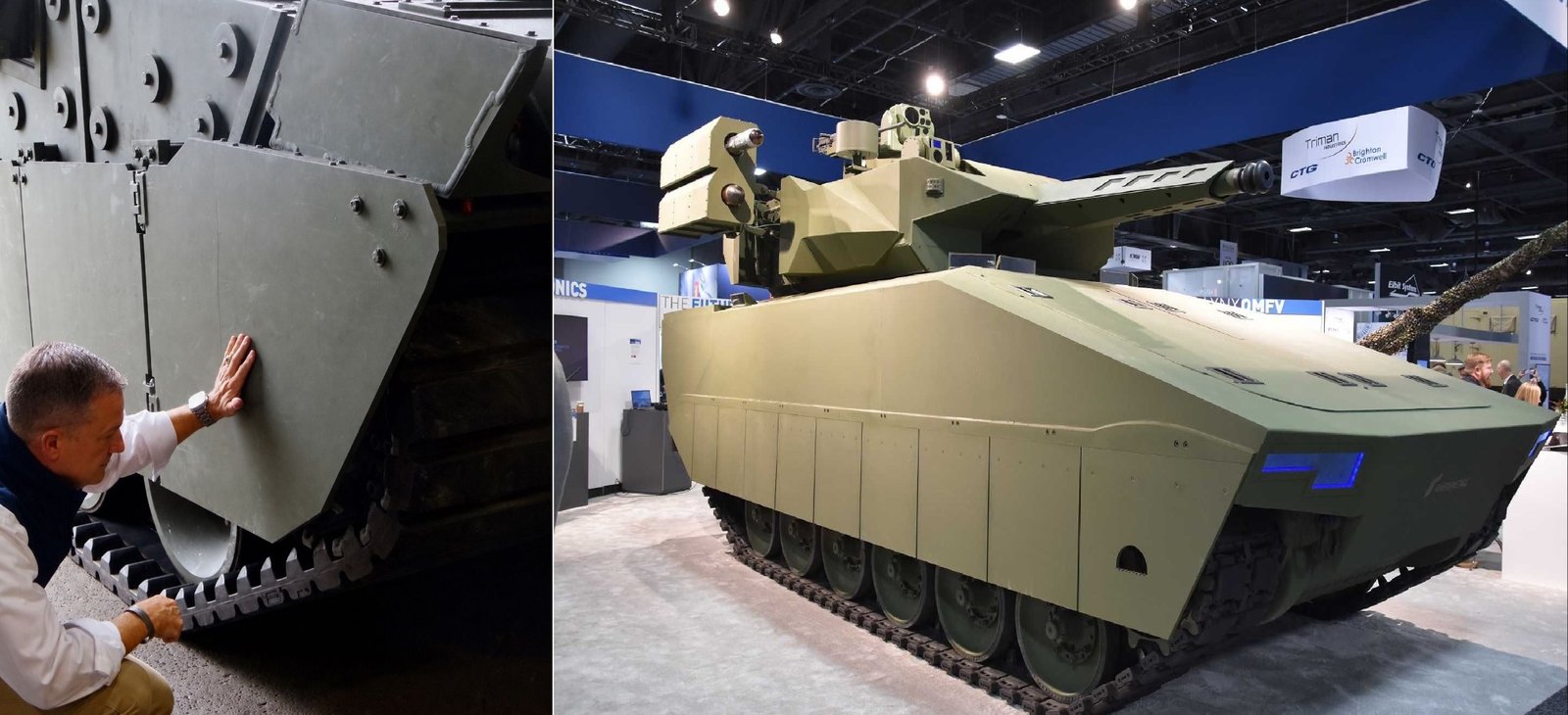
U.S
ABERDEEN PROVING GROUND, Md. — General Dynamics Land Systems (GDLS) has delivered the first prototype of its XM30 “Wolf” Mechanized Infantry Combat Vehicle (MICV) to the U.S. Army at Aberdeen Proving Ground, Maryland. The delivery marks a major step in the Army’s program to replace the M2 Bradley Infantry Fighting Vehicle, which has served for more than 40 years. XM30 Wolf The XM30 is being developed as an optionally manned tracked combat vehicle with a reduced two-person crew and space for six fully equipped infantry soldiers. The vehicle is planned to feature a 50mm automatic cannon, anti-tank guided missiles, active protection systems, advanced sensors for 360-degree situational awareness and hybrid-electric propulsion. GDLS is also developing the Wolf with a Modular Open Systems Architecture and a born-digital design intended to support software updates and the integration of new technologies. Competition With Rheinmetall The XM30 program is a head-to-head competition between GDLS and American Rheinmetall Vehicles. Under contracts awarded in 2023, each company is required to build between seven and 11 prototypes. The combined value of the contracts was approximately $1.6 billion. GDLS calls its vehicle the Wolf, while American Rheinmetall Vehicles is offering a design based on the Lynx. Prototype Testing Retired Army Brig. Gen. Geoffrey Norman, now working with GDLS, announced the prototype delivery. Norman spent 30 years in the Army as a tanker and cavalryman. He previously served with the Next Generation Combat Vehicle Cross-Functional Team at Detroit Arsenal, where he helped develop requirements for the XM30 and M1E3 Abrams upgrade before joining GDLS. Norman said additional Wolf prototypes will be completed and delivered to the Army. He also credited GDLS teams working at facilities in Sterling Heights and Grand Rapids, Michigan; Lima, Ohio; Scranton, Pennsylvania; Tallahassee, Florida; and London, Ontario. Following initial checks at Aberdeen Proving Ground, the prototypes will be sent to Fort Hood, Texas, where soldiers from the 1st Armored Brigade Combat Team, 1st Cavalry Division, known as the “Ironhorse Brigade,” will conduct operational evaluations. The vehicles could also be evaluated during a National Training Center rotation. Army Selection Planned for 2027 The Army plans to select a single winning design by the end of 2027 for Phase 5 low-rate initial production. The selected manufacturer is planned to produce up to 19 complete vehicles, including hulls and turrets, for production qualification and Initial Operational Test and Evaluation. If the program remains on schedule, the first production XM30 vehicles are expected to be delivered to the first Army unit transitioning to the new vehicle in fiscal year 2029. Meanwhile, GDLS and American Rheinmetall Vehicles will continue delivering their remaining prototypes to support Army testing and soldier evaluations.
Read More → Posted on 2026-08-29 13:55:36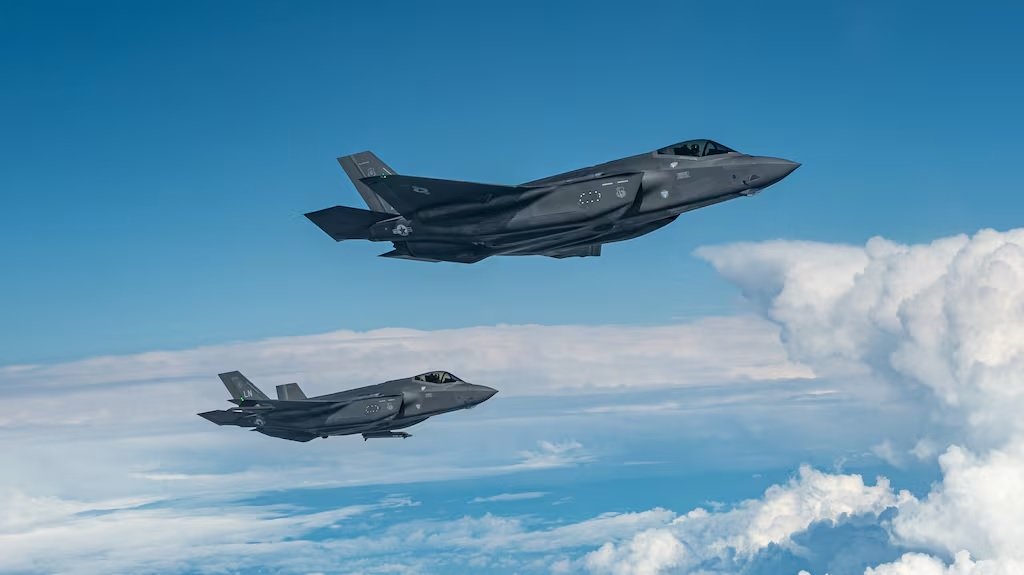
U.S
WASHINGTON, — The U.S. Department of Defense has raised the estimated acquisition cost of the F-35 Lightning II program to $536.2 billion, an increase of about $51 billion, or more than 10 percent, from the previous $485.2 billion estimate. The figure covers the aircraft and engines the U.S. government plans to purchase. The latest Modernized Selected Acquisition Report (MSAR) shows that the increase is spread across development and procurement. Research, development, test and evaluation costs have risen by about $19 billion to $106.6 billion, while procurement costs have increased by nearly $32 billion. Higher Cost Estimates for All Three Variants In constant 2012 dollars, the estimated unit recurring flyaway cost—which covers the aircraft and engine—has increased for all three variants: F-35A: $78 million, up 7.3 percent from $72.7 million. F-35C: $93.4 million, up 6.6 percent from $87.65 million. F-35B: $110.3 million, up 10.5 percent from $99.78 million. These are historical-dollar estimates. The F-35 Joint Program Office has said current-year prices for individual variants in the latest production lots are controlled unclassified information and cannot be released. Modernization and Production Costs The increase in development spending is partly linked to a revised estimate for the Power Thermal Management Upgrade, which incorporates updated requirements and assumptions. The program has also revised schedules for Block 4 modernization, the F135 engine core upgrade, and power and thermal-management improvements, adding time and costs. About $900 million of the $19 billion increase in development spending is attributed to refined Block 4 capability estimates. Block 4 is intended to improve the F-35's weapons, sensors and sensor fusion. The program is prioritizing 55 capabilities, including kill-chain improvements for air-superiority and suppression-of-enemy-air-defenses missions and integration of new weapons. The nearly $32 billion increase in procurement costs includes the upcoming APG-85 radar, higher production-support costs, the production requirement for the Power Thermal Management Upgrade, contractors' actual costs and negotiated pricing for Lots 18 and 19. In September 2025, the Pentagon and Lockheed Martin finalized a $24.29 billion contract for 296 F-35s in Lots 18 and 19. Separate engine agreements for those lots were valued at $6.6 billion, giving an implied combined average of about $104.4 million per aircraft and engine across the variants. Inflation and Procurement Changes Inflation and higher material prices are also contributing to the higher estimate. The Pentagon is shifting some planned F-35 purchases into later budget years, exposing those future purchases to additional inflation. The Marine Corps is also changing part of its planned procurement mix by shifting some purchases toward the more expensive F-35C. Lifetime Cost Estimate Falls Despite the higher acquisition estimate, the Pentagon's projected total lifecycle cost for the F-35 program has fallen from about $2.06 trillion to approximately $1.93 trillion. The lifecycle estimate covers the broader costs of operating and sustaining the fleet over its projected service life. The latest assessment therefore shows higher projected costs for developing and purchasing the planned fleet, while the overall projected lifetime cost has moved lower.
Read More → Posted on 2026-08-29 13:46:25
U.S
F.E. WARREN AIR FORCE BASE, Wyoming — The U.S. Air Force Global Strike Command has ordered units to stop using the AN/PRM-10 test oscillator set after polychlorinated biphenyls (PCBs) were confirmed in residue found on one unit and potential residue was identified on several others. The AN/PRM-10 is a legacy test device used to examine communications systems supporting the U.S. intercontinental ballistic missile (ICBM) force, including the Minuteman III system. Residue discovered at F.E. Warren The action follows an incident earlier in August at F.E. Warren Air Force Base in Wyoming. During a routine inspection, an Airman discovered residue on a component of an AN/PRM-10 kit and was exposed to the material. The Airman reported the incident, received medical attention and returned to duty without experiencing adverse effects, according to Air Force Global Strike Command. Laboratory testing of the residue confirmed the presence of PCBs. The Air Force said PCBs were commonly used in electrical devices during the period when equipment was developed to maintain the Minuteman III ICBM system. PCBs are a group of synthetic chemicals that were widely used in electrical and industrial applications because of their durability and other useful properties. U.S. production of PCBs was banned in 1979. Their presence in some older equipment remains a concern because of their known health risks. Inspection finds residue on six systems After the PCB finding was confirmed, the Twentieth Air Force ordered a one-time inspection of all AN/PRM-10 kits across Air Force Global Strike Command. The inspection was completed within three days and covered the command's entire inventory. Officials found potential residue on six of the eight AN/PRM-10 systems. Samples from those systems have been collected and are being sent for additional testing. Before the equipment was removed from service, the Air Force had issued updated safety warnings, handling precautions and requirements for personal protective equipment at locations where the legacy testers remained in use. Following the inspection results, the Twentieth Air Force ordered the immediate suspension of AN/PRM-10 use as a precaution while testing of the additional samples continues. Modern replacements being introduced Units are now transitioning from the AN/PRM-10 to modern, PCB-free replacement testers. Air Force Global Strike Command and Twentieth Air Force are also working with the Minuteman III systems program office to properly dispose of the withdrawn equipment. Officials are also reviewing other pieces of test equipment to determine whether they could contain PCBs. Maj. Gen. Colin Connor, commander of Twentieth Air Force, said the command considers the health and safety of its personnel a priority. The Air Force said the suspension of the AN/PRM-10 has not caused any mission impacts. U.S. ICBM forces continue to operate, with the command stating that the force remains safe, secure and effective in protecting the U.S. homeland. Part of wider missile community safety review The equipment review is part of broader safety efforts that followed the launch of the Air Force's Missile Community Cancer Study in 2023. The study was established to examine potential environmental and occupational factors affecting personnel associated with the U.S. ICBM mission. The Air Force has been reviewing the Minuteman III system and associated equipment as part of these efforts to identify and address potential workplace hazards. Gen. S.L. Davis, commander of Air Force Global Strike Command, said the command would continue to identify issues and take appropriate action. The immediate focus is now on testing the residue samples collected from the additional AN/PRM-10 systems, disposing of the affected equipment and moving personnel to modern replacement testers.
Read More → Posted on 2026-08-29 13:31:46
U.S
WASHINGTON, — The U.S. Department of Defense has awarded New Mexico-based rocket manufacturer X-Bow Systems a $10,981,581 contract to develop and flight-test a low-cost interceptor for ballistic and hypersonic threats. The Phase II Small Business Innovation Research (SBIR) award is being issued under the Missile Defense Agency’s (MDA) Rapid Response Small Launcher Technology program and supports its Low-Cost Interceptor (LCI) effort. The original solicitation, issued about a year ago, sought modular interceptor designs that could be rapidly demonstrated against ballistic and hypersonic threats. The LCI program targets a unit cost of less than $750,000 per interceptor, significantly below the reported cost of existing Patriot and THAAD interceptors. The $10.98 million figure is the development contract value, not the price of one interceptor. X-Bow will design, develop and demonstrate a high-performance solid rocket motor for the system. The contract runs from July 2026 through July 2028, with a prototype flight demonstration planned for late 2027. X-Bow manufactures solid rocket motors and propellant in-house using additive manufacturing. The company has already conducted a static test of a sub-scale solid rocket motor design related to the program and will use the funding for further motor development and flight testing. Expanding the Solid Rocket Motor Industry The Pentagon said the contract will help address the need to expand the U.S. solid rocket motor (SRM) industrial base, which currently relies on two primary manufacturers, Northrop Grumman and L3Harris’ Aerojet Rocketdyne. The Patriot missile is produced by Lockheed Martin and Raytheon, while Japan has previously been the only country licensed to manufacture Patriot missiles outside the United States. X-Bow CEO Jason Hundley said the company's manufacturing technology is intended to provide more affordable interceptors and rocket motors and increase production speed. MDA Director Lt. Gen. Heath Collins, speaking at the Space and Missile Defense Symposium in Huntsville, Alabama, said the agency is examining propulsion and other expensive interceptor components to identify opportunities to reduce costs. The effort comes as the U.S. and its allies seek larger interceptor stocks following recent conflicts. Estimates cited in reporting put remaining U.S. stocks at fewer than 1,000 Patriot interceptors and about 250 THAAD rounds. A Patriot replacement costs roughly $3.9 million to $4 million, while a THAAD interceptor costs about $12.7 million. Other Low-Cost Interceptor Programs The U.S. Air Force has also sought a counter-air missile costing less than $500,000 that could be produced in the thousands each year. In Europe, Ukraine and nine European countries — Denmark, France, Germany, Italy, the Netherlands, Norway, Spain, Sweden and the United Kingdom — have launched the FREYJA initiative to develop a European anti-ballistic missile capability. Ukrainian company Fire Point is supplying its FP-7.X interceptor and has estimated a cost below €1 million, or about $700,000. The initiative's earliest target for a successful ballistic-missile interception is mid-2027. Lockheed Martin has separately introduced the PAC-3 MSE Adapted Capability Effector (ACE), which the company says will cost about $2.5 million per missile, roughly half the price of the current PAC-3 MSE. Production is not expected to begin until mid-2029. President Donald Trump said in July that Patriot technology would be licensed to Ukraine, but Lockheed Martin and Raytheon have provided limited public information about licensing needed for Ukrainian production. The new systems remain in development. FREYJA's earliest target is mid-2027, while X-Bow's LCI prototype flight demonstration is planned for late 2027. The X-Bow demonstration will be a development test rather than an operational interceptor. It is also important to distinguish the LCI from X-Bow's Buckler interceptor. Buckler is a separate, flight-tested system designed to defeat Group 3 drones at supersonic speeds, with X-Bow stating that it is priced at under $100,000 per interceptor. The Buckler price does not apply to the MDA's LCI program. The LCI program is part of a broader U.S. and allied effort to develop lower-cost missile-defense systems that can be produced in larger quantities while expanding the industrial base for solid rocket motors. .
Read More → Posted on 2026-08-28 15:53:37
U.S
REDONDO BEACH, California — Northrop Grumman has received a $7 million contract from the Defense Advanced Research Projects Agency (DARPA) to advance diamond cooling technology for semiconductors used in military radar and communications systems. The contract covers Phase 2 of DARPA’s Technologies for Heat Removal in Electronics at the Device Scale (THREADS) program, which is focused on reducing the thermal limitations that restrict the performance of high-power radio-frequency (RF) electronics. Diamond Cooling to Address Heat Limits High-power RF systems often have to operate below their maximum output to prevent overheating. This limits signal strength and overall system performance. Northrop Grumman is using diamond as a thermal-management material because it conducts heat about five times faster than copper. The company says it can also remove heat more effectively than materials such as silicon carbide and gallium nitride (GaN), which are widely used in high-power electronics. At its Microelectronics Center, Northrop Grumman is integrating microscopic diamond structures directly into semiconductor devices. In collaboration with Stanford University, engineers developed a method to grow a layer of diamond inside microscopic channels on the back of each device. These channels provide a path for moving heat away from critical hotspots. Phase 1 Results and New Target During Phase 1 of the THREADS program, Northrop Grumman demonstrated a 3.3-fold increase in chip power density. Under Phase 2, the company aims to increase that result by more than three times again. If achieved, the power density would reach roughly 10 times the original baseline established when the program began. DARPA has reported that Phase 1 performers across the broader THREADS program achieved approximately a fivefold increase in RF power density compared with current state-of-the-art devices. DARPA said this level of improvement could roughly double radar range in operational terms. Potential Military Applications Higher power density could allow RF transmitters to deliver greater power while using smaller components. The technology could therefore support military radar, communications and advanced satellite links. Improved thermal management can also help reduce component size and weight while supporting greater reliability and longer operating life. Ben Heying, director of microelectronics at Northrop Grumman’s Space Park Foundry, said temperature has long limited the performance of microelectronics, including GaN devices. He described embedding diamond directly into chips as an enhanced cooling approach that allows higher power operation while reducing the risk of thermal damage. Northrop Grumman's Diamond Research Northrop Grumman has invested in diamond-based microelectronics research since 2019. The company plans to use an open-access business model to make the cooling technology available to other participants in the U.S. semiconductor industry. Northrop Grumman designs, manufactures, assembles, tests and packages millions of microelectronic devices each year for defense and commercial applications. The company says its domestic production supports the U.S. semiconductor supply chain. Its broader diamond research has also included testing diamond-based components capable of handling more than 100 watts in related applications. The Phase 2 THREADS effort will focus on further increasing RF power density and improving heat removal as higher-power semiconductor operation creates greater thermal demands.
Read More → Posted on 2026-08-28 14:13:37
U.S
TAMPA, Florida, — U.S. Central Command (CENTCOM) has announced that U.S. forces have cleared Iranian sea mines from the internationally recognized shipping lanes in the Strait of Hormuz, saying the routes are now open to commercial shipping. In a video released Thursday, CENTCOM Commander Adm. Brad Cooper said the mines had been laid months earlier by Iran’s Islamic Revolutionary Guard Corps (IRGC) in the strait’s Traffic Separation Scheme, the established routes used by international commercial vessels. Update from CENTCOM Commander: pic.twitter.com/osPbltjJ1C — U.S. Central Command (@CENTCOM) August 28, 2026 Cooper said the operation was conducted over several months by U.S. Navy divers, Navy SEALs and military aircraft from the Army, Navy, Air Force and Marine Corps. He described the conditions as challenging and dangerous but said the forces had completed the mission. “Today, international shipping lanes are open and momentum is building,” Cooper said. Nearly 1,500 Commercial Vessels Assisted Cooper said U.S. forces have provided coordinated protection to nearly 1,500 commercial vessels transiting the strait in recent months. These vessels transported nearly 750 million barrels of crude oil to global markets. At the same time, about 50,000 U.S. troops operating across the region continue enforcing a naval blockade against Iran while supporting commercial transit through the waterway. According to Cooper, Iran has exported zero oil from its shores since the blockade was resumed in mid-July. He said no vessels have entered or left Iranian ports without U.S. authorization, except for humanitarian reasons. U.S. forces have also turned back about 75 vessels attempting to breach the blockade and disabled three vessels that did not comply with U.S. orders. Commercial Traffic Still Below Prewar Levels Despite CENTCOM's announcement, commercial traffic through the Strait of Hormuz remains well below prewar levels. Before the conflict began on February 28, more than 20 million barrels of oil per day passed through the waterway, with roughly 100 to 130 vessels using the route daily. Recent shipping data shows that commodity-vessel traffic remains in the single digits to low teens on some days. The announcement follows earlier statements by President Donald Trump that U.S. forces had removed or detonated mines in international waters in the strait. Cooper's latest video provides CENTCOM's formal operational confirmation that the Traffic Separation Scheme has been cleared. Security Concerns Remain U.S. allies have privately assessed that some mines may not have been cleared. Earlier estimates from the International Maritime Organization and industry groups placed the number of mines in the historic shipping lanes at around 80, with some assessments higher. Allied officials have also warned that sea currents can move mines and that residual risks could remain outside the main monitored lanes. The International Maritime Organization and maritime information centers continue to advise vessels to exercise maximum caution in the area. Shipping companies and insurers are also conducting their own risk assessments. CENTCOM said it will continue its two main missions in the area: enforcing the blockade against Iran while supporting lawful international commercial transit through the Strait of Hormuz.
Read More → Posted on 2026-08-28 13:46:48
U.S
Several weapons and unmanned systems being developed or used today have design concepts that can be traced back to military research conducted during the final years of the Cold War, according to an analysis by firearms and military analyst Gatnerd on X. The analysis points to systems involving uncrewed ground vehicles, loitering munitions, ground-launched cruise missiles, fiber-optic weapons, stealth bombers and unmanned surface vessels. Gatnerd's broader point is that several ideas now receiving renewed attention were already being explored in the 1980s and 1990s. The comparison does not mean that modern systems are unchanged versions of older weapons. Current systems use newer electronics, software, sensors, materials, communications and manufacturing methods. In several cases, the relationship is better described as a revival of an earlier concept rather than a direct technical continuation. FireAnt and Sandia's 1980s Fire Ant One of the examples highlighted by Gatnerd is the FireAnt uncrewed ground vehicle developed by Swarmbotics AI. Swarmbotics describes FireAnt as an attritable, swarming, man-portable UGV that can support missions including counter-drone operations, intelligence, surveillance and reconnaissance, electronic warfare and other modular payload applications. The company's ANTS, or Attritable Networked Tactical Swarm, family combines the robotic platforms with software for coordinated swarm operations. The U.S. Army has also been testing FireAnt systems. Recent footage showed an M2A4 Bradley infantry fighting vehicle carrying five FireAnt UGVs during the Pegasus Charge 3 test exercise. The testing is examining how small robotic systems can be carried and employed with conventional Army formations. Gatnerd noted that the name and basic concept recall a different Fire Ant system tested by Sandia National Laboratories in 1987 and 1988. The Sandia Fire Ant was a small remotely operated ground vehicle based on a Honda 125 four-wheeled all-terrain vehicle. It carried a shaped-charge-type warhead and an onboard video camera, allowing an operator to control the vehicle toward a target. Later versions were also described with automatic target-recognition capabilities. The earlier project illustrates that the idea of using small unmanned ground vehicles to approach armored targets was being explored decades before today's autonomous and swarm-enabled UGV programs. Shahed-136 and the Dornier DAR Comparison Gatnerd also pointed to similarities between the Iranian Shahed-136 one-way attack drone and the West German Dornier Drohne Anti-Radar, or DAR, project from the 1980s. Dornier developed DAR as an unmanned system intended to locate and attack enemy radar installations. The aircraft used a delta-wing configuration and was designed for launch from a ground vehicle. The project was developed during the Cold War and was eventually terminated; it did not enter German service. The Shahed-136 has a broadly similar cropped-delta configuration, which has led to repeated comparisons with DAR. However, the available evidence does not establish a confirmed direct technical lineage between the two systems. Some accounts have proposed a connection through Israel's Harpy loitering munition, while other assessments treat the similarity as primarily visual and conceptual. Therefore, the DAR example is better described as a case of similar design and mission concepts rather than a confirmed direct development line from the 1980s German project to the Shahed-136. B-21 Raider and the B-2 Spirit The B-21 Raider provides a clearer example of design continuity within the U.S. bomber program. The B-2 Spirit first flew in 1989 and established the flying-wing configuration that remains associated with Northrop Grumman's low-observable bomber designs. The U.S. Air Force says the B-2's low observability comes from a combination of its flying-wing design, composite materials, coatings and other technologies. The B-21 uses the same broad flying-wing approach but incorporates substantially newer technologies and systems. Its development therefore illustrates how an aerodynamic and stealth concept originating during the Cold War can continue into a new generation of aircraft. Typhon Brings Ground-Launched Tomahawk Capability Back Another example is the U.S. Army's Mid-Range Capability, commonly known as Typhon. The Army's system uses a ground-based launcher capable of firing the Navy's Standard Missile-6 and Tomahawk Land Attack Missile. The U.S. Army successfully demonstrated a Tomahawk launch from the prototype system in June 2023, and the MRC subsequently became an operational Army capability. The concept has a Cold War predecessor in the BGM-109G Gryphon ground-launched cruise missile. The Gryphon was a ground-launched version of the Tomahawk family that entered service in Europe during the 1980s before being eliminated under the 1987 Intermediate-Range Nuclear Forces Treaty. Typhon is not a reintroduction of the Gryphon itself. Instead, it represents the return of a ground-based launch concept using modern launch equipment and existing naval missiles. Fiber-Optic Weapons Predated Today's FPV Drones Fiber-optic FPV drones have become increasingly important because their physical communication links are difficult to disrupt through conventional radio-frequency electronic warfare. The underlying idea is much older. The U.S. Army's Fiber Optic Guided Missile and Enhanced Fiber Optic Guided Missile programs were developed during the 1980s and 1990s. The EFOG-M used a fiber-optic cable connecting the missile to the launch vehicle. A camera in the missile transmitted imagery to the operator, who could use that information to select and engage targets. U.S. government documentation described a range of up to 15 kilometers. A 1987 U.S. Naval Institute account also described the earlier FOG-M concept, in which video from a missile's nose camera was transmitted to the operator through a fiber-optic cable. Today's fiber-optic FPV drones apply the same fundamental principle in a much smaller and generally less expensive form. Their use demonstrates how an older military technology can become practical on a much wider scale when combined with modern commercial electronics and unmanned platforms. OWL MK II and Early Unmanned Surface Vessels The same pattern can be seen at sea. Howard Hornsby's OWL MK II was an unmanned surface vessel developed around the late 1980s and tested extensively during the 1990s. A U.S. Marine Corps photograph from 1998 identifies the OWL MK II as a remotely controlled unmanned surface vessel developed by Navtec and Howard Hornsby for the Office of Naval Research. The platform was tested for missions including marine reconnaissance, harbor protection, minehunting and littoral anti-submarine operations. According to accounts of the program, an OWL MK II operated with U.S. Navy Detachment 1 in Bahrain from 1995 to 1997. The system did not become a major formal Navy program, but its development demonstrated that unmanned surface vessels were being considered for operational naval missions decades before the current expansion of maritime drones. Cold War Research and the Post-Cold War Period Gatnerd's comparison focuses on a broader change in military priorities. During the Cold War, the United States and its allies invested heavily in technologies intended for a potential conflict with a technologically capable peer adversary. These programs included precision weapons, stealth aircraft, unmanned systems, advanced guidance technologies and weapons designed to operate against armored formations and air-defense networks. After the Cold War ended, many major defense programs were reduced, canceled or delayed. Military operations in the following decades also placed greater emphasis on counterinsurgency and other missions rather than large-scale conventional warfare against a peer military. The renewed focus on high-intensity conventional warfare has brought some of those earlier concepts back into attention. The current systems, however, are not simply 1980s weapons reproduced with new names. Modern computing, sensors, communications, autonomy, materials and manufacturing have changed what can be achieved with many of the same basic ideas. The examples highlighted by Gatnerd therefore show more than simple technological repetition. They demonstrate that several concepts considered advanced during the final years of the Cold War remained relevant, even after the original programs were canceled or left development. As military requirements have changed again, some of those concepts are being developed with technologies that were not available when the original systems were tested.
Read More → Posted on 2026-08-28 12:39:59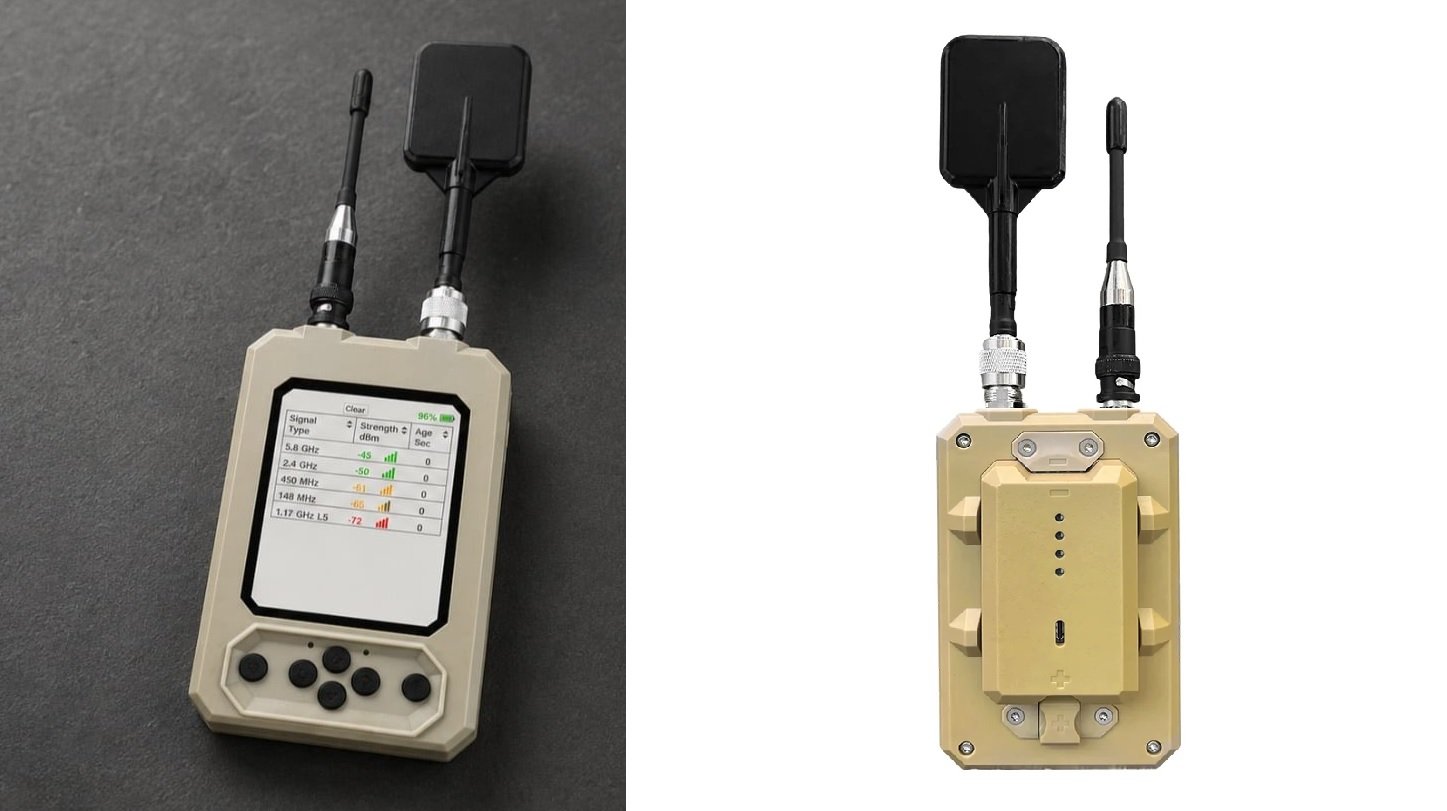
U.S
WASHINGTON, — The U.S. Army has awarded Heaviside Industries Inc. a firm-fixed-price, indefinite-delivery/indefinite-quantity contract worth up to $99 million for the procurement, fielding, upgrades and sustainment of the company’s MOTH spectrum analyzer. The contract was announced in the Department of War’s contracts listing on August 27. The contract is scheduled to run through August 27, 2031. Heaviside Industries, based in Marina del Rey, California, received the award after the Army solicited bids online and received 99 proposals. Work locations and funding will be determined through individual orders. The contracting activity is the Army Contracting Command at Aberdeen Proving Ground, Maryland. The MOTH is a compact, ruggedized tactical spectrum analyzer designed to provide soldiers with awareness of radio-frequency signals. It covers frequencies from 5 MHz to 6 GHz, allowing operators to detect radio-frequency activity associated with drones, radios and other communications equipment. The device weighs 0.99 pounds with its battery installed and measures 5.78 by 3.3 by 1.8 inches. It can be used as a handheld device or carried on a soldier’s vest. The MOTH has a 2.79-inch LCD display with 240 by 320 pixel resolution, built-in GPS, vibration notifications and a direction-finding mode. It also provides a real-time signal oscillation display. The MOTH can scan its frequency range five times per second and has a listed battery life of up to 12 hours from its 25.2 Wh battery. The device is rated IP67 for protection against dust and water and is specified to operate between 14 and 131 degrees Fahrenheit. The analyzer also supports integration with the Android Team Awareness Kit (ATAK), a digital situational-awareness system used by U.S. military personnel. The MOTH has a stated Technology Readiness Level of 9 and is NDAA compliant. Heaviside says the device is designed and manufactured in the United States. The MOTH is intended to support soldiers operating in environments where identifying radio-frequency activity is important. Soldier Systems Daily reported in July that the device can be used by Cyber Electromagnetic Activities personnel for identifying signals and obtaining line-of-bearing information, including in counter-drone applications. The publication also noted that the system is designed to be simple enough for use by personnel who may not have specialized electronic-warfare training. The MOTH is also commercially available. Lumenier lists the unit at $4,950 and says the package includes the spectrum analyzer, two lithium batteries, a USB-C charger, a custom vest pouch, a protective Pelican case, and low- and high-band antennas. The Army contract covers more than the initial purchase of the equipment. It also includes fielding, upgrades and sustainment, allowing the service to procure additional MOTH systems and receive support over the contract period through 2031. The award gives the Army a procurement mechanism for deploying the compact spectrum analyzer through individual orders rather than specifying a single quantity of systems in the initial contract announcement. The Department of War did not disclose the number of MOTH units that will ultimately be purchased under the $99 million contract ceiling.
Read More → Posted on 2026-08-28 11:53:03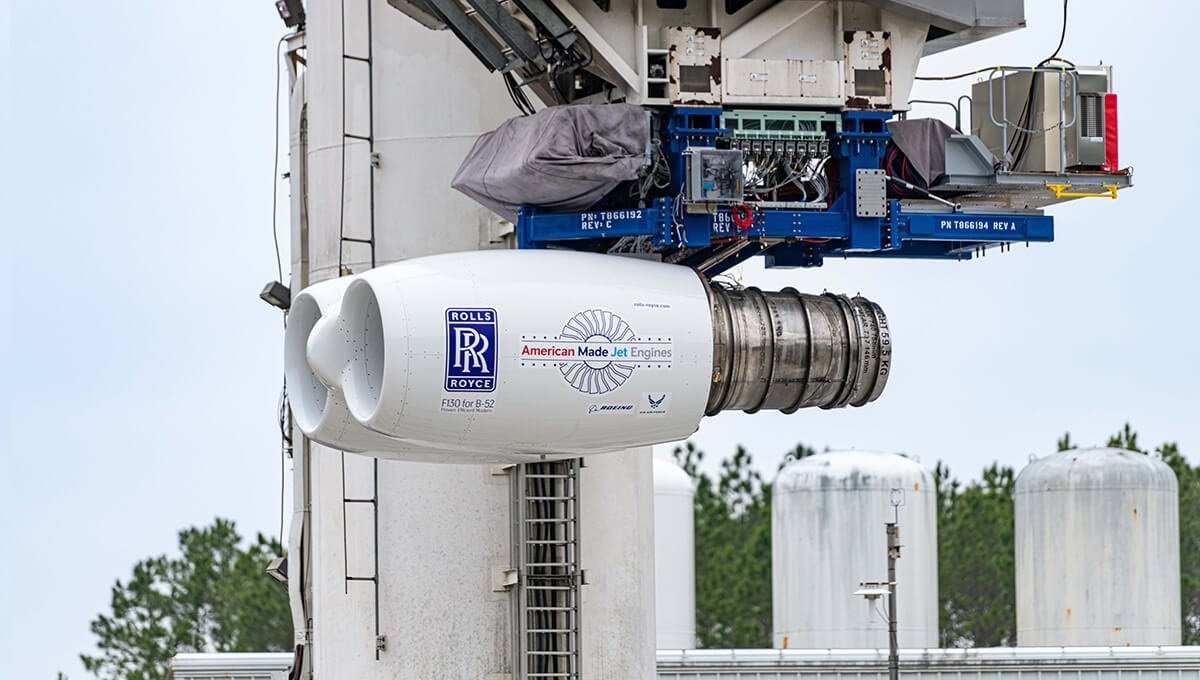
U.S
INDIANAPOLIS — Rolls-Royce has completed a decade-long, $1 billion modernization of its manufacturing, assembly and engine-test operations in Indiana. It is the company’s largest single investment in the United States and expands its capacity to support major U.S. military aviation programs. About $600 million was spent modernizing manufacturing operations at the Indianapolis campus, with that work completed in 2021. Another $400 million funded new engine-testing infrastructure, including expanded test cells in Indianapolis and high-altitude, hybrid-electric and hypersonics testing capabilities at the Purdue Aerospace District in West Lafayette. Company leaders and state officials marked the completion with a ribbon-cutting ceremony on August 27, 2026, at the Rolls-Royce Performance Building on South Tibbs Avenue in Indianapolis. “This billion-dollar investment is about more than buildings and test cells — it is about delivering for the American warfighter, on time and at the standard our customers expect. We made this investment because it was the right thing to do for U.S. national security and for the future of Rolls-Royce,” said Adam Riddle, president of Defense and chief executive of Rolls-Royce North America. Supporting U.S. Military Programs The Indiana operations will support future engines for the U.S. Air Force’s B-52 strategic bomber and the U.S. Army’s MV-75 Cheyenne, also known as the Future Long-Range Assault Aircraft. The Indianapolis site also builds and tests engines for the V-22 Osprey, MQ-25A Stingray and C-130J. Rolls-Royce has produced more than 14,000 engines at the campus since 2001, with roughly half from the AE engine family used on aircraft including the C-130J and V-22. The company also has a contract to supply 650 F130 engines for the B-52 fleet. Rolls-Royce said Indianapolis produces more of its defense products than any other company site worldwide. Jobs and Research The Indianapolis operation employs about 3,500 people, including workers represented by the United Auto Workers, and supports thousands of additional supply-chain jobs in Indiana. About 80 percent of Rolls-Royce’s U.S. defense workforce is based in the state, while more than 700 Indianapolis employees are Purdue University graduates. The company plans to hire about 100 additional engineers as work expands on the F130 and AE 1107 engines. “The engines built in Indianapolis power the aircraft our warfighters depend on, and this investment strengthens the American defense industrial base at a moment when we need it most,” said Indiana Senator Jim Banks. Rolls-Royce said it has invested more than $1.5 billion in U.S. facilities and nearly $2.5 billion in research and development over the past decade. Its U.S. operations contributed $6.2 billion to the national economy in 2024 and supported more than 30,000 jobs across 26 states, including research spillover. The company estimates that every dollar invested by the U.S. government in Rolls-Royce generates about $4 in economic returns. The Indianapolis campus also houses LibertyWorks, Rolls-Royce’s advanced propulsion research organization. It is supported by a $75 million, 10-year alliance with Purdue University covering gas turbine technology, electrical and digital systems and related research, primarily at Purdue’s Zucrow Laboratories. The modernization replaced aging infrastructure, including some facilities dating to World War II, with newer equipment and processes while production continued. The Indianapolis campus footprint was reduced from about 3 million square feet to 1.5 million square feet. The expanded test facilities provide a wider range of engine-testing capabilities at lower cost and risk, including support for sustainable aviation fuels. Rolls-Royce said the completed investment positions its Indiana operations to support growth in existing programs and future contracts.
Read More → Posted on 2026-08-28 11:22:50Search
Top Trending in 24 Hours
-
 Iranian Missile Strike Damaged U.S. A-10 and Eight F-15s at Jordan Air Base, CBS Reports
-
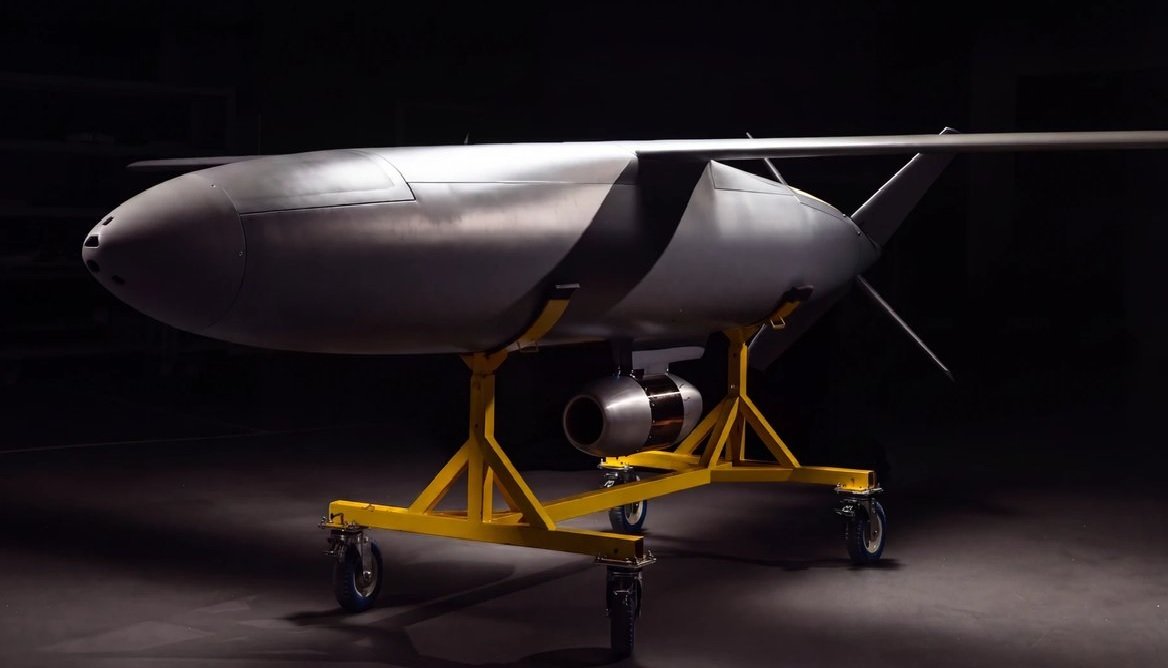 U.S. Startup Covenant Emerges From Stealth With $250 Million Funding and Anthem, a New Long-Range Heavy-Payload Strike Missile After More Than 200 Test Flights
-
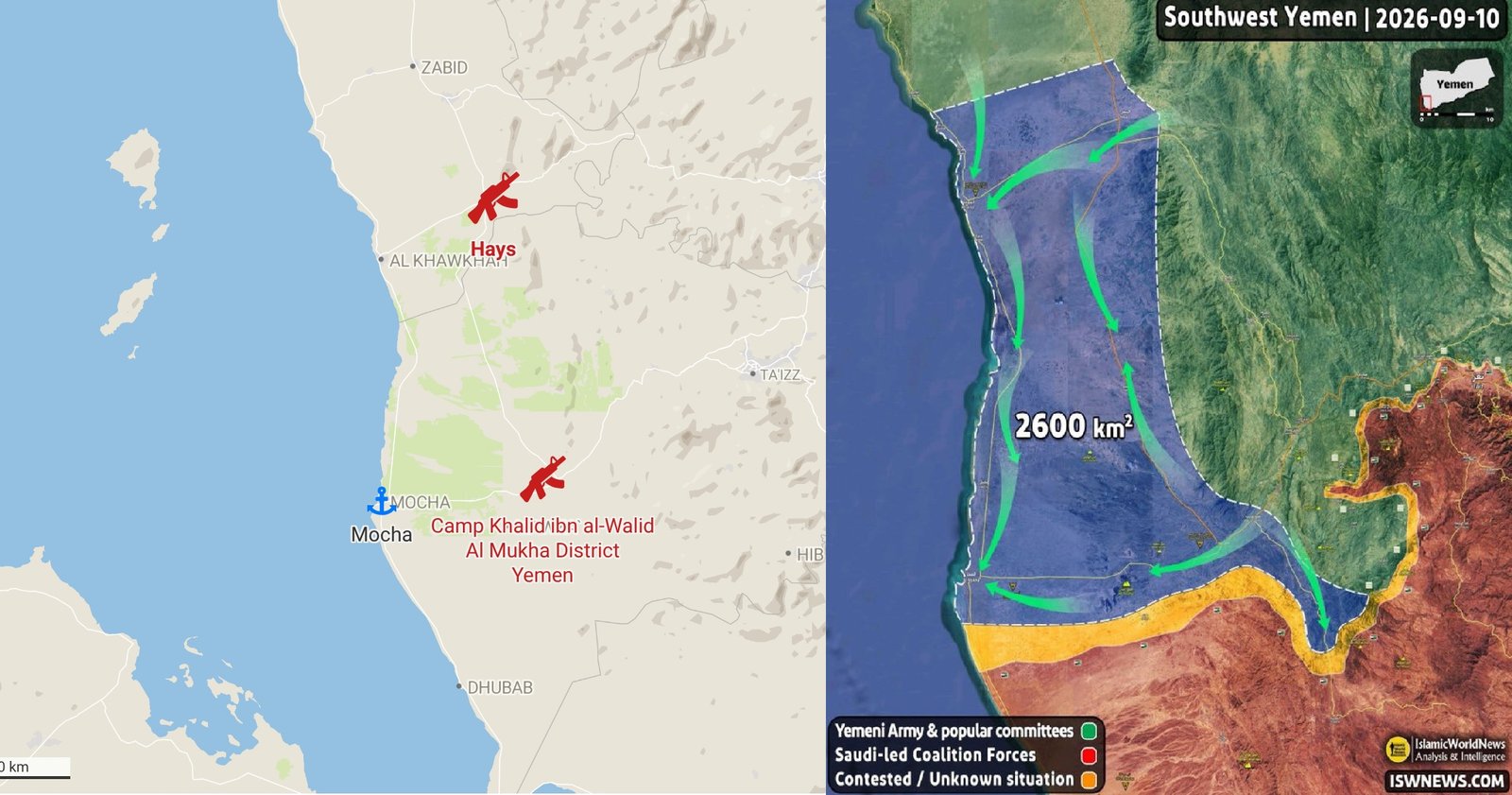 Houthi Forces Capture Strategic Red Sea Port City of Mocha Following Government Withdrawal
-
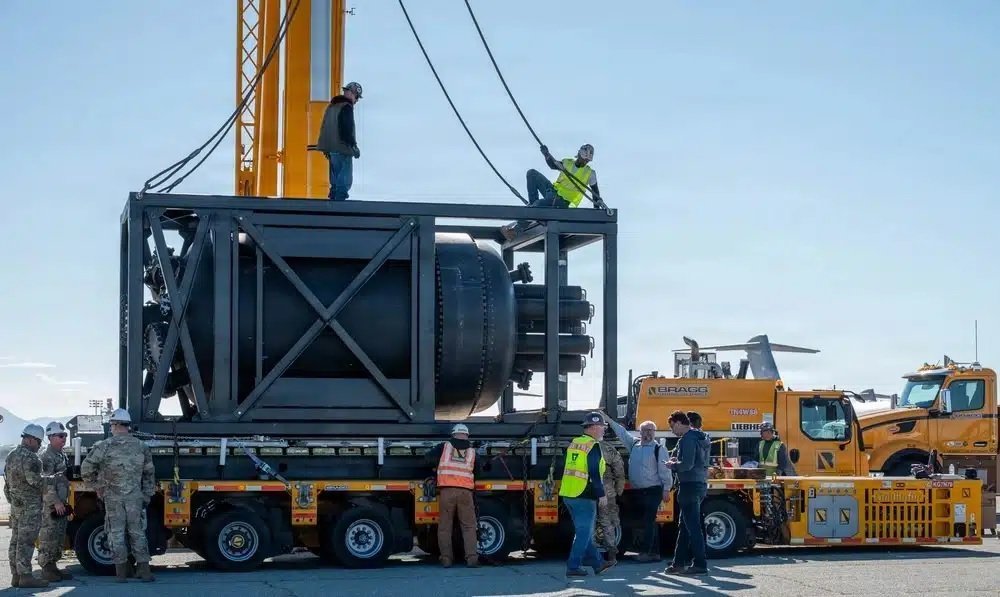 U.S. Navy Plans First Shore-Based Nuclear Microreactor at Indiana’s Crane Base by 2028
-
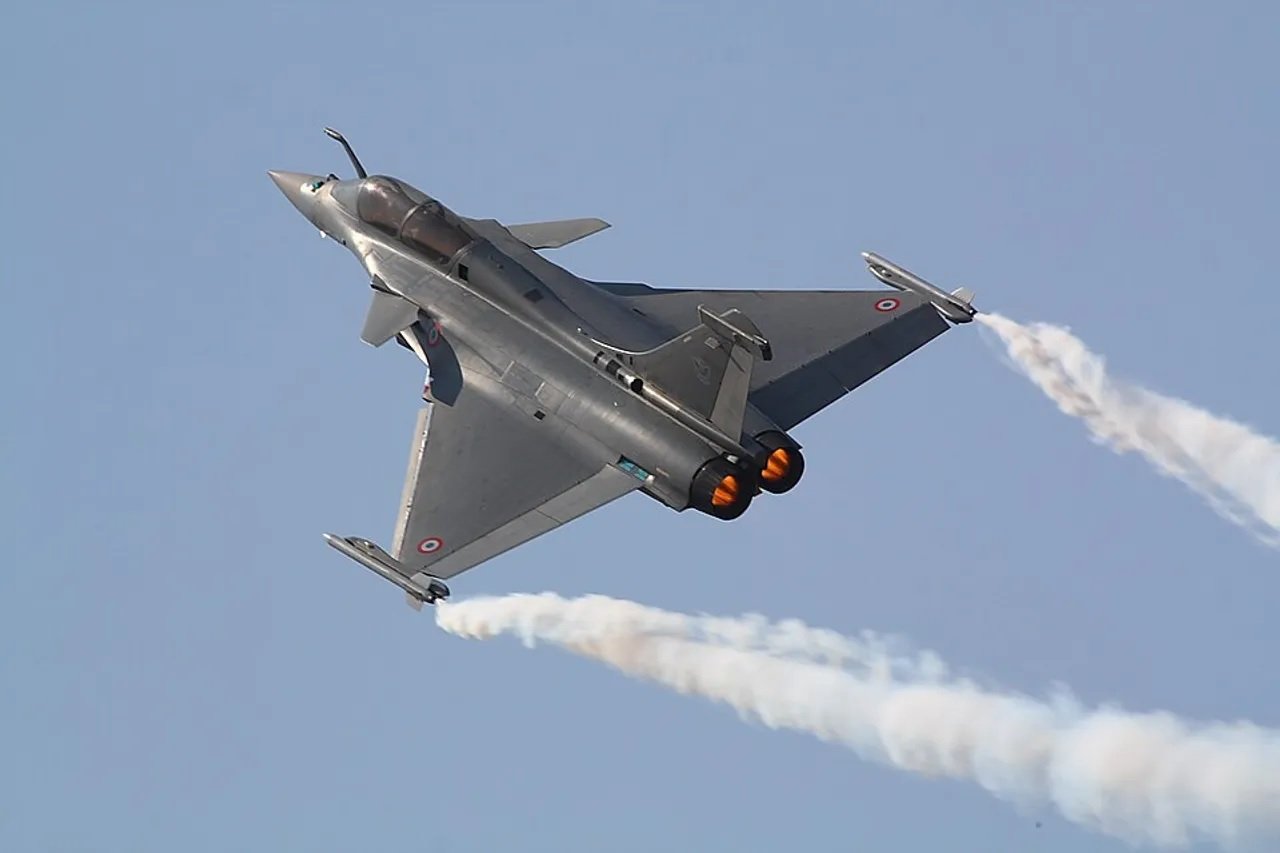 Russian Rafale “Kill Switch” Claim Faces Questions Over Evidence
-
 American Rheinmetall Secures $7.28 Million Contract for U.S. Marine Corps Autonomous Vehicles
-
 U.S. Signs $4 Billion Military Financing Guarantee for Poland, Bringing Total Support Near $20 Billion
-
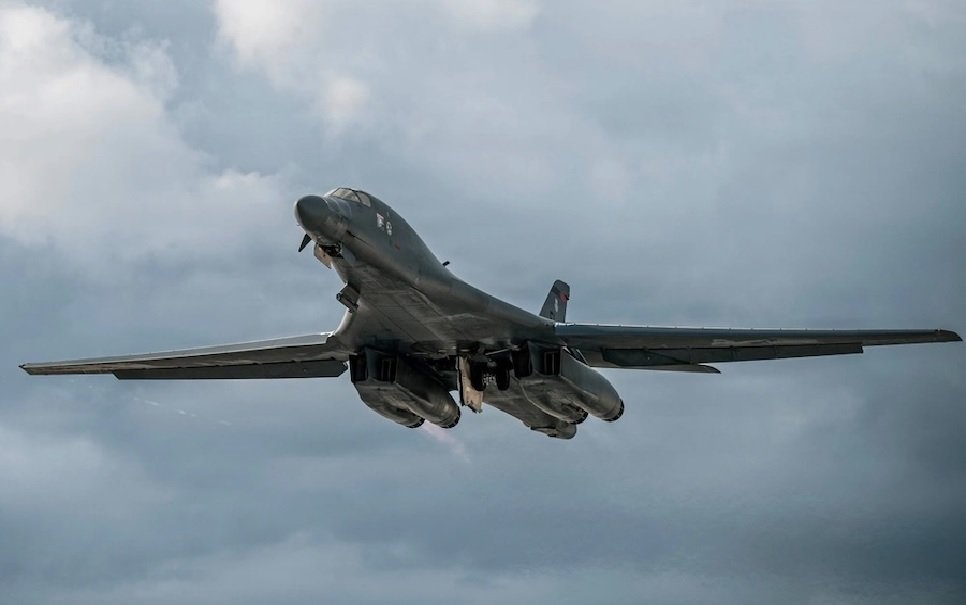 U.S. Air Force Launches North Star Campaign to Improve B-52 and B-1 Bomber Readiness
Top Trending in 4 Days
-
 Satellite Imagery Shows Two U.S. Barracks Destroyed at Kuwait’s Ali Al Salem Air Base in Iranian Attack
-
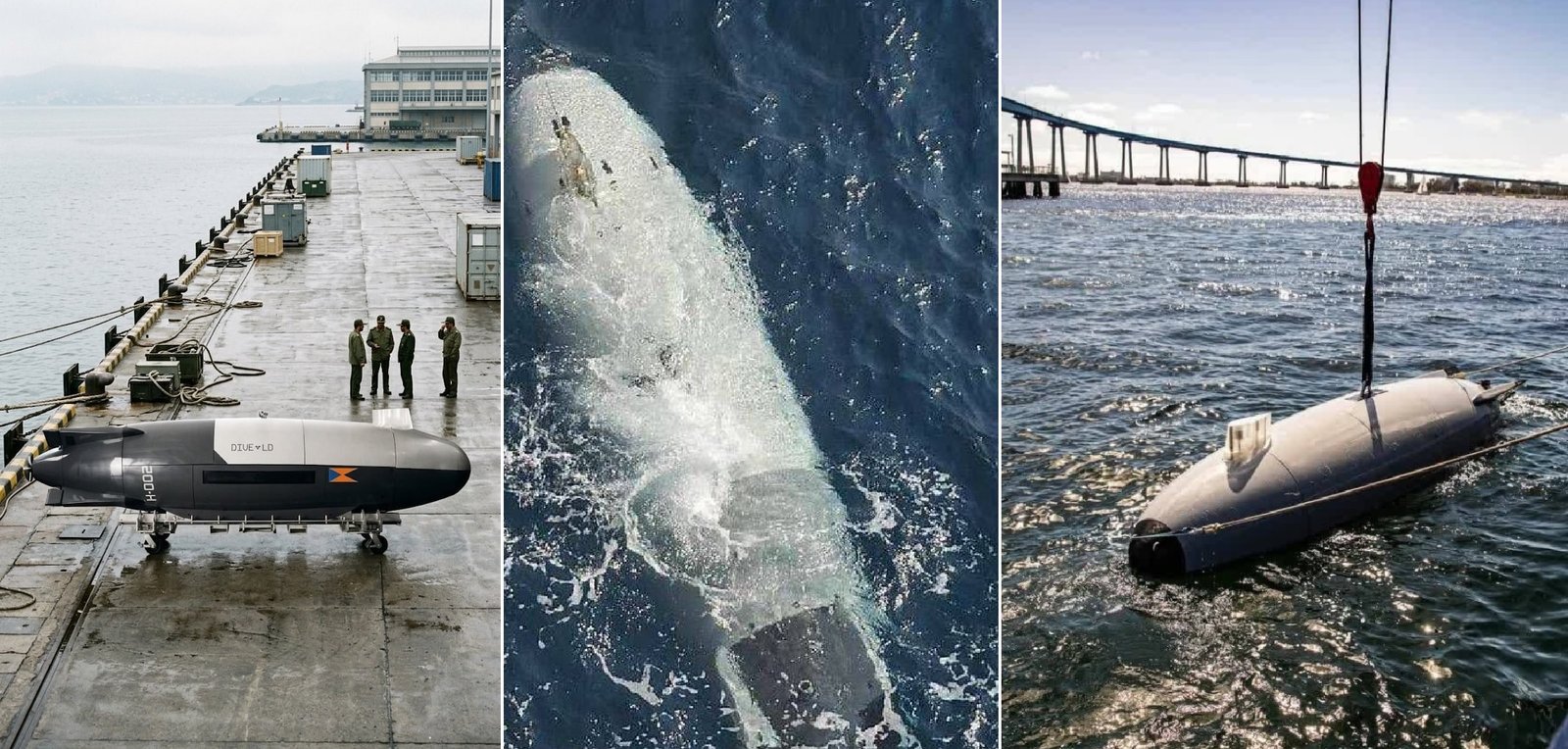 Iran’s IRGC Claims Capture of U.S. Dive-LD Unmanned Underwater Vehicle Near Strait of Hormuz
-
 Mysterious Black Aircraft at Long Beach Airport Identified as Aevum’s RAVN X Autonomous Spaceplane After Years Out of Sight
-
 Trump’s ‘The Moon Is Ours’ Post, Space Force Uniform Concept and Green Lantern AI Video Draw Online Backlash
-
 Iran Launches Massive Ballistic Missile Attack with Cluster Munitions on U.S.-Used Air Base in Jordan, Some Missiles Confirmed to Have Hit Base
-
 Iranian Missiles Strike U.S. Base in Jordan as Reports Emerge of Injured American Personnel
-
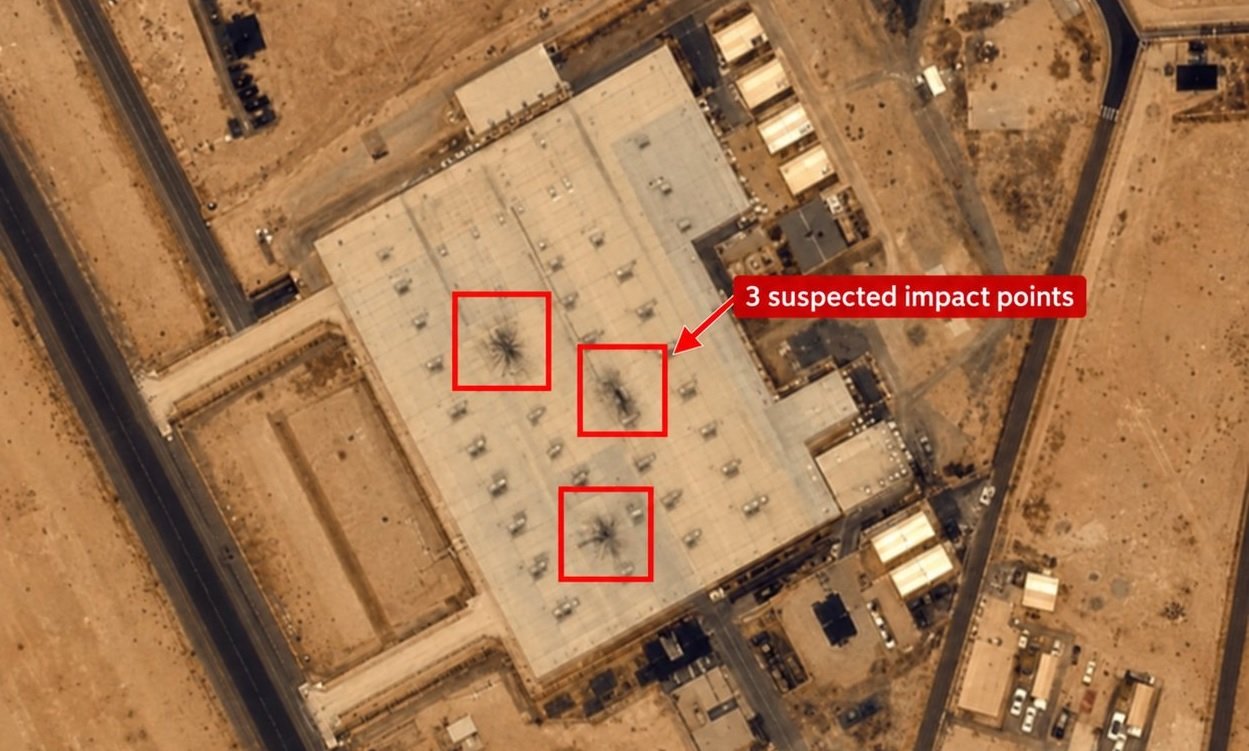 New Satellite Images Show Three Possible Impacts at U.S.-Linked Air Bases in Kuwait
-
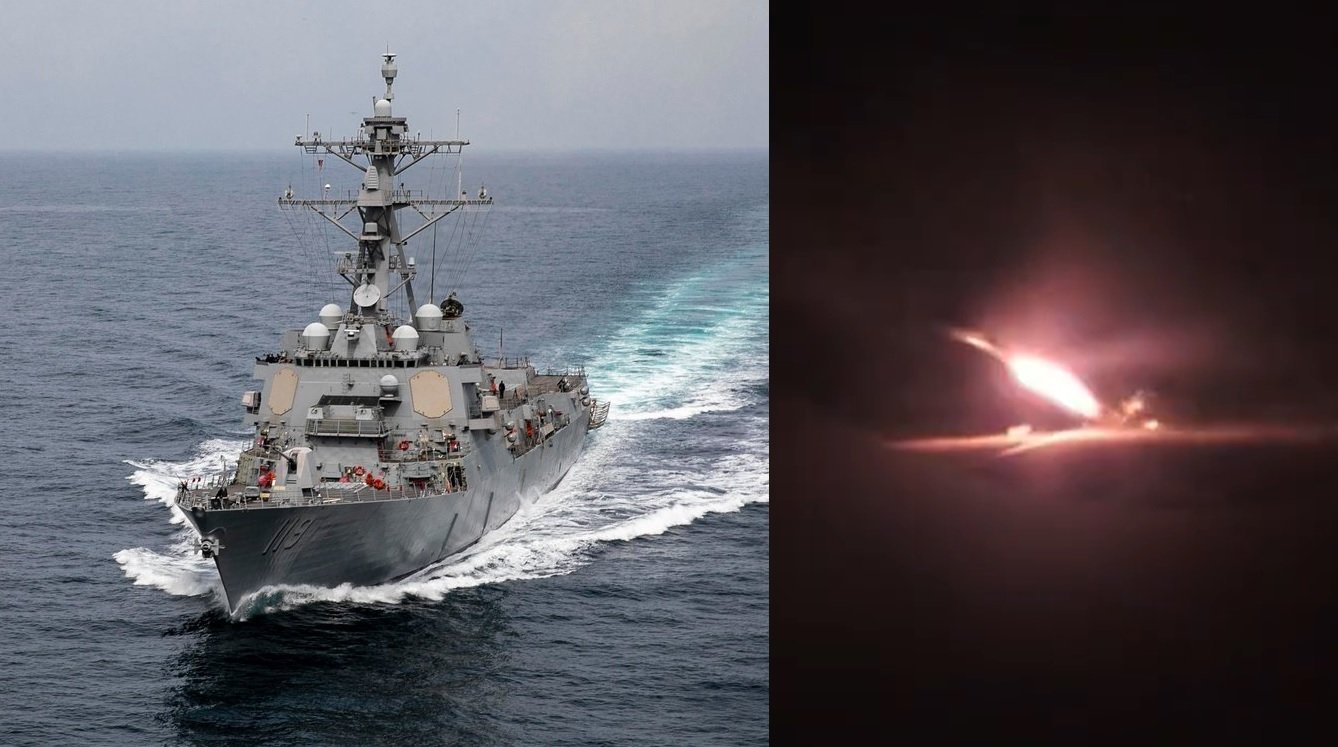 IRGC Claims Significant Damage to Two U.S. Destroyers in Missile Attack; CENTCOM Denies Hits