U.S
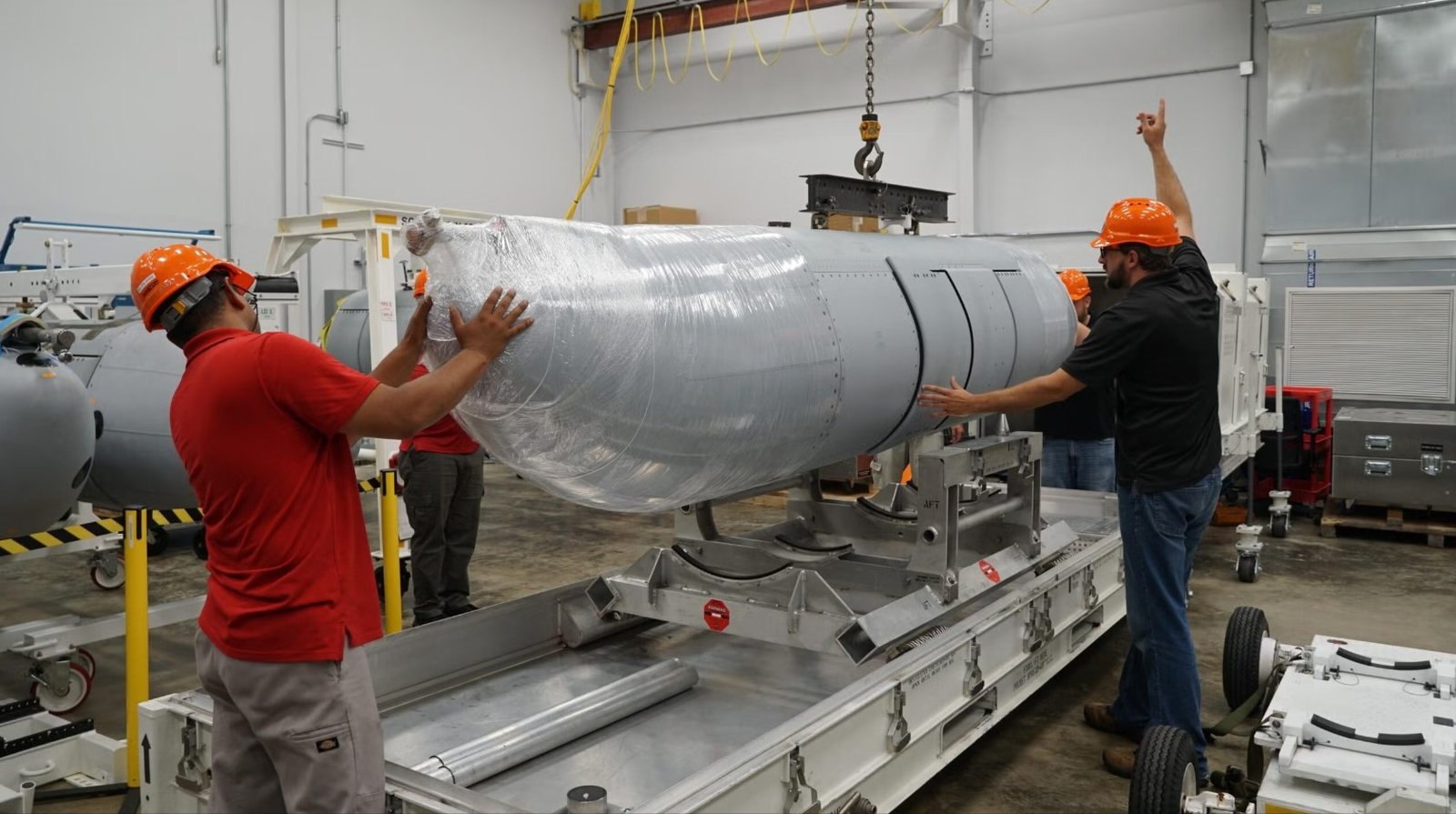
FOREST, Miss., — Raytheon, an RTX business, has completed a $50 million expansion of its manufacturing facility in Forest, Mississippi. The project adds 17,000 square feet of manufacturing space and increases the site's capacity to produce electronic warfare and radar systems. The investment is expected to create 100 high-skilled jobs by 2028. Facility Expands to 445,000 Square Feet The expansion brings the Forest facility to 445,000 square feet of manufacturing space, making it one of the largest defense manufacturing locations in Mississippi. Raytheon has invested $280 million across three expansions at the facility over the past decade. Previous projects included: A 20,000-square-foot expansion completed in 2013. A 50,000-square-foot radar production and testing center completed in 2020. The latest 17,000-square-foot expansion, supported by a $50 million investment. Supporting Next Generation Jammer Production The newly expanded space will support the production, testing and integration of Next Generation Jammer Mid-Band (NGJ-MB) pods. NGJ-MB is an electronic attack system developed for the U.S. Navy and Australian government. The system is designed to deny, disrupt and degrade enemy technology, including communications and air-defense systems. Raytheon's Forest facility began low-rate initial production of NGJ-MB in 2021. The pods are used on the EA-18G Growler electronic warfare aircraft. The expanded facility will also support other airborne radar programs as Raytheon increases manufacturing capacity. Other Defense Programs The Forest Consolidated Manufacturing Center supports several radar and electronic warfare programs. Its work includes: Airborne radars for the F/A-18 and F-15. NGJ pods for the EA-18G Growler. Advanced Airborne Sensor systems for the P-8 Poseidon. Digital radar warning receivers. Sentinel ground-based radars. Other radar and electronic warfare systems. The site also includes testing ranges and calibration capabilities supporting its manufacturing and testing activities. Raytheon Expands Mississippi Workforce “Completing this expansion underscores our long-term commitment to Forest and the state of Mississippi,” said Barbara Borgonovi, president of Naval Power at Raytheon. She said the company is working with state and local partners to develop the workforce, infrastructure and capabilities needed to increase production in support of national defense programs. U.S. Senator Roger Wicker, chairman of the Senate Armed Services Committee, also highlighted the expansion and the expected addition of 100 jobs. Mississippi Governor Tate Reeves described the project as an economic development benefit for Scott County and an investment in U.S. national security. 40 Years of Operations in Forest Raytheon has operated in the Forest community for 40 years. The company says its continued capital investment in the area also supports workforce development, education and local support networks. The latest expansion increases the manufacturing footprint of the Forest site while providing additional capacity for radar and electronic warfare programs.
Read More → Posted on 2026-08-27 16:40:01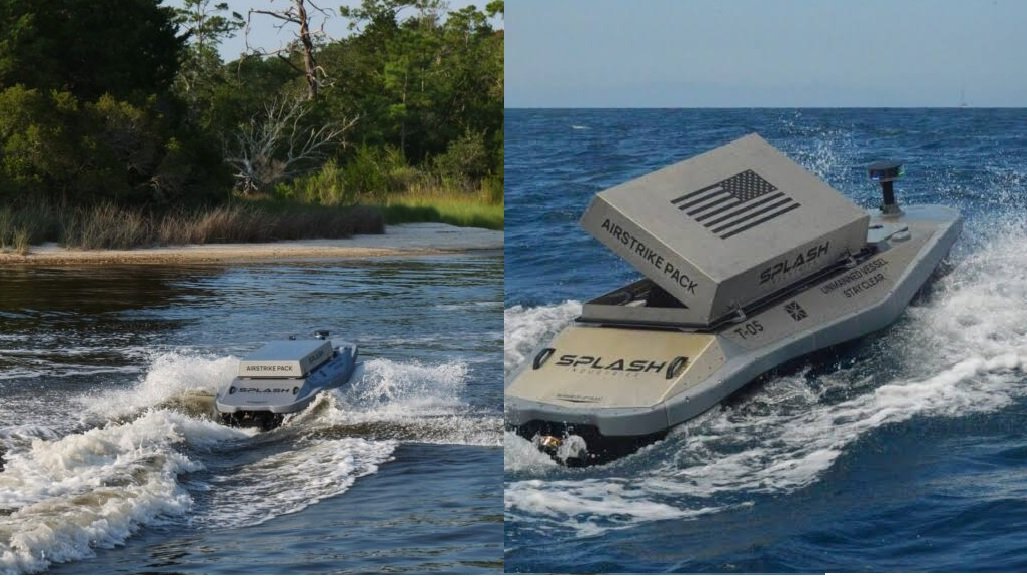
U.S
INGLEWOOD, Calif., — Splash Industries has introduced a new mission module for its Typhoon uncrewed surface vessel (USV) that allows operators to launch one-way aerial drones directly from the water. Called the Airstrike Pack, the module is designed to let operators deploy aerial assets with a single button press through the company’s proprietary command-and-control software, Splash C2. Splash Industries said the system has already been tested during a recent force-on-force exercise. The company said its vertically integrated approach, including in-house development of software and electronics, has helped keep the system rugged, easy to use and relatively low cost. Splash said the UAV deployment capability is available at about one-tenth the price of its nearest competitor. Typhoon USV capabilities The Typhoon is an 11-foot uncrewed surface vessel developed by Splash Industries for national security missions, including maritime surveillance and cargo delivery. According to the company, the vessel has a sustained speed of more than 50 knots and has exceeded 70 knots during testing. It has an operational range of more than 600 nautical miles (1,111 km) and uses a modular deck that can be configured for different payloads, including cargo and sensors. Splash Industries says the Typhoon can be assembled in about eight hours and is priced at approximately one-tenth the cost of comparable platforms. The company develops its software, electronics and sensors in-house. The Airstrike Pack adds another mission option to the Typhoon by allowing the USV to deploy one-way aerial drones from the surface. Autonomous Navy resupply demonstration The announcement follows a major milestone for Splash Industries during the Rim of the Pacific (RIMPAC) exercise near Hawaii in July 2026. During the exercise, a Typhoon USV completed what Splash Industries described as the world’s first fully autonomous underway resupply of a U.S. Navy warship. The vessel autonomously navigated open water, approached the amphibious assault ship USS Essex (LHD 2) and guided itself into the ship’s flooded well deck. Splash said the operation was completed without satellite or radio commands. The demonstration was overseen by the Naval Postgraduate School’s Consortium for Advanced Manufacturing Research and Education (CAMRE). During the same 24-hour period, the Typhoon also delivered uncrewed aerial system components manufactured aboard the USS Essex by U.S. Marine Corps personnel back to shore, according to information provided by the consortium. Funding and larger USV development Splash Industries officially emerged from stealth in July 2026 after announcing a $4.2 million seed funding round led by Ubiquity Ventures. The company said its autonomous vessels had already completed more than 10,000 nautical miles (18,520 km) of deployments across three continents. Splash co-founder and CEO Ivan Avanesov has also said the company is developing a larger uncrewed vessel called Tempest, which is being prepared for U.S. Navy testing. The Tempest is expected to have a payload capacity of 1,500 pounds (680 kg) and an operational range of 300 nautical miles (556 km). With the introduction of the Airstrike Pack, Splash Industries is expanding the Typhoon’s mission configuration beyond surveillance and cargo delivery to include the deployment of one-way aerial drones from an uncrewed surface vessel.
Read More → Posted on 2026-08-27 13:26:31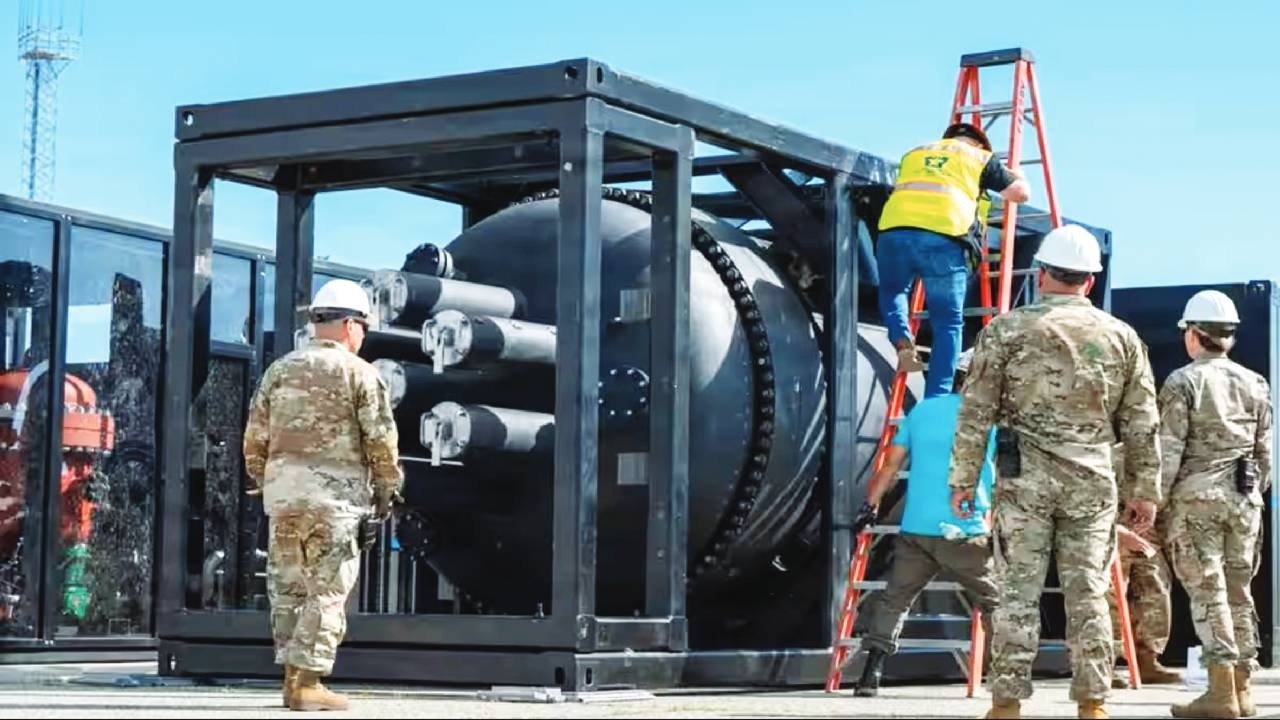
U.S
Washington — The U.S. Army has selected five companies to build and operate nuclear microreactors at five U.S. military installations under the Janus Program, with up to $2.2 billion in combined funding. The program, announced August 26, is being conducted in partnership with the Department of War Innovation Unit and aims to move advanced nuclear technology from testing into sustained operation at military sites. The contracts cover fiscal years 2027 through 2031 and use fixed-price, milestone-based Other Transaction Authority agreements. They cover design, construction and the first year of operations, with companies also expected to provide significant private investment. The Army's main target is to have at least one commercial microreactor producing usable electricity by September 30, 2028. Five Companies and Initial Sites The selected companies and installations are: Antares Nuclear, Inc. — Fort Bragg, North Carolina BWXT Advanced Technologies, LLC — Fort Campbell, Kentucky General Atomics Electromagnetic Systems — Fort Hood, Texas Radiant Industries, Inc. — Fort Benning, Georgia Westinghouse Government Services — Fort Drum, New York The five sites were selected from nine finalists identified in November 2025. The installations not selected were Fort Wainwright, Alaska; Holston Army Ammunition Plant, Tennessee; Joint Base Lewis-McChord, Washington; and Redstone Arsenal, Alabama. The Army expects that private investment combined with government funding could eventually support more than 20 microreactors across Department of War installations. Reactor Plans The planned systems will produce between 1 and 20 megawatts of electricity, depending on the design, and occupy less than five acres. They are intended to provide localized power for critical military infrastructure while remaining connected to existing commercial grids. They will not supply all of a major military installation's electricity. Radiant Industries has disclosed the largest individual award, worth up to $750 million, for 15 factory-built 1-megawatt Kaleidos microreactors by 2030, beginning with three units at Fort Benning. The transportable reactor uses TRISO fuel and is designed for about five years of operation before refueling, with a 20-year operating life. Westinghouse Government Services will provide its eVinci heat-pipe microreactor at Fort Drum. Westinghouse says the system can provide electricity for eight years without refueling and uses TRISO fuel with high-assay low-enriched uranium and passive heat-pipe cooling. The company recently completed a zero-power criticality test of the design at a National Nuclear Security Administration facility. Antares Nuclear will deploy its R1 microreactor at Fort Bragg in three-unit groups. The sodium heat-pipe-cooled reactor uses TRISO fuel and is rated from 100 kilowatts to 1 megawatt per unit. Its related Mark-0 test reactor achieved criticality at Idaho National Laboratory in June 2026. Antares plans to generate electricity from a test unit in 2027 and begin military deployments in 2028. BWXT Advanced Technologies will deploy a 20-megawatt-electric BANR reactor at Fort Campbell. The high-temperature gas-cooled reactor uses TRISO fuel and nitrogen coolant. Initial work includes site selection, Army regulatory processes and TRISO fuel fabrication. Construction is targeted for late 2028, with operations planned for the early 2030s. General Atomics Electromagnetic Systems will develop, test and conduct site planning for its GA-TES at Fort Hood. The liquid-metal-cooled reactor has a baseline output of about 5 megawatts electric and can scale to about 20 megawatts. It uses uranium-zirconium hydride fuel, natural-circulation cooling, has a 40-year design life and is modular for transport by truck or rail. Safety, Regulation and Waste The reactors will be owned and operated by the contractors, not the Army. They will be regulated by the Army rather than the U.S. Nuclear Regulatory Commission, while following environmental and safety requirements applicable to commercial reactors. The Army is aligning its regulatory processes so companies can later seek NRC approval for civilian markets. None of the reactors will use highly enriched, weapons-grade uranium. Several designs use 19.75% HALEU. Spent fuel will not be permanently stored at the installations, and the program requires nuclear waste and radiological materials to be removed from military sites within two years after a reactor shuts down. The Pentagon plans to develop a unified waste-management solution. From Project Pele to Janus Janus follows the Pentagon's earlier Project Pele, which focused on developing a portable reactor in the 1-to-5-megawatt range. Janus instead focuses on commercial reactor systems capable of providing long-duration baseload power at operational military installations. Army officials have stressed that not all five companies are expected to have operating reactors by 2028. Dr. Jeff Waksman said the Army nevertheless believes there is a practical path to having at least one reactor producing usable electricity by September 30, 2028. Army Secretary Dan Driscoll said the contracts are intended to provide safe and reliable baseload power for military installations and strengthen energy resilience. Jason Craft, Janus Program director, said the Army is leading efforts to expand nuclear capability through the program. Waksman said the broader objective is to move from experimental designs to reliable commercial hardware that can operate for years and eventually serve non-military customers. The program is also intended to strengthen the domestic industrial base for advanced nuclear energy.
Read More → Posted on 2026-08-27 13:04:37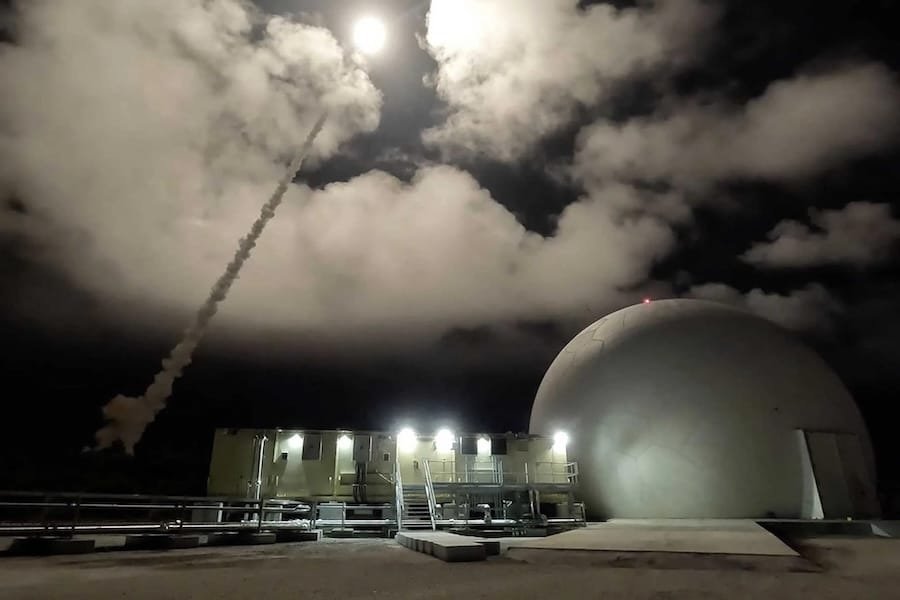
U.S
FORT BLISS, Texas — Lockheed Martin has demonstrated an artificial intelligence-powered Guam Defense System (GDS) Battle Manager Suite designed to connect the Aegis Guam combat system with the U.S. Army’s Integrated Battle Command System (IBCS) and other integrated air and missile defense capabilities. The prototype reached the second stage of a U.S. Army evaluation in less than two months after the Army issued a request for a battle-management solution in June 2026. The demonstration was conducted in a simulated Guam operational environment at the Army Tactical Systems Integration Lab at Fort Bliss. The system uses Lockheed Martin’s CommandIQ platform to continuously process hundreds of incoming tracks. Using algorithms informed by thousands of pre-run simulations, it ranks possible responses and recommends weapon assignments for individual threats. During the demonstration, the suite combined live data from multiple integrated air and missile defense systems into a single common tactical picture. Commanders could view sensor tracks, available munitions and engagement opportunities across the joint operating area in real time. Lockheed Martin said the system is intended to reduce the manual coordination normally required for integrated air and missile defense, including voice calls, text messages, physical documents and manual calculations. Its automated recommendations are designed to support faster decisions and more efficient use of high-cost interceptors. “In missile defense, seconds can determine whether an operator protects a populated island or exhausts precious interceptors,” said Tiffany Marr, director of CommandIQ, Golden Dome for America C2 and Advanced Concepts at Lockheed Martin. She said the system provides commanders with real-time information on sensors, weapon systems and munition loadouts while recommending the optimal weapon for incoming threats. The prototype was installed and integrated within 24 hours of arriving at the Fort Bliss laboratory and met all required demonstration criteria during its one-week fielding period. The Battle Manager Suite uses an open architecture, allowing it to accept pre-planned warfighter responses, Air Tasking Orders, Airspace Control Orders and missile-defense designs. It can also incorporate software from other defense technology companies without requiring the entire system to be rebuilt. The latest demonstration follows Lockheed Martin’s earlier software-based command-and-control integration work during Valiant Shield 2026, where the company demonstrated the connection of capabilities including Aegis Guam, AN/TPY-6 radar, THAAD, C2BMC, IBCS and other air and missile defense assets to support a common tactical picture and coordinated decision-making. The Army’s Battle Manager Suite effort is part of broader work to integrate more than 20 programs and prototypes supporting Guam’s defense. The competition includes multiple phases, with a formal prototype proposal stage expected later and an award targeted for the first quarter of fiscal year 2027.
Read More → Posted on 2026-08-27 11:58:32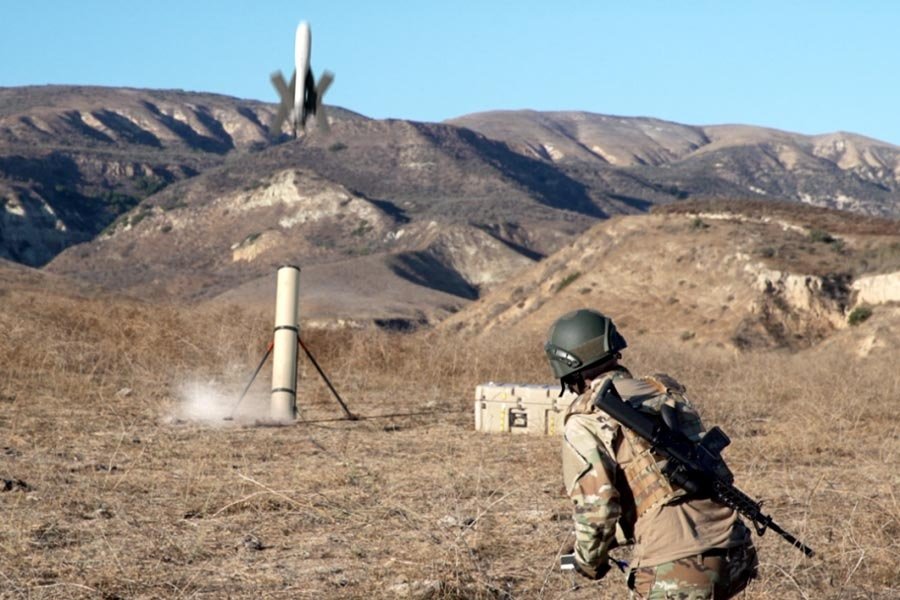
U.S
ARLINGTON, Va., — AeroVironment has received a $51 million delivery order from the U.S. Army for additional Switchblade 600 loitering munition systems. The order includes Switchblade 600 Block 2 systems for the U.S. military and Switchblade 600 Block 1 systems supporting a Foreign Military Sale to a key U.S. ally, according to the company. The order was placed under the Army’s existing five-year, $990 million Indefinite Delivery, Indefinite Quantity (IDIQ) contract for Lethal Unmanned Systems (LUS), awarded in August 2024. The latest award follows the Army’s earlier procurement of AeroVironment’s next-generation Switchblade systems under the same contract. Switchblade 600 Block 2 The Switchblade 600 Block 2 is designed for multi-domain operations and has been ruggedized for maritime and highly contested environments. AeroVironment developed the variant in collaboration with U.S. Special Operations Command (SOCOM). The system features upgraded avionics and advanced Automatic Target Recognition (ATR) capabilities, including SPOTR AiTR, intended to support faster detection, identification and engagement of threats. It also incorporates Silvus MANET radios for resilient communications and distributed operations. The Block 2 also includes improved navigation and mission-resilience capabilities for operations in GPS-challenged environments. AeroVironment's published specifications list an endurance of more than 50 minutes, while its handoff and relay capability can extend beyond 100 kilometers. The system has a stated range of more than 60 kilometers, with the company listing more than 100 kilometers when using Forward Pass. It carries an anti-armor munition and has a secondary payload bay. The company also lists a setup and launch time of less than 10 minutes and an IP67 rating for maritime applications. Growing U.S. Army Procurement AeroVironment said Switchblade 600 systems have been fielded across more than 20 U.S. brigade combat teams since 2025, with hundreds of U.S. soldiers trained in their operation and employment. Brian Young, AeroVironment’s Senior Vice President of Loitering Munitions, said the continued Army investment reflects demand for long-range precision loitering munitions and the performance of the Switchblade family. Young said the Block 2 builds on the Block 1 configuration with upgrades in autonomy, resilience and lethality for contested, multi-domain operations. AeroVironment also said it is expanding manufacturing capacity and working to accelerate delivery timelines as demand increases. The Army previously awarded AeroVironment a $186 million delivery order in February 2026 for Switchblade 600 Block 2 and Switchblade 300 Block 20 systems. That order was the Army’s first procurement of AeroVironment’s next-generation Switchblade product line. The new $51 million order continues procurement under the broader Lethal Unmanned Systems contract, supporting Switchblade deliveries to U.S. forces and allied customers.
Read More → Posted on 2026-08-26 16:45:11
U.S
SAN DIEGO — The U.S. Navy has awarded BAE Systems a $149.8 million firm-fixed-price contract for maintenance, modernization and repairs on the amphibious assault ship USS Boxer (LHD 4). If all options are exercised, the total value could reach $180 million. The work will be conducted under a Selected Restricted Availability (SRA) at Naval Base San Diego, the ship’s homeport. It is scheduled to begin during the fiscal 2027 availability window and is expected to be completed by October 2028. The contract covers labor, supervision, equipment, testing, facilities and quality assurance required for the Chief of Naval Operations availability. Naval Sea Systems Command in Washington is the contracting activity. Three companies competed under full and open competition. Funding includes about $144.7 million in fiscal 2026 Navy procurement funds and $5 million in operations and maintenance funds. “Critical maintenance of the USS Boxer will support the U.S. Navy’s vital mission to continue defending our nation,” said Eric Icke, vice president and general manager of BAE Systems Maritime Solutions San Diego. USS Boxer and Previous Maintenance USS Boxer is a Wasp-class amphibious assault ship commissioned on February 11, 1995, and is the sixth U.S. Navy vessel to carry the name. The ship is approximately 844 feet long, has a beam of about 106 feet, and displaces around 40,500 tons fully loaded. It supports amphibious operations, carries Marines and their equipment, and operates aircraft and landing craft. It serves as the flagship of an amphibious ready group. BAE Systems’ San Diego shipyard previously received an approximately $200 million contract in 2020 for Boxer maintenance and modernization. That work included upgrades supporting F-35B operations, as well as hull, tank and mechanical work. In April 2024, Boxer returned to San Diego about 10 days into a deployment after a rudder and bearing failure. Divers conducted pier-side repairs over roughly two months. The Navy had also planned a separate longer maintenance period for the ship. Boxer has since returned to regular operations and received recognition for performance and readiness. BAE Systems Ship Services The contract is part of BAE Systems’ broader ship services business, which provides repair, maintenance, modernization, conversion and overhaul services for the Navy, other government agencies and commercial maritime customers. BAE Systems operates full-service shipyards in California, Florida and Virginia, with drydocks, shiplifts, railway systems, land-level work areas and pier space for major ship support operations. The new contract supports the Navy’s ongoing effort to maintain the readiness of its amphibious fleet.
Read More → Posted on 2026-08-26 16:40:40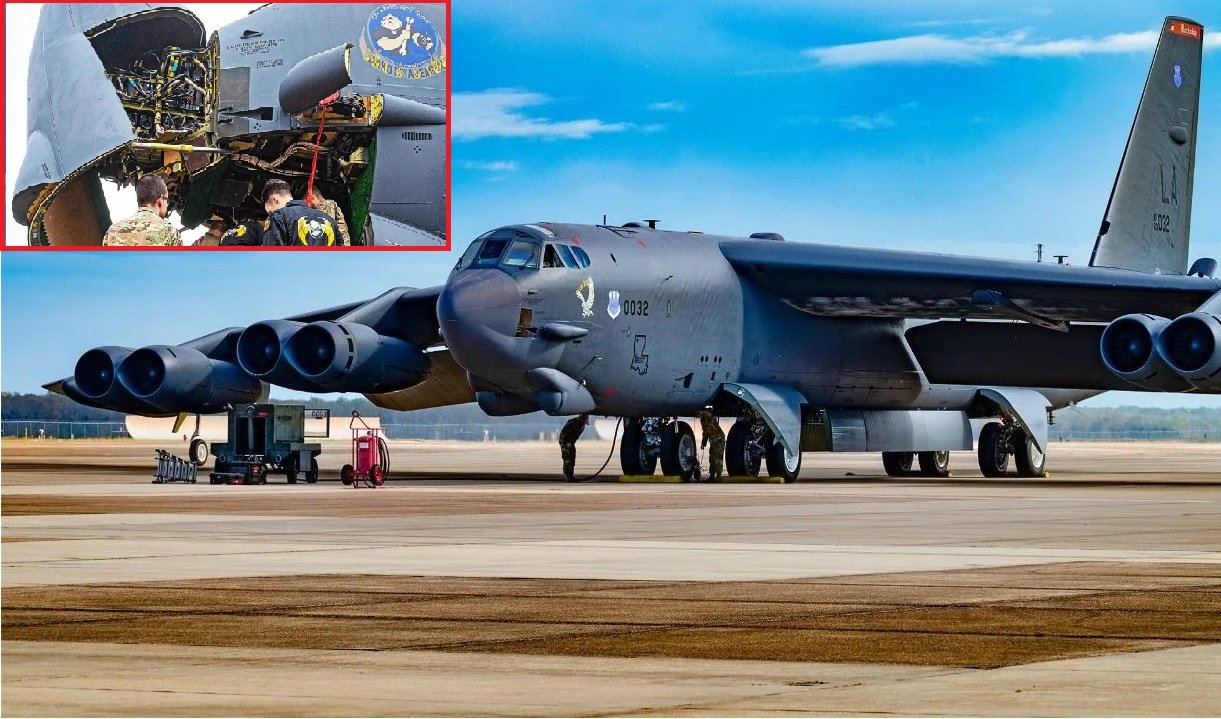
U.S
WASHINGTON — The U.S. Air Force has awarded Raytheon a $603 million ceiling indefinite-delivery/indefinite-quantity contract for the production and sustainment of new radar systems for the B-52 Stratofortress fleet. The August 21, 2026, sole-source contract covers the AN/APQ-188 Active Electronically Scanned Array (AESA) radar, which will replace the B-52H’s legacy AN/APQ-166 mechanical analog radar. The Air Force has obligated $46,008,396 in fiscal 2026 aircraft procurement funds through the initial delivery order. The Air Force Life Cycle Management Center at Wright-Patterson Air Force Base, Ohio, is the contracting activity under contract FA8628-26-D-B001. Work will be performed in Forrest, Mississippi; El Segundo, California; McKinney, Texas; and Warner Robins, Georgia, with completion expected by August 20, 2031. New Radar Capabilities The AN/APQ-188, also known as the Bomber Modernized Radar System, was developed by Raytheon and is derived primarily from the AN/APG-79 AESA radar used on the Navy’s F/A-18E/F Super Hornet and EA-18G Growler, with additional technology from the AN/APG-82 used on F-15 aircraft. A larger antenna was adapted for installation on the B-52. The radar provides high-resolution mapping, improved all-weather navigation, enhanced target detection and tracking, and electronic warfare support. The Air Force selected existing radar technology to limit development costs while adding modern capabilities to the bomber. Part of B-52J Modernization The radar replacement is part of the wider B-52 modernization program. The Air Force plans to install the system across its 76 B-52H bombers. Other major upgrades include the replacement of the existing engines with Rolls-Royce F130 engines. These changes will transition the aircraft to the B-52J configuration and support operations into the 2050s. The radar program has faced schedule delays and rising costs. Initial flight testing was pushed from fiscal 2024 to 2026. The first modified test aircraft arrived at Edwards Air Force Base in December 2025. On June 15, 2026, it crashed shortly after takeoff during a local test mission supporting the radar program, killing all eight crew members aboard. A second B-52H test aircraft is undergoing modification and radar installation at Boeing’s facility in San Antonio, Texas. It is expected to take over flight evaluations after the work is completed later this year. A separate delivery order was also issued to Boeing for bomb rack modernization system kits, valued at up to approximately $163 million, with work in San Antonio expected to continue through December 2028. The latest Raytheon contract provides for production and long-term sustainment of the new radar as the Air Force continues the B-52 fleet modernization program.
Read More → Posted on 2026-08-26 14:16:39
U.S
Mérignac, France, — Photonis Defense, the U.S. subsidiary of Exosens, has received its first delivery order from the U.S. Army for 1,600 complete Binocular Night Observation Device (BiNOD) systems. The order begins the Low-Rate Initial Production (LRIP) phase of the Army’s BiNOD program after the completion of key testing and qualification work. The first systems are expected to be delivered by the end of 2026, with most of the 1,600 systems scheduled for delivery throughout 2027. The order is part of a broader Indefinite-Delivery/Indefinite-Quantity (IDIQ) contract awarded to Photonis Defense in March 2026. The contract has a maximum value of $352.6 million and covers BiNOD development, production and testing through an estimated completion date of February 27, 2033. The financial terms of the 1,600-system order were not disclosed. Photonis Defense will manufacture and test the complete systems at its U.S. facilities, integrating high-performance image intensifier tubes supplied by Exosens. The company’s U.S. capabilities include development, production and testing facilities, including its site in Sturbridge, Massachusetts. The BiNOD, previously known as Night Vision Device–Next, is a helmet-mounted night-vision system designed to amplify available light and improve soldiers’ visibility during low-light and nighttime operations. The systems are intended to provide lightweight night-vision capability while meeting U.S. Army requirements for performance, quality and delivery schedules. The wider BiNOD program includes three contractors selected through a competition that began with six bidders. L3Harris received an IDIQ contract valued at approximately $466 million, while Elbit Systems of America – Night Vision received one valued at approximately $450.6 million. All three contracts cover development, production and testing through 2033. Exosens CEO Jérôme Cerisier said the LRIP phase marks a key milestone in the company’s U.S. expansion and supports its strategy of combining night-vision technology with U.S.-based industrial capabilities. Photonis Defense CEO Shanna Owens said the company remains focused on delivering advanced night-vision systems and supporting the modernization of U.S. Army soldier equipment. The new order establishes the basis for regular BiNOD production at Photonis Defense’s U.S. factory, with deliveries beginning in 2026 and continuing through 2027.
Read More → Posted on 2026-08-26 13:49:55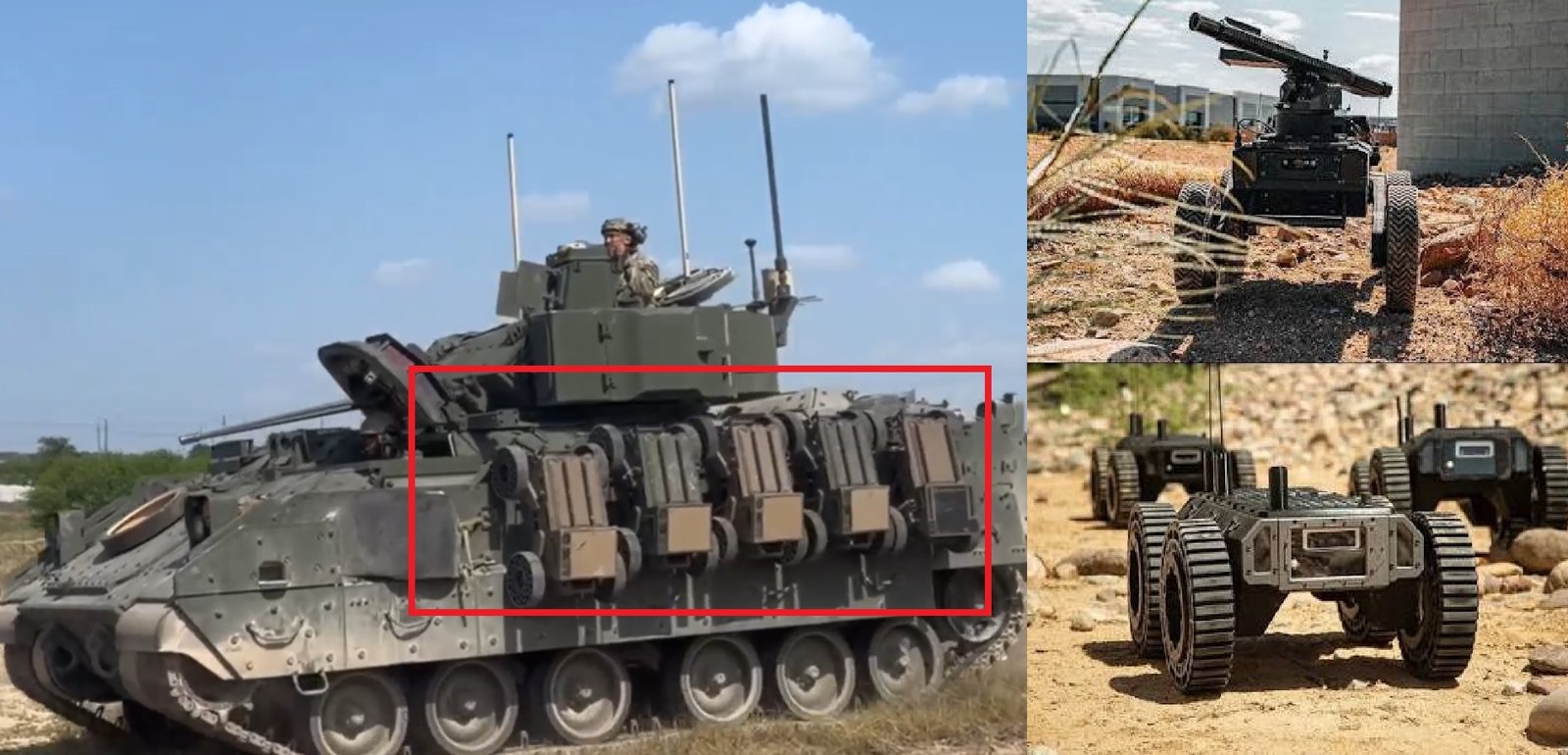
U.S
Fort Hood, Texas — A U.S. Army 1st Cavalry Division M2A4 Bradley Infantry Fighting Vehicle has been seen carrying five FireAnt unmanned ground vehicles (UGVs) developed by Arizona-based Swarmbotics AI during the division’s Pegasus Charge activities. A video shared by Swarmbotics AI on LinkedIn shows the five robots mounted on the Bradley’s side storage racks. The company said the systems were involved in “ground swarms making movement to contact” during Pegasus Charge 3 with the 1st Cavalry Division. 🇺🇸 A 1st Cavalry Division M2A4 Bradley has been seen carrying five FireAnt UGVs during Pegasus Charge 3 at Fort Hood, Texas.The 27-kg attritable robots support swarm operations and can be configured for ISR, EW, counter-drone and anti-armor missions. pic.twitter.com/DaLsCcDSmN — The Defense News (@TheDefenseNews) August 26, 2026 FireAnt is part of Swarmbotics AI’s ANTS (Attritable Networked Tactical Swarm) family. The company describes it as a man-portable, attritable UGV weighing about 27 kg, designed for AI-enabled swarm operations. Its modular payload architecture supports missions including intelligence, surveillance and reconnaissance (ISR), electronic warfare (EW), communications relay, counter-unmanned aircraft systems and anti-armor operations. Swarmbotics AI says FireAnt can use different payloads, including configurations for anti-armor effects, while its swarm system allows multiple robots to coordinate through a decentralized mesh network. The company has described control of groups of six to eight FireAnts by a single operator, with the robots sharing information and coordinating tasks. The FireAnt has already been evaluated by the U.S. Army. Soldiers from the 1st Cavalry Division assessed autonomous ground systems during xTechOverwatch in October 2025. In February 2026, the Army selected Swarmbotics AI to continue development of swarming, attritable small UGVs with the 1st Cavalry Division as part of its Transforming in Contact effort. FireAnt was also tested during Project Golden Shield at Fort Hood, Texas, in April 2026. The 1st Cavalry Division used the exercise to evaluate counter-drone technologies, with a FireAnt V4 autonomous ground vehicle among the systems tested. Pegasus Charge is the 1st Cavalry Division’s approach to the Army’s Transforming in Contact initiative. It focuses not only on new equipment but also on changes to how the division organizes, trains and operates, including the integration of emerging unmanned and autonomous systems. The FireAnt remains under development and testing. Its appearance on a Bradley during Pegasus Charge 3 shows the Army is continuing to examine how small autonomous ground robots can be transported and employed directly with armored formations.
Read More → Posted on 2026-08-26 13:03:49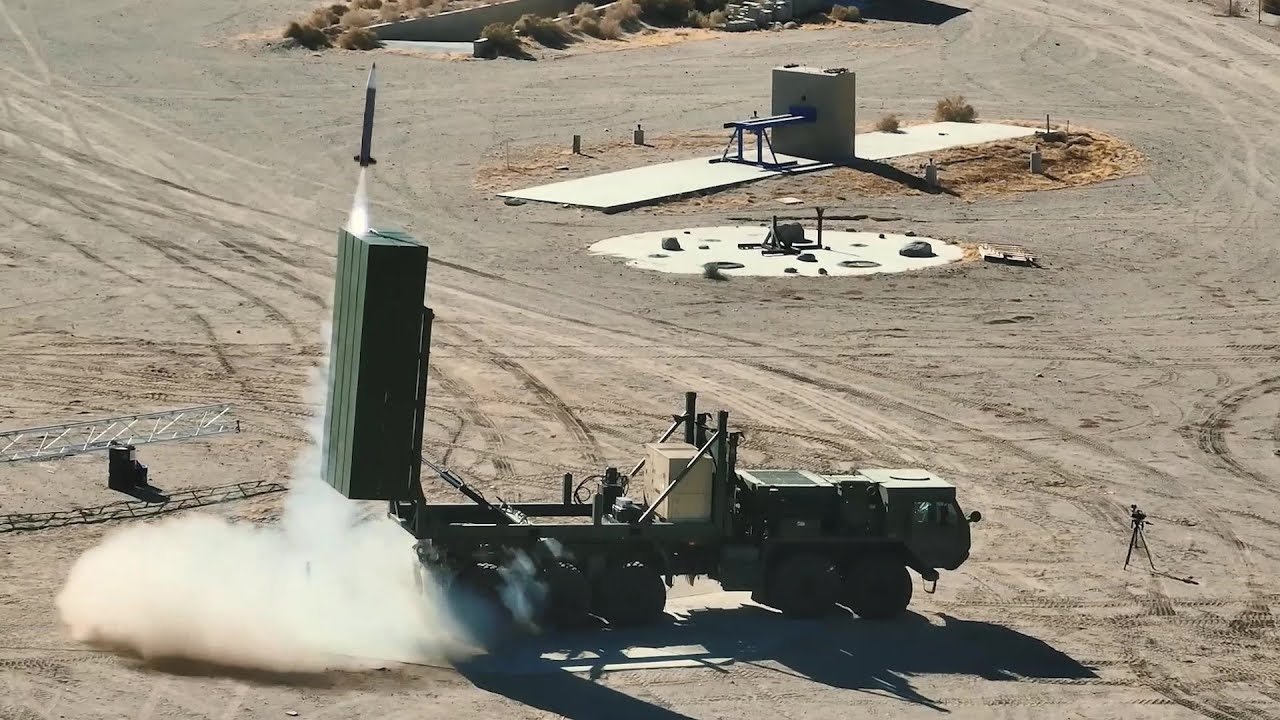
U.S
WASHINGTON — The U.S. Navy has awarded Castelion an $89.997 million firm-fixed-price order to advance the company’s Blackbeard hypersonic weapon toward Early Operational Capability (EOC). The order, issued under the Navy’s Small Business Innovation Research (SBIR) Phase III effort, provides funding for engineering, technical, logistics and manufacturing services for the Blackbeard program. The effort is part of the Navy’s “Low Cost Highly Manufacturable Long Range Strike Weapon Production” initiative. The contract will support the development of 50 EOC weapons and Blackbeard’s transition into a formal Navy Program of Record. It also includes funding for Defense Exportability Features design modifications intended to support potential future exports to U.S. allies and partners. Work will be performed at Castelion’s facility in Torrance, California, with completion scheduled for August 2028. The Navy said the contract was not competed and was awarded through the previously established basic ordering agreement with Castelion. Blackbeard Moves Toward Production The latest award follows several Navy contracts supporting Blackbeard’s development and transition toward operational use. In February 2026, the Navy awarded Castelion a $49.9 million contract to advance Blackbeard from the prototype stage toward integrated Early Operational Capability. In April, Castelion received a further $104.99 million Navy contract modification supporting final EOC requirements, test and integration configurations, and live-fire test events in the Indo-Pacific region. In June, the Navy awarded Castelion another $23.4 million order for the production and delivery of 50 Blackbeard EOC pre-production prototypes and 50 associated storage and shipping containers. That work is being performed primarily at Castelion’s Project Ranger manufacturing campus in Rio Rancho, New Mexico. The Navy’s latest order therefore expands the program’s production and engineering effort while supporting its transition from development and flight testing toward operationally relevant production. Production Plans Castelion has been developing Blackbeard around a low-cost and highly manufacturable approach. In May 2026, the company announced a production framework agreement with the U.S. Department of War that provides for a minimum production rate of 500 Blackbeard weapons annually once testing and validation are completed, with a pathway for additional purchases. Castelion has also been expanding its manufacturing infrastructure. Its Project Ranger facility in New Mexico is intended to support production of hypersonic weapons at scale. In August, the company announced a $1 billion Series C financing round, saying the funding would be used in part to increase Blackbeard production capacity. The latest Navy contract does not by itself establish a final fleet-wide procurement quantity or confirm the completion of operational testing. Instead, it provides additional funding for the 50-weapon EOC effort, manufacturing activities and the transition of Blackbeard into a formal Navy program.
Read More → Posted on 2026-08-26 11:30:12
U.S
WASHINGTON — The United States has formally removed Syria from its list of State Sponsors of Terrorism, ending a designation that had been in place since 1979 and removing a major U.S. policy barrier to investment and economic activity in the country. U.S. Secretary of State Marco Rubio authorized the formal rescission on August 24 after the mandatory 45-day congressional review period ended without lawmakers blocking the decision. President Donald Trump had notified Congress on July 8 of his administration’s intention to remove Syria from the list following his meeting with Syrian President Ahmed al-Sharaa in Ankara. Rubio said the decision was taken in recognition of actions and further commitments by the Syrian government under al-Sharaa to distance Syria from international terrorism. He also cited Syria’s counterterrorism activities, including its cooperation against ISIS and other militant networks. HTS designation also revoked The State Department also revoked the designation of al-Nusrah Front, also known as Hay’at Tahrir al-Sham (HTS), as a Specially Designated Global Terrorist organization. The Treasury Department’s Office of Foreign Assets Control (OFAC) separately removed HTS from the Specially Designated Nationals and Blocked Persons List. The move follows the State Department’s July 2025 decision to revoke HTS’s designation as a Foreign Terrorist Organization. Treasury Secretary Scott Bessent said the latest action fulfills President Trump’s commitment to provide sanctions relief to Syria and said it would help encourage additional investment and support political and economic stability. Impact on financial and economic activity Syria’s State Sponsor of Terrorism designation had imposed restrictions involving U.S. foreign assistance, defense sales and exports, as well as certain dual-use goods. The designation also created additional compliance requirements for companies considering business activity in the country. The latest action removes Syria from the prohibitions under the U.S. Terrorism List Governments Sanctions Regulations. U.S. financial institutions can provide services involving Syrian banks and process related payments when no sanctioned parties are involved. The U.S. administration has already taken several steps to reduce restrictions on Syria. These include the June 2025 executive order that terminated the broader Syria sanctions program and related national emergency, as well as earlier measures concerning HTS and al-Sharaa. Congress has also taken action to lift sanctions under the Caesar Syria Civilian Protection Act. The Commerce Department is expected to review export-control rules connected to Syria. However, the timing of any new guidance remains unclear. Syria seeks investment for reconstruction The decision comes as Syria seeks international investment and financial support for reconstruction after more than 13 years of conflict. The World Bank estimates Syria’s reconstruction costs at about $216 billion, based on its assessment of damage to infrastructure and buildings between 2011 and 2024. The assessment found direct physical damage of about $108 billion, with infrastructure accounting for the largest share. Syrian officials have welcomed the U.S. decision, describing it as an important step toward reconnecting the country with international financial and economic systems and attracting foreign investment. The move also follows growing engagement between Washington and Damascus since the fall of Bashar al-Assad’s government in December 2024. The Trump administration has cited Syria’s counterterrorism cooperation and commitments regarding future support for international terrorism as factors in its decision to remove the designation. Three countries remain on U.S. list With Syria’s removal, the U.S. State Sponsors of Terrorism list now contains Cuba, Iran and North Korea. The removal of Syria from the list does not mean that all U.S. sanctions or restrictions concerning Syrian individuals and entities have ended. Treasury has stated that sanctions can continue to apply to individuals, organizations and activities that remain subject to separate U.S. authorities. The decision represents a further change in U.S. policy toward Syria and removes one of the major restrictions that had complicated international investment and financial activity involving the country.
Read More → Posted on 2026-08-25 13:10:03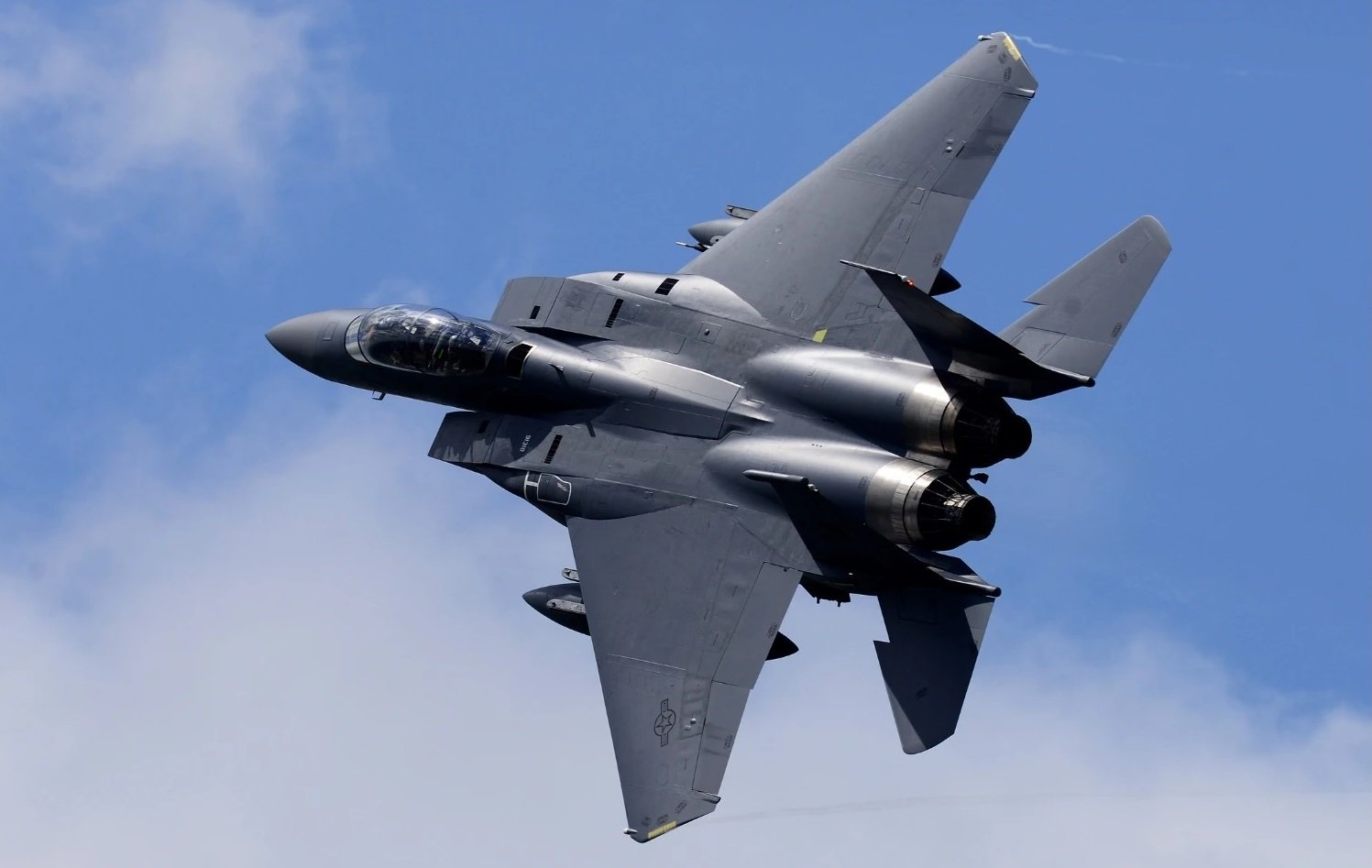
U.S
St. Louis, Missouri — The U.S. Department of War has awarded Boeing an indefinite-delivery/indefinite-quantity (IDIQ) contract with a ceiling value of $131.23 billion for the F-15 Eagle Crest program. The agreement covers F-15 aircraft production, systems integration, modernization, upgrades, retrofits, sustainment and the establishment of organic depot maintenance capabilities. The contract supports F-15 operations for the U.S. Air Force, Air National Guard and other Department of War customers. It also provides a framework for Foreign Military Sales to Japan, Israel, Saudi Arabia, South Korea, Singapore, Indonesia and Poland. Contract Structure The $131.23 billion figure is the maximum potential value of the IDIQ contract and does not represent an immediate payment or a single aircraft order. Individual orders can be placed as requirements arise during the contract period. At the time of award, $343,740 in fiscal 2026 research, development, test and evaluation funds was obligated. The contract was awarded on a sole-source basis. The initial ordering period runs through August 24, 2031, with an option to extend ordering through August 24, 2036. Work is expected to continue through August 2037, with the primary work location in St. Louis, Missouri. The Air Force Life Cycle Management Center at Wright-Patterson Air Force Base, Ohio, is the contracting activity. F-15 Production and Modernization The framework covers capabilities associated with the F-15 Eagle Weapon System, including production of new aircraft, systems integration, modernization, upgrades, retrofits and sustainment. It also includes the establishment of organic depot maintenance capabilities for F-15 aircraft. For the United States, the agreement provides a mechanism for additional F-15 procurement and modernization beyond the previously planned fleet of about 100 F-15EX aircraft. The F-15EX Eagle II is intended to support the replacement of aging F-15E Strike Eagles as the U.S. Air Force continues to maintain its heavy strike capability. Foreign Military Sales The Eagle Crest framework also supports potential Foreign Military Sales involving Japan, Israel, Saudi Arabia, South Korea, Singapore, Indonesia and Poland. Existing F-15 operators can use the framework for new aircraft or upgrades to aircraft already in service. Boeing already has a production contract for F-15EX Eagle II aircraft for Israel and continues to market the aircraft to other potential customers, including Saudi Arabia. Indonesia has discussed acquiring up to 36 F-15EX fighters, which have been associated with the F-15IDN designation. However, a government-to-government Letter of Offer and Acceptance has not yet been approved. Poland has also been identified as a potential customer for 36 aircraft. Warsaw has not made an official commitment, and the U.S. State Department has not announced approval of a possible Polish request. The Eagle Crest contract therefore establishes a long-term framework through which the United States and eligible international customers can order new F-15 aircraft, modernization packages and other F-15 support as requirements are approved.
Read More → Posted on 2026-08-25 13:00:50
U.S
WASHINGTON — U.S. President Donald Trump has announced that tariffs on all Canadian cars, trucks, automotive parts and steel will rise to 50% from January 1, 2027, escalating the trade dispute after U.S.-Canada negotiations collapsed over the weekend. In a Truth Social post, Trump accused Canada of “ripping off” the United States for years, citing Canadian tariffs on American agricultural products. He said these policies had contributed to a $60 billion U.S.-Canada trade deficit and called the situation unsustainable. Trump also said U.S.-built vehicles would face zero tariffs and argued that Canada depends heavily on the American market. The announcement follows the introduction on Saturday of 50% U.S. tariffs on about $20 billion of Canadian goods, including wine, dairy, cement, clothing, furniture and hockey equipment. The tariffs were imposed under Section 338 of the Tariff Act of 1930 and affect about 5% of Canadian exports to the United States. Energy, potash, fish and certain critical minerals were excluded. The United States currently applies a 25% tariff on Canadian automobiles, with adjustments for U.S. content under the USMCA, while steel tariffs are already at 50%. The planned 2027 measure would increase the auto rate and apply the 50% rate more broadly to automotive parts. Trade Talks Collapse Canadian Prime Minister Mark Carney suspended negotiations, saying last-minute U.S. demands were “unfair” and “uneconomic.” The United States had sought measures including a 4-million-ton quota on Canadian steel exports, changes to Canada's dairy supply-management licensing system and automotive rules under which only American-made content would qualify for tariff exemptions. The talks had appeared close to a possible agreement earlier in the week after Washington temporarily paused the $20 billion tariff package. However, the two sides failed to finalize a deal, and no new round of talks is currently scheduled. Canada Prepares Retaliation Canada plans to impose dollar-for-dollar retaliatory tariffs on U.S. goods from September 8. The measures are expected to target steel, dairy products, appliances, agricultural equipment, pulp and paper, and electronics, although the final details are still being prepared. The Canadian Federation of Independent Business estimates that 40% of small Canadian exporters will be directly affected by the initial U.S. tariffs, with nearly one-third expecting their revenues to fall by half or more. U.S. lawmakers from border states have also warned that the dispute could increase consumer prices and disrupt supply chains. The North American automotive industry is particularly exposed because manufacturers operate on both sides of the U.S.-Canada border. Industry observers have noted that previous major tariff announcements have sometimes been modified or delayed, but the announced January 2027 measures remain the current policy. Canada is one of the largest sources of U.S. imports, with bilateral goods trade worth hundreds of billions of dollars annually. The latest measures add to sector-specific U.S. tariffs that have been in place since 2025 and further increase pressure on both governments to reach a new trade agreement.
Read More → Posted on 2026-08-24 15:42:42
U.S
SAN DIEGO, — Kratos Defense & Security Solutions, Inc. is allocating part of its expanded Spartan engine production capacity to supply TDI-J85 turbojet engines for Boeing’s Joint Direct Attack Munition Long Range (JDAM LR) production program. Earlier this month, the U.S. Air Force awarded Boeing a $75 million Undefinitized Contract Action (UCA) to acquire the BSU-111/B Payload Delivery Unit (PDU) for JDAM LR. The weapon can travel more than 300 nautical miles (555 km) while carrying a 500-pound-class (226-kg) payload. JDAM LR combines the existing JDAM guidance kit with a wing kit and a compact turbojet engine. It is designed for precision conventional land strike, naval strike and maritime aerial-mining missions. The system is intended for aircraft already certified to carry conventional JDAM weapons, including the F/A-18 Super Hornet, F-15E, certain bombers and the MQ-9A Reaper. Boeing has invested nearly $100 million of its own funds in the program. During flight testing in early April 2026, a U.S. Navy F/A-18 Super Hornet launched JDAM LR off the California coast, with the test successfully demonstrating engine start, cruise and guided flight over nearly 200 nautical miles. Kratos J85 Engine The JDAM LR is powered by Kratos’ TDI-J85, part of the company’s Spartan family of low-cost, compact military turbojet engines developed for uncrewed aerial systems and tactical missiles. The J85 produces up to 200 pounds of thrust at sea-level static conditions. It is approximately 8.5 inches in diameter and 14.3 inches long, weighs about 30 pounds, and can operate at up to 40,000 feet and Mach 0.90. The engine includes an integral generator providing up to 1.5 kW of continuous electrical power. It can use JP-10, JP-8, JP-5, Jet-A and Jet-A1 fuels and supports pyrotechnic, windmill and electric starting methods. Kratos says the engines are 100 percent designed and produced in the United States. Production Expansion Production is taking place at Kratos’ 22,500-square-foot Propulsion Manufacturing Facility in Auburn Hills, Michigan. The facility is fully operational and configured for sustained full-rate production. It can manufacture all four engines in the Spartan family concurrently, covering thrust levels from about 30 to more than 200 pounds, with production capacity exceeding 50,000 engines per year. The facility opened in late 2025 and includes manufacturing, assembly and multi-station testing capabilities. Kratos has begun procuring long-lead components for Spartan engines to support a large production run for multiple customers and applications in 2027. The Boeing JDAM LR program is a key application, with the J85 originally designed with this use in mind. The company is also implementing a three-phase manufacturing infrastructure plan to further increase production capacity. Broader plans call for approximately 3,000 Spartan engines in 2027 and 5,000 in 2028 for missile, loitering-munition and related programs. Kratos Unmanned Systems President Steve Fendley said the company’s internally funded supply-chain investments are intended to support affordable mass production and resilient domestic supply chains. Kratos TDI Senior Vice President Joseph Kovasity said the Auburn Hills facility’s operational readiness marks the transition from engineering development to high-rate tactical manufacturing and provides a scalable, domestically sourced propulsion solution for JDAM LR. Kratos and Boeing first formalized cooperation on the powered JDAM concept through a 2023 memorandum of understanding. The current production support builds on that cooperation and Kratos’ investment in U.S.-based Spartan engine manufacturing.
Read More → Posted on 2026-08-24 15:30:27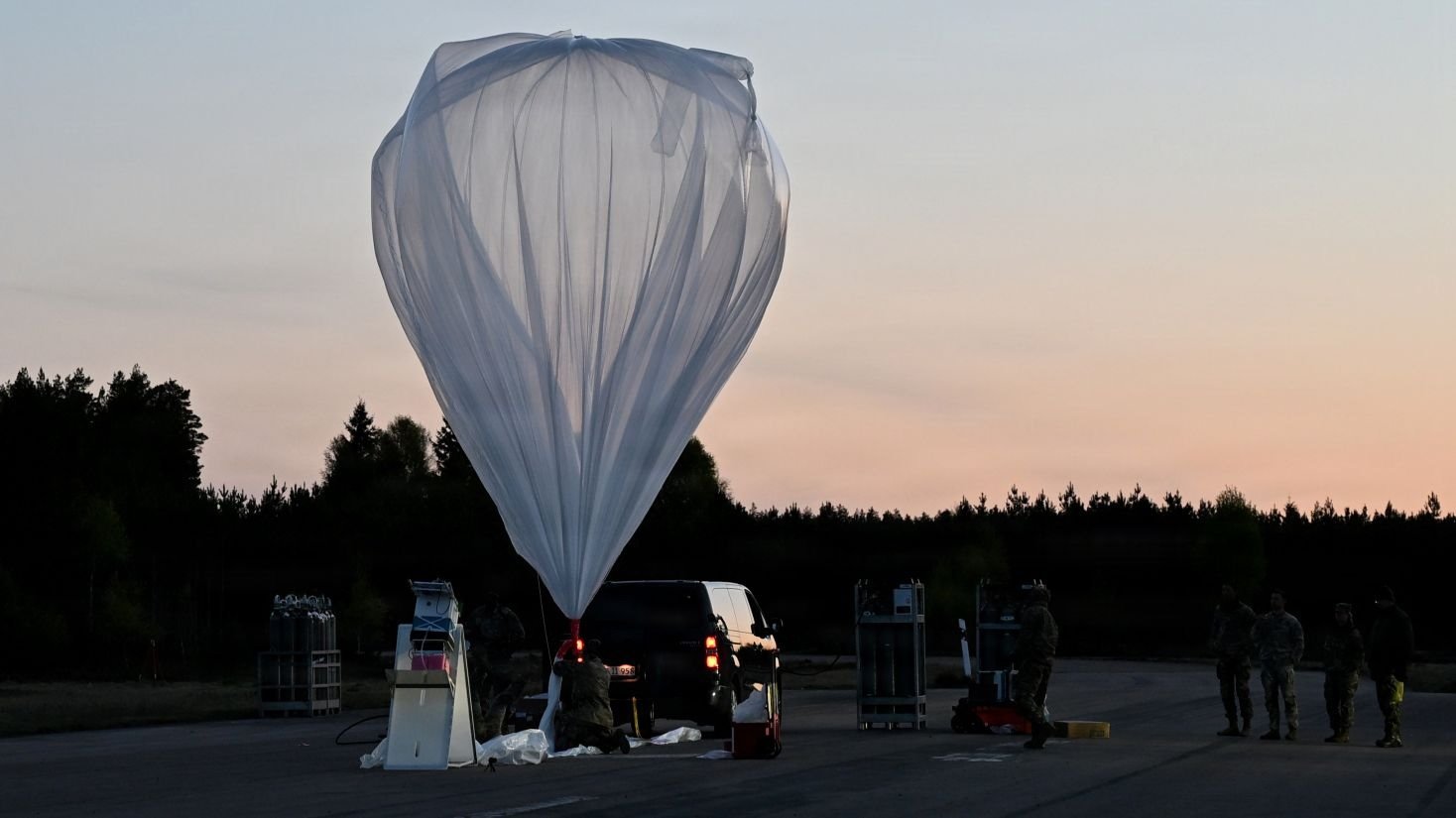
U.S
POWIDZ, Poland — The U.S. Army has completed a series of micro high-altitude balloon tests in Poland during Exercise Cold Raptor, evaluating the platforms for intelligence, surveillance and reconnaissance (ISR), communications relay and electronic warfare support. Launched from Powidz, a major U.S. military logistics and aviation hub in western Poland, the balloons traveled about 305 kilometers (190 miles) before being recovered near the Baltic Sea town of Ustka. Flying in the stratosphere at 18–21 kilometers (60,000–70,000 feet), the balloons operate above commercial airliners and weather systems. Each balloon stands about 10 meters (33 feet) when inflated and can carry payloads weighing 9–20 kilograms (20–45 pounds). The payloads include ISR sensors, communications equipment and navigation warfare technologies, while some Cold Raptor flights carried experimental systems for communications extension and domain awareness. According to Multi-Domain Command-Europe (MDC-E), the balloons provide "organic coverage and dynamic augmentation" as a cost-effective, launch-on-demand capability that can quickly strengthen battlefield sensing and communications when traditional networks face disruption. The exercise also tested decentralized operations, with launch teams in Powidz and separate crews remotely monitoring and controlling flight paths while maintaining continuous communications. U.S. and Polish soldiers jointly conducted recovery operations, while coordination with host-nation authorities and civilian aviation agencies ensured safe flights across Europe's tightly managed airspace. Cold Raptor supports NATO's Eastern Flank Deterrence Initiative and is part of a broader Army program that has completed more than 50 stratospheric balloon launches over the past year, including tests in California and launches from Sweden during Exercises Sword 26 and Aurora 26. The Army will now evaluate the Poland test data to guide future equipment development and procurement decisions, as it continues integrating high-altitude balloons with drones and electronic warfare systems in multi-domain operations.
Read More → Posted on 2026-08-24 13:32:02Search
Top Trending in 24 Hours
-
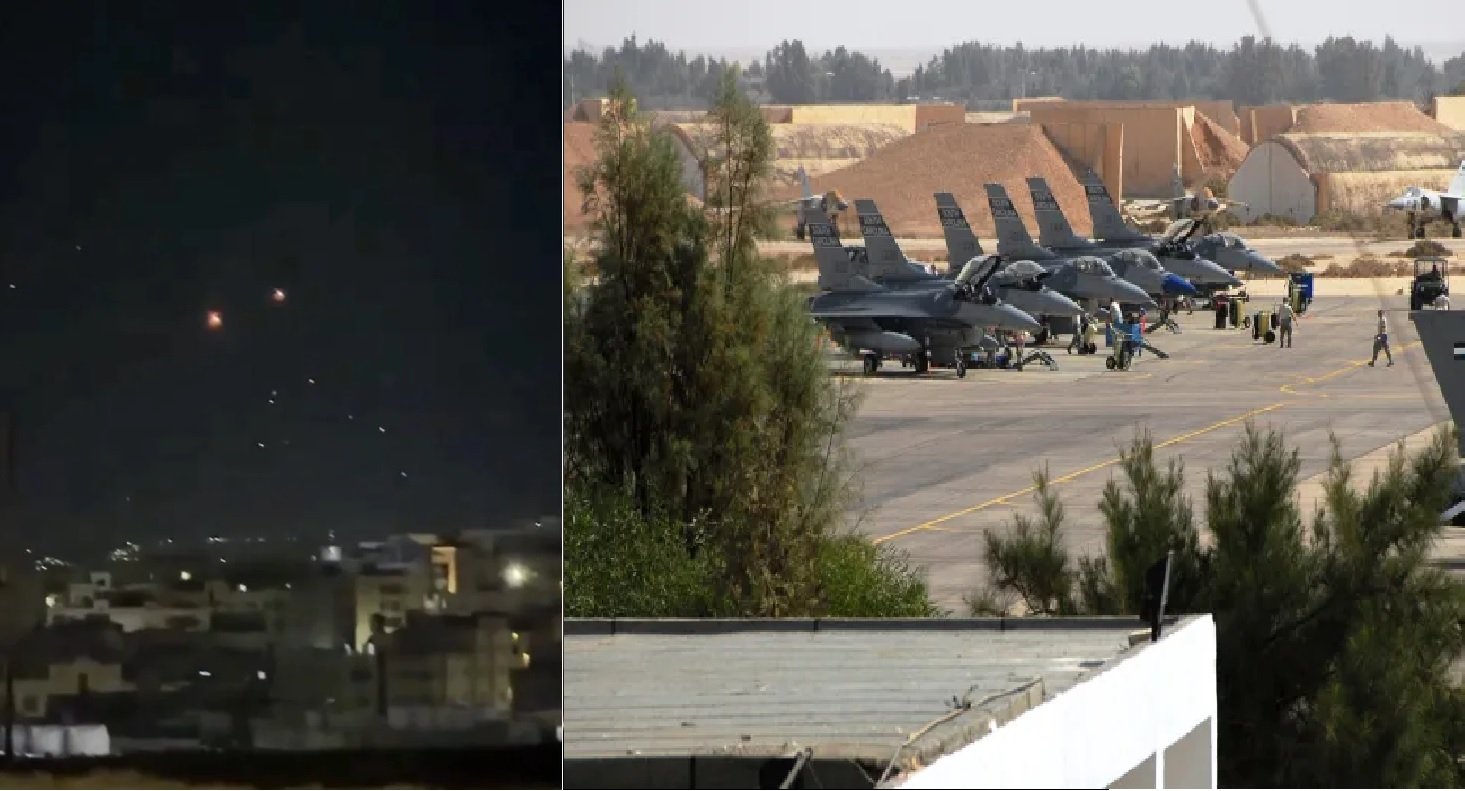 Iranian Missile Strike Damaged U.S. A-10 and Eight F-15s at Jordan Air Base, CBS Reports
-
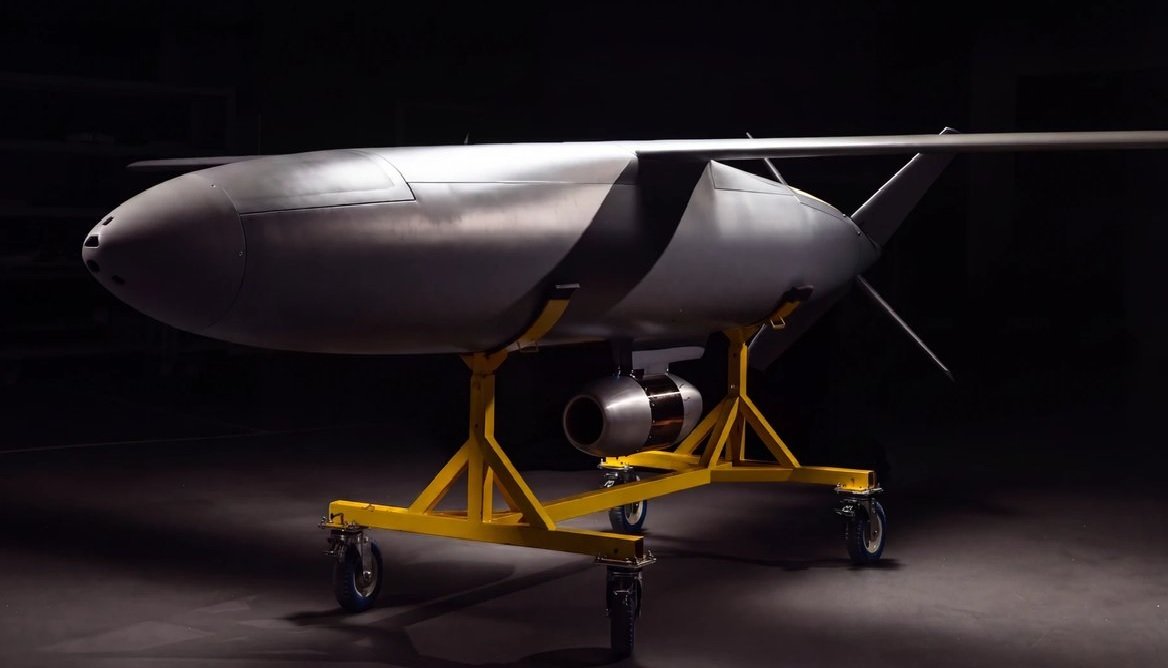 U.S. Startup Covenant Emerges From Stealth With $250 Million Funding and Anthem, a New Long-Range Heavy-Payload Strike Missile After More Than 200 Test Flights
-
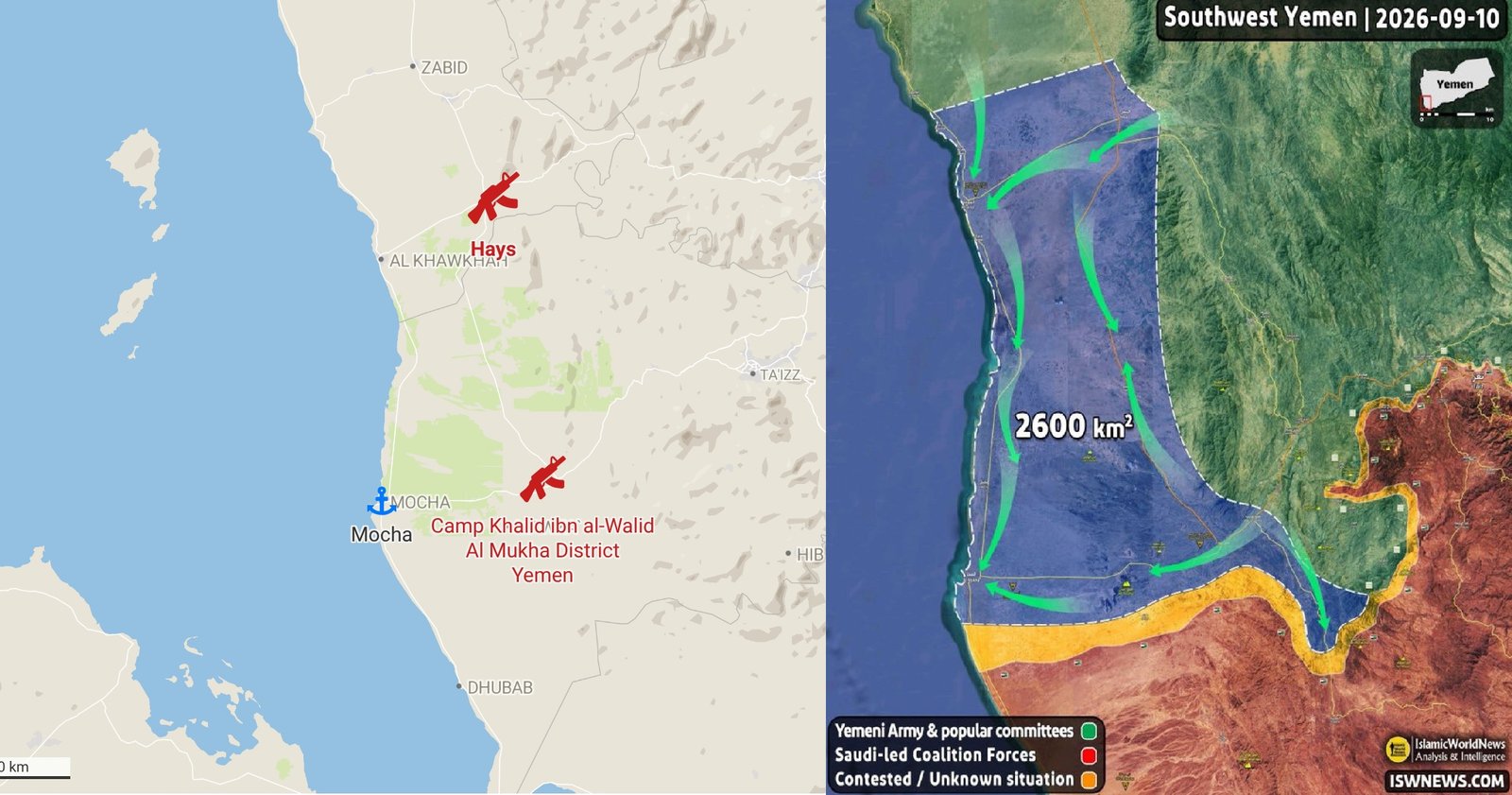 Houthi Forces Capture Strategic Red Sea Port City of Mocha Following Government Withdrawal
-
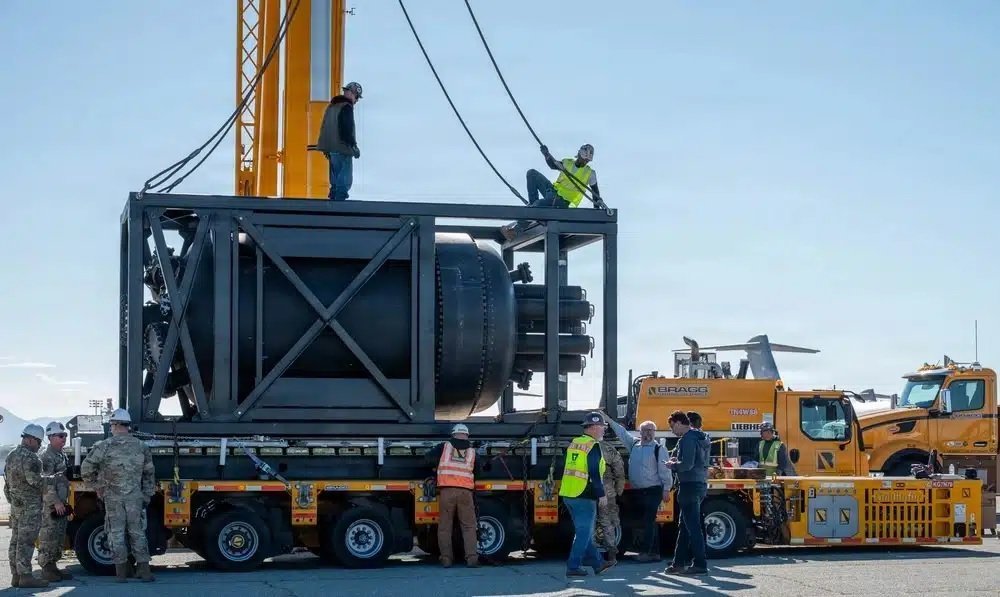 U.S. Navy Plans First Shore-Based Nuclear Microreactor at Indiana’s Crane Base by 2028
-
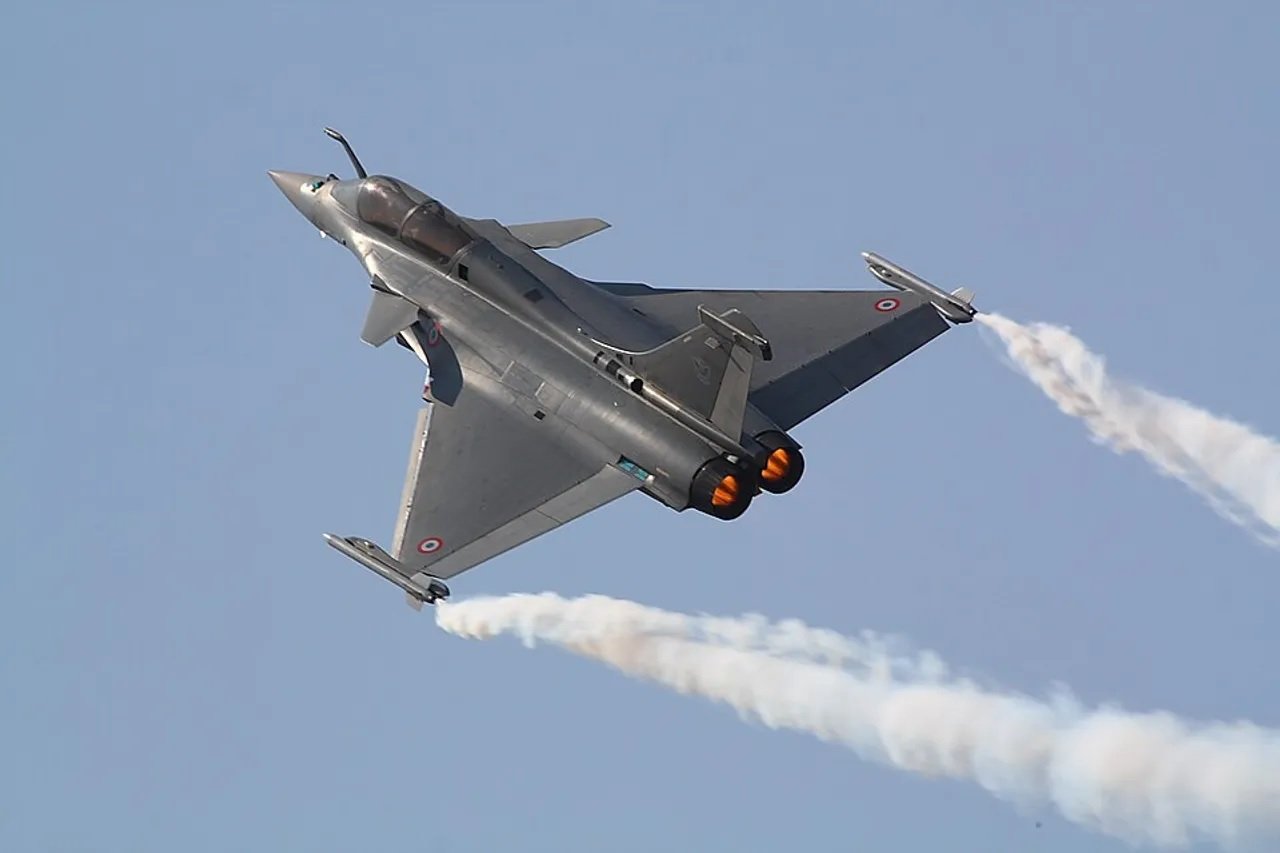 Russian Rafale “Kill Switch” Claim Faces Questions Over Evidence
-
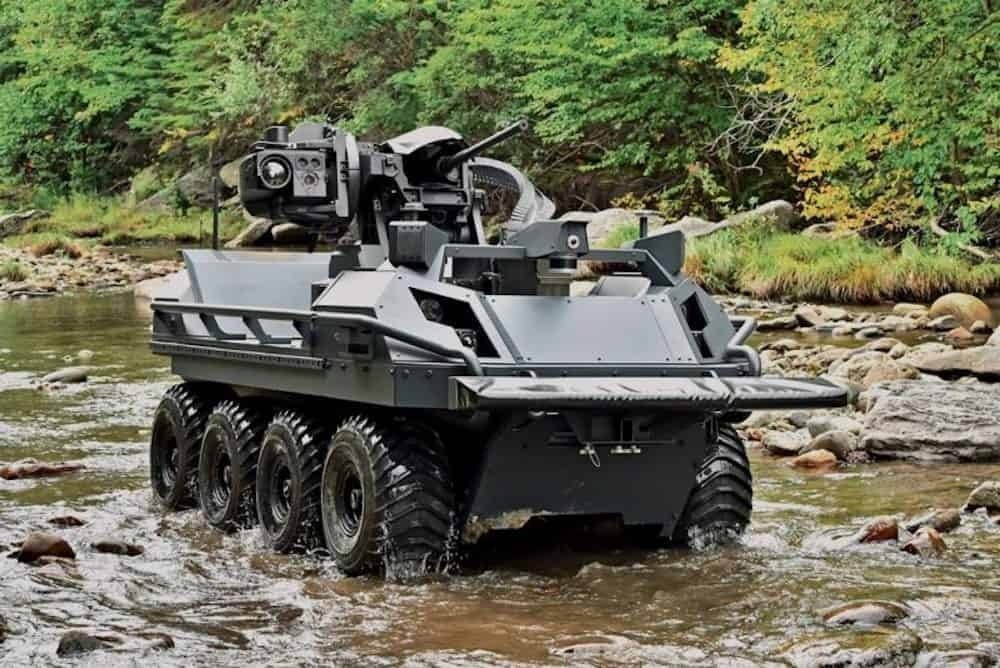 American Rheinmetall Secures $7.28 Million Contract for U.S. Marine Corps Autonomous Vehicles
-
 U.S. Signs $4 Billion Military Financing Guarantee for Poland, Bringing Total Support Near $20 Billion
-
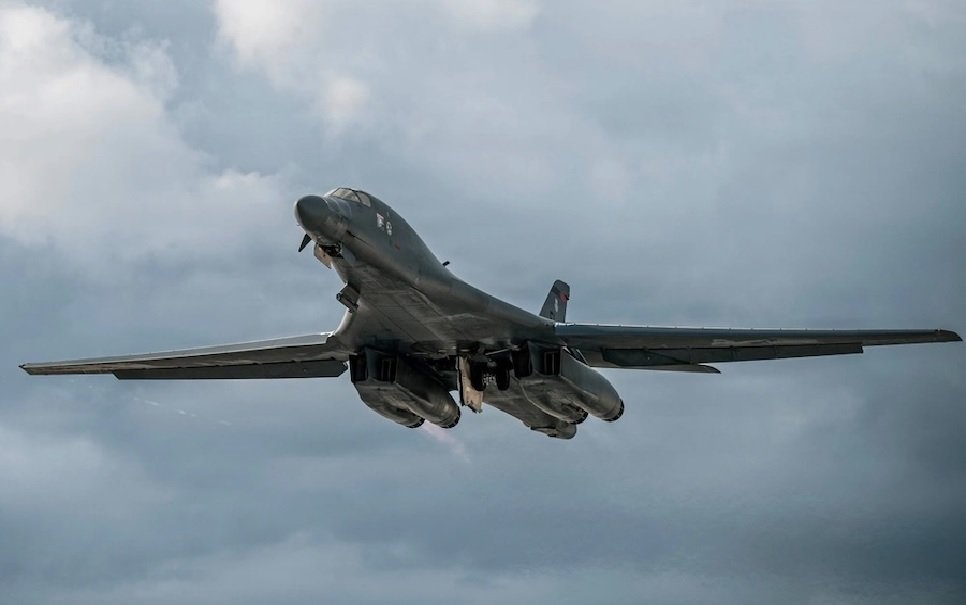 U.S. Air Force Launches North Star Campaign to Improve B-52 and B-1 Bomber Readiness
Top Trending in 4 Days
-
 Satellite Imagery Shows Two U.S. Barracks Destroyed at Kuwait’s Ali Al Salem Air Base in Iranian Attack
-
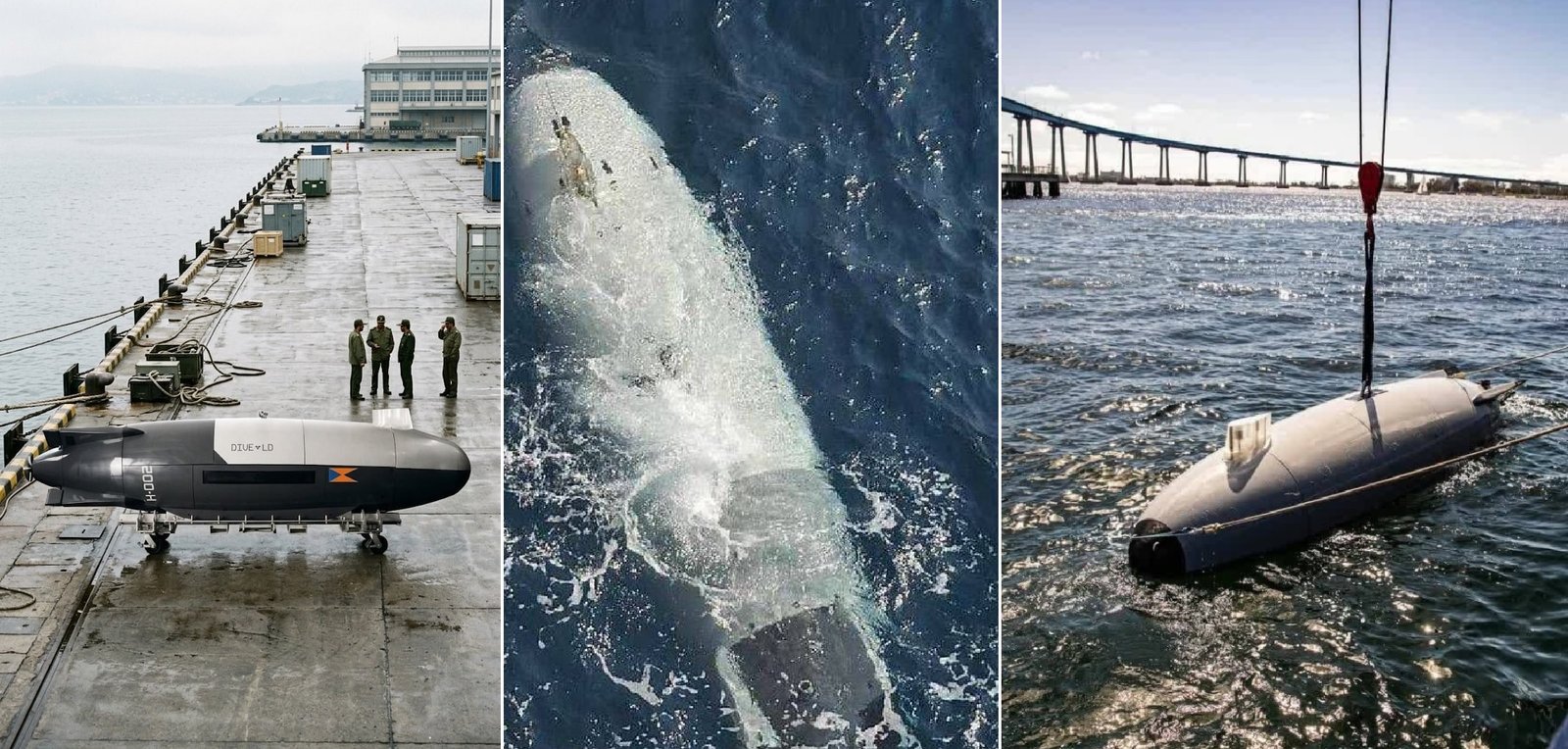 Iran’s IRGC Claims Capture of U.S. Dive-LD Unmanned Underwater Vehicle Near Strait of Hormuz
-
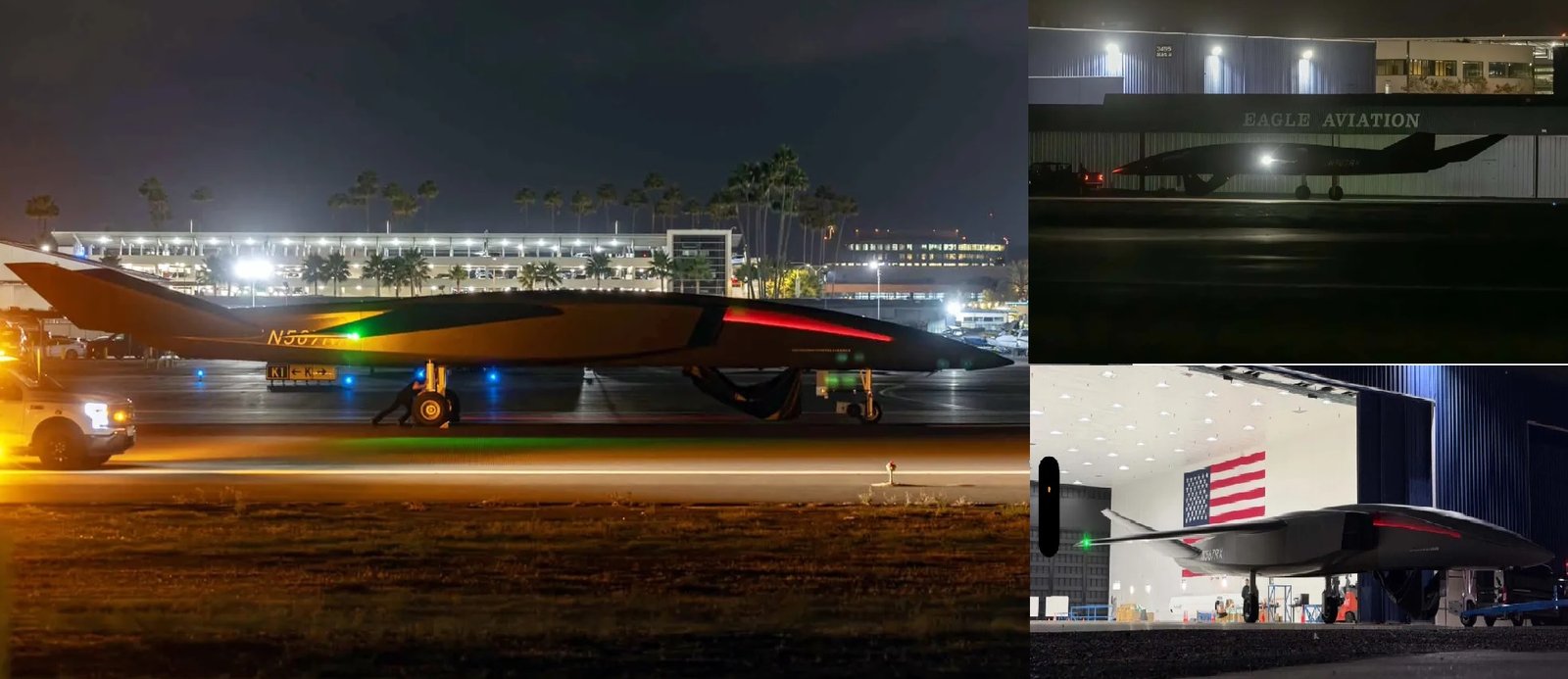 Mysterious Black Aircraft at Long Beach Airport Identified as Aevum’s RAVN X Autonomous Spaceplane After Years Out of Sight
-
 Trump’s ‘The Moon Is Ours’ Post, Space Force Uniform Concept and Green Lantern AI Video Draw Online Backlash
-
 Iranian Missiles Strike U.S. Base in Jordan as Reports Emerge of Injured American Personnel
-
 Iran Launches Massive Ballistic Missile Attack with Cluster Munitions on U.S.-Used Air Base in Jordan, Some Missiles Confirmed to Have Hit Base
-
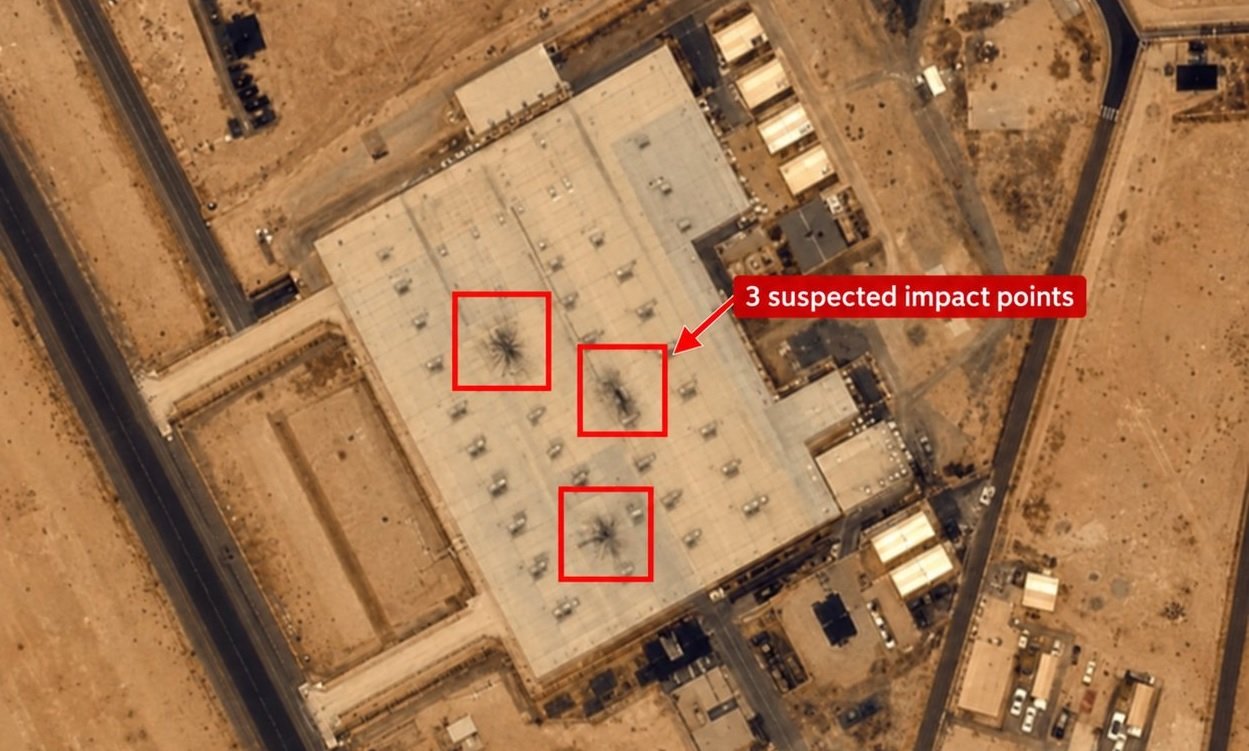 New Satellite Images Show Three Possible Impacts at U.S.-Linked Air Bases in Kuwait
-
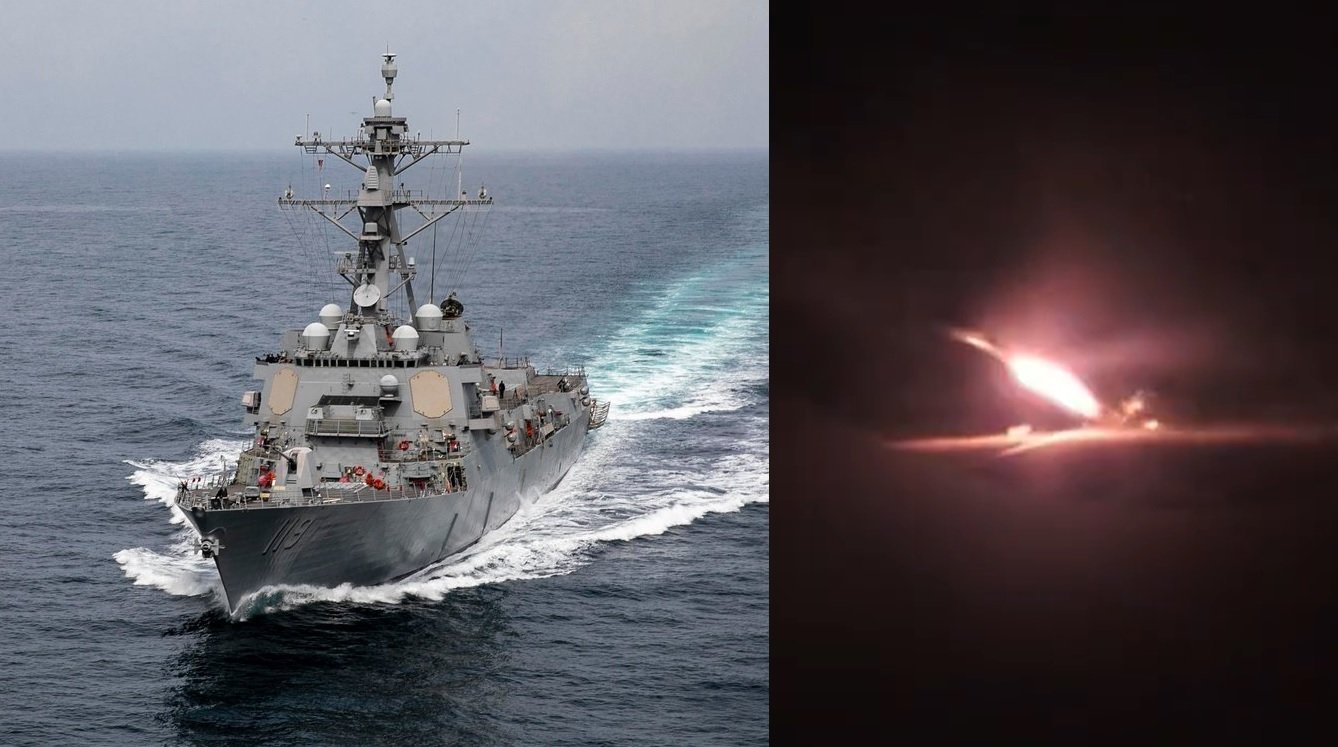 IRGC Claims Significant Damage to Two U.S. Destroyers in Missile Attack; CENTCOM Denies Hits