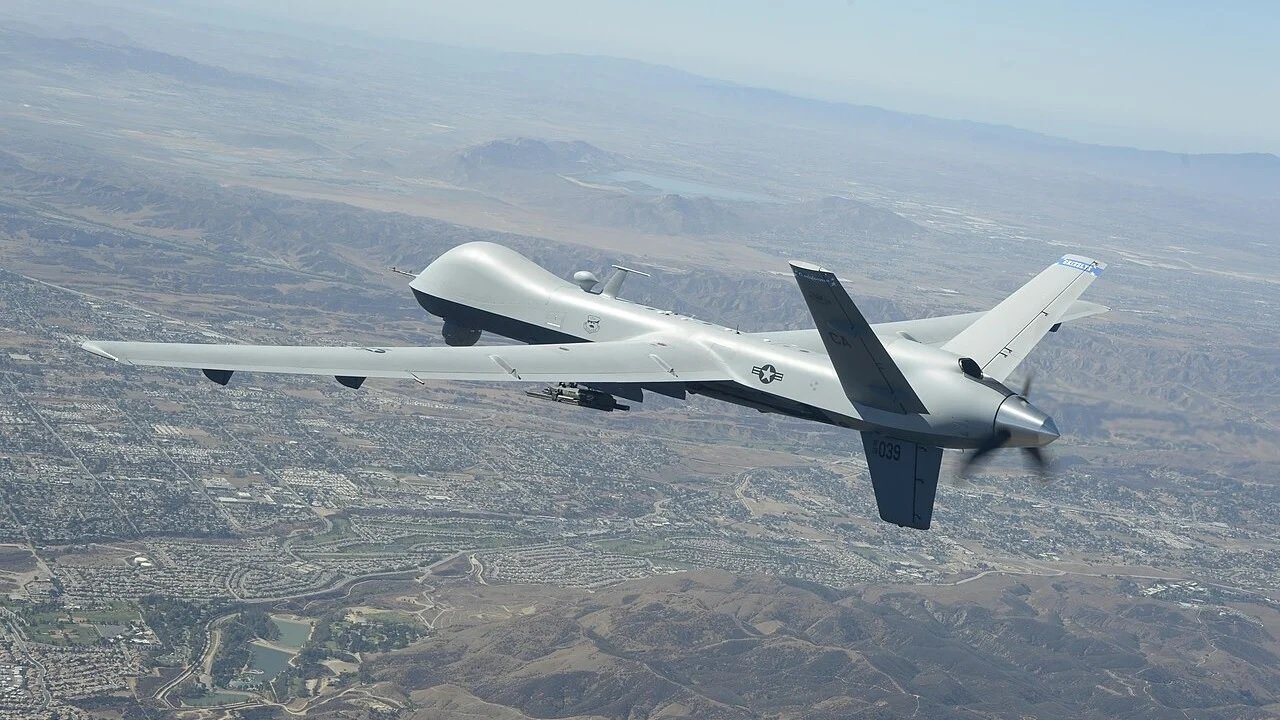
WASHINGTON, — The U.S. Air Force plans to field operational prototypes of its Massed Modular Aircraft (MMA) unmanned aircraft by 2028, with large-scale production scheduled to begin in 2029. The aircraft is intended to succeed the MQ-9 Reaper in long-range reconnaissance and strike missions.
Air Force Secretary Troy Meink announced the timeline on October 14 during the Association of the United States Army (AUSA) annual conference in Washington. The service aims to have approximately 100 MMA aircraft by 2029 and expand the fleet to 500 by 2032.
Project Agincourt and Development Contracts
The MMA program falls under Project Agincourt, a rapid-acquisition initiative supported by the Defense Innovation Unit (DIU). Established through a memorandum signed in September 2026, the initiative aims to accelerate autonomous military systems across the armed forces and support the creation of an Autonomous Warfare Command.
The Air Force has awarded initial development contracts, but officials have not disclosed the selected companies or contract values. Previously identified contenders include Anduril, Chaos Industries, General Atomics, Grid Aero, Otto Aerospace, Shield AI and Swarm Aero. The available information does not confirm which companies received awards.
Cost, Range and Technical Requirements
The Air Force has set a target price of approximately $10 million per basic aircraft, excluding weapons and sensors. This is roughly half the projected cost of an individual Collaborative Combat Aircraft (CCA).
Designers are studying a turboprop propulsion system for the MMA, with a planned range of approximately 6,400 kilometers (3,977 miles), nearly twice the range cited for the CCA. The aircraft is designed to prioritize endurance, payload capacity and affordability over speed.
Program requirements include:
-
Payload capacity: At least 2,800 pounds (1,270 kilograms).
-
Unrefueled combat radius: At least 2,300 nautical miles while carrying a payload.
-
One-way self-deployment range: At least 8,000 nautical miles.
-
Runway requirement: No longer than 6,000 feet.
-
Minimum speed: 200 knots.
The modular aircraft is intended to carry interchangeable payloads for intelligence, surveillance and reconnaissance (ISR), strike missions, electronic warfare and communications. These figures are program requirements, not confirmed performance results from a completed aircraft.
MQ-9 Reaper Losses Drive Replacement Effort
An October 5, 2026, Congressional Research Service report stated that the U.S. military had lost at least 45 MQ-9 Reapers since Operation Epic Fury began in February 2026. The Air Force's MQ-9 inventory also declined from 351 aircraft in fiscal year 2022 to approximately 135 by May 2026.
The Reaper, which costs approximately $30 million per aircraft according to the provided program information, performs reconnaissance and precision-strike missions. The MMA's lower target price is intended to support larger-scale procurement and make it less costly to replace aircraft lost during operations.
Relationship With Collaborative Combat Aircraft
The MMA complements the Air Force's separate CCA program, which focuses on jet-powered autonomous aircraft designed to operate alongside crewed fighters. General Atomics' FQ-42A Vengeance and Anduril's FQ-44A Fury have been selected for the CCA effort and are flying with the Experimental Operations Unit at Creech Air Force Base, Nevada.
While the CCA emphasizes autonomous combat aircraft, the MMA is intended to provide a lower-cost, longer-range platform combining reconnaissance and strike capabilities.
The Air Force plans to begin large-scale MMA production in 2029, with the goal of reaching 500 aircraft by 2032. Achieving these targets will depend on development, testing, manufacturing capacity and the aircraft's ability to meet its cost and performance requirements.
——— End of Article ———