U.S
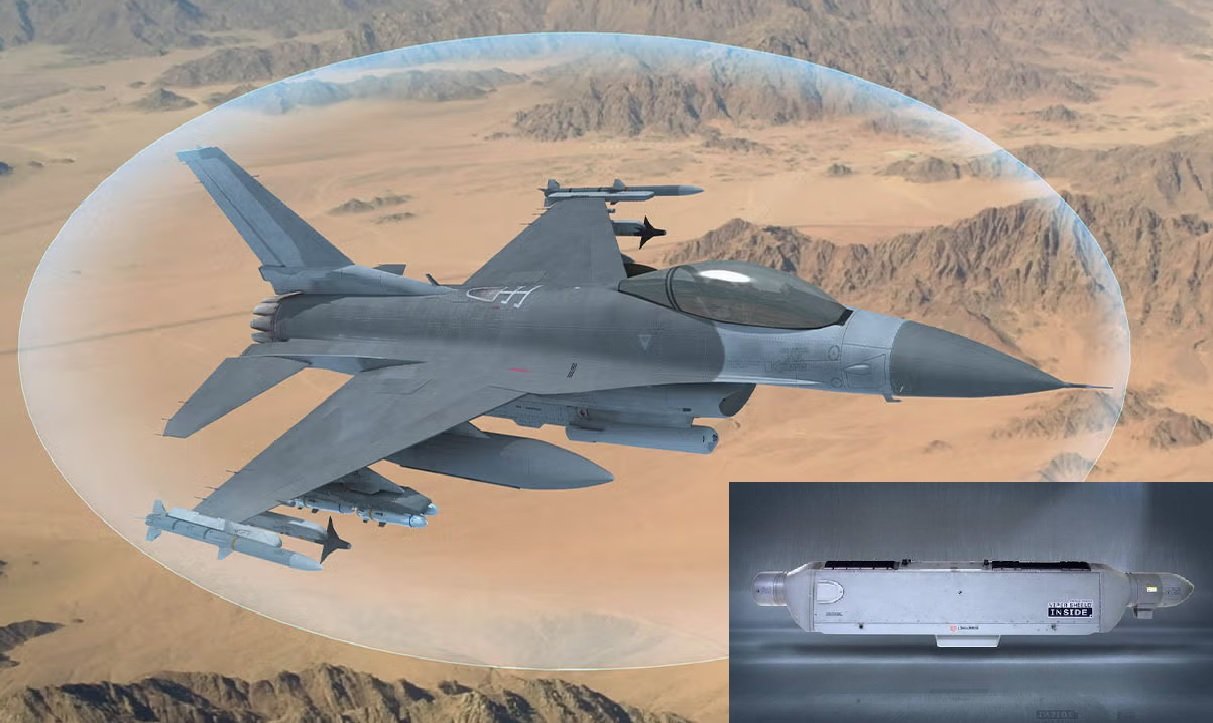
CLIFTON, N.J., — L3Harris Technologies has completed production of the first 35 Viper Shield electronic warfare and countermeasure systems for the global F-16 fleet, marking the transition toward full-rate production of the system. Officially designated AN/ALQ-254(V)1, Viper Shield is designed to detect, identify and counter electronic threats. The system can provide protection against radar-based threats by detecting hostile radar signals and using electronic countermeasures to disrupt or confuse them. L3Harris describes the capability as a form of “digital armor” around the aircraft. Designed for F-16 Block 70/72 L3Harris developed Viper Shield in partnership with Lockheed Martin and the U.S. Air Force. The system was selected in 2021 for the F-16 Block 70/72, the latest production version of the F-16. It is designed to operate with the aircraft's APG-83 Active Electronically Scanned Array (AESA) radar and is also compatible with earlier F-16 blocks. Viper Shield uses an all-digital, software-defined architecture based on commercial off-the-shelf technology. According to L3Harris, this design provides a smaller form factor and reduced weight while making future software upgrades easier compared with older electronic warfare systems. The system combines a digital radar warning receiver with electronic jamming capabilities, including digital radio frequency memory (DRFM) technology. This allows the system to respond to detected radar signals as part of its electronic countermeasure function. 233 Systems Ordered by Eight Nations L3Harris said eight allied nations have ordered a total of 233 Viper Shield systems and that the company is increasing production to meet the existing orders. Confirmed customers include Bahrain, Bulgaria, Slovakia, Morocco, Taiwan, Poland and Peru. The eighth customer has not been publicly identified by the company. Peru selected Viper Shield in August 2026 for its F-16 Block 70 program. The country plans to acquire 12 F-16 Block 70 aircraft, which are intended to replace its older Mirage 2000 and MiG-29 fighters. Poland is also using Viper Shield for its existing F-16 fleet, while the system is available for both new-build Block 70/72 aircraft and upgrades to earlier F-16 variants. Internal System and External Pod Viper Shield can be installed directly inside the aircraft or carried as an external pod. L3Harris has completed the first external pod using its production systems, in addition to the first 35 internal systems. The company says the two configurations use the same core hardware. The external option provides an installation alternative for F-16 aircraft that are not configured for an internal Viper Shield installation. International Investment Has Funded Development According to L3Harris, the participating countries have made a shared investment of about $1 billion in the program. The funding has covered development, laboratory testing, flight testing and the beginning of production. Chris Aebli, president of Communications & Spectrum Dominance at L3Harris, said the investment could provide an opportunity for the U.S. Air Force and Air National Guard to join the program without bearing the initial development and testing costs. L3Harris is also discussing potential additional orders with other countries. The company has said these discussions could generate approximately $1.5 billion in additional demand. Flight Testing Completed Ahead of Production Ramp-Up Viper Shield has undergone flight testing at Edwards Air Force Base, California, including testing involving F-16C and F-16D aircraft. In August 2026, L3Harris reported two-ship flight testing to evaluate the system's ability to detect, identify and counter electromagnetic threats while operating with the aircraft's avionics. With the first 35 systems now completed and the first production-standard external pod assembled, L3Harris is ramping up manufacturing to meet the current 233-system backlog. The company says the existing production line, quality processes and supply chain are positioned to support additional international customers. Production of Viper Shield is being carried out at L3Harris facilities in Clifton, New Jersey.
Read More → Posted on 2026-09-07 12:05:27
U.S
WASHINGTON — U.S. President Donald Trump sparked widespread online reaction on Sunday, September 6, after posting a series of space and science-fiction-themed images, including a message declaring “The Moon Is Ours,” a proposed U.S. Space Force uniform and an AI-generated video showing him as DC Comics superhero Green Lantern. ‘The Moon Is Ours’ Trump posted an image on Truth Social showing a close-up view of the Moon with Earth in the background and an American flag. The image included the words “The Moon Is Ours.” The post did not include a formal legal claim or policy announcement. Under the 1967 Outer Space Treaty, which the United States and more than 100 other countries have signed, outer space and celestial bodies such as the Moon cannot be claimed as national territory through sovereignty, use or occupation. The post comes as the Trump administration promotes an expanded U.S. role in lunar activities. An executive order signed in December 2025 directed a crewed lunar landing by 2028, an initial permanent lunar outpost by 2030 and work toward deploying nuclear reactors on the lunar surface. Space Force uniform sparks Starship Troopers comparisons Minutes earlier, Trump shared images of what appeared to be a proposed U.S. Space Force service dress uniform. The concept uses space grey, midnight black, silver grey and satin black colours. It features a charcoal-coloured collared jacket and matching trousers, black belt and boots, and a matching peaked cap. The Space Force Delta symbol appears on the collar, sleeve patch, belt buckle and cap. The graphic described the design as “Inspired by the discipline and functionality of the Starship Trooper uniform. Modernized for the Guardians of the Space Domain.” The reference drew criticism and jokes on X because Starship Troopers, the 1997 science-fiction film directed by Paul Verhoeven, depicts a militarised future government and uses visual elements influenced by fascist imagery. Users compared the proposed uniform with fictional forces from Star Wars, Spaceballs and other science-fiction films. Some conservative commentators also acknowledged the resemblance while supporting the Space Force. Others questioned whether the administration understood the satirical meaning of Starship Troopers. The current official Space Force dress uniform has a different design, featuring a larger tunic that closes diagonally with six buttons, representing the Space Force's status as the sixth branch of the U.S. military. It remains unclear whether Trump's images represent an official plan to change Space Force uniforms or only a concept shared on social media. White House releases Green Lantern AI video Separately, the official White House X account posted an AI-generated video portraying Trump as Green Lantern. The video shows him wearing a glowing green power ring, with the effects creating a barrier in a desert landscape, an industrial area labelled “American Manufacturing,” and images of U.S. military ships and aircraft. The post included the Green Lantern Corps oath: “In brightest day, in blackest night, no evil shall escape my sight. Let those who worship evil’s might beware my power… Green Lantern’s light!” The video also drew reactions from X users, with some questioning the use of superhero imagery by an official government account. Others supported its references to American manufacturing and border security. The video was posted Sunday evening, shortly before HBO aired the fourth episode of its live-action DC series Lanterns. Warner Bros. Discovery and DC Studios had not publicly commented on the use of the character's imagery. Trump's posts were part of broader Truth Social activity that day, including other AI-generated images and comments involving geographic names. The administration has also been advancing space-related initiatives, including lunar goals under the Artemis programme and plans linked to a National Space Academy. The White House and Department of Defense had not formally confirmed whether the proposed Space Force uniform would be adopted. Source : hindustantimes
Read More → Posted on 2026-09-07 11:23:56
U.S
LONG BEACH, Calif. — Aevum Aerospace’s RAVN X autonomous space-launch aircraft has been identified after the unusual black, cockpitless airframe was photographed outside a hangar at Long Beach Airport on September 3, 2026. The aircraft was spotted by Ricky Schol, a plumber and aviation photographer who has photographed aircraft at Long Beach Airport for 16 years. Schol said he noticed a bright light coming from a hangar that had not been open for a long time while driving past the airport. At first, he thought the aircraft might be an F-117 Nighthawk. After turning around and stopping about 100 feet away, he saw an aircraft without a cockpit and began taking photographs. “I was blown away when I pulled over and saw the future in front of my eyes. I had no clue what I was looking at,” Schol said. Schol watched as ground crews moved the aircraft out of the hangar, positioned it on the runway and later returned it inside. He reported hearing no engine noise or seeing exhaust during the activity. Aircraft identified as RAVN X Photographs taken by Schol and other aviation photographers, including Matthew Dawson, showed the aircraft carrying the FAA registration N567RX. The registration has been reserved by Aevum to an address at Long Beach Airport, helping identify the aircraft as the RAVN X, developed by Aevum Aerospace. Aevum has described the RAVN X as an autonomous first stage of a two-stage space-launch system. The aircraft is intended to carry a rocket-powered second stage to altitude before releasing it to continue the flight into orbit. The RAVN X was designed to be about 80 feet long, with a 60-foot wingspan and a reported gross weight of approximately 55,000 pounds. Aevum's concept called for the aircraft to operate at high subsonic speeds and reach an altitude of about 60,000 feet. Program has been largely out of public view Aevum publicly presented the full-scale RAVN X in December 2020 at Cecil Spaceport in Jacksonville, Florida. Company CEO Jay Skylus described the aircraft as the “mothership” for a two-stage launch system intended to place small payloads into low Earth orbit. At the time, Aevum planned to conduct vehicle-level testing, obtain the required airworthiness certification and begin orbital launch tests from Cecil Spaceport by late 2021. Those publicly announced milestones did not take place. The company later provided little public information about the program, while Gunter’s Space Page reported that activity appeared to have stopped by August 2024 and questioned whether operational flight hardware had been produced. The RAVN X was also associated with the ASLON-45 mission, a planned small-satellite launch involving the U.S. Space Force. The mission did not proceed to an orbital launch using the RAVN X. Long Beach appearance raises questions about the airframe The recent appearance provides evidence that the RAVN X airframe is still present and being handled at Long Beach Airport. However, it does not establish that the aircraft is ready for flight. Images examined by The War Zone and The Aviationist show landing gear that appears fixed and suited to ground handling. The lack of engine noise or exhaust during the observed movement has also raised questions about whether the aircraft is a flight-capable prototype or a modified version of the earlier RAVN X mockup. The Aviationist reported that the RAVN X's recent appearance involved what it described as autonomous taxi testing, while also noting that it was not immediately clear whether the airframe was the same one displayed by Aevum in 2020. Aevum has not publicly explained the purpose of the September 3 activity in the available reports. As of September 2026, the RAVN X has not conducted an orbital launch. Its appearance at Long Beach Airport therefore represents a rare public sighting of a program that had largely disappeared from view, but it remains unclear what stage of development the aircraft has reached.
Read More → Posted on 2026-09-07 11:00:22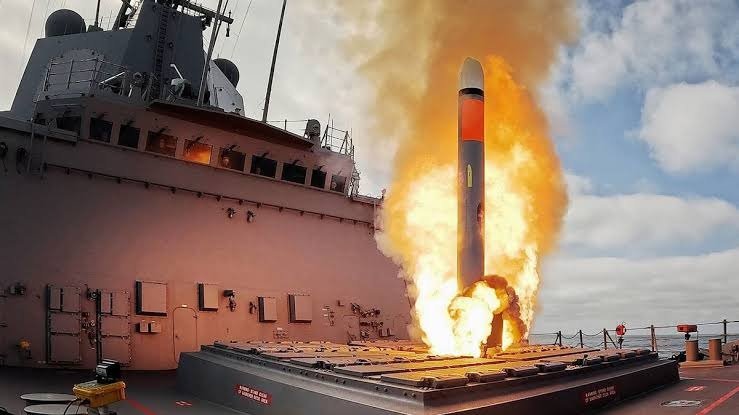
U.S
WASHINGTON — The U.S. Navy is accelerating production of Tomahawk cruise missile warhead housings by modifying an existing 2019 contract originally established for the Stand-Off Land Attack Missile–Expanded Response (SLAM-ER). A September 2 contract notice said the Navy is tasking General Dynamics Ordnance and Tactical Systems (GD-OTS) to manufacture and deliver a redacted number of warhead housings within nine months. The components will support the warhead sections of the U/RGM-109E Tactical Tomahawk (TACTOM). The notice said the accelerated schedule is driven by an “immediate demand for increased missile production” resulting from the current international conflict. First article inspections must begin no later than the first quarter of 2027 to support the required delivery schedule. Existing Contract Shortens Timeline GD-OTS already manufactures warhead casings for both SLAM-ER and Tactical Tomahawk missiles. Using the existing contract allows the Navy to avoid the longer process of awarding a new contract or qualifying another supplier. The Navy said GD-OTS has the manufacturing capability, technical experience and required technical data to meet the accelerated schedule. The company is based in Anniston, Alabama. The underlying contract is N6893619C0039. The September 2 notice identifies the work as a firm-fixed-price modification awarded on an other-than-full-and-open basis, with an award date of August 20, 2026. The new warhead housings will support both newly produced and recertified Block IV and Block V Tomahawk missiles. Tomahawk Production Expansion The move comes as Raytheon, an RTX business, expands overall Tomahawk production. On August 17, Raytheon announced a $22.9 billion, seven-year contract to increase annual Tomahawk production to more than 1,000 missiles, formalizing an earlier framework agreement reached in February. Raytheon said the contract will support increased production capacity and investment in its workforce, facilities, technology and supply chain. The company also reported delivering three times more Tomahawk missiles during the first half of 2026 than in the same period of 2025. The expansion follows increased use of precision-guided weapons and efforts to replenish U.S. inventories. Reuters reported that the new Tomahawk contract is part of a wider effort to rebuild stocks of high-end munitions. Separately, an August GD-OTS modification valued at $41.57 million covered 559 WDU-36/B warhead cases and 559 fuzewells for Tactical Tomahawk missiles. The work is centered in Anniston, Alabama, and is scheduled for completion in April 2028. The latest modification adds another step to the Navy's effort to increase Tomahawk availability while avoiding the longer timeline associated with a new contract and supplier qualification.
Read More → Posted on 2026-09-06 18:12:19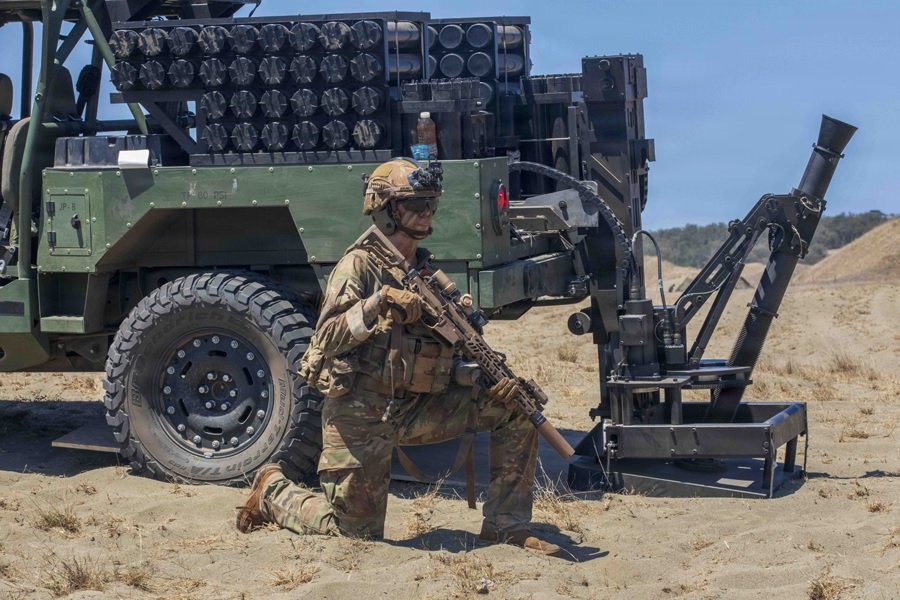
U.S
TAMPA, Fla. — The U.S. Army has awarded Global Military Products (GMP) a $12.9 million contract to procure and integrate Scorpion Light 81mm mobile mortar systems onto the Army’s Infantry Squad Vehicle–Utility (ISV-U) platforms. The contract was awarded under the Department of Defense Ordnance Technology Consortium (DOTC) Other Transaction Authority (OTA) framework. It covers the integration of the Scorpion Light with Army digital fire-control technologies and government-furnished M253 mortar barrels. Digital Fire Control The Scorpion Light is designed to provide infantry units with a mobile and digitally enabled indirect-fire capability for distributed operations. Its digital fire-control architecture supports rapid target acquisition, digital fire-mission processing, precision engagement and rapid re-aiming, while reducing crew workload. The system also incorporates the Army’s Nett Warrior networked communications architecture, enabling digital fire missions and target handoffs between systems. Rapid Shoot-and-Scoot Capability The system is designed to quickly deploy, fire and relocate. The Scorpion Light can emplace, fire eight rounds and relocate in under two minutes. It takes about 30 seconds to fire the first round and another 30 seconds to displace after the final round. A non-seating baseplate allows the mortar to operate on surfaces such as gravel, hard-packed ground and concrete without digging in. Mounted on the ISV-U The Scorpion Light will be integrated with the Infantry Squad Vehicle–Utility, a utility variant based on the Chevrolet Colorado ZR2 architecture and designed for severe off-road environments. The integrated system is certified for internal transport in a CH-47 Chinook and is air-droppable. The Scorpion is also a vehicle-agnostic system and has previously been integrated with Polaris MRZR variants used by the U.S. Marine Corps under a separate contract awarded earlier in 2026. Two Years of Army Testing The Army and Global Military Products have worked together on the Scorpion platform for about two years through Soldier Enhancement Program (SEP) initiatives and Cooperative Research and Development Agreement (CRADA) efforts. The work included direct soldier feedback to improve the system's mobility, lethality, survivability and operational effectiveness. James Knight, director of Global Military Products, said the program supports the Army’s Transformation Initiative, which focuses on smaller, more agile and highly lethal combat formations for complex operational environments. Balikatan 2026 Testing The Scorpion was recently evaluated during Exercise Balikatan 2026 in the Philippines. Soldiers from the Multi-Purpose Company, 2nd Battalion, 35th Infantry Regiment, 25th Infantry Division fired 20 rounds from two separate Scorpion systems in under two minutes during live-fire operations. Earlier evaluations were also conducted during Transformation in Contact events in Hawaii in 2025, as well as at Yuma and Aberdeen Proving Ground. First Deliveries Global Military Products is a division of Global Ordnance. The Scorpion system originates from Spanish manufacturer NTGS, also known as Alakran outside the United States, and is marketed in the U.S. by Global Military Products. Deliveries of the first systems under the $12.9 million Army contract are expected to begin in the week of September 7, 2026.
Read More → Posted on 2026-09-06 16:53:33
U.S
BETHESDA, Md. — Lockheed Martin expects deliveries of its CH-53K King Stallion heavy-lift helicopter to roughly double in 2026 compared with 2025, with deliveries potentially doubling again in 2027. Chief Financial Officer Evan Scott gave the outlook during the company’s second-quarter 2026 earnings call. “In the case of 53K, we could be talking 2x deliveries this year versus last year, and potentially doubling again next year,” Scott said. Lockheed Martin has not disclosed exact CH-53K delivery numbers for 2026 or 2027. The possible increase in 2027 was presented as an outlook rather than a firm production commitment. If both increases occur, annual deliveries could reach roughly four times the 2025 level by 2027. Sikorsky Production Ramp The CH-53K increase is part of a wider production ramp at Sikorsky. Lockheed Martin expects all four Sikorsky platforms to deliver more aircraft in 2026 than in 2025. The company is also increasing F-16 and C-130 deliveries, while 10 munitions programs within its Missiles and Fire Control segment are delivering more units than in 2025. “We are in a scaling mode right now,” Scott said, noting that Lockheed Martin must increase production while maintaining the resilience needed to manage technical and operational challenges. Impact on Rotary and Mission Systems Higher Sikorsky production, combined with increased radar volumes, is expected to strengthen Lockheed Martin’s Rotary and Mission Systems segment during the second half of 2026. The company raised its full-year sales outlook for the segment to $17.7 billion–$18.1 billion and its profit forecast to $1.86 billion–$1.89 billion. Lockheed Martin also expects 2026 company-wide sales of $79.75 billion–$81.75 billion, representing about an 8% increase at the midpoint from 2025. Second-half sales are expected to grow 7%–12% year over year, with Missiles and Fire Control expected to lead the expansion and higher Sikorsky production also contributing. CH-53K Program The CH-53K is the U.S. Marine Corps’ newest heavy-lift helicopter and is intended to replace the CH-53E Super Stallion. The aircraft can lift up to 36,000 pounds externally, while the Marine Corps plans to acquire 200 helicopters. As of spring 2026, about 25 CH-53Ks had been delivered to the Marine Corps, with several squadrons already operating the helicopter. Its first operational deployment is planned for fiscal year 2027 with the 26th Marine Expeditionary Unit. In September 2025, Sikorsky received a $10.86 billion multi-year contract for up to 99 additional CH-53Ks for the Marine Corps and possible international customers, covering deliveries from 2029 to 2034. Israel has ordered 12 helicopters. A separate $525 million contract awarded in June 2026 covers development and integration of advanced technologies for the CH-53K program through 2031. The expected CH-53K production increase is part of Lockheed Martin’s broader effort to expand output across helicopters, aircraft, radars and munitions as the company responds to higher demand.
Read More → Posted on 2026-09-06 14:05:27
U.S
REDMOND, Wash. — Kymeta has received a $20 million order from the U.S. Department of Defense (DoD) for more than 100 Osprey u8 satellite communications terminals, along with bundled multi-orbit connectivity services through the company’s Kymeta Broadband network. The specific DoD branch receiving the terminals was not disclosed because of operational security considerations. Kymeta said the latest order brings the total value of terminals and connectivity services delivered to the same unnamed DoD branch in 2026 to more than $30 million. Multi-Orbit Satellite Connectivity The Osprey u8 is a flat-panel, electronically steered satellite antenna that uses metamaterial technology and does not require moving mechanical components to maintain satellite connections. The terminal features a ruggedized enclosure and is designed around low size, weight and power (SWaP) requirements. Kymeta developed the system for mobile operations and challenging environments where reliable communications are required. The new order combines the physical terminals with Kymeta Broadband connectivity. The service provides access through both geostationary orbit (GEO) and low Earth orbit (LEO) satellite networks. Another capability of the Osprey u8 is support for switching between transmission security (TRANSEC) and non-TRANSEC networks. This allows the terminal to operate across different network configurations based on operational requirements. Supporting Resilient Military Communications Kymeta's systems are designed to support the military PACE communications model, which stands for Primary, Alternate, Contingency and Emergency communications. The approach provides multiple communication options so forces can maintain connectivity when their primary communications path becomes unavailable. The company is also developing this concept through its AutoPACE intelligent communications platform. According to Kymeta, AutoPACE is intended to automate the selection and switching of available connectivity sources, reducing the need for operators to manually change between satellite feeds or networks when connectivity is disrupted or affected by jamming. The company said its work with multiple DoD branches reflects its focus on providing connectivity for distributed forces operating in contested and rapidly changing environments. Expanding Defense Business The latest order adds to Kymeta's existing defense business and its focus on military and government communications. The company said its satellite communications solutions are now available to U.S. forces for operational requirements. “This order is an affirmation from the military community that Kymeta can deliver on its promise to provide dependable connectivity for mission-critical operations,” said Manny Mora, CEO of Kymeta. “With our partners across national security, we are continuing to build steady and solid momentum as a trusted and valued partner.” Kymeta was founded in 2012 and is headquartered in Redmond, Washington. The company develops electronically steered flat-panel satellite antennas using metamaterial technology, with products aimed at mobile and challenging operating environments. The Osprey u8 is designed for military and government applications and supports multi-orbit and multi-network connectivity. The value and scale of the latest DoD order make it another significant contract in Kymeta's expanding work with the U.S. military.
Read More → Posted on 2026-09-05 16:44:33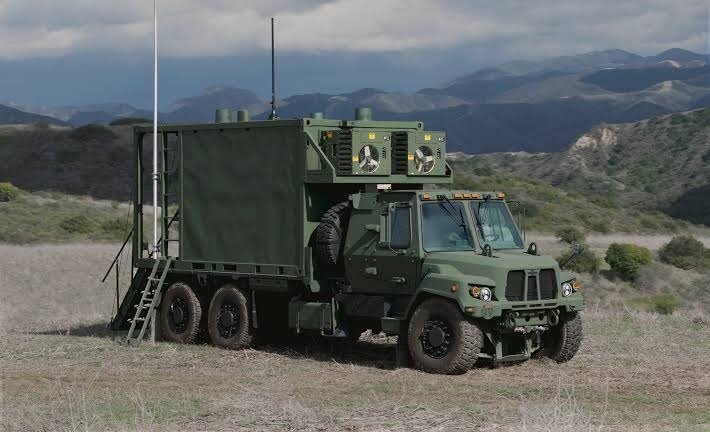
U.S
WASHINGTON, D.C. — The U.S. Army has moved its Tactical Intelligence Targeting Access Node (TITAN) program from prototyping into production, awarding delivery orders worth a combined $192 million to Palantir Technologies and Anduril Industries. The awards, made on August 31, include $127 million for Palantir and $65 million for Anduril. The contracts cover the procurement and integration of eight initial production TITAN systems, consisting of four TITAN Advanced and four TITAN Basic variants. The systems are scheduled for delivery over the next 18 months. AI-enabled battlefield intelligence system TITAN is an artificial intelligence-enabled, mobile ground station designed to collect, process and distribute information from space, high-altitude, aerial and terrestrial sensors. The system uses artificial intelligence and machine learning to combine information from multiple sources, create a common intelligence picture and generate target coordinates. The Army says this is intended to improve the speed of target recognition and geolocation while reducing the time between sensor detection and engagement through automated target nominations. TITAN is being developed to support Multi-Domain Operations, Joint All-Domain Operations and Long-Range Precision Fires. Its ability to process information from different sensors is intended to help battlefield units turn large amounts of intelligence data into usable targeting information more quickly. Two TITAN variants The initial production order is divided equally between the two versions. TITAN Advanced: Four systems will be produced in the Advanced configuration. These systems are mounted on the Family of Medium Tactical Vehicles and are intended for higher-level formations, including corps, military intelligence brigade theater and multi-domain commands. The Advanced version provides greater processing and integration capabilities and has access to space-based intelligence. TITAN Basic: Four systems will be produced in the Basic configuration. The more mobile version is designed for lower-echelon and division-level operations and is mounted on platforms including the Joint Light Tactical Vehicle. The Army is also continuing integration work involving the Infantry Squad Vehicle-Utility. Palantir and Anduril roles Palantir is the prime contractor and will lead overall production and integration of the TITAN systems. Its team includes L3Harris Technologies, Sierra Nevada Corporation, Strategic Technology Consulting and World Wide Technology, which are providing capabilities and technologies for the program. Anduril is responsible for critical hardware and shelter integration. Its work includes ruggedized vehicle-mounted systems and the integration of power, thermal, control and operator subsystems. Anduril has supported TITAN since 2021 as the program's lead hardware systems architect, with hardware production taking place at its facility in Costa Mesa, California. Production follows four years of prototyping The move to production follows four years of prototyping and testing with Army soldiers using TITAN systems in different configurations and operating environments. Army officials said soldier feedback was used to refine the system. Col. Jonathan Lipscomb, Project Manager for Intelligence Systems and Analytics, said the program has improved the speed of target recognition and geolocation from multiple sensors and reduced sensor-to-shooter timelines through automated target nominations and fusion of the common intelligence picture. The Army currently retains nine TITAN prototype systems for operational use. The eight production systems from the new orders will join those prototypes once delivered. The Army expects to award additional production orders for TITAN systems in fiscal year 2027.
Read More → Posted on 2026-09-05 16:24:14
U.S
WASHINGTON — The Pentagon subjected roughly 50 members of the U.S. military’s Joint Staff to polygraph tests in August as part of an investigation into suspected leaks of classified information to journalists, according to U.S. officials briefed on the matter. The inquiry focused in part on disclosures about reduced U.S. munitions inventories during the war with Iran. Military officers and civilian employees were questioned about whether they had provided classified information to members of the media, including information concerning the depletion of key U.S. weapons stocks. The tests followed several reports about reduced inventories of long-range missiles and air-defense interceptors, including Patriot and THAAD systems. The Joint Staff has between 1,500 and 2,000 military and civilian personnel and is responsible for helping coordinate military operations, policy and war planning with the U.S. combatant commands. The polygraph testing did not cover all senior officials. Gen. Dan Caine, chairman of the Joint Chiefs of Staff, was not among those tested, according to a senior Pentagon official. Some personnel from U.S. Central Command and other combatant commands were also included in the broader testing effort. The scale of the testing has been described as highly unusual. Retired Rear Adm. Donald J. Guter, a former Navy judge advocate general, said he had not seen polygraph testing used this broadly or at this level of seniority. The tests were conducted by military investigators, rather than the FBI. Two sources said none of the personnel tested failed questions specifically aimed at determining whether they had leaked information to the media. Investigation focuses on munitions disclosures The leak investigation followed reports about the rapid use of U.S. air-defense and other advanced munitions during the conflict with Iran. CNN reported in August, citing sources familiar with inventory data, that the U.S. military had used close to 80 percent of its THAAD interceptors and about half of its Patriot interceptors compared with pre-war levels. A separate analysis by the Center for Strategic and International Studies estimated that Patriot interceptor inventories had fallen from about 2,330 before the war to between 759 and 827 by late July 2026. Its estimate for THAAD interceptors was a decline from about 452 before the war to between 234 and 278. CSIS said Patriot inventories were below 1,000 and THAAD inventories were around 250 in its July assessment. CSIS has also assessed that rebuilding some depleted missile inventories could take years because of production rates and the time required for new weapons to reach the military. U.S. officials have disputed descriptions that the military lacks sufficient weapons and have emphasized efforts to increase production and replenish inventories. President Donald Trump has also said that some types of munitions were in tighter supply than before the war while maintaining that the United States had substantial ammunition available. Concern over access to classified information The investigation also examined how information about the munitions inventories reached the media. According to one source, investigators were concerned because access to the specific stockpile information was limited, raising questions about whether a foreign intelligence asset could potentially have been involved. The broader investigation is intended to identify the source of unauthorized disclosures and prevent additional classified information from reaching the media. Pentagon spokesman Sean Parnell declined to discuss the internal investigation. In a statement, he said the department does not comment on internal personnel or investigative matters but takes leaks of classified national security information seriously and investigates them. He added that protecting classified information is critical to the security of the United States and U.S. troops deployed around the world. The polygraph testing comes as the Pentagon continues efforts to address concerns over U.S. munitions inventories following the expenditure of large numbers of weapons during operations involving Iran. Sourec : CBS
Read More → Posted on 2026-09-05 16:19:16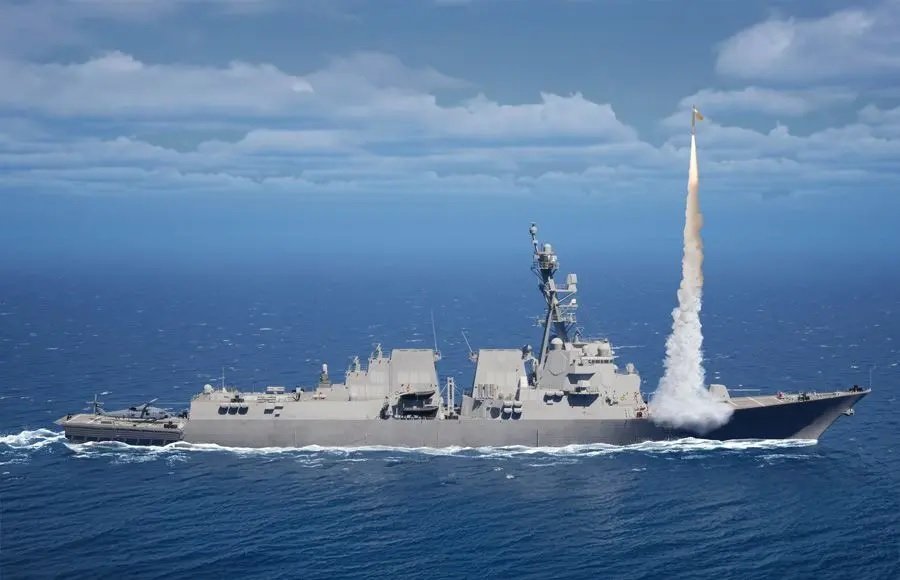
U.S
WASHINGTON — The U.S. Navy is moving forward with plans to integrate Lockheed Martin’s Patriot Advanced Capability-3 Missile Segment Enhancement (PAC-3 MSE) interceptor with the Aegis Combat System on guided-missile destroyers. The Navy is targeting initial operational capability (IOC) in 2028, according to an August 27 Congressional Research Service (CRS) report. PAC-3 MSE Integration The PAC-3 MSE is currently used with land-based Patriot air and missile defense systems and the U.S. Terminal High Altitude Area Defense (THAAD) system. The Navy plans to launch the interceptor from the Mk 41 Vertical Launching System (VLS) installed on its destroyers. Lockheed Martin plans to conduct an initial land-based test in early 2027. The integration will require software modifications to both the Aegis combat system and the PAC-3 MSE. The CRS report does not specify the number or class of destroyers that will receive the capability. It also does not provide the planned shipboard missile inventory, procurement cost or a timetable for at-sea testing. Navy Contract and Missile Procurement In April 2026, Lockheed Martin received a Navy contract to develop, integrate and test PAC-3 MSE within the Aegis architecture and Mk 41 launcher. The initial phase was reported at about $93 million, while the broader development, integration and testing effort could be worth up to about $200 million. Lockheed Martin had previously invested its own resources in Mk 41 compatibility. The Navy's fiscal year 2027 budget request includes 405 PAC-3 MSE interceptors. The Navy had ordered 12 missiles the previous year to support integration activities. How the PAC-3 MSE Works PAC-3 MSE is the current generation of the PAC-3 family and belongs to the MIM-104F branch of the Patriot system. It uses hit-to-kill technology, destroying targets through direct impact rather than a conventional explosive warhead. The interceptor is designed to engage tactical ballistic missiles, cruise missiles, unmanned aerial systems and other air-breathing threats. The missile has an onboard active millimeter-wave seeker for terminal guidance. Under the planned Aegis integration, the ship's AN/SPY-1 or AN/SPY-6 radar can provide midcourse updates before the missile's own seeker takes over during the terminal phase. This differs from earlier Patriot interceptors. PAC-2 and PAC-2 Guidance Enhanced Missiles use blast-fragmentation warheads and were designed mainly to engage aircraft and cruise missiles, with a more limited role against tactical ballistic missiles. Production and Supply Pressure The PAC-3 MSE integration is taking place as demand for Patriot interceptors increases. The CRS report said Congress is examining Patriot costs, availability, production capacity and supply-chain issues, with demand affected by the conflicts in Iran and Ukraine. Concerns include access to critical materials, supply-chain bottlenecks and whether production rates can meet U.S. and international requirements. Lockheed Martin is expanding production under multiyear agreements, with annual output planned to increase from roughly 600 interceptors to more than 2,000 over seven years. Army and International Demand The U.S. Army currently operates 15 active-component Patriot battalions and plans to add three more between fiscal years 2029 and 2031. A four-battery Patriot battalion equipped with the Integrated Battle Command System (IBCS) and Lower Tier Air and Missile Defense Sensor (LTAMDS) has an estimated procurement cost of $1.792 billion. International demand is also putting pressure on delivery schedules. According to the CRS, Denmark abandoned a planned Patriot purchase in favor of the Franco-Italian SAMP/T system, partly because of shorter delivery times. Switzerland has also considered European alternatives amid potential Patriot delivery delays of four to five years. 2028 Operational Target The CRS report does not determine whether production and supply-chain pressures will affect the Navy's Aegis integration schedule or its 2028 operational target. It also does not confirm whether the Navy has established formal requirements for the shipboard PAC-3 MSE capability. Beyond the planned early-2027 land-based test, the report does not identify additional development milestones before the 2028 IOC target. If the current schedule is maintained, PAC-3 MSE will add another interceptor option to Aegis-equipped Navy destroyers for defense against a range of missile and aerial threats.
Read More → Posted on 2026-09-05 16:02:15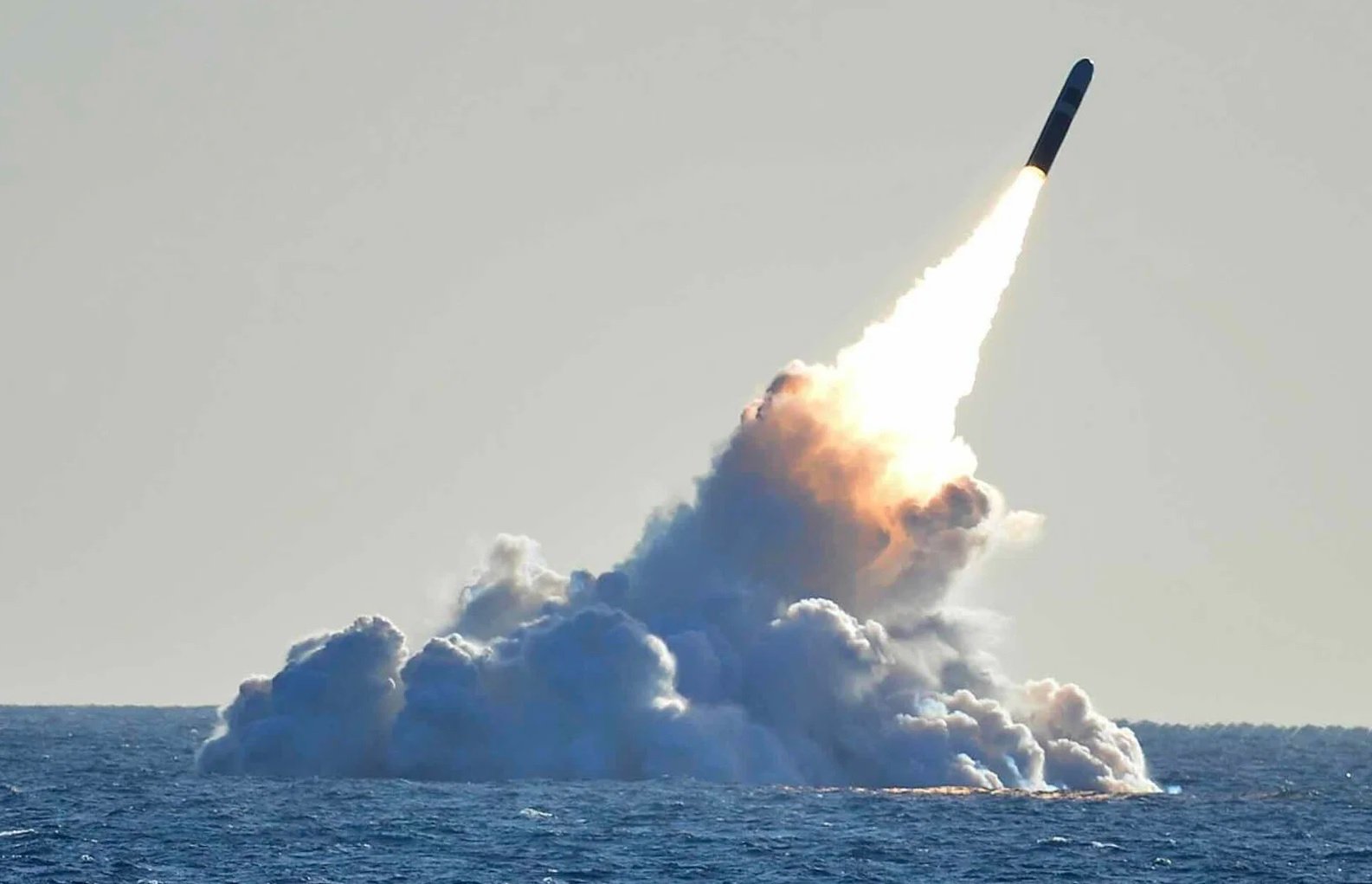
U.S
WASHINGTON — The U.S. Navy has awarded Lockheed Martin Space a $90.2 million contract modification to continue design and development work for the Trident II D5 Life Extension 2 (D5LE2) program. The cost-plus-fixed-fee modification covers what the Navy calls “SSP Alteration Advanced Design and Development.” The work is being managed by the Navy’s Strategic Systems Programs (SSP) office and is part of the second life extension of the Trident II D5 submarine-launched ballistic missile. The Trident II D5 provides the sea-based leg of the United States’ nuclear triad. The Navy’s ongoing D5LE2 program is intended to modernize the missile and support its continued operation as the service transitions from the Ohio-class ballistic missile submarines to the Columbia class. Work to continue through 2030 Under the new contract modification, about 68% of the work will be performed at Naval Submarine Base Kings Bay, Georgia. Another 25% will take place at Cape Canaveral, Florida, while the remaining work will be divided between facilities in Bangor, Washington, and Denver, Colorado. The contract is scheduled to run through September 30, 2030. The Navy is obligating the full $90.2 million from fiscal year 2026 weapons procurement funds at the time of the award. The funds will not expire at the end of the current fiscal year. The contract was awarded on a sole-source basis, with the Navy determining that Lockheed Martin had the unique capabilities required to meet the program's requirements. Trident II D5 modernization The Trident II D5 entered service in 1990 and is carried by U.S. Ohio-class and U.K. Vanguard-class ballistic missile submarines. An earlier D5 life extension program was completed in 2017. The missile weighs approximately 130,000 pounds (58,967 kilograms) and has a stated range of about 4,000 nautical miles (7,408 kilometers). Its reported speed exceeds Mach 20. According to Lockheed Martin, submarine-launched ballistic missiles account for roughly 70% of the United States' strategic deterrent capability. The Navy has described D5LE2 as the next-generation version of the Trident II D5. Official Navy testimony says the program is intended to maintain the Trident system's required performance and provide flexibility for future requirements. D5LE2 program receives earlier major contracts The latest $90.2 million award follows earlier funding for the D5LE2 program. In January 2025, the Navy awarded Lockheed Martin a $383 million contract modification to begin development of the upgraded missile. Lockheed Martin said the D5LE2 is being developed for deployment aboard Columbia-class ballistic missile submarines and is intended to remain credible through 2084. In April 2026, the Department of War announced an additional $850 million modification for continued D5LE2 design and development. Lockheed Martin publicly disclosed the award in July 2026. The D5LE2 will eventually support the transition to the U.S. Navy's Columbia-class submarines and the U.K.'s planned Dreadnought-class boats, replacing the Ohio- and Vanguard-class submarines. New production facility in Florida Lockheed Martin is also expanding its production infrastructure for the program. The company is constructing an approximately 225,000-square-foot (20,903-square-meter) facility at its Titusville, Florida, campus to produce D5LE2 components. The facility is expected to be ready in 2027 and is expected to create approximately 300 new jobs. Lockheed Martin said the facility is being developed alongside the D5LE2 program to support future production requirements. The Navy also conducted four test flights of unarmed Trident II D5LE missiles from an Ohio-class submarine off Florida's east coast in September 2025, supporting continued testing of the existing life-extended missile system. The latest contract modification continues the development work required to move the Trident II D5 system into its second major life-extension phase while preparing the missile system for the transition to the Columbia-class submarine fleet. Source : defence-blog
Read More → Posted on 2026-09-05 14:19:22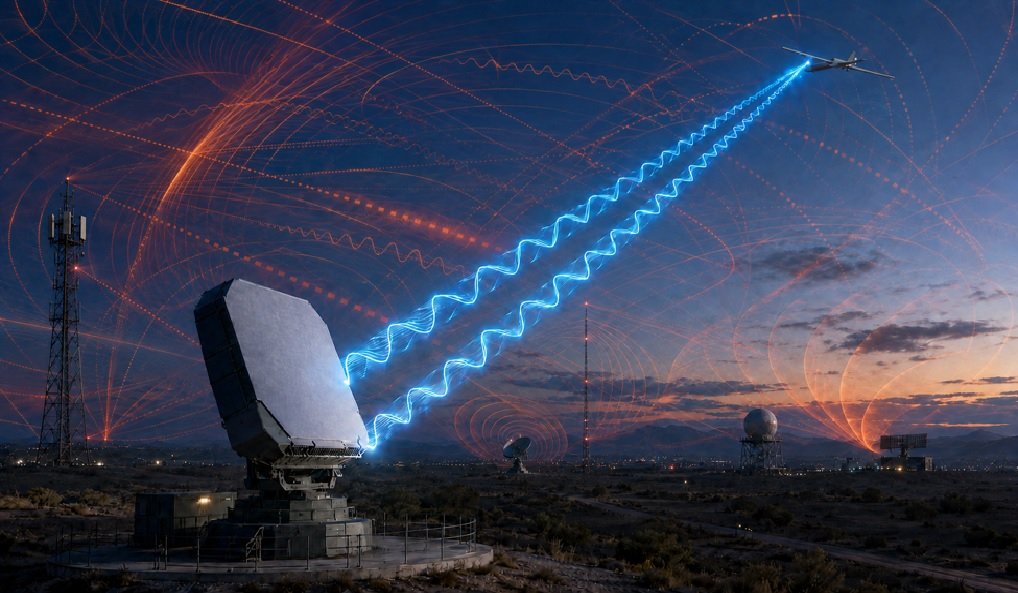
U.S
SYRACUSE, N.Y. — SRC, Inc., a not-for-profit defense research and development company based in North Syracuse, New York, has received a U.S. patent for a software-based method designed to help radar systems distinguish real reflective targets from electronic interference. The U.S. Patent and Trademark Office issued the patent on June 23, 2026, as U.S. Patent No. 12,663,529. The patent is titled “Radar Apparatus and Methods for Determining the Presence of a Reflective Target Using a Multiple Response Comparison.” SRC engineers John C. Dougherty and David L. Weldum are listed as the inventors. Addressing interference in crowded radio-frequency environments Modern radar systems can operate in environments containing signals from other radars, radio transmitters, cell phone towers and similar sources. These signals can sometimes be stronger than the relatively weak echoes returned by physical objects. Such interference can cause radar systems to register or track signals that do not correspond to actual objects. SRC's patented method is designed to identify these false detections before they are presented to radar operators or entered into tracking. How the patented method works The technique is designed for scanning radars that use multiple overlapping beam patterns. When a radar detects a signal at a particular angle in one beam pattern, the software checks the corresponding location in an overlapping beam. It then compares the measured response with the response expected from a genuine reflective target. If the signal matches the expected pattern within a predetermined error threshold, the system can identify it as a valid target. If the response falls outside the expected range, the system identifies it as interference and filters it out before the detection is displayed to an operator or used for tracking. According to SRC, this approach can reduce false detections while also conserving radar processing resources. The method is software-based and was developed for integration with a range of scanning radar systems rather than a single specific platform. SRC engineers developed and tested the technique using recorded radar data to evaluate its performance in complex radio-frequency environments. Inventors John C. Dougherty, SRC's chief systems engineer, has about 25 years of experience with the company and five years of previous industry experience. He earned a bachelor's degree in electrical engineering from the State University of New York at Buffalo, followed by a master's degree in electrical engineering and an MBA from Syracuse University. The patent is his seventh. David L. Weldum, a senior principal systems engineer at SRC, has 23 years of experience with the company and 14 years of previous industry experience. He holds a bachelor's degree from Michigan Technological University and a master's degree from Syracuse University. The patent is his second with SRC and third overall. SRC's radar technology work SRC President and CEO Kevin Hair said innovation has been central to the company for nearly 70 years and that the patent reflects its work on challenges faced by radar operators. The new patent adds to SRC's existing portfolio of radar-related technologies. The company said the technology is intended to help operators reduce false reports caused by interference and focus on relevant radar information. Founded in 1957, SRC is headquartered in North Syracuse, New York, and focuses on research and development in defense, environment and intelligence. The company is chartered as an independent not-for-profit organization by the state of New York and employs more than 1,400 people.
Read More → Posted on 2026-09-05 13:46:45
U.S
WASHINGTON, — The U.S. Department of the Air Force has posted a notice for a new multi-year purchasing arrangement called the DAF Battle Network “Megatron” Multiple Award Contract (MAC) IDIQ). The notice was published on the government’s public contracting portal on September 4, 2026. The contract will allow the U.S. Air Force and Space Force to purchase command-and-control technologies from multiple companies over time, reducing the need to negotiate separate contracts for individual requirements. Part of the DAF Battle Network The Megatron contract is managed by the Portfolio Acquisition Executive for Command, Control, Communications and Battle Management (PAE C3BM). It supports the broader DAF Battle Network, which evolved from the Advanced Battle Management System (ABMS). The effort focuses on connecting sensors, data systems and decision-making tools across the Air Force and Space Force so commanders can receive and act on information more quickly. Six Technology Areas Companies selected under the contract could provide technologies in six main areas: Digital architecture: Architecture, modeling, simulation and data-management tools. Sensor integration: Hardware and software for integrating sensors and sharing their data. Secure processing: Technologies for secure data processing and cloud-based data repositories. Connectivity: Network technologies designed to maintain communications in contested environments. Applications: Software interfaces for distributed decision-makers. Synthetic environments: Computer-simulated environments for training and testing. Two Contract Pools The Air Force plans to divide contract awards into two pools. One will be reserved for small businesses, while the other will be unrestricted and open to companies of any size. After the vendors are selected, Department of the Air Force program offices will be able to place orders directly through the decentralized contracting vehicle. Industry Review and Timeline The Air Force approved the Megatron acquisition strategy in August 2026. A draft version of the contract requirements was released on September 4 for industry review and comments. The draft document is restricted. Companies interested in reviewing it must formally request access and pass a review of their business registration. Written feedback must be submitted to contracting officer Julianne Payne by September 30, 2026. The planned procurement schedule is: Draft RFP: Late Fiscal Year 2026 Final RFP: First quarter of Fiscal Year 2027 Contract awards: Third quarter of Fiscal Year 2027 Virtual Industry Day The Air Force will hold a virtual Industry Day on October 7, 2026, from 8 a.m. to noon Eastern time. Program manager Jeffery “Ryan” Compton and contracting officer Julianne Payne will brief companies on the planned bidding process. Because of the expected number of participants, officials will not conduct individual one-on-one meetings. Questions submitted during the event will be compiled and made public afterward. Earlier industry briefings indicated that Megatron is intended to support the rapid exploration and maturation of technologies associated with ABMS and to supplement or potentially succeed existing ordering vehicles covering architecture, integration and related work. The final contract ceiling and number of awards have not yet been finalized in the current government notice. A potential ceiling of $4.5 billion or more has been discussed in industry reporting, but that figure is not confirmed in the latest notice.
Read More → Posted on 2026-09-05 13:29:44
U.S
WASHINGTON, — The U.S. Army has selected Westinghouse Government Services’ eVinci microreactor for the next phase of the Janus Program, pairing the system with Fort Drum, New York. The Army announced the selection on August 26, 2026, advancing the eVinci heat-pipe reactor toward potential deployment at a U.S. military installation. Janus Program The Janus Program is the Army’s next-generation nuclear power initiative, supported by the Department of War Innovation Unit (DIU). It aims to move microreactor technology from designs and experiments toward reliable commercial hardware that can provide secure, resilient and reliable energy for defense installations. The Army considers reliable on-site power important for mission assurance, operational readiness and national security. Five nuclear energy vendors and five initial Army locations have been selected: Company Initial location Antares Nuclear, Inc. Fort Bragg, North Carolina BWXT Advanced Technologies, LLC Fort Campbell, Kentucky General Atomics Electromagnetic Systems Fort Hood, Texas Radiant Industries, Inc. Fort Benning, Georgia Westinghouse Government Services Fort Drum, New York The companies were selected after their technical, financial and organizational capabilities were assessed by a panel of dozens of experts from across the country. The Army is awarding up to a combined $2.2 billion through milestone-based agreements covering fiscal years 2027–2031. The vendors will own, construct and operate the microreactors. With expected private-sector funding, the Army anticipates that more than 20 microreactors could eventually be built and operated across Department of War installations. eVinci Microreactor Westinghouse says the eVinci microreactor is designed to provide electricity 24 hours a day, seven days a week for eight years without refueling. The system uses a heat-pipe reactor design and TRISO fuel, with passive heat removal. It can produce around 5 megawatts of electricity from a 15-megawatt thermal core. The reactor has a small footprint and is designed for transport by road, rail or barge. It requires no water for cooling and is intended for above-ground installation. Westinghouse completed zero-power criticality testing of the eVinci design on August 24, 2026, at the National Criticality Experiments Research Center. Fort Drum Selection Fort Drum, home of the 10th Mountain Division, was selected based on factors including mission requirements, power demand, grid conditions, and safety and environmental considerations. The Army’s earlier selection process considered nine military installations. The planned Janus microreactors will each generate less than 20 megawatts of electricity and occupy less than five acres. They are intended to provide localized resilience for critical mission infrastructure and can integrate with existing commercial power grids. 2028 Target The Janus Program aims to have at least one Army-regulated nuclear reactor capable of producing usable electricity operating at a domestic military installation by September 30, 2028, consistent with Executive Order 14299, signed in May 2025. “Reliable energy is fundamental to mission assurance, operational readiness and national security,” said Rich Rademacher, President of Westinghouse Government Services. He said the eVinci selection highlights the role advanced nuclear technology can play in providing resilient, long-duration power for military missions. Dr. Jeff Waksman, Principal Deputy Assistant Secretary of the Army for Installations, Energy and Environment, said the Janus Program is focused on transitioning from designs and experiments to reliable commercial hardware and securing energy independence. The Janus Program was launched in October 2025. The Army expects additional sites and potential expansion to other military services to be announced as the program progresses.
Read More → Posted on 2026-09-05 12:28:46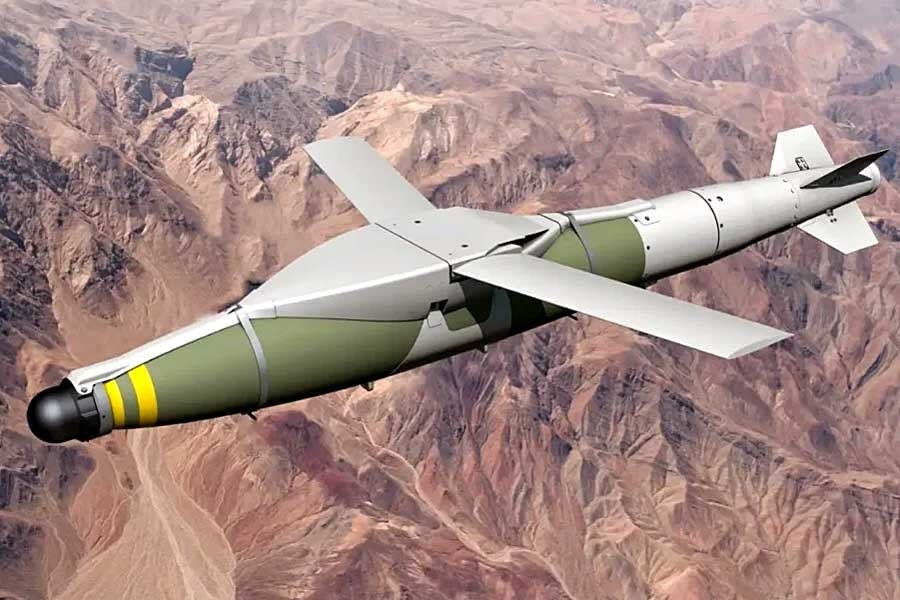
U.S
WASHINGTON, — The United States has approved two potential Foreign Military Sales to Saudi Arabia with a combined estimated value of $5.75 billion, covering Joint Direct Attack Munition-Extended Range (JDAM-ER) systems, general-purpose bombs and AGT-1500 tank engines. The U.S. State Department notified Congress of the proposed sales on September 4. The notifications begin the congressional review process, meaning the approvals do not represent final contracts. The final agreements will depend on subsequent negotiations between the United States, Saudi Arabia and the contractors. $5 Billion JDAM-ER Package The larger package is valued at an estimated $5 billion and covers JDAM-ER systems, bombs and associated equipment. Saudi Arabia has requested: 5,004 KMU-572 JDAM guidance kits 5,000 KMU-556 JDAM guidance kits 5,004 BLU-111 500-pound general-purpose bombs 5,000 BLU-117 2,000-pound general-purpose bombs The package also includes FMU-139 fuze systems, DSU-38 and DSU-40 target detectors, containers, support equipment, spare parts, consumables, accessories and repair-and-return support. U.S. government and contractor engineering, technical and logistics support services are also included. JDAM-ER is an extended-range version of the JDAM concept that uses an aerodynamic wing kit to increase the glide distance of a bomb after release. The extended-range system does not require an onboard propulsion system. Boeing has been identified as the principal contractor for the JDAM-ER package. $750 Million Abrams Tank Engine Package The second proposed sale is valued at $750 million and covers 60 AGT-1500 gas turbine engines for Saudi Arabia's M1 Abrams tank fleet. The package includes engine containers, spare parts, consumables, accessories, contractor logistics support, and U.S. government and contractor engineering, technical and logistics support services. Honeywell is the principal contractor, with work associated with Anniston Army Depot in Alabama. The AGT-1500 is the gas turbine engine used in the M1 Abrams tank family. Saudi Arabia has operated M1 Abrams tanks since acquiring an initial batch of 315 vehicles in 1989 and has continued to maintain and upgrade the fleet. U.S. Stated Objectives The State Department said the proposed sales support U.S. foreign policy and national security objectives by improving the security of Saudi Arabia as a Major non-NATO Ally. For the JDAM-ER package, the department said the equipment would strengthen Saudi Arabia's airborne defense capability, support homeland defense and improve interoperability with U.S. forces and other Gulf partners. For the tank engines, the department said the proposed sale would support Saudi military readiness and operational requirements while improving interoperability for bilateral contingency plans. The U.S. government also determined that Saudi Arabia would have no difficulty absorbing the equipment and services into its armed forces. The proposed sales are not expected to alter the military balance in the region or adversely affect U.S. defense readiness. Sales Still Require Final Agreements The $5.75 billion figure is an estimated value for the proposed Foreign Military Sales cases, rather than the value of completed contracts. The quantities, requirements and final cost can change during negotiations. Congress will have a review period following the notifications. If the deals proceed through the FMS process, Saudi Arabia and the U.S. government will then complete the required agreements and contracting arrangements. The two Saudi Arabian notifications were part of a broader group of proposed U.S. military sales to Middle Eastern countries announced on the same day. The combined value of the Saudi, Oman and Iraq notifications was reported at approximately $6.1 billion.
Read More → Posted on 2026-09-05 12:13:23Search
Top Trending in 24 Hours
-
 Iranian Missile Strike Damaged U.S. A-10 and Eight F-15s at Jordan Air Base, CBS Reports
-
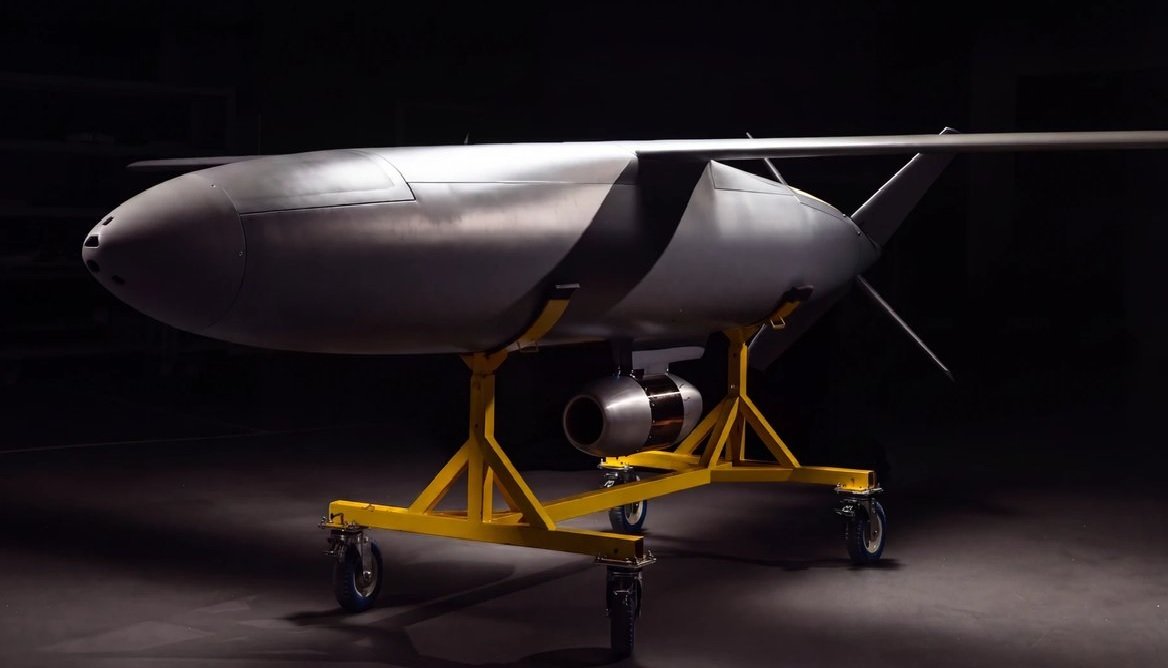 U.S. Startup Covenant Emerges From Stealth With $250 Million Funding and Anthem, a New Long-Range Heavy-Payload Strike Missile After More Than 200 Test Flights
-
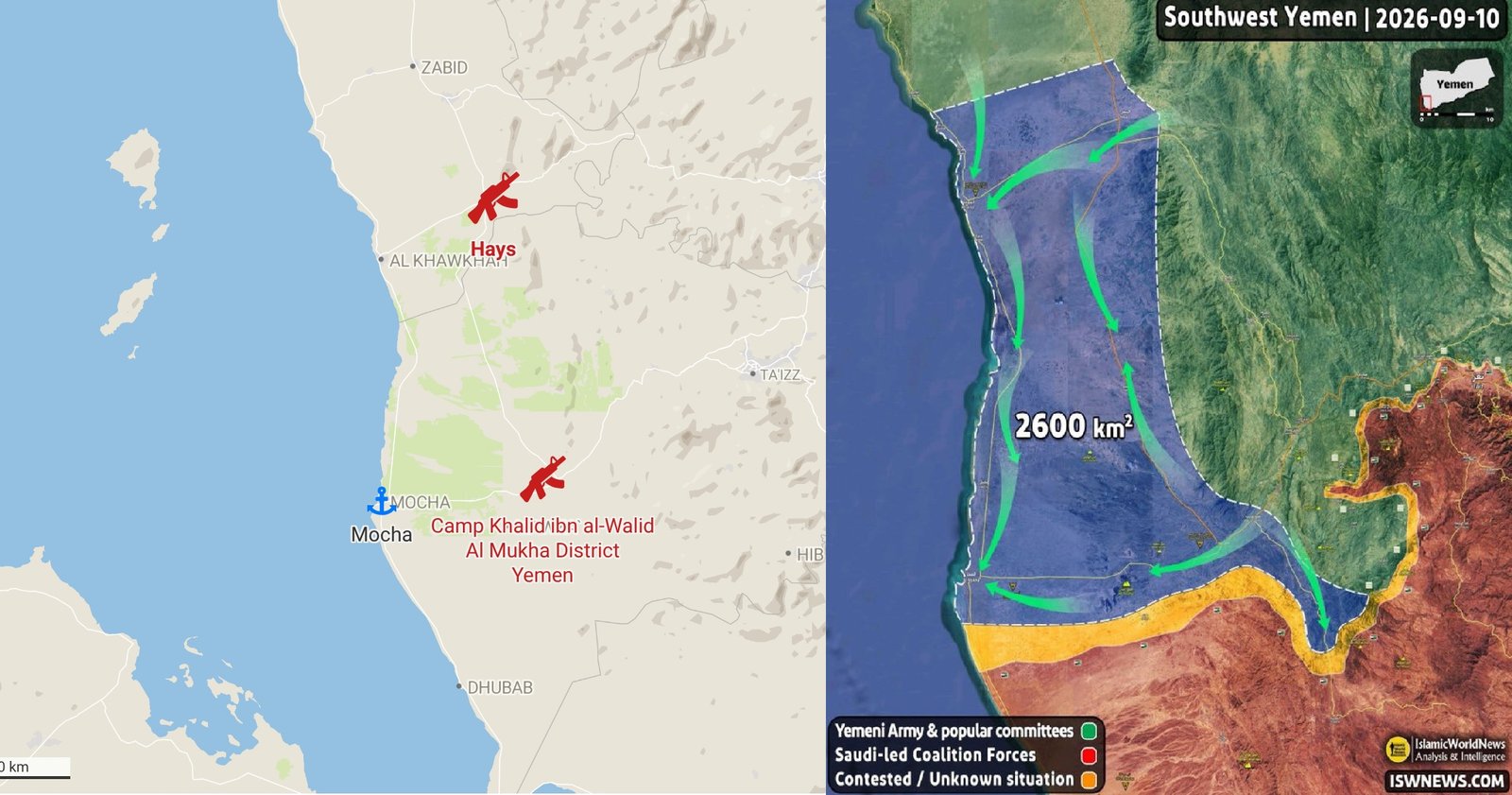 Houthi Forces Capture Strategic Red Sea Port City of Mocha Following Government Withdrawal
-
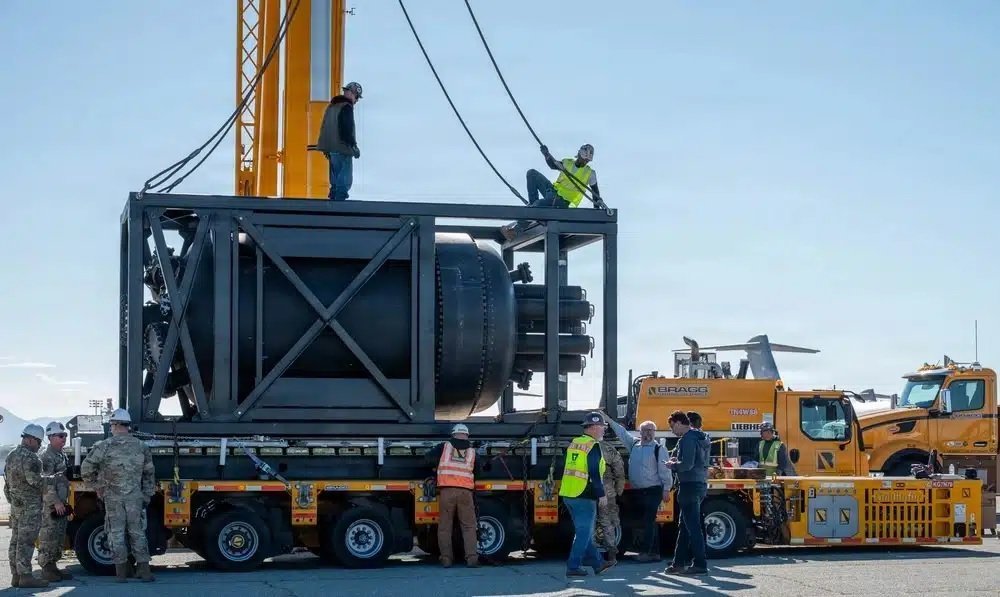 U.S. Navy Plans First Shore-Based Nuclear Microreactor at Indiana’s Crane Base by 2028
-
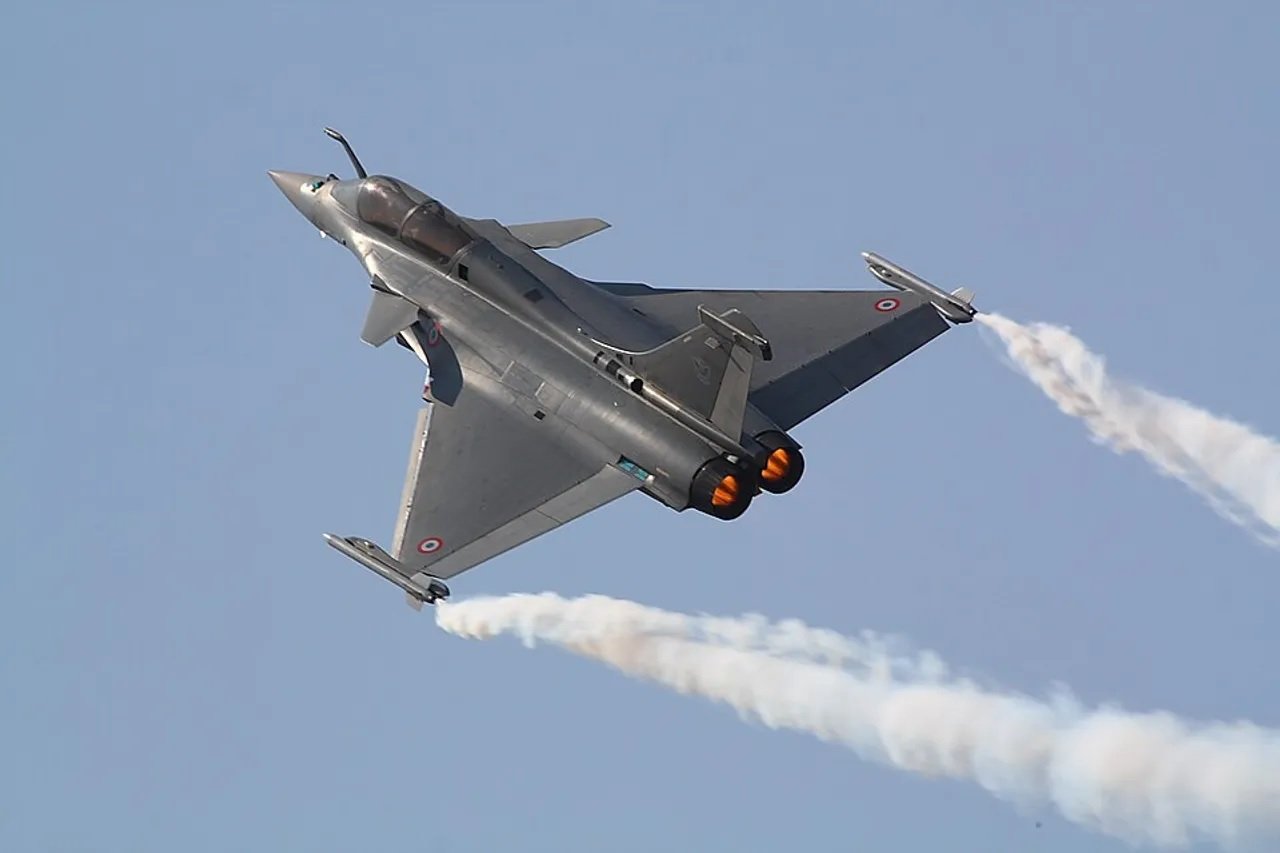 Russian Rafale “Kill Switch” Claim Faces Questions Over Evidence
-
 American Rheinmetall Secures $7.28 Million Contract for U.S. Marine Corps Autonomous Vehicles
-
 U.S. Signs $4 Billion Military Financing Guarantee for Poland, Bringing Total Support Near $20 Billion
-
 U.S. Air Force Launches North Star Campaign to Improve B-52 and B-1 Bomber Readiness
Top Trending in 4 Days
-
 Satellite Imagery Shows Two U.S. Barracks Destroyed at Kuwait’s Ali Al Salem Air Base in Iranian Attack
-
 Iran’s IRGC Claims Capture of U.S. Dive-LD Unmanned Underwater Vehicle Near Strait of Hormuz
-
 Mysterious Black Aircraft at Long Beach Airport Identified as Aevum’s RAVN X Autonomous Spaceplane After Years Out of Sight
-
 Trump’s ‘The Moon Is Ours’ Post, Space Force Uniform Concept and Green Lantern AI Video Draw Online Backlash
-
 Iran Launches Massive Ballistic Missile Attack with Cluster Munitions on U.S.-Used Air Base in Jordan, Some Missiles Confirmed to Have Hit Base
-
 Iranian Missiles Strike U.S. Base in Jordan as Reports Emerge of Injured American Personnel
-
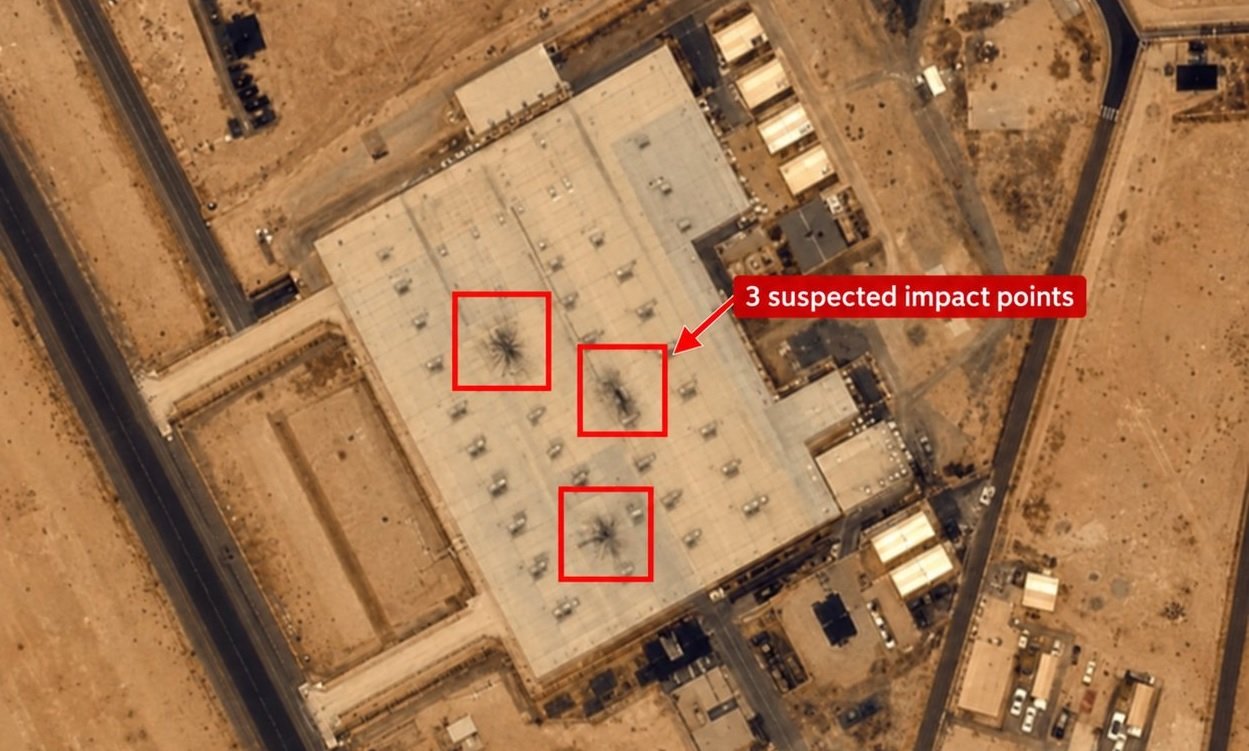 New Satellite Images Show Three Possible Impacts at U.S.-Linked Air Bases in Kuwait
-
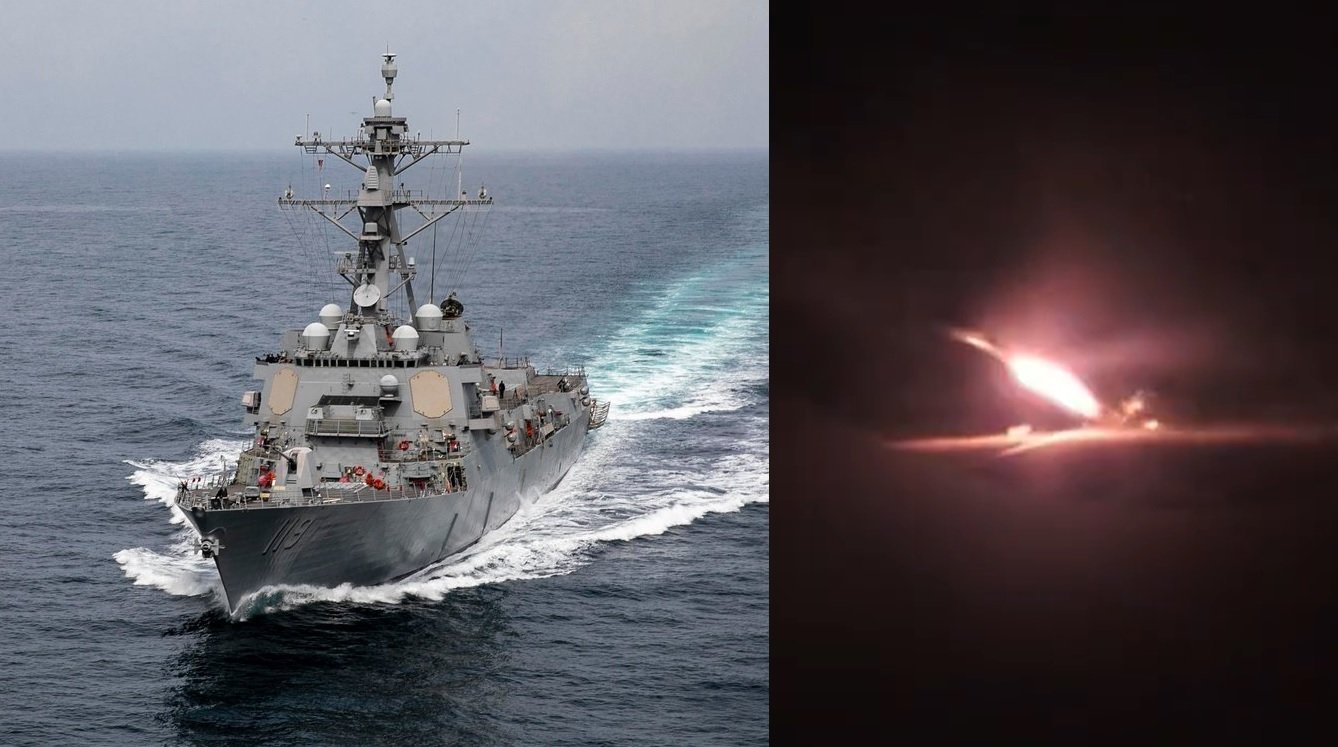 IRGC Claims Significant Damage to Two U.S. Destroyers in Missile Attack; CENTCOM Denies Hits