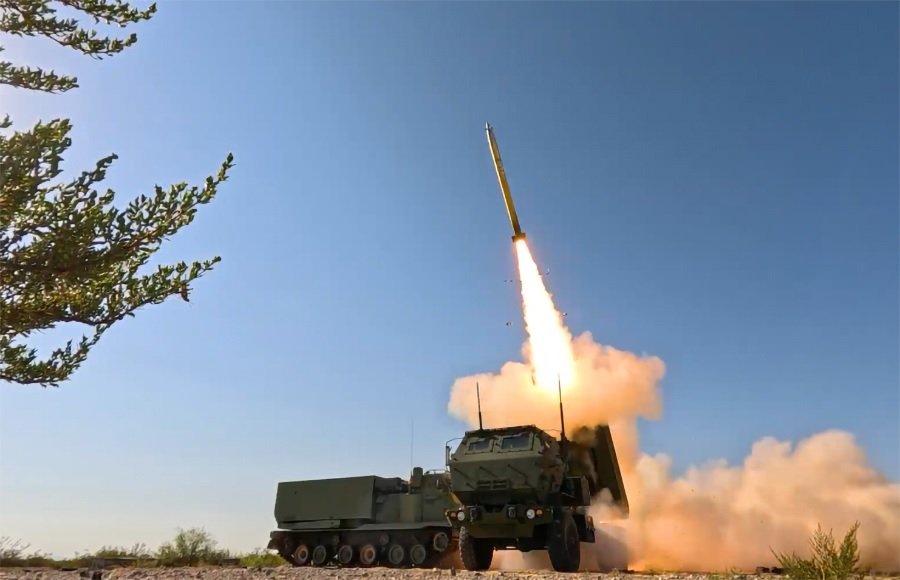
WHITE SANDS, N.M., — Lockheed Martin and the U.S. Army have successfully demonstrated the ability to redirect a Guided Multiple Launch Rocket System (GMLRS) rocket while it is in flight, allowing it to strike and destroy a moving target.
The live-fire test at White Sands Missile Range, New Mexico, marked the first in-program demonstration of the capability. The test showed that target coordinates can be updated after launch, giving military commanders greater flexibility to respond when battlefield conditions change.
GMLRS Receives Target Updates During Flight
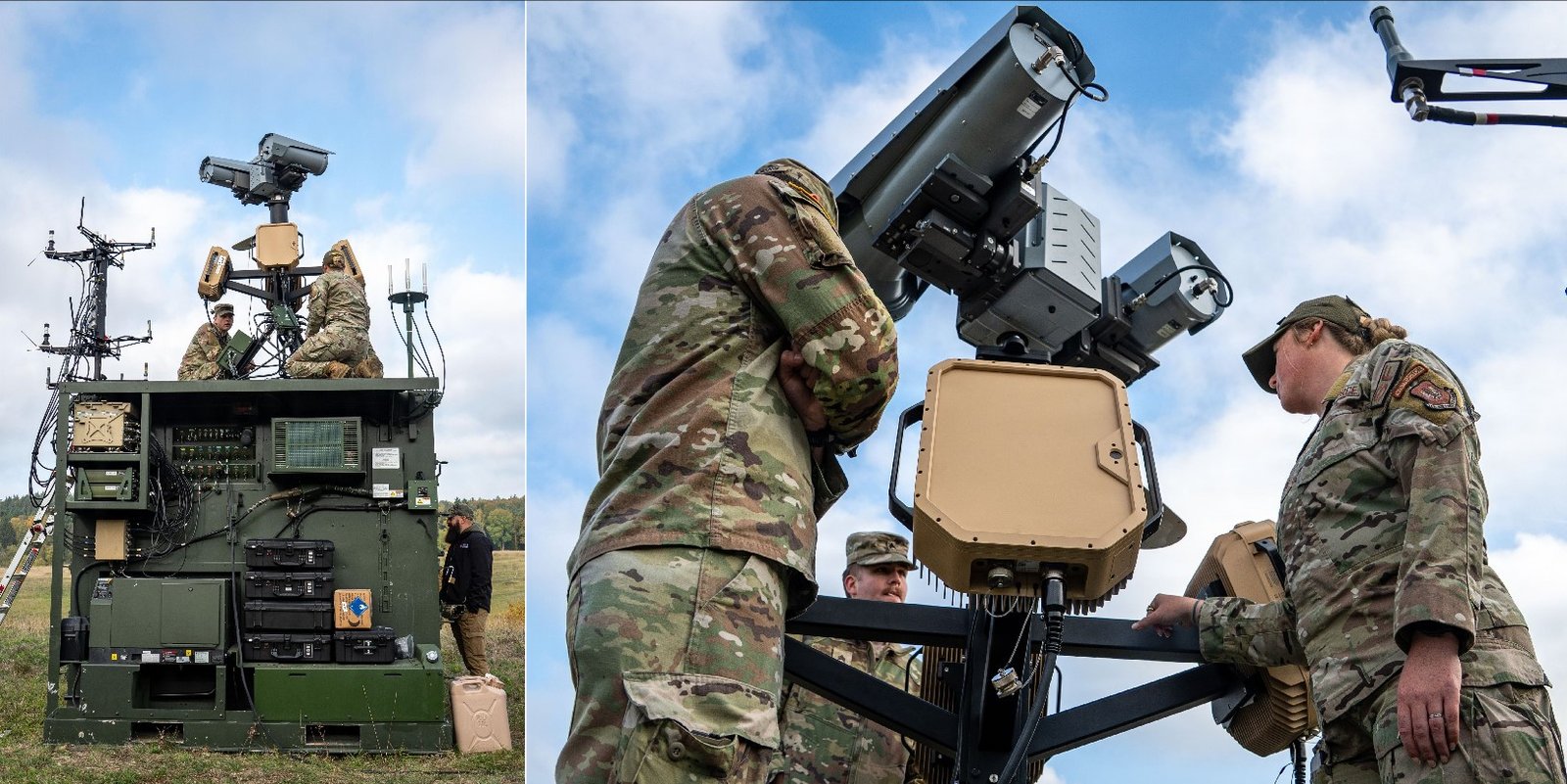
During the demonstration, a GMLRS rocket was launched from an M142 High Mobility Artillery Rocket System (HIMARS). While the rocket was airborne, engineers used Lockheed Martin’s Strigo datalink and Remote Interceptor Guidance-360 (RIG-360) system to transmit updated target coordinates.
The rocket received the new information, adjusted its trajectory and successfully destroyed the moving target. The integration was funded internally by Lockheed Martin.
The capability allows the existing GMLRS inventory to receive updated targeting information without requiring fundamental design changes to the rocket. By connecting existing sensors, launchers and targeting systems, the Army can improve coordination between different elements of its precision fires network.
Randy Crites, vice president of Lockheed Martin Advanced Programs, said integrating GMLRS, RIG-360 and Strigo provides commanders with more flexible options and supports faster, more effective responses on the modern battlefield.
Capability Could Extend to ER-GMLRS and PrSM
Lockheed Martin stated that the datalink package is also applicable to other precision-fire systems, including the Extended-Range GMLRS (ER-GMLRS) and the Precision Strike Missile (PrSM).
This could extend networked targeting capabilities across multiple rocket and missile systems, allowing target information to be updated during flight.
GMLRS Platform and Operational Capabilities
The GMLRS is a surface-to-surface precision-guided rocket artillery system that uses GPS-aided inertial navigation. It can be launched from two primary platforms:
-
M142 HIMARS: A wheeled launcher carrying one pod of up to six rockets.
-
M270 MLRS: A tracked launcher carrying two pods with a total capacity of 12 rockets.
The standard GMLRS has a maximum range exceeding 70 kilometers (43.5 miles), while the ER-GMLRS is designed to reach approximately 150 kilometers (93 miles).
Current GMLRS variants include the M30/M30E1 Alternative Warhead, which uses preformed tungsten fragments for area effects, and the M31 Unitary variant, equipped with a 200-pound (90-kilogram) high-explosive warhead for precision strikes against point targets.
Recent Testing and Production
The in-flight retargeting demonstration follows two ER-GMLRS operational tests conducted at White Sands Missile Range in late September and early October 2026. Those trials evaluated alternative and unitary warhead variants launched from an upgraded M270A2 tracked launcher and supported the Army’s Milestone C decision for production and fielding.
In June 2026, Lockheed Martin secured a $3 billion contract under the fiscal year 2026 procurement cycle to continue manufacturing standard and extended-range GMLRS rockets. The contract supports ongoing production, capacity expansion and munitions readiness.
The rockets are manufactured and assembled at Lockheed Martin’s facility in Camden, Arkansas, where defense contractor L3Harris also produces the solid rocket motors used by the system.
The latest demonstration builds on earlier development work, including a 2023 captive-carry test of the RIG-360 uplinker prototype at White Sands. That demonstration provided target updates to a datalink on an aircraft simulating a GMLRS trajectory.
The successful live-fire test supports the Army’s development of networked precision fires, connecting sensors, launchers and targeting systems to provide greater flexibility against changing battlefield threats.
——— End of Article ———