World
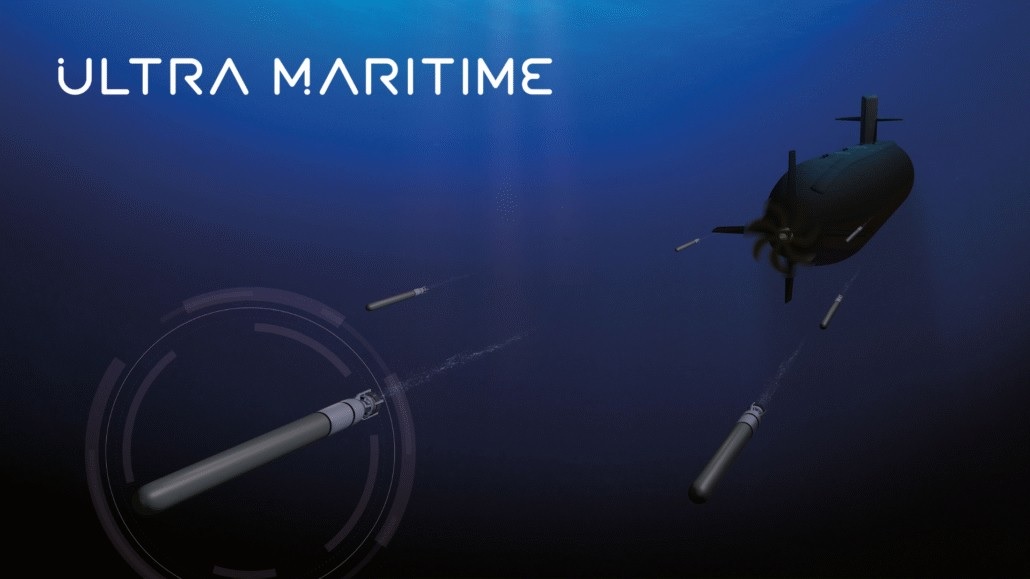
ADELAIDE, Australia — May 29, 2026 : Ultra Maritime Australia has been awarded a contract by the Australian Department of Defence to supply Acoustic Device Countermeasure (ADC) units for the Royal Australian Navy (RAN), continuing a defence partnership that has spanned more than a decade in support of Australia’s undersea warfare and torpedo defence capabilities. The ADC units form part of Ultra Maritime’s Sea Deceptor family of torpedo countermeasures and are designed to provide “soft-kill” protection against incoming torpedo threats. The expendable systems are engineered to detect, classify, confuse, and defeat hostile torpedoes through intelligent acoustic outputs tailored to mimic a vessel’s acoustic signature, helping divert or deceive incoming weapons during maritime operations. Designed for rapid deployment and reliable performance in complex operational environments, the ADC systems are intended to enhance survivability for naval surface ships operating in contested undersea environments. Ultra Maritime is also the manufacturer of ADC systems currently in service with the U.S. Navy, UK Royal Navy, and Royal Australian Navy, with more than 35,000 units delivered globally to date. The new contract complements Ultra Maritime’s previous selection to provide the Surface Ship Torpedo Defence (SSTD) system for the Royal Australian Navy’s Hunter-class frigates, currently under development by BAE Systems Maritime Australia. The SSTD integrates a towed array with automatic threat detection and alert functions, enabling a layered “sense-to-effect” torpedo defence capability that links detection systems with countermeasure deployment while reducing operator workload. In addition to the SSTD system, Ultra Maritime’s Hull Mounted Sonar, including the 2150 Bow Sonar, has been selected for integration into the Hunter-class program, strengthening undersea surveillance and protection capabilities across the future RAN fleet. Together, these systems are intended to support integrated undersea protection and improved operational readiness for Australia’s surface combatants. Operating in Australia for more than 15 years with a presence in Mawson Lakes, South Australia, Ultra Maritime continues to expand cooperation with domestic industry partners, including BAE Systems Maritime Australia, as part of ongoing naval modernization efforts. The contract value and delivery timeline for the ADC procurement were not disclosed by the company or the Australian Department of Defence.
Read More → Posted on 2026-05-29 15:08:44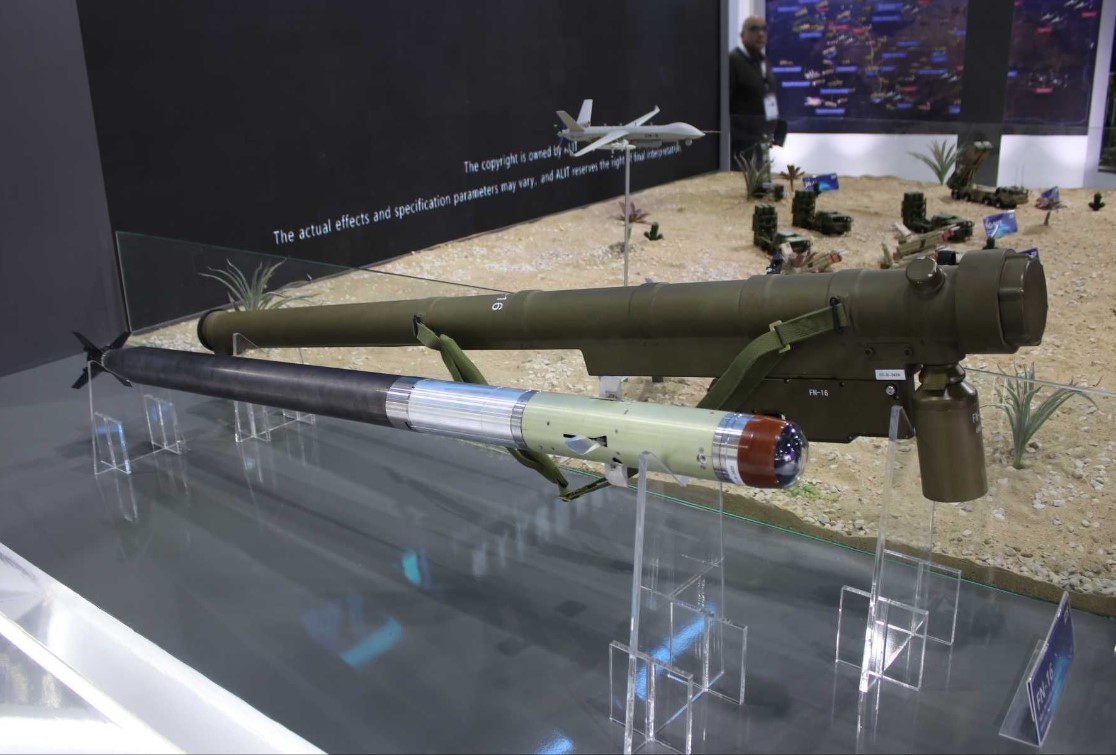
World
MOSCOW — May 29, 2026 : Afghanistan’s Taliban-led government is set to receive Man-Portable Air-Defense Systems (MANPADS) and broader aerial defense systems from Russia under a newly signed military-technical cooperation agreement, marking a further expansion of security ties between Moscow and Kabul. The security pact was formalized on May 27 during an international security forum held in the Moscow region. The agreement was signed by Sergei Shoigu, Secretary of Russia’s Security Council, and Mawlawi Mohammad Yaqub, Afghanistan’s Taliban Defense Minister. While initial public statements following the summit did not disclose the exact inventory to be transferred, the agreement includes the supply of MANPADS and additional aerial defense systems intended to strengthen Afghanistan’s air defense infrastructure. Military-technical cooperation agreements generally include arms transfers, defense licensing, training, maintenance support, technical assistance, and military technology exchange. Officials have not disclosed the types, quantities, or delivery schedule of the systems to be supplied. The inclusion of MANPADS—lightweight, shoulder-fired surface-to-air missile systems designed to engage low-flying aircraft—represents a significant enhancement of Afghanistan’s existing anti-aircraft capabilities. Prior to the agreement, Taliban forces largely relied on aging Soviet-era systems and military equipment inherited after the withdrawal of U.S. and NATO forces in 2021, including older stocks of FIM-92 Stinger and SA-24 Igla-S systems. Taliban officials had previously expressed interest in acquiring Russian-made air defense systems to improve national airspace control and strengthen aerial defense capabilities. In 2024, Taliban representatives publicly discussed plans to procure Russian equipment for air defense and reconnaissance support. The pact also reflects expanding diplomatic relations between the two governments. Russia removed the Taliban from its domestic list of banned terrorist organizations in 2025 and became the first country to formally recognize the Taliban administration as Afghanistan’s legitimate government in July 2025. During discussions at the Moscow security forum, Shoigu highlighted threats posed by ISIS-affiliated militant groups and other armed factions operating in Afghanistan, emphasizing shared concerns over regional stability and security along Central Asia’s southern flank. Defense analysts note that practical factors may influence implementation. Russia’s defense export capacity continues to face pressure from domestic military requirements linked to the ongoing war in Ukraine and the effects of Western sanctions. Early phases of the agreement are expected to focus on aerial defense systems, technical training, maintenance support, and operational integration for Taliban security forces. The agreement is expected to strengthen Afghanistan’s ability to secure key infrastructure, airspace monitoring, and ground operations, while reflecting Kabul’s efforts to expand international defense partnerships outside Western frameworks.
Read More → Posted on 2026-05-29 15:01:04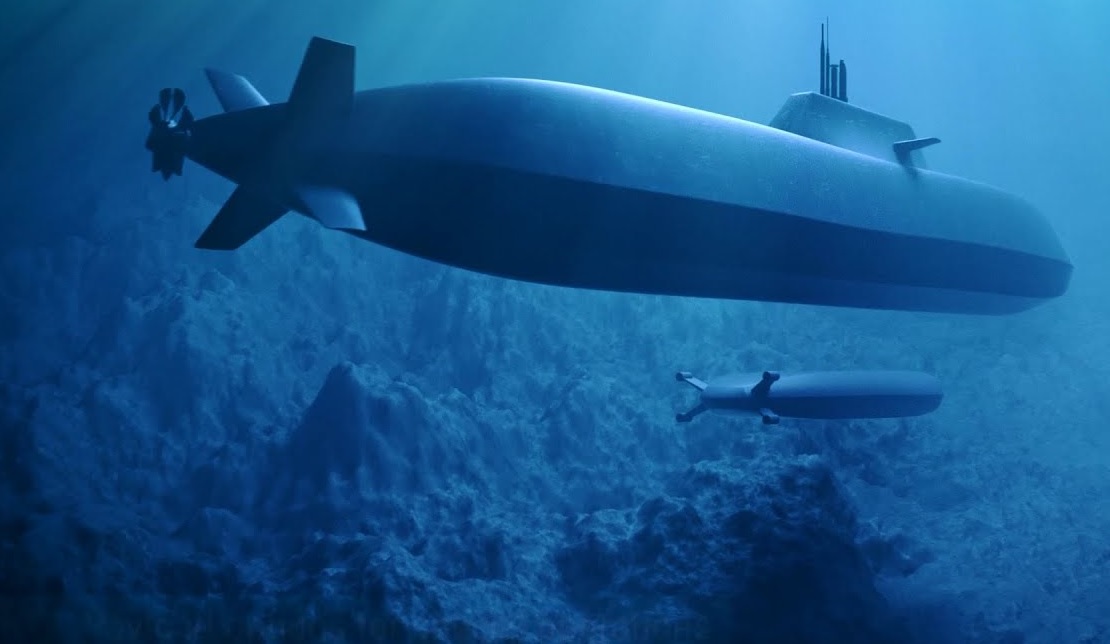
World
OTTAWA, CANADA — May 29, 2026 : Germany has proposed an accelerated delivery arrangement for four Type 212CD submarines to Canada, offering a pathway for the Royal Canadian Navy to receive new submarines before the planned retirement of its aging Victoria-class fleet in the mid-2030s. The proposal, disclosed by German Defence Minister Boris Pistorius to CBC News during the CANSEC defence exhibition in Ottawa, is part of Germany’s bid for Canada’s C$60 billion Canadian Patrol Submarine Project (CPSP). The offer directly competes with South Korea’s Hanwha Ocean and its KSS-III Batch II submarine proposal as Ottawa approaches a final procurement decision. Under the German-Norwegian arrangement, Berlin and Oslo are prepared to temporarily reallocate submarines from their own procurement programmes, allowing Canada to enter an active production line rather than waiting for newly assigned construction slots. German officials argue the approach would reduce the risk of an undersea capability gap as Canada begins retiring its Victoria-class submarines. Canadian Patrol Submarine Project Canada plans to acquire up to 12 conventionally powered, under-ice capable submarines under the CPSP to replace the Victoria-class fleet, which was originally built in the 1980s and later acquired by Canada in the 1990s. The programme requires delivery of the first submarine, alongside supporting training systems and maintenance infrastructure, by 2035. In August 2025, the Canadian government narrowed the competition to two qualified suppliers: Germany’s ThyssenKrupp Marine Systems (TKMS), offering the Type 212CD submarine, and South Korea’s Hanwha Ocean, proposing the KSS-III Batch II submarine. A final decision is expected before the end of June 2026. German-Norwegian Delivery Proposal Germany and Norway currently maintain a combined procurement plan for 12 Type 212CD submarines. Germany is scheduled to receive six submarines, while Norway expanded its order from four to six vessels in January 2026. Under the proposal presented to Canada, Germany and Norway would each reallocate one submarine from their production sequence to support earlier Canadian deliveries. Replacement hulls would be delivered later in the programme as production capacity increases to an estimated three or four submarines annually. The €5.5 billion Type 212CD programme was launched under a contract signed in July 2021, with construction of the lead submarine beginning in September 2023. Norway’s first submarine is scheduled for delivery in 2029. The programme completed its critical design review in August 2024 and is currently in full-rate production. Type 212CD Capabilities Developed for operations in northern European waters, the North Atlantic, and Arctic environments, the Type 212CD is an advanced diesel-electric submarine optimized for low observability and long-duration underwater operations. The submarine displaces approximately 2,500 tonnes surfaced and 2,800 tonnes submerged, measures 73 metres in length with a 10-metre beam, and uses two MTU 4000-series diesel generators, lithium-ion batteries, and fourth-generation proton exchange membrane (PEM) fuel-cell air-independent propulsion (AIP). The system enables underwater endurance of up to 41 days without frequent snorkeling. The platform is equipped with six 533 mm torpedo tubes capable of launching heavyweight torpedoes and supporting future missile systems, anti-torpedo interceptors, and unmanned underwater vehicles. Combat operations are managed through the ORCCA combat management system, while the submarine’s hull design reduces acoustic, magnetic, and sonar signatures for stealth operations in contested maritime environments. NATO Integration and Industrial Benefits German officials have emphasized that a Type 212CD selection would integrate Canada into a multinational submarine framework shared with Germany and Norway, creating common logistics, sustainment, training, and modernization pathways across NATO’s northern operating region. If Canada proceeds with a 12-submarine purchase, the combined fleet could expand to 24 submarines operating shared systems and maintenance standards. Germany’s proposal also includes an industrial package estimated to generate C$86 billion in cumulative GDP impact and 654,695 job-years over the programme’s lifecycle. Planned investments include maintenance facilities on both Canadian coasts, domestic production of heavyweight torpedoes and anti-torpedo systems, expanded training cooperation with CAE, and industrial partnerships involving Seaspan and other Canadian firms. Additional investment commitments include expansion of the Port of Churchill in Manitoba, carbon-capture projects in Alberta, rare-earth processing, battery manufacturing, artificial intelligence, and advanced industrial production. Competing South Korean Offer Germany’s proposal competes directly with Hanwha Ocean’s KSS-III Batch II offer, which promises delivery of four submarines by 2035, with the first potentially arriving as early as 2032 if a contract is signed in 2026. Hanwha has also emphasized domestic industrial participation and sovereign sustainment capabilities for Canada. A final Canadian decision on the CPSP is expected before the end of June 2026 and will determine whether Ottawa joins a European-Nordic submarine enterprise focused on NATO interoperability in the Arctic and North Atlantic or selects South Korea’s KSS-III programme.
Read More → Posted on 2026-05-29 14:53:42
World
WARSAW, Poland — May 29, 2026 : Polish Armaments Group (PGZ) and BAE Systems have received the British-Polish Collaboration Award in recognition of their strategic partnership on 155mm artillery ammunition production in Poland. The award was jointly presented by the British Embassy in Warsaw and the British Polish Chamber of Commerce (BPCC). The recognition highlights the partnership’s contribution to Poland’s national security, European defence resilience, and long-term industrial cooperation between the United Kingdom and Poland. The UK-Poland Business Awards initiative was launched in 2025 to honour companies and individuals supporting bilateral trade and investment relations. Winners are selected by a jury of senior experts representing both the British Embassy and the BPCC. Dame Melinda Simmons DCMG, His Majesty’s Ambassador to the Republic of Poland, said the awards reflect the expanding economic and strategic relationship between both countries. “The economic partnership between the United Kingdom and Poland is stronger today than ever before,” Simmons stated. “The second edition of the UK–Poland Business Awards demonstrates how dynamically and on multiple fronts our cooperation is developing — from growing direct investment and trade to joint initiatives in energy transition, new technologies, and security.” Strategic Ammunition Production Partnership The award recognises the industrial cooperation between PGZ and BAE Systems to establish a new 155mm artillery ammunition manufacturing facility in Poland. The project is intended to support increasing NATO and European demand for artillery ammunition while strengthening Poland’s domestic defence manufacturing capability. The partnership followed an intensive year-long cooperation process that resulted in the signing of a Strategic Partnership Agreement in September 2025. Under the agreement, BAE Systems is transferring production technology, manufacturing expertise, and automated production systems to PGZ. The 155mm calibre is the standard NATO artillery ammunition currently used by the Polish Armed Forces in the Krab and K9 self-propelled howitzer systems. The Polish government previously allocated PLN 1.3 billion for investments at the Dezamet S.A. facility in Nowa Dęba to support expansion of ammunition production capacity. According to the companies, the new facility is expected to eventually manufacture approximately 130,000 to 180,000 shells annually, representing a significant increase in Poland’s current production capability. Construction work is planned to begin in 2025, while completion of the facility is expected between 2027 and 2028. Official Statements Miroslaw Janicki, Director of BAE Systems Poland, said the company remains committed to supporting Poland’s defence requirements through large-scale ammunition production. “We are honoured to be recognised in such a positive way alongside our friends at PGZ,” Janicki said. “As Poland’s proven defence partner, BAE Systems remains dedicated to the mission of helping to ensure national security through the provision of 155mm artillery ammunition in great quantities and high quality to meet our nation’s objectives.” Adam Leszkiewicz, President of the Management Board of PGZ S.A., said the partnership combines British industrial expertise with Polish production capability while also creating opportunities for future market cooperation. “This is an example of collaboration with a foreign partner – on the one hand, we are benefiting from BAE Systems’ vast experience and know-how, and on the other, we are opening a path to the British market, where we can introduce our explosives production technologies,” Leszkiewicz stated. Wider Defence Cooperation The award presentation follows the signing of a broader UK-Poland Security and Defence Partnership Treaty in London earlier this week. The agreement covers defence cooperation, military interoperability, industrial collaboration, and joint defence projects. The PGZ-BAE Systems partnership also includes plans for future cooperation in the production of munitions components, energetics, and additional defence-related technologies. Both companies stated that the cooperation supports long-term industrial development, technology transfer, workforce skills enhancement, and future export opportunities within the European defence sector.
Read More → Posted on 2026-05-29 14:43:00
World
RAF MARHAM, Norfolk — May 28, 2026 : The United Kingdom has completed the initial procurement phase of its F-35B Lightning II programme following the arrival of the final two aircraft, BK43 and BK45, at Royal Air Force Marham, bringing the UK’s operational F-35B fleet to 47 aircraft. The delivery completes the first tranche of 48 F-35B aircraft ordered by the UK and produced by Lockheed Martin at its Fort Worth, Texas, manufacturing facility. One aircraft, BK18, was lost during an accident aboard HMS Queen Elizabeth in November 2021, leaving the current operational inventory at 47 jets. Lightning Wing at RAF Marham RAF Marham in Norfolk serves as the home base of the UK’s F-35B Lightning Wing, a joint force composed of personnel from both the Royal Air Force and the Royal Navy. The wing is responsible for pilot and ground crew training, force generation, and frontline combat operations. The Lightning Wing currently operates through three squadrons. 207 Squadron functions as the Operational Conversion Unit (OCU), responsible for training F-35B pilots and maintenance personnel before their assignment to frontline units. 617 Squadron (The Dambusters) serves as a frontline combat formation, while 809 Naval Air Squadron (The Immortals) provides additional frontline operational capacity following its reformation. The F-35B is the short take-off and vertical landing (STOVL) variant of the Lightning II, enabling operations from conventional land bases as well as the ski-jump flight decks of the Royal Navy’s Queen Elizabeth-class aircraft carriers, HMS Queen Elizabeth and HMS Prince of Wales. The platform combines low-observable characteristics, advanced sensors, network-enabled warfare systems, intelligence-gathering capabilities, electronic warfare functions, air superiority missions, and precision strike capabilities. Operational Activity The UK’s F-35B fleet has maintained operational activity over the past year. In 2025, Lightning Wing aircraft participated in a global carrier strike deployment as part of UK naval operations. More recently, aircraft from 617 Squadron deployed to RAF Akrotiri in Cyprus, where they conducted combat missions in support of UK personnel across the Middle East, including the interception of one-way attack drones during regional escalations. “I’m delighted to welcome the final aircraft of our initial procurement of F35Bs to Marham,” Air Commodore Layden, Combat Air Force Commander, said in a statement. “This marks an important milestone in our 5th-generation combat air power journey, reinforcing our declaration of full operational capability last year.” Layden added that the Lightning Wing’s operational activity over the past year demonstrated the continued growth of the UK’s fifth-generation combat air capability from both land and sea-based operations. Future Procurement Plans Although the initial procurement phase has concluded, the UK Ministry of Defence has reaffirmed its long-term commitment to procuring up to 138 F-35 aircraft over the lifetime of the programme. Further details on acquisition timelines and future procurement plans are expected in the upcoming Defence Investment Plan. Following the 2025 Strategic Defence Review, the UK adjusted its future acquisition strategy to include 12 conventional take-off and landing F-35A aircraft for the Royal Air Force to support NATO’s nuclear delivery mission. As a result, the anticipated second procurement batch of F-35B aircraft is expected to be reduced from 27 to 15 jets. Capability Upgrades and Industrial Contribution The newly delivered aircraft are built to the Technical Refresh 3 (TR-3) configuration, which provides the hardware foundation for future Block 4 software upgrades. These upgrades are required to integrate UK-developed weapons systems, including the SPEAR 3 precision strike missile and Meteor beyond-visual-range air-to-air missile, with planned integration targeted for the late 2020s and early 2030s. The United Kingdom also continues to play a significant industrial role in the Joint Strike Fighter programme as its only Tier 1 partner. UK industry, led by BAE Systems, manufactures approximately 15 percent of every F-35 produced globally, supporting thousands of skilled jobs across the country.
Read More → Posted on 2026-05-28 18:25:20
Trump Administration Explores Newly Designed $250 Bill With Trump’s Image Despite Legal Restrictions
World
WASHINGTON — May 28, 2026 : Officials within the Trump administration are advancing efforts to prepare a proposed $250 commemorative banknote featuring President Donald Trump’s portrait as part of activities linked to the United States’ 250th anniversary, according to a report published by The Washington Post on May 28. The proposal, which remains under internal review and would require congressional approval, has reportedly been discussed despite a longstanding federal law enacted in 1866 prohibiting living individuals from appearing on U.S. paper currency. Treasury Officials Pursue Preliminary Planning According to the report, U.S. Treasurer Brandon Beach and senior adviser Mike Brown, both Trump administration appointees, repeatedly directed staff at the Treasury Department’s Bureau of Engraving and Printing (BEP) to prepare design concepts and prototypes for the proposed denomination beginning in 2025. Treasury officials reportedly shared mock-up designs depicting President Trump’s portrait in the center of the note, accompanied by the signatures of the President and Treasury Secretary Scott Bessent. The proposal is tied to broader preparations for the country’s semiquincentennial, marking 250 years since American independence. Design Concept and Commemorative Features British painter Iain Alexander, who created the concept artwork, said he met with President Trump to review the designs. According to Alexander, Trump endorsed the artwork and suggested specific revisions, including the addition of American flag colors and a logo commemorating the nation’s 250th anniversary. The proposed design reportedly also includes a Betsy Ross-themed reverse side, reflecting themes associated with the country’s founding and anniversary celebrations. Legal and Legislative Challenges The proposal faces legal barriers under federal law commonly referred to as the 1866 restriction, which prohibits the image of a living person from appearing on U.S. bonds, securities, notes, or postal currency. Existing U.S. currency law also limits portraits on federal banknotes to deceased individuals. To address those restrictions, Representative Joe Wilson (R-S.C.) introduced the Donald J. Trump $250 Bill Act in February 2025. The legislation would direct the Treasury Department to issue a $250 Federal Reserve note featuring Trump’s likeness and establish an exemption for individuals who have served as President. The bill was referred to the House Financial Services Committee and has not advanced further. Bureau Concerns Over Feasibility Current and former Bureau of Engraving and Printing employees reportedly expressed concerns over both legal authorization and implementation timelines. Currency experts cited in the report said designing, securing, and testing a new high-denomination banknote typically takes between six and eight years to ensure compatibility with anti-counterfeiting systems, ATMs, and broader financial infrastructure. Former BEP Director Patricia “Patty” Solimene reportedly pushed back against requests from Treasury officials, informing leadership that the bureau lacked authority to proceed without congressional approval and emphasizing the extended timeline required for production. Following internal disagreements, Solimene was reassigned from her post by Treasury management in late April 2026. Treasury Department Response In a public statement, a Treasury Department spokesperson confirmed that the Bureau of Engraving and Printing is conducting preliminary planning related to active legislation introduced by Representative Wilson. The department said the bureau is carrying out due diligence to prepare for potential future authorization and stated that Treasurer Brandon Beach had “never asked staff to print the bill before congressional passage.” Broader Semiquincentennial Initiatives The proposed $250 note forms part of a broader set of commemorative initiatives linked to the July 2026 anniversary celebrations. In March 2026, the Treasury Department announced that President Trump’s signature, alongside Treasury Secretary Scott Bessent’s, would appear on standard U.S. paper currency. Separately, a federal arts panel recently approved the final design of a 24-karat gold commemorative coin bearing Trump’s likeness. As of May 28, 2026, no $250 banknote featuring President Trump has been approved, authorized, or produced, and discussions on the proposal remain under review within the Treasury Department and Congress.
Read More → Posted on 2026-05-28 18:18:24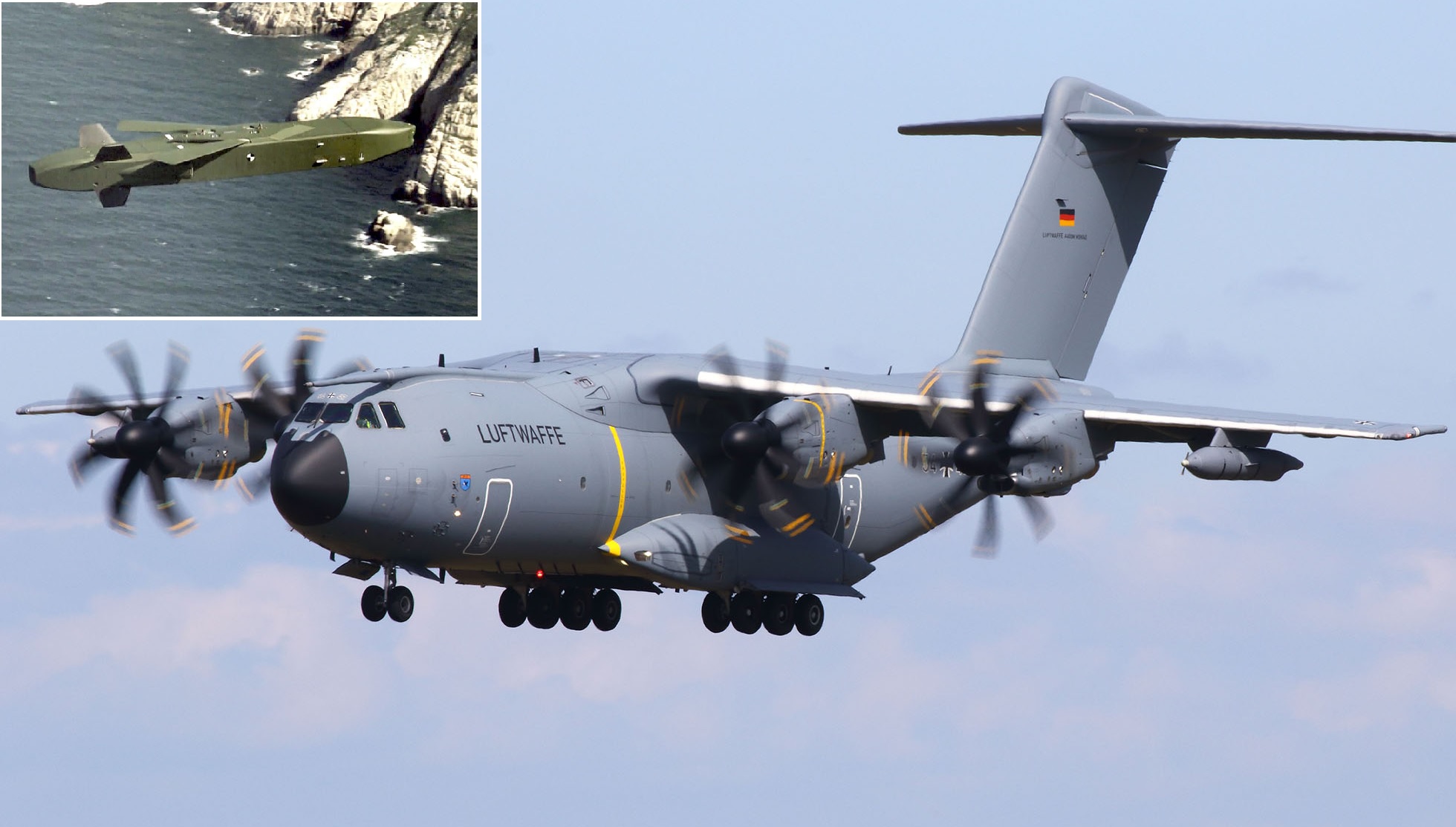
World
BERLIN — May 28, 2026 : The German Air Force (Luftwaffe) is evaluating plans to modify its Airbus A400M Atlas transport aircraft into cruise missile carriers, a move aimed at increasing long-range strike capacity while retaining the aircraft’s primary logistical role. The proposal centers on a modular “Mothership” configuration developed by Airbus Defence and Space, which would allow the A400M to deploy palletized cruise missiles or drones without permanent structural changes. The system uses a roll-on/roll-off (Ro-Ro) launch mechanism installed inside the cargo bay, enabling rapid installation and removal depending on operational requirements. Under the proposed configuration, an A400M could carry and launch up to 12 Taurus KEPD 350-class cruise missiles through the aircraft’s rear cargo ramp. The missile pallets would be released during flight and stabilized before the weapons ignite and proceed toward assigned targets. Airbus has stated that the same configuration could alternatively support the deployment of up to 50 medium-sized drones, offering additional operational flexibility. The concept is broadly comparable to the U.S. Air Force’s Rapid Dragon programme, which uses palletized launch systems to deploy cruise missiles from transport aircraft without major airframe modifications. By adopting a similar approach, the Luftwaffe could potentially increase stand-off strike capacity using existing transport assets rather than dedicated bomber platforms. The integration effort focuses on the Taurus KEPD 350, a German-Swedish air-launched stand-off cruise missile jointly developed by MBDA Deutschland and Saab Bofors Dynamics. The missile measures approximately 5.1 meters in length, weighs around 1,400 kilograms, and has a range exceeding 500 kilometers. Equipped with a two-stage MEPHISTO penetrator warhead, the Taurus is designed to strike hardened targets such as bunkers, command centers, and protected infrastructure. The A400M’s payload and cargo capacity make it suitable for such a mission profile. Powered by four EPI TP400-D6 turboprop engines, the aircraft can transport payloads of up to 37 tonnes across operational ranges exceeding 3,300 kilometers. In addition to tactical transport duties, the aircraft supports missions including paratroop deployment, cargo airdrop, medical evacuation, and aerial refueling. A key aspect of the proposal is its modularity. The removable “bomber kit” allows the A400M to return to standard transport operations once the launch system is removed, ensuring no permanent impact on the aircraft’s primary mission set. Airbus confirmed development of the Mothership concept on April 18, 2026, coinciding with the delivery of the 53rd and final A400M to the Luftwaffe. The company said work is underway with an undisclosed European customer and builds on earlier drone release testing conducted with the French and German air forces. Germany currently operates 53 A400M aircraft, and the modification could provide additional long-range strike capacity without requiring a dedicated new platform. Other A400M operators, including the United Kingdom, France, Spain, and Turkey, could potentially adopt similar modifications to increase missile salvo capacity using existing fleets. No final procurement decision or implementation timeline for the Luftwaffe has been announced. The proposal aligns with broader European efforts to expand stand-off capabilities and improve the ability to deliver larger volumes of precision-guided munitions in contested environments.
Read More → Posted on 2026-05-28 18:08:14
World
KYIV — May 28, 2026 : Ukraine’s parliament, the Verkhovna Rada, has approved legislation eliminating value-added tax (VAT) on the supply of ground-based robotic systems, commonly known as unmanned ground vehicles (UGVs), for the country’s Defense Forces, in a move aimed at reducing procurement costs and accelerating the deployment of robotic platforms to frontline units. Bill No. 15259 was adopted in both its first reading and as a whole, with 294 Members of Parliament voting in favor. The legislation will now be forwarded to President Volodymyr Zelenskyy for signature and will officially enter into force following its publication. Legislative Changes To Defense Procurement The newly adopted law amends Ukraine’s Tax Code to temporarily exempt the supply of ground-based robotic systems from the standard 20% VAT for the duration of martial law. Ukrainian lawmakers said the measure is intended to improve procurement efficiency, lower defense acquisition costs, and facilitate faster deliveries of robotic systems required for military operations. The legislation addresses a procurement gap that emerged after January 1, 2026, when a broader VAT exemption covering certain electric vehicles expired. Ground-based robotic systems had previously benefited from that exemption, and its expiration automatically increased procurement expenses for unmanned ground systems by 20%. By adopting Bill No. 15259, Ukraine has restored tax relief specifically for military robotic platforms, reducing the financial burden on state defense procurement and supporting expanded acquisition efforts. Scope Of The VAT Exemption Under the provisions of the law, the VAT exemption applies to robotic systems classified under commodity groups 84, 85, 87, 90, and 93 of the Ukrainian Classification of Goods for Foreign Economic Activity. These categories include machinery, electrical and electronic equipment, land transport systems, precision instruments, and defense-related products associated with military robotic systems. The exemption will apply under defined procurement conditions. Supplies must be executed through state defense procurement contracts, while final recipients are limited to designated defense and security entities, including the Ministry of Defense, the Armed Forces of Ukraine, law enforcement agencies, volunteer territorial defense formations, and enterprises carrying out state defense contracts. “The adopted amendments will allow for meeting the combat units’ needs for ground-based robotic systems, as well as improve the efficiency of budget funds during their supply to the defense forces,” the Verkhovna Rada stated following the parliamentary vote. Expanding Battlefield Role Of Ground Robots Ground-based robotic systems are playing an increasingly important role in Ukraine’s military operations, supporting reconnaissance, mine clearance, ammunition transportation, casualty evacuation, and logistics missions while reducing direct exposure of personnel to frontline threats. These systems are also used for combat support operations in contested areas, enabling supplies and equipment to reach forward positions without requiring soldiers to move into high-risk environments. Domestic Production And Procurement Expansion Ukraine has simultaneously increased investment in domestic production of unmanned ground systems as part of broader efforts to strengthen defense industrial capacity. In April, government officials announced that contracts had already been signed for 25,000 ground-based robotic systems for the Armed Forces during 2026, with planned procurement expected to exceed the total number acquired during all of 2025. To support the growing fleet, Ukraine’s domestic defense industry has expanded localized manufacturing capabilities, including the production of specialized rubber tracks designed specifically for ground robotic systems, reducing reliance on imported components and improving production sustainability. By removing the 20% VAT burden, Ukrainian authorities expect to facilitate larger-scale procurement, improve budget efficiency, and accelerate the delivery of unmanned ground systems to combat units during the ongoing period of martial law.
Read More → Posted on 2026-05-28 17:51:10
World
WASHINGTON — May 28, 2026 : Members of the U.S. House Armed Services Committee (HASC) are moving to restrict the U.S. Navy from beginning construction of the first Trump-class nuclear-powered battleship until key onboard weapon systems are proven technologically mature, according to draft provisions included in the Fiscal Year 2027 National Defense Authorization Act (NDAA). The proposed measure would prevent the Secretary of the Navy from entering into any contract or agreement involving construction work for the lead ship of the battleship program unless congressional defense committees are formally certified that the planned weapon systems have reached a “sufficiently mature technology readiness level.” The restriction reflects growing congressional scrutiny over the integration of highly advanced systems into one of the Navy’s most expensive future surface combatants. If enacted, the requirement could delay construction of the program’s first vessel by several years, forcing the Navy to demonstrate the operational readiness of major systems before proceeding with shipbuilding contracts. Congressional Technology Readiness Requirement The draft FY2027 NDAA provision specifically bars the Navy from signing contracts related to the construction of the lead Trump-class battleship until certification is provided to Congress regarding the maturity of planned weapons technologies. While lawmakers did not define precise readiness metrics or publicly identify every system under review, the scrutiny is primarily aimed at the ship’s proposed directed-energy weapons and electromagnetic railgun. The legislation represents a broader congressional effort to reduce procurement risks associated with integrating developmental technologies into large-scale defense programs before they are fully tested or operationally validated. Trump-Class Battleship Program Announced by President Donald Trump in December 2025 under the administration’s “Golden Fleet” initiative, the Trump-class battleship — identified in Navy planning documents as BBG(X) or BBGN — is envisioned as a nuclear-powered guided-missile surface combatant designed to provide long-range strike capability, endurance, and increased combat mass. The lead ship, planned as USS Defiant (BBG-1), is expected to displace approximately 35,000 tons and is estimated to cost between $17.6 billion and $18.9 billion. Procurement of the first vessel is currently targeted for Fiscal Year 2028, while delivery is projected around Fiscal Year 2036. The Navy’s long-range shipbuilding plan estimates the first three ships could cost approximately $43.5 billion in total. The battleship is expected to use an A1B nuclear reactor similar to that aboard Ford-class aircraft carriers, providing the power generation capacity necessary for advanced combat systems and extended operational endurance. Planned Weapons And Integration Challenges According to Navy planning documents, the Trump-class would carry a large Vertical Launch System (VLS) array designed to deploy a mix of conventional and nuclear-capable weapons, including the Surface Launch Cruise Missile-Nuclear (SLCM-N) and hypersonic Conventional Prompt Strike (CPS) missiles. In addition to missile systems, the ship is planned to include a 32-megajoule electromagnetic railgun, high-power laser directed-energy systems for close-in defense, and two conventional 5-inch naval guns. Congressional concern, however, is centered largely on the technical maturity of the railgun and laser systems, which remain developmental technologies. The Navy’s railgun development effort, active between 2005 and 2021, encountered repeated technical challenges involving power requirements, barrel degradation, and delays to planned sea-based testing. The program was ultimately shelved in 2021, with the BAE Systems-developed prototype moved to storage at White Sands Missile Range in New Mexico. Limited railgun testing resumed at White Sands in February 2025, though it remains unclear whether the Navy intends to revive the previous design or pursue an entirely new system for the Trump-class. Defense contractor General Atomics has publicly expressed interest in supporting future railgun development for the battleship program. Additional Scrutiny On The FF(X) Frigate The draft FY2027 NDAA also includes provisions targeting the Navy’s FF(X) frigate program. Lawmakers are seeking to compel the Navy to submit, within 180 days, a strategy outlining future subvariants of the frigate, including options for versions equipped with an integrated Vertical Launch System (VLS). The requirement follows recent scrutiny of the frigate’s combat capability after confirmation that the initial FF(X) design — based on the Legend-class National Security Cutter — will not include a built-in VLS and will instead rely on containerized payload systems. Critics have questioned whether the platform will provide sufficient offensive lethality without a dedicated missile-launch capability. Oversight Of Future Fleet Programs The proposed NDAA provisions signal increasing congressional oversight of major Navy modernization efforts, particularly programs dependent on advanced or developmental technologies. Both the Trump-class battleship and FF(X) frigate are positioned as key elements of the Navy’s future fleet architecture, but lawmakers are seeking greater assurance that technical, cost, and integration risks are sufficiently addressed before large-scale procurement begins. The draft NDAA will continue through committee review and congressional floor consideration in the coming months, during which lawmakers may revise, expand, or remove provisions affecting future Navy shipbuilding priorities.
Read More → Posted on 2026-05-28 17:31:19
World
YEREVAN, Armenia — May 28, 2026 : Armenia showcased an expanded range of unmanned aerial systems (UAS), electronic warfare assets, and armored platforms during a large-scale Republic Day military parade in Yerevan’s Republic Square, highlighting the country’s continuing defense modernization efforts and growing emphasis on domestically produced and imported military technologies. Expansion Of Unmanned Capabilities And Defense Cooperation The event featured units of Armenia’s recently established unmanned aerial vehicle forces marching through Republic Square alongside advanced drone systems, reflecting a broader restructuring of the country’s military capabilities and procurement strategy. According to Armenian Prime Minister Nikol Pashinyan, military equipment from seven countries participated in the parade, underscoring Armenia’s expanding military-technical partnerships and diversification of defense suppliers. CH-4B “Rainbow” Combat UAV Makes Public Debut Among the most notable systems publicly displayed was the Chinese-made CH-4B “Rainbow” combat unmanned aerial vehicle, marking its first confirmed public appearance in Armenian service and officially confirming earlier unofficial reports of its acquisition. Produced by China Aerospace Science and Technology Corporation (CASC), the medium-altitude, long-endurance unmanned combat aerial vehicle is designed to conduct reconnaissance, surveillance, and precision strike missions. During the parade, the CH-4B was displayed armed with AR-2 anti-tank guided missiles, lightweight precision-guided munitions equipped with semi-active laser guidance and a 5-kilogram armor-piercing warhead. The missile has an operational range of up to eight kilometers. The UAV itself supports up to six external weapon stations, carries a payload of approximately 250–345 kilograms, and is reported to have an endurance of between 30 and 40 hours with an operational range of roughly 3,500–5,000 kilometers. ASN-301 Loitering Munition Displayed In Multiple Configurations Armenia also showcased the ASN-301 anti-radiation loitering munition, a Chinese-developed suicide drone designed to detect, track, and destroy enemy radar systems during suppression and destruction of enemy air defense operations (SEAD/DEAD). The system was displayed in both single-launch and group container-based launch configurations, allowing multiple drones to be deployed from a single vehicle platform. The ASN-301 features a delta-wing airframe with a rear-mounted pusher propeller and operates using passive homing technology to detect radar emissions in a fire-and-forget mode. The loitering munition measures approximately 2.5 meters in length with a 2.2-meter wingspan, weighs around 135 kilograms, and carries a 30-kilogram high-explosive fragmentation warhead. It has a reported endurance of up to four hours, a maximum speed of approximately 220 kilometers per hour, and an operational range estimated at around 280–288 kilometers. Domestic Drone Industry And Joint Development Programs Alongside foreign systems, Armenia highlighted progress in its domestic defense sector and international industrial partnerships. A key platform displayed was the AHEGH (Agheg) unmanned aerial vehicle, jointly developed by Armenian defense enterprises and several European companies. Although detailed technical specifications were not disclosed during the event, the UAV represents part of Armenia’s broader effort to expand indigenous and jointly developed unmanned capabilities. The parade also included several domestically manufactured drone systems, including the “Kaytsak” (Lightning) strike UAV, designed to engage both stationary and moving targets at distances of up to 17 kilometers, and the “Meghu-5”, an artificial intelligence-enabled drone produced by Armenian company Aerodynamics for missions targeting armored vehicles and enemy personnel. Armored Vehicles, Mortars, And Electronic Warfare Systems Beyond unmanned systems, Armenia displayed a broader range of military equipment, including French-made Bastion light armored vehicles, intended for rapid troop transport, reconnaissance, and special operations mobility. Domestic defense production was further represented by 82 mm “Hrazdan” and 120 mm “Sevan” mortars, as well as electronic warfare systems developed for battlefield support. These included the “Duman” electronic warfare complex, designed to detect aerial targets and suppress satellite systems, and the “Sard” complex, intended to disrupt tactical radio communications during military operations. Additional newly acquired equipment displayed during the parade included Iranian Majid AD-08 air defense systems, presented as part of Armenia’s broader modernization efforts following the 2020 Nagorno-Karabakh conflict. Defense Investment And Modernization Efforts Addressing senior military leadership, diplomats, and invited officials during the ceremony, Prime Minister Nikol Pashinyan stated that Armenia has invested approximately 170 billion drams ($434 million) into the domestic defense industry since 2022. He described the Republic Day parade as a presentation of ongoing military modernization efforts and accountability regarding defense investments, while no official details were released concerning procurement quantities or operational deployment timelines for the showcased systems.
Read More → Posted on 2026-05-28 16:46:23
World
TELFORD, United Kingdom — May 28, 2026 : The United Kingdom’s Challenger 3 main battle tank programme has entered a major stage of testing and development following recent mobility and live-fire milestones, as the British Army moves forward with plans to modernize its armored fleet to meet evolving NATO operational requirements. Managed by Rheinmetall BAE Systems Land (RBSL) under an £800 million contract with the UK Ministry of Defence, the programme will upgrade 148 existing Challenger 2 tanks to the Challenger 3 standard. The modernization is intended to improve battlefield lethality, survivability, interoperability, and digital integration while retaining key elements of the Challenger 2 chassis to reduce logistical complexity. Firepower And Lethality Upgrades At the center of the Challenger 3 modernization is the integration of the Rheinmetall Rh-120 L55A1 120mm smoothbore cannon, replacing the Challenger 2’s L30A1 rifled gun. The transition aligns the British Army with NATO-standard ammunition used by platforms such as the Leopard 2 and M1A2 Abrams, improving ammunition commonality and interoperability with allied armored forces. The L55A1 smoothbore gun is designed to deliver greater muzzle energy, improved armor penetration, enhanced long-range accuracy, and extended engagement ranges against modern battlefield threats. The weapon system also supports advanced kinetic energy penetrators and programmable multipurpose ammunition. To further enhance firepower, the United Kingdom and Germany signed a statement of intent to jointly develop an Enhanced Kinetic Energy (EKE) armor-piercing round optimized for Challenger 3’s new weapon system. Digital Architecture And Battlefield Integration The Challenger 3 incorporates a redesigned turret featuring advanced digital architecture and an open-system design intended to support future upgrades and network-enabled warfare. The digital structure enables faster data exchange between reconnaissance assets, artillery units, drones, infantry formations, and armored vehicles operating in contested environments. The upgraded tank is equipped with the Thales Orion commander sight and the Day/Night Gunner And Panoramic Sight (DNGS T3), improving target acquisition, tracking, and engagement capabilities during both day and night operations. The enhanced sensor suite enables crews to identify threats more efficiently while sharing targeting information in near real time, reducing sensor-to-shooter timelines and improving coordination with NATO partner forces. Survivability And Mobility Enhancements To address evolving battlefield threats—including anti-tank guided missiles, loitering munitions, armed drones, and precision-guided strikes—the Challenger 3 incorporates a newly developed modular armor system intended to improve protection levels. The platform is also configured to integrate the Trophy Active Protection System (APS), a radar-based defensive system designed to detect and intercept incoming projectiles before impact. Although retaining elements of the Challenger 2 chassis, mobility improvements are being introduced through the Heavy Armour Automotive Improvement Project (HAAIP). Planned upgrades include a third-generation hydrogas suspension system, hydraulic track tensioners, an electric cold-start system, improved engine cooling, updated electronics, improved power distribution, and maintainability enhancements to support the platform’s increased weight and operational demands. Testing Milestones And Programme Progress The Challenger 3 programme has recently completed several important testing milestones. In September 2025, RBSL completed initial mobility trials involving nearly 800 kilometers of testing across multiple terrain conditions in the United Kingdom. The trials gathered performance data related to vehicle vibration, noise, crew interfaces, off-road maneuvering, and the effects of movement on onboard ammunition and internal systems. Following the mobility phase, Challenger 3 completed its first crewed live-firing trials in January 2026 at a UK Ministry of Defence training centre. The event marked the first crewed firing activity involving a newly developed British main battle tank in more than three decades and evaluated operation of the Rh-120 L55A1 smoothbore cannon. Additional reliability growth trials, crewed firing activities, and battlefield mission serials are planned throughout 2026 to evaluate crew coordination, communications, maneuver performance, and target engagement capabilities under operational conditions. The programme remains in its demonstration and qualification phase, with a forthcoming System Qualification Review expected to establish manufacturing standards for production vehicles before full-rate production advances. Industrial Base And Strategic Context Production and conversion work is centered at RBSL’s Telford facility, supported by a £40 million investment aimed at modernizing manufacturing infrastructure. The £800 million programme supports approximately 200 to 300 skilled jobs directly at RBSL and around 450 additional positions across the UK supply chain, including facilities in the West Midlands, Glasgow, Newcastle upon Tyne, and the Isle of Wight. The Challenger 3 programme reflects a broader NATO shift toward conventional armored warfare and territorial defence following decades of focus on counterinsurgency operations. The platform is intended to provide the British Army with a digitally integrated, interoperable, and highly protected capability for operations in contested environments involving drones, electronic warfare, precision fires, and networked battlefield systems. Initial operating capability is targeted for 2027, while full operating capability remains planned for 2030. However, defence industry reporting in May 2026 has highlighted potential schedule pressures linked to modernization timelines and concerns over the availability of serviceable Challenger 2 hulls for conversion, factors that may influence the final fleet size and Britain’s NATO armored force commitments. Recent mobility and live-fire milestones nevertheless indicate continued technical progress as the British Army advances the Challenger 3 programme toward operational deployment.
Read More → Posted on 2026-05-28 16:35:03
World
YEREVAN, Armenia — May 28, 2026 : Armenia marked Republic Day on May 28 with its first military parade in a decade, publicly displaying a significantly modernized military inventory acquired from multiple international suppliers. Held in Republic Square in Yerevan roughly a week before parliamentary elections, the parade featured the first public appearance of Iranian-made Majid AD-08 short-range air defense systems and Chinese-made CH-4 Rainbow reconnaissance and strike drones. During a speech lasting more than two hours, Prime Minister Nikol Pashinyan said Republic Day was being observed in a new historical context, emphasizing that after nearly 35 years of conflict, Armenia and Azerbaijan initialed a peace agreement in Washington in August 2025, although the document still awaits formal signing. Pashinyan described the military display as a report to the Armenian public, presenting an Armed Forces equipped with new systems and operating under a revised military doctrine. The Iranian Majid AD-08 Air Defense System The public display confirmed Armenia as the first known foreign operator of the Iranian-made Majid AD-08 short-range air defense system. Open-source analysts initially identified around four units during parade rehearsals in Republic Square on May 25, days before the official event. The systems are reportedly part of an estimated $500 million arms agreement reached between Tehran and Yerevan in the summer of 2024. The Armenian configuration differs from Iran’s domestic version. While Iranian forces deploy the Majid system on locally produced Aras 2 pickup trucks, Armenia mounted the launchers on Italian-made Iveco Daily light commercial vehicles. The modification improves maintenance accessibility, spare parts availability, and compatibility with European logistics networks that Armenia has increasingly integrated into its military support structure. Developed by Iran’s Defense Industries Organization and first publicly introduced in 2021, the Majid AD-08 is designed to defend military bases, administrative facilities, and critical infrastructure from unmanned aerial vehicles (UAVs), cruise missiles, and low-flying helicopters. Unlike radar-based systems, the Majid relies entirely on a passive architecture, using electro-optical and thermal targeting systems without radar emissions for detection or missile guidance. The system’s electro-optical sensor suite can reportedly detect aerial targets at distances of up to 15 kilometers. Each launcher carries four ready-to-fire AD-08 missiles equipped with imaging infrared seekers and proximity fuzes, allowing missiles to track thermal signatures and detonate near targets to produce fragmentation effects without requiring a direct impact. The missile has an engagement range of up to 8 kilometers, an altitude ceiling of 6 kilometers, measures approximately 2.67 meters in length, weighs around 75 kilograms, and reaches speeds approaching Mach 2. The Majid system is also reported to support 360-degree coverage and multi-target tracking, with some reports suggesting integration of electro-optical components similar to L3Harris Wescam MX-series systems. Because the platform does not emit detectable electromagnetic signals, it is considered less vulnerable to conventional electronic warfare jamming than radar-dependent systems. Iranian sources have claimed that Majid batteries damaged a U.S. F-35 fighter during military operations earlier in 2026 by exploiting infrared emissions from the aircraft’s propulsion system. However, the claim remains independently unverified. Western reporting confirmed that an F-35 sustained damage from ground fire during the conflict, though no public evidence has linked the incident specifically to the Majid system. Chinese CH-4 Rainbow Strike Drones Armenia also officially confirmed the acquisition of Chinese-made CH-4 Rainbow medium-altitude long-endurance reconnaissance and strike drones, addressing operational gaps identified during the 2020 Nagorno-Karabakh conflict. Comparable in operational role to the U.S. MQ-9 Reaper, the CH-4 supports both surveillance and precision strike missions and operates using beyond-line-of-sight satellite communications (SATCOM). Prior to the parade, satellite imagery reportedly identified two CH-4 airframes and six 40-foot logistical containers at Russia’s 102nd Military Base in Gyumri, indicating the presence of an operational support, maintenance, and sustainment network. In its armed CH-4B configuration, the drone can remain airborne for between 30 and 40 hours and carry up to 345 kilograms of precision-guided weapons, including AR-1 missiles and laser-guided bombs. Procurement Diversification And Strategic Shift The procurement of passive Majid air defense systems and CH-4 strike drones directly reflects lessons from the 44-day war in 2020, during which Armenian forces faced Azerbaijani drone operations involving Israeli-made Harop loitering munitions and Turkish Bayraktar TB2 drones. The newly acquired systems are intended to strengthen both short-range air defense and offensive unmanned strike capabilities that were identified as vulnerabilities during the conflict. The Republic Day parade featured military equipment acquired from seven countries since 2022, underscoring Yerevan’s broader defense procurement strategy aimed at reducing dependence on a single supplier. Alongside Iranian and Chinese systems, Armenia has expanded acquisitions to include Caesar self-propelled howitzers from France, Pinaka multi-barrel rocket launchers from India, and Aster 30 surface-to-air missile systems obtained through Greece under a NATO-linked framework. Armenian authorities did not provide additional official details regarding procurement contracts or delivery timelines during the parade.
Read More → Posted on 2026-05-28 15:50:22
World
HERNDON, Va. — May 28, 2026 : BlackSky Technology Inc. (NYSE: BKSY) has secured a seven-figure, multi-year contract renewal aimed at accelerating automation of its future non-Earth imagery (NEI) services, expanding an existing programme focused on strengthening space domain awareness (SDA) capabilities. The follow-on agreement broadens the programme’s scope to include development of a next-generation imaging payload and specialised mission-planning software to support automated space-to-space collection. The contract is intended to improve the speed, scale and reliability of real-time monitoring in an increasingly congested and contested orbital environment. Automated Space-To-Space Collection System Under the agreement, BlackSky will provide very high-resolution imagery combined with artificial intelligence-enabled analytics of objects in orbit. The integration is designed to support a dual-use platform capable of conducting both conventional Earth observation (EO) missions and highly dynamic space domain awareness operations. The company stated that the programme focuses on developing a fully automated collection system capable of delivering timely intelligence to decision-makers while supporting tracking and monitoring activities in low-Earth orbit, including unidentified satellites and orbital debris fields. BlackSky said the system will leverage satellite capacity that would otherwise remain underutilised, particularly during periods when spacecraft pass over open oceans or operate in eclipse while travelling across the dark side of Earth. During these periods, onboard sensors can be redirected to capture orbital data, increasing operational efficiency across the constellation. Gen-2 And Gen-3 Integration According to BlackSky, the effort builds upon the operational heritage of its high-cadence Gen-2 constellation while integrating the company’s Gen-3 architecture with a specially designed imaging payload to expand coverage and collection capacity across the space domain. The company stated that Gen-3 satellites provide 35-centimetre resolution imagery and multispectral sensing capabilities, including shortwave infrared (SWIR), with four Gen-3 satellites currently operating in orbit to support high-frequency monitoring and rapid tasking requirements. Brian O’Toole, Chief Executive Officer of BlackSky, said the contract reflects customer confidence in the company’s ability to rapidly design and field advanced space technologies for national security partners. He stated that BlackSky is progressing toward a fully automated and dynamic space-to-space collection system by integrating proven Gen-3 capabilities with a specialised imaging payload to improve coverage, capacity and efficiency for non-Earth imagery services. O’Toole added that BlackSky’s Gen-3 architecture is designed to support advanced Earth observation and space domain awareness missions, including monitoring orbital debris and tracking unidentified satellites operating in low-Earth orbit. AI-Driven Technology Framework BlackSky said the programme will operate within its broader AI-first, software-oriented technology framework, which combines high-cadence Gen-2 monitoring capabilities, very high-resolution Gen-3 systems and the company’s planned Advanced Remote Observation System (AROS) platforms. The AROS satellites are intended to provide large-area multispectral collection capabilities for broad-area search, change monitoring and three-dimensional mapping, with initial launches targeted as early as 2027. The company provides space-based imagery and AI-enabled analytics to government and commercial customers through on-demand subscription services, assured access models and full sovereign systems. According to BlackSky, the renewed contract will support ongoing efforts to improve space domain security by delivering real-time intelligence when and where it is required.
Read More → Posted on 2026-05-28 15:25:25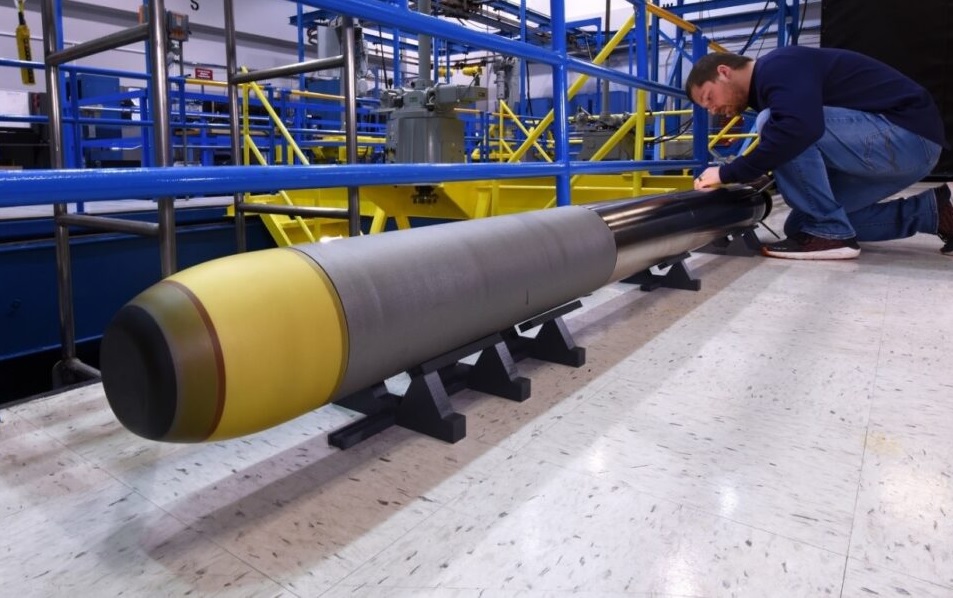
Raytheon Prepares Mark 58 CRAW Increment 2 Testing as U.S. Navy Advances Lightweight Torpedo Program
World
NATIONAL HARBOR, MD — May 28, 2026 : The U.S. Navy is advancing development of the Mark 58 Compact Rapid Attack Weapon (CRAW), a next-generation lightweight torpedo designed for anti-submarine warfare and hard-kill anti-torpedo operations, as Raytheon prepares for Increment 2 (Technology Insertion 2/TI-2) testing later this year. Speaking at the Sea Air Space 2026 Symposium, Bill Guarini, Director of Requirements for the Naval Systems and Sustainment Business at Raytheon, provided an update on the Navy’s 6.75-inch diameter torpedo programme, confirming that the company remains on schedule with development, integration, and testing activities. The Mark 58 CRAW is designed as a compact, lightweight torpedo measuring approximately 85–108 inches in length and weighing under 100 kilograms (around 200 pounds). The weapon supports dual operational roles, including offensive anti-submarine warfare and defensive hard-kill interception of incoming torpedoes. The programme builds upon earlier Very Lightweight Torpedo efforts and prototype work conducted by Penn State University’s Applied Research Laboratory. Penn State University’s Applied Research Laboratory developed the initial Increment 1 (Technology Insertion 1/TI-1) units to rapidly field operational prototypes, while Raytheon was later selected to lead Increment 2 after a Navy down-select process. Under TI-2, Raytheon’s role focuses on transitioning the torpedo toward operational deployment by improving manufacturability, producibility, military hardening, and long-term supportability while addressing component obsolescence for larger-scale production. Increment 2 Testing Planned According to Guarini, in-water testing of the Mark 58 CRAW is scheduled to take place at a U.S. Navy range before the end of 2026. The upcoming tests will focus primarily on the weapon’s forebody, specifically the processing systems, guidance architecture, control mechanisms, and sensor arrays responsible for target detection and tracking. Guarini explained that this phase concentrates on validating the torpedo’s ability to locate, process, and engage threats while refining system integration for future fleet deployment. Raytheon’s current work scope remains centered on forebody integration and operational readiness, while broader propulsion-related requirements continue to be reviewed separately by the Navy. Navy Evaluating Electric And Chemical Propulsion Systems As part of ongoing programme development, the U.S. Navy has expanded requirements for the torpedo’s afterbody and propulsion system following an industry day held in April 2026. One propulsion option under evaluation involves a 100-horsepower electric propulsion system designed to operate within the weapon’s compact 6.75-inch diameter. Navy planners are studying high-voltage systems exceeding 600Vdc combined with high power-density battery technology to reduce maintenance requirements by as much as 50 percent compared with conventional propulsion systems. A second propulsion pathway under review is the Stored Chemical Energy Propulsion System (SCEPS), which generates heat to produce steam that drives a turbine-based propulsion mechanism. The system is intended to provide sustained propulsion within the compact torpedo structure. Guarini noted that these Navy-directed propulsion modifications do not affect Raytheon’s Increment 2 contract timeline or scheduled testing activities. L3Harris is supporting the Raytheon team through contributions to propulsion, integrated afterbody systems, and powerplant development. Expanding Submarine Magazine Capacity Alongside torpedo development, the Office of Naval Research (ONR) is progressing the Multi-Vehicle Torpedo Tube Defense System (MVTTDS), also referred to as the Revolver Innovative Naval Prototype or Revolver MP project. The initiative is intended to increase submarine magazine capacity by allowing a standard 21-inch torpedo tube aboard Virginia-class submarines to carry up to a dozen 6.75-inch Mark 58 CRAW torpedoes or other compact payloads, including unmanned systems. The concept is aimed at increasing the number of stowed effectors available during submarine operations, particularly for Indo-Pacific requirements. Although Raytheon is not contracted for the Revolver programme, Guarini acknowledged that the Navy is separately funding torpedo launch variants intended to support expanded undersea payload capacity. The Navy’s Small Business Innovation Research (SBIR) programme is also seeking composite materials to replace stainless-steel launch tubes, which currently account for nearly half of launcher assembly weight. The effort is intended to reduce launcher mass and improve deployment efficiency. Potential Expansion Beyond Submarines Raytheon’s present contract focuses on anti-submarine warfare and hard-kill anti-torpedo variants launched from Virginia-class submarine external countermeasure launchers (ECL). However, the Navy is also evaluating opportunities to expand the Mark 58 CRAW across additional operational domains. Defense contractor Ultra Maritime has proposed launcher systems for surface warships to provide hard-kill torpedo defense capability for major naval combatants. In addition, the torpedo’s compact dimensions and weight make it suitable for possible future deployment from aviation platforms, including the P-8A maritime patrol aircraft and MH-60R helicopter. While such concepts remain outside current programme funding, Guarini stated that Raytheon is prepared to support future launcher mechanisms and share technical data with Navy-selected partners as additional deployment pathways are pursued. Programme Timeline And Current Status Raytheon received the Navy contract to produce 18 Mark 58 CRAW prototypes and 12 turnaround kits based on Penn State’s updated design following a competitive programme down-select. Initial TI-2 deliveries are expected during Fiscal Year 2026, with development testing focused on both anti-submarine and counter-torpedo missions. Guarini stated that Raytheon remains on schedule with development, integration, and testing milestones, adding that the Navy programme office has expressed satisfaction with the company’s progress as the Mark 58 CRAW advances toward broader fleet integration.
Read More → Posted on 2026-05-28 15:18:43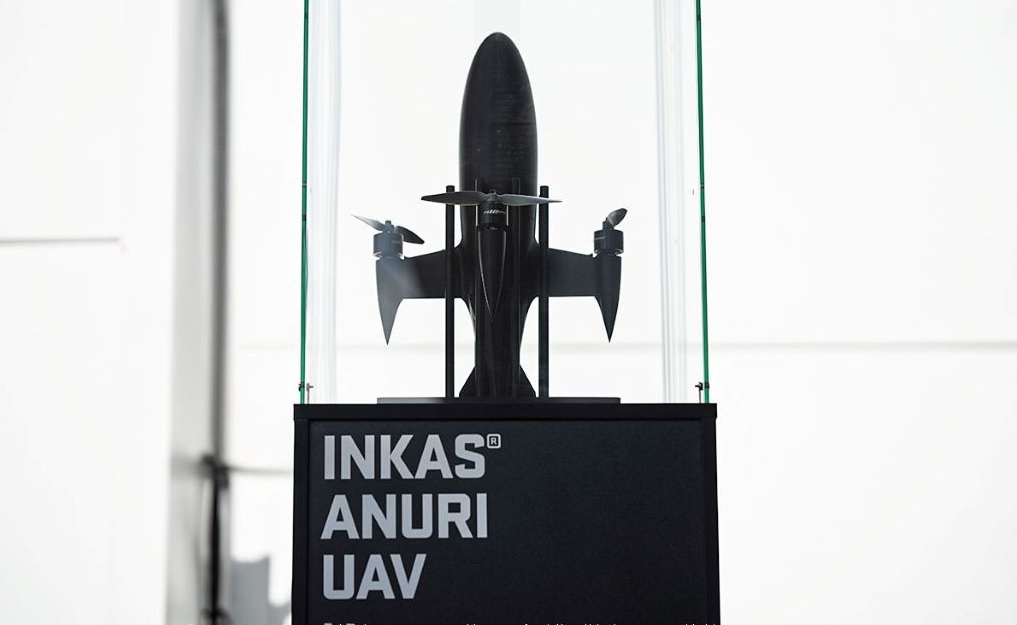
World
OTTAWA, — May 28, 2026 : INKAS Defense and Aerospace unveiled two new defense platforms at CANSEC 2026, introducing the Modular Light Tactical Vehicle (MLTV) and the ANURI Unmanned Aerial Vehicle (UAV) as part of the company’s growing focus on adaptable, multi-domain defense systems for military mobility and critical infrastructure protection. The announcement was made at the Cohere Centre (formerly EY Centre) during Canada’s largest defense and security exhibition, organized by the Canadian Association of Defence and Security Industries (CADSI). The Toronto-based manufacturer is showcasing its systems at booths 4200–4203, with the MLTV displayed at booth 4201 and the ANURI UAV exhibited at booth 4202. MLTV Developed As Replacement For Legacy Utility Fleets The INKAS MLTV was developed to replace aging light utility military vehicle fleets through a joint development effort involving INEOS Automotive and the WELP Group. Built on an established OEM platform, the vehicle combines factory-backed engineering, lifecycle support, and a modular configuration designed to meet changing operational requirements for both military and institutional users. Its modular architecture allows operators to rapidly configure the platform for a range of mission profiles, including armored transport, reconnaissance, assault operations, medical evacuation (MEDEVAC), and search and rescue missions. A central feature of the vehicle is its scalable bolt-on armor system, which enables users to increase or modify ballistic protection depending on mission requirements and operational threat levels without affecting mobility or structural integrity. The approach is intended to provide flexibility for defense organizations operating in different security environments while reducing reliance on multiple specialized vehicle types. David Khazanski, CEO of INKAS, said legacy fleets frequently face limitations related to insufficient protection against evolving threats and rising sustainment costs. According to the company, the MLTV is designed to improve mission adaptability and operational mobility while providing long-term engineering and lifecycle support. ANURI UAV Designed For Counter-Drone Operations Alongside the MLTV, INKAS introduced the ANURI UAV, an AI-enabled interceptor platform developed for counter-unmanned aerial system (C-UAS) operations and force protection missions. The system is designed to detect, track, and neutralize consumer, commercial, and modified first-person view (FPV) drones traveling at speeds of up to 400 km/h. The company stated that the interceptor can achieve a time-to-target of under 80 seconds at a distance of five kilometers, enabling rapid engagement of aerial threats against deployed forces or critical infrastructure. To support operational flexibility, the ANURI can be launched using quad-rotor extended vertical takeoff and landing (X-VTOL), silo tubes, vehicle-mounted systems, or by hand, removing the requirement for prepared launch infrastructure. The UAV incorporates a proprietary twist-lock modular nose section that allows field operators to quickly change warheads, sensor payloads, or AI guidance modules within seconds depending on mission requirements. Flight operations can be conducted through direct first-person view (FPV) pilot control or AI-assisted terminal guidance while maintaining a human operator in the decision-making process. The system also employs inertial navigation and AI visual terminal homing to sustain targeting capability in GNSS-denied environments affected by electronic warfare. Margarita Simkin, Chairwoman of INKAS, described the ANURI as an attritable counter-UAS interceptor platform developed to address the growing challenge posed by low-cost aerial threats while maintaining deployment speed, operational flexibility, and modularity. Expansion Of INKAS Defense Portfolio The unveiling of the MLTV and ANURI follows the recent introduction of the INKAS M1 Mine-Resistant Ambush Protected (MRAP) vehicle, developed through a partnership with KNDS Mobility. The NATO-aligned platform recently completed brake performance, vehicle control, and stability trials at the Applus+ IDIADA testing facility in Spain as part of ongoing validation efforts. CANSEC 2026, held in Ottawa from May 27 to 28, brings together more than 280 exhibitors and thousands of defense professionals, providing a platform for showcasing developments in military mobility, survivability, counter-drone technologies, and integrated defense systems.
Read More → Posted on 2026-05-28 15:05:25Search
Top Trending in 24 Hours
-
 U.S. Space Force Awards Impulse Space $28 Million Contract for 2029 Orbital Surveillance Mission
-
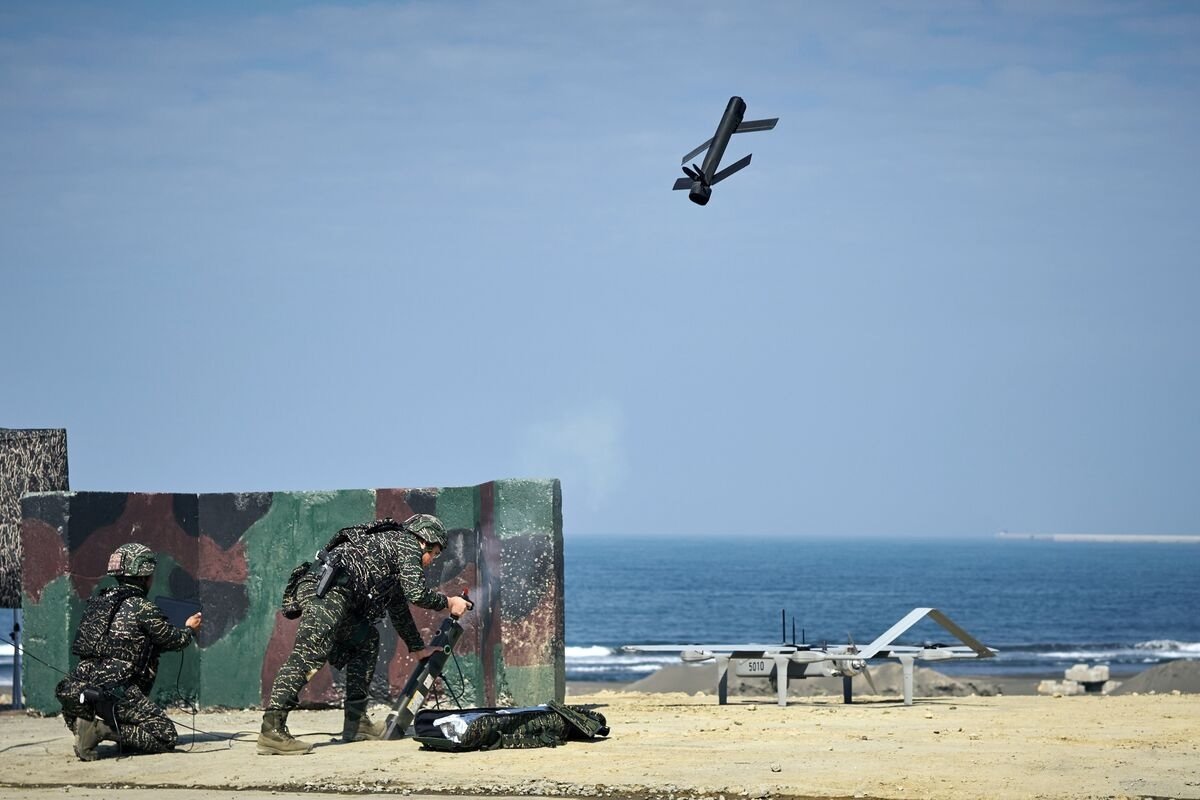 Taiwan Integrates Attack Drones Into Three-Service Live-Fire Exercise at Jiupeng for First Time
-
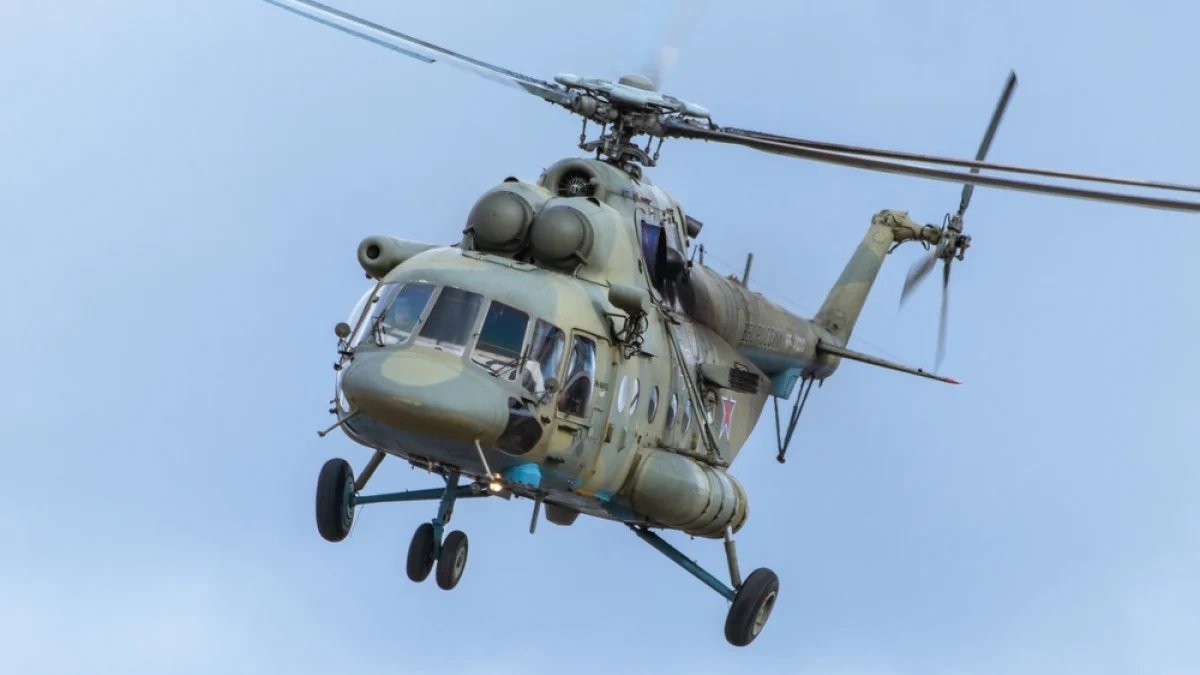 Russian Mi-8 Military Helicopter Crosses Into Polish Airspace for 42 Seconds Near Braniewo
-
 UK Air Force Hawk T2 Trainer Aircraft Crashes Near Valley After Takeoff, Both Pilots Eject Safely
-
 Italy Allocates Up to €5.14 Billion for Procurement of 132 New Main Battle Tanks
-
 UK Announces £6 Billion Investment to Double Nuclear Submarine Production Rate
-
 Roketsan KARAOK Anti-Tank Missile Successfully Hits Aerial Target for First Time
-
 Dutch Firm DeltaQuad Launches Evo-LE VTOL UAV With Up to Eight-Hour Endurance
Top Trending in 4 Days
-
 U.S. Army Awards $10.64 Million Contract to Ukrainian Drone Maker Skyeton for Raybird Systems
-
 India’s xTerra Robotics Launches Indigenous DHAV-Hy Wheeled-Legged Quadruped for Industrial Inspection
-
 U.S. Space Force Seeks Rapid-Response Satellites for Close-Range Orbital Inspections
-
 North Korea Fires Short-Range Ballistic Missile Toward Sea of Japan After Freedom Edge 26
-
 U.S. Government Seizes Almasirah.net, Houthi-Linked News Website
-
 U.S. Delivers First CH-47F Chinook to Egypt Under 12-Helicopter Deal
-
 Ukraine Reports First Use of Fire Point’s FP-7 Tactical Ballistic Missile inMoscow-Region Strikes on Oil Refinery
-
 US Navy Submarine Director Outlines Four-Pillar Plan to Raise Build Rates